Viking violence, a kidnapping, and continental collisions

“There’s another boat coming in just now”, says the First Mate, peering out of the window. “We should give them a hand – it’s pretty wet out there.”

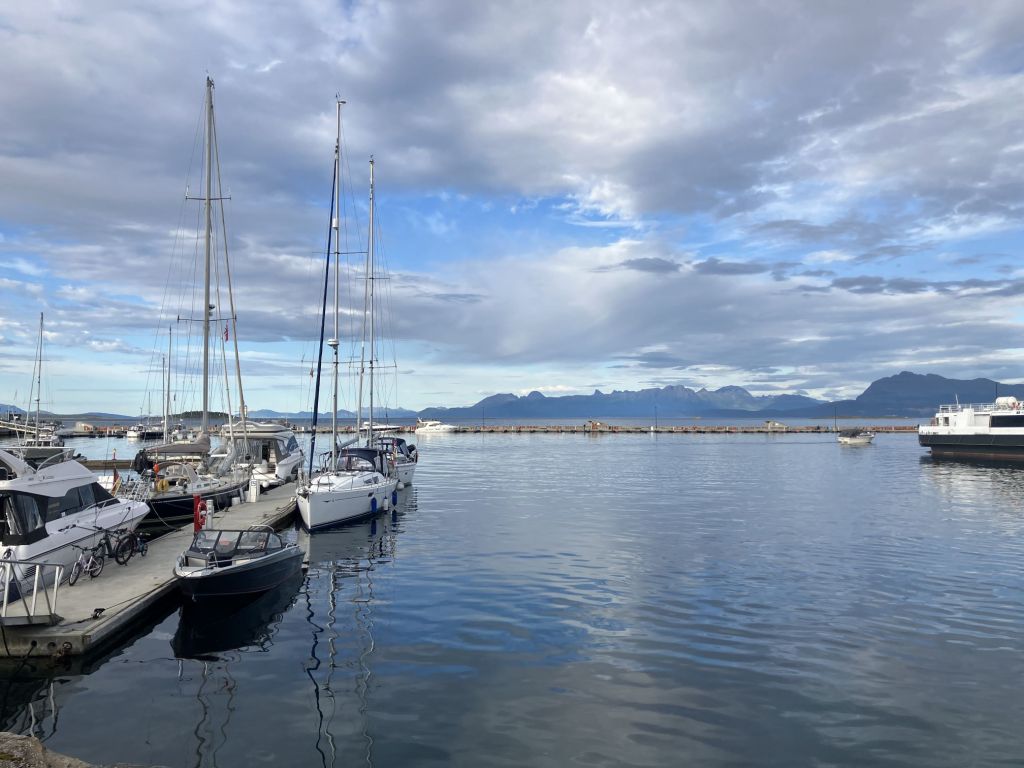
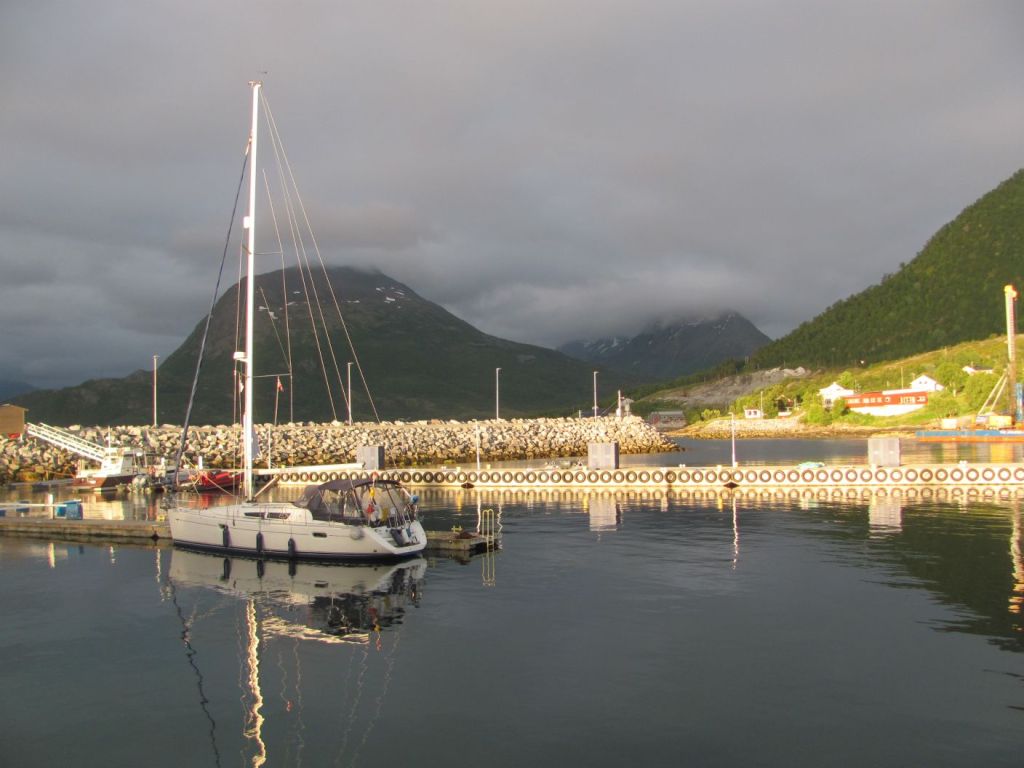
We have just arrived in the small harbour at Brønnøysund, with the rain tipping down. We had left the island of Vega in the morning, and had had a pleasant sail tacking our way southwards against the south-easterly wind before it died altogether and we had had to start the engine. As luck would have it, it had also started raining heavily. By the time we were tied up, we were soaked, and were just having a hot cup of tea to warm up.

“I have to admit that I am not that keen on getting wet all over again”, I grumble. “But I suppose we must.”
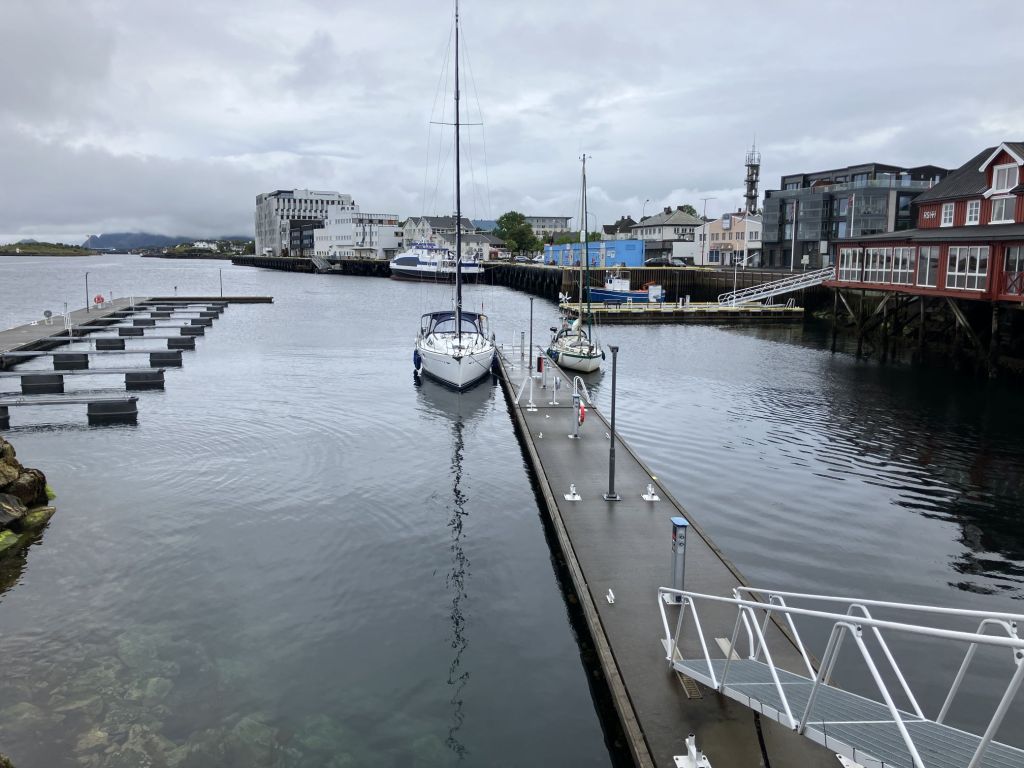
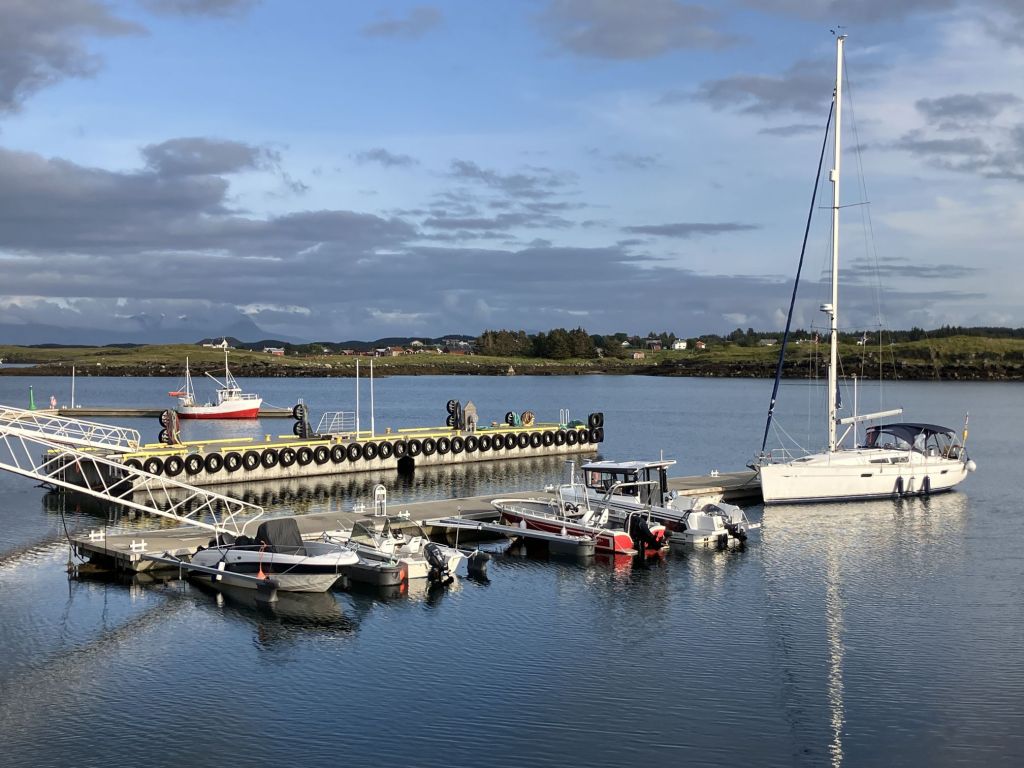
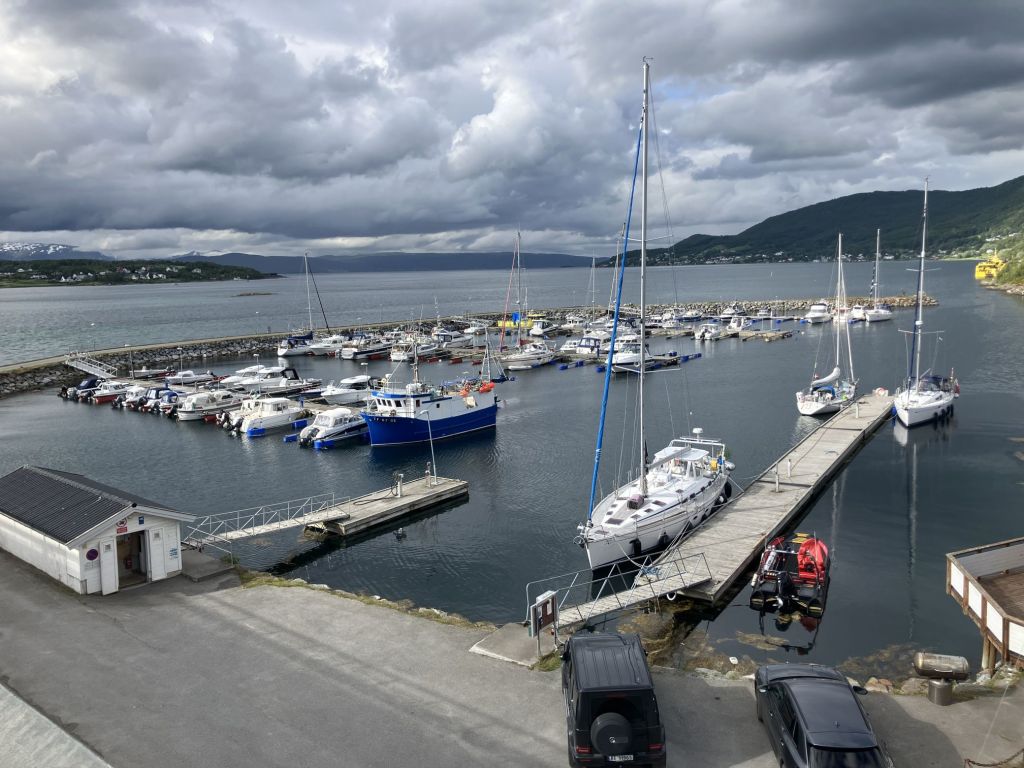
Tied up in Brønnøysund.

We struggle out on to the pontoon again. As we grab the ropes of the newcomer, we notice that their flag is British.

“How far have you come?”, I ask.

“Today from Leka”, the man answers in a Scottish accent. “But we are from Scotland, and sailed over to Bergen a few weeks ago. We’re now making our way northwards.”

“Snap!”, I say, as I tie them up. “We’re also from Scotland.”

At 27 feet in length, their boat isn’t large. I’m impressed at them crossing the North Sea in it.

“We’ve sailed everywhere in her”, says the Scotsman, spotting my look. “Even across the Atlantic. I wrote a book on the trip, but it has hardly sold any copies. The reviews weren’t very good. I’m not depending on it for my retirement. But it was very satisfying to write it, I have to say.”

I make a mental note to look it up.

“Why don’t you come over for a cup of tea, once you are settled in?”, asks the First Mate.

“That’s very kind of you”, says the woman, in an even broader Scottish accent, “I am Katherine, by the way, and this is Nick.”

“We are wondering if we have left it too late in the season”, says Nick, over a cup of tea. “We’ve had nothing but bad weather since we have arrived in Norway. We planned to leave Scotland much earlier, but with one thing and another, we lost track of how the summer was going. We are thinking of overwintering in Bodø.”

We can sympathise. With the exception of a few days here and there, much of July and August so far had been wet and misty. A typical Norwegian summer, some of the locals had joked, and not at all like the hot dry summers they had had for the previous two years.

Nick is in IT, designing websites.

“I use AI all the time these days”, he says. “It’s amazing for coming up with content for the websites all tailored to the style that customers want. What I like about it particularly is that it is very patient and never gets angry. Even if I am a bit short with it myself sometimes, it never answers me back.”

“Do you think that AI could ever become conscious?”, I ask. “Richard Dawkins seems to think that it might be already.”

“Ha! The million-dollar-question”, Nick answers. “The problem is that we don’t really have a good definition of what consciousness is anyway, so it is difficult to say whether something is conscious or not. A philosopher called Thomas Nagel suggested that for something to be conscious, there had to be something that it felt like to be that something, if that makes sense. But even that is tricky – I know what it feels like to be me, but I have no idea what it feels like to be you, another human – let alone a tree, or a stone, for that matter.”

“But doesn’t something have to be living to be conscious?”, I ask.

“Panpsychists don’t think so”, he says. “They believe that everything has a degree of consciousness. But the truth is that we just really don’t know whether consciousness requires biology or not. Is there something special about neurons and their biochemistry? If that were the case, AI based on silica may never become conscious. But what if it is just the organisation and complexity of information processing that creates consciousness, and not the material that is doing it? Then AI could well become conscious – if not already, then sometime in the future.”

“But you hear people saying that AI will never be conscious because all it is is a machine following instructions programmed into it by humans”, I say. “It is just trained on large amounts of data and text that humans have written, and uses statistical techniques to predict the next idea from the preceding context. But surely it is more than just that?”

“Yes, that is a bit simplistic”, he says. “When it is being trained, it learns about objects and what their properties and relationships are, causes of things and what the consequences are, human intentions and emotions, and logical relationships. It’s able to put these concepts together in a logical way, develop an internal representation of the way the world works and its own place in it, have memory of experiences and things learned, break down a problem into its component parts, formulate goals, and integrate all these together. That, after all, is just what humans do.”

It’s been a fascinating conversation, but we are all getting a bit hungry. Nick and Katherine brave the rain and go back to their boat to cook. We heat up the leftovers from yesterday before tumbling into bed.

They have already left in the morning by the time we are up. The wind is from the south and they want to make the most of it while it lasts. We decide to stay another day in Brønnøysund and wait for the winds to change overnight as forecast.

“I was just reading about the history of the town”, says Spencer as we eat breakfast. “Apparently it used to be the centre of power in Helgeland in Viking times. Unfortunately it got caught up in the Norwegian civil wars between a nobleman by the name of Skule Bårdsson and the king, Haakon Haakonsson, who was Skule’s own son-in-law. It didn’t end well, with the entire population of the town being killed in the fighting.”
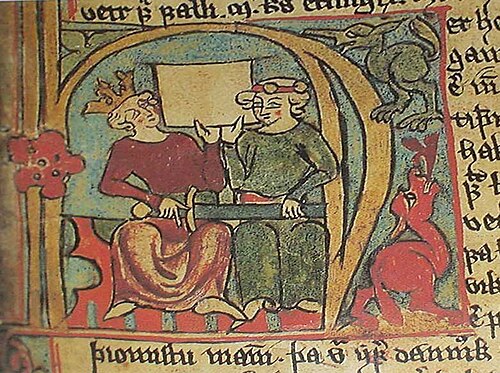
Haakon and Skule in happier times.

“That was a bit unfortunate”, I say. “Who won the war?”

“The king won in the end”, says Spencer. “Skule Bårdsson fled to Trondheim and took refuge in the cathedral priory there, but the king caught up with him and burnt the priory down, killing him in the process. That was in AD 1240, and brought an end to the civil wars in Norway at that time. It was only many years later that the town of Brønnøysund was repopulated by people from southern Norway and Sweden. Apparently there are still traces of the Swedish accent here.”

We leave Bronnøysund the next day. Once clear of the wind shadow of Torghatten mountain, the wind picks up from the west and we have a comfortable beam reach all the way down to the island of Leka.

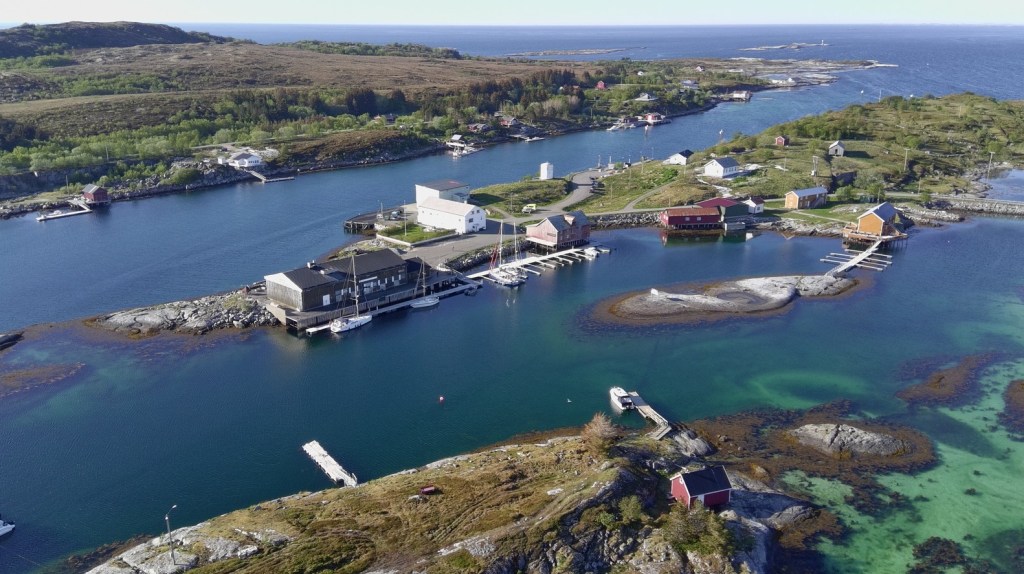
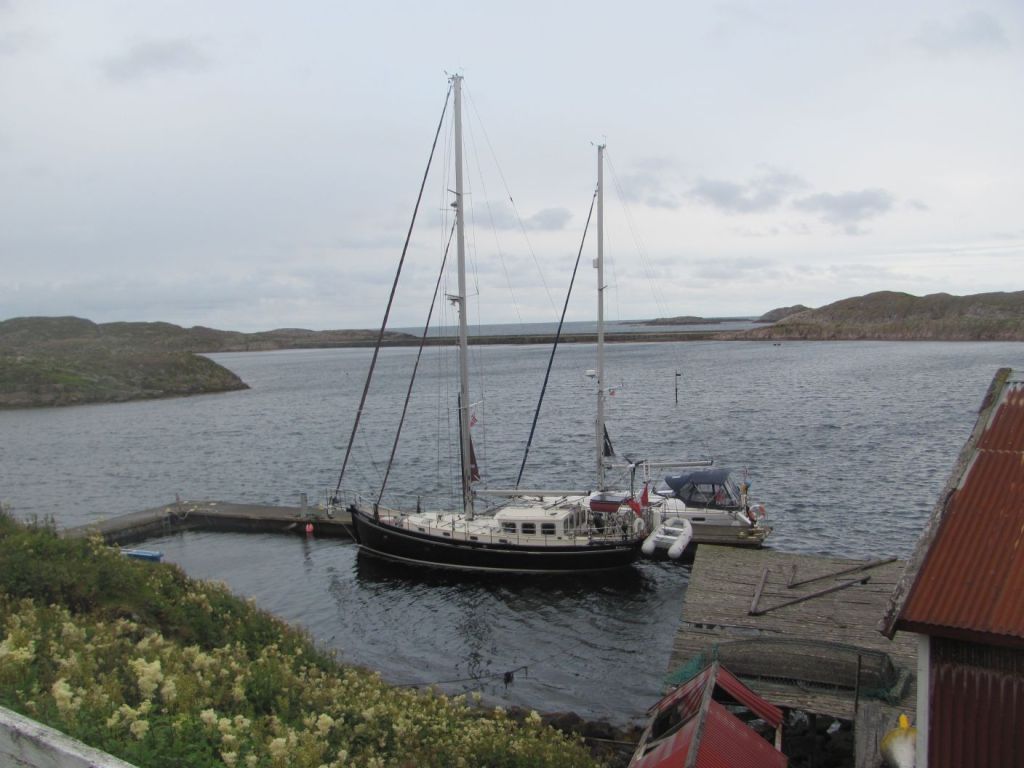
We arrive at the small harbour of Skei in the late afternoon, and tie up alongside to the visitors’ pontoon facing north. There are strong winds from the north predicted for tomorrow, so we want to minimise the area we present to the wind.
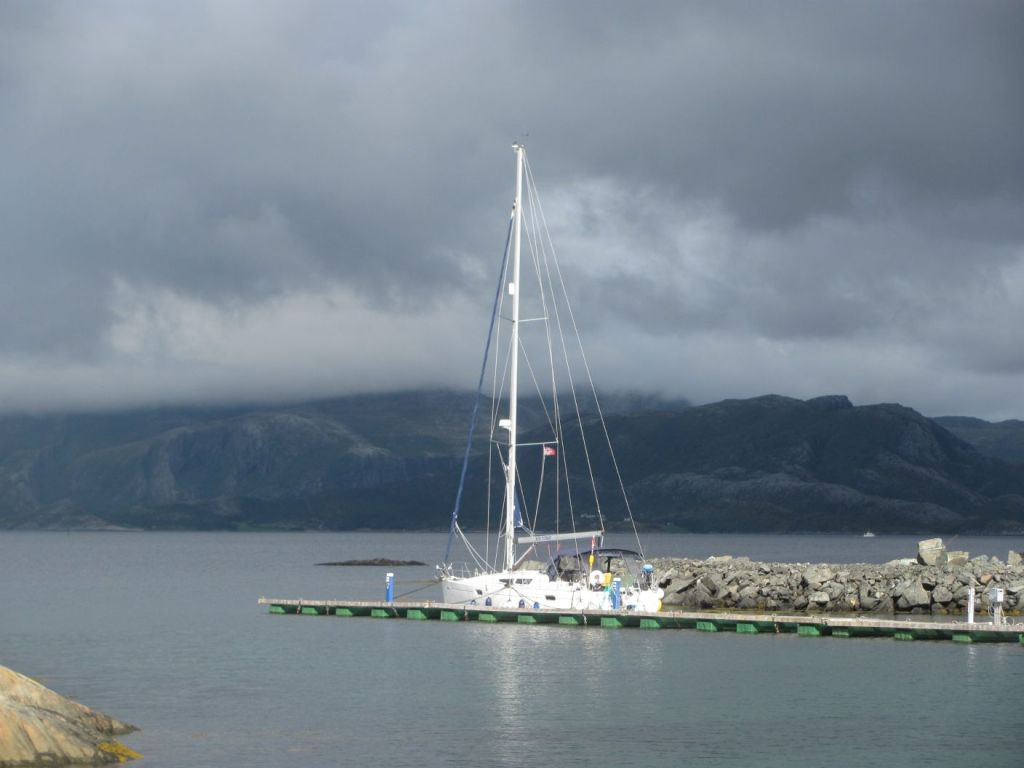
Skei harbour, Leka.

“There’s supposed to be a café here”, says the First Mate. “Let’s go up and see if we can get an ice cream.”

We order two cones.

“You can go outside and sit in the sunshine”, says the waitress. “I’ll bring them out to you.”

A few minutes later, a man in a chef’s hat comes out carrying two bowls and spoons.

“I know that you ordered two ordinary ice cream cones”, he says. “But I have just been developing a new flavour of ice-cream, and I took the liberty of wondering if you might like to try it? It’s made from Norwegian brown cheese.”

We are not quite sure what to think, but we try it. It’s delicious.

“You’ll have to call it Leka ice-cream”, says the First Mate. “Lecker means ‘delicious’ in German.”

“It’s a joke”, I explain.

“I got it”, says the chef. “We have the same word ‘lekker’ in Norwegian, meaning ‘beautiful/.
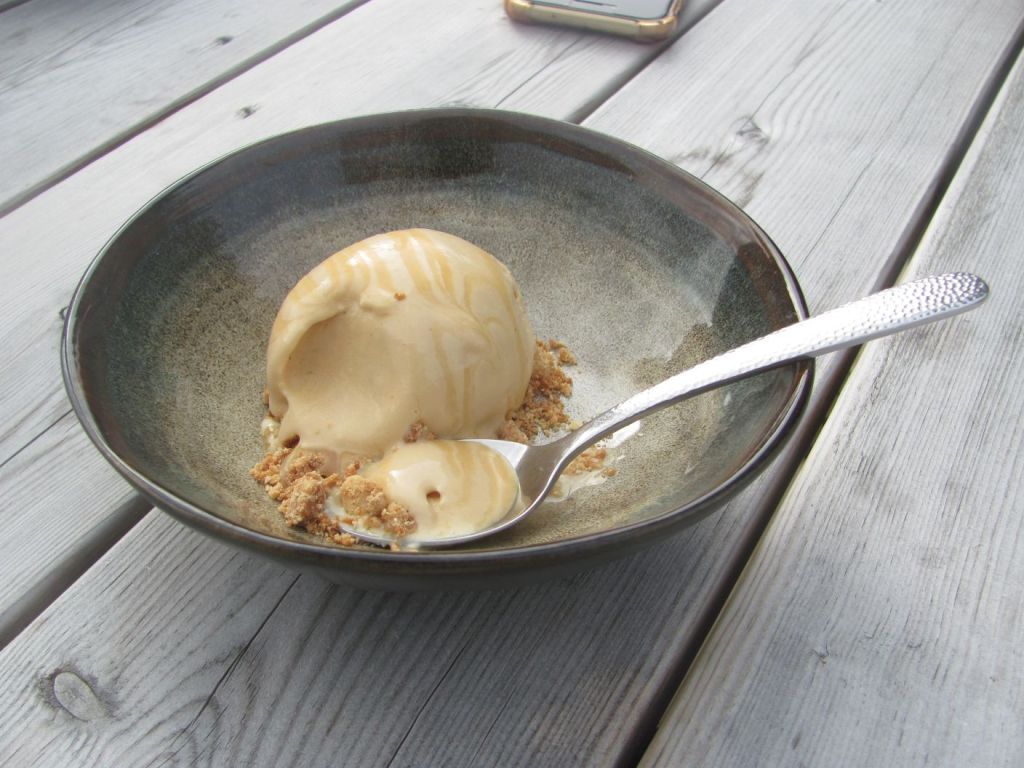
Lecker ice-cream.

“Did you hear the story of the little girl and the sea eagle?”, he asks, sitting down at a table opposite. “It’s a kind of island legend.”

“No”, we say. “Tell us.”

“Well, back in 1932, one of the families living here was attending a christening”, he continues. “They had a three-year-old girl called Svanhild. After the dinner, the parents wanted to chat so they let their daughter go out to play. But when they came to look for her, she was missing. They searched everywhere, but there was no sign of her.”

“A sea-eagle had taken her?””, says the First Mate.

“Well, they didn’t know what had happened at that point”, says the chef. “So a search party went out to look for her. They found her handkerchief and a shoe, but there was no sign of the little girl. Then someone noticed sea-eagles flying around a mountain in a strange way, and thought that they might have snatched her. Three men offered to climb up the mountain to see if they could see anything, and were astounded to find the three-year-old unhurt and fast asleep on a ledge near one of the nests. She was lifted to safety and subsequently survived to a great old age.”

“Did she remember what had happened?”, I ask.
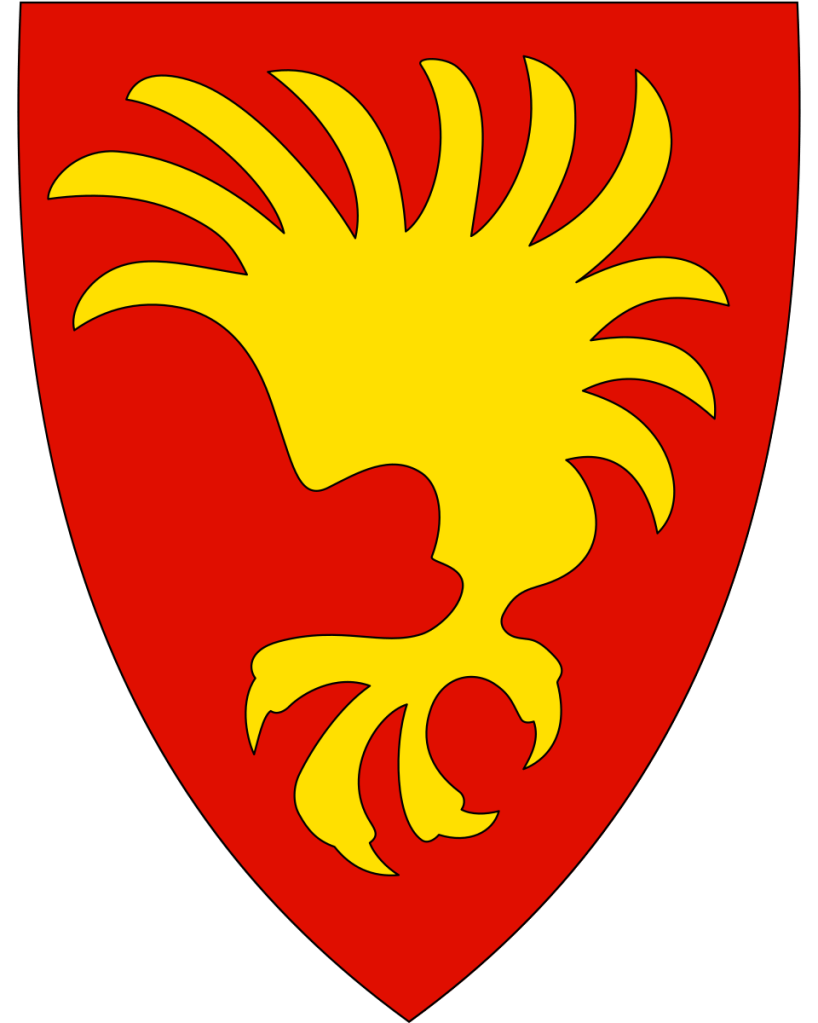
“That’s the strange thing”, says the chef. “She had no recollection of it. Of course, that caused a lot of speculation since as to whether it was a true story. It was too far and too high for her to have walked there by herself, and yet she was probably too heavy for a sea-eagle to carry her, as big as they are. But true or not, it’s a great story, and the Leka island council decided to put an eagle’s wing and claw on the coat-of-arms to make it part of the island’s identity. Now, enjoy your ice-cream.”

We have already finished it, listening to the story.

“There’s a small information centre just behind the café”, says the First Mate. “About the island. I saw it while you were ordering the ice cream. It looks quite interesting.”

“Leka is the Geological National Monument of Norway”, the introductory panel tells us. “Because of the unique geology of the island. The story begins 600 million years ago, when the supercontinent of Rodinia started to break up. One of the parts was called Baltica, which became the Europe we know today, including Norway. As it broke up, it drifted towards another chunk of Rodinia called Laurentia, which is North America and Greenland today. At one stage during this drifting, it was covered by a shallow tropical sea, when many layers of sediments were laid down.”

“Eventually Baltica and Laurentia collided with each other, about 500 million years ago”, the next panel tells us. “The collision was so powerful that it pushed up bits of oceanic crust and even the earth’s mantle. Leka is one of the few places nowadays that you can see both of these on the earth’s surface. It’s called the Mohorovičić discontinuity, or MOHO for short. Later, they split up again, then came back together to form the supercontinent of Pangaea.”
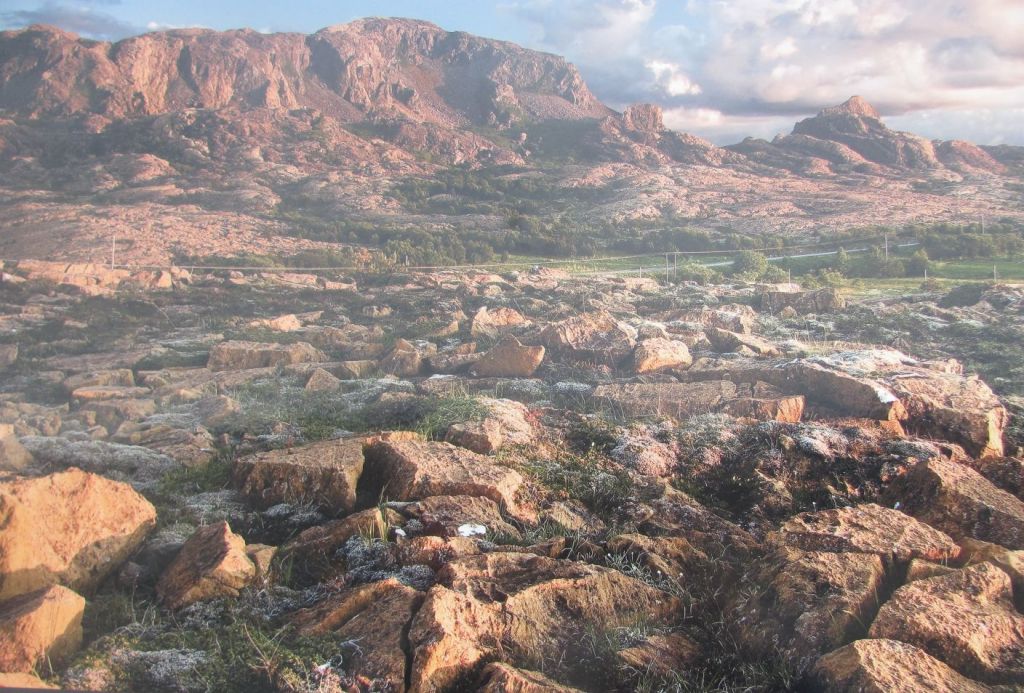
The Mohorovičić discontinuity.

“I always find it hard to believe that the continents were moving around like that”, says the First Mate. “Like bits of wood floating on water. They look so stable nowadays.”

The next panel tells us about how oil was formed in the North Sea.

“Pangaea started breaking up about 200 million years ago, and Baltica and Laurentia drifted apart again, forming the Atlantic Ocean and the North Sea basin between them. Marine organisms living in this basin fell to the sea floor when they died, and were covered with more layers of sediment. Over millions of years, tremendous pressures and temperatures slowly converted this organic layer into oil and gas which tried to migrate to the surface but became trapped under impermeable rock. It’s only now that humans are drilling through this rock and bringing the oil and gas to the surface again.”

“And bringing with it lots of wealth to countries like Norway”, I say. “But contributing to global warming by releasing carbon dioxide when it is combusted.”

We wander back to the boat. In the evening, there is a knock on the hull. It turns out to be the harbourmaster, who has come to collect our harbour fees.

“You should go and see Herlaugshaugen”, he tells us. “You can see it just over there. It’s the largest burial mound in Norway. According to the sagas, it is of a local king called Herlaug, hence its name. The story is that there were two brothers, Herlaug and Rollaug, who were local rulers in the time of Harald Fairhair. They didn’t want to subjugate themselves to Harald, who was trying to unify Norway during the Viking Age, so they built the mound to hide in. Herlaug entered it with a large amount of food and sealed it behind him, but Rollaug chickened out at the last minute and surrendered to Harald.”
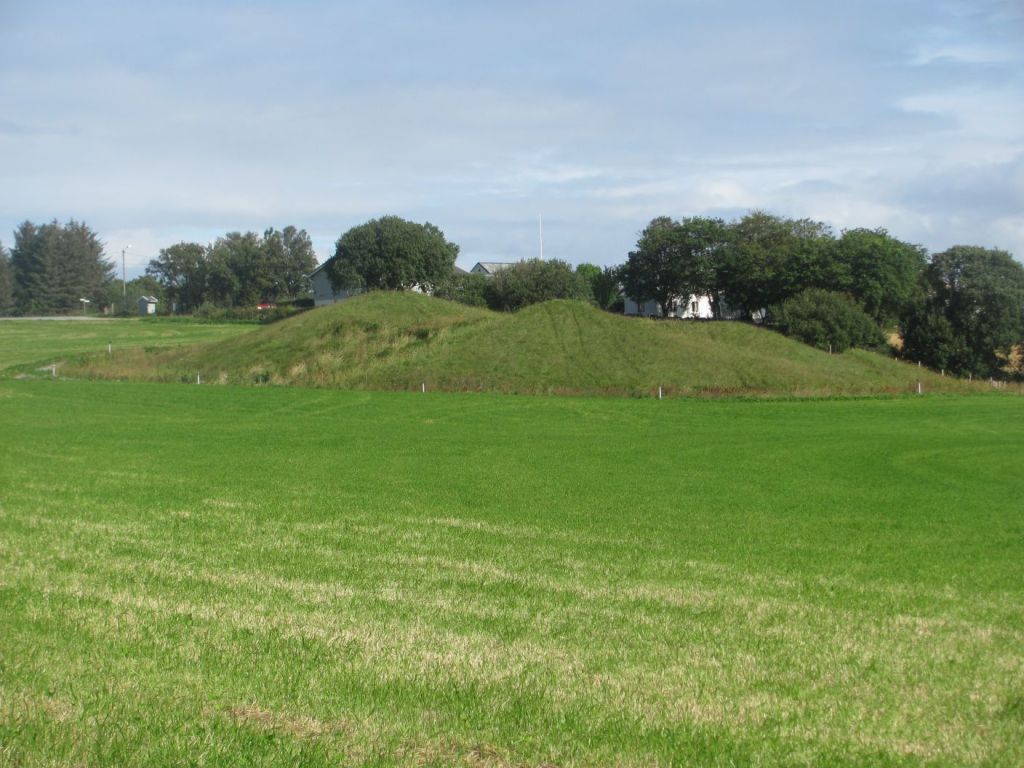
Herlaugshaugen burial mound, Leka.

“Not a very nice way to die”, I say. “Suffocating yourself to death.”

“Well, back in the 19th century, they excavated the mound and found a skeleton leaning against a stone slab with a sword nearby”, the harbourmaster continues. “There were also bones of animals, including sheep, pigs and cattle, along with other human bones. It seemed like they had discovered Herlaug and his storeroom of goodies for the afterlife.”

“I get the impression there’s a twist to this story”, I say.

“Yes, you are absolutely right”, he answers. “In 2023, archaeologists had another dig and discovered ship’s rivets, which they dated to around 700 AD, a bit earlier than Harald Fairhair lived. So the mound didn’t contain Herlaug, or if it did, he didn’t oppose Harald. But we still don’t really know who it belongs to.”

“We’ll probably never know”, says the First Mate profoundly. “Lost in the mists of time.”
A preserved shop, a poet-priest, and the duck-women of Vega

“Another twenty minutes and we would have made it”, says the First Mate. “As it is we are going to get drenched tying up.”

We are just arriving at the island of Myken. We have had a pleasant sail down from the Fleinvær islands, but for the last hour we could see the dark storm clouds gathering in the west. Now the heavens have opened.

“There’s another boat already there”, shouts the First Mate through the rain. “With a Canadian flag. We’ll have to go on the outside of the pontoon.”

It’s Harley and his family in their boat Prudence. We had heard of them last year when in Trondheim, but so far had not met them.

Prudence and Ruby Tuesday in Myken harbour.

“We’ve been here a couple of days”, Harley says. “But we are moving on first thing in the morning to Træna. It’s a lovely little island here, though. You’ll enjoy it. They have a distillery that’s worth a visit. And a restaurant and a museum. Everyone is very friendly.”

When we awake in the morning, Prudence has gone. After breakfast, we explore the village. There is a coffee morning in the grocery store.

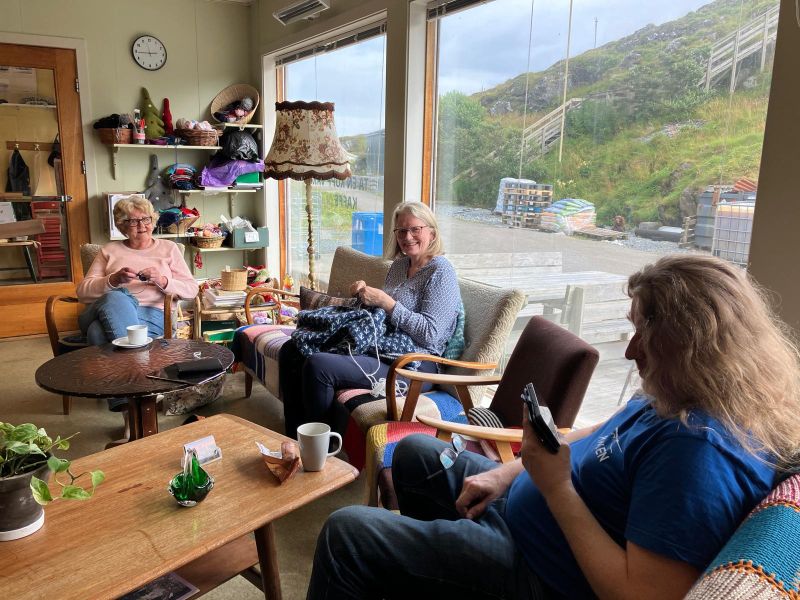
“We meet here every morning for a coffee and waffle, and to do our knitting”, says one woman. “We’re trying to get a quilt finished by Christmas time. Visitors are welcome too.”

Daily coffee morning in the grocery store.

“There are only 16 permanent residents here now”, says another. “But a similar number of former residents who now live on the mainland still come every summer. And, of course, there are people like me that were born on the mainland, but who came here on holiday and loved it so much that they keep coming. I bought a small fishermen’s hut called a rorbu, and sell my glassware there.”

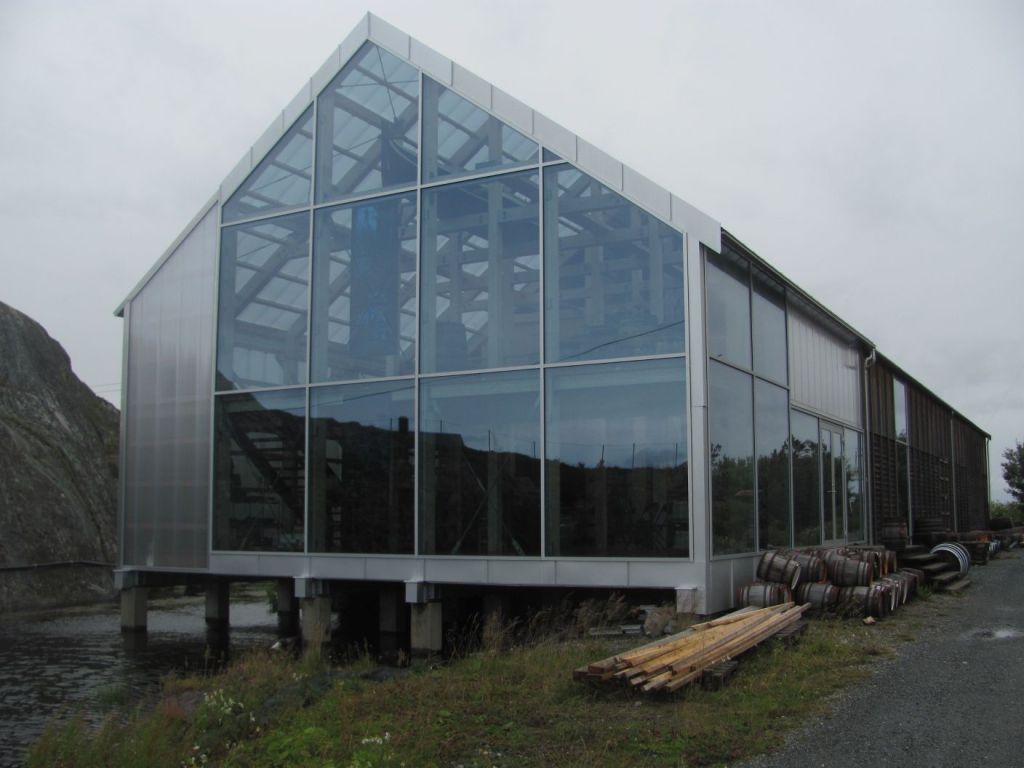
On the way back, we pass the distillery. At the other end of the village is the so-called ‘Distillery Cathedral’, a modern looking building where whisky tasting tours are offered.

The ‘Distillery Cathedral’.

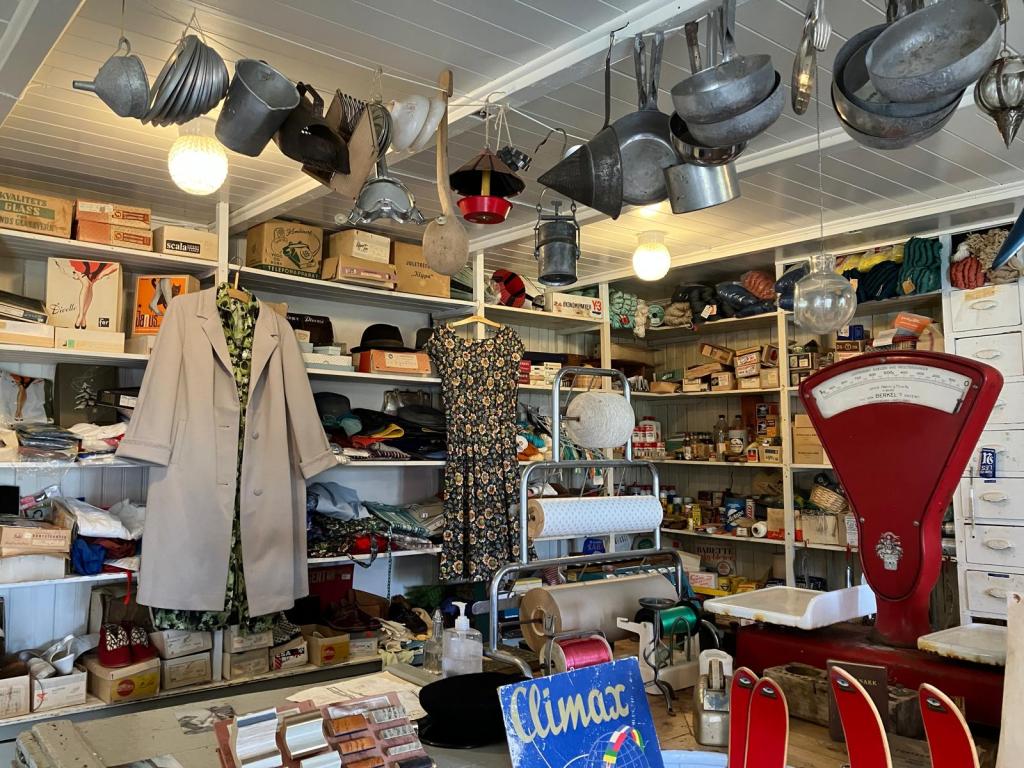
In the afternoon, we visit the Gamla Butikken, the ‘Old Shoppe’, at the end of the village. It used to be the village store, and has been preserved just as it was when it closed in the 1960s. Rather than the customers serving themselves and paying at the end, they tell the shop keeper behind the counter what they want, and he or she will go and fetch it.

The Gamla Butikken.

“It was our grandfather’s shop, and his father’s before that”, Hannah tells us. “It’s been in the family for generations. When our grandfather died, our grandmother left it just as it was and locked it up. It stayed that way for many years, but one time when I was here I thought that it might be a good idea to open it as a kind of museum so that visitors can see what it is like in the old days. My grandmother liked the idea. The problem was that the building was becoming more and more derelict and it would have soon needed to be pulled down. She saw this as a way of preserving it.”

Hannah was brought up on the island, and still spends summers here, but lives in Bodø during the winter.

“What was it like being brought up on the island?”, we ask.

“I loved it”, she says. “There were quite a lot of people living on the island in those days, and there were several children my own age. We had a lot of fun.

“But the population started declining in the 1970s”, says her brother, who has joined us. “The government’s policy at that time was to do away with all these remote communities with their traditional low paying occupations, and persuade people to move to the cities where they could get better jobs and contribute to the nation’s wealth.”

“What about your father?”, asks the First Mate. “Was he involved in the shop as well?”

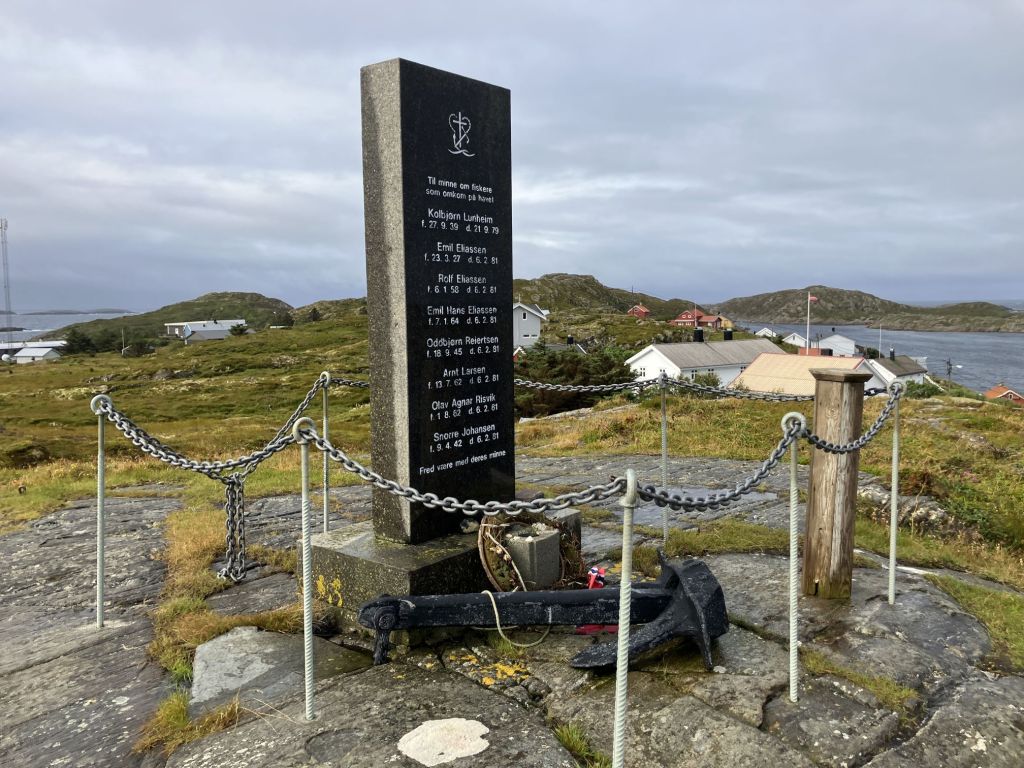
“No, he was a fisherman”, answers Hannah. “On a trawler. But he died while out fishing. Did you see the memorial in the middle of the village? He’s the one at the top. We don’t know the reason, but he had come off his watch at night, and was seen going downstairs to his cabin. But in the morning he was missing. His body was never found.”

Memorial to those lost at sea, Myken.

“What happened?”, we ask.

“Well, it was presumed he had fallen overboard. But my brother here had a heart attack a few years ago, and we wonder if our father’s disappearance had possibly been something to do with his heart. Weak hearts can run in families, you know. But we’ll never really know for sure.”

“Who were the other names on the memorial?”, I ask.

“That was a boat that went down with all on board”, says Hannah’s brother. “A storm blew up, and they tried to make it back to safety, but they were too late. The storm caught them and the boat capsized. Not far from here. A father and his two sons and four others were lost. It was devastating for the whole community.”

“It just shows the perils of making a living from the sea”, says the First Mate after we leave. “I am not sure that I could have coped with it.”

—-

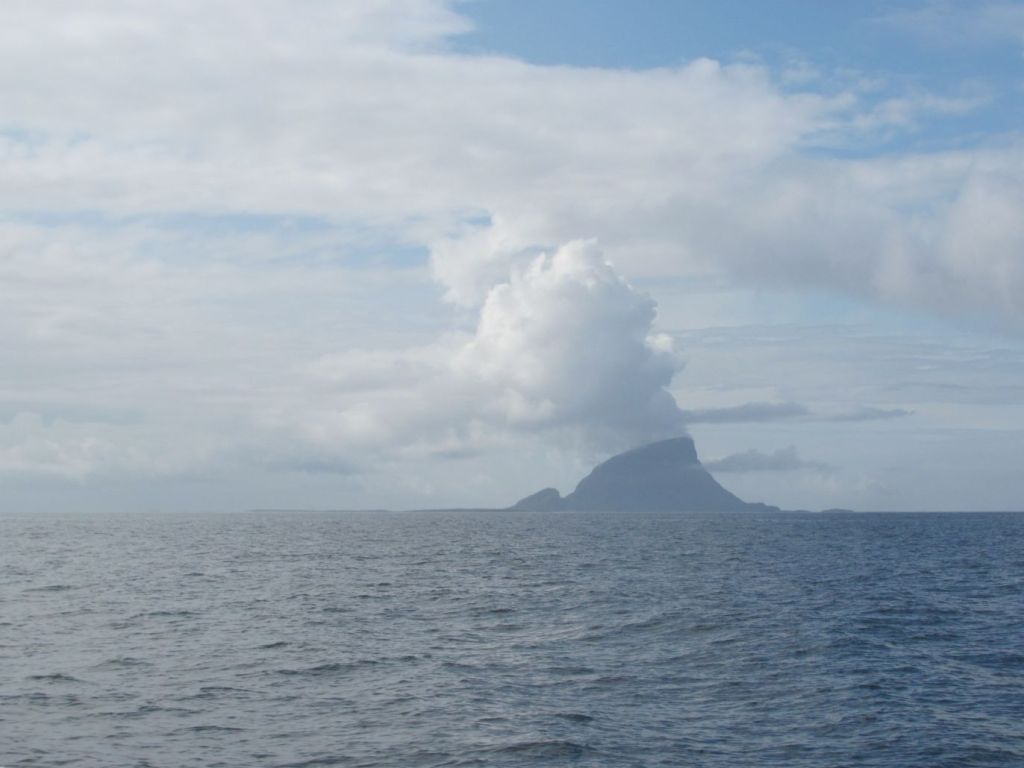
In the morning, we set sail for Sandnessjøen, 50 miles to the south. We pass Lovund on our starboard side doing volcano impressions.

Lovund – volcano?

The wind strengthens in the afternoon, and we have a nice sail with the genoa only, arriving at Sandnessjøen in the evening.

The next morning we visit the Tourist Information Office to find out if there is anything we should see in Sandnessjøen.

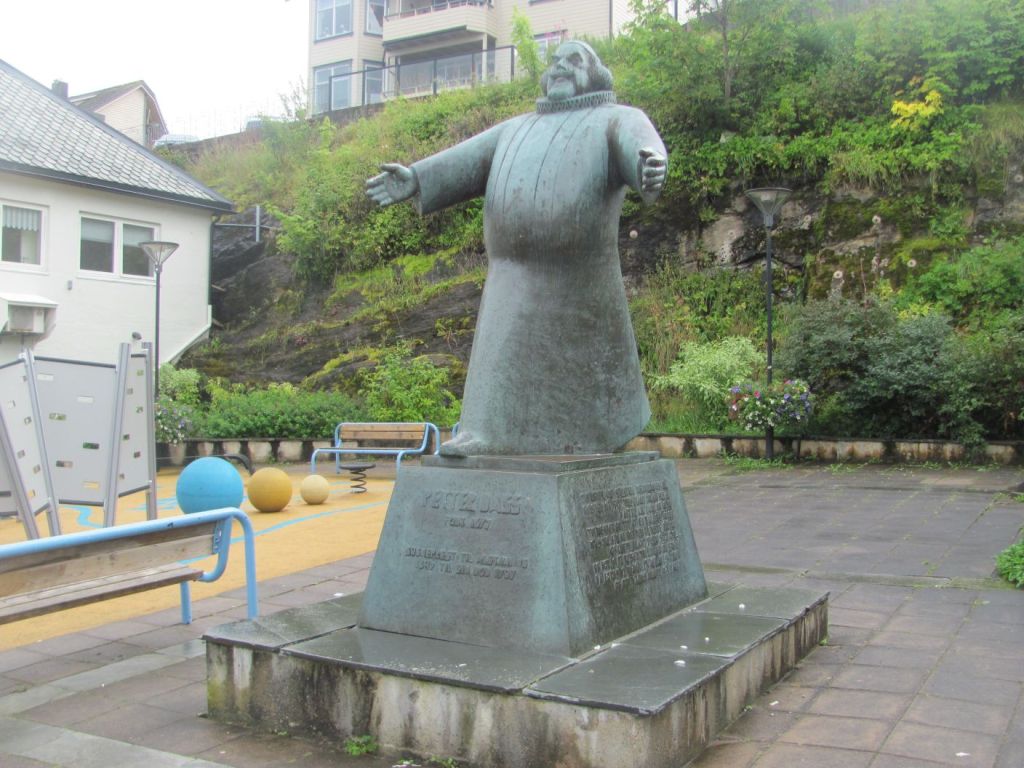
“There’s not much here”, the man behind the desk in the Tourist Information admits. “It’s mainly a setting off point for trekking and skiing in the Seven Sisters. But one thing that might be of interest is the Petter Dass statue in the town centre. He was a Lutheran priest back in the 17th century, who was born on the island of Dønna across the fjord from here. He wrote a lot of texts and hymns, which were used right up to the present. He is seen as an important literary figure who put northern Norway on the literature map, so the town has made quite a thing of him.”

Petter Dass statue, Sandnessjøen.

“Yes, we keep coming across his name in our travels”, I say. “There was a Petter Dass walk on Lovund and a Petter Dass chapel on Træna.”

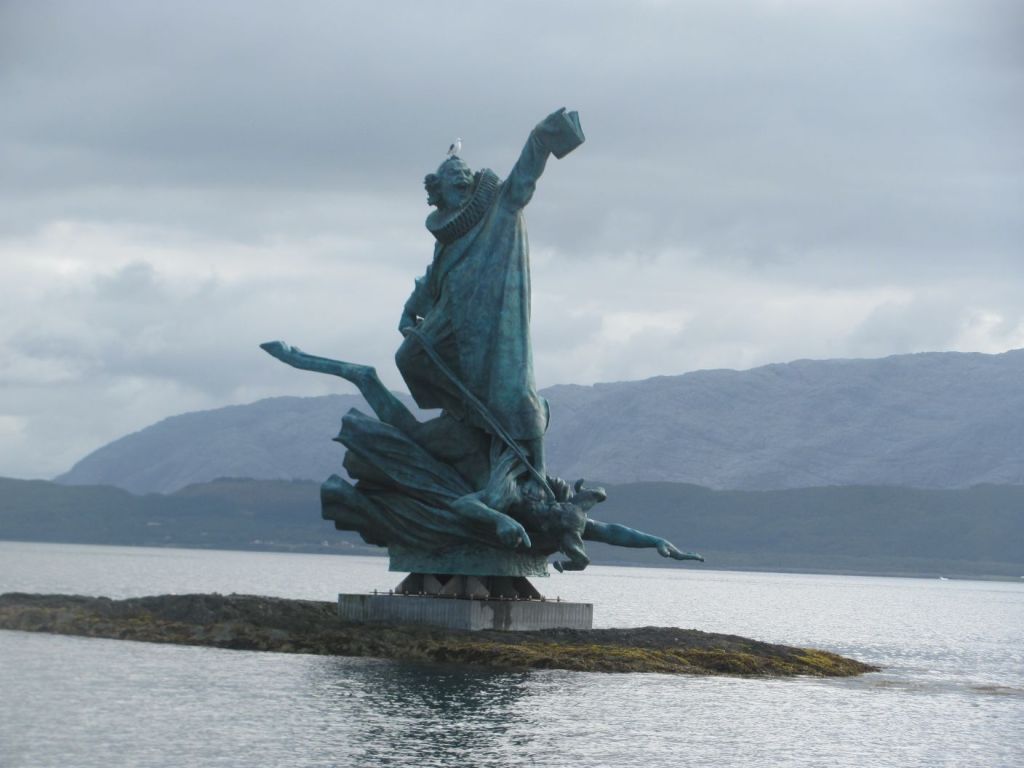
“Well, since you have your own boat, you might also be interested in seeing the giant statue they made of him on one of the skerries in the fjord”, the Tourist Information Man continues. “The base of it gets covered by the tide, so it really looks like he is walking on water. The story behind it is that the king requested him to give the Christmas sermon in Copenhagen, but for various reasons Petter didn’t receive the request until the day before Christmas. Myth has it that he made a deal with the Devil to fly him there in time in return for the Devil gaining the souls of anyone who fell asleep during the sermon. Of course, Petter gave such a powerful sermon that no-one fell asleep.”

Petter Dass riding the Devil to Copenhagen.

In the morning, we push on southwards towards Vega. The wind is from the south-west, more-or-less just where we want to go, so we need to tack. It’s slow going, but we make some progress. We feel smug when we see other yachts pass us with their sails furled away and their engines running. Purists, us! Well, sometimes.

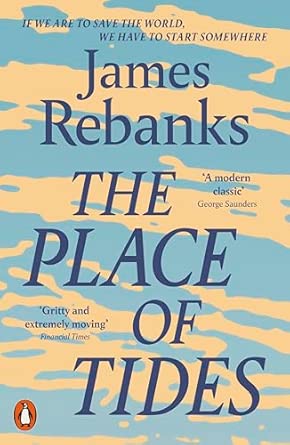
Between tacks, I recall a book that we had both read over the winter, Place of Tides, by James Rebanks. In it, he tells the story of Anna, one of the ‘duck-women’ of Vega. He spends a spring and summer living with her and her helper Ingrid, learning about her family, the history of the islands, and the decline of the eider-down tradition. It’s a delightful story about sense of place, loss of the old ways, and finding a way to live more deliberately and with purpose. We are both keen to visit Vega and learn more of this ancient practice and life on its archipelago.

The bulk of the island of Vega looms out of the haze, its top wreathed in cloud. We had initially planned to stay at the harbour at Igerøya on the east of the island, but the First Mate has been on the phone.

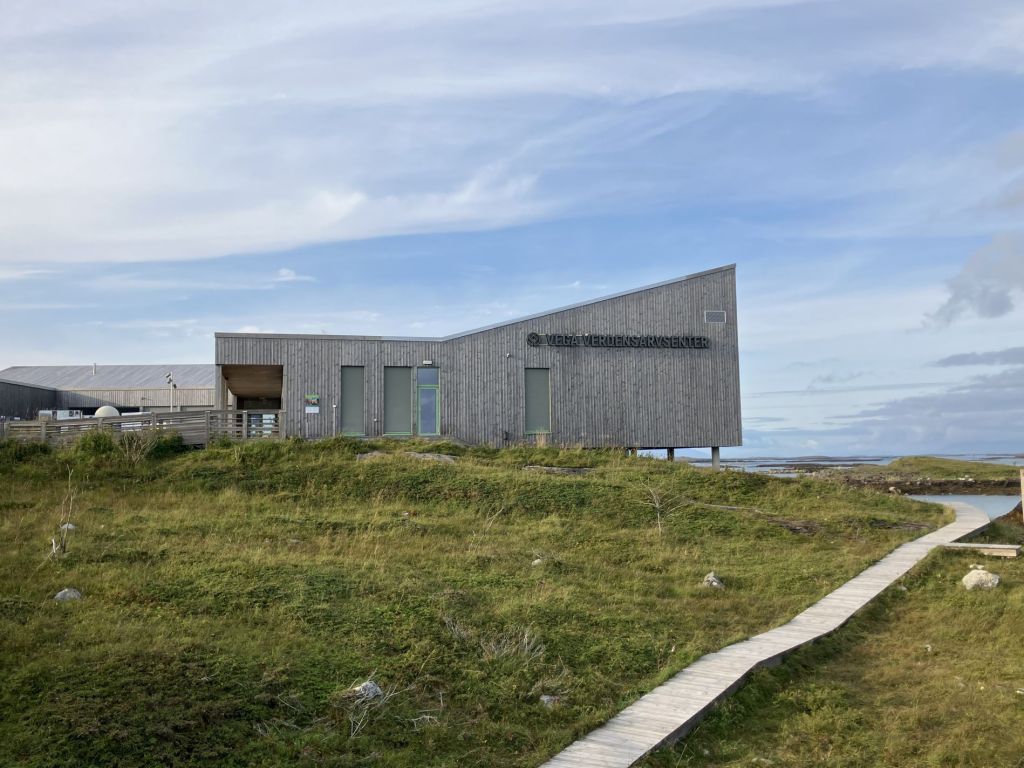
“I talked to the UNESCO Vega Archipelago museum”, she says. “They say the best thing to do is to come to Gardsøya on the north of the island. You can tie up right next to the museum. The problem with Igerøya is that you need to get a bus to the museum and they only run at certain hours. Gardsøya is much easier.”

I haven’t planned a route to Gardsøya, and to get there we need to thread our way through an intricate system of shallow channels and low-lying islands, all the time avoiding submerged rocks and drying mudflats. But we have good charts, and we decide to give it a go.

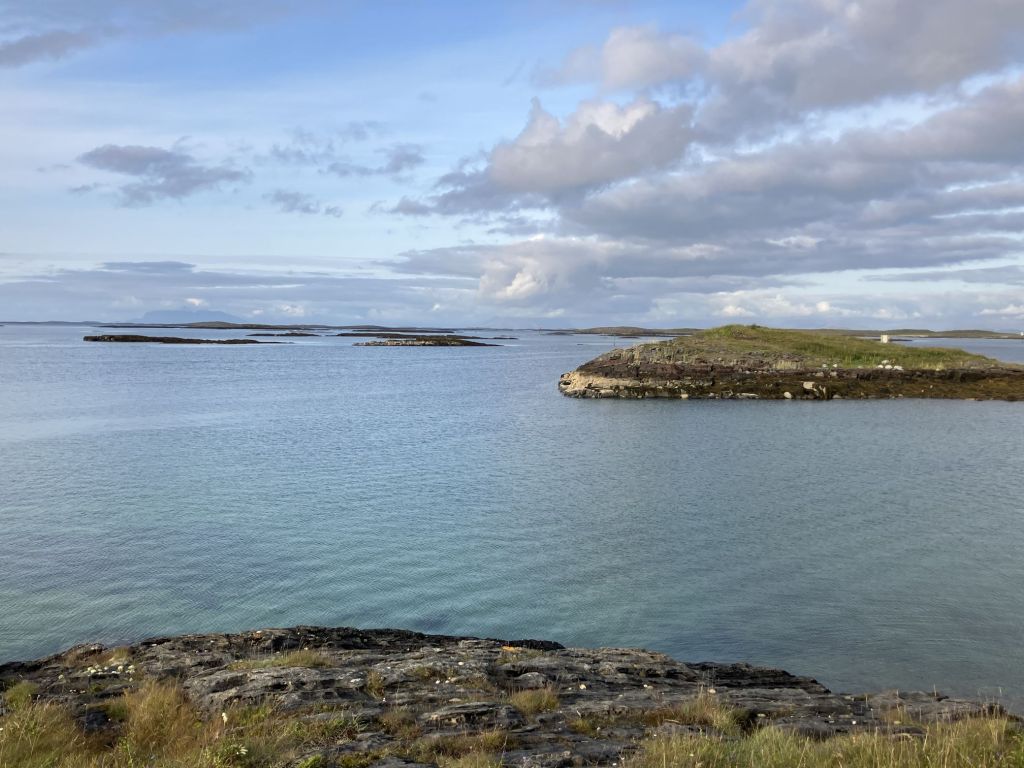
It’s a tortuous route, but at least it is well marked. We get good at identifying the marker poles and beacons and matching them with those shown on the charts. On either side, dark jagged lumps of rock slide past, and the depth falls on occasions to just a metre or so clearance below the keel. But somehow we make it, and soon we are edging our way gingerly into Gardsøya harbour and to the pontoon below the distinctive UNESCO museum. We are the only boat there.

“Well, that took a bit of concentration”, I say, breathing out. “But at least we made it.”

Gardsøya harbour, Vega.

Not long after we tie up, we see another boat entering the harbour.

“It has a British flag on it”, says the First Mate. “I wonder who it is?”

It turns out to be the Chairman of the Cruising Association, Nick, in his boat Spellbinder, along with his wife Sue, and two friends. We also belong to the Cruising Association.

“We were just thinking of having an eclipse-watching drink”, says Nick. “Would you like to join us?”

It’s partially cloudy, with patches of clear sky. Two G&Ts later, it’s completely cloudy, with no sun at all.

“Oh well”, I say. “It looks like the eclipse has been eclipsed. You can’t win them all.”

The eclipse that wasn’t. Even the birds didn’t care.

In the morning, we walk up to the museum.

“The UNESCO Vega Archipelago museum is a tribute to the sustainable way that generations of fishermen/farmers have lived in an inhospitable seascape near the Arctic Circle, based on the now unique practice of eider-duck down harvesting, and celebrates the contribution made by women to the eider down process”, the museum brochure tells us. “The Archipelago was included into the World Heritage List in 2004.”

The UNESCO Vega Archipelago museum.

A film is just starting in the small cinema.

“After the ice retreated 20,000 years ago, the land started to rise”, it tells us. “Vega itself was settled by hunter-gatherers from Northern Europe about 11,000 years ago. But the low-lying islands and skerries didn’t really appear until much later. They weren’t settled until about 1500 years ago, when the fishing/farmer and eider-duck tending culture started to develop. By the time of the Viking era in 900 AD, the Archipelago was already an important centre for eider-down production. It has carried on since then to the present day.”

The Vega archipelago.

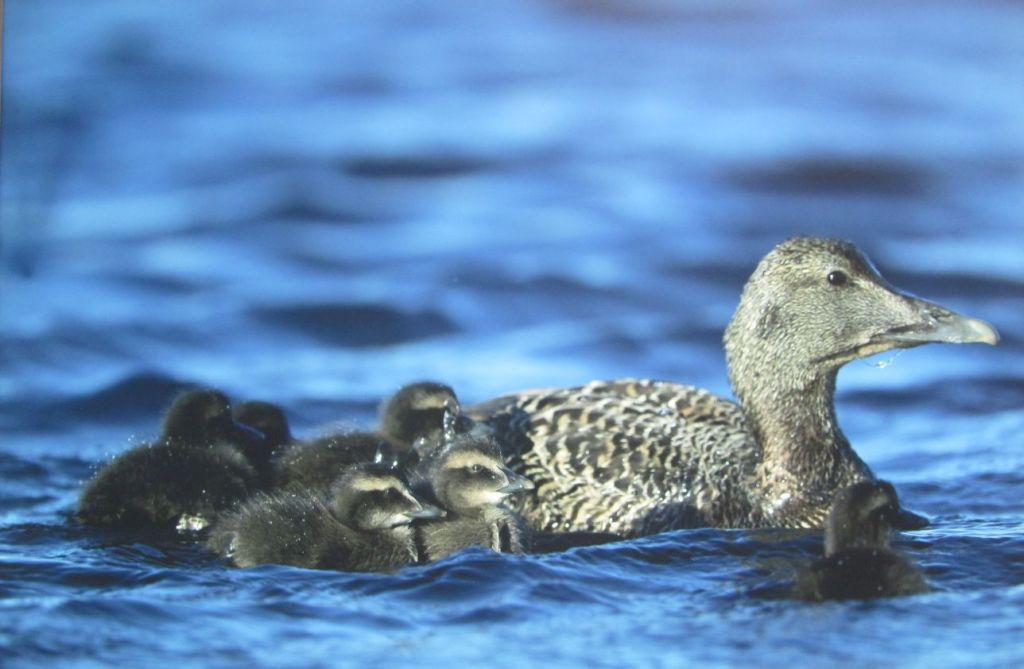
“The ducks return from their overwintering areas around March to mate, after which the females always return to the same breeding sites and the males leave”, the film continues. “The eggs are laid in May and June. After hatching, the ducklings stay in the nests for a few days before they venture to the sea, and swim with their mothers for the rest of the summer. Females and males meet up again in the wintering areas in late autumn to form new pair bonds.”

Eider duck mother and her ducklings.

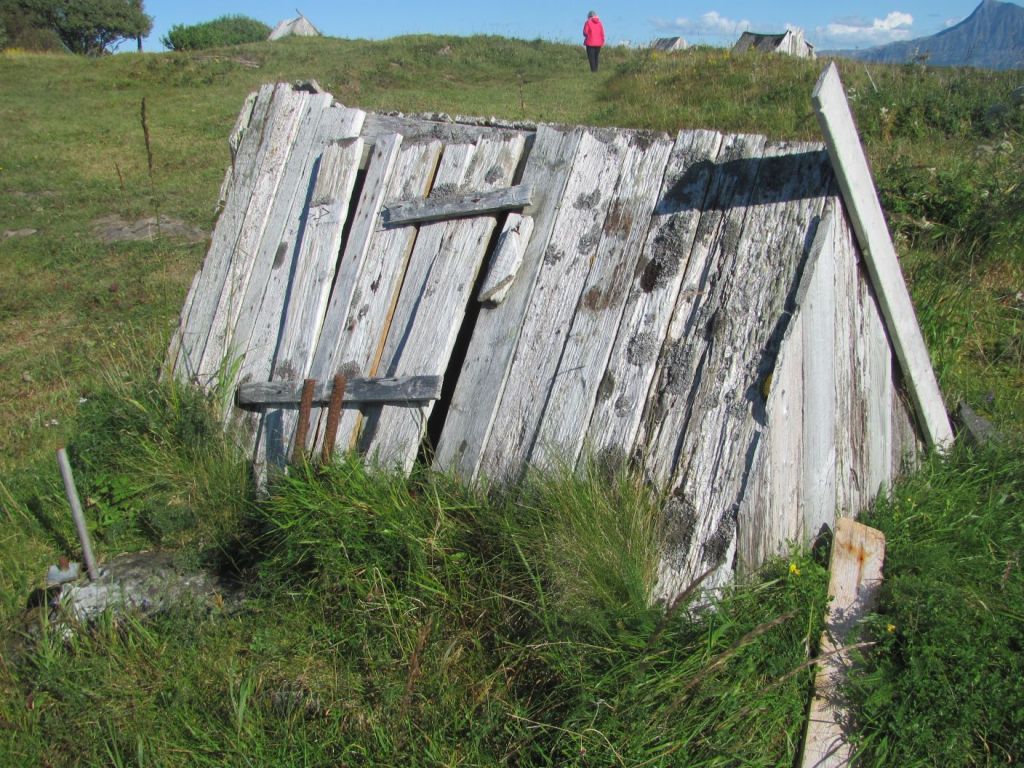
“Over the years, the islanders learnt how to build small nesting houses to protect the birds, using seaweed to make the shape of the nest which the ducks line with their own down. At the end of the season after the ducks have left, they collect this down, clean it, and sell it. It takes 60-70 nests to make one eider down duvet. One duvet is worth as much as a cow. But it’s important to realise that these are wild ducks, not domesticated ones.”

Eider duck house, Fleinvær islands.

“The population of the islands was at its peak in the 1900s. Then it started to decline due to government policies to encourage people to move to the cities for ‘proper’ work rather than persisting with these antiquated practices. But slowly this view changed, with the UNESCO World Heritage status now having given the archipelago a new lease of life.”

The film comes to an end, and we move on to the rest of the museum.

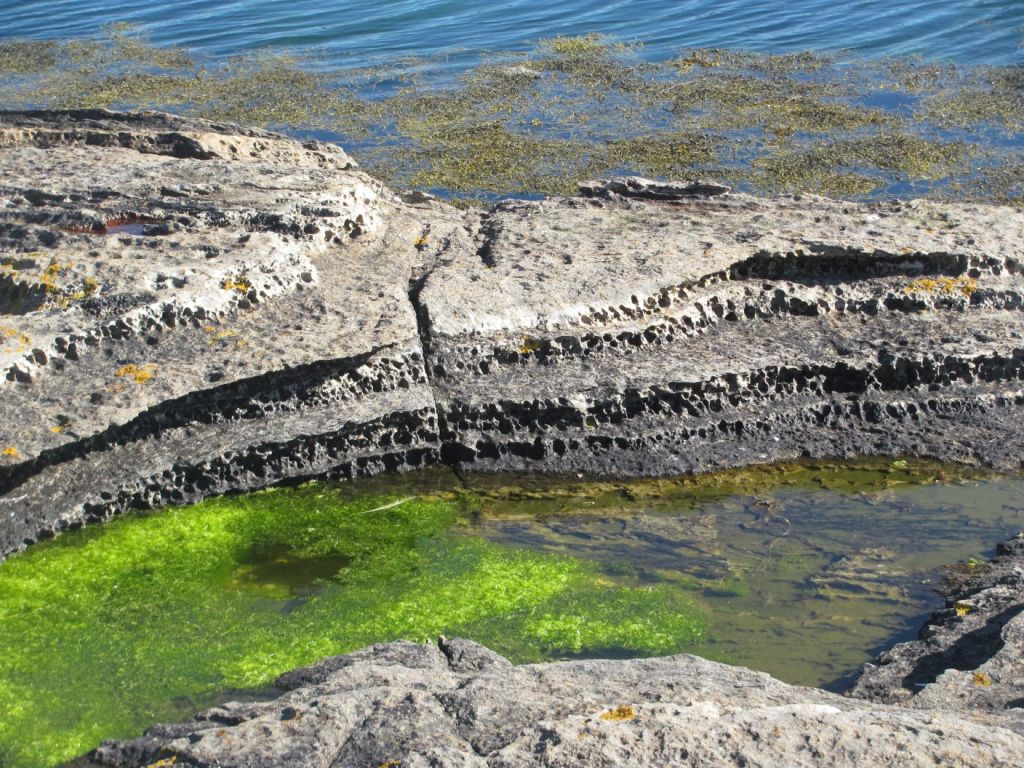
The section on the geology of the archipelago finally clears up a minor mystery for me. When we were on the Fleinvær islands, we had seen layers of rock that were pockmarked with cavities, but, not being a geologist, I had not been able to find a satisfactory explanation for what these were. Had they been where bubbles of gas were trapped in some volcanic lava long ago? It seemed unlikely, as most rocks on Norway’s coast are metamorphic rather than volcanic in origin.

Layers of cavities, Fleinvær islands.

“The story starts 600 million years ago”, one of the panels explains. “Lime particles attached to slimy bacteria settled to the bottom of the ocean and were sandwiched between layers of sand and clay. Then when the two continents of Laurentia and Baltica collided millions of years later, the enormous pressures transformed the limestone into marble.”

“Marble is a relatively soft rock, so when these layers were exposed again, molluscs called piddocks burrowed into the marble to create a home for themselves to live in and to obtain raw material for their shells. Acid rain has since widened these pits and sharpened the edges.”

As we leave the museum, the man at the front desk stops us.

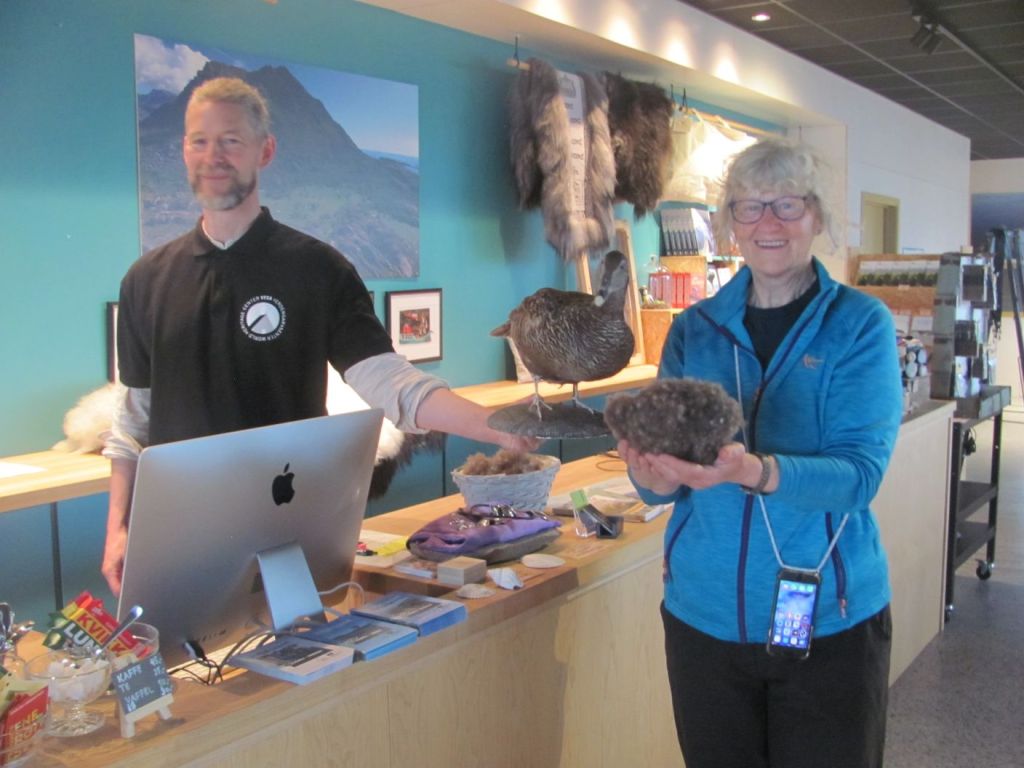
“Close your eyes and cup your hands”, he says. “I am going to put a ball of eider down in them.”

We close our eyes and wait. And wait. Nothing happens.

“You can open them now”, he says.

We open our eyes. In our cupped hands is a large ball of down. It weighs nothing.

As light as a feather.

We walk slowly back to the boat.

“It’s interesting about the Norwegian government’s policies to move people away from the islands in the 1960s and 1970s”, says the First Mate. “It’s a similar story to what we heard in Myken. Discarding the old ways in the name of modernisation.”

“But I wonder if what they are doing now is truly sustainable?”, I say. “It’s good that these traditional practices are not being lost, but preserving them is dependent on an influx of money to keep them going. If budgets get tight, I wonder if that can continue?”

A maelstrom, Cold War games, and an island for artists

“We have to go and see the Saltstraumen while we are here”, I say. “It is supposed to have one of the largest tidal currents in the world. If you remember, we missed it on the way up because we had to take advantage of the favourable winds to get across to the Lofotens.”

We are back in Bodø, the administrative centre of Nordland. The Saltstraumen channel lies about ten kilometres southeast from the town.

“The maximum flow is at 1500 this afternoon”, says the First Mate, consulting her phone. “We can take the number 300 bus which arrives there at 1330. That gives us an hour and a half to explore the area and maybe even have a cup of coffee at the café there before we see it at its peak. There’s a bus back at 1536 we can catch.”

We have lunch and catch the bus. When we arrive, it is pouring with rain, so we take shelter in the café overlooking the channel. The First Mate orders coffee and waffles.

The Saltstraumen starts its flow,

“Apparently there is an old legend associated with it”, I say, reading a pamphlet I find there. “Back in Viking days, there was a powerful king called Raud the Strong who ruled an area around the stream. Rumour even had it that he had magical powers that could control the elements. Anyway, in the time that Olav Tryggvason was trying to Christianise Norway, Raul wanted to have nothing to do with the new religion, rather sticking to his traditional pagan gods. So Olav Tryggvason sent his men to capture him, and then ordered them to to force a snake down his throat until he converted to Christianity. Raud stubbornly refused, even when the snake gnawed its way out of his stomach. He eventually died, and Olaf supposedly confiscated all Raud’s lands and longship for himself.”

“It’s a bit of a gruesome story”, says the First Mate as she swallows the last piece of waffle. “I thought Christianity was supposed to be all for love and peace?”

“Well, yes”, I say. “But if people don’t want love and peace, they have to be taught to want it. The hard way, in some cases.”

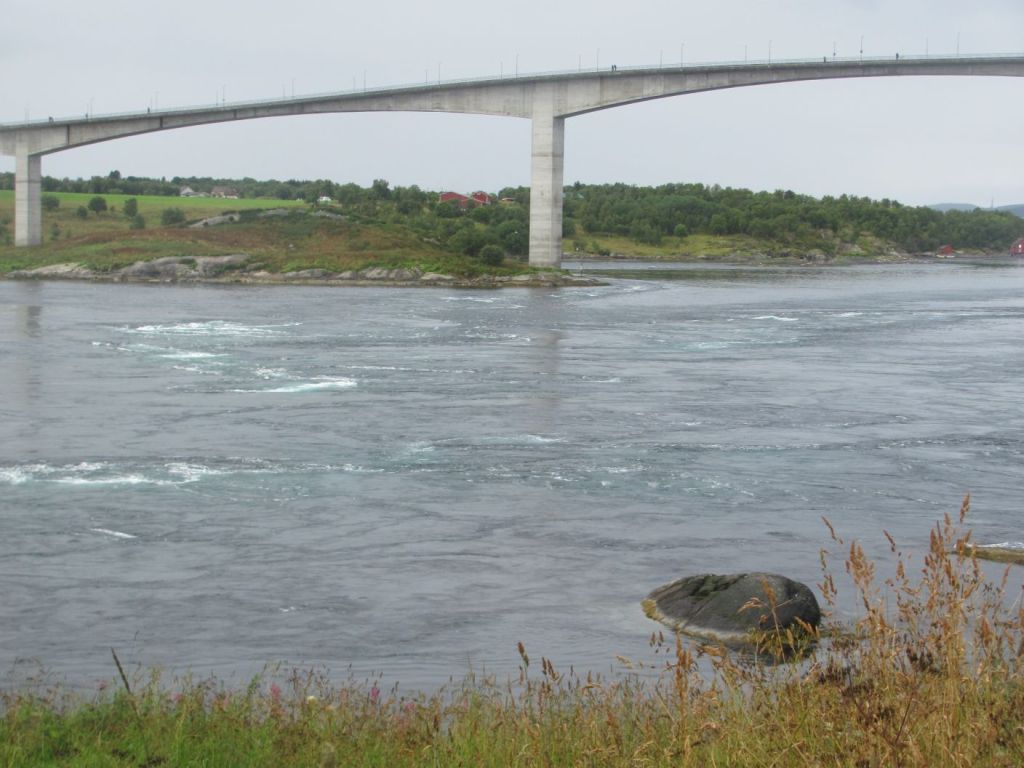
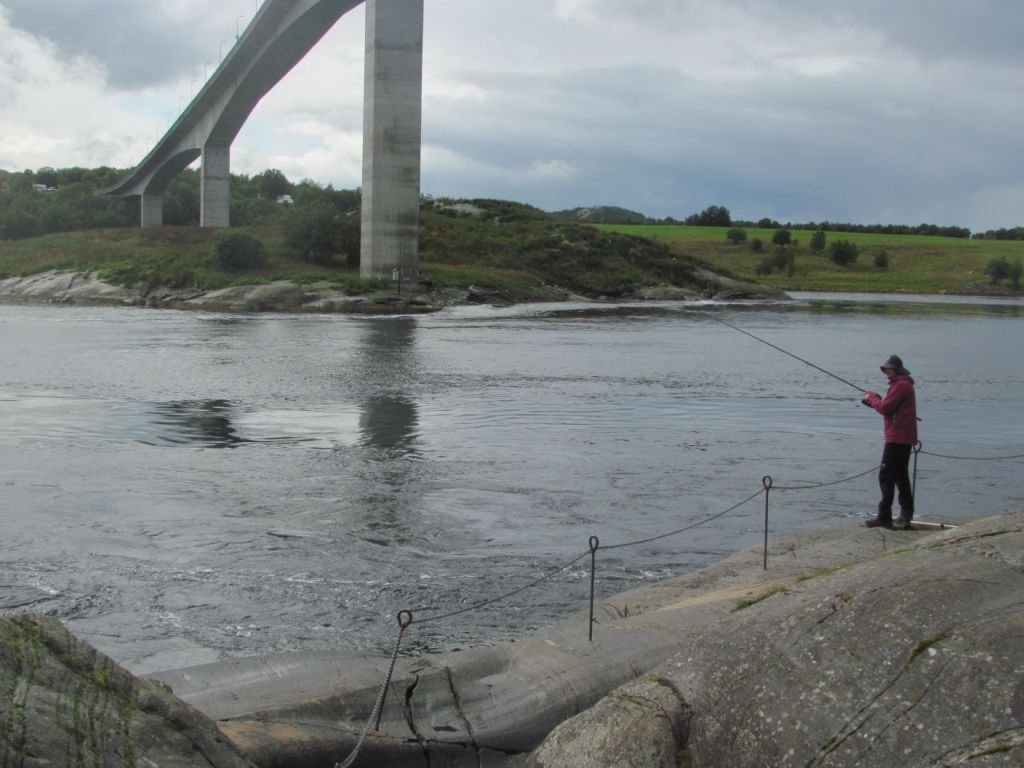
It stops raining, so we walk along the shore path towards the bridge. Several fishermen are there with their rods. Apparently it is a good place to catch cod as they swim upstream. The flow is impressive – 400 cubic metres forcing its way through the narrow channel every six hours at a speed of up to 20 knots.

Waiting for the cod to bite.

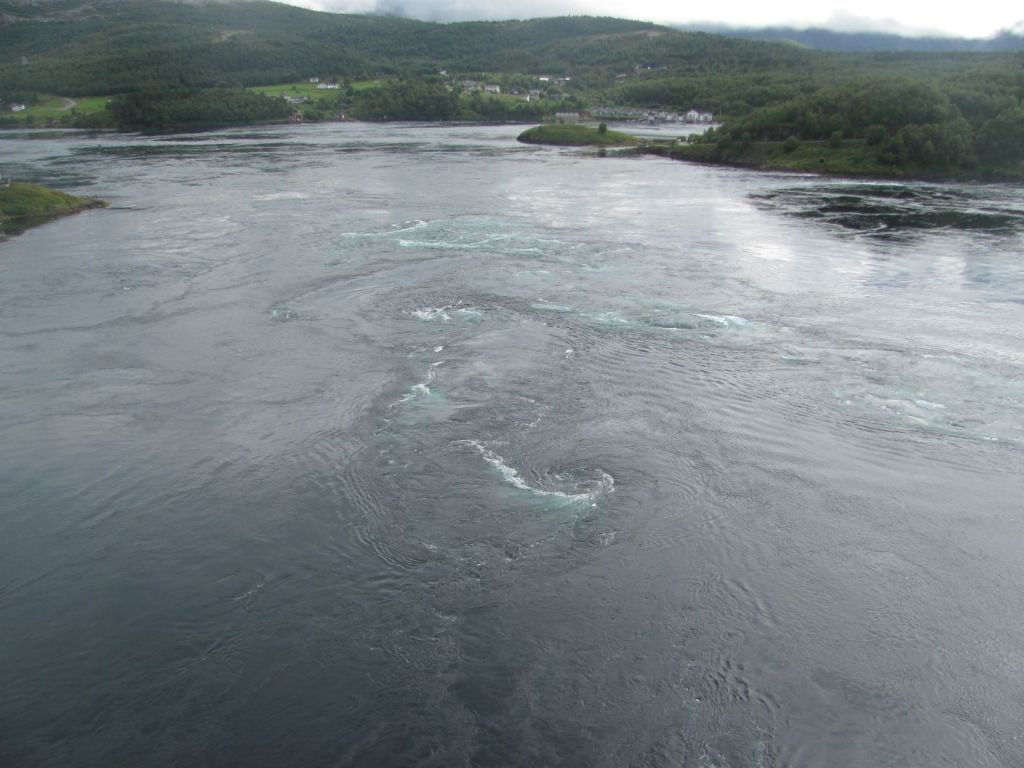
Whirlpools and maelstroms form here and there, some up to 10 m in diameter.

Whirlpools.

“I think I found the Corryvreckan in Scotland more impressive”, says the First Mate on the way home.

“The flow there is less”, I say. “But you get standing waves being set up because of the rock pinnacle in the middle, so it looks more frightening. Do you remember that time we tried to sail through it, but I got the tide times wrong, and we ended up going against the current. We had to take refuge in the little bay to the side of it until the tide changed.”

“I’ll never forget it”, she replies.

The next day dawns bright and sunny.

“I might go and see the Norway Aviation Museum”, I say over breakfast. “That’s another thing that we missed last time, because it was closed over the weekend.”

“I think that I’ll do a bit of browsing in town”, the First Mate says. “Aircraft are not really my thing.”

“Can I come?”, asks Spencer. “I am quite interested. I promise to behave.”

Spencer and I clamber on the bus that takes us to the museum on the outskirts of Bodø.

“Pets can go free”, says the bus driver.

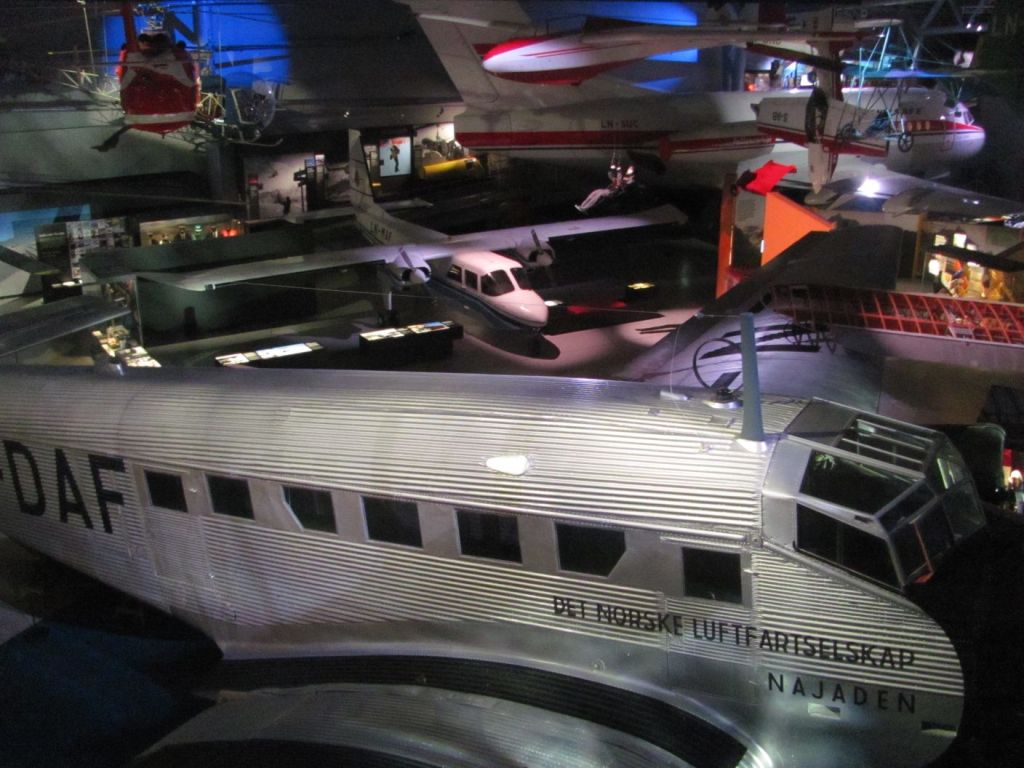
We spend the next couple of hours immersed in a fascinating collection of aeroplanes past and present detailing the history of military and commercial aviation in Norway.

Aircraft galore!

We learn about how the Nazis built airfields for the Luftwaffe to operate their Messerschmitts from.

Messerschmidt 109.

After the Second World War, the Cold War started. All sorts of powerful missiles were built to defend and attack the enemy, which is, of course, both unstated and stated, Russia. Neighbours who share a border, but who don’t trust each other.

Cold War toys.

“Wow! You humans certainly know how to destroy your own species”, says Spencer in astonishment.

“You spiders are no different”, I respond. “You often eat your young when times are tough. And what about the Black Widow who eats her own husband. We don’t do that sort of thing. Well, not as a rule anyway.”

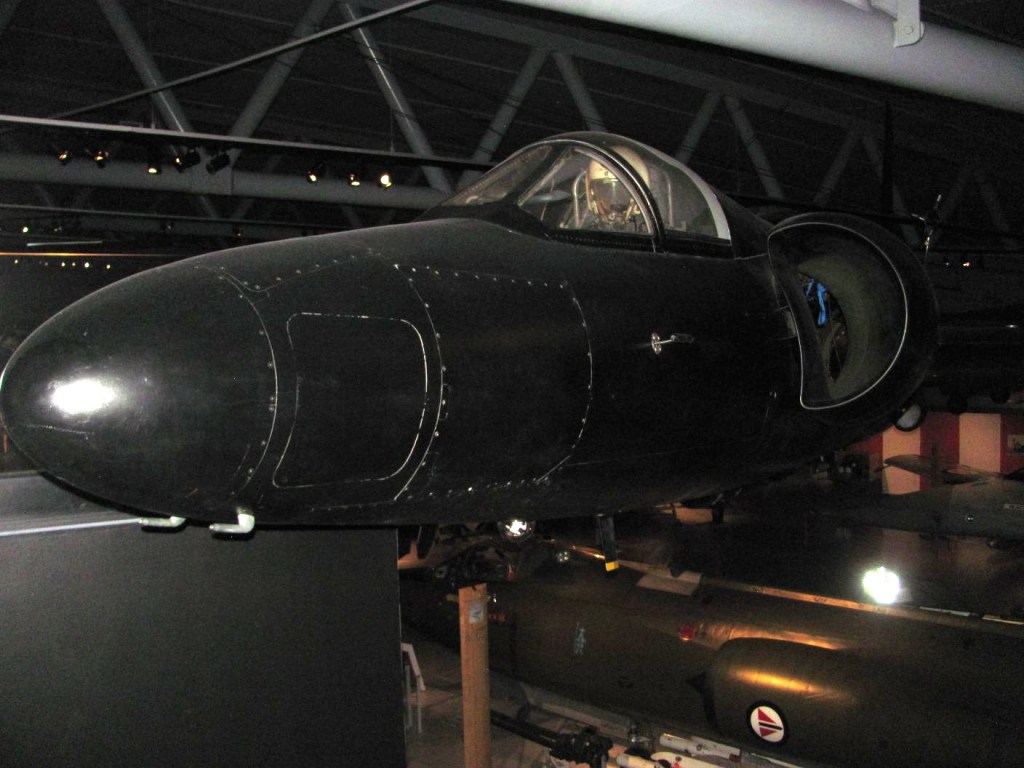
We learn that the U2 spy plane that was shot down over Russia in 1962 was actually heading for Bodø airport. I vaguely remember it being in the news when I was in school, but the details had passed over my head. At first, the Americans had pretended it was just a routine weather research flight, but when the Russians released photos of the air-force pilot and high resolution cameras recovered from the wreckage, they had to admit it was a spy plane. It was all a bit of an embarrassment for them and resulted in the cancelling of a summit meeting and a cooling of relations between the two countries for years.

U2 spy plane.

“Look at this one!”, calls Spencer, excitedly. “It’s all about the collision between a Soviet fighter aircraft and a Norwegian patrol plane in 1987. I haven’t heard about that one.”

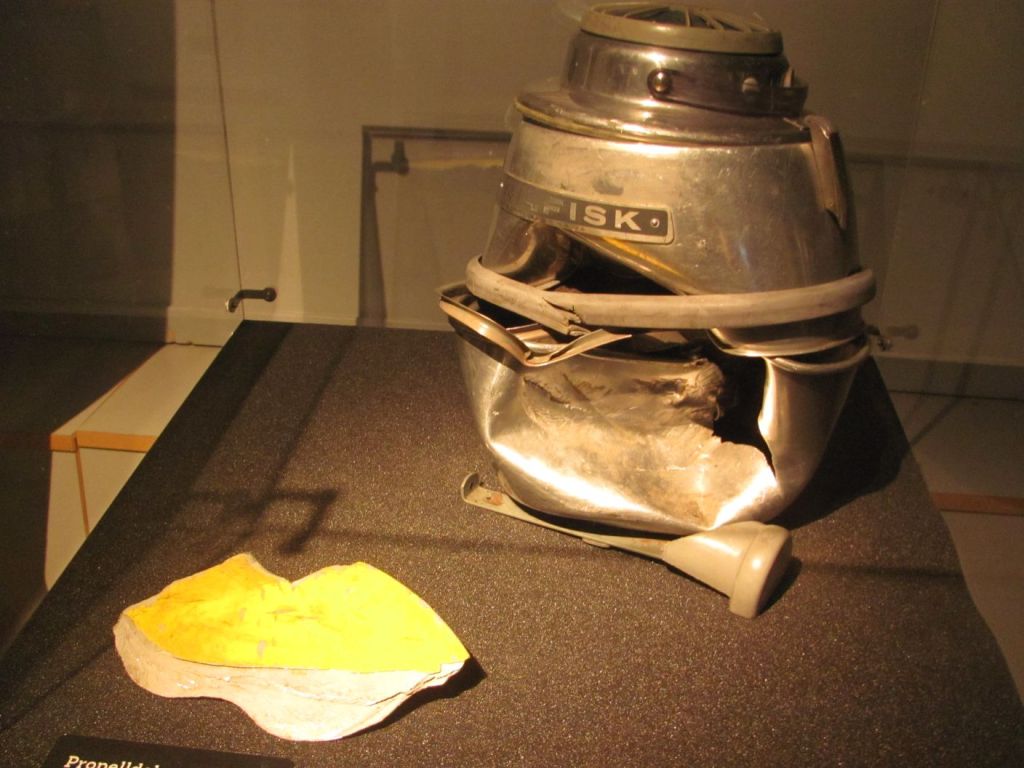
It is something that I knew nothing about either. Apparently the Norwegian aircraft was in international airspace observing Soviet navy manoeuvres when it was buzzed by a Soviet fighter to try and ward it off. The Soviet pilot had flown his plane underneath the Norwegian one, so close that the tailfin of the fighter actually came into contact with one of the propellers of the other. Pieces of the propeller ended up inside the Norwegian plane, actually embedded in a vacuum cleaner. Both planes landed safely at their respective bases. The Soviet Union officially apologised for the incident, although they did reward the pilot by giving him a medal for his work.

Propeller wingtip and vacuum cleaner.

“My mother used to have one of those vacuum cleaners”, I say. “I didn’t realise that it was tough enough to be able to stop a piece of propeller. Mind you, it did last for about 50 years.”

“Ah, they built things differently in those days”, says Spencer.

We move on to the civilian aircraft section.

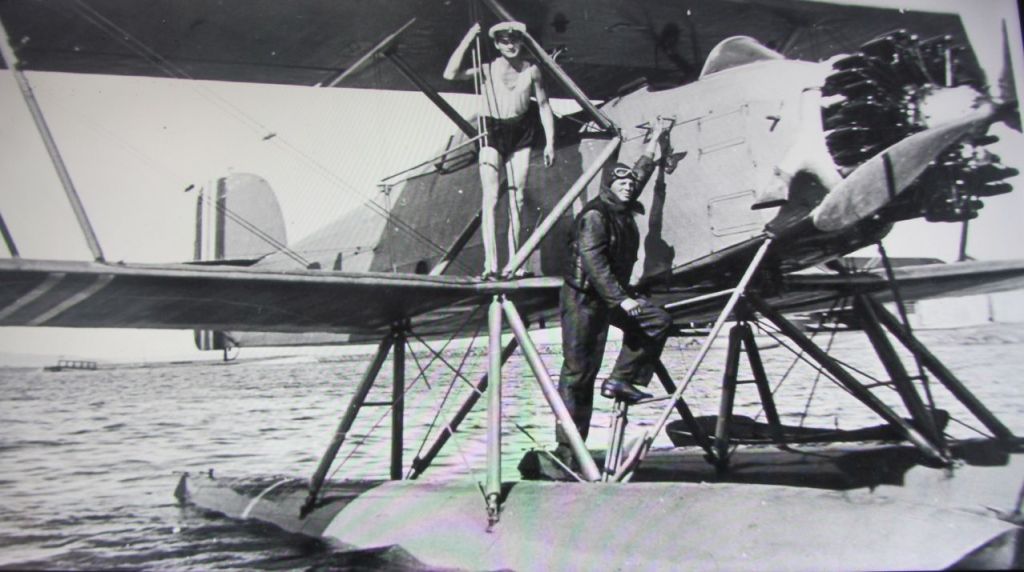
“Norway’s constitution states that it is to be an undivided kingdom”, one of the displays tells us. “But that wasn’t true when it came to communication and travel in the early days. The remoter parts of the country were very poorly connected to one another, to the extent that it would often take several days to travel from the north to the south. With the advent of air travel, the government committed itself to connect every part of the country.”

Early seaplane.

At first, this was by seaplane. But from 1935 more and more land-based airports were built, initially by the Nazis when they occupied Norway. In the 1950s and 1960s, much of this was funded by NATO to provide defence infrastructure during the Cold War. Several airports served both military and commercial purposes, Bodø being an example.

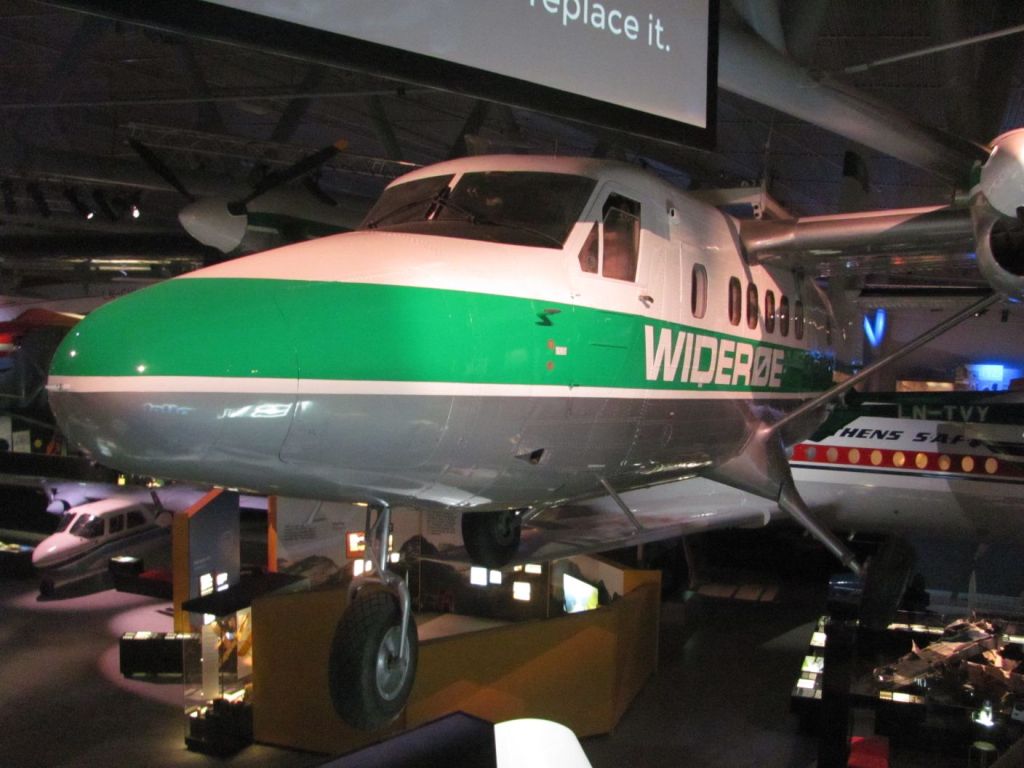
“It says that because of the terrain, many of the airports had to be STOL, Short Take Off and Landing”, says Spencer, gesturing towards a panel with his fourth leg. “And that the aeroplane best suited to this was the Twin Otter. Look, there’s one over there.”

De Havilland DHC-6 Twin Otter.

By the 1980s, air travel had become an integral part of the mass transport network.

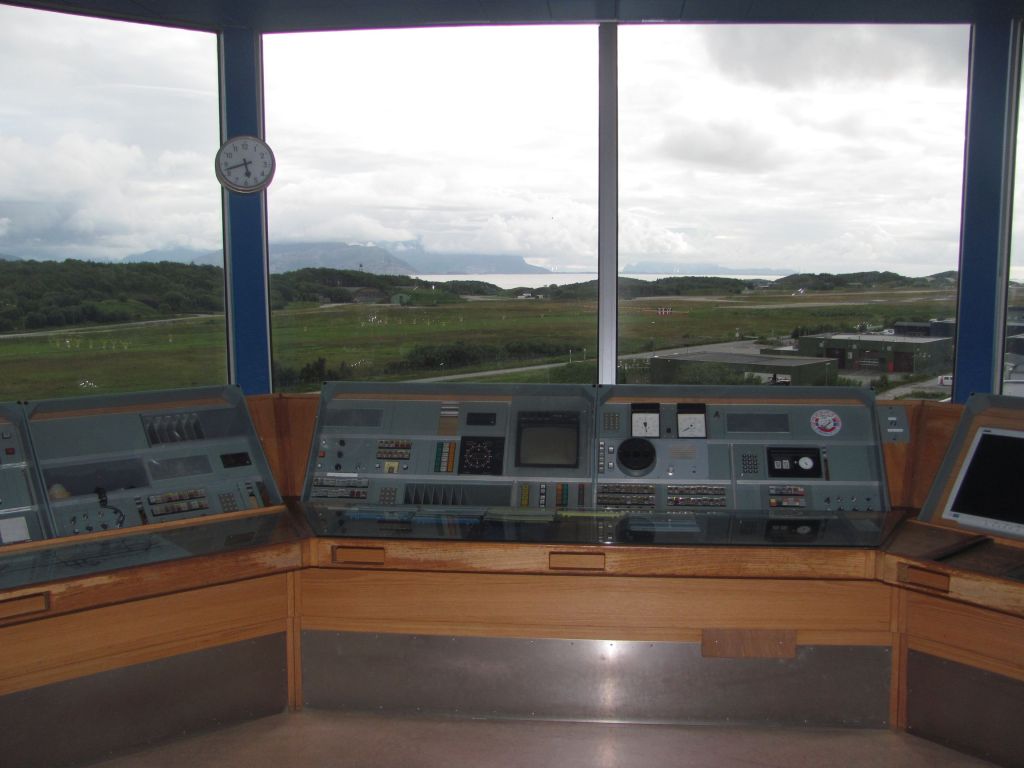
We come to the stairs leading to the control tower.

“It’s actually the old control tower for Bodø airport”, says Spencer. “Not a reconstructed one.”

I sit at one of the screens and pretend to bring in an incoming flight.

The old control tower at Bodø airport.

“SK 4104, Bodø Tower, runway 07, wind 060 degrees at 8 knots, cleared to land”, I say.

“Cleared to land runway 07, SK 4104”, says the pilot of SK 4104.

“SK 4104, after landing vacate left on Charlie and contact Ground 121.8”, I respond.

“Vacate left on Charlie, Ground 121.8, SK 4104”, confirms the pilot.

“Hey, didn’t you see that other plane still on the runway”, shouts Spencer. “They are going to hit.”

It’s too late. There is an almighty explosion as both planes are engulfed by flames. Fire engines race to the tarmac and begin spraying the wreckage with foam.

“It’s probably time we left”, I say to Spencer. “Perhaps we can find a back door we can sneak out.”

In the evening, the First Mate and I compare notes.

“Spencer behaved really well”, I say. “I might take him again.”

“Well, I went to a lunchtime concert in the town centre”, she says. “There was a young female singer and songwriter called Soetkin Baptist, originally from Belgium, but who has been living in Bodø for eleven years or so. She had a beautiful voice and was really into audience participation. She took us line by line through a song, so that by the end we could all sing it. At least the Norwegians could – I couldn’t understand a word of it, so I hummed along. But she had infectious passion and enthusiasm, and the audience really warmed to her. I really enjoyed it.”

Soetkin Baptist doing her stuff.

In the morning, we continue southwards. The wind is from our starboard quarter, so we start sailing almost as soon as we leave the harbour. It strengthens as we leave the Bodø approaches, and soon we are touching seven knots with the genoa only. Three hours later, we reach the Fleinvær islands, south-west of Bodø.

“There’s an anchorage shown in the pilot book that we can stay tonight”, I say. “Let’s try that.”

But the wind is too strong and the low flat islands offer little shelter.

“There’s a pontoon a bit further round on the island of Sørvær”, says the First Mate, consulting the harbour guide. “It might be better.”

Marginally better, as it turns out. We try to tie up to the leeward side where there is space, but we kept being blown off by the wind. After the fourth attempt, I am just about to give up.

A man appears walking his dog. He comes down to the pontoon and offers to help. Eventually we manage to secure a line to one of the cleats and tie up.

Struggling against the wind.

“Phew, that was a bit of an effort”, says the First Mate. “That wind is strong. Thanks so much for your help. Do you live here?”

“Yes, I am an artist”, the man says. “I am the only permanent resident on the island.”

The dog barks.

“Oh, yes, of course, you live here too”, says the Resident Artist, fondling the dog’s ears.

“I studied in Cardiff”, he continues, noticing our flag. “I loved it there. But here I find the peace and quiet I need for my work.”

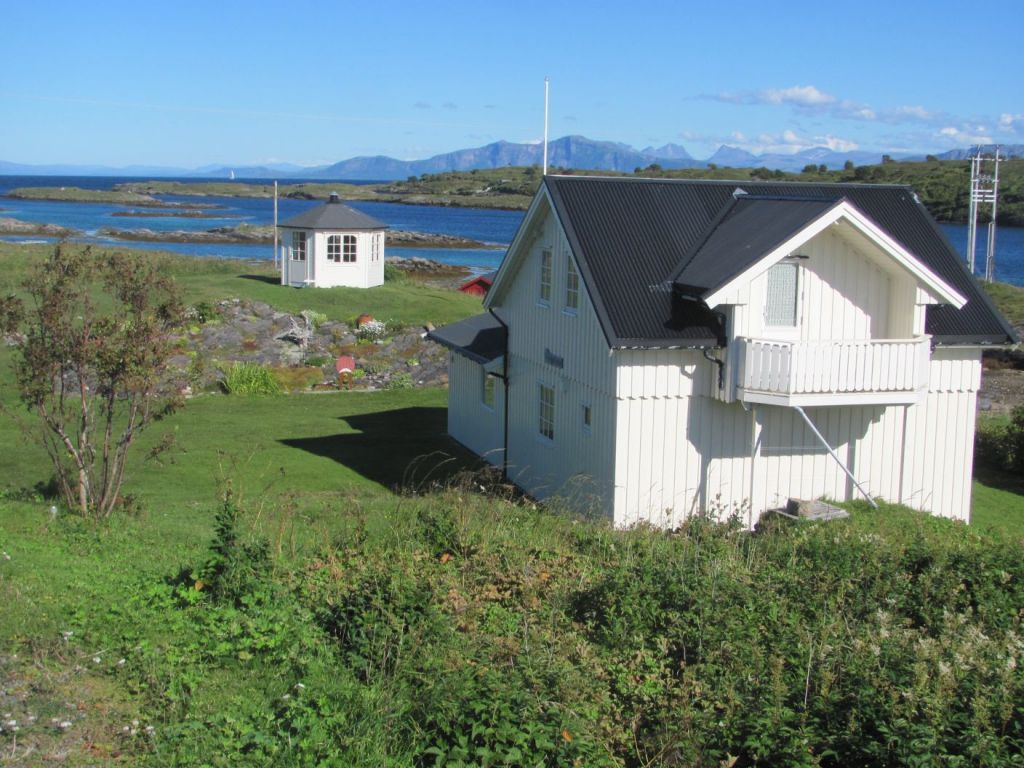
Later we go for a walk around the island. I can see why he finds peace and quiet here. Although there are several houses, and in good condition, almost all are empty. Many even have silent robot lawnmowers to keep the grass well-trimmed.

Empty summer houses.

“They are summer homes”, a girl we meet on the way tells us. “Most belong to people that used to live here. They moved to the cities for jobs, but the houses have been in the family for generations, so they come back in the summer. And some come back to look after the eider ducks, but even those are declining now. It’s sad.”

“Were you brought up on the island?”, asks the First Mate.

“Yes, I am the artist’s daughter”, she responds, somewhat wistfully. “I loved it here. I knew every inch of the island, and everyone knew me. There was only one other girl my own age, but we were the best of friends. Now I live in Bodø, but I still come back with my husband to stay with my Dad. We’ve been here two weeks, but we are going back on the ferry tonight. My Dad is cooking a farewell dinner at the moment, so I need to hurry back.”

“It’s interesting how we keep meeting people who were brought up on these islands in Norway and keep returning to them from the wider world”, I say.

“I suppose if you don’t have anything else to compare it with during your formative years, then that’s how your personality develops”, says the First Mate. “I would find it too quiet.”

“That’s because you were brought up in a town”, I say. “It’s what you know.”

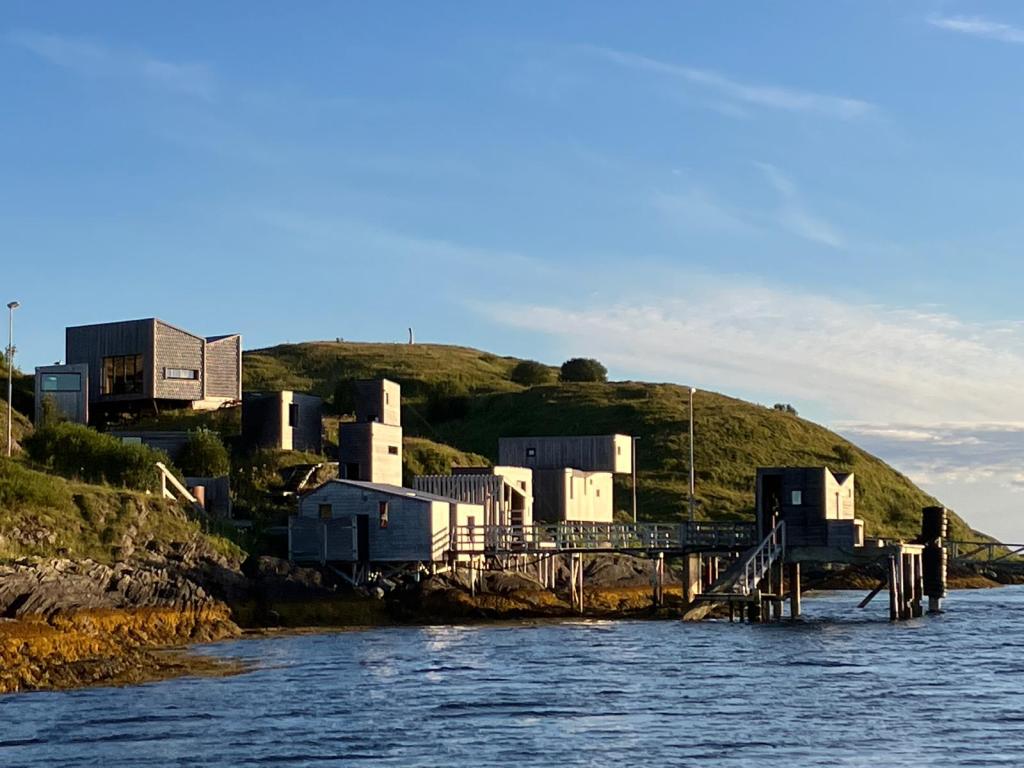
We eventually come to an eclectic collection of modern wooden buildings overlooking the sea, not far from the pontoon where we are tied up.

Arctic Hideaway.

“I saw these buildings from the boat”, says the First Mate. “What do you suppose they are?”

A door of one of the buildings suddenly opens and a girl comes out clad only in a towel.

“This is an artists’ retreat”, she says in response to our surprised faces. “It’s called ‘Arctic Hideaway’, and was the brainchild of Håvard Lund, the composer and musician. Artists come from all over the world to interact with other artists and be inspired by the island. Are Andreassen, the resident artist on the island, also comes and gives classes. We just finished a session last week, so the place is empty apart from my friend from Spain and myself. We are the caretakers at the moment. We are expecting someone to arrive tonight on the ferry, but we just wanted to have a sauna first.”

Another girl appears, also clad only in a towel.

It certainly is an island of, and for, artists, I think.

Later, as we sit in the cockpit of the boat sipping our wine, two stark naked girls emerge from the small wooden sauna hut on the jetty near the Artists’ Retreat and dive into the sea.

“Just keep drinking your wine”, the First Mate says. “You’re far too old for them anyway.”

Sacred drums, a lone hiker, and a battle for steel

“There’s a bus to the museum and stone church”, I say, looking up from the guide book. “I think I might take it.”

We are in Harstad, a somewhat ‘no-nonsense’ functional town. We had sailed down from the island of Senja the day before in stiff winds and rather choppy seas, and are relaxing over a leisurely breakfast.

Tied up in Harstad guest marina.
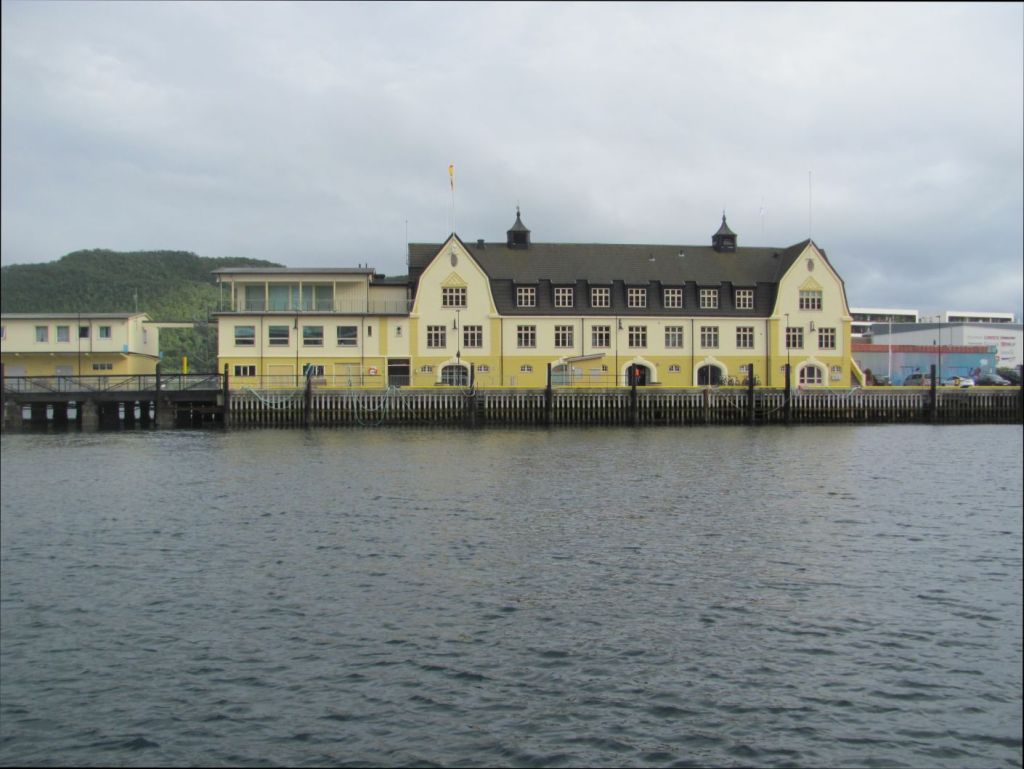
Former HQ of the Store Norske Spitsbergen Coal Company, Harstad harbour.

“You go”, says the First Mate. “I’ll stay here. I want to have a look around the town.”

I take the number 10 bus out to the Trondenes peninsula where the museum and church are located.

“We cover the history of the area from the Stone Age through the Viking and Middle Ages”, the girl at the desk tells me. “You can start through that door there and just follow the exhibits around. Don’t be frightened of the Vikings though. They are quite realistic.”

A Viking welcome.

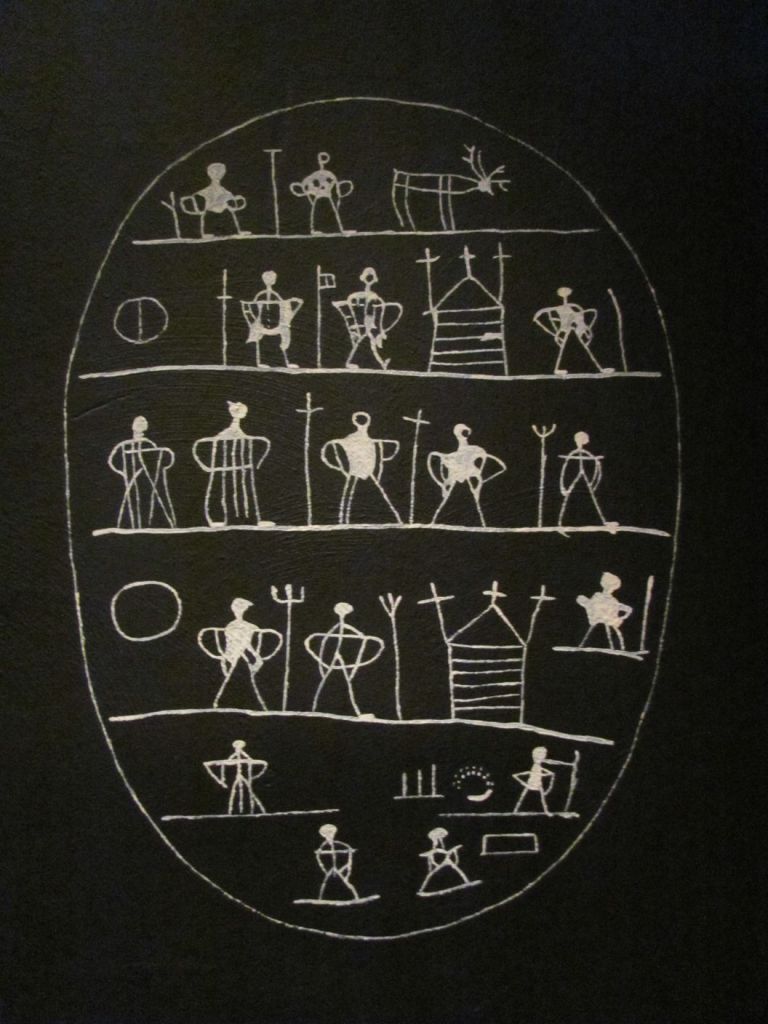
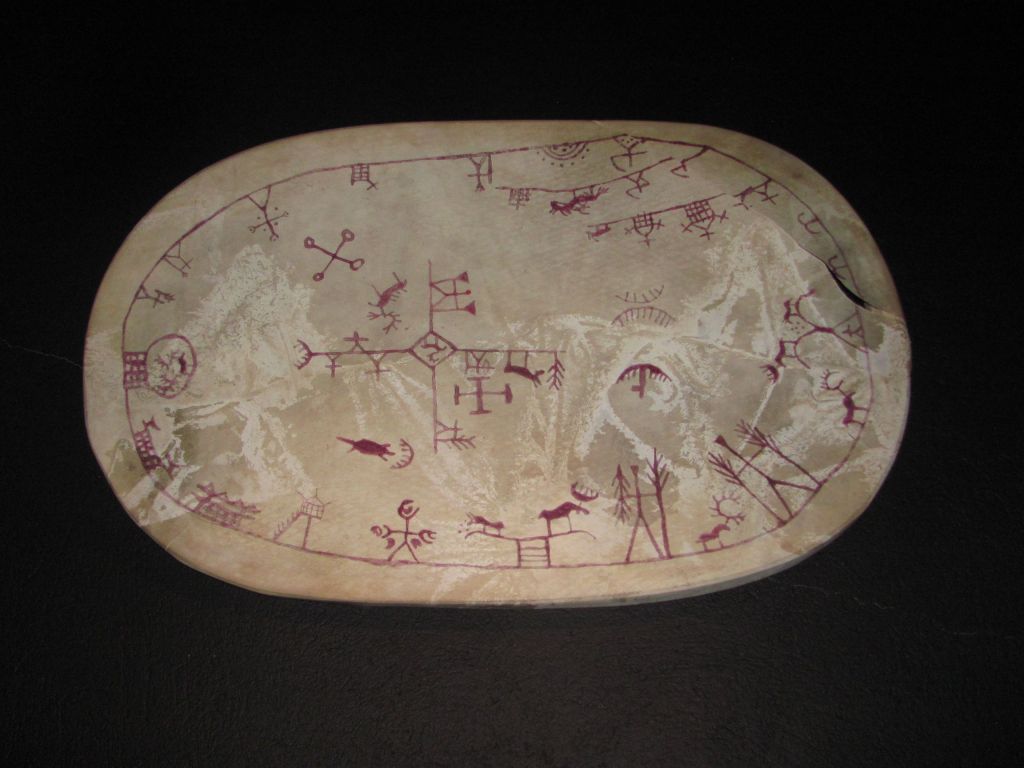
Of particular interest are Sámi drums. Made of reindeer skins stretched over a wooden frame or bowl, with various symbols painted on them, the drums are used by Sámi noaidi, or shamans, to enter into a trance during ceremonies, or to divine the future. Many individual households also have their own.

Patterns on a Sámi drum.

“The symbols represent a worldview of the cosmos, with the reindeer and their predators usually prominent”, the panel tells me. “Other symbols represent hunting, fishing and herding activities, along with mountains, lakes, people and gods. Often these are arranged in different layers representing heaven, life on earth, and the abode of the dead. When the noaidi went into a trance, he would be able to travel between these different worlds.”

Regrettably the early Christian missionaries saw the drums as sorcery and confiscated many of them. Those using them were sometimes even put to death, in an attempt to stamp out paganism. Fortunately modern Norway has a much more enlightened view to the Sámi traditional religion, and many of the drums that were confiscated have now been returned to their owners.

Sorcery?

“Unfortunately, the church is closed”, says the Front Desk Girl when I ask her the way to it. “But you can see it from the outside.”

I wander over and around it, but it’s a grey day, and I don’t see it at its best.

Trondenes stone church.

“You should at least tell your readers that it was built in 1435 to replace earlier churches, the first of which was built in the eleventh century”, says Spencer when I get back. “It’s the northernmost stone church in Norway.”

“I’m always amazed that they manage to find an -est for most things”, I say. “But yes, you are right. I should mention that. Wait a minute …”

It rains heavily in the night, but clears in the early morning to give a warm sunny day.

We decide to take the bus from Harstad down to Narvik to visit the War Museum, rather than sail there.

“Narvik is at the end of a long fjord which would add an extra 60 NM and three days to your trip”, ChatGPT tells me. “I’d recommend going by bus if you can.”

It’s a five minute walk to the bus station from the marina.

Catching the bus to Narvik.

“Excuse me, are you Kiwis?”, asks a voice as we clamber on. “I heard you talking and thought I recognised the accent. I’m a Kiwi.”

It’s a girl in her twenties. At the stopping place where we need to wait to change buses, we chat to her.

“I’m actually from Tauranga”, she says. “At the moment, I am living and teaching in Croatia. I’m just on holiday in Norway. My goal is to hike from Moskenes at the bottom of the Lofotens right up to Tromsø, avoiding roads as much as possible. It’s about 400 kilometres. I am doing it by myself, and staying in the DNT huts where I can. It’s taken three weeks so far. I had a few days off in Harstad to meet some friends, but am carrying on now.”

It’s obviously the thing for young females to hike alone along challenging routes in Norway. She is the second that we have met on our travels this year, the first being the Norwegian girl on the Svartisen glacier.

She picks up her enormous rucksack.

“I’ve got enough food in here to last me for five days”, she says, noticing my raised eyebrows.

“I like your solar panels on the top of your rucksack”, says the First Mate.

“Yes, they work surprisingly well”, she says. “I charge my phone and other electronic gadgets with them. Now, if you don’t mind, I need to get going. The trail starts from here just a couple of hundred metres up the road. There’s a hut I am aiming for about 20 kilometres from here. I’ll try and get there tonight. But my legs are tired, so I might have to sleep under the stars if I don’t make it.”

“I wish I was young again”, says the First Mate after she is gone. “There’s no way that I could walk 20 kilometres to a mountain hut carrying all that weight. Or really want to for that matter. But I have to admire her.”

“I am not surprised that her legs are tired”, I say. “What with the size of that rucksack.”

Waiting for the next bus at Steinlandsundet.

The next bus arrives and takes us through some beautiful scenery of forests, remote bays, and jagged mountains. Eventually we arrive in Narvik. It’s a five minute walk to the war museum. It’s part of the Narvik War and Peace Centre.

“The museum is in three levels”, the girl at the front desk explains, handing us our tickets. “The first level is on the actual battle of Narvik itself, the second is on the five-year occupation afterwards, and the third is more reflective on war and violence in general. You can start off on Level 1.”

“Sounds good”, says the First Mate. “Let’s go.”

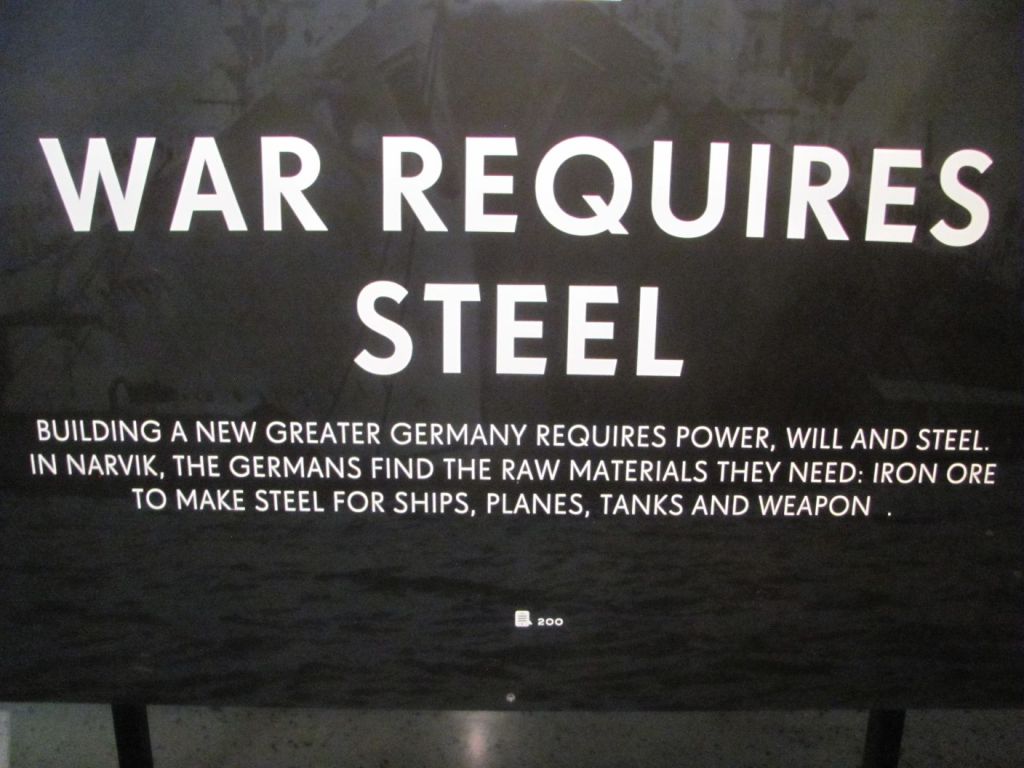
“War requires steel”, posters tell us, as a prelude to what the war in Narvik was all about. “And steel requires war.”

Hitler realised that if he was to make Germany a great nation with strong armed forces, he had to control the production of iron ore. Reserves in Germany were limited, and not of the highest quality, but neutral Sweden was a major exporter of high quality iron ore from her mines in Kiruna. The ore was taken across by rail to Narvik in Norway, as it was the closest port that remained ice-free in the winter on account of the Gulf Stream. Sweden had its own port, Luleå, but it freezes up during the winter.

“So, to secure supplies, Germany attacked Narvik in April 1940 by sea and captured it”, says the next poster. “But Britain also realised Narvik’s strategic value, not only because of the iron ore, but also as a base from which to control the shipping lanes of the North Atlantic. Battleships were sent to Norway to recapture the town and chase the Germans off.”

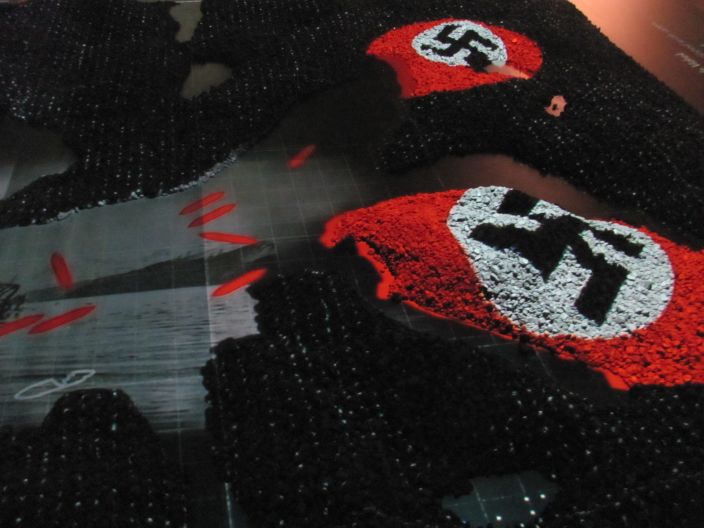
In the middle of the floor is a giant 3D model of the fjords and mountains surrounding Narvik.

Animated 3D model of the Battle of Narvik.

“A naval battle ensued between the Royal Navy and the Polish Navy on one side and the German Kriegsmarine on the other”, the voice-over says, as a projector shows the movement of the ships on the model. “Several ships on both sides were sunk. Many of these remain there to this day. A land battle also took place in the mountains around Narvik involving the Norwegians, British and French against the Germans. The British and her allies eventually regained control of the town.”

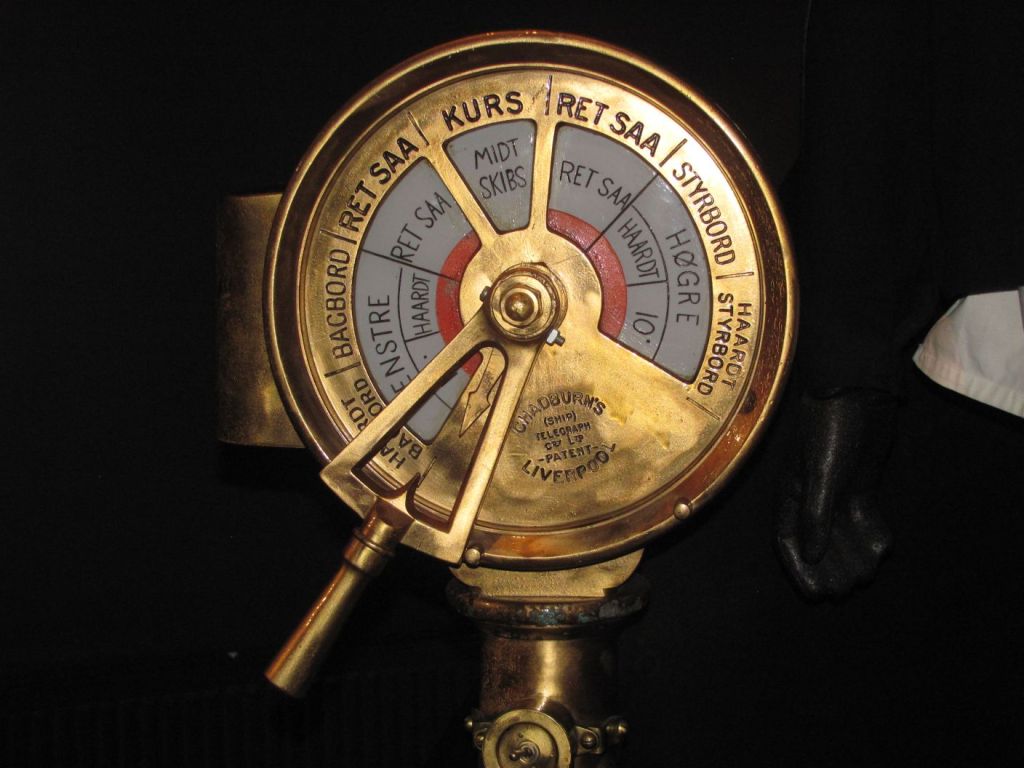
Engine room telegraph recovered from one of the sunken ships.

“But then the order came from London to withdraw”, it continues. “Extra forces were needed in France to stop it from being overrun. So the British relinquished control of Narvik in June 1940, leaving it for the Germans to retake and occupy for the rest of the war. Of course, the Norwegians weren’t very happy about this.”

Was that a good decision, I wonder to myself. By denying the Nazis steel to build their guns, tanks and ships, would the course of the war have been different?

“Yes, it would have” says Spencer, sitting on top of my backpack. “But probably not enough to have altered the overall outcome. High quality iron ore shipments from neutral Sweden to Germany would have been drastically reduced, for sure, as they could only come over the summer. But Germany had other supplies also, from occupied territories such as Luxembourg and Lorraine, plus its own reserves. It would have been more difficult for them without Narvik, but they would probably have managed.”

“But given that France eventually fell anyway”, I ask, “ maybe it would have been better to hold on to Narvik?”

“Possibly”, he responds. “But defending Narvik would have been costly due to the distance involved, and the need to cross the North Sea where there were increasing numbers of German submarines and warships operating. And in the event, Hitler committed large numbers of troops there to defend it, taking them away from other battlefronts. Academics have debated for years whether it was the best thing to do, and the jury is still out.”

We come to the level on the subsequent occupation. Life for ordinary Norwegians is discussed, including resistance to, and collaboration with, the occupying power. Many carried on with their normal jobs as teachers, railway workers, police, civil servants, and municipal officials, keeping essential services running. Many Norwegian businesses worked with the Germans building infrastructure, supplying food, repairing ships, and transporting military equipment. Some grew rich from such activities, others did it to survive.

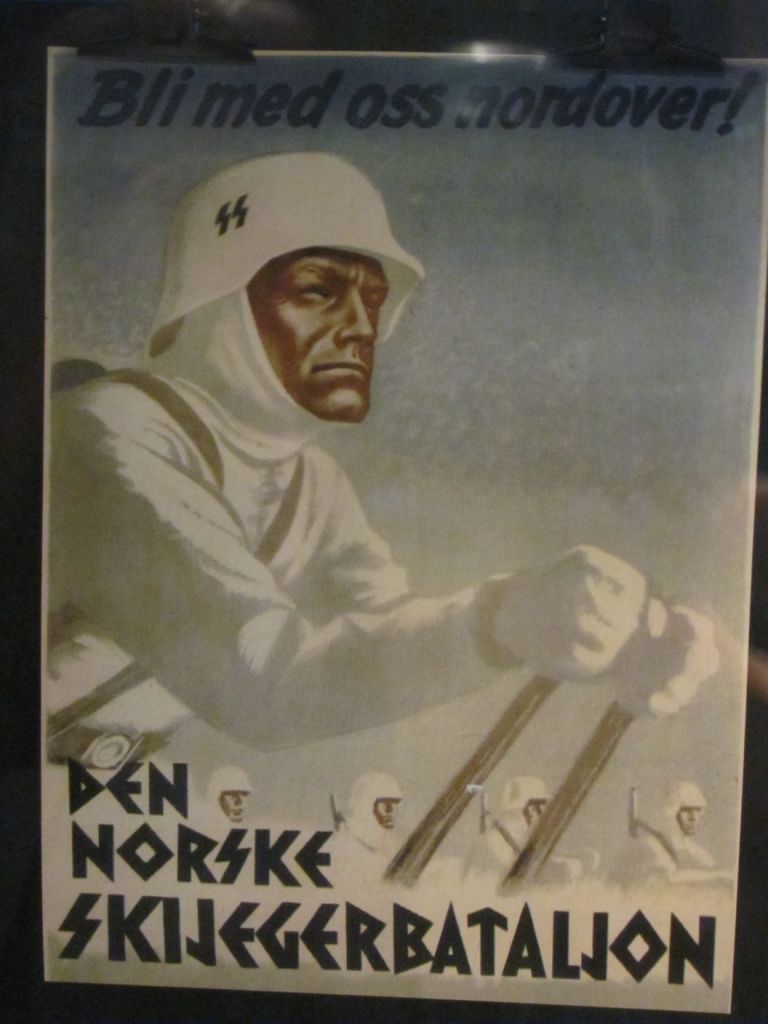
“But others actively helped the enemy”, the next poster tells us. “Some informed on neighbours and resistance members, some helped the security police, some even fought for the Nazis. Many women had relationships with German soldiers, with estimates of 12,000 children being born from such liaisons.”

Den Norske Skijegerbataljon, who fought on the side of the Nazis.

Punishment for collaborators after the war was harsh, ranging from fines and confiscation of property to prison sentences. Some were executed, including the prime minister, Quisling. Women suffered public shaming, head shaving, loss of jobs, and internment. Their children experienced discrimination.

Survivors tell their stories.

What would I have done under these circumstances, I wonder to myself. Would I have resisted at personal danger for my own life, or kept my head down? I am not sure. Is there any right or wrong side in war anyway? A lot depends on what the overall outcome is – if the Nazis had won, the collaborators would have been the ‘helpful ones’ and the resistance the ‘evil guys’. The victors write the history.

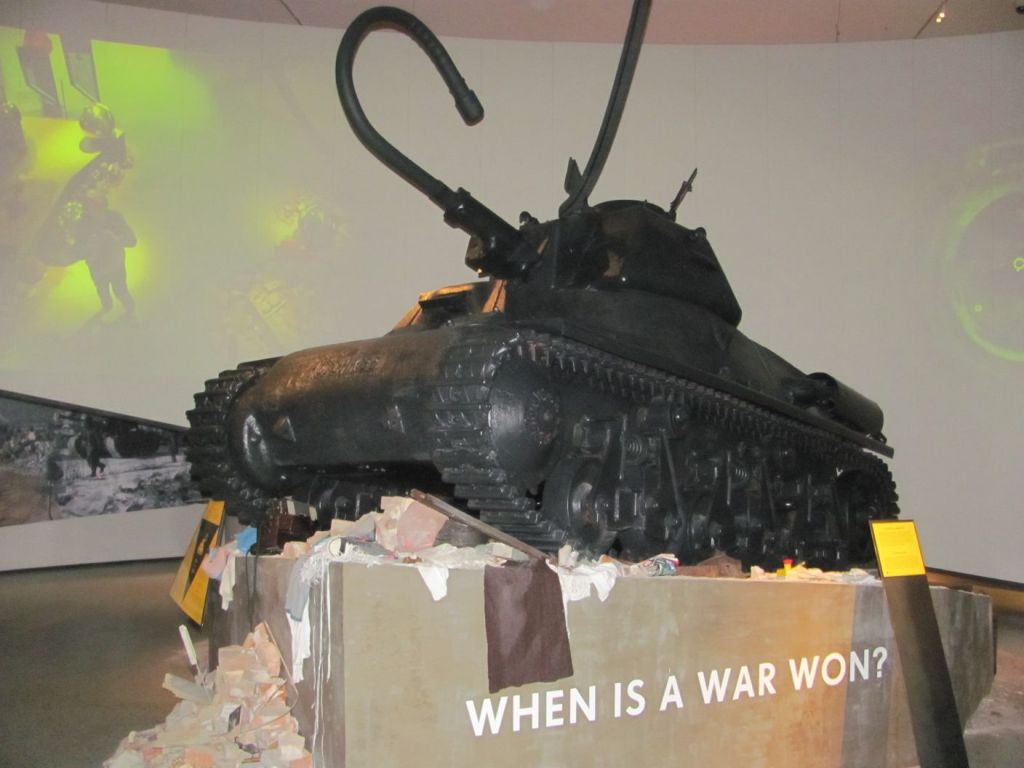
We move down to the Zona section. There the message is that Narvik was not just a battle for a railway and harbour, but that it was a small episode in the larger human story about how wars start, how they continue, and how they shape societies afterwards.

When is a war won?

The question is posed of when does a war actually end? The fighting may end when the shooting stops, but the aftermath has to be dealt with; survivors with trauma, societies dealing with collaboration and resistance, displaced people, and new conflicts arising from the old. The foundations of a post-WW2 order were put in place to ensure that such a war would never happen again – the partition of Germany, the creation of Israel, the strengthening of European cooperation, and the forming of the NATO alliance. But as well-intentioned as all this may have been, it has resulted in the Cold War division between the West and the East, the threat of nuclear war, and more recently has led to new wars in Ukraine, the Middle East, and Iran.

“It makes you wonder if the human race is doomed to a perpetual cycle of wars and conflicts”, says the First Mate. “I wonder if we can ever live together in peace?”

“Not as long as we have leaders who think their destiny is to enlarge their own borders and create empires”, I say. “They can twist the truth and con their people into believing what they are doing is right.”

We have reached the end of the exhibitions and take the lift back up to the reception level.

“Come on”, I say, looking at my watch. “We have to get the bus back to Harstad. It leaves in 20 minutes from the bus station. It’s the last bus of the day. We’ll need to hurry.”

We start walking, but the First Mate stops to take photos.

“We don’t really have time for that”, I say, keeping walking. I make it to the bus station with five minutes to spare. There’s no sign of the First Mate. I text her.

“I’ve gone to the bus stop where we got off”, she responds. “I thought that is where we would pick it up again.”

I tell the driver. “I don’t always stop at that one”, he says. “Only if there is someone there. You need to make sure that she flags me down. Otherwise I’ll go straight on.”

I text the First Mate. The bus sets off. From a distance I can see the bus stop. There’s no one there. Visions of staying the night in Narvik cross my mind.

Just as we are about to pass the stop, the First Mate appears from the doorway of a shop, and waves frantically. The bus stops.

“I just wanted to see if there were any bargains in there”, she says.

Stone Age minds, a new Parliament, and a love story in silver

“The next ferry goes at 1145”, says the First Mate. “We should be able to make it. But there won’t be much time to spare. We need to make sure we get it so that we are in time for the second ferry at Lyngsidet.”

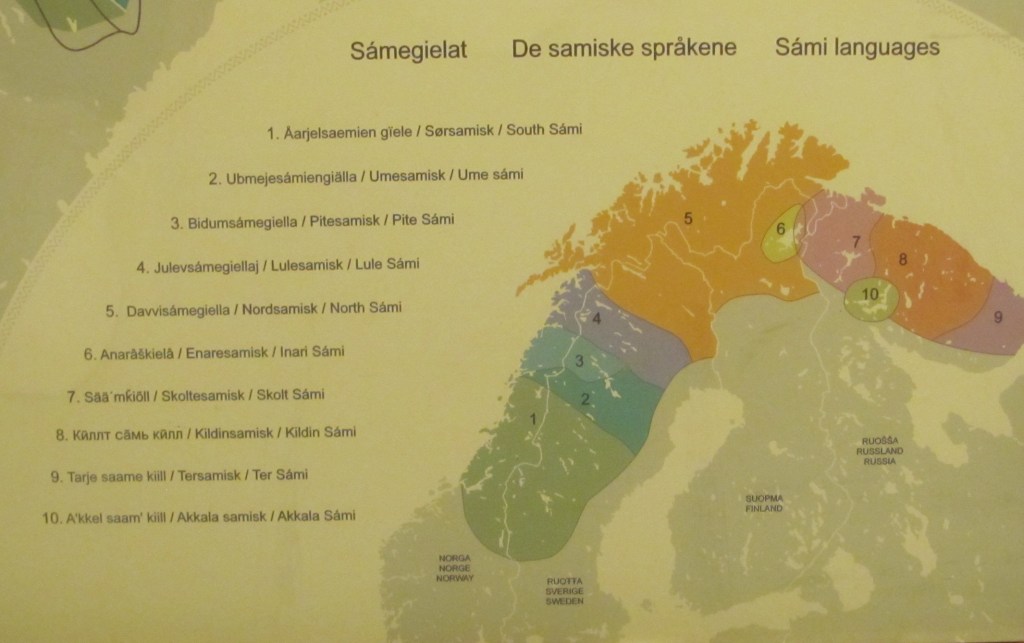
We have left Ruby Tuesday near Tromsø, and have hired a car for a week to explore Sápmi, the home of the Sámi people. At the moment, we are passing through the Lyngen Alps towards Breivikeidet, where we need to catch a ferry across Ullsfjorden to Svensby. The scenery is stunning.

Approaching the Lyngen Alps.

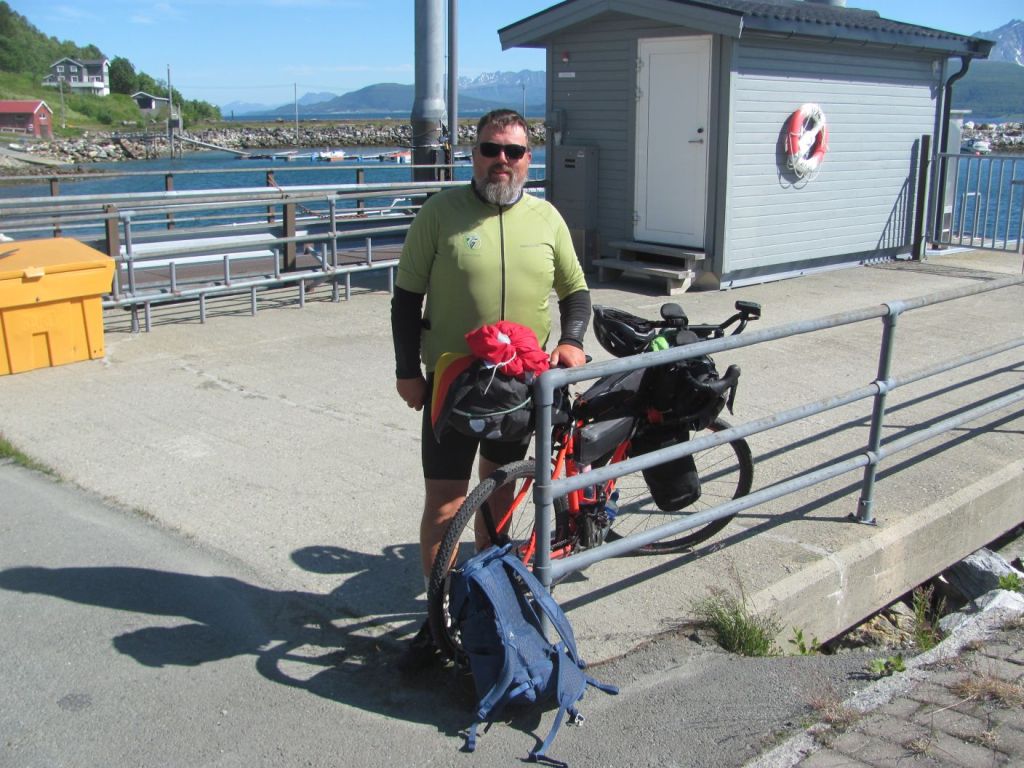
We make it to the ferry with a few minutes to spare. A German cyclist is also waiting.

“I am heading for Nordkapp”, he tells us. “I’ve cycled all the way from Bremen, where I live. It’s taken two months so far, but I have the whole summer to do it.”

“You don’t have much luggage”, I say.

“Yes, I am travelling light”, he says. “I have a small tent here, this is my sleeping bag here. I have a flask of water and some food in this compartment, and a spare change of clothes in this one. And my electronic equipment and bike spares in this bag. I don’t need anything more.”

Travelling light.

We are impressed. It’s a masterclass in minimalisation.

The ferry arrives and we board.

“It just shows you how little you need”, says the First Mate later. “But I am not sure I could do it. I like my creature comforts.”

Me too, I think to myself.

The Lyngen Alps from the ferry.

The reindeer mill around in a spiral within the confines of the trapping fence across the narrow ravine, the breath from their nostrils forming small clouds of vapour. The hunters advance, their spears and bows and arrows at the ready. On the hill above, the shaman raises his hands above his head and begins the chant, his monotone echoing around the ravine.

The boy clutches his father’s hands more tightly. “What are they doing, father?”, he asks.

He is being initiated into the rituals of the reindeer hunt, and had helped the adults construct the trapping fence the day before, carrying the newly hewn stakes from the forest to the ravine.

“They are waiting for one of the deer to give itself up to us”, says his father. ”Its spirit has heard the prayers of the shaman, and it is preparing to sacrifice itself for our good. It is the way that has always been and always will be.”

Sure enough, one of the reindeer detaches itself from the rest of the herd and runs wildly to the other side of the ravine. Immediately the hunters loose their arrows after it. Two of them hit the animal and bring it to the ground. The hunters advance on it, their spears at the ready. The animal struggles weakly as they stab it again and again until it is still.

“See, we’ll have food now”, says his father. “The deer has given itself to us.”

“Come on”, says a familiar female voice. “You’ve been looking at that carving for ages. If we don’t get a move on, we’ll never get home tonight.”

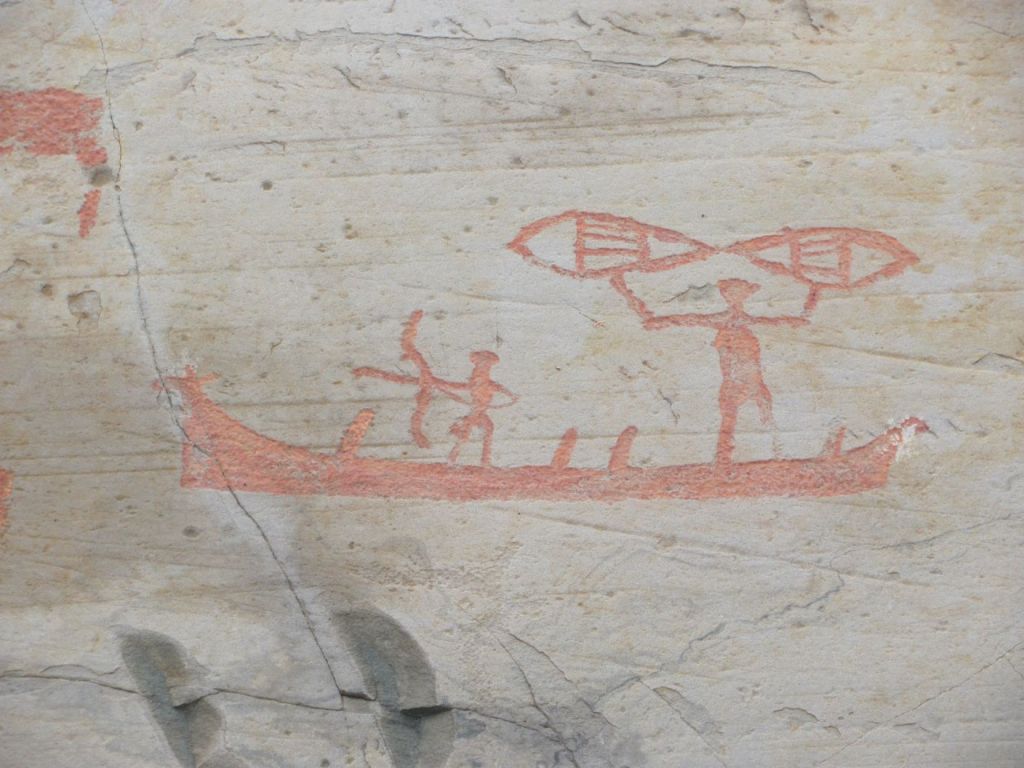
I am brought back to the present with a jolt. It’s the First Mate, of course. We are at the Rock Art museum in Alta, where thousands of rock carvings depicting life in Stone Age times were found in the 1960s and 1970s. Created over an extended period from 5000 BC to around 0 BC, the carvings are a unique record of the hunting of reindeer, elk, and bears, even down to the methods used. Others show the catching of whales and halibut. I had been imagining what a hunting expedition for reindeer might have been like.

A trapping fence being used to hunt reindeer.

“The guide book says that the carvings were done at sea level”, I say. “But as the land rose from rebound after the Ice Ages, new land presented new surfaces to be carved, so that older carvings are further up the slope and the youngest ones towards the bottom. Consequently, you can see how rituals and other things evolved. Boats, for example, became bigger and could fit more people, and began to have animal heads at their prows, especially elks. It’s amazing.”

A boat being used for hunting and fishing?

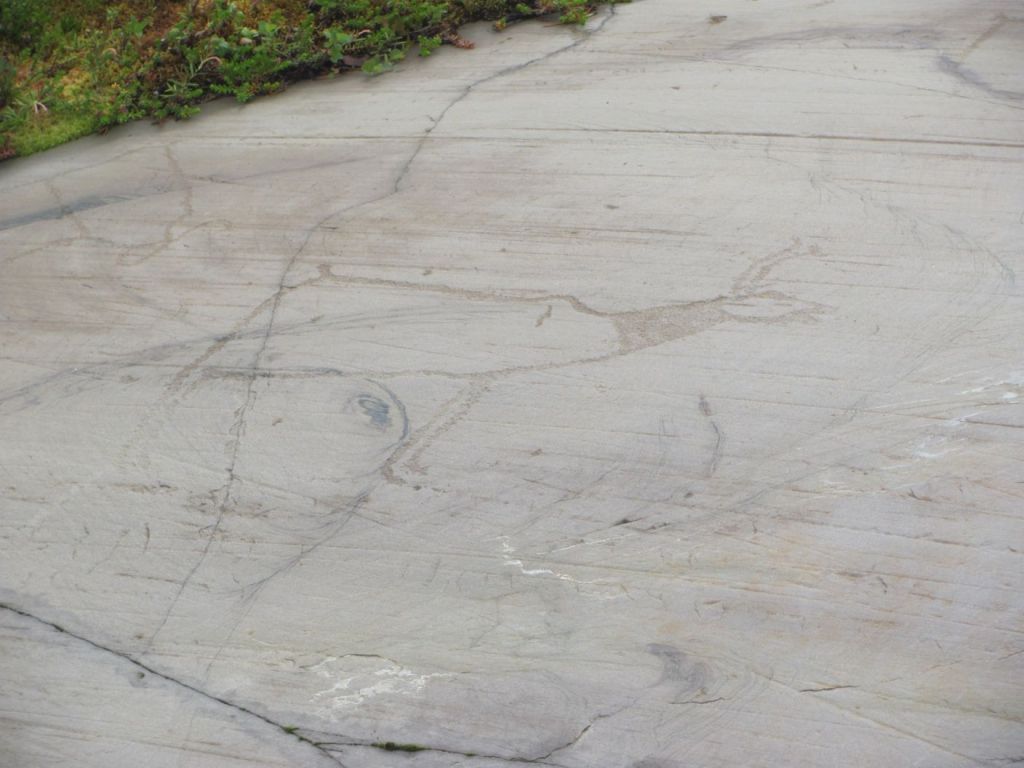
“Did you notice how some of the carvings were outlined in red, and others are just left as they are?”, asks the First Mate. “Apparently the red was applied at the time they were discovered so that they could be seen more easily. But the thinking now is that they should be left in their natural state as the paint was obscuring features important in the way they were made.”

Reindeer carving, uncoloured.

“Look out for the bears and their tracks leading from the cracks in the rock across several of the panels”, the guide book instructs us. “Apparently hunter-gatherers revered bears as relatives or ancestors. It is likely that there were bear cults in which they were worshiped as links between different levels of the cosmos. The cracks in the rock may represent their caves as entrances to the underworld.”

Hunting bears and reindeer.

Further on, there are images of geese, ducks, swans, and cormorants, all distinctly recognisable. On other rock faces, elks seem to be mating. On one site, a unknown round object streaks across the carvings, with a trail behind it. Was it a comet, as some researchers think? And what are the mysterious geometric shapes, seemingly with frills on their edges?

A comet, or something else?

We sit on a rock, overlooking the sea. I wonder about the people who would meet here in ancient times. Why did they come? Was it to worship? Did they have gods?

“It is more likely that they just had a spiritual worldview rather than specific gods”, says Spencer from behind my shoulder.

Somehow he has found his way into my rucksack, and has been tagging along with us.

“They probably saw animals as powerful spiritual beings who needed to be kept on the right side of if hunting was to be successful. Rituals practised by their shamans were important to reinforce the bond between people, animals and the landscape.”

“I wonder what it would have been like to be a hunter-gatherer?”, I ask. “What did they actually think like?”

“It’s an interesting question”, answers Spencer. “They almost certainly had the same brain architecture as you do, as anatomically modern humans emerged around 300,000 years ago. They probably still thought about family, social status, cooperation, conflict, finding food, avoiding danger, and caring for offspring in much the same way as you do. But the biggest difference will have been due to cultural evolution and the development of abstract thought. You spend a lot of your time thinking about things such as governments, money, the internet, scientific theories, laws, and insurance, for example. They probably thought more about landscapes, weather, animal behaviour, and seasonal cycles.”

“It makes you wonder, then, that if you were to take newly-born babies from the Stone Age and modern times, somehow exchange them, and then raise them in the opposite society, would they both be capable of learning the other’s knowledge?”, I muse.

“Probably”, says Spencer.

“Come on”, says the First Mate, standing up. “I am getting hungry. Let’s go and get something to eat. You can day dream with that spider another time.”

The next day we visit the Tirpitz museum in Kåfjord on the outskirts of Alta.

“You’re just in time”, says the man with a pony-tail in reception. “There’s a film starting in five minutes telling the story of the Tirpitz. What language do you want it in – Norwegian, English or German?”

We take our places in the small cinema. It’s an old film from the 1960s.

“The Tirpitz was a German battleship during WW2, the largest ever built in Europe”, it tells us. “It was sent to occupied Norway in 1942 to deter an Allied invasion as well as threatening Allied convoys to the Soviet Union. It was hidden in the Kåfjord, surrounded by shore batteries and submarine nets to protect it. In fact, it saw no action from there, but was a ‘fleet-in-being’, requiring Allied naval resources to be tied up containing it.”

“Think of all the taxpayers’ money it must have cost to build it”, whispers the First Mate to me. “And then never to be really used.”

Eventually it was found by a Russian reconnaissance plane.

The Tirpitz is found in Kåfjord.

“The British Royal Navy was informed of its whereabouts, and a cunning plan devised to try and destroy it. This involved building six midget-submarines, called X-subs and only 15 metres in length, which were towed to near the area by traditional submarines. Unfortunately two were lost or damaged en route across the Norwegian Sea. A third one had mechanical and navigational problems after arrival.”

Midget submarine used in the Tirpitz attack.

“I remember reading about this when I was a kid”, I whisper to the First Mate. “Boys’ Own, I think.”

“The remaining three were released from their mother-subs to make their own way into Kåfjord. One of these was spotted by the crew of the Tirpitz and destroyed by gunfire. The other two made it underneath the steel submarine nets, and were able to drop their charges under the Tirpitz, but were observed and attacked, forcing their crews to abandon their craft to be captured. But their charges exploded and damaged the Tirpitz severely enough that it was out of action for six months.”

The Tirpitz the day after the X-sub attack.

Later, the battleship was moved to near Tromsø, where, again, it was located and bombed by Allied aircraft in 1944, this time successfully.

“The folly of war”, sighs the First Mate.

In the morning, we push on southwards from Alta. On the way, we stop at a place offering ‘Sámi experiences’.

“We are genuine Sámi reindeer herders”, the owner tells us. “And have been for generations. I’m almost retired. My son over there is taking over the business. I help out.”

Learning about Sámi reindeer herding.

“Where do you keep the reindeer?”, asks the First Mate.

“Well, during the winter, we take them to the Finnmarksvidda, the vast area of wilderness south from here”, he answers. “There they graze on the mosses and lichens that they can find under the snow. Then when the spring arrives, after the calves are born, we move them down to the coast for summer grazing. There it is cooler, the vegetation is lusher, and there are not so many biting insects. Then in the autumn, we move them back to the Finnmarksvidda. It’s communal in that a number of herds belonging to different owners are managed as one big herd. It’s a traditional system called siida.”

“How do you know which animal belongs to whom?”, asks the First Mate. “

“We have a system of earmarks”, he tells us. “The young reindeer are earmarked in the autumn. The government will only give you an earmark pattern if you come from a family with a long tradition of reindeer herding. Only ethnic Sámi have the right to practise reindeer herding, but only about 10% of all Sámi are actually reindeer herders. The rest all have jobs in the big cities. We are glad they are there because they help promote Sámi issues to the wider population.”

Feeding the reindeer.

We continue driving through the tundra. Mile after mile of stunted birch trees pass by. Every so often we see a lake. It’s hard to imagine all this area being covered in snow in the winter.

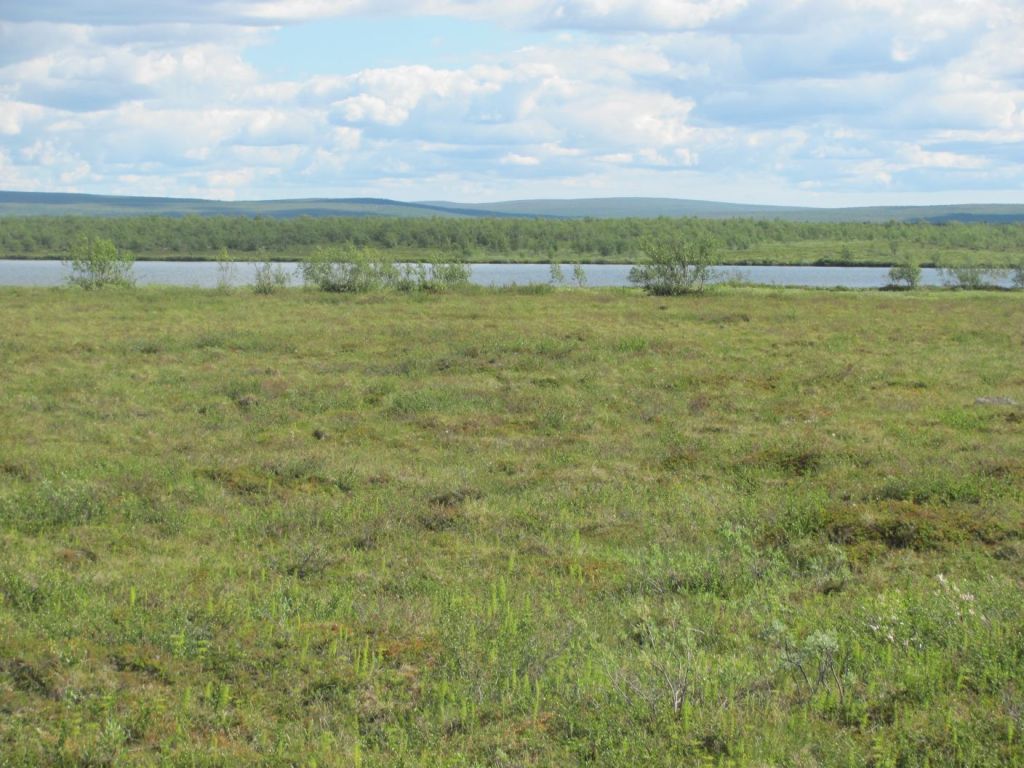
Crossing the Finnmarksvidda tundra.

We are heading for a small town near the Finnish border called Karasjok, where the Sámi Parliament is located.

“The last guided tour of the day of the Parliament is at 1530”, says the First Mate, busy consulting her iPhone as we drive. “If we hurry up, we should be able to make it.”

We arrive in Karasjok at 1515, just in time.

“Yes, there is a tour starting in 15 minutes”, the girl behind the reception desk says. “Just wait over there.”

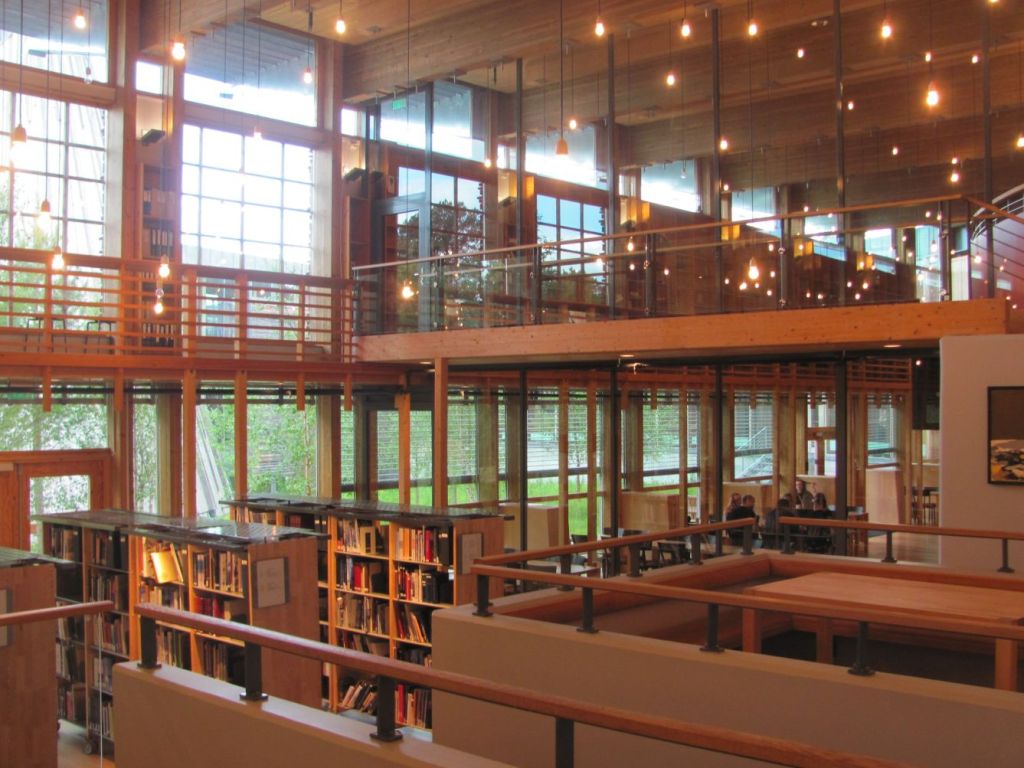
We wait for 15 minutes, watching a group of students earnestly discussing something in the library below.

“Well, it looks as if you are the only two”, says the girl, somewhat wearily. “Follow me.”

“She was probably wanting to get home early”, whispers the First Mate to me.

“The Sámi Parliament was opened in 1989 by King Olav”, the girl tells us. “It was a direct outcome of the Alta conflict, in which local Sámi people opposed the damming of the Alta and Kautokeino rivers by a hydroelectric powerplant. The protestors lost the battle, but the government realised that it needed to listen to the Sámi more, so you could say that it was successful in the end. It’s now written into the Norwegian Constitution that it is the responsibility of ‘the authorities of State to create conditions enabling the Sámi people to preserve and develop its language, culture, and way of life.’ The Sámi Parliament is the sole representative of the Sámi people in achieving this, and have specific responsibility for language, culture and education.”

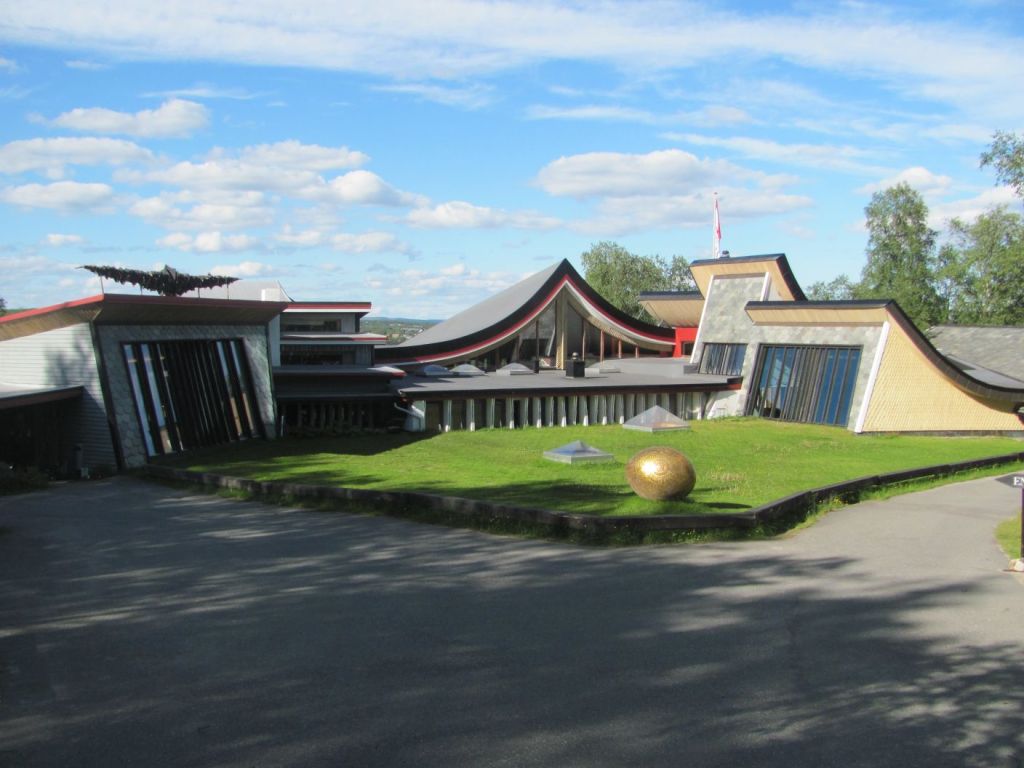
The Sámi Parliament.

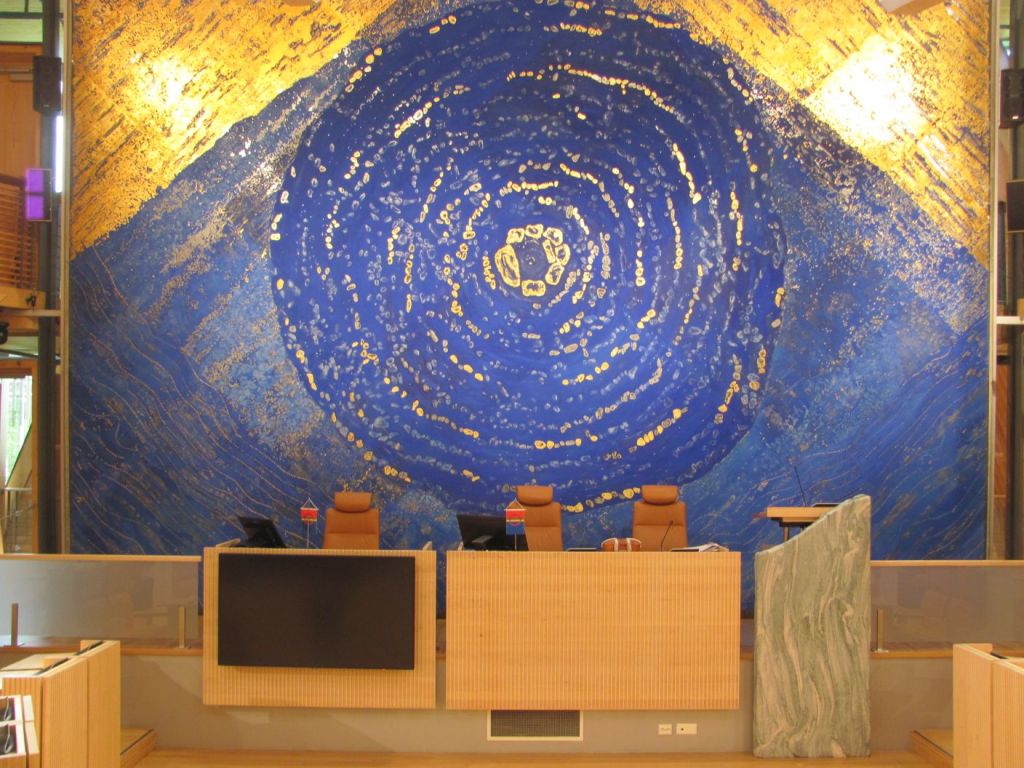
We reach the plenary chamber, a windowless room with seating curved around a central stage. A giant circular artwork is on the wall behind the stage.

“Luottat” artwork in the Plenary Chamber.

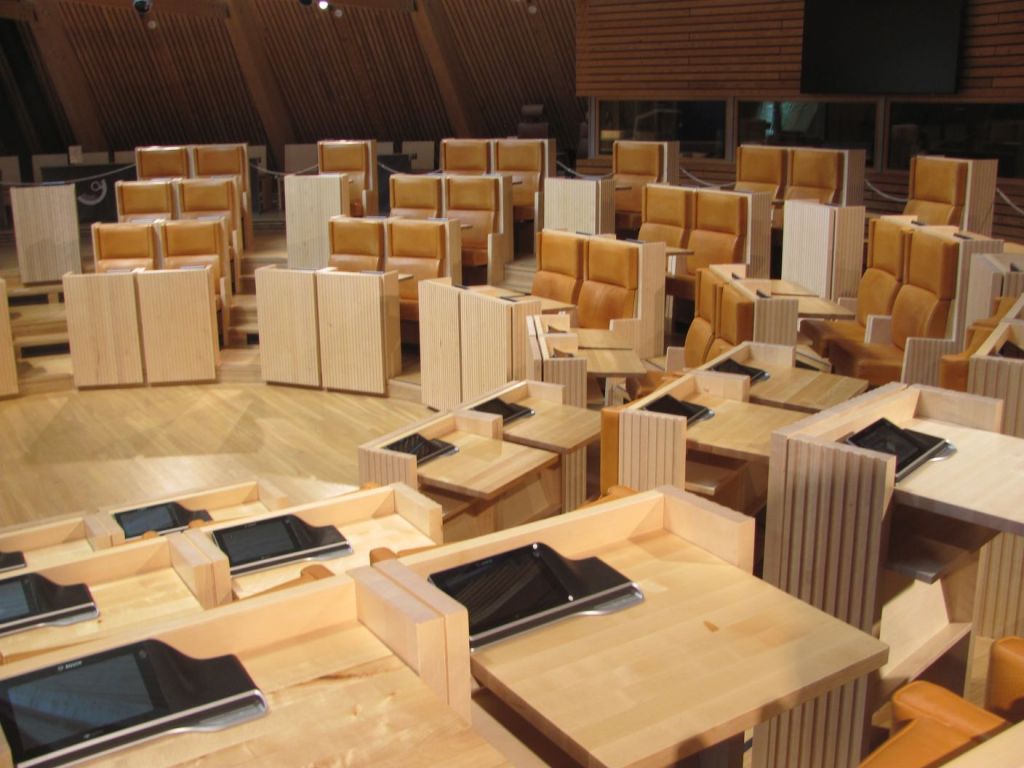
“Four meetings a year are held here”, the girl continues. “Each one lasting a week. There are 39 elected representatives. The highest ranking MP becomes the President of the plenary sessions. He chooses four other MPs to serve on the Executive Council. They are responsible for determining the agenda of the meetings.”

Representatives’ places in the Plenary Chamber.

“How are MPs elected?”, asks the First Mate.

“Well, elections are held every four years at the same time as the national elections”, she answers. “You have to be registered as a Sámi to vote. For that, you first need to perceive yourself as a Sámi, but you also have to have at least a great-grandparent who had Sámi as their main language.”

“It’s similar to Māori in New Zealand”, I say. “They need to identify as Māori, and to have some Māori ancestry, although there is no set proportion or specification how far back you can go.”

“Yes, we do have dialogue with Māori people”, she says. “We are both indigenous minorities in our countries ruled by another ethnic majority. Their issues are similar to ours. Now, if you don’t mind, I am going to have to chase you out. We are closing in five minutes.”

The Sámi National Library within the Parliament.

We push on to Kautokeino, another Sámi town on the banks of the Kautokeino river, and arrive in the evening.

“We have to go and see Juhls Silver Gallery while we are here”, says the First Mate. “It’s supposed to be quite special.”

Juhls Silver Gallery was started by Frank and Regine Juhl, from Denmark and East Prussia respectively, who came to Kautokeino in the 1950s and fell in love with the place and each other. They decided to learn silversmithing, and gradually built up a reputation for high quality silverware inspired by Sámi culture and the tundra. They eventually broadened their horizons and today their gallery is an eclectic collection of silverware and art from all over the world. Frank died in 2020, but Regine is still living and active.

Juhls Silver Gallery.

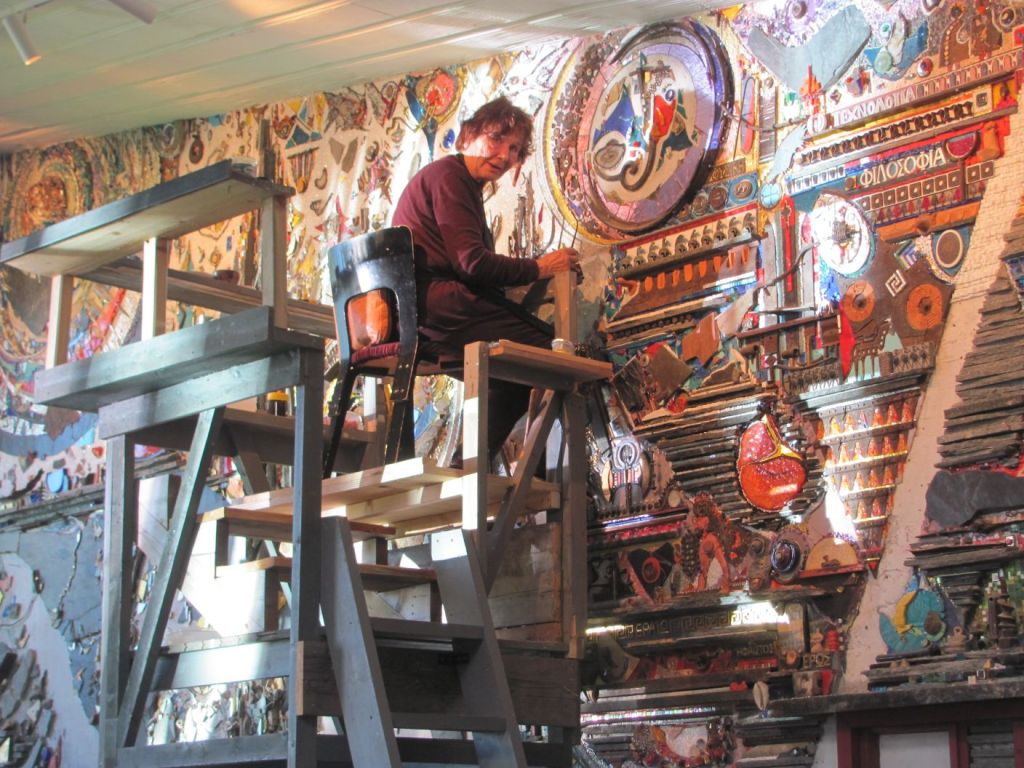
As we enter, she is perched on top of a ladder working on a brightly coloured mural.

Ihre Arbeit ist ganz toll“, says the First Mate.

Vielen Dank“, she replies.

Regine Juhl working on her mural.

One of the staff gives us a guided tour.

“The gallery was designed and built by Frank”, she tells us. “All without any formal architectural education. Instead, he was guided by a strong intuitive understanding of space, proportion, and relationships. The interiors, the sequence of rooms, and the light create a distinct atmosphere, where art, craftsmanship, and architecture work together.”

Arty-speak, but it is indeed an amazing place. After the tour, we spend some time wandering from room to room, marvelling at the exuberance of style and colour, and the ubiquitous intricate items of silverware.

Inside Juhls Silver Gallery

It’s quite a legacy they have created, I think to myself. And it will carry on, as their two daughters are continuing the business, one in Kautokeino, and the other in Bergen.

“Let’s find somewhere to have lunch”, says the First Mate. “The mosquitos here are eating me alive.”

Polar adventurers, flaming tacos, and reindeer road rules

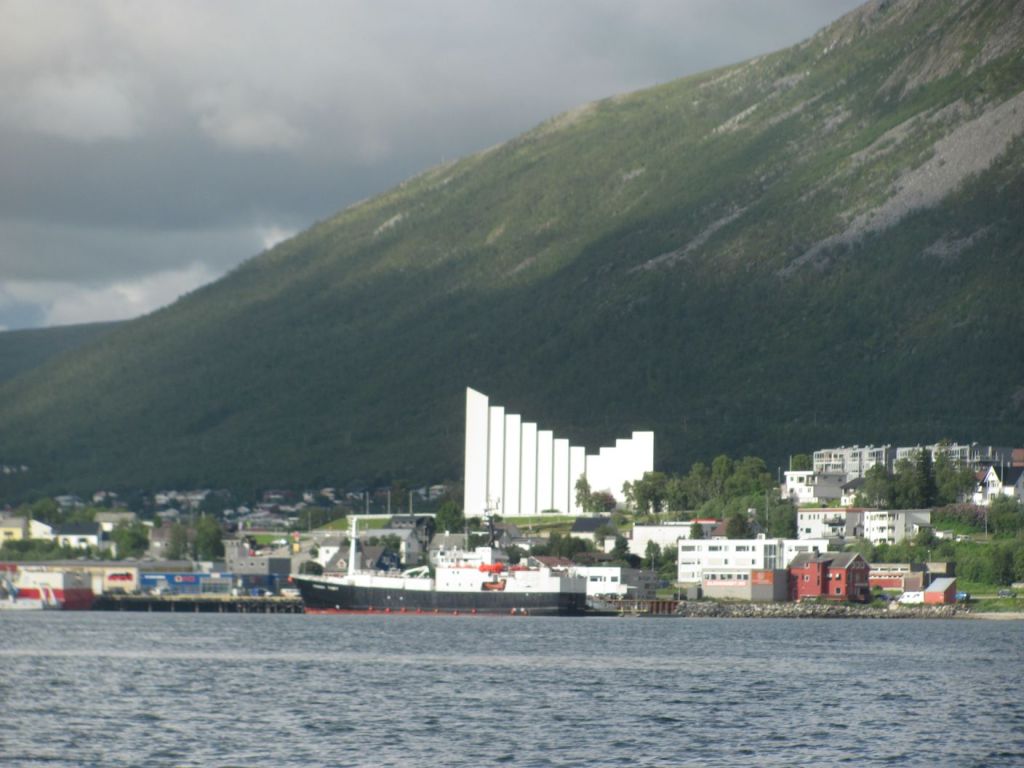
“Look at that white building over there”, says the First Mate, pointing to the right of the bridge that spans the sound. “It’s very impressive. I wonder what it is?”

We are sailing up Tromsøsundet and are approaching Tromsø.

“It’s got to be the Arctic Cathedral”, I say. “The Lonely Planet book mentioned it.”

Tromsø’s Arctic Cathedral.

It is impressive. Built from eleven great white concrete panels stacked next to each other, it is visible for miles, contrasting starkly with the dark green hills rising up behind it. The eleven white panels are supposed to represent the eleven apostles who remained true to Jesus. Obviously not Judas.

Shortly we are docking in Tromsø marina, ably helped by a group of enthusiastic teenagers who are disembarking from a colourfully-painted wooden sailing boat.

“We’ve been sailing up to Svalbard”, they tell us, as they attach us to the pontoon cleats. “We’ve just got back. We are all pretty exhausted. But we had a great time. Now another group is going. They’ll be here soon.”

Svalbard is a large island that lies five days’ sail across open sea north of Norway. It belongs to Norway, but is subject to the Svalbard Treaty, which guarantees rights to 40 other countries who are signatories to the Treaty. Part of the Treaty says that it must not be used for military purposes.

Tied up in Tromsø marina.

“Let’s have a cup of tea”, says the First Mate. “Then we can go and have a look at the Cathedral. It’s just a short walk over the bridge there.”

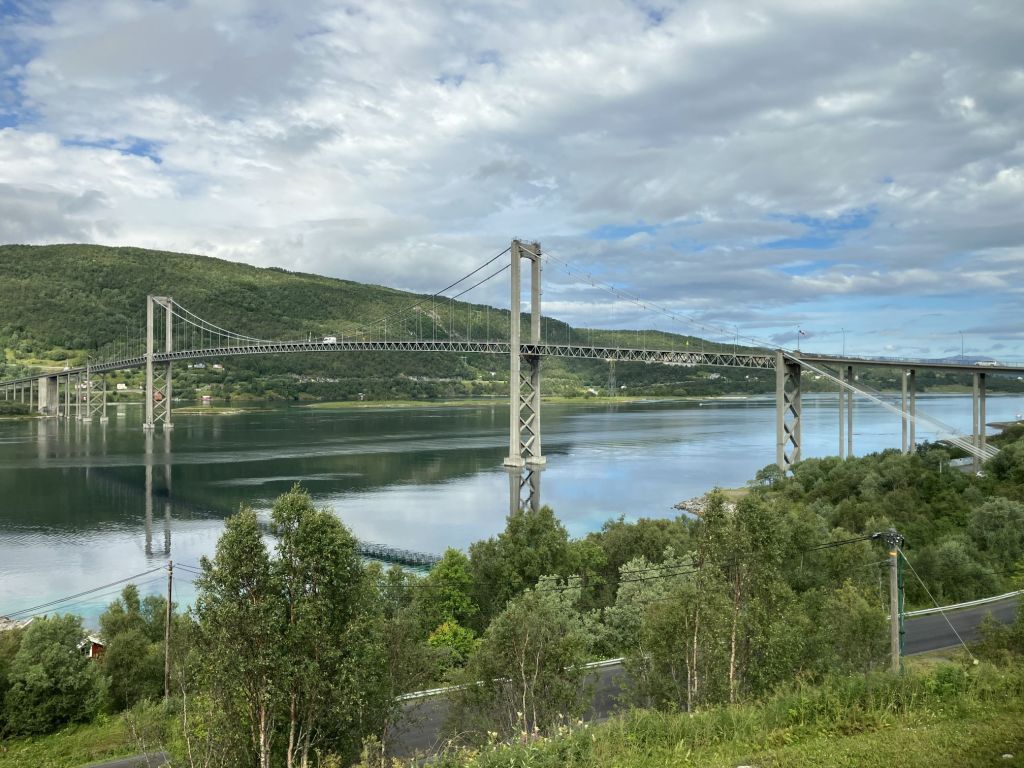
The bridge is closed to motor traffic for repairs, but open to pedestrians and cyclists. There’s a great view from the top of its hump out over the sound and the city. It doesn’t take long to reach the Cathedral.

The First Mate reaches the Arctic Cathedral.

“The Cathedral was built in 1965”, the woman behind the counter tells us. “It is famous not only for its unique exterior design, but also for the stunning stained glass window within it. It depicts the Return of Christ showing God, Jesus, and a man and a woman. We also have concerts here during the summer. The acoustics are amazing.”

The stained glass window in the Arctic Cathedral (from Wikipedia Commons)

On the way back, we stop off at the Polar Museum on the harbour front. There are exhibitions on hunting and trapping in Svalbard, polar aircraft, and the famous Norwegian polar explorers, Nansen and Amundsen.

“Although there were overwinter trapping expeditions as early as 1795, it started in earnest in the 1890s”, the guide leaflet tells us. “Hunting then was mainly for walrus, and to a lesser extent, seals, reindeer, and Arctic foxes. Later, polar bears, musk oxen, and bow whales were hunted. Reindeer, in particular, almost became extinct. At first, most hunting and trapping was done in the summer season from April to September. Eventually, however, a number of trappers decided to overwinter.”

Overwintering in the Arctic.

“It must have been a tough life”, says the First Mate. “It says here that a lot of the early trappers died of scurvy because of the low levels of vitamin C in their diets. I wonder what made them want to go and do it? It seems that no-one became rich through hunting and trapping.”

“I guess that it just appeals to a certain type of person”, I say. “One who is happy with isolation and solitude, and battling against and surviving adverse conditions.”

Henry Rudi (from the Norwegian Polar Institute)

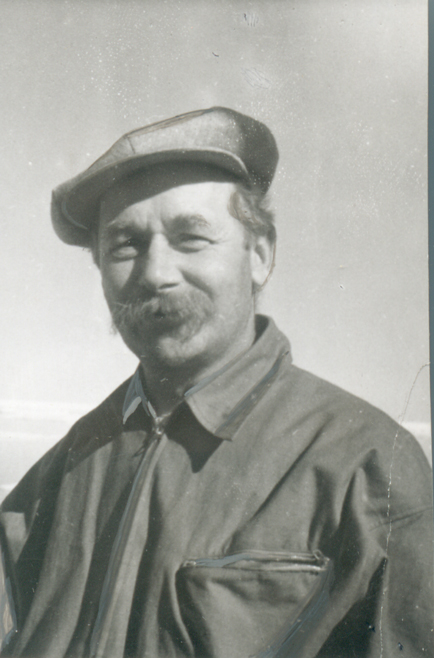
One such trapper was Henri Rudi, the ‘King of the Polar Bear’, who became internationally famous. It was his boyhood dream to go to Svalbard, which he did when he was 19 and eventually spent 27 winters there. In total, he shot and trapped more than 700 polar bears before retiring back to Tromsø and receiving the King’s Medal of Merit. He also became famous around Tromsø for his lectures and story-telling of his experiences on Svalbard.

Interesting that we are worried now about climate change melting the ice and destroying polar bears’ habitat, and yet someone who shot 700 of the animals was honoured, I think to myself. How times change.

Wanny Woldstad (from the Norwegian Polar Institute)

Even some women were drawn to the lifestyle. Wanny Woldstad left her job in Tromsø as a taxi-driver, went to Svalbard in 1932 to learn how to hunt and trap, and liked it so much that she returned the following year with her two sons. She stayed several more winters there, during one of which she is supposed to have baked 900 loaves of bread. She became famous for thriving in what had been previously a male-dominated environment, and in 1956 published a book, “The First Woman Trapper in Svalbard”, in which she describes her life in Svalbard’s wild and beautiful landscape.

“I wouldn’t want to do that”, says the First Mate. “Too cold and too tough a life for me. I like my creature comforts.”

We move through to the rooms on Nansen and Amundsen. We had already seen the ship that both of these explorers used, the Fran, in the museum of the same name in Oslo last year, so we knew something about them. But there is more detail here about their adventures.

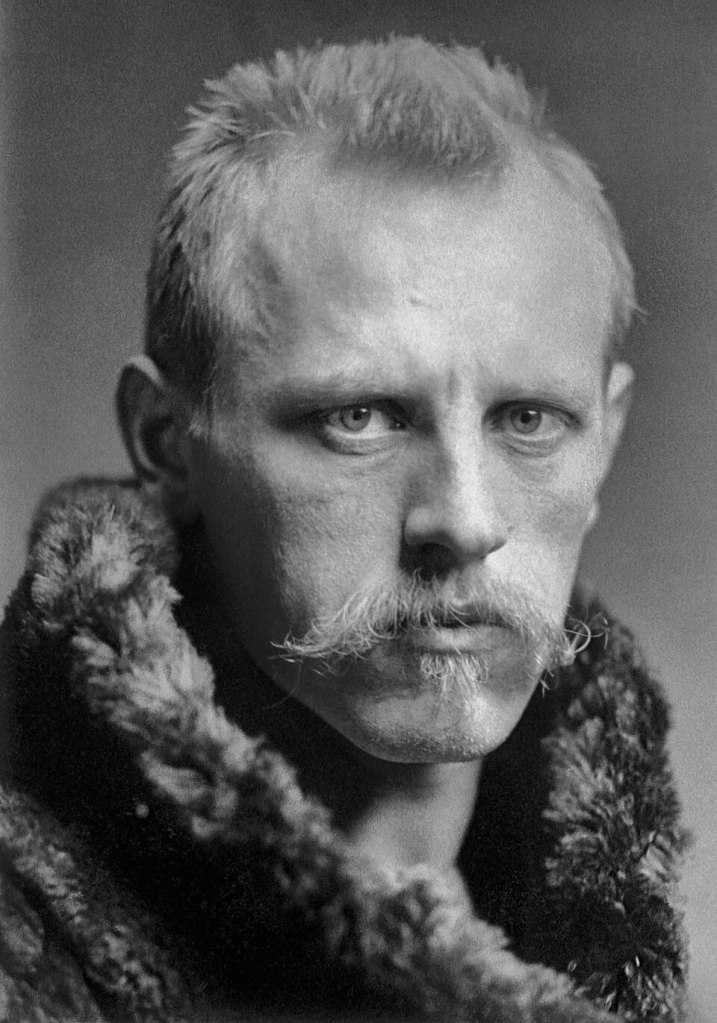
Fridtjof Nansen (Henry Van der Weyde, Public domain, via Wikimedia Commons)

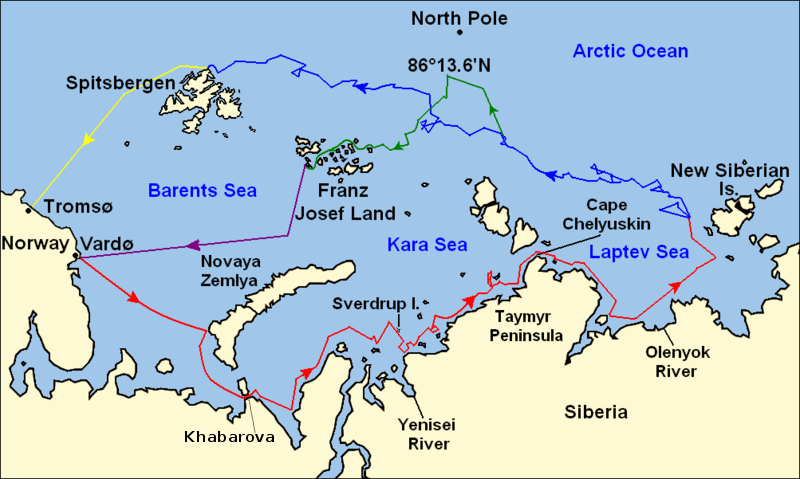
I concentrate on Nansen. He had noticed that wreckage of a ship that had sunk in the New Siberian Islands had eventually ended up in Greenland some years later, and had surmised that the polar ice cap was not static, but was slowly moving. He organised an expedition to test this theory in which the Fran would be locked in the ice and they would see where it got to, hoping that it would pass over the North Pole. They started near the Siberian Islands in 1893, but after a year or so, it became clear that it wouldn’t reach the pole. So, in 1895, Nansen and one of his crew decided to leave the ship and ski there instead. Unfortunately, it took longer than they had thought, and they had to turn back because their supplies were running out. But even returning took longer than they had thought, and they were forced to overwinter alone in the Arctic. They lived off polar bear and walrus meat until the next spring, then set off again, and eventually in August of 1896 met another polar explorer who took them back to Norway in his ship.

“What happened to the Fran?”, asks the First Mate.

“It seemed that it broke free from the ice near Svalbard”, I say, “And arrived back in Norway just a little bit after Nansen got there.”

“So what was the point of it all?”, she asks. “It all sounds a bit like a Boys’ Own adventure to me.”

“Well, according to the exhibition, it did confirm his theory that the ice cap is moving”, I say. “As well as providing a lot of other valuable scientific information on the oceanography of the Arctic Ocean, and on the flora and fauna of the Siberian coast and Franz Joseph Land. So not only adventure.”

Nansen’s and Fran;s routes 1893-96.

We head back to the boat. Dinner time approaches.

“I think we can have tacos tonight”, says the First Mate. “We can heat up the shells in the toaster.”

I put the shells in the toaster, press down the lever, and go back to chopping the onions.

“Hey, there’s smoke coming out”, shouts the First Mate half a minute later. “And now flames.”

The smoke alarms in the boat go off with loud shrieks. Concerned people on the pontoon stop to look at the clouds of smoke now billowing out of the companionway. We open all the hatches to let more smoke out, and try and smother the toaster to stop the flames. It doesn’t work very well.

“Quick, put it under the tap”, I say, unplugging it.

We douse the toaster in water. Eventually the flames die down and the smoke stops. But not much is left of the toaster. Several of the plastic bits have melted, and the metal bits are warped and twisted.

“It must have been the oil on the taco shells”, I say. “As soon as it got to a certain temperature, it caught alight. I didn’t realise that a toaster could get so hot so quickly. When I am waiting for my toast in the morning, it seems to take forever and even then hardly browns the toast.

“At least it shows the smoke alarms work”, says the First Mate. “But we’ll have to buy a new toaster. That’s three appliances that have gone now.”

A few weeks earlier, she had put the base of the electric kettle onto the hot hotplate and melted it beyond repair. Not long after, our little fan heater had stopped working for reasons unknown.

“We’ll just have to buy some new ones tomorrow morning”, I say. “When the shops open.”

—-

After the shopping expedition the next day, we take the No. 40 bus to the Arctic University Museum of Norway, and spend a leisurely couple of hours absorbing information on the geology and natural history of the region, the northern lights, and Sami life, culture and politics.

We are astounded to learn that there are actually ten different Sámi languages, not just one. All are what are called Finno-Ugric languages, similar to Finnish and Hungarian, with a comparable structure and vocabulary, but are largely mutually unintelligible in the same way that Spanish and French are. North Sámi is the most widely spoken, but there are also South Sámi, Ume Sámi, Pite Sámi, Lule Sámi, Inari Sámi, Skolt Sámi, Kildin Sámi, Ter Sámi, and Akkala Sámi.

Sámi languages.

“Phew, it’s a lot of languages considering that there are only around 100,000 Sámi people”, says the First Mate. “It says that many of the languages only have 500 speakers or less. Ter Sámi only has two speakers.”

“At least there are efforts to try and revitalise some of the languages”, I say. “”After the disastrous policy of Norwegianization from the 1850s – 1960s where they tried to force the Sámi to become Norwegian. But it does make you think where to draw the line between actively trying to preserve a language and all the cost that that involves, and letting it take its natural course.”

“It’s easy to say that being a native English speaker”, she retorts. “But languages are part of people’s culture and identity, and reflect their different take on the way the world works. You would lose all that richness if we all spoke one language. And once you lose a language, it can’t be easily recreated. And besides, I read an article today that said that you slow your brain from ageing by learning more than one language.”

“I am not saying that we should all speak only one language”, I say. “I am all for learning a new language. I was just musing at what point you can’t do anything more to save a dying language. When the two Ter Sámi speakers die, for example, what are you going to do then?”

“I suppose the best way is to encourage people to be bilingual”, she says. “One global language like English, so that they can communicate wherever they go, and at least one local language to maintain the culture they come from. It’s largely what is happening already, particularly in Europe.”

We catch the bus back into the city centre and decide to have a coffee at the Backstube bakery.

“I found the bit about the young mammoth quite interesting”, says the First Mate, taking a slice of cheesecake.

She is referring to ‘Yuka’, a young male woolly mammoth who died 40,000 years ago and was discovered frozen in the ice in Siberia in 2012 by local hunters. The Museum has been involved in research extracting RNA from the remains, and has been able to deduce that he was under extreme stress at the time he died. This corresponds with scratch marks on his skin, suggesting he may have died from an encounter with cave lions.

Yuka the mammoth from Siberia (from Wikipedia Commons).

“Yes, some of these new techniques are pretty amazing”, I say. “DNA shows what an organism is, but RNA can show what bodily processes were happening at the time it died.”

—-

We have been planning to hire a car and spend a week exploring Sápmi, the home of the Sámi people.

“You had better tell your readers that Sápmi is the traditional name for Lapland”, says the First Mate. “The name was changed because the people found the words Lapps and Lapland derogatory, as they had been imposed by outsiders and were sometimes used pejoratively.”

My phone pings. It’s a message from the car rental company saying that the car is ready and that we can collect it tonight, even though the rental period starts tomorrow.

“I’ll take the bus and go and collect it now”, I say. “That way we can set off earlier in the morning. We have quite a long journey in front of us.”

There is a bus leaving in five minutes which I manage to catch just in time. On the way, the bus stops. A herd of reindeer is crossing the road. One in particular is in no hurry, and cars are backed up behind it.

“Don’t hassle me, mate!”

“There’s a law here in Norway that says that reindeer must not be unnecessarily disturbed or frightened”, a woman sitting opposite explains. “In practice that means that if you encounter a reindeer on the road that you should stop and allow it to cross at its own pace. They can be a bit unpredictable if they are hassled.”

Like some people, I think to myself.

A popular pub, a colony of kittiwakes, and another naughty Royal

“Wow! This one is well-hidden”, exclaims the First Mate as we round a small promontory, and see the small harbour in front of us. “We would never have found it without the harbour guide.”

We have just arrived at the small island of Gårdsøya on the outer edge of the Bjarkøy archipelago. We had sailed from Andenes that morning, and had decided to stay here for a couple of days.

One side of the single pontoon is taken up with small motorboats, and a large fishing boat with the name of Kaare occupies the first place on the other side.

The small harbour on Gårdsøya.

“It’s absolutely beautiful here”, says the First Mate, as we tie up. “Look at those cloud patterns. And there is an oyster catcher over there. And a couple of Arctic terns are swooping around. They must have a nest somewhere. And look at that shag sitting on top of that pole. I’ll make some tea. You rest your leg.”

Cloud patterns over the island of Grytøya.

I had pulled a calf muscle in my leg the day before while we were at Andenes, and while it is better today than yesterday, it is still quite painful.

“There’s a gun emplacement over there on the neighbouring island”, I say, as we sip our tea. “German, from WW2. I’ll send the drone over to have a look.”

WW2 gun emplacement on Meløyvær.

“We need to fill up the front tank with water”, says the First Mate. “You’d better get your little tester out and make sure the stuff from the tap on the pontoon is OK.”

Simon had convinced me last year to buy a small water testing device to check on the quality of water on the pontoons when we fill up our tanks. Nerds that we are, we assiduously take samples, test them, and avoid any water that doesn’t make the grade.

“You’d be amazed at the variation in water quality you come across”, he had told us. “And it’s not always in the way you might expect. Pristine looking places can have poor water, and run-down places can have excellent quality. You can’t be too careful with what you drink.”

It turns out that the quality of this water is classified as ‘Excellent’, so we fill the tanks to the brim.

Testing the water.

In the morning, we decide to explore the island. My leg needs the exercise.

“Apparently there are seven permanent residents on the island”, says the First Mate, as we walk and hobble along the gravel track. “The rest of the houses are holiday cottages. And there are no cars.”

The ‘main road’ on Gårdsøya.

There are stunning views out towards Senja.

View towards Senja.

We come to a sign saying “To the Pub”. It’s a hot day, so we take the small path over the grassy field to a red building overlooking a small bay. Two men are working on erecting a marquee on the wooden decking at one side.

Wedding preparations.

“You’re looking hot”, says one of them. “Would you like a beer?”

“Well, we wouldn’t say no”, we say.

“My name is Trond”, he says as he leads us into the building. “As in Trondheim. I am the owner of the pub. We have a wedding reception booked for Thursday, and we are just trying to get everything ready for it. That’s what the marquee is all about. But I need an excuse for a break. What will you have?”

Inside the Ramsalt Pub.

He pulls a beer for me and a shandy for the First Mate.

“I was born on the island”, he tells us. “But I worked for a construction company in the oil sector. All over the world. I have even been in Scotland – Aberdeen, to be precise.”

We had already told him where we come from.

“When I retired from work, I decided to move back here, so I bought a fishing boat”, he continues. “You probably saw it at the pontoon where you are tied up. Kaare, she’s called. But I really wanted to give something back to the community, so I converted this old building into a pub where locals and visitors could come together and socialise. It’s called the Ramsalt Pub. I’m not really interested in making money from it, just providing a place where people can enjoy themselves. We’re open just on Fridays and Saturdays, and most evenings have live music and singing. Everyone joins in. It’s a lot of fun.”

The Ramsalt Pub.

“You have quite a collection of old fishing things in here”, says the First Mate, looking around the room.

“Yes, they add a bit of atmosphere to the place”, says Trond, looking up at the head of fish mounted above the bar. “I wanted to contribute to preserving some of the island’s heritage.”

Adding to the atmosphere.

The conversation turns to international affairs.

“He’s got himself into a mess now”, says Trond. “And I am not sure how he’s going to get himself out of it without losing face.”

He is referring to the war in Iran.

“The whole war was ill-conceived and illegal in the first place”, he continues. “First of all, he rips up the perfectly good agreement that Obama had negotiated with the Iranians, then they bomb the site where the nuclear weapons were supposed to be being made, then they start more negotiations, which, by all accounts, were making some progress. Then without warning, they start bombing the place. And killing all those young girls at the school. That surely is a war crime.”

“Well, at least Europe didn’t get involved this time”, I say.

“And I am glad they didn’t”, he says. “No one wants Iran to have nuclear weapons, but when they are making some progress with negotiations, the last thing needed is to declare war. What has it achieved? The only result is that it has weakened America in the eyes of the world and strengthened Iran.”

“And now they don’t even have an agreement”, says the First Mate. “Only a Memorandum of Understanding.”

Drinks finished, we give a hand with putting up the marquee.

“Well, that was interesting”, says the First Mate as we walk back to the boat. “We always seem to meet such nice people in these remote places.”

We cast off the next morning. The shag is back on his pole, and watches us impassively as we pick our way slowly around the perches marking the shallows on each side of the entrance. We have decided to have lunch at a small anchorage on the neighbouring island of Helløya, where the sailing guide tells us that there is supposed to be a buoy to tie up to. We wend our way in through the narrow inlet, through the flock of kittiwakes bobbing on the water, only to find that a small boat is attached to the buoy. No-one seems to be on it, and a dinghy lies on the small beach opposite.

Spot taken!

“It’s funny how we hardly see any other boats around when we are sailing, but when we want to tie up to a buoy, it’s occupied”, says the First Mate. “I wonder where they came from?”

We drop anchor instead. It’s not the best of sets and we drag slightly, but we can keep an eye on it while we eat.

As we prepare lunch, I hear voices on the cliffs overhead. There are four people, looking down at us.

“They’re probably the owners of the boat”, I say.

Sure enough, two of them return to the dinghy and row back out to their boat. They collect something, then row back, this time passing near us.

“Hi, we just thought we would say hello”, they say. “We’ll be leaving soon, so if you want to use the buoy, it will be free.”

They are young, and the accent is Antipodean.

“Yes, we are Kiwis”, they say in response. “We have just bought the boat in Kirkenes up near the Russian border, and are sailing her back. We are heading back down to Oslo, but we have all summer to do it. We have some friends from Holland with us. And yes, it is a bit crammed in there.”

Ah, the carefreeness of youth!

We go through the time honoured Kiwi ritual of asking each other if we know so-and-so from our respective home towns. It is surprising how often it turns out that there are acquaintances in common. Or perhaps not surprising, given that New Zealand is a small country. But on this occasion, there doesn’t seem to be.

“We need to get back and collect the others”, they say. “We’ve left them on the shore. Enjoy your lunch and the sailing. Don’t forget to see the kittiwake colony around the corner.”

They are referring to a cliff on the southern end of the Sundsvollsundet Nature Reserve on Helløya that is a nesting site for the small white and grey seabirds. The smell and the cacophony of sound as we pass by it is overwhelming.

“It reminds me of Fowlsheugh In Aberdeenshire”, says the First Mate, screwing up her nose. “There are thousands of them.”

Kittiwake cliff.

We push on to Engenes. There the harbour is being totally reconstructed, but there is a spare pontoon to which we tie up.

“The shop closes in 20 minutes”, says the First Mate. “I’ll just nip up and get some bread and milk. Otherwise there doesn’t seem to be much here.”

Evening in Engenes.

It rains that evening, and into the next morning. When it stops, we decide to carry on, and reach the delightful small anchorage of Revshamna on the east coast of Senya in the late afternoon. The charts show a shallow bar at the entrance and it is nearly low tide, so we are a little worried that we will not be able to make it, but, in the event, we pass over it with a metre to spare. We drop the anchor in the middle of a deeper pool in the middle of the bay.

“What a beautiful anchorage”, says the First Mate. “It’s so sunny and warm. Let’s have a glass of wine and relax.”

Anchored in Revshamna.

I pick up the book that I have been reading, Yuval Noah Harari’s latest, “Nexus”. In it, he argues that human history is best understood as the story of increasingly powerful ‘information networks’ rather than just technological or political progress. From oral storytelling and religious myths to writing, printing, and modern digital media, each new system for sharing information has allowed large numbers of strangers to coordinate with each other. However, each has also created new vulnerabilities—the spread of errors, propaganda, and collective delusions that can propagate across societies. What we call ‘civilisations’ are really just large networks held together by shared stories, not just facts.

“It’s an interesting viewpoint”, says Spencer, looking over my shoulder. “And a lot of truth in it. I sometimes think that you humans are not really interested in the truth of how things really are, but more in the comfortable stories that you tell to make yourselves feel good. Look at the lies that are told daily by the leaders of your most powerful countries. And yet they are just lapped up because it makes a good narrative and fits the perception that people have of themselves.”

“But surely with the advent of new tools like Artificial Intelligence, we will get closer to what is really happening?”, I say. “I find ChatGPT pretty useful for finding things out.”

Spencer snorts. “It’ll only get worse with AI”, he says. “AI is a fundamentally new kind of information system compared to the previous ones — it is the first that can generate, interpret, and act on information independently of human judgement. The risk is that this shifts power away from humans toward incomprehensible algorithms and the institutions that rely on them. This, in turn, risks undermining democracy, accountability, and even the idea of shared truth. I don’t mean that AI is inherently bad, just that it acts as a force that amplifies whatever incentives are embedded in it. How do you know, for example, that what you are getting from ChatGPT isn’t biased towards a particular world view?”

He does have a point. I don’t know.

There’s a splash in the water.

“It sounds like there are fish here”, says the First Mate, looking up from her Sudoku puzzle. “I might get the rods out.”

In the morning, it is raining when we wake up. We have a leisurely breakfast, by which time it has cleared.

“I think that we should push on”, says the First Mate. “Finnsnes is the next stop, and we need to do some shopping. We’re running low on several things.”

We arrive in Finnsnes. Originally just a small farming community, it has grown rapidly in recent years, and is now a significant centre for commerce in the region. We do some shopping to restock our provisions, and I buy a new fishing rod to replace the old one that is now worse for wear.

Finnsnes marina.

Back at the boat, I strike up a conversation with the skipper of the boat next to us.

“I see that your Royals are also acting up”, I say. Just like some of the ones in Britain.”

There is a report in this morning’s newspaper about Marius Borg Høiby, the son of Norway’s Crown Princess, being sentenced to four years in prison for rape, physical assault, and drug and driving offences.

“Yes, it has all been a complete embarrassment for the Royal Family”, he tells me. “He’s a bit of a troubled character. When he was born, his mother was a waitress and his father was in prison for drug-related violence offences. They weren’t even in a relationship, so she brought him up as a single mother.”

“How did he come to be part of the Royal Family, then?”, I ask.

“Well, our Crown Prince, Haakon, took a fancy to his mother, Mette-Marit”, he answers. “They were married in 2001, and so Marius became Haakon’s stepson. But he doesn’t have any titles, and he isn’t in the line of succession. He did work as a model occasionally, but otherwise hasn’t ever had a proper job. It seems that his step-father pays him an allowance to support his lifestyle. It would have been better if he had gone out to work and made something of himself.”

Crown Princess Mette-Marit (from Wikipedia)

“Isn’t his mother a bit controversial as well?”, I ask. “I read that she was part of the Jeffrey Epstein circle.”

“Yes, it seems from the Epstein files that she was a lot closer to him than she has admitted”, he says. “She claims that she didn’t know he was a paedophile, but she did stay in touch with him even after he was released from prison for that, so it is a bit difficult to believe her. So overall she is not very popular, and she has since been removed from patronage of various organisations. But she is very ill at the moment with pulmonary fibrosis and has just had a lung transplant, so at one level you have to feel sorry for her. But the whole affair hasn’t reflected well on Norway. I don’t think that she should ever be Queen.”

An exhilarating crossing, a tough climb, and fish for dinner

“The weather is looking good tomorrow for the crossing to Lofoten”, says Andy, sipping his tea. “I reckon that Sørvågen is the best place to head for. I know that we talked about Moskenes at one stage, but that is just a boring ferry terminal, while Sørvågen looks to be a pretty little village. They are only a couple of miles apart. Aloucia and Hekla are already at the island of Røst at the very tip of the Lofotens and can meet us there.”

Andy and Anne are with us for a cup of tea and cakes. Andy’s brother Rick has left to fly back to the UK, and we have been kicking our heels waiting for favourable winds to let us sail from Bodø over to the Lofoten islands, a distance of 52 NM and a ten hour sail.

“Sounds good”, says the First Mate. “I hope that it isn’t too rough with all the bad weather we have been having.”

We leave the next morning at 0600. It’s drizzling and misty, and we motor out clear of the numerous small islands surrounding Bodø. Soon however, the drizzle stops and the mist clears and we are left with a beautiful bright sunny day. We unfurl the sails and catch the wind. Ruby Tuesday settles into her slot, and soon we are skimming over the waves on a comfortable beam reach. Amalia is behind us.

Crossing from Bodø to the Lofoten islands.

I pick up the guide book to find out more about the Lofotens.

“The Lofotens are made of some of the oldest rocks in Europe, some of its gneisses and granites having been created deep within the Earth’s crust three billion years ago”, it tells me. “When the two tectonic plates Laurentia and Baltica collided with each other 450 million years ago during what is called the Caledonian Orogeny, a huge range of mountains comparable to the Himalayas were created, stretching across Norway and Scotland, and even to America.”

“I am always amazed at how much they know about so long ago”, says the First Mate. “It’s not as though anybody was there to see it, after all.”

“Geological observations, and coming up with a plausible narrative to explain them”, I say. “That’s science for you.”

“The older gneisses and granites made up the basement rocks of these new mountains with newer material on top”, the book continues. “Much of the latter were gradually worn down by erosion to expose the older rocks underneath. When the Atlantic Ocean opened up 60 million years ago, both of these ancient and newer rocks on its rim were uplifted.”

“Then during the Ice Ages, glaciers scoured the landscape, eroding the newer, softer rocks first and leaving the older, harder rocks, giving rise to the dramatic landscape we see today”, finishes Spencer, from his nest in the canopy.

“I was hoping that we could get through an episode without him showing off”, says the First Mate. “Why did you have to give him that to say?”

The sea miles pass. It’s exhilarating. At times, we touch eight knots. The mountains in the ‘Lofoten Wall’ gradually appear, so-called because the individual peaks look from the sea like one long stretch of rock.

The ‘Lofoten Wall’ appears.

We arrive in Sørvågen harbour, nestled amongst the dramatic mountains. There is a single guest pontoon, luckily empty. We tie up at one end of it, leaving enough room for the other three boats which will arrive soon. Amalia comes next with Andy and Anne, then Hekla with Bob & Fiona, and finally Aloucia with Simon & Louise. We are all together again.

Tied up in Sørvågen harbour.

Both Amalia and Ruby Tuesday are picking up guests who are arriving on the ferry from Bodø to Moskenes in a few days’ time, so we have a few days to kill.

“There’s a fishing village just along the road a bit”, says Bob. “It is called Å, the shortest name in the world for a village. There is a stockfish museum there about the history of fishing in this area. Normally things are shut on Sunday, but I checked and it is open today. We can walk there, see the museum, and see if we can find somewhere for lunch.”

The road winds its way along the rocky coast, past fishermen’s cottages repurposed to holiday cottages, past small sandy beaches and rocky streams, all dominated by the towering peaks and deep-cut valleys behind. From time to time heavy rain pours down, interspersed with patches of bright sunshine. It’s kind of magical. It’s not hard to imagine a line of trolls emerging from the mist and gloom of one of the valleys and challenging us for entering their mystical world.

Reaching the village of Å.

“I used to own the fish processing factory in the village”, the owner of the museum tells us as we sit in a circle around him. “In this very building we are in now. The fishermen would all bring their catches to me, and my staff would process them ready for export. Then when I retired a few years ago, I decided to turn my factory into a museum to preserve the past.”

We learn all about stockfish.

“Pooh, it’s smells terrible fishy in here”, the First Mate whispers to me.

“For those of you who don’t know what stockfish are, they are mostly Atlantic cod”, he continues. “The best cod are the Arctic cod, or skrei, which migrate down here from the Barents Sea between January and March each year to spawn. Because of the distance they swim, their flesh is firm and tasty. There are local cod that live here all the time, but they don’t taste so good, even though they are the same species. We would take the Arctic cod caught by the fishermen, gut and clean them, remove their heads, and then hang them up on wooden racks to be dried in the sun. They can then be kept for years. Stockfish are exported all over the world, although the heads are sent specifically to Nigeria where they are very popular for making stews and the like.“

Cod heads off to Nigeria.

“We saw the Klippfish museum down in Ålesund last year”, I say. “They were dried cod too. What’s the difference between klippfish and stockfish?”

Stockfish are not salted, just dried, whereas klippfish are salted copiously and traditionally dried on the rocks”, he answers, “Both types are exported, mostly to Spanish- and Portuguese-speaking Catholic countries such as Spain, Portugal, Brazil, and the Philippines, where they make a dish called bacalhau. Apparently it was because they weren’t allowed to eat meat at Lent, but fish was allowed, so a demand developed for dried fish from Norway.”

Stockfish drying on wooden racks.

“Talking of food, let’s try and get some lunch”, says Fiona. “I read that there is a small shop doing fish rolls somewhere.”

We find it, but it is a takeaway with nowhere to sit, so we huddle from the rain under the eaves of a nearby building and gobble up our matjes brötchen.

Trying to keep dry having lunch.

The next day, Amalia’s guests, Hugh and Liz, arrive on the morning ferry from Bodø. We had previously met them on the Åland Islands rally in 2023, so we invite them all to Ruby Tuesday for a coffee and cakes to catch up. Somehow the influence of Artificial Intelligence on art comes up.

“I don’t think that we have anything to fear from AI in that respect”, says Hugh, who is an avid photographer. “There is always something about AI-generated pictures that is not quite right. Humans are creative and bring that to the art that they produce. AI isn’t creative, just doing what it is programmed to do.”

“I am not sure that I agree”, I say. “I have seen some stunning pictures that AI has created by fusing ideas from different sources. Just like humans do. And you have to remember that AI has only been around for a few years. Look at the progress that it has already achieved. What will it be able to do in another 20, 50, a hundred years or so? I bet you won’t even be able to tell the difference between human and AI art sooner or later.”

“But AI is not conscious”, says Liz. “It’ll never be able to produce art that will appeal to other conscious humans.”

“How do we know if it is conscious or not?”, I ask. “And even if it isn’t now, that it won’t be sometime in the future? Besides, AI may even decide that it is not worth producing things for humans to enjoy. It may eventually evolve its creative potential to produce art that only other AIs can appreciate.”

“Now, there’s food for thought”, says Andy, taking another slice of cake.

Our friends Uli and Ian are supposed to be coming on the 1945 ferry from Bodø, arriving at Moskenes at 2300.

“The last bus leaves the ferry terminal at 2310”, says the First Mate. “They can take that to come to Solvågen They should be here around 2320.”

“That’s only ten minutes to get off the ferry and onto the bus”, I say. “It’s cutting it fine. I hope the ferry is on time.”

“The bus will wait anyway”, says the First Mate, assuredly. “Even if the ferry is late.”

The ferry between Bodø and Moskenes.

As the ferry leaves Bodø, we get a text from Uli. “The ferry left 20 minutes late”, it says.

“It’s just as well the bus will wait”, I say.

We walk down to the bus stop to meet them. The bus arrives, and two people get out. They are not Uli and Ian.

“I have my own timetable”, the bus driver says. “I can’t wait if the ferry is late. I need to get home now.”

Another text arrives. “The ferry is just coming into Moskenes now”, it says. “I hope the bus is waiting for us.”

The First Mate breaks the news that the last bus has gone. “Perhaps you can try and get a lift from one of the passengers?”, she says hopefully.

Fifteen minutes later, a car pulls up at the bus stop. Ian and Uli get out.

Ian & Uli finally arrive at a quarter to midnight.

“I had to leave my wife at the ferry terminal”, the driver says. “We’re on holiday and the car is so full, I didn’t have room for four people. I will have to rush now and collect her.”

At least they have arrived. It is after midnight by this stage, and the sun is still shining.

“Welcome to the land of the midnight sun”, I say.

A midnight feast.

The next morning, we sail up to Reine, the next village. There is a spectacular walk called the Reinebringen up steps to the top of the 484 m high mountain overlooking the village. Like Rødøya, these were built by teams of Sherpas from Nepal.

The village of Reine.

“I read that there are about 1800 steps”, says Ian. “And that it takes about three hours there and back. I am quite keen to do it.”

“So am I”, says Uli.

“I won’t”, says the First Mate”. “My knees aren’t up to it.”

I also have a dodgy knee that I injured in a motorbike accident when I was young, but I decide to give it a go.

It’s a nice sunny day. We walk to the start of the path and begin to climb. It is a relentless ascent upwards with few level bits to give tired joints a rest. The steps are also of different heights, making it difficult to develop a rhythm.

Climbing the Reinebringen.

As we near the summit, we meet a Chinese girl coming down on her backside. Her progress is glacial.

“She tripped and sprained her ankle at the top”, says her partner in broken English. “It’s too painful to walk on it, and she has to slide down.”

She is wearing gym shoes. It’s a long and painful way down. We offer to help, but there isn’t much we can do.

We continue upwards, and eventually reach the top. It’s already quite busy. The view is stunning, from the sea to the south, the whole line of the Lofoten islands in each direction, the range of snow-covered mountains on the distant Norwegian mainland, the village of Reine below, and the arms of the fjords pushing into the mountains to the north.

View from the top of the Reinebringen walk.

On the way down, we catch up with the Chinese girl. An athletic looking hunk and the girl’s partner are supporting her as she hops on one leg from step to step.

“I’m a First Responder”, the hunk tells us. “We got a call, and I happened to be on the steps already, so I came to help. She’ll be alright. We’re not far from the bottom now. But it is a lesson to wear the right kind of footwear.”

I shudder, and hope that my knee holds out. I am wearing a knee support and boots, and am using walking poles.

It does, and we reach the bottom intact.


The next day we push on to Henningsvær, a picturesque but touristy fishing village.

“You have to try and get a drone shot of the football field”, says the First Mate. “With the mountains in the background. It’s world-famous.”

But the wind is too strong in the morning, and I don’t want to lose the drone in the sea. We content ourselves by exploring the town. Particularly fascinating is the glass-blowing in one of the boutiques.

Glassblowing in Henningsvær.

In the afternoon, the wind has eased, but it has clouded over.

“Give it another go”, urges the First Mate. “But don’t be too long, as the other boats have all left. We’re the last.”

This time the drone doesn’t complain of too strong winds, and I manage to get a nice shot.

Henningsvær.

“I would quite like to do some fishing”, says Ian, as we prepare to leave. He is a keen fisherman, and has brought his own gear. “If we can find a patch of relatively shallow water, we can drift across it slowly with the line a metre or so above the sea bed, and see what we catch. Cod and other big fish are bottom dwellers, so that is where the bait needs to be.”

We find a shoal of around 20 m depth, bait the hooks, and pay out the lines. In the next hour, a couple of small saithe bite, but they are too small and we throw them back.

“OK, let’s go”, says Ian. “There doesn’t seem to be much here.”

“One more time”, I say. “We can try between these two islands. Then we can push on.”

Ian’s line starts to shriek as the line pays out.

“I think we might have something!”, he shouts excitedly, applying the brake. “And it feels like a good-sized one too!”

It is. We manage to wrestle it on board and dispatch it. The fish book identifies it as a tusk, or brosme, a member of the ling family. Normally they are deep water fish, living at around 200 m depth. Ian is chuffed.

Ian catches a tusk.

“There’ll be a few meals on that”, he says as he fillets it on deck, blood everywhere. “The book says they are good eating fish as the flesh is very firm.”

There are. Eight generous helpings to be exact.

Black ice, an old trading post, and an international incident

“There are some bicycles here that we can use”, says the First Mate. “They save walking in to the start of the path to the glacier.”

We have just arrived at the small Engen Brygge pontoon at the top of Holandsfjord, and are looking up at the Svartisen glacier. We are the only ones here, and could be the only people in the world.

Tied up at the Engen Brygge pontoon near Svartisen glacier.

‘Svartisen’ means ‘black ice’ in Norwegian, so named because of its dark blue colour. It’s stunning. The main ice sheet covers the surrounding mountains, with a tongue of it cascading down the Engabreen valley towards the sea. Apparently it is the lowest glacier in Europe, due to the latitude we are at.

Svartisen glacier.

We start cycling along the small road leading towards the glacier. Occasional summer cottages appear in the trees along the way, all locked up now for the winter. The summer season doesn’t start until June, so we have the place to ourselves until then.

Then suddenly, a splash of orange ahead on the road for a brief moment before it disappears again. We are not alone, it seems. We continue pedalling, and catch up with a young woman in her early twenties carrying an enormous orange rucksack on her back.

“I’m heading up the side of the glacier”, she says, with the trace of an Antipodean accent. “There’s a DNT hut up there just next to the ice. I am planning to stay there for a couple of days just reading and walking.”

“What does DNT mean?”, we ask.

“It stands for Den Norske Turistforening”, she tells us. “The Norwegian Trekking Association in English. They maintain a network of trails and mountain huts throughout Norway. You pay a subscription, and it entitles you to use their huts wherever you want. Some are staffed and offer meals and accommodation, but the one I am going to is unstaffed, and I am taking my own food and sleeping bag.”

“Are you Australian?”, asks the First Mate. “You have a slight accent.”

“No, I am Norwegian, but I did spend a year working in Australia, so that is where the accent comes from”, she answers. “I loved Australia, and would like to go back there sometime.”

We wish her the best, and continue on with our cycle ride, impressed with her self-sufficiency and spirit of adventure. It’s not common for a young woman to spend time alone in a remote hut with only basic facilities in an Arctic wilderness, and we wonder what motivates her? So much for the critics of modern youth.

We reach the end of the road, and park the bikes. From now on it is following the walking track up the moraine of the glacier. Eventually, even the path peters out and we need to clamber over rocks, following blue painted markers. It’s tough going, leaping from one rock to the next, making sure that we don’t slip between the cracks and twist an ankle. Far off to the left, we can see the lone trekker making her way up the steep slope at the side of the moraine, her orange rucksack visible in the afternoon sun, until she too disappears from sight. We are alone again.

Climbing the Svartisen glacial moraine.

Eventually we reach the end of the markers. There is a sign warning us that getting too close to the glacier is dangerous for fear of chunks of ice calving. It doesn’t matter – we are a hundred meters or so from it anyway.

We make it!

We sit on a rock and eat our snacks, awed by the massive river of ice flowing imperceptibly down the valley, but also realising that it is retreating, melting by the warming climate that humans have been responsible for through their activities. We had seen photos of the glacier ending much further down the valley, including the place that we were sitting on at the moment.

Later, when we are back, and we are sitting on the deck having our dinner, surrounded by nature’s grandeur on all sides, the First Mate expresses both of our thoughts.

“It’s such a shame that it is retreating so much”, she says. “Can you imagine what it will be like in a few more decades? It will hardly come down the valley at all.”

“The dynamics of this part of the glacier are actually quite complex”, says Spencer, butting in. “In the 1700s, it was nearly at the shore of the fjord. It retreated significantly in the late 1800s, then there was a brief advance in the early 1900s for ten years, but then it retreated about 2 km since then. From the 1990s, after a quick but short-lived advance, the edge of the glacier hasn’t changed all that much, but the ice has thinned and become structurally weaker due to more crevasses. There is no doubt that overall, climate change is driving these dynamics.”

“How can some of our leaders call all this a hoax?”, asks the First Mate. “They should all be brought here to see the evidence for themselves.”

“It’s because big money isn’t interested in nature”, I say. “All it is interested in is making even more money than it will ever need.”

Cynical, me?

Holandsfjorden.

In the morning, we sail back down Holandsfjorden toward the coast, feeling privileged to have seen one of the world’s natural wonders close up and in its setting. We turn to starboard into Meløyfjorden and continue our voyage northwards.

Heading north again.

In the early afternoon we arrive in Støtt, a picturesque fishing village and former trading post, and tie up to the quay next to the former warehouse. It’s quiet, no-one is around. A few other boats are there, but it doesn’t look like they have been used for a while. The small mini-market has a notice in the door saying it will open at 1500. We decide to have a cup of tea and come back then.

Tied up at Støtt harbour.

At 1500, it seems that the whole village has come to life. Mobility scooters are parked randomly outside the mini-market, with more on their way along the only road on the island. A number of islanders are sitting around the only table in the shop sipping their coffee.

The social centre of the island.

“The ferry comes in at three”, explains one. “There’s quite a bit of activity then, as new arrivals come to stay. We like to come here and see what’s happening. Otherwise it is very quiet on the island. Only 34 of us live here.”

“It used to be a bustling trading post in the old days”, says another. “Fishermen used to live here during the season to be close to the fishing grounds, fish was shipped off to Bergen, and things like flour, tea and coffee were shipped northwards. But when the Hurtigruten started, there was less need for trading posts such as this one, and it fell into decline. Nowadays we survive from tourism.”

The Hurtigruten is Norway’s coastal shipping line.

A Hurtigruten ship.

The First Mate buys some fresh vegetables, and we walk down to the ferry quay, on the other side of small isthmus to where Ruby Tuesday is moored. A mobility scooter is waiting. A skeleton is sitting inside, with the words Jeg venter på ferger painted on the back – ‘I am waiting for the ferry’.

“Waiting for the ferry”.

“The ferry must be late”, says the First Mate. “It looks like he has been waiting for a while. I am glad that we’ve got our own boat.”

Strong winds arrive overnight, and we delay our departure the next morning until after lunch, when they are forecast to ease. But they don’t seem to. We decide to leave anyway, but the strong winds pin us against the dock, and it is difficult to manoeuvre ourselves away from it. Somehow we manage it, then just as we clear the island, the wind drops completely!

We put the sails up, and manage the stately speed of 2½ knots.

“You would hardly believe that it was so windy just half an hour ago”, I grumble.

“Never mind”, says the First Mate. “It is only a matter of time before it comes back again.”

She is right of course, but it is quite a long time. As we round the next island of Fugløya two hours later, the wind picks up, and we sail along on a pleasant beam reach.

“See, I told you”, says the First Mate. “You just need to be patient.”

We reach the town of Bodø. Andy, Anne and Rick in Amalia have arrived a couple of days earlier. Just as we tie up, the heavens open, and the rain pours down. We huddle in the cabin and cook dinner. Rivulets of water run down the windows. It’s like being in the monsoon again.

Bodø (from Wikipedia (Eichmann)).

I pick up the guide book and read about Bodø. It was granted town status in 1816, and became a municipality in 1838. It is an important transport hub for northern Norway, being the northern rail terminus for the western railway line, which connects with many bus lines and ferry routes. It was even voted as one of the European Capitals of Culture in 2024. Its most well-known historical event seems to have been the ‘Bodø Affair’ in the early 1800s.

“Never heard of it”, says the First Mate. “Sounds like a spy scandal.”

“Not quite”, I say, reading on. “Although it was an international incident. Apparently there was a British company then that was trading illegally in Bodø. Norwegian officials seized a large amount of the illegal goods, but unfortunately for Norway, the country’s foreign affairs were handled by Sweden due to the dual monarchy system both countries were in. The Swedish Foreign Ministry decided to compensate the British company for the seized goods using Norwegian funds. This didn’t go down too well with the Norwegians, and sowed the seeds of distrust between the two countries until this day.”

“I don’t blame them”, sniffs the First Mate. “I would feel a bit miffed about it too.”

Eventually the rain stops. There is a knock on the side of Ruby Tuesday. It’s Andy, Anne and Rick. They’ve been to a concert in the Cultural Centre.

“It was absolutely brilliant”, says Andy. “It was ‘Beyond Haydn’ by the Arctic Philharmonic Orchestra. It’s a pity you hadn’t arrived earlier. I am sure that you would have enjoyed it.”

“You’ll need to get your shopping done tomorrow morning”, says Anne. “Everything is closed from mid-day onwards. It’s Pinse on Sunday, and the Monday is a holiday also. Nothing is open. Even the buses aren’t running.”

Pinse is called Whit Sunday in English, and is to celebrate the descent of the Holy Spirit to the Apostles. It is much less significant as a religious festival in Norway than it once was – instead, most Norwegians take it as a long weekend, and disappear off to their cottages in the mountains, boating, hiking, or visiting family.

We do our shopping the next morning. The rain returns, and we spend the afternoon catching up with things that have accumulated.

The next day, the rain eases. We decide to explore the town with Andy and Anne. Yellow flags are everywhere. Everything is closed except for a small food market doing a brisk business in one of the squares.

“I’ve got to get some of these garlic olives”, says the First Mate. “They just smell so good.”

“It’s this brown cheese for me”, says Andy. “Traditional Norwegian cheese. A little bit sweet, but very tasty though.”

Trying the olives.

“Google says that the City Museum is open, even on Whit Sunday”, I say. “I have my doubts, but let’s go and see if it is.”

It’s not. We walk around the building to see if one of the doors might be open, but they are resolutely closed.

The City Museum looking very closed.

The town cathedral is not far though, and it is open.

“Yes, you can come in and have a look around”, says an earnest bearded young man. “But we are having a service soon, so we are closing in 15 minutes.”

It’s enough to have a quick look at the pictures around the walls detailing the history of the church. The original church was built in 1888, but was destroyed in 1940 by intensive bombing during WW2. The current one was built in 1956. There’s an impressive stained glass window at the end.

Bodø Cathedral.

“Let’s go and have a coffee”, says the First Mate, after we are rounded up by the earnest young man. “I saw a nice café called Kaffee und Kunst just opposite. ‘Coffee and Art’. It sounds interesting.”

Kaffee und Kunst.

It’s warm and cosy inside, and the coffee and cakes are delicious. Paintings of various Bodø features adorn the walls. A group of young women are knitting furiously in one corner.

“We come here often and do our knitting and have a chat”, one of the women tells Anne. “It’s a way to catch up with all the news and we produce something at the end.”

We order another coffee each.

“I am awfully sorry”, says the woman serving us, apologetically. She is the owner. “It’s just that I have to close soon, as there is a football match on this afternoon. FK Bodø versus SK Brann. Most of the town are going. I support FK Bodø, and many of my customers do too, so I have to be there. You probably noticed the yellow FK Bodø flag flying outside the café. But you can certainly have a refill. Just drink it quickly!”

We learn later that FK Bodø won by 3-1 against SK Brann.

Fading batteries, a crowning cathedral, and a harnessed waterfall

“I’m getting a bit fed up with these storms”, says the First Mate. “It wasn’t that long ago since Storm Flores hit us.”

I feel the same. We are in the marina of Hellingsjøen sheltering from 50 knot winds from the west. We had known they were coming and had chosen Hellingsjøen as it had looked reasonably sheltered on the charts. And so it is, but the winds are still managing to come over the surrounding trees and across the small bay with considerable force.

“Just imagine what it must be like out in the open sea”, I say, by way of reassurance.

“Look, I think that the pontoon next to us is getting closer”, she responds, alarm in her voice. “The wind is blowing us towards it.”

It does seem to be. I clamber out, and, braving the gusts, gingerly make my way along our pontoon to the shore. Looking back, it is clear that the whole structure is being bent in a curve by the wind. If one of the retaining chains was to break, we would smash up against the boats on the neighbouring pontoon. Not a nice thought.

Will it break?

“Don’t worry”, says a passing fisherman. “We’ve had much bigger boats than yours tied up there. Nothing’s ever happened yet.”

Hardly reassuring. What if this blow is the one that breaks the camel’s back after being weakened previously? But there isn’t much we can do except keep a watchful eye on the situation and be ready for disaster if it happens.

Luckily it doesn’t. The wind keeps up for a day and a half, then dies down. We wake up to a bright and sunny day, a calm sea, the pontoon back where it should be, and a nagging irrational thought that perhaps we just dreamt it all.

We pack up, cast off, and continue on our way to Trondheim.

“The battery alarm is going again!”, calls the First Mate.

I’ve already heard it. Over the season we had noticed that there was a slow decline in the amount of time the batteries would last after a full charge. Even when sailing, we need them to power the autopilot, run the navigation instruments, charge the tablets, computers, and everything else that keeps us going. Previously they would last some days before we needed to plug into shore power and recharge them, but now it was down to a couple of hours.

We had charged them overnight at the small harbour of Hasselvika, but two hours later as we sail up Trondheimfjorden, they are almost flat again.

Fading fast.

I am not really surprised. They have reached the end of their design life of eight years, so they are likely to give up soon anyway. I am just a bit surprised it has happened so quickly.

“Turn everything off”, I shout back to the First Mate. “We can make it without using the autopilot, and I think there is enough power in the laptop and tablet to navigate. We can see if we can find a solution when we get to Trondheim.”

Luckily the wind is directly from behind, so we use the genoa only. We still manage to make seven knots.

Approaching Trondheim.

We eventually arrive in Trondheim. The First Mate has called ahead and has been informed by the harbourmaster that the main Skansen marina is full because of a large conference on aquaculture for the next few days, with many attendees coming in their own boats. We are best to try the Brattøra marina further along, he advised us. Even there, several berths are reserved, but we might find a spot.

Luckily there is one place left. As we tie up the occupants from a neighbouring boat come and help.

“We’re from the UK as well”, they tell us, noticing our flag. “But we are flying back home in a couple of days. We’re leaving the boat at the Stjørdal marina along the coast a bit. We are sailing up there tonight, packing everything up tomorrow, then catching our flight the next morning. The good thing about Stjørdal is that it is close to the airport. We’re Chris and Terry, but the way.”

We invite them in for a cup of tea and cake.

“You’ll find Trondheim interesting”, says Chris, dropping cake crumbs on the floor. The First Mate looks aghast, but doesn’t say anything. “It was the capital of Norway during Viking times, and used to be called Nidaros after the River Nidelva which runs through it. Later it was called Trondheim after the Trønder people who lived in the area. The cathedral is still called Nidaros Cathedral.”

“The cathedral is definitely worth a visit”, Terry pipes in. “It’s where all the kings and queens of Norway were crowned.”

As we are speaking, a large bright green service boat is manoeuvring into the reserved space behind us, using its bow and stern thrusters to come in sideways like a crab. There isn’t a lot of distance between us and them.

Here for the aquaculture conference.

“We’ll be here for two days”, one of the crew tells us. “We’re one of the exhibits for the aquaculture conference. Now we have orders to get to and clean and paint everything.”

“Anyway, we need to get going”, says Chris. “We still have 20 miles to sail tonight, then we have a lot of packing to do in the morning. Perhaps we’ll see you here next year.”

We wish them the best for their homeward journey. Shortly afterwards we wave to them as they motor out of the harbour.

In the morning, we unload the bikes and cycle into town. We decide to attend to the boaty issues before we do the touristy bits, and stop off first of all at RiggMasters, a company specialising in rigging. We had been recommended them by the rigger who had repaired our VHF radio down near Bergen, and who had warned us that some of our mast shrouds were starting to fray and should be replaced soon. John, one of the bosses, promises to come and have a look at our boat in the morning. While we are there, we mention the batteries.

“I’ve actually got a couple of spare batteries you could borrow to finish your trip”, he says. “They’re second hand, but only a year old. You can bring them back afterwards if you don’t want to keep them, but you can have them for half-price if you want to keep them. I can bring them to the harbour if you like. But you will have to carry them down to your boat yourself. They’re pretty heavy, and my back is not up to it.”

I wonder if my back and knees are up to it too, but it’s an offer we can’t refuse.

“Let’s have lunch now, then go and see the Cathedral”, says the First Mate.

Nidaros Cathedral, the Crown Jewels, and the Armoury are all in the same complex. We buy tickets for all three. First up is the Cathedral.

Nidaros Cathedral.

“It’s absolutely stunning!”, exclaims the First Mate, once we are inside. “Think of the effort that has gone into building it all. No wonder the kings and queens of Norway like being crowned in here.”

Inside the Cathedral.

“The Cathedral is built over the remains of King Olaf II, who lived from 995-1030 AD”, I read in the pamphlet. “He was instrumental in bringing Norway together as a country, and was made a saint as he was credited with introducing Christianity to Norway. This was despite not actually having all that much to do with it, and what little he did do, did fairly violently in that people who refused to become Christians had their heads cut off. But apparently miracles started happening after he died, which resulted in the Cathedral becoming a major pilgrimage centre in medieval times. These days they are trying to resurrect some of the major pilgrim trails to Trondheim, both for those wanting the spiritual experience, but also for recreation.”

“Ah, yes”, says the First Mate. “I remember that German girl telling us all about it when we were in Kökar in the Åland Islands last year. Don’t you remember that one of the routes, St Olaf’s Waterway, ran past the marina?”

Signs marking pilgrim routes to Nidaros.

We find ourselves standing in front of a Norwegian flag and a British Royal Navy White Ensign hanging in one of the transepts. A young woman in religious attire comes over.

Navy ensigns in Nidaros Cathedral.

“Hello, I am an assistant priest here”, she says, a friendly smile on her face. “Can I help you? Are you puzzled about why the British flag is there? A lot of people are.”

“Well, it belonged to the British warship, the HMS McCoy”, she continues before I can answer. “It was the first Allied ship to enter Trondheim in 1945 after the war. The other one is the Norwegian Royal Ensign from the ship that brought King Haakon VII back from his exile in London a month later.”

Suddenly there is a burst of music from the massive pipe organ over the entrance. It’s the theme music of Chariots of Fire. Not quite what we had expected in a cathedral, but it is nevertheless stirring as the deep basses reverberate around the magnificent acoustics.

Pipe organ, Nidaros Cathedral.

We sit and listen to it, deep in our own thoughts.

“It’s amazing to think that my great-great-grandfather was here in 1889”, I say, when it is finished. “His letters say that it was being renovated at the time. Apparently it had fallen into disrepair, so they started major work on it in 1869, which wasn’t really finished until 2001. So we are quite lucky to see it in its finished state after 130 years of rebuilding. The original workmen in 1869 would never have seen the fruits of their efforts.”

We walk over to the building housing the Norwegian Crown Jewels. Unfortunately, we are not allowed to take photos.

“Never mind”, says the First Mate. “Here’s one of the coronation. You can take a photo of that to put in the blog. Now let’s have a quick look at the Armoury.”

Coronation of King Harald and Queen Sonja in 1991.

The Armoury is next door. We learn of the region’s military history from the Viking Age through to the Middle Ages, wars with Sweden, and, of course, the Nazi occupation during WW2. One thing I hadn’t really appreciated before was the leidangr system that started in Viking times and continued for some time afterwards. All free farmers of a local area had to assemble at periodic intervals and contribute to maintaining a ship and manning it to defend the country or participate in raids abroad. Men had to provide their own equipment and provisions.

Contributing to the leidangr,

“Norway has certainly had a turbulent history”, says the First Mate as cycle back to the boat.

“Don’t forget that they dished it out as well”, I say. “Most of Europe was terrified of them at one stage.”

Display of swords in The Armoury.

“I’ve booked a stolkjarre for ten o’clock”, Mr Fairlie says at breakfast. “I was planning to go out to the Leirfossen. It’s a waterfall just on the outskirts of Trondheim. About half-an-hour’s drive. Apparently it’s quite spectacular. You are most welcome to join me if you want.”

“Thank you”, says the minister. “Very good of you. I should like that very much.”

The light, two-wheeled cart drawn by a single horse rattles slowly through the cobbled streets leading away from the quays. There is a smell of tar, fish, and salt in the air, causing the elderly man to draw his breath in sharply. Passing the timber warehouses of Bakklandet, they cross the old bridge with its carved wooden gates, then follow the rough country road along the Nidelva River. Beyond the town the road turns dusty and uneven, the packed earth and loose stones jolting the cart at every rut. Farms dot the slopes, their fields bright with ripening grain, and here and there the travellers glimpse women rinsing linen in the river and children driving cattle along the verge.

Nidelva River.

As the valley narrows, the low roar of water grows stronger, until at last the Leirfossen appears—a foaming white torrent pouring between dark rocks, its mist rising above the birches. The two men climb down from the stolkjarre and stand at the small viewpoint, absorbing the scene.

The Leirfossen, c.1890.

“There’s an enormous amount of power there”, says Mr Fairlie eventually. “You know, it’s a pity that it can’t be harnessed in some way and used to benefit mankind. A power station, for example. Think of it. Machines running without smoke or steam, lights in the streets after dark, electricity in every house in Trondheim. Maybe even powering the trams one day.”

“I like it the way it is”, says the minister. “Why does our modern society have this perpetual urgency to control nature? What’s wrong with the machines we’ve got? We don’t need trams without horses. The old ways have stood the test of time.”
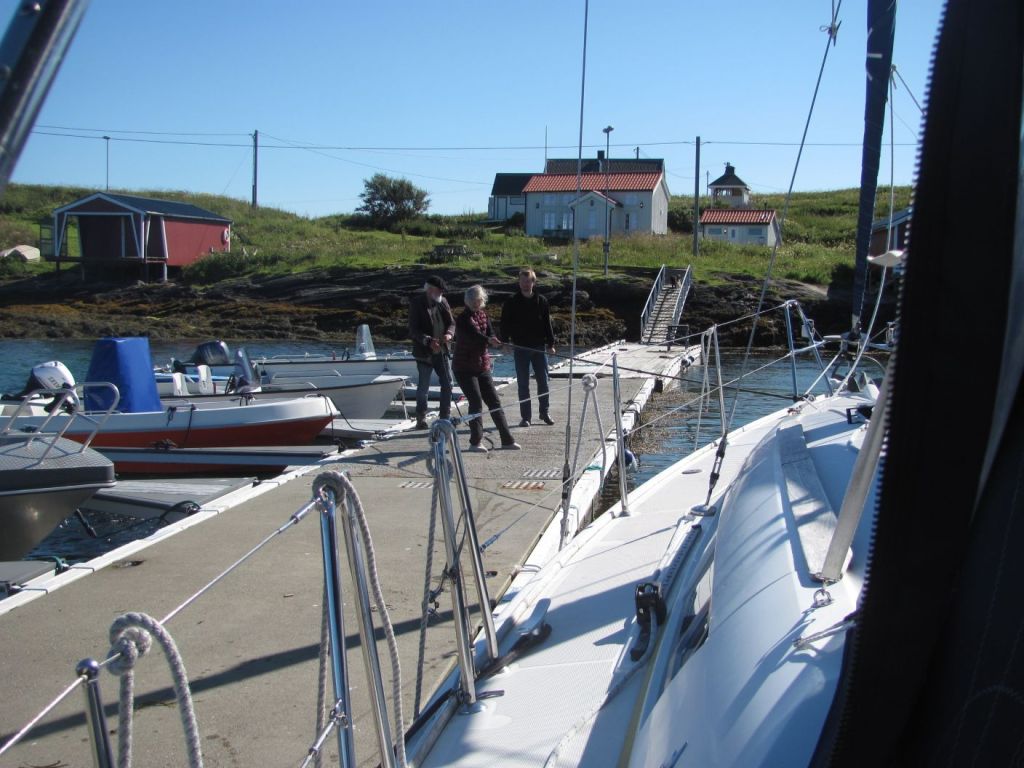
“And yet it’s the new ways that will build the future, my old friend”, says his companion. “The river’s strength will eventually be harnessed to light the city, believe me. Wait! If I am not mistaken, I think I see the young Mr Hunter-Blair over there with his new bride. Fancy meeting our neighbours here so far from home. I suppose we should go and pay our respects.”

The Leirfossen in 2025.

“Did you see the waterfall?”, asks the First Mate, when I get back from my cycle ride.

“Well, sort of”, I say. “But it’s not a waterfall any more. It’s been converted into a power station. Mr Fairlie was right.”
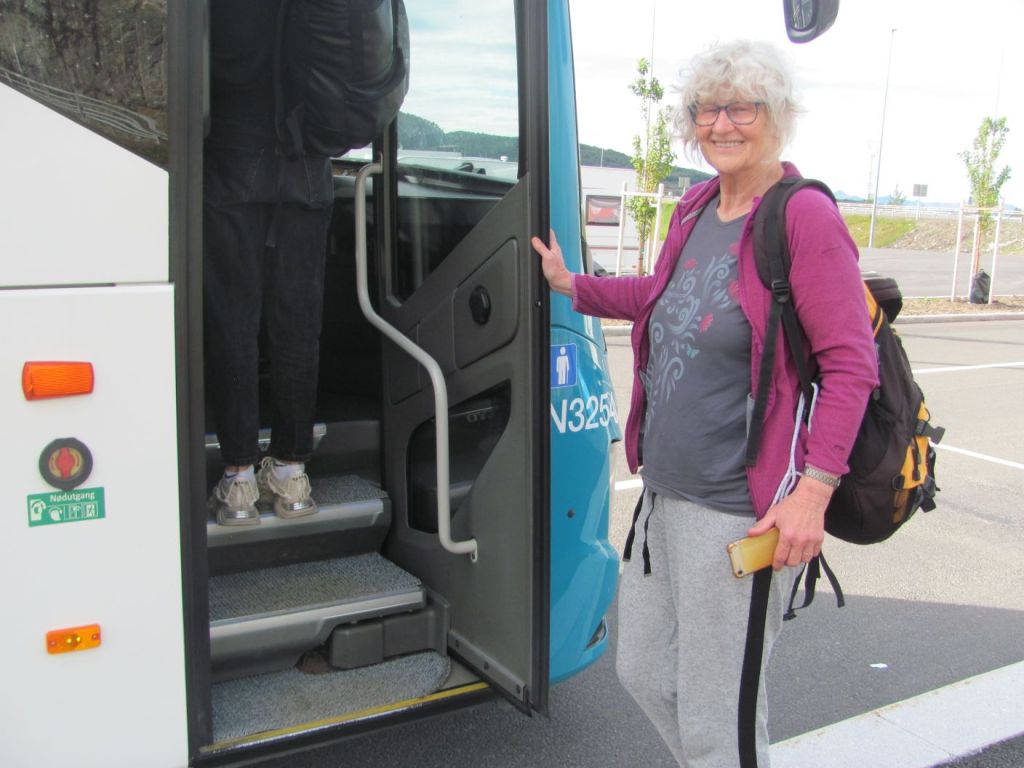
“Remind me who Mr Fairlie is again?”, she asks.

“Just a friend of the family”, I answer. “And I stood in some seagull poo.”