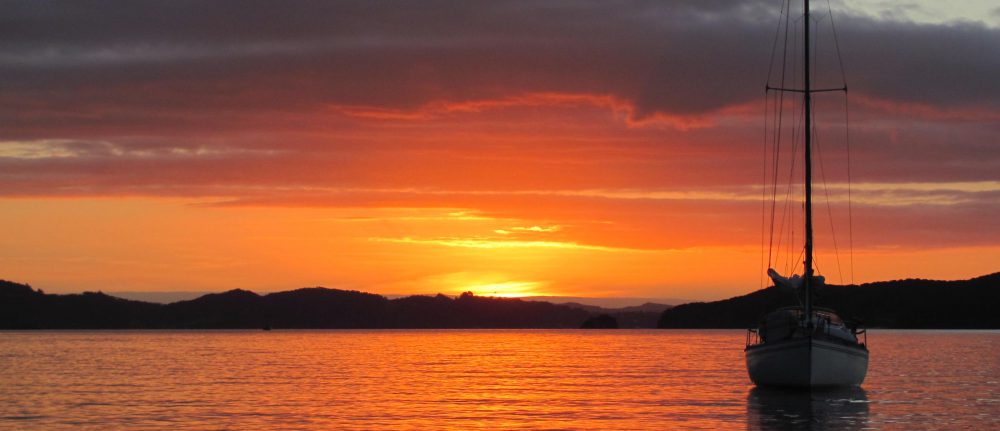
An exhilarating crossing, a tough climb, and fish for dinner

“The weather is looking good tomorrow for the crossing to Lofoten”, says Andy, sipping his tea. “I reckon that Sørvågen is the best place to head for. I know that we talked about Moskenes at one stage, but that is just a boring ferry terminal, while Sørvågen looks to be a pretty little village. They are only a couple of miles apart. Aloucia and Hekla are already at the island of Røst at the very tip of the Lofotens and can meet us there.”

Andy and Anne are with us for a cup of tea and cakes. Andy’s brother Rick has left to fly back to the UK, and we have been kicking our heels waiting for favourable winds to let us sail from Bodø over to the Lofoten islands, a distance of 52 NM and a ten hour sail.

“Sounds good”, says the First Mate. “I hope that it isn’t too rough with all the bad weather we have been having.”

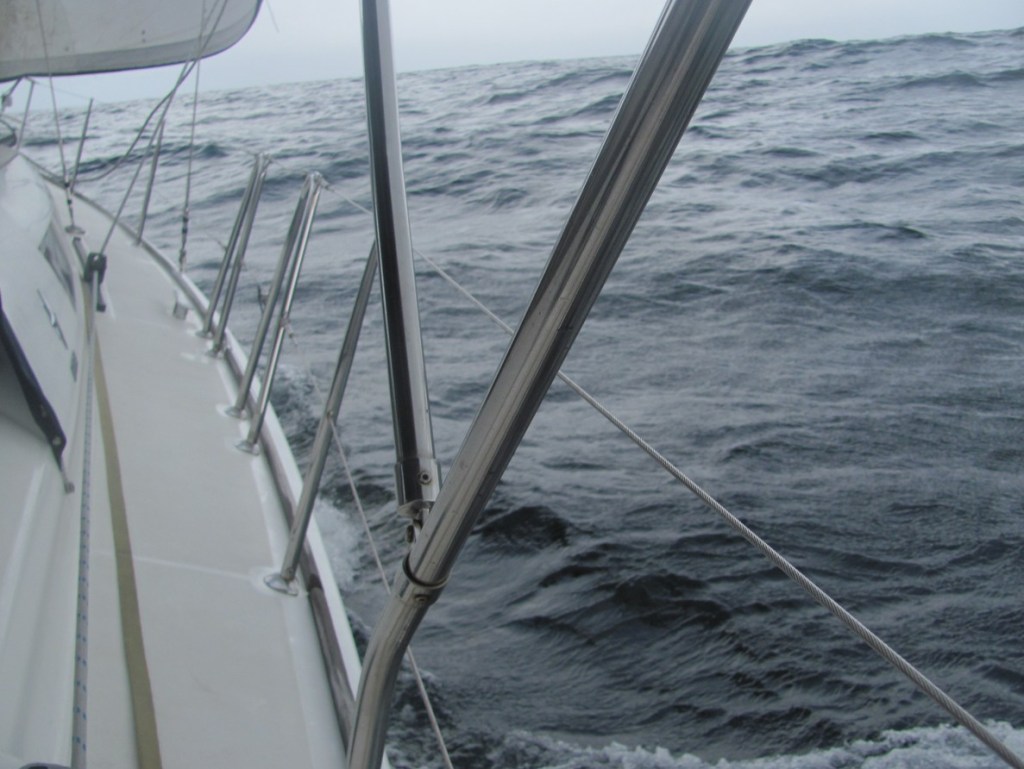
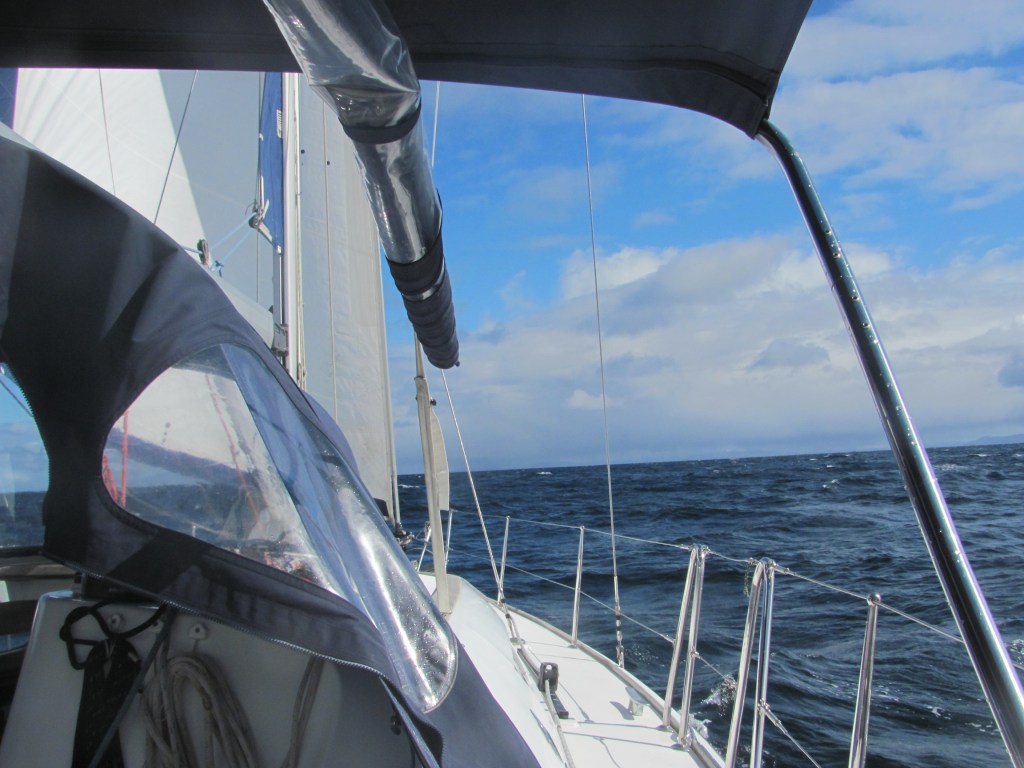
We leave the next morning at 0600. It’s drizzling and misty, and we motor out clear of the numerous small islands surrounding Bodø. Soon however, the drizzle stops and the mist clears and we are left with a beautiful bright sunny day. We unfurl the sails and catch the wind. Ruby Tuesday settles into her slot, and soon we are skimming over the waves on a comfortable beam reach. Amalia is behind us.

Crossing from Bodø to the Lofoten islands.

I pick up the guide book to find out more about the Lofotens.

“The Lofotens are made of some of the oldest rocks in Europe, some of its gneisses and granites having been created deep within the Earth’s crust three billion years ago”, it tells me. “When the two tectonic plates Laurentia and Baltica collided with each other 450 million years ago during what is called the Caledonian Orogeny, a huge range of mountains comparable to the Himalayas were created, stretching across Norway and Scotland, and even to America.”

“I am always amazed at how much they know about so long ago”, says the First Mate. “It’s not as though anybody was there to see it, after all.”

“Geological observations, and coming up with a plausible narrative to explain them”, I say. “That’s science for you.”

“The older gneisses and granites made up the basement rocks of these new mountains with newer material on top”, the book continues. “Much of the latter were gradually worn down by erosion to expose the older rocks underneath. When the Atlantic Ocean opened up 60 million years ago, both of these ancient and newer rocks on its rim were uplifted.”

“Then during the Ice Ages, glaciers scoured the landscape, eroding the newer, softer rocks first and leaving the older, harder rocks, giving rise to the dramatic landscape we see today”, finishes Spencer, from his nest in the canopy.

“I was hoping that we could get through an episode without him showing off”, says the First Mate. “Why did you have to give him that to say?”

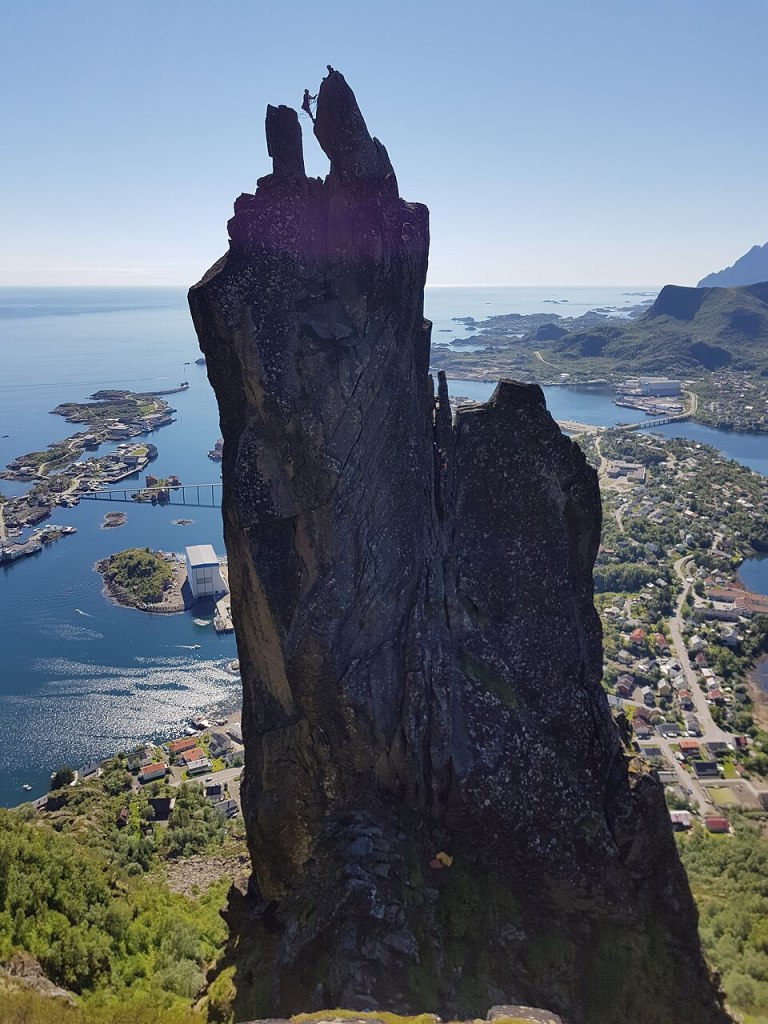
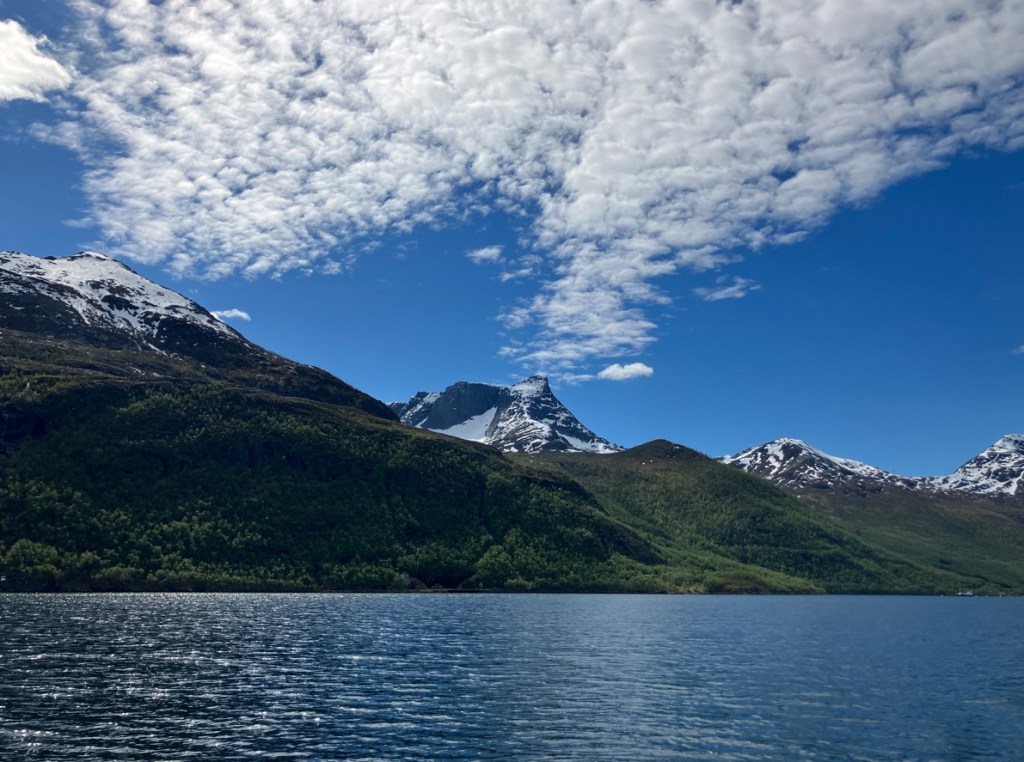
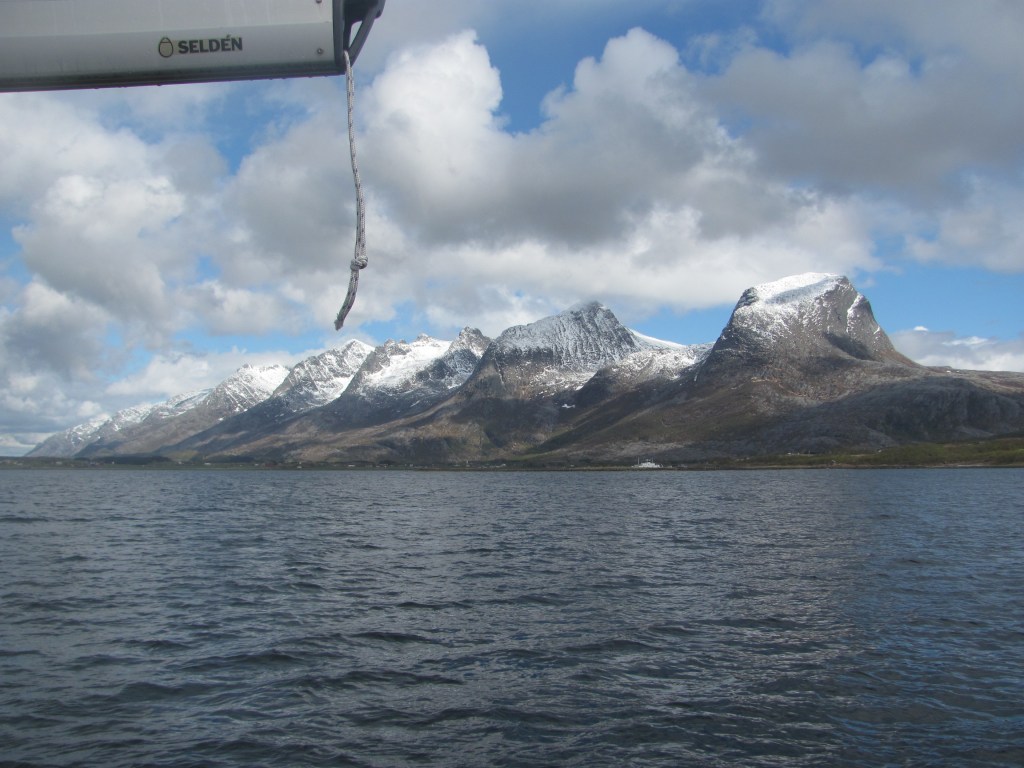
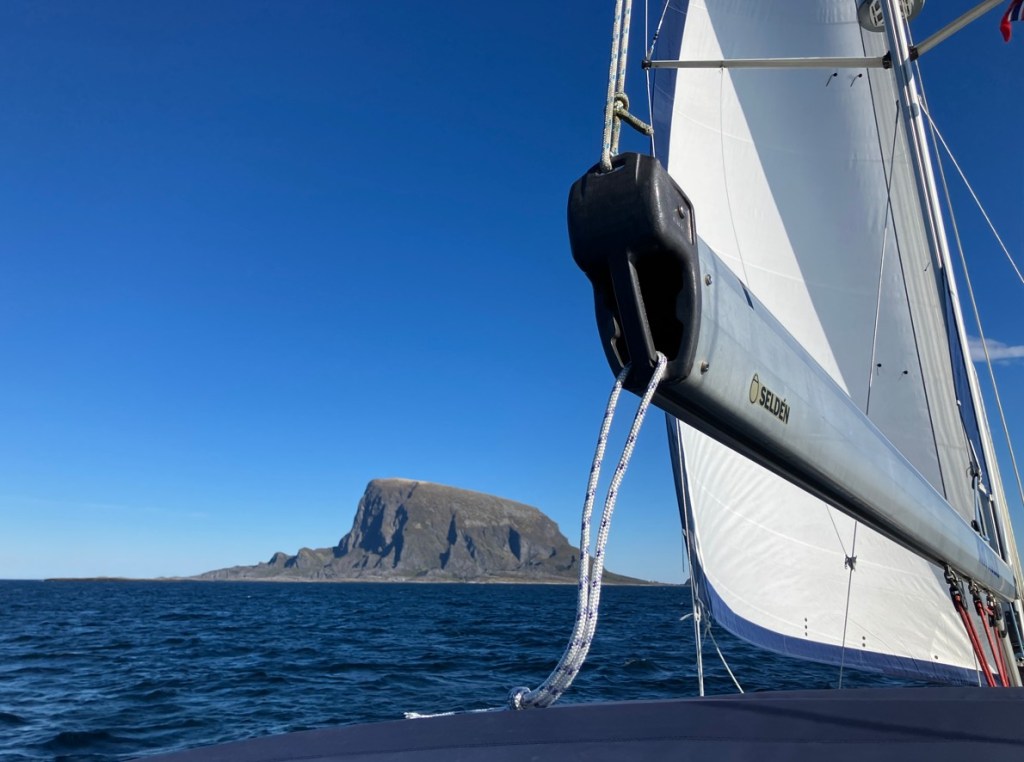
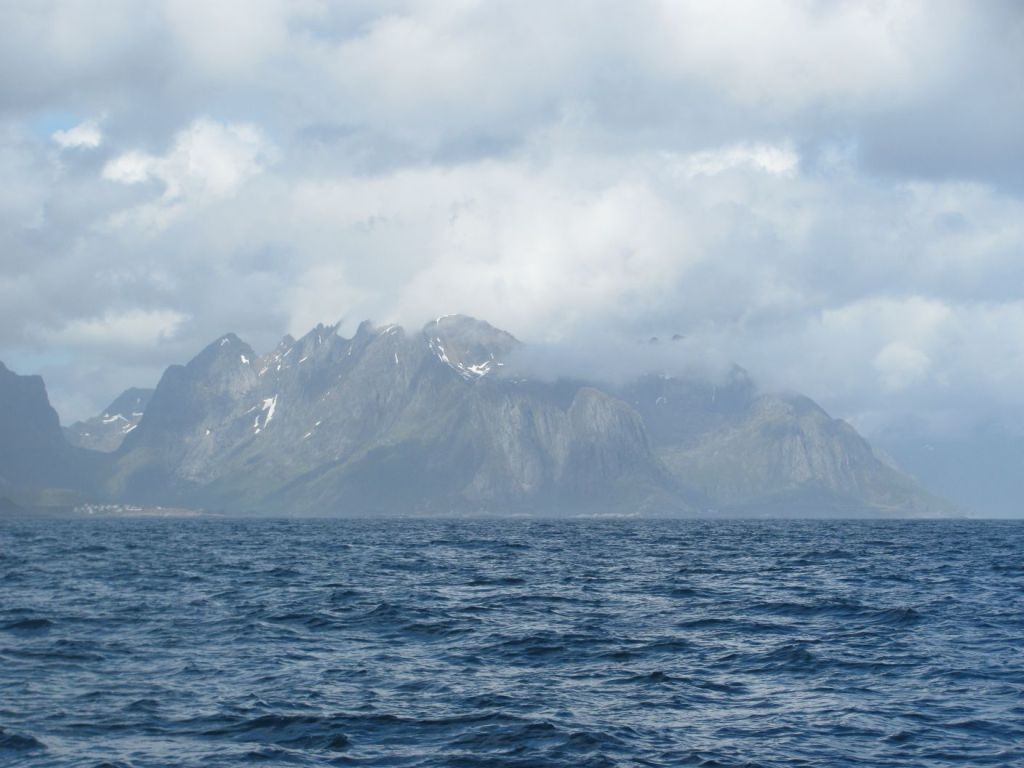
The sea miles pass. It’s exhilarating. At times, we touch eight knots. The mountains in the ‘Lofoten Wall’ gradually appear, so-called because the individual peaks look from the sea like one long stretch of rock.

The ‘Lofoten Wall’ appears.

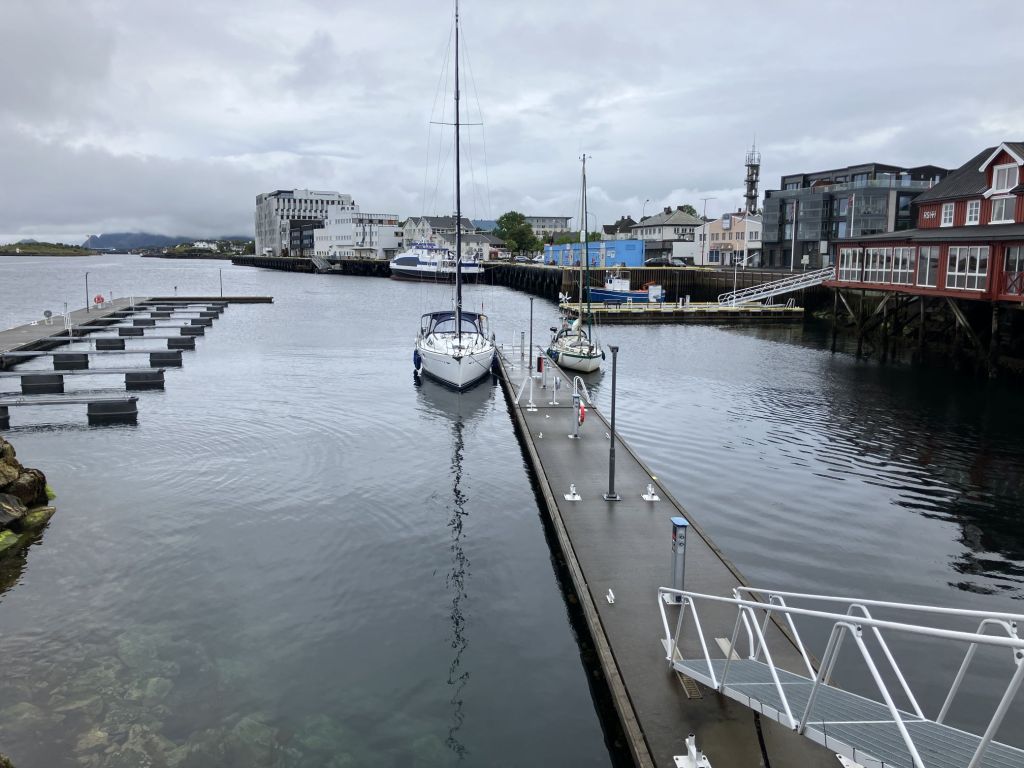
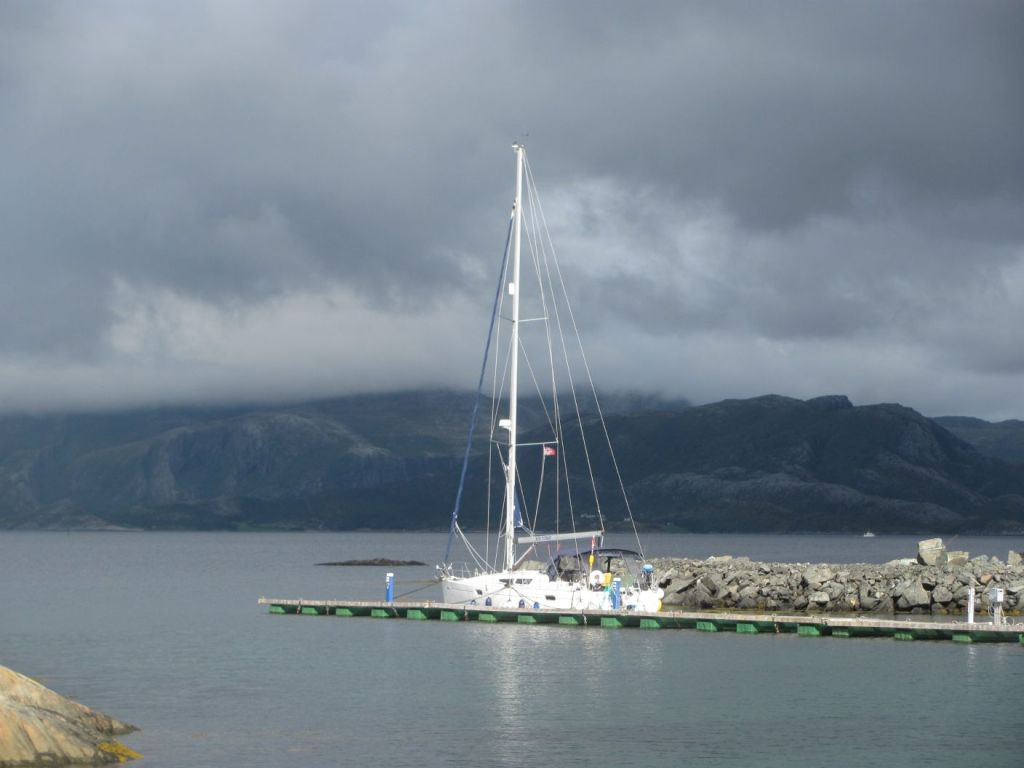
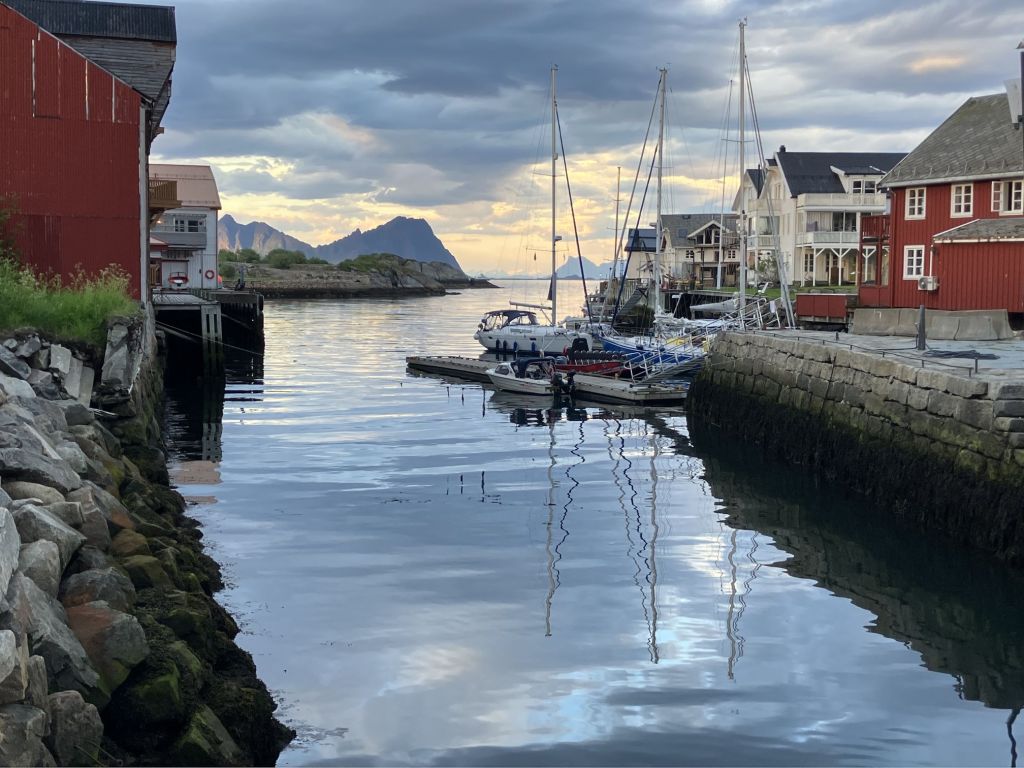
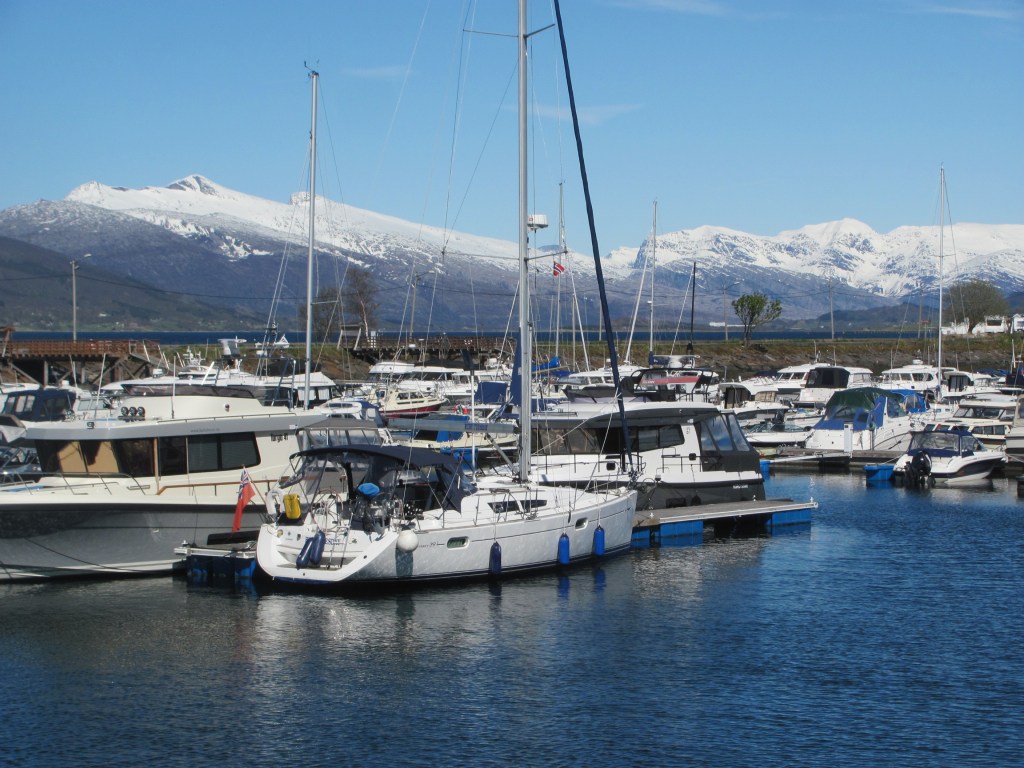
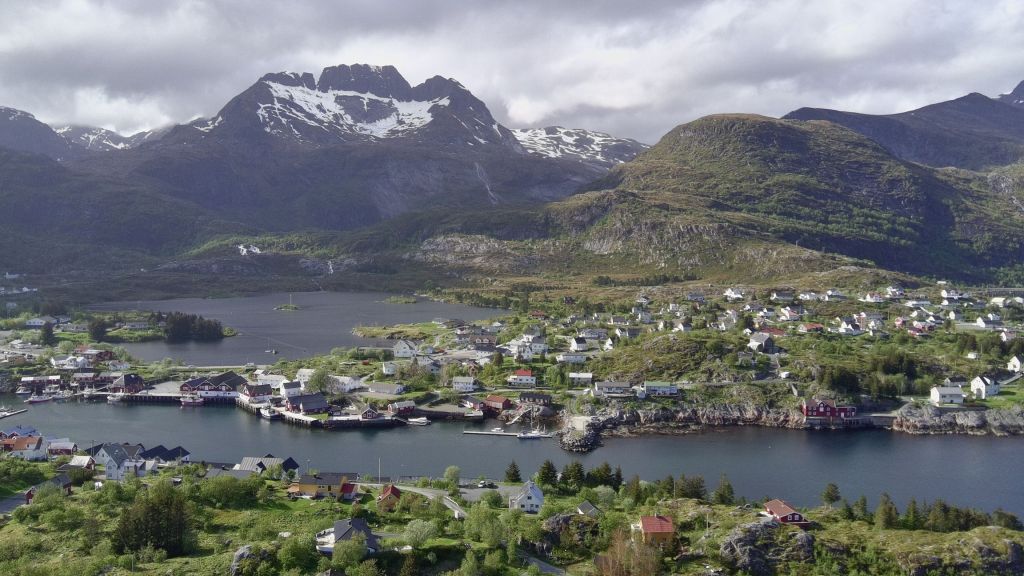
We arrive in Sørvågen harbour, nestled amongst the dramatic mountains. There is a single guest pontoon, luckily empty. We tie up at one end of it, leaving enough room for the other three boats which will arrive soon. Amalia comes next with Andy and Anne, then Hekla with Bob & Fiona, and finally Aloucia with Simon & Louise. We are all together again.

Tied up in Sørvågen harbour.

Both Amalia and Ruby Tuesday are picking up guests who are arriving on the ferry from Bodø to Moskenes in a few days’ time, so we have a few days to kill.

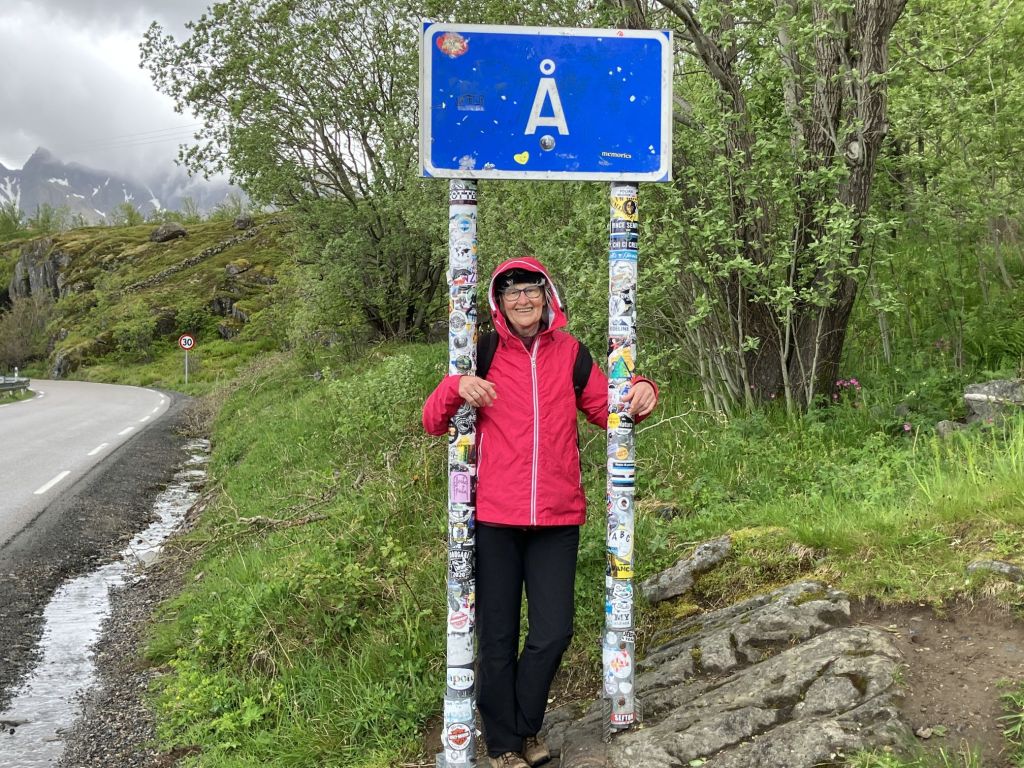
“There’s a fishing village just along the road a bit”, says Bob. “It is called Å, the shortest name in the world for a village. There is a stockfish museum there about the history of fishing in this area. Normally things are shut on Sunday, but I checked and it is open today. We can walk there, see the museum, and see if we can find somewhere for lunch.”

The road winds its way along the rocky coast, past fishermen’s cottages repurposed to holiday cottages, past small sandy beaches and rocky streams, all dominated by the towering peaks and deep-cut valleys behind. From time to time heavy rain pours down, interspersed with patches of bright sunshine. It’s kind of magical. It’s not hard to imagine a line of trolls emerging from the mist and gloom of one of the valleys and challenging us for entering their mystical world.

Reaching the village of Å.

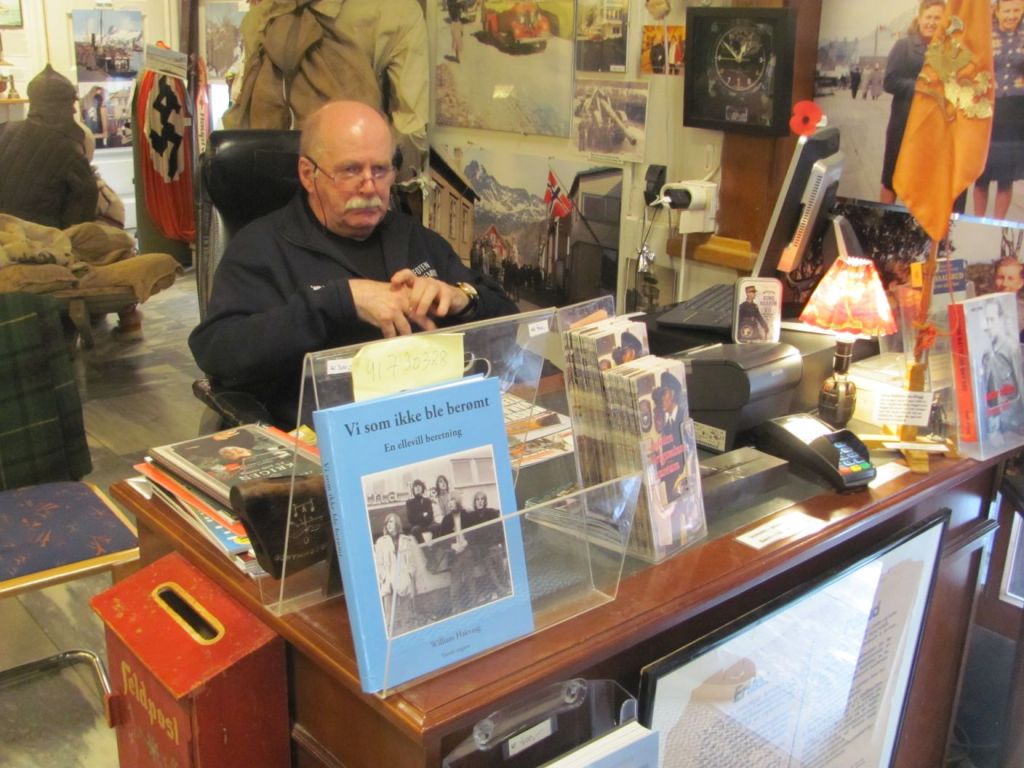
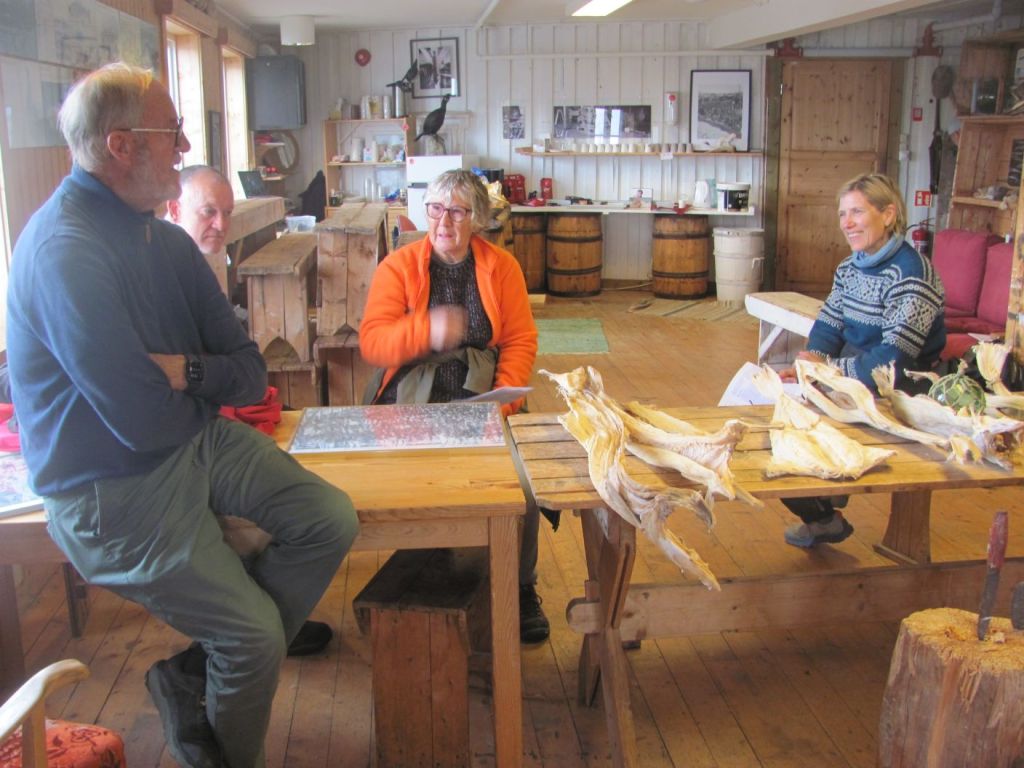
“I used to own the fish processing factory in the village”, the owner of the museum tells us as we sit in a circle around him. “In this very building we are in now. The fishermen would all bring their catches to me, and my staff would process them ready for export. Then when I retired a few years ago, I decided to turn my factory into a museum to preserve the past.”

We learn all about stockfish.

“Pooh, it’s smells terrible fishy in here”, the First Mate whispers to me.

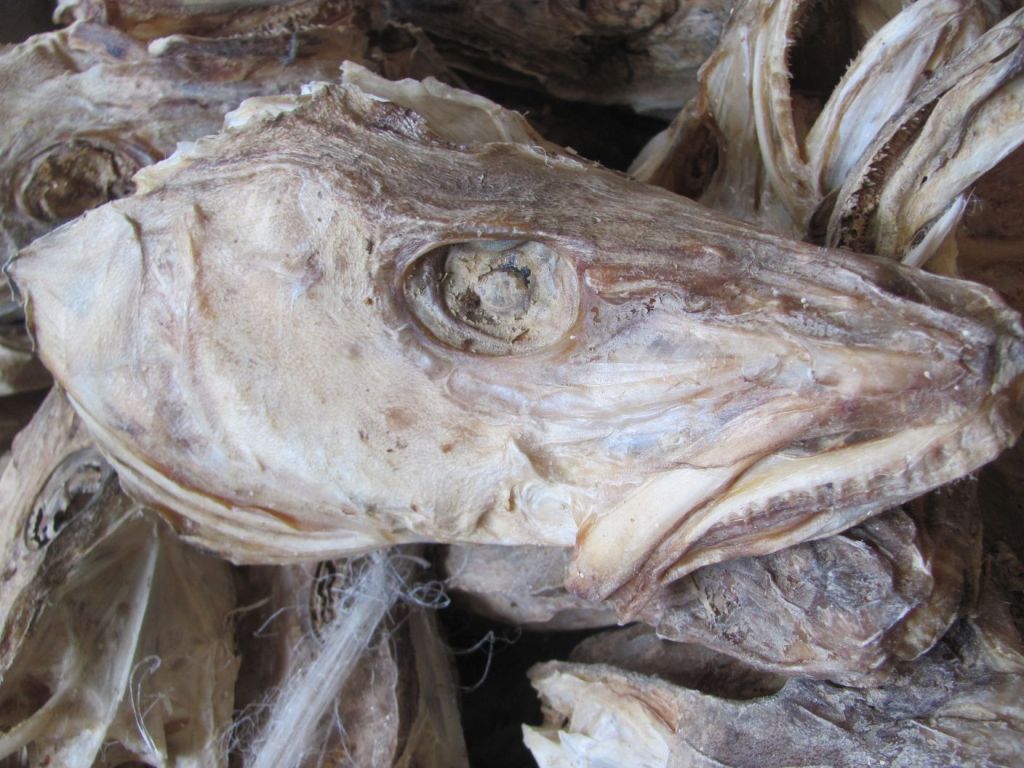
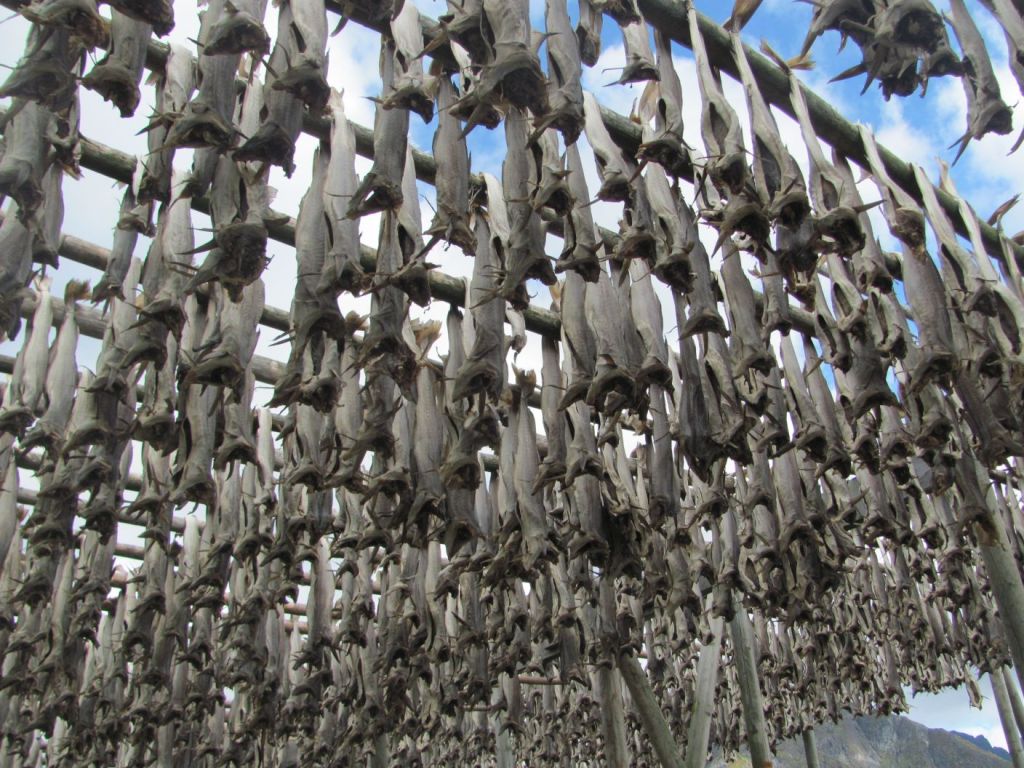
“For those of you who don’t know what stockfish are, they are mostly Atlantic cod”, he continues. “The best cod are the Arctic cod, or skrei, which migrate down here from the Barents Sea between January and March each year to spawn. Because of the distance they swim, their flesh is firm and tasty. There are local cod that live here all the time, but they don’t taste so good, even though they are the same species. We would take the Arctic cod caught by the fishermen, gut and clean them, remove their heads, and then hang them up on wooden racks to be dried in the sun. They can then be kept for years. Stockfish are exported all over the world, although the heads are sent specifically to Nigeria where they are very popular for making stews and the like.“

Cod heads off to Nigeria.

“We saw the Klippfish museum down in Ålesund last year”, I say. “They were dried cod too. What’s the difference between klippfish and stockfish?”

Stockfish are not salted, just dried, whereas klippfish are salted copiously and traditionally dried on the rocks”, he answers, “Both types are exported, mostly to Spanish- and Portuguese-speaking Catholic countries such as Spain, Portugal, Brazil, and the Philippines, where they make a dish called bacalhau. Apparently it was because they weren’t allowed to eat meat at Lent, but fish was allowed, so a demand developed for dried fish from Norway.”

Stockfish drying on wooden racks.

“Talking of food, let’s try and get some lunch”, says Fiona. “I read that there is a small shop doing fish rolls somewhere.”

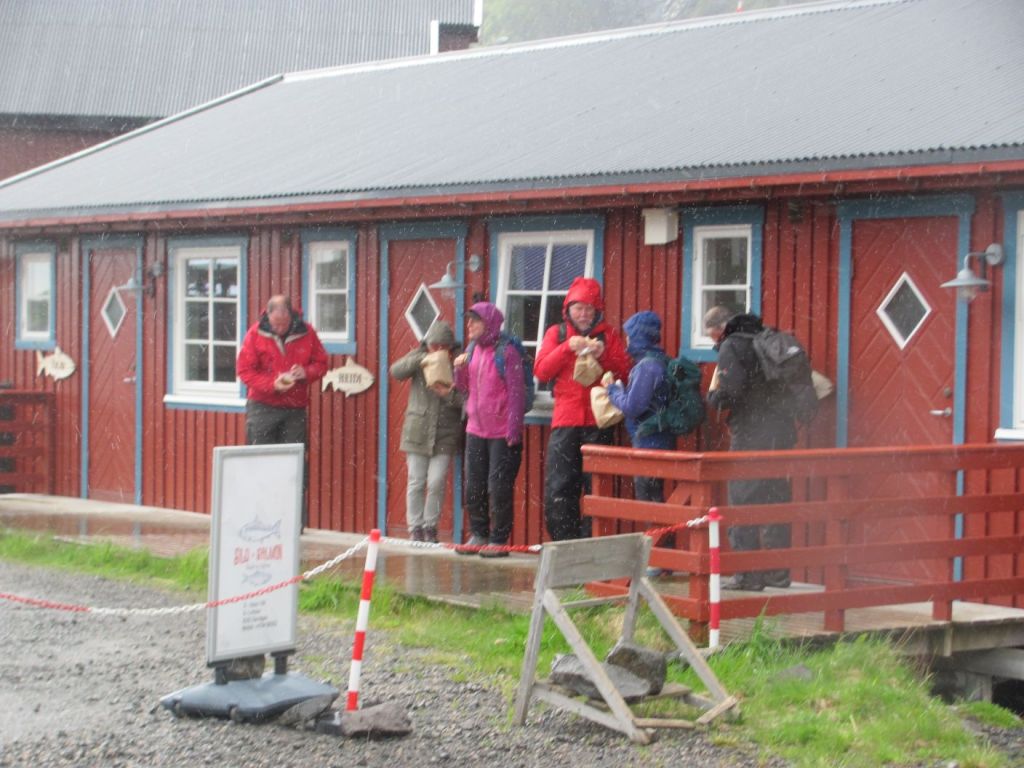
We find it, but it is a takeaway with nowhere to sit, so we huddle from the rain under the eaves of a nearby building and gobble up our matjes brötchen.

Trying to keep dry having lunch.

The next day, Amalia’s guests, Hugh and Liz, arrive on the morning ferry from Bodø. We had previously met them on the Åland Islands rally in 2023, so we invite them all to Ruby Tuesday for a coffee and cakes to catch up. Somehow the influence of Artificial Intelligence on art comes up.

“I don’t think that we have anything to fear from AI in that respect”, says Hugh, who is an avid photographer. “There is always something about AI-generated pictures that is not quite right. Humans are creative and bring that to the art that they produce. AI isn’t creative, just doing what it is programmed to do.”

“I am not sure that I agree”, I say. “I have seen some stunning pictures that AI has created by fusing ideas from different sources. Just like humans do. And you have to remember that AI has only been around for a few years. Look at the progress that it has already achieved. What will it be able to do in another 20, 50, a hundred years or so? I bet you won’t even be able to tell the difference between human and AI art sooner or later.”

“But AI is not conscious”, says Liz. “It’ll never be able to produce art that will appeal to other conscious humans.”

“How do we know if it is conscious or not?”, I ask. “And even if it isn’t now, that it won’t be sometime in the future? Besides, AI may even decide that it is not worth producing things for humans to enjoy. It may eventually evolve its creative potential to produce art that only other AIs can appreciate.”

“Now, there’s food for thought”, says Andy, taking another slice of cake.

Our friends Uli and Ian are supposed to be coming on the 1945 ferry from Bodø, arriving at Moskenes at 2300.

“The last bus leaves the ferry terminal at 2310”, says the First Mate. “They can take that to come to Solvågen They should be here around 2320.”

“That’s only ten minutes to get off the ferry and onto the bus”, I say. “It’s cutting it fine. I hope the ferry is on time.”
“The bus will wait anyway”, says the First Mate, assuredly. “Even if the ferry is late.”

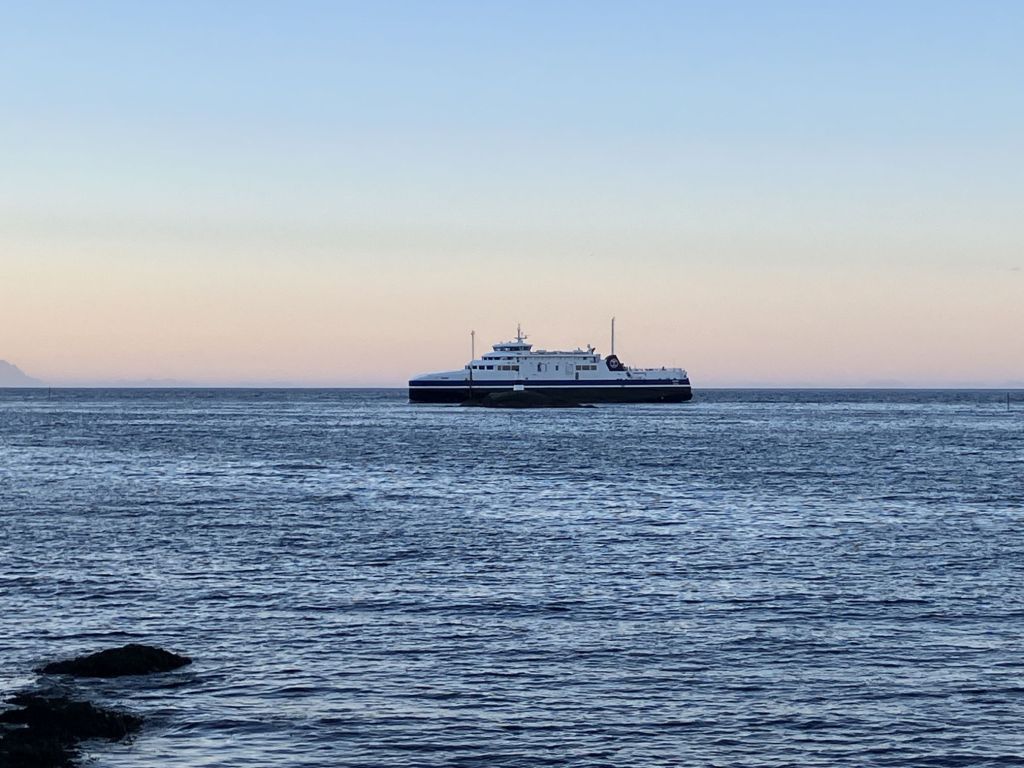
The ferry between Bodø and Moskenes.

As the ferry leaves Bodø, we get a text from Uli. “The ferry left 20 minutes late”, it says.

“It’s just as well the bus will wait”, I say.

We walk down to the bus stop to meet them. The bus arrives, and two people get out. They are not Uli and Ian.

“I have my own timetable”, the bus driver says. “I can’t wait if the ferry is late. I need to get home now.”

Another text arrives. “The ferry is just coming into Moskenes now”, it says. “I hope the bus is waiting for us.”

The First Mate breaks the news that the last bus has gone. “Perhaps you can try and get a lift from one of the passengers?”, she says hopefully.

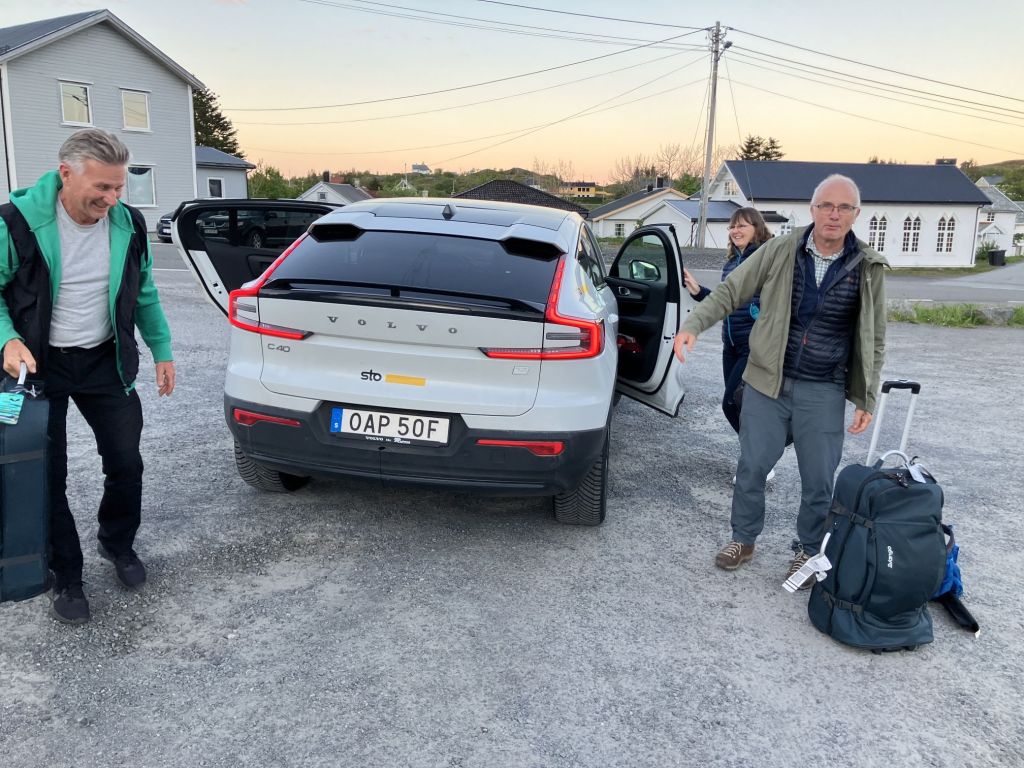
Fifteen minutes later, a car pulls up at the bus stop. Ian and Uli get out.

Ian & Uli finally arrive at a quarter to midnight.

“I had to leave my wife at the ferry terminal”, the driver says. “We’re on holiday and the car is so full, I didn’t have room for four people. I will have to rush now and collect her.”

At least they have arrived. It is after midnight by this stage, and the sun is still shining.

“Welcome to the land of the midnight sun”, I say.

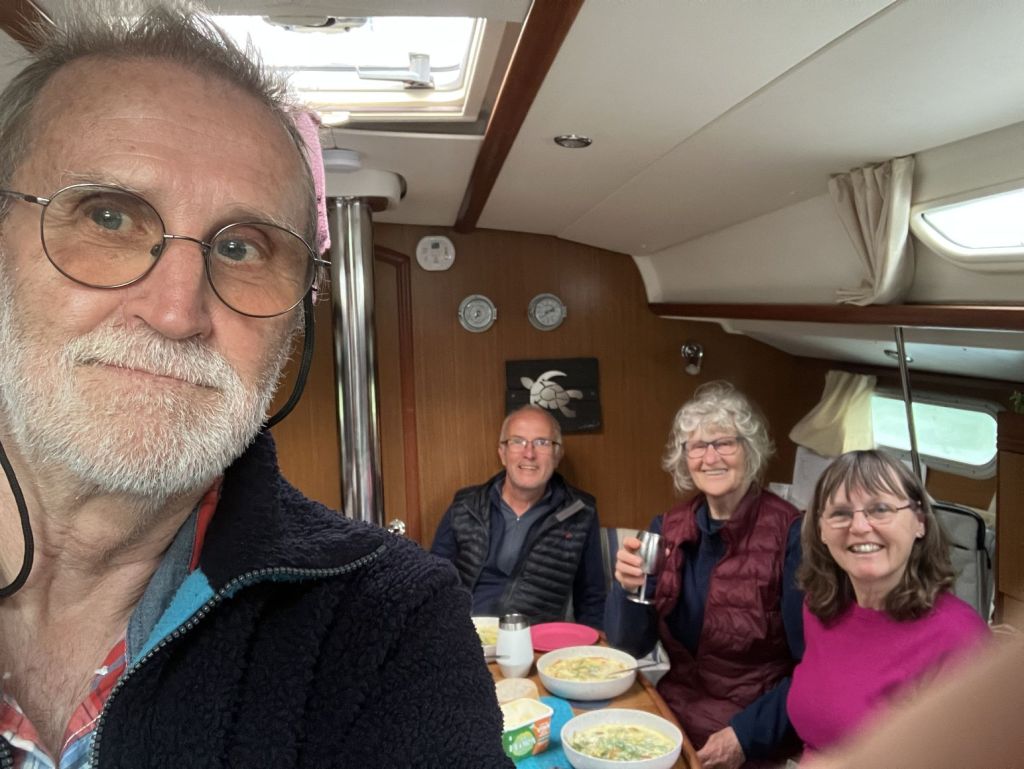
A midnight feast.

The next morning, we sail up to Reine, the next village. There is a spectacular walk called the Reinebringen up steps to the top of the 484 m high mountain overlooking the village. Like Rødøya, these were built by teams of Sherpas from Nepal.

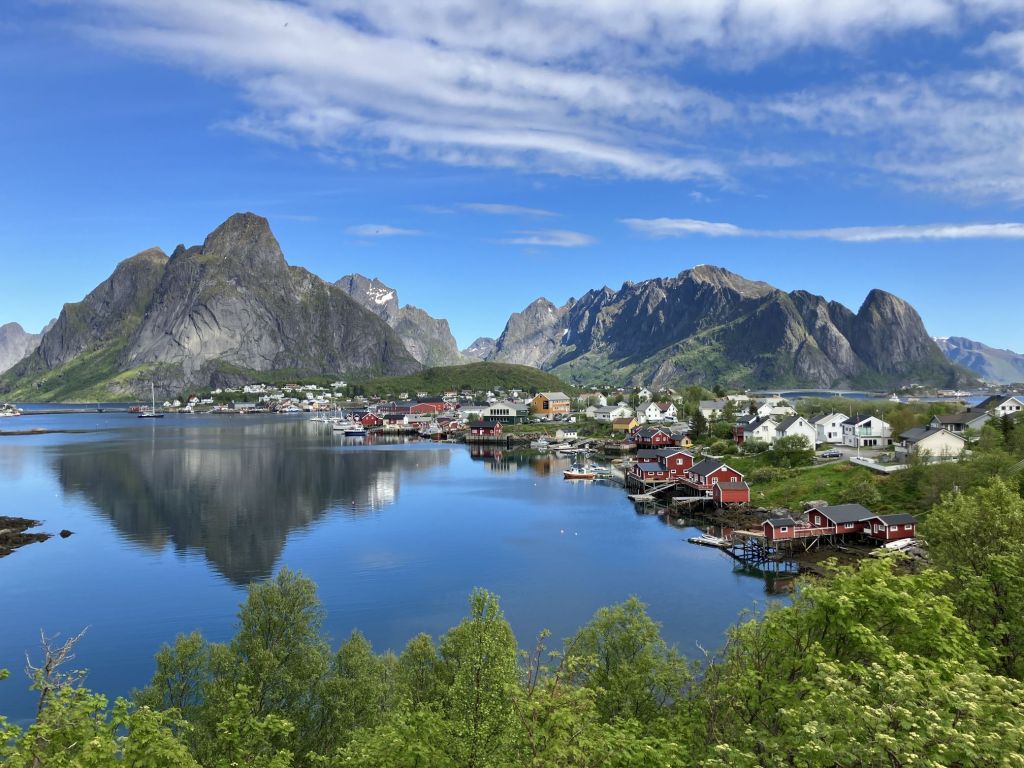
The village of Reine.

“I read that there are about 1800 steps”, says Ian. “And that it takes about three hours there and back. I am quite keen to do it.”

“So am I”, says Uli.

“I won’t”, says the First Mate”. “My knees aren’t up to it.”

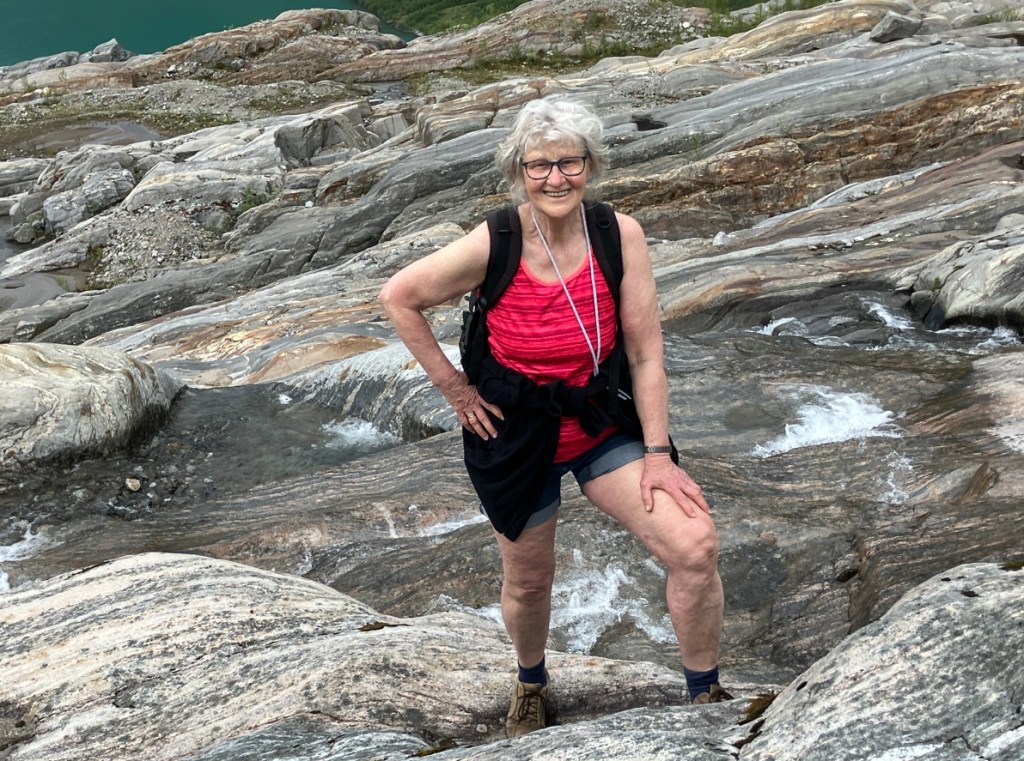
I also have a dodgy knee that I injured in a motorbike accident when I was young, but I decide to give it a go.

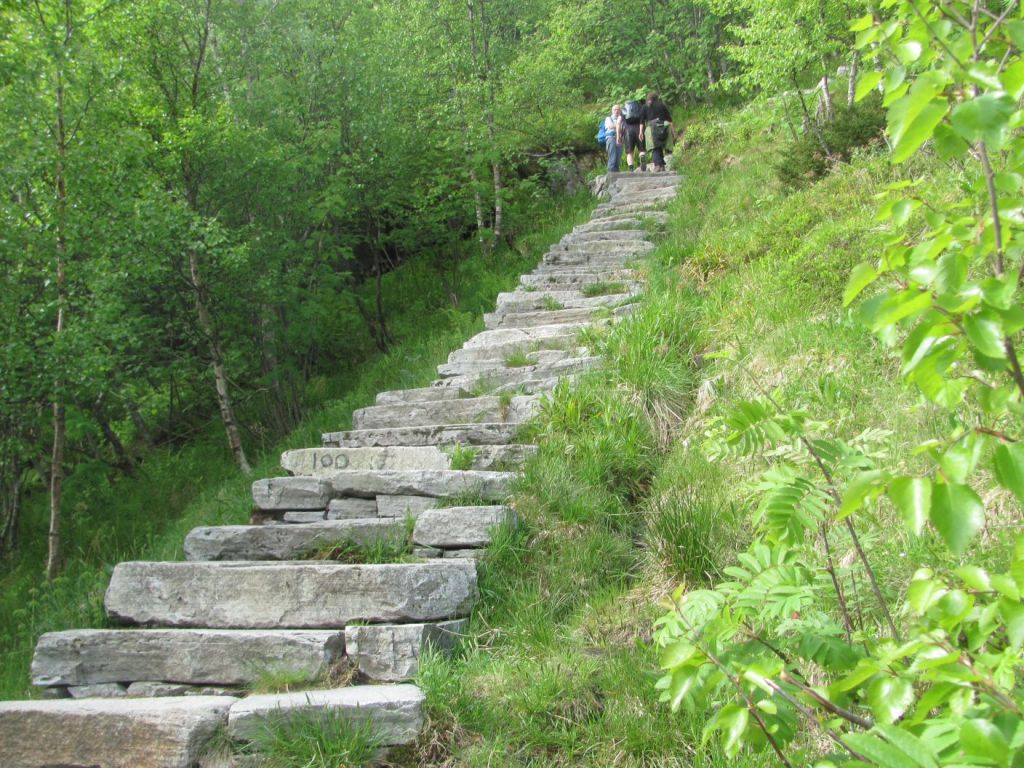
It’s a nice sunny day. We walk to the start of the path and begin to climb. It is a relentless ascent upwards with few level bits to give tired joints a rest. The steps are also of different heights, making it difficult to develop a rhythm.

Climbing the Reinebringen.

As we near the summit, we meet a Chinese girl coming down on her backside. Her progress is glacial.

“She tripped and sprained her ankle at the top”, says her partner in broken English. “It’s too painful to walk on it, and she has to slide down.”

She is wearing gym shoes. It’s a long and painful way down. We offer to help, but there isn’t much we can do.

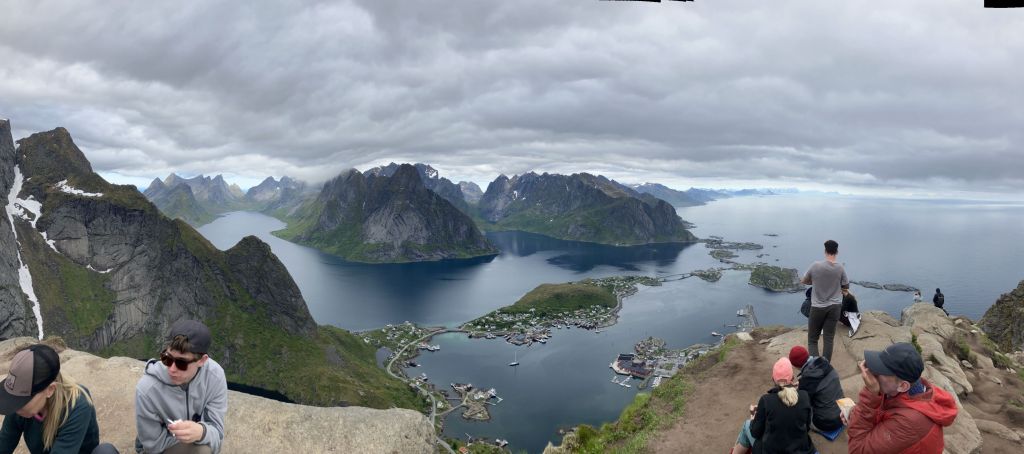
We continue upwards, and eventually reach the top. It’s already quite busy. The view is stunning, from the sea to the south, the whole line of the Lofoten islands in each direction, the range of snow-covered mountains on the distant Norwegian mainland, the village of Reine below, and the arms of the fjords pushing into the mountains to the north.

View from the top of the Reinebringen walk.

On the way down, we catch up with the Chinese girl. An athletic looking hunk and the girl’s partner are supporting her as she hops on one leg from step to step.

“I’m a First Responder”, the hunk tells us. “We got a call, and I happened to be on the steps already, so I came to help. She’ll be alright. We’re not far from the bottom now. But it is a lesson to wear the right kind of footwear.”

I shudder, and hope that my knee holds out. I am wearing a knee support and boots, and am using walking poles.

It does, and we reach the bottom intact.


The next day we push on to Henningsvær, a picturesque but touristy fishing village.

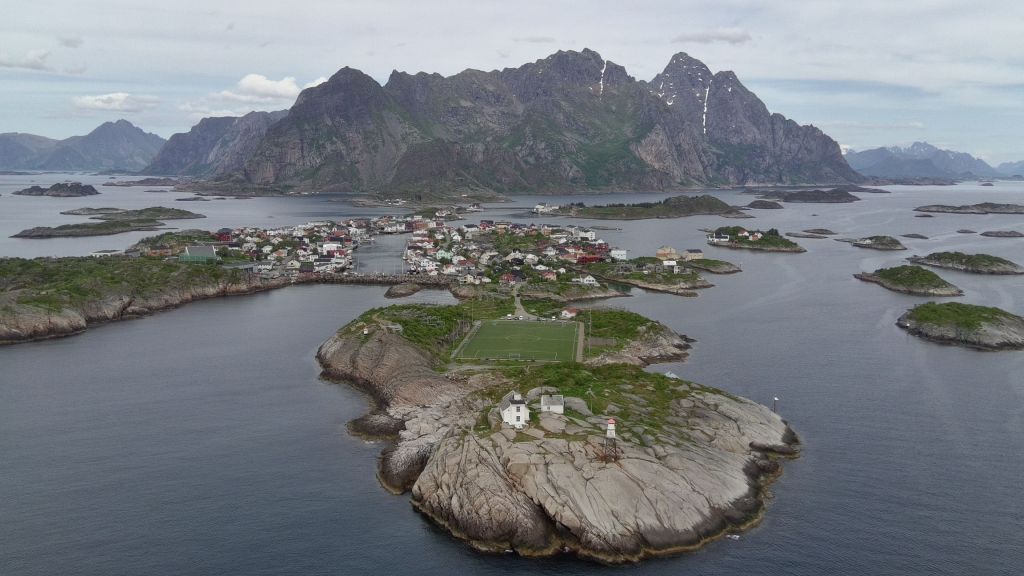
“You have to try and get a drone shot of the football field”, says the First Mate. “With the mountains in the background. It’s world-famous.”

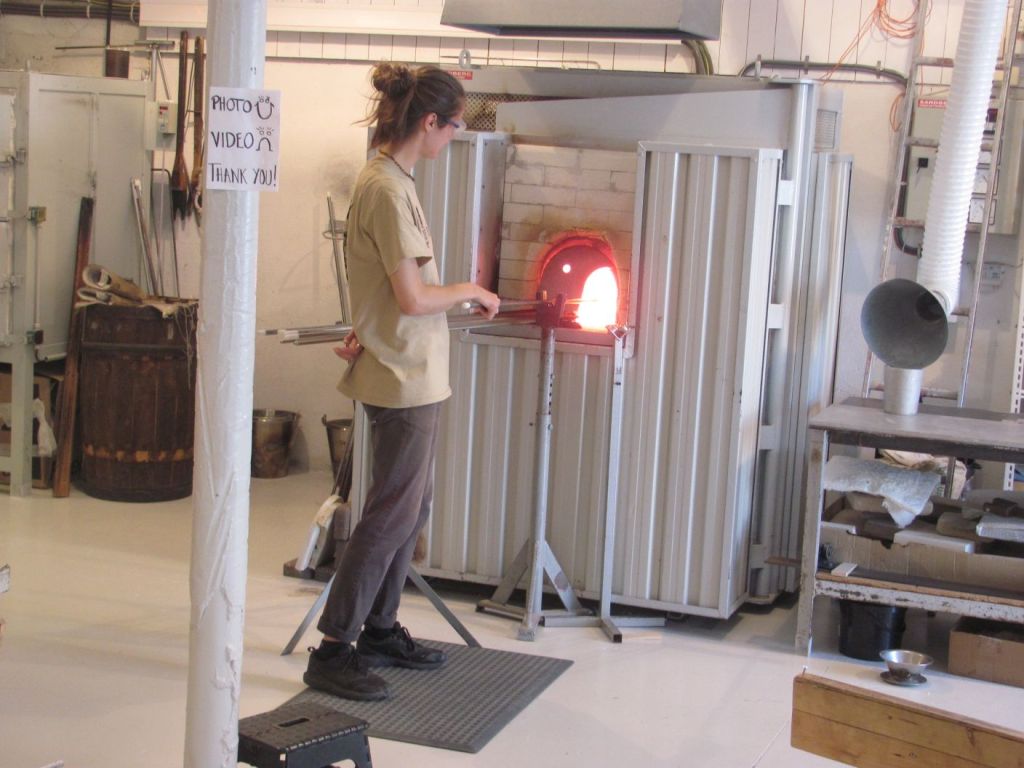
But the wind is too strong in the morning, and I don’t want to lose the drone in the sea. We content ourselves by exploring the town. Particularly fascinating is the glass-blowing in one of the boutiques.

Glassblowing in Henningsvær.

In the afternoon, the wind has eased, but it has clouded over.

“Give it another go”, urges the First Mate. “But don’t be too long, as the other boats have all left. We’re the last.”

This time the drone doesn’t complain of too strong winds, and I manage to get a nice shot.

Henningsvær.

“I would quite like to do some fishing”, says Ian, as we prepare to leave. He is a keen fisherman, and has brought his own gear. “If we can find a patch of relatively shallow water, we can drift across it slowly with the line a metre or so above the sea bed, and see what we catch. Cod and other big fish are bottom dwellers, so that is where the bait needs to be.”

We find a shoal of around 20 m depth, bait the hooks, and pay out the lines. In the next hour, a couple of small saithe bite, but they are too small and we throw them back.

“OK, let’s go”, says Ian. “There doesn’t seem to be much here.”

“One more time”, I say. “We can try between these two islands. Then we can push on.”

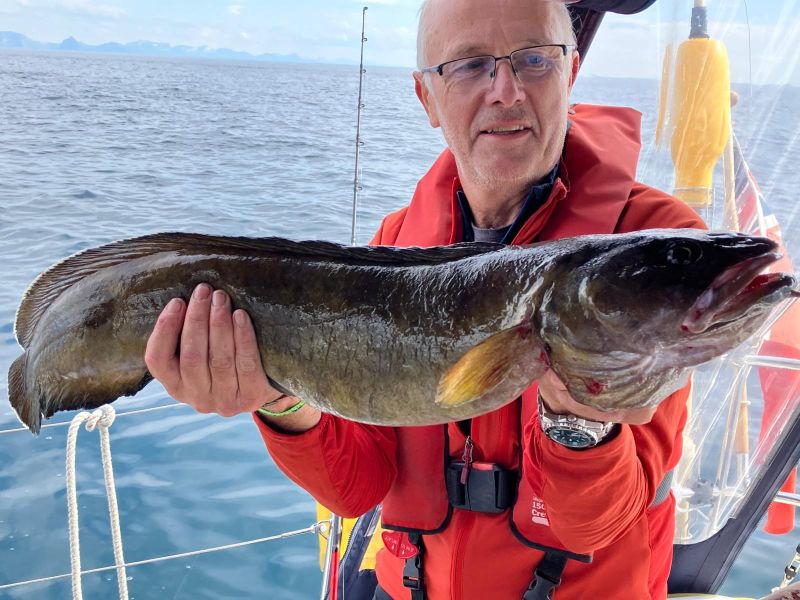
Ian’s line starts to shriek as the line pays out.

“I think we might have something!”, he shouts excitedly, applying the brake. “And it feels like a good-sized one too!”

It is. We manage to wrestle it on board and dispatch it. The fish book identifies it as a tusk, or brosme, a member of the ling family. Normally they are deep water fish, living at around 200 m depth. Ian is chuffed.

Ian catches a tusk.

“There’ll be a few meals on that”, he says as he fillets it on deck, blood everywhere. “The book says they are good eating fish as the flesh is very firm.”

There are. Eight generous helpings to be exact.

Black ice, an old trading post, and an international incident

“There are some bicycles here that we can use”, says the First Mate. “They save walking in to the start of the path to the glacier.”

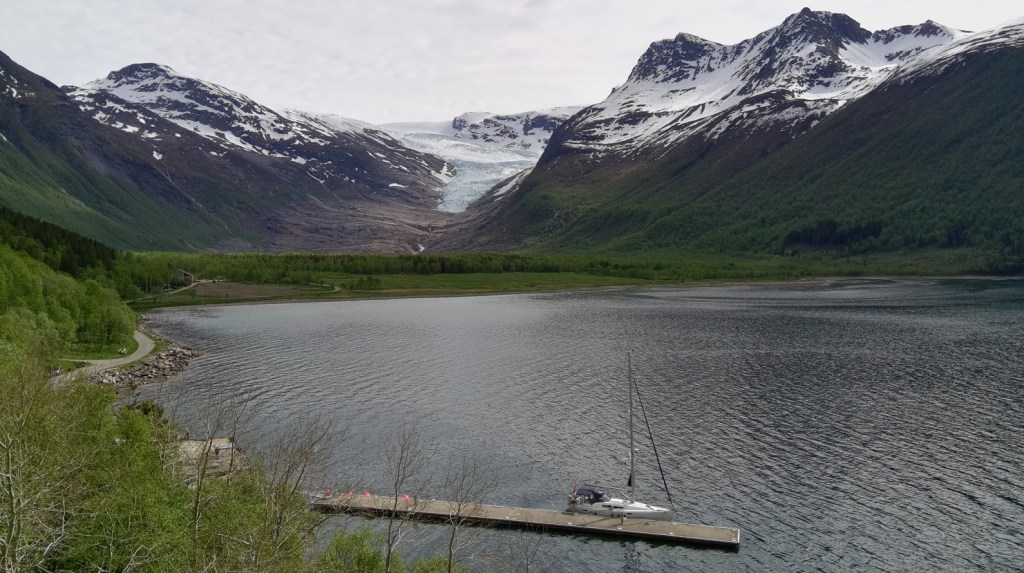
We have just arrived at the small Engen Brygge pontoon at the top of Holandsfjord, and are looking up at the Svartisen glacier. We are the only ones here, and could be the only people in the world.

Tied up at the Engen Brygge pontoon near Svartisen glacier.

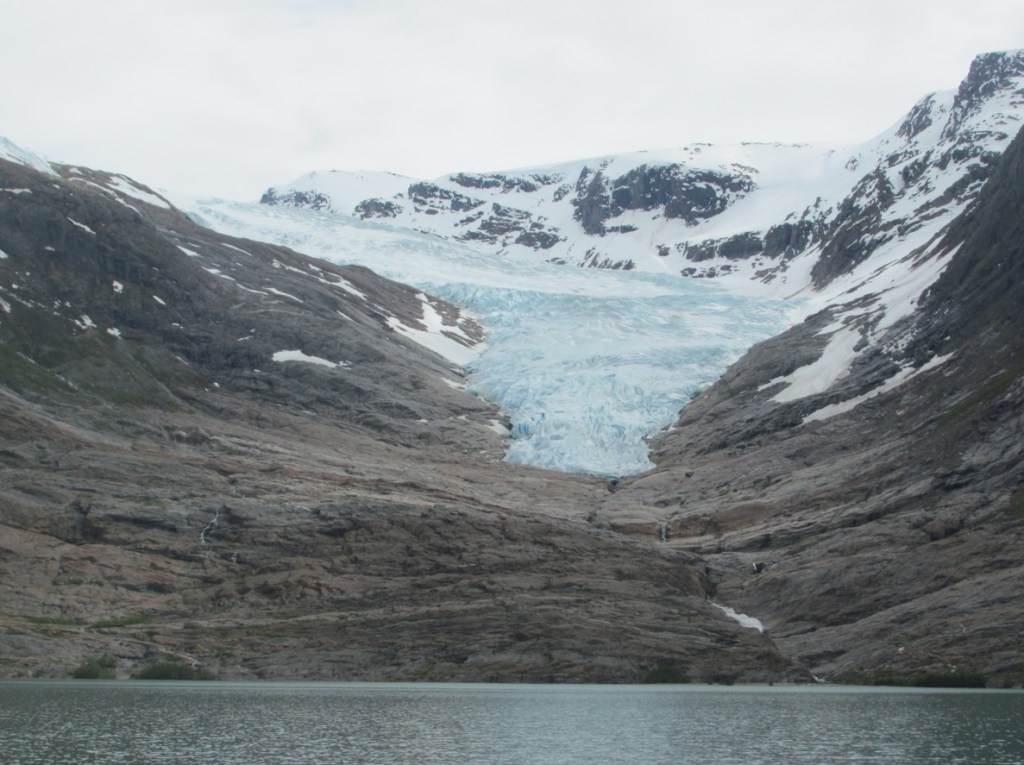
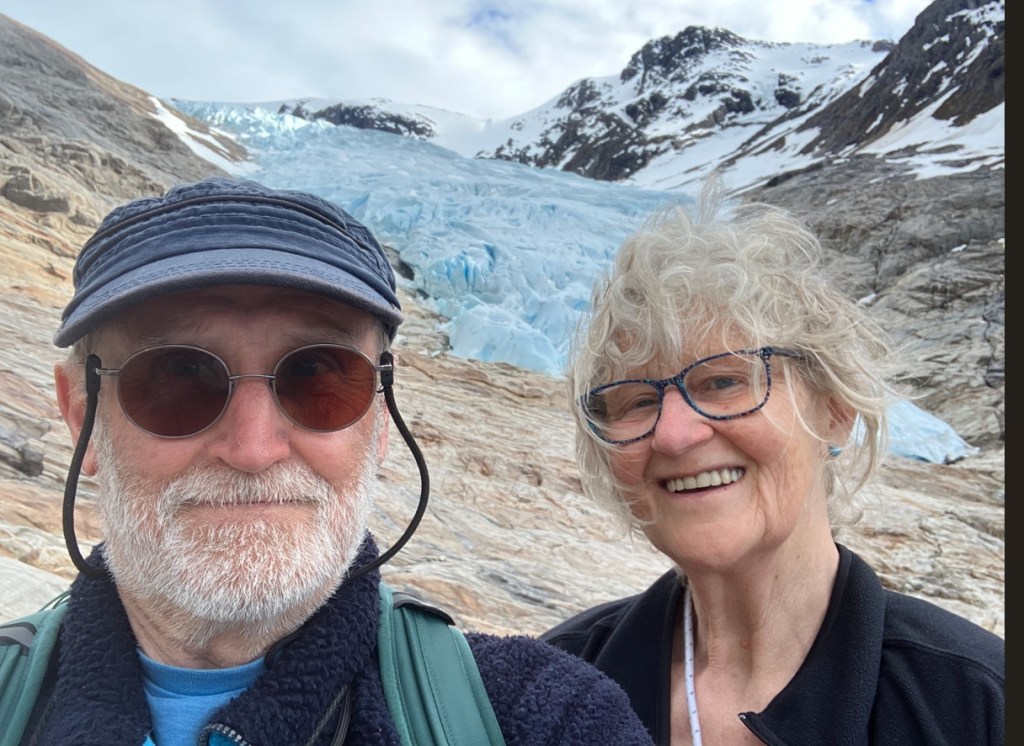
‘Svartisen’ means ‘black ice’ in Norwegian, so named because of its dark blue colour. It’s stunning. The main ice sheet covers the surrounding mountains, with a tongue of it cascading down the Engabreen valley towards the sea. Apparently it is the lowest glacier in Europe, due to the latitude we are at.

Svartisen glacier.

We start cycling along the small road leading towards the glacier. Occasional summer cottages appear in the trees along the way, all locked up now for the winter. The summer season doesn’t start until June, so we have the place to ourselves until then.

Then suddenly, a splash of orange ahead on the road for a brief moment before it disappears again. We are not alone, it seems. We continue pedalling, and catch up with a young woman in her early twenties carrying an enormous orange rucksack on her back.

“I’m heading up the side of the glacier”, she says, with the trace of an Antipodean accent. “There’s a DNT hut up there just next to the ice. I am planning to stay there for a couple of days just reading and walking.”

“What does DNT mean?”, we ask.

“It stands for Den Norske Turistforening”, she tells us. “The Norwegian Trekking Association in English. They maintain a network of trails and mountain huts throughout Norway. You pay a subscription, and it entitles you to use their huts wherever you want. Some are staffed and offer meals and accommodation, but the one I am going to is unstaffed, and I am taking my own food and sleeping bag.”

“Are you Australian?”, asks the First Mate. “You have a slight accent.”

“No, I am Norwegian, but I did spend a year working in Australia, so that is where the accent comes from”, she answers. “I loved Australia, and would like to go back there sometime.”
We wish her the best, and continue on with our cycle ride, impressed with her self-sufficiency and spirit of adventure. It’s not common for a young woman to spend time alone in a remote hut with only basic facilities in an Arctic wilderness, and we wonder what motivates her? So much for the critics of modern youth.

We reach the end of the road, and park the bikes. From now on it is following the walking track up the moraine of the glacier. Eventually, even the path peters out and we need to clamber over rocks, following blue painted markers. It’s tough going, leaping from one rock to the next, making sure that we don’t slip between the cracks and twist an ankle. Far off to the left, we can see the lone trekker making her way up the steep slope at the side of the moraine, her orange rucksack visible in the afternoon sun, until she too disappears from sight. We are alone again.

Climbing the Svartisen glacial moraine.

Eventually we reach the end of the markers. There is a sign warning us that getting too close to the glacier is dangerous for fear of chunks of ice calving. It doesn’t matter – we are a hundred meters or so from it anyway.

We make it!

We sit on a rock and eat our snacks, awed by the massive river of ice flowing imperceptibly down the valley, but also realising that it is retreating, melting by the warming climate that humans have been responsible for through their activities. We had seen photos of the glacier ending much further down the valley, including the place that we were sitting on at the moment.

Later, when we are back, and we are sitting on the deck having our dinner, surrounded by nature’s grandeur on all sides, the First Mate expresses both of our thoughts.

“It’s such a shame that it is retreating so much”, she says. “Can you imagine what it will be like in a few more decades? It will hardly come down the valley at all.”

“The dynamics of this part of the glacier are actually quite complex”, says Spencer, butting in. “In the 1700s, it was nearly at the shore of the fjord. It retreated significantly in the late 1800s, then there was a brief advance in the early 1900s for ten years, but then it retreated about 2 km since then. From the 1990s, after a quick but short-lived advance, the edge of the glacier hasn’t changed all that much, but the ice has thinned and become structurally weaker due to more crevasses. There is no doubt that overall, climate change is driving these dynamics.”

“How can some of our leaders call all this a hoax?”, asks the First Mate. “They should all be brought here to see the evidence for themselves.”

“It’s because big money isn’t interested in nature”, I say. “All it is interested in is making even more money than it will ever need.”

Cynical, me?

Holandsfjorden.

In the morning, we sail back down Holandsfjorden toward the coast, feeling privileged to have seen one of the world’s natural wonders close up and in its setting. We turn to starboard into Meløyfjorden and continue our voyage northwards.

Heading north again.

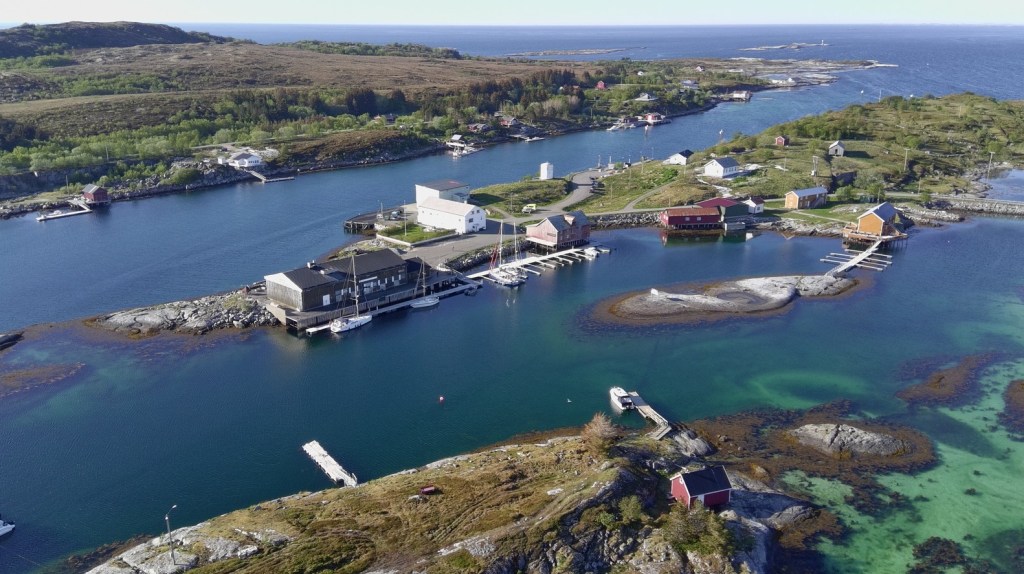
In the early afternoon we arrive in Støtt, a picturesque fishing village and former trading post, and tie up to the quay next to the former warehouse. It’s quiet, no-one is around. A few other boats are there, but it doesn’t look like they have been used for a while. The small mini-market has a notice in the door saying it will open at 1500. We decide to have a cup of tea and come back then.

Tied up at Støtt harbour.

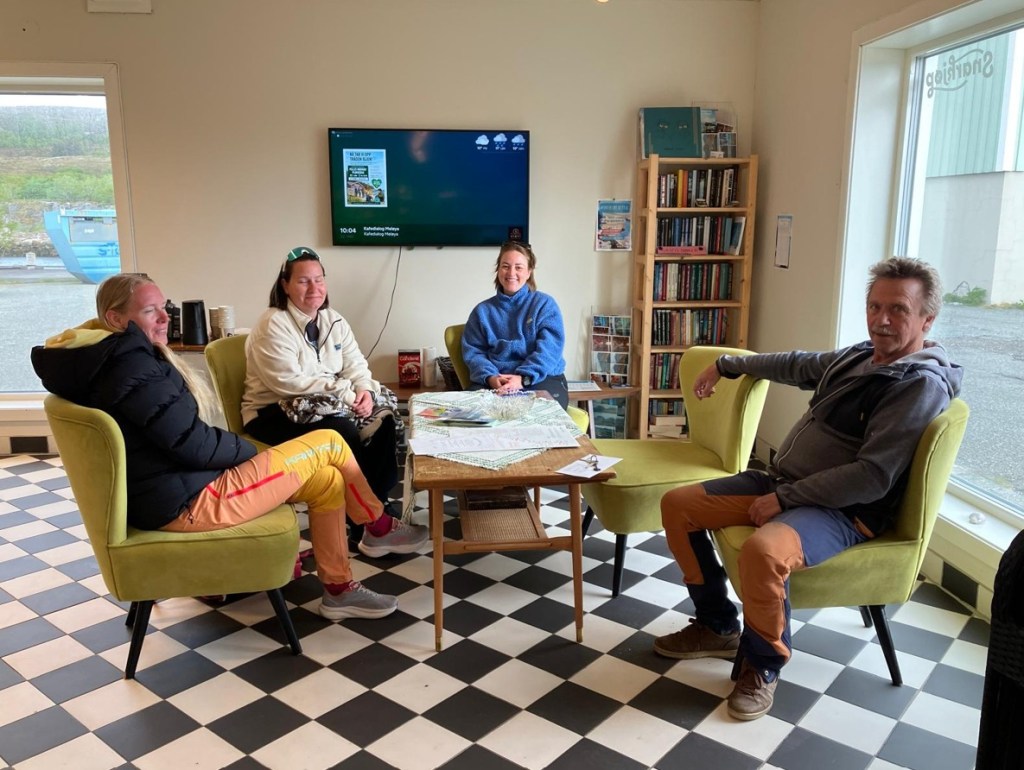
At 1500, it seems that the whole village has come to life. Mobility scooters are parked randomly outside the mini-market, with more on their way along the only road on the island. A number of islanders are sitting around the only table in the shop sipping their coffee.

The social centre of the island.

“The ferry comes in at three”, explains one. “There’s quite a bit of activity then, as new arrivals come to stay. We like to come here and see what’s happening. Otherwise it is very quiet on the island. Only 34 of us live here.”

“It used to be a bustling trading post in the old days”, says another. “Fishermen used to live here during the season to be close to the fishing grounds, fish was shipped off to Bergen, and things like flour, tea and coffee were shipped northwards. But when the Hurtigruten started, there was less need for trading posts such as this one, and it fell into decline. Nowadays we survive from tourism.”

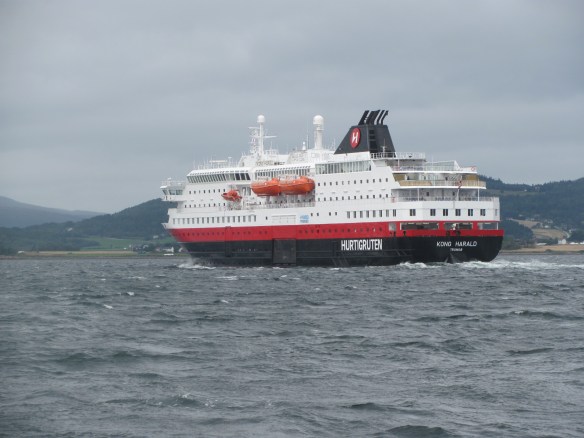
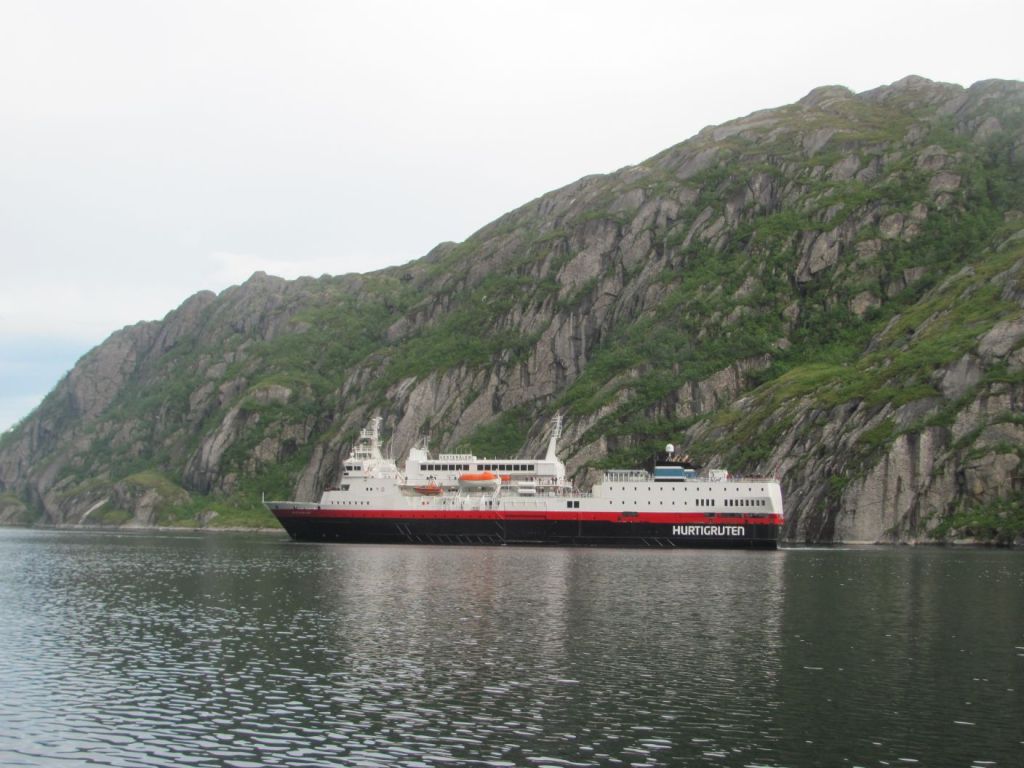
The Hurtigruten is Norway’s coastal shipping line.

A Hurtigruten ship.

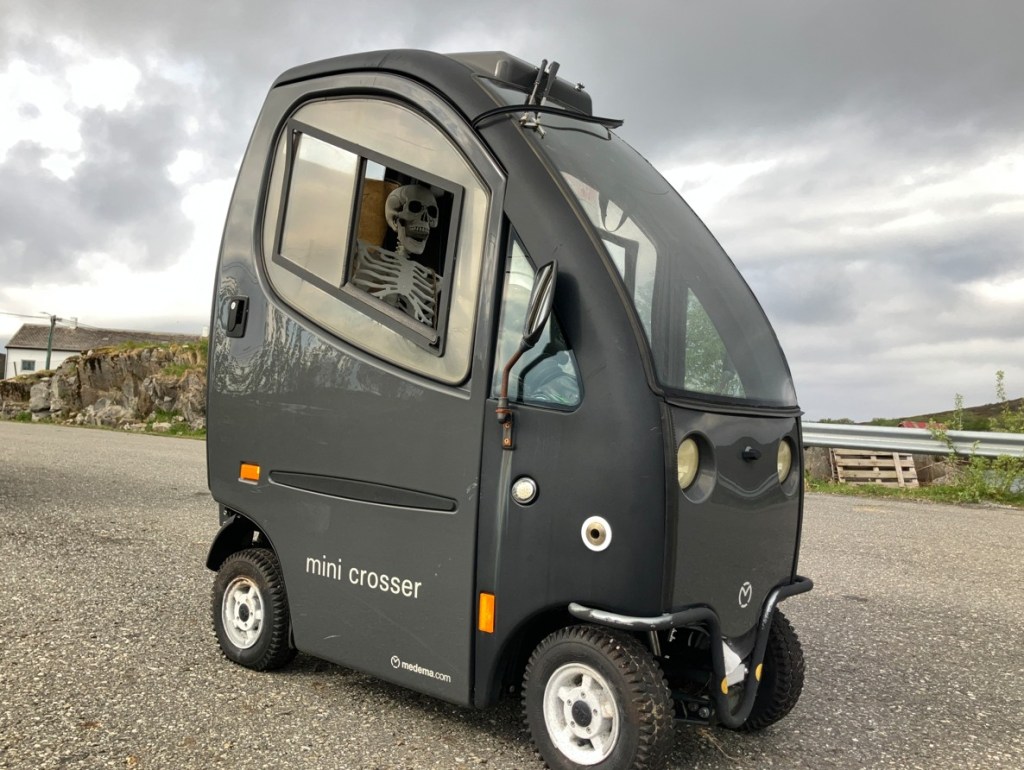
The First Mate buys some fresh vegetables, and we walk down to the ferry quay, on the other side of small isthmus to where Ruby Tuesday is moored. A mobility scooter is waiting. A skeleton is sitting inside, with the words Jeg venter på ferger painted on the back – ‘I am waiting for the ferry’.

“Waiting for the ferry”.

“The ferry must be late”, says the First Mate. “It looks like he has been waiting for a while. I am glad that we’ve got our own boat.”

Strong winds arrive overnight, and we delay our departure the next morning until after lunch, when they are forecast to ease. But they don’t seem to. We decide to leave anyway, but the strong winds pin us against the dock, and it is difficult to manoeuvre ourselves away from it. Somehow we manage it, then just as we clear the island, the wind drops completely!

We put the sails up, and manage the stately speed of 2½ knots.

“You would hardly believe that it was so windy just half an hour ago”, I grumble.

“Never mind”, says the First Mate. “It is only a matter of time before it comes back again.”

She is right of course, but it is quite a long time. As we round the next island of Fugløya two hours later, the wind picks up, and we sail along on a pleasant beam reach.

“See, I told you”, says the First Mate. “You just need to be patient.”

We reach the town of Bodø. Andy, Anne and Rick in Amalia have arrived a couple of days earlier. Just as we tie up, the heavens open, and the rain pours down. We huddle in the cabin and cook dinner. Rivulets of water run down the windows. It’s like being in the monsoon again.

Bodø (from Wikipedia (Eichmann)).

I pick up the guide book and read about Bodø. It was granted town status in 1816, and became a municipality in 1838. It is an important transport hub for northern Norway, being the northern rail terminus for the western railway line, which connects with many bus lines and ferry routes. It was even voted as one of the European Capitals of Culture in 2024. Its most well-known historical event seems to have been the ‘Bodø Affair’ in the early 1800s.

“Never heard of it”, says the First Mate. “Sounds like a spy scandal.”

“Not quite”, I say, reading on. “Although it was an international incident. Apparently there was a British company then that was trading illegally in Bodø. Norwegian officials seized a large amount of the illegal goods, but unfortunately for Norway, the country’s foreign affairs were handled by Sweden due to the dual monarchy system both countries were in. The Swedish Foreign Ministry decided to compensate the British company for the seized goods using Norwegian funds. This didn’t go down too well with the Norwegians, and sowed the seeds of distrust between the two countries until this day.”

“I don’t blame them”, sniffs the First Mate. “I would feel a bit miffed about it too.”

Eventually the rain stops. There is a knock on the side of Ruby Tuesday. It’s Andy, Anne and Rick. They’ve been to a concert in the Cultural Centre.

“It was absolutely brilliant”, says Andy. “It was ‘Beyond Haydn’ by the Arctic Philharmonic Orchestra. It’s a pity you hadn’t arrived earlier. I am sure that you would have enjoyed it.”

“You’ll need to get your shopping done tomorrow morning”, says Anne. “Everything is closed from mid-day onwards. It’s Pinse on Sunday, and the Monday is a holiday also. Nothing is open. Even the buses aren’t running.”

Pinse is called Whit Sunday in English, and is to celebrate the descent of the Holy Spirit to the Apostles. It is much less significant as a religious festival in Norway than it once was – instead, most Norwegians take it as a long weekend, and disappear off to their cottages in the mountains, boating, hiking, or visiting family.

We do our shopping the next morning. The rain returns, and we spend the afternoon catching up with things that have accumulated.

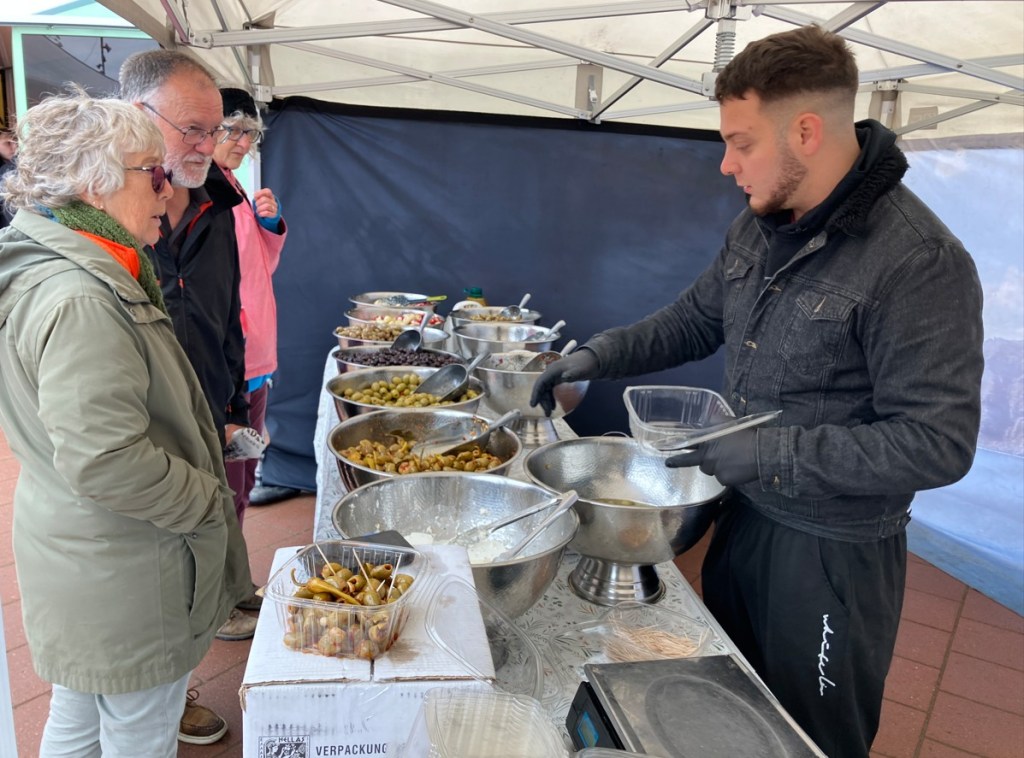
The next day, the rain eases. We decide to explore the town with Andy and Anne. Yellow flags are everywhere. Everything is closed except for a small food market doing a brisk business in one of the squares.

“I’ve got to get some of these garlic olives”, says the First Mate. “They just smell so good.”

“It’s this brown cheese for me”, says Andy. “Traditional Norwegian cheese. A little bit sweet, but very tasty though.”

Trying the olives.

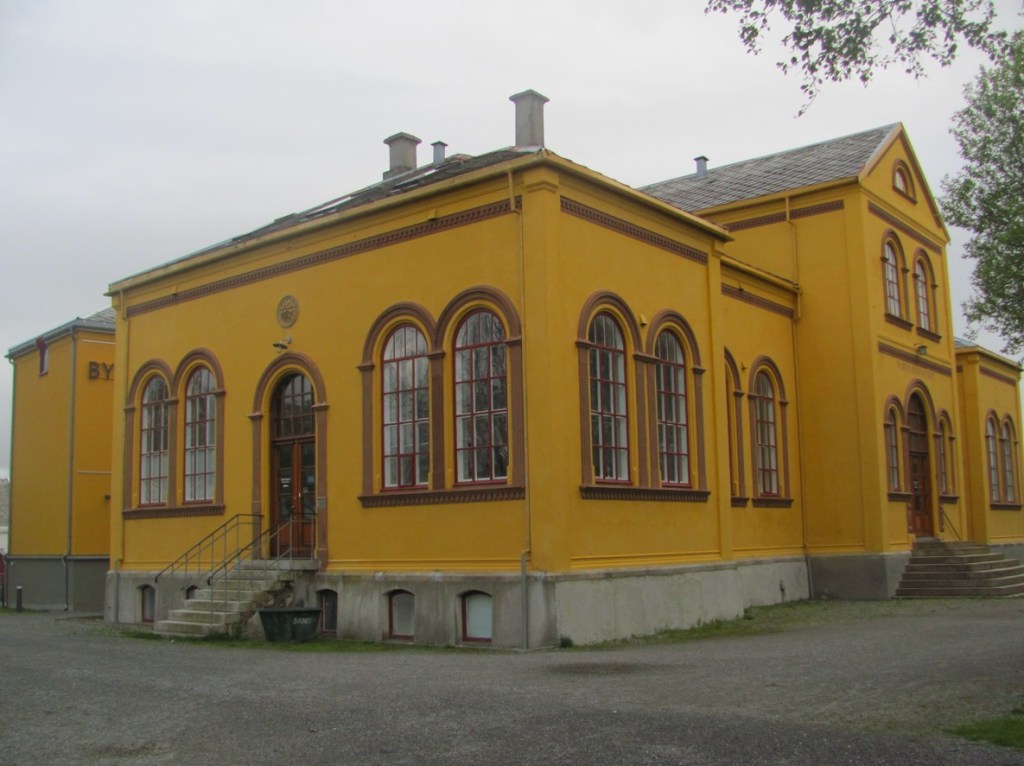
“Google says that the City Museum is open, even on Whit Sunday”, I say. “I have my doubts, but let’s go and see if it is.”

It’s not. We walk around the building to see if one of the doors might be open, but they are resolutely closed.

The City Museum looking very closed.

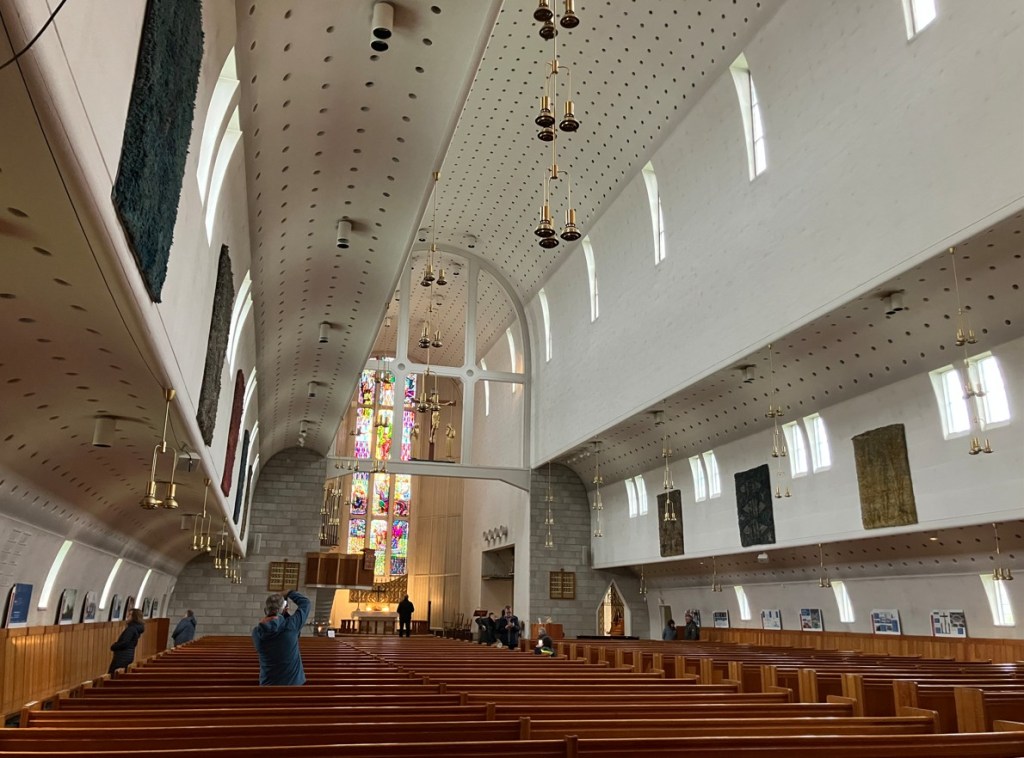
The town cathedral is not far though, and it is open.

“Yes, you can come in and have a look around”, says an earnest bearded young man. “But we are having a service soon, so we are closing in 15 minutes.”

It’s enough to have a quick look at the pictures around the walls detailing the history of the church. The original church was built in 1888, but was destroyed in 1940 by intensive bombing during WW2. The current one was built in 1956. There’s an impressive stained glass window at the end.

Bodø Cathedral.

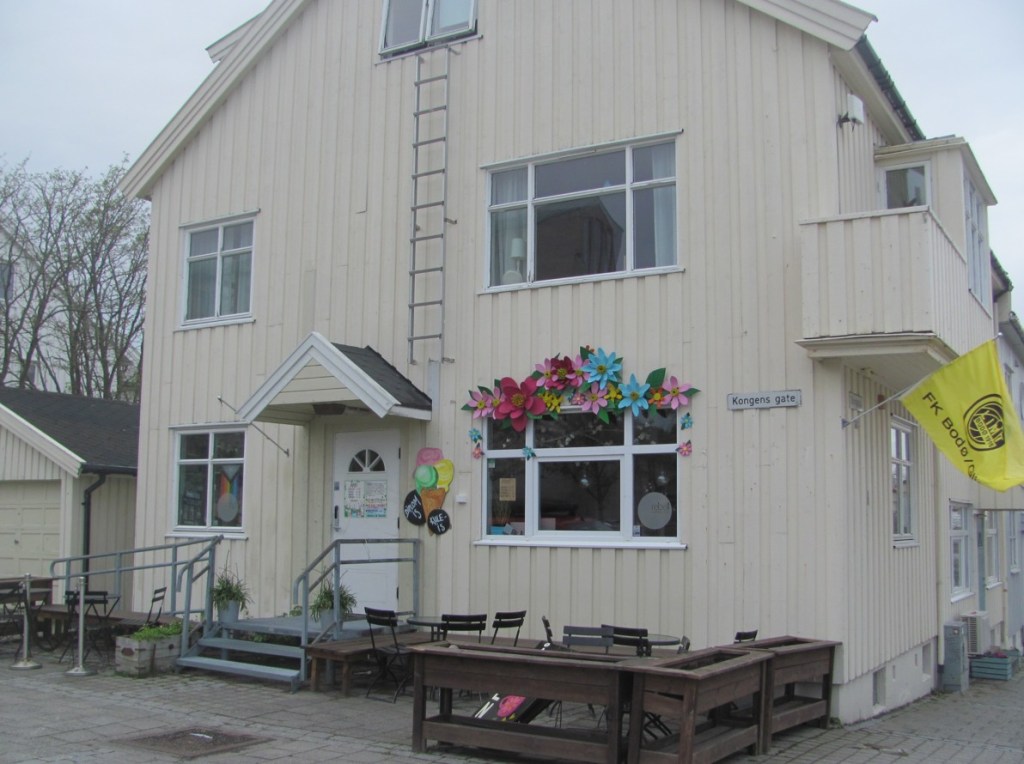
“Let’s go and have a coffee”, says the First Mate, after we are rounded up by the earnest young man. “I saw a nice café called Kaffee und Kunst just opposite. ‘Coffee and Art’. It sounds interesting.”

Kaffee und Kunst.

It’s warm and cosy inside, and the coffee and cakes are delicious. Paintings of various Bodø features adorn the walls. A group of young women are knitting furiously in one corner.

“We come here often and do our knitting and have a chat”, one of the women tells Anne. “It’s a way to catch up with all the news and we produce something at the end.”

We order another coffee each.

“I am awfully sorry”, says the woman serving us, apologetically. She is the owner. “It’s just that I have to close soon, as there is a football match on this afternoon. FK Bodø versus SK Brann. Most of the town are going. I support FK Bodø, and many of my customers do too, so I have to be there. You probably noticed the yellow FK Bodø flag flying outside the café. But you can certainly have a refill. Just drink it quickly!”

We learn later that FK Bodø won by 3-1 against SK Brann.

Sociable whales, a love-sick troll, and shy puffins

“What’s that in the water in front of us?”, shouts the First Mate from the bow, ropes in hand. “There’s something floating. Make sure you don’t hit it!”

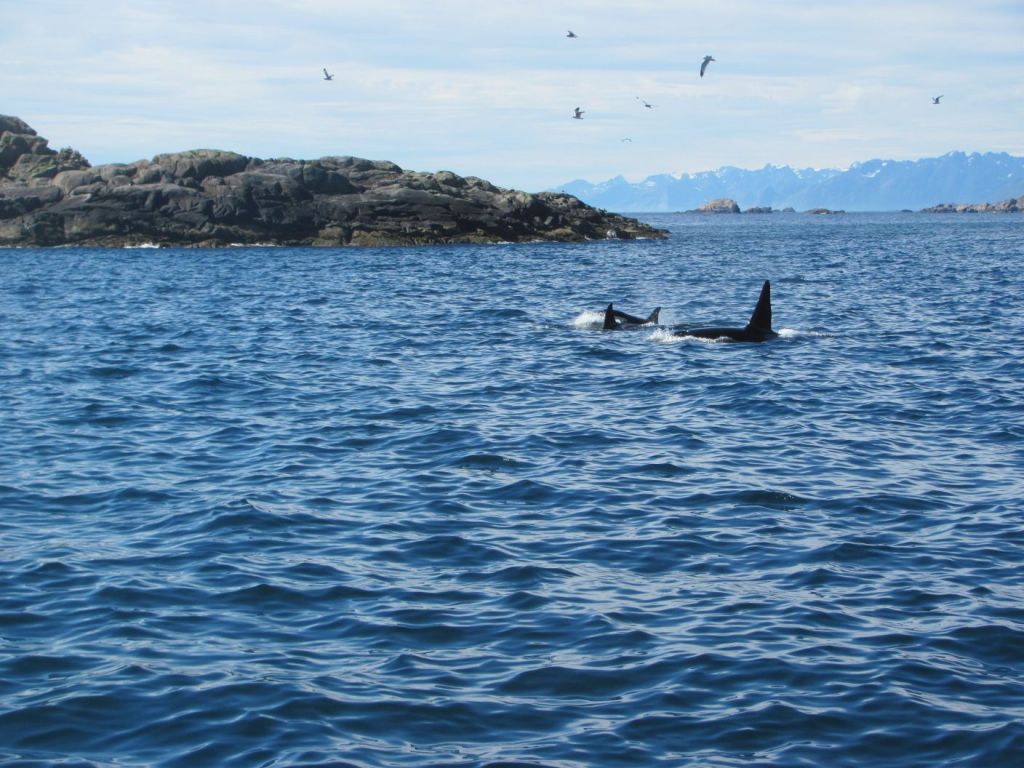
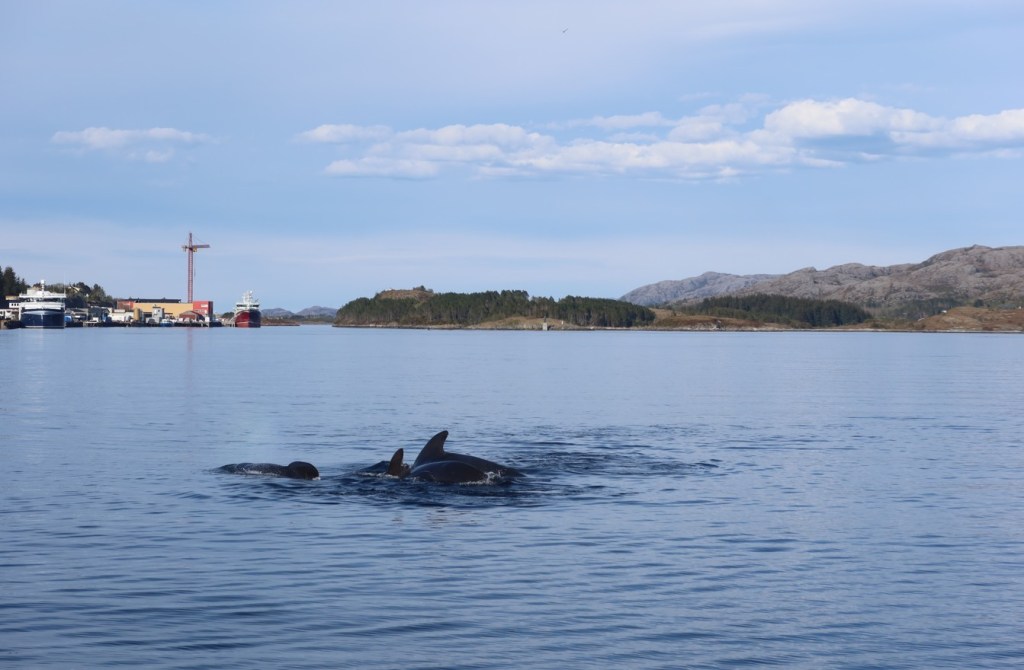
We have just passed under the bridge approaching Rørvik, and are preparing to enter the harbour. She’s right. There is something in front of us. Then another, and another, and still more, their fins breaking the surface then disappearing back into the water.

“They are dolphins or porpoises, or something like that”, she calls excitedly.

But they look too big for normal dolphins or porpoises. And their fins are different. I slow down and turn the engine off and we drift slowly, so that we can watch them. The First Mate fetches the fish book from the cabin, and we flick through the pages.

“They could be pilot whales”, I say. “I vaguely remember the shape of their fins. Droopy. Very distinctive.”

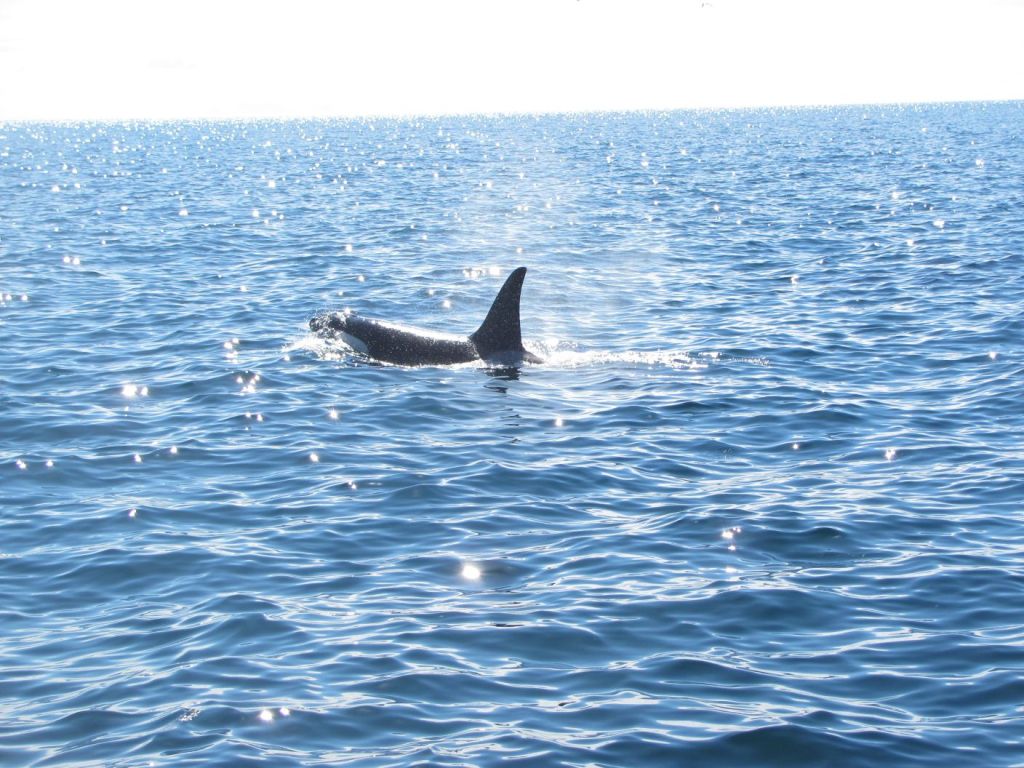
The creatures seem to be totally unfazed by our presence. We sit and watch them for some time, taking photos. There are at least three subgroups with younger ones and older ones in each, all quietly feeding and playing. Occasionally they come quite close to the boat.

Pilot whales in Rørvik (from Andy Beharrell).

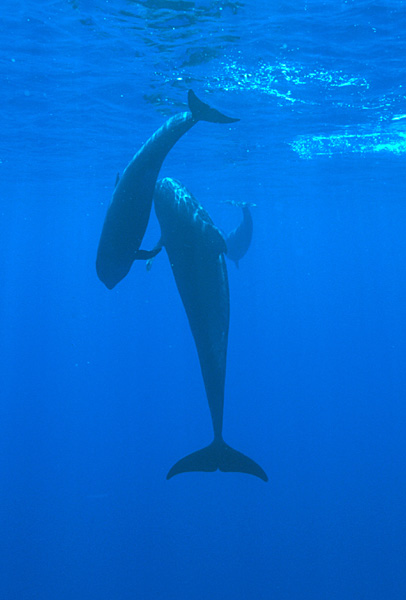
“Yes, they are long-finned pilot whales”, a neighbour on the pontoon tells us later. “They feed on squid and cod which are driven in here by the currents. They are actually members of the dolphin family, and are very sociable animals, usually staying with their family groups for their whole lives. You often hear of them getting stranded on beaches throughout the world, which is thought to be because of damage to their inner ears by noise pollution from ships and naval exercises. Then because of their strong social bonds, the others come to help and become stranded too.”

“They are certainly big”, says the First Mate.

“Yes, the males can get up to 7.5 metres long and weigh more than two tonnes”, he answers. “The females are usually a bit smaller.”

There’s something special about these interactions with large marine animals. Part of it is the size of them, but it is also intriguing to think about their social structures and to what extent they are like us in that respect. And do they have a consciousness similar to ours?

Pilot whales (from Anderson, Wikipedia Commons).

We tie up at the marina in Rørvik. The forecast is for rain and strong winds for the next two days, so we batten down the hatches and busy ourselves with boaty jobs. During a lull, I take time out to go and visit the Coastal Museum.

“You know that we close at two o’clock?”, says the lady at the desk. “That’s in half an hour.”

Google had told me that it was open until 1500.

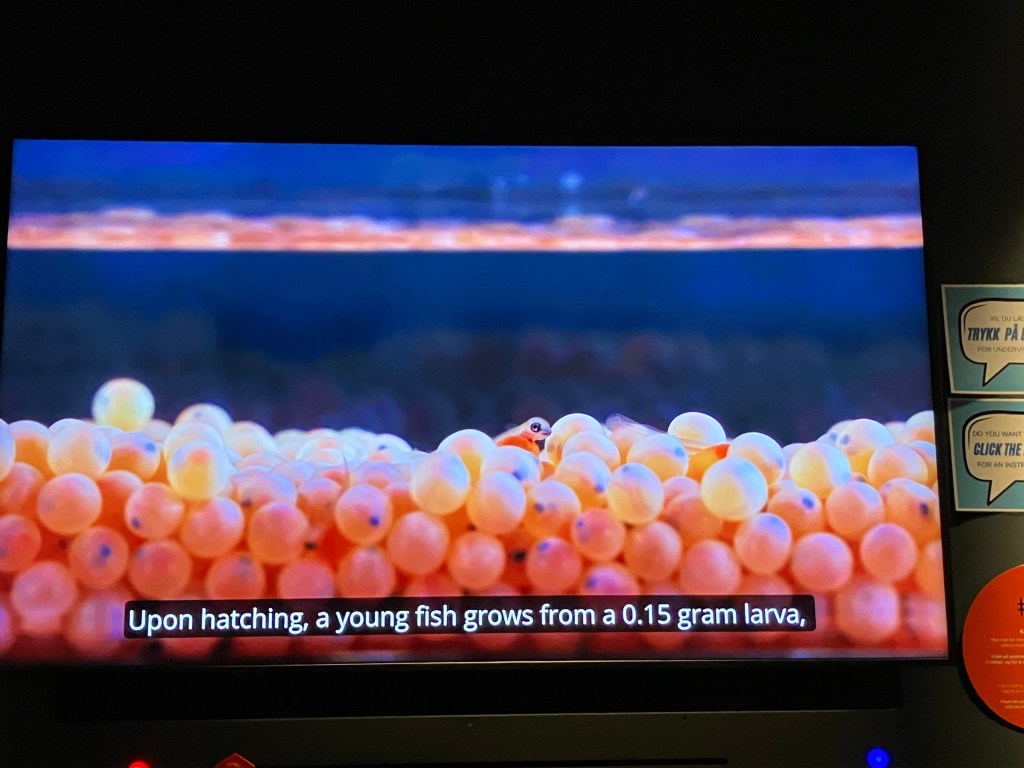
“I can let you have half an hour for half price”, she says, seeing the look of disappointment on my face. “Would that be OK? I can recommend our exhibition on salmon. There’s a 20 minute film you can watch.”

I spend the next half an hour learning about the life cycle of salmon, important to Norway’s economy because of the many fish farms along the coast. It’s quite fascinating. Eggs are fertilised in a laboratory, they then hatch into alevin that develop into fry which are put into fresh water tanks and fed abundantly to grow into smolt. Then after about a year, they are transferred to seawater cages and raised for another 1-2 years before harvesting. All very industrial.

Learning about salmon.

“We are very careful to feed them just enough food and no more so that there is no excess that can pollute the surrounding ecosystem”, the film assures me. “And we minimise escape of fish outside the cages to prevent their genetic material mixing with local wild populations of salmon.”

The next day, the winds have dropped and the rain has stopped, so we set off heading northwards. On the way, I decide to calibrate Ruby Tuesday’s electronic compass. We had been having problems with it for two seasons now, in that there was a deviation between it and the magnetic compass that couldn’t be explained by the magnetic deviation, the difference between the true and magnetic north poles. Over the winter, I had taken the compass sensor home and sent it off to the manufacturers for checking and service. It came back with a clean bill of health saying there was nothing wrong with it, but would need recalibrating once back in the boat. This is done by driving around in a circle so that the compass can align itself with the earth’s magnetic field.

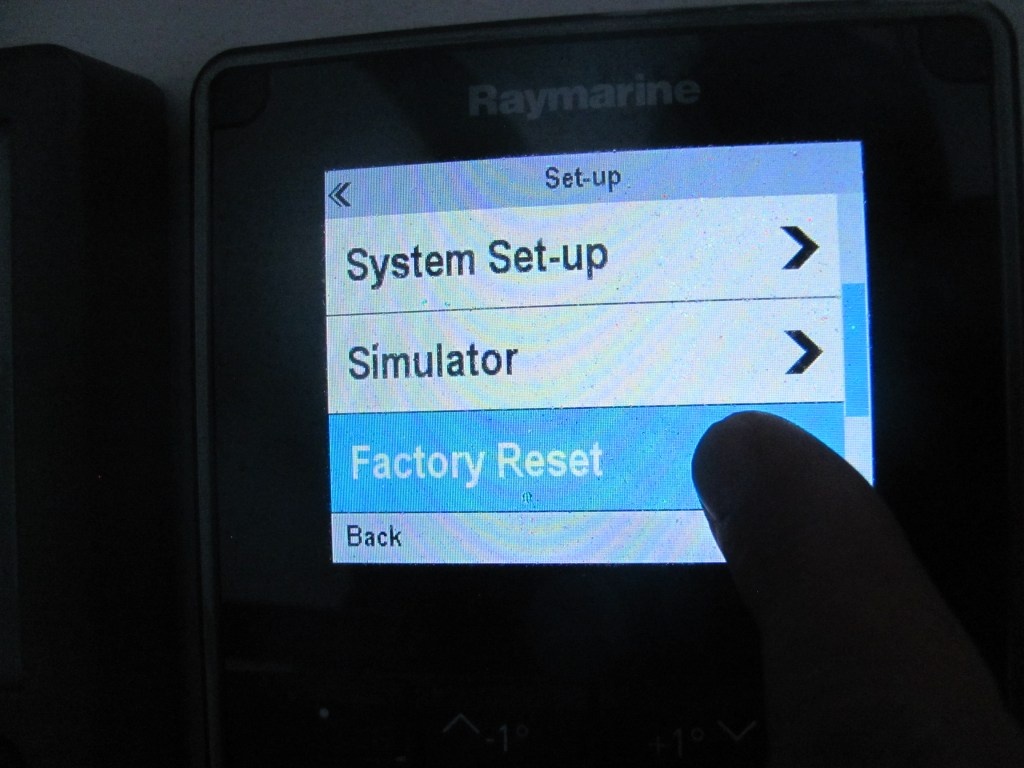
Somehow I manage to press the button for a ‘Factory Reset’ that erases all previous settings. Immediately the autopilot swings the wheel hard over. It has become mixed up between port and starboard and thinks that one is the other. I frantically try and reset it, but nothing works. And just at that moment we are hit by a sudden wind squall and it starts to rain.

I hit the wrong button.

I ring the manufacturer in the UK.

“I’ll email you the instructions for commissioning the autopilot”, the chap at the other end says. “If you follow that, you should be able to solve the problem.”

The incongruity of being in the sea somewhere off the west coast of Norway in a violent squall and being able to speak with someone in the UK and have him send some instrument instructions is not lost on me.

The instructions arrive almost immediately. The rain eases slightly. But I still can’t get it to work. There’s nothing to do except steer the boat manually, meaning that someone has to be a the wheel all the time, and try and work my way through it methodically when I get time in the evening.

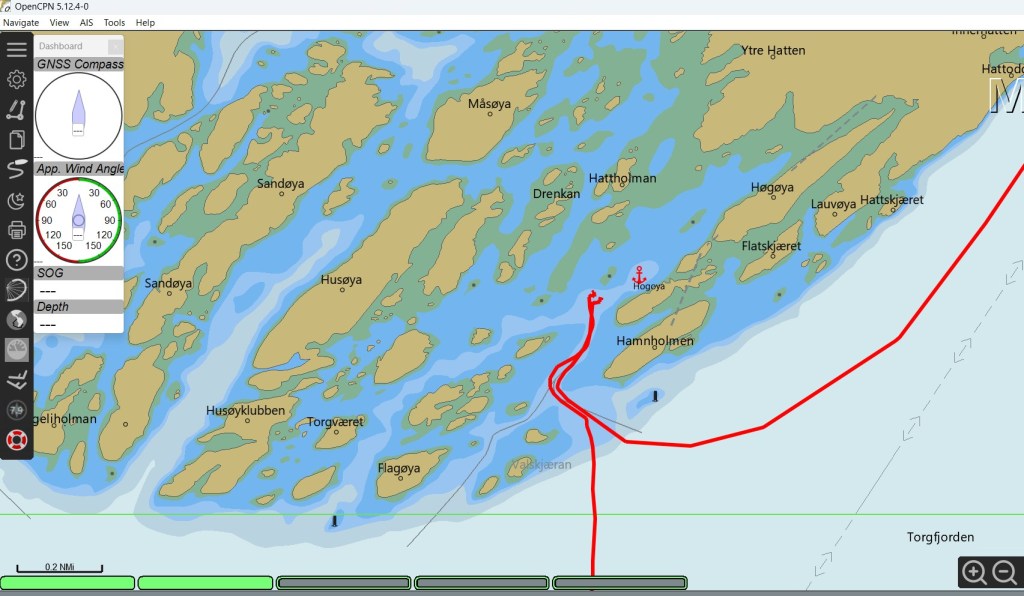
We are approaching Torghatten, an impressive cone of rock rising out of the sea, and decide to find an anchorage near there for the night. There is one marked to the south of it, but it doesn’t have an easy entrance, requiring some careful navigation through narrow channels with submerged rocks and drying areas on each sides. But by taking it slowly, and making maximal use of the charts and GPS, we make it to the inner pool without touching the bottom or scratching the sides. The First Mate drops the anchor.

Our route into the anchorage at Torghatten.

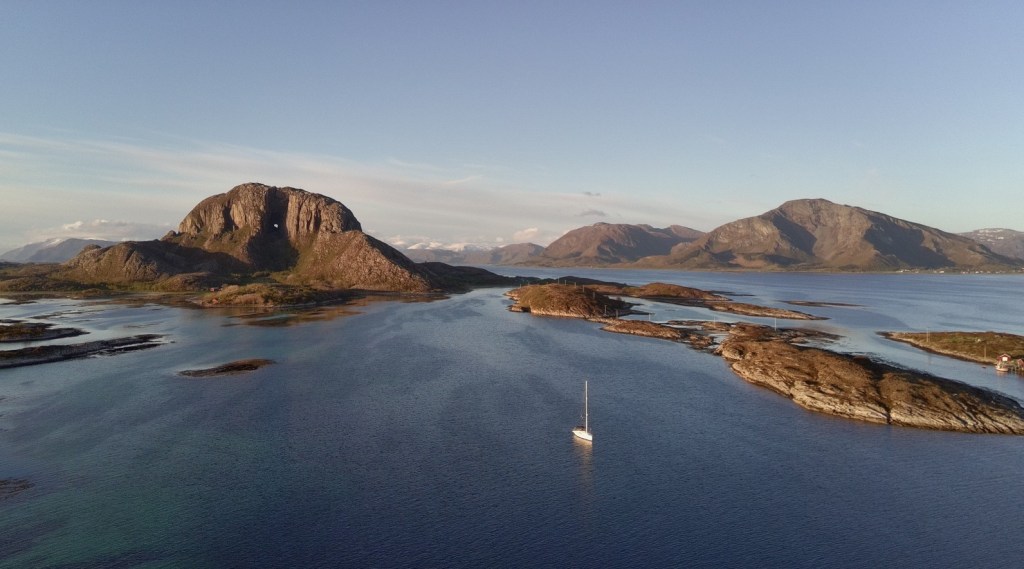
“It’s beautiful”, she says. “Look at the light of the evening sun. And you can even see the hole through it.”

Anchored near Torghatten.

Torghatten’s pièce de résistance is a hole through its middle.

“I was reading of the legend about how it came to be there”, she continues. “A long time ago, these were the lands of the trolls. One of the troll kings had seven daughters which were a bit of a handful for him to manage, so he hired a maid called Leka to look after them for him. Leka was to keep the daughters entertained while he got on doing what troll kings do.”

“Which was what?”, I ask.

“I don’t know”, she answers. “Stopping people from crossing bridges, I suppose. That sort of thing. Anyway, one day, the girls were swimming in the sea, and Hestmannen, the son of another troll king, was riding past on his horse. He spotted them, and unfortunately took a fancy to Leka the maid rather than to the troll princesses. They fled, so he chased them all down the coast on his horse. The seven sisters then noticed that he was quite good-looking and stopped running, hoping that he might also stop. But he had his heart set on Leka and galloped past them.”

“Did he catch up with her?”, I ask.

“No, she was too fast for him”, she answers. “So he took his bow and arrow and shot at her, thinking that if he couldn’t have her, then nobody could. But just at that moment, a third troll king who had been watching the whole episode, threw his hat in the way of the speeding arrow, and saved the maid. The arrow left a hole in the hat.”

“There certainly seem to have been enough troll kings in those days”, I say. “That’s three in just one story.”

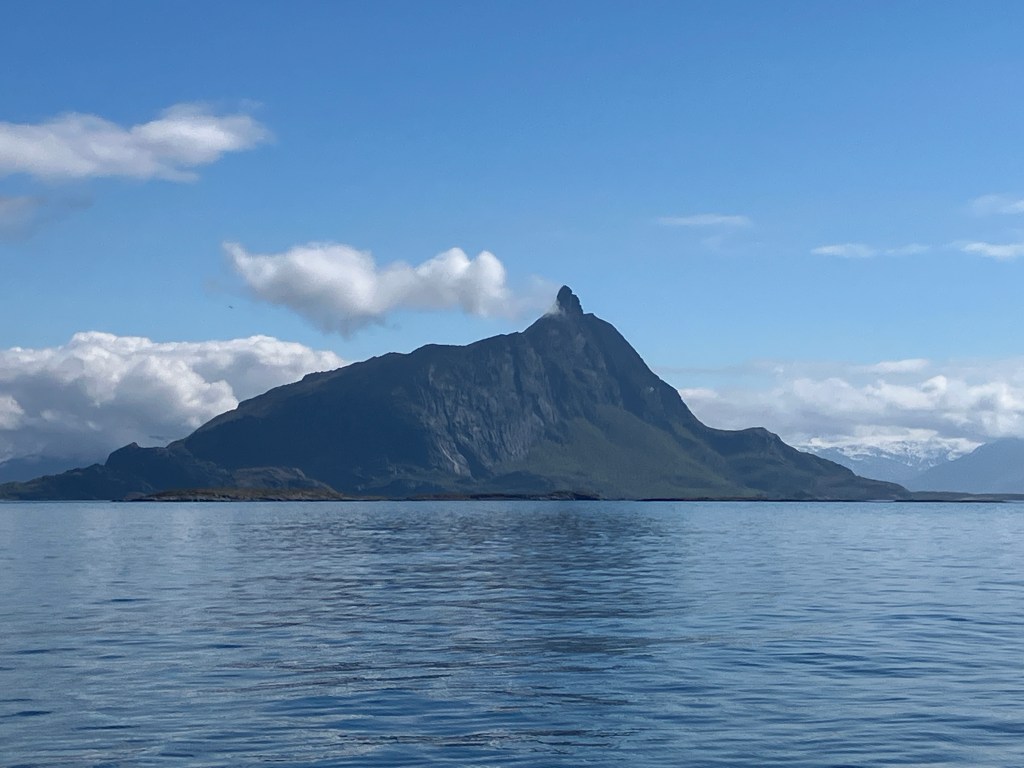
“Yes, but what they had all forgotten was that if trolls are struck by sunlight, they turn to stone”, she says. “They were all so excited by the goings on, that they didn’t notice the sun rising, and sure enough, they were all turned to stone. You can still see them all where it happened. Torghatten is the hat with the hole through it, Leka is an island we passed on the way up, the Seven Sisters are the mountain range just north from here, and Hestmannen is an island further north still.”

The Seven Sisters.
Hestmannen.

I think of the people who told these stories – huddling together around fires in their longhouses to keep warm against the long harsh Nordic winters – trying to make sense of the world with their gods, giants, trolls, elves, dwarfs and spirits. Were the stories for entertainment, or for an explanation of the cosmos, I wonder? Probably a bit of both.

“Nice story, but of course we know far much more now about the way things work”, sniffs Spencer, from his home in the canopy. “I’ve been reading about it on the Web.”

It’s the first time we have seen him this year. We were wondering if he had survived.

“Nice to see you again”, I say. “I am sure you’ll tell us.”

“The whole mountain is a granite intrusion formed deep in the earth’s mantle, which was then forced up into the rock layers above it. During the Ice Ages, there was a 1 km layer of ice all over the landscape, and when it began to melt, the meltwater created tunnels where there were weaknesses in the rock. Torghatten’s hole was one of these tunnels. At the same time, the softer rock surrounding the granite intrusion eroded faster than the dome, so that eventually it was all that remained.”

“I read somewhere that the hole was formed by wave action when the sea level was higher”, I say.

“Well, that’s what they thought for a long time”, he responds, “but recent research has shown that sea levels after the Ice Age were still 15 m below the hole, so it is unlikely that wave action would have had much influence.”

Either way, it is pretty amazing stuff, I think.

Later that evening, I clear the memory of the autopilot navigation system, and start again on the commissioning procedure. This time it works. It now knows that starboard is starboard and port is port and neither the twain shall meet.

“I am glad that you got that fixed”, says the First Mate. “It’s a bit tiring for someone to be at the wheel all the time. Not to mention the cold.”

The next day, the winds have veered more to the south and will be behind us. We would have liked to walk up to the Torghatten hole, but we decide to make the most of the winds and do it on the way back. We push on to Sandnessjoen, then on to Nesna, one of the places that we may decide to overwinter in at the end of the season. There the winds turn against us and strengthen, and we have to kick our heels for two days waiting for them to ease. But there could be worse places to be. The scenery is stunning and the marina is friendly.

Tied up at Nesna.

Eventually the winds change direction and ease slightly, so we make a break for Lovund, famous for its puffins. The wind is on the port quarter and gives us an exhilarating sail at nearly eight knots with just the genoa. We tie up at the new harbour to the north of the village. We are the only boat there. The season hasn’t started yet.

Approaching Lovund.

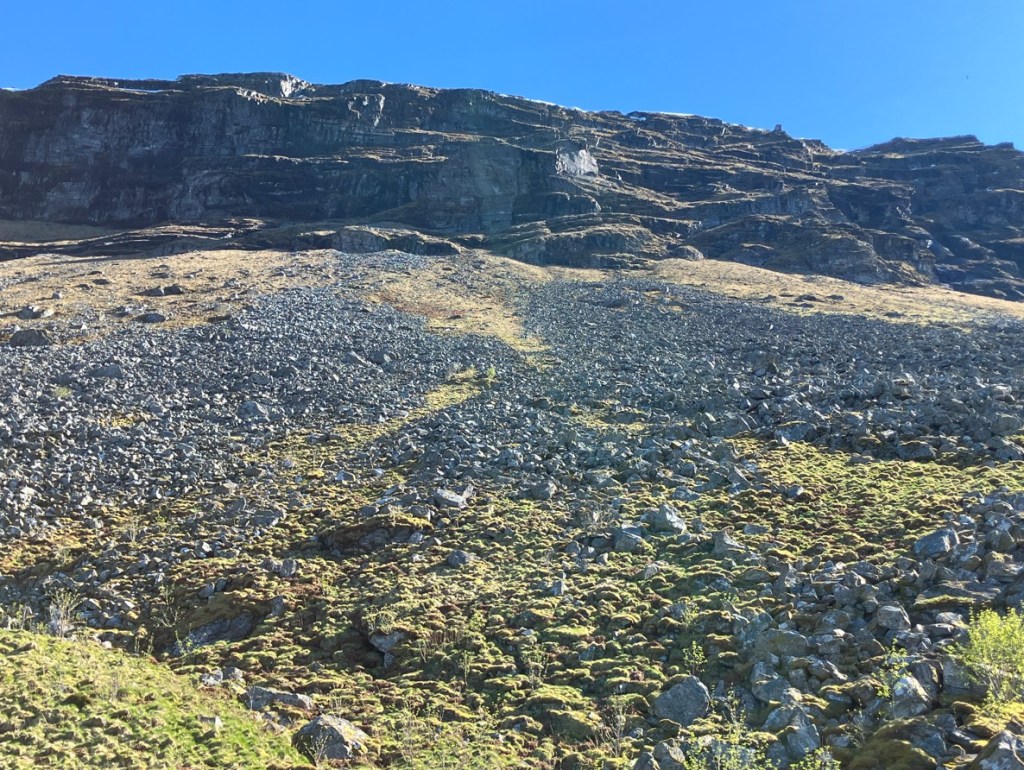
Andy & Anne arrive by ferry a couple of hours later, having left Amalia in a small harbour on the nearby island of Onøya. We have lunch and then decide to visit the puffin nesting grounds on a scree-covered slope. It’s a well-signposted walk to the north-west corner of the island.

We follow the rocky path as far as it will go. A sign tells us that it is forbidden to go further as the puffins are nesting. We look around expectantly, hoping to see some of the comical little birds bringing home sand-eels for their mates. None to be seen!

Spot the puffins!

“You can really only see the ones flying around”, a woman tells us. “Not the ones that are nesting. Look here’s a big group coming in now.”

We strain our eyes and can just make out a flock of birds making their way in from the sea. They could be anything. We squint through the binoculars and can just about make out the red colour of their feet. I try and follow one as it lands, but it turns out to be a bit of dust on the lens.

Puffin, Puffin, wherefore art thou, Puffin?

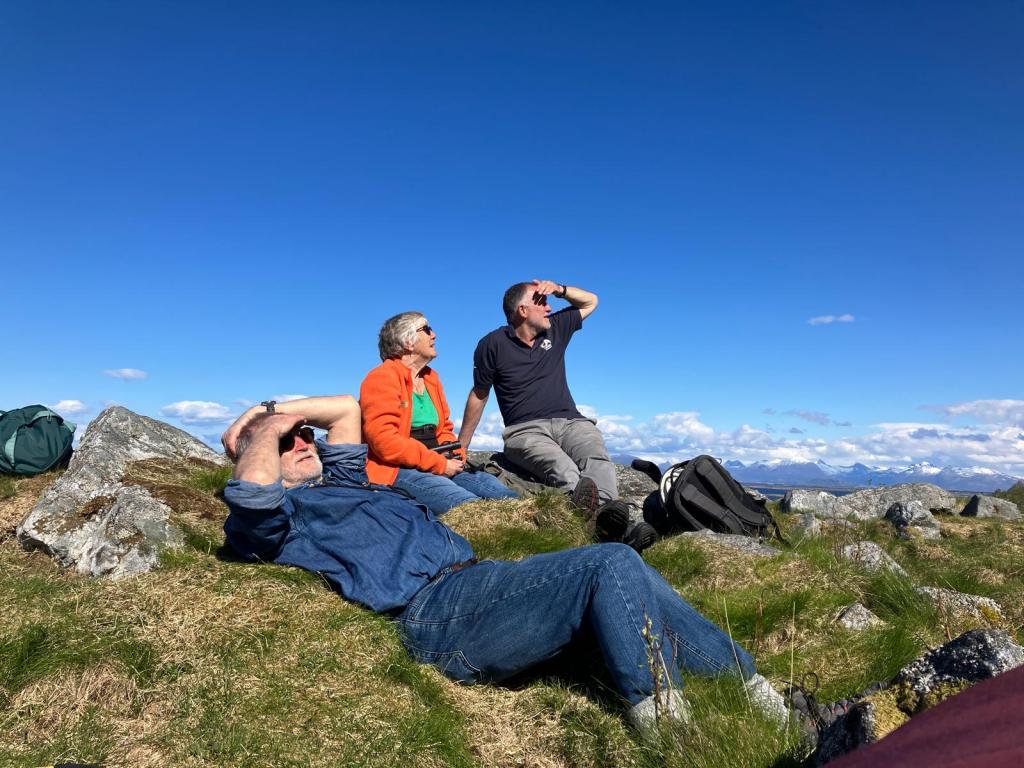
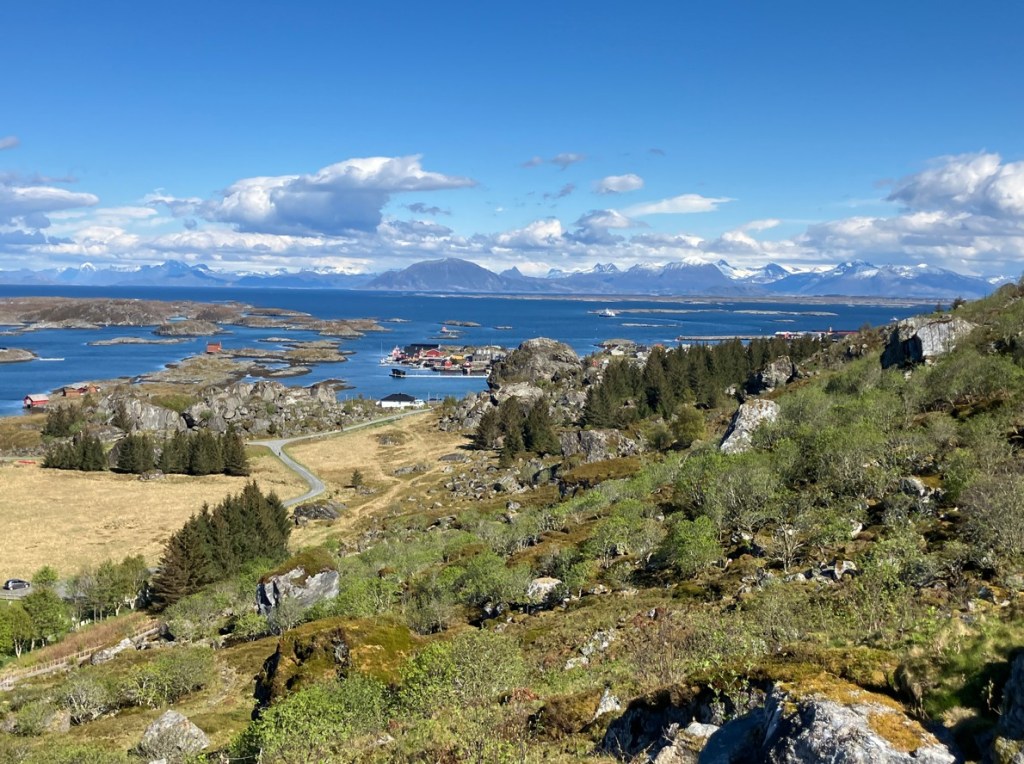
But it’s a glorious day. We lie in the sun soaking up the sun’s warmth, looking upwards at the tiny black specks circling. Down below is the colourful village of Lovund that we had just come from, a ferry just leaving for its next port of call. To the east, the snow-capped peaks of the Norwegian mainland. Out to sea, we can see the inselbergs of the Træna group of islands. It’s idyllic.

View toward Lovund village and the Norwegian coast.

“Well, at least we have a good idea of why the puffins chose here to live and breed”, says Andy, always one to see the glass half full. “It’s beautiful here. And it’s not as though we haven’t seen puffins before.”

It brings to mind the time that we had sailed out to the Shiant Islands on the West Coast of Scotland. There had been so many puffins flying overhead and swimming in the water around us that we had been afraid that we would sail over the top of them.

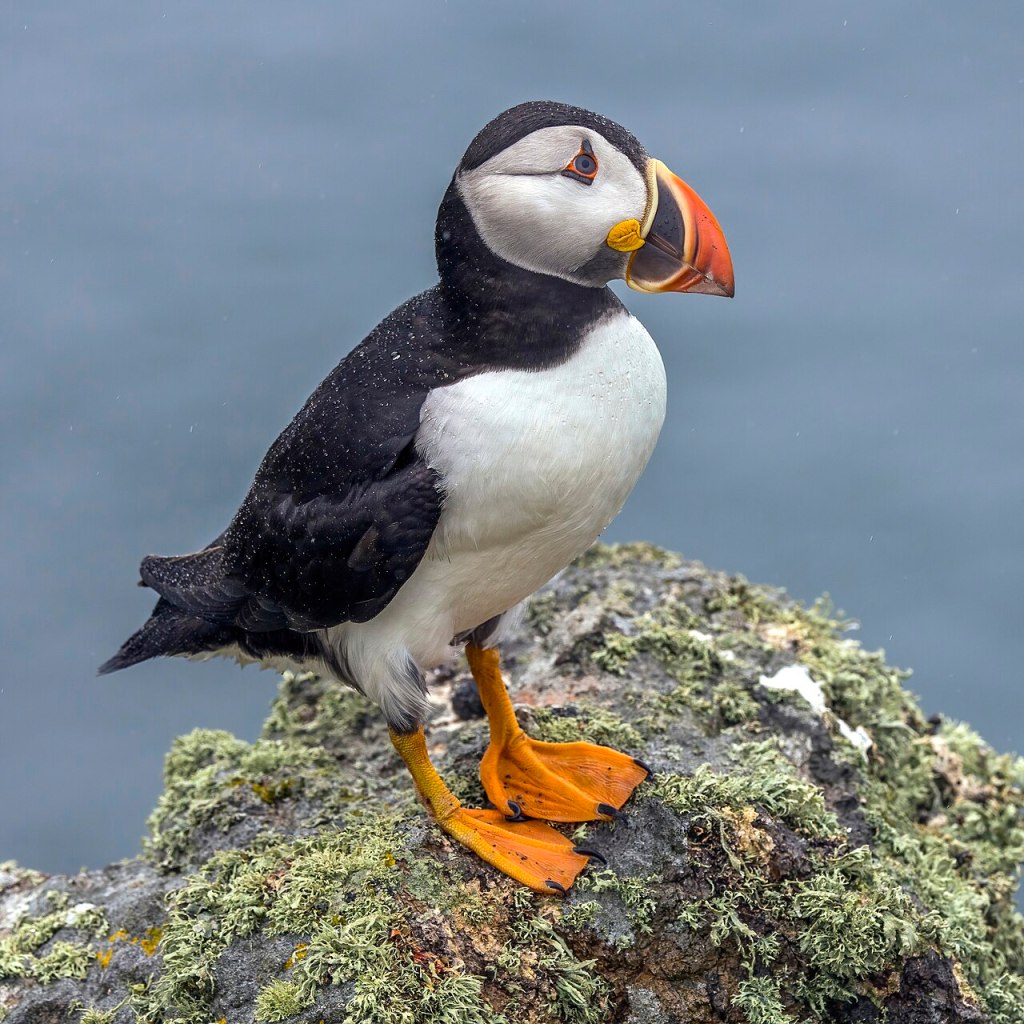
“It’s a pity we didn’t see any close up”, says the First Mate. “But I am sure that you will find a nice puffin picture from Wikipedia or somewhere for the blog.”

Atlantic puffin (from Charles Sharpe, Wikipedia Commons)

A copper mine, fat birds, and a snowy start

“Are you from England?”, the woman on the seat opposite us asks us.

“No, Scotland”, the Skipper answers. “We are sailors, and are sailing around Norway at the moment. We left our boat near Trondheim over the winter.”

We are on the Dovre Line, a scenic train trip from Oslo to Trondheim. We had arrived in Oslo the previous day, having flown there from Scotland. We had decided to take the train to see some of the stunning scenery in the hinterland of Norway.

On the Dovre Line train.

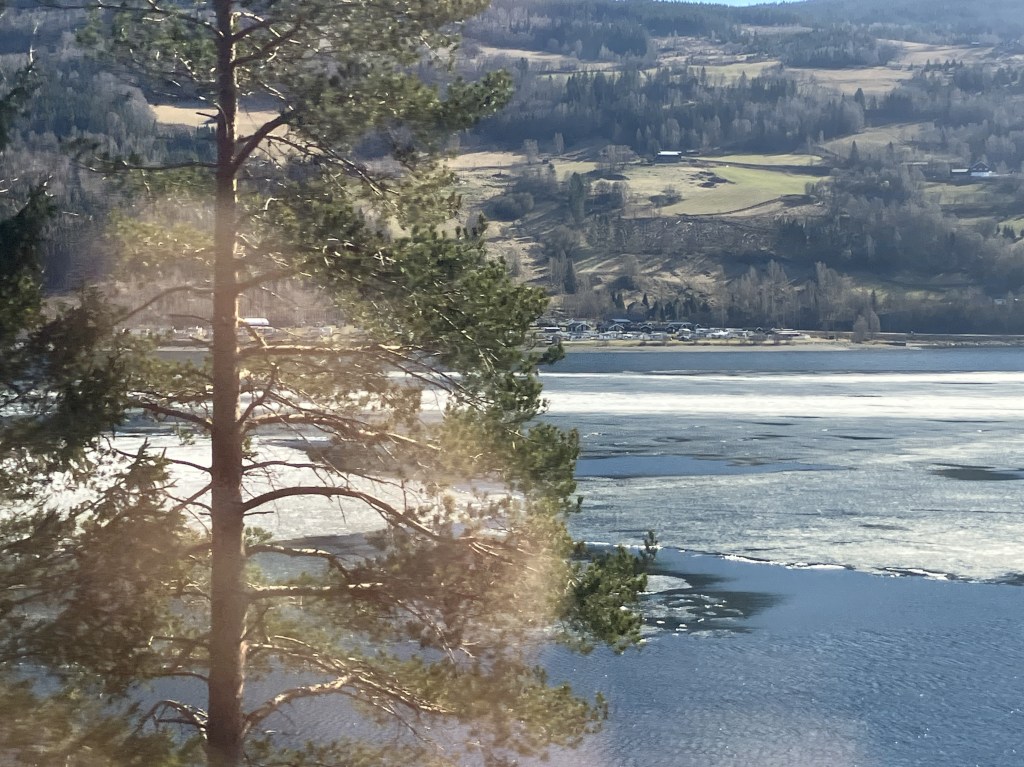
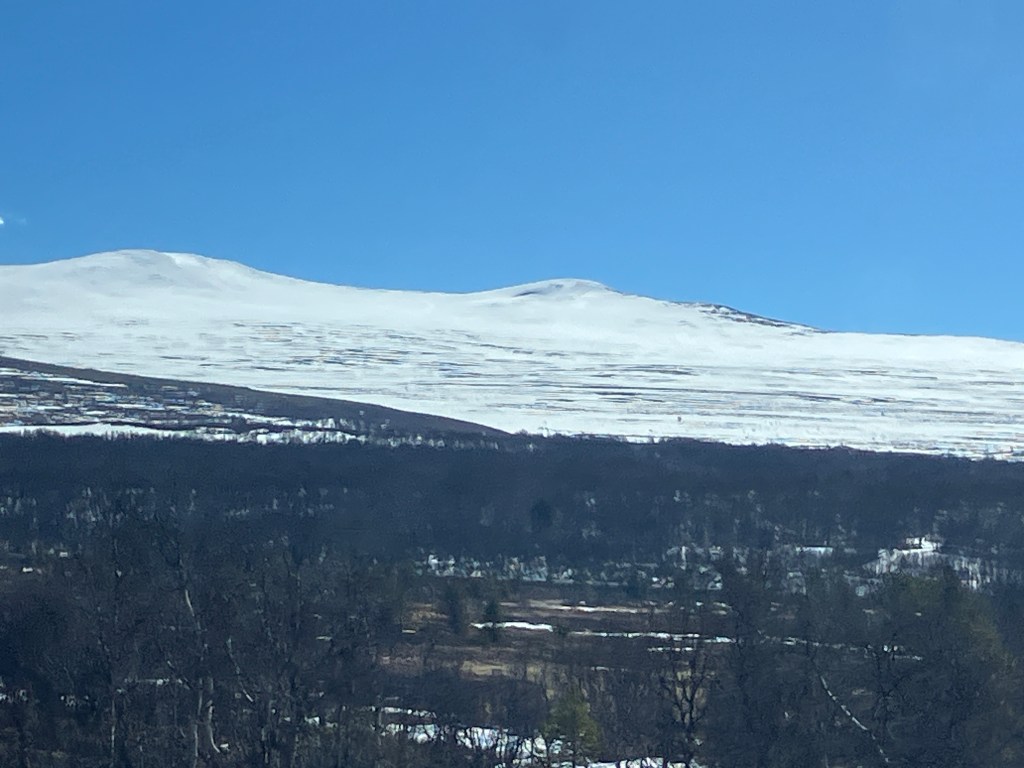
The train winds its way through the spectacular Dovre valley, climbing gradually through the snow capped peaks and sheer walls of rock. Lakes, their low water levels waiting for the ice melt to replenish them, sparkle like diamonds in the dark gloom of the forests. Spring has not yet arrived, the grassy meadows still a dull beige from the winter. We learn later that there has not been so much snow this year, and that the lakes might not fill to their capacity. But there still seems to be some snow, at least.

Reaching the summit of the Dovre valley.

“We have a cottage on Trondheimsfjord”, the woman continues. “We spent Easter in it. It has become a bit of a tradition in Norway to retreat to your cottage over Easter, and binge-read crime novels that you have accumulated over the previous year. It’s called Påskekrim, or Easter crime. New crime novels are released by the publishers just before Easter for people to buy. There’s even a big crime fiction festival in Oslo just before Easter. They say that it is Norway’s moody landscapes and the long winter nights that inspire our love for crime.”
“It’s strange that Norway is one of the safest places in the world, and yet you like reading about crime so much”, I say.

“And Scandi-Noir is famous the world over”, says the Skipper. “Despite the Scandinavian countries always ranking high in the happiness index.”

“Perhaps that is the reason”, the woman says. “We have so little real life crime, so we make up for it by reading and making films about it!”

We reach Trondheim station and find a trolley to wheel our luggage to the hotel nearby.

The next morning, we visit the Police Station to register ourselves to stay longer than the ninety days permitted by the Schengen Agreement. I have the right to stay longer by dint of my German nationality, and the Skipper because he is married to me, an EU citizen. The policewoman is efficient, collects all our documents, and immediately issues a permit to me to stay up to five years. For the Skipper it is a little bit more complicated – his documents need to go off to the Department of Immigration, and it will be a few weeks before he gets his residency card. But she assures us there is unlikely to be a problem.

“Well, that was relatively easy”, says the Skipper. “Let’s get some lunch, then we can go and pickup the car that we have booked.”

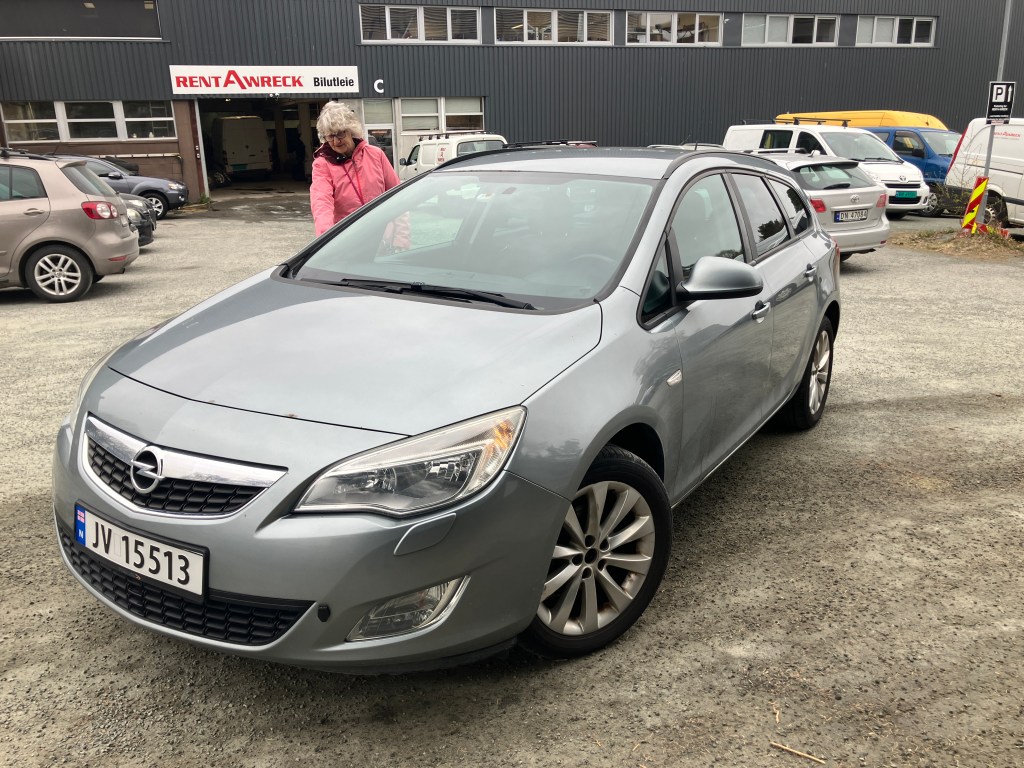
We have reserved a car from Rent-A-Wreck, specialising in senior, but reliable, cars at prices not quite so eye-watering as those of newer cars. We had used the same company to drive around Gotland a couple of years earlier, and had had a good experience with them. No frills, no nonsense.

Checking our Rent-A-Wreck car for scratches.

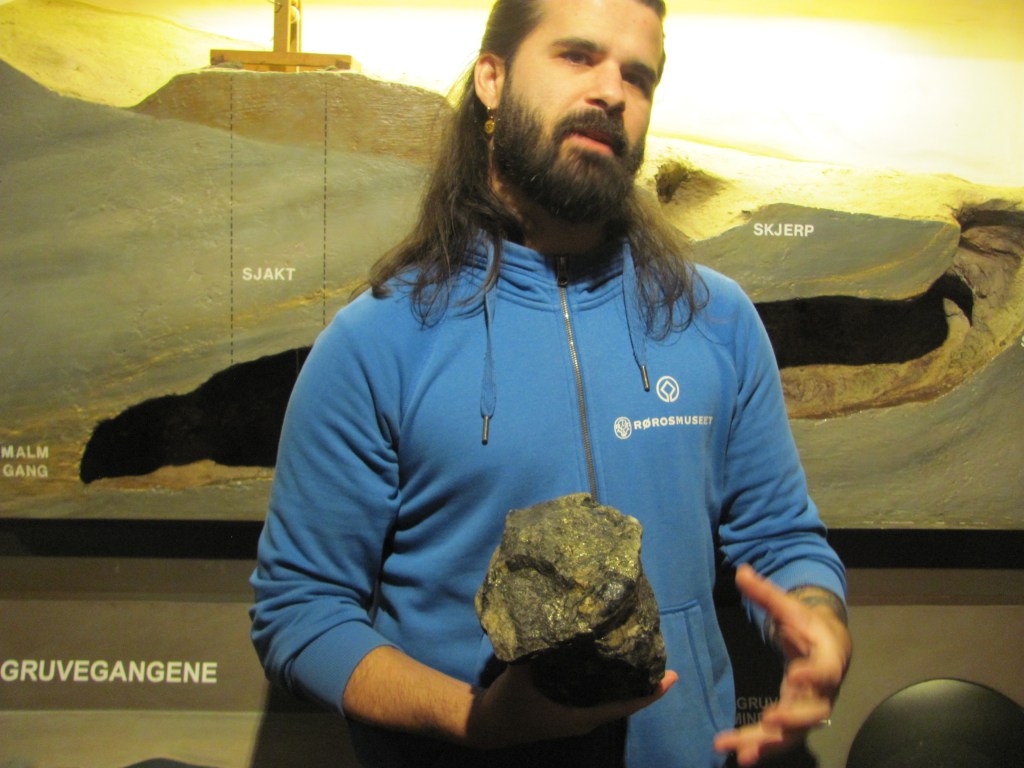
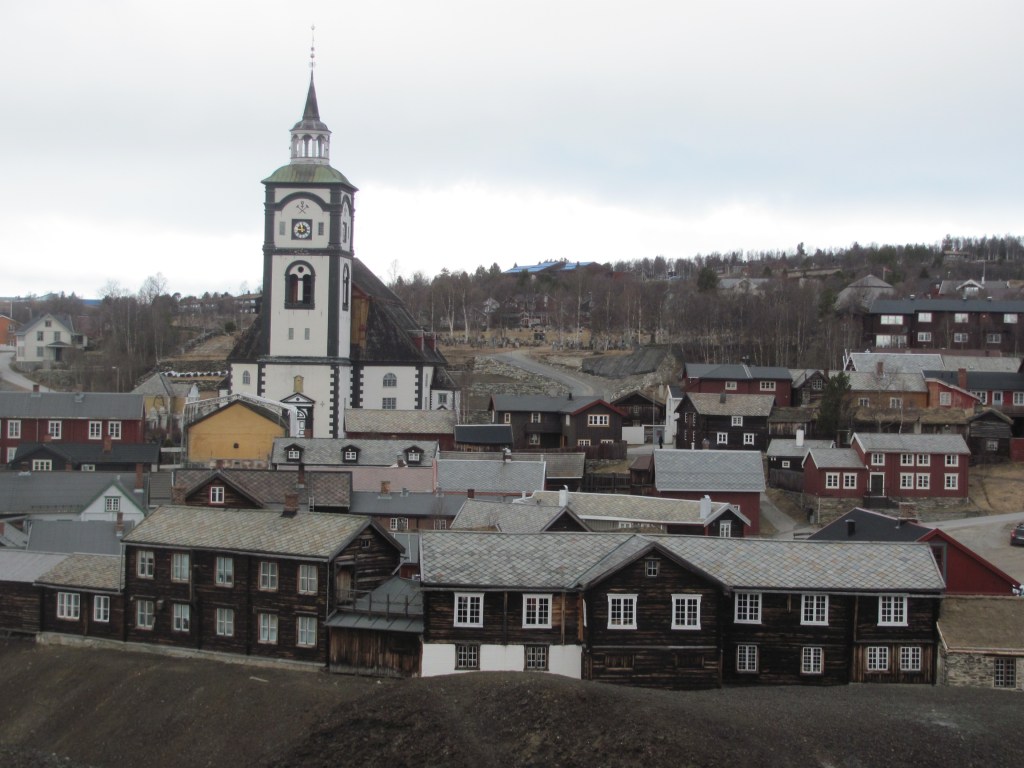
We drive to Røros, a small mining town two and a half hours south east from Trondheim, and designated as a UNESCO World Heritage site. We find the museum and meet Oliver, his dark flowing locks giving him the appearance of a Viking. He is to be our guide for the day through the museum, village, and one of the mines.

Oliver, our Røros guide.

“Mining started here in the mid-1600s, and was very profitable when the price of copper was high”, he tells us by way of introduction. “When the copper price plummeted in the 1900s, the town went into a slow decline to the point where it became uneconomic, with the mines closing for good in 1977. However, the town remained, and it now attracts tens of thousands of visitors every year, not only to see the mines, but also for the winter markets and summer music festivals.”

Røros.

“The Swedish captured Røros in the early 1700s and took possession of all the copper that had been mined”, he continues. “They didn’t stay long though, as when the main Swedish army were beaten in battle In Trondheim, the remnants retreated here, and then eastwards back to Sweden across the mountains. Unfortunately, many of the soldiers perished on the route due to not being prepared for the extreme cold. Even now, one of the annual music festivals commemorates the Swedish troops who died.”

“I myself am of Swedish extraction”, he continues. “It may be that we are descended from one of those soldiers who were stationed here in 1718. But whether I am or not, Røros is my home – I was born here, and even though I had a high-paying job in Oslo for a few years, I missed the place here so much that I decided to return, buy a small farm, and do this tour guiding as a side line. I have always been interested in history.”

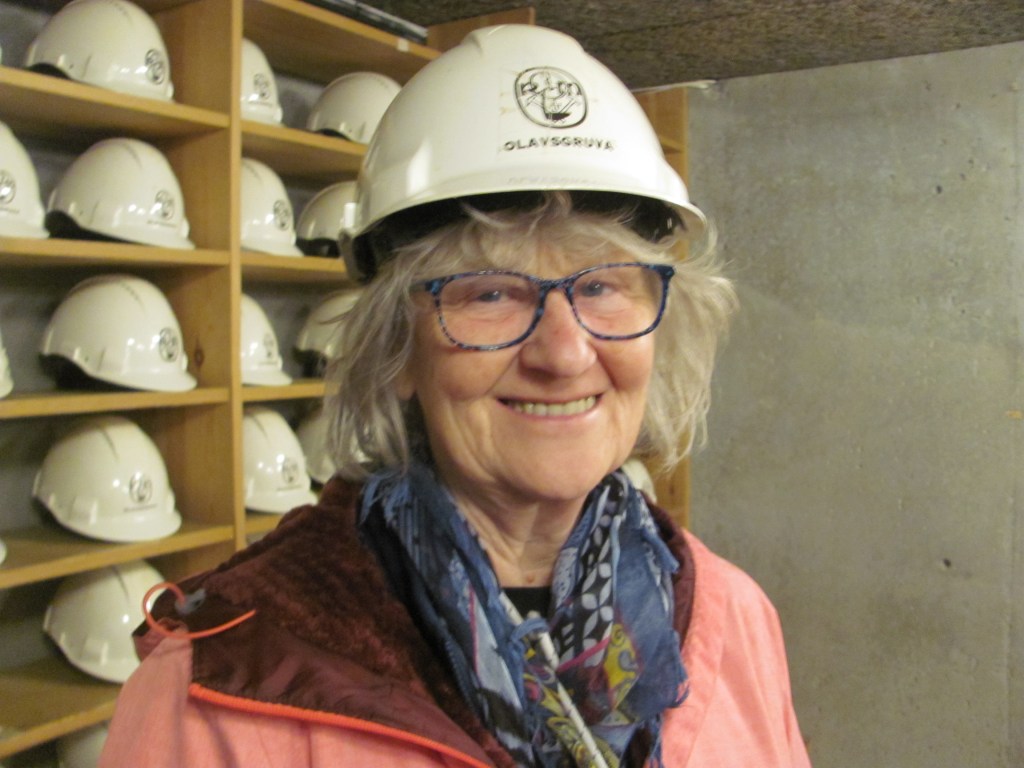
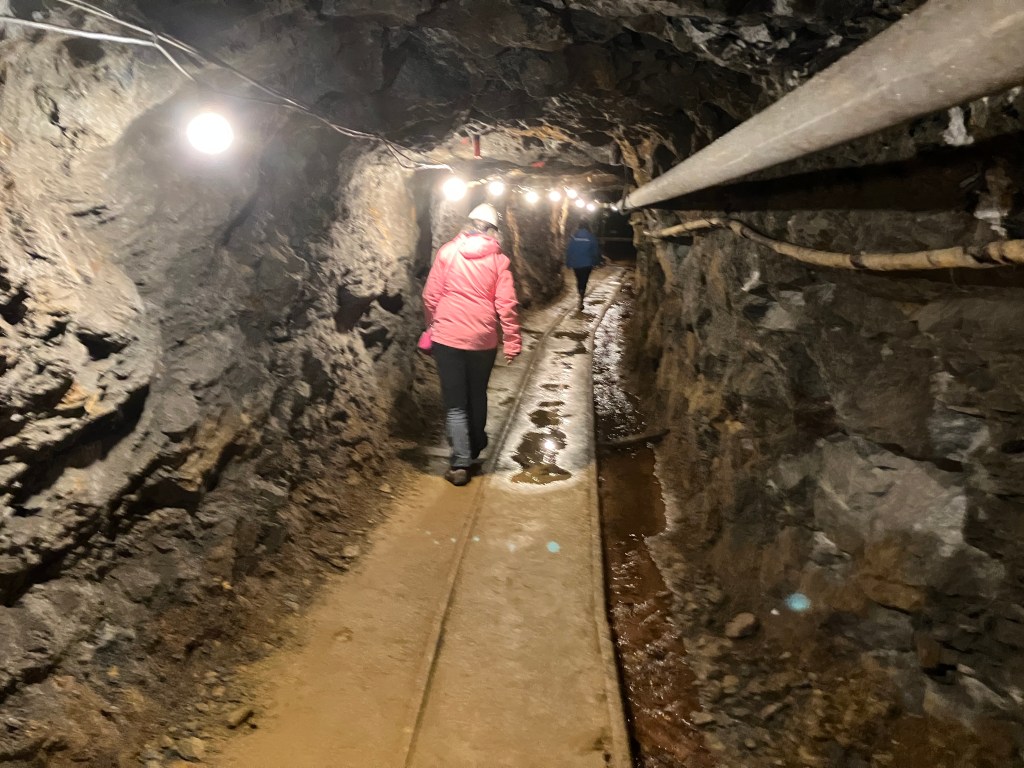
We take a break for lunch, then rejoin Oliver in the Olavsgruva, one of the copper mines not far from Røros. Donning hard hats, we descend into the depths of the mine.

Ready to go.

“It’s a bit scary to think of all that rock above us”, I say, scanning the roof of a rough-hewn cave. “I hope that it doesn’t decide to collapse in on top of us!”

“It’s pretty safe”, says Oliver, his locks now tied in a ponytail. “The rock is very stable here. They even hold concerts down here, because the acoustics are so good. But the path can be slippery due to the water dripping on it. Just mind your step.”

Descending into the mine.

“While it was operating, 1,131 million tons of rock were mined”, he continues. “With an average copper content of 1.39%, this yielded 15,720 tons of copper. The copper ore was taken by an overhead bucket and cable system to Nedre Storwartz, where it was processed into copper concentrate. From there it went to the smelter in the town of Røros.”

“An interesting day”, says the Skipper on the way home. “But I can sympathise with the Swedish soldiers. It was bitingly cold while Oliver was showing us around the town. And that was with my fleece, anorak, scarf and gloves. Imagine not having any of those!”

At the weekend, we make it to the island of Hitra, where Ruby Tuesday and the other boats have stayed for the winter. She is in good shape, despite having withstood fierce winds, icy temperatures, and a covering of snow. Well, almost in good shape, as the Windex at the top of the mast, which indicates the best wind directions for sailing, have come off, and are lying on the deck.

“It was caused by birds sitting on them”, the Boatyard Manager tells us. “They like to sit on them to get a good view. Unfortunately, some of them are too heavy and they snap the arms of the Windex off.”

We discover that the same thing has happened to two of the other boats in the same yard.

“I’ve never heard of birds breaking the Windex arms off before”, says the Skipper with a sniff. “Perhaps it was a sea eagle? They’re big enough. We saw a couple of them around here last year.”

“I reckon that you have been training the birds around here to do that”, I say to the Boatyard Manager as a joke. “Just so that you can get the job of fixing them.”

“Well, we did get someone to order a new one for you”, says the Boatyard Manager, “but unfortunately when he came to fit it, he put it on one of the other boats. As it turned out, it didn’t actually need one. But it wouldn’t have fitted yours anyway. We won’t charge you.”

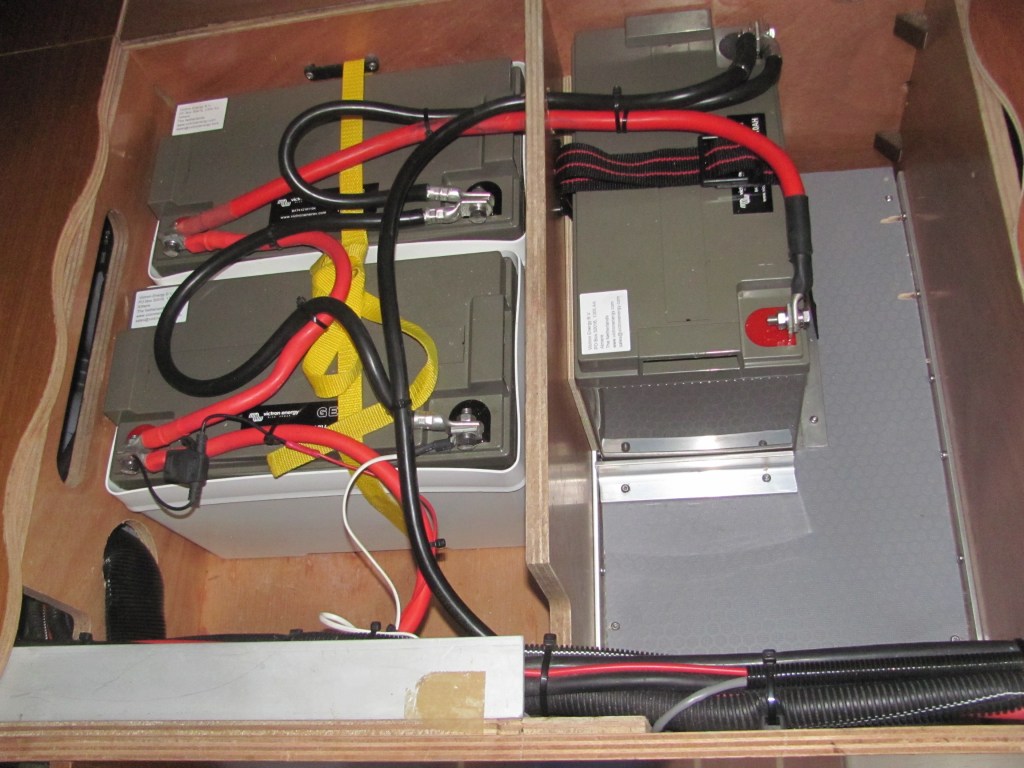
We are a little bit disappointed that our new batteries haven’t been installed. The old ones had reached the end of their lifespan last year, and would only hold a charge for half-an-hour despite being fully charged overnight. We had left instructions for new batteries to be installed over the winter. In fact, the new batteries had only been ordered a couple of weeks before our arrival, they still hadn’t even been delivered. And it’s only a few days until our scheduled relaunch date.

“It seems that the supplier sent them two weeks ago”, says the Boatyard Manager. “They seem to have been sitting in some depot in Trondheim, and we weren’t told that they were there. They should be here tomorrow.”

They do turn up in the first delivery of the day, and are immediately lifted into Ruby Tuesday. It is no trivial task, as each one weighs more than 30 kg. The Skipper tries to lift one, and nearly puts his back out again. I try, and fail miserably. However, they are soon connected up, tested, and we have a working electrical system again. They are needed to power our fridge, lighting, communications, electronics, and navigational system.

The new batteries installed.

Andy, Anne and Rick arrive a few days later. They have driven all the way from Britain to Hitra in their new electric car. They assure us that they didn’t have any worries about running out of battery power. Especially in Norway, which has made a concerted effort to switch over to electric transport, so charging points are almost everywhere. We are suitably impressed, and wonder if we should have gone for a full electric car rather than the hybrid we bought last year.

One by one, the others arrive – Simon and Louise in Aloucia, and Bob and Fiona in Hekla of Banff. The whole team is now assembled to explore the barren arctic wastes. Our plan this year, carefully researched over the winter, is to sail north from Trondheim and explore the stunning scenery of the Lofoten Archipelago, and possibly further north if time and weather permit.

The next few days are frantic. Painting the hulls in anti-foul to prevent algal growth. New anodes to stop the underwater metal parts from corroding. The polishing of propellers. Evenings spent in the small communal kitchen cooking, eating, and planning.

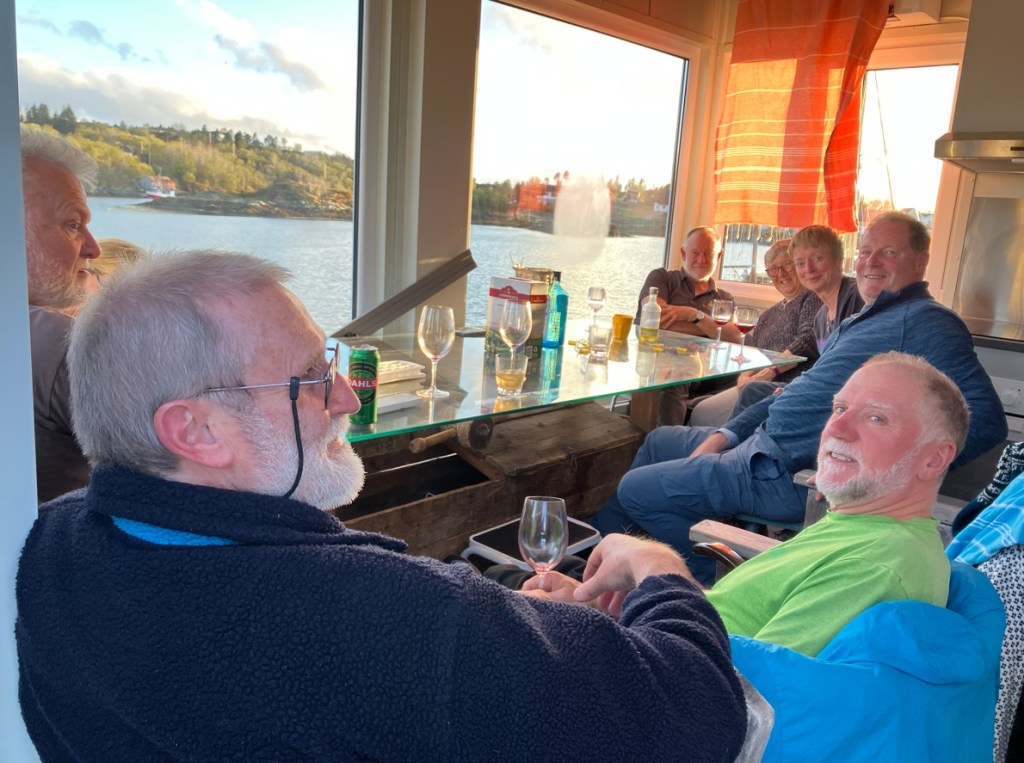
Final planning.

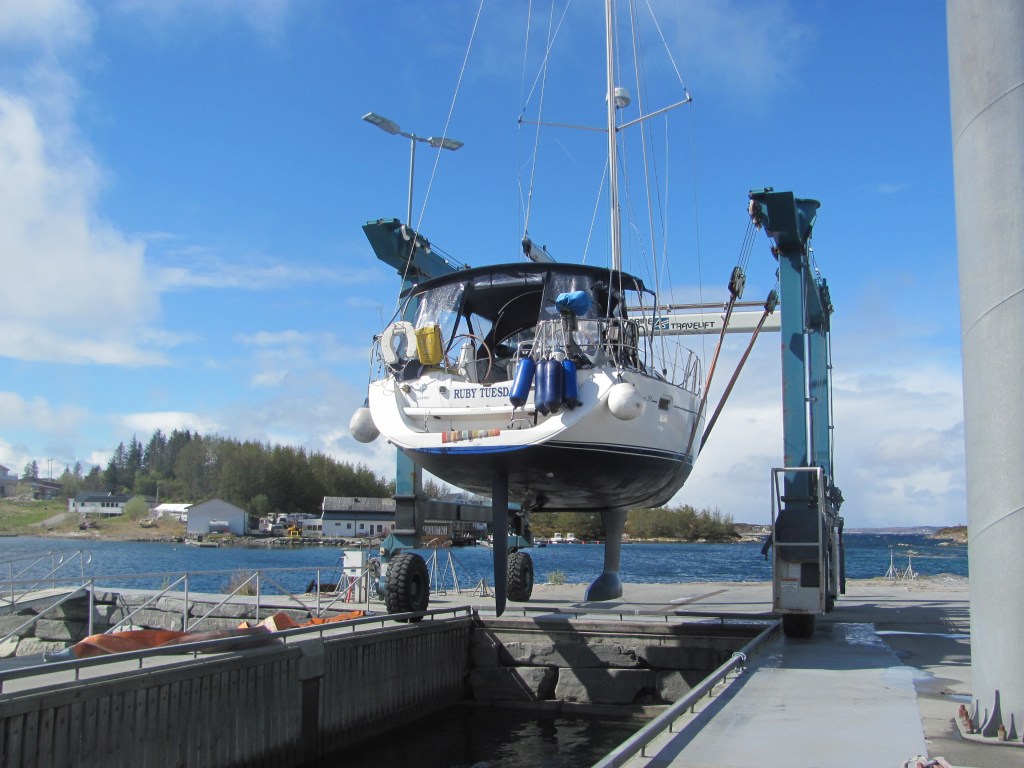
Splash Day arrives. One by one, the boats are lowered into the water, Ruby Tuesday first. Hasty last minute checks to make sure that there are no unplanned leaks, that the engines start, that the bilge pumps pump. Everything seems to be working.

Being lifted in.

More work now the boats are on the water – sails on, provisions stowed, solar panels attached, anchor windlass checked, navigational software updated.

Overnight, it decides to snow.

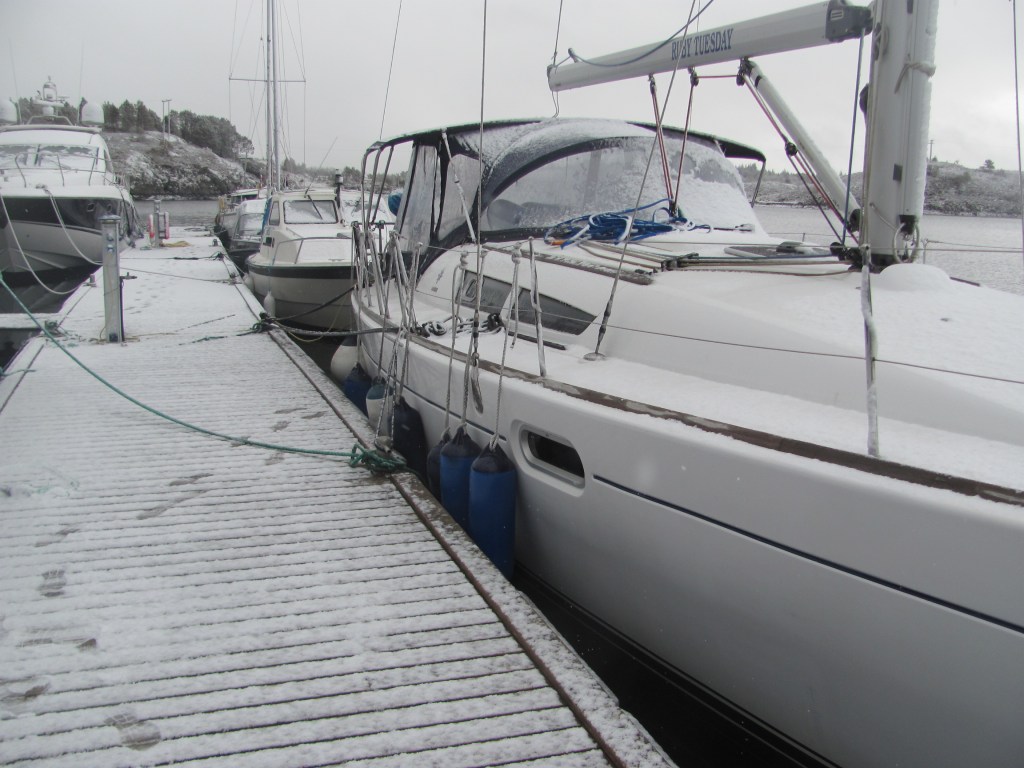
“Someone told me that the sailing season in Norway starts at the end of April”, grumbles the Skipper, trying to do a Roald Amundsen polar explorer impression. “I wasn’t expecting snow. But I suppose we are not far from the Arctic, so it’s hardly surprising. I hope that it warms up soon though.”

A snowy start.

Finally we are off! At least, Ruby Tuesday and Amalia are. The other two boats are still waiting for parts which should arrive in the next day or so. They’ll follow as soon as they can.

Ruby Tuesday spreads her wings and slowly starts to fly, her muscles stiff after her long winter sleep. But soon she is skimming along, better than ever before. The Skipper even looks happy!

On our way at last!

“Having the rigging checked and adjusted last year has really made a difference”, says the Skipper with a smile on his face. “She feels much tighter and more responsive, and doesn’t heel so much.”

Forty nautical miles later, we reach the small harbour of Kuringvågen. A cold wind is blowing, but at least the sun is shining. We tie up and Amalia’s crew come over for a cuppa.

“I can’t understand how you got in front of us”, says Anne. “We started off about half-an-hour before you, then we lost you on the AIS, and then suddenly you appeared out of nowhere in front of us.”

“We couldn’t see you on our AIS either”, says the Skipper. “We took the seaward route around that group of islands, and there was more wind out there. We had an exhilarating sail with a consistent wind. The islands probably got in the way of the AIS signals.”

“Yes, you are probably right”, says Andy. “We took the inner route, and the wind was quite variable, broken up by the islands. We were constantly trimming the sails.”

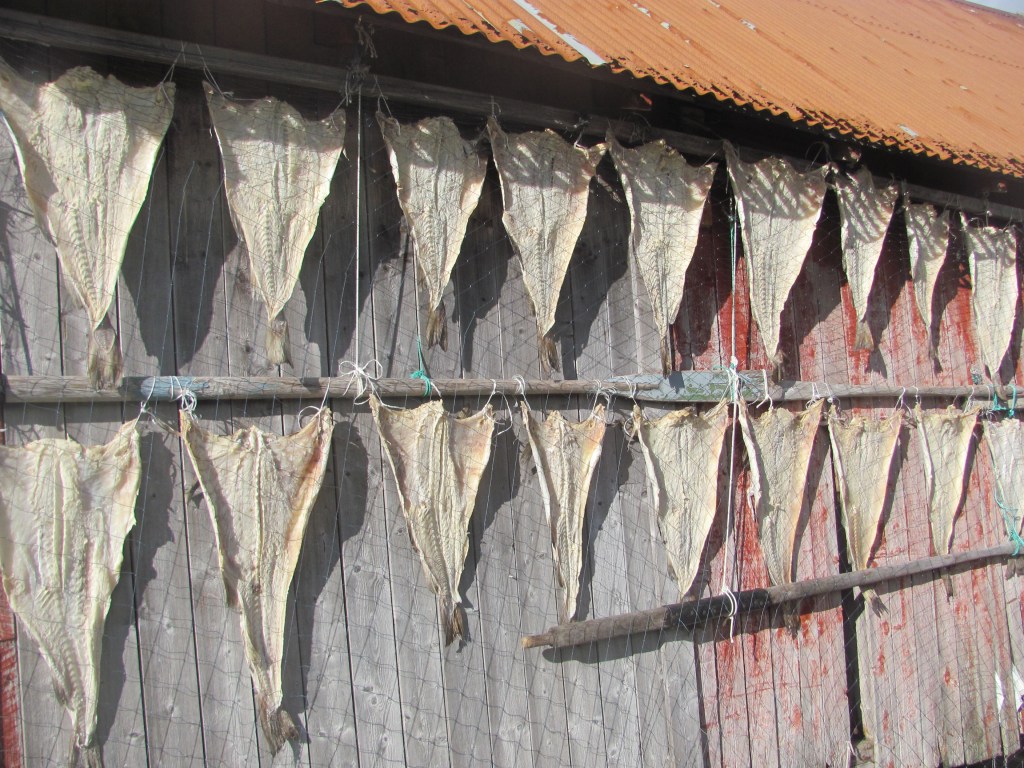
Later we go for a walk. I spot some klippfish drying on the side of the wall.

Klippfish drying in the sun.

“Just like the ones we saw in Kristiansund last year”, says the Skipper. “At the Klippfish Museum.”

We explore the club house of the local sailing club, open to fellow sailors.

“Look, a British boat passed through here two days ago”, says the Skipper, looking at the visitors’ book. “Morwenna. They must have set off in all that bad weather we had.”

“I am sure that we will meet them somewhere along the line”, I say. “Sailors have a habit of staying at the same places.”

Alpine farming, behind a waterfall, and a renewed acquaintance

“According to the harbour guide, there’s supposed to be a hammerhead on the pontoon”. says the First Mate, peering through the binoculars. “But I can’t seem to see it. That would have given us plenty of room, but there seems to be just the pontoon. And it’s taken up with motor boats. We may have to raft up alongside.”

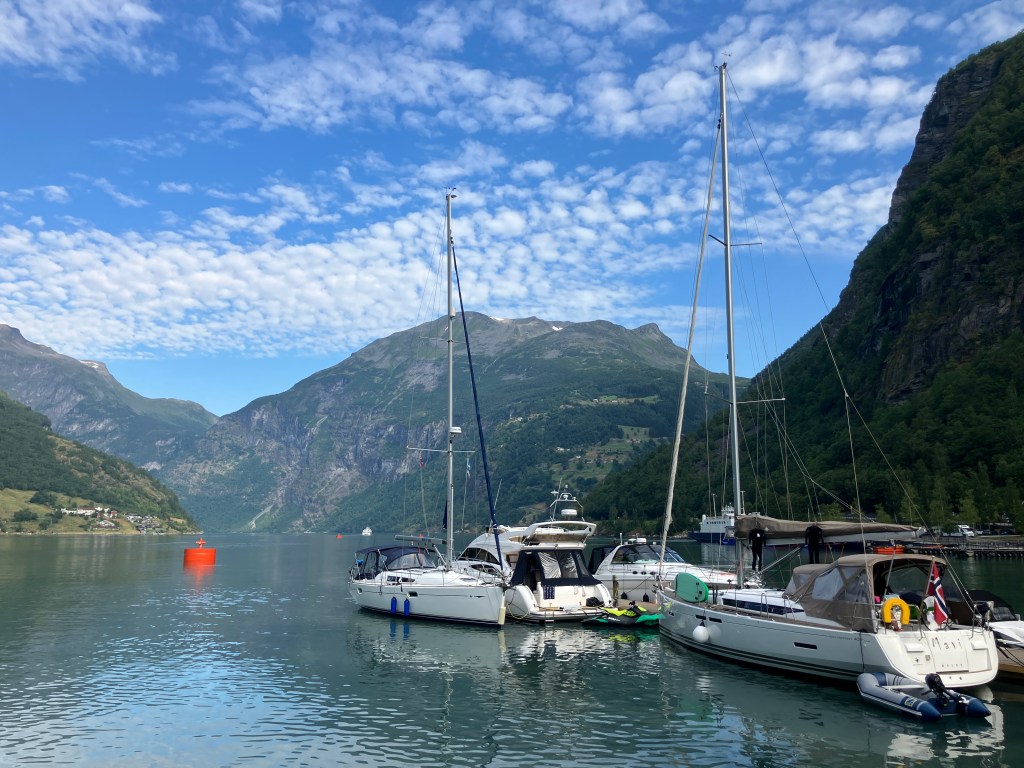
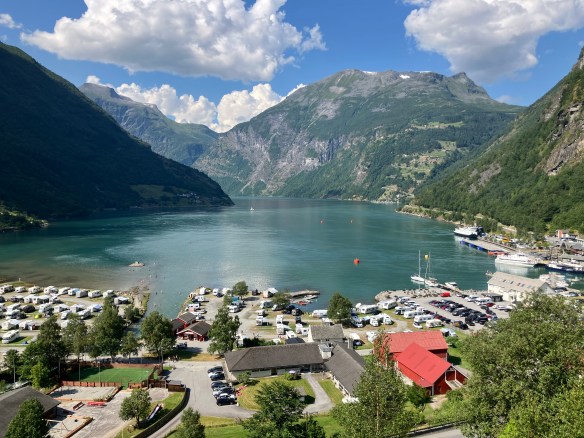
We are approaching the town of Geiranger at the top of Geirangerfjord, another UNESCO World Heritage site. We had set off in the morning from Sandshamn, and had had a pleasant sail up Storfjord then Sunnylvsfjorden, with the wind funnelling along the fjord behind us, before turning left into the short Geirangerfjord. In the distance, we see an army of campervans lining the waterfront, all with their skylights open in a vain effort to keep cool.

Approaching Geiranger.

“Yes, there was a hammerhead here last year”, says the owner of the motorboat we raft up to. “But it was destroyed by the ice over the winter and they haven’t got around to replacing it yet. But I am quite happy for you to tie up alongside. You can get to the pontoon over the swimming platform at the back here. By the way, there is a thunderstorm due shortly if you haven’t heard already.”

Rafted up in Geiranger.

We hadn’t heard. Nothing was mentioned about it in the weather reports we had received.

“They are very spontaneous”, he says. “It’s because of all the heat we’ve been having.”

Sure enough, fifteen minutes later, the wind starts to blow fiercely and the heavens open. As if choreographed, all the campervan skylights slam shut as one. We just make it into the cabin without getting wet, and watch and listen in trepidation as torrential rain falls and lightening cracks overhead. The windspeed indicator reads 33 knots.

Waiting out the thunderstorm.

“I hope our mast isn’t the tallest thing around”, says the First Mate.

“I think the buildings over there are taller than our mast”, I try and reassure her. “Hopefully, the lightening will go for them first.”

Thirty minutes later, it is all over. The sun comes out, and the skylights on the campervans open again in unison.

“Phew, that was pretty intense while it lasted”, says the First Mate.

Geiranger.

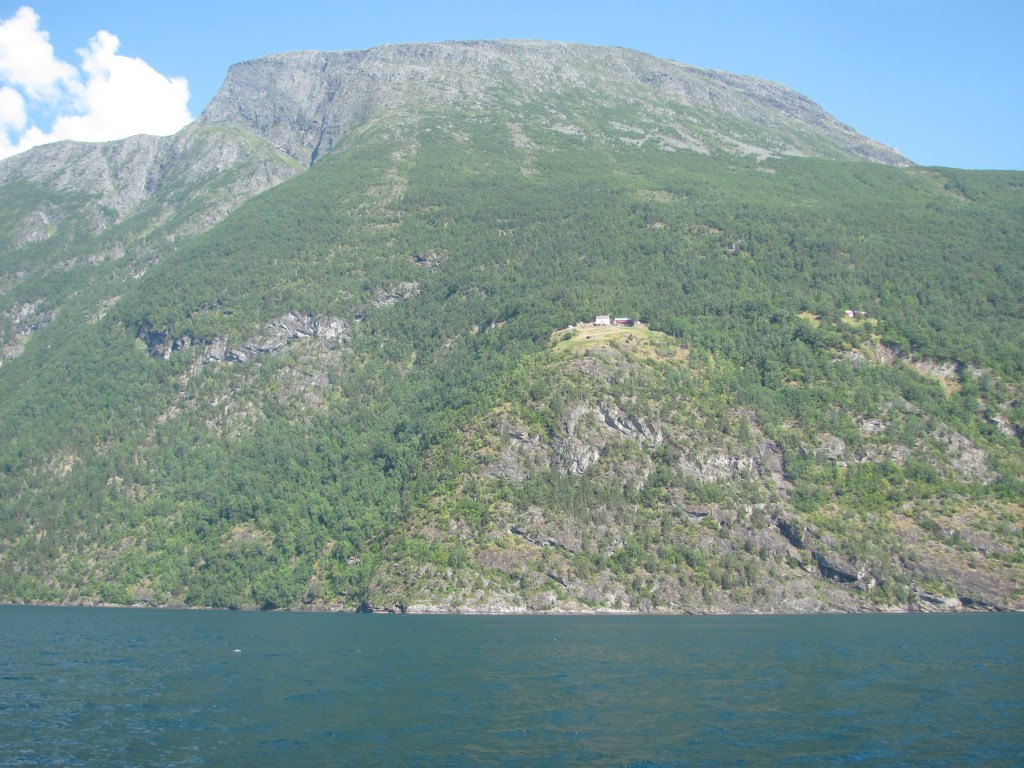
In the morning, we walk up to the Norsk Fjordsenter, where there is an exhibition on the mountain farms in the area. We had often seen these mountain farms clinging perilously to the steep cliffsides as we passed far below in the fjord, seemingly cut off from the rest of the world, with many not even visibly linked to the sea. As we had seen grass but rarely livestock, we had wondered what they actually farmed and how they transported their produce to the markets.

A mountain farm. How do they get there?

“Traditionally these mountain farms kept goats”, a panel in the exhibition tells us. “Pastures on the steep fjord sides provided grazing for them. The farmers produced brown and white goat cheeses and goat’s milk butter, all made according to traditional methods. Nowadays these farms may also keep sheep, cattle and Norwegian fjord horses.”

Mountain goats.

We taste some of the brown goat’s cheese.

“I can’t say I like it that much”, says the First Mate. “It’s a bit sweet for me.”
In one particular farm, the only route to it involved a short pitch of vertical rock that could only be passed with a ladder. The story goes that when the tax collector came to assess and collect the farm’s taxes, the farmer would pull the ladder up so that he couldn’t ascend any further, and he would have to go away empty-handed.

Tax avoidance, mountain farm style.

“I suppose the farmer thought he wasn’t getting much benefit from the state, so why should he contribute to its funding?”, says the First Mate. “There’s a certain logic to that.”

Life was precarious. Landslides and avalanches would sometimes sweep away entire farms, carrying the people with them. The worst of these was in the neighbouring Tafjord in 1934, when 2 million cubic metres of rock broke off and plunged down into the fjord below, causing a massive tsumani with waves up to 62 m in height and killing 40 people.

“Did you read that the next one they reckon will occur is at Åkerneset?”, says the First Mate. “Didn’t we pass that on the way in?”

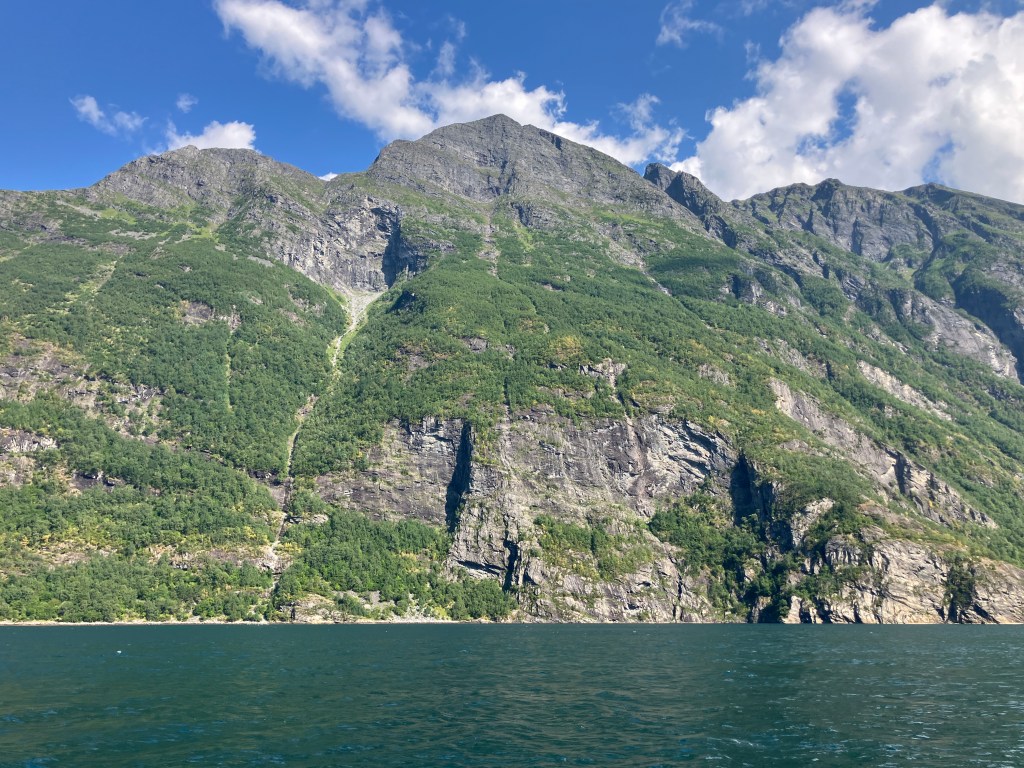
We had indeed. A massive crack several hundred meters long and slowly widening each year threatens to collapse into Sunnylvsfjorden. Projections indicate that it could generate tsunami waves up to 70–80 meters high, drowning towns like Geiranger, Hellesylt, and Stranda within minutes. Luckily it is heavily instrumented to give warnings of its imminent collapse.

I shudder. “Perhaps we ought to get going”, I say. “I wouldn’t want to be underneath it when it goes.”

The next massive landslide?

“You can walk up to one of the former farms that overlooks Geiranger town”, the woman behind the desk tells us. “It’s more for tourists these days, and there’s a restaurant there, but it gives you a good idea of what life was like in these remote mountain farms. You can then also walk on further to the waterfall if you like. You can even go in behind the waterfall for a memorable experience.”
“There’s a plateau more than 1000 feet up the side of the mountain behind us”, says Mr Fairlie to his older companion over breakfast. “And there’s a new road up to it that they have just completed this year. If you wish, we could take a stolkejarre and driver up there and see how they farm. There’s also a good view of the fjord on the way up.”
“I should like that”, says the minister. “As much as I like sea air, I need to avail myself of fresh air from the land for a short time.”
“Well, there will be plenty of that up there”, says Mr Fairlie.

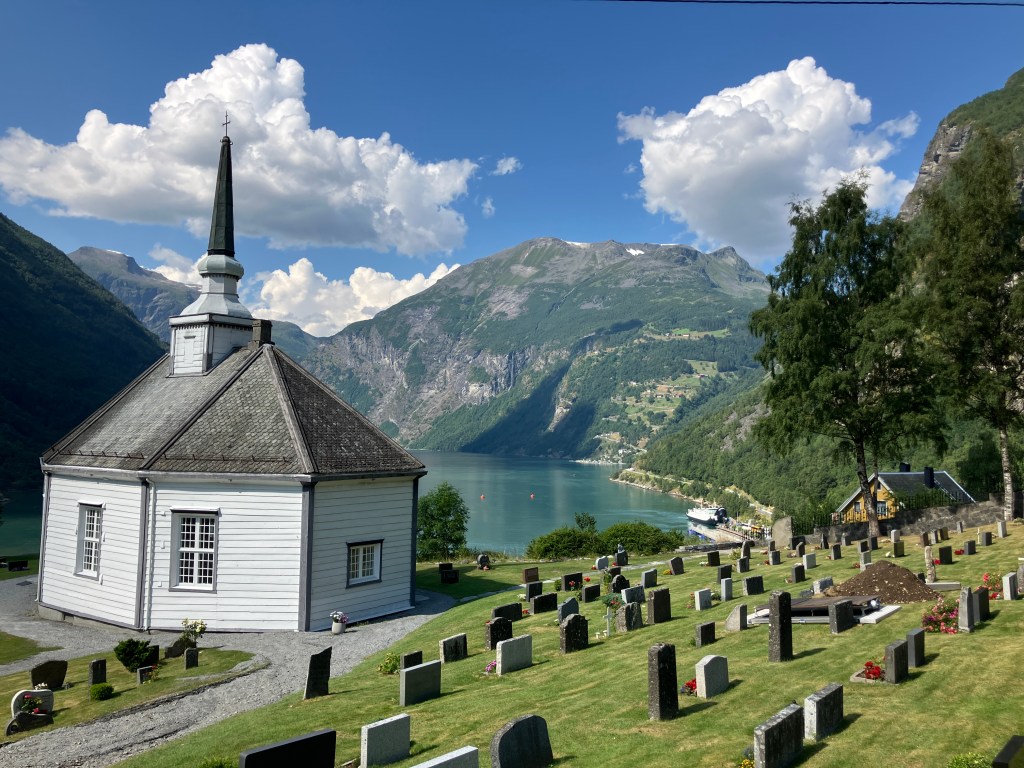
“There’s a funeral on at the church today”, the driver of the stolkejarre warns them. “We may be delayed somewhat as the mourners arrive. The road around it is narrow and there isn’t much room for vehicles to pass.”

Geiranger church.

We take the footpath up to the farm. The funeral traffic is completely blocking the road into the town, and there is a considerable tailback. We squeeze past the best we can and start climbing the stone steps up the hillside to the farm.

“Wow, that was steep”, pants the First Mate. “I am really looking forward to having an ice-cream at the restaurant.”

It’s closed. There is a sign saying that the funeral wake is being held there. The same cars that were blocking the road far below are now all crammed into the small restaurant car-park.

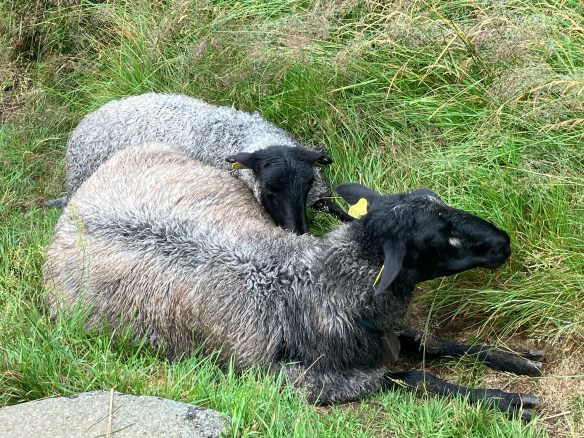
Luckily we have some sandwiches and water, so we find a shady spot under a tree and rest before carrying on. Behind us some mountain sheep are chewing the cud for their lunch.

Mountain sheep.

The elderly gentleman and his younger companion are already sitting there.

“We’re on a cruise around the fjords”, they tell us. “We have a day here in Geiranger, so we decided to take a side trip up here. It does one good to stretch one’s legs and to enjoy the views. It’s such a beautiful country. We are from Scotland.”

“Amazing”, I say. “That’s where we live. And we are also cruising around Norway. What a coincidence!”

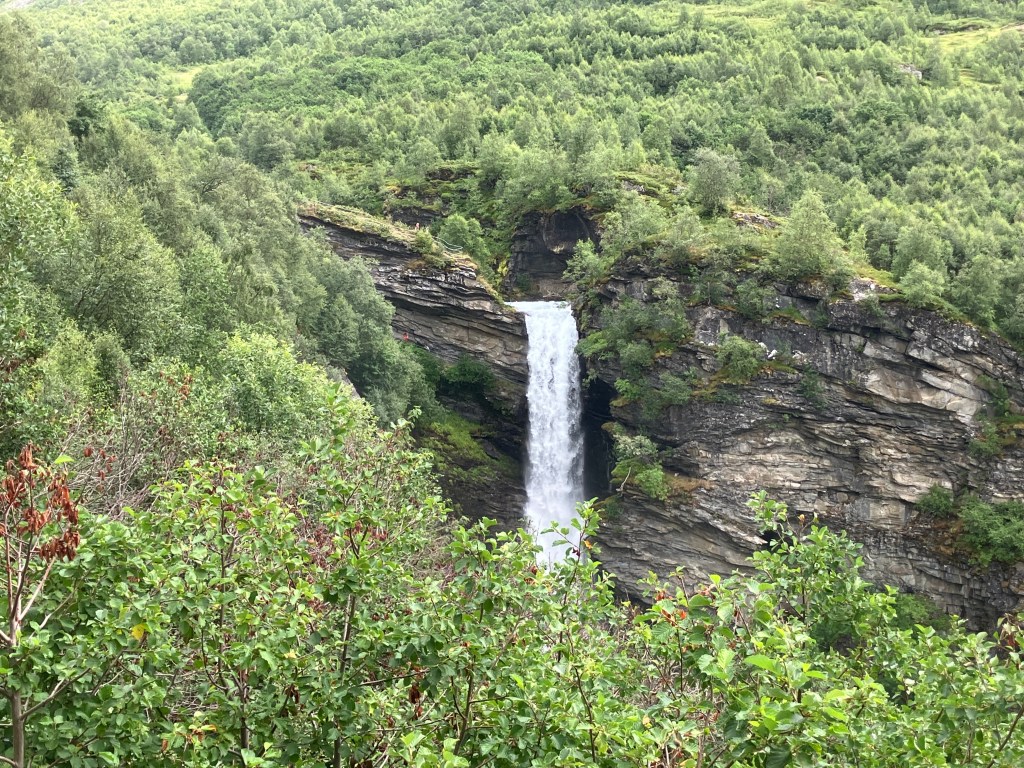
We finish our lunch, say goodbye, and push on to the waterfall. It’s impressive.

The Storsæterfossen.

We clamber down the rocky path to the side and edge our way gingerly along it until we are under the waterfall. It is a surreal feeling as tons of water thunder past us every second.

Behind the Storsæterfossen.

“It’s lucky there is a guide rail to hold on to”, I say. “It’s a sheer drop down there. I wouldn’t want to fall over.”

Soon we are damp from the spray in the air.

“Come on”, says the First Mate. “Take your photos, and let’s go. I’m getting quite wet.”

There is no sign of the elderly gentleman and his companion as we retrace our footsteps back down the path.

“They have probably gone back to their ship”, I say. “The ones we had lunch with. By the way, did you notice that the elder one looked a bit like me?”

“What on earth are you talking about?”, asks the First Mate. “We had lunch with a young German couple who were touring Norway in their car. Are you losing it, or is this just your vivid imagination again?”

On the way back down again.

The next morning, we cast off and motor slowly back along the route we had followed up to Geiranger.

“Look”, shouts the First Mate from the bow as she tidies up the ropes. “There’s the Seven Sisters waterfall. But there only seem to be five at the moment. I read somewhere that the number of sisters depends on how much rain there has been.”

Seven Sisters waterfall, Geirangerfjord.

Unusually, the wind is favourable when we reach Sunnylvsfjorden, and we are able to enjoy a pleasant sail back down the fjord with the genoa only. Normally in the fjords, because of the funnelling effect, the wind always seems to be against us, no matter which direction we are heading and which wind direction has been forecast.

A boat is coming up fast in front of us.

“It’s the Hurtigruten”, I say, peering through the binoculars. “It’s going to pass us to port.”

The Hurtigruten is the iconic Norwegian coastal express service operating between Bergen and Kirkenes near the border with Russia in the far north. Not only does it act as a daily passenger and cargo service, it is also possible to take scenic cruises on it.

“You are pronouncing it wrong”, says the First Mate. “It’s ‘Hurtig-ruten’, not ‘Hurti-grutin’. It means ‘Fast Route’, just like in German.”

The Hurtigruten.

In the late afternoon, we break our journey at the delightful little anchorage of Honningdal.

“It’s such a lovely peaceful spot”, says the First Mate dreamily, as we sip our wine in the cockpit in the evening. “With stunning views of the mountains and the fjords. If only those geese over there would stop being so noisy with all their honking, we could enjoy the peace and solitude.”

“Well, I suppose they are part of nature as well”, I say.

Honningdal anchorage.

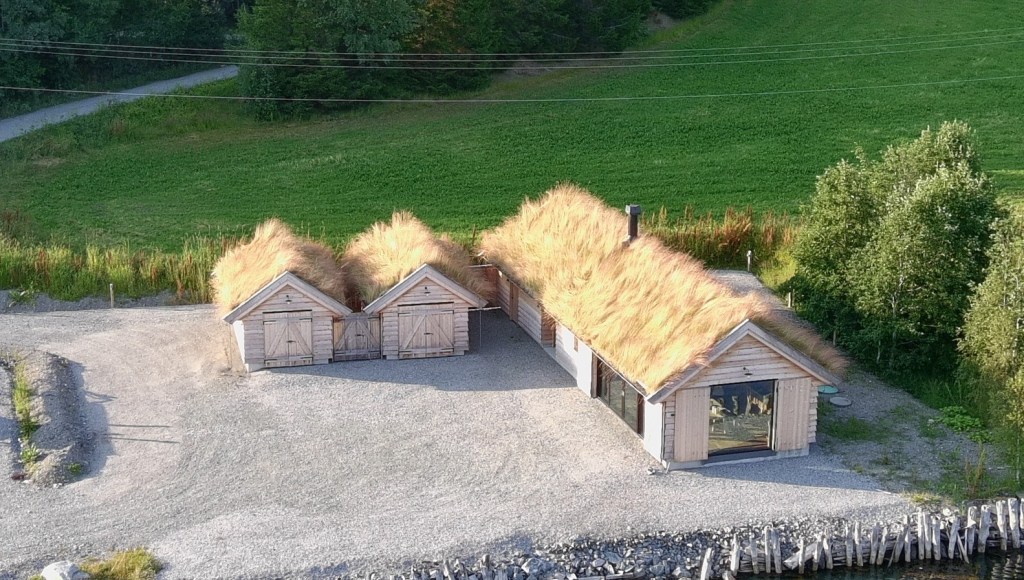
“Those sheds on the shore look like they have Boris Johnson haircuts”, I say, pointing to a cluster of boatsheds on the other side of the small inlet. “I think I might send the drone over there and get a shot of them.”

“Careful you don’t hit the power wires”, warns the First Mate.

Does Boris Johnson live here?

We eventually arrive in Ålesund. There aren’t any spare berths at the small marina, and we have to raft up to another sailing boat with a Swiss flag.

“You look familiar”, says its skipper. “I think that we have met somewhere before. And I recognise your boat’s name. Ruby Tuesday. Out boat is called Sol Vita.”

We rack our brains. He gets there first.

“It was in Hanko in Finland”, he says. “Last year. Don’t you remember there was an armed forces flag day? My name is Christoph and this is Solvita. The boat is named after her, by the way.”

My memory stirs. “And we were both visited by the coastguard people as we were the only two foreign boats there”, I say. “They checked our VAT status, being a UK-registered boat. Then they went over to you on the other side of the pontoon.”

“We followed your route around the Baltic States”, Christoph says. “We nearly caught up with you in Riga in Latvia – we were in another marina, but we came to your boat one day to see if you were in, but you weren’t unfortunately.”

“That was probably the time we left the boat and took the bus down to Vilnius in Lithuania”, says the First Mate. “What a pity we missed you.”

“We left the boat in Latvia over the winter”, says Solvita. “I am actually Latvian. This year we have sailed from there, around Sweden and Norway, right to the top of Nordkapp in the far north of Norway. Now we are on our way back again. ”

We’re suitably impressed. That’s about 3600 nautical miles as the crow flies, not counting all the little bays, inlets and fjords they must have gone into. We are lucky if we manage to do half that in a season.

“We do do a lot of long passages”, says Christoph, seeing the looks of astonishment on our faces.

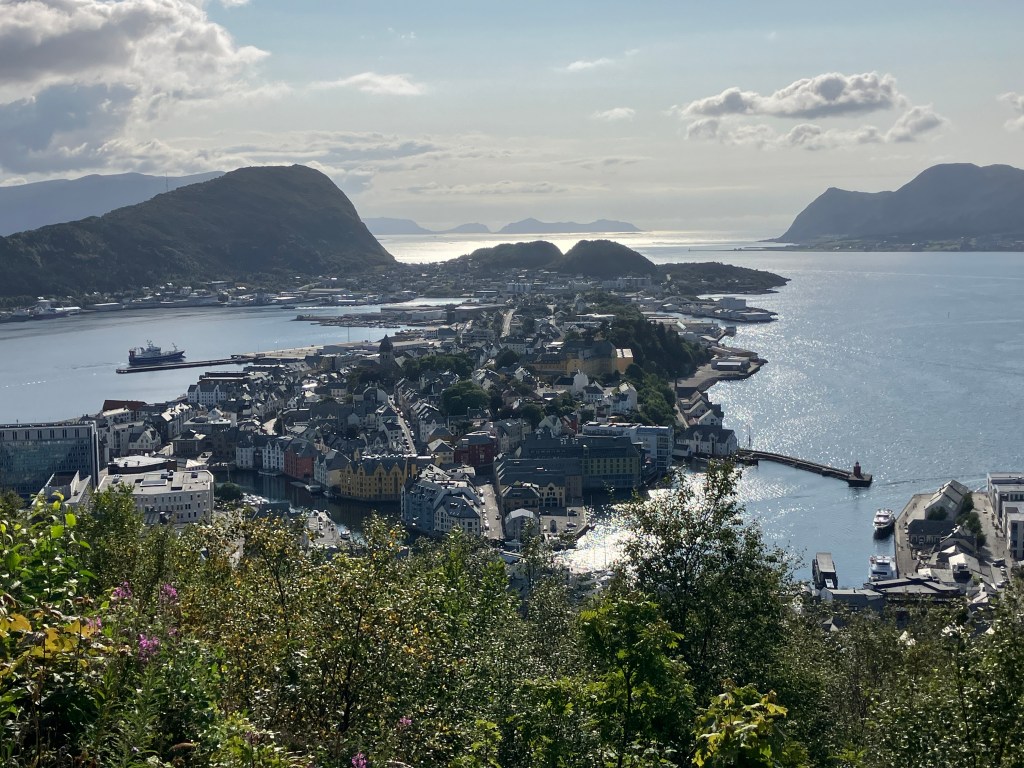
In the afternoon, we take the path to the top of the Aksla hill overlooking Ålesund. There are supposed to be 418 steps. I’ll take their word for it. The view from the top is stunning.

Ålesund from the Aksla viewpoint.

Later we are invited to Sol Vita for drinks.

“I studied law and then medicine at university”, Solvita tells us. “But I couldn’t really settle to a job in those areas. I had always enjoyed sailing ever since I was a little girl, and since I met Christoph I moved to Switzerland to be with him. We have been sailing every summer since then. A couple of years ago I had a go at writing a book. All in Latvian, I am afraid. It’s called ‘Purva migla’, or ‘Bog Fog’ in English, and is about a girl with a dark past who is trying to find herself. She travels far and wide in her quest, but starts to realise that the answers to the question of her past lie back where she came from.”

“It sounds interesting”, says the First Mate. “I like those sorts of books. You should translate it into English sometime.”