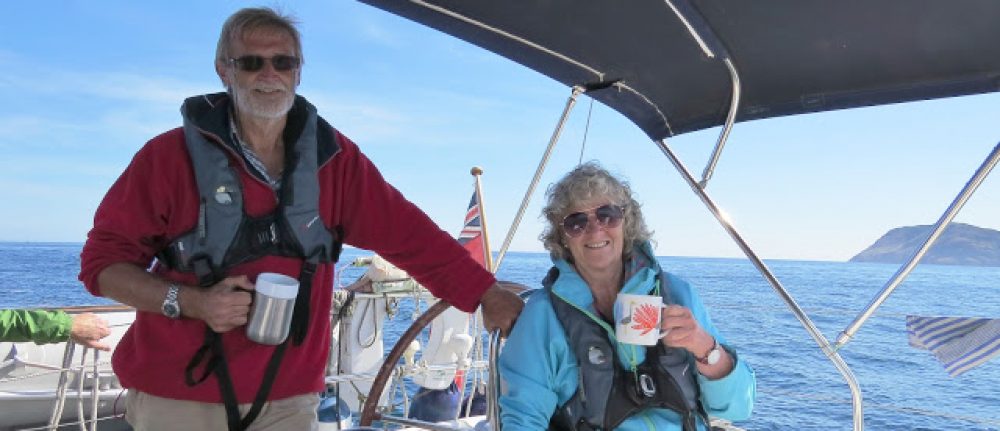
“The next ferry goes at 1145”, says the First Mate. “We should be able to make it. But there won’t be much time to spare. We need to make sure we get it so that we are in time for the second ferry at Lyngsidet.”
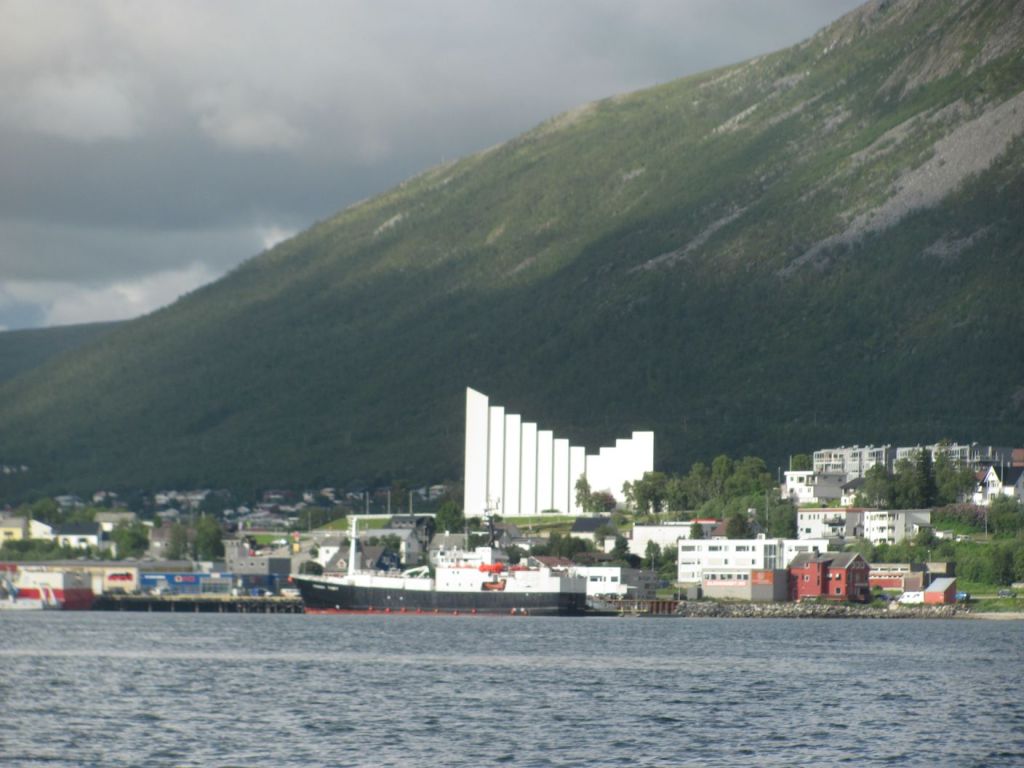
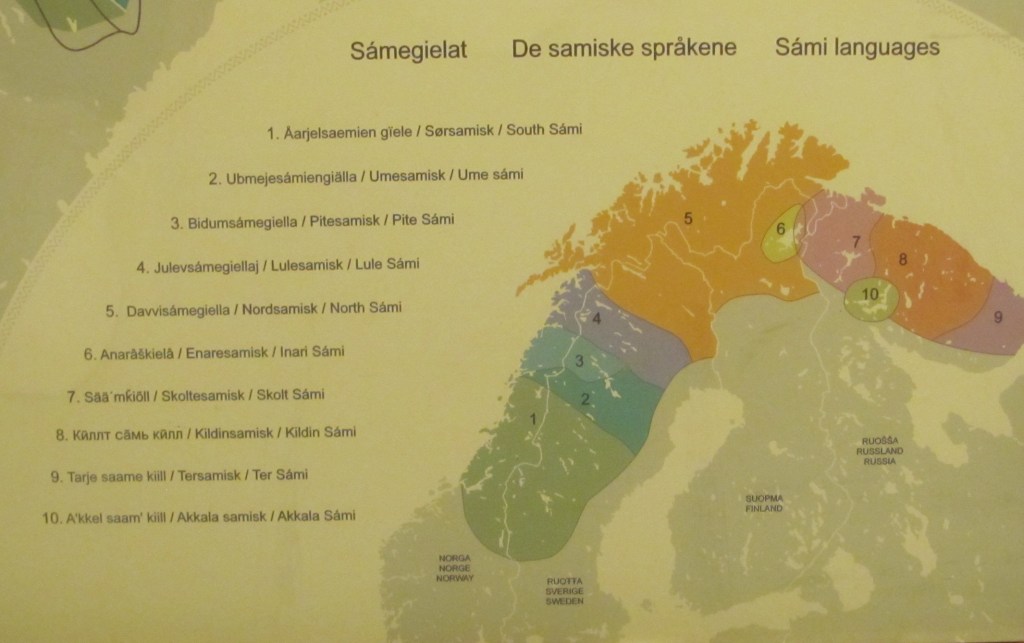
We have left Ruby Tuesday near Tromsø, and have hired a car for a week to explore Sápmi, the home of the Sámi people. At the moment, we are passing through the Lyngen Alps towards Breivikeidet, where we need to catch a ferry across Ullsfjorden to Svensby. The scenery is stunning.

We make it to the ferry with a few minutes to spare. A German cyclist is also waiting.
“I am heading for Nordkapp”, he tells us. “I’ve cycled all the way from Bremen, where I live. It’s taken two months so far, but I have the whole summer to do it.”
“You don’t have much luggage”, I say.
“Yes, I am travelling light”, he says. “I have a small tent here, this is my sleeping bag here. I have a flask of water and some food in this compartment, and a spare change of clothes in this one. And my electronic equipment and bike spares in this bag. I don’t need anything more.”
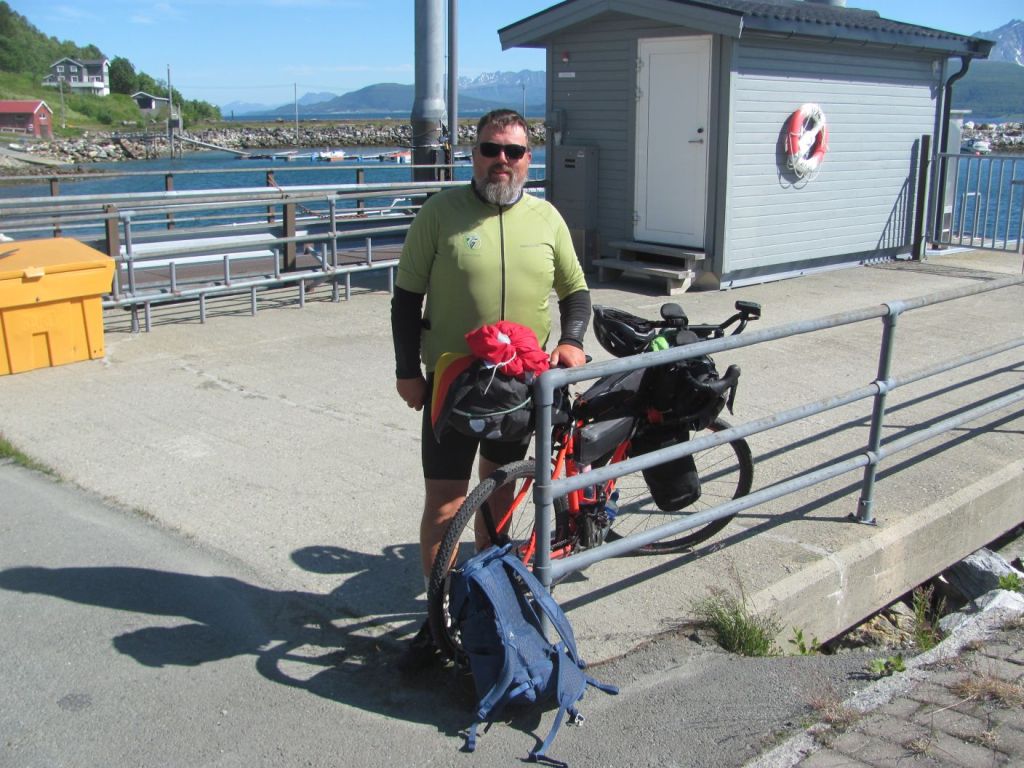
We are impressed. It’s a masterclass in minimalisation.
The ferry arrives and we board.
“It just shows you how little you need”, says the First Mate later. “But I am not sure I could do it. I like my creature comforts.”
Me too, I think to myself.

The reindeer mill around in a spiral within the confines of the trapping fence across the narrow ravine, the breath from their nostrils forming small clouds of vapour. The hunters advance, their spears and bows and arrows at the ready. On the hill above, the shaman raises his hands above his head and begins the chant, his monotone echoing around the ravine.
The boy clutches his father’s hands more tightly. “What are they doing, father?”, he asks.
He is being initiated into the rituals of the reindeer hunt, and had helped the adults construct the trapping fence the day before, carrying the newly hewn stakes from the forest to the ravine.
“They are waiting for one of the deer to give itself up to us”, says his father. ”Its spirit has heard the prayers of the shaman, and it is preparing to sacrifice itself for our good. It is the way that has always been and always will be.”
Sure enough, one of the reindeer detaches itself from the rest of the herd and runs wildly to the other side of the ravine. Immediately the hunters loose their arrows after it. Two of them hit the animal and bring it to the ground. The hunters advance on it, their spears at the ready. The animal struggles weakly as they stab it again and again until it is still.
“See, we’ll have food now”, says his father. “The deer has given itself to us.”
“Come on”, says a familiar female voice. “You’ve been looking at that carving for ages. If we don’t get a move on, we’ll never get home tonight.”
I am brought back to the present with a jolt. It’s the First Mate, of course. We are at the Rock Art museum in Alta, where thousands of rock carvings depicting life in Stone Age times were found in the 1960s and 1970s. Created over an extended period from 5000 BC to around 0 BC, the carvings are a unique record of the hunting of reindeer, elk, and bears, even down to the methods used. Others show the catching of whales and halibut. I had been imagining what a hunting expedition for reindeer might have been like.

“The guide book says that the carvings were done at sea level”, I say. “But as the land rose from rebound after the Ice Ages, new land presented new surfaces to be carved, so that older carvings are further up the slope and the youngest ones towards the bottom. Consequently, you can see how rituals and other things evolved. Boats, for example, became bigger and could fit more people, and began to have animal heads at their prows, especially elks. It’s amazing.”
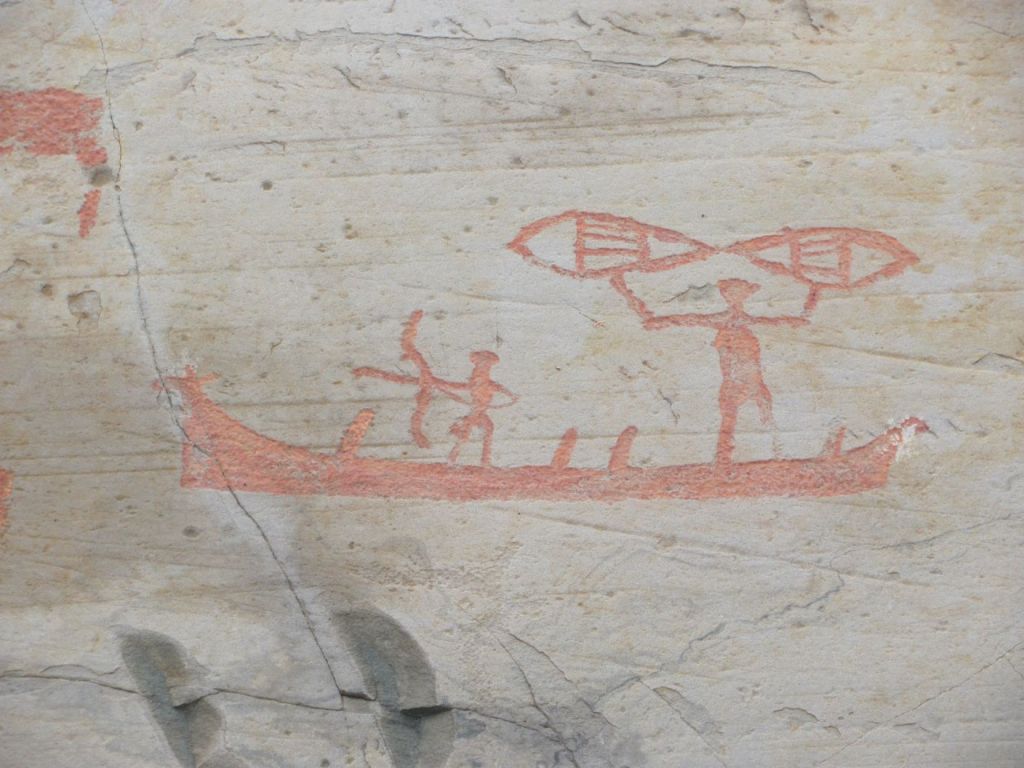
“Did you notice how some of the carvings were outlined in red, and others are just left as they are?”, asks the First Mate. “Apparently the red was applied at the time they were discovered so that they could be seen more easily. But the thinking now is that they should be left in their natural state as the paint was obscuring features important in the way they were made.”
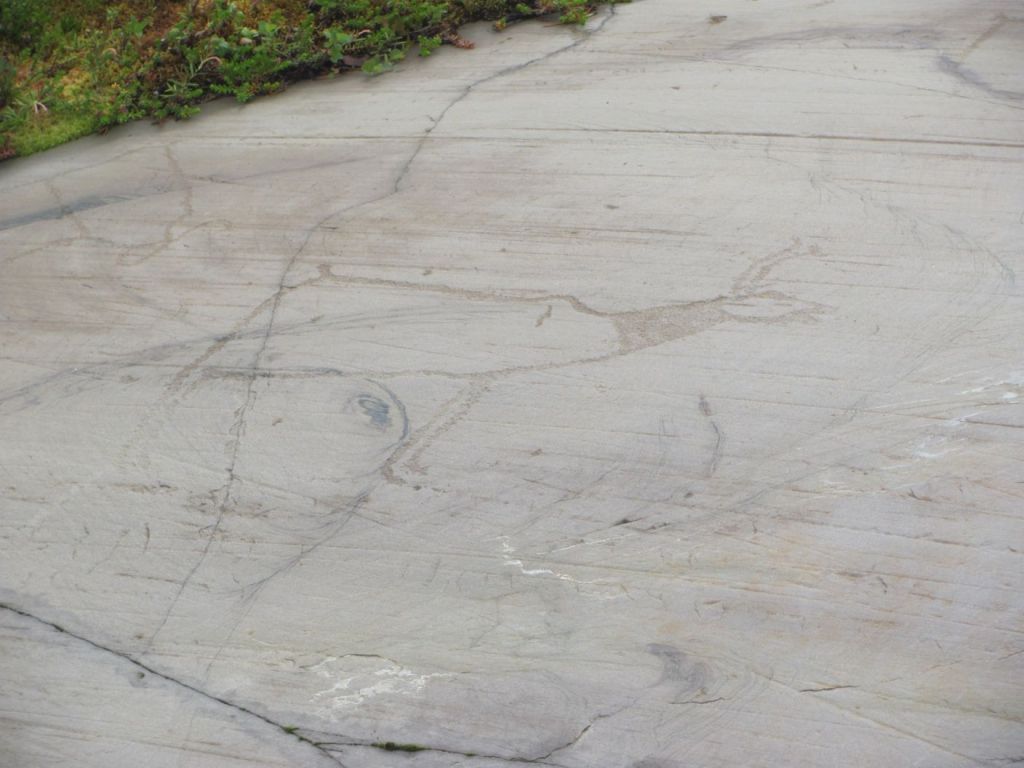
“Look out for the bears and their tracks leading from the cracks in the rock across several of the panels”, the guide book instructs us. “Apparently hunter-gatherers revered bears as relatives or ancestors. It is likely that there were bear cults in which they were worshiped as links between different levels of the cosmos. The cracks in the rock may represent their caves as entrances to the underworld.”

Further on, there are images of geese, ducks, swans, and cormorants, all distinctly recognisable. On other rock faces, elks seem to be mating. On one site, a unknown round object streaks across the carvings, with a trail behind it. Was it a comet, as some researchers think? And what are the mysterious geometric shapes, seemingly with frills on their edges?

We sit on a rock, overlooking the sea. I wonder about the people who would meet here in ancient times. Why did they come? Was it to worship? Did they have gods?
“It is more likely that they just had a spiritual worldview rather than specific gods”, says Spencer from behind my shoulder.
Somehow he has found his way into my rucksack, and has been tagging along with us.
“They probably saw animals as powerful spiritual beings who needed to be kept on the right side of if hunting was to be successful. Rituals practised by their shamans were important to reinforce the bond between people, animals and the landscape.”
“I wonder what it would have been like to be a hunter-gatherer?”, I ask. “What did they actually think like?”
“It’s an interesting question”, answers Spencer. “They almost certainly had the same brain architecture as you do, as anatomically modern humans emerged around 300,000 years ago. They probably still thought about family, social status, cooperation, conflict, finding food, avoiding danger, and caring for offspring in much the same way as you do. But the biggest difference will have been due to cultural evolution and the development of abstract thought. You spend a lot of your time thinking about things such as governments, money, the internet, scientific theories, laws, and insurance, for example. They probably thought more about landscapes, weather, animal behaviour, and seasonal cycles.”
“It makes you wonder, then, that if you were to take newly-born babies from the Stone Age and modern times, somehow exchange them, and then raise them in the opposite society, would they both be capable of learning the other’s knowledge?”, I muse.
“Probably”, says Spencer.
“Come on”, says the First Mate, standing up. “I am getting hungry. Let’s go and get something to eat. You can day dream with that spider another time.”
The next day we visit the Tirpitz museum in Kåfjord on the outskirts of Alta.
“You’re just in time”, says the man with a pony-tail in reception. “There’s a film starting in five minutes telling the story of the Tirpitz. What language do you want it in – Norwegian, English or German?”
We take our places in the small cinema. It’s an old film from the 1960s.
“The Tirpitz was a German battleship during WW2, the largest ever built in Europe”, it tells us. “It was sent to occupied Norway in 1942 to deter an Allied invasion as well as threatening Allied convoys to the Soviet Union. It was hidden in the Kåfjord, surrounded by shore batteries and submarine nets to protect it. In fact, it saw no action from there, but was a ‘fleet-in-being’, requiring Allied naval resources to be tied up containing it.”
“Think of all the taxpayers’ money it must have cost to build it”, whispers the First Mate to me. “And then never to be really used.”
Eventually it was found by a Russian reconnaissance plane.

“The British Royal Navy was informed of its whereabouts, and a cunning plan devised to try and destroy it. This involved building six midget-submarines, called X-subs and only 15 metres in length, which were towed to near the area by traditional submarines. Unfortunately two were lost or damaged en route across the Norwegian Sea. A third one had mechanical and navigational problems after arrival.”

“I remember reading about this when I was a kid”, I whisper to the First Mate. “Boys’ Own, I think.”
“The remaining three were released from their mother-subs to make their own way into Kåfjord. One of these was spotted by the crew of the Tirpitz and destroyed by gunfire. The other two made it underneath the steel submarine nets, and were able to drop their charges under the Tirpitz, but were observed and attacked, forcing their crews to abandon their craft to be captured. But their charges exploded and damaged the Tirpitz severely enough that it was out of action for six months.”

Later, the battleship was moved to near Tromsø, where, again, it was located and bombed by Allied aircraft in 1944, this time successfully.
“The folly of war”, sighs the First Mate.
In the morning, we push on southwards from Alta. On the way, we stop at a place offering ‘Sámi experiences’.
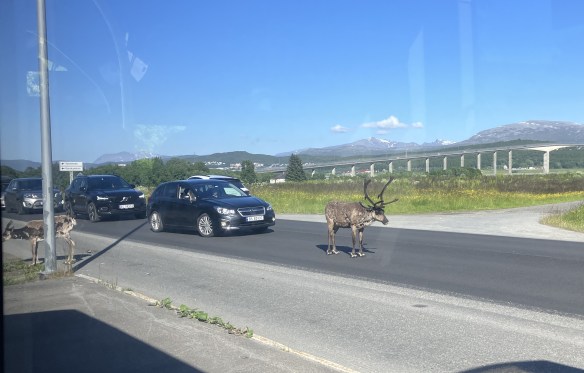
“We are genuine Sámi reindeer herders”, the owner tells us. “And have been for generations. I’m almost retired. My son over there is taking over the business. I help out.”
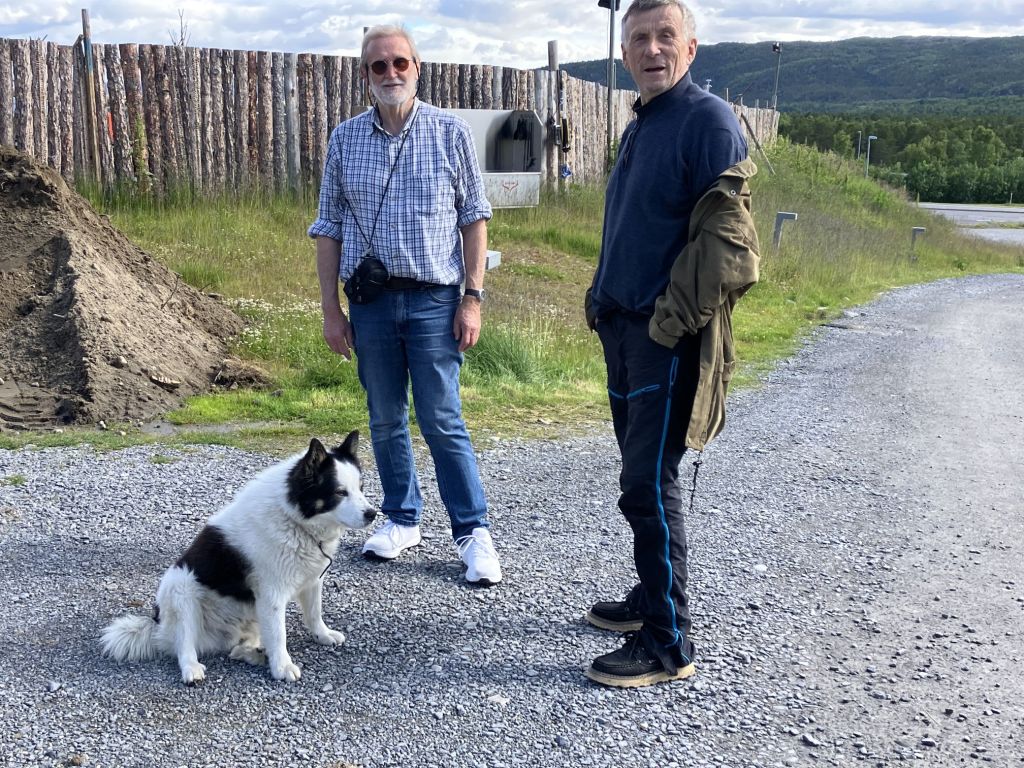
“Where do you keep the reindeer?”, asks the First Mate.
“Well, during the winter, we take them to the Finnmarksvidda, the vast area of wilderness south from here”, he answers. “There they graze on the mosses and lichens that they can find under the snow. Then when the spring arrives, after the calves are born, we move them down to the coast for summer grazing. There it is cooler, the vegetation is lusher, and there are not so many biting insects. Then in the autumn, we move them back to the Finnmarksvidda. It’s communal in that a number of herds belonging to different owners are managed as one big herd. It’s a traditional system called siida.”
“How do you know which animal belongs to whom?”, asks the First Mate. “
“We have a system of earmarks”, he tells us. “The young reindeer are earmarked in the autumn. The government will only give you an earmark pattern if you come from a family with a long tradition of reindeer herding. Only ethnic Sámi have the right to practise reindeer herding, but only about 10% of all Sámi are actually reindeer herders. The rest all have jobs in the big cities. We are glad they are there because they help promote Sámi issues to the wider population.”

We continue driving through the tundra. Mile after mile of stunted birch trees pass by. Every so often we see a lake. It’s hard to imagine all this area being covered in snow in the winter.
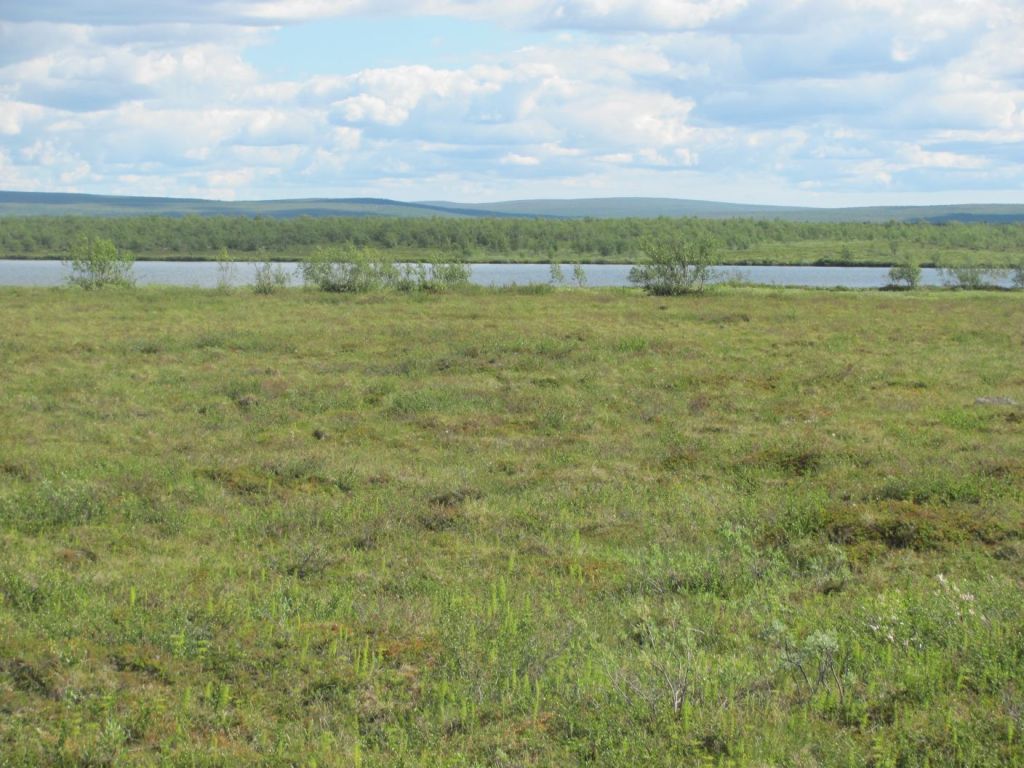
We are heading for a small town near the Finnish border called Karasjok, where the Sámi Parliament is located.
“The last guided tour of the day of the Parliament is at 1530”, says the First Mate, busy consulting her iPhone as we drive. “If we hurry up, we should be able to make it.”
We arrive in Karasjok at 1515, just in time.
“Yes, there is a tour starting in 15 minutes”, the girl behind the reception desk says. “Just wait over there.”
We wait for 15 minutes, watching a group of students earnestly discussing something in the library below.
“Well, it looks as if you are the only two”, says the girl, somewhat wearily. “Follow me.”
“She was probably wanting to get home early”, whispers the First Mate to me.
“The Sámi Parliament was opened in 1989 by King Olav”, the girl tells us. “It was a direct outcome of the Alta conflict, in which local Sámi people opposed the damming of the Alta and Kautokeino rivers by a hydroelectric powerplant. The protestors lost the battle, but the government realised that it needed to listen to the Sámi more, so you could say that it was successful in the end. It’s now written into the Norwegian Constitution that it is the responsibility of ‘the authorities of State to create conditions enabling the Sámi people to preserve and develop its language, culture, and way of life.’ The Sámi Parliament is the sole representative of the Sámi people in achieving this, and have specific responsibility for language, culture and education.”

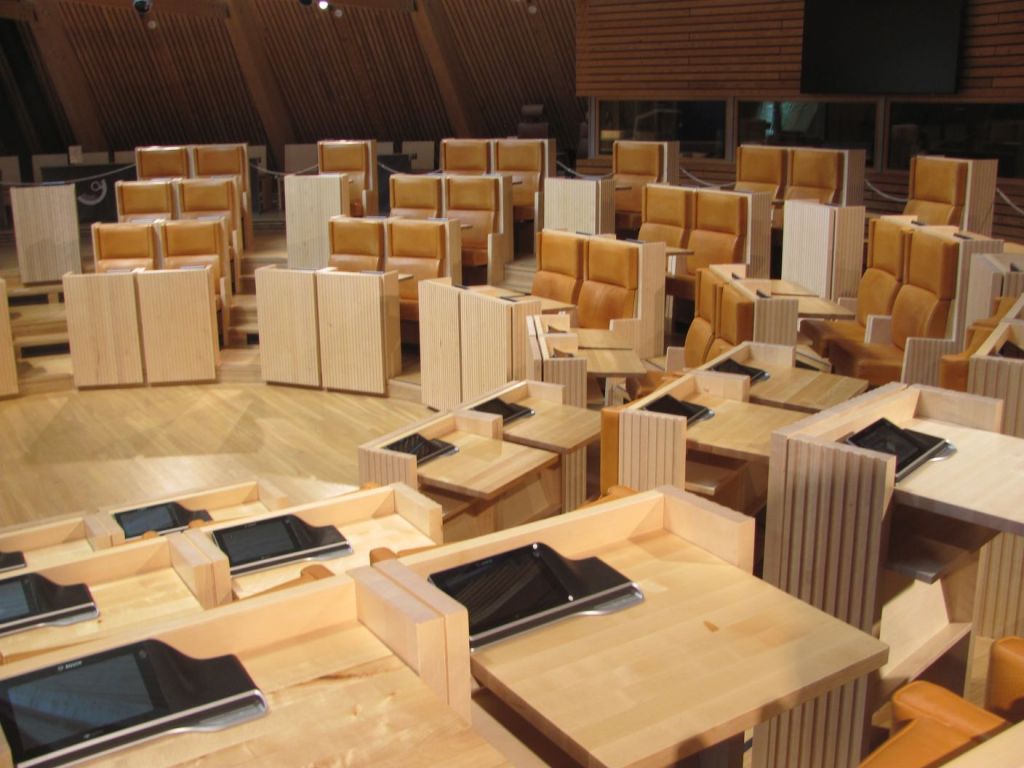
We reach the plenary chamber, a windowless room with seating curved around a central stage. A giant circular artwork is on the wall behind the stage.
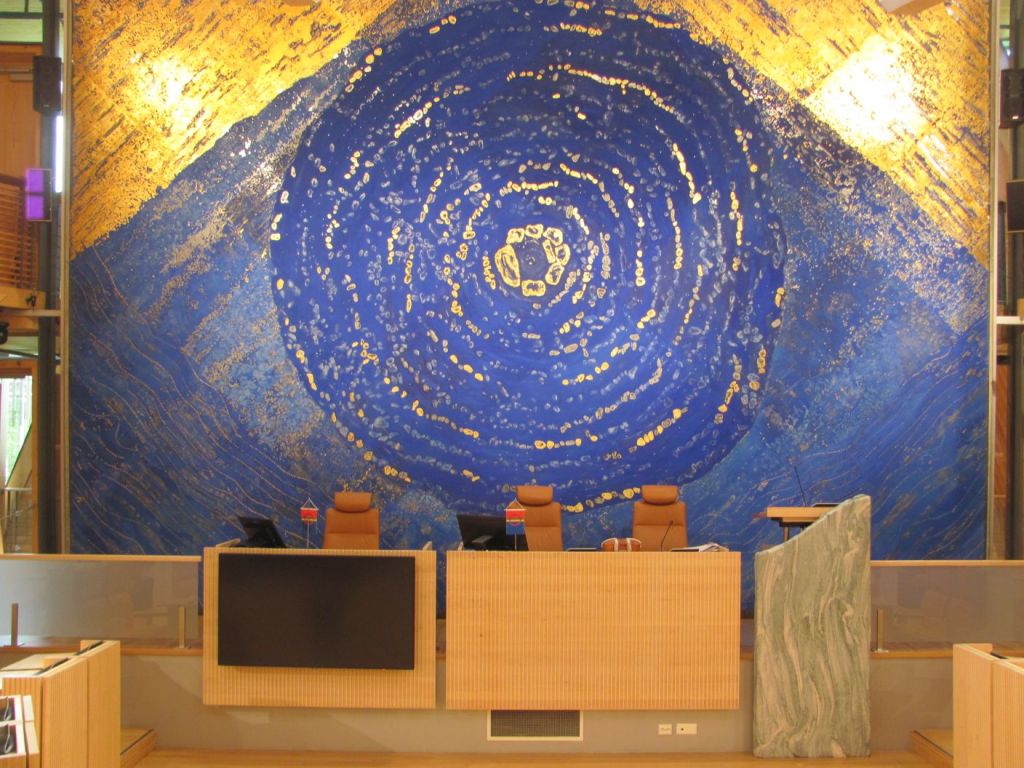
“Four meetings a year are held here”, the girl continues. “Each one lasting a week. There are 39 elected representatives. The highest ranking MP becomes the President of the plenary sessions. He chooses four other MPs to serve on the Executive Council. They are responsible for determining the agenda of the meetings.”
“How are MPs elected?”, asks the First Mate.
“Well, elections are held every four years at the same time as the national elections”, she answers. “You have to be registered as a Sámi to vote. For that, you first need to perceive yourself as a Sámi, but you also have to have at least a great-grandparent who had Sámi as their main language.”
“It’s similar to Māori in New Zealand”, I say. “They need to identify as Māori, and to have some Māori ancestry, although there is no set proportion or specification how far back you can go.”
“Yes, we do have dialogue with Māori people”, she says. “We are both indigenous minorities in our countries ruled by another ethnic majority. Their issues are similar to ours. Now, if you don’t mind, I am going to have to chase you out. We are closing in five minutes.”
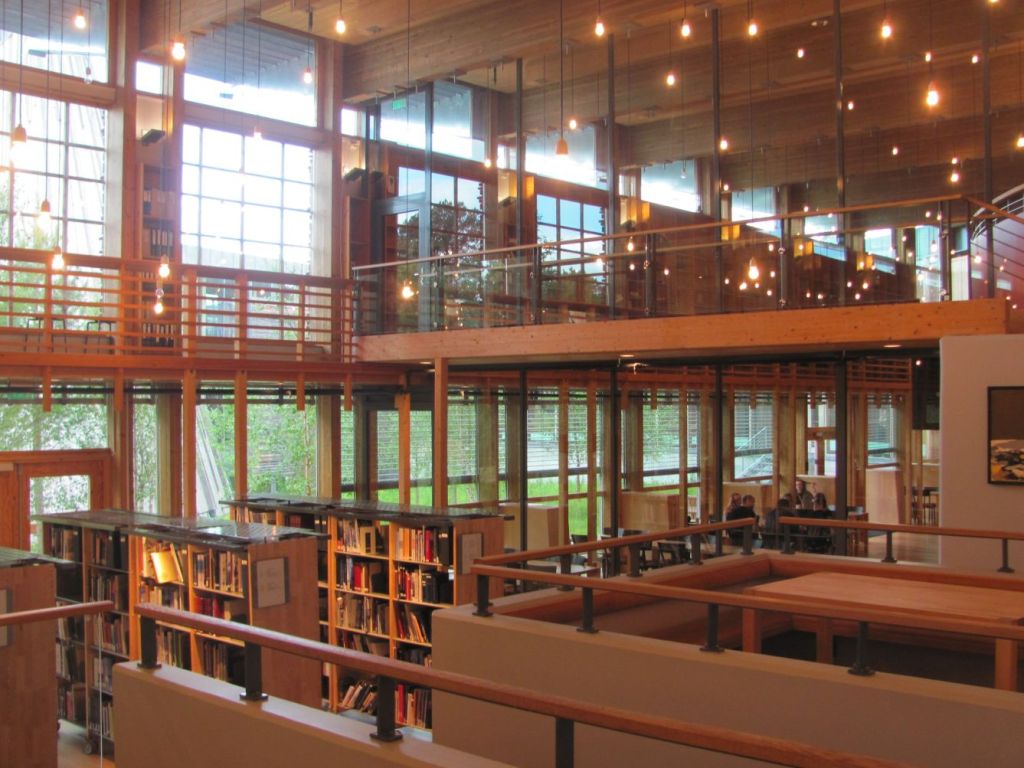
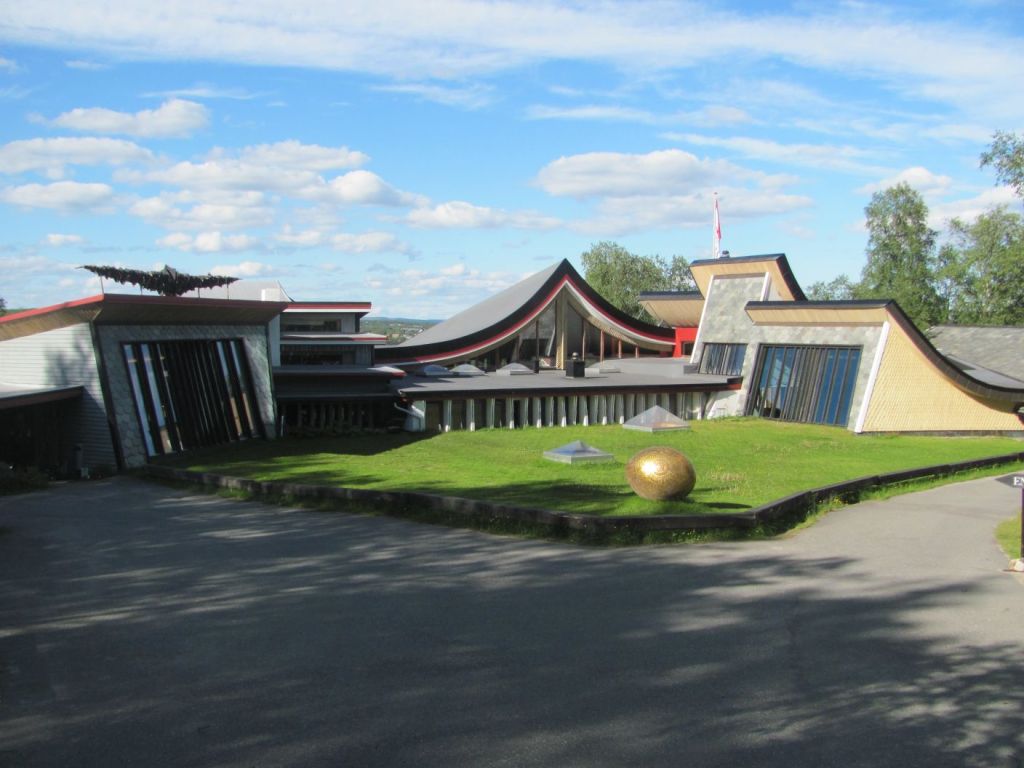
We push on to Kautokeino, another Sámi town on the banks of the Kautokeino river, and arrive in the evening.
“We have to go and see Juhls Silver Gallery while we are here”, says the First Mate. “It’s supposed to be quite special.”
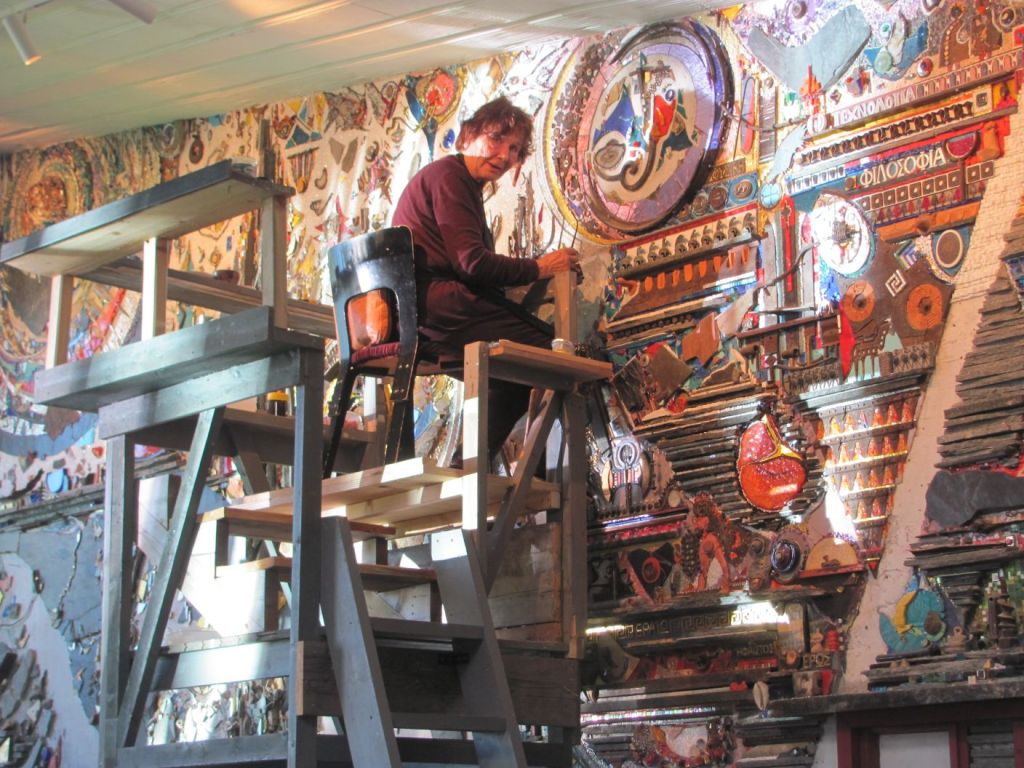
Juhls Silver Gallery was started by Frank and Regine Juhl, from Denmark and East Prussia respectively, who came to Kautokeino in the 1950s and fell in love with the place and each other. They decided to learn silversmithing, and gradually built up a reputation for high quality silverware inspired by Sámi culture and the tundra. They eventually broadened their horizons and today their gallery is an eclectic collection of silverware and art from all over the world. Frank died in 2020, but Regine is still living and active.
As we enter, she is perched on top of a ladder working on a brightly coloured mural.
“Ihre Arbeit ist ganz toll“, says the First Mate.
“Vielen Dank“, she replies.
One of the staff gives us a guided tour.
“The gallery was designed and built by Frank”, she tells us. “All without any formal architectural education. Instead, he was guided by a strong intuitive understanding of space, proportion, and relationships. The interiors, the sequence of rooms, and the light create a distinct atmosphere, where art, craftsmanship, and architecture work together.”
Arty-speak, but it is indeed an amazing place. After the tour, we spend some time wandering from room to room, marvelling at the exuberance of style and colour, and the ubiquitous intricate items of silverware.

It’s quite a legacy they have created, I think to myself. And it will carry on, as their two daughters are continuing the business, one in Kautokeino, and the other in Bergen.
“Let’s find somewhere to have lunch”, says the First Mate. “The mosquitos here are eating me alive.”