A Russian invasion, an island home, and halibut rituals

“There’s an empty berth in the middle of the pontoon”, calls the First Mate from the bow. “It’s one of those Y-berths that I hate, but at least it is on the sheltered side of the pontoon away from the wind. We can try it.”

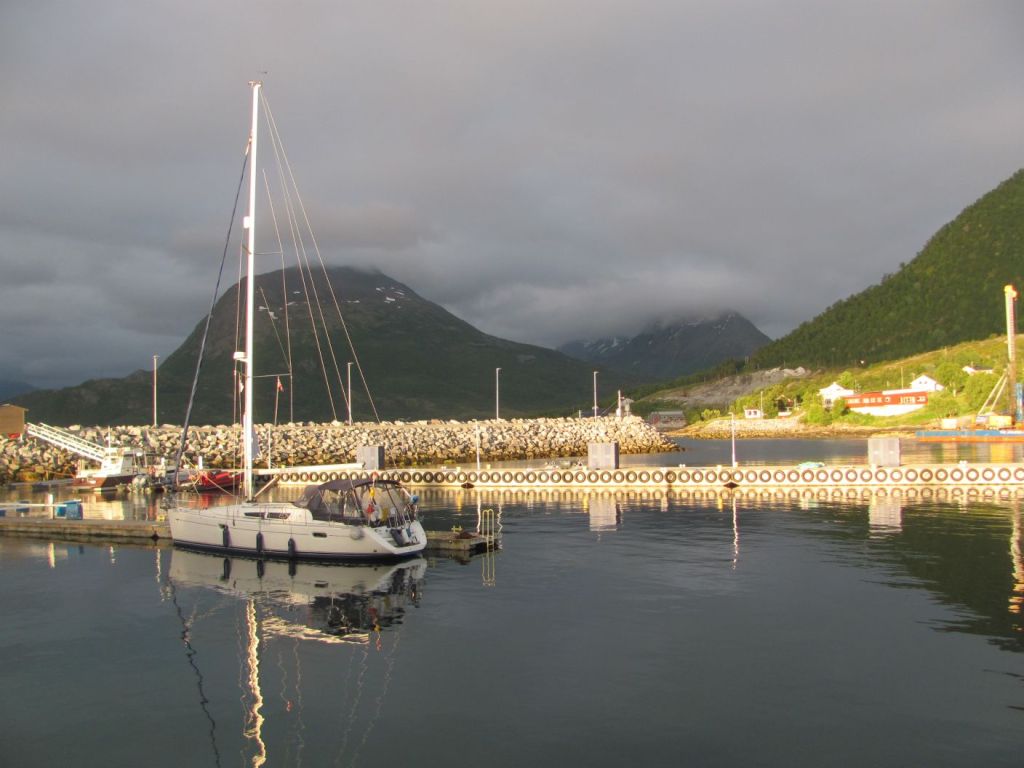
We have just arrived in the small harbour of Kvaløyavågen on the north coast of the island of Kvaløya. There are strong winds forecast from the north overnight and we need to be tucked away safely. One other yacht is there. Its occupants come out to help us tie up.
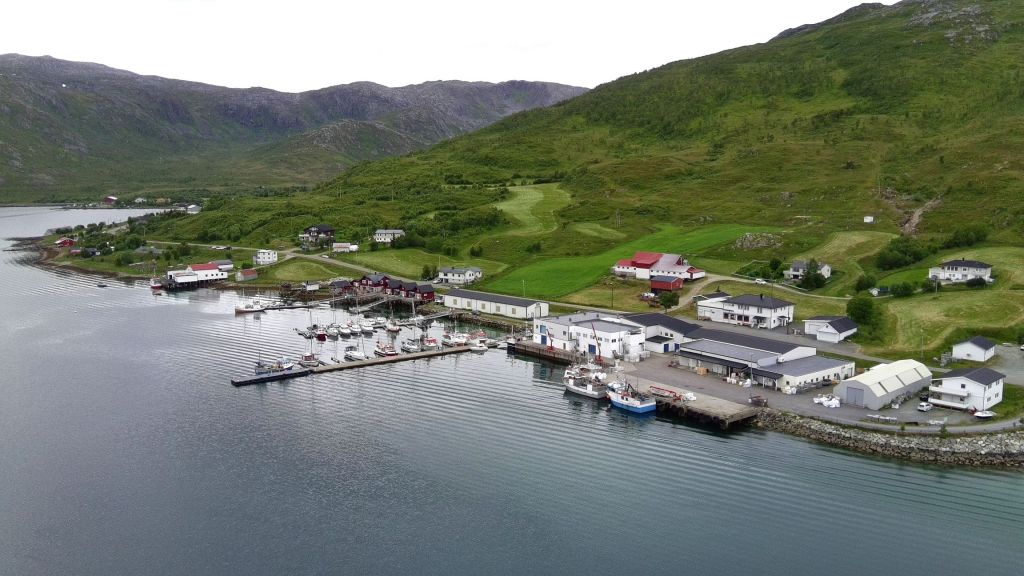
Kvaløyavågen.

“We’re from Finland”, says the man, once we are secure. “My name is Rami and this is Enni. I am a photojournalist and Enni is a snowboarder. Our project is to explore northern Norway by boat for three years. We’ve been going for a year already. I am making a documentary film of our adventures. It’s great to be able to combine our passions with sailing.”

“I was brought up on a farm in northern Finland”, Enni says. “And started snowboarding when I was ten. I got into competitive snowboarding, and did quite well.”

“She has two Olympic medals, a World Champion title, and various other medals”, says Rami, butting in. “She’s too modest to tell you all that, so I have to.”

We are impressed.
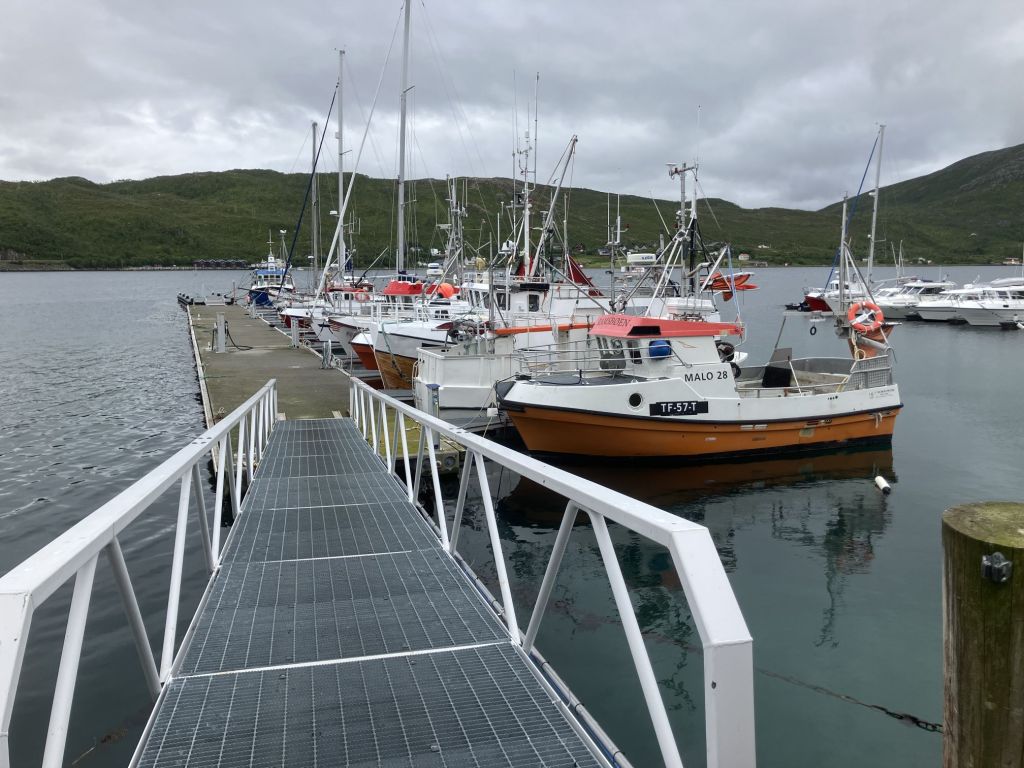
Kvaløyavågen marina.

In the evening, we explore the village. It is dominated by the fish processing plant, with several fishing boats tied up at the wharf. Apart from a small supermarket, there isn’t much else.

“They don’t seem to like tourists too much”, says the First Mate. “Look at that sign.”
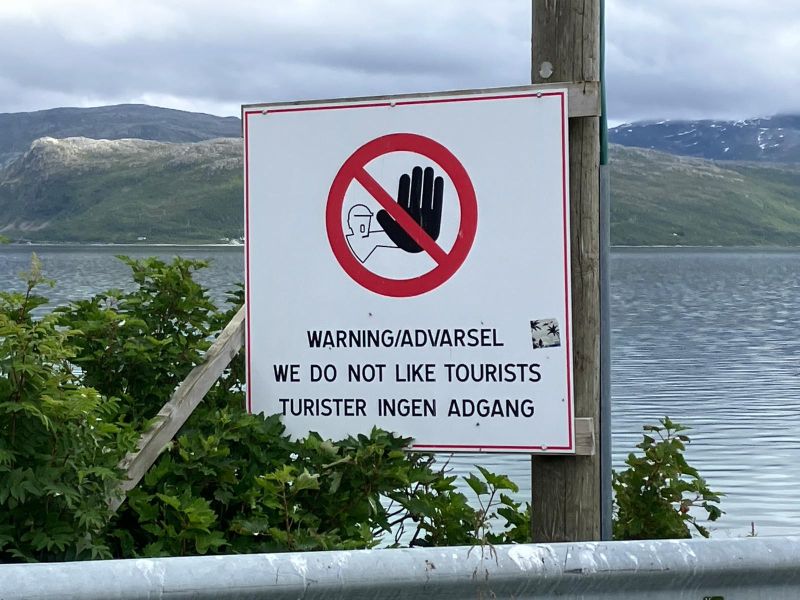
Unwanted?

“It’s the fish processing plant”, explains the woman in the supermarket. “They get people with big motorhomes driving onto their wharves looking for a place to park for the night. They are constantly asking them to leave and find somewhere else. I can understand their point of view.”

“You’d think they might find a slightly better wording, though”, says the First Mate later. “It’s a bit aggressive.”

The next day, we sail around the top of Kvaløya island and enter Vengsøyfjorden. The scenery is stunning.
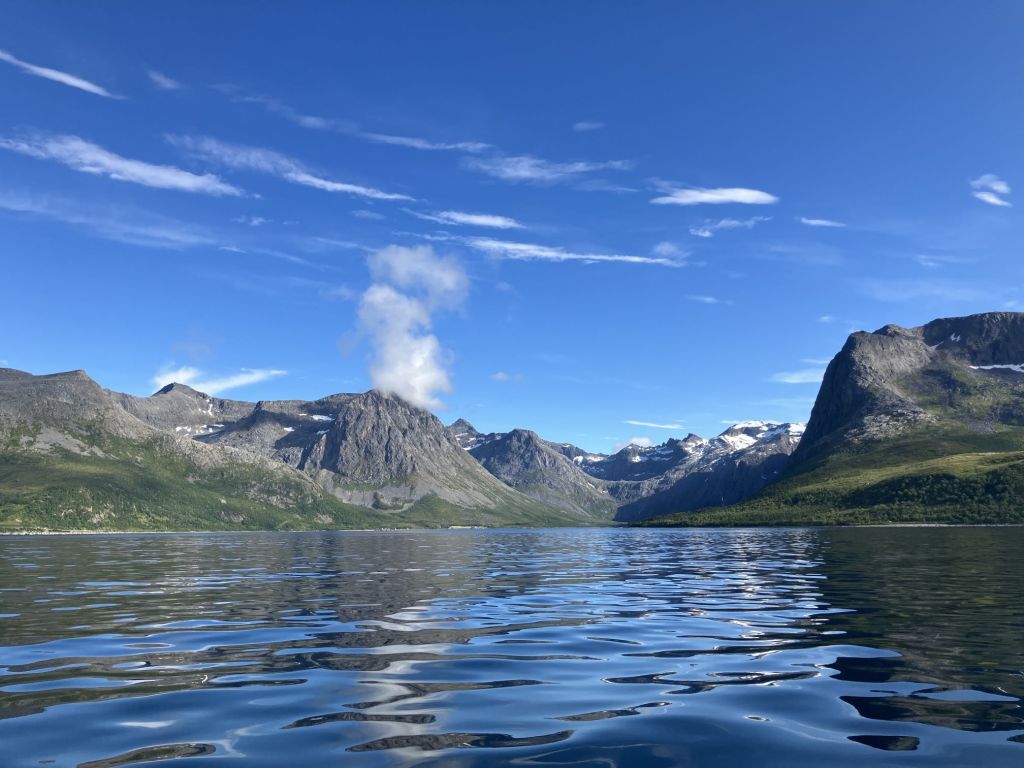
Approaching Tromvik from Vengsøyfjorden.

We arrive in Tromvik harbour, and tie up to the inner side of the breakwater pontoon. A pea-green sailboat is moored to the pontoon next to us. It has a Dutch flag.

“Yes, we are Dutch”, the young couple in it tell us. “The boat is our home. We have been living in it for five years here in Norway, just moving around. We are really into climbing, and our goal has been to climb every major peak in this area. It’s been great fun, but we have to get back to Holland by the end of this season, as we now have jobs there.”

“Mountain climbing is not the easiest of sports to practise in the Netherlands”, I say to the First Mate later. “I can understand them wanting to come to Norway.”

“But do you remember that Dutchman we met years ago?”, she says. “His name was Marco van den Berg –  ‘Marco from the Mountain’. He used to tell us that his ancestors had lived near a small hill in the landscape, but that if you stood on top of your car, you could see over it to the other side!”

“The old ones are the best ones”, I think.
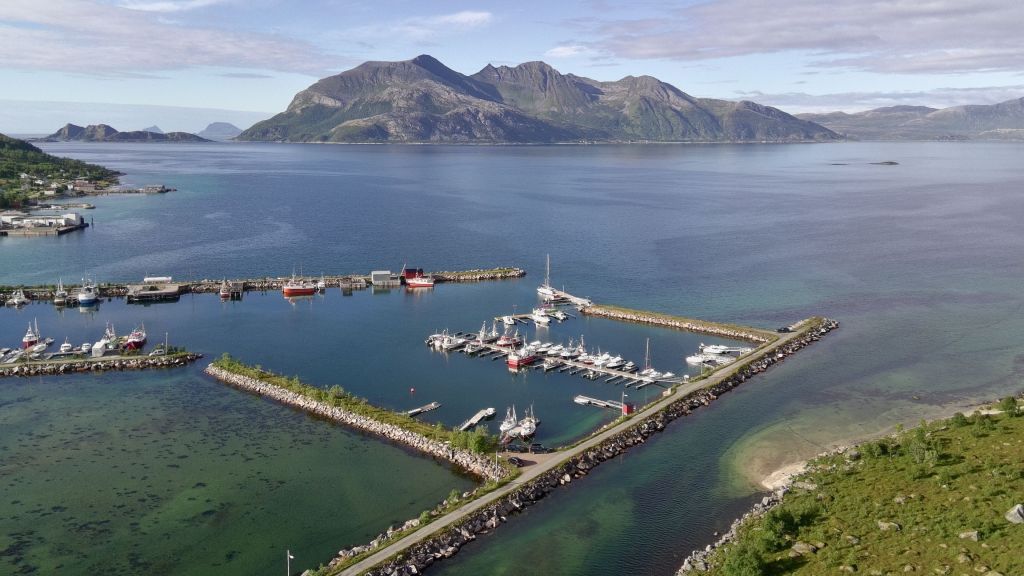
Tromvik harbour.

After dinner, we try our hand at fishing from the pontoon. Soon we are joined by three others. I manage to land a mackerel, but otherwise nothing.

“We normally fish for the Russian salmon”, one of them tells us. “We call them pukkellaks in Norwegian. Very tasty eating. But they have a two-year life cycle, and only come to spawn every other year. In Norway, they come in the odd years. They aren’t here this year.”

Russian salmon (from Wikipedia).

“Why are they called Russian salmon?”, I ask.

“Well, they actually originate from the north Pacific”, the second one says. “But the Russians decided back in the 1950s to release some around the Kola Peninsula with the idea of establishing a fishing industry there. But they did very well there, and have now started to spread westwards around the coasts of northern Norway”

“But a lot of people are not very happy about it”, says the third. “They are seen as a an ecological threat, as they compete with the local Atlantic salmon. They say that climate change has warmed the waters which is more favourable for them compared to the Atlantic salmon. The problem is that after they swim up the rivers and spawn, they die shortly afterwards, and there are so many that it degrades the water quality with all their rotting carcases. That affects the eggs of the Atlantic salmon.”

“Not only the Atlantic salmon”, says the first one. “But also other species such as the freshwater mussel, which are a sign of a healthy river.”

“But can anything be done about them?”, asks the First Mate.

“Well, the government has ‘declared war’ on them”, says the second one. “The idea is to try and stop them reaching their spawning grounds, so they have installed traps at the mouth of the streams and rivers. They have people there who go through all the salmon in the traps and sort out the Atlantic ones from the Russian ones. They let the Atlantic continue up the river, but kill the Russian ones and sell them for eating. But it is very labour-intensive and I can’t really see it working in the long term. I think that we will just have to get used to them.”

“Some people think that they are convenient scapegoats for the salmon farming industry”, says the third. “The escape of farmed salmon and the toxins from the fish farms may be a greater threat to the Atlantic salmon anyway, but it is good to have something else to blame.”

The next morning we head for Husøy. The small marina is full of fishing boats, but luckily there are two berths for guests, so we take one and tie up.
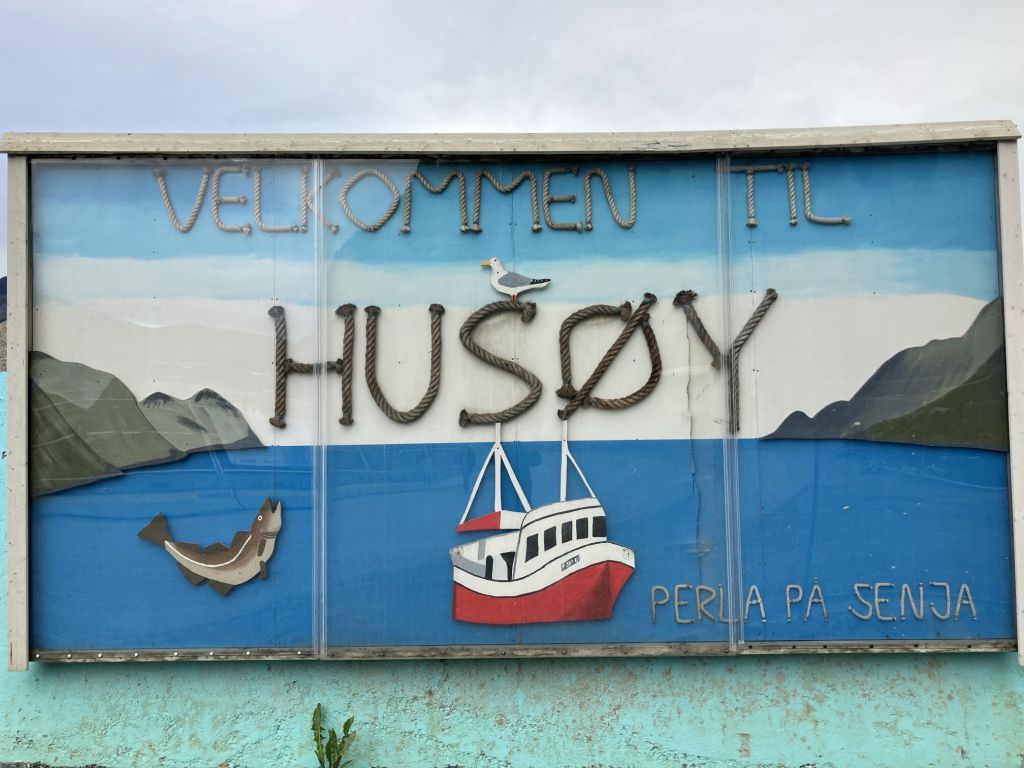
Welcome in Husøy at least!

In one of the other berths, a man is painting his boat. Nearby a youngster is trying his hand at fishing with a rod and line.

“Do you know if there is a harbourmaster here?”, asks the First Mate.

“Yes, me”, he says. “You can pay by GoMarina, and there’s power on the pontoon. If you want water, let me know. The water supply leaks if it is left on, so I normally keep it off, and only turn it on when someone wants to fill their tanks. Excuse all the mess – the harbour is undergoing a major reconstruction and deepening, so things are not working as they should be.”

“Well, as long as it is sheltered in here, we don’t mind”, I say. “There are strong south-west winds forecast for the next few days, so we need somewhere to snuggle safely.”

“No worries there”, he says. “It’s very sheltered in here. The causeway stops anything from the north, and the mountains around shelter anything for the other directions. You’ll be safe here.”

“I caught a cod yesterday”, says the youngster in perfect English.

“He’s my grandson”, says the harbourmaster. “He’s only seven. They start English young these days. And of course, they watch a lot of English and American movies on TV and the internet.”

After a cup of tea, we decide to explore. Husøy is actually an island, joined by a man-made causeway to Senja, itself an island. Historically, it was a fishing village, and fish were the backbone of the community. Many families earned their living directly from the sea, and the harbour was full of working fishing boats. Nowadays, although fishing is still important, many people who live here travel to jobs elsewhere.
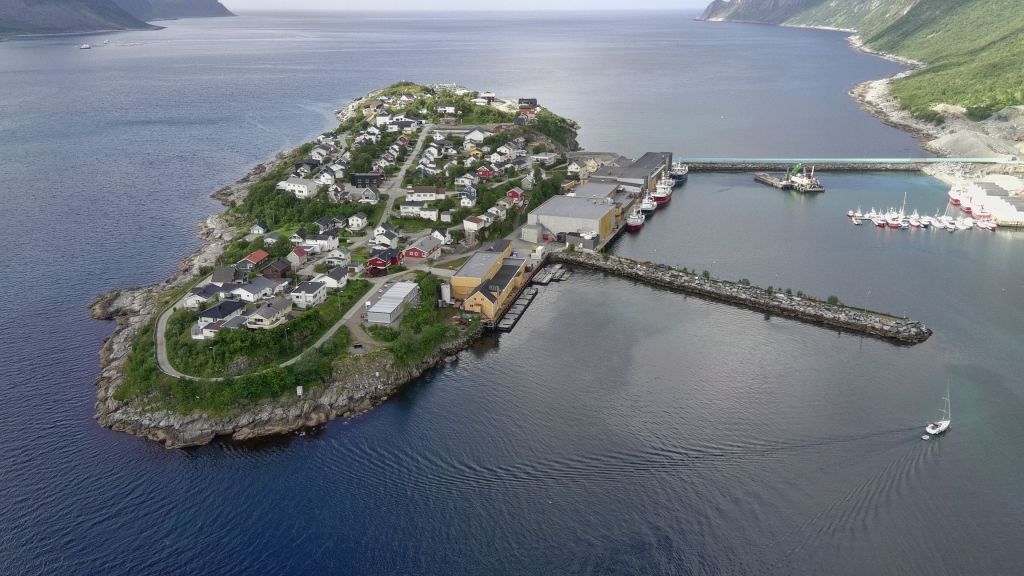
Husøy.

There’s clearly money there. Modern houses nestle side-by-side with older houses, but most seem to have a Mercedes or Tesla on the driveway. We find ourselves at the small lighthouse at the northern end of the island. “Please don’t use our island as your toilet”, says a sign. “Use the facilities on the mainland.”
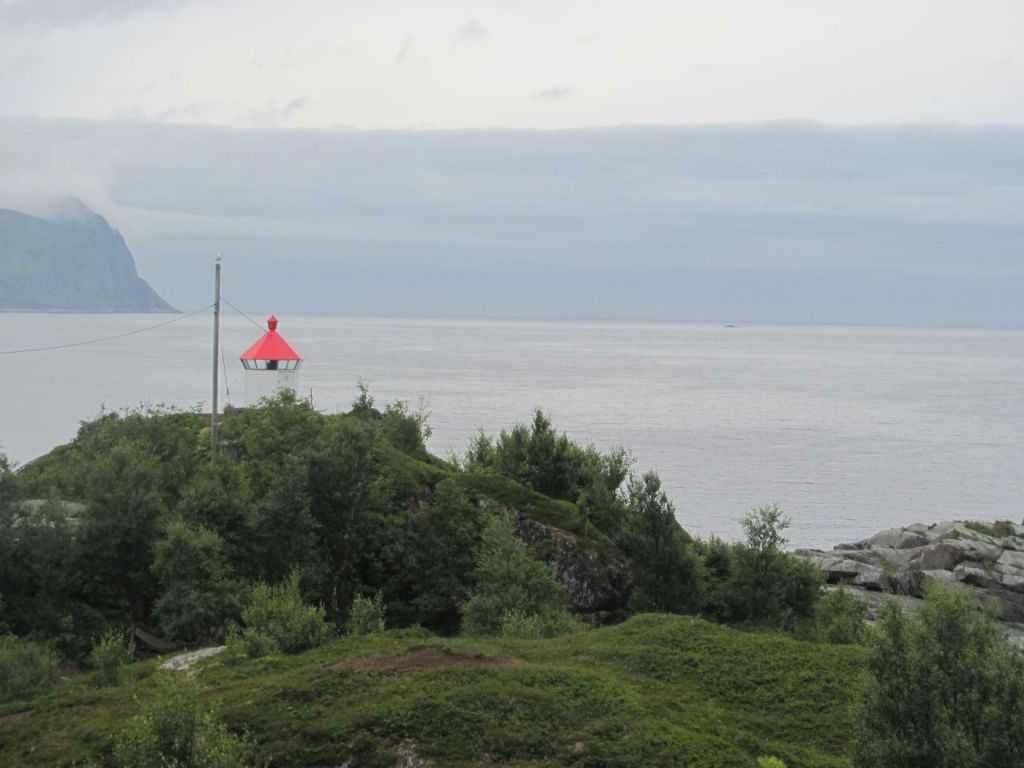
The lighthouse at the northern tip.

“That reminds me”, says the First Mate. “Let’s go and have a coffee in that hotel we passed. We can use the toilets there.”

We sip our coffees in the lounge looking out over the fjord. Dark clouds are rolling in, beginning to obscure the peaks. The sea turns a turquoise colour. At the mouth of the fjord, squalls of rain beat down.

“It reminds me of Middle Earth”, I say. “I could just imagine a group of mountain trolls emerging from the forests.”
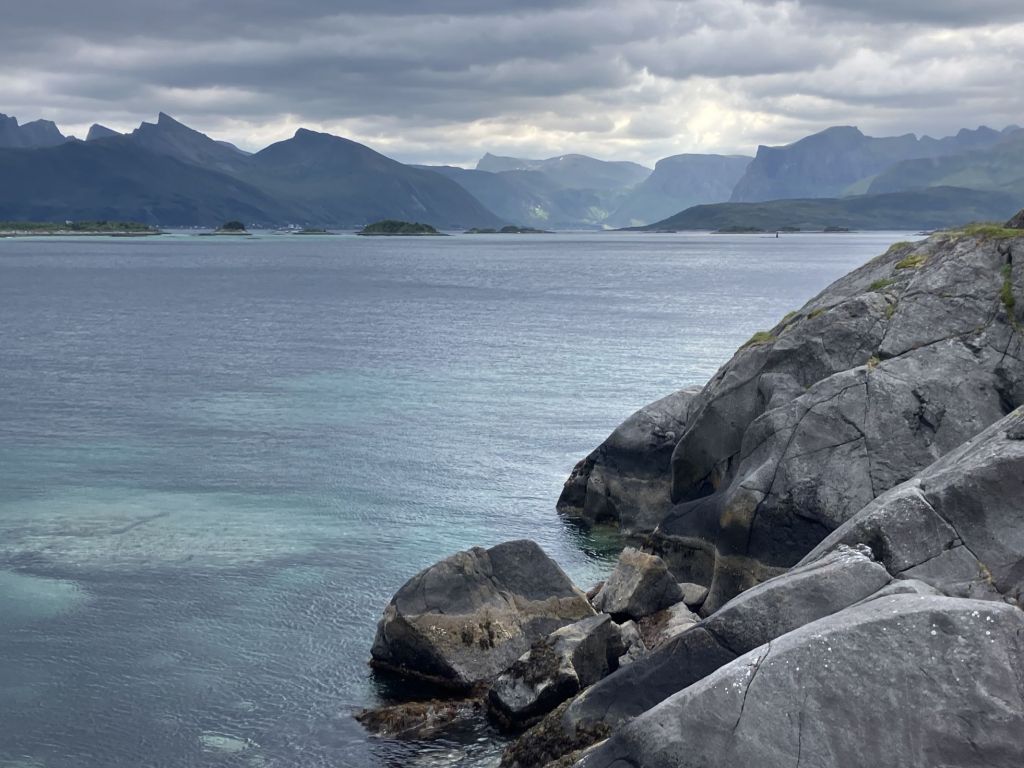
Middle Earth?

We spend the next two days hunkered down as the forces of nature lash the harbour and island. But at least we are sheltered from the worst of the wind, and are quite warm and cosy in our little cabin. We use the time to catch up on paperwork.

“I found out that there is a café just down the road”, says the First Mate on the second day. “They also have arts and crafts for sale there. Let’s go and see what it’s like.”

The café is empty except for one blond-haired girl in her late teens dancing to music. At first she doesn’t see us, but when she does, she stops.

“You dance very well”, I say. “Don’t stop.”

She beams. “I love dancing. It is just that nobody was here, so I took the opportunity. My Mum owns the café. I am just looking after it for her. She’ll be back soon. If you want coffee, you just help yourself over there. And cakes are here. We can settle up later.”

We help ourselves and sit down.

“I’m still at school”, she says, in response to our question. “In Tromsø. I have an apartment there. But I come back to Husøy for the summer and help out. I love it here – I was born here and have lived all my life here. I know everyone, and everyone knows me. It’s quite a contrast to Tromsø – here I know and talk to the parents of all my friends, but was just thinking the other day that I don’t know the parents of any of my friends there. That’s funny.”

For someone still at school, she has a self-confidence unusual for her age.

“Don’t you want to travel and see a bit of the world?”, the First Mate asks.

“Part of me would”, she answers. “I really envy what you guys are doing. But I think I will always come back to the island to settle and have a family. It’s a great place to bring up children here. There only problem is that the choice of partners is a bit limited. And I am not sure how easy it would be to get someone else to come here to live. Ah, here comes my Mum. I’ll need to go now. It was really nice talking to you.”

“She really doesn’t know what she wants to do, that one”, her mother tells us later. “She’s doing drama and dance at school, but I am not sure whether she will get a job using that. We’ll just have to wait and see. Her brother, on the other hand, is a fisherman born and bred. He’s only 22, and already he owns his own trawler. He’s based here, but at the moment he is way up around Hammerfest somewhere with it.”

“We noticed that all the boats in the harbour here are just sitting there at the moment, and not out fishing”, I say.

“Yes, most of the fishing happens here in the winter”, she says. “For cod. The fish factories take their summer holidays now, so there is nowhere to take fish even if it was caught. So the fishermen take their holidays too.”

The winds abate the following day, and we venture to poke our nose out. It’s misty, wet, and choppy, but manageable. We sail around to the next small village, Hamn-i-Senja.
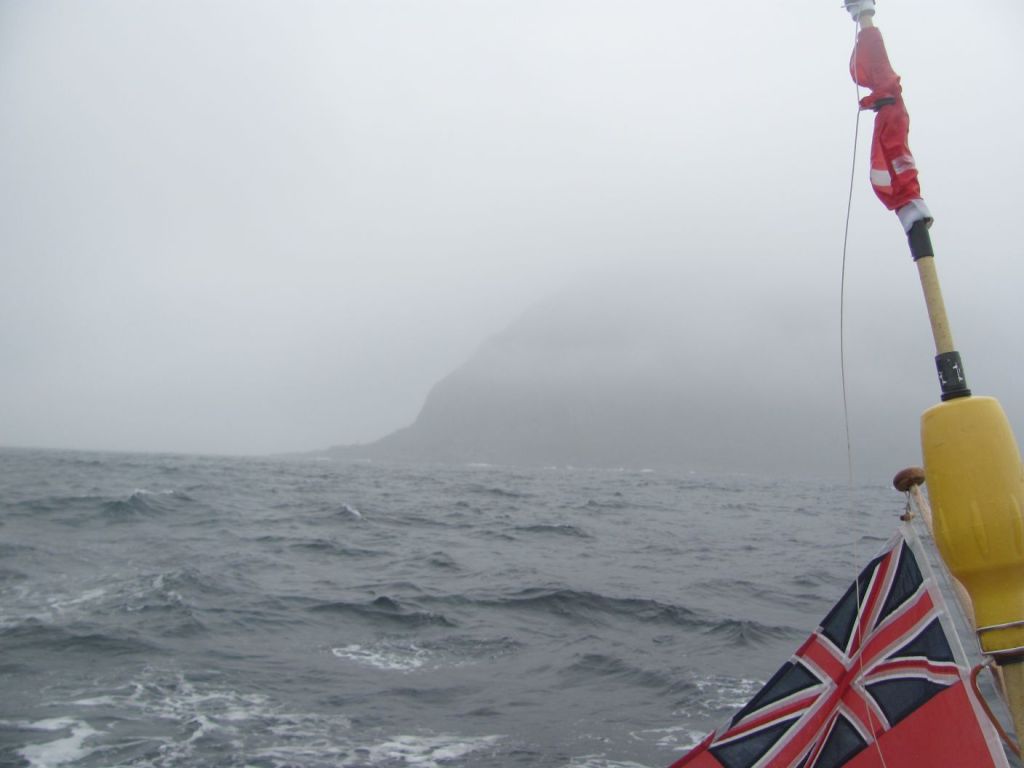
Making it to Hamn-i-Senja.

There is a hotel there with a pontoon. More strong south-west winds are forecast for the next day, so we decide to stay here.

“We seem to have hit a period of strong winds from the south-west”, I complain. “And that’s just the direction we want to go. We’ll have to take our chances when they come.”

“Never mind”, says the First Mate. “Bob and Fiona are making their way up towards here in Hekla. We can meet them, and they can give us our mail.”

Receiving mail from the UK is tricky as we are never sure where we are going to be. And somehow the postal service between the UK and Norway is subject to delays. Important letters took three weeks to reach us last year. This year, Bob & Fiona had to return home for a couple of weeks for family matters, so we had our mail sent to them, and they are bringing it out to us here.
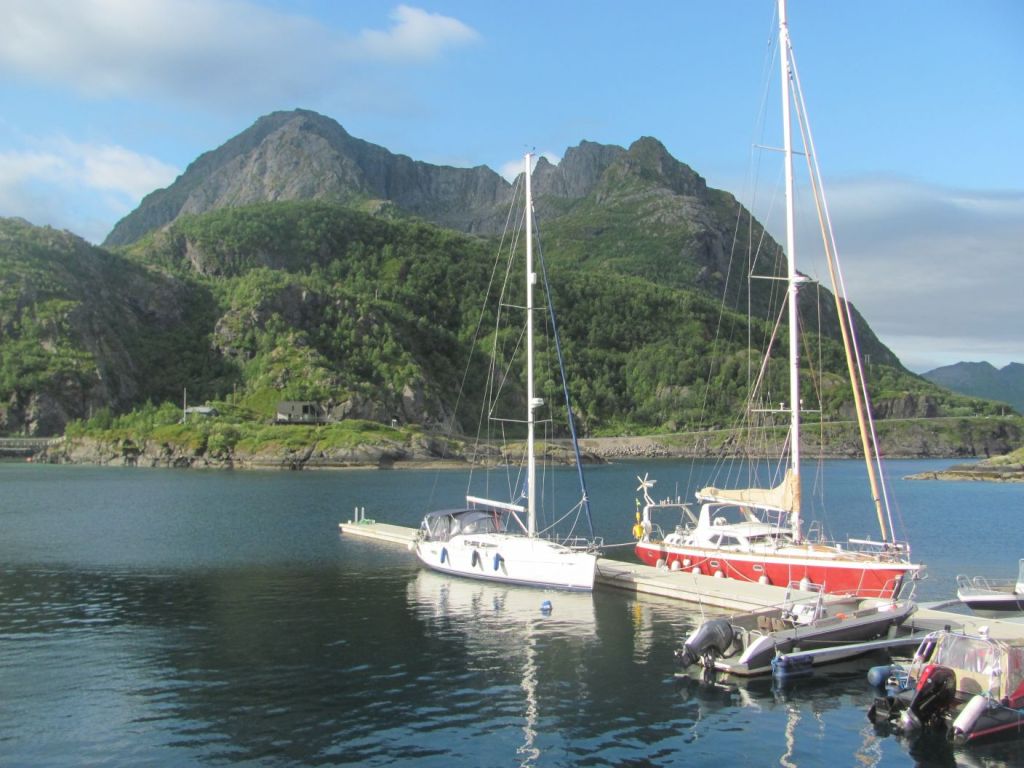
Tied up in Hamn-i-Senja.

They arrive the next day. It’s good to see them again. We haven’t seen them since we were in Trollfjorden together watching the Hurtigruten turn around. We give them lunch and catch up with our respective adventures since then.

“We’re heading north from here”, says Bob. “We need to be in Tromsø by the end of the month.”

“Well, at least you have favourable winds at the moment”, I say. “We have had two weeks of winds against us. And they don’t look like stopping soon.”

We part company again the next morning. After overnighting in the ferry port of Gryllefjord, we eventually reach the small harbour of Skrolsvik.
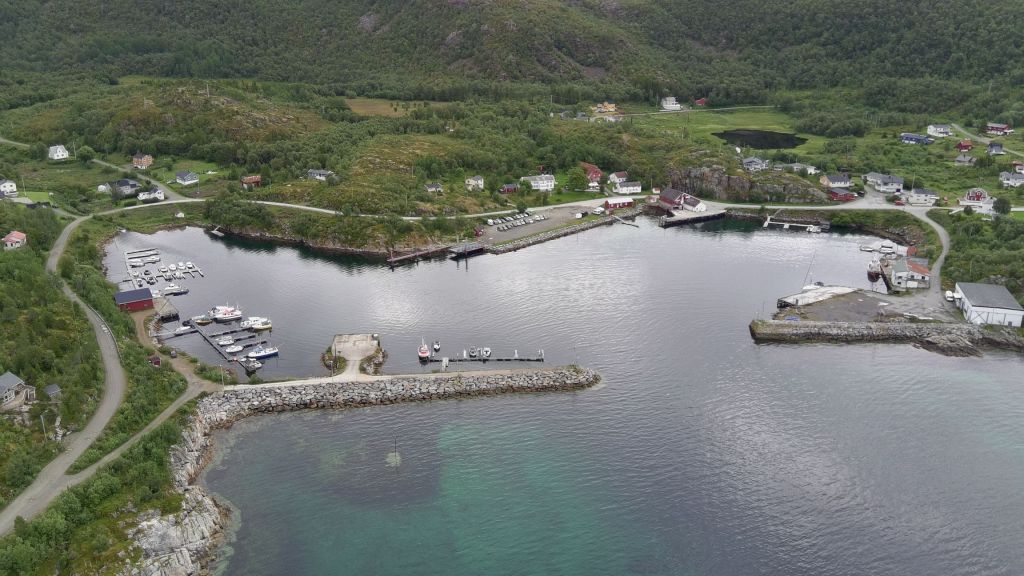
Skrolsvik.

“We must go and see the Halibut museum”, I say as we tie up. “It closes at 1600, so there’s just time if we get up there now.”

The museum is an old fish processing factory that has been converted.

“Welcome”, says the girl behind the reception desk. “Since you are the only ones here, I can give you a personal tour of the museum if you like.”

“That sounds like a good idea”, says the First Mate. “Let’s do that.”

“Catching halibut has always been an important part of the local economy”, the girl tells us as she leads us into the first room. “So much so, it is known as ‘God’s fish’. It is traditional to eat it at Christmas time, and a fisherman would be looked down on if he couldn’t catch a halibut for that special time. They can grow to an incredible size – the largest catch recorded weighed 400 kg. This is a painting of it.”

She points to a painting on the floor of a rather bemused looking halibut. It’s a monster.
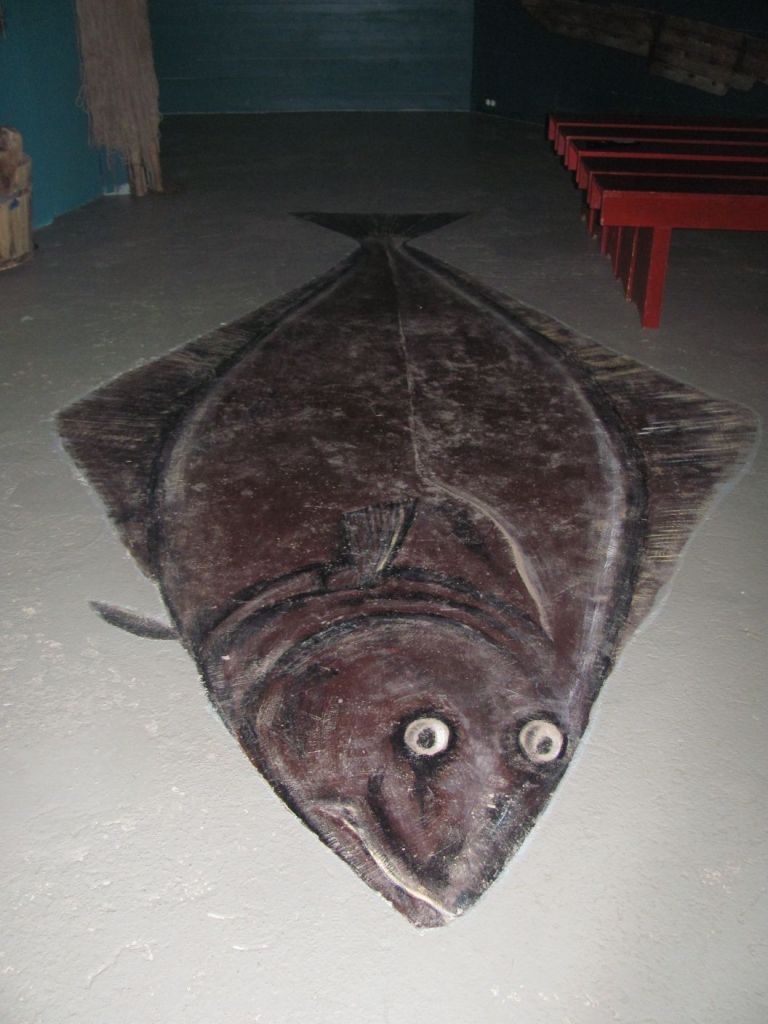
Largest halibut caught.

“You are supposed to throw any halibut over two metres in length back in again”, she continues. “Even if it is dead. Apparently they accumulate so many toxins in their tissues from all the pollution in the sea that they are a health hazard.”

Trying to manhandle a 400 kg halibut into a boat would also be a health hazard, I think to myself.

“Traditionally, long lines studded with hooks were used”, she continues. “Then, in 1936, nets were introduced. These were so efficient that most of the halibut stock was exhausted. Nets were then banned, and stocks have now recovered.”
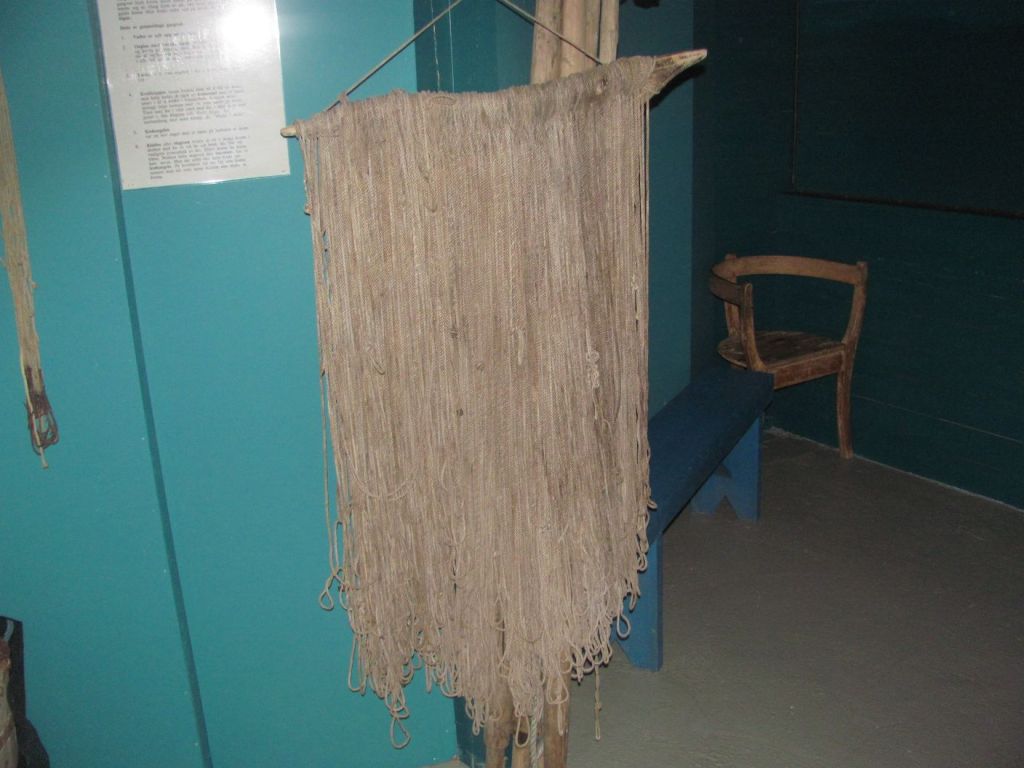
Traditional long lines.

“There are a lot of rituals associated with successful fishing of halibut. For example, fishermen weren’t allowed to say the word ‘halibut’ while at sea, as the belief was that the halibut would hear them and vanish. So they used codewords instead. Also, woman weren’t allowed anywhere near the fish for fear of bad luck. They weren’t allowed to go in the boats, they weren’t allowed to help with the unloading, and they weren’t to do any of the processing. All man’s work. But one of the things that was supposed to bring good luck was for the fishermen to have marital relations with their wives the night before they went out. Then they would be successful and return safely.”

“We’ve got enough fish for now”, the First Mate says later as we have coffee and waffles in the little Gamle Butikken shop behind the museum. “So don’t get any ideas.”

“We haven’t caught any halibut yet”, I say.
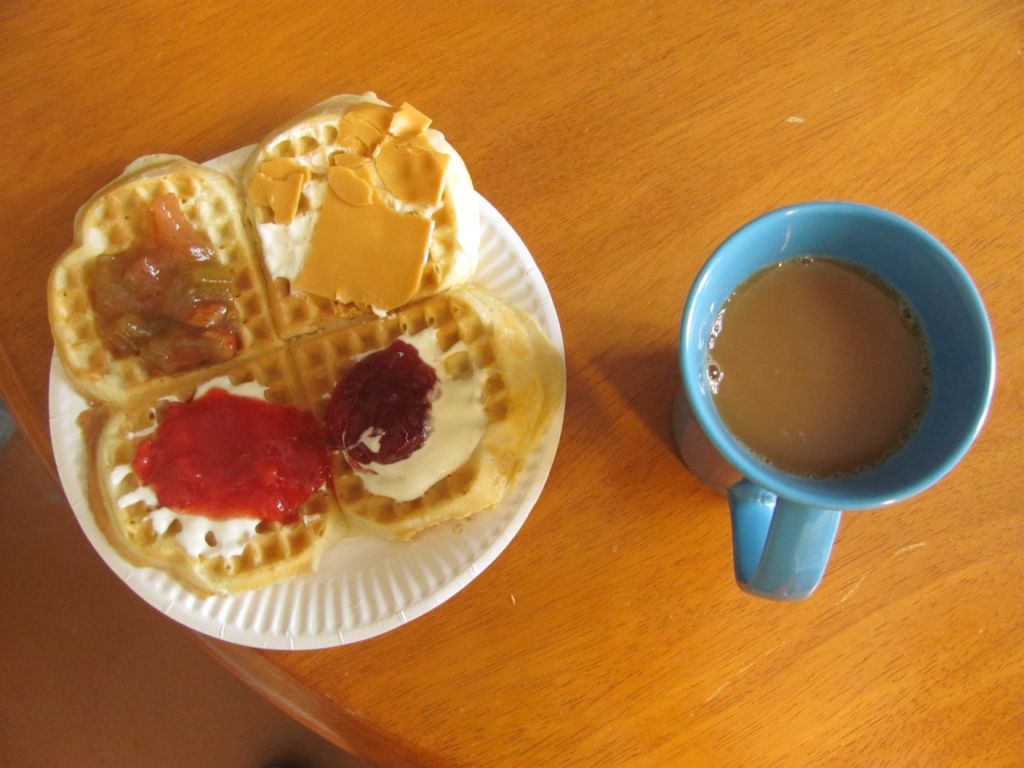
Coffee & waffles.

Stone Age minds, a new Parliament, and a love story in silver

“The next ferry goes at 1145”, says the First Mate. “We should be able to make it. But there won’t be much time to spare. We need to make sure we get it so that we are in time for the second ferry at Lyngsidet.”

We have left Ruby Tuesday near Tromsø, and have hired a car for a week to explore Sápmi, the home of the Sámi people. At the moment, we are passing through the Lyngen Alps towards Breivikeidet, where we need to catch a ferry across Ullsfjorden to Svensby. The scenery is stunning.

Approaching the Lyngen Alps.

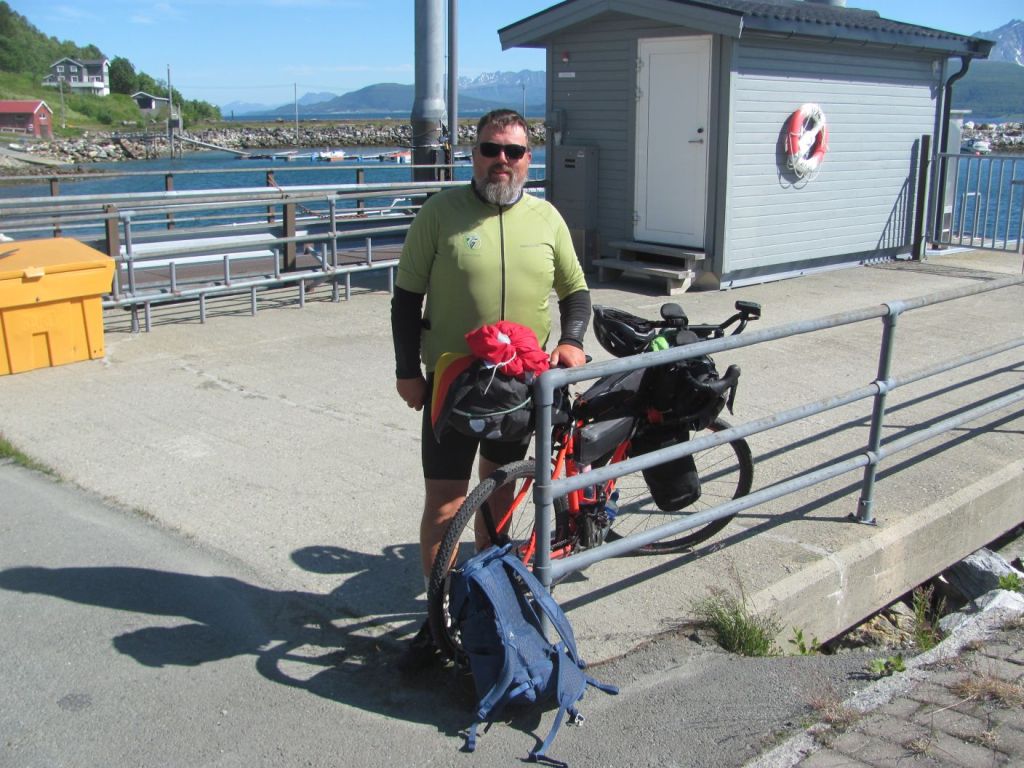
We make it to the ferry with a few minutes to spare. A German cyclist is also waiting.

“I am heading for Nordkapp”, he tells us. “I’ve cycled all the way from Bremen, where I live. It’s taken two months so far, but I have the whole summer to do it.”

“You don’t have much luggage”, I say.

“Yes, I am travelling light”, he says. “I have a small tent here, this is my sleeping bag here. I have a flask of water and some food in this compartment, and a spare change of clothes in this one. And my electronic equipment and bike spares in this bag. I don’t need anything more.”

Travelling light.

We are impressed. It’s a masterclass in minimalisation.

The ferry arrives and we board.

“It just shows you how little you need”, says the First Mate later. “But I am not sure I could do it. I like my creature comforts.”

Me too, I think to myself.

The Lyngen Alps from the ferry.

The reindeer mill around in a spiral within the confines of the trapping fence across the narrow ravine, the breath from their nostrils forming small clouds of vapour. The hunters advance, their spears and bows and arrows at the ready. On the hill above, the shaman raises his hands above his head and begins the chant, his monotone echoing around the ravine.

The boy clutches his father’s hands more tightly. “What are they doing, father?”, he asks.

He is being initiated into the rituals of the reindeer hunt, and had helped the adults construct the trapping fence the day before, carrying the newly hewn stakes from the forest to the ravine.

“They are waiting for one of the deer to give itself up to us”, says his father. ”Its spirit has heard the prayers of the shaman, and it is preparing to sacrifice itself for our good. It is the way that has always been and always will be.”

Sure enough, one of the reindeer detaches itself from the rest of the herd and runs wildly to the other side of the ravine. Immediately the hunters loose their arrows after it. Two of them hit the animal and bring it to the ground. The hunters advance on it, their spears at the ready. The animal struggles weakly as they stab it again and again until it is still.

“See, we’ll have food now”, says his father. “The deer has given itself to us.”

“Come on”, says a familiar female voice. “You’ve been looking at that carving for ages. If we don’t get a move on, we’ll never get home tonight.”

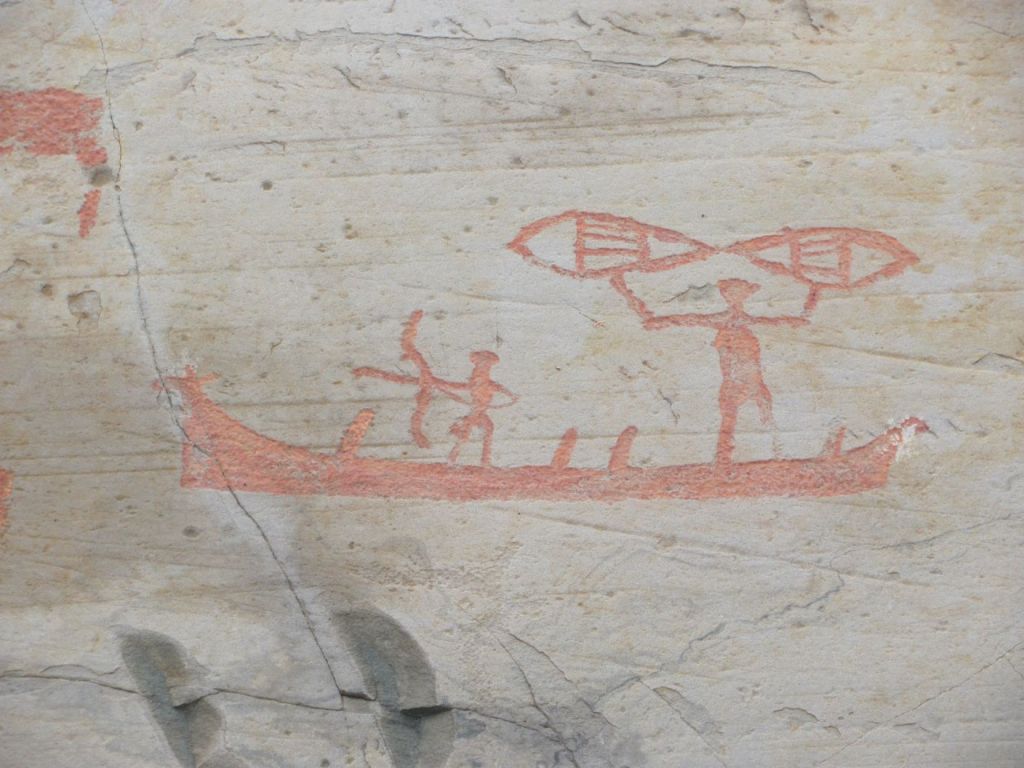
I am brought back to the present with a jolt. It’s the First Mate, of course. We are at the Rock Art museum in Alta, where thousands of rock carvings depicting life in Stone Age times were found in the 1960s and 1970s. Created over an extended period from 5000 BC to around 0 BC, the carvings are a unique record of the hunting of reindeer, elk, and bears, even down to the methods used. Others show the catching of whales and halibut. I had been imagining what a hunting expedition for reindeer might have been like.

A trapping fence being used to hunt reindeer.

“The guide book says that the carvings were done at sea level”, I say. “But as the land rose from rebound after the Ice Ages, new land presented new surfaces to be carved, so that older carvings are further up the slope and the youngest ones towards the bottom. Consequently, you can see how rituals and other things evolved. Boats, for example, became bigger and could fit more people, and began to have animal heads at their prows, especially elks. It’s amazing.”

A boat being used for hunting and fishing?

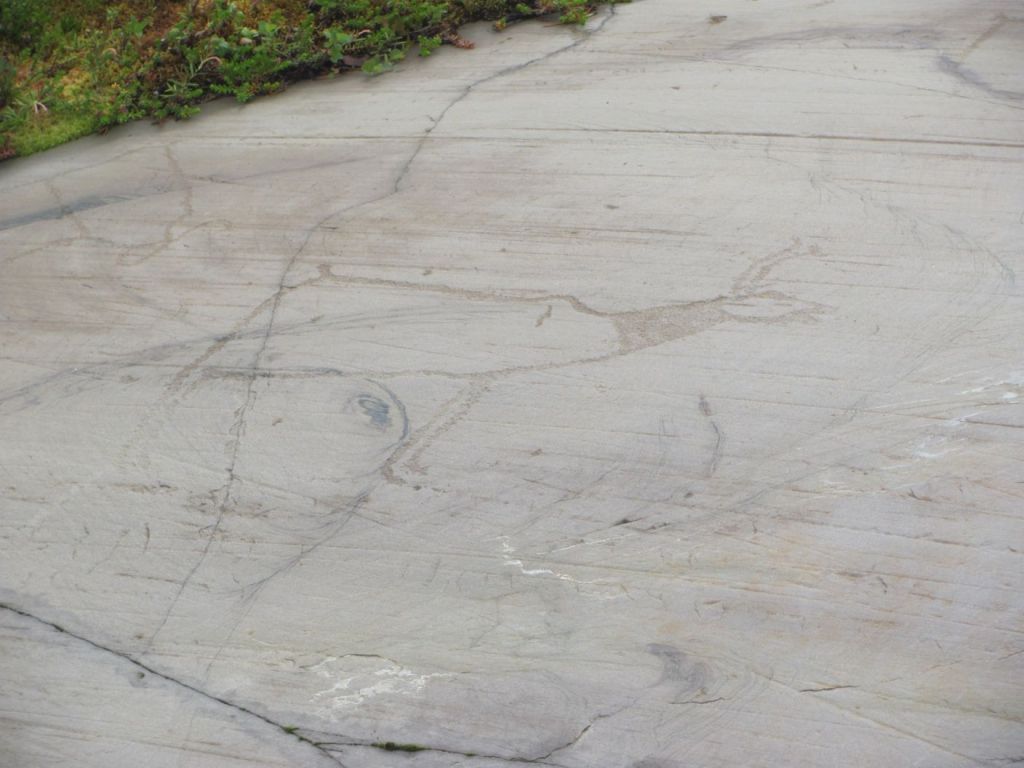
“Did you notice how some of the carvings were outlined in red, and others are just left as they are?”, asks the First Mate. “Apparently the red was applied at the time they were discovered so that they could be seen more easily. But the thinking now is that they should be left in their natural state as the paint was obscuring features important in the way they were made.”

Reindeer carving, uncoloured.

“Look out for the bears and their tracks leading from the cracks in the rock across several of the panels”, the guide book instructs us. “Apparently hunter-gatherers revered bears as relatives or ancestors. It is likely that there were bear cults in which they were worshiped as links between different levels of the cosmos. The cracks in the rock may represent their caves as entrances to the underworld.”

Hunting bears and reindeer.

Further on, there are images of geese, ducks, swans, and cormorants, all distinctly recognisable. On other rock faces, elks seem to be mating. On one site, a unknown round object streaks across the carvings, with a trail behind it. Was it a comet, as some researchers think? And what are the mysterious geometric shapes, seemingly with frills on their edges?

A comet, or something else?

We sit on a rock, overlooking the sea. I wonder about the people who would meet here in ancient times. Why did they come? Was it to worship? Did they have gods?

“It is more likely that they just had a spiritual worldview rather than specific gods”, says Spencer from behind my shoulder.

Somehow he has found his way into my rucksack, and has been tagging along with us.

“They probably saw animals as powerful spiritual beings who needed to be kept on the right side of if hunting was to be successful. Rituals practised by their shamans were important to reinforce the bond between people, animals and the landscape.”

“I wonder what it would have been like to be a hunter-gatherer?”, I ask. “What did they actually think like?”

“It’s an interesting question”, answers Spencer. “They almost certainly had the same brain architecture as you do, as anatomically modern humans emerged around 300,000 years ago. They probably still thought about family, social status, cooperation, conflict, finding food, avoiding danger, and caring for offspring in much the same way as you do. But the biggest difference will have been due to cultural evolution and the development of abstract thought. You spend a lot of your time thinking about things such as governments, money, the internet, scientific theories, laws, and insurance, for example. They probably thought more about landscapes, weather, animal behaviour, and seasonal cycles.”

“It makes you wonder, then, that if you were to take newly-born babies from the Stone Age and modern times, somehow exchange them, and then raise them in the opposite society, would they both be capable of learning the other’s knowledge?”, I muse.

“Probably”, says Spencer.

“Come on”, says the First Mate, standing up. “I am getting hungry. Let’s go and get something to eat. You can day dream with that spider another time.”

The next day we visit the Tirpitz museum in Kåfjord on the outskirts of Alta.

“You’re just in time”, says the man with a pony-tail in reception. “There’s a film starting in five minutes telling the story of the Tirpitz. What language do you want it in – Norwegian, English or German?”

We take our places in the small cinema. It’s an old film from the 1960s.

“The Tirpitz was a German battleship during WW2, the largest ever built in Europe”, it tells us. “It was sent to occupied Norway in 1942 to deter an Allied invasion as well as threatening Allied convoys to the Soviet Union. It was hidden in the Kåfjord, surrounded by shore batteries and submarine nets to protect it. In fact, it saw no action from there, but was a ‘fleet-in-being’, requiring Allied naval resources to be tied up containing it.”

“Think of all the taxpayers’ money it must have cost to build it”, whispers the First Mate to me. “And then never to be really used.”

Eventually it was found by a Russian reconnaissance plane.

The Tirpitz is found in Kåfjord.

“The British Royal Navy was informed of its whereabouts, and a cunning plan devised to try and destroy it. This involved building six midget-submarines, called X-subs and only 15 metres in length, which were towed to near the area by traditional submarines. Unfortunately two were lost or damaged en route across the Norwegian Sea. A third one had mechanical and navigational problems after arrival.”

Midget submarine used in the Tirpitz attack.

“I remember reading about this when I was a kid”, I whisper to the First Mate. “Boys’ Own, I think.”

“The remaining three were released from their mother-subs to make their own way into Kåfjord. One of these was spotted by the crew of the Tirpitz and destroyed by gunfire. The other two made it underneath the steel submarine nets, and were able to drop their charges under the Tirpitz, but were observed and attacked, forcing their crews to abandon their craft to be captured. But their charges exploded and damaged the Tirpitz severely enough that it was out of action for six months.”

The Tirpitz the day after the X-sub attack.

Later, the battleship was moved to near Tromsø, where, again, it was located and bombed by Allied aircraft in 1944, this time successfully.

“The folly of war”, sighs the First Mate.

In the morning, we push on southwards from Alta. On the way, we stop at a place offering ‘Sámi experiences’.

“We are genuine Sámi reindeer herders”, the owner tells us. “And have been for generations. I’m almost retired. My son over there is taking over the business. I help out.”

Learning about Sámi reindeer herding.

“Where do you keep the reindeer?”, asks the First Mate.

“Well, during the winter, we take them to the Finnmarksvidda, the vast area of wilderness south from here”, he answers. “There they graze on the mosses and lichens that they can find under the snow. Then when the spring arrives, after the calves are born, we move them down to the coast for summer grazing. There it is cooler, the vegetation is lusher, and there are not so many biting insects. Then in the autumn, we move them back to the Finnmarksvidda. It’s communal in that a number of herds belonging to different owners are managed as one big herd. It’s a traditional system called siida.”

“How do you know which animal belongs to whom?”, asks the First Mate. “

“We have a system of earmarks”, he tells us. “The young reindeer are earmarked in the autumn. The government will only give you an earmark pattern if you come from a family with a long tradition of reindeer herding. Only ethnic Sámi have the right to practise reindeer herding, but only about 10% of all Sámi are actually reindeer herders. The rest all have jobs in the big cities. We are glad they are there because they help promote Sámi issues to the wider population.”

Feeding the reindeer.

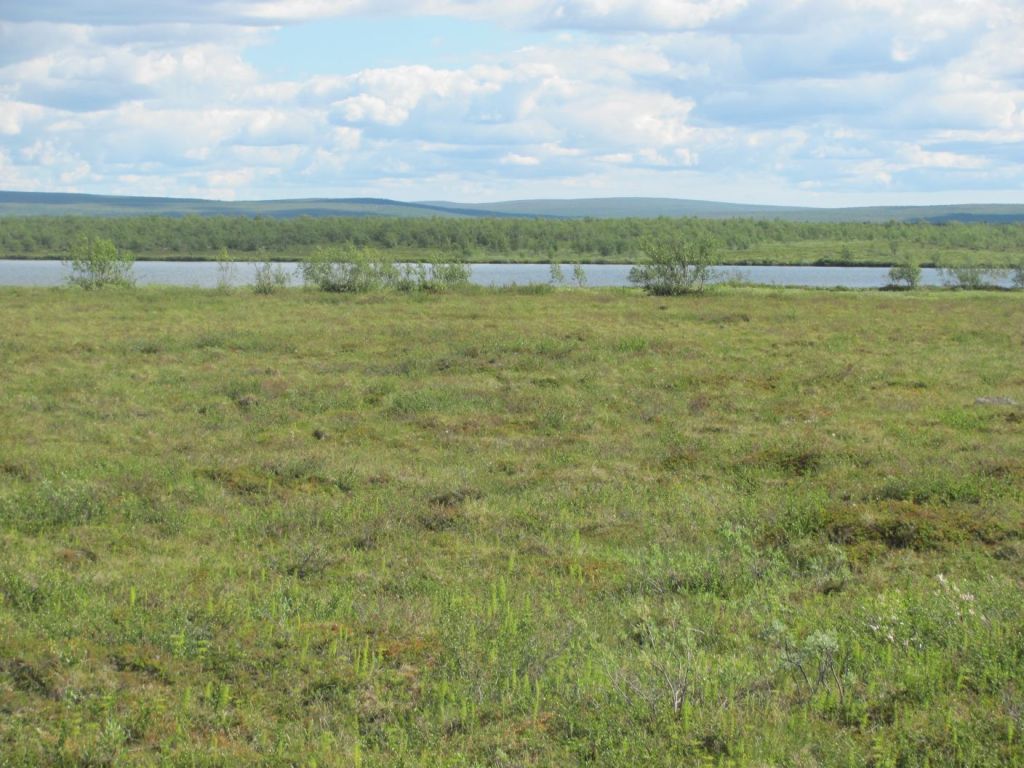
We continue driving through the tundra. Mile after mile of stunted birch trees pass by. Every so often we see a lake. It’s hard to imagine all this area being covered in snow in the winter.

Crossing the Finnmarksvidda tundra.

We are heading for a small town near the Finnish border called Karasjok, where the Sámi Parliament is located.

“The last guided tour of the day of the Parliament is at 1530”, says the First Mate, busy consulting her iPhone as we drive. “If we hurry up, we should be able to make it.”

We arrive in Karasjok at 1515, just in time.

“Yes, there is a tour starting in 15 minutes”, the girl behind the reception desk says. “Just wait over there.”

We wait for 15 minutes, watching a group of students earnestly discussing something in the library below.

“Well, it looks as if you are the only two”, says the girl, somewhat wearily. “Follow me.”

“She was probably wanting to get home early”, whispers the First Mate to me.

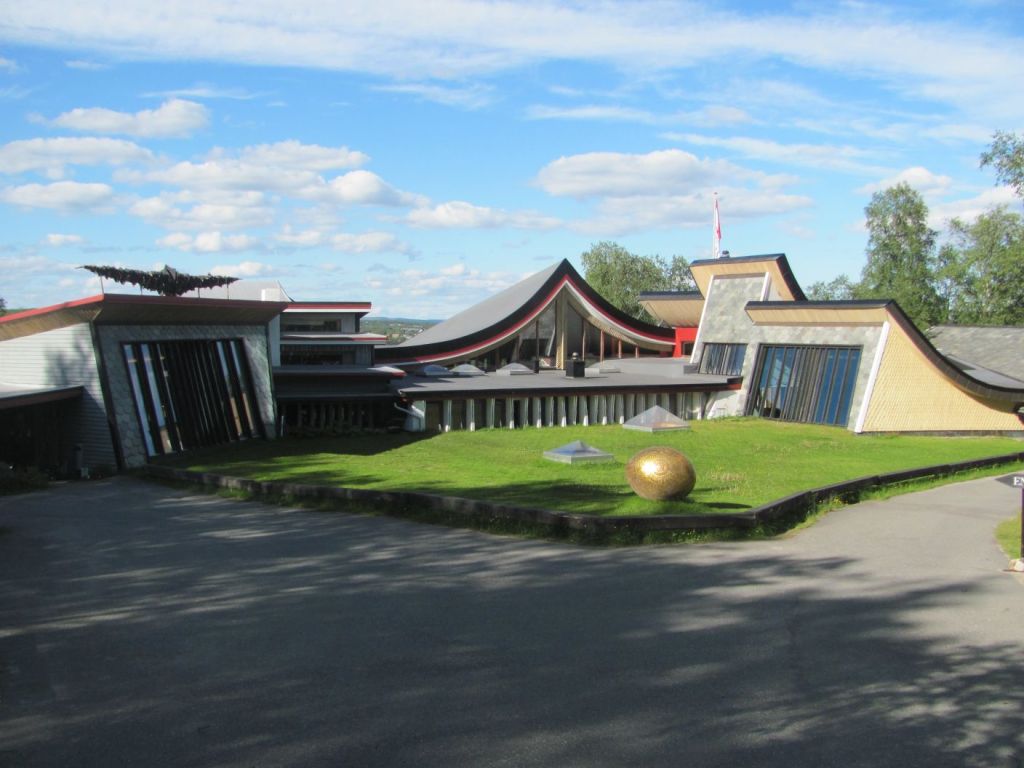
“The Sámi Parliament was opened in 1989 by King Olav”, the girl tells us. “It was a direct outcome of the Alta conflict, in which local Sámi people opposed the damming of the Alta and Kautokeino rivers by a hydroelectric powerplant. The protestors lost the battle, but the government realised that it needed to listen to the Sámi more, so you could say that it was successful in the end. It’s now written into the Norwegian Constitution that it is the responsibility of ‘the authorities of State to create conditions enabling the Sámi people to preserve and develop its language, culture, and way of life.’ The Sámi Parliament is the sole representative of the Sámi people in achieving this, and have specific responsibility for language, culture and education.”

The Sámi Parliament.

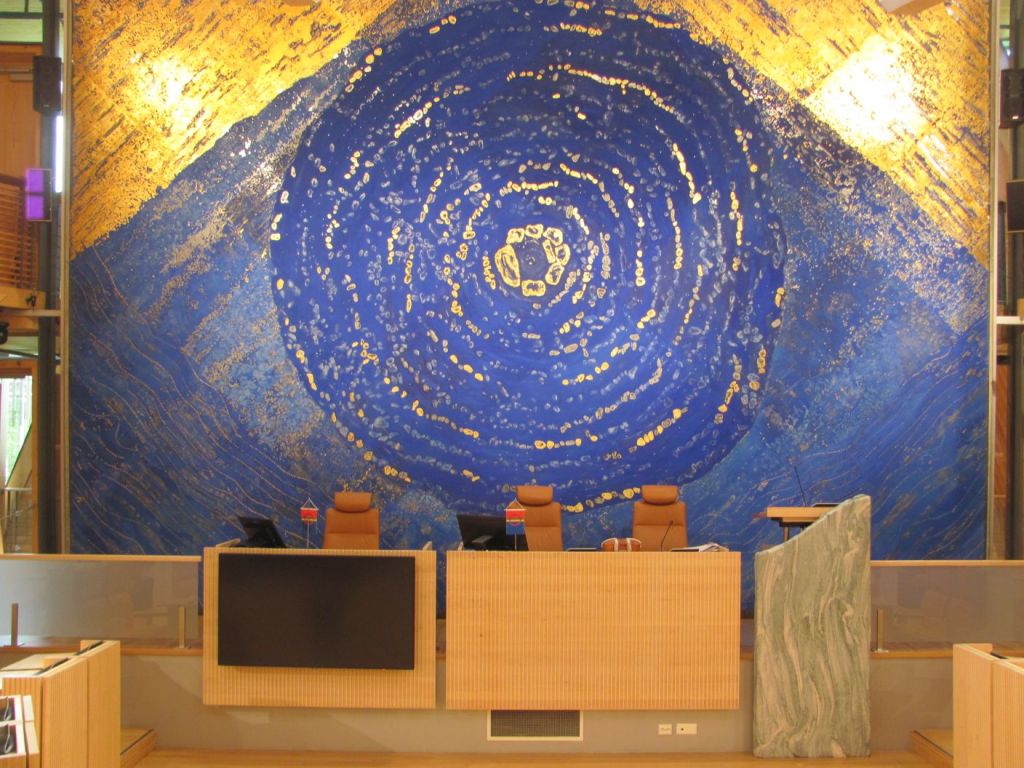
We reach the plenary chamber, a windowless room with seating curved around a central stage. A giant circular artwork is on the wall behind the stage.

“Luottat” artwork in the Plenary Chamber.

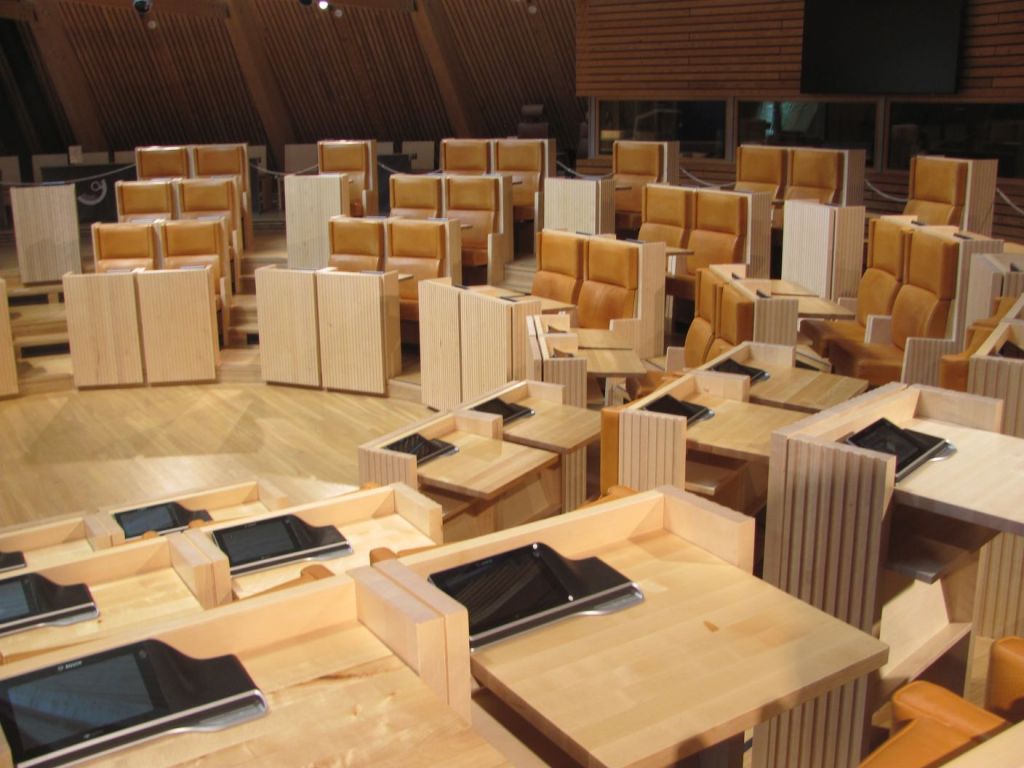
“Four meetings a year are held here”, the girl continues. “Each one lasting a week. There are 39 elected representatives. The highest ranking MP becomes the President of the plenary sessions. He chooses four other MPs to serve on the Executive Council. They are responsible for determining the agenda of the meetings.”

Representatives’ places in the Plenary Chamber.

“How are MPs elected?”, asks the First Mate.

“Well, elections are held every four years at the same time as the national elections”, she answers. “You have to be registered as a Sámi to vote. For that, you first need to perceive yourself as a Sámi, but you also have to have at least a great-grandparent who had Sámi as their main language.”

“It’s similar to Māori in New Zealand”, I say. “They need to identify as Māori, and to have some Māori ancestry, although there is no set proportion or specification how far back you can go.”

“Yes, we do have dialogue with Māori people”, she says. “We are both indigenous minorities in our countries ruled by another ethnic majority. Their issues are similar to ours. Now, if you don’t mind, I am going to have to chase you out. We are closing in five minutes.”

The Sámi National Library within the Parliament.

We push on to Kautokeino, another Sámi town on the banks of the Kautokeino river, and arrive in the evening.

“We have to go and see Juhls Silver Gallery while we are here”, says the First Mate. “It’s supposed to be quite special.”

Juhls Silver Gallery was started by Frank and Regine Juhl, from Denmark and East Prussia respectively, who came to Kautokeino in the 1950s and fell in love with the place and each other. They decided to learn silversmithing, and gradually built up a reputation for high quality silverware inspired by Sámi culture and the tundra. They eventually broadened their horizons and today their gallery is an eclectic collection of silverware and art from all over the world. Frank died in 2020, but Regine is still living and active.

Juhls Silver Gallery.

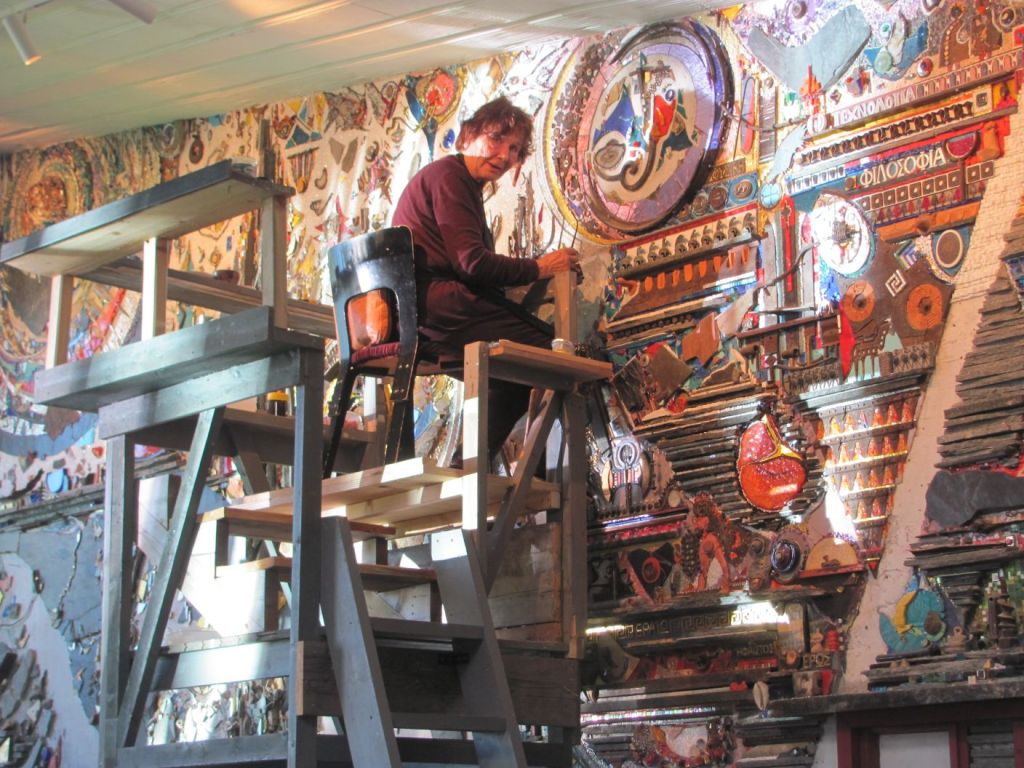
As we enter, she is perched on top of a ladder working on a brightly coloured mural.

“Ihre Arbeit ist ganz toll“, says the First Mate.

“Vielen Dank“, she replies.

Regine Juhl working on her mural.

One of the staff gives us a guided tour.

“The gallery was designed and built by Frank”, she tells us. “All without any formal architectural education. Instead, he was guided by a strong intuitive understanding of space, proportion, and relationships. The interiors, the sequence of rooms, and the light create a distinct atmosphere, where art, craftsmanship, and architecture work together.”

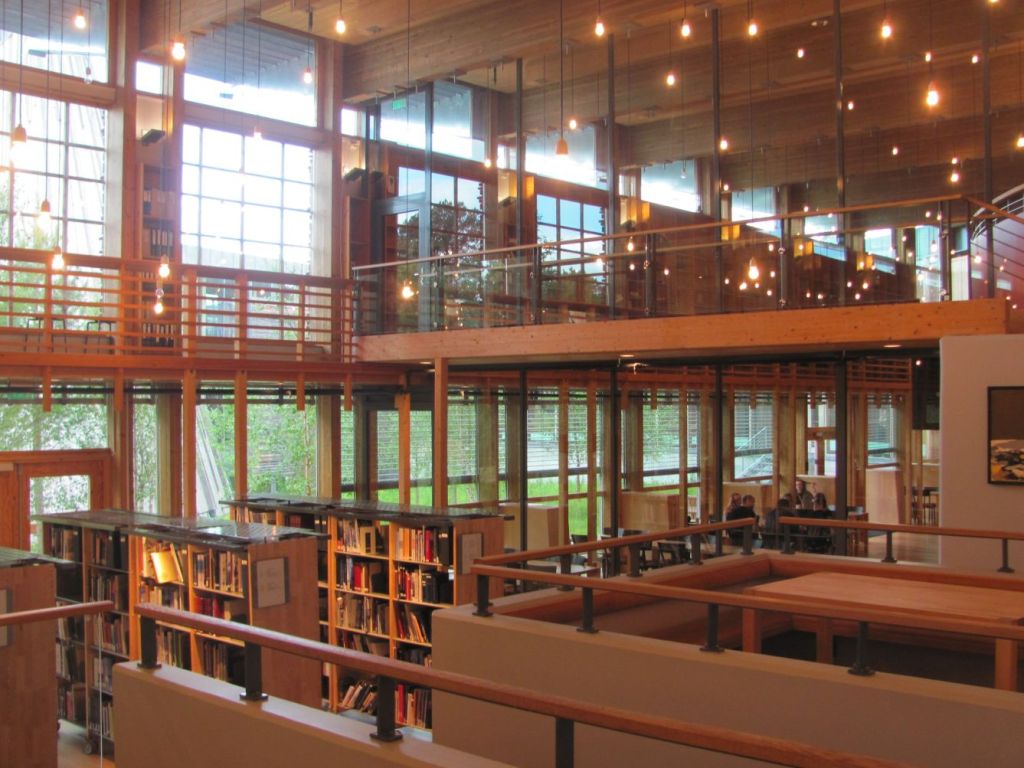
Arty-speak, but it is indeed an amazing place. After the tour, we spend some time wandering from room to room, marvelling at the exuberance of style and colour, and the ubiquitous intricate items of silverware.

Inside Juhls Silver Gallery

It’s quite a legacy they have created, I think to myself. And it will carry on, as their two daughters are continuing the business, one in Kautokeino, and the other in Bergen.

“Let’s find somewhere to have lunch”, says the First Mate. “The mosquitos here are eating me alive.”

Polar adventurers, flaming tacos, and reindeer road rules

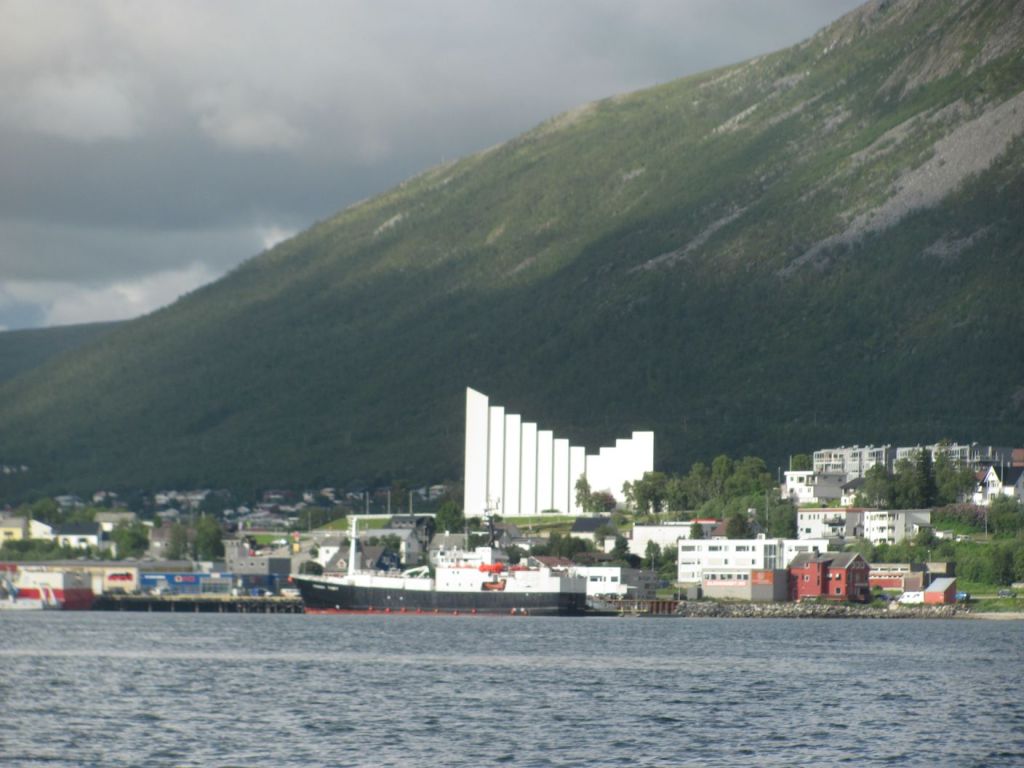
“Look at that white building over there”, says the First Mate, pointing to the right of the bridge that spans the sound. “It’s very impressive. I wonder what it is?”

We are sailing up Tromsøsundet and are approaching Tromsø.

“It’s got to be the Arctic Cathedral”, I say. “The Lonely Planet book mentioned it.”

Tromsø’s Arctic Cathedral.

It is impressive. Built from eleven great white concrete panels stacked next to each other, it is visible for miles, contrasting starkly with the dark green hills rising up behind it. The eleven white panels are supposed to represent the eleven apostles who remained true to Jesus. Obviously not Judas.

Shortly we are docking in Tromsø marina, ably helped by a group of enthusiastic teenagers who are disembarking from a colourfully-painted wooden sailing boat.

“We’ve been sailing up to Svalbard”, they tell us, as they attach us to the pontoon cleats. “We’ve just got back. We are all pretty exhausted. But we had a great time. Now another group is going. They’ll be here soon.”

Svalbard is a large island that lies five days’ sail across open sea north of Norway. It belongs to Norway, but is subject to the Svalbard Treaty, which guarantees rights to 40 other countries who are signatories to the Treaty. Part of the Treaty says that it must not be used for military purposes.

Tied up in Tromsø marina.

“Let’s have a cup of tea”, says the First Mate. “Then we can go and have a look at the Cathedral. It’s just a short walk over the bridge there.”

The bridge is closed to motor traffic for repairs, but open to pedestrians and cyclists. There’s a great view from the top of its hump out over the sound and the city. It doesn’t take long to reach the Cathedral.

The First Mate reaches the Arctic Cathedral.

“The Cathedral was built in 1965”, the woman behind the counter tells us. “It is famous not only for its unique exterior design, but also for the stunning stained glass window within it. It depicts the Return of Christ showing God, Jesus, and a man and a woman. We also have concerts here during the summer. The acoustics are amazing.”

The stained glass window in the Arctic Cathedral (from Wikipedia Commons)

On the way back, we stop off at the Polar Museum on the harbour front. There are exhibitions on hunting and trapping in Svalbard, polar aircraft, and the famous Norwegian polar explorers, Nansen and Amundsen.

“Although there were overwinter trapping expeditions as early as 1795, it started in earnest in the 1890s”, the guide leaflet tells us. “Hunting then was mainly for walrus, and to a lesser extent, seals, reindeer, and Arctic foxes. Later, polar bears, musk oxen, and bow whales were hunted. Reindeer, in particular, almost became extinct. At first, most hunting and trapping was done in the summer season from April to September. Eventually, however, a number of trappers decided to overwinter.”

Overwintering in the Arctic.

“It must have been a tough life”, says the First Mate. “It says here that a lot of the early trappers died of scurvy because of the low levels of vitamin C in their diets. I wonder what made them want to go and do it? It seems that no-one became rich through hunting and trapping.”

“I guess that it just appeals to a certain type of person”, I say. “One who is happy with isolation and solitude, and battling against and surviving adverse conditions.”

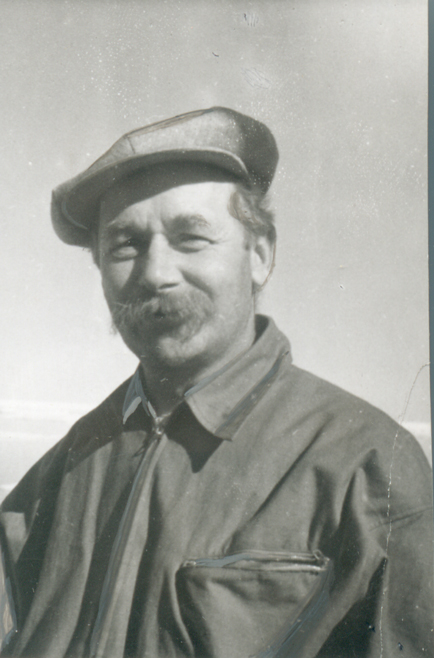
Henry Rudi (from the Norwegian Polar Institute)

One such trapper was Henri Rudi, the ‘King of the Polar Bear’, who became internationally famous. It was his boyhood dream to go to Svalbard, which he did when he was 19 and eventually spent 27 winters there. In total, he shot and trapped more than 700 polar bears before retiring back to Tromsø and receiving the King’s Medal of Merit. He also became famous around Tromsø for his lectures and story-telling of his experiences on Svalbard.

Interesting that we are worried now about climate change melting the ice and destroying polar bears’ habitat, and yet someone who shot 700 of the animals was honoured, I think to myself. How times change.

Wanny Woldstad (from the Norwegian Polar Institute)

Even some women were drawn to the lifestyle. Wanny Woldstad left her job in Tromsø as a taxi-driver, went to Svalbard in 1932 to learn how to hunt and trap, and liked it so much that she returned the following year with her two sons. She stayed several more winters there, during one of which she is supposed to have baked 900 loaves of bread. She became famous for thriving in what had been previously a male-dominated environment, and in 1956 published a book, “The First Woman Trapper in Svalbard”, in which she describes her life in Svalbard’s wild and beautiful landscape.

“I wouldn’t want to do that”, says the First Mate. “Too cold and too tough a life for me. I like my creature comforts.”

We move through to the rooms on Nansen and Amundsen. We had already seen the ship that both of these explorers used, the Fran, in the museum of the same name in Oslo last year, so we knew something about them. But there is more detail here about their adventures.

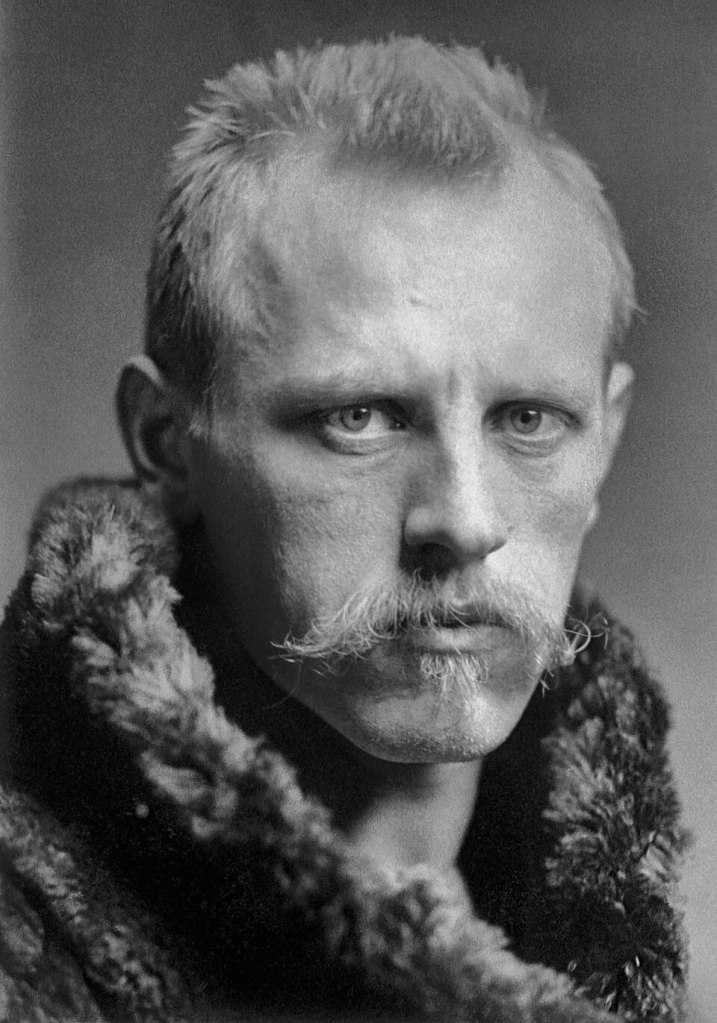
Fridtjof Nansen (Henry Van der Weyde, Public domain, via Wikimedia Commons)

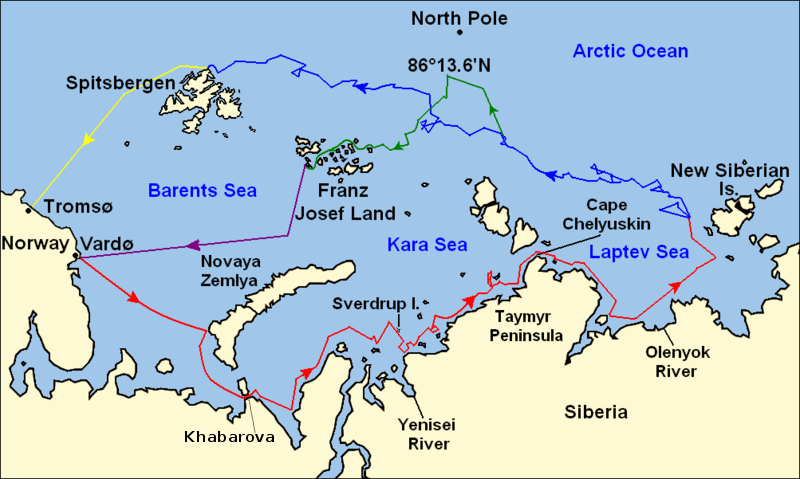
I concentrate on Nansen. He had noticed that wreckage of a ship that had sunk in the New Siberian Islands had eventually ended up in Greenland some years later, and had surmised that the polar ice cap was not static, but was slowly moving. He organised an expedition to test this theory in which the Fran would be locked in the ice and they would see where it got to, hoping that it would pass over the North Pole. They started near the Siberian Islands in 1893, but after a year or so, it became clear that it wouldn’t reach the pole. So, in 1895, Nansen and one of his crew decided to leave the ship and ski there instead. Unfortunately, it took longer than they had thought, and they had to turn back because their supplies were running out. But even returning took longer than they had thought, and they were forced to overwinter alone in the Arctic. They lived off polar bear and walrus meat until the next spring, then set off again, and eventually in August of 1896 met another polar explorer who took them back to Norway in his ship.

“What happened to the Fran?”, asks the First Mate.

“It seemed that it broke free from the ice near Svalbard”, I say, “And arrived back in Norway just a little bit after Nansen got there.”

“So what was the point of it all?”, she asks. “It all sounds a bit like a Boys’ Own adventure to me.”

“Well, according to the exhibition, it did confirm his theory that the ice cap is moving”, I say. “As well as providing a lot of other valuable scientific information on the oceanography of the Arctic Ocean, and on the flora and fauna of the Siberian coast and Franz Joseph Land. So not only adventure.”

Nansen’s and Fran;s routes 1893-96.

We head back to the boat. Dinner time approaches.

“I think we can have tacos tonight”, says the First Mate. “We can heat up the shells in the toaster.”

I put the shells in the toaster, press down the lever, and go back to chopping the onions.

“Hey, there’s smoke coming out”, shouts the First Mate half a minute later. “And now flames.”

The smoke alarms in the boat go off with loud shrieks. Concerned people on the pontoon stop to look at the clouds of smoke now billowing out of the companionway. We open all the hatches to let more smoke out, and try and smother the toaster to stop the flames. It doesn’t work very well.

“Quick, put it under the tap”, I say, unplugging it.

We douse the toaster in water. Eventually the flames die down and the smoke stops. But not much is left of the toaster. Several of the plastic bits have melted, and the metal bits are warped and twisted.

“It must have been the oil on the taco shells”, I say. “As soon as it got to a certain temperature, it caught alight. I didn’t realise that a toaster could get so hot so quickly. When I am waiting for my toast in the morning, it seems to take forever and even then hardly browns the toast.

“At least it shows the smoke alarms work”, says the First Mate. “But we’ll have to buy a new toaster. That’s three appliances that have gone now.”

A few weeks earlier, she had put the base of the electric kettle onto the hot hotplate and melted it beyond repair. Not long after, our little fan heater had stopped working for reasons unknown.

“We’ll just have to buy some new ones tomorrow morning”, I say. “When the shops open.”

—-

After the shopping expedition the next day, we take the No. 40 bus to the Arctic University Museum of Norway, and spend a leisurely couple of hours absorbing information on the geology and natural history of the region, the northern lights, and Sami life, culture and politics.

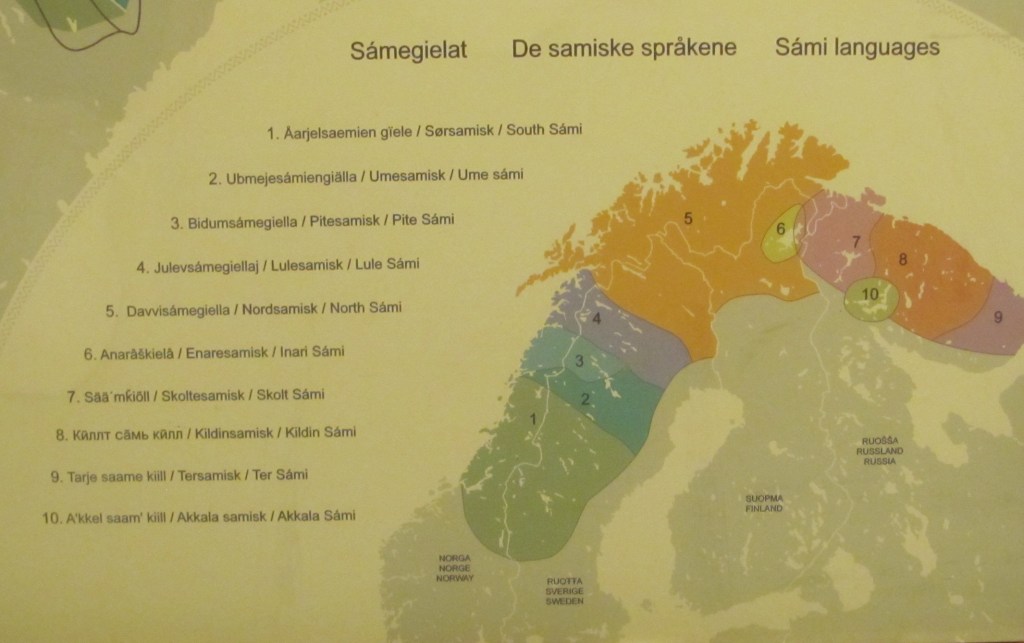
We are astounded to learn that there are actually ten different Sámi languages, not just one. All are what are called Finno-Ugric languages, similar to Finnish and Hungarian, with a comparable structure and vocabulary, but are largely mutually unintelligible in the same way that Spanish and French are. North Sámi is the most widely spoken, but there are also South Sámi, Ume Sámi, Pite Sámi, Lule Sámi, Inari Sámi, Skolt Sámi, Kildin Sámi, Ter Sámi, and Akkala Sámi.

Sámi languages.

“Phew, it’s a lot of languages considering that there are only around 100,000 Sámi people”, says the First Mate. “It says that many of the languages only have 500 speakers or less. Ter Sámi only has two speakers.”

“At least there are efforts to try and revitalise some of the languages”, I say. “”After the disastrous policy of Norwegianization from the 1850s – 1960s where they tried to force the Sámi to become Norwegian. But it does make you think where to draw the line between actively trying to preserve a language and all the cost that that involves, and letting it take its natural course.”

“It’s easy to say that being a native English speaker”, she retorts. “But languages are part of people’s culture and identity, and reflect their different take on the way the world works. You would lose all that richness if we all spoke one language. And once you lose a language, it can’t be easily recreated. And besides, I read an article today that said that you slow your brain from ageing by learning more than one language.”

“I am not saying that we should all speak only one language”, I say. “I am all for learning a new language. I was just musing at what point you can’t do anything more to save a dying language. When the two Ter Sámi speakers die, for example, what are you going to do then?”

“I suppose the best way is to encourage people to be bilingual”, she says. “One global language like English, so that they can communicate wherever they go, and at least one local language to maintain the culture they come from. It’s largely what is happening already, particularly in Europe.”

We catch the bus back into the city centre and decide to have a coffee at the Backstube bakery.

“I found the bit about the young mammoth quite interesting”, says the First Mate, taking a slice of cheesecake.

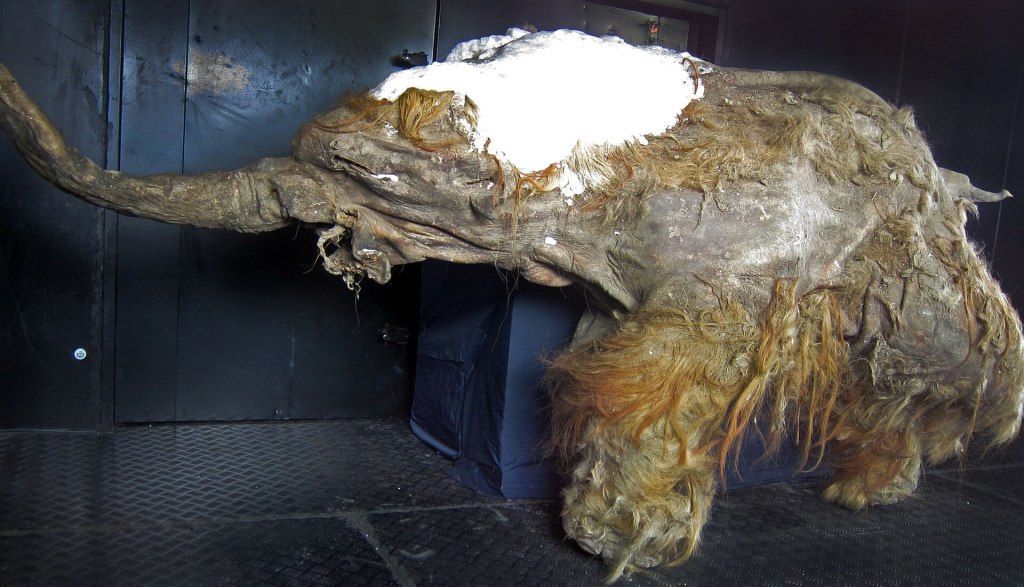
She is referring to ‘Yuka’, a young male woolly mammoth who died 40,000 years ago and was discovered frozen in the ice in Siberia in 2012 by local hunters. The Museum has been involved in research extracting RNA from the remains, and has been able to deduce that he was under extreme stress at the time he died. This corresponds with scratch marks on his skin, suggesting he may have died from an encounter with cave lions.

Yuka the mammoth from Siberia (from Wikipedia Commons).

“Yes, some of these new techniques are pretty amazing”, I say. “DNA shows what an organism is, but RNA can show what bodily processes were happening at the time it died.”

—-

We have been planning to hire a car and spend a week exploring Sápmi, the home of the Sámi people.

“You had better tell your readers that Sápmi is the traditional name for Lapland”, says the First Mate. “The name was changed because the people found the words Lapps and Lapland derogatory, as they had been imposed by outsiders and were sometimes used pejoratively.”

My phone pings. It’s a message from the car rental company saying that the car is ready and that we can collect it tonight, even though the rental period starts tomorrow.

“I’ll take the bus and go and collect it now”, I say. “That way we can set off earlier in the morning. We have quite a long journey in front of us.”

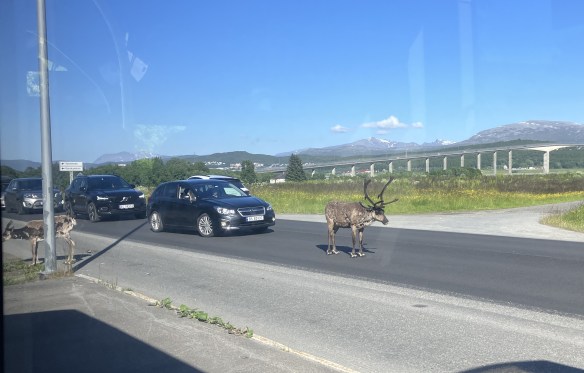
There is a bus leaving in five minutes which I manage to catch just in time. On the way, the bus stops. A herd of reindeer is crossing the road. One in particular is in no hurry, and cars are backed up behind it.

“Don’t hassle me, mate!”

“There’s a law here in Norway that says that reindeer must not be unnecessarily disturbed or frightened”, a woman sitting opposite explains. “In practice that means that if you encounter a reindeer on the road that you should stop and allow it to cross at its own pace. They can be a bit unpredictable if they are hassled.”

Like some people, I think to myself.

A popular pub, a colony of kittiwakes, and another naughty Royal

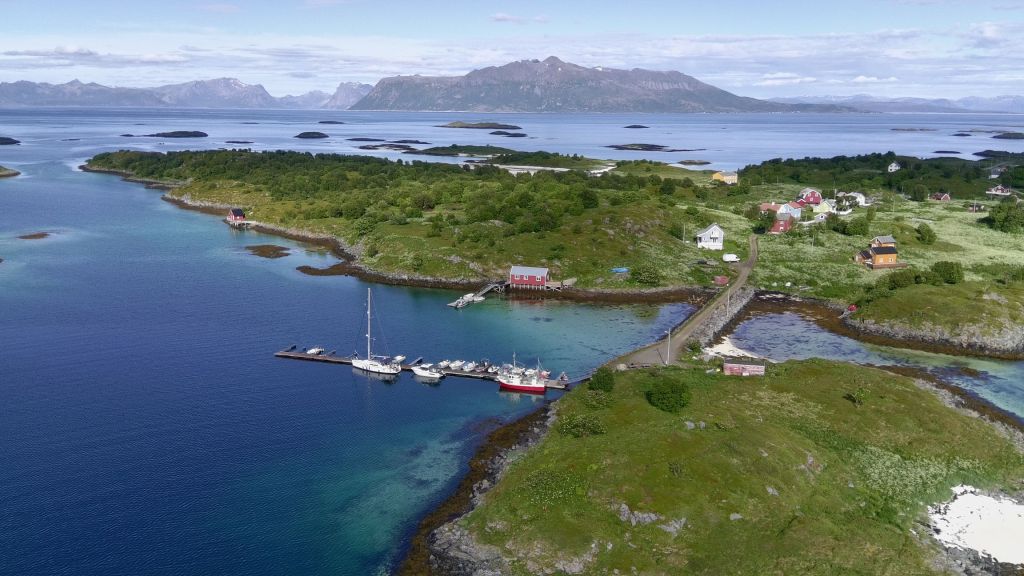
“Wow! This one is well-hidden”, exclaims the First Mate as we round a small promontory, and see the small harbour in front of us. “We would never have found it without the harbour guide.”

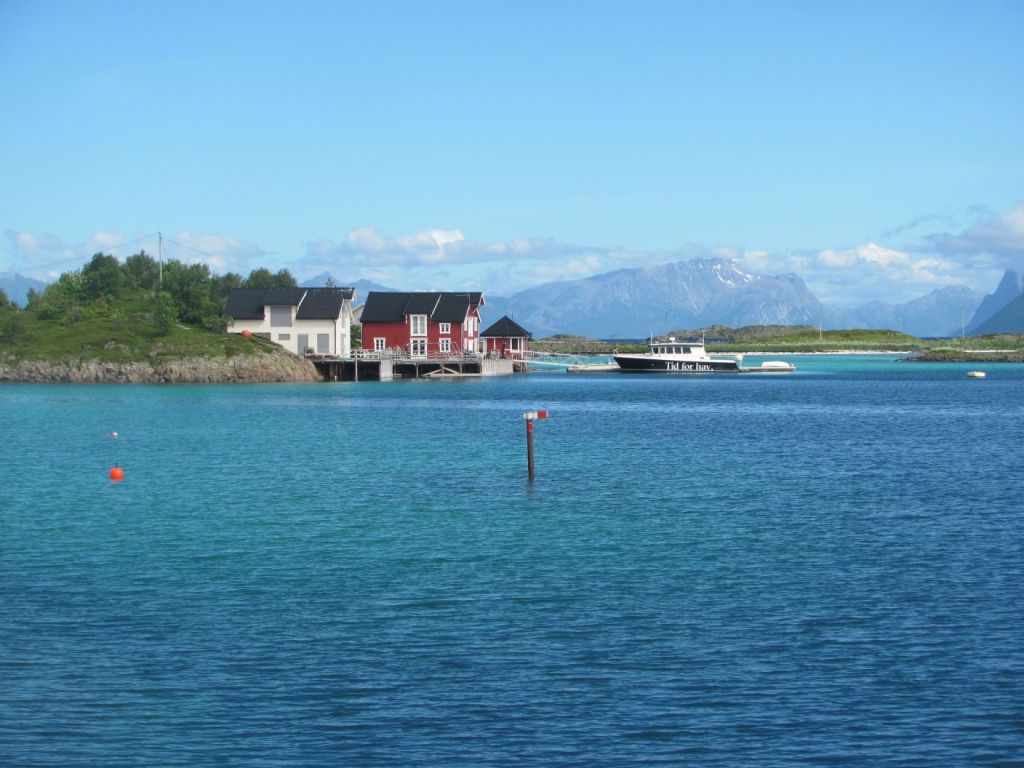
We have just arrived at the small island of Gårdsøya on the outer edge of the Bjarkøy archipelago. We had sailed from Andenes that morning, and had decided to stay here for a couple of days.

One side of the single pontoon is taken up with small motorboats, and a large fishing boat with the name of Kaare occupies the first place on the other side.

The small harbour on Gårdsøya.

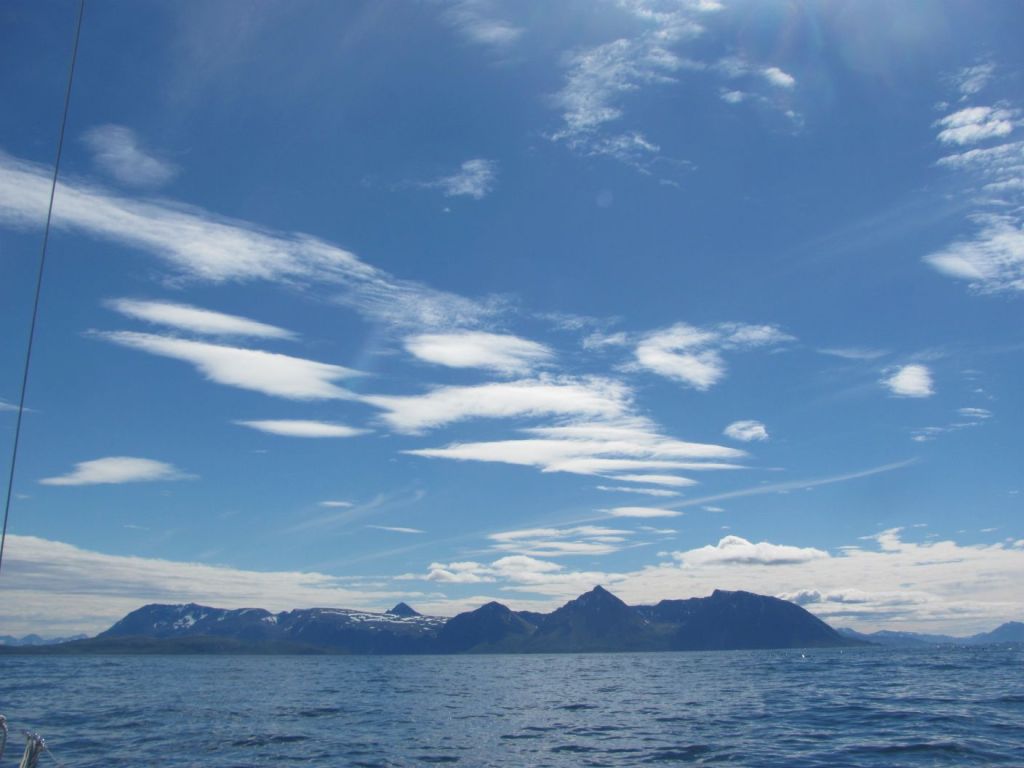
“It’s absolutely beautiful here”, says the First Mate, as we tie up. “Look at those cloud patterns. And there is an oyster catcher over there. And a couple of Arctic terns are swooping around. They must have a nest somewhere. And look at that shag sitting on top of that pole. I’ll make some tea. You rest your leg.”

Cloud patterns over the island of Grytøya.

I had pulled a calf muscle in my leg the day before while we were at Andenes, and while it is better today than yesterday, it is still quite painful.

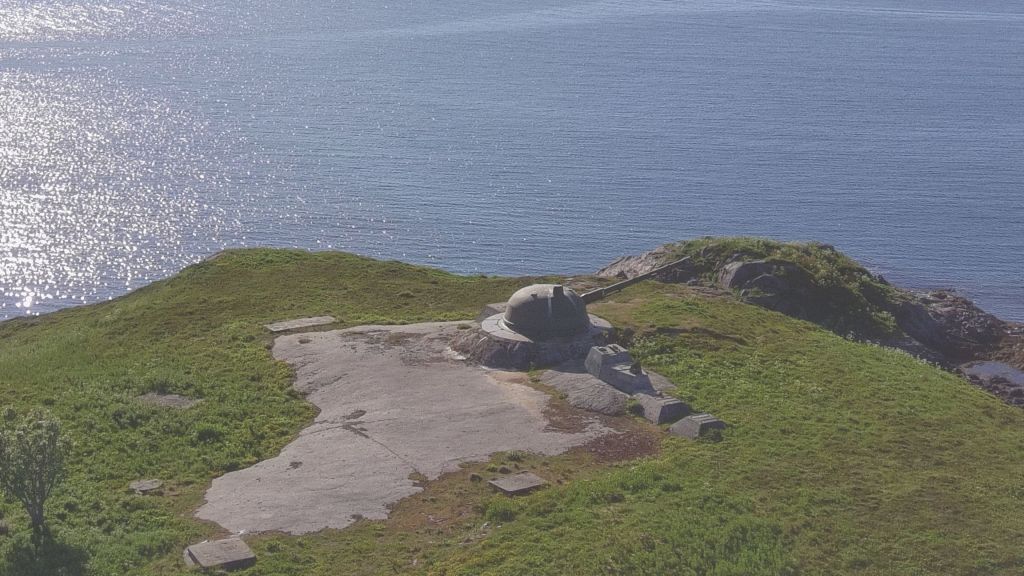
“There’s a gun emplacement over there on the neighbouring island”, I say, as we sip our tea. “German, from WW2. I’ll send the drone over to have a look.”

WW2 gun emplacement on Meløyvær.

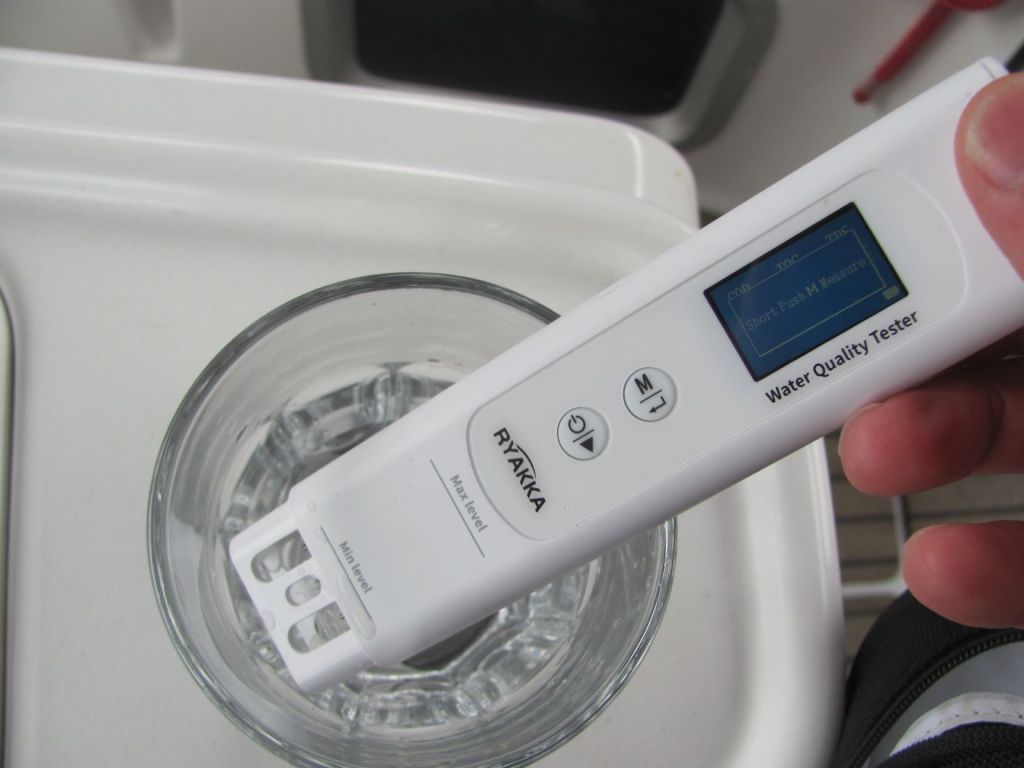
“We need to fill up the front tank with water”, says the First Mate. “You’d better get your little tester out and make sure the stuff from the tap on the pontoon is OK.”

Simon had convinced me last year to buy a small water testing device to check on the quality of water on the pontoons when we fill up our tanks. Nerds that we are, we assiduously take samples, test them, and avoid any water that doesn’t make the grade.

“You’d be amazed at the variation in water quality you come across”, he had told us. “And it’s not always in the way you might expect. Pristine looking places can have poor water, and run-down places can have excellent quality. You can’t be too careful with what you drink.”

It turns out that the quality of this water is classified as ‘Excellent’, so we fill the tanks to the brim.

Testing the water.

In the morning, we decide to explore the island. My leg needs the exercise.

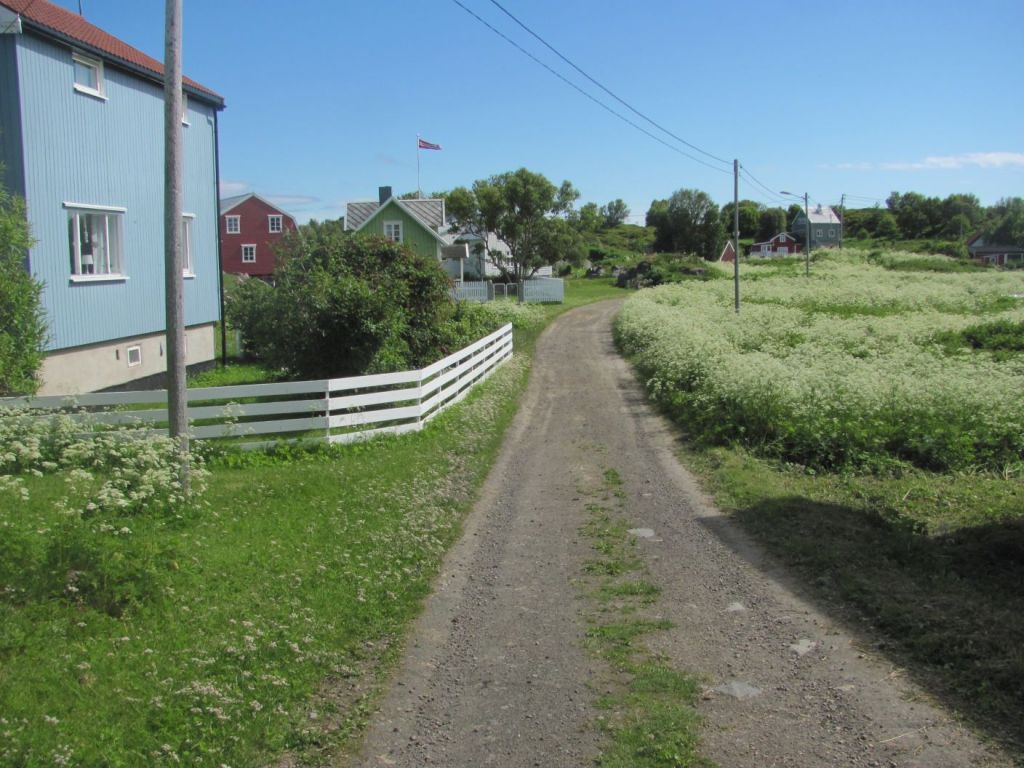
“Apparently there are seven permanent residents on the island”, says the First Mate, as we walk and hobble along the gravel track. “The rest of the houses are holiday cottages. And there are no cars.”

The ‘main road’ on Gårdsøya.

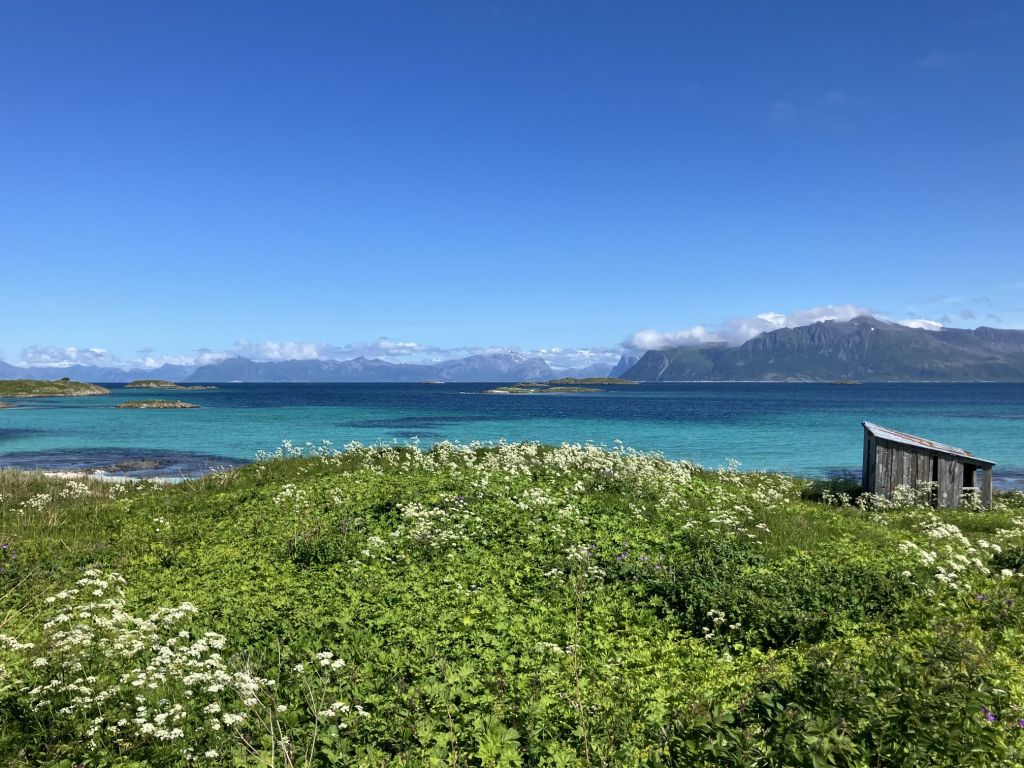
There are stunning views out towards Senja.

View towards Senja.

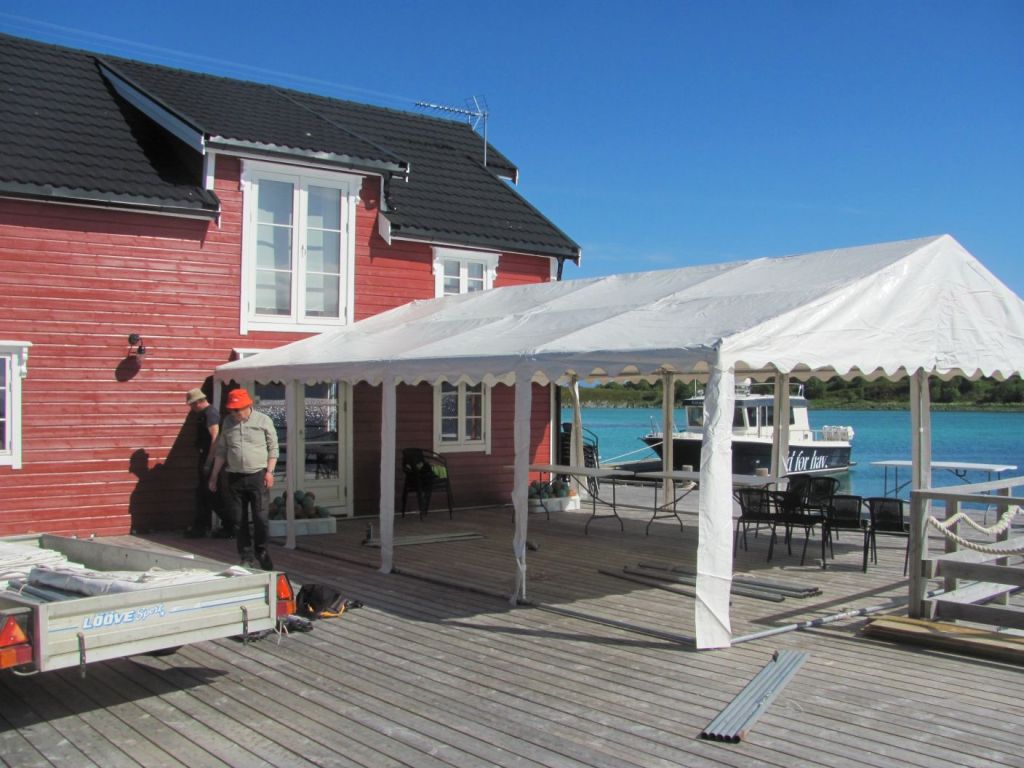
We come to a sign saying “To the Pub”. It’s a hot day, so we take the small path over the grassy field to a red building overlooking a small bay. Two men are working on erecting a marquee on the wooden decking at one side.

Wedding preparations.

“You’re looking hot”, says one of them. “Would you like a beer?”

“Well, we wouldn’t say no”, we say.

“My name is Trond”, he says as he leads us into the building. “As in Trondheim. I am the owner of the pub. We have a wedding reception booked for Thursday, and we are just trying to get everything ready for it. That’s what the marquee is all about. But I need an excuse for a break. What will you have?”

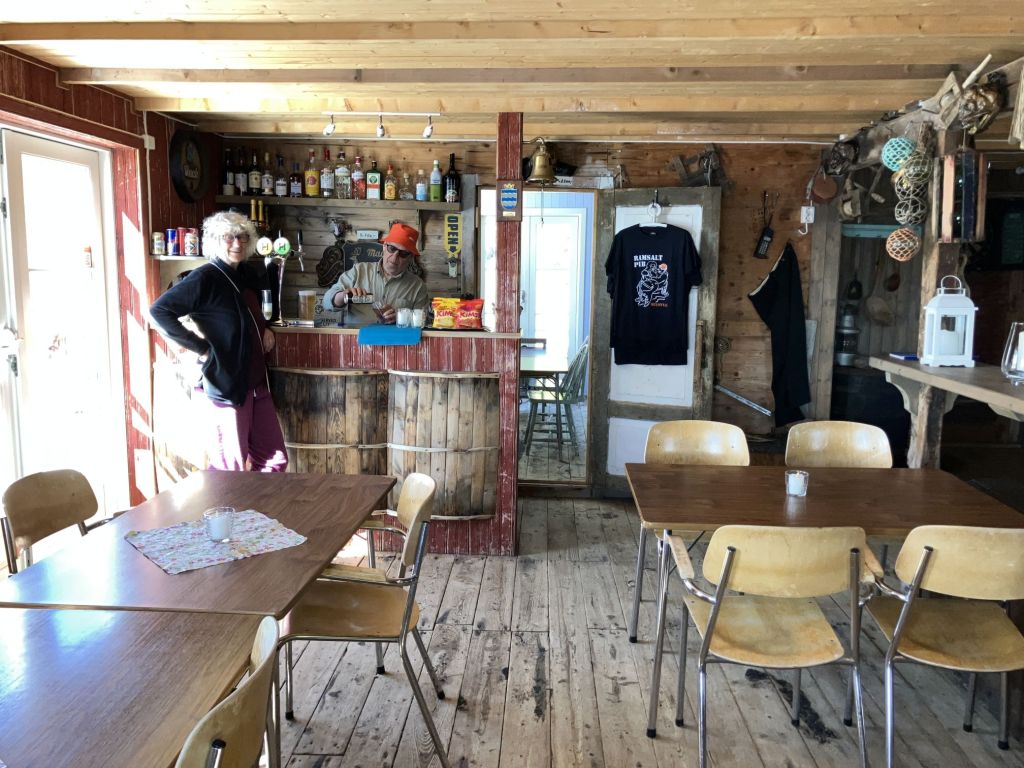
Inside the Ramsalt Pub.

He pulls a beer for me and a shandy for the First Mate.

“I was born on the island”, he tells us. “But I worked for a construction company in the oil sector. All over the world. I have even been in Scotland – Aberdeen, to be precise.”

We had already told him where we come from.

“When I retired from work, I decided to move back here, so I bought a fishing boat”, he continues. “You probably saw it at the pontoon where you are tied up. Kaare, she’s called. But I really wanted to give something back to the community, so I converted this old building into a pub where locals and visitors could come together and socialise. It’s called the Ramsalt Pub. I’m not really interested in making money from it, just providing a place where people can enjoy themselves. We’re open just on Fridays and Saturdays, and most evenings have live music and singing. Everyone joins in. It’s a lot of fun.”

The Ramsalt Pub.

“You have quite a collection of old fishing things in here”, says the First Mate, looking around the room.

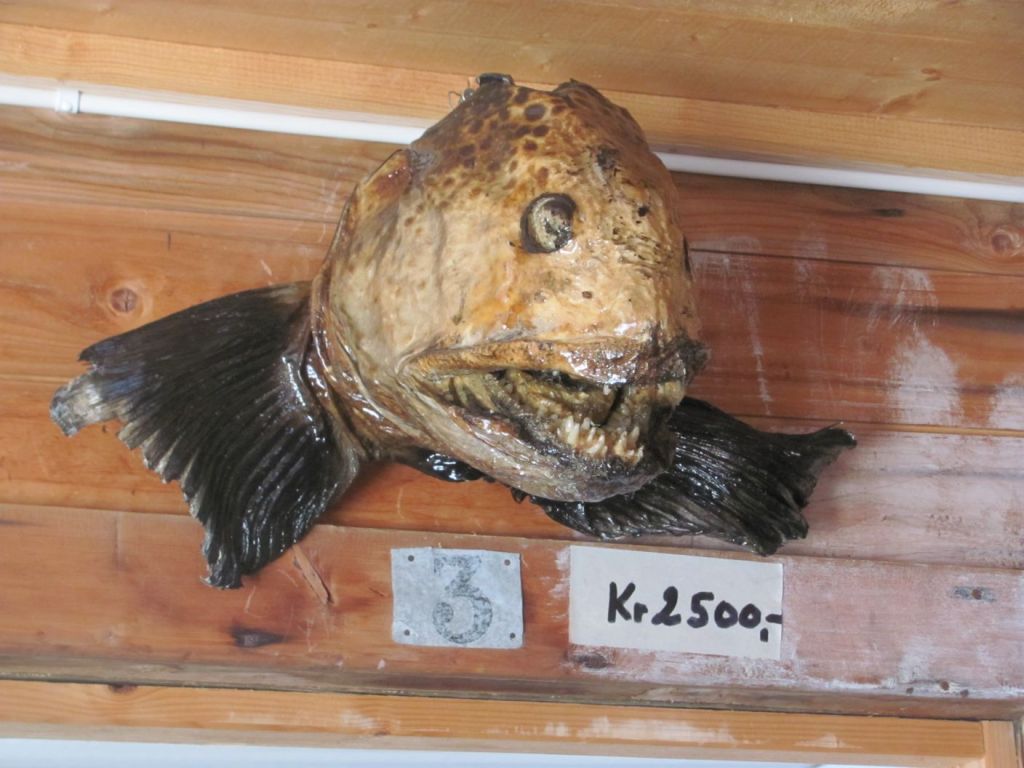
“Yes, they add a bit of atmosphere to the place”, says Trond, looking up at the head of fish mounted above the bar. “I wanted to contribute to preserving some of the island’s heritage.”

Adding to the atmosphere.

The conversation turns to international affairs.

“He’s got himself into a mess now”, says Trond. “And I am not sure how he’s going to get himself out of it without losing face.”

He is referring to the war in Iran.

“The whole war was ill-conceived and illegal in the first place”, he continues. “First of all, he rips up the perfectly good agreement that Obama had negotiated with the Iranians, then they bomb the site where the nuclear weapons were supposed to be being made, then they start more negotiations, which, by all accounts, were making some progress. Then without warning, they start bombing the place. And killing all those young girls at the school. That surely is a war crime.”

“Well, at least Europe didn’t get involved this time”, I say.

“And I am glad they didn’t”, he says. “No one wants Iran to have nuclear weapons, but when they are making some progress with negotiations, the last thing needed is to declare war. What has it achieved? The only result is that it has weakened America in the eyes of the world and strengthened Iran.”

“And now they don’t even have an agreement”, says the First Mate. “Only a Memorandum of Understanding.”

Drinks finished, we give a hand with putting up the marquee.

“Well, that was interesting”, says the First Mate as we walk back to the boat. “We always seem to meet such nice people in these remote places.”

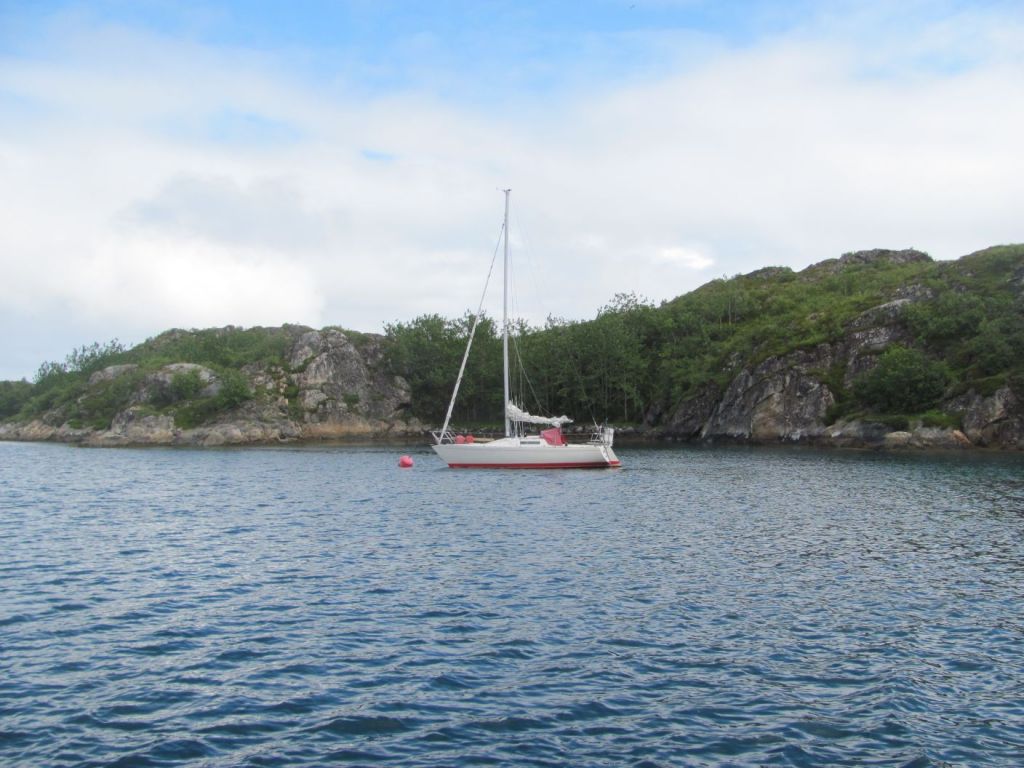
We cast off the next morning. The shag is back on his pole, and watches us impassively as we pick our way slowly around the perches marking the shallows on each side of the entrance. We have decided to have lunch at a small anchorage on the neighbouring island of Helløya, where the sailing guide tells us that there is supposed to be a buoy to tie up to. We wend our way in through the narrow inlet, through the flock of kittiwakes bobbing on the water, only to find that a small boat is attached to the buoy. No-one seems to be on it, and a dinghy lies on the small beach opposite.

Spot taken!

“It’s funny how we hardly see any other boats around when we are sailing, but when we want to tie up to a buoy, it’s occupied”, says the First Mate. “I wonder where they came from?”

We drop anchor instead. It’s not the best of sets and we drag slightly, but we can keep an eye on it while we eat.

As we prepare lunch, I hear voices on the cliffs overhead. There are four people, looking down at us.

“They’re probably the owners of the boat”, I say.

Sure enough, two of them return to the dinghy and row back out to their boat. They collect something, then row back, this time passing near us.

“Hi, we just thought we would say hello”, they say. “We’ll be leaving soon, so if you want to use the buoy, it will be free.”

They are young, and the accent is Antipodean.

“Yes, we are Kiwis”, they say in response. “We have just bought the boat in Kirkenes up near the Russian border, and are sailing her back. We are heading back down to Oslo, but we have all summer to do it. We have some friends from Holland with us. And yes, it is a bit crammed in there.”

Ah, the carefreeness of youth!

We go through the time honoured Kiwi ritual of asking each other if we know so-and-so from our respective home towns. It is surprising how often it turns out that there are acquaintances in common. Or perhaps not surprising, given that New Zealand is a small country. But on this occasion, there doesn’t seem to be.

“We need to get back and collect the others”, they say. “We’ve left them on the shore. Enjoy your lunch and the sailing. Don’t forget to see the kittiwake colony around the corner.”

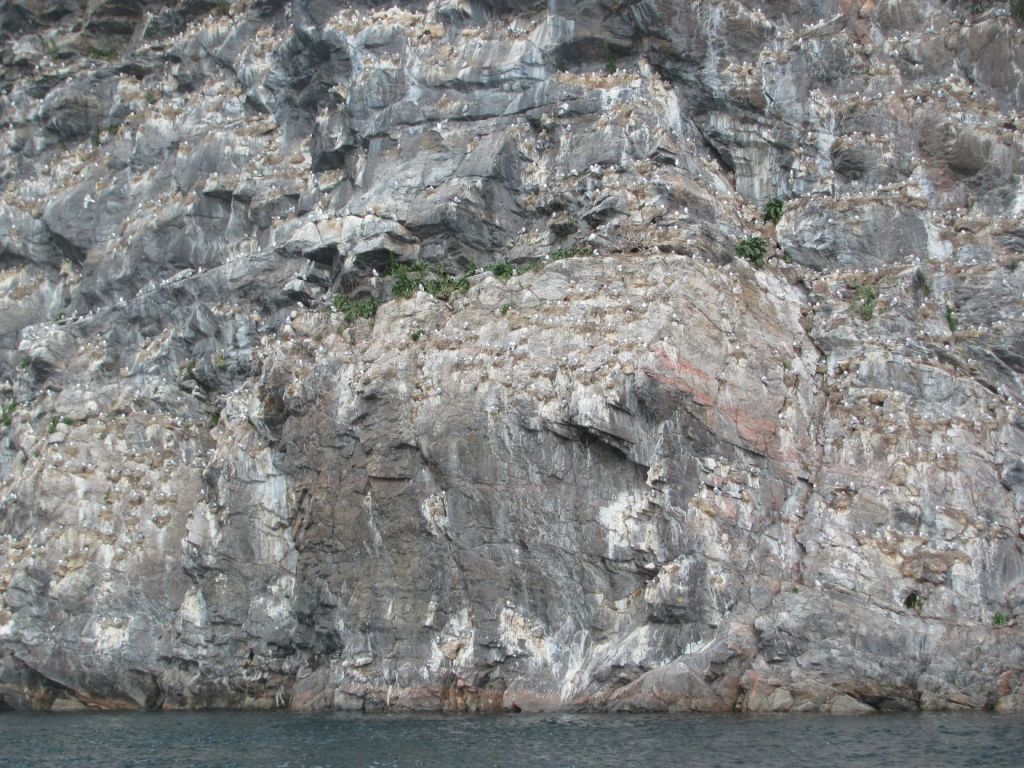
They are referring to a cliff on the southern end of the Sundsvollsundet Nature Reserve on Helløya that is a nesting site for the small white and grey seabirds. The smell and the cacophony of sound as we pass by it is overwhelming.

“It reminds me of Fowlsheugh In Aberdeenshire”, says the First Mate, screwing up her nose. “There are thousands of them.”

Kittiwake cliff.

We push on to Engenes. There the harbour is being totally reconstructed, but there is a spare pontoon to which we tie up.

“The shop closes in 20 minutes”, says the First Mate. “I’ll just nip up and get some bread and milk. Otherwise there doesn’t seem to be much here.”

Evening in Engenes.

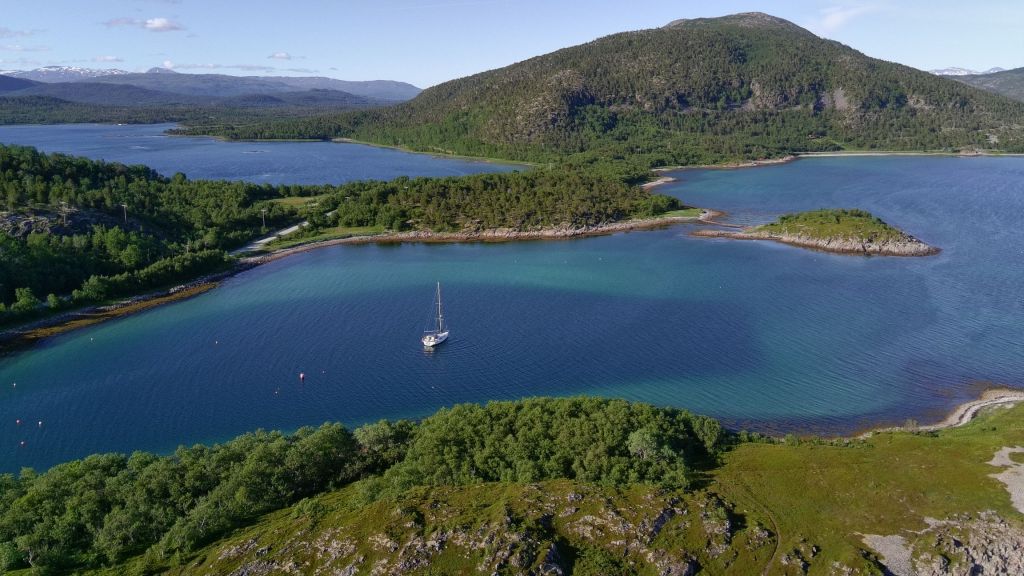
It rains that evening, and into the next morning. When it stops, we decide to carry on, and reach the delightful small anchorage of Revshamna on the east coast of Senya in the late afternoon. The charts show a shallow bar at the entrance and it is nearly low tide, so we are a little worried that we will not be able to make it, but, in the event, we pass over it with a metre to spare. We drop the anchor in the middle of a deeper pool in the middle of the bay.

“What a beautiful anchorage”, says the First Mate. “It’s so sunny and warm. Let’s have a glass of wine and relax.”

Anchored in Revshamna.

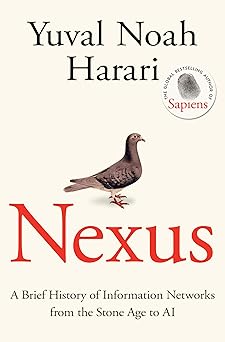
I pick up the book that I have been reading, Yuval Noah Harari’s latest, “Nexus”. In it, he argues that human history is best understood as the story of increasingly powerful ‘information networks’ rather than just technological or political progress. From oral storytelling and religious myths to writing, printing, and modern digital media, each new system for sharing information has allowed large numbers of strangers to coordinate with each other. However, each has also created new vulnerabilities—the spread of errors, propaganda, and collective delusions that can propagate across societies. What we call ‘civilisations’ are really just large networks held together by shared stories, not just facts.

“It’s an interesting viewpoint”, says Spencer, looking over my shoulder. “And a lot of truth in it. I sometimes think that you humans are not really interested in the truth of how things really are, but more in the comfortable stories that you tell to make yourselves feel good. Look at the lies that are told daily by the leaders of your most powerful countries. And yet they are just lapped up because it makes a good narrative and fits the perception that people have of themselves.”

“But surely with the advent of new tools like Artificial Intelligence, we will get closer to what is really happening?”, I say. “I find ChatGPT pretty useful for finding things out.”
Spencer snorts. “It’ll only get worse with AI”, he says. “AI is a fundamentally new kind of information system compared to the previous ones — it is the first that can generate, interpret, and act on information independently of human judgement. The risk is that this shifts power away from humans toward incomprehensible algorithms and the institutions that rely on them. This, in turn, risks undermining democracy, accountability, and even the idea of shared truth. I don’t mean that AI is inherently bad, just that it acts as a force that amplifies whatever incentives are embedded in it. How do you know, for example, that what you are getting from ChatGPT isn’t biased towards a particular world view?”

He does have a point. I don’t know.

There’s a splash in the water.

“It sounds like there are fish here”, says the First Mate, looking up from her Sudoku puzzle. “I might get the rods out.”

In the morning, it is raining when we wake up. We have a leisurely breakfast, by which time it has cleared.

“I think that we should push on”, says the First Mate. “Finnsnes is the next stop, and we need to do some shopping. We’re running low on several things.”

We arrive in Finnsnes. Originally just a small farming community, it has grown rapidly in recent years, and is now a significant centre for commerce in the region. We do some shopping to restock our provisions, and I buy a new fishing rod to replace the old one that is now worse for wear.

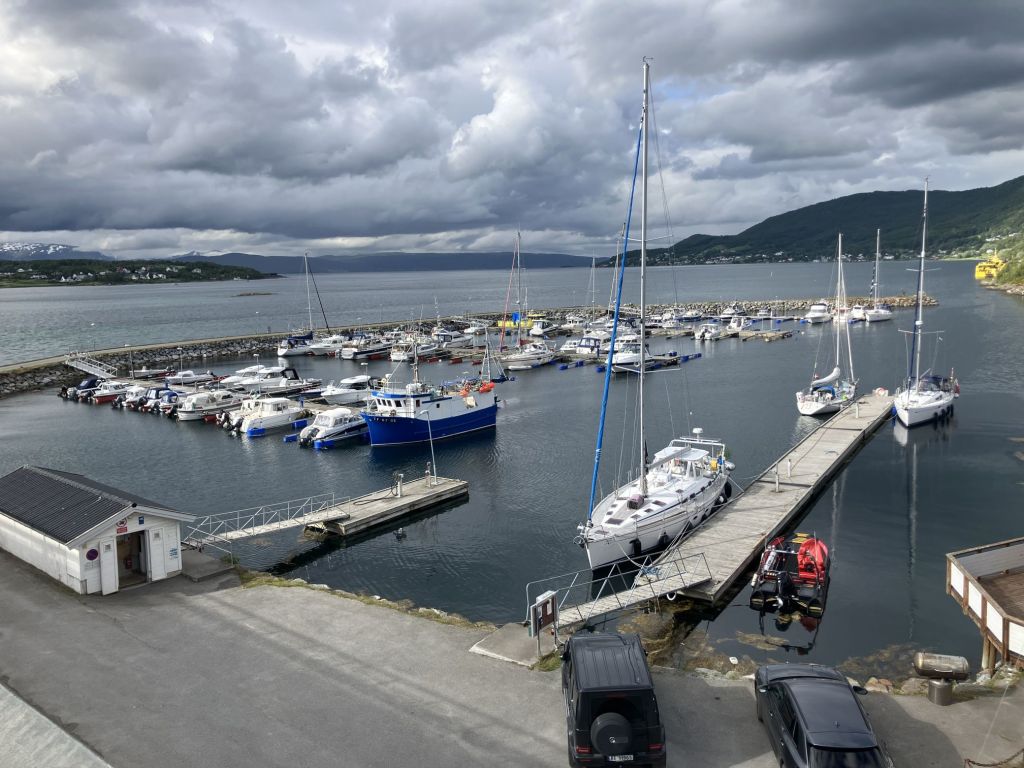
Finnsnes marina.

Back at the boat, I strike up a conversation with the skipper of the boat next to us.

“I see that your Royals are also acting up”, I say. Just like some of the ones in Britain.”
There is a report in this morning’s newspaper about Marius Borg Høiby, the son of Norway’s Crown Princess, being sentenced to four years in prison for rape, physical assault, and drug and driving offences.

“Yes, it has all been a complete embarrassment for the Royal Family”, he tells me. “He’s a bit of a troubled character. When he was born, his mother was a waitress and his father was in prison for drug-related violence offences. They weren’t even in a relationship, so she brought him up as a single mother.”

“How did he come to be part of the Royal Family, then?”, I ask.

“Well, our Crown Prince, Haakon, took a fancy to his mother, Mette-Marit”, he answers. “They were married in 2001, and so Marius became Haakon’s stepson. But he doesn’t have any titles, and he isn’t in the line of succession. He did work as a model occasionally, but otherwise hasn’t ever had a proper job. It seems that his step-father pays him an allowance to support his lifestyle. It would have been better if he had gone out to work and made something of himself.”

Crown Princess Mette-Marit (from Wikipedia)

“Isn’t his mother a bit controversial as well?”, I ask. “I read that she was part of the Jeffrey Epstein circle.”

“Yes, it seems from the Epstein files that she was a lot closer to him than she has admitted”, he says. “She claims that she didn’t know he was a paedophile, but she did stay in touch with him even after he was released from prison for that, so it is a bit difficult to believe her. So overall she is not very popular, and she has since been removed from patronage of various organisations. But she is very ill at the moment with pulmonary fibrosis and has just had a lung transplant, so at one level you have to feel sorry for her. But the whole affair hasn’t reflected well on Norway. I don’t think that she should ever be Queen.”