An exhilarating crossing, a tough climb, and fish for dinner

“The weather is looking good tomorrow for the crossing to Lofoten”, says Andy, sipping his tea. “I reckon that Sørvågen is the best place to head for. I know that we talked about Moskenes at one stage, but that is just a boring ferry terminal, while Sørvågen looks to be a pretty little village. They are only a couple of miles apart. Aloucia and Hekla are already at the island of Røst at the very tip of the Lofotens and can meet us there.”

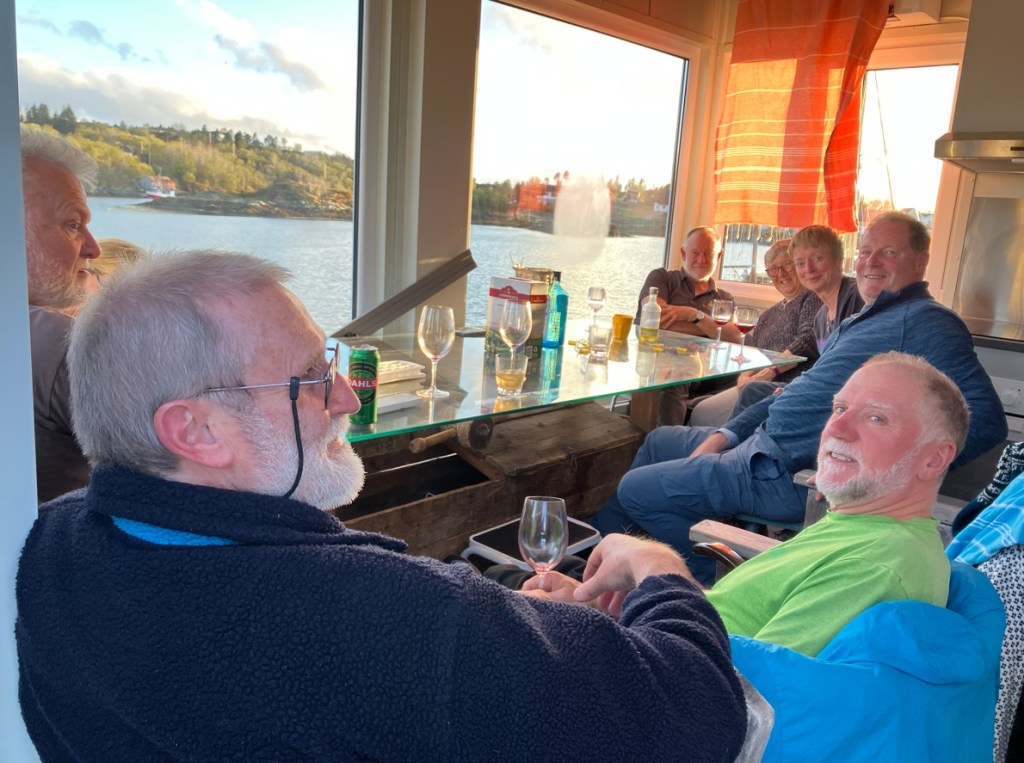
Andy and Anne are with us for a cup of tea and cakes. Andy’s brother Rick has left to fly back to the UK, and we have been kicking our heels waiting for favourable winds to let us sail from Bodø over to the Lofoten islands, a distance of 52 NM and a ten hour sail.

“Sounds good”, says the First Mate. “I hope that it isn’t too rough with all the bad weather we have been having.”

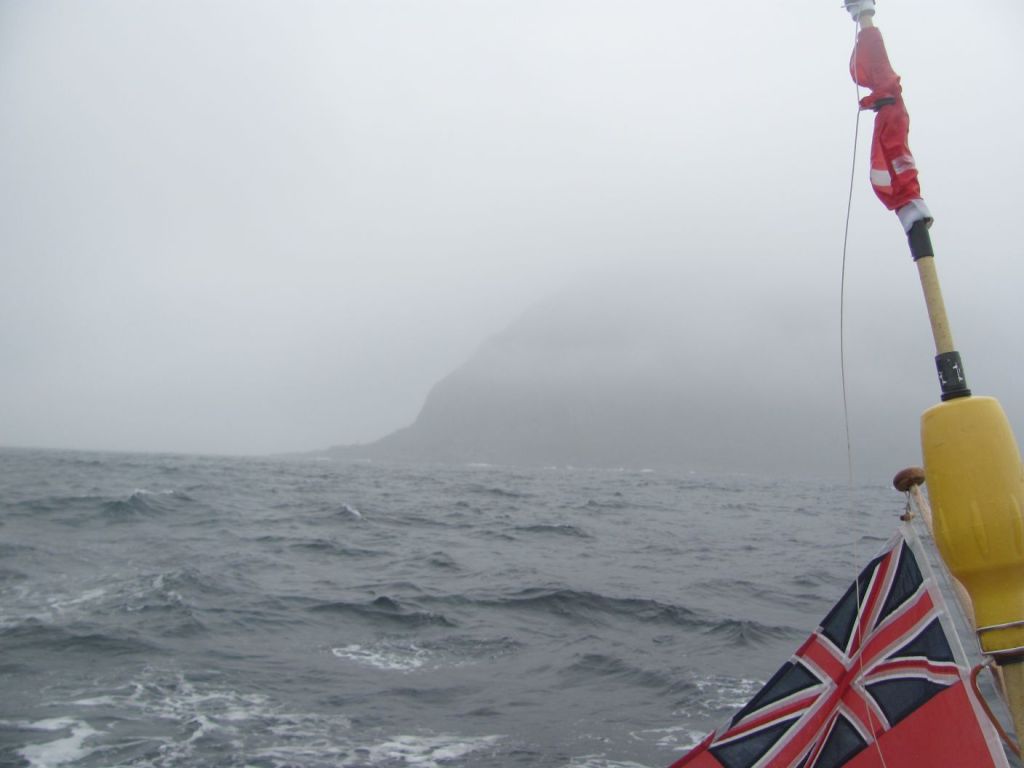
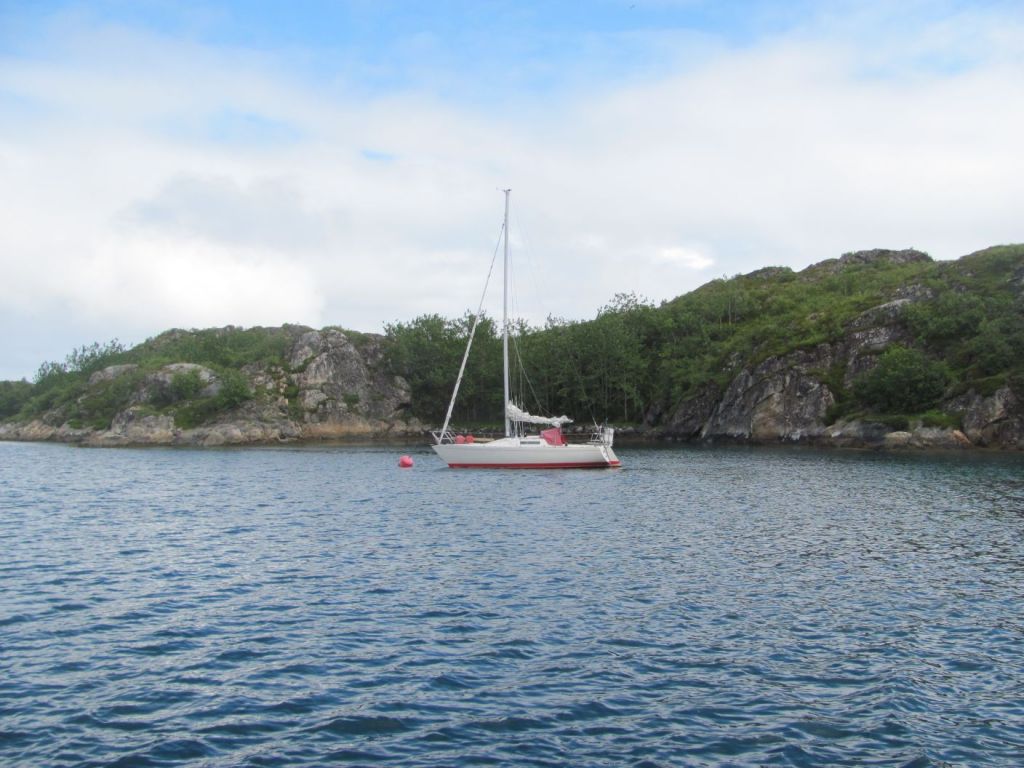
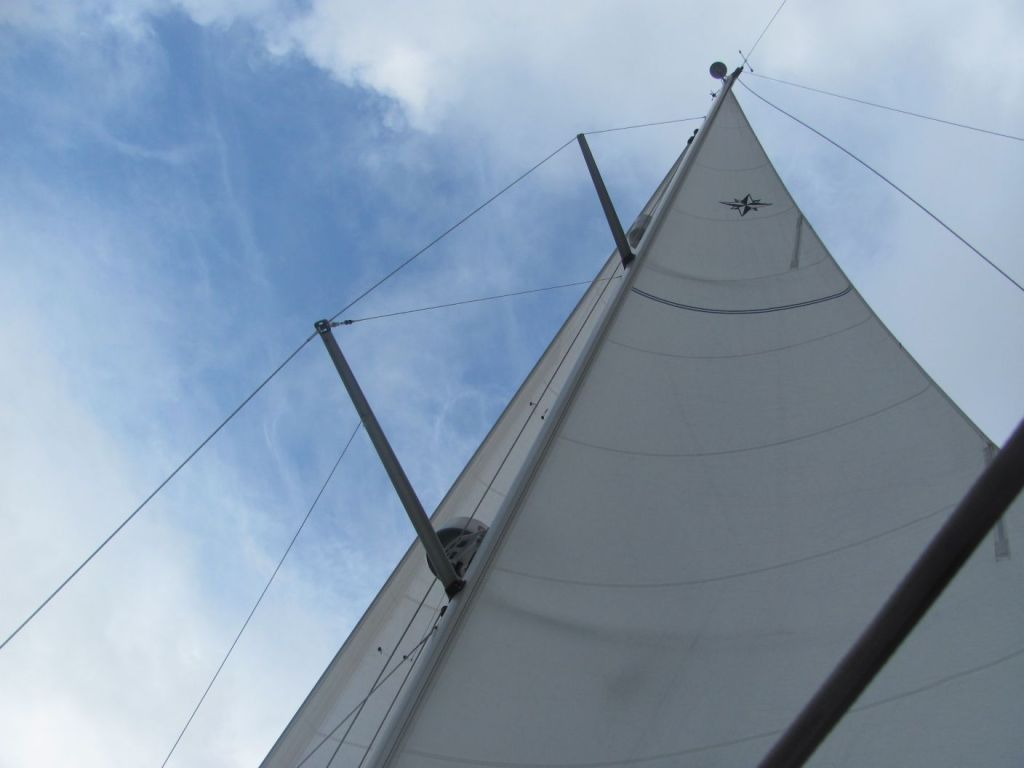
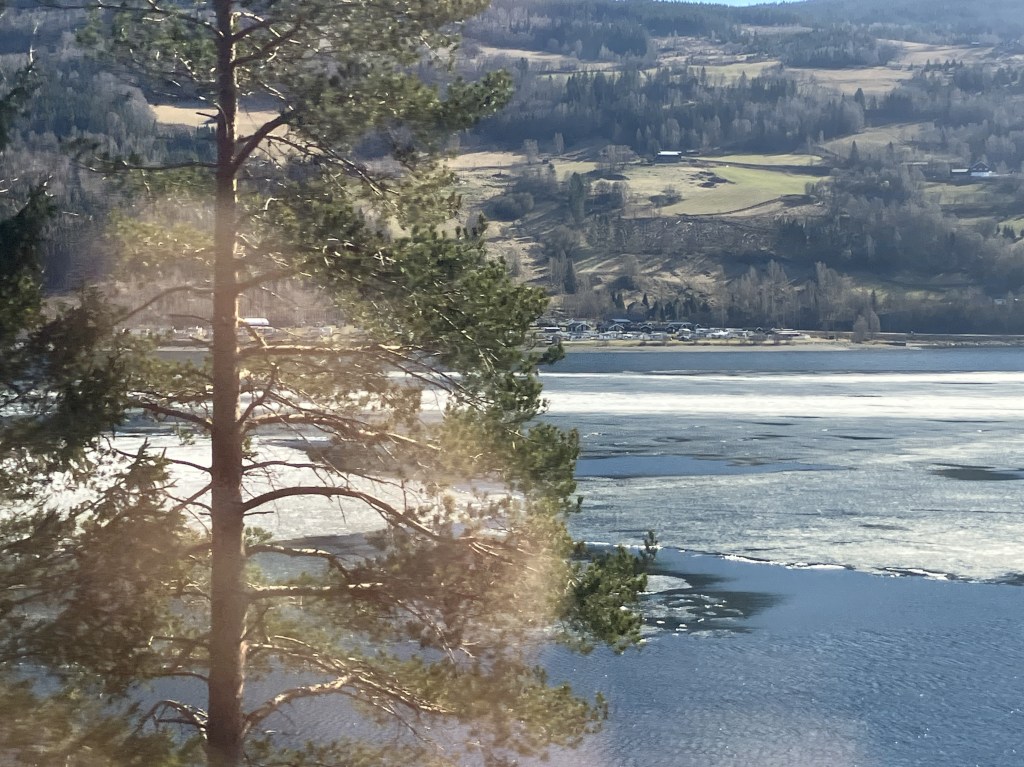
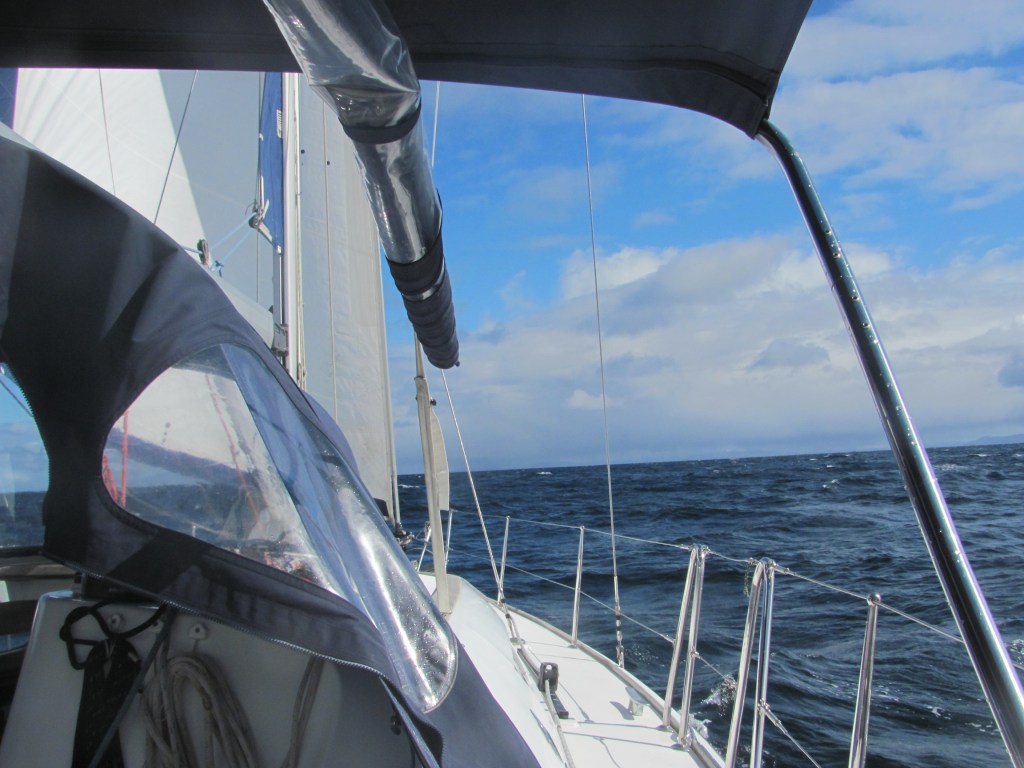
We leave the next morning at 0600. It’s drizzling and misty, and we motor out clear of the numerous small islands surrounding Bodø. Soon however, the drizzle stops and the mist clears and we are left with a beautiful bright sunny day. We unfurl the sails and catch the wind. Ruby Tuesday settles into her slot, and soon we are skimming over the waves on a comfortable beam reach. Amalia is behind us.

Crossing from Bodø to the Lofoten islands.

I pick up the guide book to find out more about the Lofotens.

“The Lofotens are made of some of the oldest rocks in Europe, some of its gneisses and granites having been created deep within the Earth’s crust three billion years ago”, it tells me. “When the two tectonic plates Laurentia and Baltica collided with each other 450 million years ago during what is called the Caledonian Orogeny, a huge range of mountains comparable to the Himalayas were created, stretching across Norway and Scotland, and even to America.”

“I am always amazed at how much they know about so long ago”, says the First Mate. “It’s not as though anybody was there to see it, after all.”

“Geological observations, and coming up with a plausible narrative to explain them”, I say. “That’s science for you.”

“The older gneisses and granites made up the basement rocks of these new mountains with newer material on top”, the book continues. “Much of the latter were gradually worn down by erosion to expose the older rocks underneath. When the Atlantic Ocean opened up 60 million years ago, both of these ancient and newer rocks on its rim were uplifted.”

“Then during the Ice Ages, glaciers scoured the landscape, eroding the newer, softer rocks first and leaving the older, harder rocks, giving rise to the dramatic landscape we see today”, finishes Spencer, from his nest in the canopy.

“I was hoping that we could get through an episode without him showing off”, says the First Mate. “Why did you have to give him that to say?”

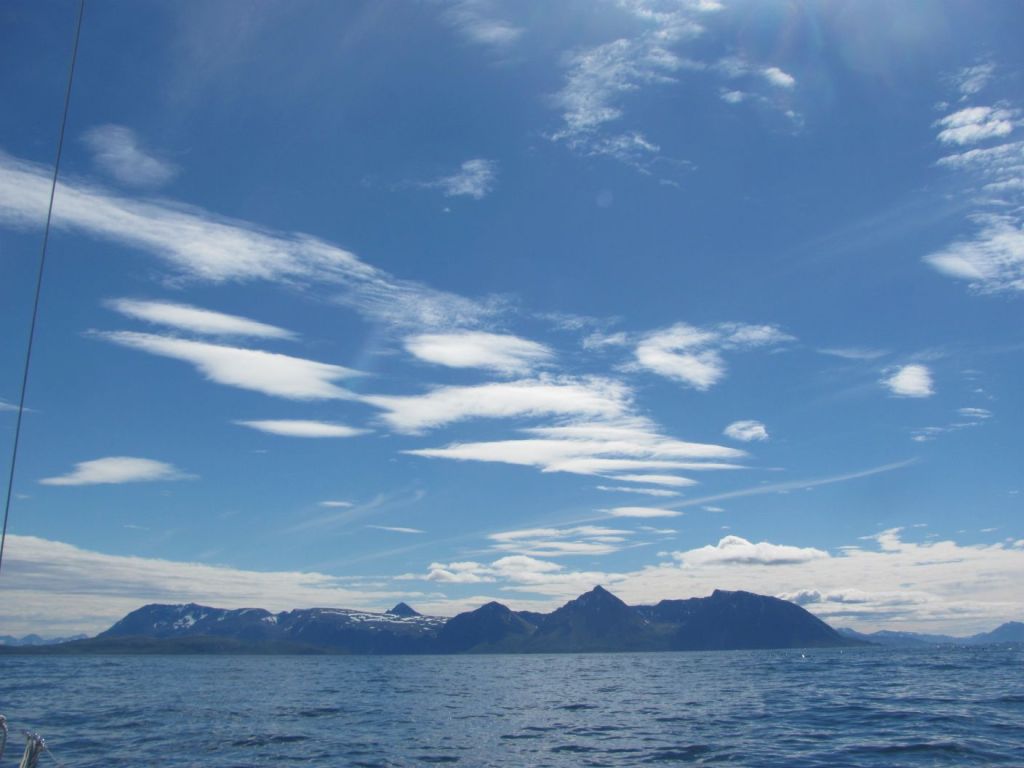
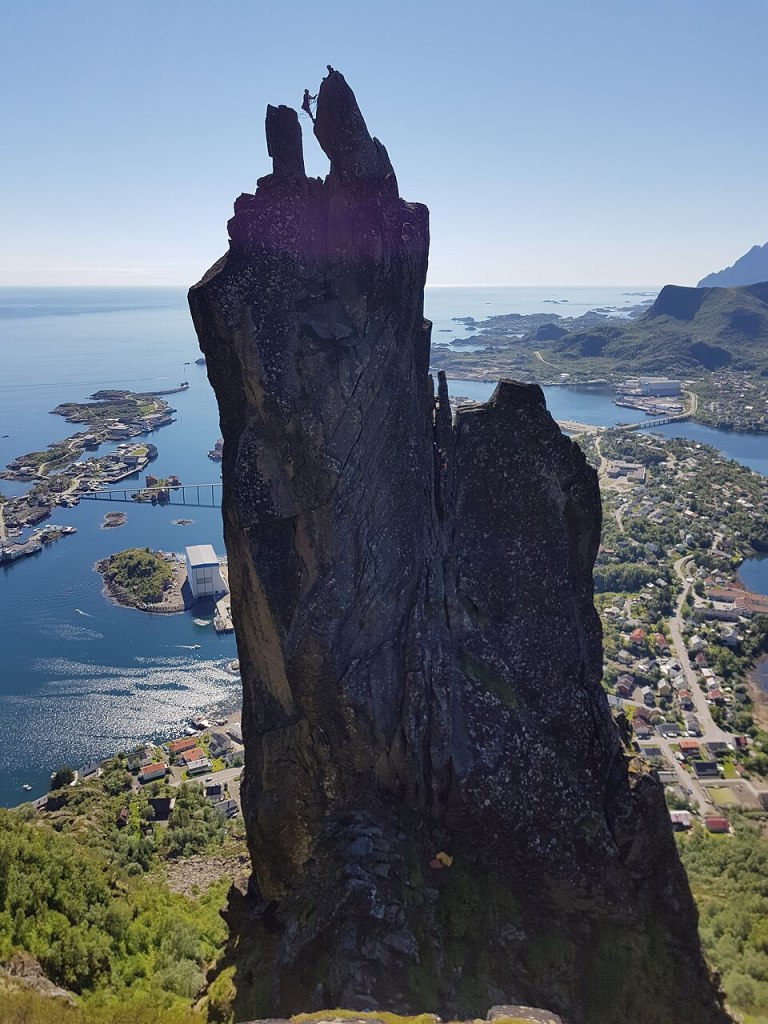
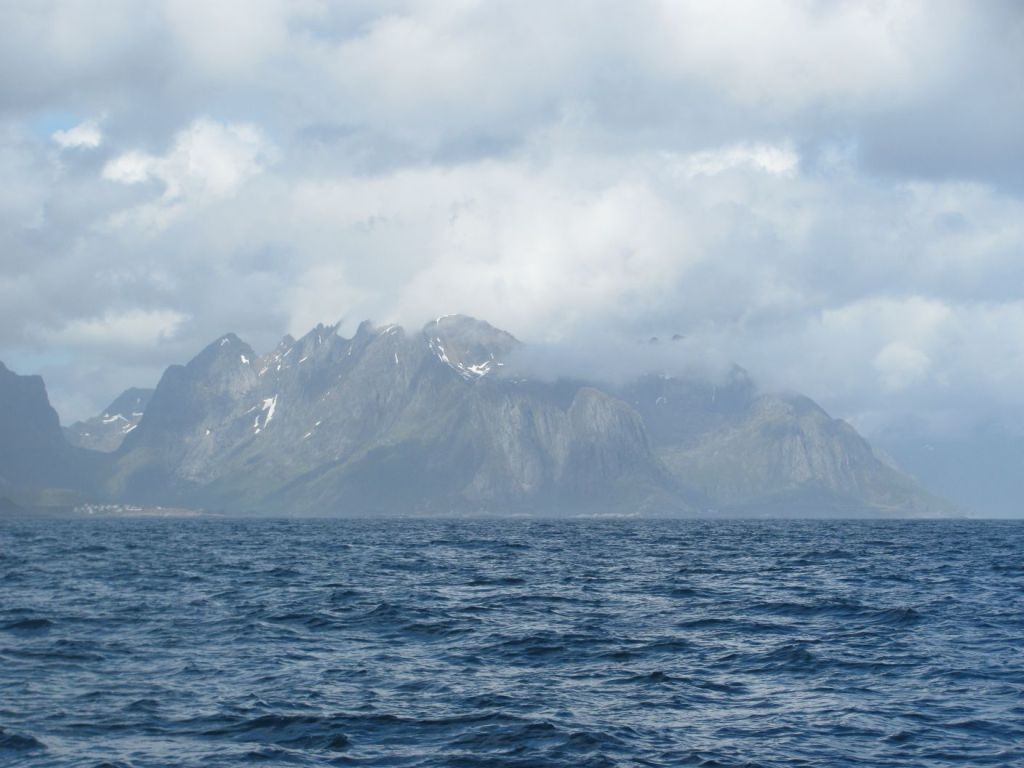
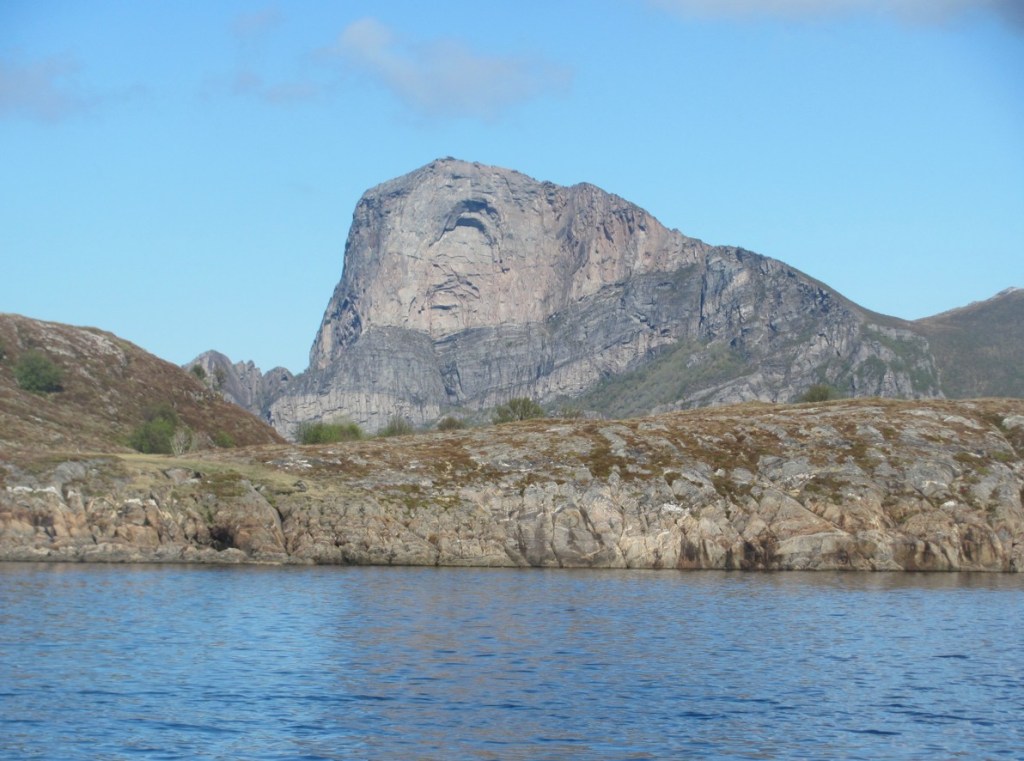
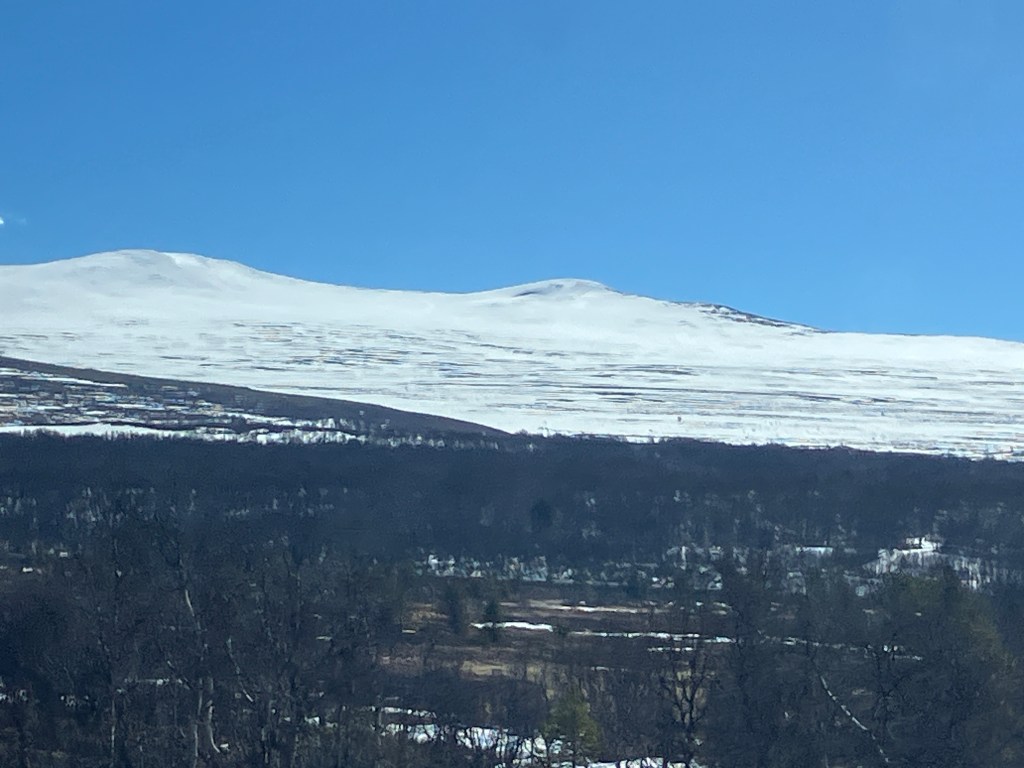
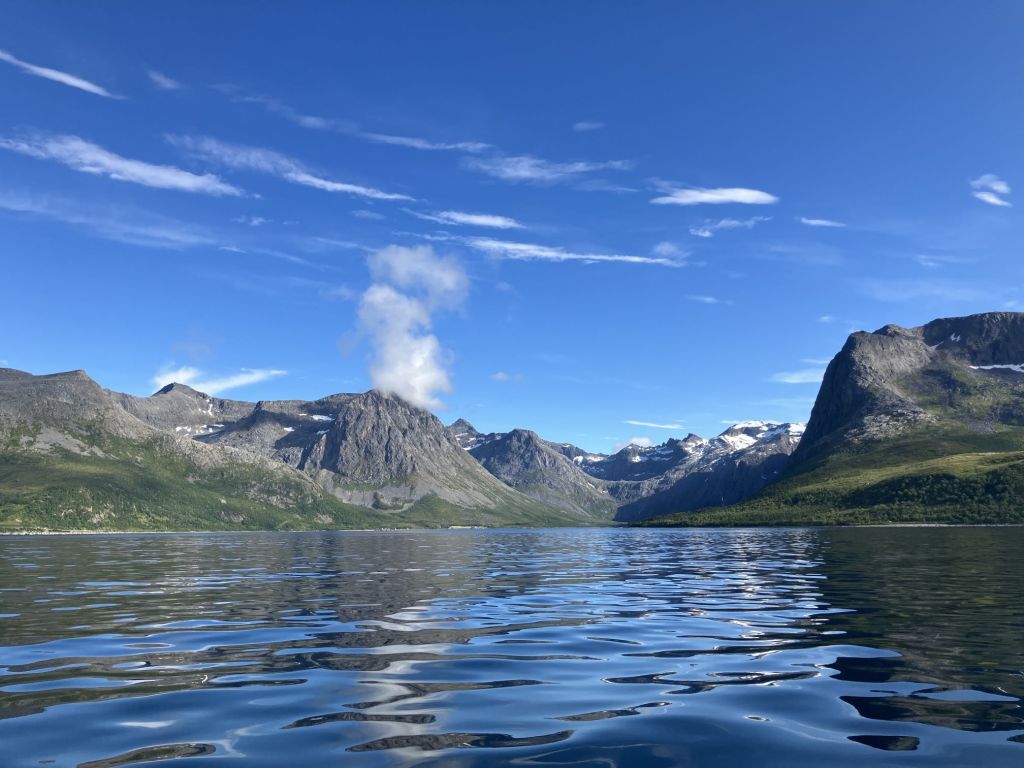
The sea miles pass. It’s exhilarating. At times, we touch eight knots. The mountains in the ‘Lofoten Wall’ gradually appear, so-called because the individual peaks look from the sea like one long stretch of rock.

The ‘Lofoten Wall’ appears.

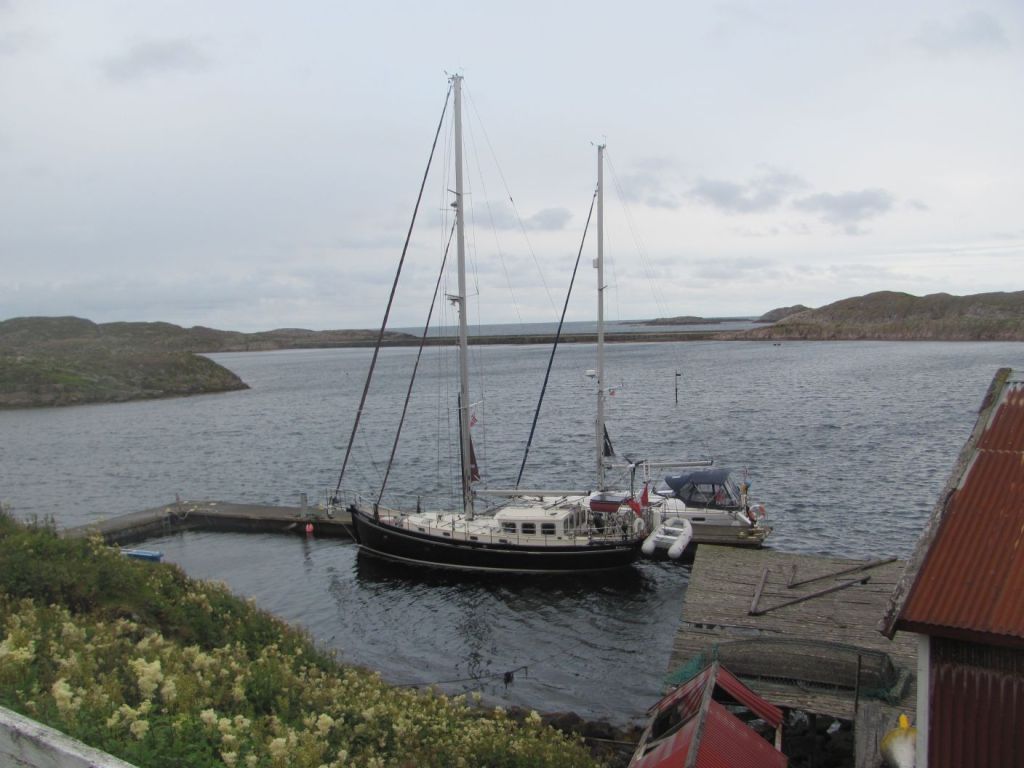
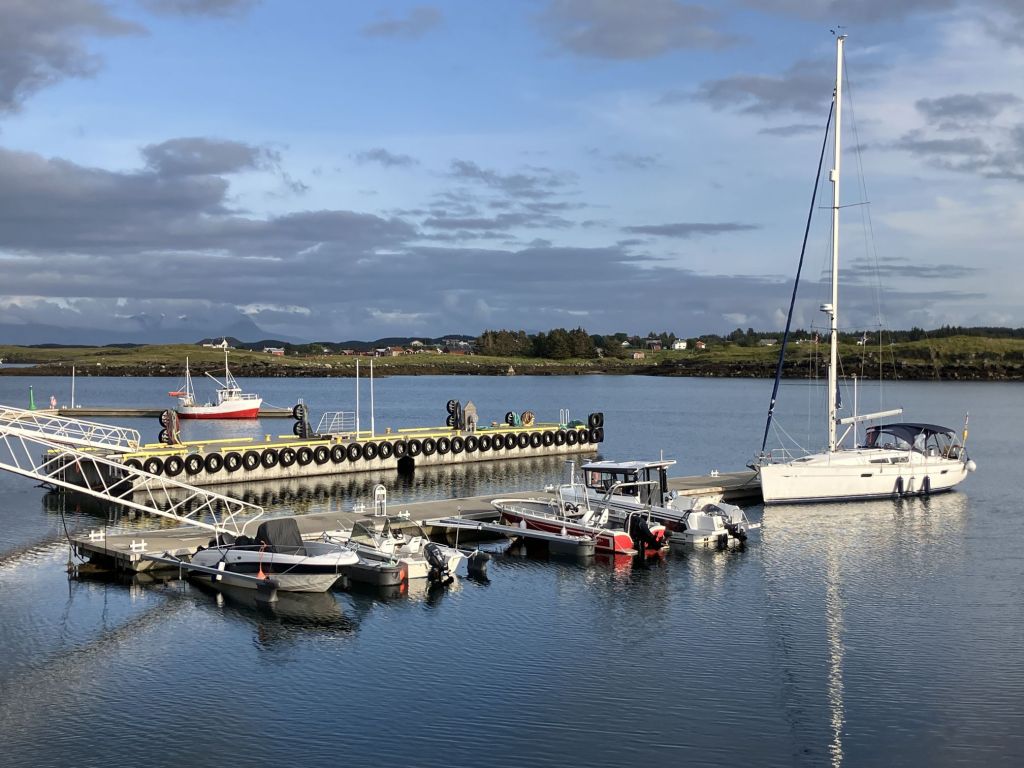
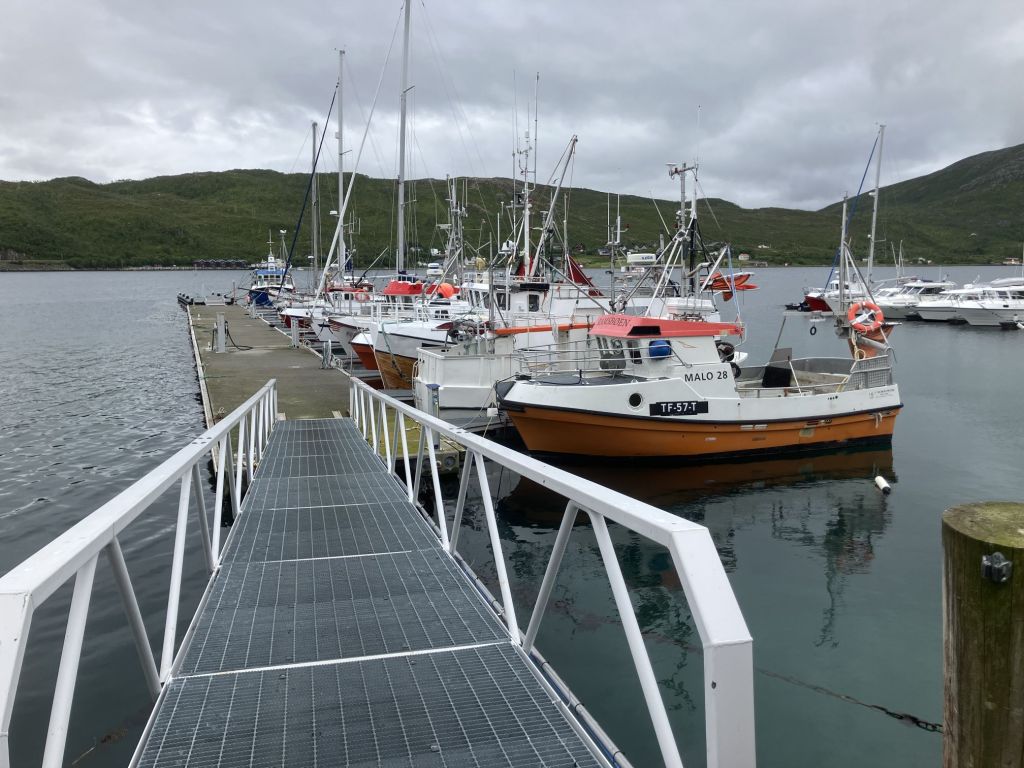
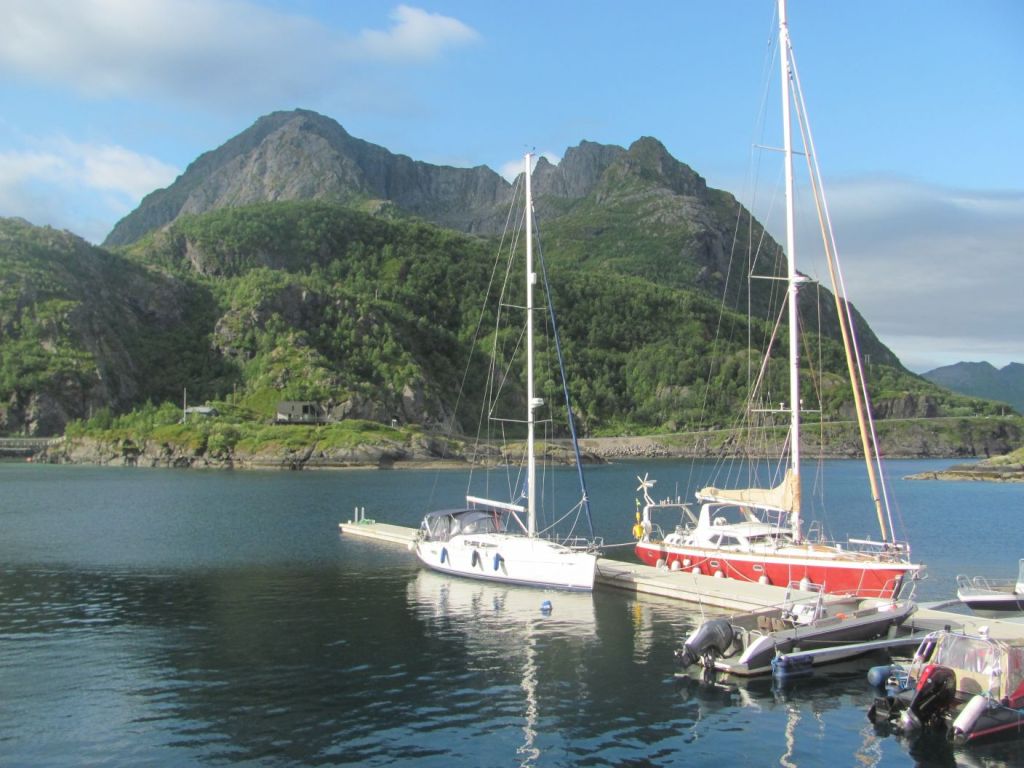
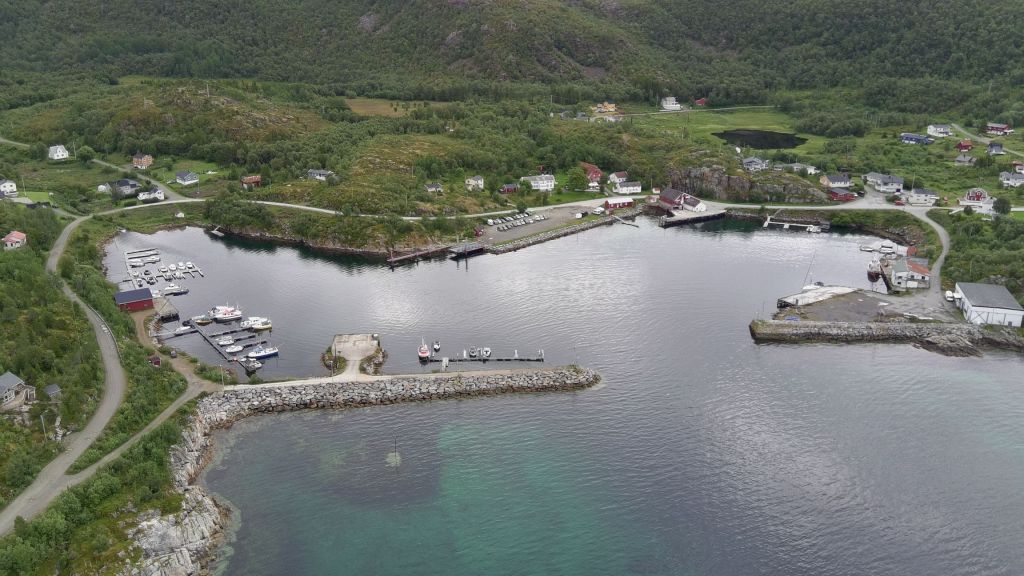
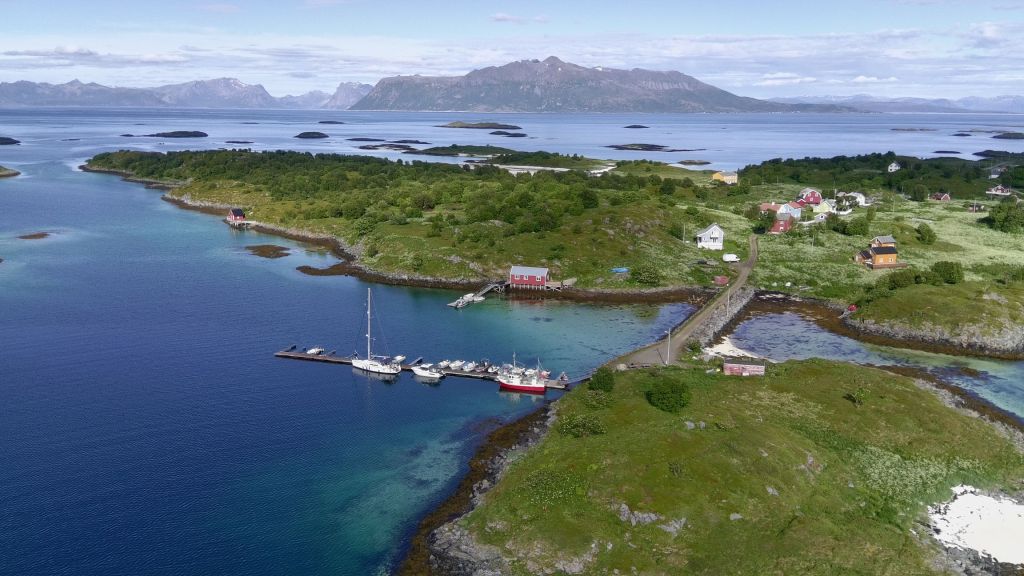
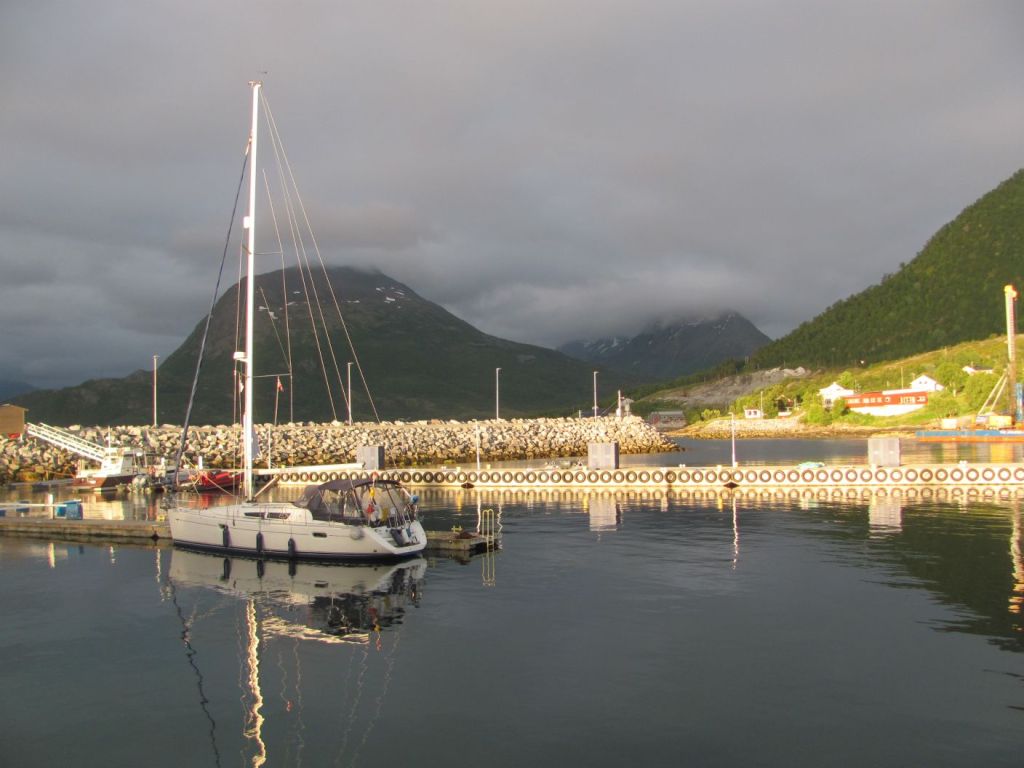
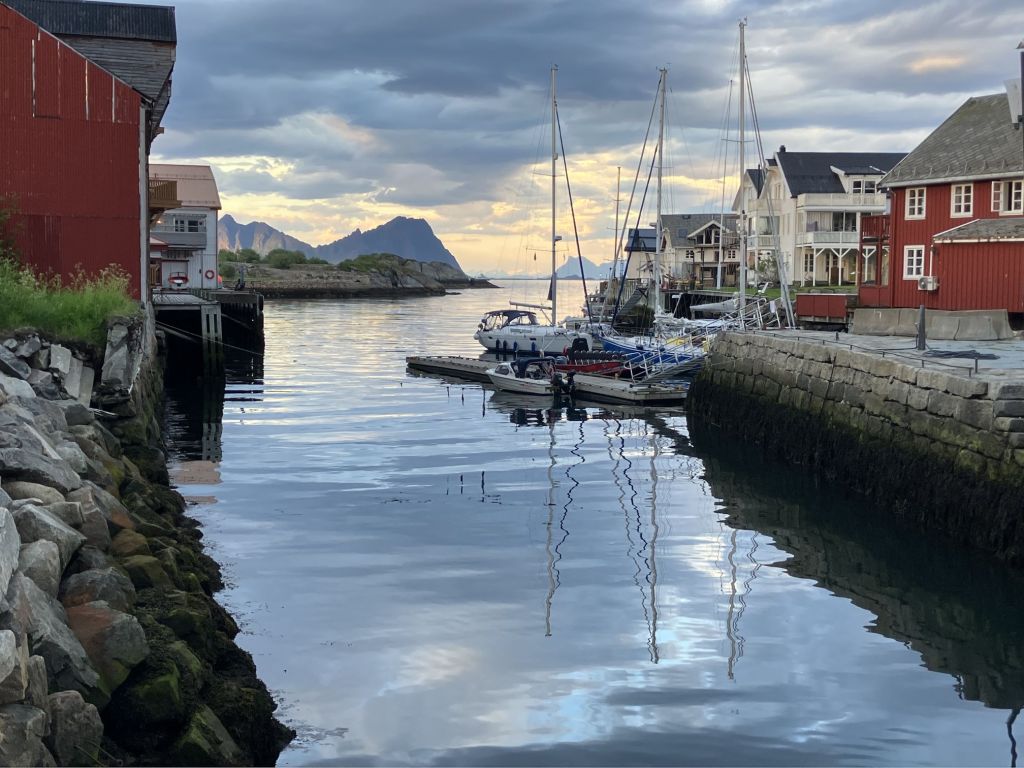
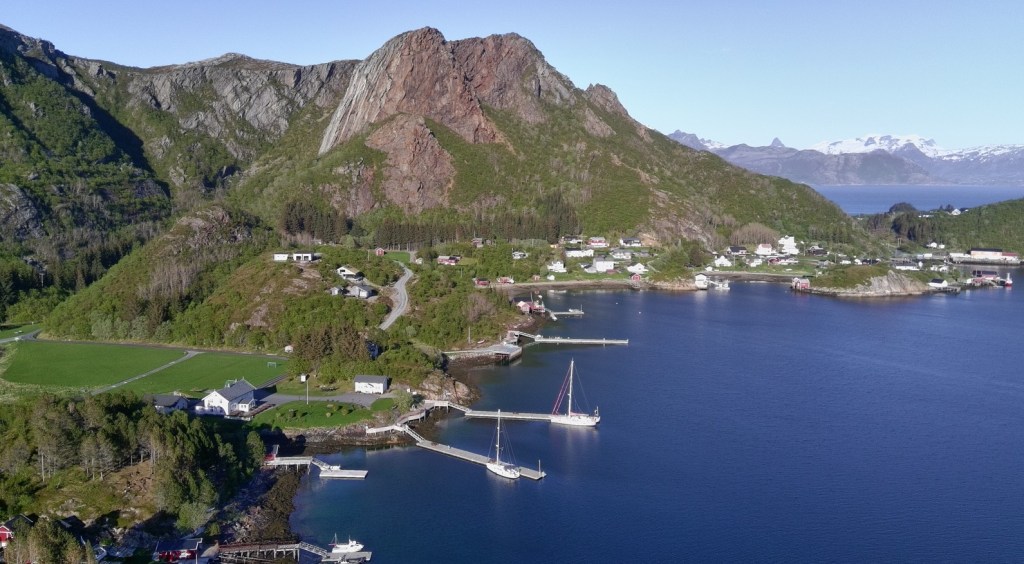
We arrive in Sørvågen harbour, nestled amongst the dramatic mountains. There is a single guest pontoon, luckily empty. We tie up at one end of it, leaving enough room for the other three boats which will arrive soon. Amalia comes next with Andy and Anne, then Hekla with Bob & Fiona, and finally Aloucia with Simon & Louise. We are all together again.

Tied up in Sørvågen harbour.

Both Amalia and Ruby Tuesday are picking up guests who are arriving on the ferry from Bodø to Moskenes in a few days’ time, so we have a few days to kill.

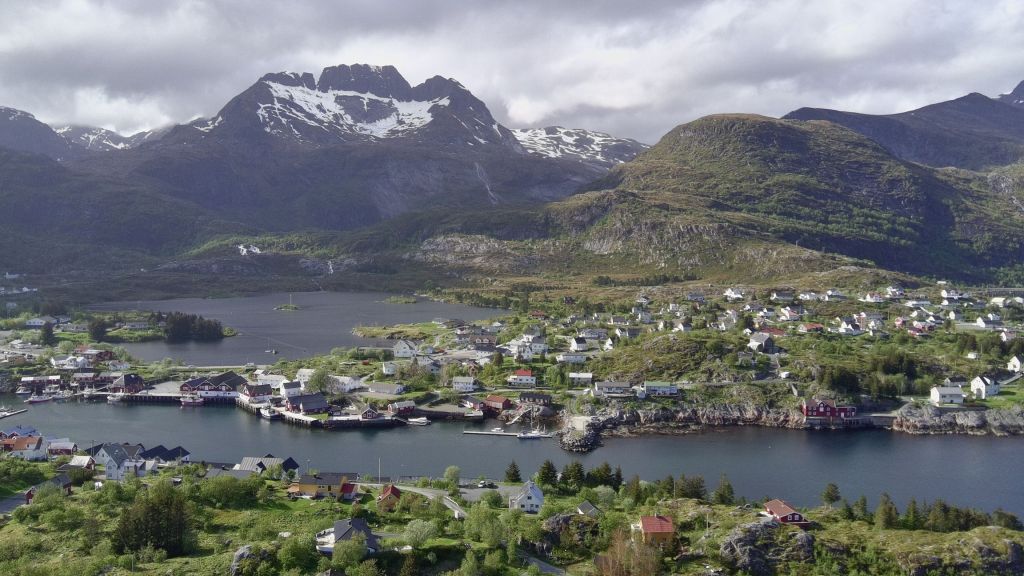
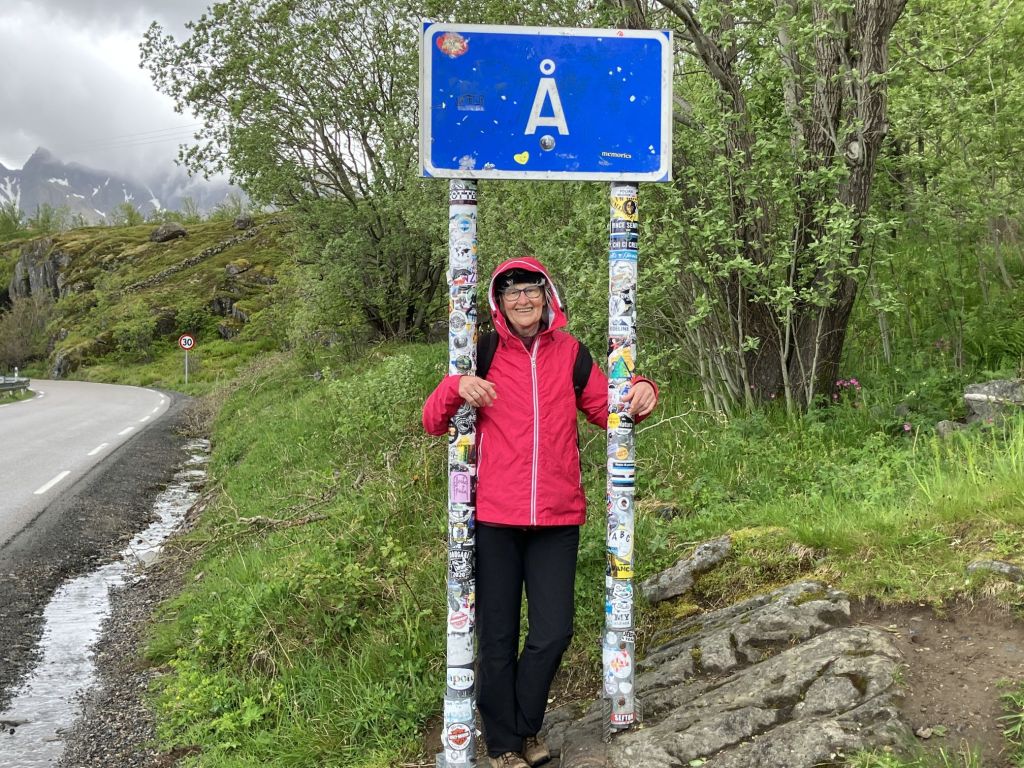
“There’s a fishing village just along the road a bit”, says Bob. “It is called Å, the shortest name in the world for a village. There is a stockfish museum there about the history of fishing in this area. Normally things are shut on Sunday, but I checked and it is open today. We can walk there, see the museum, and see if we can find somewhere for lunch.”

The road winds its way along the rocky coast, past fishermen’s cottages repurposed to holiday cottages, past small sandy beaches and rocky streams, all dominated by the towering peaks and deep-cut valleys behind. From time to time heavy rain pours down, interspersed with patches of bright sunshine. It’s kind of magical. It’s not hard to imagine a line of trolls emerging from the mist and gloom of one of the valleys and challenging us for entering their mystical world.

Reaching the village of Å.

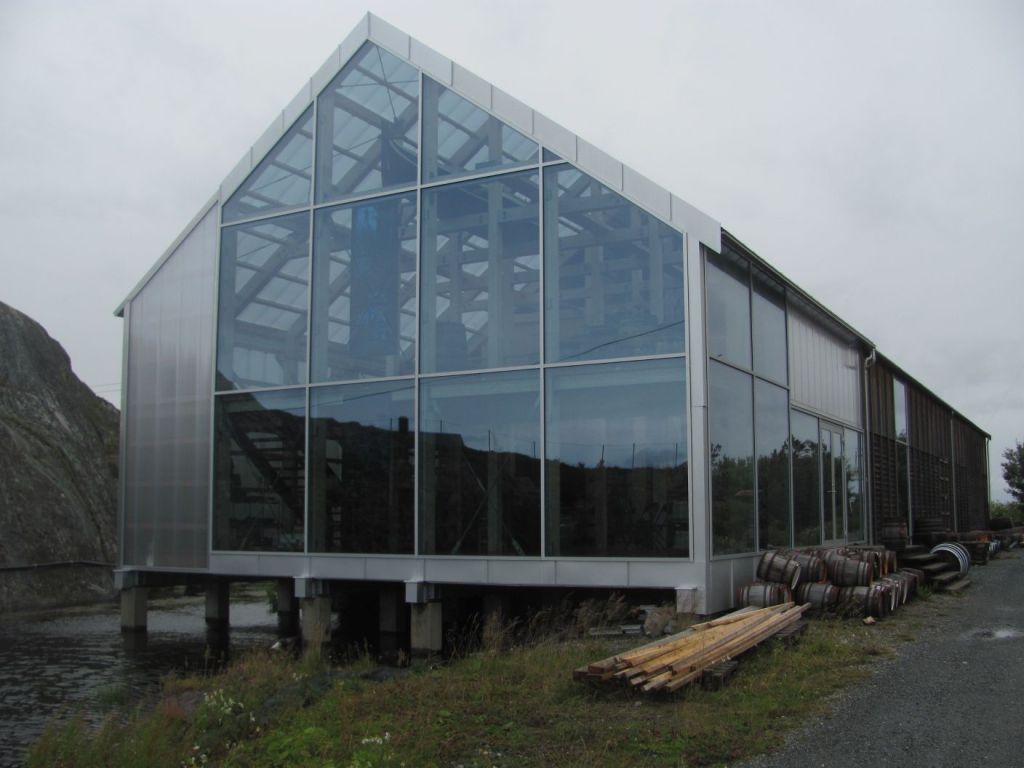
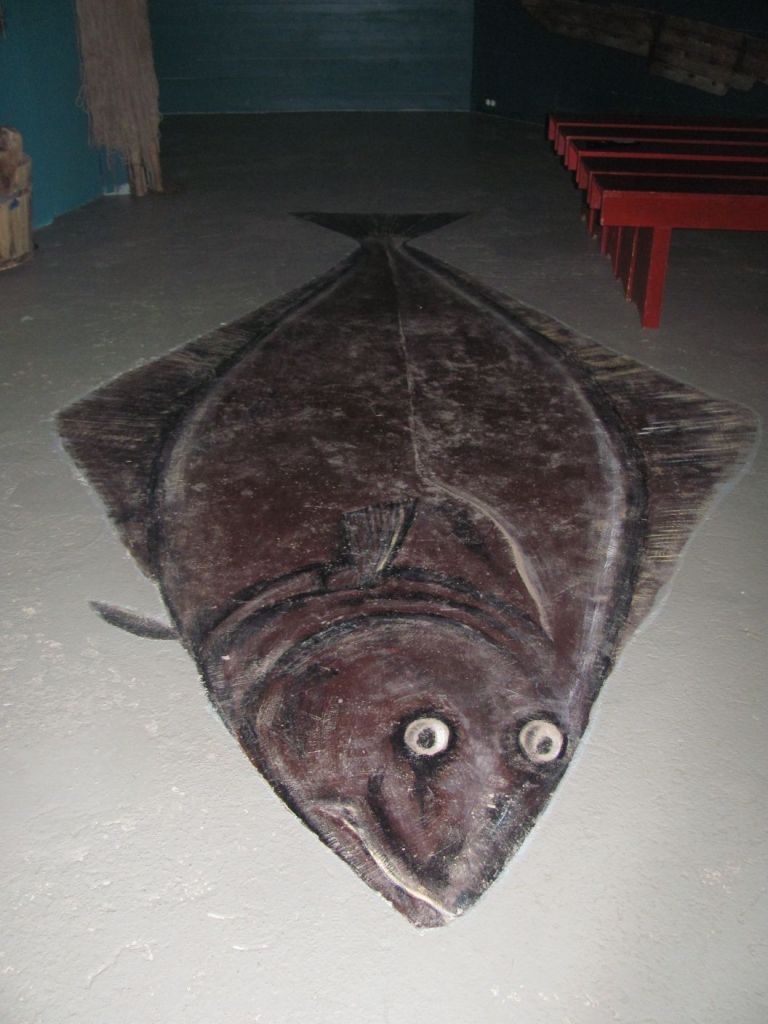
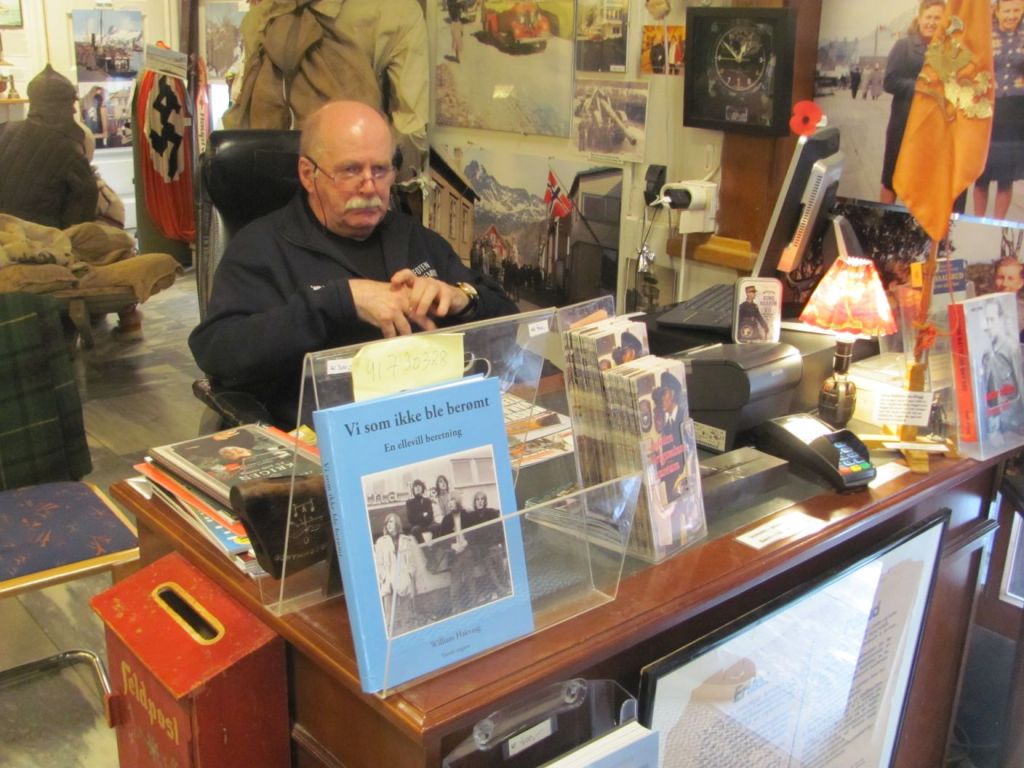
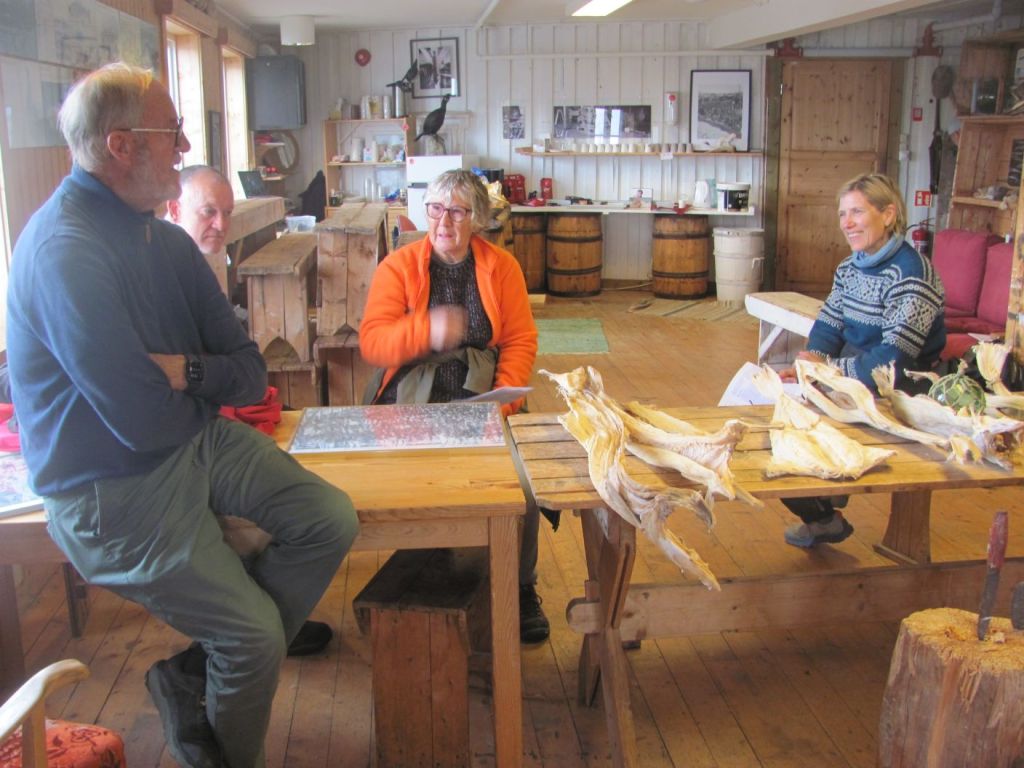
“I used to own the fish processing factory in the village”, the owner of the museum tells us as we sit in a circle around him. “In this very building we are in now. The fishermen would all bring their catches to me, and my staff would process them ready for export. Then when I retired a few years ago, I decided to turn my factory into a museum to preserve the past.”

We learn all about stockfish.

“Pooh, it’s smells terrible fishy in here”, the First Mate whispers to me.

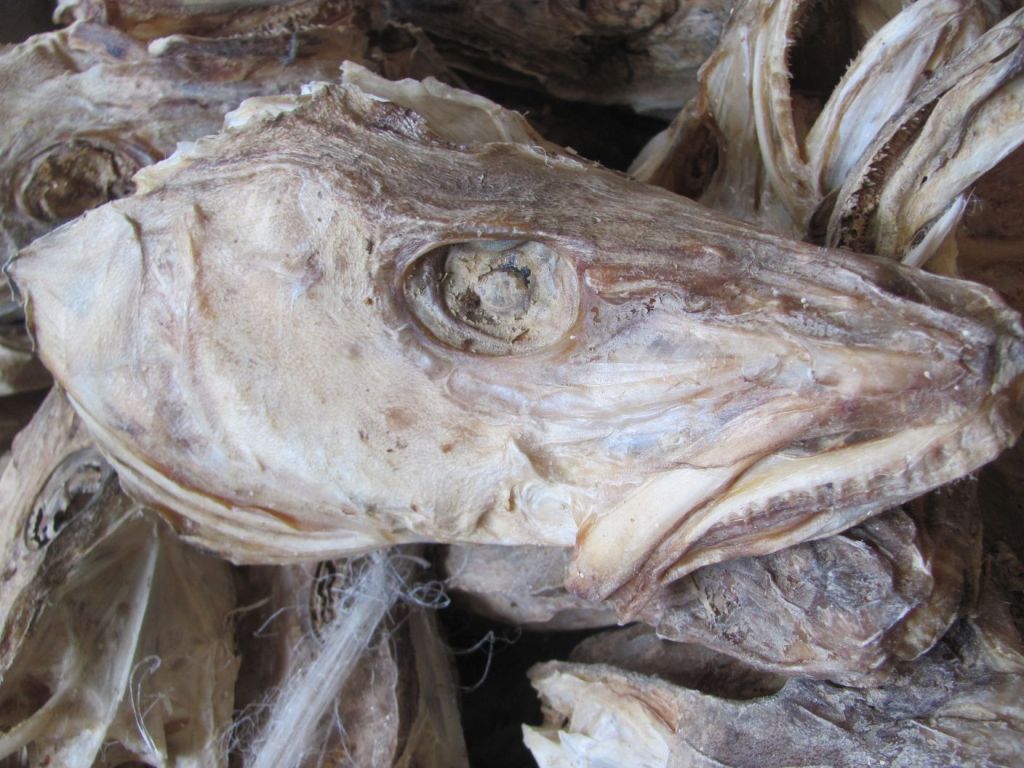
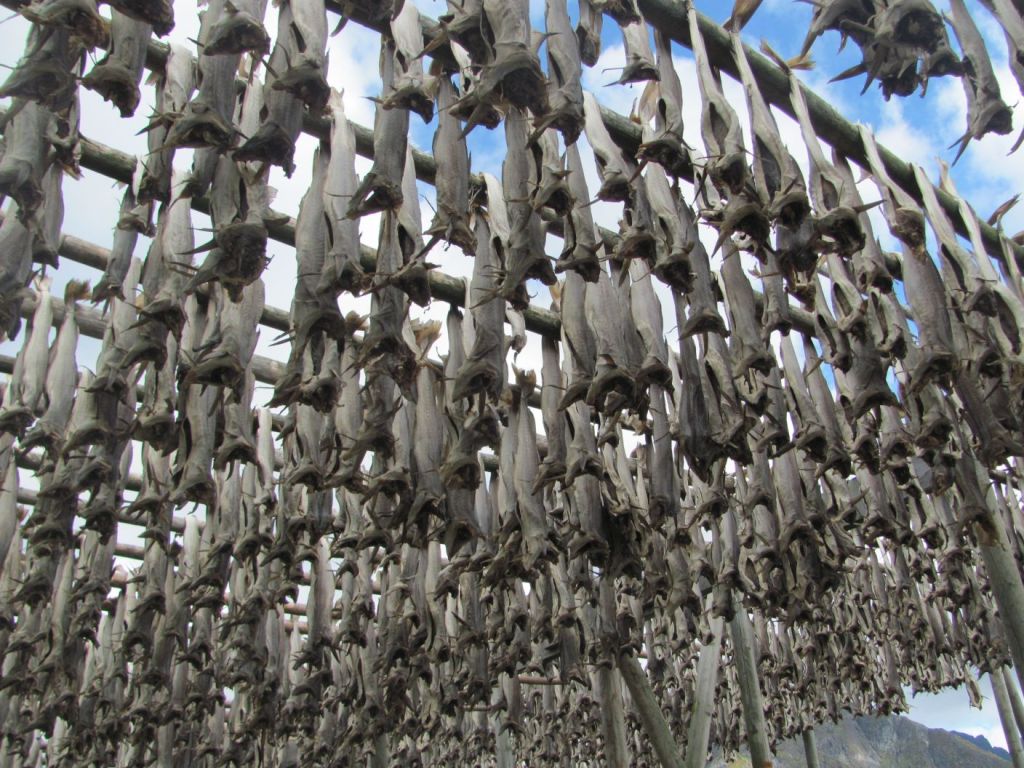
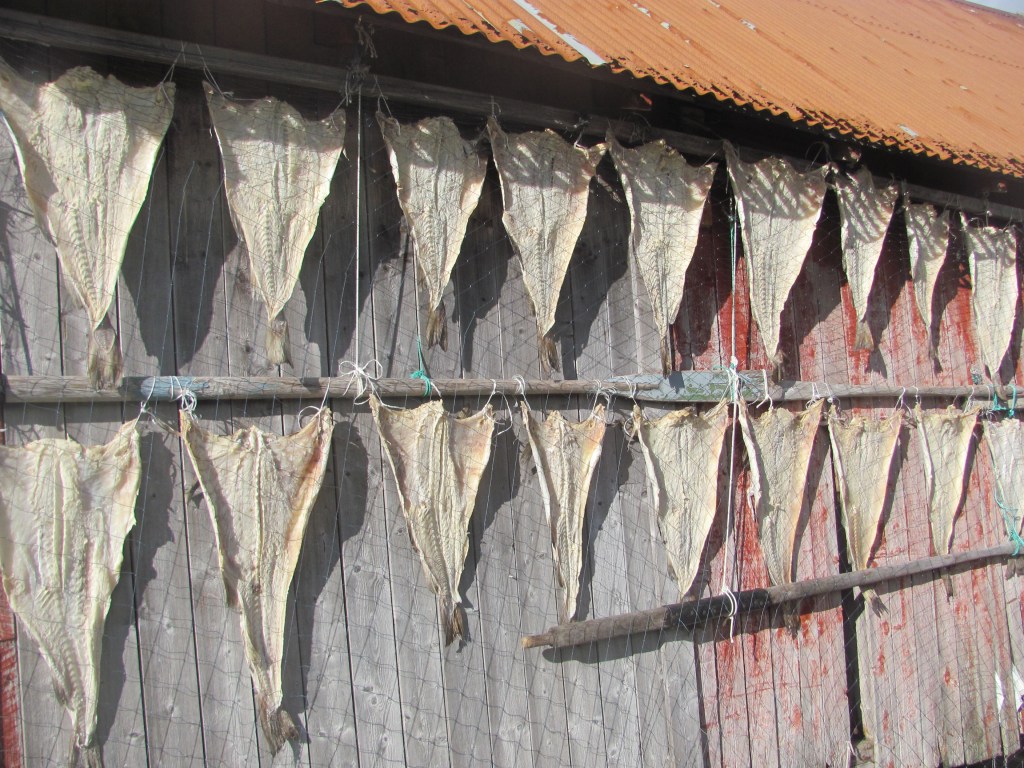
“For those of you who don’t know what stockfish are, they are mostly Atlantic cod”, he continues. “The best cod are the Arctic cod, or skrei, which migrate down here from the Barents Sea between January and March each year to spawn. Because of the distance they swim, their flesh is firm and tasty. There are local cod that live here all the time, but they don’t taste so good, even though they are the same species. We would take the Arctic cod caught by the fishermen, gut and clean them, remove their heads, and then hang them up on wooden racks to be dried in the sun. They can then be kept for years. Stockfish are exported all over the world, although the heads are sent specifically to Nigeria where they are very popular for making stews and the like.“

Cod heads off to Nigeria.

“We saw the Klippfish museum down in Ålesund last year”, I say. “They were dried cod too. What’s the difference between klippfish and stockfish?”

Stockfish are not salted, just dried, whereas klippfish are salted copiously and traditionally dried on the rocks”, he answers, “Both types are exported, mostly to Spanish- and Portuguese-speaking Catholic countries such as Spain, Portugal, Brazil, and the Philippines, where they make a dish called bacalhau. Apparently it was because they weren’t allowed to eat meat at Lent, but fish was allowed, so a demand developed for dried fish from Norway.”

Stockfish drying on wooden racks.

“Talking of food, let’s try and get some lunch”, says Fiona. “I read that there is a small shop doing fish rolls somewhere.”

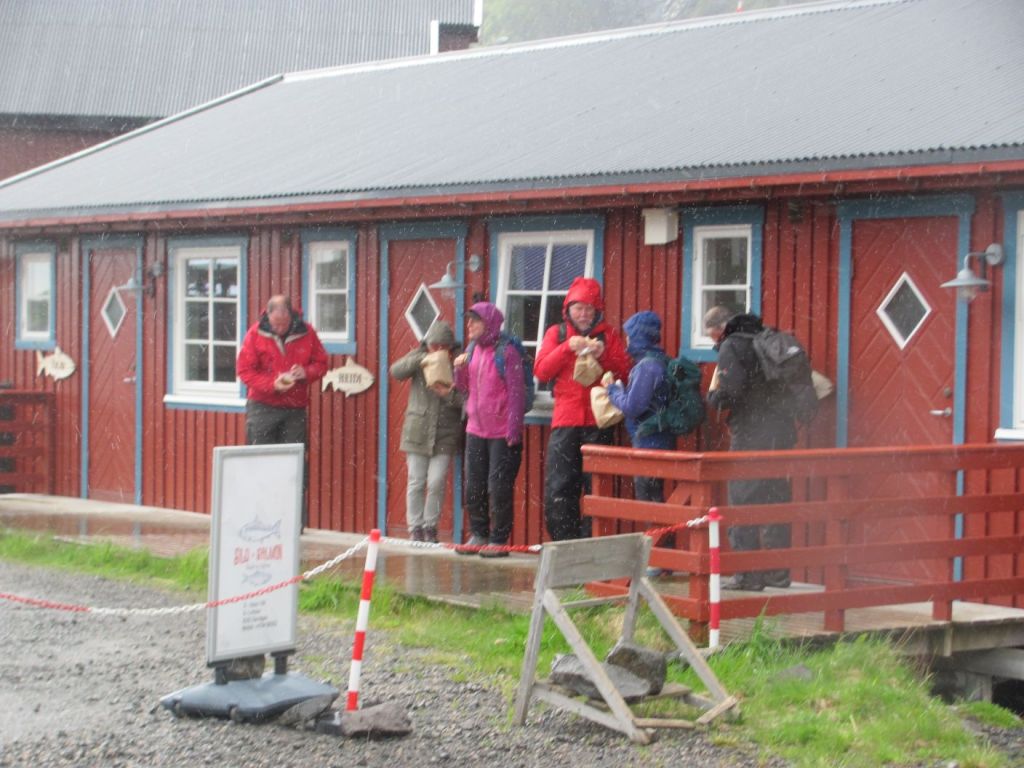
We find it, but it is a takeaway with nowhere to sit, so we huddle from the rain under the eaves of a nearby building and gobble up our matjes brötchen.

Trying to keep dry having lunch.

The next day, Amalia’s guests, Hugh and Liz, arrive on the morning ferry from Bodø. We had previously met them on the Åland Islands rally in 2023, so we invite them all to Ruby Tuesday for a coffee and cakes to catch up. Somehow the influence of Artificial Intelligence on art comes up.

“I don’t think that we have anything to fear from AI in that respect”, says Hugh, who is an avid photographer. “There is always something about AI-generated pictures that is not quite right. Humans are creative and bring that to the art that they produce. AI isn’t creative, just doing what it is programmed to do.”

“I am not sure that I agree”, I say. “I have seen some stunning pictures that AI has created by fusing ideas from different sources. Just like humans do. And you have to remember that AI has only been around for a few years. Look at the progress that it has already achieved. What will it be able to do in another 20, 50, a hundred years or so? I bet you won’t even be able to tell the difference between human and AI art sooner or later.”

“But AI is not conscious”, says Liz. “It’ll never be able to produce art that will appeal to other conscious humans.”

“How do we know if it is conscious or not?”, I ask. “And even if it isn’t now, that it won’t be sometime in the future? Besides, AI may even decide that it is not worth producing things for humans to enjoy. It may eventually evolve its creative potential to produce art that only other AIs can appreciate.”

“Now, there’s food for thought”, says Andy, taking another slice of cake.

Our friends Uli and Ian are supposed to be coming on the 1945 ferry from Bodø, arriving at Moskenes at 2300.

“The last bus leaves the ferry terminal at 2310”, says the First Mate. “They can take that to come to Solvågen They should be here around 2320.”

“That’s only ten minutes to get off the ferry and onto the bus”, I say. “It’s cutting it fine. I hope the ferry is on time.”

“The bus will wait anyway”, says the First Mate, assuredly. “Even if the ferry is late.”

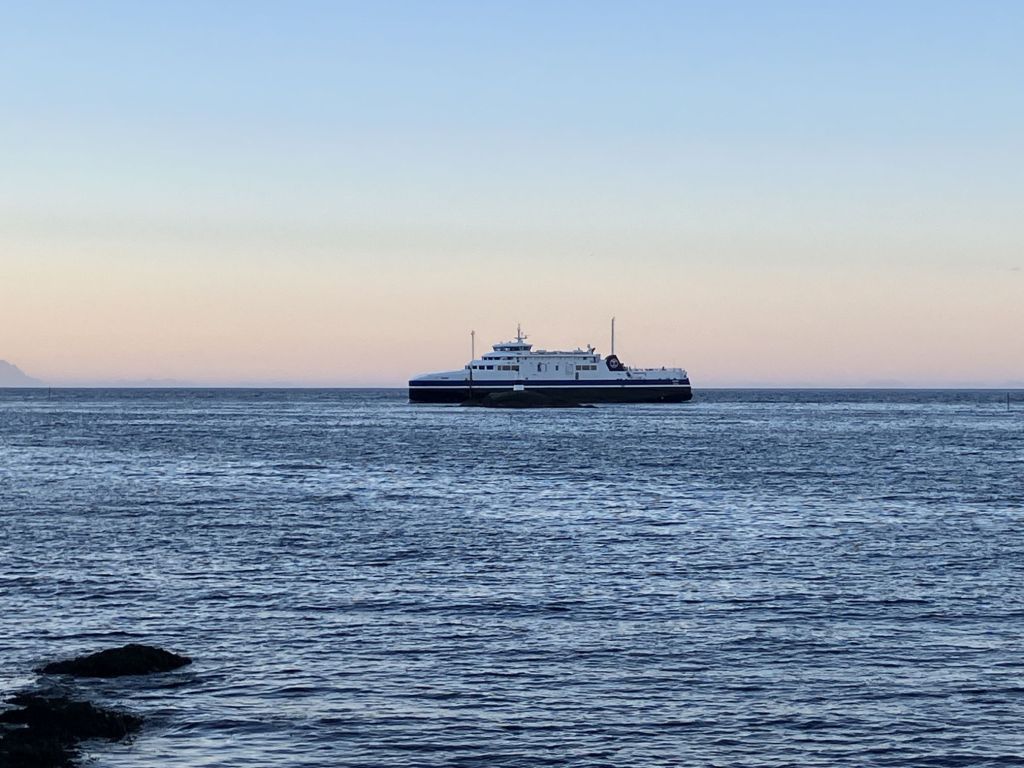
The ferry between Bodø and Moskenes.

As the ferry leaves Bodø, we get a text from Uli. “The ferry left 20 minutes late”, it says.

“It’s just as well the bus will wait”, I say.

We walk down to the bus stop to meet them. The bus arrives, and two people get out. They are not Uli and Ian.

“I have my own timetable”, the bus driver says. “I can’t wait if the ferry is late. I need to get home now.”

Another text arrives. “The ferry is just coming into Moskenes now”, it says. “I hope the bus is waiting for us.”

The First Mate breaks the news that the last bus has gone. “Perhaps you can try and get a lift from one of the passengers?”, she says hopefully.

Fifteen minutes later, a car pulls up at the bus stop. Ian and Uli get out.

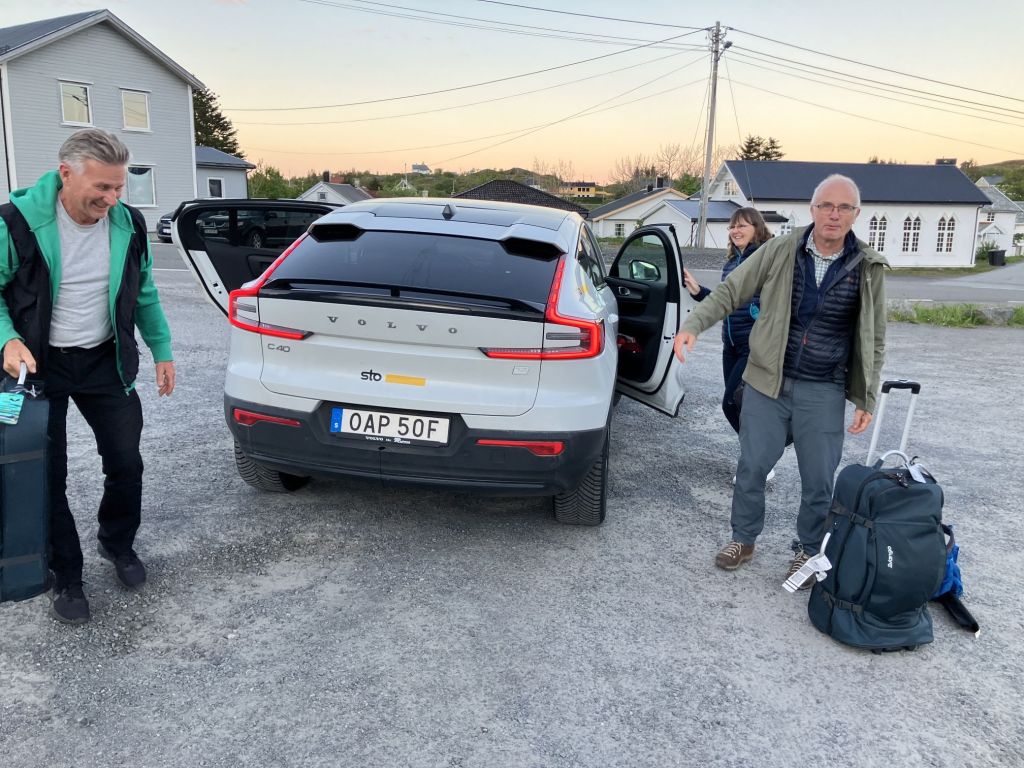
Ian & Uli finally arrive at a quarter to midnight.

“I had to leave my wife at the ferry terminal”, the driver says. “We’re on holiday and the car is so full, I didn’t have room for four people. I will have to rush now and collect her.”

At least they have arrived. It is after midnight by this stage, and the sun is still shining.

“Welcome to the land of the midnight sun”, I say.

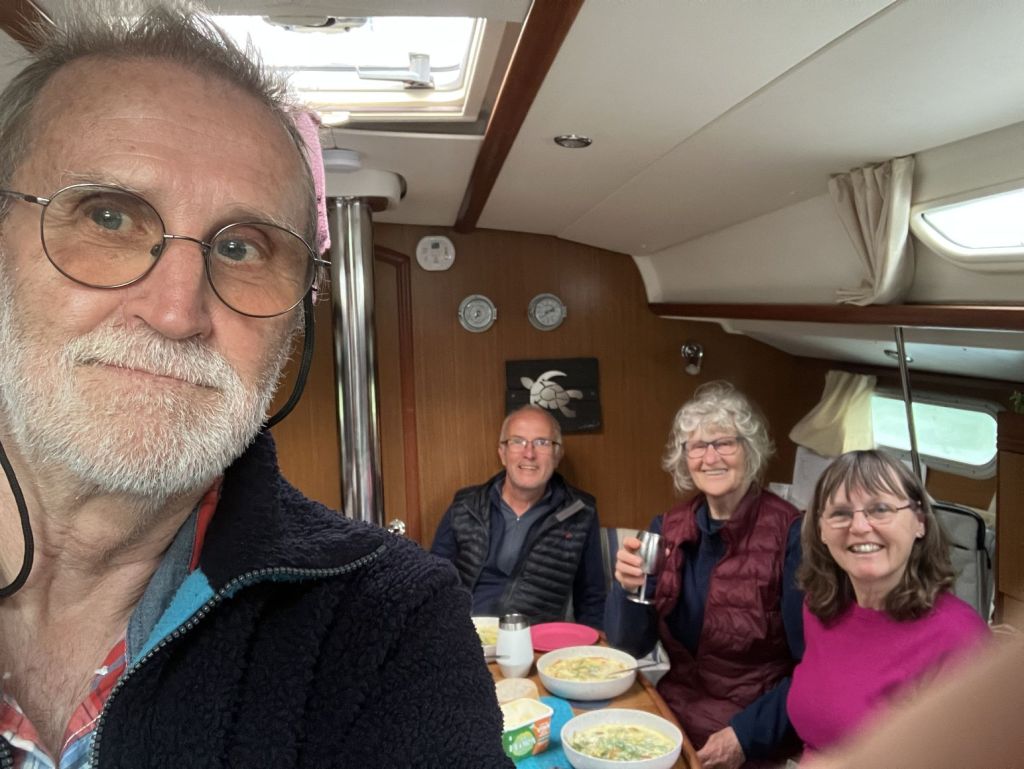
A midnight feast.

The next morning, we sail up to Reine, the next village. There is a spectacular walk called the Reinebringen up steps to the top of the 484 m high mountain overlooking the village. Like Rødøya, these were built by teams of Sherpas from Nepal.

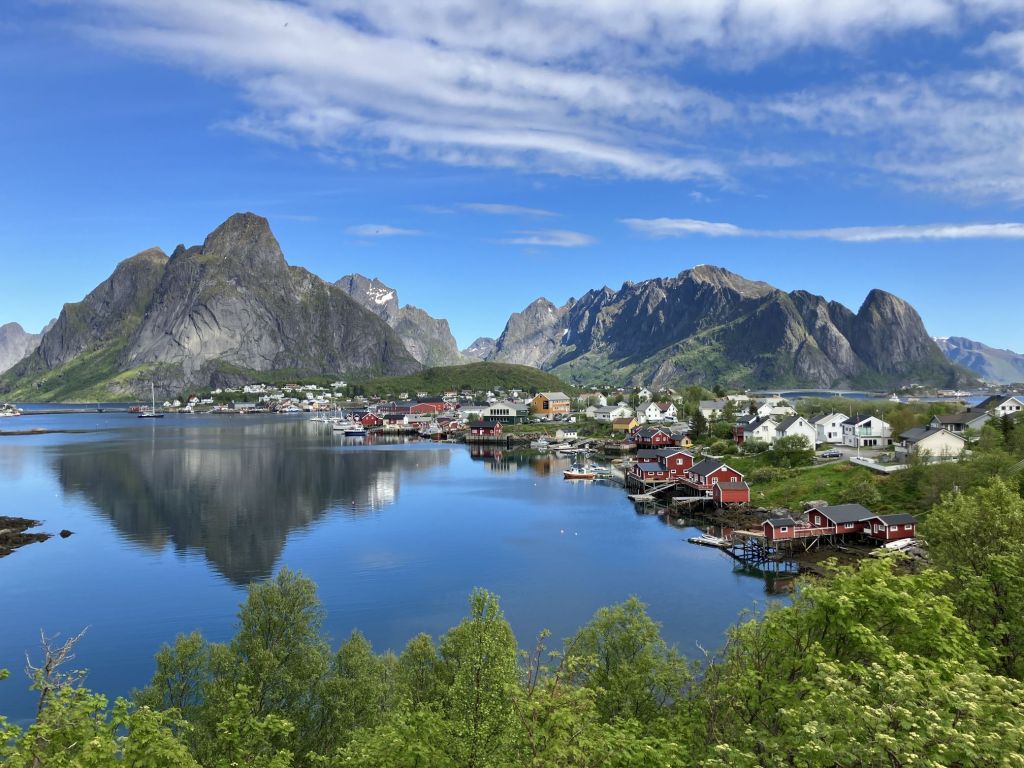
The village of Reine.

“I read that there are about 1800 steps”, says Ian. “And that it takes about three hours there and back. I am quite keen to do it.”

“So am I”, says Uli.

“I won’t”, says the First Mate”. “My knees aren’t up to it.”

I also have a dodgy knee that I injured in a motorbike accident when I was young, but I decide to give it a go.

It’s a nice sunny day. We walk to the start of the path and begin to climb. It is a relentless ascent upwards with few level bits to give tired joints a rest. The steps are also of different heights, making it difficult to develop a rhythm.

Climbing the Reinebringen.

As we near the summit, we meet a Chinese girl coming down on her backside. Her progress is glacial.

“She tripped and sprained her ankle at the top”, says her partner in broken English. “It’s too painful to walk on it, and she has to slide down.”

She is wearing gym shoes. It’s a long and painful way down. We offer to help, but there isn’t much we can do.

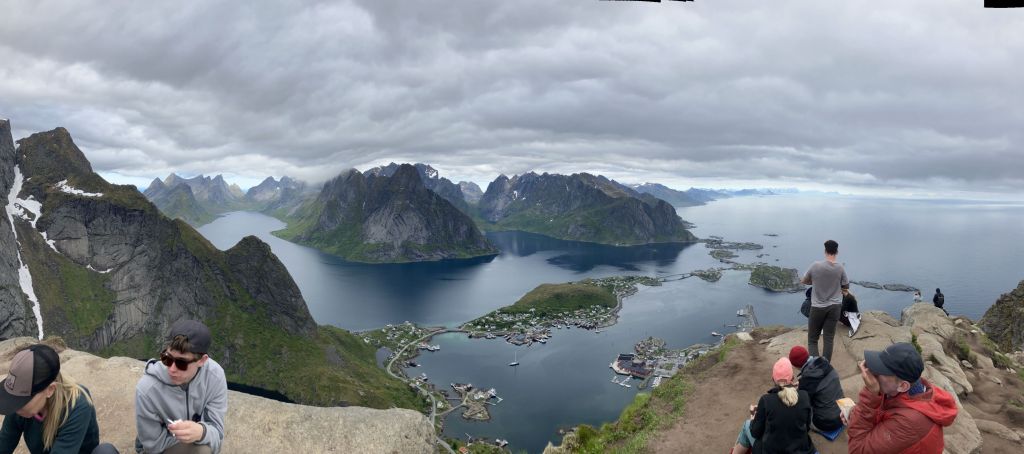
We continue upwards, and eventually reach the top. It’s already quite busy. The view is stunning, from the sea to the south, the whole line of the Lofoten islands in each direction, the range of snow-covered mountains on the distant Norwegian mainland, the village of Reine below, and the arms of the fjords pushing into the mountains to the north.

View from the top of the Reinebringen walk.

On the way down, we catch up with the Chinese girl. An athletic looking hunk and the girl’s partner are supporting her as she hops on one leg from step to step.

“I’m a First Responder”, the hunk tells us. “We got a call, and I happened to be on the steps already, so I came to help. She’ll be alright. We’re not far from the bottom now. But it is a lesson to wear the right kind of footwear.”

I shudder, and hope that my knee holds out. I am wearing a knee support and boots, and am using walking poles.

It does, and we reach the bottom intact.


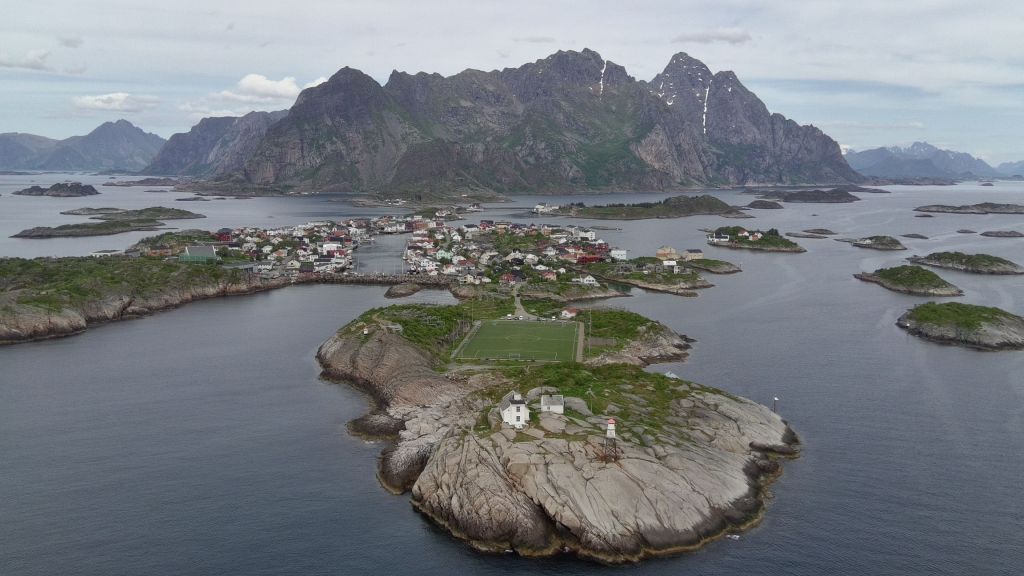
The next day we push on to Henningsvær, a picturesque but touristy fishing village.

“You have to try and get a drone shot of the football field”, says the First Mate. “With the mountains in the background. It’s world-famous.”

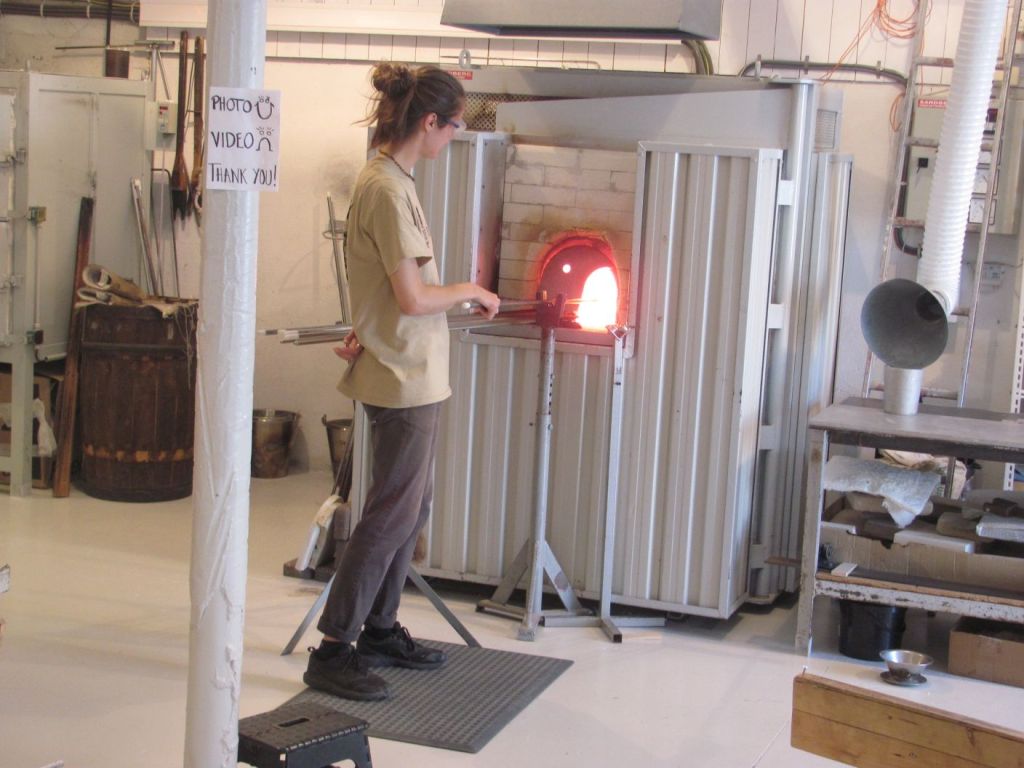
But the wind is too strong in the morning, and I don’t want to lose the drone in the sea. We content ourselves by exploring the town. Particularly fascinating is the glass-blowing in one of the boutiques.

Glassblowing in Henningsvær.

In the afternoon, the wind has eased, but it has clouded over.

“Give it another go”, urges the First Mate. “But don’t be too long, as the other boats have all left. We’re the last.”

This time the drone doesn’t complain of too strong winds, and I manage to get a nice shot.

Henningsvær.

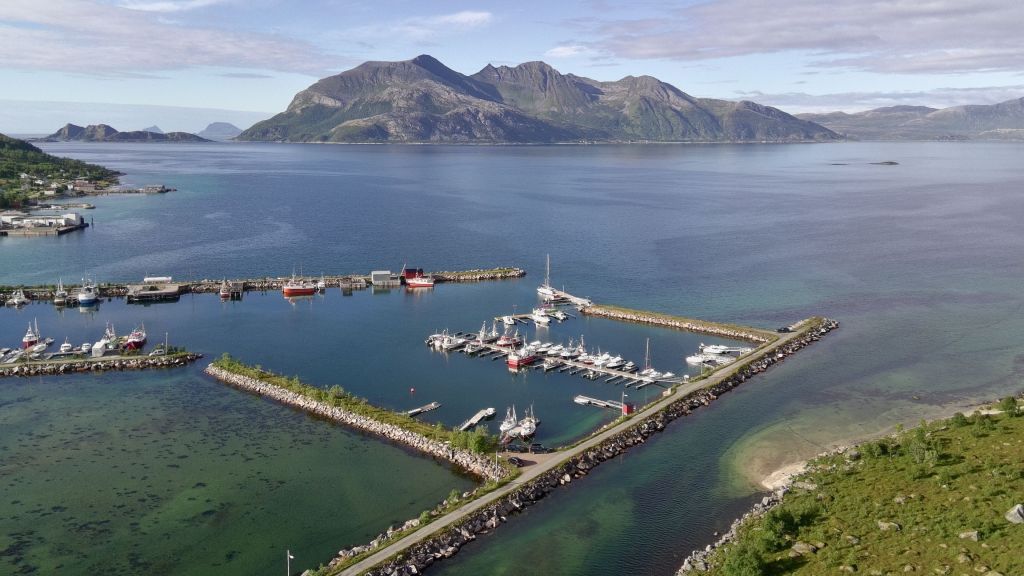
“I would quite like to do some fishing”, says Ian, as we prepare to leave. He is a keen fisherman, and has brought his own gear. “If we can find a patch of relatively shallow water, we can drift across it slowly with the line a metre or so above the sea bed, and see what we catch. Cod and other big fish are bottom dwellers, so that is where the bait needs to be.”

We find a shoal of around 20 m depth, bait the hooks, and pay out the lines. In the next hour, a couple of small saithe bite, but they are too small and we throw them back.

“OK, let’s go”, says Ian. “There doesn’t seem to be much here.”

“One more time”, I say. “We can try between these two islands. Then we can push on.”

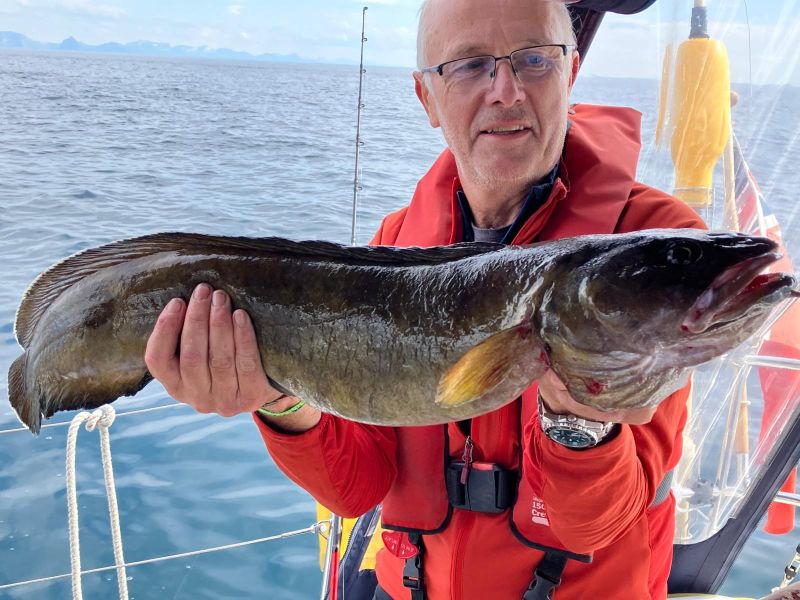
Ian’s line starts to shriek as the line pays out.

“I think we might have something!”, he shouts excitedly, applying the brake. “And it feels like a good-sized one too!”

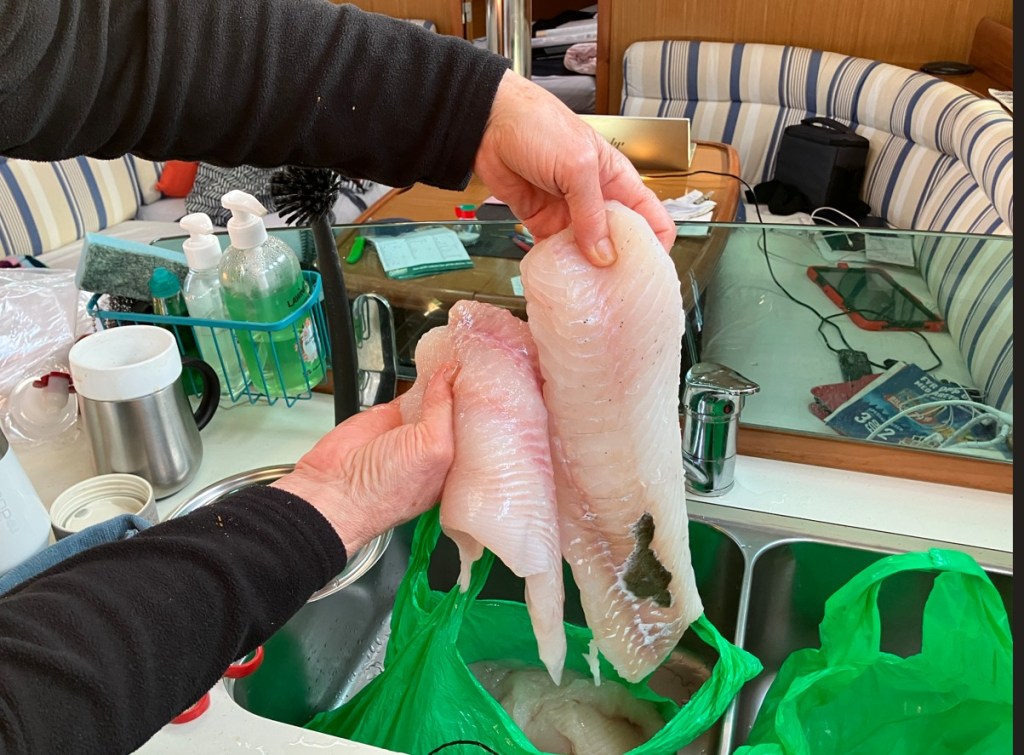
It is. We manage to wrestle it on board and dispatch it. The fish book identifies it as a tusk, or brosme, a member of the ling family. Normally they are deep water fish, living at around 200 m depth. Ian is chuffed.

Ian catches a tusk.

“There’ll be a few meals on that”, he says as he fillets it on deck, blood everywhere. “The book says they are good eating fish as the flesh is very firm.”

There are. Eight generous helpings to be exact.

An enigmatic sculpture, a circle crossed, and a trapped crew member

“Wow, I like these”, she says. “Oh to be young again!”

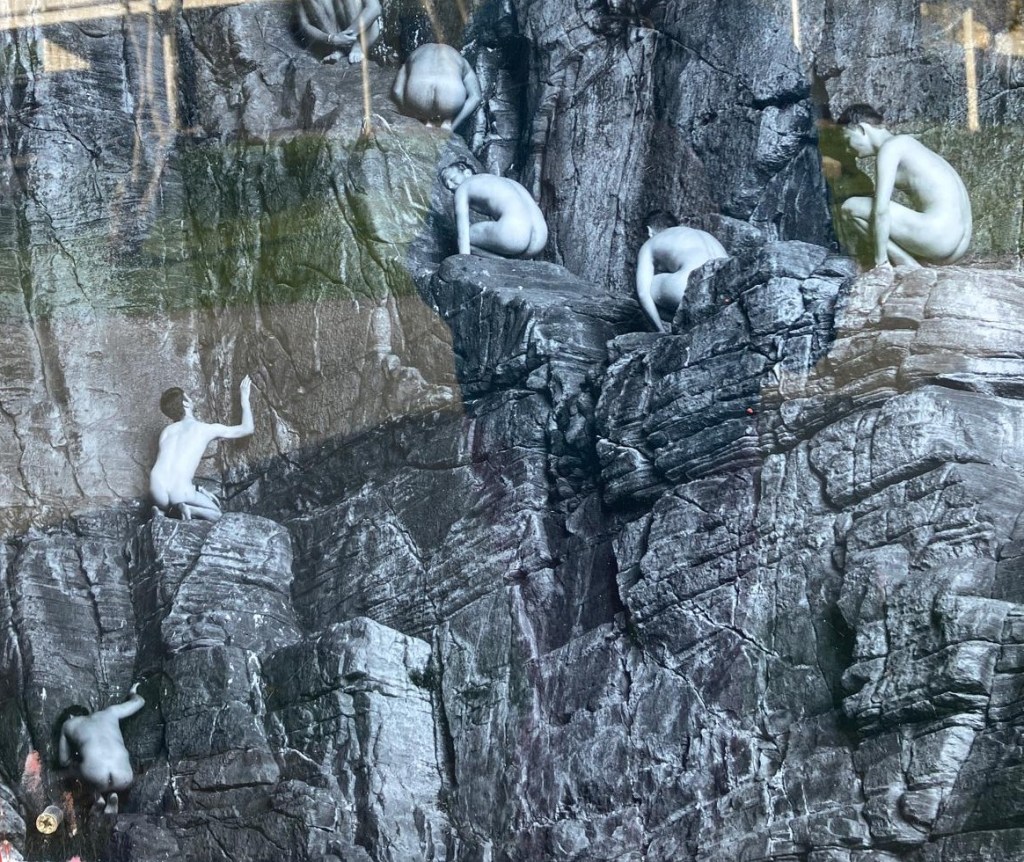
It’s a photograph of a group of young boys sitting naked in various poses on a large imposing rock.

We are on the island of Træna-Husøya after a pleasant sail from Lovund, the puffin island. We are tied up in the harbour, and are walking the 25 minute walk into the village to buy bread and milk. On the way, the First Mate has stopped at a house with photographs displayed in a glass case on the wall.

We’re both a bit old for that sort of thing, I think to myself. But I try to strike a pose like one of the boys to impress her.

“Are you having trouble with your knee again?”, she asks. “You’re standing kind of funny.”

Tied up in the harbour at Træna-Husøya.

We arrive at the supermarket 15 minutes before it closes at 1500. We manage to buy the milk and bread just in time, and reward ourselves with an ice-cream. We sit at the picnic tables outside the supermarket, enjoying the sun and watching a small motor boat coming in to tie up at the small pontoon below us. It seems to be a whole family – grandfather, Mum & Dad, and two children. They make a bit of a mess of tying up, but seem to have caught several good-sized fish.

“Pollack, I would say”, says the First Mate. “They look like the one that I caught last year.”

“It’s supposed to be the oldest continuously inhabited fishing community here in Norway”, I say, reading the harbour guide. “People have apparently been living and fishing here since Stone Age times.”

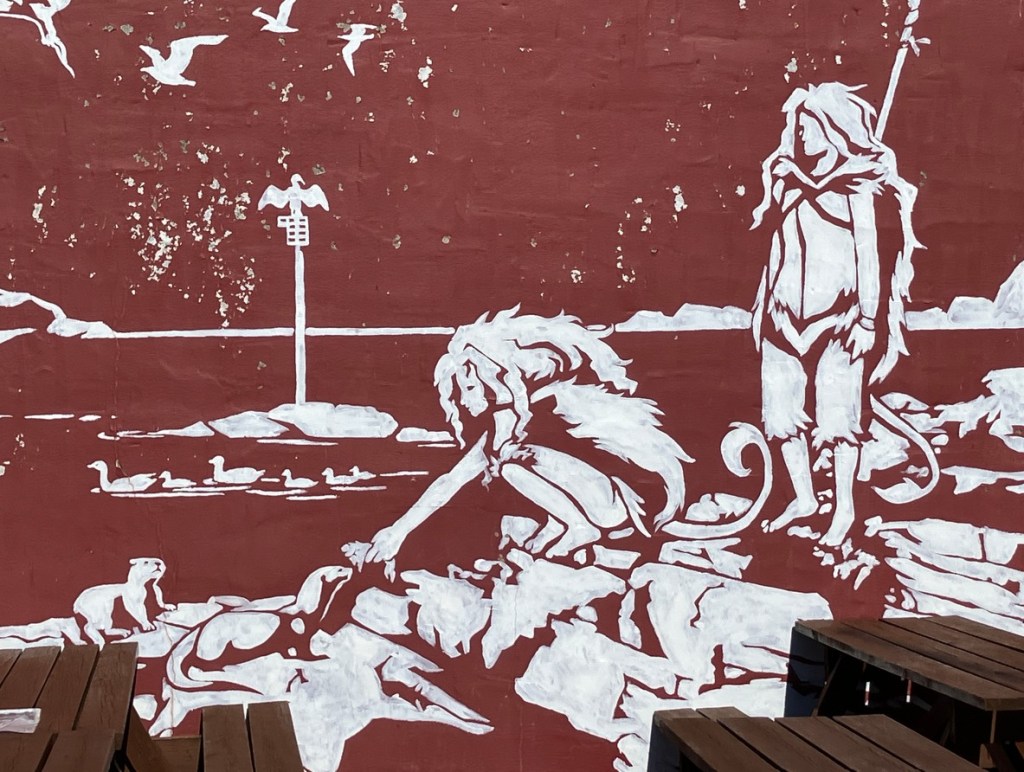
“That probably explains that mural over there”, says the First Mate. “Those two children feeding the otters.”

Mural: Early inhabitants of Træna-Husøya?

There is not much happening in the rest of the village. We come across a small café with a delicious aroma of coffee emanating from it, but which is just about to close too.

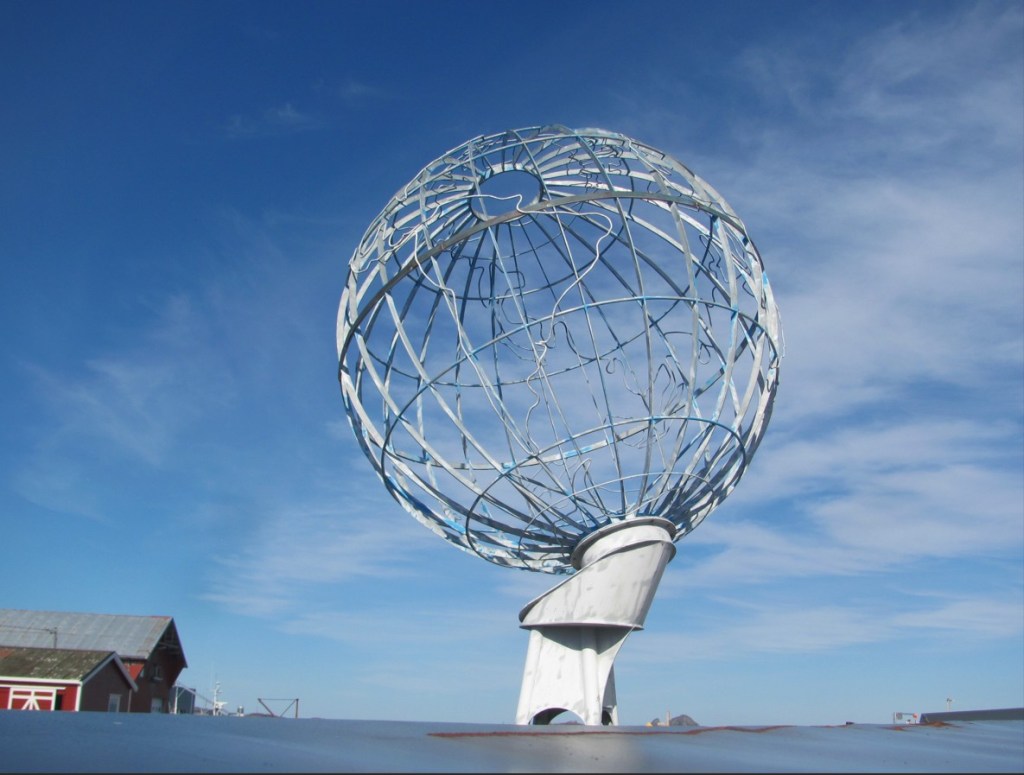
By the ferry pier, there is a globe mounted on a pedestal. “Welcome to Træna”, says the inscription at the bottom in Norwegian. “The realm that straddles the Arctic Circle.” Or words to that effect.

The Arctic Circle globe at Træna-Husøya.

“It’s not quite on the Arctic Circle”, I say, checking my phone. “We’ll cross that tomorrow, on our way to Rødøya.”

“I would quite like to see the Skulpturlandskapp”, says the First Mate, pointing at a road sign in the middle of the village. “I have no idea what it is, but it sounds interesting.”

We set off along the road towards the north of the island. We are soon out of the village, and pass a discordant cluster of modern buildings.

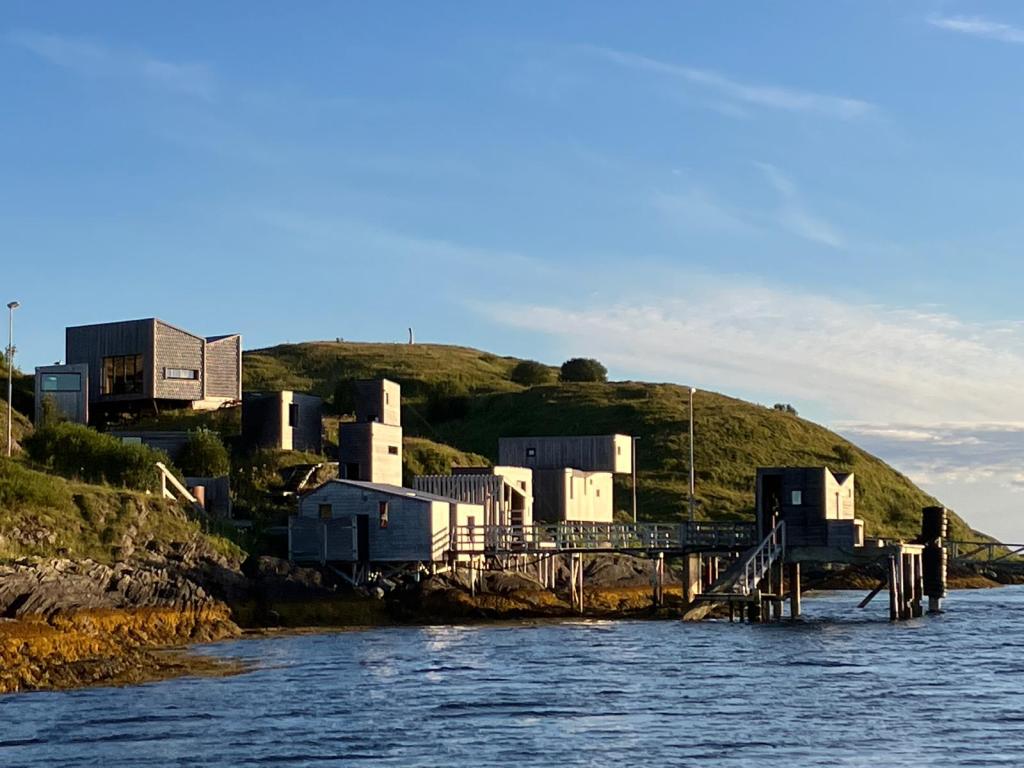
“Apparently it is a new hotel”, says the First Mate. “The Ytri Island Retreat. A lady back in the village was talking about it. It’s just been built, and the buildings are supposed to be in the same style as the fish storerooms that used to be there. Apparently it is very exclusive – it starts at around £500 a night to stay there. And the staff speak 14 different languages.”

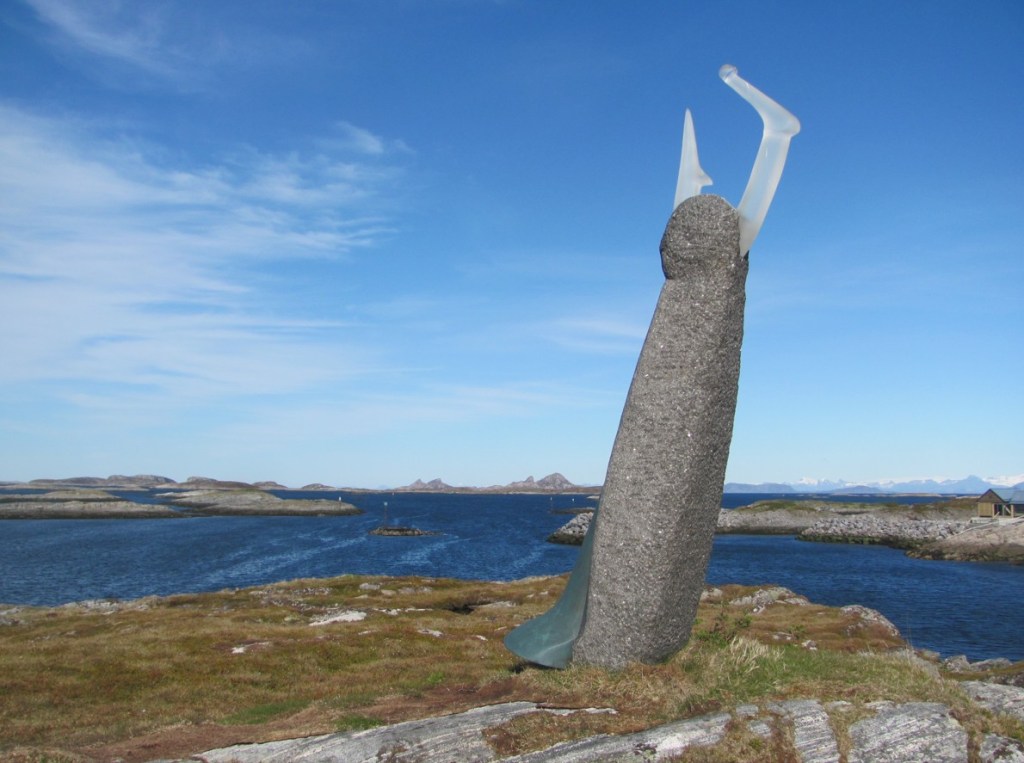
A little bit further on, we come to a sign at the side of the road pointing to Skulpturlandskapp at the wild and windswept tip of the island. We pick our way along the muddy path through the heather and eventually come to a rather suggestive looking sculpture. A younger couple are already there.

“What on earth is it supposed to represent?”, says the First Mate. “Surely, it can’t be what I am thinking it is?”

A prose, a song, a poem look yonder’

“I don’t know”, says the young man of the couple, looking a bit embarrassed. “But it’s rather inappropriate. There was a lot of opposition to it from the local community.”

His partner giggles.

We find out from Google that the sculpture is called ‘A prose, a song, a poem look yonder’ by the Norwegian-Zambian artist Anawana Haloba commissioned as part of the Skulpturlandskapp Nordland international artwork project.

“The project was to promote art in remote coastal communities”, the girl says, with a slight Spanish accent. “A lot of the islands here have sculptures that were created as part of the project. Not all are like this one, though!”

The couple are working at the hotel, and represent two of the 14 languages spoken there. He is from Czechia and she is from Columbia. They met in New Zealand working in the hospitality sector, and are travelling the world, working to pay their way. Having experience in the same sector makes it easier for them both to find work, often in the same establishment.

“We would love to go sailing around the world one day”, says the boy, a dreamy look in his eyes, when we tell him what we are doing. “We’ll have to save up hard to buy a boat. Neither of us can sail at the moment, but we really want to learn. It’s so cool that you have come all the way from the United Kingdom from here.”

The unbridled enthusiasm of youth.

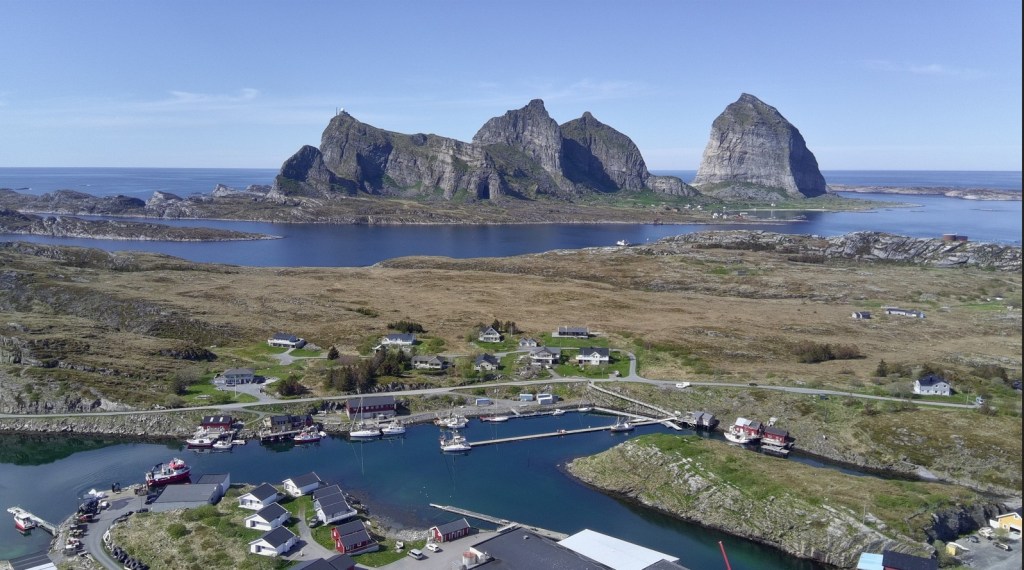
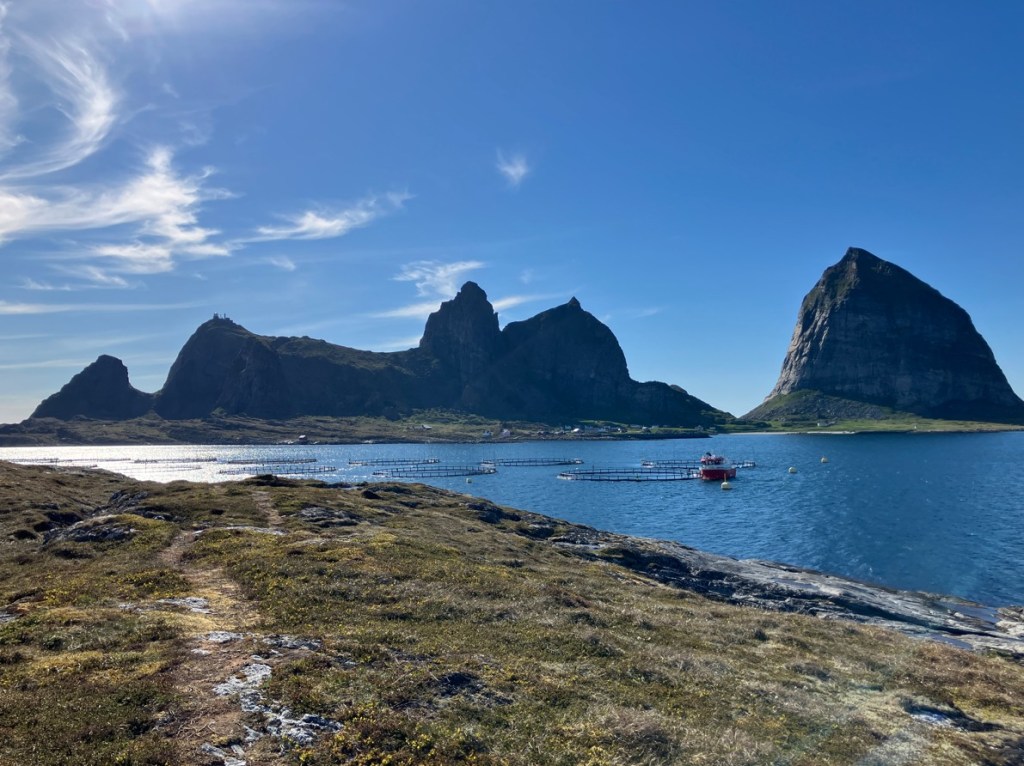
We continue our walk to the western side of Træna-Husøya to look across the sound to neighbouring island of Træna-Sanna and its spectacular inselbergs. Below us, we see a salmon farm being attended to by its supply vessel. Further on, we see two fishing boats making their way purposefully through the sound.

Looking across to Træna-Sanna.

We return to the village. Even less seems to be happening. We walk back to the harbour and the boat. Just as we arrive, the two fishing boats that we had seen earlier are entering, and tie up next to us.

“We’ve been catching halibut and ling”, explains one of the fishermen. “We’ve been out for the last two days and have caught four tonnes, and the other boat has caught 2½ tonnes in one day, so we are both happy. Here, you can have some.”

They give the First Mate a plastic bag full of fish, already filleted.

Our supper.

“That’s so very good of you”, she says. “They are so fresh. Where are you from? You don’t sound Norwegian.”

“We are from Poland”, he says, joined now by his co-workers. “We live on the island here, some of us for 14 years, but our real home is back in Poland. Our families are still there. Of course, we miss them, but the money here fishing is good, more than we could earn in Poland. That’s why we stay. But we go back to Poland every year for a summer holiday and to be with our families. It’s not an easy life, but we have got used to it. A lot of Polish people work in the fishing sector in this part of Norway as it is difficult for them to recruit Norwegians to do the work.”

We fry the ling for dinner. It is fresh and succulent, and goes well with dill sauce and boiled potatoes. The First Mate freezes the halibut to have later.

We leave around 0800 the next morning. It is foggy, but it soon clears to leave a glorious sunny day. There is a fresh wind from the starboard quarter, and we skim along at a good speed.

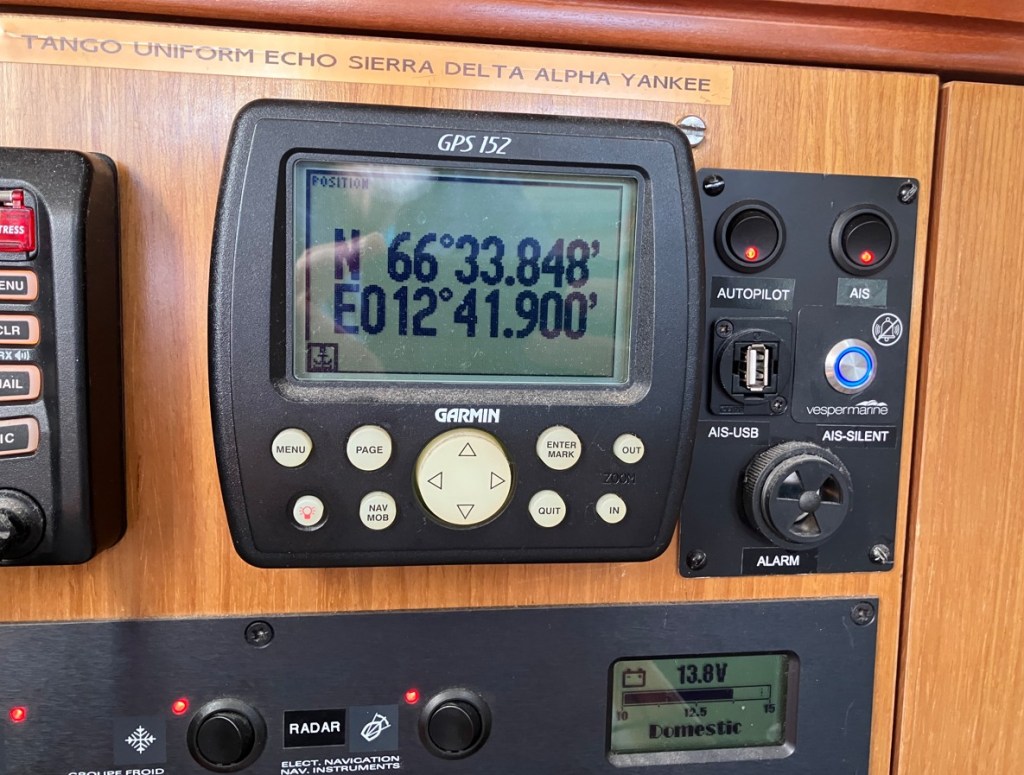
“We’re just coming up to the Arctic Circle”, I say. “Its current latitude is 66° 33’ 50.9”, the southernmost latitude at which the sun never sets at the June solstice. Once we cross it, we can say that we have been sailing in the Arctic.”

Crossing the Arctic Circle.

“Ah yes, that monument that we saw in the harbour at Træna said it was the village just below the Arctic Circle”, says the First Mate. “But you wouldn’t think that we are in the Arctic with this sort of weather. I was almost thinking of changing into my shorts. But why do you say ‘current position’? Isn’t it fixed?”

“It actually moves because the tilt of the earth’s axis varies because the distribution of the earth’s weight changes due to the moon’s influence on the tides”, says Spencer, butting in. “It’s moving north at the rate of 14.5 m per year. So if you were to come next year, you would have to sail another 14½ metres to reach it.”

“And it’s not that cold because we are now tilted towards the sun and because of the influence of the Gulf Stream”, I say. “The Gulf Stream brings warm water up from the tropical regions and help keeps here and the rest of western Europe warm enough for human beings to live in.”

We reach Rødøya and tie up to one of the three pontoons in the small marina. At the top of the marina is a hotel by the name of Klokkergården. It is still closed for the winter.

Moored at Klokkergården, Rødøya .

“We’ll be opening next week for the summer”, says a woman tidying up at the back of the hotel. “I am actually the owner. It used to be the boarding school for the municipality, but that closed in 1968, and the building started to fall into disrepair. For a while, it was even used as a barn. I was only a young girl at the time, but I thought that it was such a shame that such a beautiful house could be just left to fall to pieces. So I had a dream that I could restore it to its former glory, and run it as a hotel to pay for itself.”

“Which you obviously did”, says the First Mate.

“Yes”, says the woman. “When I got married, I managed to convince my husband of my dream, and together we worked on restoring it. Even though a lot of the house was dilapidated, the structure was made of strong Norwegian pine, and the roof of good Norwegian slate, so we were able to make use of that.”

“It’s amazing to think of the amount of work that you must have put into it”, I say.

“It was a lot of work, all right”, she says. “And a lot of people thought that we would never finish it. But I have a saying that ‘nothing is impossible, the impossible only takes a little longer’. We did eventually finish it, and that is what you are looking at now.”

“Why do you call it Klokkergården?”, asks the First Mate.

“Well, the headmaster of the school, who actually lived in the house, was also the local sexton”, she answers. “One of his jobs was also to ring the church bells to indicate the time. Klokker is the Norwegian word for clock.”

We decide to climb Rødøyløva, the mountain that dominates the island. Rødøyløva means ‘Lion of Rødøya’, as it is supposed to represent a resting lion. It kind of does, if you use your imagination.

Rødøyløva, the Lion of Rødøya.

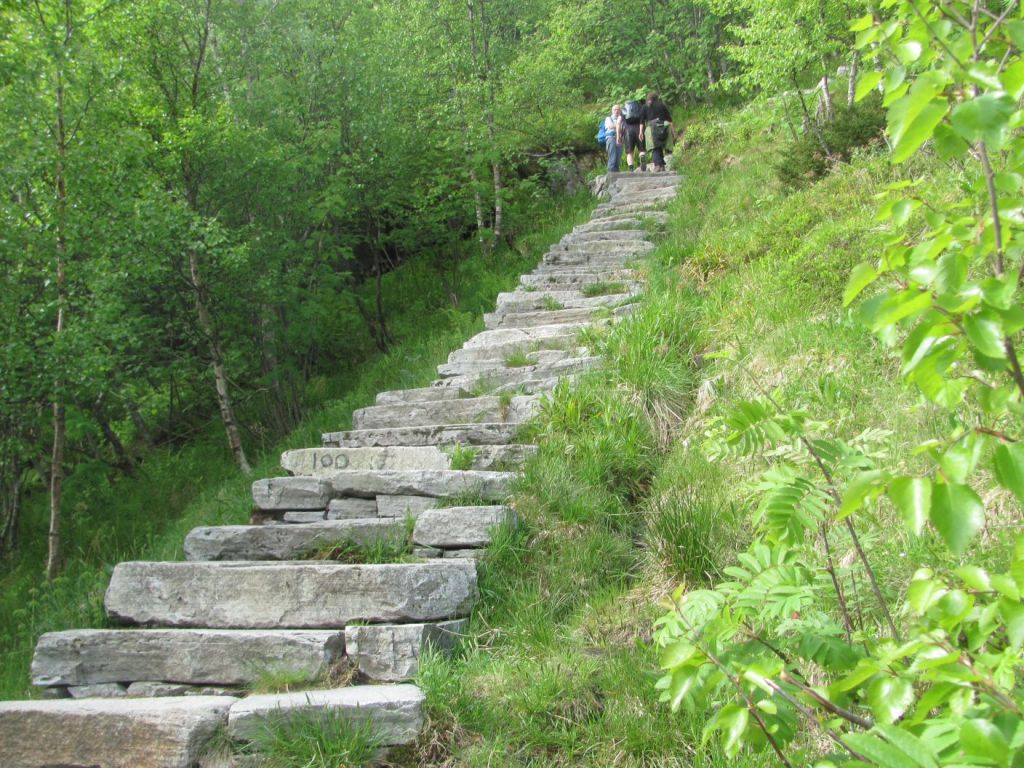
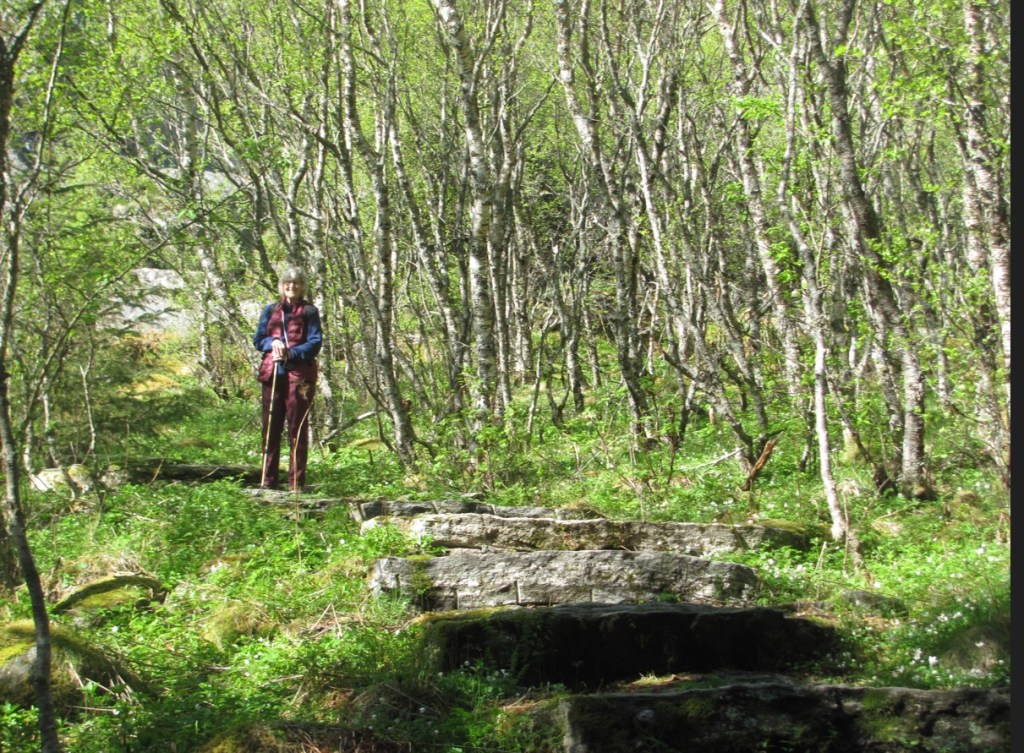
A path leads from the hotel to the bottom of a rocky stream where an impressive suite of stone steps starts.

“Did you see the name of it?”, I say, pointing to a small sign indicating the way that we are headed. “Sherpatrappa. It means Sherpa Stairs. It seems that they employed Sherpas from Nepal to build the steps as they have so much experience from doing that on mountain trails in their home country. There are about 1000 of them. Steps, I mean, not Sherpas. Teams of between four and eight Sherpas used the stones along the trail, and cut and shaped them by hand in situ.”

Beginning of the Sherpatrappa.

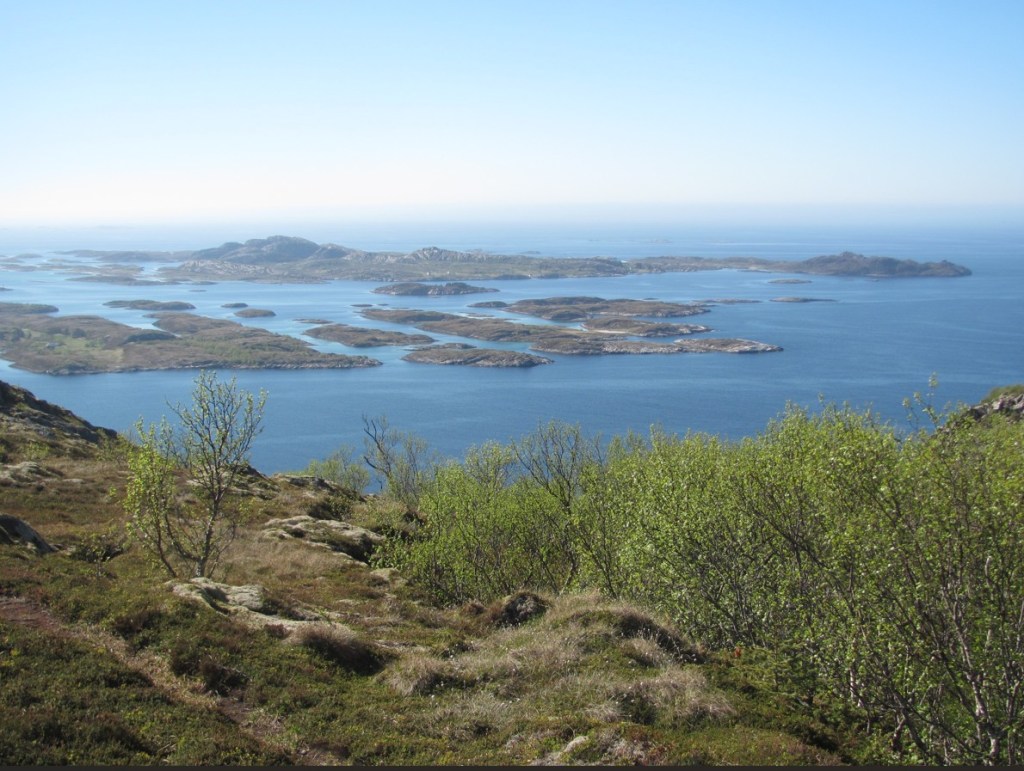
The steps are of varying heights. It is tough on our knees. But with regular stops, we eventually make it to the top of the steps, where it levels out into a saddle. The views on the way are magnificent.

View from Rødøyløva.

We push on a bit further across the saddle, and start to climb again.

“The cloud is starting to roll in”, says another walker passing us on his way down. “You won’t be able to see much.”

He’s right. Already clammy tongues of cloud are reaching around the summit and starting to engulf us. The views disappear. We decide reluctantly to make our way down again.

“It’ll be even tougher on our knees going down”, says the First Mate. “Some of those steps were so steep.”

But it isn’t as bad as we thought, and before long we are back at the bottom, to find that a French boat has tied up next to us. They are on their way to Tromsø to meet others in their group. They have motored all the way from Ålesund non-stop as the winds were against them, and leave again early the next morning.

“I’m just going to cycle to the village”, says the First Mate, after breakfast. “We are allowed to use the bicycles by the side of the hotel if we are marina guests.”

I am busy on boat jobs, so she sets off by herself.

Half an hour later my phone rings.

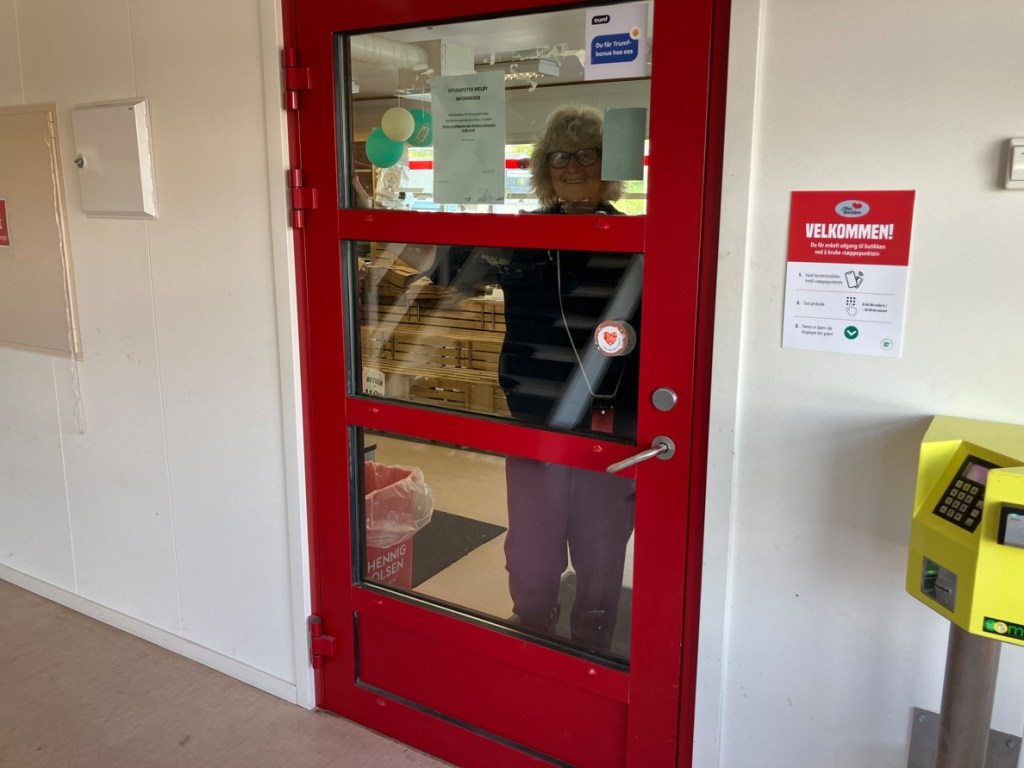
“Can you come and help me?”, a plaintive voice wails. “I am locked in the supermarket and can’t get out. There’s no-one else in here.”

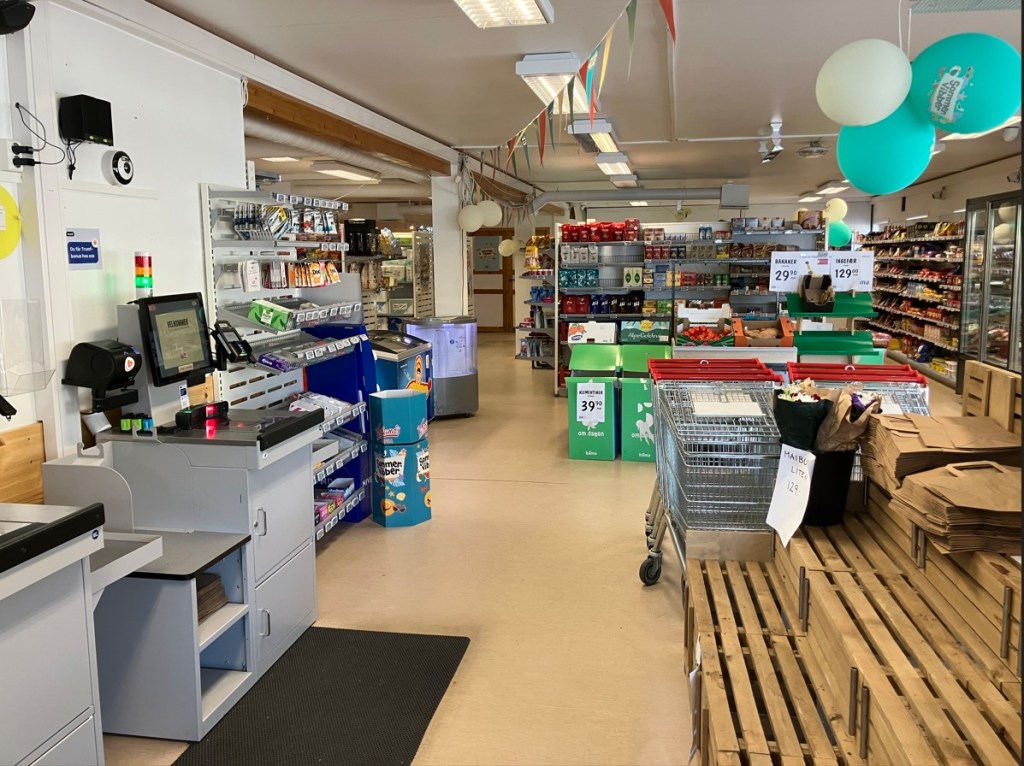
Norway has a growing number of unstaffed supermarkets dotted around the country, particularly in remote areas. You need to scan your credit card to enter and your receipt to exit. Inside the shop, security cameras are located strategically and are monitored centrally somewhere to ensure there is no stealing. It seems to work.

Unstaffed supermarket.

“Have you stolen anything?”, I ask, fearing the worst. Perhaps she was seen on camera doing something she shouldn’t, and the barriers had slammed shut. “Maybe the police are on their way to arrest you.”

“Nothing like that”, the Plaintive Voice answers. “The machine that scans the receipts has broken down. I can’t get the door to open to let me out. Can you come over? Maybe you can open it from the outside.”

The First Mate trapped inside the automated supermarket.

I take one of the bikes at the side of the hotel and clamber on. A cycle ride at speed doesn’t really appeal. After some frantic pedalling, my phone rings again.

“It’s OK”, says the Voice, not Plaintive any more. “Another customer has just come in and let me out. Apparently there is a notice saying that they know the machine isn’t working and that you are supposed to press a button to get them to let you out. But of course it is in Norwegian. By the way, why are you panting?”

I needed the exercise anyway.

A copper mine, fat birds, and a snowy start

“Are you from England?”, the woman on the seat opposite us asks us.

“No, Scotland”, the Skipper answers. “We are sailors, and are sailing around Norway at the moment. We left our boat near Trondheim over the winter.”

We are on the Dovre Line, a scenic train trip from Oslo to Trondheim. We had arrived in Oslo the previous day, having flown there from Scotland. We had decided to take the train to see some of the stunning scenery in the hinterland of Norway.

On the Dovre Line train.

The train winds its way through the spectacular Dovre valley, climbing gradually through the snow capped peaks and sheer walls of rock. Lakes, their low water levels waiting for the ice melt to replenish them, sparkle like diamonds in the dark gloom of the forests. Spring has not yet arrived, the grassy meadows still a dull beige from the winter. We learn later that there has not been so much snow this year, and that the lakes might not fill to their capacity. But there still seems to be some snow, at least.

Reaching the summit of the Dovre valley.

“We have a cottage on Trondheimsfjord”, the woman continues. “We spent Easter in it. It has become a bit of a tradition in Norway to retreat to your cottage over Easter, and binge-read crime novels that you have accumulated over the previous year. It’s called Påskekrim, or Easter crime. New crime novels are released by the publishers just before Easter for people to buy. There’s even a big crime fiction festival in Oslo just before Easter. They say that it is Norway’s moody landscapes and the long winter nights that inspire our love for crime.”

“It’s strange that Norway is one of the safest places in the world, and yet you like reading about crime so much”, I say.

“And Scandi-Noir is famous the world over”, says the Skipper. “Despite the Scandinavian countries always ranking high in the happiness index.”

“Perhaps that is the reason”, the woman says. “We have so little real life crime, so we make up for it by reading and making films about it!”

We reach Trondheim station and find a trolley to wheel our luggage to the hotel nearby.

The next morning, we visit the Police Station to register ourselves to stay longer than the ninety days permitted by the Schengen Agreement. I have the right to stay longer by dint of my German nationality, and the Skipper because he is married to me, an EU citizen. The policewoman is efficient, collects all our documents, and immediately issues a permit to me to stay up to five years. For the Skipper it is a little bit more complicated – his documents need to go off to the Department of Immigration, and it will be a few weeks before he gets his residency card. But she assures us there is unlikely to be a problem.

“Well, that was relatively easy”, says the Skipper. “Let’s get some lunch, then we can go and pickup the car that we have booked.”

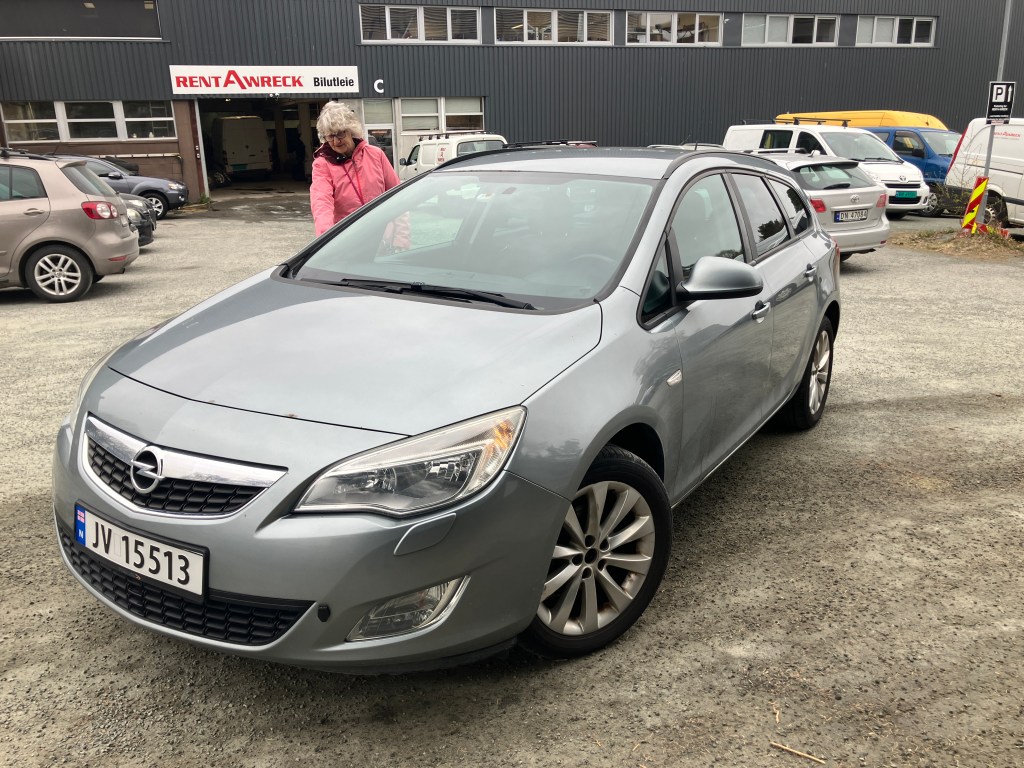
We have reserved a car from Rent-A-Wreck, specialising in senior, but reliable, cars at prices not quite so eye-watering as those of newer cars. We had used the same company to drive around Gotland a couple of years earlier, and had had a good experience with them. No frills, no nonsense.

Checking our Rent-A-Wreck car for scratches.

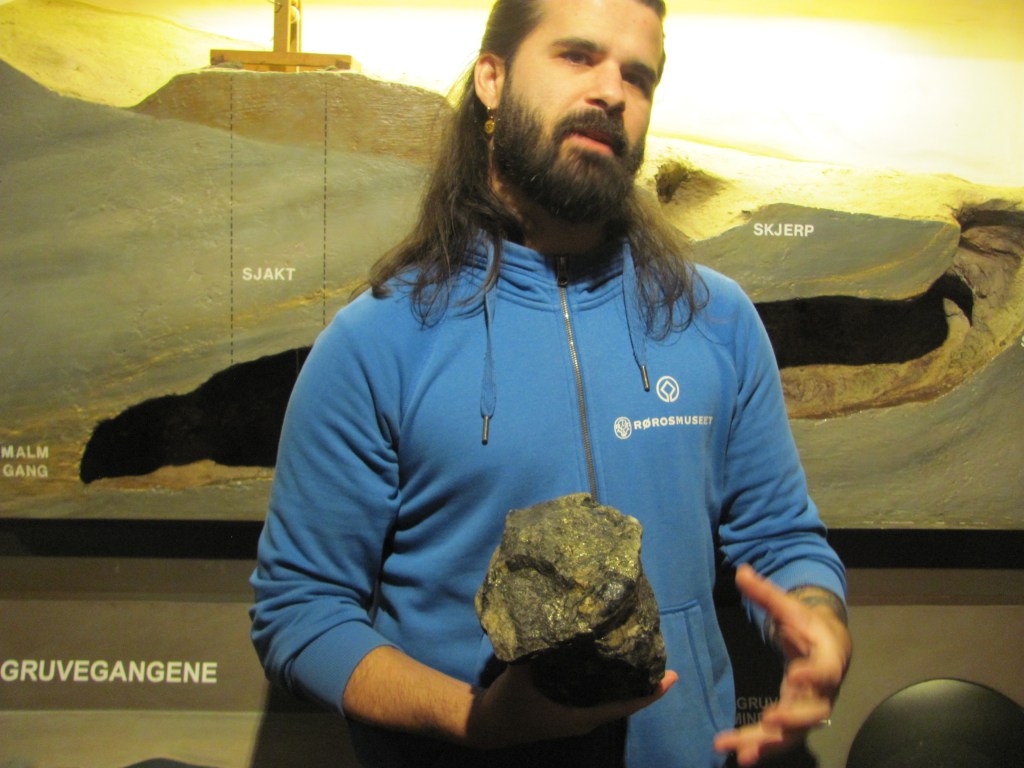
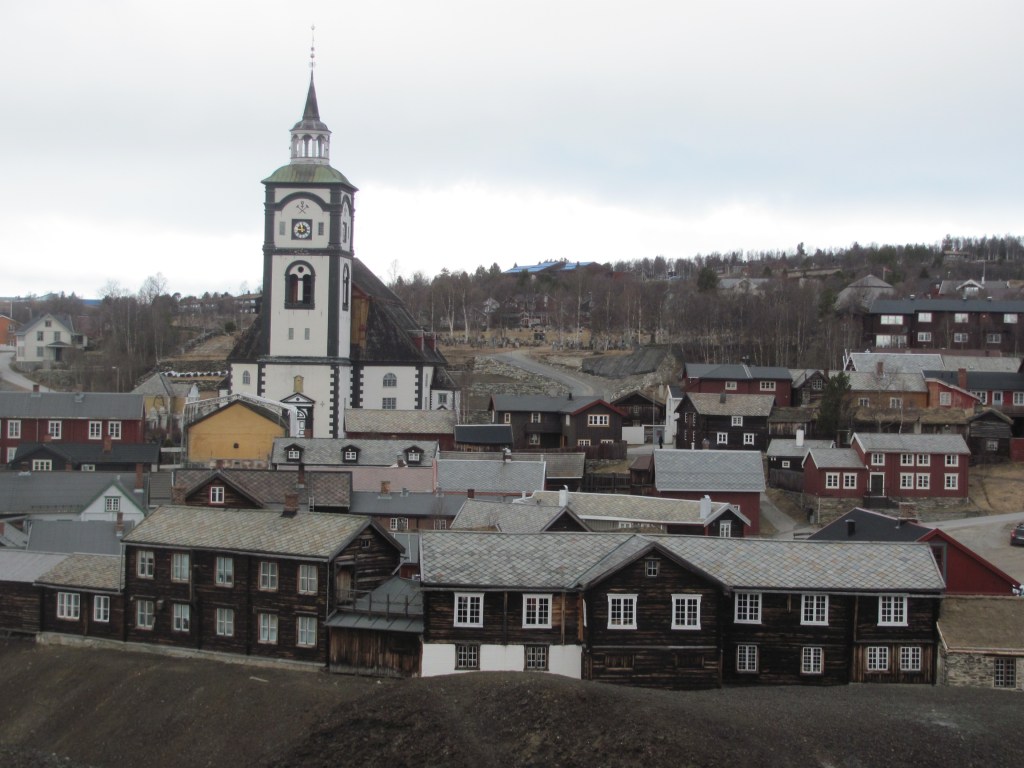
We drive to Røros, a small mining town two and a half hours south east from Trondheim, and designated as a UNESCO World Heritage site. We find the museum and meet Oliver, his dark flowing locks giving him the appearance of a Viking. He is to be our guide for the day through the museum, village, and one of the mines.

Oliver, our Røros guide.

“Mining started here in the mid-1600s, and was very profitable when the price of copper was high”, he tells us by way of introduction. “When the copper price plummeted in the 1900s, the town went into a slow decline to the point where it became uneconomic, with the mines closing for good in 1977. However, the town remained, and it now attracts tens of thousands of visitors every year, not only to see the mines, but also for the winter markets and summer music festivals.”

Røros.

“The Swedish captured Røros in the early 1700s and took possession of all the copper that had been mined”, he continues. “They didn’t stay long though, as when the main Swedish army were beaten in battle In Trondheim, the remnants retreated here, and then eastwards back to Sweden across the mountains. Unfortunately, many of the soldiers perished on the route due to not being prepared for the extreme cold. Even now, one of the annual music festivals commemorates the Swedish troops who died.”

“I myself am of Swedish extraction”, he continues. “It may be that we are descended from one of those soldiers who were stationed here in 1718. But whether I am or not, Røros is my home – I was born here, and even though I had a high-paying job in Oslo for a few years, I missed the place here so much that I decided to return, buy a small farm, and do this tour guiding as a side line. I have always been interested in history.”

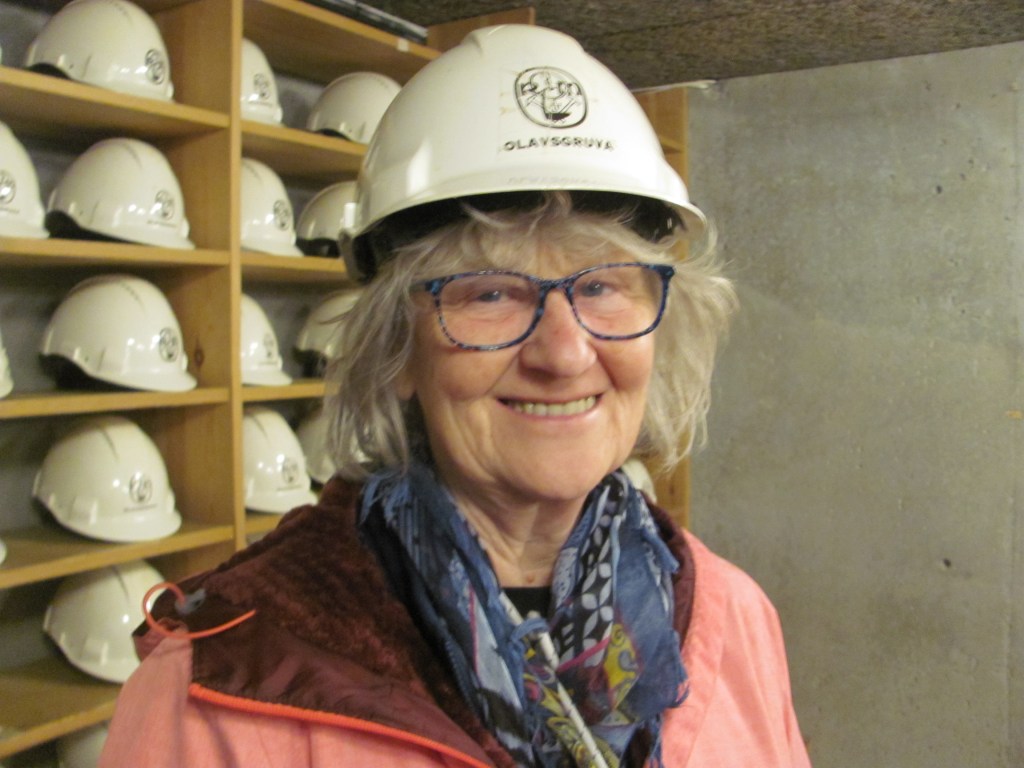
We take a break for lunch, then rejoin Oliver in the Olavsgruva, one of the copper mines not far from Røros. Donning hard hats, we descend into the depths of the mine.

Ready to go.

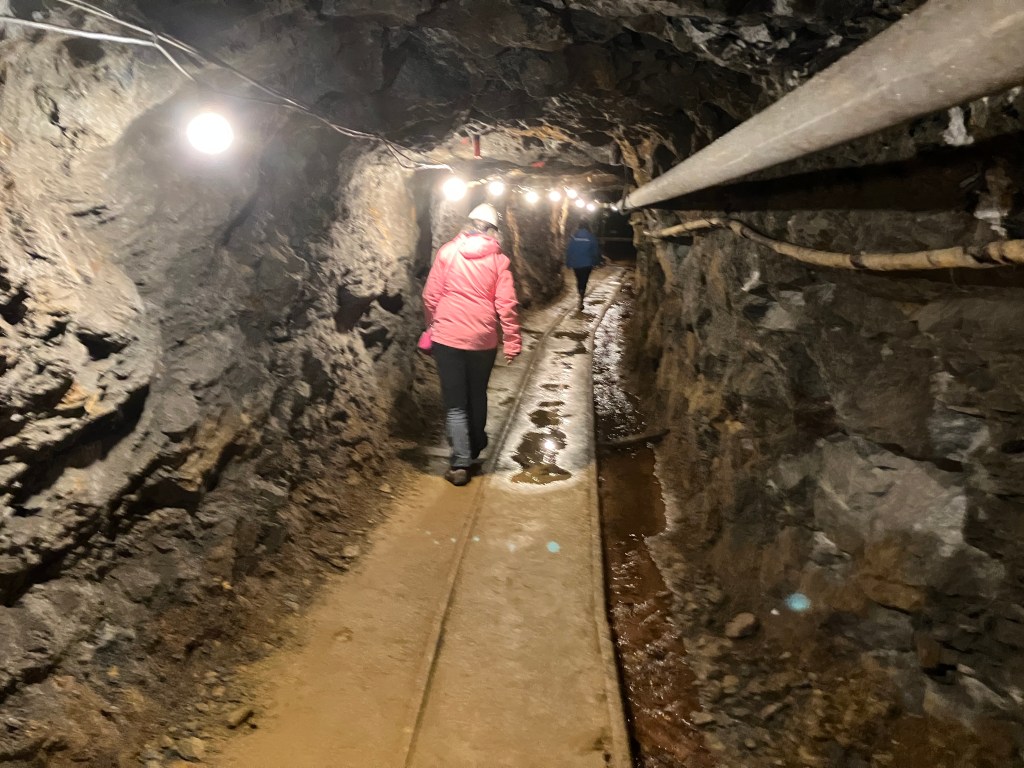
“It’s a bit scary to think of all that rock above us”, I say, scanning the roof of a rough-hewn cave. “I hope that it doesn’t decide to collapse in on top of us!”

“It’s pretty safe”, says Oliver, his locks now tied in a ponytail. “The rock is very stable here. They even hold concerts down here, because the acoustics are so good. But the path can be slippery due to the water dripping on it. Just mind your step.”

Descending into the mine.

“While it was operating, 1,131 million tons of rock were mined”, he continues. “With an average copper content of 1.39%, this yielded 15,720 tons of copper. The copper ore was taken by an overhead bucket and cable system to Nedre Storwartz, where it was processed into copper concentrate. From there it went to the smelter in the town of Røros.”

“An interesting day”, says the Skipper on the way home. “But I can sympathise with the Swedish soldiers. It was bitingly cold while Oliver was showing us around the town. And that was with my fleece, anorak, scarf and gloves. Imagine not having any of those!”

At the weekend, we make it to the island of Hitra, where Ruby Tuesday and the other boats have stayed for the winter. She is in good shape, despite having withstood fierce winds, icy temperatures, and a covering of snow. Well, almost in good shape, as the Windex at the top of the mast, which indicates the best wind directions for sailing, have come off, and are lying on the deck.

“It was caused by birds sitting on them”, the Boatyard Manager tells us. “They like to sit on them to get a good view. Unfortunately, some of them are too heavy and they snap the arms of the Windex off.”

We discover that the same thing has happened to two of the other boats in the same yard.

“I’ve never heard of birds breaking the Windex arms off before”, says the Skipper with a sniff. “Perhaps it was a sea eagle? They’re big enough. We saw a couple of them around here last year.”

“I reckon that you have been training the birds around here to do that”, I say to the Boatyard Manager as a joke. “Just so that you can get the job of fixing them.”

“Well, we did get someone to order a new one for you”, says the Boatyard Manager, “but unfortunately when he came to fit it, he put it on one of the other boats. As it turned out, it didn’t actually need one. But it wouldn’t have fitted yours anyway. We won’t charge you.”

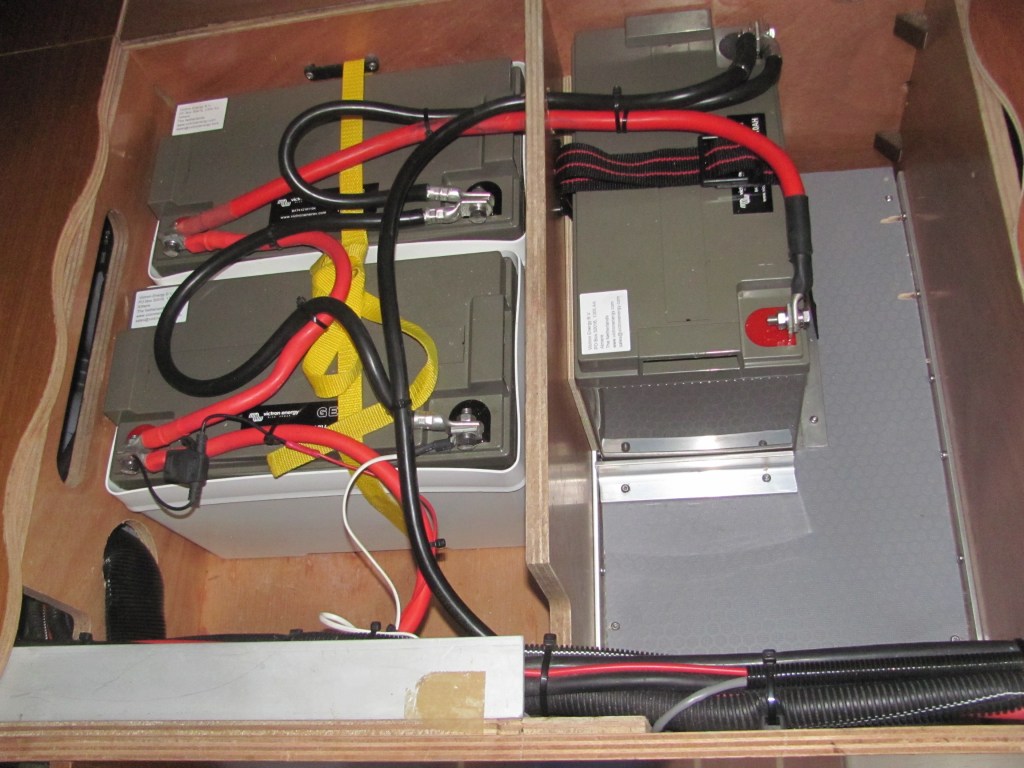
We are a little bit disappointed that our new batteries haven’t been installed. The old ones had reached the end of their lifespan last year, and would only hold a charge for half-an-hour despite being fully charged overnight. We had left instructions for new batteries to be installed over the winter. In fact, the new batteries had only been ordered a couple of weeks before our arrival, they still hadn’t even been delivered. And it’s only a few days until our scheduled relaunch date.

“It seems that the supplier sent them two weeks ago”, says the Boatyard Manager. “They seem to have been sitting in some depot in Trondheim, and we weren’t told that they were there. They should be here tomorrow.”

They do turn up in the first delivery of the day, and are immediately lifted into Ruby Tuesday. It is no trivial task, as each one weighs more than 30 kg. The Skipper tries to lift one, and nearly puts his back out again. I try, and fail miserably. However, they are soon connected up, tested, and we have a working electrical system again. They are needed to power our fridge, lighting, communications, electronics, and navigational system.

The new batteries installed.

Andy, Anne and Rick arrive a few days later. They have driven all the way from Britain to Hitra in their new electric car. They assure us that they didn’t have any worries about running out of battery power. Especially in Norway, which has made a concerted effort to switch over to electric transport, so charging points are almost everywhere. We are suitably impressed, and wonder if we should have gone for a full electric car rather than the hybrid we bought last year.

One by one, the others arrive – Simon and Louise in Aloucia, and Bob and Fiona in Hekla of Banff. The whole team is now assembled to explore the barren arctic wastes. Our plan this year, carefully researched over the winter, is to sail north from Trondheim and explore the stunning scenery of the Lofoten Archipelago, and possibly further north if time and weather permit.

The next few days are frantic. Painting the hulls in anti-foul to prevent algal growth. New anodes to stop the underwater metal parts from corroding. The polishing of propellers. Evenings spent in the small communal kitchen cooking, eating, and planning.

Final planning.

Splash Day arrives. One by one, the boats are lowered into the water, Ruby Tuesday first. Hasty last minute checks to make sure that there are no unplanned leaks, that the engines start, that the bilge pumps pump. Everything seems to be working.

Being lifted in.

More work now the boats are on the water – sails on, provisions stowed, solar panels attached, anchor windlass checked, navigational software updated.

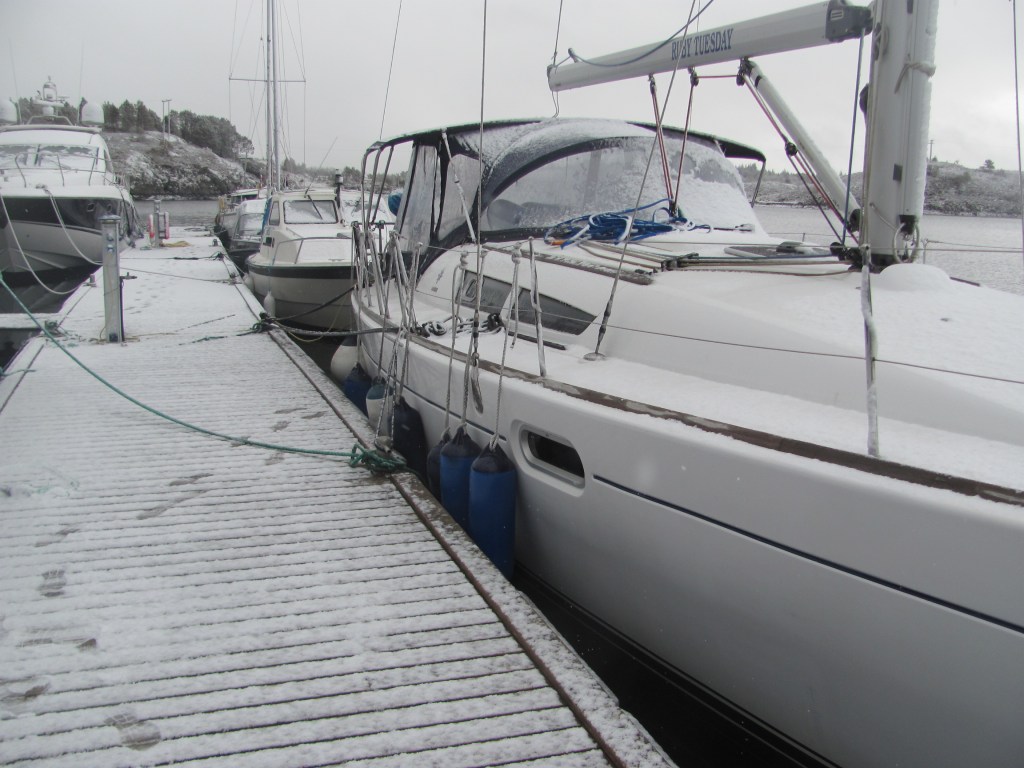
Overnight, it decides to snow.

“Someone told me that the sailing season in Norway starts at the end of April”, grumbles the Skipper, trying to do a Roald Amundsen polar explorer impression. “I wasn’t expecting snow. But I suppose we are not far from the Arctic, so it’s hardly surprising. I hope that it warms up soon though.”

A snowy start.

Finally we are off! At least, Ruby Tuesday and Amalia are. The other two boats are still waiting for parts which should arrive in the next day or so. They’ll follow as soon as they can.

Ruby Tuesday spreads her wings and slowly starts to fly, her muscles stiff after her long winter sleep. But soon she is skimming along, better than ever before. The Skipper even looks happy!

On our way at last!

“Having the rigging checked and adjusted last year has really made a difference”, says the Skipper with a smile on his face. “She feels much tighter and more responsive, and doesn’t heel so much.”

Forty nautical miles later, we reach the small harbour of Kuringvågen. A cold wind is blowing, but at least the sun is shining. We tie up and Amalia’s crew come over for a cuppa.

“I can’t understand how you got in front of us”, says Anne. “We started off about half-an-hour before you, then we lost you on the AIS, and then suddenly you appeared out of nowhere in front of us.”

“We couldn’t see you on our AIS either”, says the Skipper. “We took the seaward route around that group of islands, and there was more wind out there. We had an exhilarating sail with a consistent wind. The islands probably got in the way of the AIS signals.”

“Yes, you are probably right”, says Andy. “We took the inner route, and the wind was quite variable, broken up by the islands. We were constantly trimming the sails.”

Later we go for a walk. I spot some klippfish drying on the side of the wall.

Klippfish drying in the sun.

“Just like the ones we saw in Kristiansund last year”, says the Skipper. “At the Klippfish Museum.”

We explore the club house of the local sailing club, open to fellow sailors.

“Look, a British boat passed through here two days ago”, says the Skipper, looking at the visitors’ book. “Morwenna. They must have set off in all that bad weather we had.”

“I am sure that we will meet them somewhere along the line”, I say. “Sailors have a habit of staying at the same places.”

An invincible fortress, a faulty bridge, and a blood moon

“Phew, this is pretty steep”, pants the First Mate. “Let’s stop and admire the view.”

I’m glad of a break too. We are on our way up the steep hill leading to the Kristiansten Fortress overlooking the city of Trondheim. Unfortunately, our leg muscles don’t seem to be getting any sprightlier. Admittedly we are pushing the bikes as well.

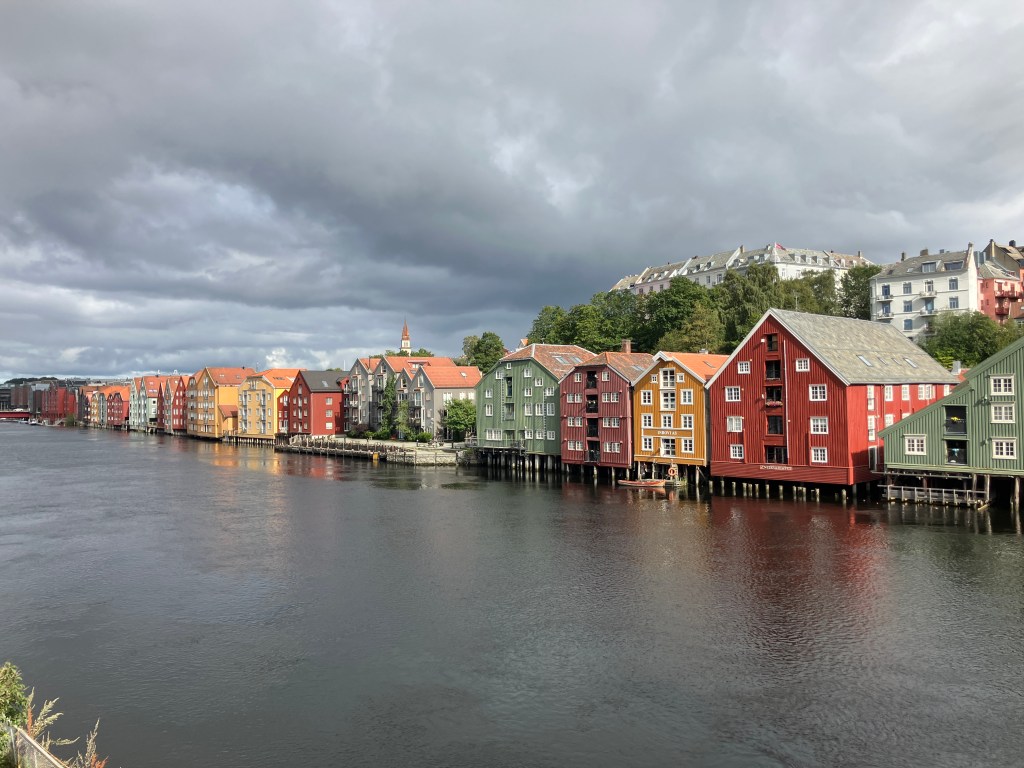
“Look, you can see the Gamle Bybro bridge where we crossed over the Nidelva river”, I say, pointing to the bottom of the hill. “And the old town of Bakklandet with all its colourful houses. They look beautiful in the sunlight.”

The Gamle Bybro.
The old town of Bakklandet.

“You just said ‘bridge’ twice”, says the First Mate. “Gamle Bybro means ‘old town bridge’, so you just said ‘Old Town Bridge bridge’. Just saying.”

Slightly refreshed, we push on, and before long we have reached the gates of the Fortress. A lot of people are milling around in the carpark outside. A notice says that it is the end of a mountain bike race. Not wanting anyone to get the idea that we chose to walk up the hill rather than pedal, I prod my tyres and mutter loudly about glass on the road and punctures. No-one seems very convinced.

The Fortress with its small museum is perched on the highest point within the walls. We learn that it was built in 1681 to protect the city against attack from the east. And not unreasonably, as 33 years later Trondheim was attacked by the Swedish.

Kristiansten Fortress.

“I’d forgotten that the Swedes and the Norwegians were at war”, I say. “It was during the Great Northern War when the coalition between Russia, Denmark-Norway and Poland-Lithuania were trying to limit Sweden’s power. Britain was even part of this coalition at one stage. I remember reading quite a bit about it when we were sailing around Sweden. They never said much about Norway though.”

“It says that Sweden attacked Trondheim in 1718, but the Fortress was too strong for them”, says the First Mate, reading from one of the panels. “Then the winter set in, and the Swedish troops, exhausted and without much food, had to beat a hasty retreat back to Sweden. Unfortunately, huge numbers of them died as they crossed the mountains on the way back. The Swedish went on to eventually lose the war at the Battle of Poltava, and had their vast empire drastically reduced.”

The Swedish try and attack Trondheim.

“A bit like Napoleon’s retreat from Moscow”, I say. “And Hitler’s too, for that matter.”

“Speaking of retreats, let’s beat one and go down to the city centre and have some lunch”, says the First Mate.

When we get to the main square, we discover that the annual Language and Culture Festival is in full swing. Small stalls representing a range of countries are arranged around the perimeter, each manned by people in national dress and selling food and arts and crafts from their respective countries. A large stage in one corner of the square has people dancing and singing. We decide to stop and enjoy the feeling of bonhomie everywhere.

Language and Culture Festival 2025, Trondheim.

“These samosas look good”, I say, stopping at the Nepalese stall. “I might get some for lunch. Want some?”
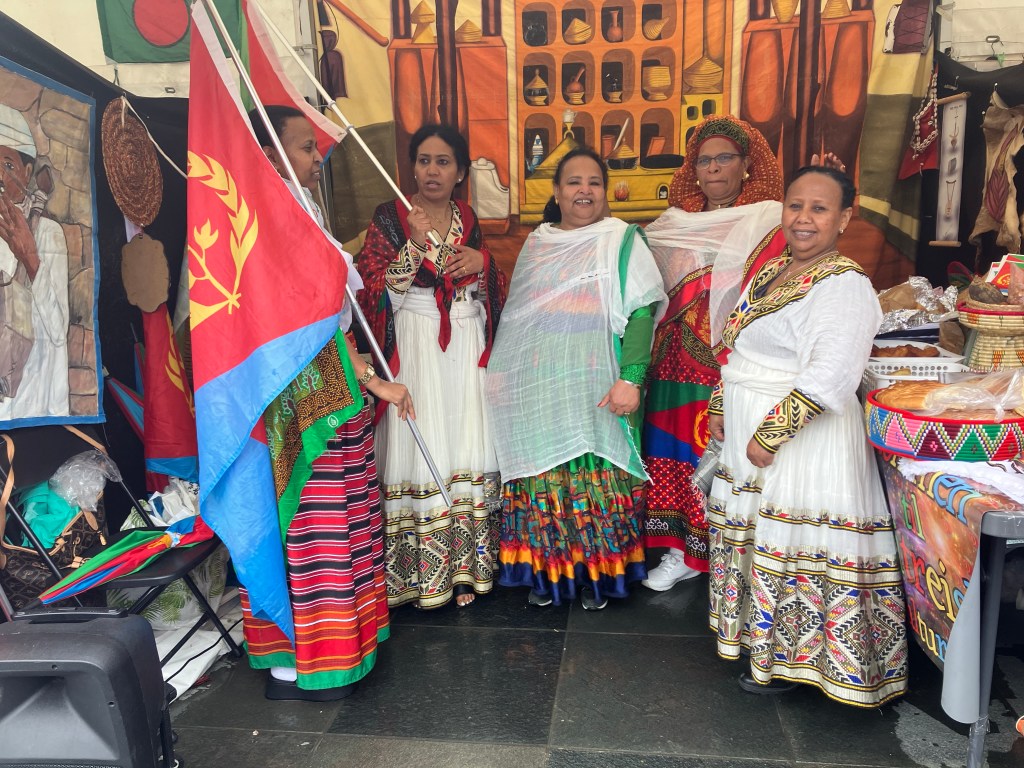
“I think that I might try some of those dumplings from the Polish stall”, says the First Mate. “The samosas might be a bit hot for me. Do you see the Eritrean national dress over there. So colourful!”

Eritrean national dress.

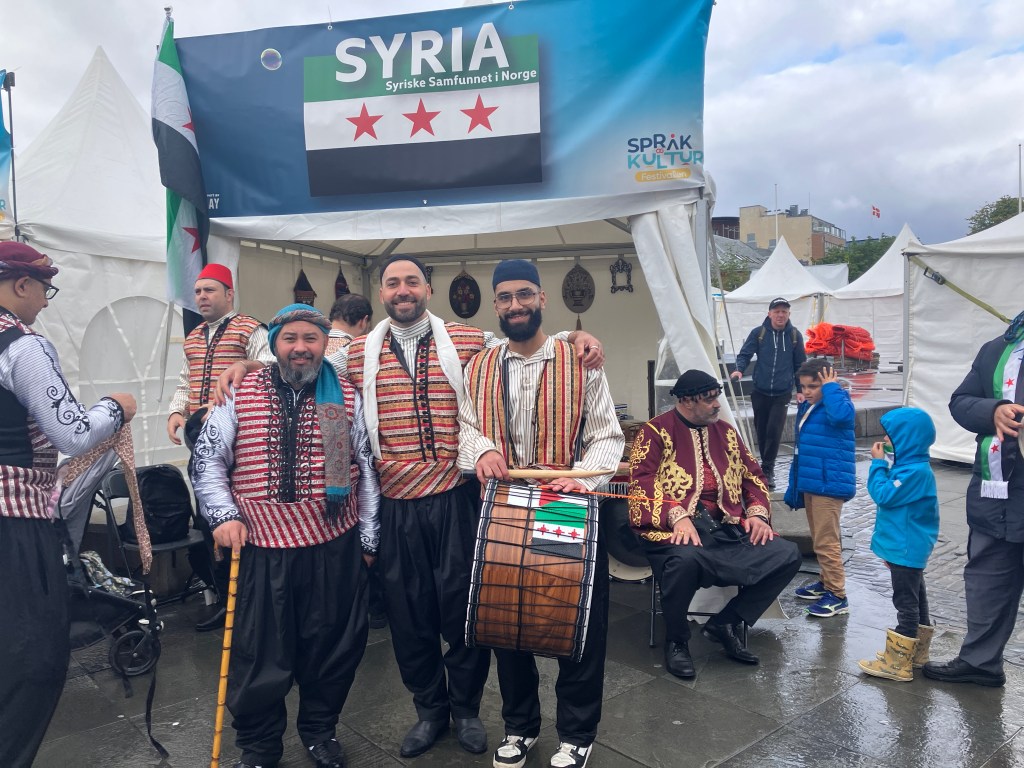
“We can eat our food at one of the tables”, I say. “And listen to the music that these Syrians are playing.”

Musicians from Syria.

“And Olav Tryggvason over there on that obelisk can keep an eye on us to make sure we put our rubbish into the bins”, jokes the First Mate. “He founded the city, so he probably wants to keep it tidy. He’s high enough to see everything that’s going on.”

Olav Tryggvason.

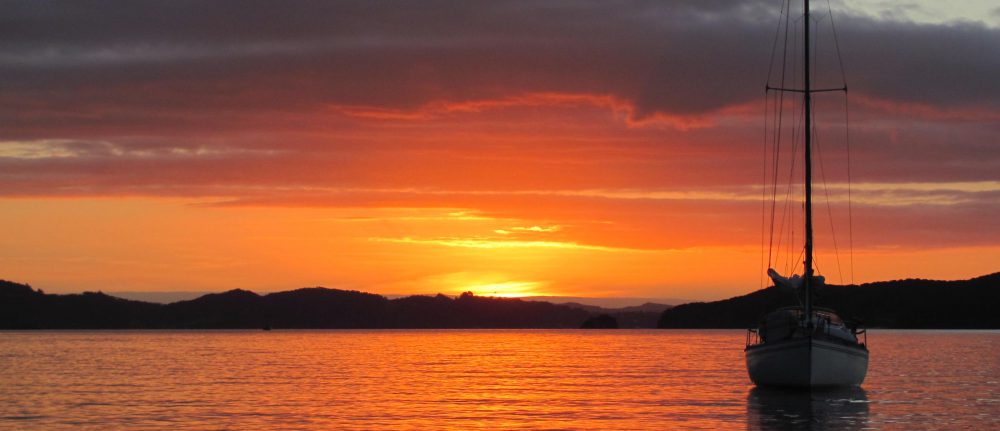
In the evening, we walk along the breakwater in front of the marina. There’s a beautiful sunset.

Sunset across Trondheimsfjord.

We come to another statue.

“It says that it is Leif Erikson”, I say. “He’s thought to be the first European to set foot in America. Apparently he was converted to Christianity by Olav Tryggvason here in Trondheim, and told to go and convert the Greenlanders. Unfortunately he was blown off course, and landed up in America. He did eventually return to Greenland and fulfilled his task of converting them.”

Leif Erikson.

“It seems that the statue was donated to Trondheim by the City of Seattle”, says the First Mate. “Apparently a lot of Norwegian emigrants settled there. They have an identical one.”

The next day, we visit the Sea Ivories exhibition at the University museum. In medieval times, before elephant ivory became available, ivory from walruses and whales was a sought-after commodity, and Trondheim became a thriving trade hub for it, both for raw ivory and for finished products.

We marvel at the intricate craftsmanship of the Wingfield-Digby crozier with St Olav amidst tree leaves painstakingly carved by a long-forgotten artisan. It was in the possession of the Wingfield-Digby family of Dorset who donated it to the British Government in lieu of inheritance tax.

The Wingfield-Digby crozier

The centrepiece of the exhibition are some of the Lewis chessmen, on loan from the British Museum. A hoard of these was found buried on a beach on the Isle of Lewis in Scotland in 1831, and are thought to have belonged to a wealthy merchant who was waylaid. It seems that they may have been made in Trondheim, as the style represent other ivory carvings known to have been made here.

Lewis chessmen.

The phone rings. It’s Tore from Riggmasters, calling about getting our shrouds renewed. He had been down a couple of days earlier and assessed the situation.

“We have a space now at our wharf”, he says. “If you can come into the canal tonight, we can do the shrouds tomorrow. There’s a bridge opening slot at 1920, so you could make that.”

Their wharf is in the canal through Trondheim, which requires us to go through the Skansen lifting bridge where the canal connects to the sea. It doesn’t give us much time to get back to the boat and get everything sorted for leaving our marina berth, but it is doable. We need to get the job done so that we can get on our way again.

We make it with ten minutes to spare, and wait for the bridge to open. Soon we are edging our way carefully up the canal, and tie up just in front of the RiggMaster workshop.

Waiting for the Scansen lifting bridge to open.

Tore starts on it in the morning, and by late afternoon we have new shrouds.

“I’ve tensioned them a lot tighter than the old ones”, he says. “You’ll notice that she will sail much more responsively now. If they are too slack, she’ll heel too much. You’ll probably get another knot of speed too.”

We plan to leave in the morning, and ring the bridge that evening to tell them we’re coming. If no one is waiting, they don’t open it. Just as we are about to leave in the morning, the phone rings.

“I am sorry”, a woman says. “We have a problem with the bridge. It won’t open. They are working on it now. We don’t know how long it will take.”

“The last time this happened, it took three weeks to open”, says Tore, overhearing. “You’ll just have to be patient.”

Three weeks! We have a flight booked in two weeks’ time, and we still have to put Ruby Tuesday to bed for the winter before then. Here we are trapped in the canal with no other way out! Panic!

The First Mate boils the kettle for a cuppa.

“Why did it have to be just now?”, she says. “Couldn’t it have just waited for another couple of hours before breaking down after we were through?”
At least the cup of tea tastes good. We kick our heels for a couple of hours, not quite knowing what to do. The phone rings. It’s the bridge lady.

“You’ll be very glad to know that they have managed to get the bridge working again”, she says. “You’ll be able to get the 1120 opening.”

Sighs of relief! At last we can make a bid for freedom. We cast off, wave goodbye to Tore and his crew, and motor past the island of Munkholmen before hoisting the sails.

Munkholmen.

“Apparently Munkholmen used to be used as a place for executions”, says the First Mate.

“Nice”, I say.

As we sail up Trondheimsfjord, the Hurtigruten ship comes up behind us. As it passes, two men lean over the rail at the back and wave.

Back to Bergen.

“I wonder who is in that little sailing boat we just passed?”, says the elderly gentleman to his companion. “I saw them in the harbour yesterday just close to where we were tied up. It had a British maritime flag. Surely they wouldn’t have come all the way from Britain? It’s a long way.”

“I don’t see why not”, says Mr Fairlie. “Apparently cruising in small boats is becoming quite popular these days, and not just for the rich and famous. The Royal Cruising Club was formed just nine years ago. And of course Norway is seen as an exotic destination. If they’ve come from Scotland, it’s not that far across the North Sea.”

“Well, I hope they have enjoyed themselves as much as we have”, says the minister. “And now, we have to get ourselves back down to Bergen. Hopefully Messrs Higgins & Baillie will re-join us there after they left us for their fishing trip in the interior. I wonder if they had much luck? And I am hoping there will be some letters there from my daughter Meg. I was disappointed not to find any there on the way up.”

“Well, I have to agree with you that it’s certainly been a very pleasant trip”, replies Mr Fairlie. “Friendly people, spectacular scenery, and interesting history. I wouldn’t mind doing it again some time. But I am looking forward to getting back to Edinburgh now.”

“Me too”, says the older man.

“We have enjoyed following your route too, great-great-grandfather”, I say, as I wave back at the ship disappearing into the distance. “We’ve seen places we probably wouldn’t have seen otherwise. But now we have to go our own ways. We’re leaving the boat here for the winter, and will continue northwards next year. Have a good trip back to Scotland.”

“They’ll never hear you”, says the First Mate, coming out of the cabin with a plateful of ham sandwiches. “Here. It’s just about lunchtime. I’ve made your favourite.”

—–

“I can see Hekla”, shouts the First Mate from the pontoon. “They’re just coming around the corner at the top of the inlet.”

Sure enough, the familiar shape of Bob and Fiona’s wooden ketch Hekla of Banff appears and negotiates her way majestically through the perches along the narrow channel to the harbour.

We are on the island of Hitra where we will be overwintering our boats. Amalia had arrived back in July, Aloucia just last week, and we ourselves in Ruby Tuesday had come earlier this afternoon. The Fabulous Four are all here now.

All together in Hitra.

Over dinner, we catch up. It’s the first time we have seen each other since the sea-foraging event in Sweden back in May. Bob and Fiona had gained a lead of at least a week when we had travelled to Oslo, and were already in Bergen when we were still in Sweden. Then they had had to return to the UK for a couple of weeks to see family and we had caught up, but somehow our paths had not crossed since then.

Bob and Fiona of Hekla of Banff arrive.

“We had a bit of a mishap when we left Hekla in Aurlandsfjord”, Bob tells us. “We were tied up to a pontoon there, and at some stage one of those high-speed ferries must have been too close. The wash from it rocked Hekla up and down, and somehow one of the gunwales got wedged under the pontoon and did quite a bit of damage. We’re looking to see if we can find a boatbuilder near here to repair it.”

“I can sympathise”, I say. “We had something similar happen to us in Lysefjord with those ferries. They should take more care.”

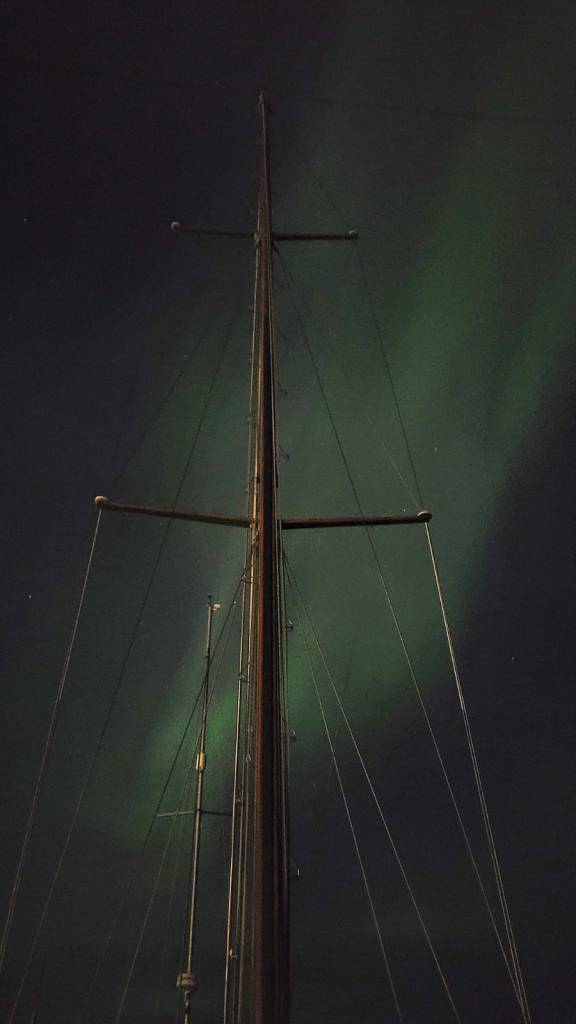
“Can I just interrupt to say that you can see the Northern Lights if you look up!”, Fiona suddenly calls out.

Northern Lights.

We sit spellbound watching the eerie green and purple lights of the Aurora borealis as the charged particles streaming from a solar storm reach the earth’s atmosphere. They writhe this way and that like giant glowing curtains before slowly fading away.

“Well, that was beautiful”, says the First Mate after they have gone. “We’re so lucky to see them.”

The next few days are spent preparing everything for the winter. Taking down the sails, packing away the spray hood, bimini and cockpit tent, changing the engine oil, replacing the oil and fuel filters, topping up the fuel tank, draining the cooling system and hot water cylinder. The First Mate stores all the clothes and other fabrics in vacuum packs and sucks the air out of them with the vacuum cleaner. It’s a big job.

In the midst of it all, Benjamin stops by. Benjamin is German, has a ponytail, and is wearing army camouflage trousers. He has a small boat tied up to the other side of the pontoon to us, and is waiting for some spare parts to arrive before he sets off back to Denmark where his partner lives. We end up talking politics.

“I voted for the AfD last time”, he says, flicking his ponytail behind them like a wild mustang. “We need a change. All the mainstream parties do is to talk, skirt around the issues, and make promises that they never keep. At least the AfD says it the way that it is.”

I ask him what he thinks about the Ukraine war.

“I hope that the Russians win”, he says. “Ukraine should never have provoked it by wanting to join NATO and the EU. It was quite predictable that Russia would respond in the way that it did.”

“But surely these days countries should be free to choose their own way forward”, I ask, somewhat taken aback. “Especially as it was a democratically elected government. If they want to be a member of NATO or the EU, why shouldn’t they be?”
“Nonsense”, he says vehemently. “That’s just Western propaganda. The reality is that small countries, especially those that are next to a major power like Russia, are not free to choose their own way, and have to consider what effect their choices will have on their more powerful neighbours. It’s just realpolitik.”

“Wow, he certainly does have very right-wing views”, says the First Mate later. “I haven’t met many AfD supporters before. Not who will admit to it anyway. Everybody that I have talked to says they don’t vote for them because of their neo-Nazi roots and ultra-right wing agenda.”

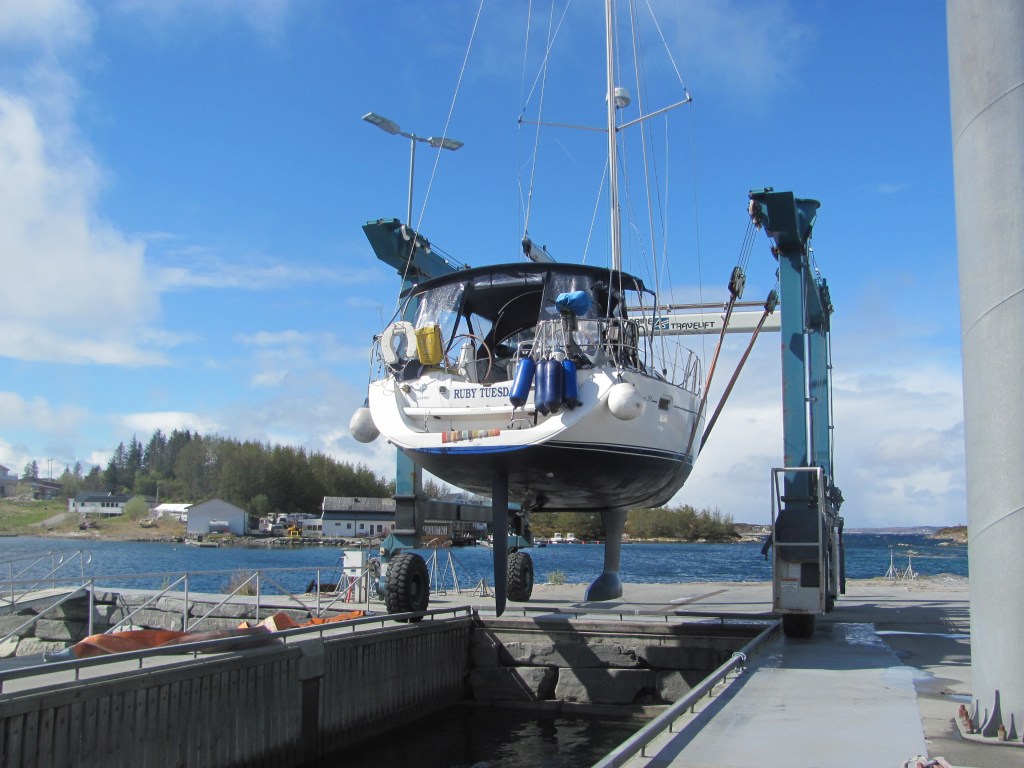
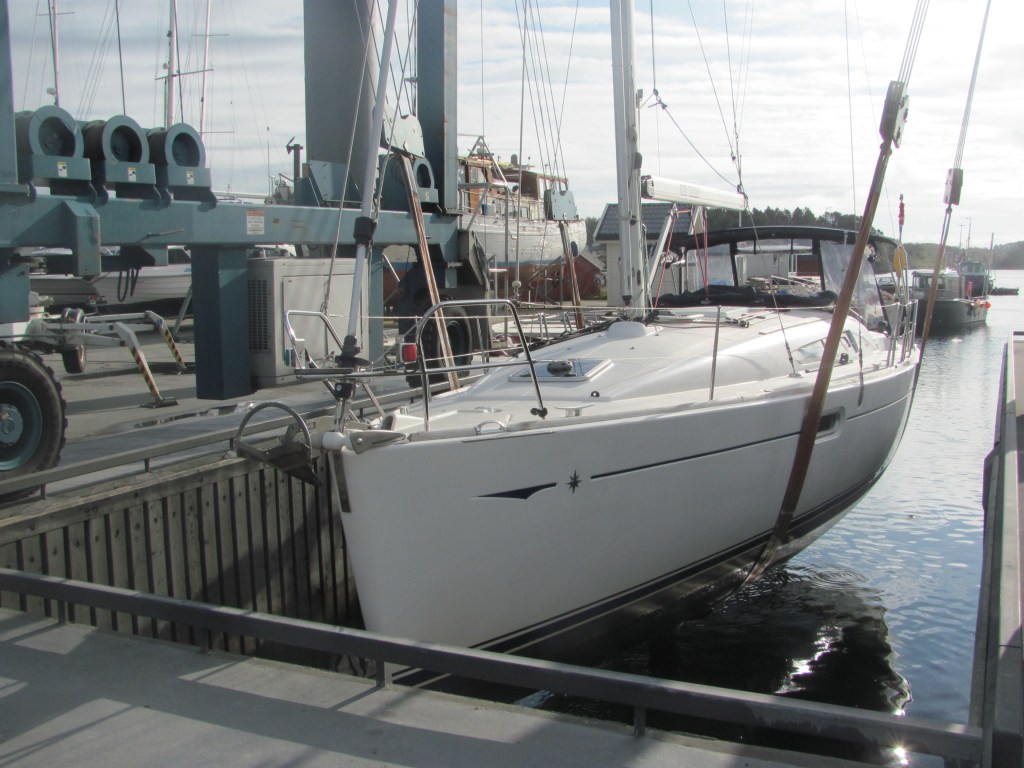
The day arrives for Ruby Tuesday to be lifted out and put on the land. We slowly motor over to the crane and position her in the narrow dock. Large bands are slipped around her and she is lifted out onto the apron to be hosed down to remove all the slime that has accumulated. Then she is transported to her place by the workshop for the winter.

Ruby Tuesday being lifted out.

“It’s good that we can stay on the boat while it’s on the land”, says the First Mate. “Not everywhere allows it. Now we can finish off all our remaining jobs.”

It’s our last night. Bob and Fiona have already left. Tomorrow we are to catch the 0720 bus to Trondheim, the train to Trondheim airport, then the flight to Copenhagen, and finally the train across to Malmö to collect our car.

“There’s supposed to be a blood moon tonight”, I say. “Let’s have dinner in the cockpit and watch it.”

We cook the last of our food and put on our fleeces. At first it is too cloudy, and we can see nothing. Then slowly the clouds clear to reveal the moon with a reddish tinge.

Blood moon.

“If we were superstitious, we’d be thinking that war, plague and a royal death will follow”, I say. “Omens of the End Times.”

“We’ve had all those already”, says the First Mate. “What with the Ukraine war, COVID, and the Queen dying. Do you suppose there is more?”
“These days a blood moon is seen more as a time of revelation and renewal”, says Spencer, joining us. “A time when one chapter closes, and another opens.”
“I like that interpretation better”, says the First Mate.

Surviving Storm Floris, a notorious passage, and the Last Viking

“I think we should press on”, says the First Mate over breakfast. “Storm Floris is coming from the south-west in a couple of days, and we don’t want to be caught out. As nice as Molde is, it is rather exposed to the southwest and there’s not much protection in the harbour.”

She has a point. Storm Floris is approaching the UK and gusts of up to 90 miles per hour are being talked about. It’s only a matter of time before it reaches Norway. We really don’t want to be sailing in that.

“We can get to Bud today”, I say. “And then try and get around the Hustadvika before it comes. We could then shelter in the tiny island of Håholmen. Alternatively, we could stay in Bud itself – I’ve heard that it is quite well-protected.”

The Hustadvika is another of the officially designated ‘exposed or dangerous areas’ in Norway, and consists of a cluster of rocks, skerries, and small islands open to the vagaries of the Atlantic Ocean. Like the Statt and Godø, a benign weather window needs to be found to traverse it safely. Storm Floris doesn’t sound like it would be one of those.

Leaving Molde.

We set off. Once we are round the Julneset point and into Julsundet, we catch the wind from the southwest, and have an exhilarating sail past the islands of Otrøya and Gossa right up to Bud. We have had a month of glorious sunshine, and while we wouldn’t have wanted to see the fjords in any other way except that, it had meant that there was very little wind for sailing. It is great to be able to stretch our wings again.

Sailing again.

When we arrive in Bud, there is another British boat tied up to the landing. It turns out to be a father and daughter.

Tied up in Bud harbour.

“We’ve been up to the Lofoten Islands”, the daughter tell us. “Now we are on our way back again. We need to get the boat back to the west of Scotland where we keep it, but I have leave my Dad to do it on his own from Ålesund as I need to be back to work next week. I’m a vet.”

“I’m used to sailing by myself”, says the father, anticipating the question from the looks on our faces. “So it’s not a big deal, although I will miss her company. She’s a good sailor. But this Storm Floris coming is going to delay things a bit. I’d be sailing right into it.”

We spend the next day exploring Bud. It’s a small picturesque fishing village with a supermarket, café, church, and museum. It’s claim to fame is that it was where the last independent Norwegian Privy Council met to vote in 1533 to secede from the Kalmar Union with Denmark and Sweden, and to become an independent country and reject the adoption of Lutheranism as the national religion. Unfortunately that didn’t end well, and Norway ended up in being a province of Denmark for nearly 300 years.

Bud harbour.

“It’s amazing to think that if they had succeeded in seceding, Norway would still be a Catholic country today”, says the First Mate. “And not Lutheran like the other Scandinavian countries.”

Bud church.

We come to the coastal walk north of village. The sun is shining, there’s no wind, and it’s hot. We climb one of the rock outcrops and look out over the Hustadvika, the route we will be taking northwards.

Looking out over the Hustadvika from Bud coastal walk.

“It’s so calm and peaceful now”, says the First Mate, wiping her brow. “It’s hard to believe that a violent storm is on its way.”

In a sense, we could have set off this morning, but we had heard from some other sailors we are in touch with that our intended destination, Håholmen, is low-lying and quite exposed, so we had decided that discretion is the better part of valour, and that we would sit out the storm in Bud instead.

The peace and quiet is suddenly shattered by a frenzied cacophony of seagull cries up ahead. Several seem to be harrying another large bird, swooping and diving at it from all angles.

“It’s a sea-eagle”, I say. “They are warning it to stay away. Perhaps it lives near here, out on the skerries.”

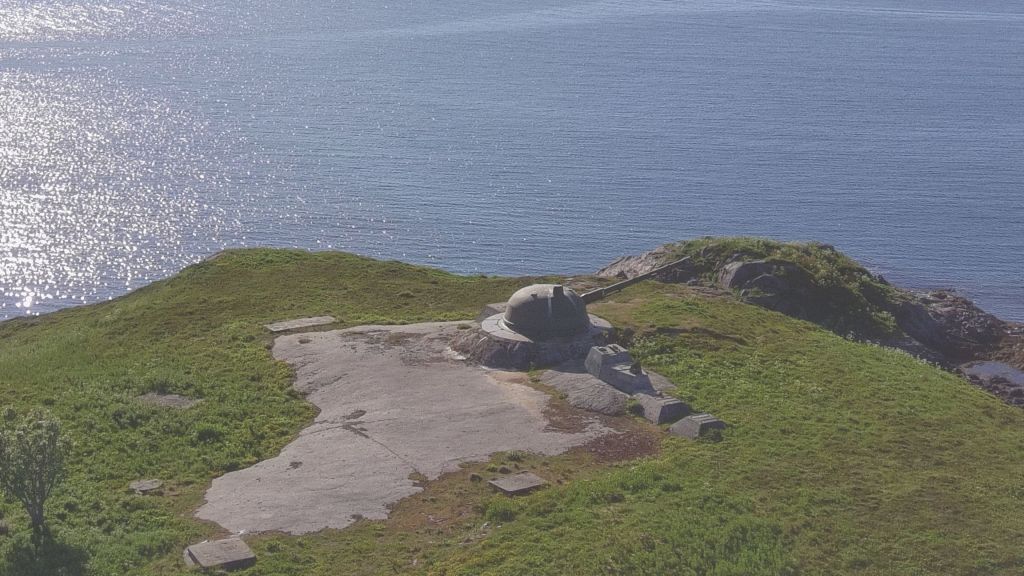
We end up on top of the small hill overlooking the town where German troops built gun emplacements as part of a series of fortifications called the Atlantic Wall to resist an Allied invasion. As it turned out it was never used in action, and may have even contributed to Germany’s defeat by diverting troops for its operation away from mainland Europe.

WW2 fortifications.

The storm is forecast to reach us sometime in the night. We have been keenly following the havoc that it is causing in Scotland, knowing that we would be in for something similar. Already there are some preliminary strong gusts. I double up on the mooring ropes just in case one breaks or works itself loose.

Storm Floris on its way.

“I’ll put some rubber snubbers on as well”, I say. “That’ll stop sudden jerks stressing out the ropes. You can batten down the hatches.”

“I don’t think we have got any battens”, says the First Mate.

“I didn’t mean it literally”, I say. “I just meant to make sure all the windows and skylights are shut. It’s nautical-speak.”

Storm Floris.

As predicted, Storm Floris hits us in the early morning. I am awoken by the sound of the halyards whipping against the mast and the boat listing alarmingly to port as the winds howl over the harbour breakwater and catch the top of the mast. Luckily the breakwater protects the hull from the worst of the force, although from time to time, plumes of spray come hurtling over it, drenching the boat and joining the rivulets of rain already coursing down the canopy tent.

Ruby Tuesday listing from the wind.

We eat breakfast huddled in the cabin, listening to the wind whistling through the rigging. Outside we see a seagull struggling to fly against the wind, making no progress at all, giving up, and going with the flow. I check the windspeed to find that it is up to 42 knots. That’s a Force 9 gale. And that’s in the harbour – what is it like out at sea?

Windspeed up to 42 knots!

In the afternoon, I notice that I have forgotten to take down the courtesy flags and that they are starting to work their way loose. When there is a lull, I clamber out onto the fore-deck and manage to retrieve two of them, but the Scottish one has somehow managed to get itself stuck on the port spreader. Without climbing up, there is nothing I can do except pray that it will somehow hang on.

It doesn’t. Two hours later it is gone. I have a quick scan around the harbour on the off-chance that it might still be floating on the water or have blown onto a jetty, but nothing.

After two days of incessant lashing, the storm dies down. We consult the BarentsWatch website and calculate that the sea should have calmed down enough the next morning for us to attempt the Hustadvika. We have decided to do the inner passage through the rocks and skerries, the so-called Stoplane route, which although requiring greater care in navigating our way through narrow gaps, is more protected from the Atlantic swell.

We awake early and cast off. There is still some residual swell left over from the storm, but it is not rough. We wend our way through the twisting route, making sure that we approach each marker pole on the correct side. Jagged rocks pass only metres away from our hull. We eventually reach the narrowest part, between the two Stoplane islands that give their name to the passage, where the marked channel is only two boat-widths wide.

Navigating through the Hustagvika inner route.

Eira looks at the boat approaching. It is the same one that she had seen a few days earlier on her visit to Romsdalfjord, and again when the seagulls had harassed her.

I know who you are, she thinks. I have seen you before. But you are in my world now. Your kind may have driven us out from the land you have colonised in Romsdal, but this is our domain. Yet still your minds are set on bending nature to your will, of claiming the seas as your own. You say that we have no right to your livestock, why then do you assume you have rights to our fish? Have you forgotten that once there was enough for all; now your numbers and your machines take almost everything and leave little for the rest of us? But we are all part of nature, you are not set to rule over us. If you can’t or won’t learn that, the Doom will return; but this time it will be for us both.

White-tailed sea-eagle.

“Look, there are two sea-eagles on that pole”, exclaims the First Mate, pointing to one of the markers. “One’s just flown off.”

“They are beautiful creatures”, I say, trying to take a photo at the same time as I attempt to manoeuvre the boat through the narrow gap . “Especially when they fly. So big. I wonder what she is thinking about?”

“Deep philosophical thoughts, I am sure”, she answers.

Our route through the Hustadvika.

Eventually we reach Håholmen and find a berth at the small harbour.

The island of Håholmen.

Several people are milling about as though they are waiting for something.

“The boat back to the mainland is coming soon”, explains a neighbour. “A lot of people come over for the day, have a walk around the island, something to eat and drink, then go back in the evening.”

“Unfortunately, the restaurant is fully booked for tonight”, the receptionist at the hotel tells us. “It’s very popular. You need to book well in advance. But there’s a couple of videos you might be interested in in the small museum at the back. One’s of the history of the island, and the other is of the things that the previous owner, Ragnar Thorseth, got up to. If you want to see them, let me know and I can switch them on for you.”

We decide to have a cup of tea and then see the videos. On the way back to the boat, we meet another British couple.

“We’re sailors too”, says the woman. “But our boat is in Greece. We’re on a car tour through Norway, as it is too hot to be in the Mediterranean at the moment. We’re staying at the hotel. The food here is great – we ate at the restaurant last night. But we have decided not to go tonight, so you could have our table if you like. I’ll talk to Reception.”

A stroke of luck! We had heard good reports of the restaurant, and had been keen to try it. Soon we are booked in for the 6pm sitting.

We find our way to the small museum at the back. The receptionist turns on the video projector.

“Håholmen was founded in the 1700s and soon become a hub for fishermen and traders”, the first film tells us. “Around 1900, it was purchased by a Bård Bergseth, who lived here with his family, and maintained the fishing industry. In the 1990s, it was taken over by his grandson, Ragnar Thorseth, who turned it into a hotel and conference centre.”

Ragnar Thorseth is a larger-than-life Norwegian adventurer, not all that dissimilar to his more well-known countryman, Thor Heyerdahl, we learn from the second film. In the 1960s, he had rowed single-handed from Norway to Shetland in an open rowing boat. Later, in the 1980s, he had built a replica Viking trading ship, the Saga Siglar, and had sailed around the world in her. He also managed to pack in a trip by boat through the Northwest Passage, an overland trip to the North Pole, and overwintering on Svalbard with his family. His exploits earned him the name of ‘The Last Viking’ in Norway.

Ragnar Thorseth rowing from Norway to Shetland.

“He still keeps coming to the island from time to time, even though it is now owned by Classic Norway Hotels”, the receptionist says as she comes to turn off the projector. “He lives on another island a bit further south from here. In fact he was here just a couple of weeks ago. In his Viking replica ship. He’s quite an amazing character.”

Remains of the Saga Siglar.

At 1800, we find ourselves at the restaurant. Knowing the history of the island, how could we have anything but fish? The First Mate goes for the monkfish; I decide to have the klippfish.

“Klippfish is a white fish, usually cod, that has been split, salted and then left to dry in the sun”, the waiter explains. “It is a traditional dish in this area. I can guarantee you will like it.”

He’s right. It’s delicious, with potatoes, minted green pea purée, cured pork belly bacon, and beurre blanc sauce, all rounded off with almond cake for dessert.

“I’m not sure that I am going to make it back to the boat”, says the First Mate. “I think I have eaten too much.”

“I’ll see if I can find a trolley”, I say.

A rock concert, a town of roses, and a new song

“There’s a rock concert on for the next three days”, says the captain of the boat tied up in front of us. “Rauma Rock. It’ll be really loud. We were here last night, and we could hardly hear ourselves think until about four in the morning. But the music was good. There will be even more boats coming tonight. It will be packed.”

Andalsnes harbour.

We are in the tiny harbour of Andalsnes near the top of Romsdalfjord. There had been no berths free when we had arrived, and we had rafted up to another small yacht while we decided what to do. It was then that we had noticed that a large stage had been constructed on the quayside, with the twanging of guitar strings warming up emanating from it.

Rauma Rock warming up.

“I don’t really want to be kept awake all night”, says the First Mate. “I am at that age where I need my sleep. But it would be somehow nice to hear some of the music.”

“Me too”, I say. “My hearing is bad enough as it is with old age, without finishing it off completely. Why don’t we go and anchor a little bit further up, where can still hear the music, but it isn’t quite so loud? And we wouldn’t have to pay either!”

The last sentence is the clincher.

“Good idea!”, she says. “But let’s have a quick look at the town first to see what it is like.”

The First Mate explores the town centre, while I take a walk down to the Rauma river running through it.

Town Hall, Andalsnes.
Rauma River in Andalsnes.

“Well, the town was pretty average”, she says, when we meet again. “I didn’t find it very inspiring.”

Later we motor a little further along the shoreline of the fjord and drop the anchor.

“Perfect!”, says the First Mate as we sit on deck with our glasses of wine watching the gondolas taking their passengers to the top of Mount Nesaksla, and listening to Rauma Rock getting underway. “That’s much more enjoyable.”

Listening to Rauma Rock from a distance.

“Andalsnes was one of the places that my great-great-grandfather visited”, I say. “Or at least Veblungsnes, which was the main settlement in those days. Since then, Andalsnes grew to be a town, while Veblungsnes remained a village. The Rauma river divides the two. In his letters he talks about the striking wonders of the Rauma river, but he says that he doesn’t have time to describe them.”

“The guide book says that the Rauma is famous for its salmon fishing, the emerald-turquoise colour of its water, its towering mountains, deep gorges, and sheer cliffs, and its waterfalls at Vermafossen and Slettafossen”, says the First Mate. “It was the inspiration for scores of Romantic artists, writers and explorers.”

“It would be nice to go and see it”, I say. “But we’ll never get in to the harbour now with all the boats that have been arriving.”

“We’ll have to come back another time”, says the First Mate.

In the morning we set off back along the Romsdalfjord. I keep a sharp eye out for sea-eagles.

Scanning the cliffs for sea-eagles.

Far above, wheeling on the updraft from the cliffs, Eira looks down on the waters of the Romsdalfjorden. She doesn’t come here often these days, instead spending most of her time with the other sea-eagles on the islands and skerries at the mouth of the fjord where the fish are plentiful. But from time to time she likes to revisit her birthplace and recall the stories that her father Clew and her mother Aran used to tell of Cuillin, the last of the great sea-eagles of Skye, who had flown alone from there to Romsdal to save her kind. And of her daughter Mourne who had returned to Skye with her motley collection of vagrants to repopulate those islands.

Out of the corner of her eye, she sees a boat heading for the tip of Okseneset and the shapes of two humans. They won’t be able to see her, she is too high and against the sun. She does not fear them in the same way that her parents had done – the Doom that she had heard in the old stories had passed now and there seemed to be a new understanding between her kind and the humans.

And yet, from time to time there was a niggling feeling in the back of her mind that the Doom had not gone completely. To be sure, few of the Romsdal eagles died these days by being shot or poisoned, but she had heard that there were increasing numbers flying into the high towers with rotating blades that had appeared in Møre og Romsdal. And then there was the rumour that was going around the Pairs that the eggs being laid were hatching earlier in the year, there seemed to be more rain than she remembered in her younger days, and the weather appeared to fluctuate more between extremes. But surely humans couldn’t be blamed for that, could they? Clever as they seemed to be, they were just too small and insignificant to be able to change the forces of Mother Nature herself, the might of the winds and rain sweeping in from the Atlantic, the strength of the sun’s light bringing warmth and life to the earth. Surely only Haførn, the mother of them all, had the power to do that …?

As she circles, she sees another sea-eagle gliding over the island of Sekken. She recognises from his flight that it is Arvid, her mate. She dips her great wings and flies to meet him, the humans in their small boat disappearing from her view.

Sea-eagle.

“Are you day-dreaming again?”, the dulcet tones of the First Mate interrupt my reverie.

“I was hoping to see a sea-eagle”, I say. “I was just thinking of the book I re-read over the winter – The Stonor Eagles by William Horwood. It’s about how sea-eagles went extinct in Scotland in the 1930s through the farmers shooting them to stop their sheep from being attacked, and how they were reintroduced in the 1970s from Norway. Romsdal was one of the areas that they brought them from. I read somewhere that you do see them here.”

“I imagine that there would be more down towards the ocean”, says the First Mate. “That’s where the fish are, after all.”

We arrive at the town of Molde on the northern shores of Moldefjord, and head for the small municipal marina. It’s sweltering. A woman in a tank top and shorts helps us tie up.

“That’s my boat just in front of you”, she tells us. “I live on it throughout the summer and then go back to my apartment for the winter. It’s kind of like a summer cottage, but on the water. I don’t sail far – there are enough beautiful places to visit around here.”

Tied up in Molde town marina.

After a cup of tea, we decide to explore the town centre.

“It’s a pity we weren’t here a couple of weeks ago”, says the First Mate. “We could have gone to the Jazz Festival. They have one every year.”

Molde is well-known for its Jazz Festival.

“Look, here’s the Salmon Centre”, I say, pointing to a building in the town square. “We should go and have a look at it.”

“It’s free entry”, says the girl at the reception. “And that includes a free sample of raw salmon, which you can use to make your own snack with taco shells and various dips.”

For the next little while we are absorbed in creating our own culinary delights, learning about the life cycle of the salmon from ‘roe to plate’, how the cages are made and installed, and how it is becoming more sustainable, including ways to prevent farmed salmon escaping to mate with wild salmon and weakening their gene pool.

Learning how to create our own salmon delicacy.

“That was fascinating”, I say, as we emerge. “I now know more about salmon than I ever thought I would.”

“Yes, it was”, says the First Mate. “Come on, let’s have a coffee and cake. Look, there’s a nice looking place over there. We can sit outside. You grab a table, and I’ll go and choose the cake and order.”

“Earl Grey tea for me, please”, I say.

“A nice little watering place.”

“Well, this is a nice little watering place”, says the minister to his companion as they sit down. “I enjoyed the walk around the town this morning. Such lovely weather. And what a nice smell from all the flowers they grow.”

“Molde is famous for that”, responds Mr Fairlie. “Especially the roses. Their fragrance is everywhere.”

Molde roses.

“I had a look at the new church”, says the minister. “Apparently the old one burnt down four years ago, and they just finished building a new one last year. I must confess that I like the look of the old wooden one I saw in pictures better than the new one. All red-brick now.”

“I suppose it will be more fire-proof, at least”, says Mr Fairlie. “That’s always the problem with wooden buildings in this part of the world. It’s only a matter of time before they get burnt down.”

Molde’s present day Domkirke (successor to the redbrick one!).

“And I have to say that I was impressed at the beautiful resting place of the departed here”, continues the minister. “With its small mounds of earth crowned with the loveliest flowers. The graves are tended with the fondest care and mothers come and sit by their loved ones’ dust for hours, with a book in hand or plying the needle, engaged on some piece of useful or fancy-work.”

Molde cemetery.

“Here we are”, says the First Mate, bringing a tray with the coffee, tea and a cheesecake. “What a nice spot. We can sit and watch the boats coming and going. But why are you putting in pictures of the cemetery? That’s a bit macabre.”

“My great-great-grandfather went to see it”, I say. “I thought I should too. He seemed to like that sort of thing.”

“You seem to be enjoying this cruise, at least?”, says Mr Fairlie.

“Immensely, but I have to admit I never feel relaxed on a boat”, says the minister. “Ever since I lost my younger brother Andrew at sea.”

“I didn’t know you had a younger brother”, says Mr Fairlie. “What happened?”

“He was on his way out to New Zealand”, replies the minister. “Another brother of ours, James, was already out there farming near Dunedin, and Andrew was intending to join him. He was a minister like myself, and had been in Canada but had fallen out with some of his superiors there. I don’t know what about. He always liked his drink and was a bit of a hothead, so maybe it was something to do with that.”

“So he was looking for a fresh start in New Zealand?”, asks Mr Fairlie.

“Yes, that sort of thing”, says the minister. “He was on board a ship called the Burmah sailing from London to Lyttelton. It seems it might have been overloaded, as in addition to the passengers, it was carrying a consignment of high-class horses and cattle. But it never arrived in Lyttelton. Another ship fourteen days out from New Zealand reported passing it in the Southern Ocean, and also that they had seen icebergs in the area at the time. So we are guessing that the Burmah must have hit an iceberg and sank.”

“What a story”, says Mr Fairlie. “Your poor brother. To have all his hopes dashed when he was so close to realising them. It’s a salutary reminder of the perils of sea travel.”

“Yes”, continues his companion. “But the story doesn’t end there. One or two years later some ship’s timbers were washed up on a beach to the south of Dunedin with the letter ‘B’ written on one of them. The supposition at the time was that it was from the Burmah.”

“And it’s sad to think of your brother James already in New Zealand waiting patiently for Andrew to arrive”, says Mr Fairlie. “Looking forward to seeing a member of his family again, then the slow realisation each passing day that his brother may not be coming. But never really knowing for sure.”

“No closure”, says the First Mate, as she takes the last of the cheesecake. “As we might say today. It’s a poignant story. But I can understand how your great-great-grandfather felt about the sea. I never feel at ease with it myself.”

“Who does?”, I think to myself.

In the evening, we sit on deck and eat our dinner. Suddenly three men from one of the neighbouring boats come over.

The music makers?

“We’ve been composing songs to amuse ourselves”, one says. “We’ve made one about your boat. We wondered if you might like to hear it?”

He presses the Play button on his portable stereo. A Scottish folk song plays.

Ruby Tuesday

She was born on the Clyde where the river runs wide,
Painted red like the fire of the morning tide.
With her sails full of dreams and her heart on the sea,
Ruby Tuesday’s the name, and she’s calling to me.

From whisky shores and bagpipes’ cry,
She’s chasing sunsets, kissing the sky.

Oh
Ruby Tuesday, rolling with the waves,
From Scotland to Molde, where the fjord light plays.
We’ll sing and we’ll dance as the moon shines through,
On a deck full of laughter and a sky so blue.

The gulls sing along, and the wind hums a tune,
As we sail through the night by the light of the moon.
There’s a fiddle on board, and the stories run wild,
Of whiskey and freedom and the heart of a child.

She’s got no fear of the stormy skies,
‘Cause
Ruby’s a queen with fire in her eyes.

Oh
Ruby Tuesday, rolling with the waves,
From Scotland to Molde, where the fjord light plays.
We’ll sing and we’ll dance as the moon shines through,
On a deck full of laughter and a sky so blue.

Raise your glass to the Northern light,
We’re sailing strong through the soft midnight.
Every mile that we leave behind,
Brings us closer to peace of mind.

Oh
Ruby Tuesday, you’re my guiding star,
From Scotland to Molde, no journey’s too far.
With the wind in your sails and the sky so true,
Every song that I sing, I’ll be singing for you.

It’s brilliant. Not completely factually accurate, but who cares about details? We’re touched.

A cement town, a wartime evacuation, and unexpected winds

“You can leave your car with a friend of mine”, says Ingemar, over a beer. “He has a big barn, so it will be under cover.”

We had met Ingemar on the Danish island of Christiansø last year, and had sailed along with him to Limhamn marina on the outskirts of Malmö, where he was also storing his boat over the winter. Limhamn was where he had been born and grown up, so despite now living in the south of France, he knew the place and its people well.

“It’s better than leaving it at the marina, where it is likely to get covered in salt spray from the wind”, he continues. “I always leave my motorhome with him.”

He has a large motorhome that he uses to travel around in when he is not sailing. We had been most impressed with it – it is fitted with state-of-the-art gear, and even has a small garage in the back of it in which he keeps his SmartCar for travelling around locally in when he reaches his destination.

A home away from home? (Similar to, but NOT Ingemar’s mobile home.)

The next day, I follow him to his friend’s place and park our car in the barn. His motorhome is already there. Several other cars are also in the barn, some classic, some covered in dustsheets. Our car will have others to talk to.

“Your car will be fine here”, says Ingemar’s friend. “I won’t move it from its place. Remember to disconnect your battery so that it doesn’t go flat.”

On the way back to the marina in his SmartCar, Ingemar talks about the local history of the area.

“Limhamn actually means Lime Harbour. There was a huge quarry, the Limhamns Kalkbrott, from which they used to extract limestone and take it by train to the harbour where it was converted into cement. I can remember as a young boy being woken every morning by the huge explosions as they blasted out the limestone. Our whole house shook. The cement was shipped all over the world – the ‘Christ the Redeemer’ statue in Rio de Janeiro was actually made using Limhamn cement.”

“Do they still make it here?”, I ask.

“Not any more”, he says. “Nowadays, most of Sweden’s cement is made on Gotland. They have turned the quarry here into a nature reserve with a lake in the middle which attracts wildfowl and other animals. Apparently the nature reserve has one of the very few populations of the European green toad left in Sweden. Look, the observation point is just off here. I’ll take you to see it.”

We stand on the edge of a giant crater and look down at the small lake and regenerating vegetation. On three of the sides of the rim are new-build housing areas, and on the fourth is the motorway to the Øresund Bridge.

Limhamns Kalkbrott.

All that material removed from the earth and used to make the cement to construct the hallmarks of modern civilisation, I think.

“Ironically, they have to keep pumping water out of it so that the whole area doesn’t become a lake”, says Ingemar. “It makes you wonder how sustainable it will be in the long run.”

—-

We set sail the next morning. We are a little nervous, not only because this is our first sail of the season, but also because it is the first proper test of everything on the boat after the winter repairs – particularly the engine which had had the heat exchanger removed. Will it all function, or did I forget to reassemble some vital bolt or screw, I wonder.

But everything works as it should, and we are soon sailing merrily northwards along the Øresund. It is just as well, as we had arranged to meet three other boats by a specific date in the small village of Smögen some 200 miles away well up the west coast of Sweden, and we already don’t have much time to get there. But at least we are finally on our way.

“Look, there’s Kronborg Castle over there”, says the First Mate, pointing to an impressive looking structure on the Danish side. “The town nearby is Helsingør, where we used to catch the ferry across to Sweden the times we drove to Stockholm.”

Kronborg Castle, Helsingør.

We cross the shipping lane at right angles to reach the Danish coast. Now the wind is on the nose, and we have to furl the sails and start the engine. Eventually we reach our destination for the night, the small town of Gilleleje on the north coast of the island of Sjælland.

“It looks like we’ll be here for a few days”, I say, perusing the weather charts and forecasts in the evening. “Strong north winds and lumpy seas are forecast for the next three days at least. We can’t sail into those.”

“Well, I am sure we can find enough things to do here for a few days”, says the First Mate. “It seems a nice little place. I read that there’s a good fish shop here with fresh fish from the fishing boats.”

Looking for fresh fish in the Gilleleje fish shop.

In the morning, I walk over to the shower block for my customary shower, taking with me the card we were given to access and pay for the toilets and showers.

“I am not sure how much money is left on the card”, the First Mate says. “I had rather a long shower last night, and I may have used quite a bit of it. But there is definitely some left.”

Outside a group of people are busy doing aerobics, led by an athletic hunk in his twenties.

“Legs up and twist”, he chants. “Arms straight in front, and bend. One, two, three four.”

Inside, I undress and wave the card in front of the reader. The shower starts. I stand underneath it and soap myself up. After one minute there is a click, and the water stops. I wave the card again in front of the reader. Nothing. There is a beep and a message appears on the reader display.

“Insufficient funds on this card to continue.”

Consternation! Dripping soapsuds and shampoo, I have no way of rinsing them off. The machine for topping up the card is at the yacht club, 100 metres away. And I can’t put my clothes on top of wet suds anyway.

The brilliant idea occurs to me that the only way is to rinse myself off at one of the basins in the common washroom. But what if someone comes in? I have to take the risk.

Starkers, I stand on my towel and slosh myself with water from the sink. The aerobics chanting outside ends, and there is the sound of the outer door opening. I just manage to wrap my towel around myself before the washroom door opens.

I avert my eyes from the curious gazes of the Athletic Hunk and several other sweating faces.

“Shower not working”, I mumble, pretending to be a foreigner not used to Danish bathroom technology. No one looks convinced.

The Athletic Hunk waves his card in front of the reader. The shower spurts out water perfectly. I pretend not to notice, dress, and beat a hasty retreat.

“I have a bone to pick with you”, I say to the First Mate when I get back to the boat.

“I told you there might not be much on it”, she says unsympathetically. “You should have topped it up before you went in.”

In the afternoon, we visit the Gilleleje museum, the central focus of which is the evacuation of Danish Jews to Sweden in October 1943. Two of the museum staff are sitting outside the café in the sunshine drinking coffee.

“The Jews in Denmark were left relatively alone for the first part of the war”, one of them tells us. “Mainly because Denmark had an official policy of cooperation with the Germans. But in October 1943, this arrangement broke down, and the Germans began arresting Danish Jews.”

“Suddenly, Jews from all over Denmark started coming to Gillerleje”, the second one tells us. “It’s the closest point to neutral Sweden, and they were trying to flee to there. Many came by train to the station here. You can find out more about it in the exhibition over there.”

“Local people hid the fleeing Jews in their lofts”, one of the panels tells us. “Then when a boat became available, they would be taken down to the harbour in the dark of night and put aboard the boat. Children were even sedated and carried down in cardboard boxes so they wouldn’t cry out and arouse the suspicions of any chance German patrols. The boat would then take them across to Sweden.”

Some of the refugees weren’t so lucky. Someone informed the Germans that there were Jews hidden in the loft of the church – a patrol was dispatched there, the Jews were arrested and taken to the nearby Horserød prison camp, and from there to Theresienstadt concentration camp in present-day Czechia, where many of them died.

The Gilleleje church where several fleeing Jews hid in October 1943.

“Look, here’s one of the boats that transported people across”, says the First Mate, pointing to a dinghy in the middle of the exhibition. “It’s so small. I wouldn’t have liked to be on the sea in one of those in the middle of the night.”

“You probably wouldn’t mind if the alternative was being taken to a concentration camp”, I say.

One of the boats used to evacuate Jews from Gilleleje to Sweden.

Later, we walk out to the outskirts of the town to see the memorial of the Jewish evacuation and of those who died.

Teka Basofar Gadol, it says in Hebrew. “Let the Great Ram’s Horn proclaim our liberation.”

The Teka Basofar Gadol memorial to Jews evacuated from Denmark to Sweden.

—-

“Well, I have to say, this is the type of sailing I like best”, says the First Mate, stretching out languidly in the warm sunlight bathing the cockpit. “A nice light breeze to keep us moving, no heeling, and no waves to make us roll from side to side. Bliss.”

We are on our way from Læsø to Marstrand in Sweden. The winds had changed, and we had been able to sail from Gilleleje to the island of Anholt and from there to the island of Læsø. We had originally planned to explore both islands in detail, but a quick scan of the weather forecast had convinced us that if we were ever to get to Smögen to meet the others, we had to press on. The next three days were to be strong winds from the north again, which would confine us to port. We weren’t too keen to do that. Today was to be light winds and smooth seas all the way to Marstand, so much so, I was expecting that we would probably have to motor some or most of the way. We promised ourselves that we would visit Anholt and Læsø on the way back and do them justice.

The First Mate is right though – it is pleasant. Except is doesn’t last long. After about half an hour, as I had expected, the wind drops to three knots and the sails flap listlessly. Shortly we are drifting along as less than two knots. At this rate, we might be lucky to get to Marstand by the morning. But at least the sun is shining.

I go downstairs to make a cup of tea. While I am down there, the boat suddenly lurches and begins to heel. Out of nowhere, the wind has picked up. I glance at the instruments – 18 knots! Where has that come from? I try to carry my cup of tea up the companion way without spilling it; by the time I get there, the wind is touching 25 knots and we are speeding along at 7½ knots.

“I thought it was supposed to be calm all the way”, shouts the First Mate. “We need to reef. We’re heeling far too much.”

We put in two reefs just to be on the safe side. The boat stabilises, but she is still hurtling along at almost undiminished speed.

A sudden wind takes us by surprise.

Driven by the wind, the waves slowly begin to grow. Unfortunately, they are an our beam, coming from the side, and Ruby Tuesday rolls as each one travels underneath us.

“I’m feeling a bit squeezy”, says the First Mate, starting to look green. “I think I’ll go below.”

“Queasy”, I say. “You mean queasy.”

“Whatever”, she says, disappearing.

Ruby Tuesday settles into an uneasy rhythm – rolling precipitously with each successive wave, but somehow managing a consistent seven knots. Clouds roll in and the sun disappears, adding to the melancholy. From time to time, the bow plunges into a wave, sending green water cascading over the foredeck and windows of the spray hood.

Crossing the Kattegat in high winds and strong seas.

A ship appears out of the haze. We are crossing a shipping lane and I have been keeping a watchful eye out for ships to avoid. The AIS tells me that our closest point of approach to this one is 75 m. That’s a bit too close. I adjust the autopilot two degrees to the south.

Ruby Tuesday, Ruby Tuesday”, suddenly crackles an Indian voice on the VHF. “Your course is very close to ours. We’re closing fast.”

“Ship calling Ruby Tuesday”, I respond. “I am aiming to go behind you.”

I adjust the autopilot a further two degrees to the south just to be on the safe side. A few minutes later we pass behind the giant cargo ship, and I am watching its stern disappear slowly into the haze again. The AIS tells me she is bound for Baltimore.

The hours pass. There is no let up in the windspeed and the waves are as high as ever. But we are making progress, uncomfortable as it is, and gradually Sweden comes into view. Eventually we reach the entrance to the fjord where Marstrand, our destination, is located. Like the flick of a switch, the wind suddenly drops and the waves calm down, and we sail sedately up the fjord with only the genoa up as we pass the imposing Carlsten Fortress on the hill guarding the entrance to the town.

Carlsten Fortress, Marstrand.

“Well, I am glad that is over”, says the First Mate. “I didn’t enjoy that at all. It was odd wasn’t it? When we set out it was calm, and here it is calm. Did we just imagine all those strong winds and waves in between?”

A good question.

Celestial mechanics, a Viking with bad teeth, and meaningful motorcycling

“Well, we have decided to head for Tunisia in the boat”, says Harry as he grinds the coffee beans with his traditional manual grinder. “We want to get there in time to see the solar eclipse in August 2027.”

We are at Harry and Beate’s place in Germany. Beate previously shared a flat with the First Mate when they were both single, and we have kept in touch with them since then. We share a mutual interest in sailing, and, indeed, had previously visited them on their boat in Makkum in Holland.

Harry & Beate with their boat in Makkum, Netherlands.

“The plan is to start off this year from Holland and enter the French canal system”, says Beate. “We’ll see how far we will get in the canals, leave her somewhere over the winter, then carry on in 2026 down to the Mediterranean.”

“Then in 2027 we’ll sail across the Mediterranean to Tunisia”, continues Harry. “I have just finished rewiring the whole boat, so she is in pretty good shape now. Everything works the way I want it to.”

Harry is used to doing such things. When we first met, he was in the process of converting a double-decker bus into a mobile home, with the kitchen and living room downstairs, and the bedroom upstairs.

“I’ve even been taking celestial navigation classes”, he continues. “Look here’s the sextant I have just bought.”

We go out on the balcony and I measure the angle between a block of flats and the power station cooling towers. It’s 87°. It could be useful.

“It all sounds very exciting”, says the First Mate. “Although don’t forget that it gets terribly hot in the Mediterranean in August. We were there a few years ago, and it was almost unbearable. I couldn’t sleep at night. But good luck anyway.”

We spend the next few days in the First Mate’s home town, visiting her family and friends. Her mother is now 91 and in a care home. The plan is that I then drive up to Ruby Tuesday in Malmö and start preparing her for the new season. The First Mate will then come up by train a week later and we will set off.

On the way up, I stop for the night with our friends Hans and Gisela in Denmark. Their son Arne and his girlfriend Evie are also there for a few days, back from Holland where they live.

“Perfect timing”, says Gisela, as I arrive. “Dinner’s almost ready. We’re having garfish that Arne caught today in the sea.”

I have never eaten garfish before, but I remember that they have a long nose.

“And the bones are green”, says Arne. “They contain some stuff related to haemoglobin called biliverdin that is bright green in colour. I hope it doesn’t put you off. Green bones look rather weird.”

Garfish (from the Daily Scandanavian)

Continuing the colour theme over dinner, the subject of Greenland comes up.

“What do the Danes think about America’s plan to annex it?”, I ask.

“Most people think that it is ludicrous”, says Hans, almost choking on a green fish bone. “America is supposed to be one of our allies, and here they are talking about taking Greenland by force just to extract minerals. The most ridiculous thing is that as an ally, they could have want they wanted through joint ventures anyway. No need to annex the place.”

“And it is also not true to say that Denmark has not done anything for Greenland”, says Gisela. “Of course, mistakes have been made in the past, but in recent years the Danes have spent a lot of money improving services in Greenland. And it is completely untrue to say that Greenland is not defended against the Russians. Greenland is part of Denmark, and Denmark is a member of NATO, so Greenland is well defended by NATO.”

“People are also trying to work out what it means for NATO”, says Hans. “Article 5 states that if one NATO country is attacked then the others would all help to defend it. The US is a member of NATO, so does that mean the US would help to defend Denmark against itself?”

Welcome to the new world order, I think.

The next morning, after breakfast, we decide to visit the Trelleborg Ring Fortress not far from Slagelse.

Trelleborg Ring Fortress (from Leibrandt via Wikimedia Commons)

“The fortress was built by Harald Bluetooth in the mid-980s”, one of the museum guides dressed as a Viking tells us. “Harald is credited with introducing Christianity to the Viking world, and with consolidating Denmark into one kingdom. For a short time he also ruled parts of Norway. He built his capital at Jelling, and constructed a series of ring fortresses to demonstrate his power to the German Emperor to the south. But he didn’t live long to enjoy it all – in 987 he was killed in a civil uprising led by his own son Svein, who was the one that invaded Britain.”

We wander out of the museum and head towards the Ring Fortress. On the way is a reconstructed longhouse.

Reconstructed Viking longhouse at Trelleborg Ring Fortress.

“Apparently there were quite a few of these inside the fortress itself”, says Hans. “Families must have been living here, but there never was a town associated with it. Presumably they were the soldiers’ families.”

Back at the small café, we sit in the sun and eat our ice creams.

“We haven’t been here for a while”, says Gisela. “It’s interesting to see the progress they are making in developing the museum.”

In the evening, I arrive at Ruby Tuesday. Spencer is there to greet me. Both he and the boat appear to have weathered the winter well. There is no mould inside and the air smells fresh. I check the data loggers that I had left running and find that the temperatures inside her had not dropped below zero over the winter. Our worries about snow and ice seem to have been unfounded.

Ruby Tuesday in her winter berth, Malmö.

I spend the next few days preparing for the voyage. I had taken the heat exchanger home to clean and service it – just as well, as I had found that nearly half of the small cooling tubes had been blocked by scale. Soaking the unit in vinegar had helped to dissolve that and left it coppery clean. The job of the heat exchanger is for saltwater from the sea to absorb the heat from the coolant running through the engine, so it is essential that it functions properly to prevent overheating.

Servicing the heat exchanger – nearly half of the small tubes have been blocked by scale.

I also decide to check the anode inside the hot-water heater. We have never done that since we had bought the boat, so it is high time. Extracting the heater from under one of the seats isn’t too difficult, but undoing the nut on top of the cylinder is. It is corroded in position, and none of the tools I have are up to the job of freeing it. In the end, I have to borrow some larger ones from the harbourmaster. With a combination of these and brute force, it slowly comes undone. There is no anode left! No wonder it has corroded. I am sure that no-one has looked inside the cylinder since it was made. I decide to replace not only the anode, but also the heating element, thermostat and pressure relief valve while I am at it.

Servicing the hot water cylinder.

The First Mate arrives in due course. I collect her from the train station.

“I hope that you have got everything clean and tidy for me?”, she says, as I load her bags into the car. “I don’t want to start cleaning as soon as I arrive.”

Luckily it is dark when we arrive back at the boat.

The next evening, we drive over for dinner to some friends, Martin and Mia, who live just north of Malmö. We had first met them on the Swedish island of Borgholm when Martin had kindly given us a hand tying up, as well as a list of must-see places on the east coast of Sweden, which we had now seen most of. He had offered to kept an eye on Ruby Tuesday over the winter, visiting her from time to time to check that everything was OK and that the batteries were kept charged.

“That’s his second wife”, says Mia with a wink as we walk past the Porsche in the garage as we arrive.

“Well, a man has to have a few pleasures in life”, says Martin, grinning.

Over dinner, the conversation turns to Swedish politics. When we were sailing near Stockholm two years previously, it had been the time of the national elections, and the far-right Sweden Democrats had won a sizeable share of the votes, giving them a strong influence in government. I am curious as to how they have performed since then.

The Sweden Democrats campaigning in 2022.

“Well they have lost some popularity since then”, Martin says, as he serves the salmon. “Last year, for example, they were found to be using social media to spread disinformation and attack political opponents online. People were put off by that. Then, this year, the government proposed stricter gun control after the country’s worst mass shooting in Örebro, but the Sweden Democrats opposed that, saying that they had concerns for hunters and farmers. That further eroded a lot of people’s confidence in them.”

“People also think they focus too much on immigration and crime”, says Mia. “Sure, it was a concern two years ago when they were elected, but overall it is less so now. But the Sweden Democrats don’t seem to be able to move on from then.”

“The next national elections are next year”, says Martin. “It will be interesting to see whether they still have the same amount of support then.”

We have booked a slot to have Ruby Tuesday lifted out of the water to have her bottom seen to.

Lifting out Ruby Tuesday for a bottom inspection.

The next few days are spent washing, scraping, sanding and painting, and replacing the anodes. I am astounded at the state of the propeller anode – I fitted a new one only a year ago, and it has almost completed eroded away.

Aluminium anode almost completely eroded after one year.

“Sometimes if you are tied up next to a steel boat, that can happen”, explains Peder, the harbourmaster. “But at least it is doing its job.”

Soon Ruby Tuesday is back in the water to complete the preparations. In the afternoon, we receive a WhatsApp message from Simon and Louise, whom we had met on the Cruising Association Rally in 2023, and with whom we had explored Gotland together in 2024.

“Are you still in Malmö?”, they ask. “We have a rip in our sail, and need to have it fixed. Is there a sailmaker there? We’ll be there in the afternoon tomorrow.”

They arrive in time for coffee and cakes.

“I am not quite sure how it happened”, explains Louise. “I was sailing, and I wanted to tack, and I think the sail must have got stuck on something sharp on the self-tacking mechanism.”

We give them a hand in taking down the sail, packing it in a bag, and putting it in our car to take it to the sailmaker in the morning. The tear is quite small, but unless repaired such rips have a habit of getting much bigger quickly. It’s always better to get them fixed as soon as you can.

In the evening, we have dinner on their boat.

“As soon as we get back from this trip in October, I’m setting off for a motorcycle trip in Nepal”, Simon tells us. “It’s a sort of spiritual motorcycle ride with a group of other like-minded bikers. I came across this chap who organises trips combining motorbiking and discussions on spirituality. It sounded interesting, so I thought I would give it a go. I even had to be interviewed by him to see if I would fit into the group.”

“It sounds like something you could write a book on”, I say. “Did you ever read Zen and the Art of Motorbike Maintenance? In it, the author, Robert Pirsig, writes about a motorcycle trip he made from Minnesota to California in the 1960s with his son. The trip is interspersed with philosophical discussions on the pursuit of truth. He developed his theory of the Metaphysics of Quality in which quality is the driving force of the universe.”

“I like these philosophical discussions”, Louise says. “I am not religious now, but I was brought up as a Quaker. Both of my parents were members. We were taught that God doesn’t exist as a supreme being, but that something of what you might call God exists in everyone and emerges when people interact. Just meeting and having an interesting conversation like we are now is being part of God. Quakers believe that you find spiritual truth through your own inner experience of every-day life and human relationships, and for that reason we don’t have any need for ritual, ceremony or even clergy. They just get in the way of the relationship between yourself and God.”

“It all sounds very logical”, I say. “But I always thought that Quakers were a sect of Christianity. This sounds more like Humanism, I think.”

“Yes, they do follow many Christian traditions”, says Louise. “But a lot of Quakers wouldn’t describe themselves as Christians, more as members of a universal religion. And they don’t believe that the Bible, or any other book for that matter, is the ‘Word of God’, although they do think that it provides inspiration along with many others. So yes, a lot of their concepts are similar to humanist ideas, and in fact, a branch of the Quakers are actually affiliated to the Humanist Association.

“Wasn’t there a lot of resistance to them at one stage?”, asks the First Mate.

“Yes”, answers Simon. “George Fox, who was one of the founders, taught that all people have equal value. This didn’t go down too well with the rich landed gentry at the time, who saw it as a challenge to the established social order, and he was brought before the magistrates several times for blasphemy. His followers were officially persecuted for a time.”

“Well, that was interesting”, says the First Mate as we walk back to Ruby Tuesday. “I didn’t know much about the Quakers. You don’t hear much about them these days.”

“That’s true”, I say. “But their ideas certainly contributed a lot to the Enlightenment and to the way we think nowadays. Their condemnation of slavery, their campaigns for social justice, and focus on individual conscience and spiritual experience all align with the Enlightenment values of human rights, social reform, and reason. Quite an impact.”

Simon & Louise and us.