“See if you can get a bit closer to those rocks”, shouts Ian from the foredeck. “That’s where the fish are likely to be.”
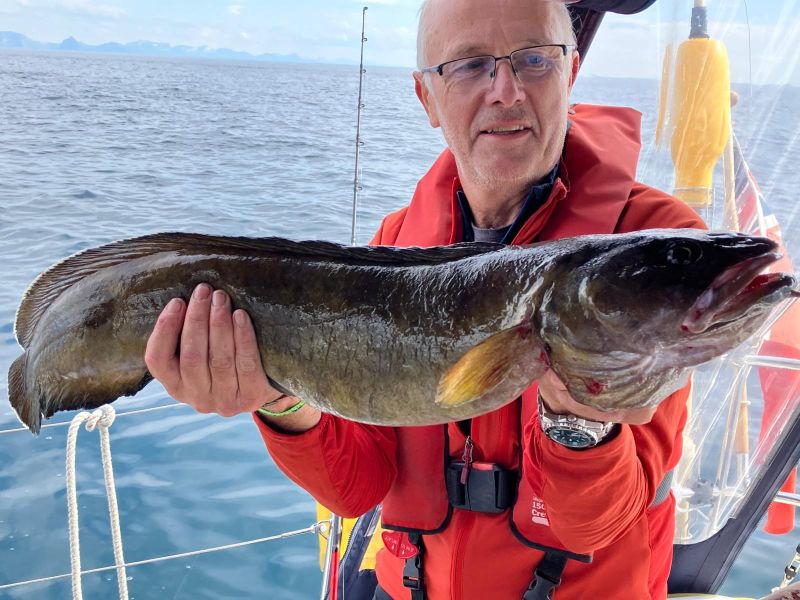
I nervously edge a bit nearer. It’s one thing to catch another nice tusk or a cod, but trying to explain it to the insurance company asking for them to repair a hole in the hull is something else again. But if they are there, the fish are stubbornly refusing to bite.
“Perhaps just around the side of this island?”, says Ian hopefully. “It looks a good spot.”
Again, nothing. Suddenly a RIB full of people appears from behind the island. Then another. And another. All heading in the same direction. They obviously have their eyes on something.
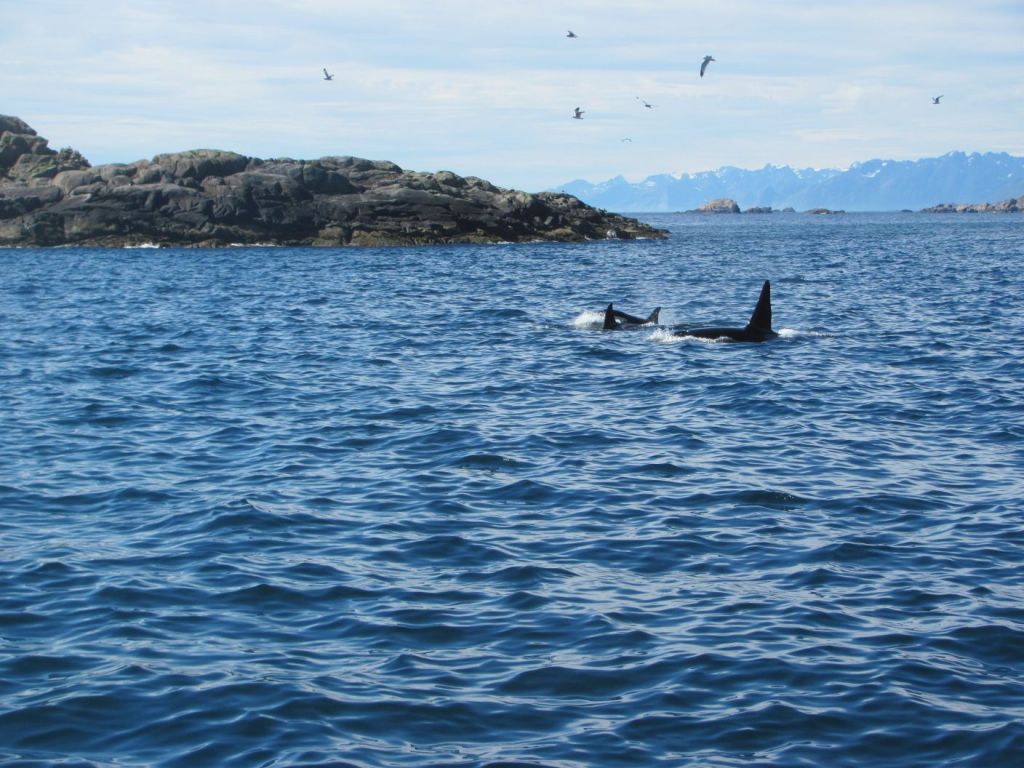
Then suddenly, I see it. An unmistakable triangular black fin heading towards us. We had seen ones like it the previous week just after we had arrived at Sørvågen. Orcas, or killer whales, but they had been far enough to really only see them through the binoculars. These ones were close, and getting closer.
“Orcas!”, I shout, grabbing the camera. “They’re coming towards us!”
I think of the recent reports that I had read of orcas attacking yachts in the Bay of Biscay. Since 2020, a small group of them there have taken it on themselves to ram yachts, particularly the rudders, and in a few cases even sinking the yachts. Five tonnes of animal at speed can make quite a bit of damage.
Terrifying as it must be for the occupants, luckily there have been no human casualties so far. No-one quite knows why they do it – theories range from one of them, perhaps a mother, having a bad encounter with a yacht, and teaching her offspring to retaliate, to just learned playful behaviour. Fortunately, the behaviour doesn’t seem to have spread to other orca populations in the world. I hope that that applies to Norwegian orcas as well.
The orcas, about four of them, swim past us and head out to sea. Then suddenly, they turn and cut across in front of us.
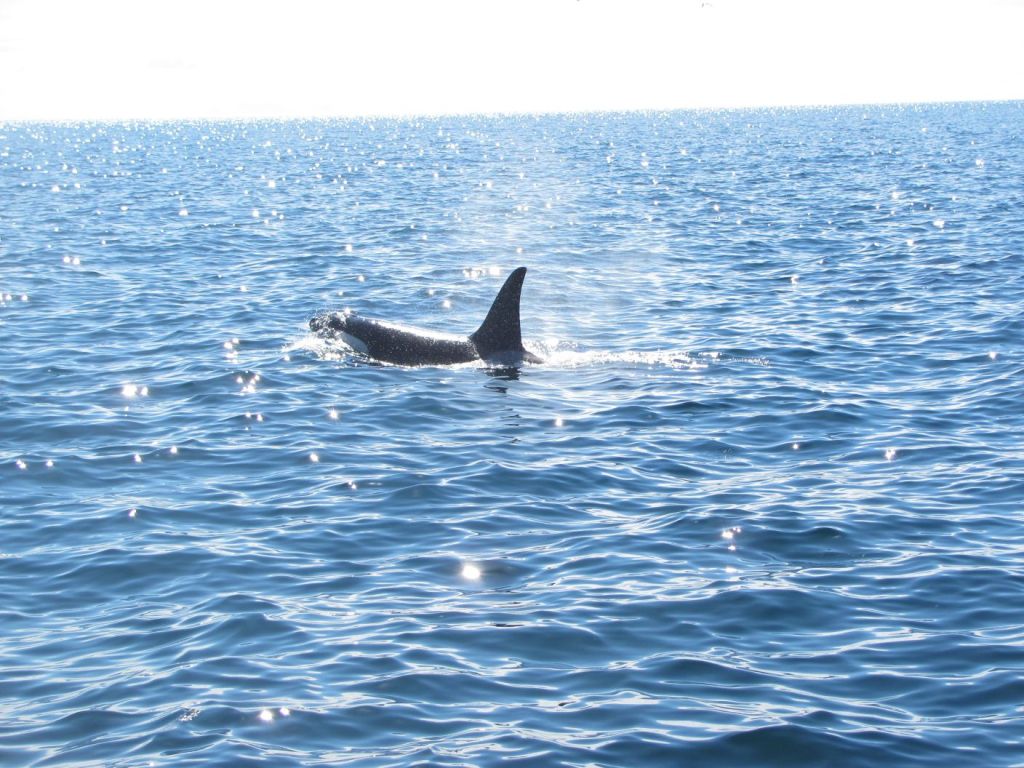
Fishing forgotten, we follow them at a distance, without getting too close to cause them stress. The RIBs do the same. The orcas are obviously feeding. After about an hour, they disappear and we don’t see them again.
“Wow!”, says Uli, breathing out. “That was amazing! I’ve never seen orcas so close before.”
We all feel the same. It is always special to meet large animals up close, particularly those from the oceans, an environment that is so alien to us yet still capable of producing creatures with non-human intelligence, perhaps matching our own.
“There seems to be a resident pod of them here”, I say. “Other sailors say in their blogs that they have seen them in this area too.”
—-
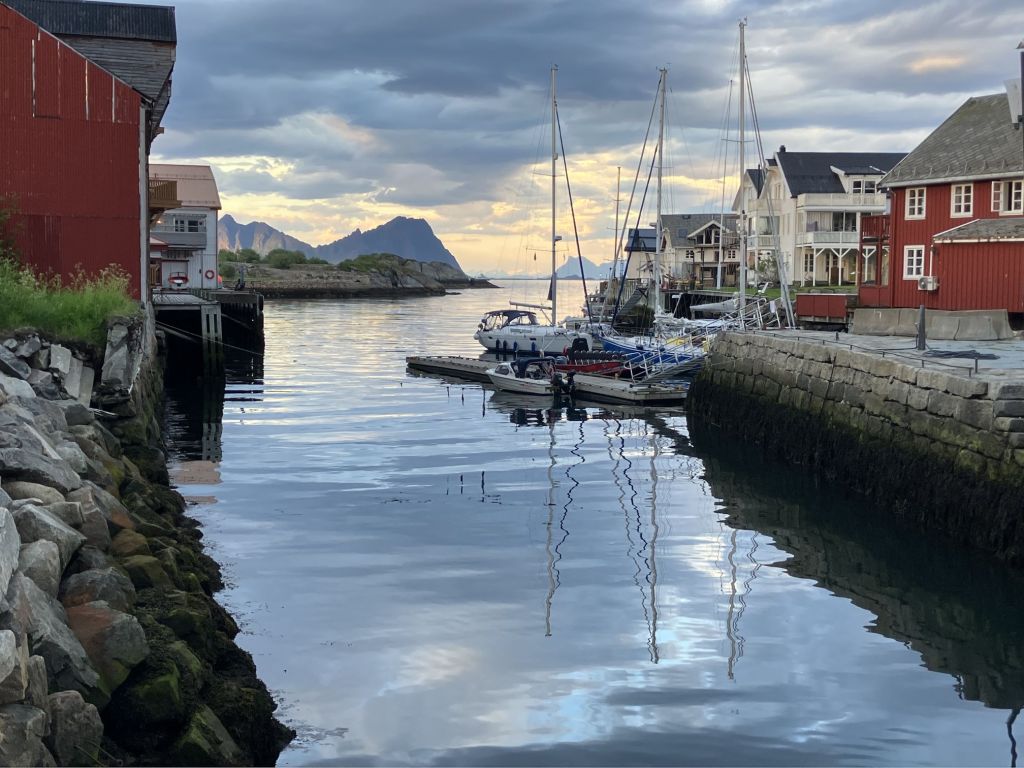
We arrive at the small town of Kabelvåg, an old fishing village and reputed to be the earliest town in northern Norway. The harbour is picturesque, and we have to go through a pub to exit the pontoon. We buy a drink.
“You can pay your mooring fees at the bar”, says the pretty barmaid, as she fills our glasses. “And use our facilities when we are open.”
In the morning, we take the bus up to Svolvær, the ‘capital’ of the Lofotens. Amalia is already there, having decided to sail there directly rather than stopping at Kabelvåg.
“Come and have a cup of coffee with us”, says Andy. “I’ve got something to show you.”
We sit in the warm sun and sip our coffees.
“See those two pinnacles up there”, says Andy, pointing to two spikes of rock on the ridge above the town. “They are called ‘The Goat’, because they look a bit like goat’s horns. Apparently the cool thing to do is to jump between them.”
We look at them more closely. There are precipitous drops on all sides of them, and the gap between them must also be at least 10 m deep. Certain serious injury or worse if you were to mistime your jump.
“You wouldn’t get me doing that”, says the First Mate. Me neither, I think.
Andy peers closer. “I do believe that there is somebody up there now”, he says.
I have a look through the binoculars. In fact, two people have appeared, both in climbing gear and ropes.
“I wonder if they will jump?”, says Anne.
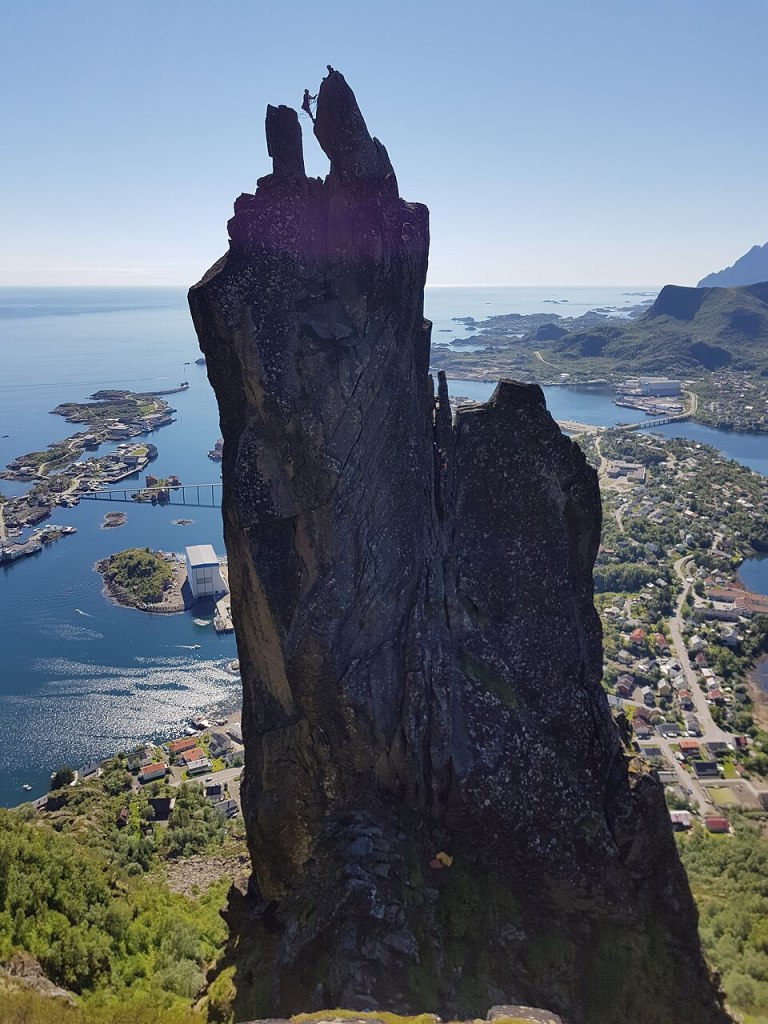
We watch for a while, but they seem to be more interested in climbing each pinnacle, not jumping from one to the other. Then they disappear, presumably descending on the other side.
“You would have to be a bit crazy to want to do that”, I say. “Anyway, we need to get going. I would like to see the War Museum, and the First Mate wants to see the Magic Ice exhibition. Many thanks for the coffee.”
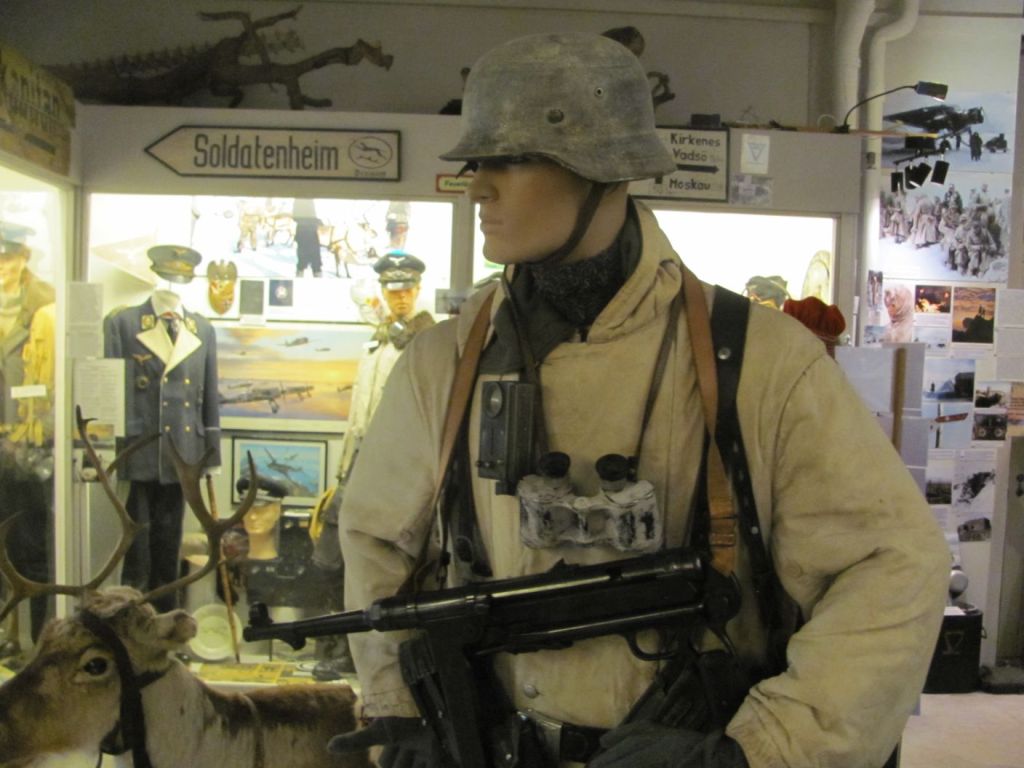
The Lofoten War Memorial Museum turns out to be an eclectic collection of war memorabilia collected by its owner, William Hakvaag. I spend a fascinating couple of hours in there learning about the impact on Lofoten and northern Norway of the German invasion, occupation and eventual defeat between 1940-1945.
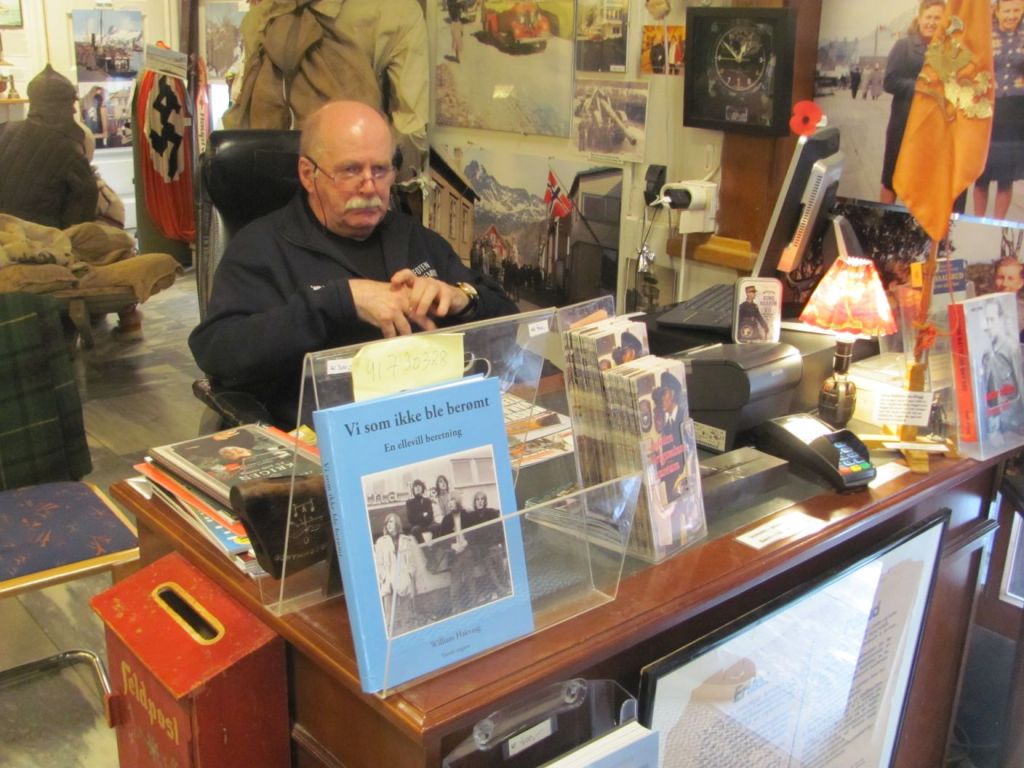
Hitler had occupied Norway so that Germany could build ice-free bases along its coastline to control the North Atlantic and mount attacks on Britain and the Arctic Convoys carrying weapons to the Russian ports of Murmansk and Archangel, as well as to ensure that it had access to the iron ore mines in Sweden.
There are an impressive collection of uniforms worn by both sides, and a recreated Gestapo office from where Gestapo officers such as Krupa, Uhrl, and Gross operated. Apparently, Uhrl wasn’t too bad, as, although he knew the names of several of the Norwegian resistance, he did not divulge them to his higher command. Years after the war, he returned to Svolvær as a civilian and was received very well.
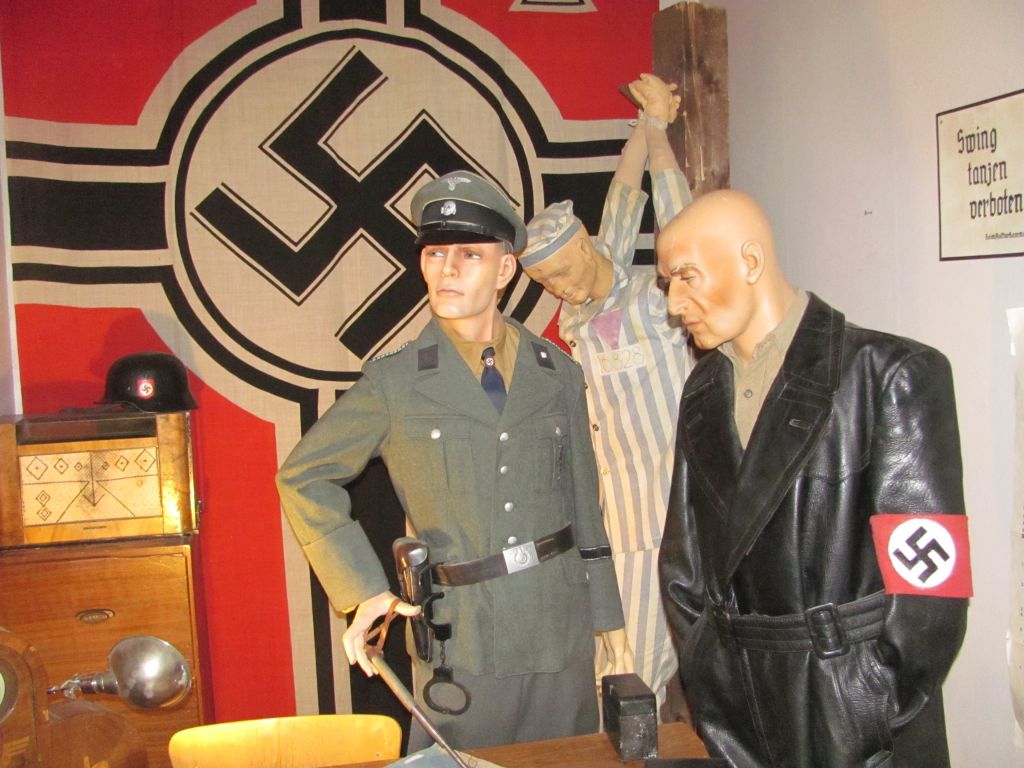
“At the end of the war, when the Russians advanced, the Germans pursued a ‘scorched earth policy’ to leave nothing of value for the Russians”, I read. “This involved evacuating the population, burning villages, and destroying infrastructure, livestock, and crops. Rather than being evacuated, many people stayed, living in caves throughout the 1944/45 winter. Eventually in May 1945, Germany surrendered and the war was over. People could start to rebuild their lives and country.”
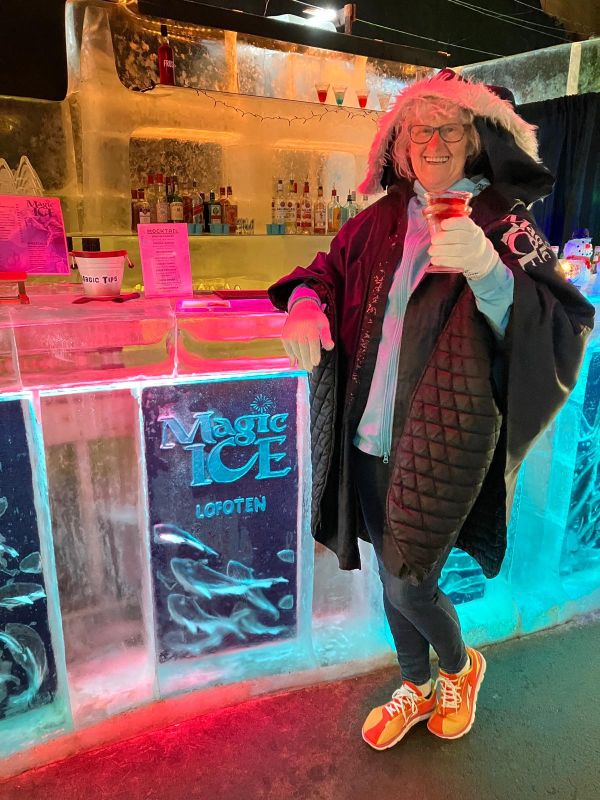
The First Mate and I meet for lunch. She has been enjoying Magic Ice.
“Apparently it is the only permanent ice display of art in the world”, she tells me, munching her prawn sandwich. “There are a lot of ice statues of Vikings, of Arctic animals, and the life of fishermen in the area, and their beliefs and superstitions. I was even given a free drink at the ice bar.”
It’s time to catch the bus back to Kabelvåg.
“Let’s get off a couple of stops before Kabelvåg”, says the First Mate, on the way back. “We can have a look at the church, then walk back into the town.”
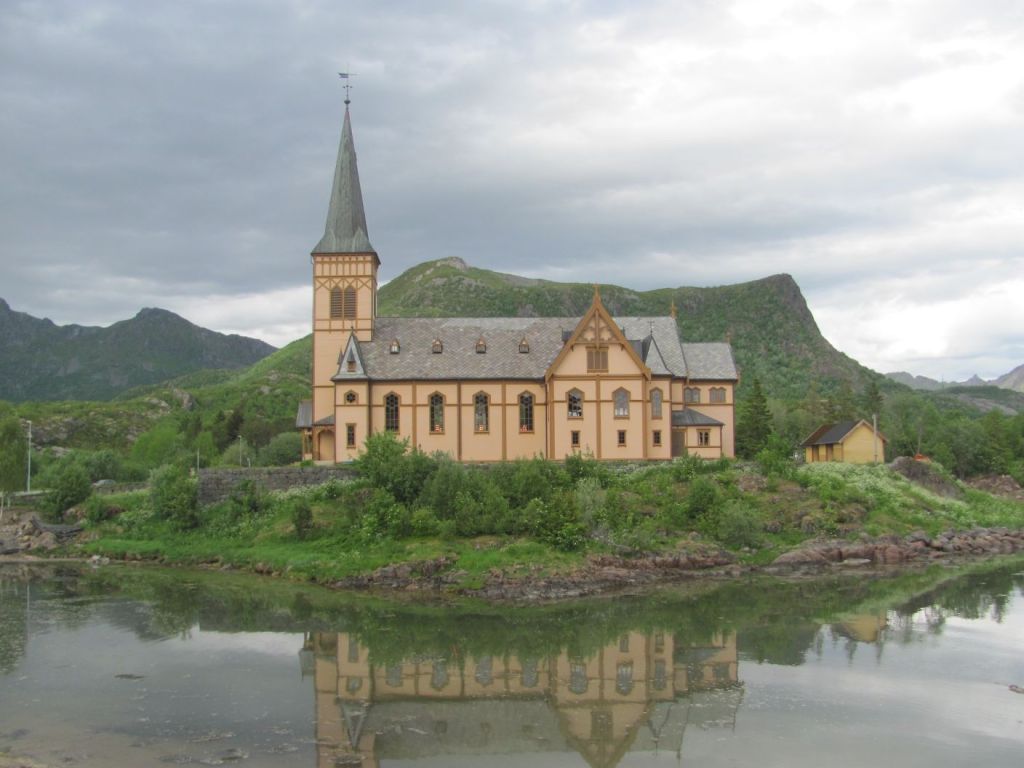
The church is locked. We try all the doors, but to no avail. We start to walk back to Kabelvåg. On the way, we meet Hugh and Liz coming the other way.
“We’re going up to have a look at the church”, says Liz. We tell them it is closed.
“But it opens at four o’clock”, says Hugh. “In ten minutes’ time. We checked on Google.”
We hadn’t. We walk back to the church with them.
“There have actually been five or six churches on this site”, Hugh tells us. “The earliest was away back in the 1100s, and was built to serve the many fishermen that came here in the cod-fishing season. This one was built in 1898. Most churches are quite boring looking, but this one was built in wood in the Gothic Revival style.”
Hugh knows such things. In a former life he was a pastor of a church in London, and is still involved in church activities.
“It is actually a parish church, but because it is able to seat 1200 people with a further 800 standing places, it was nicknamed the Lofoten Cathedral”, he adds.
This time the church is open. An earnest young man welcomes us, and takes our token entry fee. He must have been already in the church when we came the first time.
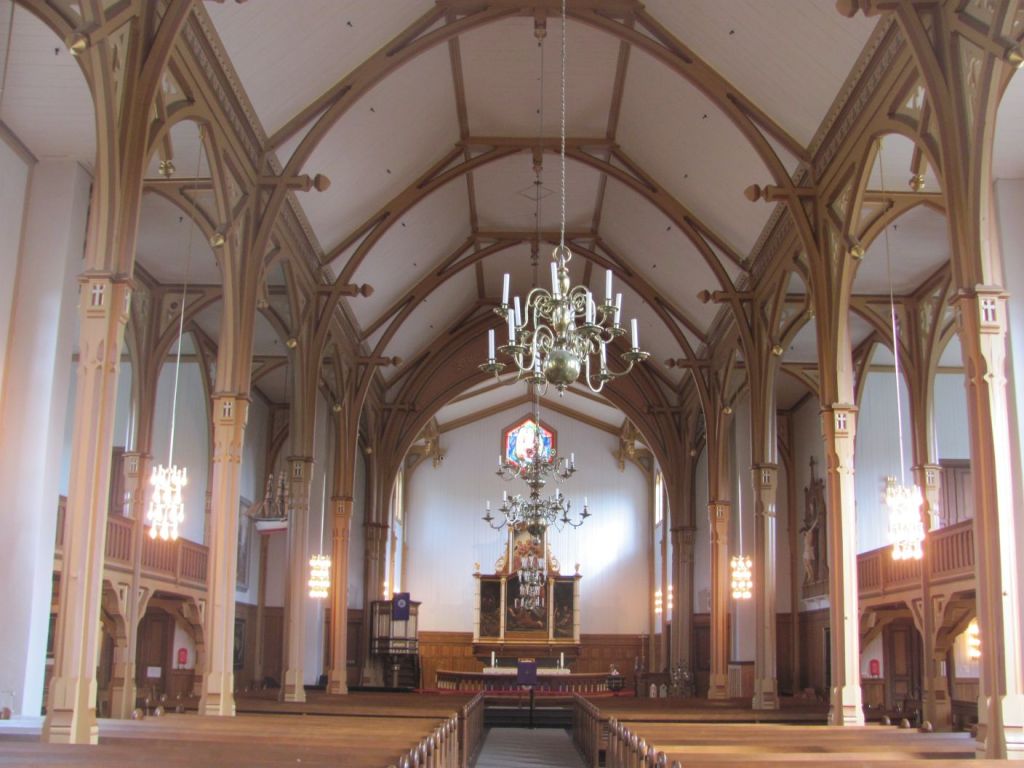
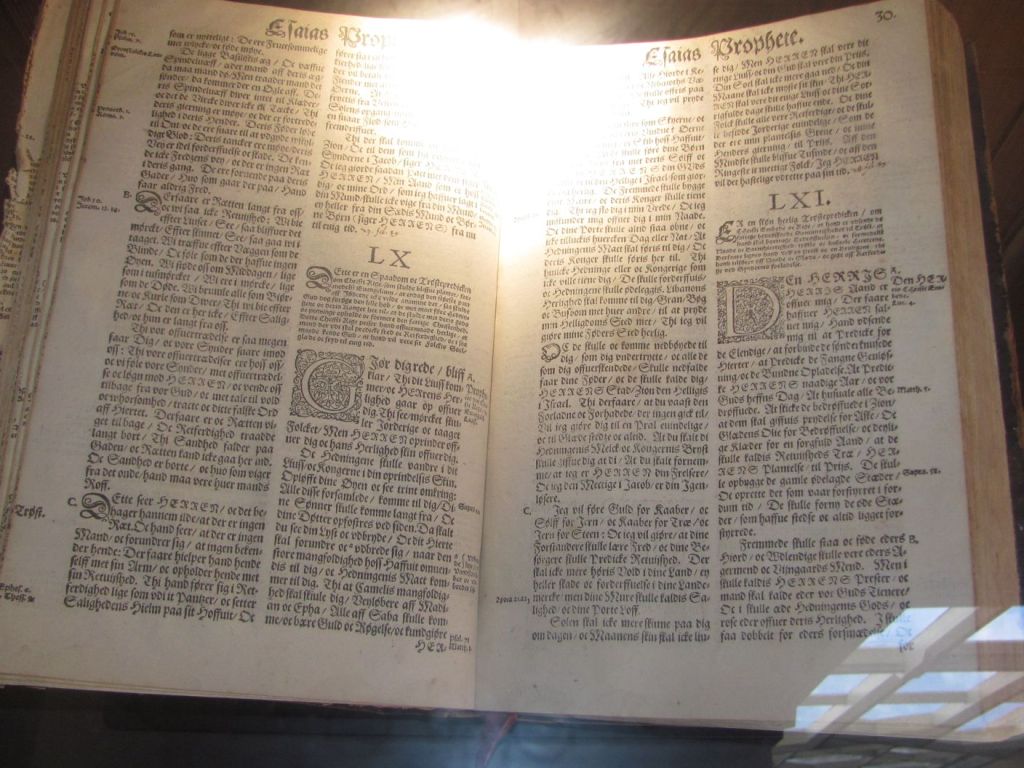
It is certainly impressive inside. There is King Frederick II’s Bible from 1589 that was saved from one of the previous churches on the site.
“Did you notice in the photos on the wall how the gender balance of the congregation changed over the years?”, says Liz on the way back. “At the inauguration service in 1898, it was all men. Then in the one about 20 years later, there were some women. Then another 20 years after that, it was much more balanced.”
“It probably reflects the local population at the time”, says Hugh. “In the early days, the church catered for the fishermen that came to the area for the cod season, leaving their families back home elsewhere in Norway. Over time, their families may have joined them and settled there.”
The next morning, we sail for the island of Stomolla to the east of Svolvær, where Fiona has located a pretty little anchorage for the night. It is quite deep for anchoring, but luckily no wind is forecast, and we have a peaceful evening.
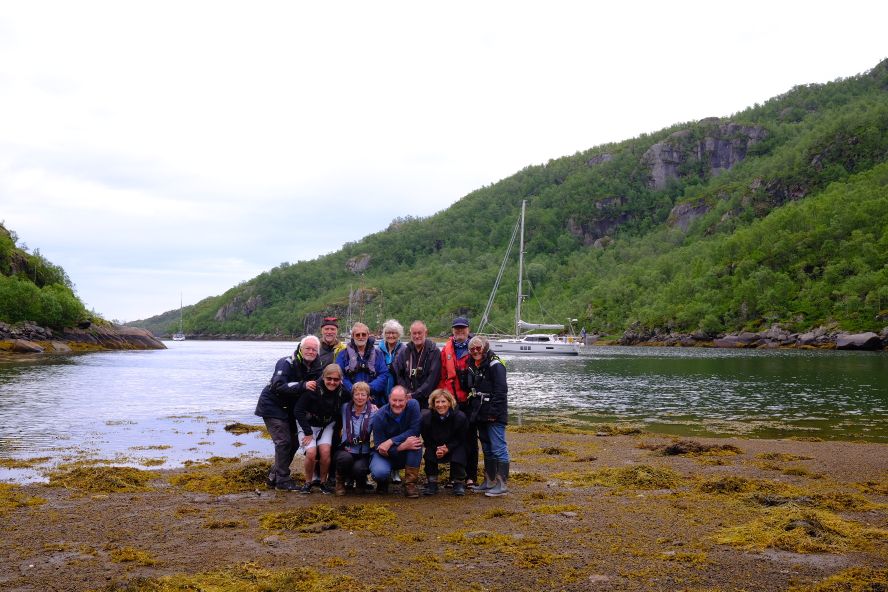
In the morning, Hugh gathers us together on the shore for a team photograph.
“It’s the last opportunity for a while that we will all be together”, he says. “We need to have some memento of the great time we have all had together over the last week.”
“The Hurtigruten will be turning around in the Trollfjord between 1630 and 1700 this afternoon”, says Bob, after the photo is taken. “Anyone who wants to see it needs to get going soon.”
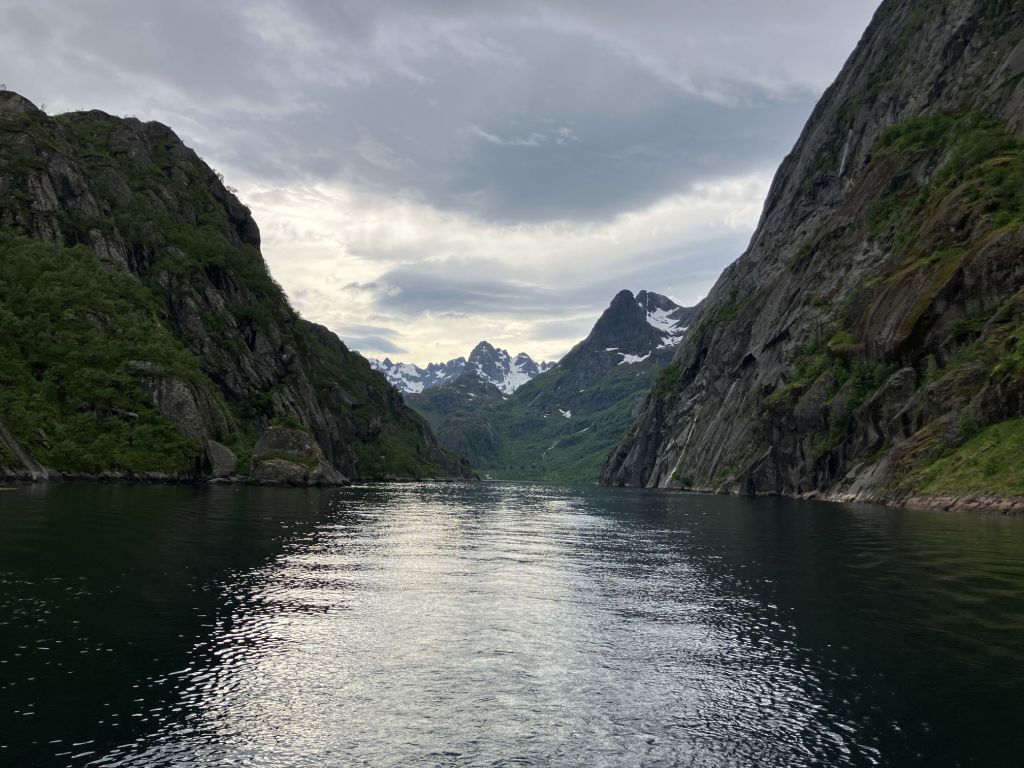
Trollfjorden is a narrow fjord north of Svolvær, bounded by steep cliffs on each side, and picturesque in its own right. However in recent years, an added attraction is that the Hurtigruten coastal ships have taken to entering it and turning around in the narrow space at the end.
“I’ve watched the Lorraine Kelly series on TV”, says Uli. “It looks as if it is so close that passengers on the stern deck could reach out and touch the sides of the cliffs. It’s on my bucket list to see it.”
We motor in. The cliffs and the mountains are awe-inspiring. We tie up at the small pier at the end and brew a cup of tea. We have about half-an-hour to wait.
“Look, there’s a sea eagle!”, shouts Ian, pointing excitedly. “And another! And another!”
The eagles circle before landing on perches on the steep cliff face. Are they also waiting to see the Hurtigruten turn around, I wonder?
“It’s just coming into the fjord now”, calls the First Mate from the foredeck. “I can see it. It’ll be here in a few minutes.”
Sure enough, the Vesterålen is making its way slowly towards us, passengers lining the guard rails. It reaches the end, engages its bow and stern thrusters, and turns on a sixpence.
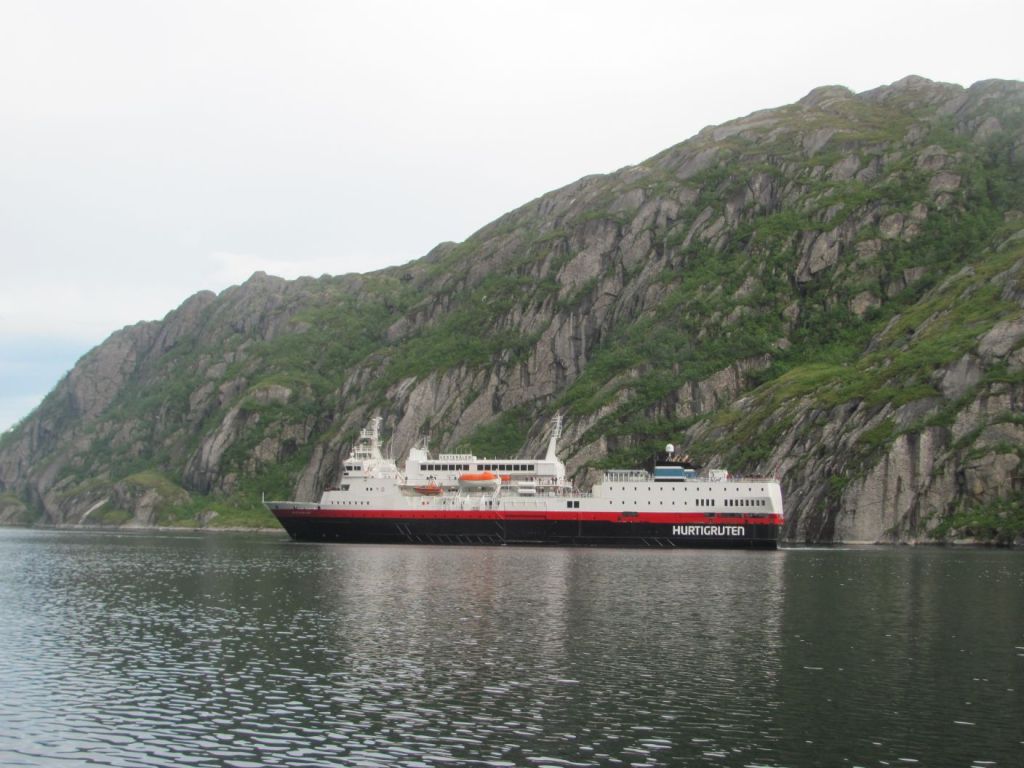
“There’s tons of room at each end”, says Uli, a little disappointedly. “I expected it to be much tighter.”
She does have a point. I had also seen the various videos of the Hurtigruten turning around, and through clever photography and use of perspective, it does indeed look quite a feat. But from where we are, it doesn’t look so difficult after all.
“Perhaps it looks different when you are standing on board”, I say. “Perspective can be misleading at sea. I always feel nervous going under bridges, even though I know there may be 20 m to spare.”
—-
Ian and Uli’s time with us is coming to an end. They have identified a small marina not far from a bus stop where we can drop them off.
“We can catch the bus from there to Harstad”, says Ian. “From there we can get another bus to Bodø to catch our flight home.”
We reach the small marina. It looks quite dilapidated, and the gate on the pontoon is locked.
“Even if we could tie up here, we wouldn’t be able to get onto land”, says Uli. “There’s another pontoon over there that looks in better shape. It’s not being used.”
We tie up to the newer pontoon and cook dinner.
“I saw a notice that it said it was a private pontoon”, says Ian. “But my Norwegian is not very good. I am sure that it will be OK for a night. We can just tell them that we are catching a bus first thing in the morning. I am sure they won’t mind.”
Some time in the night there is a noise of a diesel engine. I look out and see a huge boat with the insignia of an aquaculture company moored to the other side of the pontoon. In the light of the midnight sun, a man on board is looking at me. I look back.
“We’ll be gone first thing in the morning”, I shout.
He shrugs, unconcerned, as he loads some sacks onto the boat. I am not even sure if he heard me. Ten minutes later, he and the boat are gone.
“It’s clearly a working jetty”, I say over breakfast the next morning. “It must belong to that salmon farm out in the bay. We are lucky they didn’t want to chase us away.”
After breakfast, Uli & Ian leave us. We wait to hear that they are on the bus, then we cast off. We don’t really want to have the salmon farm people ordering us off.
“It’s been good having them”, says the First Mate, tidying up the ropes. “Now it seems a bit quiet, just us two.”
 Ruby Tuesday
