A ship in a bottle, a foreign spy, and sailing beyond the limit

“Waiter! Bring me a glass of red wine”, says the First Mate.

“Certainly, your Royal Highness”, I say. “And would the Shiraz be to your taste, ma’am?”

We are revelling in the luxury of the First Class lounge of the MS Finnmarken, one of the ships of the Hurtigruten line. Or at least it was. Nowadays, it is the centrepiece of the Hurtigruten Museum in Stokmarknes, covered by a giant glass enclosure to keep it safe from the elements.
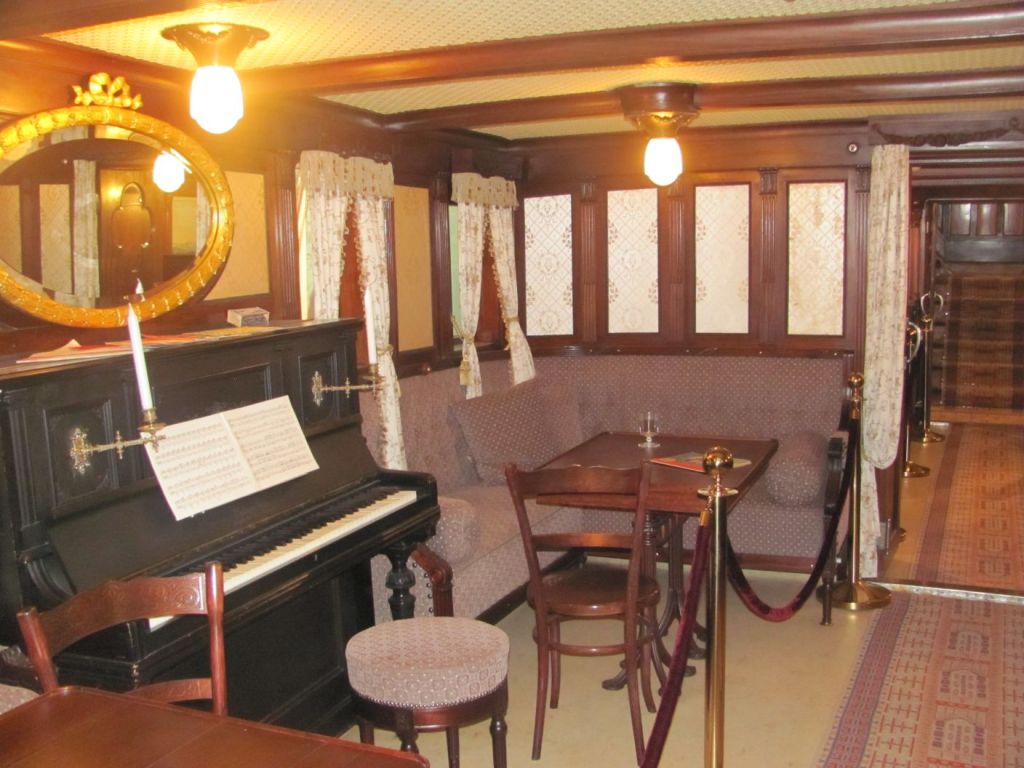
First Class lounge of the MS Finnmarken.

“It’s really interesting to learn how it all started here in Stokmarknes”, says her Royal Highness. “Particularly as we keep seeing the Hurtigruten ships on our voyages. They’re quite iconic.”

They are indeed. We learn that steamship services were started by the government in 1826 to carry passengers, mail and freight up and down the coast, but these were slow, stopped at too many places, and didn’t sail at night. So in the 1880s, the government called for tenders to provide quicker services between Trondheim and Hammerfest with faster ships, stopping at fewer ports, and by sailing at night. But none of the local shipping companies were interested at first, as they considered sailing at night too dangerous.
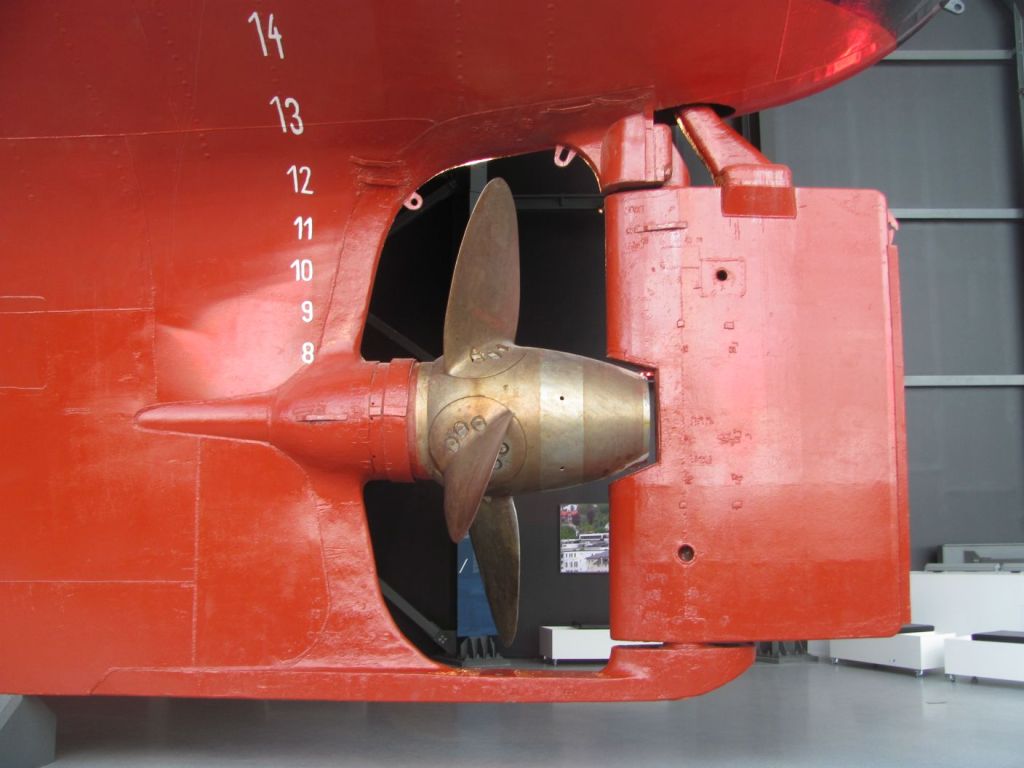
Propeller of the MS Finnmarken.

“Then one of the smaller companies, the Vesterálen Steamship Company, put in a bid which was accepted”, one of the displays tells us. “They had already made detailed sailing instructions of the unknown waters for themselves, and had less fear of sailing at night. And so in 1893 the Hurtigruten, or Express Route, was born. Mail delivery times fell from five months to seven days.”

The Hurtigruten ships helped open up the north of Norway to the rest of the country and the world. As late as the 1940s, most ports north of Trondheim were inaccessible by road. However, as roads were built and air services established, the need for the Hurtigruten declined. To survive, the company turned its emphasis in the 1960s to tourism, offering people a unique experience in comfort.

“I can see why the locals refer to it as ‘the ship in a bottle’”, says her Royal Highness, as we leave.
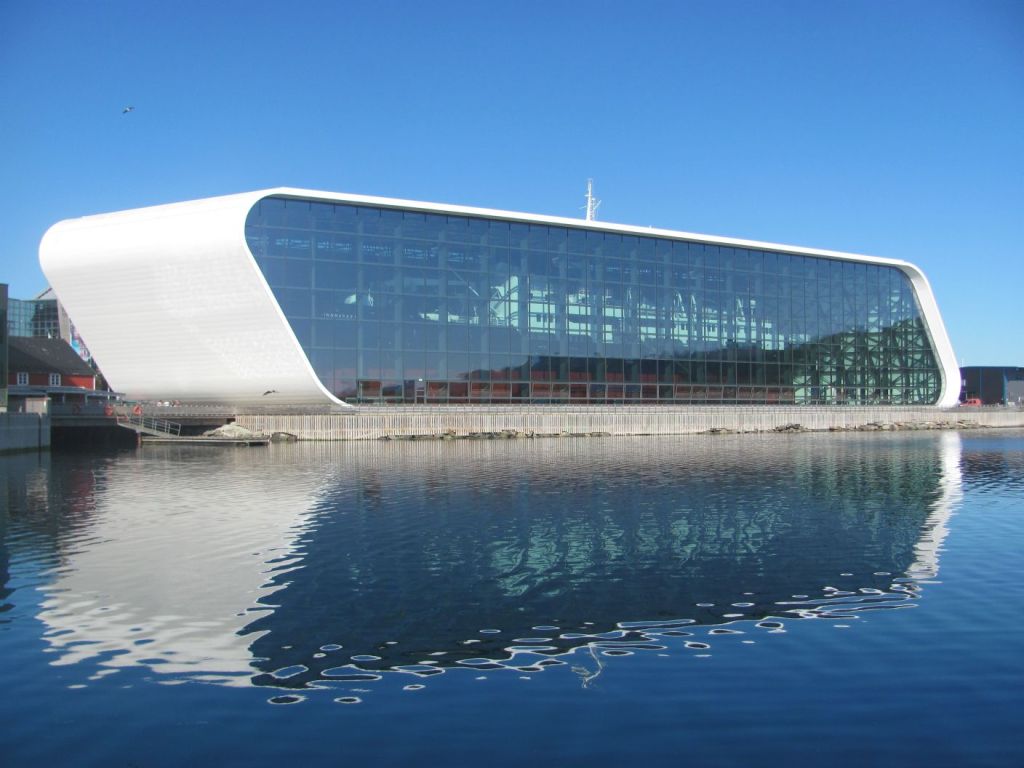
The MS Finnmarken in its glass ‘bottle’.

The next morning, we set sail for the next large town, Sortland. The winds are in our favour, and we have an exhilarating sail.

“Several people say that it gets a bit rolly in the main marina”, says the First Mate, studying the harbour guide as we approach. “Because of the ferry coming and going. But I’ve found another nice looking marina to the south of the town. It’s quite small, but they do have a guest pontoon. We could try that.”

We inch our way through the narrow entrance. It’s only a couple of metres on each side and 1.5 metres of water under the keel. But it’s enough, and we find a place on the hammerhead on the end of a pontoon to tie up. The harbour master comes over. We invite him on board for a coffee.

“I am a retired police superintendent”, he tells us. “I worked on cases all over this area. Mostly drugs-related. There’s a lot of it here. My name is Leif, by the way. As in Leif Eriksson, the first European to discover America.”

We talk about some of the Scandi-noir crime series that we have seen, and the fondness that Norwegians have for vanishing to their cottages at Easter time with a pile of crime novels to read. I mention that I had read somewhere the reason for it was because Norway is such a peaceful and crime-free country that people like to read about it in fiction.

He laughs. “I don’t really think that Norway is crime-free”, he says, taking another cinnamon roll. ”It’s just as bad as anywhere else. We’re just good at writing about it against the background of long nights and snowbound cottages, and making dark moody films about it.”

“But I am retired now”, he continues, “And I do photography. It’s always been a hobby of mine, but now I have time, I can do it properly. Mostly on the island of Andøya. It’s absolutely gorgeous there.”

“Yes, it is on our list”, I say. “We are planning to visit it after we leave here.”

“Tell you what”, he says suddenly. “I am not doing anything this afternoon. I would be happy to take you around Andøya and show you the best places that most tourists never see. It’s about a hundred kilometres up there and slightly shorter back. What about it?”

We are somewhat taken aback. A perfect stranger whom we had only met half-an-hour ago at the most, offering to take us on a 200 km round trip. And it was already mid-afternoon. Could this be for real?

We accept.

“You’ll notice that a lot of the buildings and houses in Sortland are painted in different shades of blue”, says Leif as we set off. “One of our artists had the idea of painting everything blue to symbolise the sea and sky. Of course, there was a lot of opposition from different townspeople, but somehow he convinced the local council to do it. Slowly local businesses and many residents grew to like it, and now it is quite a tourist attraction.”
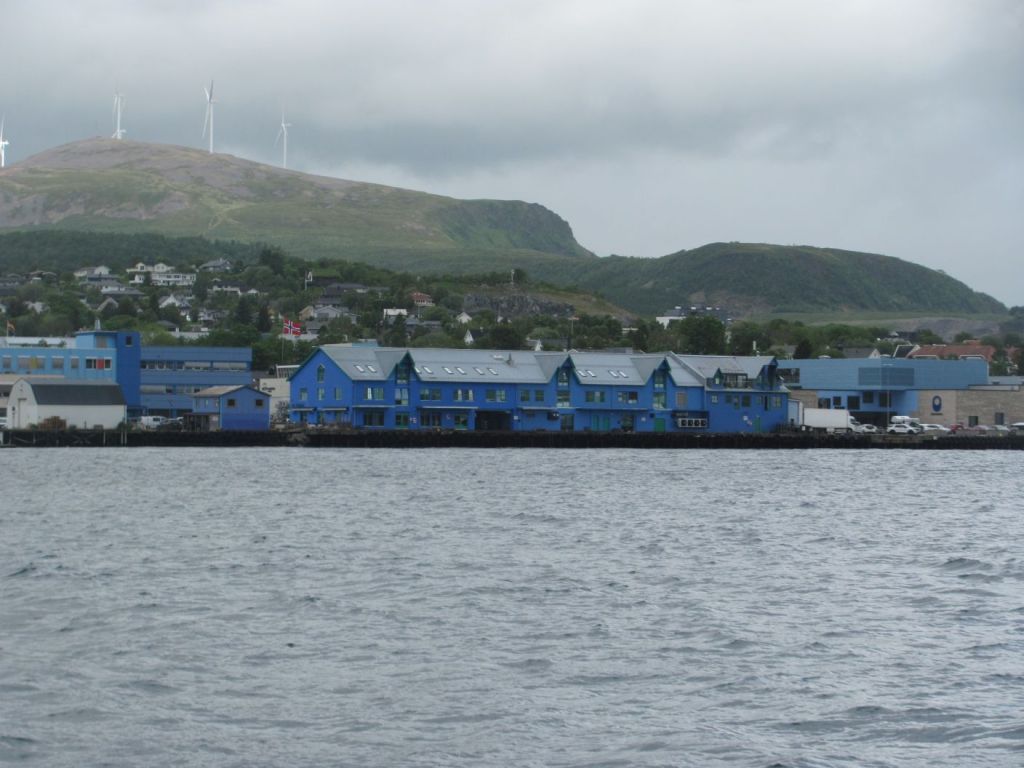
The ‘Blue Town’.

I quite like it, I think to myself. It gives it a certain Je ne sais quoi.

“I sort of look on Andøya as my home even though I don’t live here”, Leif says, as we cross the humped bridge over the Risøysundet strait on to the island. “I come up a couple of times a week and know every nook and cranny. The landscape is stunning, and the light is different every time I come, so there is always something new to see. We’ll take the western road up as it is so much more wild, and come back down the eastern road.”

He’s right. The western road is wedged between the sparkling sea on the left, and high jagged mountains to the right that run the length of the island. We drive past stony beaches, their stones worn smooth by millennia of wave action, and past bogs and estuaries, the sulphurous smell of decaying seaweed assailing our nostrils. Far off to the west, we see the hazy outline of the island of Langøya, a white cloud hovering over it like a plume of smoke. It’s primeval.
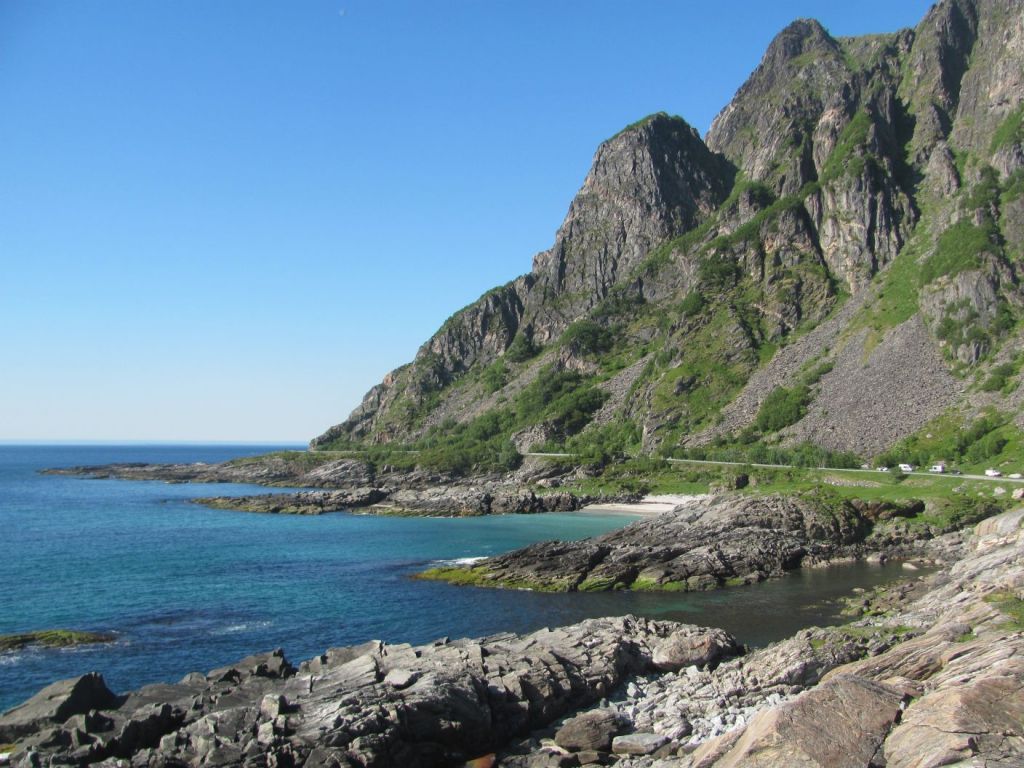
‘Twixt mountain and sea.

Leif stops the car. “This is one of my favourite stops”, he says. “I’ve taken a lot of my photos around here. Shall we walk down to the beach?”

We follow a fence-line and cross a small stream. Immediately we are besieged by a flock of lambs, clamouring for attention, totally unafraid of us. We pet them, then try and move on. They follow us. Clearly they are familiar with humans, and we surmise that they have been weaned and missing their mothers, or orphans reared by hand-feeding from a bottle. Eventually they give up, and run back to where we first met them.
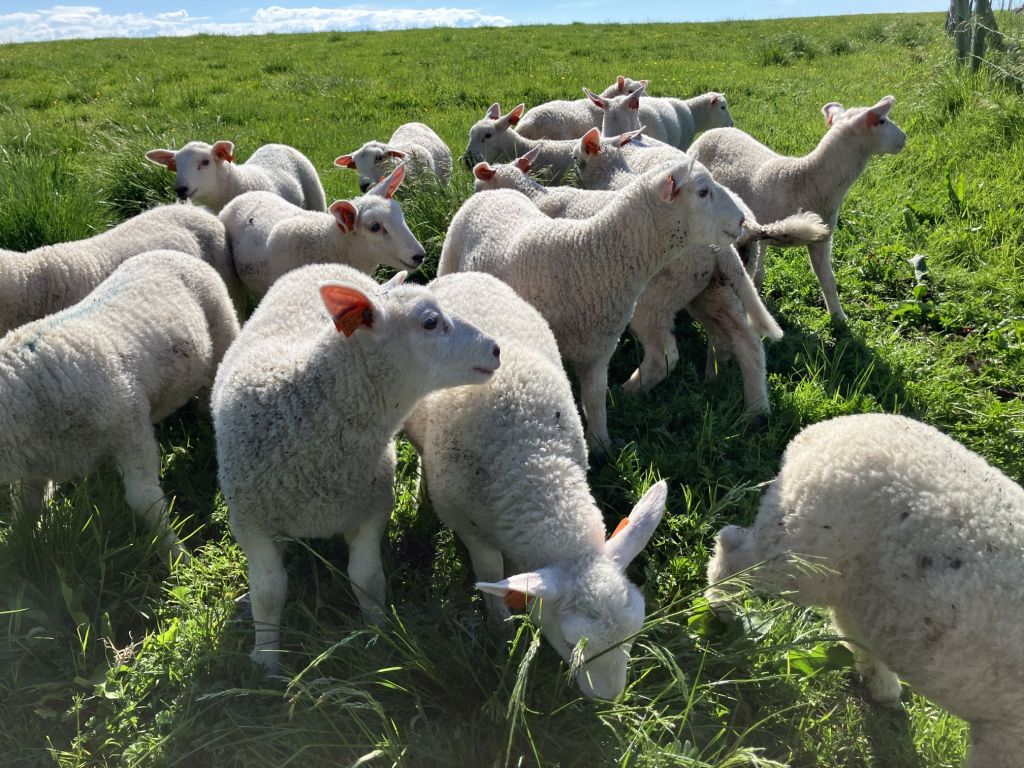
“Are you my Mum?”

We reach a stony spit jutting out into the sea. On the stones lies the rusting wreckage of a fishing trawler, its parts strewn over the spit.

“There was a fierce storm here several years back”, Leif tells us. “This trawler was driven aground and broke up. Luckily no one was drowned. But the boat was destroyed.”
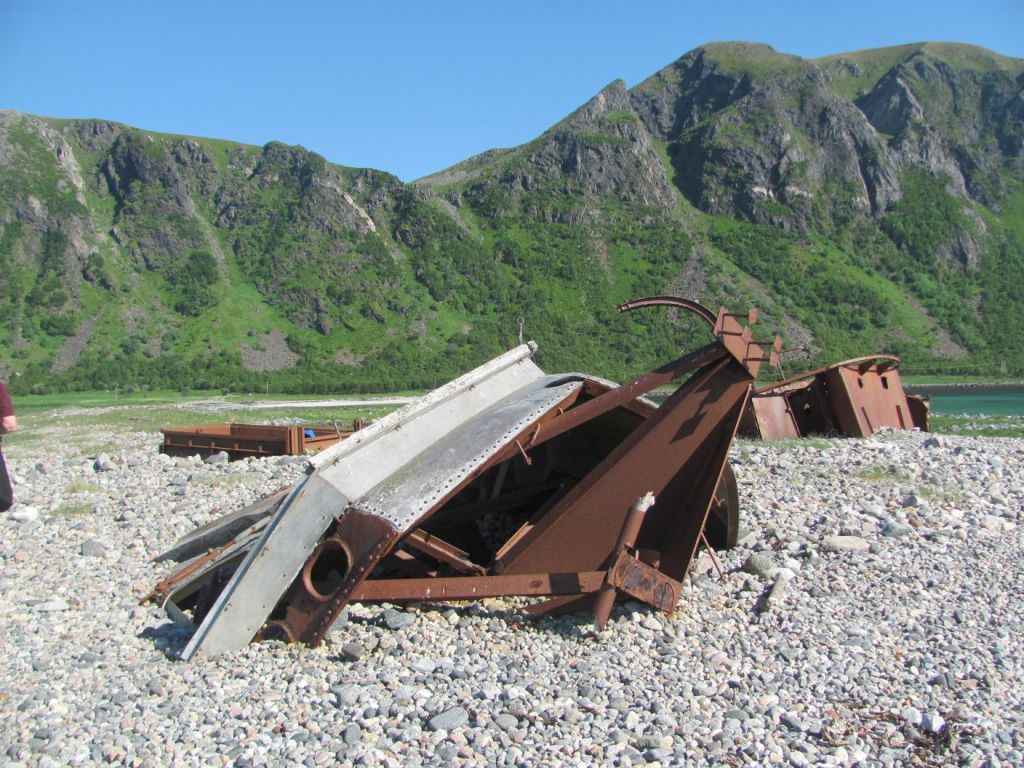
Victim of nature’s fury.

On the way back to the car, we pass a small backwater cut off by the low tide, and stop to watch oyster-catchers shrieking their high-pitched calls, and guillemots feeding in the shallows. A flock of barnacle geese flies overhead.

“Isn’t it beautiful?”, sighs Leif.
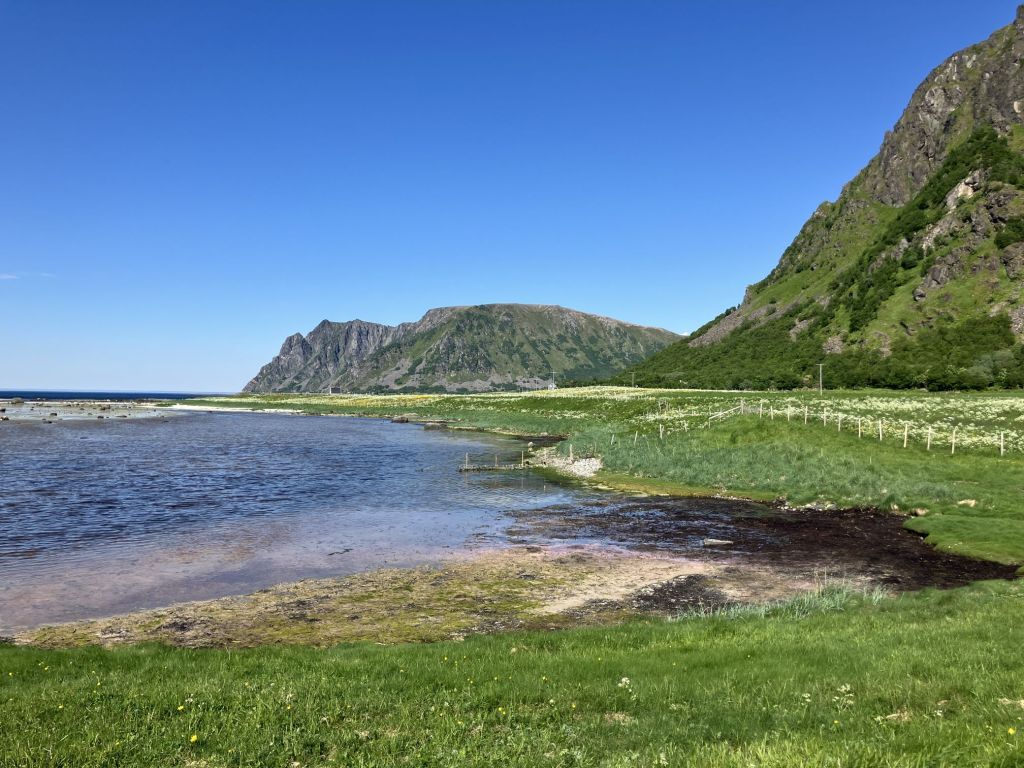
Island idyll.

I wonder about this unusual man who has befriended two strangers. He’s not what I imagined a police superintendent to be like. Part of me envies him for having found a part of the world that is so obviously home to him, and who sees beauty in it wherever he looks. And captures it through his photography for others to enjoy. What makes him tick? His job must have made him see the seedier side of life, perhaps he needs something now to balance that.

“I was married”, he tells us back in the car. “But am now divorced. I have a daughter who lives in Oslo. She loves coming back to Andøya to visit. But she wouldn’t live here. She likes the activity of the big city too much. That’s the problem up here – all the young people leave because the opportunities are so much better in the cities. Now, there’s something I want to show you here.”

He pulls up to the side of the road. We walk down a short path to an outcrop of rock.
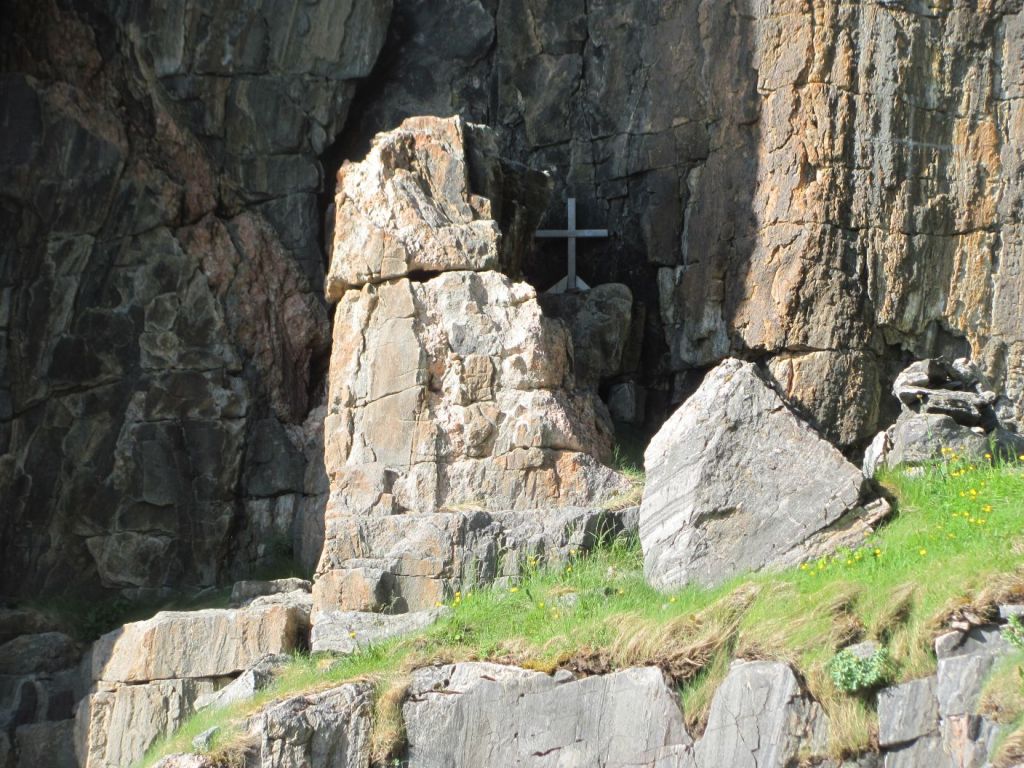
Natural pulpit.

“It’s a small chapel”, he explains, pointing to a crucifix mounted on a ledge on the rock. “With a natural pulpit and altar. Bukkekjerka. It means Goat Chapel in Norwegian. It was originally a sacred site for the Sámi people who practised religious rituals here. They called it Bohkegeargi. More recently it has been used for Christian services. People even get married here. Look, there’s a shape of a heart in one of these rocks.”
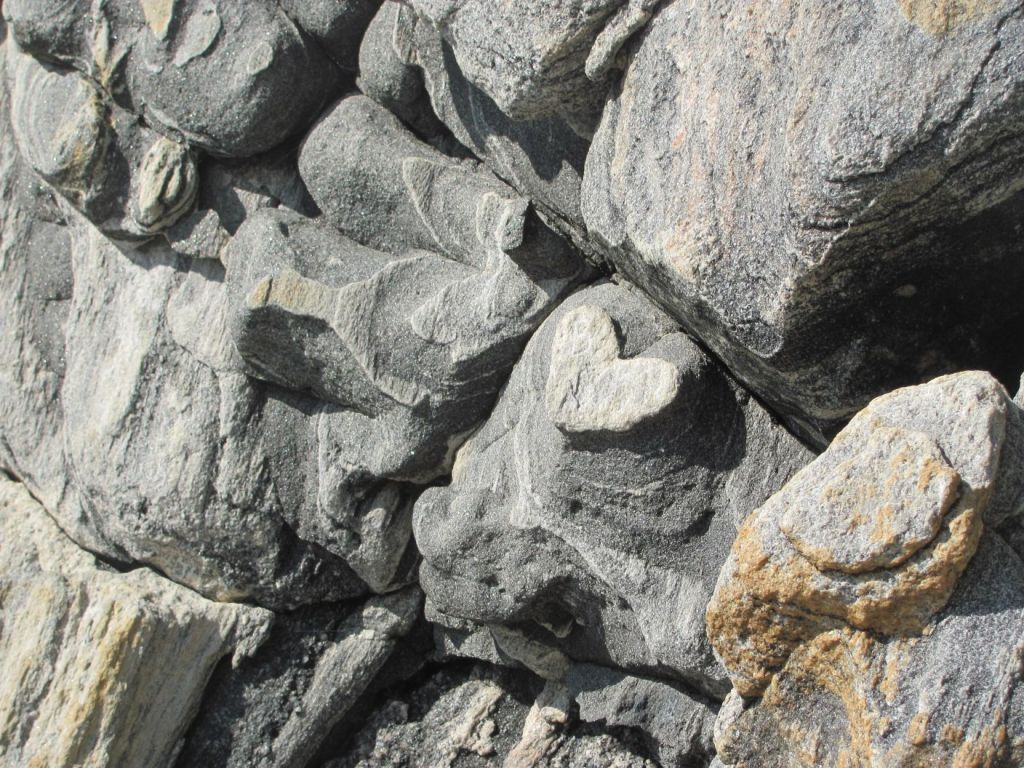
For the newly-weds?

I sit on a rock and think of the ancient Sámi worshipping their gods in this sacred place –  Veralden-radien, the Ruler of the Universe and Sustainer of Life, Afruvvá, the Sea Goddess, Warner of impending storms, or Beaivi, the Sun God who brought warmth, light and new life. What has happened to all those gods now that the Sámi were converted to Christianity in the 1200s?

“Many Sámi kept their own gods even after they converted the Christianity”, says Leif. “Their thinking was that the Christian God only provided for them in the afterlife, whereas their gods looked after them while they were still living.”

It’s an interesting point of view, and somehow logical.
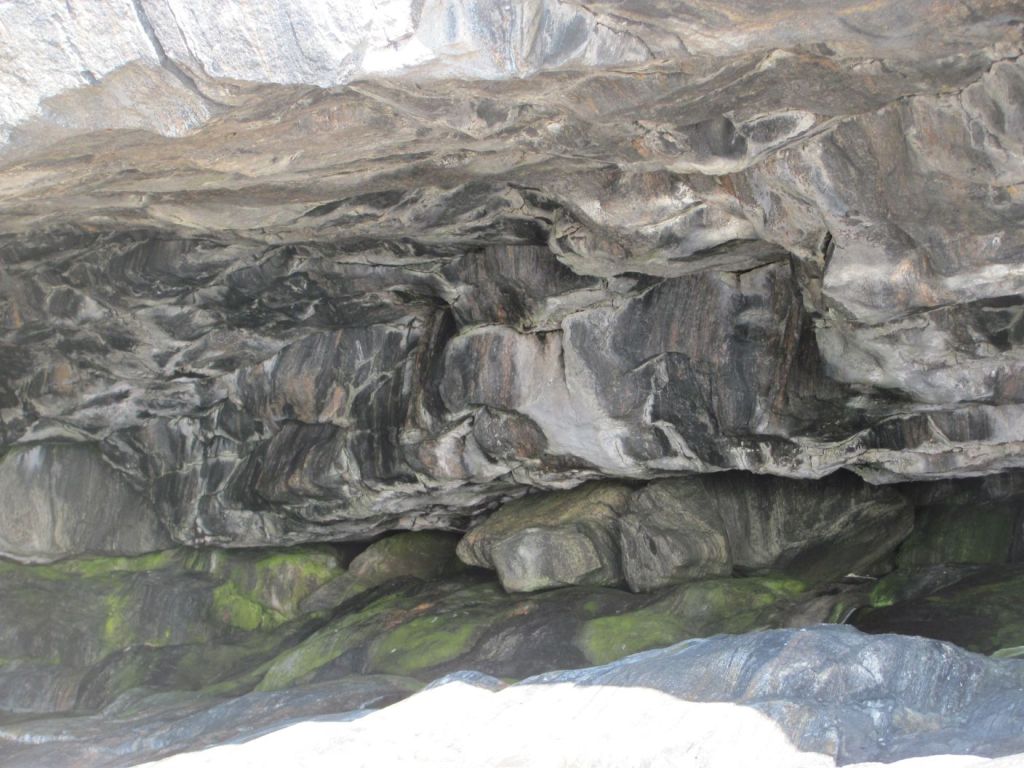
Sámi sacred site.

Further on, we pass the Andøya Space Centre.

“The first rocket was launched from here in 1962”, Leif tells us. “Not long after the Russian Sputniks. It is only used for launching small earth observation satellites for peaceful purposes. Nevertheless, back in 1995 one of the launches nearly caused a nuclear war as the Russians thought it was a nuclear missile launched from an American submarine. They went on to high alert, but then they realised it wasn’t heading towards Russia. Apparently they had been told that it was happening, but the message got lost in their bureaucracy.”
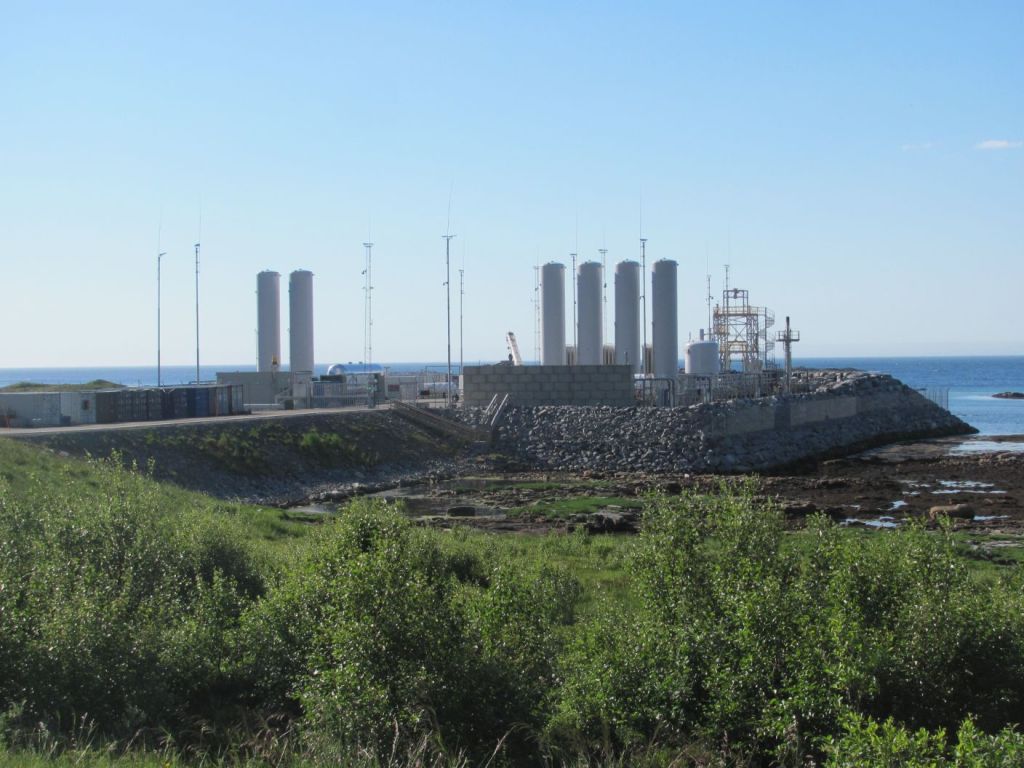
Andøya Space Centre.

We eventually reach Andenes, a sprawling town of mostly military style housing. On the point is the iconic lighthouse visible for miles around.
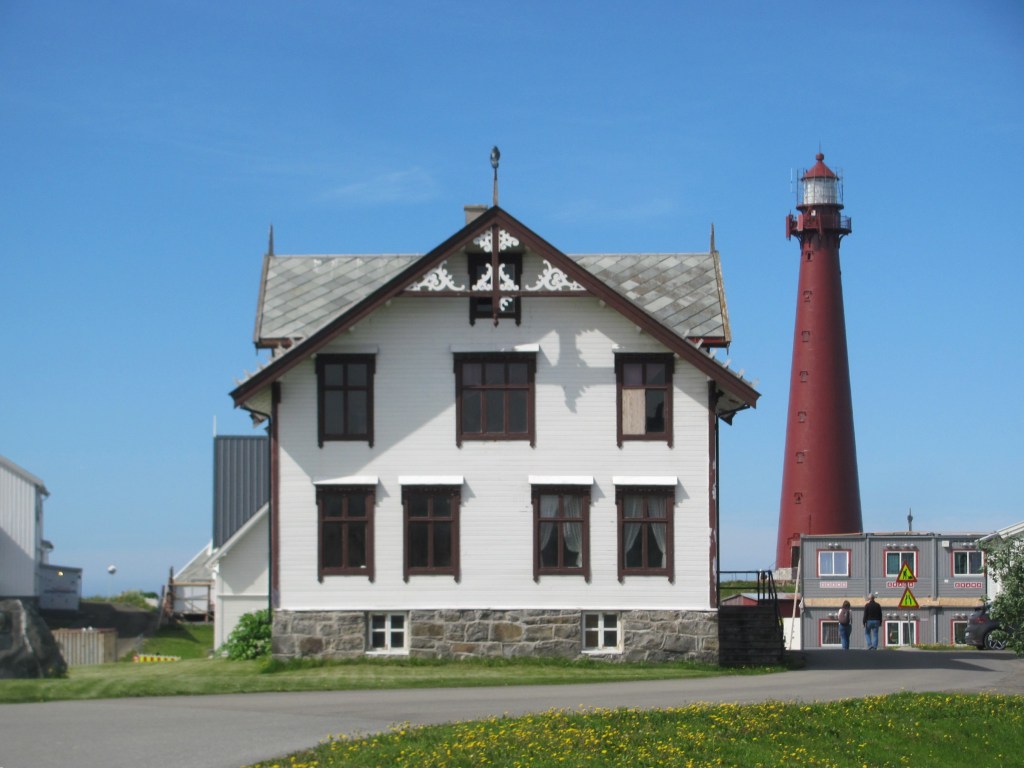
Andenes lighthouse.

“I’m starting to get hungry”, says the First Mate. “Look, here is a pizzeria. Let’s get something to eat there.”

We order and sit down.

“Did you hear the story of the Chinese spy?”, Leif asks, as we chomp into our pizza slices.

“No”, we say. “What was that all about?”

“Well, just a month ago, they arrested a Chinese woman and charged her with trying to establish a satellite data receiving station near the Spaceport and military facilities”, he answers. “Apparently 22 tons of electronic equipment capable of downloading data from polar-orbiting satellites was imported and installed by a Norwegian front company. According to the papers, the woman bought a property nearby where the equipment was installed. She’s in prison at the moment, awaiting trial. It seems as though some Norwegians are also under suspicion.”

“It doesn’t sound very professional”, I say, spearing the last mushroom with my fork. “Importing 22 tons of electronic gear near to a military area and rocket launch site was bound to raise suspicions, surely?”

“Yes, you would think so, wouldn’t you?”, Leif says, “but that’s how it was reported. We are just waiting now to see what comes out of the trial.”

As we return to the car, we pass a rusty old anchor chain lying in the grass.

“That’s part of the anchor chain from the Tirpitz”, says Leif. “You know, the German battleship that was eventually sunk in 1944 near Tromsø. I have got one of the links at home.”
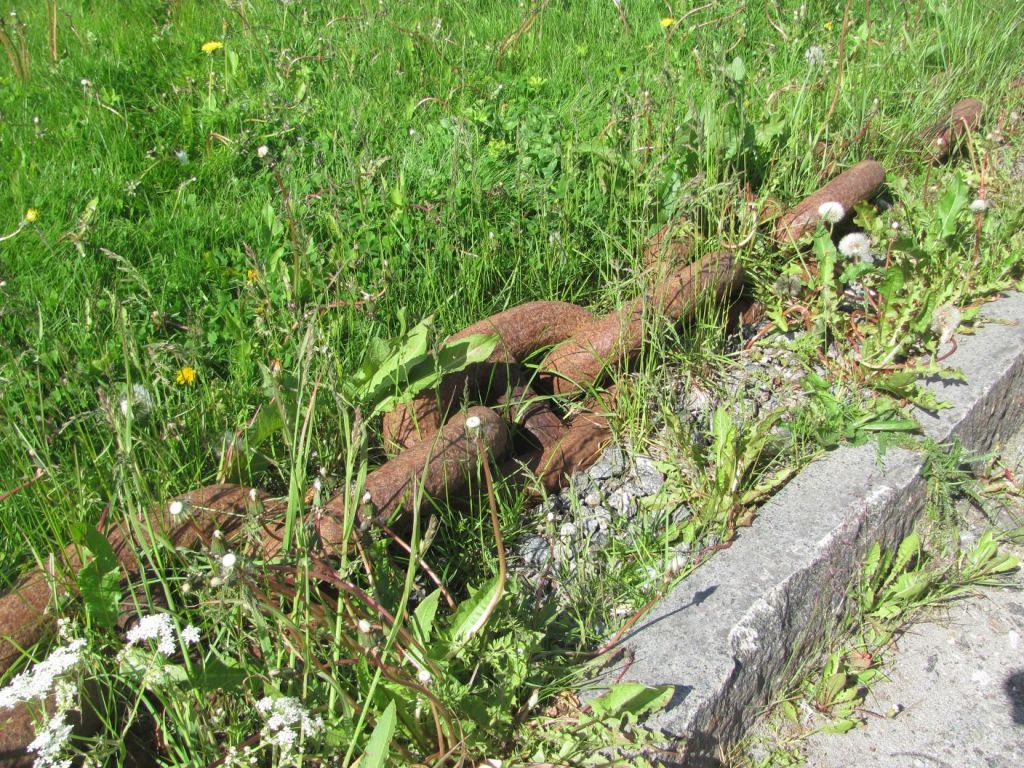
Part of the anchor chain from the WW2 German battleship Tirpitz.

“What a kind man”, says the First Mate when we are back at the boat that evening. “It was amazing how he wanted to show us his world. And seeing it from land with a local gives a very different perspective than from the sea.”

In the morning, we decide to stick to our plan of sailing to Andenes even though we had just been there the day before.

“It’s the easiest opportunity we’ll get to sail outside the 12 nautical mile limit”, I say. “That way we can reset the clock on the time we are allowed to keep Ruby Tuesday in Norway without paying duty. Don’t you remember that the police in Bergen told us we can do that?”

Two years in the maximum time we can import the boat on a temporary permit. However, sailing outside the limit, then back in again, counts as an export/import event thereby resetting the clock, giving ourselves another two years if we need it. We have to provide documentary proof that we have been outside the limit, so we photograph the GPS position, the chart-plotters, and the computer and tablet tracks.
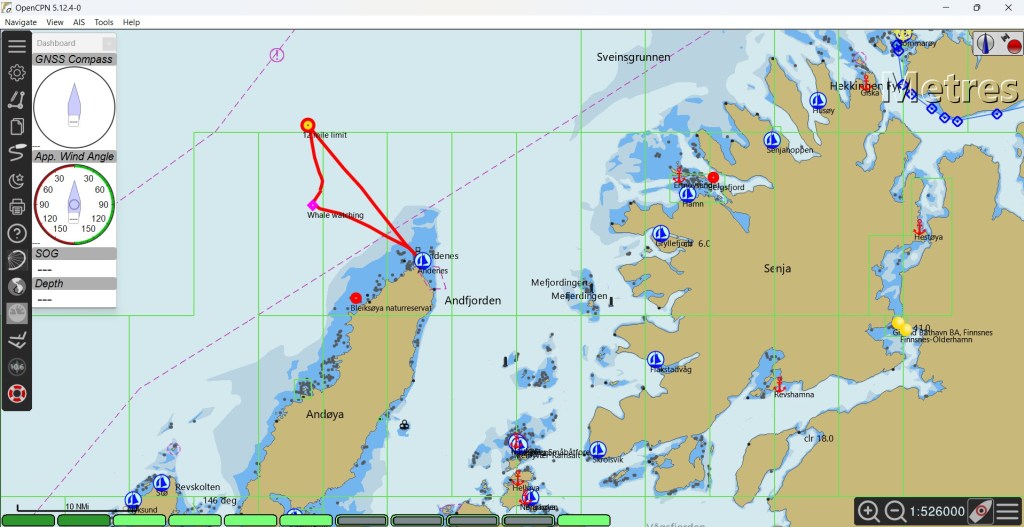
Our ‘Customs Route’.

“Phew, I am glad that’s over”, says the First Mate, a slightly greenish tinge in her face caused by the swell. “Let’s go and see if we can see any whales.”

To the west of Andenes is the Bleikdjupet, a vast underwater canyon that plunges to more than 1000 m in depth. As the currents come in from the Atlantic, the sudden change in depth causes an upwelling of plankton, the favourite food of whales. All sorts of types gather here to feed.
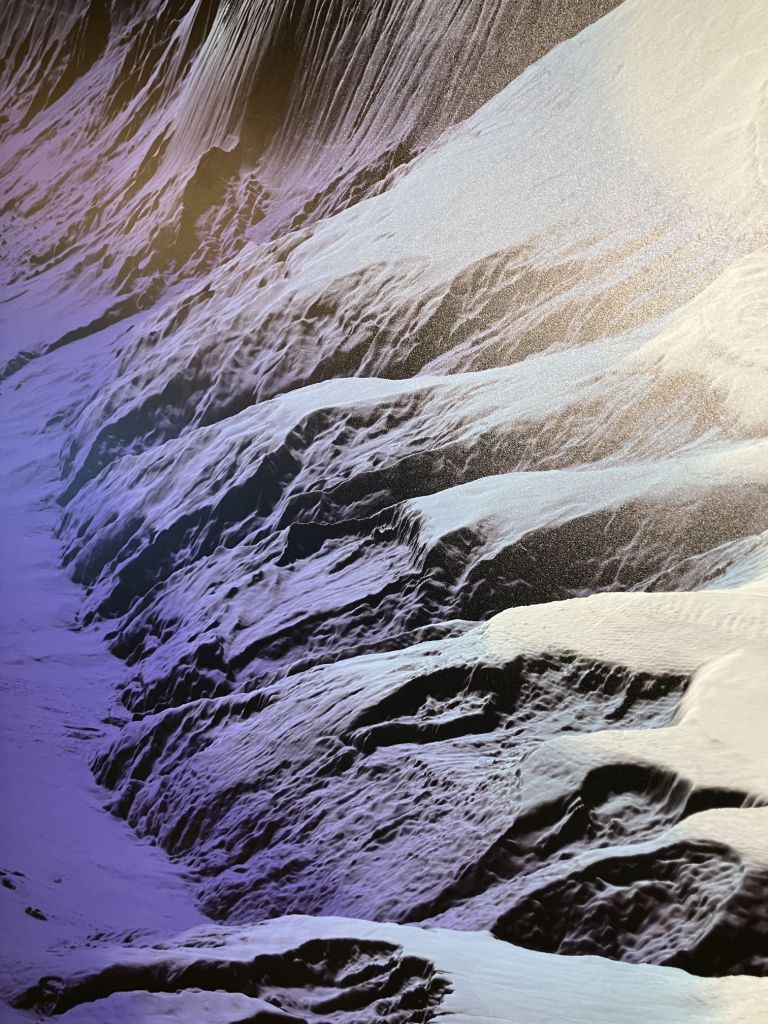
Model of the Bleikdjupet, the vast underwater canyon west of Andenes.

We sail to the supposed hotspot and circle slowly for nearly two hours. Unfortunately, someone has forgotten to send the memo to the whales that we are there, and all we see is one minke whale. No sperm whales, orca, dolphins, or porpoises today.

“Well, at least a minke whale is not to be sniffed at”, I say. “It was exciting when we saw those in Scotland.”
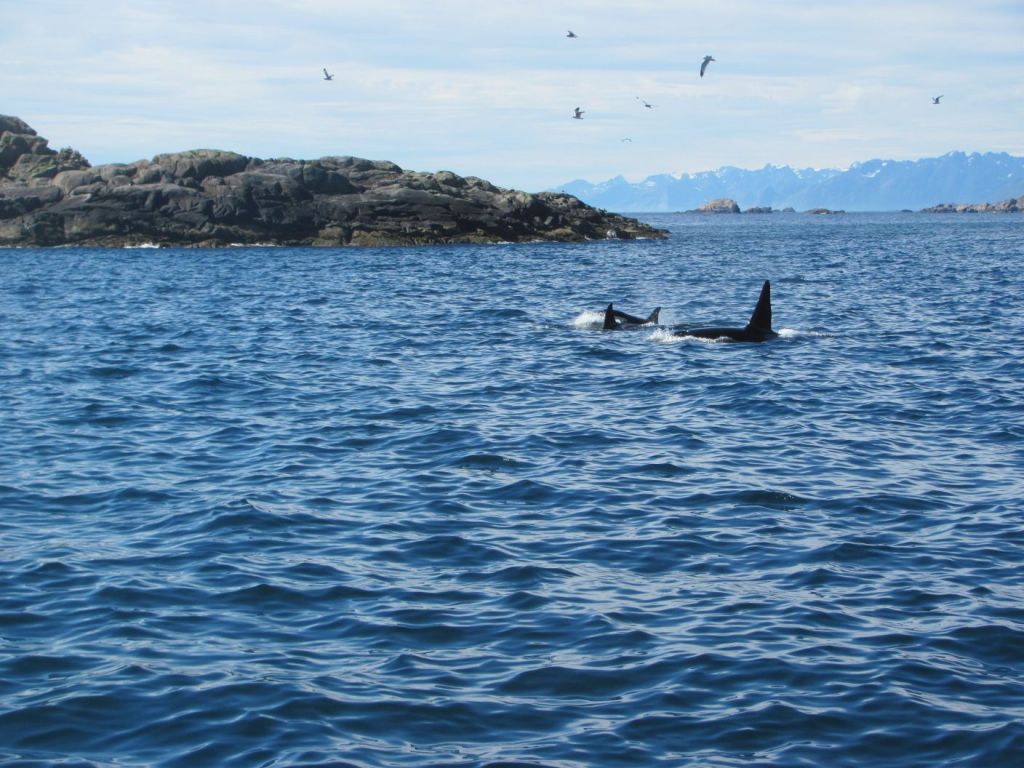
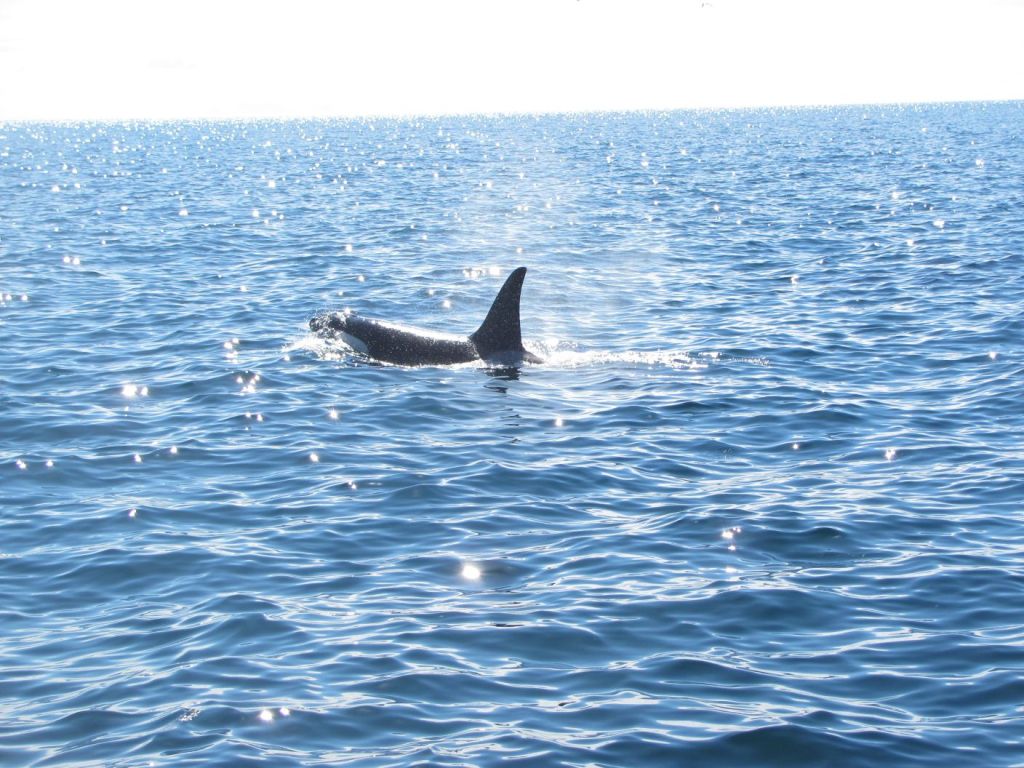
Killers of the deep, jumping the Goat, and a tight turn?

“See if you can get a bit closer to those rocks”, shouts Ian from the foredeck. “That’s where the fish are likely to be.”

I nervously edge a bit nearer. It’s one thing to catch another nice tusk or a cod, but trying to explain it to the insurance company asking for them to repair a hole in the hull is something else again. But if they are there, the fish are stubbornly refusing to bite.

“Perhaps just around the side of this island?”, says Ian hopefully. “It looks a good spot.”

Again, nothing. Suddenly a RIB full of people appears from behind the island. Then another. And another. All heading in the same direction. They obviously have their eyes on something.

Then suddenly, I see it. An unmistakable triangular black fin heading towards us. We had seen ones like it the previous week just after we had arrived at Sørvågen. Orcas, or killer whales, but they had been far enough to really only see them through the binoculars. These ones were close, and getting closer.

“Orcas!”, I shout, grabbing the camera. “They’re coming towards us!”

Orcas!

I think of the recent reports that I had read of orcas attacking yachts in the Bay of Biscay. Since 2020, a small group of them there have taken it on themselves to ram yachts, particularly the rudders, and in a few cases even sinking the yachts. Five tonnes of animal at speed can make quite a bit of damage.

Terrifying as it must be for the occupants, luckily there have been no human casualties so far. No-one quite knows why they do it – theories range from one of them, perhaps a mother, having a bad encounter with a yacht, and teaching her offspring to retaliate, to just learned playful behaviour. Fortunately, the behaviour doesn’t seem to have spread to other orca populations in the world. I hope that that applies to Norwegian orcas as well.

The orcas, about four of them, swim past us and head out to sea. Then suddenly, they turn and cut across in front of us.

Orca close to the boat.

Fishing forgotten, we follow them at a distance, without getting too close to cause them stress. The RIBs do the same. The orcas are obviously feeding. After about an hour, they disappear and we don’t see them again.

“Wow!”, says Uli, breathing out. “That was amazing! I’ve never seen orcas so close before.”

We all feel the same. It is always special to meet large animals up close, particularly those from the oceans, an environment that is so alien to us yet still capable of producing creatures with non-human intelligence, perhaps matching our own.

“There seems to be a resident pod of them here”, I say. “Other sailors say in their blogs that they have seen them in this area too.”

—-

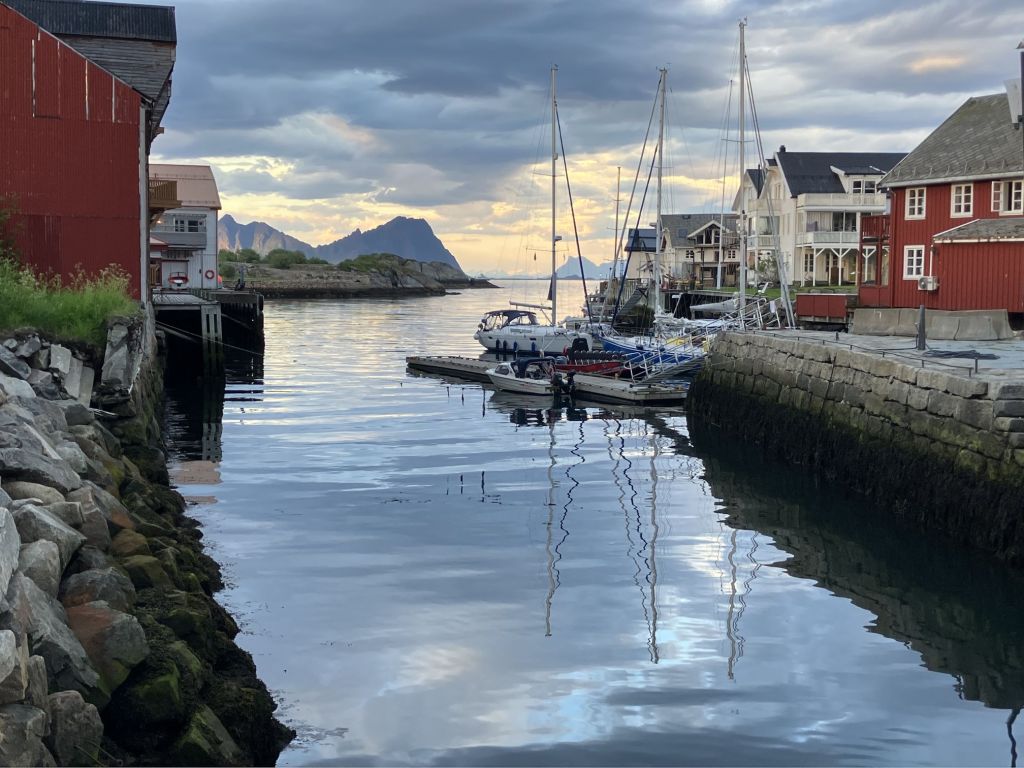
We arrive at the small town of Kabelvåg, an old fishing village and reputed to be the earliest town in northern Norway. The harbour is picturesque, and we have to go through a pub to exit the pontoon. We buy a drink.

Tied up in Kabelvåg.

“You can pay your mooring fees at the bar”, says the pretty barmaid, as she fills our glasses. “And use our facilities when we are open.”

In the morning, we take the bus up to Svolvær, the ‘capital’ of the Lofotens. Amalia is already there, having decided to sail there directly rather than stopping at Kabelvåg.

“Come and have a cup of coffee with us”, says Andy. “I’ve got something to show you.”

We sit in the warm sun and sip our coffees.

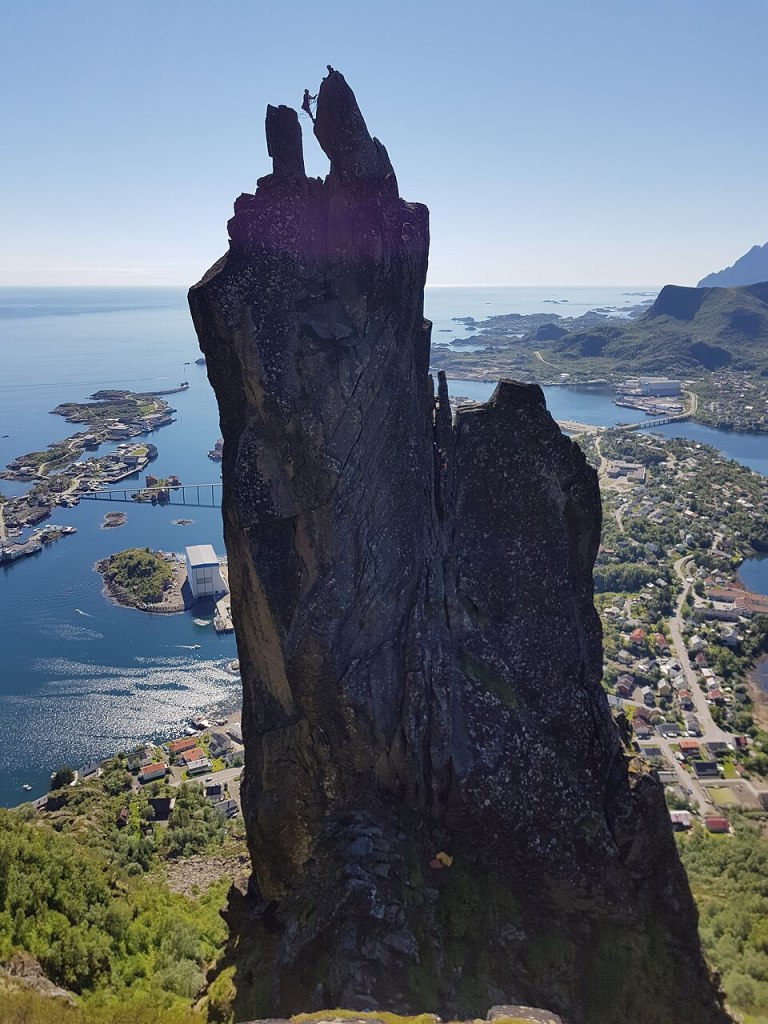
“See those two pinnacles up there”, says Andy, pointing to two spikes of rock on the ridge above the town. “They are called ‘The Goat’, because they look a bit like goat’s horns. Apparently the cool thing to do is to jump between them.”

We look at them more closely. There are precipitous drops on all sides of them, and the gap between them must also be at least 10 m deep. Certain serious injury or worse if you were to mistime your jump.

“You wouldn’t get me doing that”, says the First Mate. Me neither, I think.

Andy peers closer. “I do believe that there is somebody up there now”, he says.

I have a look through the binoculars. In fact, two people have appeared, both in climbing gear and ropes.

“I wonder if they will jump?”, says Anne.

The Svolvær ‘Goat’ (from Wikipedia).

We watch for a while, but they seem to be more interested in climbing each pinnacle, not jumping from one to the other. Then they disappear, presumably descending on the other side.

“You would have to be a bit crazy to want to do that”, I say. “Anyway, we need to get going. I would like to see the War Museum, and the First Mate wants to see the Magic Ice exhibition. Many thanks for the coffee.”

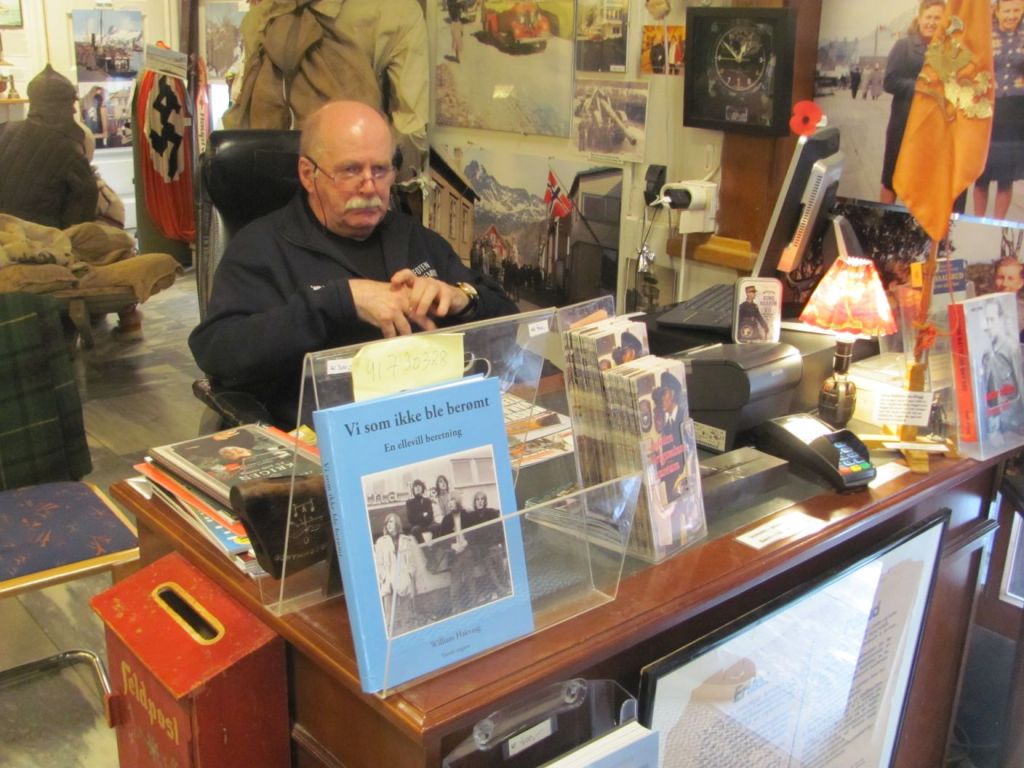
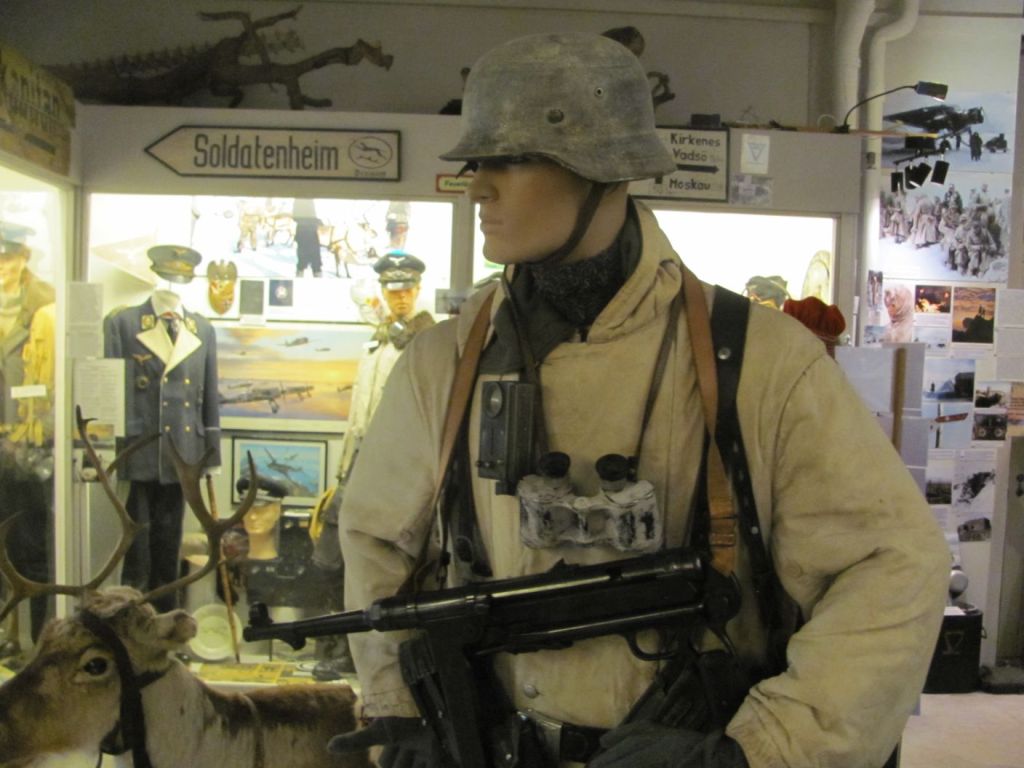
The Lofoten War Memorial Museum turns out to be an eclectic collection of war memorabilia collected by its owner, William Hakvaag. I spend a fascinating couple of hours in there learning about the impact on Lofoten and northern Norway of the German invasion, occupation and eventual defeat between 1940-1945.

William Hakvaag.

Hitler had occupied Norway so that Germany could build ice-free bases along its coastline to control the North Atlantic and mount attacks on Britain and the Arctic Convoys carrying weapons to the Russian ports of Murmansk and Archangel, as well as to ensure that it had access to the iron ore mines in Sweden.

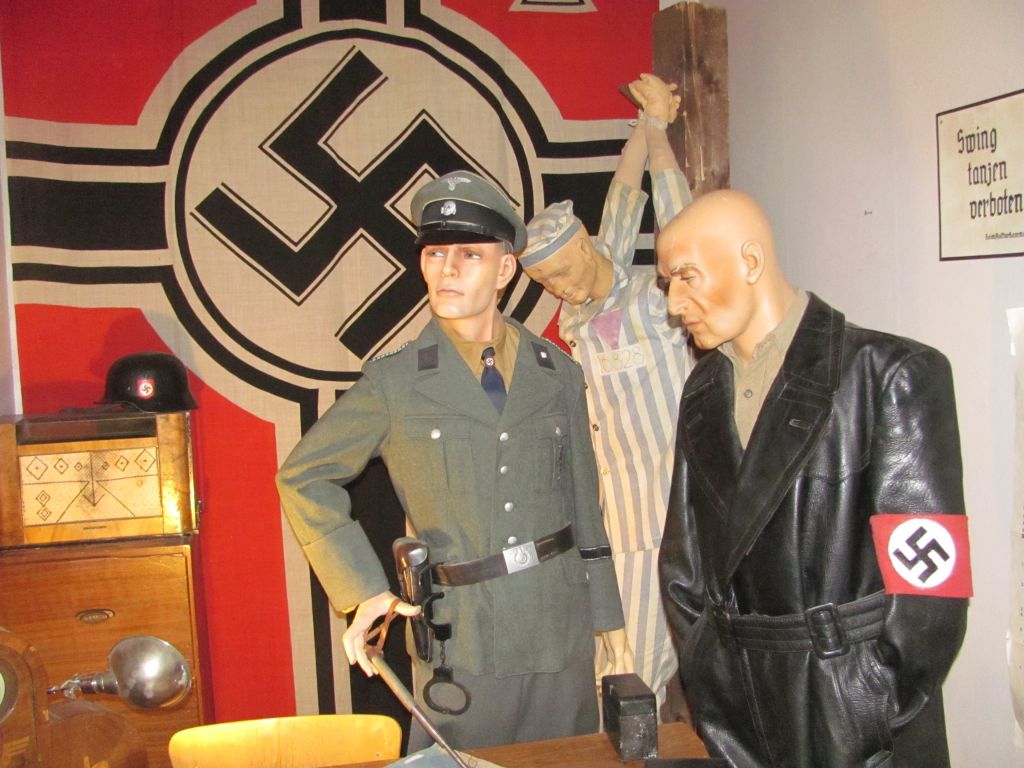
There are an impressive collection of uniforms worn by both sides, and a recreated Gestapo office from where Gestapo officers such as Krupa, Uhrl, and Gross operated. Apparently, Uhrl wasn’t too bad, as, although he knew the names of several of the Norwegian resistance, he did not divulge them to his higher command. Years after the war, he returned to Svolvær as a civilian and was received very well.

The Gestapo office.

“At the end of the war, when the Russians advanced, the Germans pursued a ‘scorched earth policy’ to leave nothing of value for the Russians”, I read. “This involved evacuating the population, burning villages, and destroying infrastructure, livestock, and crops. Rather than being evacuated, many people stayed, living in caves throughout the 1944/45 winter. Eventually in May 1945, Germany surrendered and the war was over. People could start to rebuild their lives and country.”

German soldier in Arctic uniform.

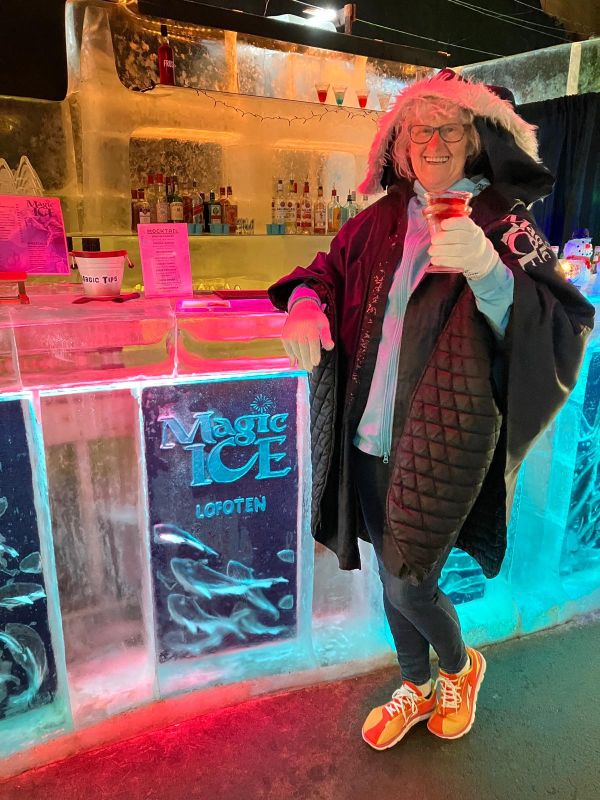
The First Mate and I meet for lunch. She has been enjoying Magic Ice.

“Apparently it is the only permanent ice display of art in the world”, she tells me, munching her prawn sandwich. “There are a lot of ice statues of Vikings, of Arctic animals, and the life of fishermen in the area, and their beliefs and superstitions. I was even given a free drink at the ice bar.”

The First Mate enjoying herself at Magic Ice.

It’s time to catch the bus back to Kabelvåg.

“Let’s get off a couple of stops before Kabelvåg”, says the First Mate, on the way back. “We can have a look at the church, then walk back into the town.”

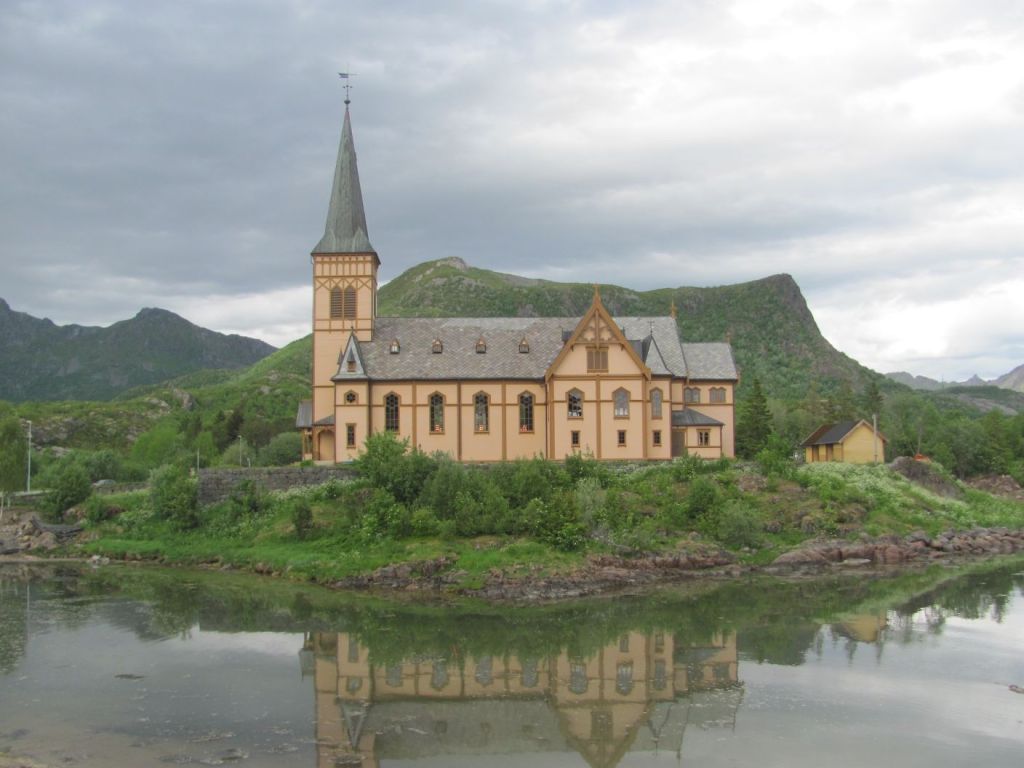
Kabelvåg church, the “Lofoten Cathedral”.

The church is locked. We try all the doors, but to no avail. We start to walk back to Kabelvåg. On the way, we meet Hugh and Liz coming the other way.

“We’re going up to have a look at the church”, says Liz. We tell them it is closed.

“But it opens at four o’clock”, says Hugh. “In ten minutes’ time. We checked on Google.”

We hadn’t. We walk back to the church with them.

“There have actually been five or six churches on this site”, Hugh tells us. “The earliest was away back in the 1100s, and was built to serve the many fishermen that came here in the cod-fishing season. This one was built in 1898. Most churches are quite boring looking, but this one was built in wood in the Gothic Revival style.”

Hugh knows such things. In a former life he was a pastor of a church in London, and is still involved in church activities.

“It is actually a parish church, but because it is able to seat 1200 people with a further 800 standing places, it was nicknamed the Lofoten Cathedral”, he adds.

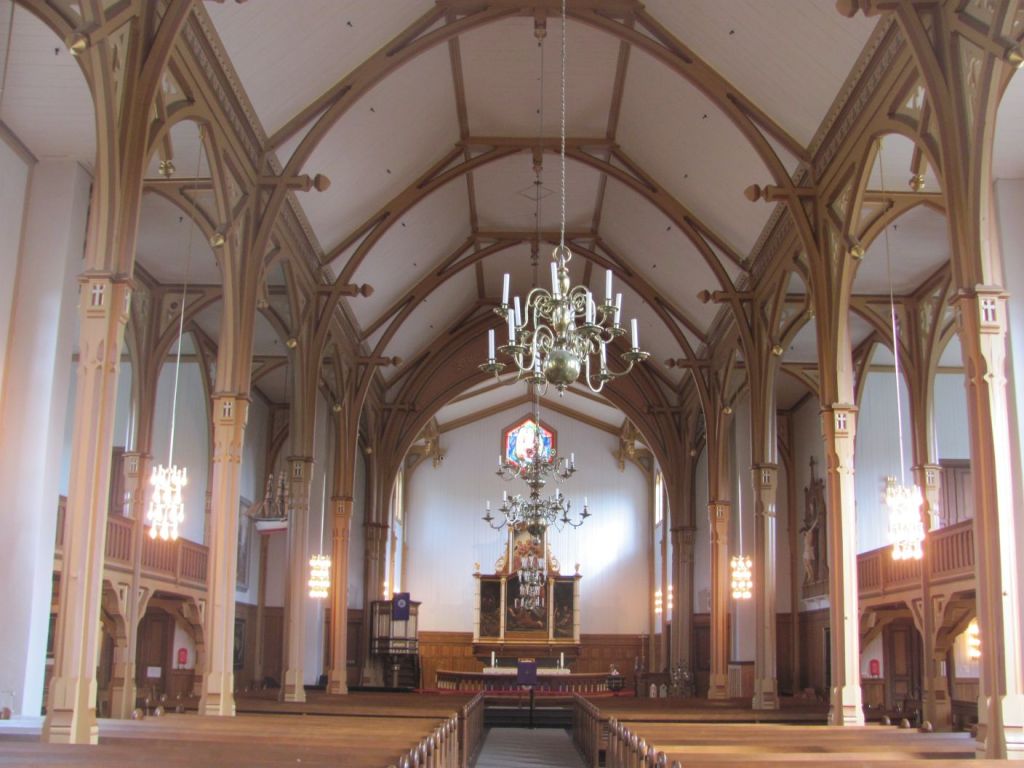
This time the church is open. An earnest young man welcomes us, and takes our token entry fee. He must have been already in the church when we came the first time.

Inside Kabelvåg church.

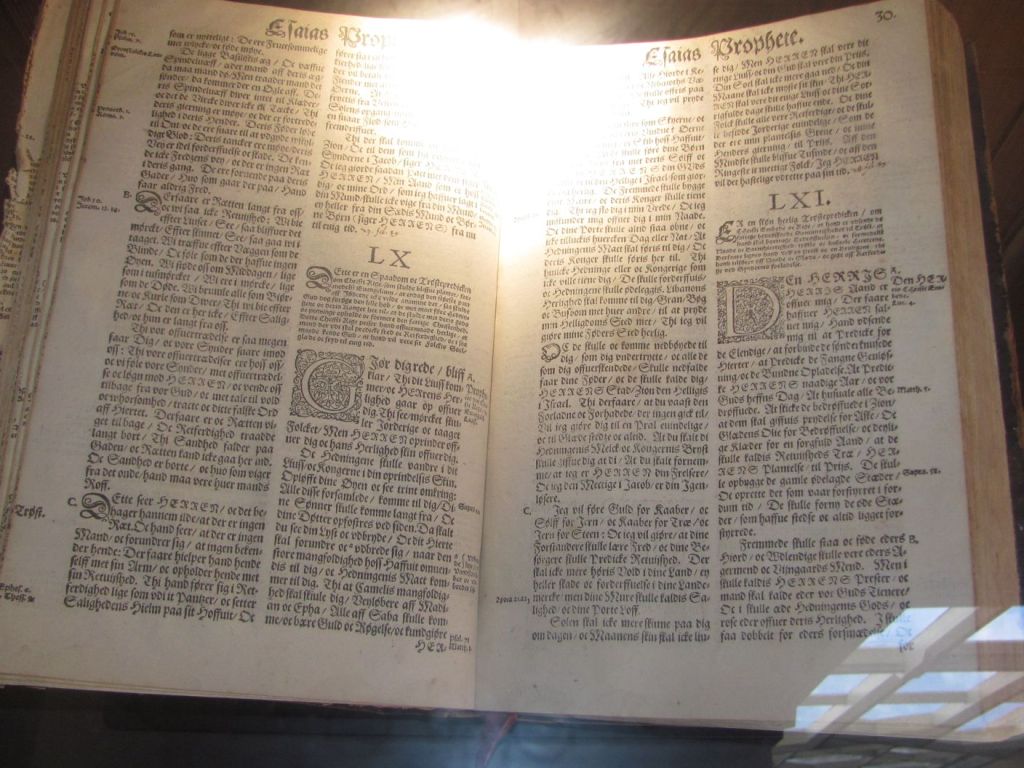
It is certainly impressive inside. There is King Frederick II’s Bible from 1589 that was saved from one of the previous churches on the site.

King Frederick II’s Bible from 1589,

“Did you notice in the photos on the wall how the gender balance of the congregation changed over the years?”, says Liz on the way back. “At the inauguration service in 1898, it was all men. Then in the one about 20 years later, there were some women. Then another 20 years after that, it was much more balanced.”

“It probably reflects the local population at the time”, says Hugh. “In the early days, the church catered for the fishermen that came to the area for the cod season, leaving their families back home elsewhere in Norway. Over time, their families may have joined them and settled there.”

The next morning, we sail for the island of Stomolla to the east of Svolvær, where Fiona has located a pretty little anchorage for the night. It is quite deep for anchoring, but luckily no wind is forecast, and we have a peaceful evening.

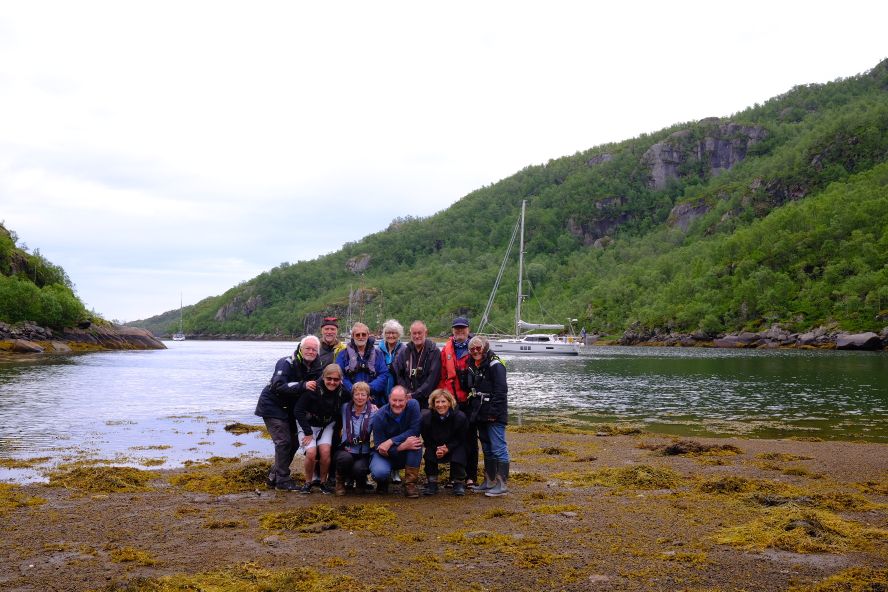
In the morning, Hugh gathers us together on the shore for a team photograph.

“It’s the last opportunity for a while that we will all be together”, he says. “We need to have some memento of the great time we have all had together over the last week.”

Team photo of the Lofoten Rally.

“The Hurtigruten will be turning around in the Trollfjord between 1630 and 1700 this afternoon”, says Bob, after the photo is taken. “Anyone who wants to see it needs to get going soon.”

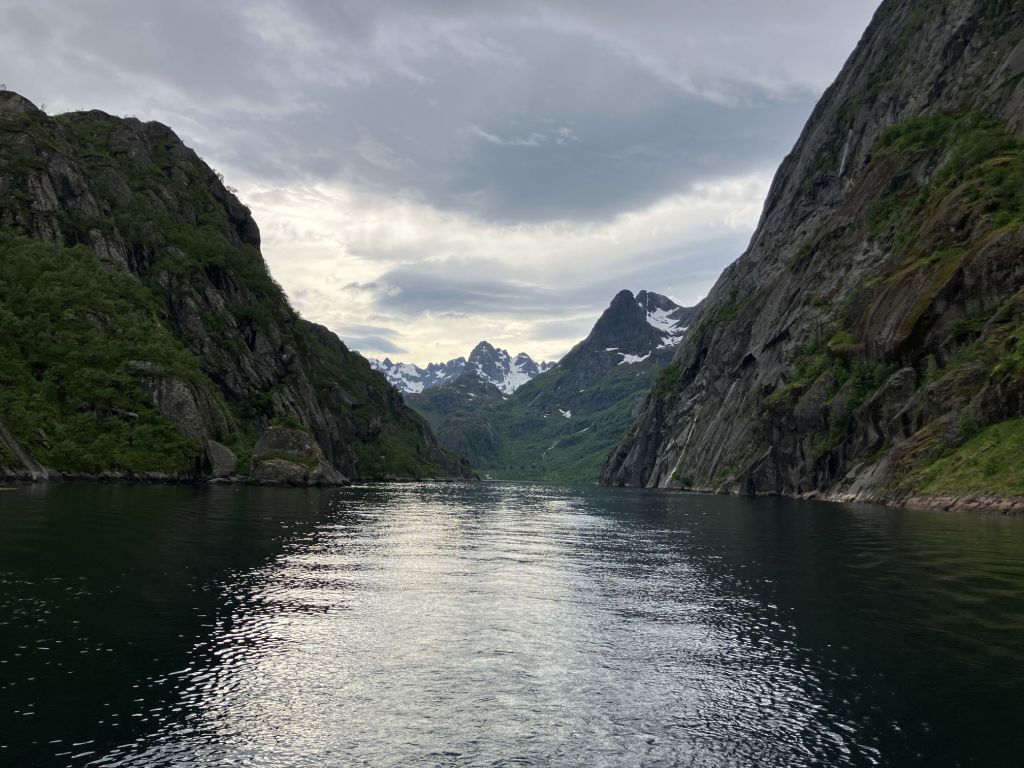
Trollfjorden is a narrow fjord north of Svolvær, bounded by steep cliffs on each side, and picturesque in its own right. However in recent years, an added attraction is that the Hurtigruten coastal ships have taken to entering it and turning around in the narrow space at the end.

“I’ve watched the Lorraine Kelly series on TV”, says Uli. “It looks as if it is so close that passengers on the stern deck could reach out and touch the sides of the cliffs. It’s on my bucket list to see it.”

We motor in. The cliffs and the mountains are awe-inspiring. We tie up at the small pier at the end and brew a cup of tea. We have about half-an-hour to wait.

Trollfjorden.

“Look, there’s a sea eagle!”, shouts Ian, pointing excitedly. “And another! And another!”

The eagles circle before landing on perches on the steep cliff face. Are they also waiting to see the Hurtigruten turn around, I wonder?

“It’s just coming into the fjord now”, calls the First Mate from the foredeck. “I can see it. It’ll be here in a few minutes.”

Sure enough, the Vesterålen is making its way slowly towards us, passengers lining the guard rails. It reaches the end, engages its bow and stern thrusters, and turns on a sixpence.

The Hurtigruten turns around in Trollfjorden.

“There’s tons of room at each end”, says Uli, a little disappointedly. “I expected it to be much tighter.”

She does have a point. I had also seen the various videos of the Hurtigruten turning around, and through clever photography and use of perspective, it does indeed look quite a feat. But from where we are, it doesn’t look so difficult after all.

“Perhaps it looks different when you are standing on board”, I say. “Perspective can be misleading at sea. I always feel nervous going under bridges, even though I know there may be 20 m to spare.”

—-

Ian and Uli’s time with us is coming to an end. They  have identified a small marina not far from a bus stop where we can drop them off.

“We can catch the bus from there to Harstad”, says Ian. “From there we can get another bus to Bodø to catch our flight home.”

We reach the small marina. It looks quite dilapidated, and the gate on the pontoon is locked.

“Even if we could tie up here, we wouldn’t be able to get onto land”, says Uli. “There’s another pontoon over there that looks in better shape. It’s not being used.”

We tie up to the newer pontoon and cook dinner.

“I saw a notice that it said it was a private pontoon”, says Ian. “But my Norwegian is not very good. I am sure that it will be OK for a night. We can just tell them that we are catching a bus first thing in the morning. I am sure they won’t mind.”
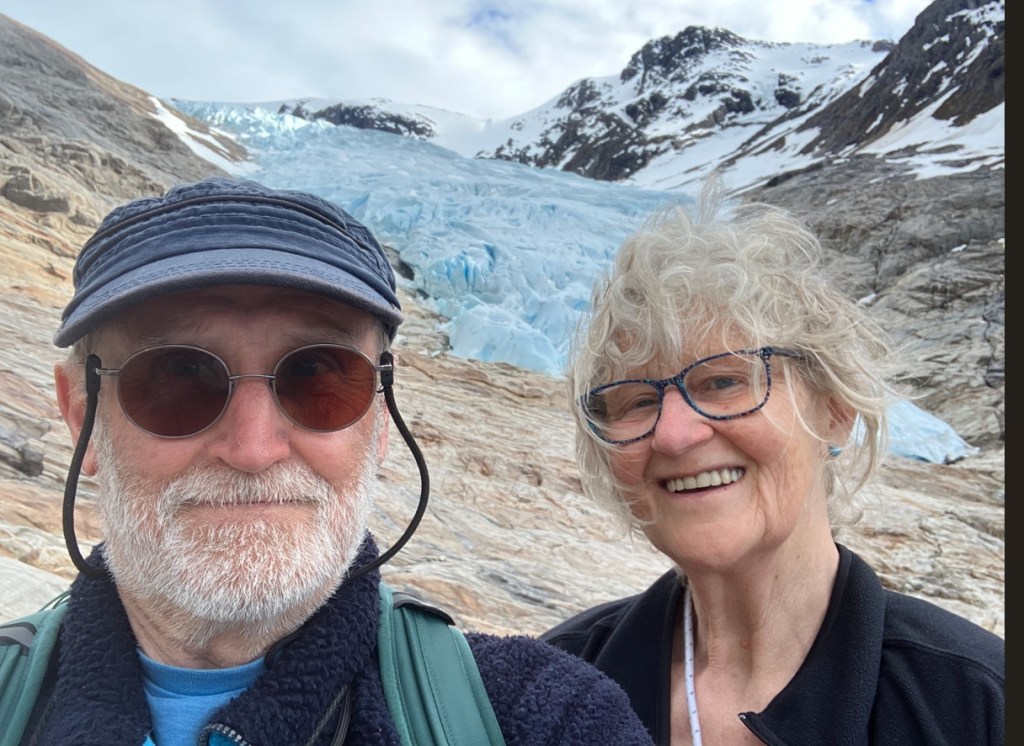
Some time in the night there is a noise of a diesel engine. I look out and see a huge boat with the insignia of an aquaculture company moored to the other side of the pontoon. In the light of the midnight sun, a man on board is looking at me. I look back.

“We’ll be gone first thing in the morning”, I shout.

He shrugs, unconcerned, as he loads some sacks onto the boat. I am not even sure if he heard me. Ten minutes later, he and the boat are gone.

“It’s clearly a working jetty”, I say over breakfast the next morning. “It must belong to that salmon farm out in the bay. We are lucky they didn’t want to chase us away.”

After breakfast, Uli & Ian leave us. We wait to hear that they are on the bus, then we cast off. We don’t really want to have the salmon farm people ordering us off.

“It’s been good having them”, says the First Mate, tidying up the ropes. “Now it seems a bit quiet, just us two.”

An exhilarating crossing, a tough climb, and fish for dinner

“The weather is looking good tomorrow for the crossing to Lofoten”, says Andy, sipping his tea. “I reckon that Sørvågen is the best place to head for. I know that we talked about Moskenes at one stage, but that is just a boring ferry terminal, while Sørvågen looks to be a pretty little village. They are only a couple of miles apart. Aloucia and Hekla are already at the island of Røst at the very tip of the Lofotens and can meet us there.”

Andy and Anne are with us for a cup of tea and cakes. Andy’s brother Rick has left to fly back to the UK, and we have been kicking our heels waiting for favourable winds to let us sail from Bodø over to the Lofoten islands, a distance of 52 NM and a ten hour sail.

“Sounds good”, says the First Mate. “I hope that it isn’t too rough with all the bad weather we have been having.”

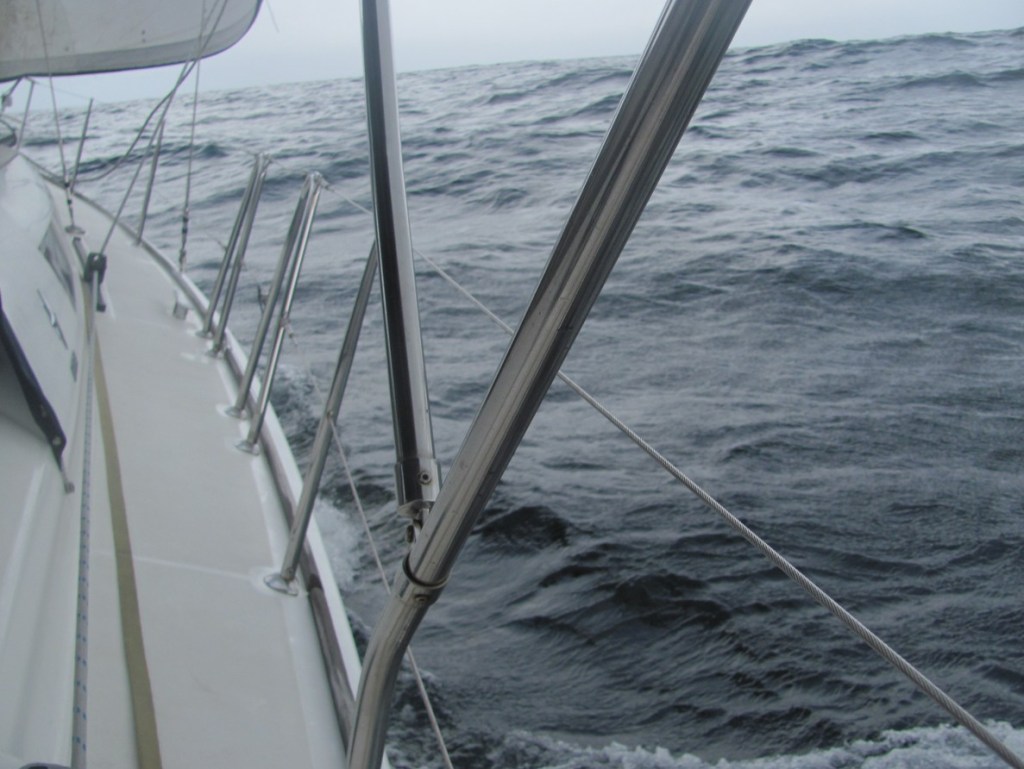
We leave the next morning at 0600. It’s drizzling and misty, and we motor out clear of the numerous small islands surrounding Bodø. Soon however, the drizzle stops and the mist clears and we are left with a beautiful bright sunny day. We unfurl the sails and catch the wind. Ruby Tuesday settles into her slot, and soon we are skimming over the waves on a comfortable beam reach. Amalia is behind us.

Crossing from Bodø to the Lofoten islands.

I pick up the guide book to find out more about the Lofotens.

“The Lofotens are made of some of the oldest rocks in Europe, some of its gneisses and granites having been created deep within the Earth’s crust three billion years ago”, it tells me. “When the two tectonic plates Laurentia and Baltica collided with each other 450 million years ago during what is called the Caledonian Orogeny, a huge range of mountains comparable to the Himalayas were created, stretching across Norway and Scotland, and even to America.”

“I am always amazed at how much they know about so long ago”, says the First Mate. “It’s not as though anybody was there to see it, after all.”

“Geological observations, and coming up with a plausible narrative to explain them”, I say. “That’s science for you.”

“The older gneisses and granites made up the basement rocks of these new mountains with newer material on top”, the book continues. “Much of the latter were gradually worn down by erosion to expose the older rocks underneath. When the Atlantic Ocean opened up 60 million years ago, both of these ancient and newer rocks on its rim were uplifted.”

“Then during the Ice Ages, glaciers scoured the landscape, eroding the newer, softer rocks first and leaving the older, harder rocks, giving rise to the dramatic landscape we see today”, finishes Spencer, from his nest in the canopy.

“I was hoping that we could get through an episode without him showing off”, says the First Mate. “Why did you have to give him that to say?”

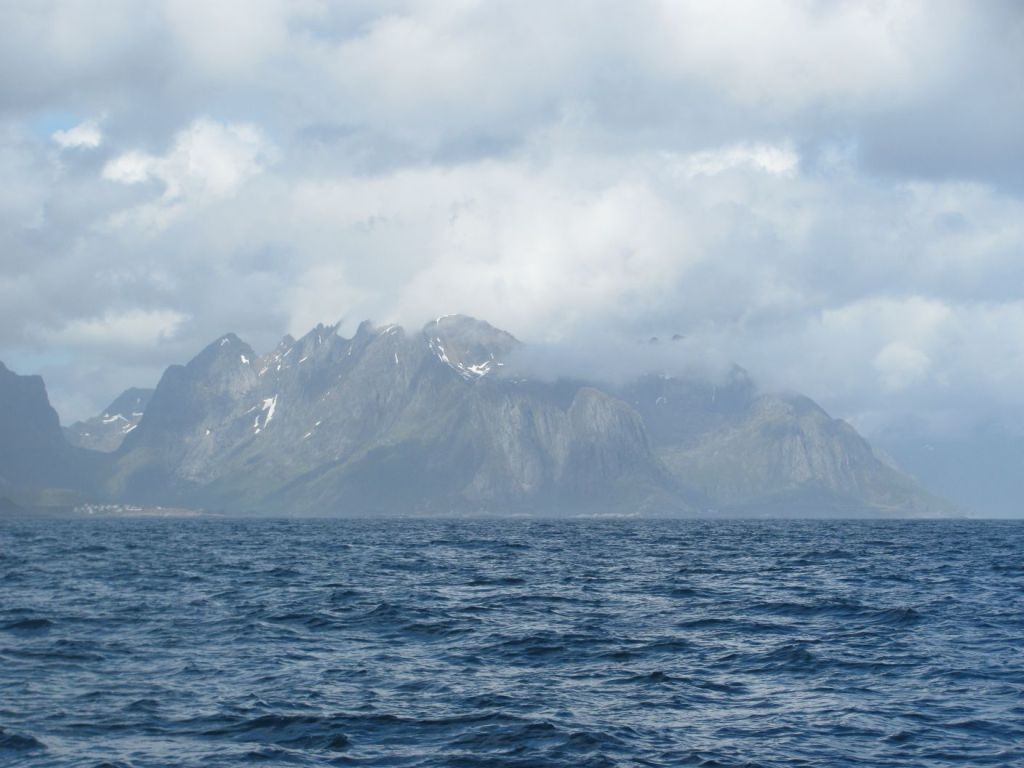
The sea miles pass. It’s exhilarating. At times, we touch eight knots. The mountains in the ‘Lofoten Wall’ gradually appear, so-called because the individual peaks look from the sea like one long stretch of rock.

The ‘Lofoten Wall’ appears.

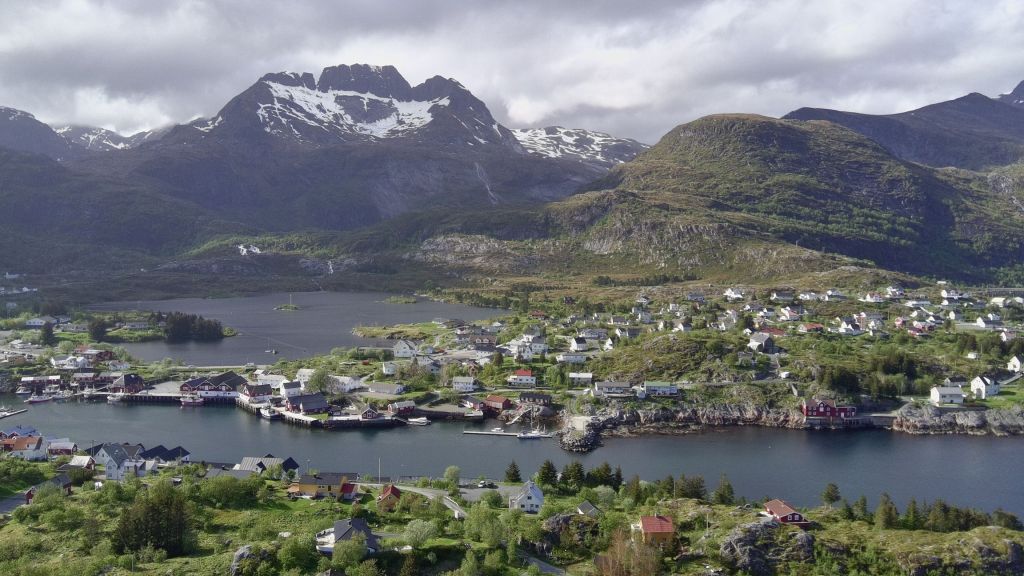
We arrive in Sørvågen harbour, nestled amongst the dramatic mountains. There is a single guest pontoon, luckily empty. We tie up at one end of it, leaving enough room for the other three boats which will arrive soon. Amalia comes next with Andy and Anne, then Hekla with Bob & Fiona, and finally Aloucia with Simon & Louise. We are all together again.

Tied up in Sørvågen harbour.

Both Amalia and Ruby Tuesday are picking up guests who are arriving on the ferry from Bodø to Moskenes in a few days’ time, so we have a few days to kill.

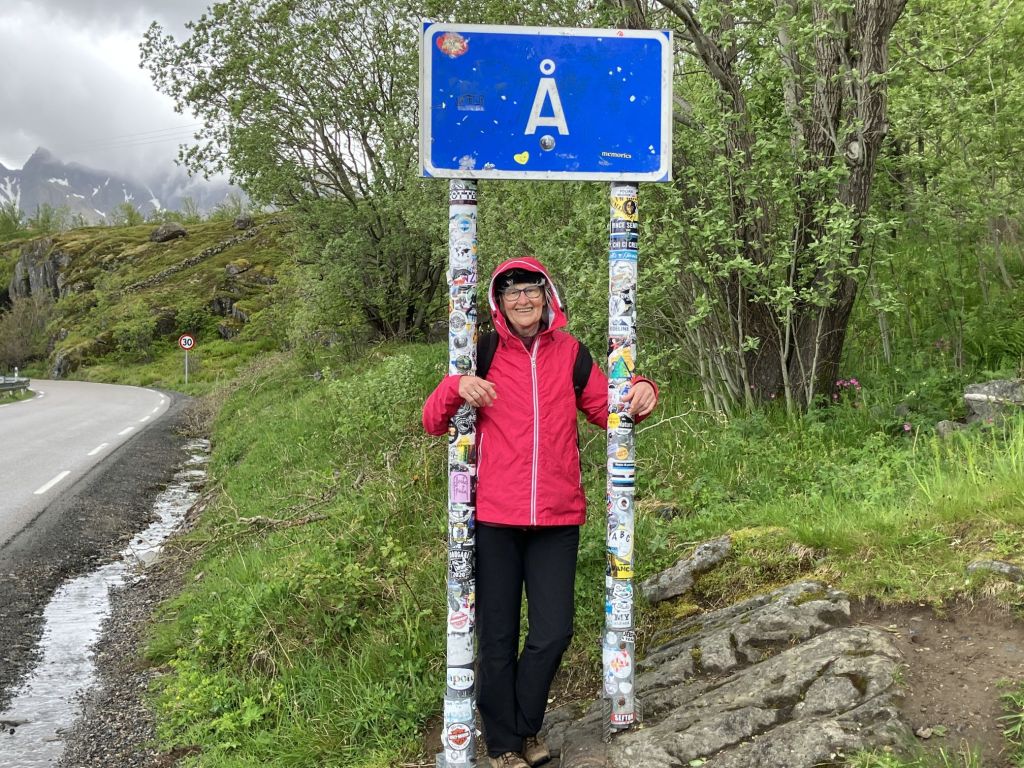
“There’s a fishing village just along the road a bit”, says Bob. “It is called Å, the shortest name in the world for a village. There is a stockfish museum there about the history of fishing in this area. Normally things are shut on Sunday, but I checked and it is open today. We can walk there, see the museum, and see if we can find somewhere for lunch.”
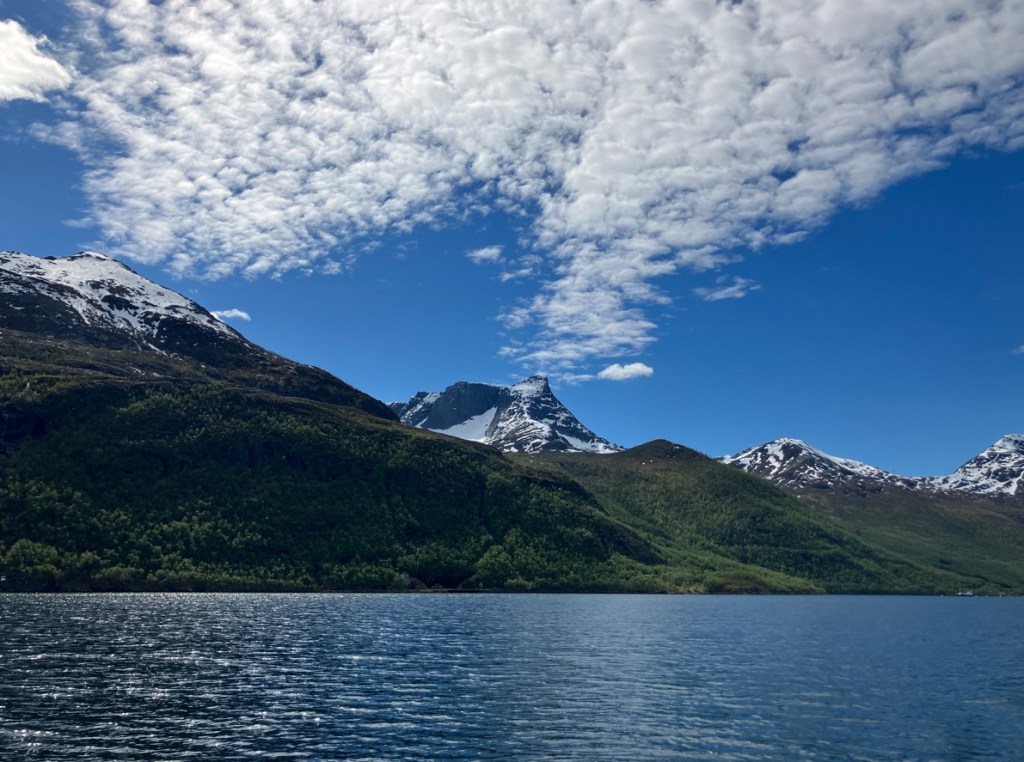
The road winds its way along the rocky coast, past fishermen’s cottages repurposed to holiday cottages, past small sandy beaches and rocky streams, all dominated by the towering peaks and deep-cut valleys behind. From time to time heavy rain pours down, interspersed with patches of bright sunshine. It’s kind of magical. It’s not hard to imagine a line of trolls emerging from the mist and gloom of one of the valleys and challenging us for entering their mystical world.

Reaching the village of Å.

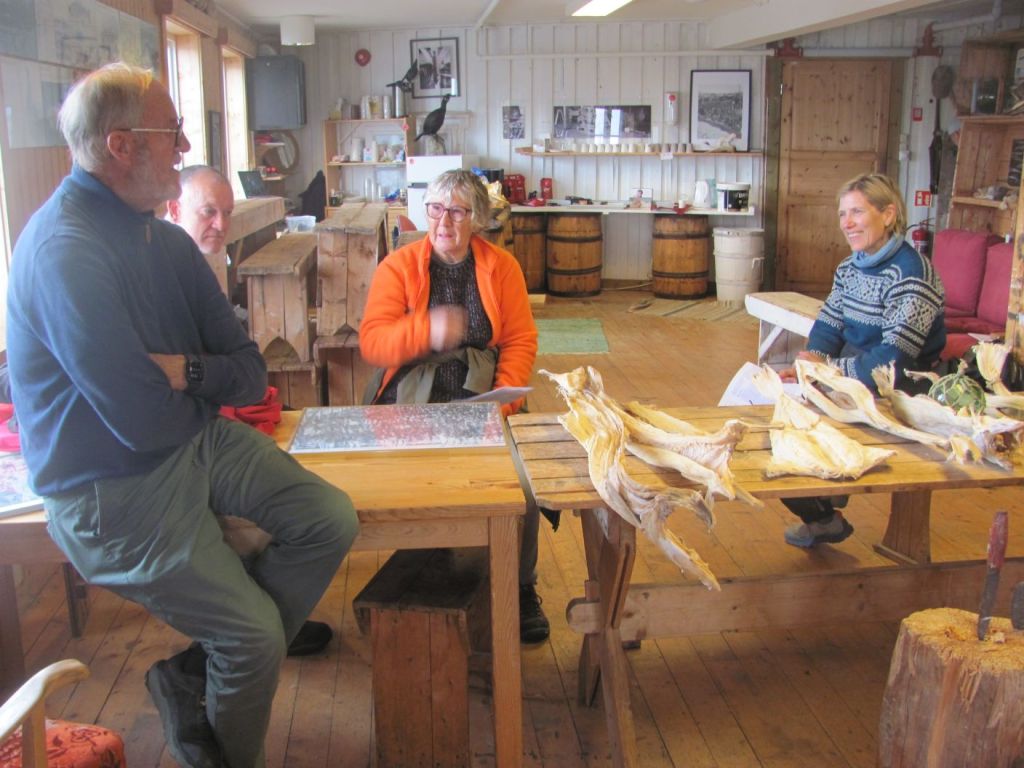
“I used to own the fish processing factory in the village”, the owner of the museum tells us as we sit in a circle around him. “In this very building we are in now. The fishermen would all bring their catches to me, and my staff would process them ready for export. Then when I retired a few years ago, I decided to turn my factory into a museum to preserve the past.”
We learn all about stockfish.

“Pooh, it’s smells terrible fishy in here”, the First Mate whispers to me.

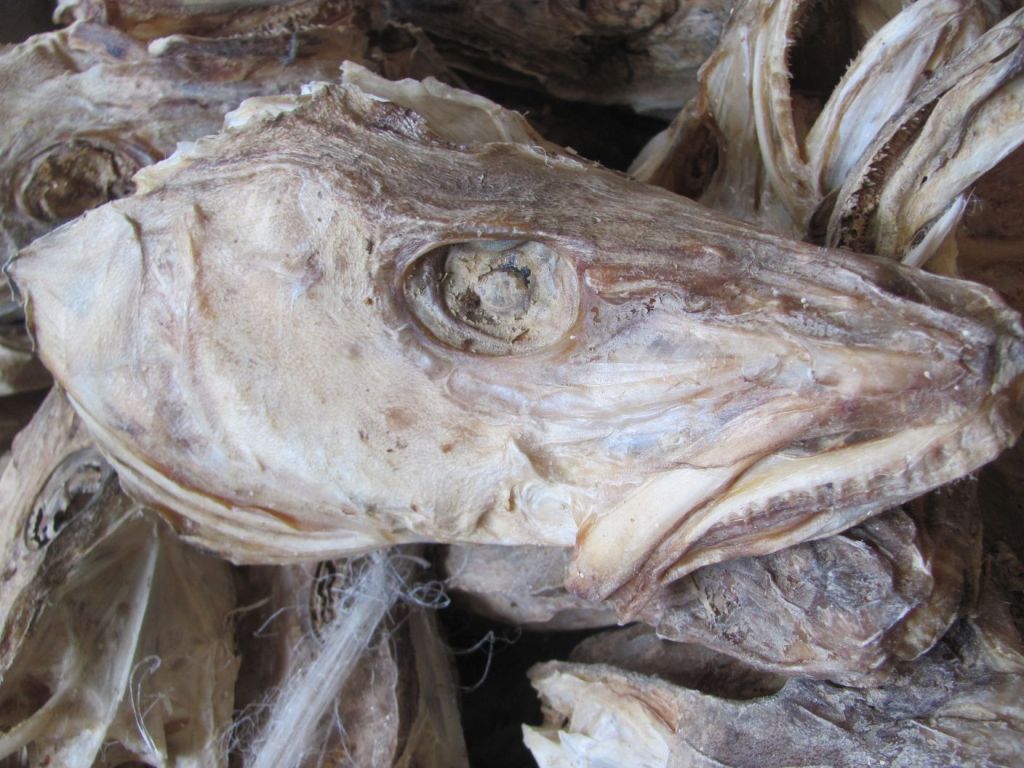
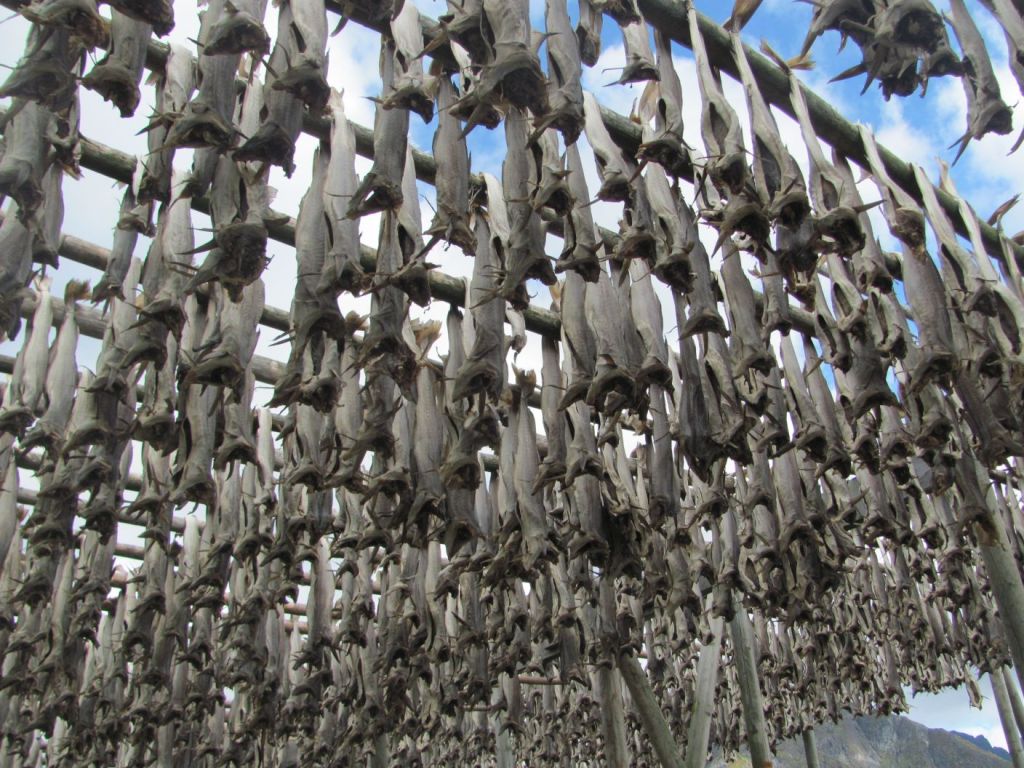
“For those of you who don’t know what stockfish are, they are mostly Atlantic cod”, he continues. “The best cod are the Arctic cod, or skrei, which migrate down here from the Barents Sea between January and March each year to spawn. Because of the distance they swim, their flesh is firm and tasty. There are local cod that live here all the time, but they don’t taste so good, even though they are the same species. We would take the Arctic cod caught by the fishermen, gut and clean them, remove their heads, and then hang them up on wooden racks to be dried in the sun. They can then be kept for years. Stockfish are exported all over the world, although the heads are sent specifically to Nigeria where they are very popular for making stews and the like.“

Cod heads off to Nigeria.

“We saw the Klippfish museum down in Ålesund last year”, I say. “They were dried cod too. What’s the difference between klippfish and stockfish?”

Stockfish are not salted, just dried, whereas klippfish are salted copiously and traditionally dried on the rocks”, he answers, “Both types are exported, mostly to Spanish- and Portuguese-speaking Catholic countries such as Spain, Portugal, Brazil, and the Philippines, where they make a dish called bacalhau. Apparently it was because they weren’t allowed to eat meat at Lent, but fish was allowed, so a demand developed for dried fish from Norway.”

Stockfish drying on wooden racks.

“Talking of food, let’s try and get some lunch”, says Fiona. “I read that there is a small shop doing fish rolls somewhere.”

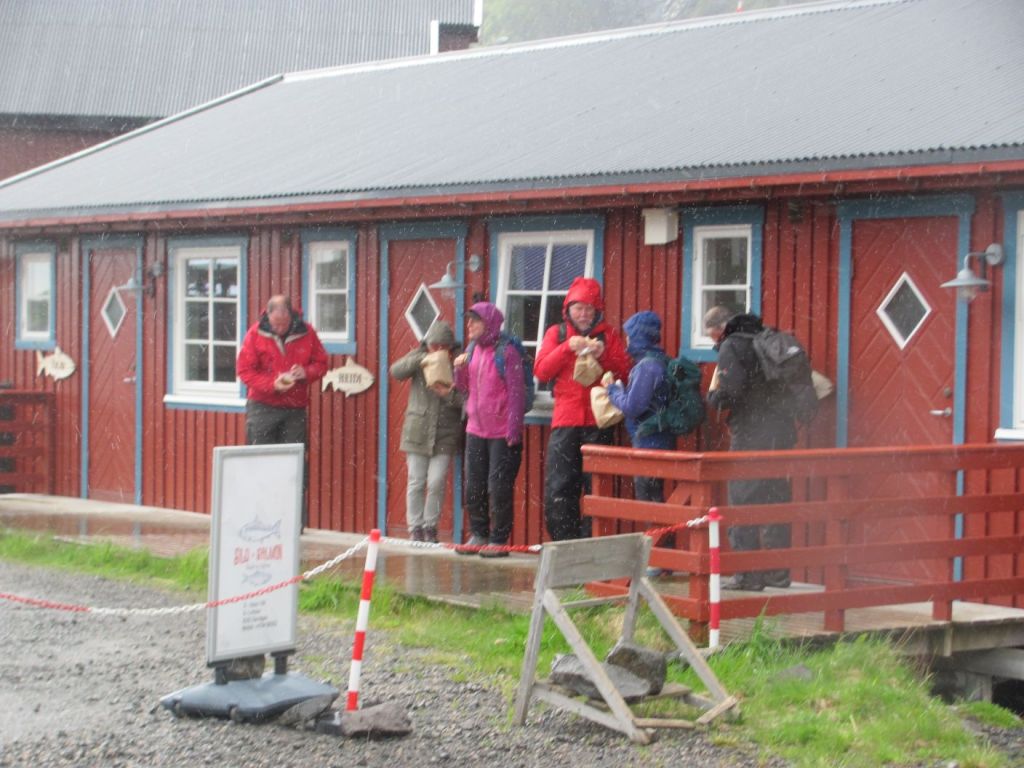
We find it, but it is a takeaway with nowhere to sit, so we huddle from the rain under the eaves of a nearby building and gobble up our matjes brötchen.

Trying to keep dry having lunch.

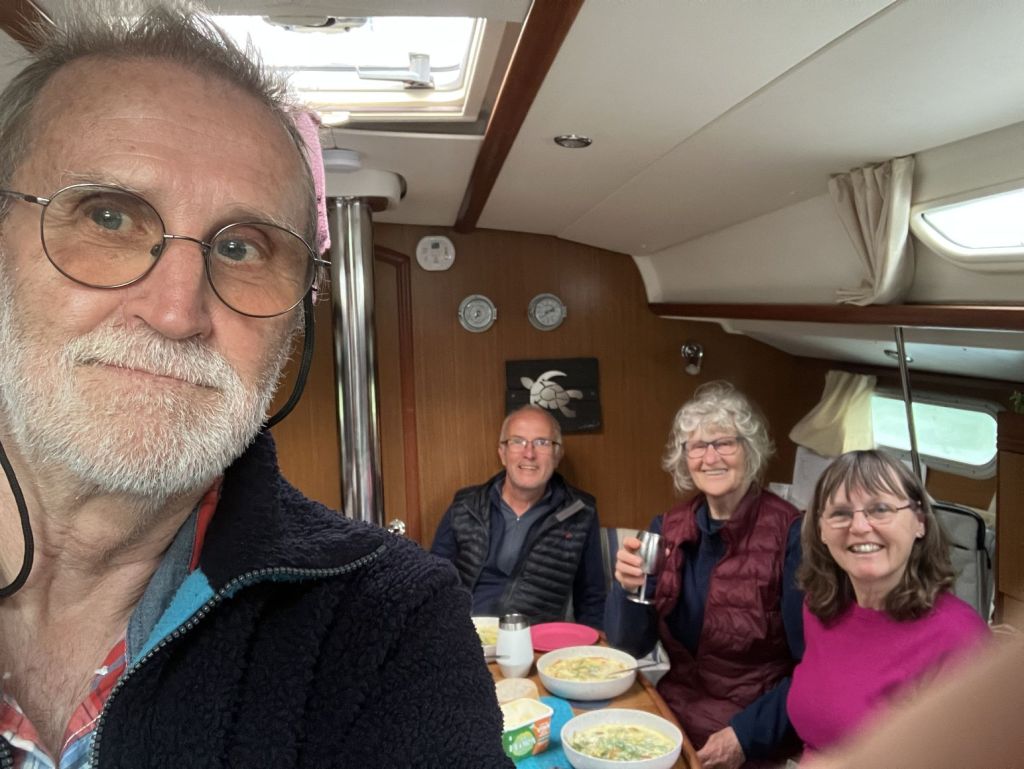
The next day, Amalia’s guests, Hugh and Liz, arrive on the morning ferry from Bodø. We had previously met them on the Åland Islands rally in 2023, so we invite them all to Ruby Tuesday for a coffee and cakes to catch up. Somehow the influence of Artificial Intelligence on art comes up.

“I don’t think that we have anything to fear from AI in that respect”, says Hugh, who is an avid photographer. “There is always something about AI-generated pictures that is not quite right. Humans are creative and bring that to the art that they produce. AI isn’t creative, just doing what it is programmed to do.”

“I am not sure that I agree”, I say. “I have seen some stunning pictures that AI has created by fusing ideas from different sources. Just like humans do. And you have to remember that AI has only been around for a few years. Look at the progress that it has already achieved. What will it be able to do in another 20, 50, a hundred years or so? I bet you won’t even be able to tell the difference between human and AI art sooner or later.”

“But AI is not conscious”, says Liz. “It’ll never be able to produce art that will appeal to other conscious humans.”

“How do we know if it is conscious or not?”, I ask. “And even if it isn’t now, that it won’t be sometime in the future? Besides, AI may even decide that it is not worth producing things for humans to enjoy. It may eventually evolve its creative potential to produce art that only other AIs can appreciate.”

“Now, there’s food for thought”, says Andy, taking another slice of cake.

Our friends Uli and Ian are supposed to be coming on the 1945 ferry from Bodø, arriving at Moskenes at 2300.

“The last bus leaves the ferry terminal at 2310”, says the First Mate. “They can take that to come to Solvågen They should be here around 2320.”

“That’s only ten minutes to get off the ferry and onto the bus”, I say. “It’s cutting it fine. I hope the ferry is on time.”

“The bus will wait anyway”, says the First Mate, assuredly. “Even if the ferry is late.”

The ferry between Bodø and Moskenes.

As the ferry leaves Bodø, we get a text from Uli. “The ferry left 20 minutes late”, it says.

“It’s just as well the bus will wait”, I say.

We walk down to the bus stop to meet them. The bus arrives, and two people get out. They are not Uli and Ian.

“I have my own timetable”, the bus driver says. “I can’t wait if the ferry is late. I need to get home now.”

Another text arrives. “The ferry is just coming into Moskenes now”, it says. “I hope the bus is waiting for us.”

The First Mate breaks the news that the last bus has gone. “Perhaps you can try and get a lift from one of the passengers?”, she says hopefully.

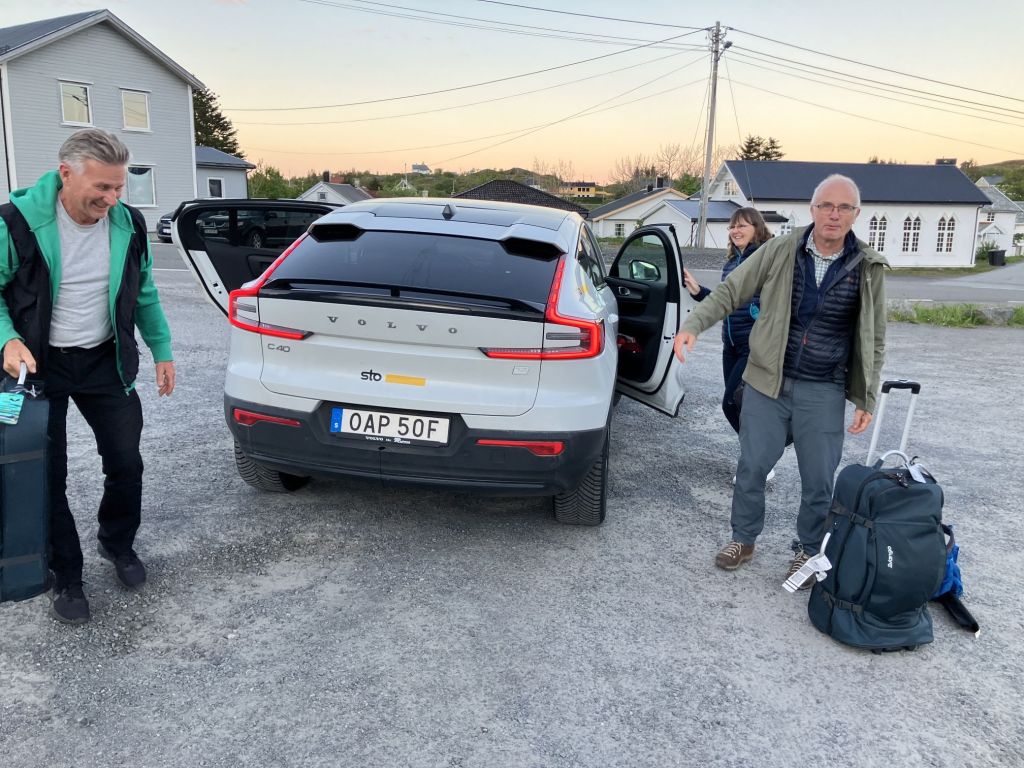
Fifteen minutes later, a car pulls up at the bus stop. Ian and Uli get out.

Ian & Uli finally arrive at a quarter to midnight.

“I had to leave my wife at the ferry terminal”, the driver says. “We’re on holiday and the car is so full, I didn’t have room for four people. I will have to rush now and collect her.”

At least they have arrived. It is after midnight by this stage, and the sun is still shining.

“Welcome to the land of the midnight sun”, I say.

A midnight feast.

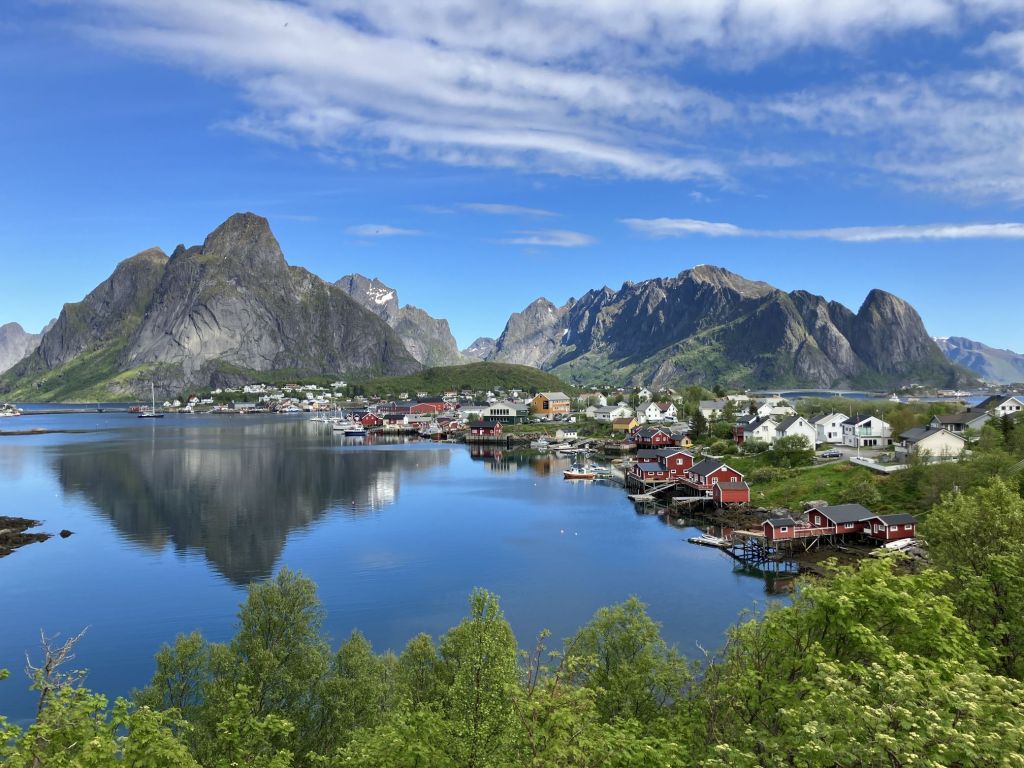
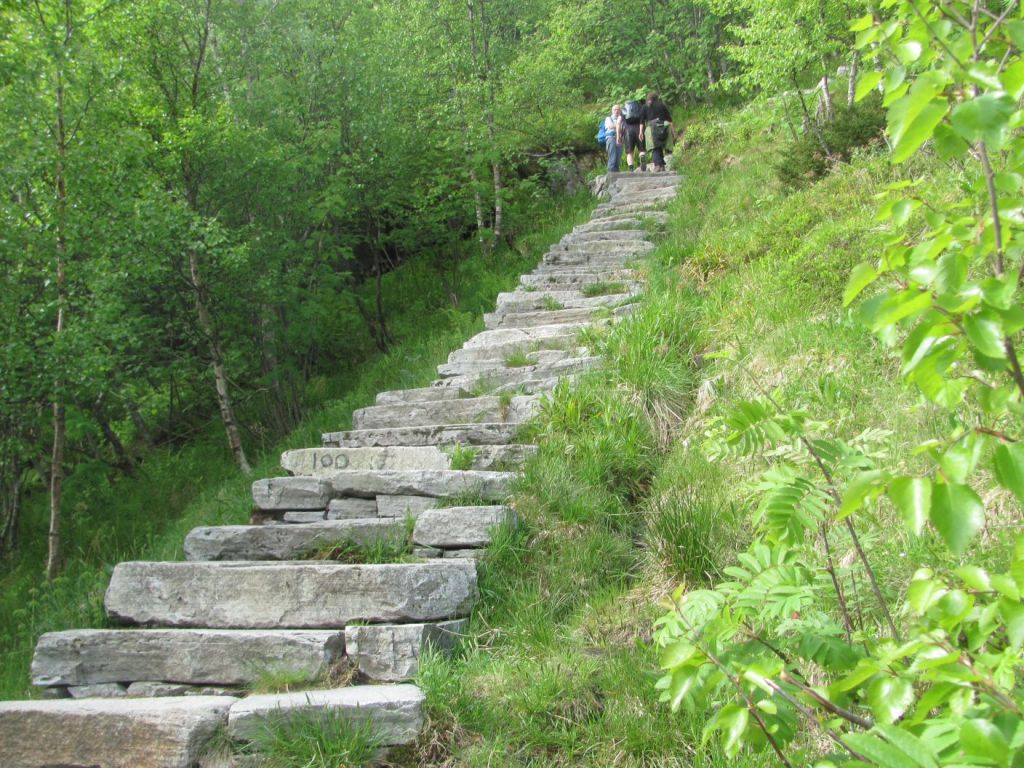
The next morning, we sail up to Reine, the next village. There is a spectacular walk called the Reinebringen up steps to the top of the 484 m high mountain overlooking the village. Like Rødøya, these were built by teams of Sherpas from Nepal.

The village of Reine.

“I read that there are about 1800 steps”, says Ian. “And that it takes about three hours there and back. I am quite keen to do it.”

“So am I”, says Uli.

“I won’t”, says the First Mate”. “My knees aren’t up to it.”

I also have a dodgy knee that I injured in a motorbike accident when I was young, but I decide to give it a go.

It’s a nice sunny day. We walk to the start of the path and begin to climb. It is a relentless ascent upwards with few level bits to give tired joints a rest. The steps are also of different heights, making it difficult to develop a rhythm.

Climbing the Reinebringen.

As we near the summit, we meet a Chinese girl coming down on her backside. Her progress is glacial.

“She tripped and sprained her ankle at the top”, says her partner in broken English. “It’s too painful to walk on it, and she has to slide down.”

She is wearing gym shoes. It’s a long and painful way down. We offer to help, but there isn’t much we can do.

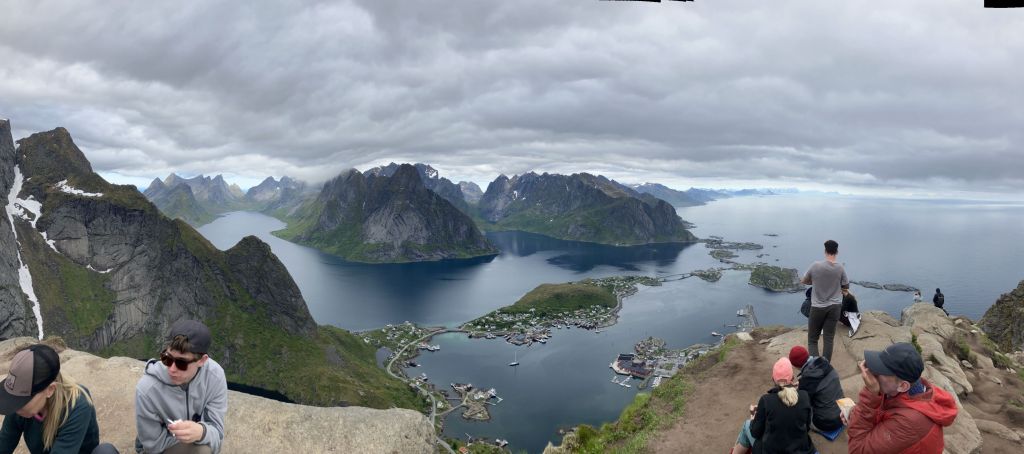
We continue upwards, and eventually reach the top. It’s already quite busy. The view is stunning, from the sea to the south, the whole line of the Lofoten islands in each direction, the range of snow-covered mountains on the distant Norwegian mainland, the village of Reine below, and the arms of the fjords pushing into the mountains to the north.

View from the top of the Reinebringen walk.

On the way down, we catch up with the Chinese girl. An athletic looking hunk and the girl’s partner are supporting her as she hops on one leg from step to step.

“I’m a First Responder”, the hunk tells us. “We got a call, and I happened to be on the steps already, so I came to help. She’ll be alright. We’re not far from the bottom now. But it is a lesson to wear the right kind of footwear.”

I shudder, and hope that my knee holds out. I am wearing a knee support and boots, and am using walking poles.

It does, and we reach the bottom intact.


The next day we push on to Henningsvær, a picturesque but touristy fishing village.

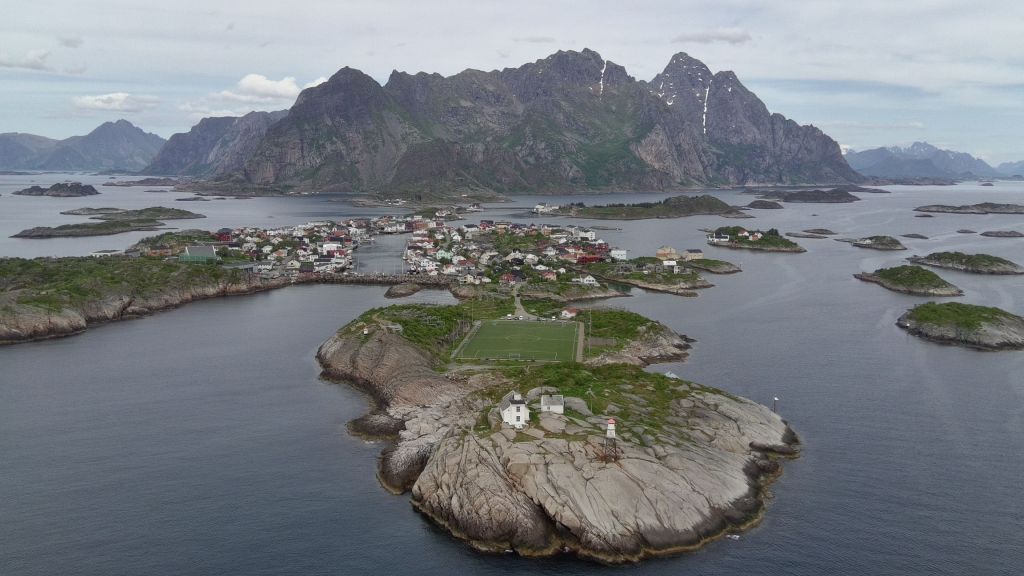
“You have to try and get a drone shot of the football field”, says the First Mate. “With the mountains in the background. It’s world-famous.”

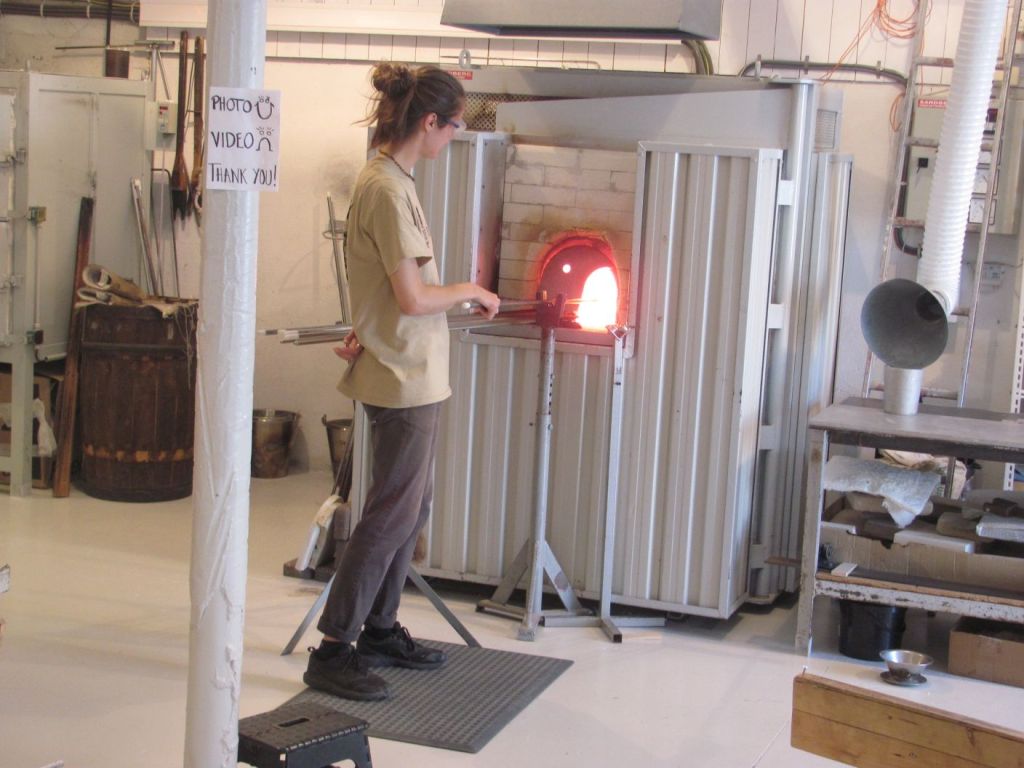
But the wind is too strong in the morning, and I don’t want to lose the drone in the sea. We content ourselves by exploring the town. Particularly fascinating is the glass-blowing in one of the boutiques.

Glassblowing in Henningsvær.

In the afternoon, the wind has eased, but it has clouded over.

“Give it another go”, urges the First Mate. “But don’t be too long, as the other boats have all left. We’re the last.”

This time the drone doesn’t complain of too strong winds, and I manage to get a nice shot.

Henningsvær.

“I would quite like to do some fishing”, says Ian, as we prepare to leave. He is a keen fisherman, and has brought his own gear. “If we can find a patch of relatively shallow water, we can drift across it slowly with the line a metre or so above the sea bed, and see what we catch. Cod and other big fish are bottom dwellers, so that is where the bait needs to be.”

We find a shoal of around 20 m depth, bait the hooks, and pay out the lines. In the next hour, a couple of small saithe bite, but they are too small and we throw them back.

“OK, let’s go”, says Ian. “There doesn’t seem to be much here.”

“One more time”, I say. “We can try between these two islands. Then we can push on.”

Ian’s line starts to shriek as the line pays out.

“I think we might have something!”, he shouts excitedly, applying the brake. “And it feels like a good-sized one too!”

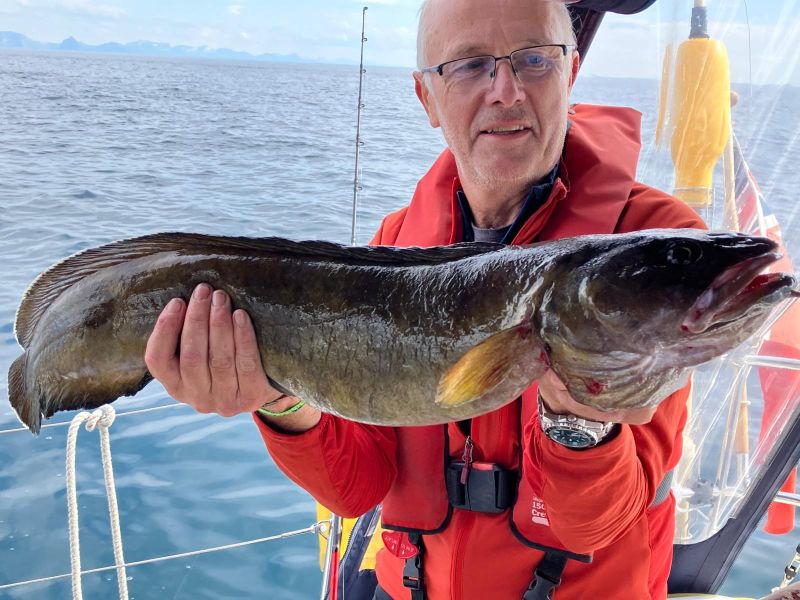
It is. We manage to wrestle it on board and dispatch it. The fish book identifies it as a tusk, or brosme, a member of the ling family. Normally they are deep water fish, living at around 200 m depth. Ian is chuffed.

Ian catches a tusk.

“There’ll be a few meals on that”, he says as he fillets it on deck, blood everywhere. “The book says they are good eating fish as the flesh is very firm.”

There are. Eight generous helpings to be exact.

Black ice, an old trading post, and an international incident

“There are some bicycles here that we can use”, says the First Mate. “They save walking in to the start of the path to the glacier.”

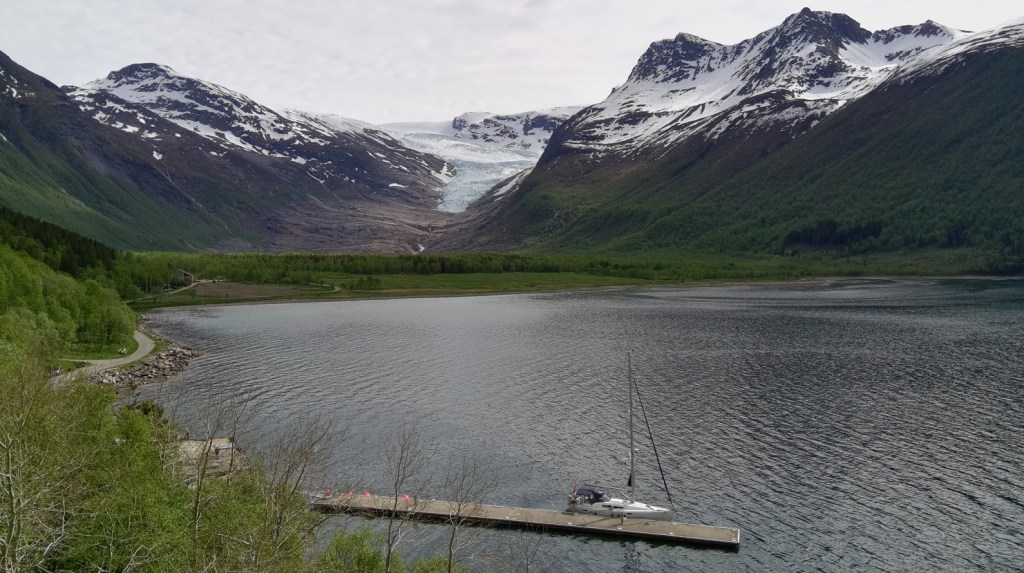
We have just arrived at the small Engen Brygge pontoon at the top of Holandsfjord, and are looking up at the Svartisen glacier. We are the only ones here, and could be the only people in the world.

Tied up at the Engen Brygge pontoon near Svartisen glacier.

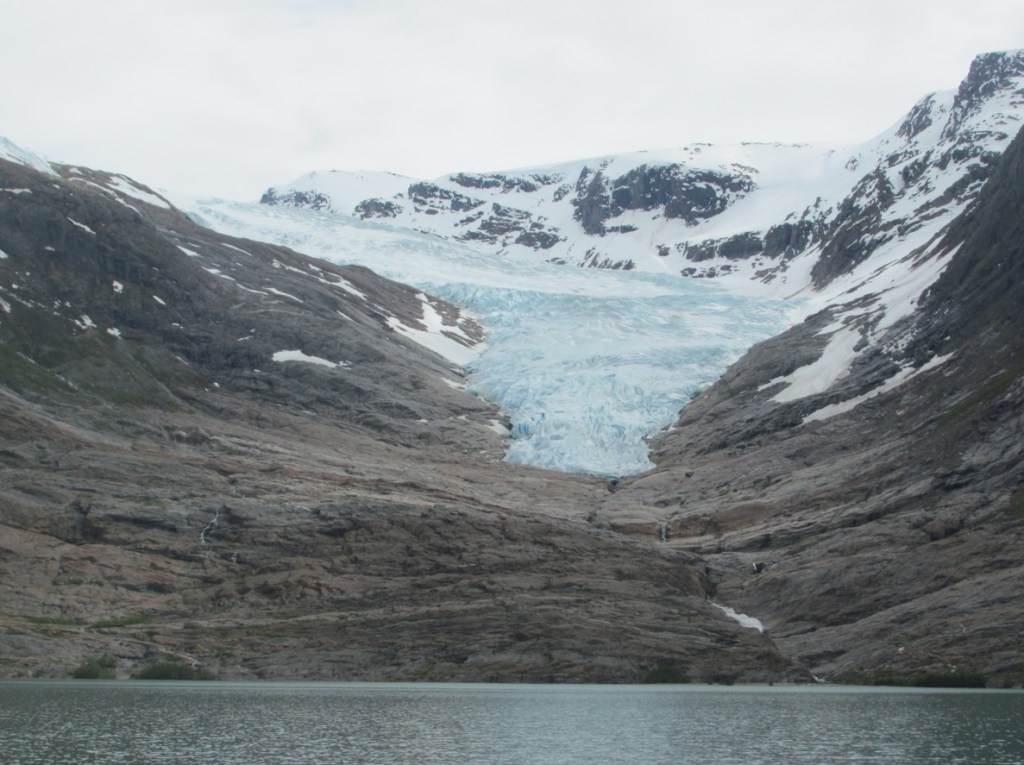
‘Svartisen’ means ‘black ice’ in Norwegian, so named because of its dark blue colour. It’s stunning. The main ice sheet covers the surrounding mountains, with a tongue of it cascading down the Engabreen valley towards the sea. Apparently it is the lowest glacier in Europe, due to the latitude we are at.

Svartisen glacier.

We start cycling along the small road leading towards the glacier. Occasional summer cottages appear in the trees along the way, all locked up now for the winter. The summer season doesn’t start until June, so we have the place to ourselves until then.

Then suddenly, a splash of orange ahead on the road for a brief moment before it disappears again. We are not alone, it seems. We continue pedalling, and catch up with a young woman in her early twenties carrying an enormous orange rucksack on her back.

“I’m heading up the side of the glacier”, she says, with the trace of an Antipodean accent. “There’s a DNT hut up there just next to the ice. I am planning to stay there for a couple of days just reading and walking.”

“What does DNT mean?”, we ask.

“It stands for Den Norske Turistforening”, she tells us. “The Norwegian Trekking Association in English. They maintain a network of trails and mountain huts throughout Norway. You pay a subscription, and it entitles you to use their huts wherever you want. Some are staffed and offer meals and accommodation, but the one I am going to is unstaffed, and I am taking my own food and sleeping bag.”

“Are you Australian?”, asks the First Mate. “You have a slight accent.”

“No, I am Norwegian, but I did spend a year working in Australia, so that is where the accent comes from”, she answers. “I loved Australia, and would like to go back there sometime.”

We wish her the best, and continue on with our cycle ride, impressed with her self-sufficiency and spirit of adventure. It’s not common for a young woman to spend time alone in a remote hut with only basic facilities in an Arctic wilderness, and we wonder what motivates her? So much for the critics of modern youth.

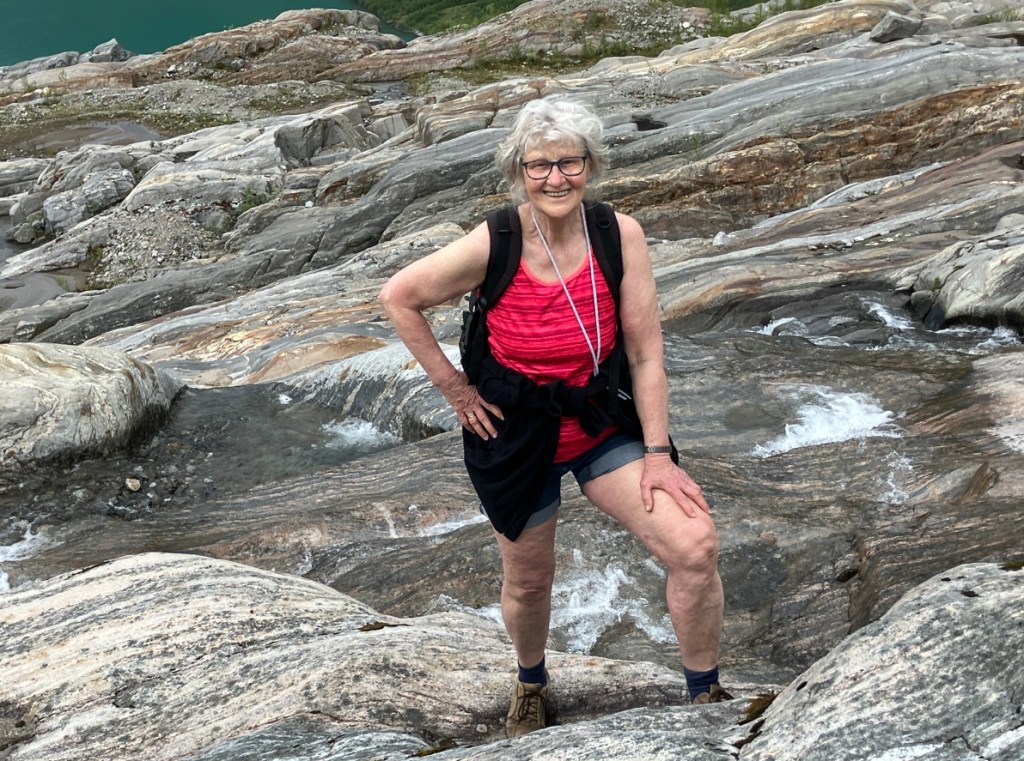
We reach the end of the road, and park the bikes. From now on it is following the walking track up the moraine of the glacier. Eventually, even the path peters out and we need to clamber over rocks, following blue painted markers. It’s tough going, leaping from one rock to the next, making sure that we don’t slip between the cracks and twist an ankle. Far off to the left, we can see the lone trekker making her way up the steep slope at the side of the moraine, her orange rucksack visible in the afternoon sun, until she too disappears from sight. We are alone again.

Climbing the Svartisen glacial moraine.

Eventually we reach the end of the markers. There is a sign warning us that getting too close to the glacier is dangerous for fear of chunks of ice calving. It doesn’t matter – we are a hundred meters or so from it anyway.

We make it!

We sit on a rock and eat our snacks, awed by the massive river of ice flowing imperceptibly down the valley, but also realising that it is retreating, melting by the warming climate that humans have been responsible for through their activities. We had seen photos of the glacier ending much further down the valley, including the place that we were sitting on at the moment.

Later, when we are back, and we are sitting on the deck having our dinner, surrounded by nature’s grandeur on all sides, the First Mate expresses both of our thoughts.

“It’s such a shame that it is retreating so much”, she says. “Can you imagine what it will be like in a few more decades? It will hardly come down the valley at all.”

“The dynamics of this part of the glacier are actually quite complex”, says Spencer, butting in. “In the 1700s, it was nearly at the shore of the fjord. It retreated significantly in the late 1800s, then there was a brief advance in the early 1900s for ten years, but then it retreated about 2 km since then. From the 1990s, after a quick but short-lived advance, the edge of the glacier hasn’t changed all that much, but the ice has thinned and become structurally weaker due to more crevasses. There is no doubt that overall, climate change is driving these dynamics.”

“How can some of our leaders call all this a hoax?”, asks the First Mate. “They should all be brought here to see the evidence for themselves.”

“It’s because big money isn’t interested in nature”, I say. “All it is interested in is making even more money than it will ever need.”

Cynical, me?

Holandsfjorden.

In the morning, we sail back down Holandsfjorden toward the coast, feeling privileged to have seen one of the world’s natural wonders close up and in its setting. We turn to starboard into Meløyfjorden and continue our voyage northwards.

Heading north again.

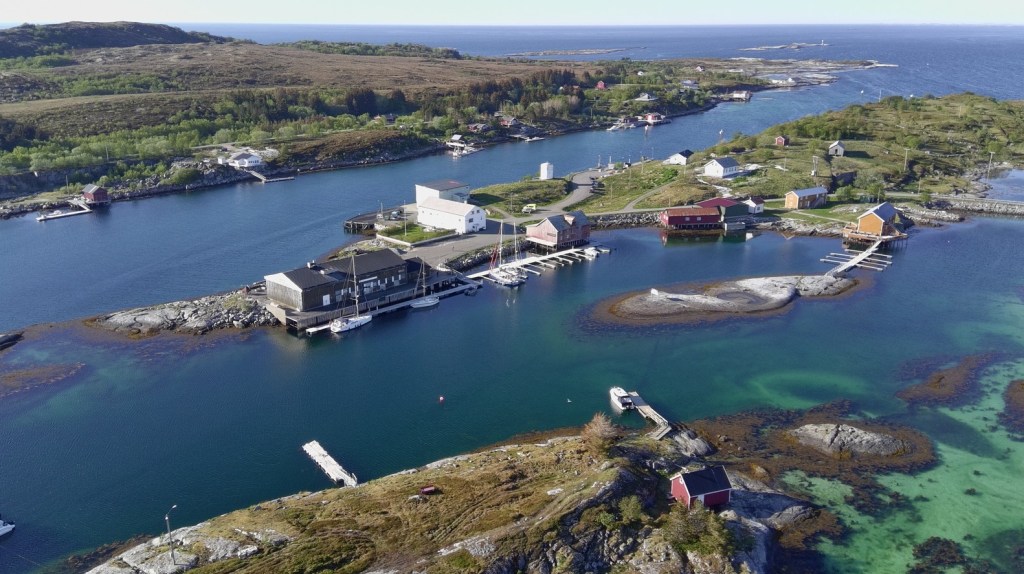
In the early afternoon we arrive in Støtt, a picturesque fishing village and former trading post, and tie up to the quay next to the former warehouse. It’s quiet, no-one is around. A few other boats are there, but it doesn’t look like they have been used for a while. The small mini-market has a notice in the door saying it will open at 1500. We decide to have a cup of tea and come back then.

Tied up at Støtt harbour.

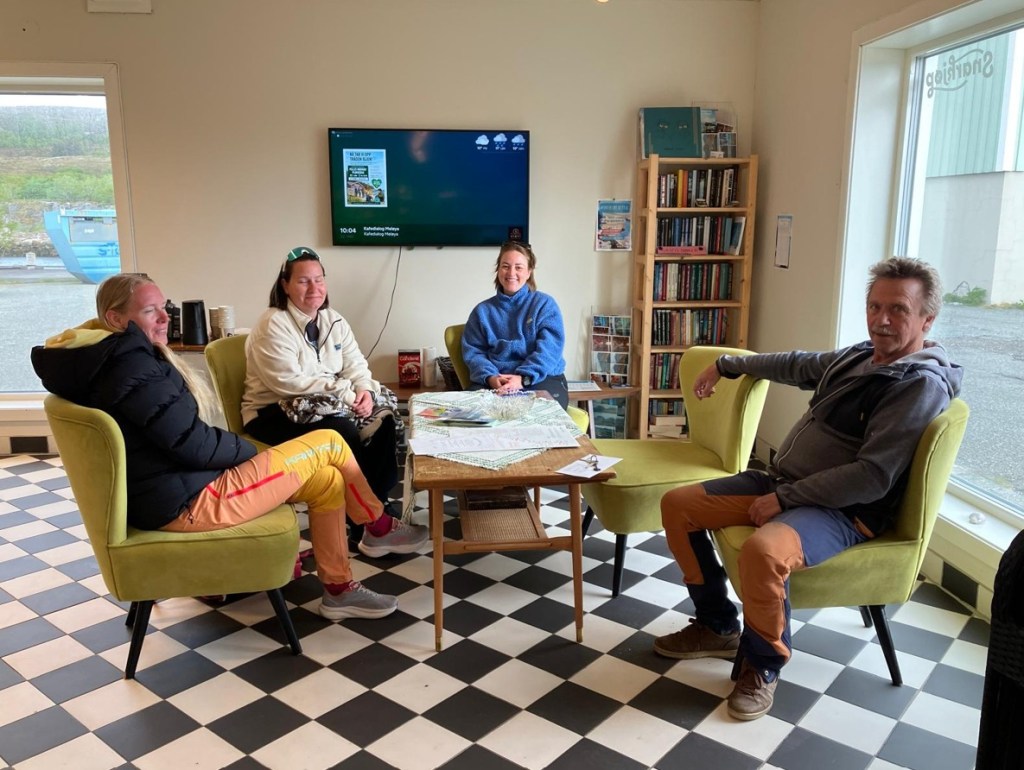
At 1500, it seems that the whole village has come to life. Mobility scooters are parked randomly outside the mini-market, with more on their way along the only road on the island. A number of islanders are sitting around the only table in the shop sipping their coffee.

The social centre of the island.

“The ferry comes in at three”, explains one. “There’s quite a bit of activity then, as new arrivals come to stay. We like to come here and see what’s happening. Otherwise it is very quiet on the island. Only 34 of us live here.”

“It used to be a bustling trading post in the old days”, says another. “Fishermen used to live here during the season to be close to the fishing grounds, fish was shipped off to Bergen, and things like flour, tea and coffee were shipped northwards. But when the Hurtigruten started, there was less need for trading posts such as this one, and it fell into decline. Nowadays we survive from tourism.”

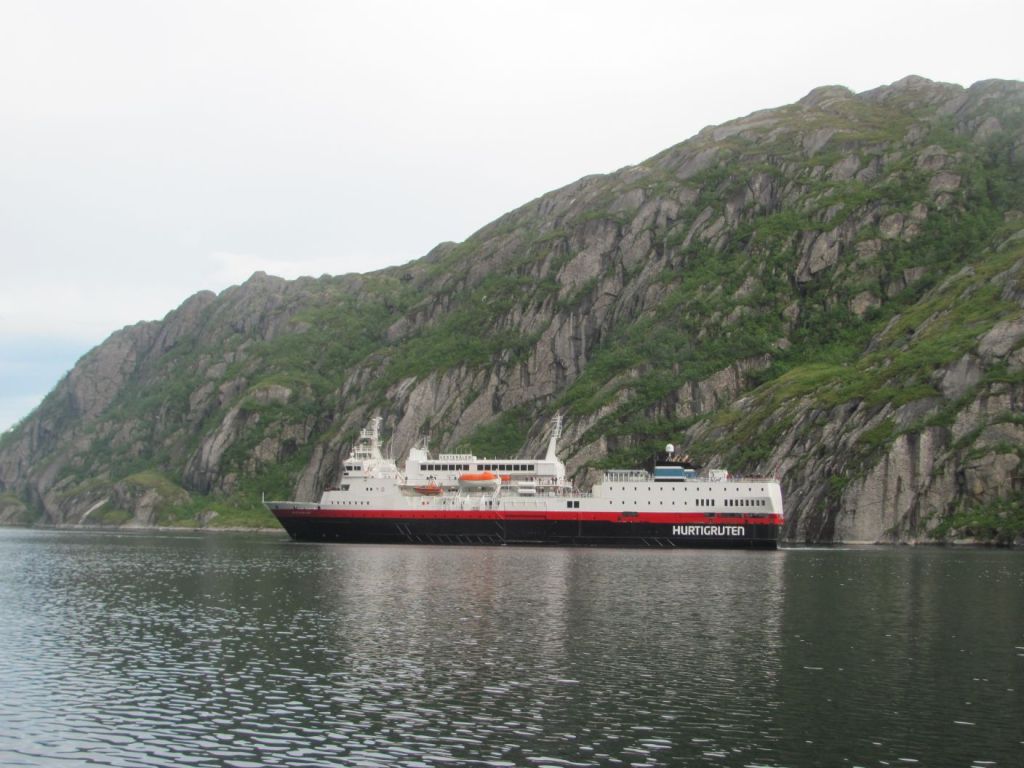
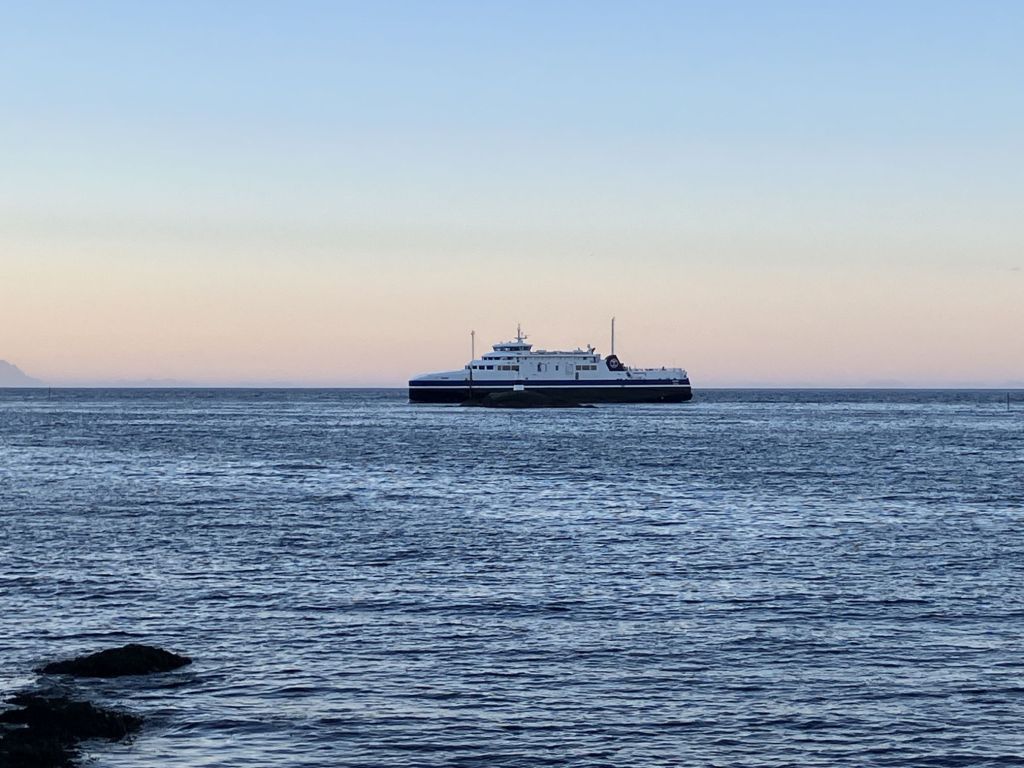
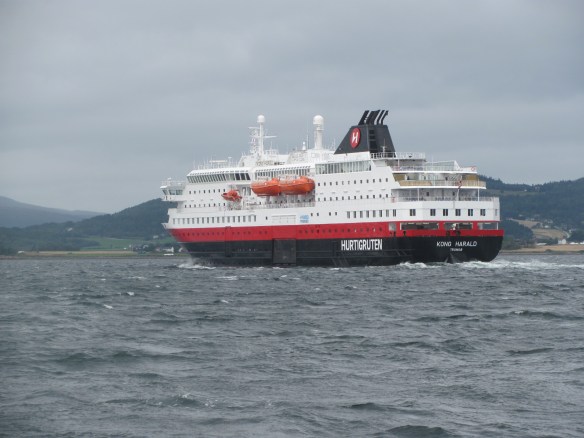
The Hurtigruten is Norway’s coastal shipping line.

A Hurtigruten ship.

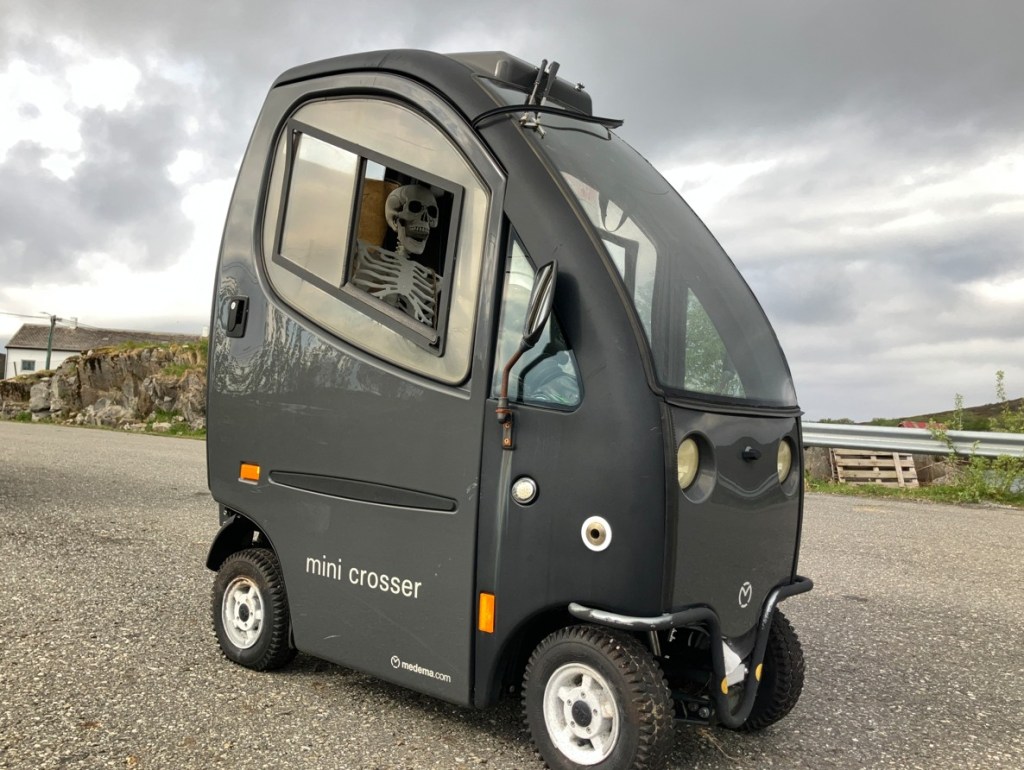
The First Mate buys some fresh vegetables, and we walk down to the ferry quay, on the other side of small isthmus to where Ruby Tuesday is moored. A mobility scooter is waiting. A skeleton is sitting inside, with the words Jeg venter på ferger painted on the back – ‘I am waiting for the ferry’.

“Waiting for the ferry”.

“The ferry must be late”, says the First Mate. “It looks like he has been waiting for a while. I am glad that we’ve got our own boat.”

Strong winds arrive overnight, and we delay our departure the next morning until after lunch, when they are forecast to ease. But they don’t seem to. We decide to leave anyway, but the strong winds pin us against the dock, and it is difficult to manoeuvre ourselves away from it. Somehow we manage it, then just as we clear the island, the wind drops completely!

We put the sails up, and manage the stately speed of 2½ knots.

“You would hardly believe that it was so windy just half an hour ago”, I grumble.

“Never mind”, says the First Mate. “It is only a matter of time before it comes back again.”

She is right of course, but it is quite a long time. As we round the next island of Fugløya two hours later, the wind picks up, and we sail along on a pleasant beam reach.

“See, I told you”, says the First Mate. “You just need to be patient.”

We reach the town of Bodø. Andy, Anne and Rick in Amalia have arrived a couple of days earlier. Just as we tie up, the heavens open, and the rain pours down. We huddle in the cabin and cook dinner. Rivulets of water run down the windows. It’s like being in the monsoon again.

Bodø (from Wikipedia (Eichmann)).

I pick up the guide book and read about Bodø. It was granted town status in 1816, and became a municipality in 1838. It is an important transport hub for northern Norway, being the northern rail terminus for the western railway line, which connects with many bus lines and ferry routes. It was even voted as one of the European Capitals of Culture in 2024. Its most well-known historical event seems to have been the ‘Bodø Affair’ in the early 1800s.

“Never heard of it”, says the First Mate. “Sounds like a spy scandal.”

“Not quite”, I say, reading on. “Although it was an international incident. Apparently there was a British company then that was trading illegally in Bodø. Norwegian officials seized a large amount of the illegal goods, but unfortunately for Norway, the country’s foreign affairs were handled by Sweden due to the dual monarchy system both countries were in. The Swedish Foreign Ministry decided to compensate the British company for the seized goods using Norwegian funds. This didn’t go down too well with the Norwegians, and sowed the seeds of distrust between the two countries until this day.”

“I don’t blame them”, sniffs the First Mate. “I would feel a bit miffed about it too.”

Eventually the rain stops. There is a knock on the side of Ruby Tuesday. It’s Andy, Anne and Rick. They’ve been to a concert in the Cultural Centre.

“It was absolutely brilliant”, says Andy. “It was ‘Beyond Haydn’ by the Arctic Philharmonic Orchestra. It’s a pity you hadn’t arrived earlier. I am sure that you would have enjoyed it.”

“You’ll need to get your shopping done tomorrow morning”, says Anne. “Everything is closed from mid-day onwards. It’s Pinse on Sunday, and the Monday is a holiday also. Nothing is open. Even the buses aren’t running.”

Pinse is called Whit Sunday in English, and is to celebrate the descent of the Holy Spirit to the Apostles. It is much less significant as a religious festival in Norway than it once was – instead, most Norwegians take it as a long weekend, and disappear off to their cottages in the mountains, boating, hiking, or visiting family.

We do our shopping the next morning. The rain returns, and we spend the afternoon catching up with things that have accumulated.

The next day, the rain eases. We decide to explore the town with Andy and Anne. Yellow flags are everywhere. Everything is closed except for a small food market doing a brisk business in one of the squares.

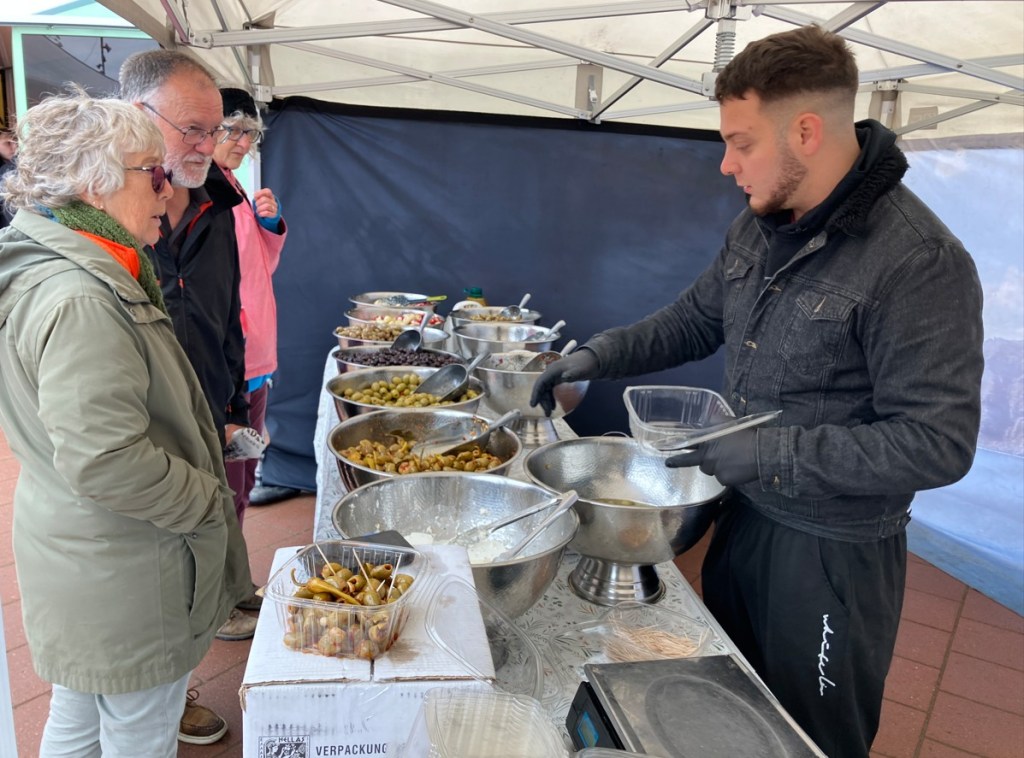
“I’ve got to get some of these garlic olives”, says the First Mate. “They just smell so good.”

“It’s this brown cheese for me”, says Andy. “Traditional Norwegian cheese. A little bit sweet, but very tasty though.”

Trying the olives.

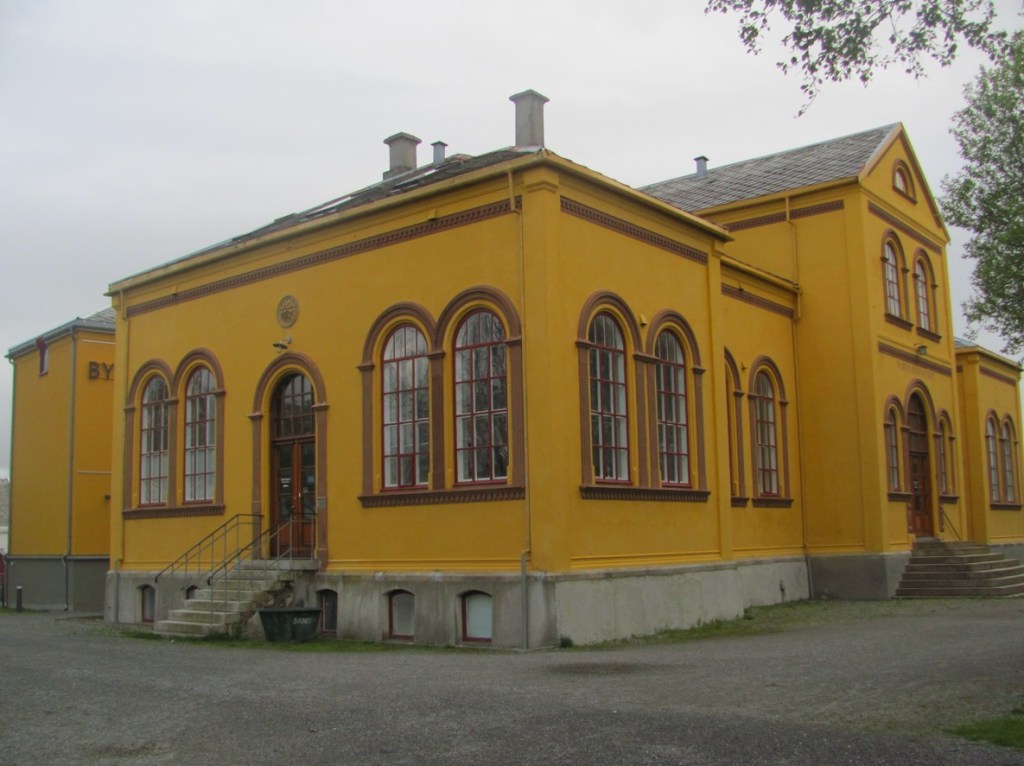
“Google says that the City Museum is open, even on Whit Sunday”, I say. “I have my doubts, but let’s go and see if it is.”

It’s not. We walk around the building to see if one of the doors might be open, but they are resolutely closed.

The City Museum looking very closed.

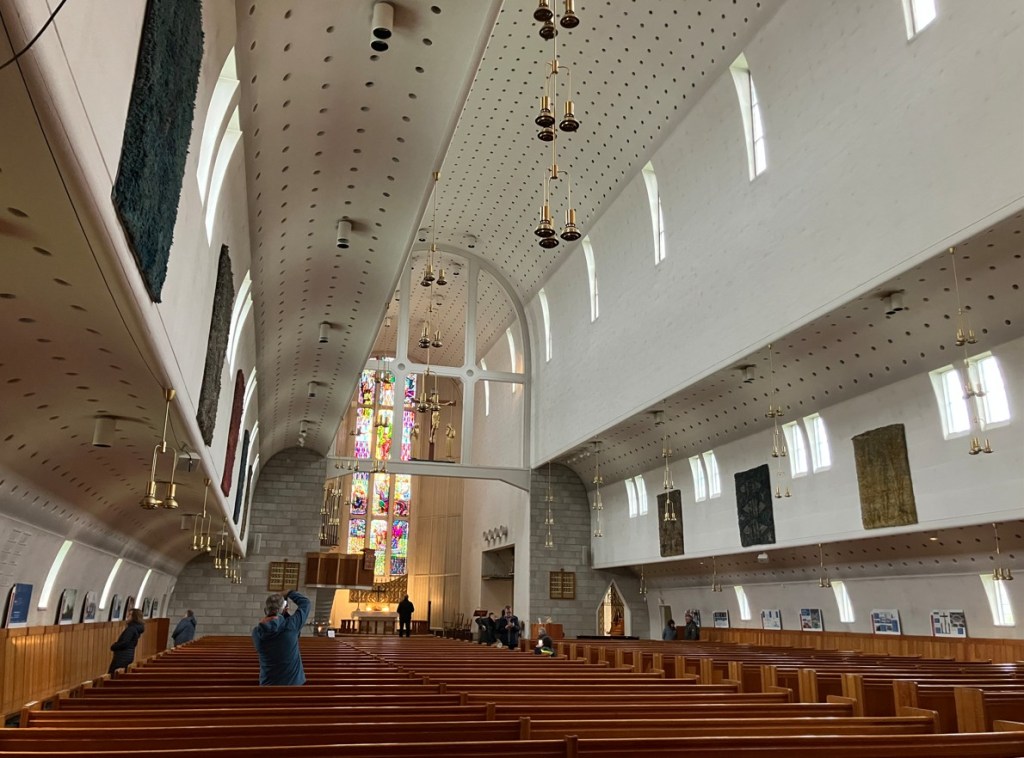
The town cathedral is not far though, and it is open.

“Yes, you can come in and have a look around”, says an earnest bearded young man. “But we are having a service soon, so we are closing in 15 minutes.”

It’s enough to have a quick look at the pictures around the walls detailing the history of the church. The original church was built in 1888, but was destroyed in 1940 by intensive bombing during WW2. The current one was built in 1956. There’s an impressive stained glass window at the end.

Bodø Cathedral.

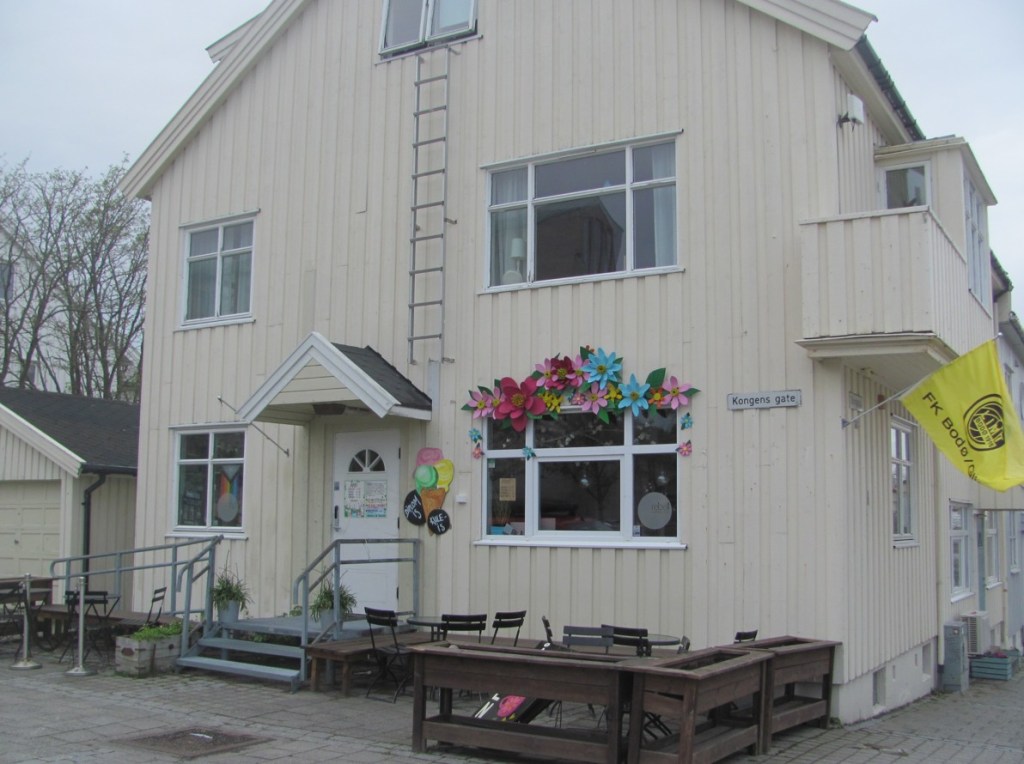
“Let’s go and have a coffee”, says the First Mate, after we are rounded up by the earnest young man. “I saw a nice café called Kaffee und Kunst just opposite. ‘Coffee and Art’. It sounds interesting.”

Kaffee und Kunst.

It’s warm and cosy inside, and the coffee and cakes are delicious. Paintings of various Bodø features adorn the walls. A group of young women are knitting furiously in one corner.

“We come here often and do our knitting and have a chat”, one of the women tells Anne. “It’s a way to catch up with all the news and we produce something at the end.”

We order another coffee each.

“I am awfully sorry”, says the woman serving us, apologetically. She is the owner. “It’s just that I have to close soon, as there is a football match on this afternoon. FK Bodø versus SK Brann. Most of the town are going. I support FK Bodø, and many of my customers do too, so I have to be there. You probably noticed the yellow FK Bodø flag flying outside the café. But you can certainly have a refill. Just drink it quickly!”

We learn later that FK Bodø won by 3-1 against SK Brann.