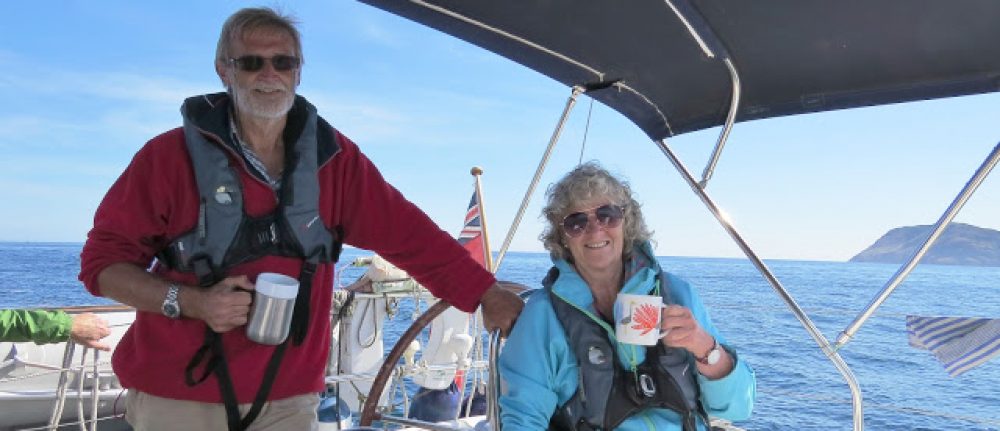
“Waiter! Bring me a glass of red wine”, says the First Mate.
“Certainly, your Royal Highness”, I say. “And would the Shiraz be to your taste, ma’am?”
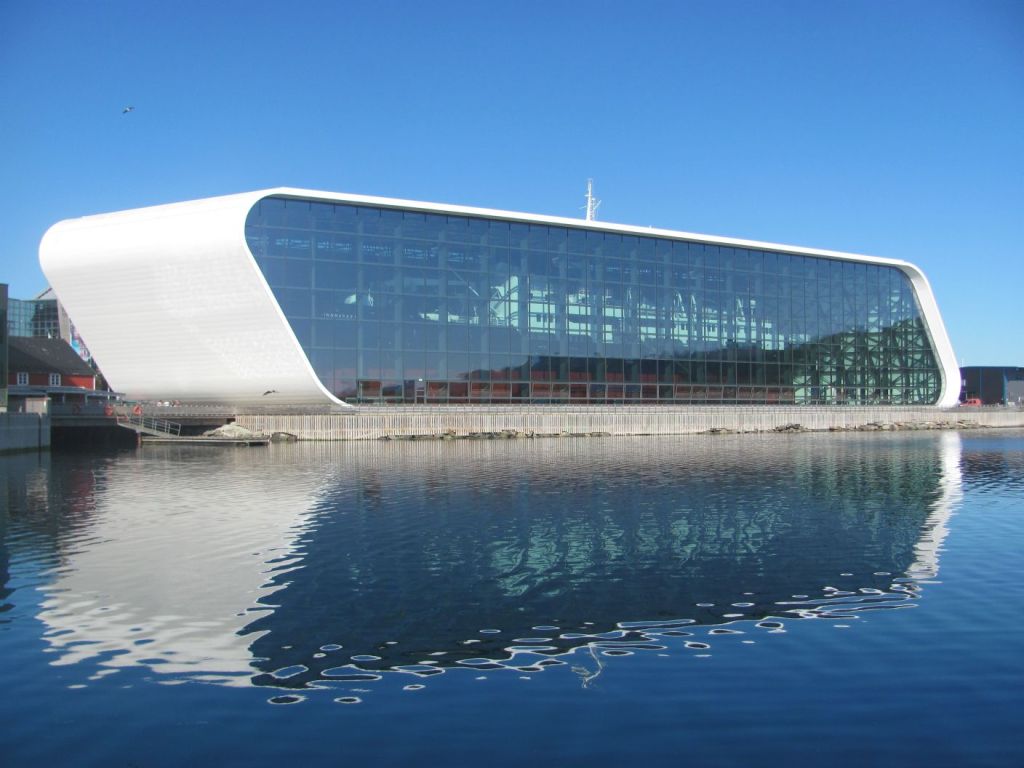
We are revelling in the luxury of the First Class lounge of the MS Finnmarken, one of the ships of the Hurtigruten line. Or at least it was. Nowadays, it is the centrepiece of the Hurtigruten Museum in Stokmarknes, covered by a giant glass enclosure to keep it safe from the elements.
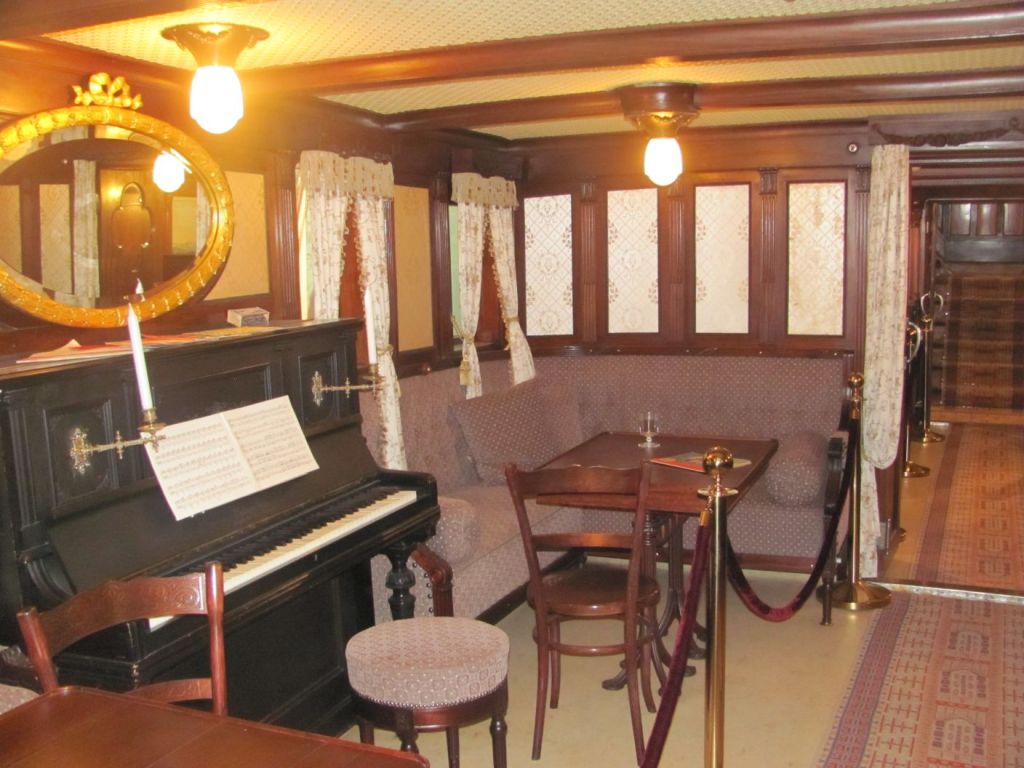
“It’s really interesting to learn how it all started here in Stokmarknes”, says her Royal Highness. “Particularly as we keep seeing the Hurtigruten ships on our voyages. They’re quite iconic.”
They are indeed. We learn that steamship services were started by the government in 1826 to carry passengers, mail and freight up and down the coast, but these were slow, stopped at too many places, and didn’t sail at night. So in the 1880s, the government called for tenders to provide quicker services between Trondheim and Hammerfest with faster ships, stopping at fewer ports, and by sailing at night. But none of the local shipping companies were interested at first, as they considered sailing at night too dangerous.
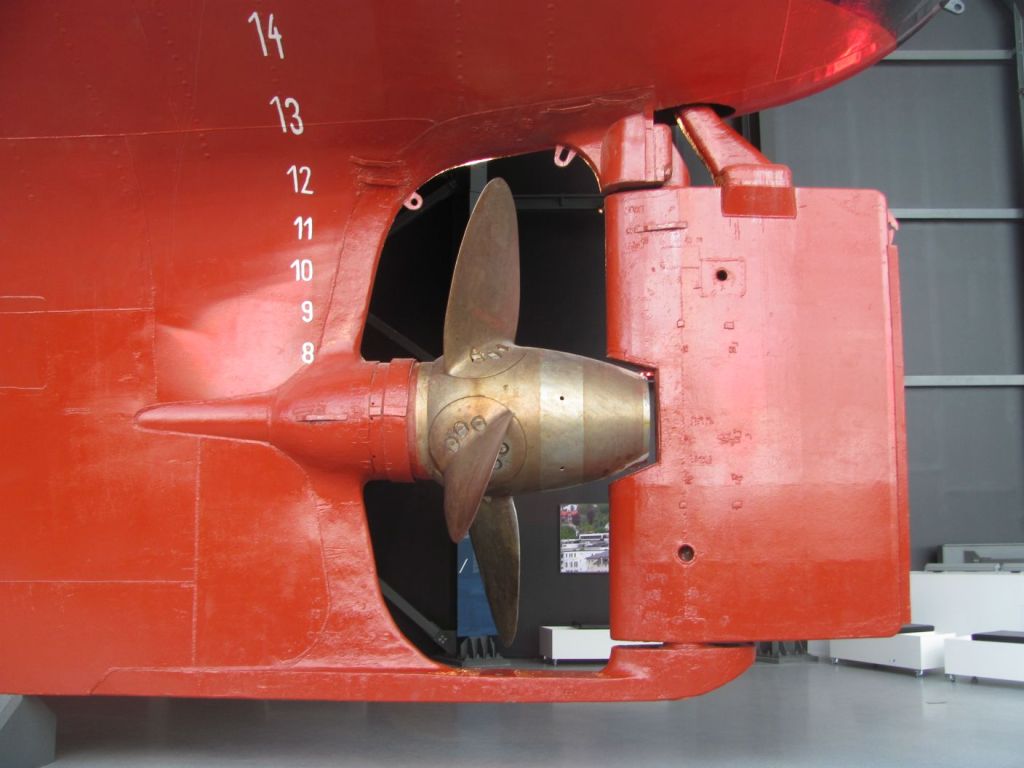
“Then one of the smaller companies, the Vesterálen Steamship Company, put in a bid which was accepted”, one of the displays tells us. “They had already made detailed sailing instructions of the unknown waters for themselves, and had less fear of sailing at night. And so in 1893 the Hurtigruten, or Express Route, was born. Mail delivery times fell from five months to seven days.”
The Hurtigruten ships helped open up the north of Norway to the rest of the country and the world. As late as the 1940s, most ports north of Trondheim were inaccessible by road. However, as roads were built and air services established, the need for the Hurtigruten declined. To survive, the company turned its emphasis in the 1960s to tourism, offering people a unique experience in comfort.
“I can see why the locals refer to it as ‘the ship in a bottle’”, says her Royal Highness, as we leave.
The next morning, we set sail for the next large town, Sortland. The winds are in our favour, and we have an exhilarating sail.
“Several people say that it gets a bit rolly in the main marina”, says the First Mate, studying the harbour guide as we approach. “Because of the ferry coming and going. But I’ve found another nice looking marina to the south of the town. It’s quite small, but they do have a guest pontoon. We could try that.”
We inch our way through the narrow entrance. It’s only a couple of metres on each side and 1.5 metres of water under the keel. But it’s enough, and we find a place on the hammerhead on the end of a pontoon to tie up. The harbour master comes over. We invite him on board for a coffee.
“I am a retired police superintendent”, he tells us. “I worked on cases all over this area. Mostly drugs-related. There’s a lot of it here. My name is Leif, by the way. As in Leif Eriksson, the first European to discover America.”
We talk about some of the Scandi-noir crime series that we have seen, and the fondness that Norwegians have for vanishing to their cottages at Easter time with a pile of crime novels to read. I mention that I had read somewhere the reason for it was because Norway is such a peaceful and crime-free country that people like to read about it in fiction.
He laughs. “I don’t really think that Norway is crime-free”, he says, taking another cinnamon roll. ”It’s just as bad as anywhere else. We’re just good at writing about it against the background of long nights and snowbound cottages, and making dark moody films about it.”
“But I am retired now”, he continues, “And I do photography. It’s always been a hobby of mine, but now I have time, I can do it properly. Mostly on the island of Andøya. It’s absolutely gorgeous there.”
“Yes, it is on our list”, I say. “We are planning to visit it after we leave here.”
“Tell you what”, he says suddenly. “I am not doing anything this afternoon. I would be happy to take you around Andøya and show you the best places that most tourists never see. It’s about a hundred kilometres up there and slightly shorter back. What about it?”
We are somewhat taken aback. A perfect stranger whom we had only met half-an-hour ago at the most, offering to take us on a 200 km round trip. And it was already mid-afternoon. Could this be for real?
We accept.
“You’ll notice that a lot of the buildings and houses in Sortland are painted in different shades of blue”, says Leif as we set off. “One of our artists had the idea of painting everything blue to symbolise the sea and sky. Of course, there was a lot of opposition from different townspeople, but somehow he convinced the local council to do it. Slowly local businesses and many residents grew to like it, and now it is quite a tourist attraction.”
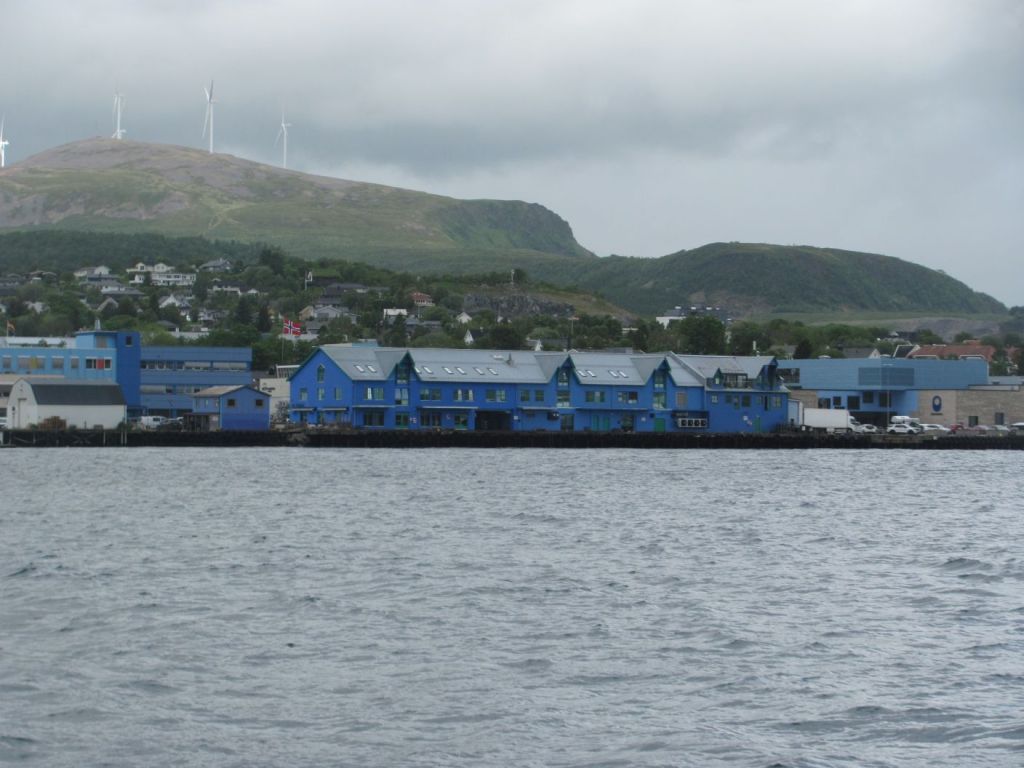
I quite like it, I think to myself. It gives it a certain Je ne sais quoi.
“I sort of look on Andøya as my home even though I don’t live here”, Leif says, as we cross the humped bridge over the Risøysundet strait on to the island. “I come up a couple of times a week and know every nook and cranny. The landscape is stunning, and the light is different every time I come, so there is always something new to see. We’ll take the western road up as it is so much more wild, and come back down the eastern road.”
He’s right. The western road is wedged between the sparkling sea on the left, and high jagged mountains to the right that run the length of the island. We drive past stony beaches, their stones worn smooth by millennia of wave action, and past bogs and estuaries, the sulphurous smell of decaying seaweed assailing our nostrils. Far off to the west, we see the hazy outline of the island of Langøya, a white cloud hovering over it like a plume of smoke. It’s primeval.
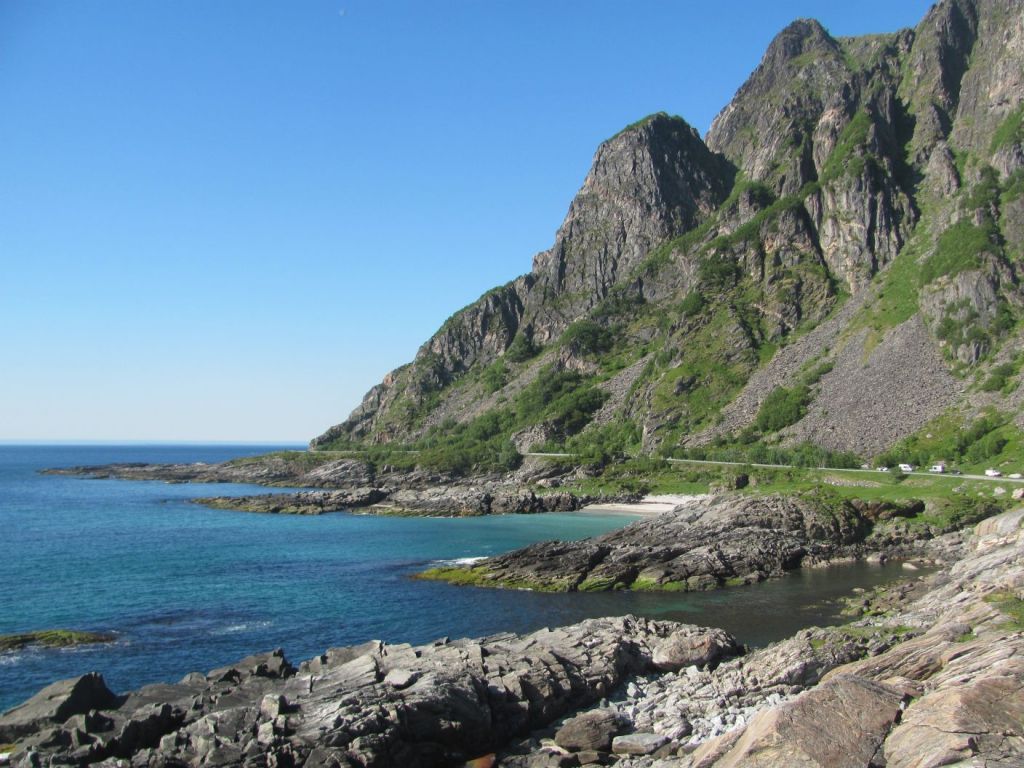
Leif stops the car. “This is one of my favourite stops”, he says. “I’ve taken a lot of my photos around here. Shall we walk down to the beach?”
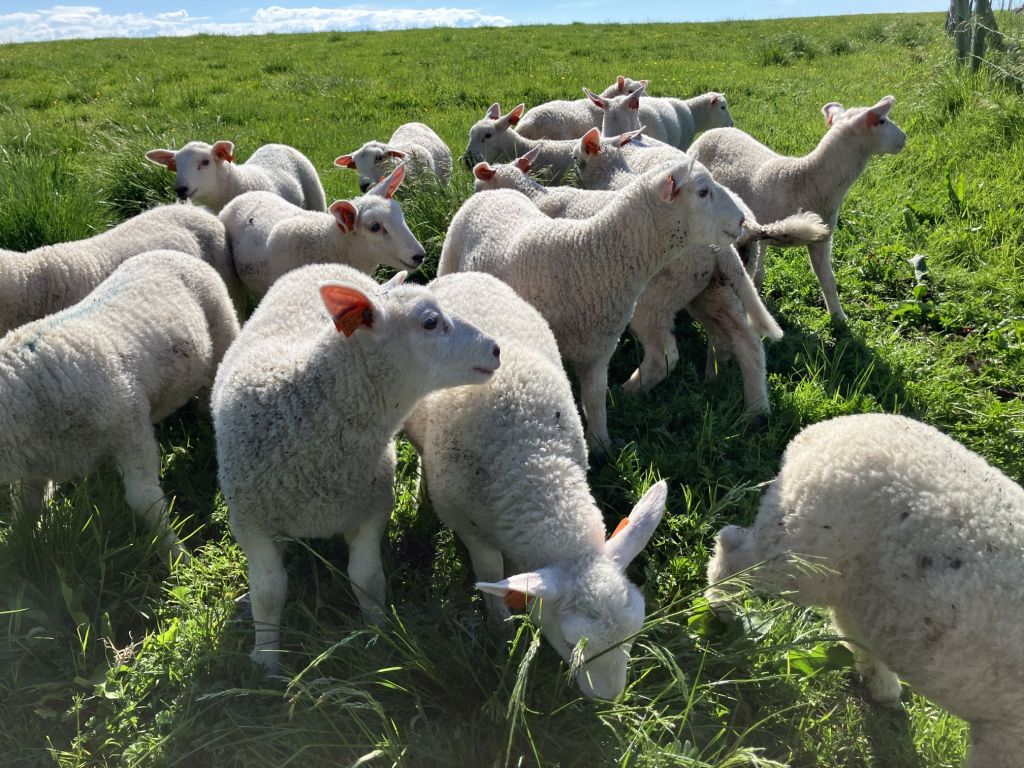
We follow a fence-line and cross a small stream. Immediately we are besieged by a flock of lambs, clamouring for attention, totally unafraid of us. We pet them, then try and move on. They follow us. Clearly they are familiar with humans, and we surmise that they have been weaned and missing their mothers, or orphans reared by hand-feeding from a bottle. Eventually they give up, and run back to where we first met them.
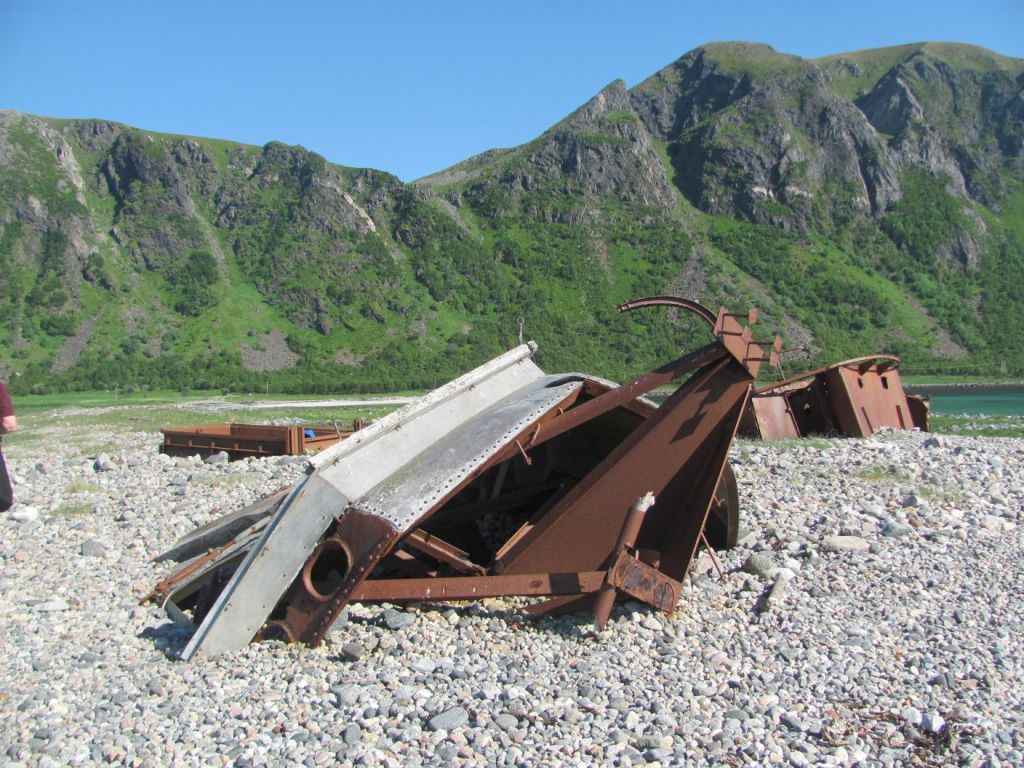
We reach a stony spit jutting out into the sea. On the stones lies the rusting wreckage of a fishing trawler, its parts strewn over the spit.
“There was a fierce storm here several years back”, Leif tells us. “This trawler was driven aground and broke up. Luckily no one was drowned. But the boat was destroyed.”
On the way back to the car, we pass a small backwater cut off by the low tide, and stop to watch oyster-catchers shrieking their high-pitched calls, and guillemots feeding in the shallows. A flock of barnacle geese flies overhead.
“Isn’t it beautiful?”, sighs Leif.
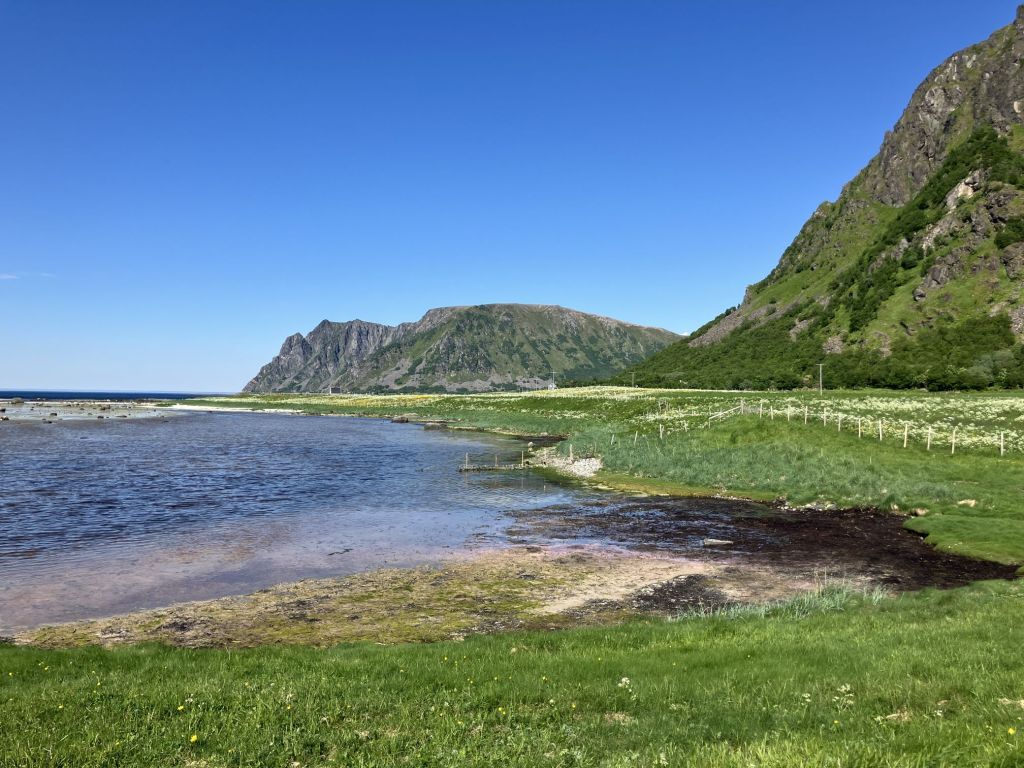
I wonder about this unusual man who has befriended two strangers. He’s not what I imagined a police superintendent to be like. Part of me envies him for having found a part of the world that is so obviously home to him, and who sees beauty in it wherever he looks. And captures it through his photography for others to enjoy. What makes him tick? His job must have made him see the seedier side of life, perhaps he needs something now to balance that.
“I was married”, he tells us back in the car. “But am now divorced. I have a daughter who lives in Oslo. She loves coming back to Andøya to visit. But she wouldn’t live here. She likes the activity of the big city too much. That’s the problem up here – all the young people leave because the opportunities are so much better in the cities. Now, there’s something I want to show you here.”
He pulls up to the side of the road. We walk down a short path to an outcrop of rock.
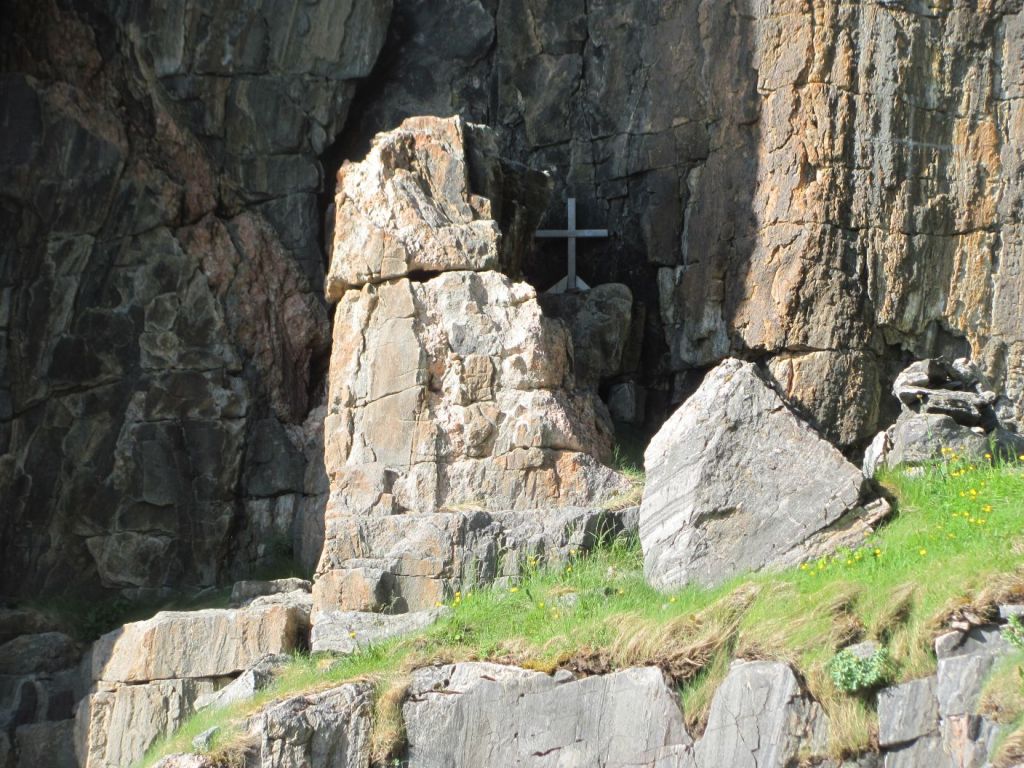
“It’s a small chapel”, he explains, pointing to a crucifix mounted on a ledge on the rock. “With a natural pulpit and altar. Bukkekjerka. It means Goat Chapel in Norwegian. It was originally a sacred site for the Sámi people who practised religious rituals here. They called it Bohkegeargi. More recently it has been used for Christian services. People even get married here. Look, there’s a shape of a heart in one of these rocks.”
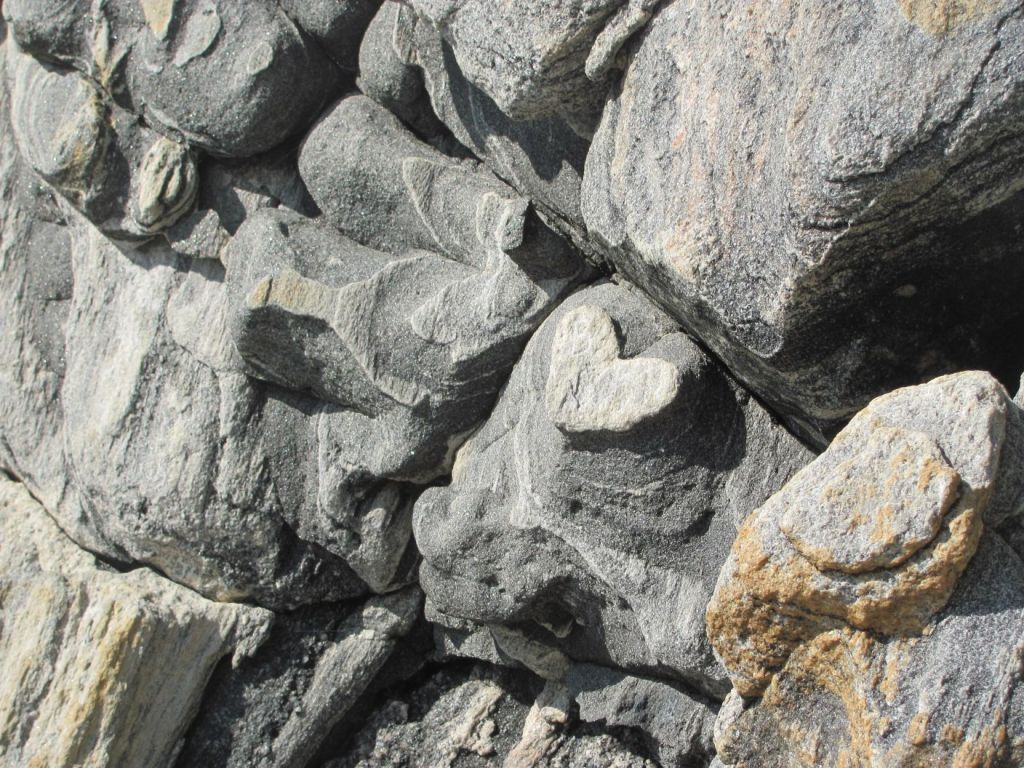
I sit on a rock and think of the ancient Sámi worshipping their gods in this sacred place – Veralden-radien, the Ruler of the Universe and Sustainer of Life, Afruvvá, the Sea Goddess, Warner of impending storms, or Beaivi, the Sun God who brought warmth, light and new life. What has happened to all those gods now that the Sámi were converted to Christianity in the 1200s?
“Many Sámi kept their own gods even after they converted the Christianity”, says Leif. “Their thinking was that the Christian God only provided for them in the afterlife, whereas their gods looked after them while they were still living.”
It’s an interesting point of view, and somehow logical.
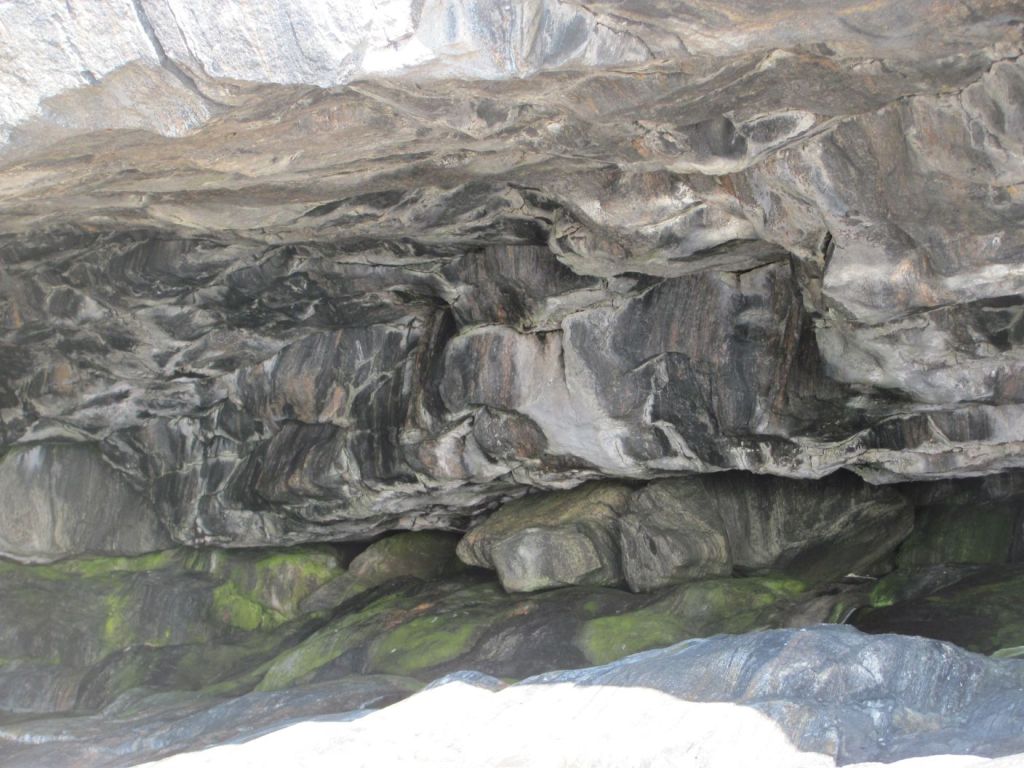
Further on, we pass the Andøya Space Centre.
“The first rocket was launched from here in 1962”, Leif tells us. “Not long after the Russian Sputniks. It is only used for launching small earth observation satellites for peaceful purposes. Nevertheless, back in 1995 one of the launches nearly caused a nuclear war as the Russians thought it was a nuclear missile launched from an American submarine. They went on to high alert, but then they realised it wasn’t heading towards Russia. Apparently they had been told that it was happening, but the message got lost in their bureaucracy.”
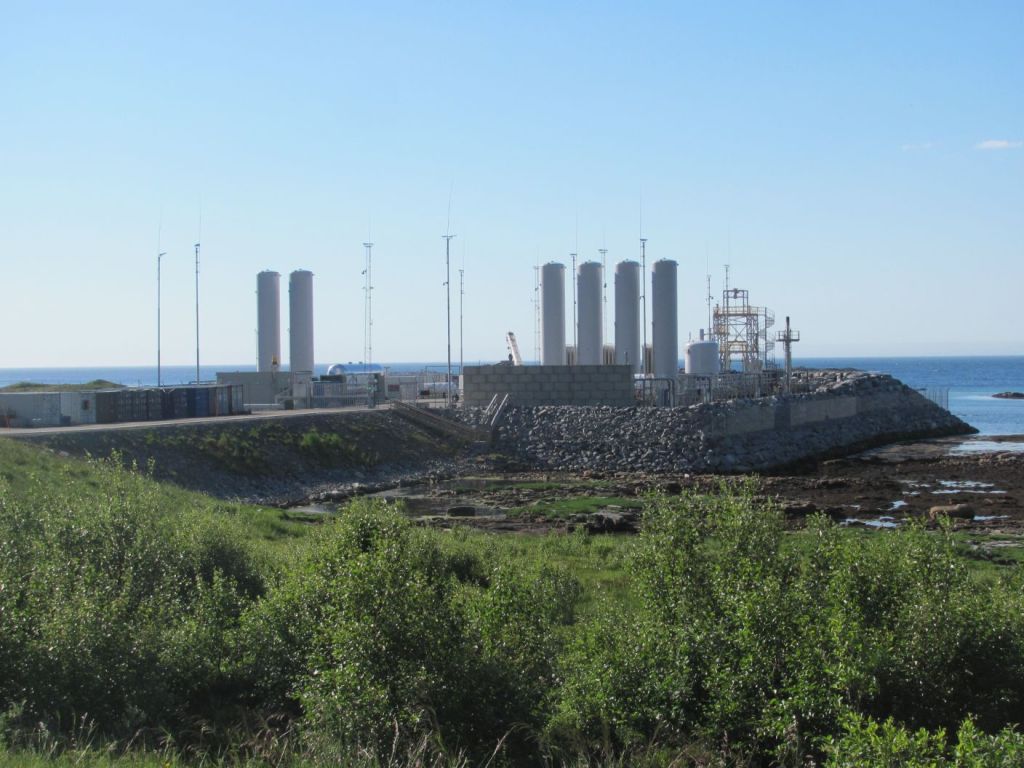
We eventually reach Andenes, a sprawling town of mostly military style housing. On the point is the iconic lighthouse visible for miles around.
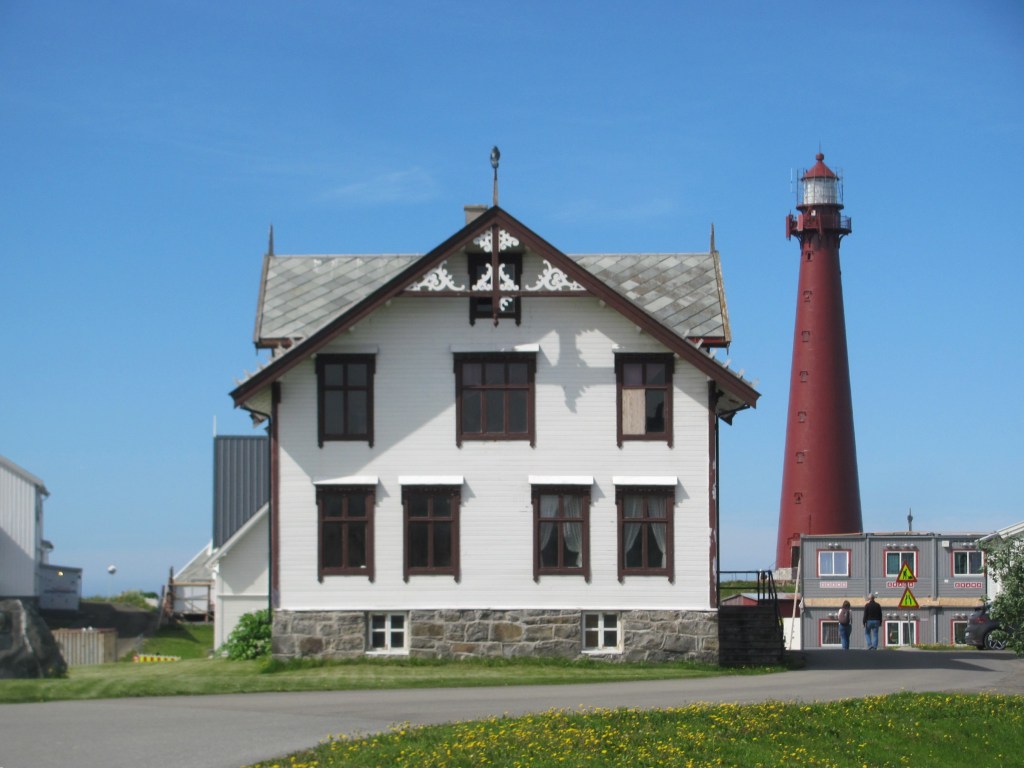
“I’m starting to get hungry”, says the First Mate. “Look, here is a pizzeria. Let’s get something to eat there.”
We order and sit down.
“Did you hear the story of the Chinese spy?”, Leif asks, as we chomp into our pizza slices.
“No”, we say. “What was that all about?”
“Well, just a month ago, they arrested a Chinese woman and charged her with trying to establish a satellite data receiving station near the Spaceport and military facilities”, he answers. “Apparently 22 tons of electronic equipment capable of downloading data from polar-orbiting satellites was imported and installed by a Norwegian front company. According to the papers, the woman bought a property nearby where the equipment was installed. She’s in prison at the moment, awaiting trial. It seems as though some Norwegians are also under suspicion.”
“It doesn’t sound very professional”, I say, spearing the last mushroom with my fork. “Importing 22 tons of electronic gear near to a military area and rocket launch site was bound to raise suspicions, surely?”
“Yes, you would think so, wouldn’t you?”, Leif says, “but that’s how it was reported. We are just waiting now to see what comes out of the trial.”
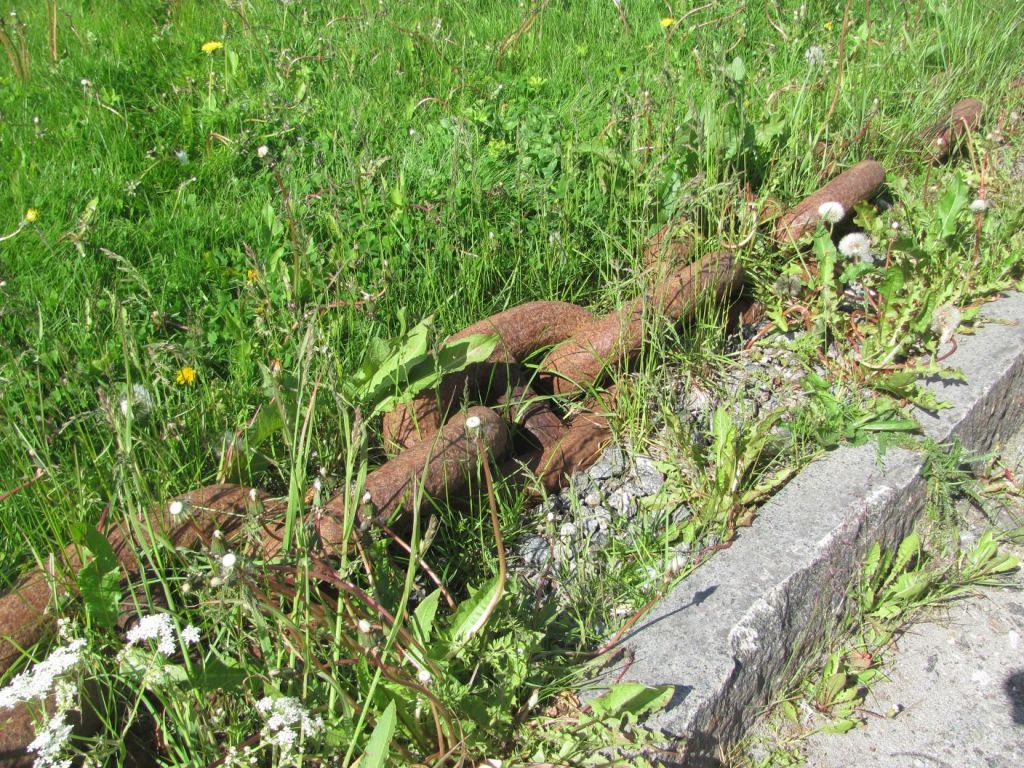
As we return to the car, we pass a rusty old anchor chain lying in the grass.
“That’s part of the anchor chain from the Tirpitz”, says Leif. “You know, the German battleship that was eventually sunk in 1944 near Tromsø. I have got one of the links at home.”
“What a kind man”, says the First Mate when we are back at the boat that evening. “It was amazing how he wanted to show us his world. And seeing it from land with a local gives a very different perspective than from the sea.”
In the morning, we decide to stick to our plan of sailing to Andenes even though we had just been there the day before.
“It’s the easiest opportunity we’ll get to sail outside the 12 nautical mile limit”, I say. “That way we can reset the clock on the time we are allowed to keep Ruby Tuesday in Norway without paying duty. Don’t you remember that the police in Bergen told us we can do that?”
Two years in the maximum time we can import the boat on a temporary permit. However, sailing outside the limit, then back in again, counts as an export/import event thereby resetting the clock, giving ourselves another two years if we need it. We have to provide documentary proof that we have been outside the limit, so we photograph the GPS position, the chart-plotters, and the computer and tablet tracks.
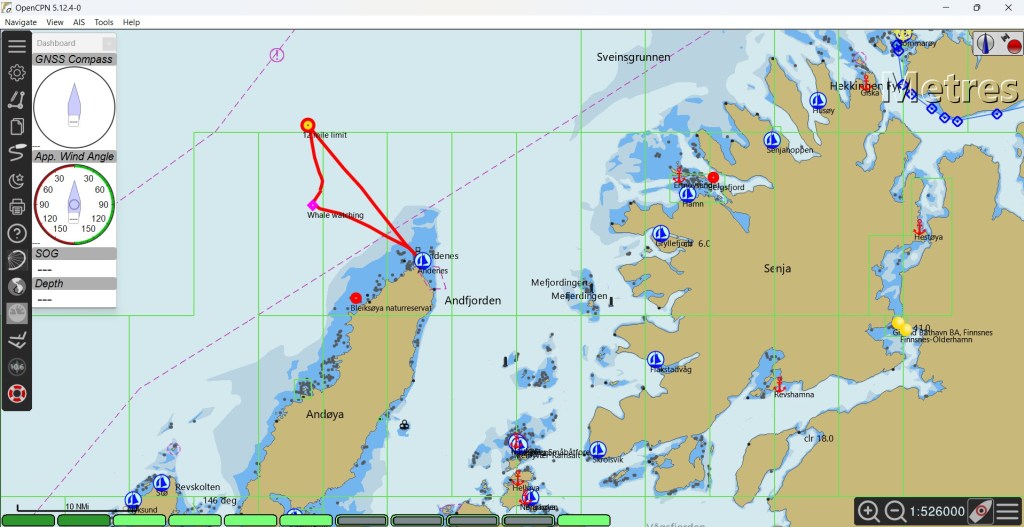
“Phew, I am glad that’s over”, says the First Mate, a slightly greenish tinge in her face caused by the swell. “Let’s go and see if we can see any whales.”
To the west of Andenes is the Bleikdjupet, a vast underwater canyon that plunges to more than 1000 m in depth. As the currents come in from the Atlantic, the sudden change in depth causes an upwelling of plankton, the favourite food of whales. All sorts of types gather here to feed.
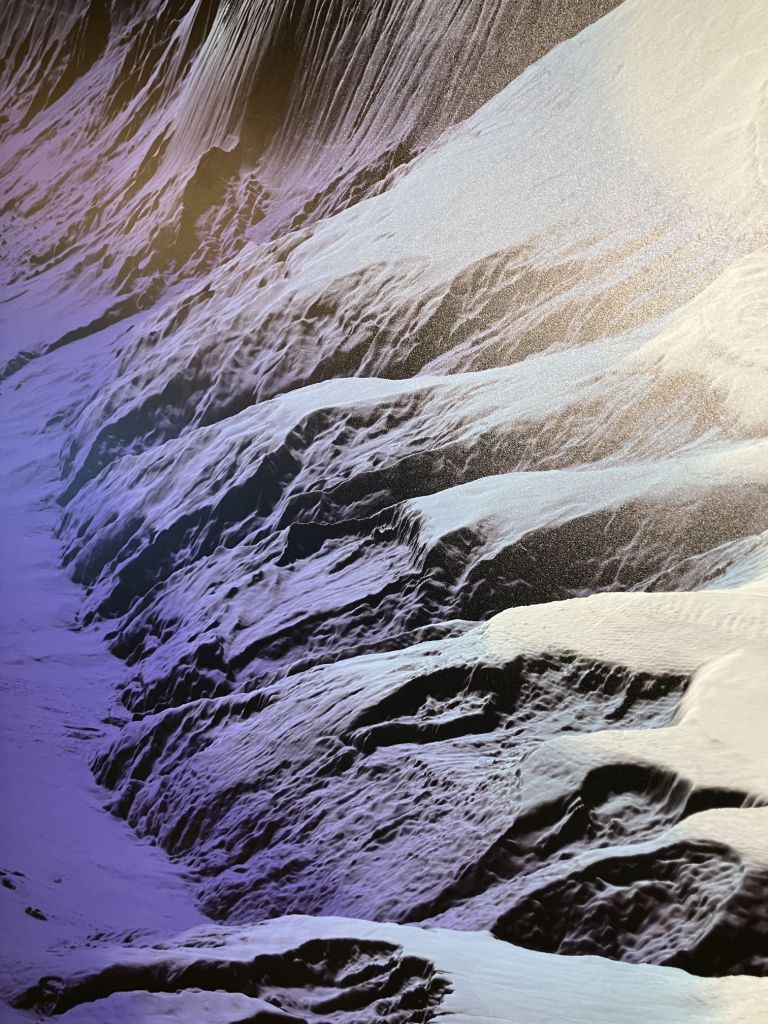
We sail to the supposed hotspot and circle slowly for nearly two hours. Unfortunately, someone has forgotten to send the memo to the whales that we are there, and all we see is one minke whale. No sperm whales, orca, dolphins, or porpoises today.
“Well, at least a minke whale is not to be sniffed at”, I say. “It was exciting when we saw those in Scotland.”


hi Robin, loved the last few blogs describing our adventures with you and now your onward journey. Having been there with you I feel I have a much closer connection and understanding of the place.
there are so many interesting places to explore- brilliant!!
Uli
LikeLike
Thanks Uli. Yes, it was great to have you guys. As you say, too many interesting places to see and so little time …
LikeLike