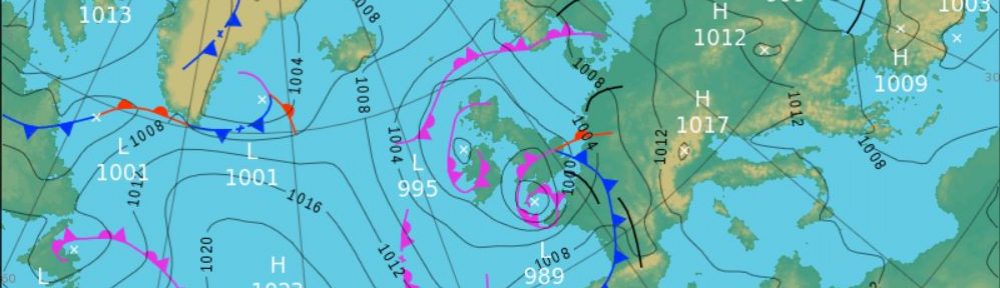
“Another twenty minutes and we would have made it”, says the First Mate. “As it is we are going to get drenched tying up.”
We are just arriving at the island of Myken. We have had a pleasant sail down from the Fleinvær islands, but for the last hour we could see the dark storm clouds gathering in the west. Now the heavens have opened.
“There’s another boat already there”, shouts the First Mate through the rain. “With a Canadian flag. We’ll have to go on the outside of the pontoon.”
It’s Harley and his family in their boat Prudence. We had heard of them last year when in Trondheim, but so far had not met them.
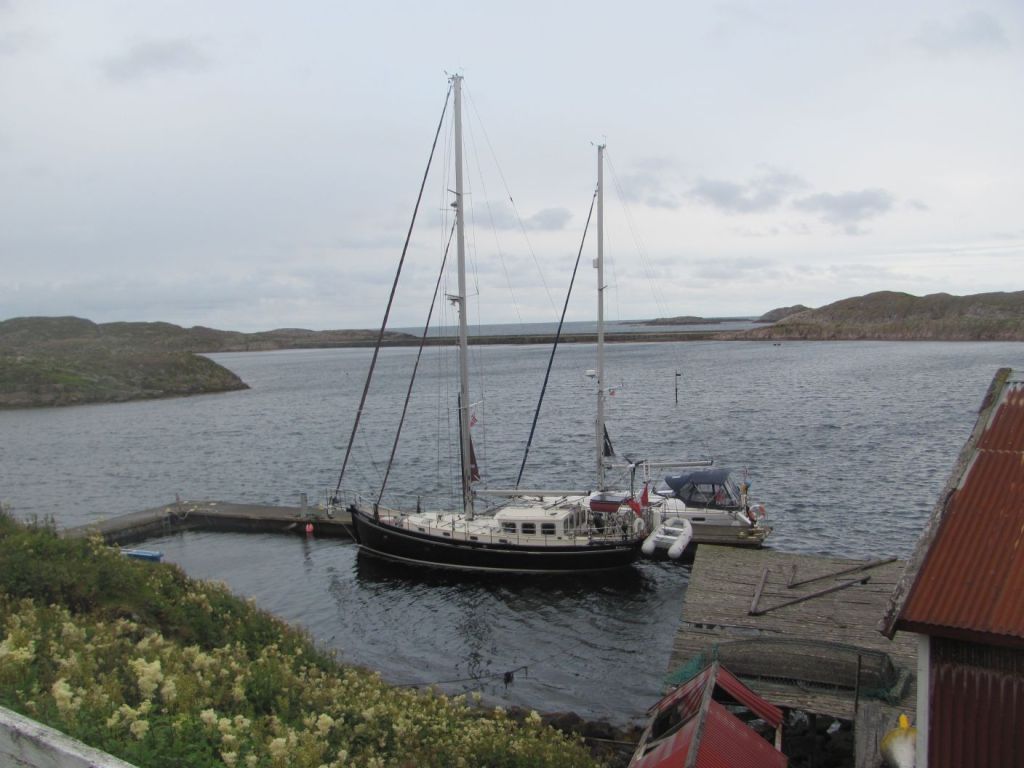
“We’ve been here a couple of days”, Harley says. “But we are moving on first thing in the morning to Træna. It’s a lovely little island here, though. You’ll enjoy it. They have a distillery that’s worth a visit. And a restaurant and a museum. Everyone is very friendly.”
When we awake in the morning, Prudence has gone. After breakfast, we explore the village. There is a coffee morning in the grocery store.
“We meet here every morning for a coffee and waffle, and to do our knitting”, says one woman. “We’re trying to get a quilt finished by Christmas time. Visitors are welcome too.”
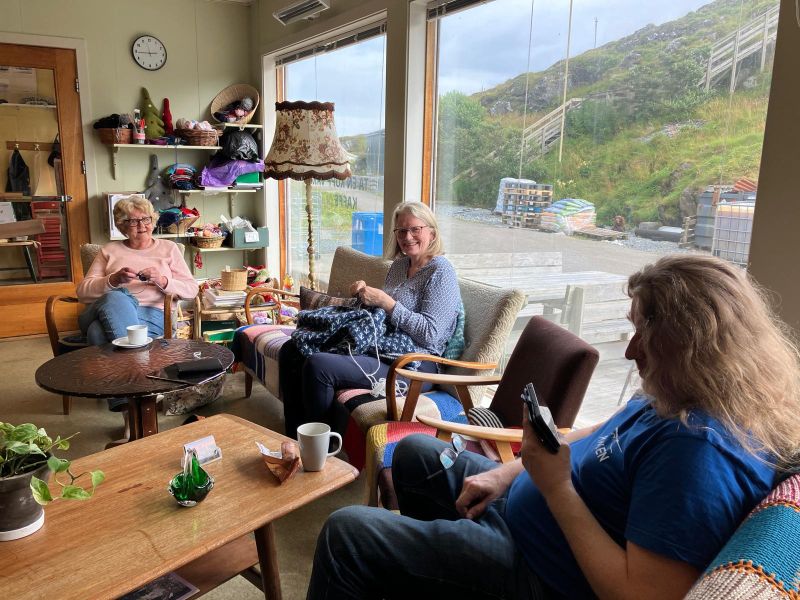
“There are only 16 permanent residents here now”, says another. “But a similar number of former residents who now live on the mainland still come every summer. And, of course, there are people like me that were born on the mainland, but who came here on holiday and loved it so much that they keep coming. I bought a small fishermen’s hut called a rorbu, and sell my glassware there.”
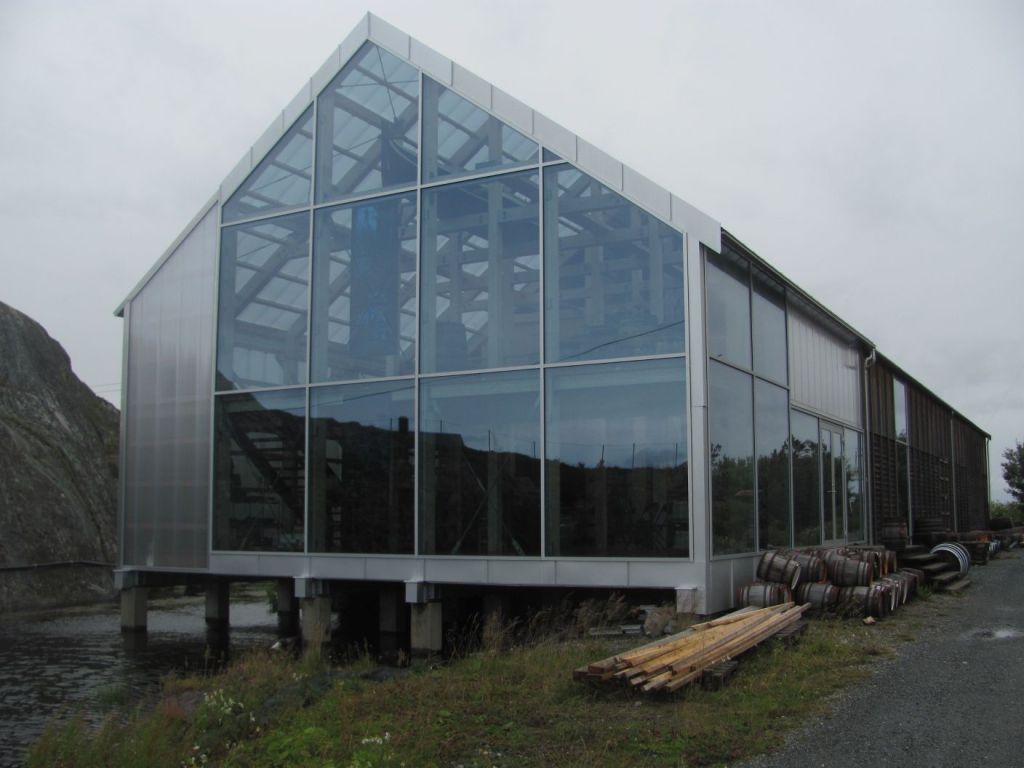
On the way back, we pass the distillery. At the other end of the village is the so-called ‘Distillery Cathedral’, a modern looking building where whisky tasting tours are offered.
In the afternoon, we visit the Gamla Butikken, the ‘Old Shoppe’, at the end of the village. It used to be the village store, and has been preserved just as it was when it closed in the 1960s. Rather than the customers serving themselves and paying at the end, they tell the shop keeper behind the counter what they want, and he or she will go and fetch it.
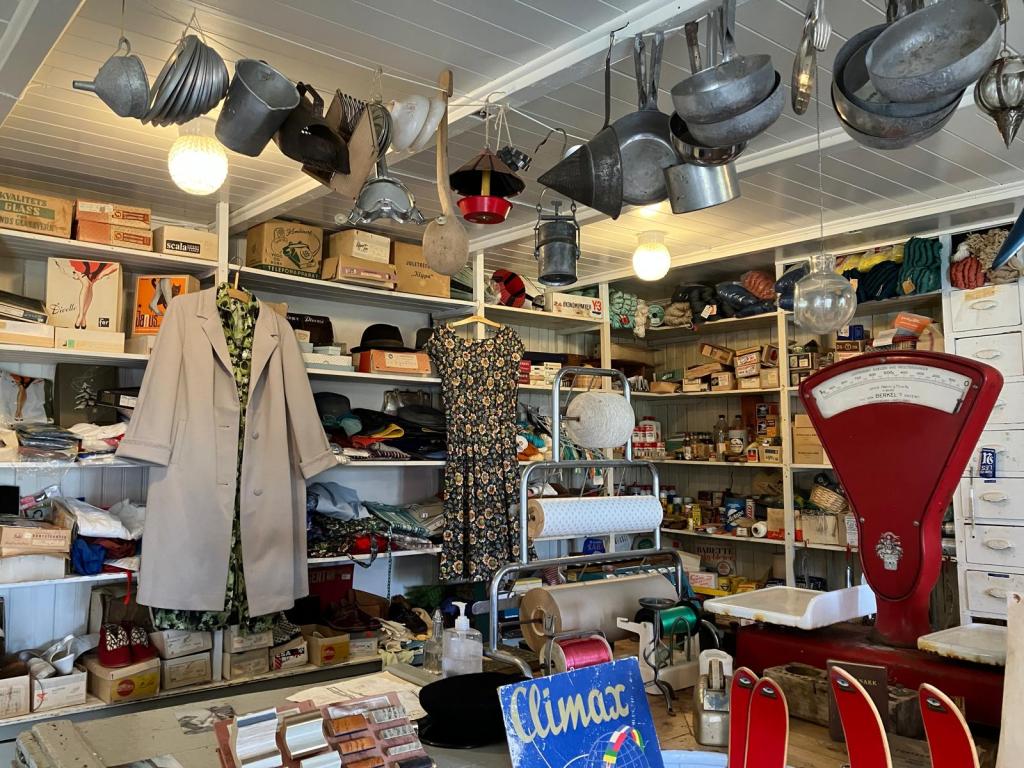
“It was our grandfather’s shop, and his father’s before that”, Hannah tells us. “It’s been in the family for generations. When our grandfather died, our grandmother left it just as it was and locked it up. It stayed that way for many years, but one time when I was here I thought that it might be a good idea to open it as a kind of museum so that visitors can see what it is like in the old days. My grandmother liked the idea. The problem was that the building was becoming more and more derelict and it would have soon needed to be pulled down. She saw this as a way of preserving it.”
Hannah was brought up on the island, and still spends summers here, but lives in Bodø during the winter.
“What was it like being brought up on the island?”, we ask.
“I loved it”, she says. “There were quite a lot of people living on the island in those days, and there were several children my own age. We had a lot of fun.
“But the population started declining in the 1970s”, says her brother, who has joined us. “The government’s policy at that time was to do away with all these remote communities with their traditional low paying occupations, and persuade people to move to the cities where they could get better jobs and contribute to the nation’s wealth.”
“What about your father?”, asks the First Mate. “Was he involved in the shop as well?”
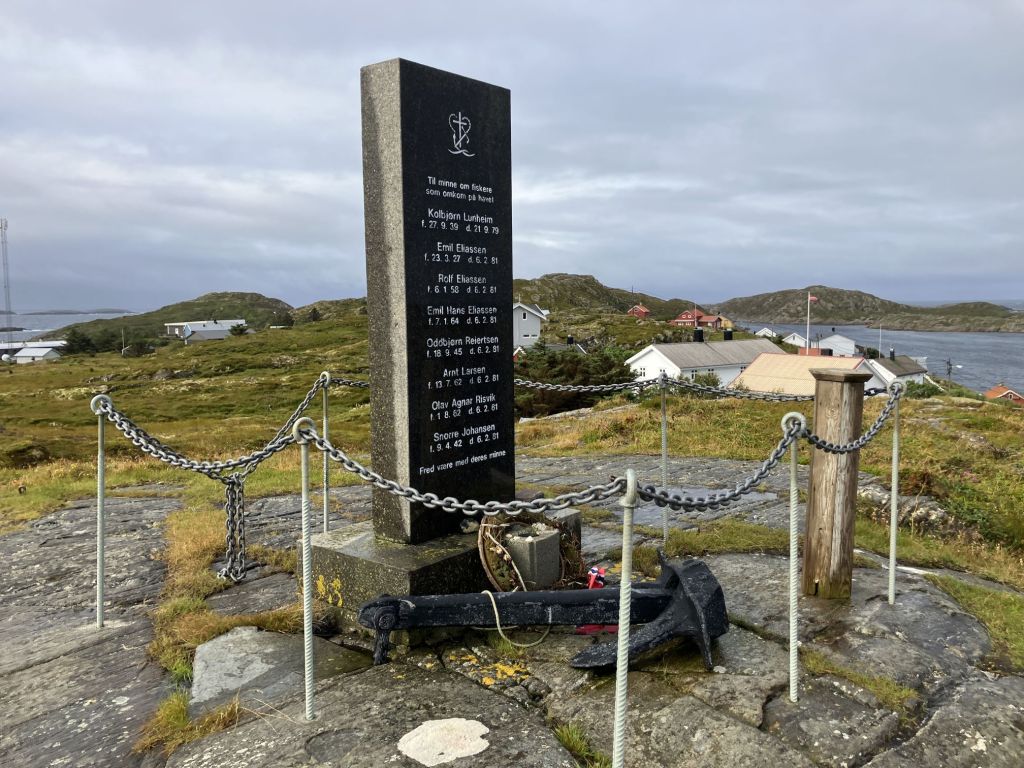
“No, he was a fisherman”, answers Hannah. “On a trawler. But he died while out fishing. Did you see the memorial in the middle of the village? He’s the one at the top. We don’t know the reason, but he had come off his watch at night, and was seen going downstairs to his cabin. But in the morning he was missing. His body was never found.”
“What happened?”, we ask.
“Well, it was presumed he had fallen overboard. But my brother here had a heart attack a few years ago, and we wonder if our father’s disappearance had possibly been something to do with his heart. Weak hearts can run in families, you know. But we’ll never really know for sure.”
“Who were the other names on the memorial?”, I ask.
“That was a boat that went down with all on board”, says Hannah’s brother. “A storm blew up, and they tried to make it back to safety, but they were too late. The storm caught them and the boat capsized. Not far from here. A father and his two sons and four others were lost. It was devastating for the whole community.”
“It just shows the perils of making a living from the sea”, says the First Mate after we leave. “I am not sure that I could have coped with it.”
—-
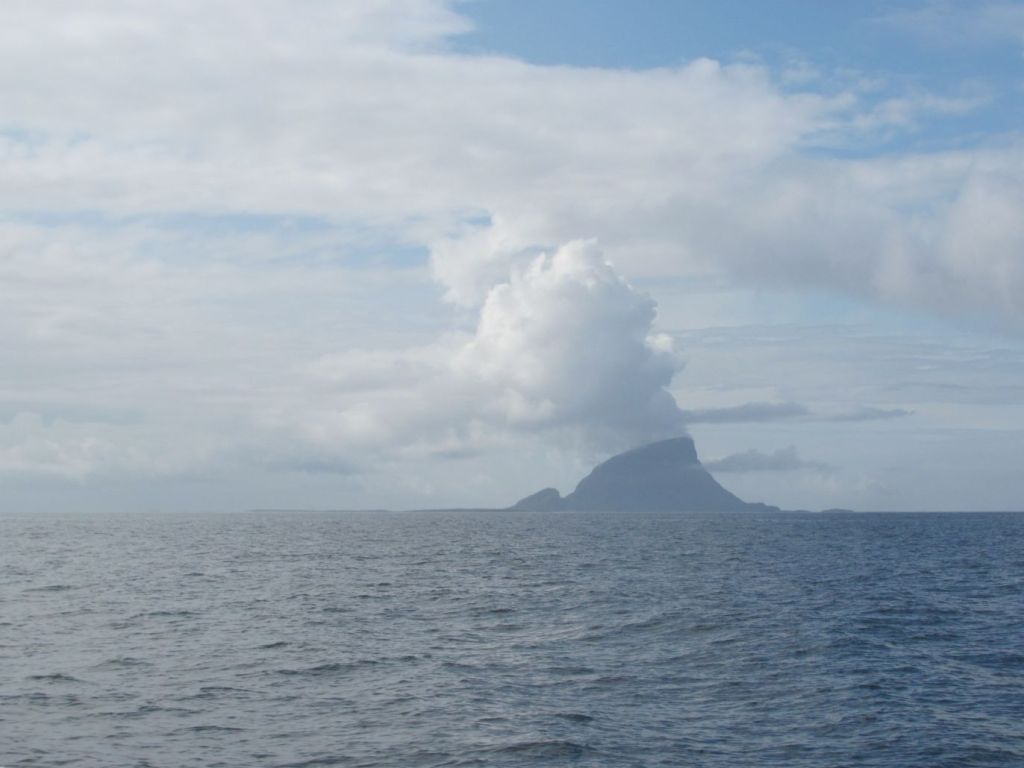
In the morning, we set sail for Sandnessjøen, 50 miles to the south. We pass Lovund on our starboard side doing volcano impressions.
The wind strengthens in the afternoon, and we have a nice sail with the genoa only, arriving at Sandnessjøen in the evening.
The next morning we visit the Tourist Information Office to find out if there is anything we should see in Sandnessjøen.
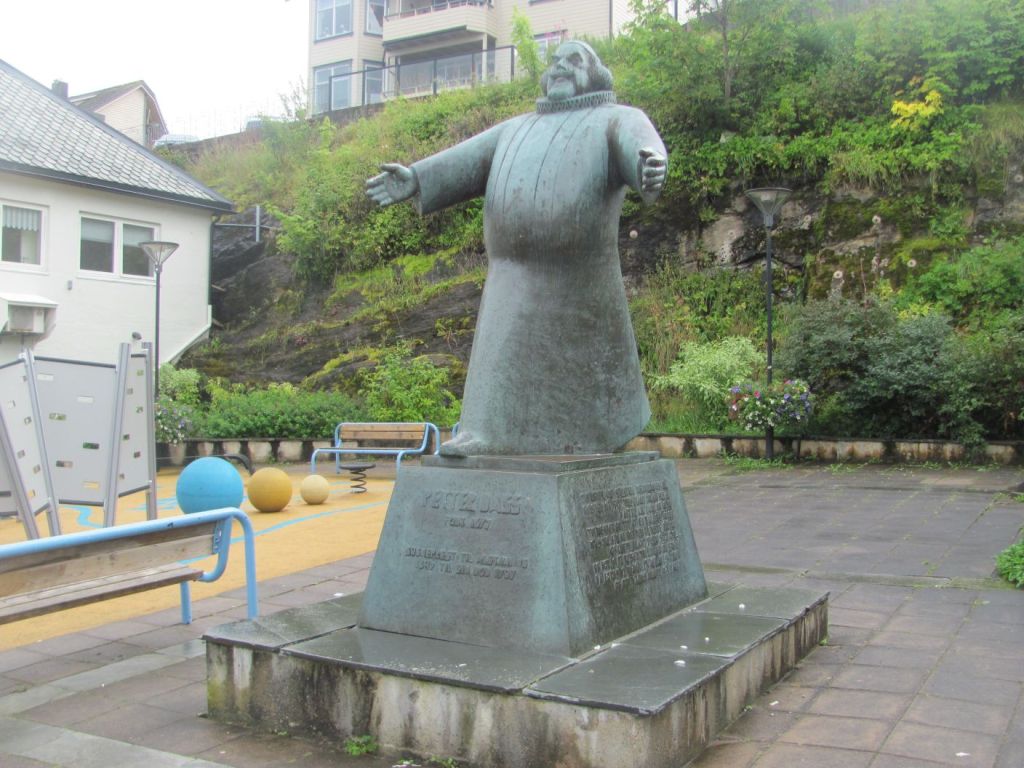
“There’s not much here”, the man behind the desk in the Tourist Information admits. “It’s mainly a setting off point for trekking and skiing in the Seven Sisters. But one thing that might be of interest is the Petter Dass statue in the town centre. He was a Lutheran priest back in the 17th century, who was born on the island of Dønna across the fjord from here. He wrote a lot of texts and hymns, which were used right up to the present. He is seen as an important literary figure who put northern Norway on the literature map, so the town has made quite a thing of him.”
“Yes, we keep coming across his name in our travels”, I say. “There was a Petter Dass walk on Lovund and a Petter Dass chapel on Træna.”
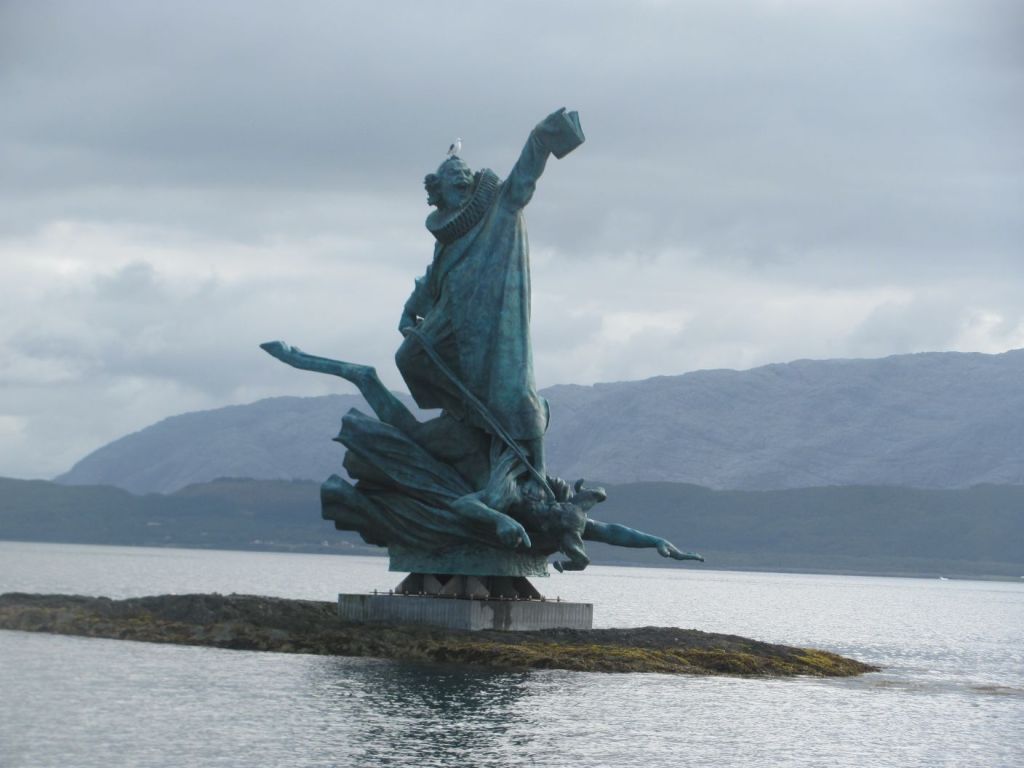
“Well, since you have your own boat, you might also be interested in seeing the giant statue they made of him on one of the skerries in the fjord”, the Tourist Information Man continues. “The base of it gets covered by the tide, so it really looks like he is walking on water. The story behind it is that the king requested him to give the Christmas sermon in Copenhagen, but for various reasons Petter didn’t receive the request until the day before Christmas. Myth has it that he made a deal with the Devil to fly him there in time in return for the Devil gaining the souls of anyone who fell asleep during the sermon. Of course, Petter gave such a powerful sermon that no-one fell asleep.”
In the morning, we push on southwards towards Vega. The wind is from the south-west, more-or-less just where we want to go, so we need to tack. It’s slow going, but we make some progress. We feel smug when we see other yachts pass us with their sails furled away and their engines running. Purists, us! Well, sometimes.
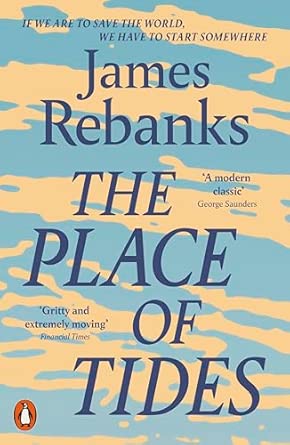
Between tacks, I recall a book that we had both read over the winter, Place of Tides, by James Rebanks. In it, he tells the story of Anna, one of the ‘duck-women’ of Vega. He spends a spring and summer living with her and her helper Ingrid, learning about her family, the history of the islands, and the decline of the eider-down tradition. It’s a delightful story about sense of place, loss of the old ways, and finding a way to live more deliberately and with purpose. We are both keen to visit Vega and learn more of this ancient practice and life on its archipelago.
The bulk of the island of Vega looms out of the haze, its top wreathed in cloud. We had initially planned to stay at the harbour at Igerøya on the east of the island, but the First Mate has been on the phone.
“I talked to the UNESCO Vega Archipelago museum”, she says. “They say the best thing to do is to come to Gardsøya on the north of the island. You can tie up right next to the museum. The problem with Igerøya is that you need to get a bus to the museum and they only run at certain hours. Gardsøya is much easier.”
I haven’t planned a route to Gardsøya, and to get there we need to thread our way through an intricate system of shallow channels and low-lying islands, all the time avoiding submerged rocks and drying mudflats. But we have good charts, and we decide to give it a go.
It’s a tortuous route, but at least it is well marked. We get good at identifying the marker poles and beacons and matching them with those shown on the charts. On either side, dark jagged lumps of rock slide past, and the depth falls on occasions to just a metre or so clearance below the keel. But somehow we make it, and soon we are edging our way gingerly into Gardsøya harbour and to the pontoon below the distinctive UNESCO museum. We are the only boat there.
“Well, that took a bit of concentration”, I say, breathing out. “But at least we made it.”
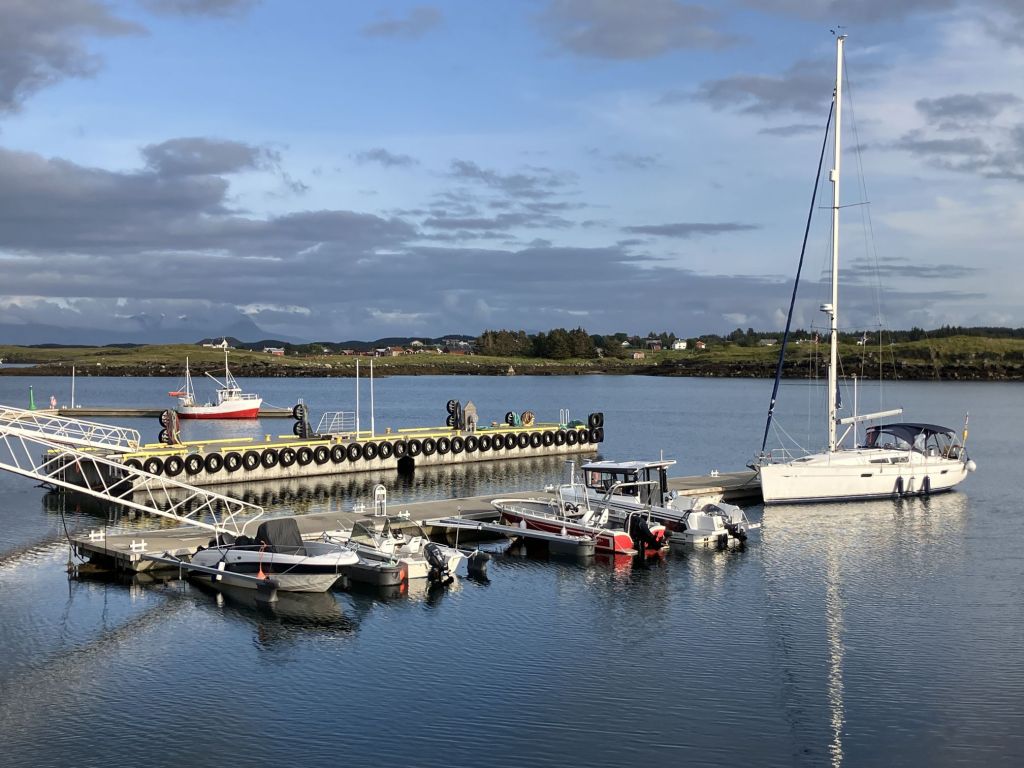
Not long after we tie up, we see another boat entering the harbour.
“It has a British flag on it”, says the First Mate. “I wonder who it is?”
It turns out to be the Chairman of the Cruising Association, Nick, in his boat Spellbinder, along with his wife Sue, and two friends. We also belong to the Cruising Association.
“We were just thinking of having an eclipse-watching drink”, says Nick. “Would you like to join us?”
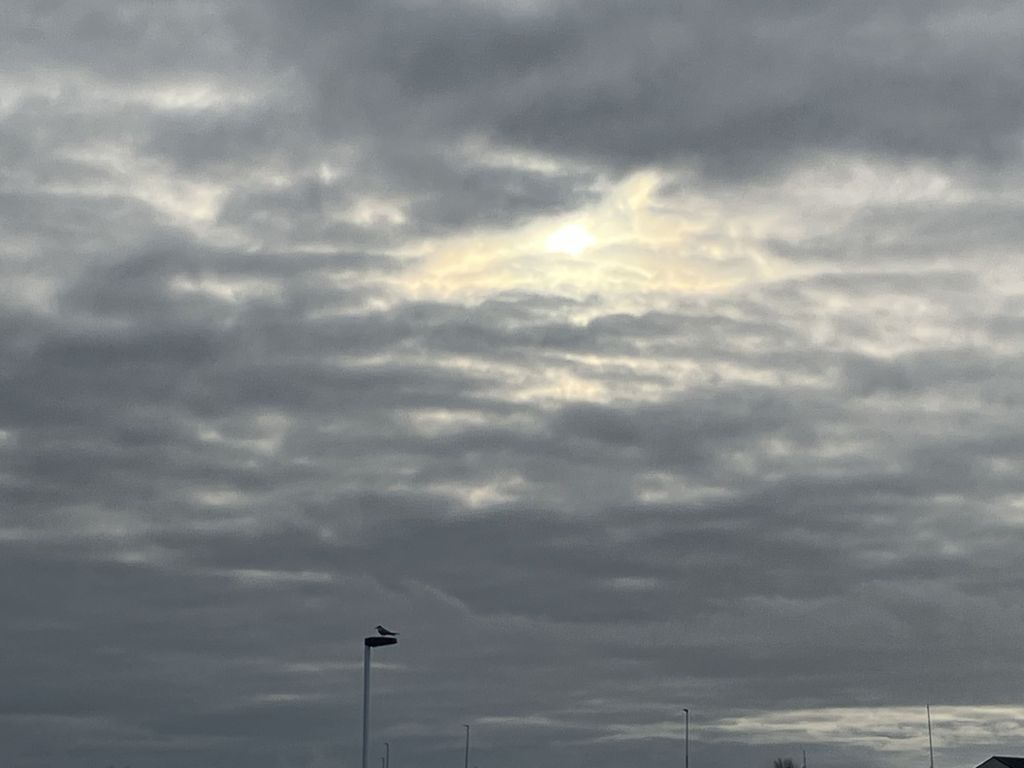
It’s partially cloudy, with patches of clear sky. Two G&Ts later, it’s completely cloudy, with no sun at all.
“Oh well”, I say. “It looks like the eclipse has been eclipsed. You can’t win them all.”
In the morning, we walk up to the museum.
“The UNESCO Vega Archipelago museum is a tribute to the sustainable way that generations of fishermen/farmers have lived in an inhospitable seascape near the Arctic Circle, based on the now unique practice of eider-duck down harvesting, and celebrates the contribution made by women to the eider down process”, the museum brochure tells us. “The Archipelago was included into the World Heritage List in 2004.”
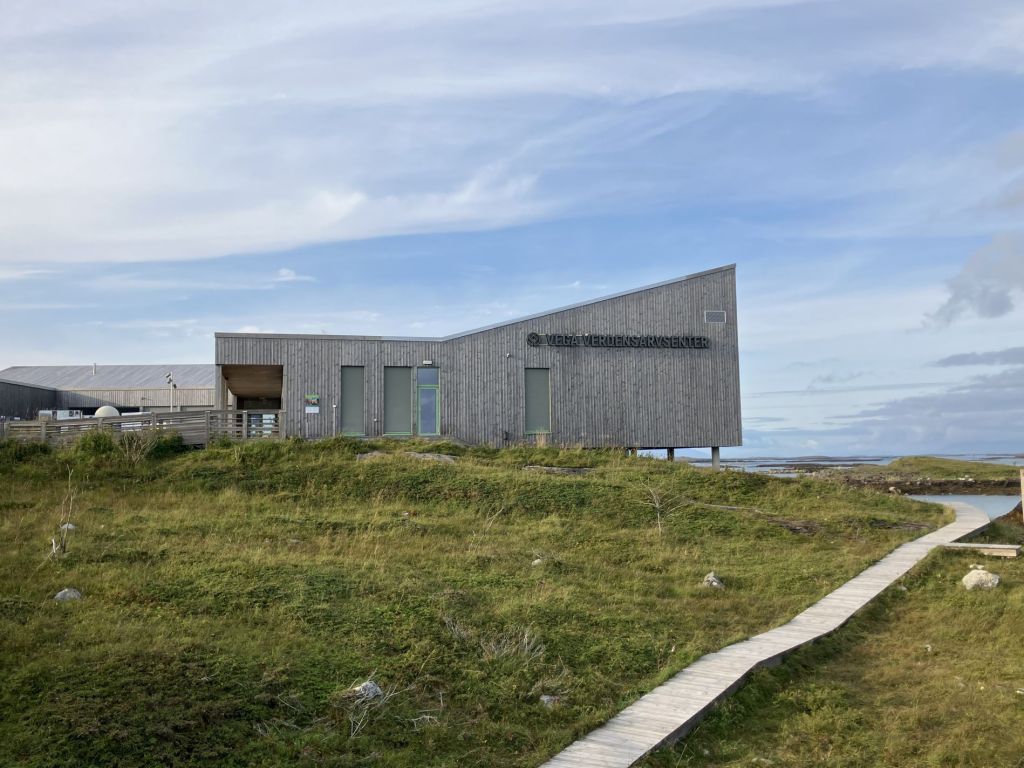
A film is just starting in the small cinema.
“After the ice retreated 20,000 years ago, the land started to rise”, it tells us. “Vega itself was settled by hunter-gatherers from Northern Europe about 11,000 years ago. But the low-lying islands and skerries didn’t really appear until much later. They weren’t settled until about 1500 years ago, when the fishing/farmer and eider-duck tending culture started to develop. By the time of the Viking era in 900 AD, the Archipelago was already an important centre for eider-down production. It has carried on since then to the present day.”
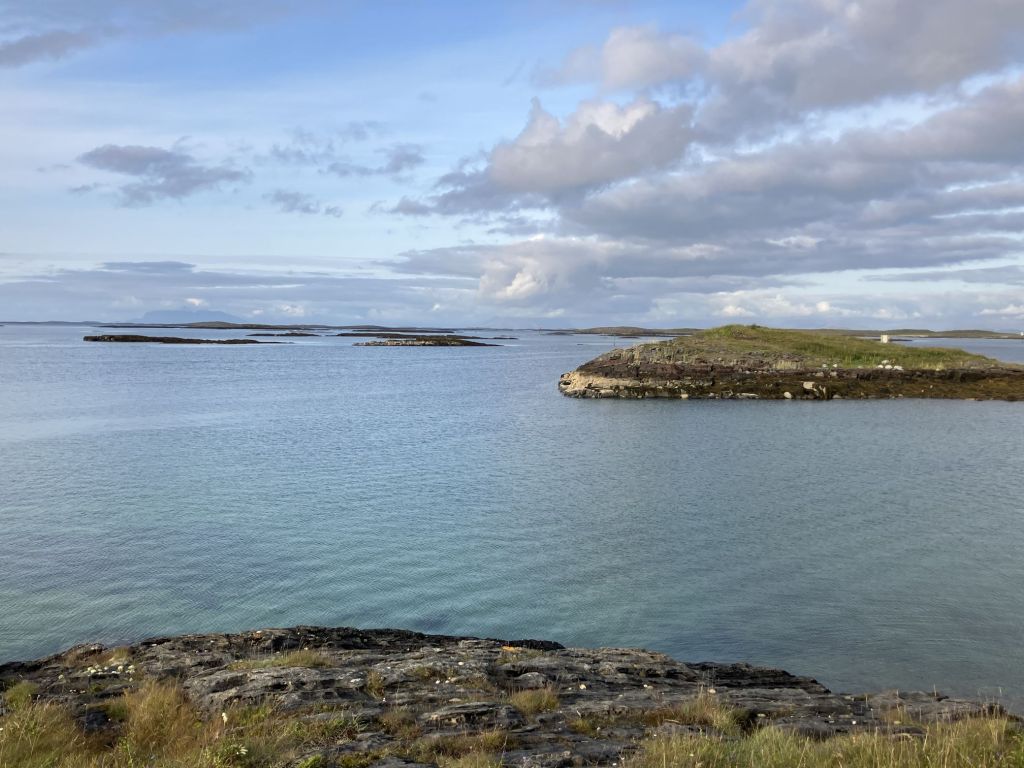
“The ducks return from their overwintering areas around March to mate, after which the females always return to the same breeding sites and the males leave”, the film continues. “The eggs are laid in May and June. After hatching, the ducklings stay in the nests for a few days before they venture to the sea, and swim with their mothers for the rest of the summer. Females and males meet up again in the wintering areas in late autumn to form new pair bonds.”
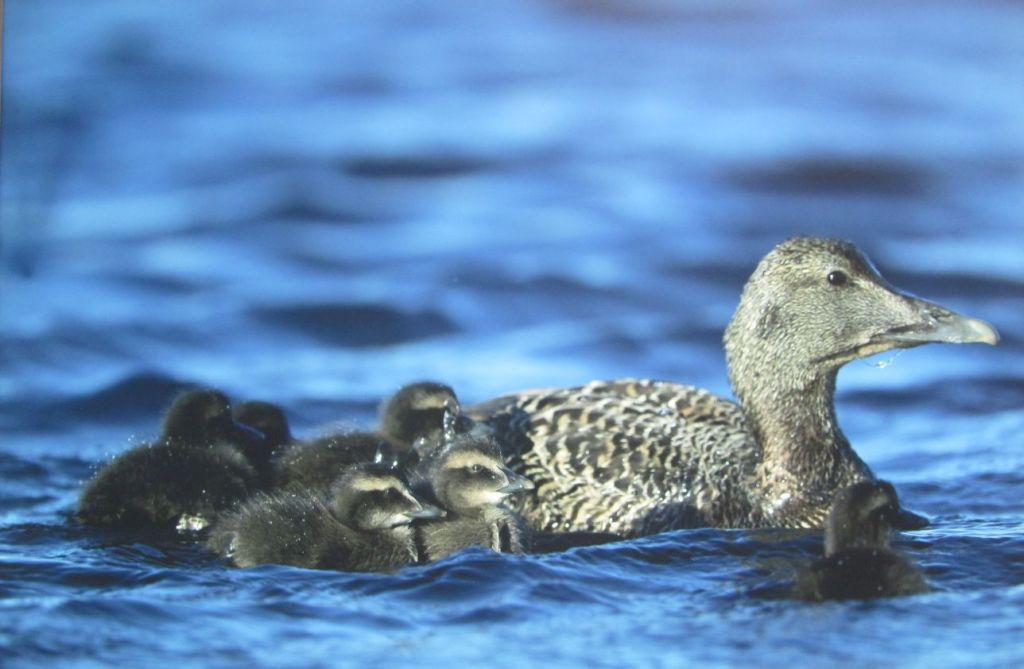
“Over the years, the islanders learnt how to build small nesting houses to protect the birds, using seaweed to make the shape of the nest which the ducks line with their own down. At the end of the season after the ducks have left, they collect this down, clean it, and sell it. It takes 60-70 nests to make one eider down duvet. One duvet is worth as much as a cow. But it’s important to realise that these are wild ducks, not domesticated ones.”
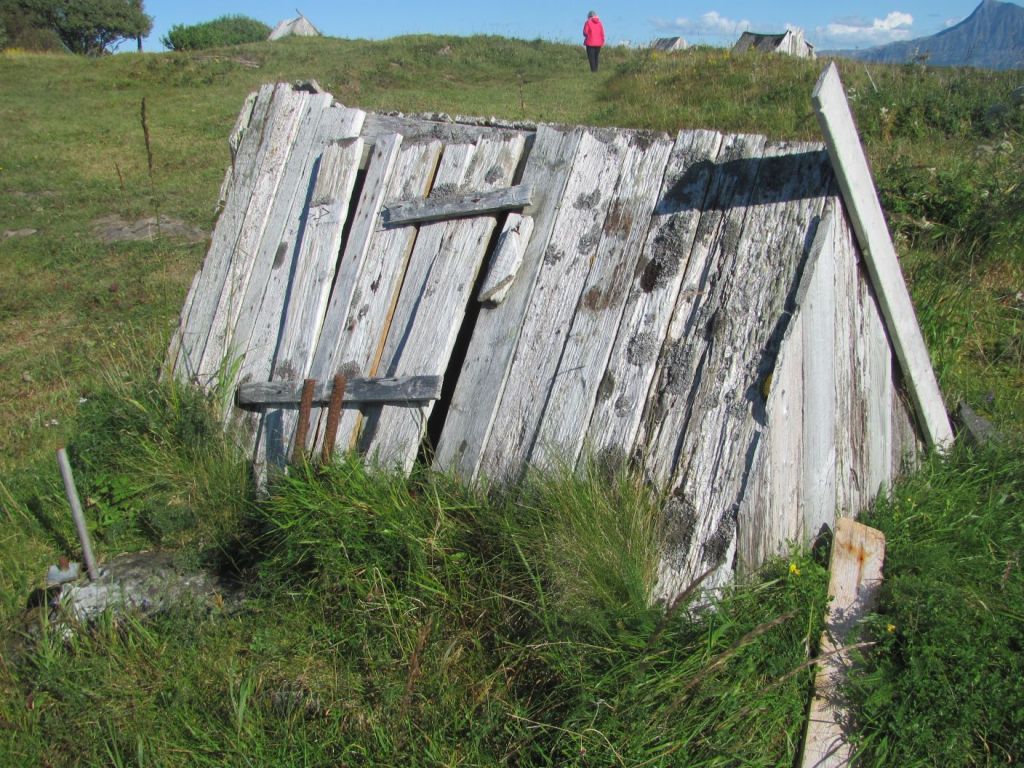
“The population of the islands was at its peak in the 1900s. Then it started to decline due to government policies to encourage people to move to the cities for ‘proper’ work rather than persisting with these antiquated practices. But slowly this view changed, with the UNESCO World Heritage status now having given the archipelago a new lease of life.”
The film comes to an end, and we move on to the rest of the museum.
The section on the geology of the archipelago finally clears up a minor mystery for me. When we were on the Fleinvær islands, we had seen layers of rock that were pockmarked with cavities, but, not being a geologist, I had not been able to find a satisfactory explanation for what these were. Had they been where bubbles of gas were trapped in some volcanic lava long ago? It seemed unlikely, as most rocks on Norway’s coast are metamorphic rather than volcanic in origin.
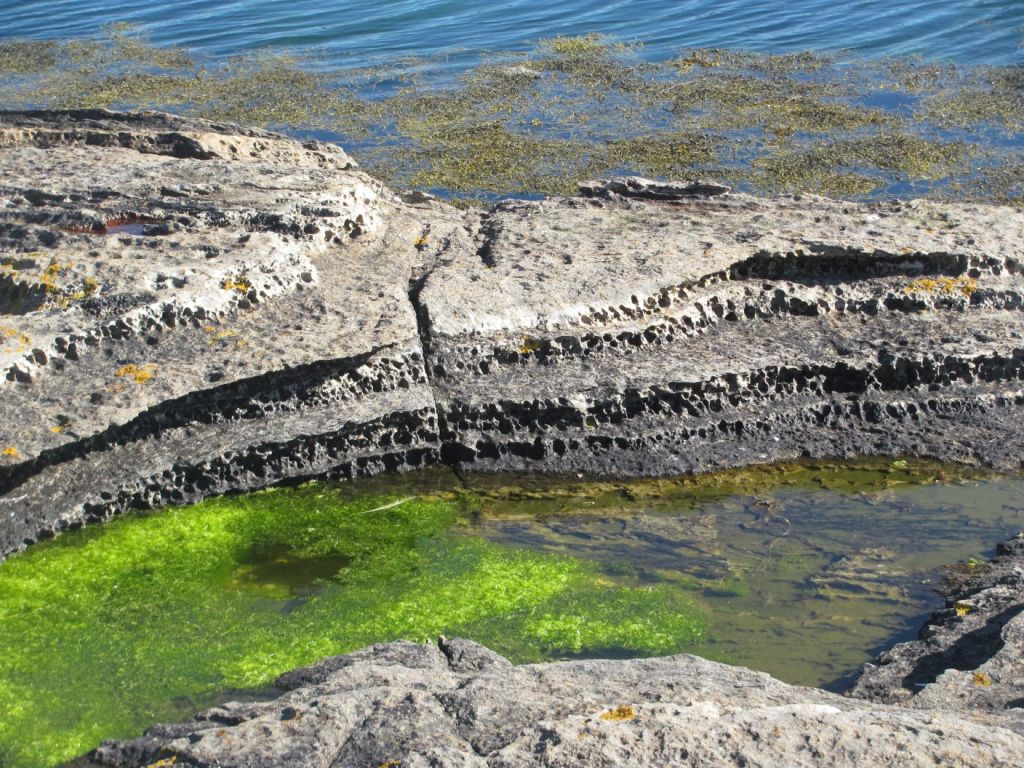
“The story starts 600 million years ago”, one of the panels explains. “Lime particles attached to slimy bacteria settled to the bottom of the ocean and were sandwiched between layers of sand and clay. Then when the two continents of Laurentia and Baltica collided millions of years later, the enormous pressures transformed the limestone into marble.”
“Marble is a relatively soft rock, so when these layers were exposed again, molluscs called piddocks burrowed into the marble to create a home for themselves to live in and to obtain raw material for their shells. Acid rain has since widened these pits and sharpened the edges.”
As we leave the museum, the man at the front desk stops us.
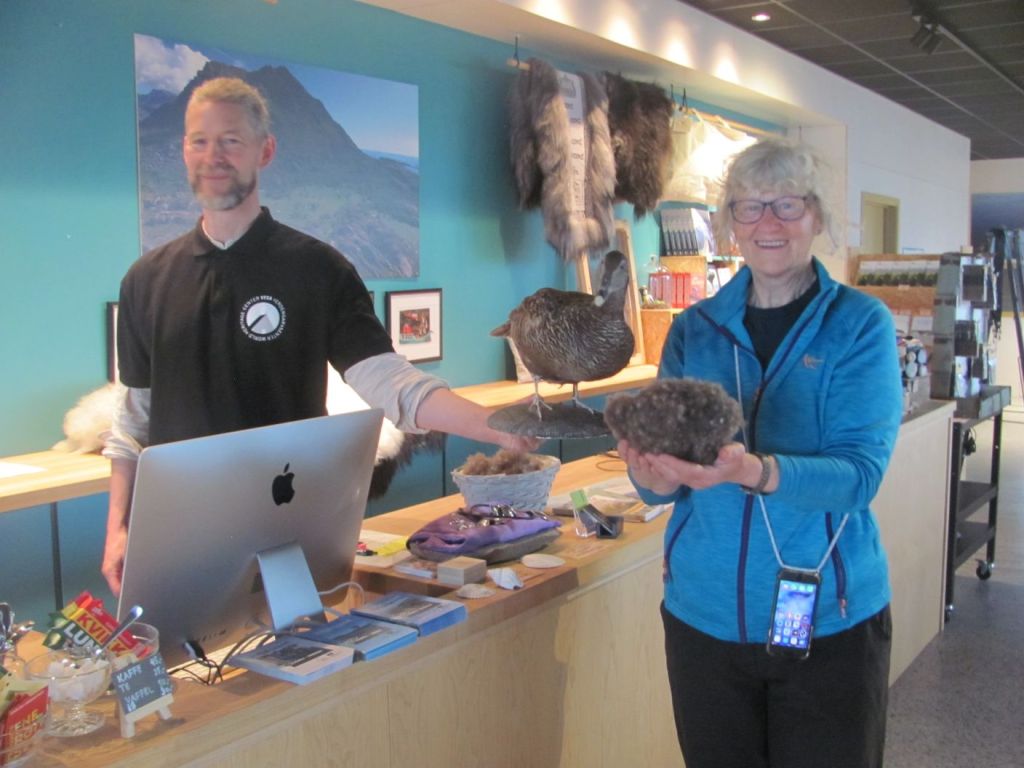
“Close your eyes and cup your hands”, he says. “I am going to put a ball of eider down in them.”
We close our eyes and wait. And wait. Nothing happens.
“You can open them now”, he says.
We open our eyes. In our cupped hands is a large ball of down. It weighs nothing.
We walk slowly back to the boat.
“It’s interesting about the Norwegian government’s policies to move people away from the islands in the 1960s and 1970s”, says the First Mate. “It’s a similar story to what we heard in Myken. Discarding the old ways in the name of modernisation.”
“But I wonder if what they are doing now is truly sustainable?”, I say. “It’s good that these traditional practices are not being lost, but preserving them is dependent on an influx of money to keep them going. If budgets get tight, I wonder if that can continue?”

