“We have to go and see the Saltstraumen while we are here”, I say. “It is supposed to have one of the largest tidal currents in the world. If you remember, we missed it on the way up because we had to take advantage of the favourable winds to get across to the Lofotens.”
We are back in Bodø, the administrative centre of Nordland. The Saltstraumen channel lies about ten kilometres southeast from the town.
“The maximum flow is at 1500 this afternoon”, says the First Mate, consulting her phone. “We can take the number 300 bus which arrives there at 1330. That gives us an hour and a half to explore the area and maybe even have a cup of coffee at the café there before we see it at its peak. There’s a bus back at 1536 we can catch.”
We have lunch and catch the bus. When we arrive, it is pouring with rain, so we take shelter in the café overlooking the channel. The First Mate orders coffee and waffles.
“Apparently there is an old legend associated with it”, I say, reading a pamphlet I find there. “Back in Viking days, there was a powerful king called Raud the Strong who ruled an area around the stream. Rumour even had it that he had magical powers that could control the elements. Anyway, in the time that Olav Tryggvason was trying to Christianise Norway, Raul wanted to have nothing to do with the new religion, rather sticking to his traditional pagan gods. So Olav Tryggvason sent his men to capture him, and then ordered them to to force a snake down his throat until he converted to Christianity. Raud stubbornly refused, even when the snake gnawed its way out of his stomach. He eventually died, and Olaf supposedly confiscated all Raud’s lands and longship for himself.”
“It’s a bit of a gruesome story”, says the First Mate as she swallows the last piece of waffle. “I thought Christianity was supposed to be all for love and peace?”
“Well, yes”, I say. “But if people don’t want love and peace, they have to be taught to want it. The hard way, in some cases.”
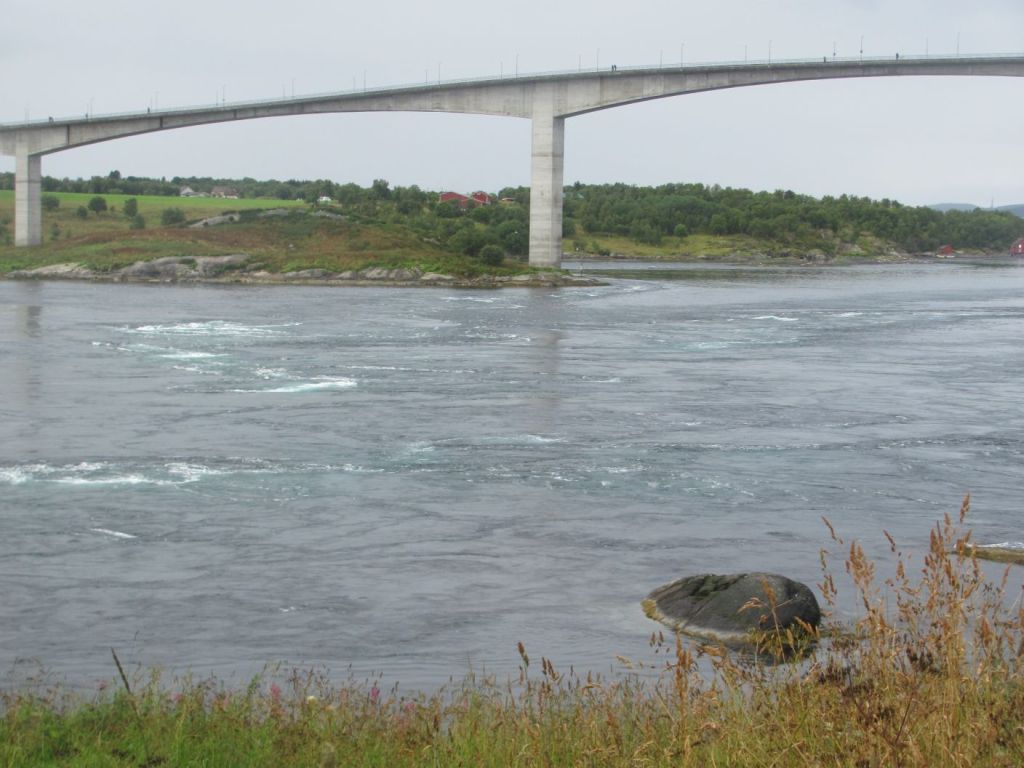
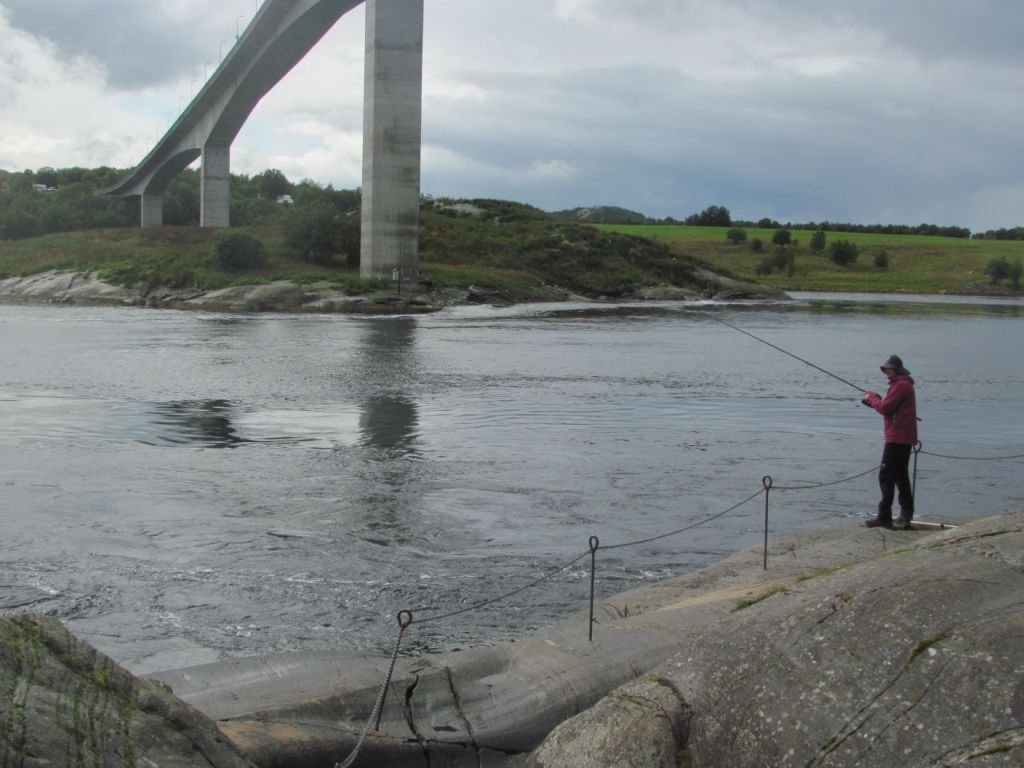
It stops raining, so we walk along the shore path towards the bridge. Several fishermen are there with their rods. Apparently it is a good place to catch cod as they swim upstream. The flow is impressive – 400 cubic metres forcing its way through the narrow channel every six hours at a speed of up to 20 knots.
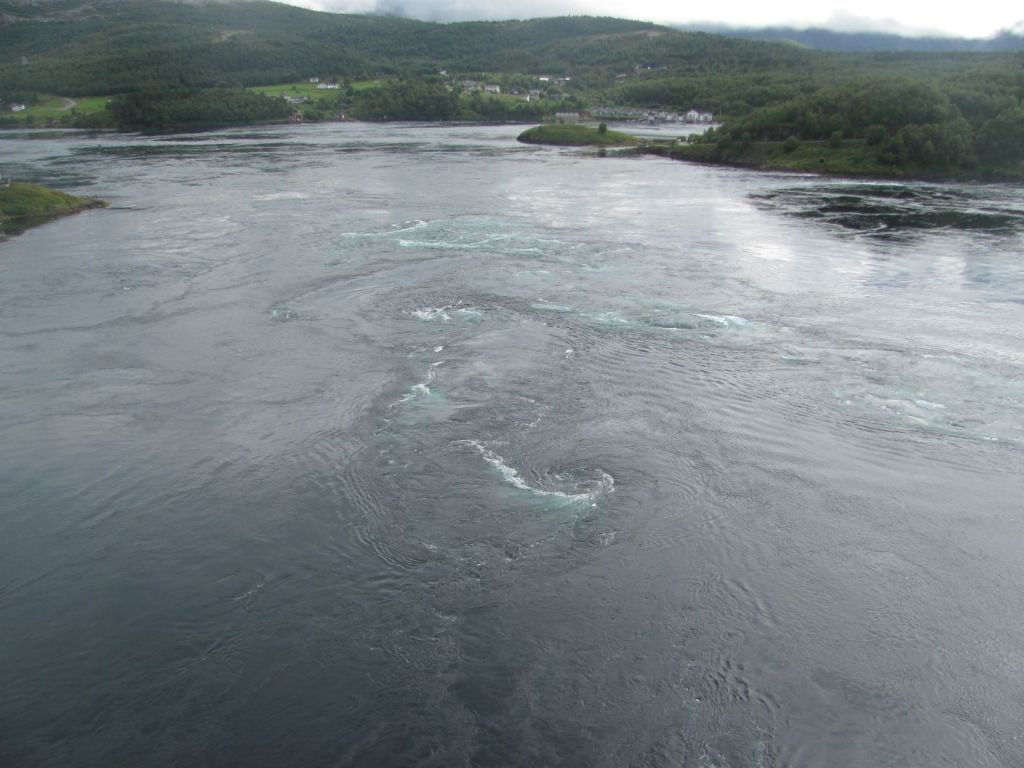
Whirlpools and maelstroms form here and there, some up to 10 m in diameter.
“I think I found the Corryvreckan in Scotland more impressive”, says the First Mate on the way home.
“The flow there is less”, I say. “But you get standing waves being set up because of the rock pinnacle in the middle, so it looks more frightening. Do you remember that time we tried to sail through it, but I got the tide times wrong, and we ended up going against the current. We had to take refuge in the little bay to the side of it until the tide changed.”
“I’ll never forget it”, she replies.
The next day dawns bright and sunny.
“I might go and see the Norway Aviation Museum”, I say over breakfast. “That’s another thing that we missed last time, because it was closed over the weekend.”
“I think that I’ll do a bit of browsing in town”, the First Mate says. “Aircraft are not really my thing.”
“Can I come?”, asks Spencer. “I am quite interested. I promise to behave.”
Spencer and I clamber on the bus that takes us to the museum on the outskirts of Bodø.
“Pets can go free”, says the bus driver.
We spend the next couple of hours immersed in a fascinating collection of aeroplanes past and present detailing the history of military and commercial aviation in Norway.
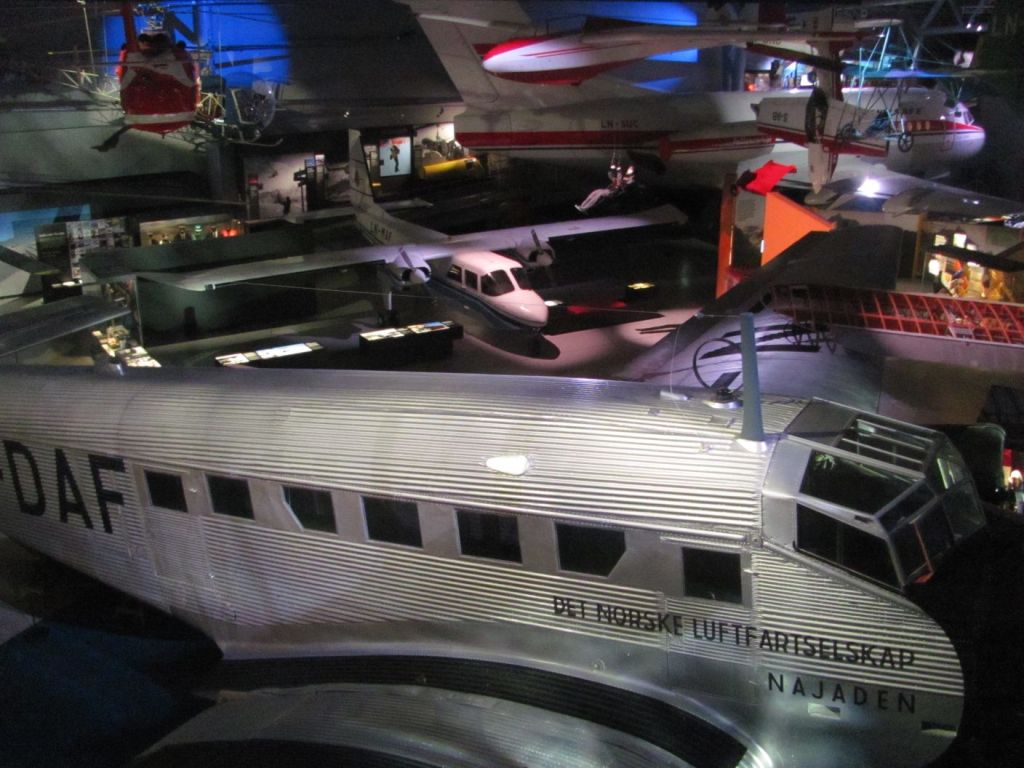
We learn about how the Nazis built airfields for the Luftwaffe to operate their Messerschmitts from.

After the Second World War, the Cold War started. All sorts of powerful missiles were built to defend and attack the enemy, which is, of course, both unstated and stated, Russia. Neighbours who share a border, but who don’t trust each other.

“Wow! You humans certainly know how to destroy your own species”, says Spencer in astonishment.
“You spiders are no different”, I respond. “You often eat your young when times are tough. And what about the Black Widow who eats her own husband. We don’t do that sort of thing. Well, not as a rule anyway.”
We learn that the U2 spy plane that was shot down over Russia in 1962 was actually heading for Bodø airport. I vaguely remember it being in the news when I was in school, but the details had passed over my head. At first, the Americans had pretended it was just a routine weather research flight, but when the Russians released photos of the air-force pilot and high resolution cameras recovered from the wreckage, they had to admit it was a spy plane. It was all a bit of an embarrassment for them and resulted in the cancelling of a summit meeting and a cooling of relations between the two countries for years.
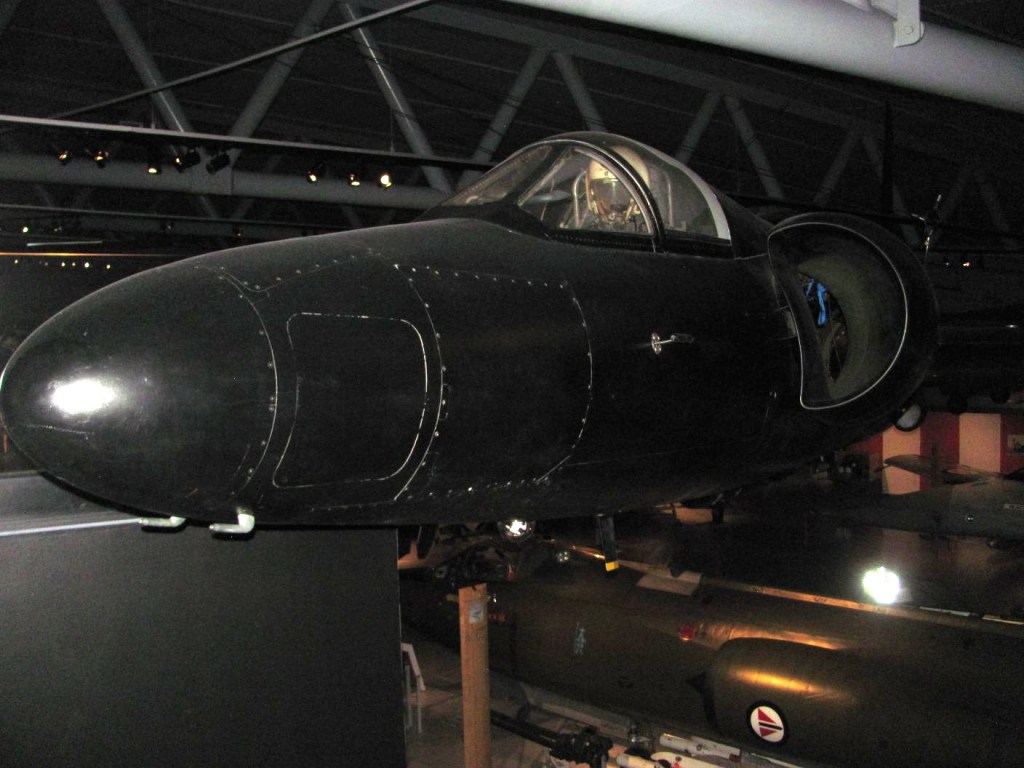
“Look at this one!”, calls Spencer, excitedly. “It’s all about the collision between a Soviet fighter aircraft and a Norwegian patrol plane in 1987. I haven’t heard about that one.”
It is something that I knew nothing about either. Apparently the Norwegian aircraft was in international airspace observing Soviet navy manoeuvres when it was buzzed by a Soviet fighter to try and ward it off. The Soviet pilot had flown his plane underneath the Norwegian one, so close that the tailfin of the fighter actually came into contact with one of the propellers of the other. Pieces of the propeller ended up inside the Norwegian plane, actually embedded in a vacuum cleaner. Both planes landed safely at their respective bases. The Soviet Union officially apologised for the incident, although they did reward the pilot by giving him a medal for his work.
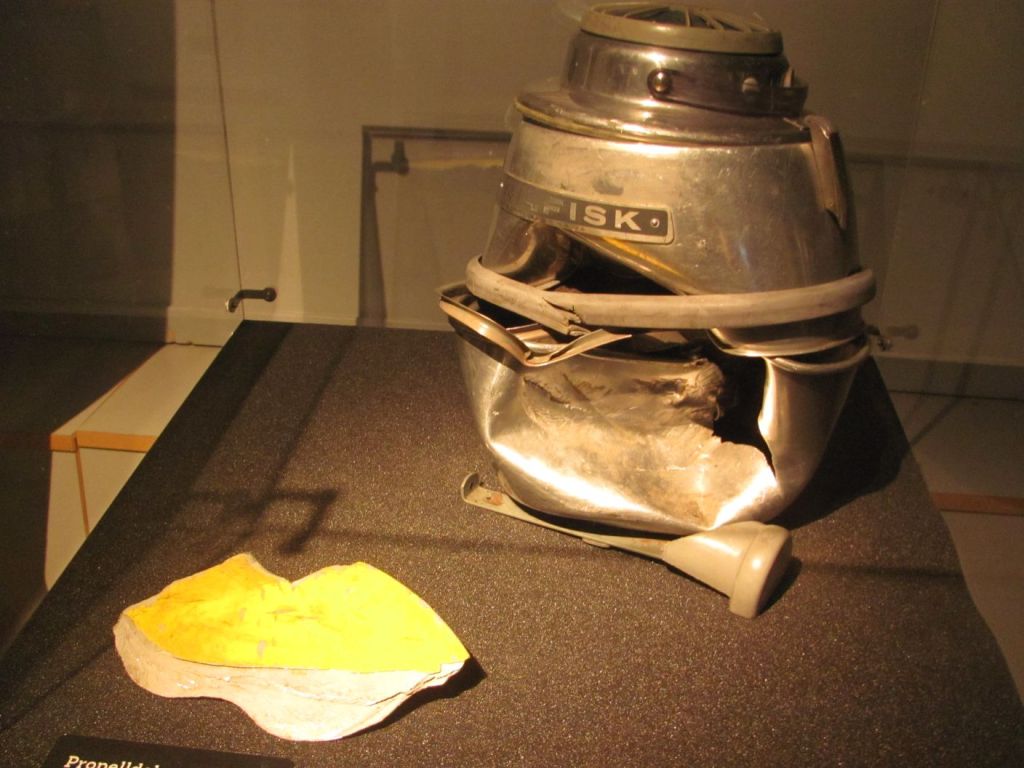
“My mother used to have one of those vacuum cleaners”, I say. “I didn’t realise that it was tough enough to be able to stop a piece of propeller. Mind you, it did last for about 50 years.”
“Ah, they built things differently in those days”, says Spencer.
We move on to the civilian aircraft section.
“Norway’s constitution states that it is to be an undivided kingdom”, one of the displays tells us. “But that wasn’t true when it came to communication and travel in the early days. The remoter parts of the country were very poorly connected to one another, to the extent that it would often take several days to travel from the north to the south. With the advent of air travel, the government committed itself to connect every part of the country.”
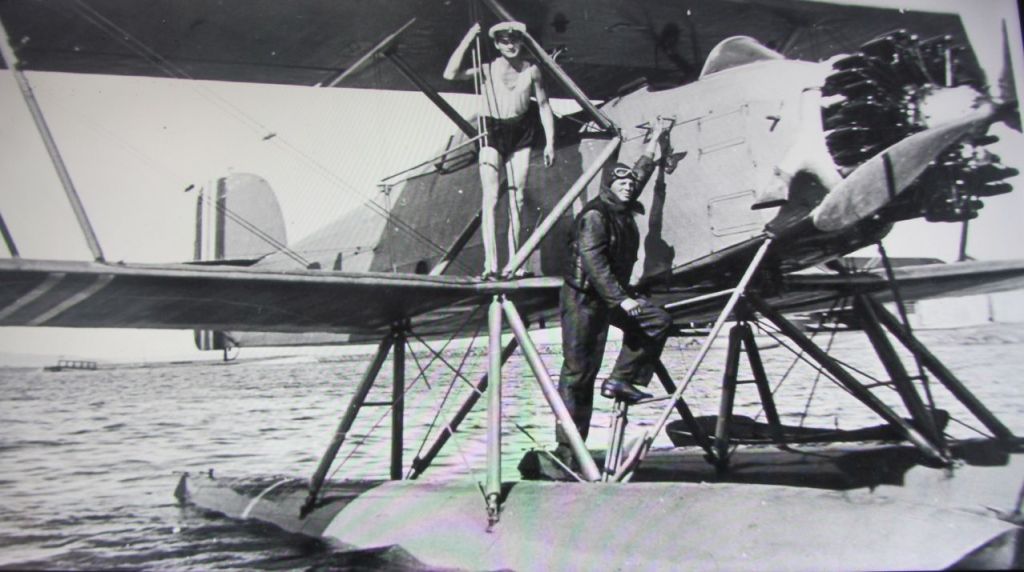
At first, this was by seaplane. But from 1935 more and more land-based airports were built, initially by the Nazis when they occupied Norway. In the 1950s and 1960s, much of this was funded by NATO to provide defence infrastructure during the Cold War. Several airports served both military and commercial purposes, Bodø being an example.
“It says that because of the terrain, many of the airports had to be STOL, Short Take Off and Landing”, says Spencer, gesturing towards a panel with his fourth leg. “And that the aeroplane best suited to this was the Twin Otter. Look, there’s one over there.”
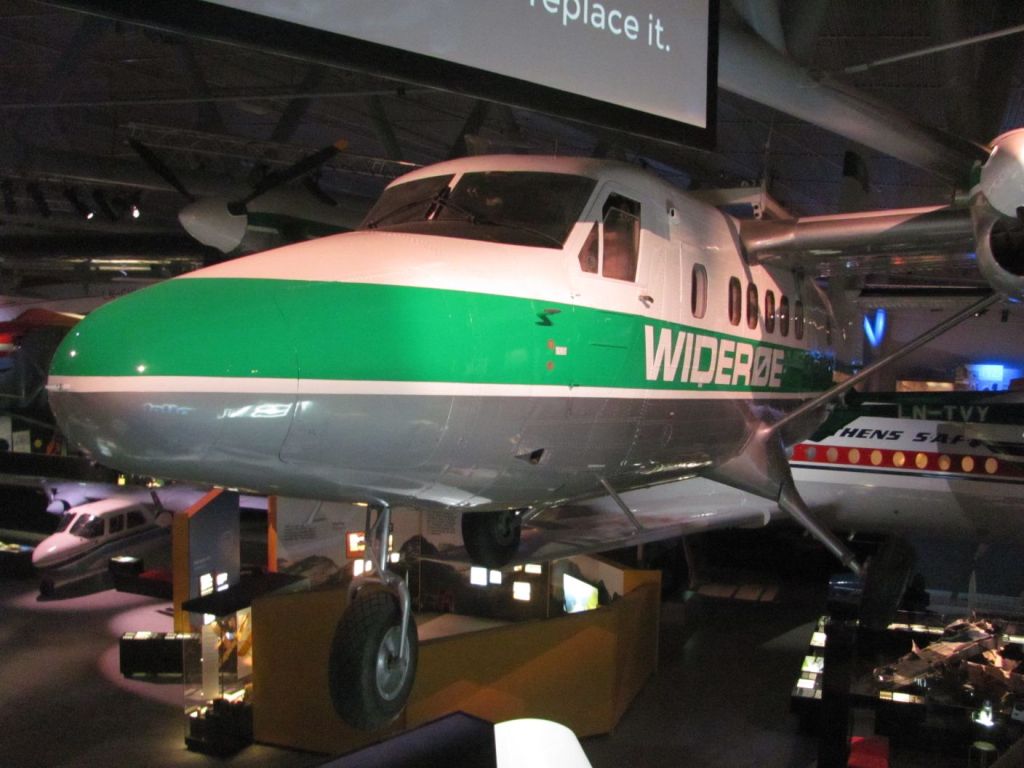
By the 1980s, air travel had become an integral part of the mass transport network.
We come to the stairs leading to the control tower.
“It’s actually the old control tower for Bodø airport”, says Spencer. “Not a reconstructed one.”
I sit at one of the screens and pretend to bring in an incoming flight.
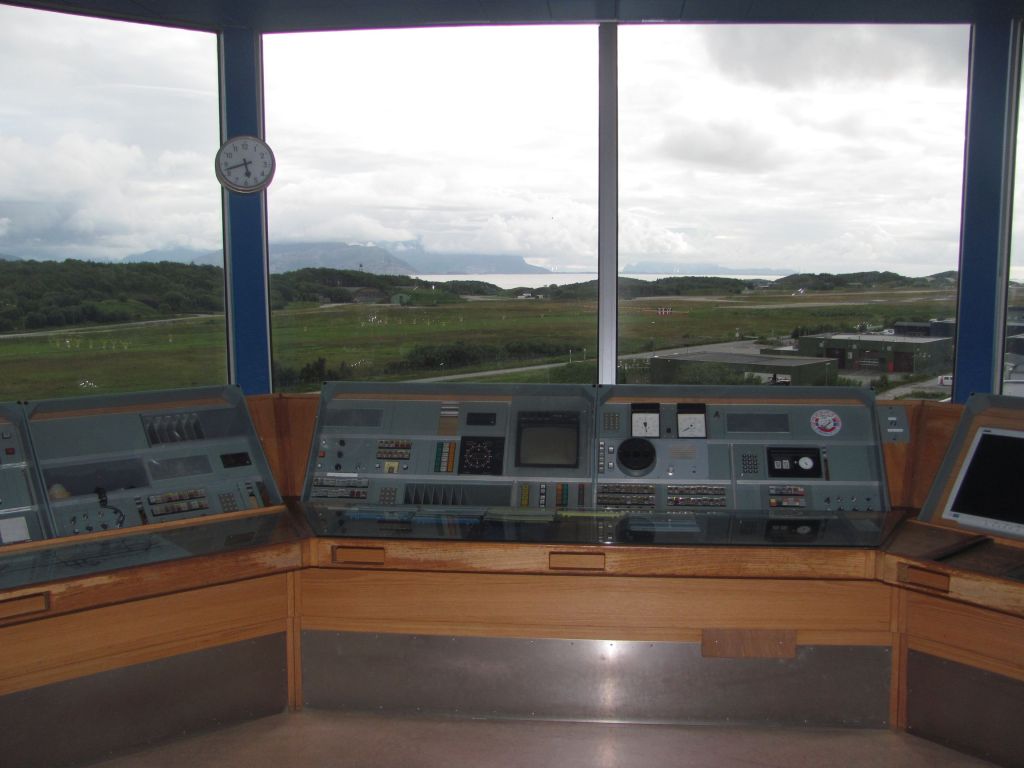
“SK 4104, Bodø Tower, runway 07, wind 060 degrees at 8 knots, cleared to land”, I say.
“Cleared to land runway 07, SK 4104”, says the pilot of SK 4104.
“SK 4104, after landing vacate left on Charlie and contact Ground 121.8”, I respond.
“Vacate left on Charlie, Ground 121.8, SK 4104”, confirms the pilot.
“Hey, didn’t you see that other plane still on the runway”, shouts Spencer. “They are going to hit.”
It’s too late. There is an almighty explosion as both planes are engulfed by flames. Fire engines race to the tarmac and begin spraying the wreckage with foam.
“It’s probably time we left”, I say to Spencer. “Perhaps we can find a back door we can sneak out.”
In the evening, the First Mate and I compare notes.
“Spencer behaved really well”, I say. “I might take him again.”
“Well, I went to a lunchtime concert in the town centre”, she says. “There was a young female singer and songwriter called Soetkin Baptist, originally from Belgium, but who has been living in Bodø for eleven years or so. She had a beautiful voice and was really into audience participation. She took us line by line through a song, so that by the end we could all sing it. At least the Norwegians could – I couldn’t understand a word of it, so I hummed along. But she had infectious passion and enthusiasm, and the audience really warmed to her. I really enjoyed it.”

In the morning, we continue southwards. The wind is from our starboard quarter, so we start sailing almost as soon as we leave the harbour. It strengthens as we leave the Bodø approaches, and soon we are touching seven knots with the genoa only. Three hours later, we reach the Fleinvær islands, south-west of Bodø.
“There’s an anchorage shown in the pilot book that we can stay tonight”, I say. “Let’s try that.”
But the wind is too strong and the low flat islands offer little shelter.
“There’s a pontoon a bit further round on the island of Sørvær”, says the First Mate, consulting the harbour guide. “It might be better.”
Marginally better, as it turns out. We try to tie up to the leeward side where there is space, but we kept being blown off by the wind. After the fourth attempt, I am just about to give up.
A man appears walking his dog. He comes down to the pontoon and offers to help. Eventually we manage to secure a line to one of the cleats and tie up.
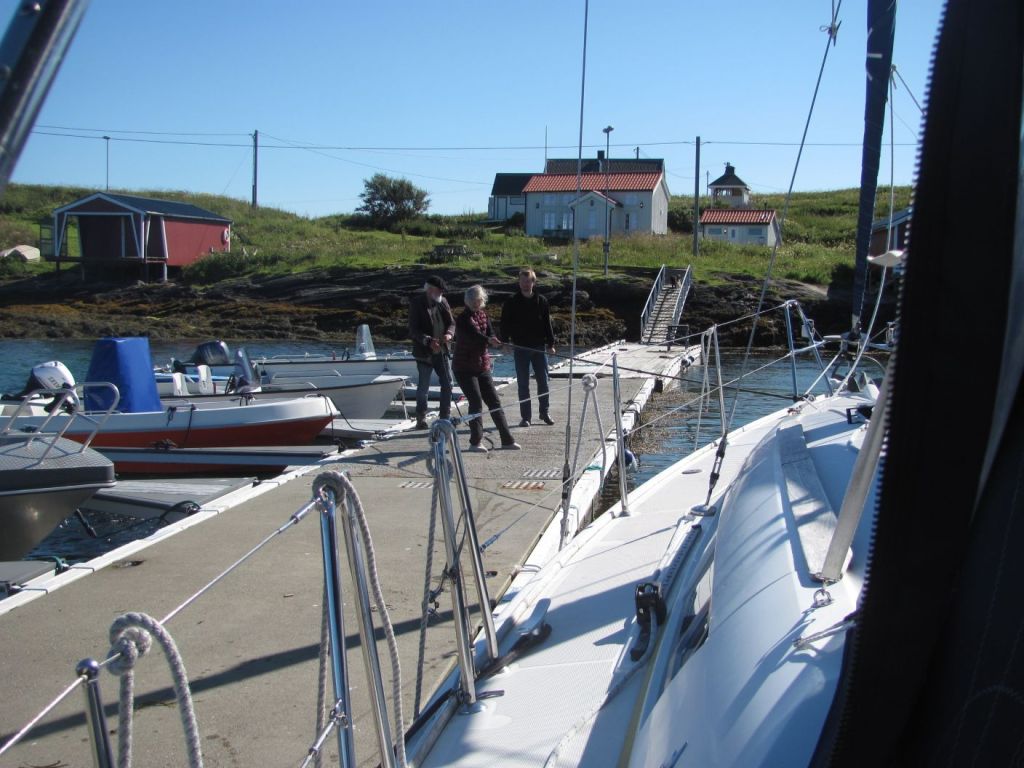
“Phew, that was a bit of an effort”, says the First Mate. “That wind is strong. Thanks so much for your help. Do you live here?”
“Yes, I am an artist”, the man says. “I am the only permanent resident on the island.”
The dog barks.
“Oh, yes, of course, you live here too”, says the Resident Artist, fondling the dog’s ears.
“I studied in Cardiff”, he continues, noticing our flag. “I loved it there. But here I find the peace and quiet I need for my work.”
Later we go for a walk around the island. I can see why he finds peace and quiet here. Although there are several houses, and in good condition, almost all are empty. Many even have silent robot lawnmowers to keep the grass well-trimmed.
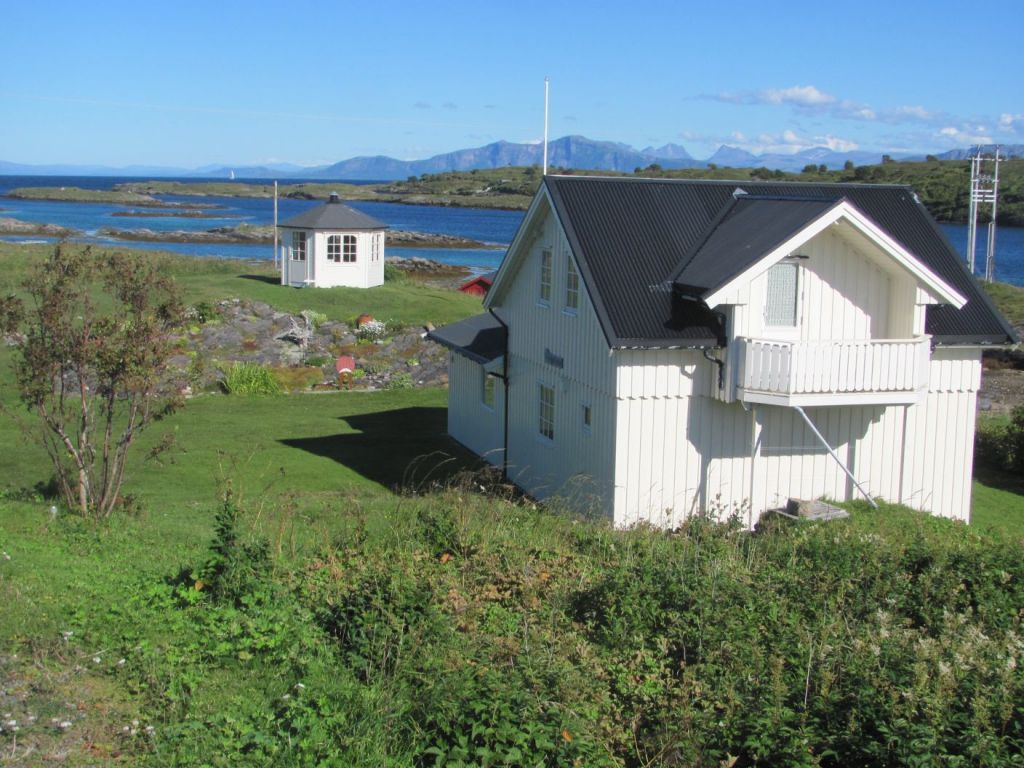
“They are summer homes”, a girl we meet on the way tells us. “Most belong to people that used to live here. They moved to the cities for jobs, but the houses have been in the family for generations, so they come back in the summer. And some come back to look after the eider ducks, but even those are declining now. It’s sad.”
“Were you brought up on the island?”, asks the First Mate.
“Yes, I am the artist’s daughter”, she responds, somewhat wistfully. “I loved it here. I knew every inch of the island, and everyone knew me. There was only one other girl my own age, but we were the best of friends. Now I live in Bodø, but I still come back with my husband to stay with my Dad. We’ve been here two weeks, but we are going back on the ferry tonight. My Dad is cooking a farewell dinner at the moment, so I need to hurry back.”
“It’s interesting how we keep meeting people who were brought up on these islands in Norway and keep returning to them from the wider world”, I say.
“I suppose if you don’t have anything else to compare it with during your formative years, then that’s how your personality develops”, says the First Mate. “I would find it too quiet.”
“That’s because you were brought up in a town”, I say. “It’s what you know.”
We eventually come to an eclectic collection of modern wooden buildings overlooking the sea, not far from the pontoon where we are tied up.
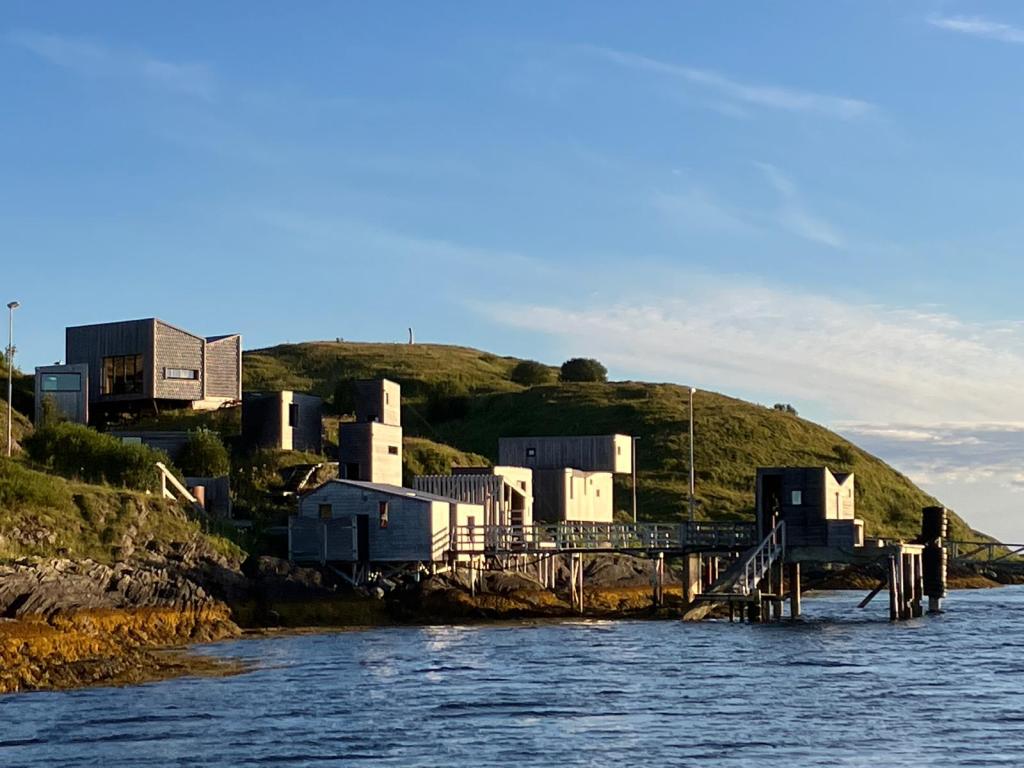
“I saw these buildings from the boat”, says the First Mate. “What do you suppose they are?”
A door of one of the buildings suddenly opens and a girl comes out clad only in a towel.
“This is an artists’ retreat”, she says in response to our surprised faces. “It’s called ‘Arctic Hideaway’, and was the brainchild of Håvard Lund, the composer and musician. Artists come from all over the world to interact with other artists and be inspired by the island. Are Andreassen, the resident artist on the island, also comes and gives classes. We just finished a session last week, so the place is empty apart from my friend from Spain and myself. We are the caretakers at the moment. We are expecting someone to arrive tonight on the ferry, but we just wanted to have a sauna first.”
Another girl appears, also clad only in a towel.
It certainly is an island of, and for, artists, I think.
Later, as we sit in the cockpit of the boat sipping our wine, two stark naked girls emerge from the small wooden sauna hut on the jetty near the Artists’ Retreat and dive into the sea.
“Just keep drinking your wine”, the First Mate says. “You’re far too old for them anyway.”

