“There’s another boat coming in just now”, says the First Mate, peering out of the window. “We should give them a hand – it’s pretty wet out there.”
We have just arrived in the small harbour at Brønnøysund, with the rain tipping down. We had left the island of Vega in the morning, and had had a pleasant sail tacking our way southwards against the south-easterly wind before it died altogether and we had had to start the engine. As luck would have it, it had also started raining heavily. By the time we were tied up, we were soaked, and were just having a hot cup of tea to warm up.
“I have to admit that I am not that keen on getting wet all over again”, I grumble. “But I suppose we must.”
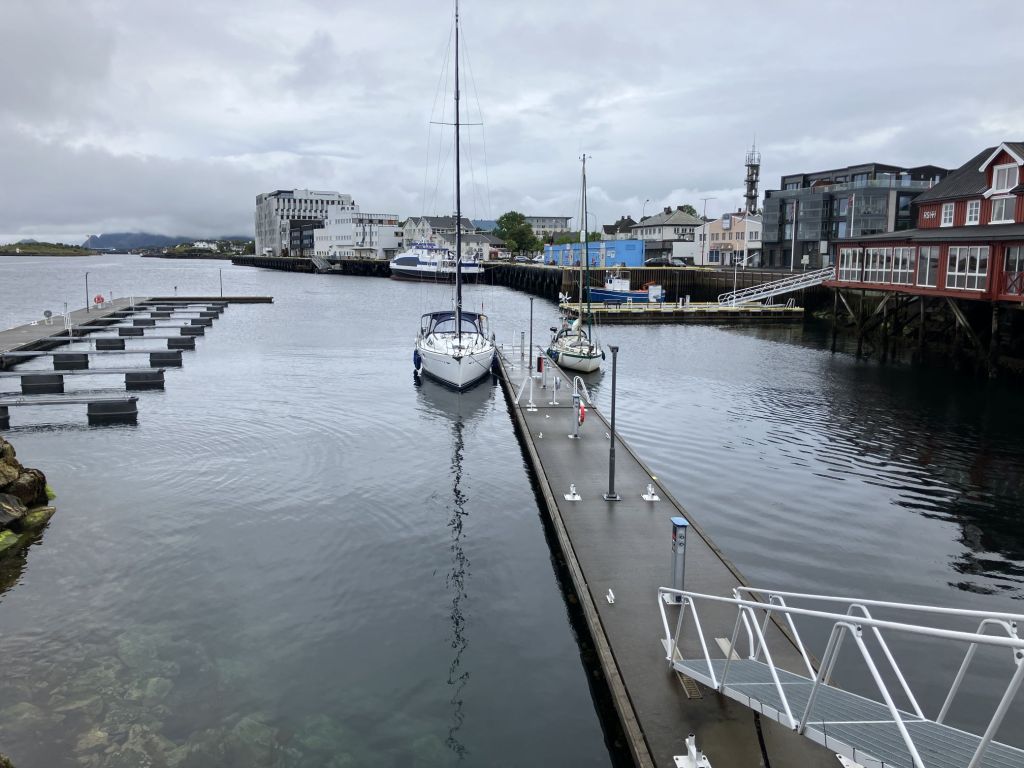
We struggle out on to the pontoon again. As we grab the ropes of the newcomer, we notice that their flag is British.
“How far have you come?”, I ask.
“Today from Leka”, the man answers in a Scottish accent. “But we are from Scotland, and sailed over to Bergen a few weeks ago. We’re now making our way northwards.”
“Snap!”, I say, as I tie them up. “We’re also from Scotland.”
At 27 feet in length, their boat isn’t large. I’m impressed at them crossing the North Sea in it.
“We’ve sailed everywhere in her”, says the Scotsman, spotting my look. “Even across the Atlantic. I wrote a book on the trip, but it has hardly sold any copies. The reviews weren’t very good. I’m not depending on it for my retirement. But it was very satisfying to write it, I have to say.”
I make a mental note to look it up.
“Why don’t you come over for a cup of tea, once you are settled in?”, asks the First Mate.
“That’s very kind of you”, says the woman, in an even broader Scottish accent, “I am Katherine, by the way, and this is Nick.”
“We are wondering if we have left it too late in the season”, says Nick, over a cup of tea. “We’ve had nothing but bad weather since we have arrived in Norway. We planned to leave Scotland much earlier, but with one thing and another, we lost track of how the summer was going. We are thinking of overwintering in Bodø.”
We can sympathise. With the exception of a few days here and there, much of July and August so far had been wet and misty. A typical Norwegian summer, some of the locals had joked, and not at all like the hot dry summers they had had for the previous two years.
Nick is in IT, designing websites.
“I use AI all the time these days”, he says. “It’s amazing for coming up with content for the websites all tailored to the style that customers want. What I like about it particularly is that it is very patient and never gets angry. Even if I am a bit short with it myself sometimes, it never answers me back.”
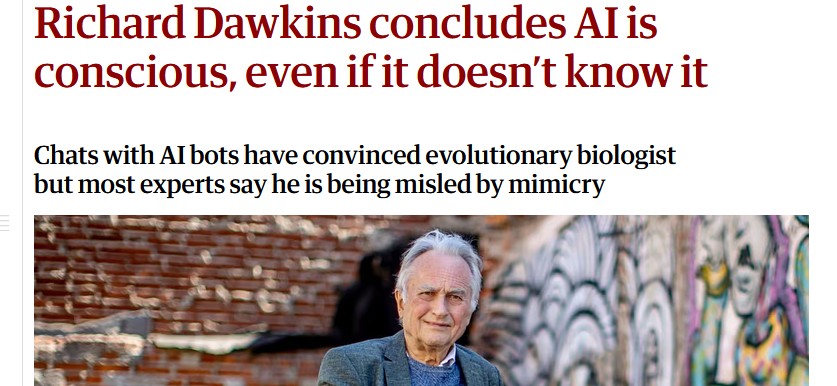
“Do you think that AI could ever become conscious?”, I ask. “Richard Dawkins seems to think that it might be already.”
“Ha! The million-dollar-question”, Nick answers. “The problem is that we don’t really have a good definition of what consciousness is anyway, so it is difficult to say whether something is conscious or not. A philosopher called Thomas Nagel suggested that for something to be conscious, there had to be something that it felt like to be that something, if that makes sense. But even that is tricky – I know what it feels like to be me, but I have no idea what it feels like to be you, another human – let alone a tree, or a stone, for that matter.”
“But doesn’t something have to be living to be conscious?”, I ask.
“Panpsychists don’t think so”, he says. “They believe that everything has a degree of consciousness. But the truth is that we just really don’t know whether consciousness requires biology or not. Is there something special about neurons and their biochemistry? If that were the case, AI based on silica may never become conscious. But what if it is just the organisation and complexity of information processing that creates consciousness, and not the material that is doing it? Then AI could well become conscious – if not already, then sometime in the future.”
“But you hear people saying that AI will never be conscious because all it is is a machine following instructions programmed into it by humans”, I say. “It is just trained on large amounts of data and text that humans have written, and uses statistical techniques to predict the next idea from the preceding context. But surely it is more than just that?”

“Yes, that is a bit simplistic”, he says. “When it is being trained, it learns about objects and what their properties and relationships are, causes of things and what the consequences are, human intentions and emotions, and logical relationships. It’s able to put these concepts together in a logical way, develop an internal representation of the way the world works and its own place in it, have memory of experiences and things learned, break down a problem into its component parts, formulate goals, and integrate all these together. That, after all, is just what humans do.”
It’s been a fascinating conversation, but we are all getting a bit hungry. Nick and Katherine brave the rain and go back to their boat to cook. We heat up the leftovers from yesterday before tumbling into bed.
They have already left in the morning by the time we are up. The wind is from the south and they want to make the most of it while it lasts. We decide to stay another day in Brønnøysund and wait for the winds to change overnight as forecast.
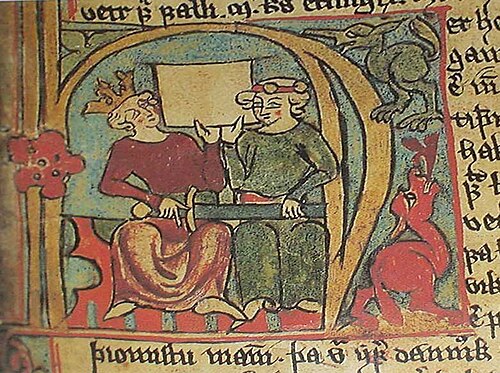
“I was just reading about the history of the town”, says Spencer as we eat breakfast. “Apparently it used to be the centre of power in Helgeland in Viking times. Unfortunately it got caught up in the Norwegian civil wars between a nobleman by the name of Skule Bårdsson and the king, Haakon Haakonsson, who was Skule’s own son-in-law. It didn’t end well, with the entire population of the town being killed in the fighting.”
“That was a bit unfortunate”, I say. “Who won the war?”
“The king won in the end”, says Spencer. “Skule Bårdsson fled to Trondheim and took refuge in the cathedral priory there, but the king caught up with him and burnt the priory down, killing him in the process. That was in AD 1240, and brought an end to the civil wars in Norway at that time. It was only many years later that the town of Brønnøysund was repopulated by people from southern Norway and Sweden. Apparently there are still traces of the Swedish accent here.”
We leave Bronnøysund the next day. Once clear of the wind shadow of Torghatten mountain, the wind picks up from the west and we have a comfortable beam reach all the way down to the island of Leka.
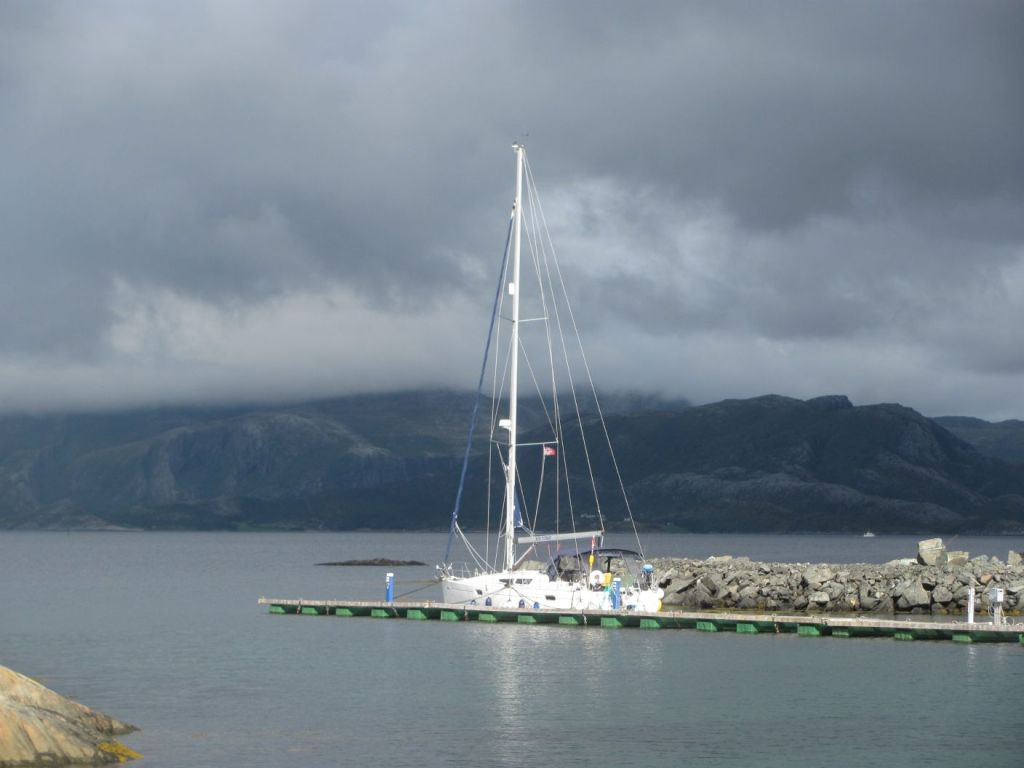
We arrive at the small harbour of Skei in the late afternoon, and tie up alongside to the visitors’ pontoon facing north. There are strong winds from the north predicted for tomorrow, so we want to minimise the area we present to the wind.
“There’s supposed to be a café here”, says the First Mate. “Let’s go up and see if we can get an ice cream.”
We order two cones.
“You can go outside and sit in the sunshine”, says the waitress. “I’ll bring them out to you.”
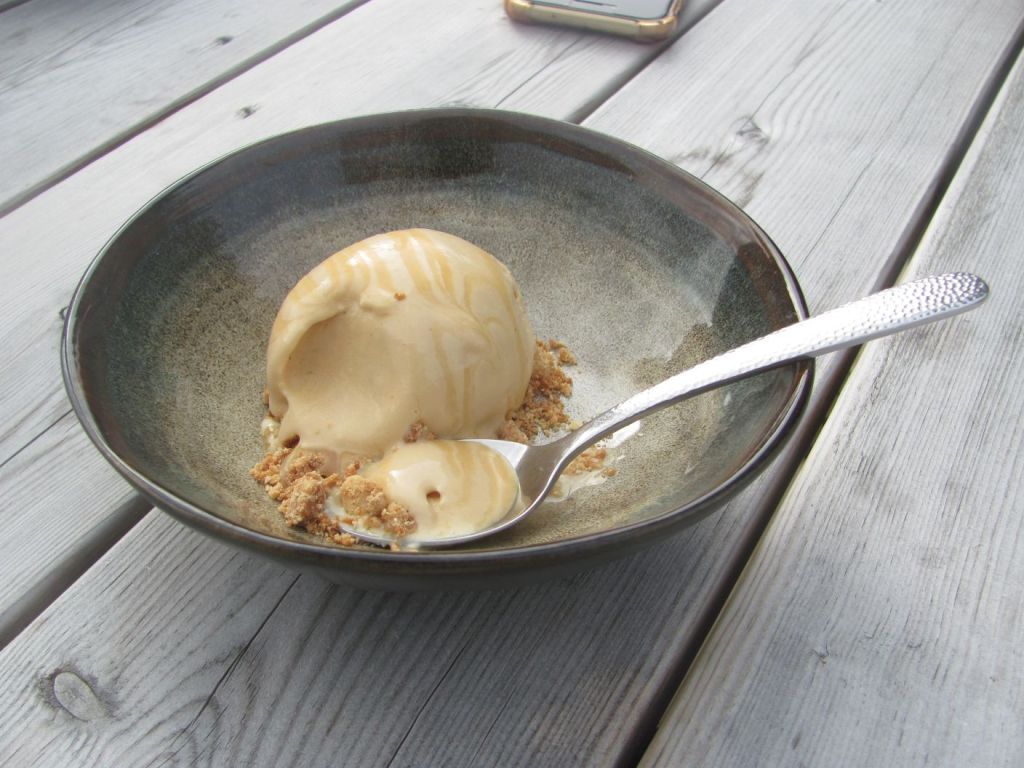
A few minutes later, a man in a chef’s hat comes out carrying two bowls and spoons.
“I know that you ordered two ordinary ice cream cones”, he says. “But I have just been developing a new flavour of ice-cream, and I took the liberty of wondering if you might like to try it? It’s made from Norwegian brown cheese.”
We are not quite sure what to think, but we try it. It’s delicious.
“You’ll have to call it Leka ice-cream”, says the First Mate. “Lecker means ‘delicious’ in German.”
“It’s a joke”, I explain.
“I got it”, says the chef. “We have the same word ‘lekker’ in Norwegian, meaning ‘beautiful/.
“Did you hear the story of the little girl and the sea eagle?”, he asks, sitting down at a table opposite. “It’s a kind of island legend.”
“No”, we say. “Tell us.”
“Well, back in 1932, one of the families living here was attending a christening”, he continues. “They had a three-year-old girl called Svanhild. After the dinner, the parents wanted to chat so they let their daughter go out to play. But when they came to look for her, she was missing. They searched everywhere, but there was no sign of her.”
“A sea-eagle had taken her?””, says the First Mate.
“Well, they didn’t know what had happened at that point”, says the chef. “So a search party went out to look for her. They found her handkerchief and a shoe, but there was no sign of the little girl. Then someone noticed sea-eagles flying around a mountain in a strange way, and thought that they might have snatched her. Three men offered to climb up the mountain to see if they could see anything, and were astounded to find the three-year-old unhurt and fast asleep on a ledge near one of the nests. She was lifted to safety and subsequently survived to a great old age.”
“Did she remember what had happened?”, I ask.
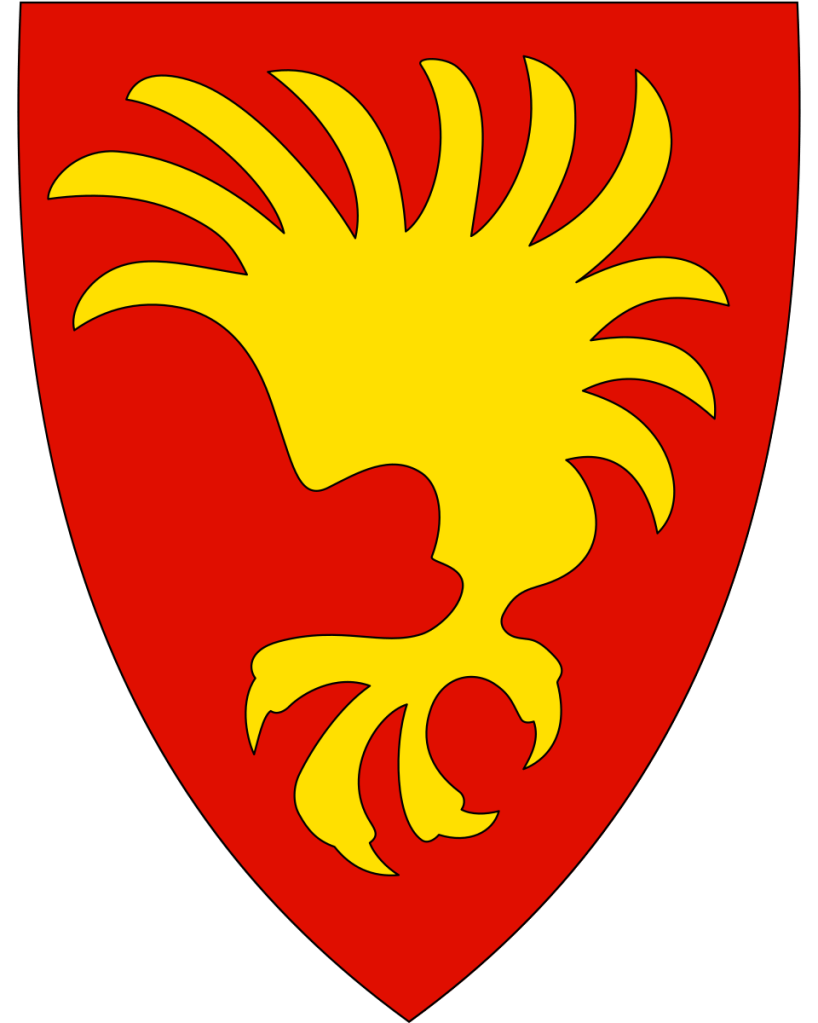
“That’s the strange thing”, says the chef. “She had no recollection of it. Of course, that caused a lot of speculation since as to whether it was a true story. It was too far and too high for her to have walked there by herself, and yet she was probably too heavy for a sea-eagle to carry her, as big as they are. But true or not, it’s a great story, and the Leka island council decided to put an eagle’s wing and claw on the coat-of-arms to make it part of the island’s identity. Now, enjoy your ice-cream.”
We have already finished it, listening to the story.
“There’s a small information centre just behind the café”, says the First Mate. “About the island. I saw it while you were ordering the ice cream. It looks quite interesting.”
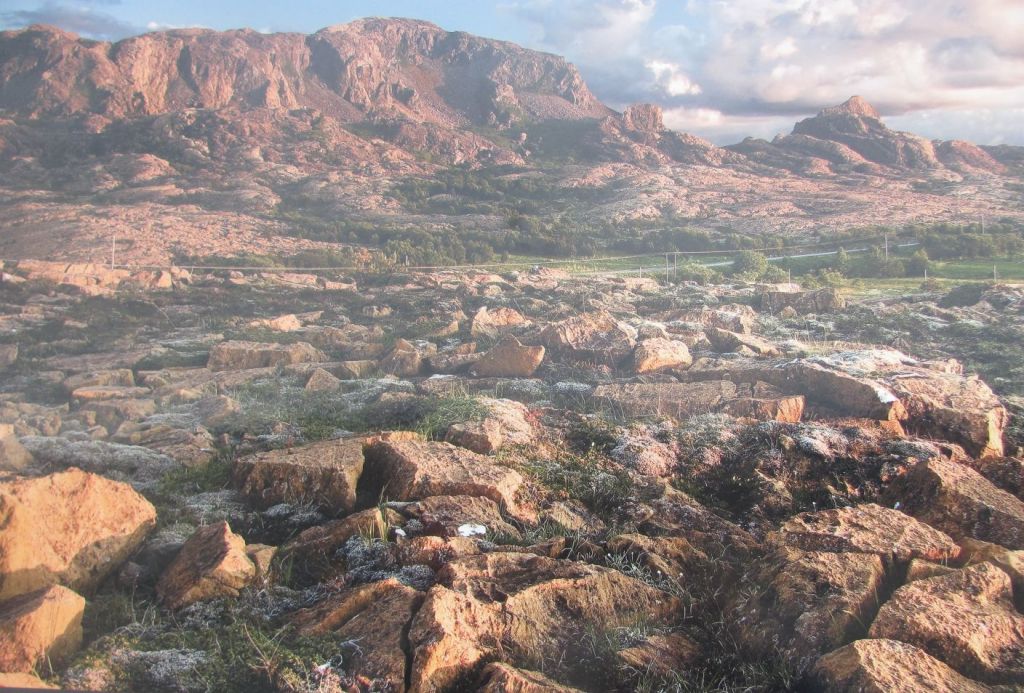
“Leka is the Geological National Monument of Norway”, the introductory panel tells us. “Because of the unique geology of the island. The story begins 600 million years ago, when the supercontinent of Rodinia started to break up. One of the parts was called Baltica, which became the Europe we know today, including Norway. As it broke up, it drifted towards another chunk of Rodinia called Laurentia, which is North America and Greenland today. At one stage during this drifting, it was covered by a shallow tropical sea, when many layers of sediments were laid down.”
“Eventually Baltica and Laurentia collided with each other, about 500 million years ago”, the next panel tells us. “The collision was so powerful that it pushed up bits of oceanic crust and even the earth’s mantle. Leka is one of the few places nowadays that you can see both of these on the earth’s surface. It’s called the Mohorovičić discontinuity, or MOHO for short. Later, they split up again, then came back together to form the supercontinent of Pangaea.”
“I always find it hard to believe that the continents were moving around like that”, says the First Mate. “Like bits of wood floating on water. They look so stable nowadays.”
The next panel tells us about how oil was formed in the North Sea.
“Pangaea started breaking up about 200 million years ago, and Baltica and Laurentia drifted apart again, forming the Atlantic Ocean and the North Sea basin between them. Marine organisms living in this basin fell to the sea floor when they died, and were covered with more layers of sediment. Over millions of years, tremendous pressures and temperatures slowly converted this organic layer into oil and gas which tried to migrate to the surface but became trapped under impermeable rock. It’s only now that humans are drilling through this rock and bringing the oil and gas to the surface again.”
“And bringing with it lots of wealth to countries like Norway”, I say. “But contributing to global warming by releasing carbon dioxide when it is combusted.”
We wander back to the boat. In the evening, there is a knock on the hull. It turns out to be the harbourmaster, who has come to collect our harbour fees.
“You should go and see Herlaugshaugen”, he tells us. “You can see it just over there. It’s the largest burial mound in Norway. According to the sagas, it is of a local king called Herlaug, hence its name. The story is that there were two brothers, Herlaug and Rollaug, who were local rulers in the time of Harald Fairhair. They didn’t want to subjugate themselves to Harald, who was trying to unify Norway during the Viking Age, so they built the mound to hide in. Herlaug entered it with a large amount of food and sealed it behind him, but Rollaug chickened out at the last minute and surrendered to Harald.”
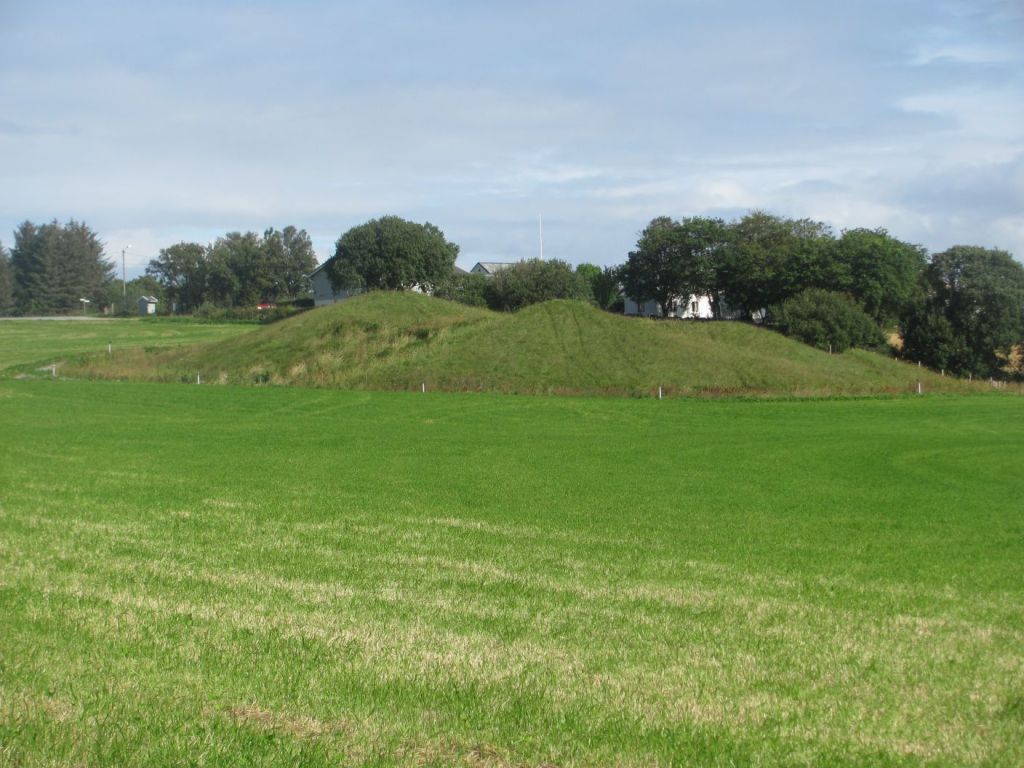
“Not a very nice way to die”, I say. “Suffocating yourself to death.”
“Well, back in the 19th century, they excavated the mound and found a skeleton leaning against a stone slab with a sword nearby”, the harbourmaster continues. “There were also bones of animals, including sheep, pigs and cattle, along with other human bones. It seemed like they had discovered Herlaug and his storeroom of goodies for the afterlife.”
“I get the impression there’s a twist to this story”, I say.
“Yes, you are absolutely right”, he answers. “In 2023, archaeologists had another dig and discovered ship’s rivets, which they dated to around 700 AD, a bit earlier than Harald Fairhair lived. So the mound didn’t contain Herlaug, or if it did, he didn’t oppose Harald. But we still don’t really know who it belongs to.”
“We’ll probably never know”, says the First Mate profoundly. “Lost in the mists of time.”
 Ruby Tuesday