“I guess you are going off to work?”, says the First Mate to the young chap clambering off the boat tied up in front of us.
We are in the harbour at Rørvik, preparing to continue our voyage south.
“Well, I am already at work at the moment”, he responds with a smile. “I work for an organisation called “In the Same Boat”. It’s a non-profit organisation dedicated specifically to countering marine rubbish. We use sailing boats as mobile bases to take teams of volunteers around the coast to clean up remote beaches, and are also involved in raising public awareness and educating people how to minimise the rubbish they throw into the sea. Our focus is mostly plastic pollution from the fishing industry – it’s very bad for the environment as it breaks up into very small fragments called microplastics, which enter the human food chain when marine creatures eat them. I’m sure you’ve heard about them? So far we have removed more than 1,800 tonnes of waste.”
“Impressive”, I say. “Who funds you? The government?”
“Unfortunately not”, he answers. “It’s mostly private individuals and some companies. We’re always on the lookout for new sources of funding, though. Luckily we have teams of very enthusiastic volunteers – I am just off now to buy some provisions and collect my group for the day. Then we’ll be heading out to one of the islands.”
“It’s very admirable”, says the First Mate after he has gone. “To see them so enthusiastic doing something about the environment.”
We sail from Rørvik into a light south-west wind, heading for the island of Sør-Gjæslingan 17 miles southwest of the town. At first progress is slow, but after about an hour or so the wind picks up, and we have an enjoyable close-hauled run on a smooth sea.
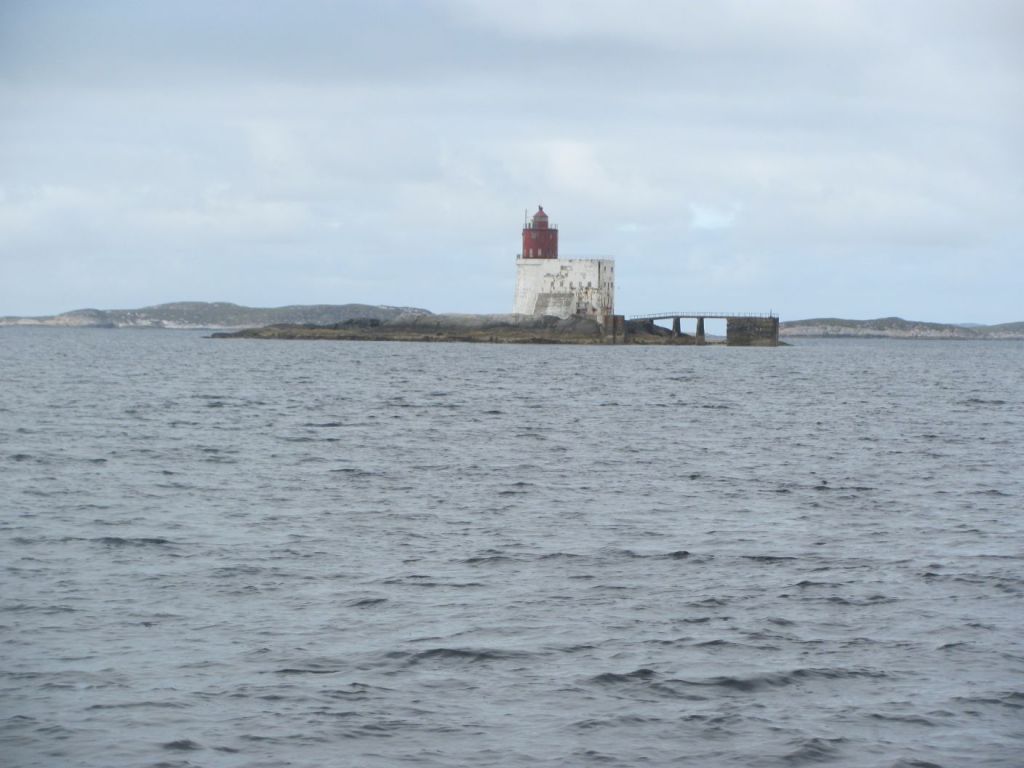
“That must be the Gjæslingan Lighthouse”, I say, pointing to a building perched on one of the skerries as we approach the archipelago. “According to the guide, it was built in 1877, and fully automated more than a hundred years later in 1987. No-one lives there any more. It is still operating, but I suspect not many people use the pier these days.”
Now we are heading directly into the wind, so I start the engine for the last mile or so. It’s quite a complicated entrance, so I want to take it carefully. The last thing we want to do at this stage is hit a rock.
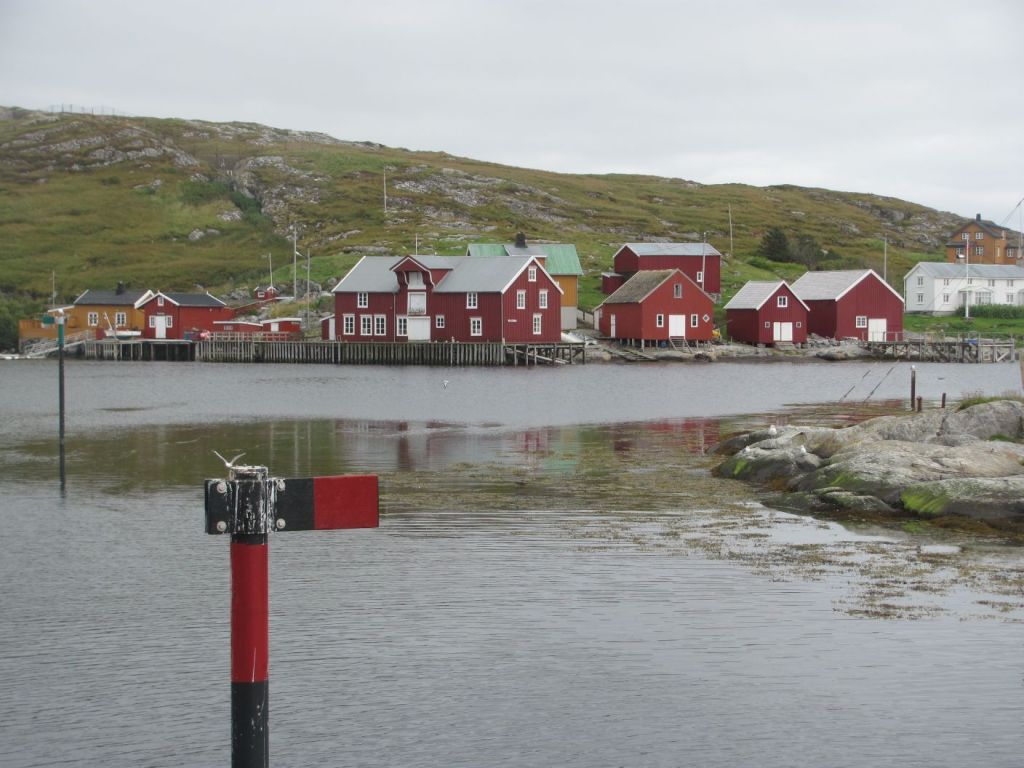
We follow the poles marking the edges of the narrow entry channel, semi-submerged rocks sliding past menacingly just metres from our hull. At one point the depth is just one metre under the keel, not a lot of room for error. But we somehow make it through to the guest pontoon and tie up.
“Phew, I’m glad that’s over”, I say, breathing out. “I could see the bottom in several places, it was so shallow.”
“There’s supposed to be a small shop here”, says the First Mate. “Let’s try and find it. We have to pay the harbour fees there. And we also need some milk.”
We find the small path leading away from the pontoon towards the neighbouring island. The strains of Mozart’s Clarinet Concerto in A major reach us from one of the houses along the way. It turns out to be a man listening to the radio while sunning himself on the small deck in front of the house. A ginger cat stretches languidly, regards us curiously, and goes back to sleep.
“Do you live here?”, says the First Mate. It’s not clear if she is talking to the man or the cat.
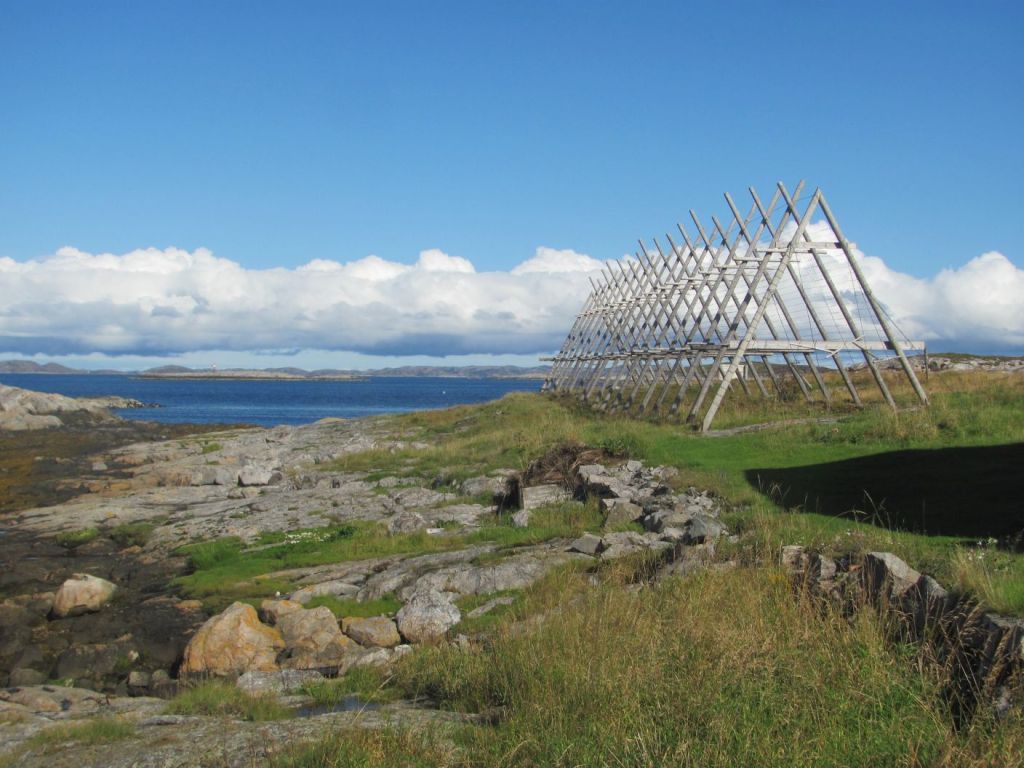
“Yes, I do”, the man replies, stroking the cat. “I was a fisherman, but I retired several years ago. It’s very quiet here now, particularly in winter. During its heyday in the early 1900s, there were around 5000 people on the island. Mostly fishermen, after the cod. Almost as big as Lofoten, by all accounts. You can see the racks where they dried the fish over there. The men would come and build rorbu – fishermen’s huts – to live in while they were here for the summer. They were pretty basic and unhygienic, until women came to settle there. They made things a bit more civilised!”
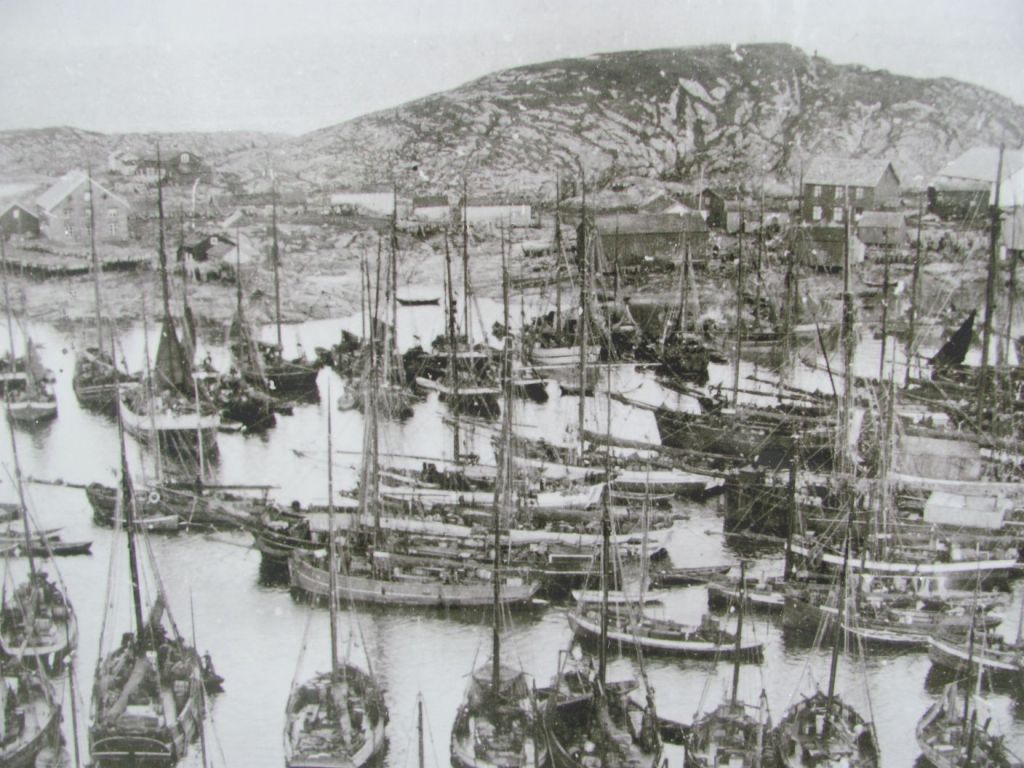
“Then in the 1930s, the number of cod declined, and with it, the number of fishermen”, he continues. “Then in the 1970s, the government pursued centralisation policies to get people to move to the mainland, so the population collapsed completely. Now there are only about three or four people who live here permanently. And all old, like myself.”
“We’ve heard several stories about how all these islands became depopulated in the sixties and seventies because of that government policy”, I say. “I suppose there was some kind of logic to it at the time, but from our standpoint now, it clearly was a disaster.”
“We’re looking for the shop”, interrupts the First Mate. “Are we on the right track?”
“Just over there”, he points. “Opposite the yellow house. But I am not sure they are open. They normally close at one.”
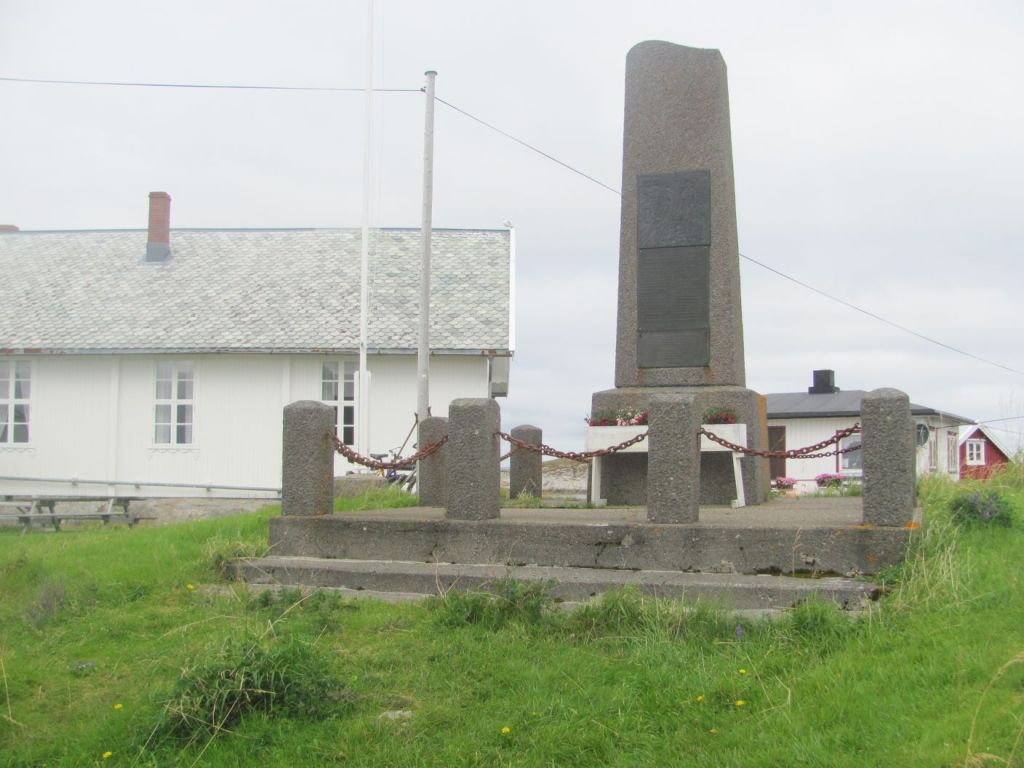
On the way, we stop to look at a memorial stone to the fishermen who had died in storms while out fishing – 210 fishermen in 1625 and 31 in 1906.
Just as we reach the shop, a door in the yellow house suddenly opens and a man with a beard hurries across the road clutching a bunch of keys.
“I heard that you were coming, so I can open specially”, he says. “It’s no bother. Now, what was it you wanted again? Milk, wasn’t it?”
Clearly, the village telegraph has been active.
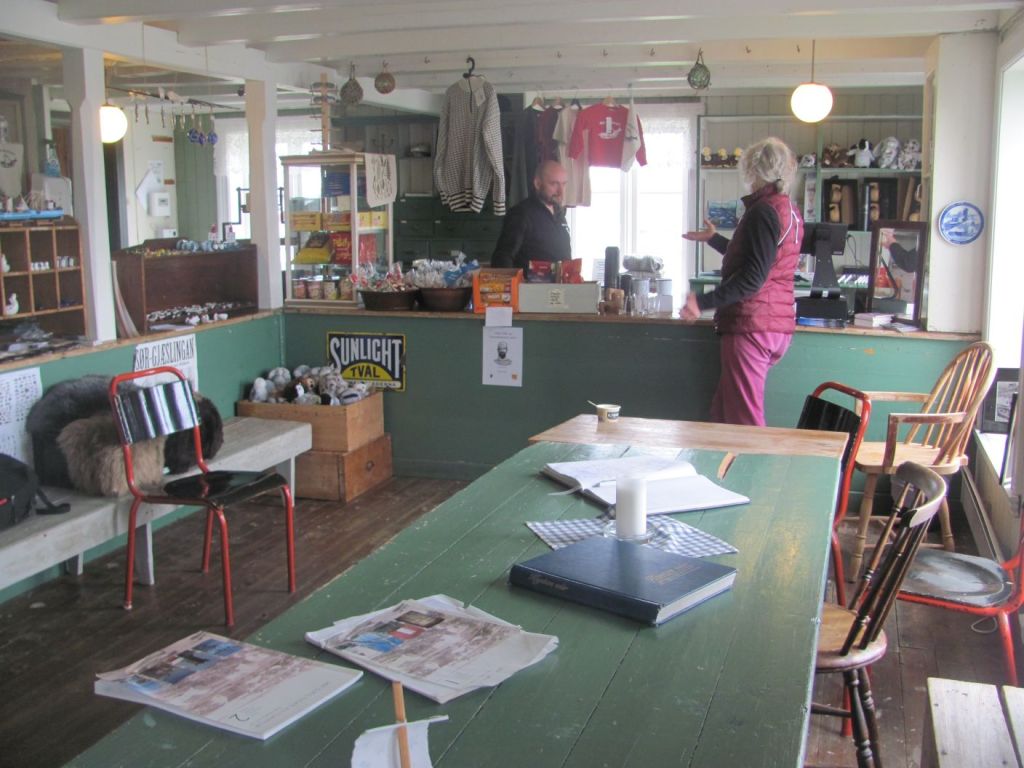
“Yes, and to pay the harbour fees”, says the First Mate. “Oh, and we’ll have an ice-cream each too. A pistachio and a chocolate, please. Do you live here?”
“I am actually an employee of the KystMuseet in Rørvik”, the Man with the Beard answers. “But I come here every summer to run the shop and organise the volunteers that come to keep the islands tidy.”
“How come the KystMuseet does that?”, I ask.
“Well, after everyone left in the 1970s, the local municipality decided to preserve the island for posterity and make it available for tourism”, he says. “The museum has the responsibility for maintaining the facilities and managing the accommodation. It gets quite busy here in the summer with the tourists. And a lot of the families who used to live here kept their houses, did them up, and now use them as summer cottages.”
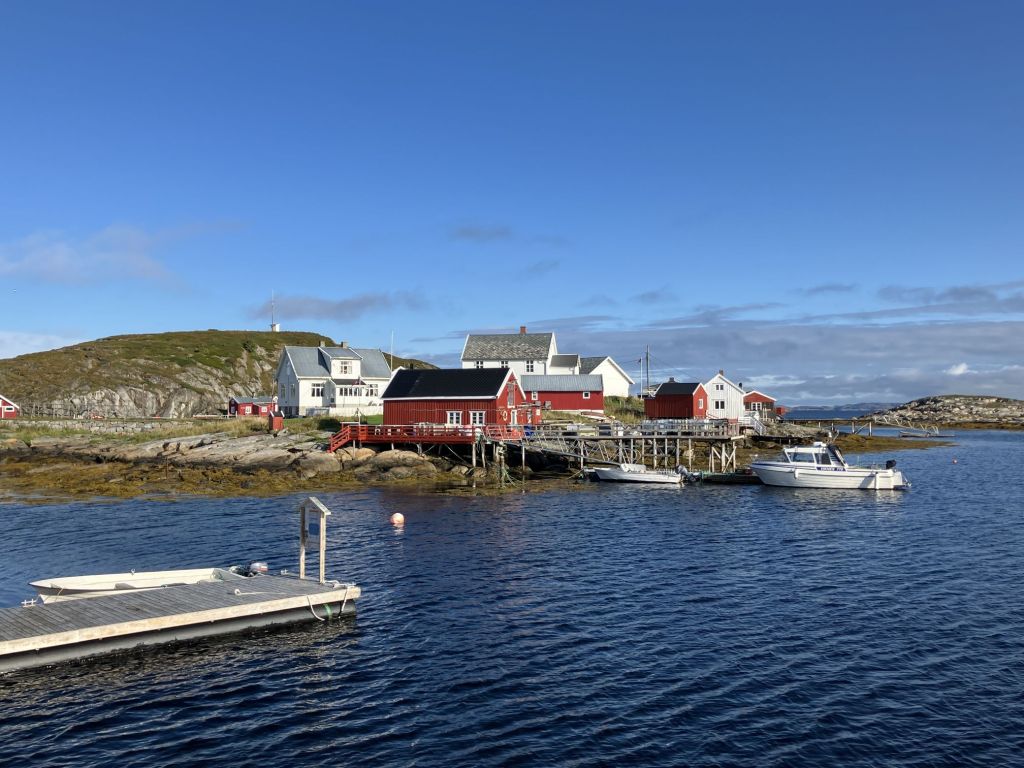
“Yes, everyone in Norway seems to have a summer cottage”, says the First Mate. “You Norwegians certainly seem pretty well off.”
“Well, it’s clearly because of the oil”, says the Man with the Beard. “We do have a lot of money, but it hasn’t always been good for the country. It distorts all the other sectors. It’s what economists refer to as ‘Dutch disease’. Apparently, when the Dutch discovered gas in their part of the North Sea in the 1960s, the revenue they got from that caused a decline in the manufacturing sector by increasing wages and making those other exports too expensive to sell abroad. We have a similar problem, although we have got around it to some extent by focusing on making things where labour is a small part of the cost, and can also be easily automated. Things like equipment for the oil and gas sectors, fishing, aquaculture, ship building, and so on. But anything that is labour-intensive is very expensive here. In the 1960s, it used to be that materials were expensive and labour was cheap, now it’s the other way around.”
“Yes, we’ve noticed that eating out here is an example of that”, I say. “We almost have to take out a mortgage to go to a restaurant. “
“That’s why we are getting a lot of people from Eastern Europe and elsewhere coming to Norway to work in the hospitality and cleaning sectors”, the Man with the Beard responds. “Norwegians don’t want to do that sort of work as they can earn more money doing something else, but people from eastern Europe are happy to do it as it is more than they would earn in their home countries. Restaurant owners are also happy to pay them a bit less than they would have to pay a native Norwegian, as they can keep costs down.”
“Has this caused an anti-immigration feeling in Norway?”, asks the First Mate.
“Not so much as in Sweden”, he says. “Most Norwegians realise that the country needs them, and that they contribute to our economy and culture. But there is a feeling now that it should be restricted more than it has been in the past.”
We finish our ice-creams.
“But at least you were wise enough to invest a lot of your oil wealth into your Sovereign Wealth Fund and in the country’s infrastructure”, I say. “We’re always impressed at the amount that has been spent on bridges and tunnels. I even read the other day that they’ve approved the construction of a giant tunnel through the Statlandet, big enough to let cargo ships pass through and avoid the dangerous currents off its headland.”
“Yes, there certainly has been a lot of money spent”, he says. “But there’s also been a lot of waste. The government realised this, and they have an independent office, the Riksrevisjonen, to make public-sector bodies become more efficient and reduce administrative costs to ensure better value for taxpayers’ money. One of their recent reports found that almost two-thirds of government agencies said they have little incentive to propose savings and cuts during the budget process.”
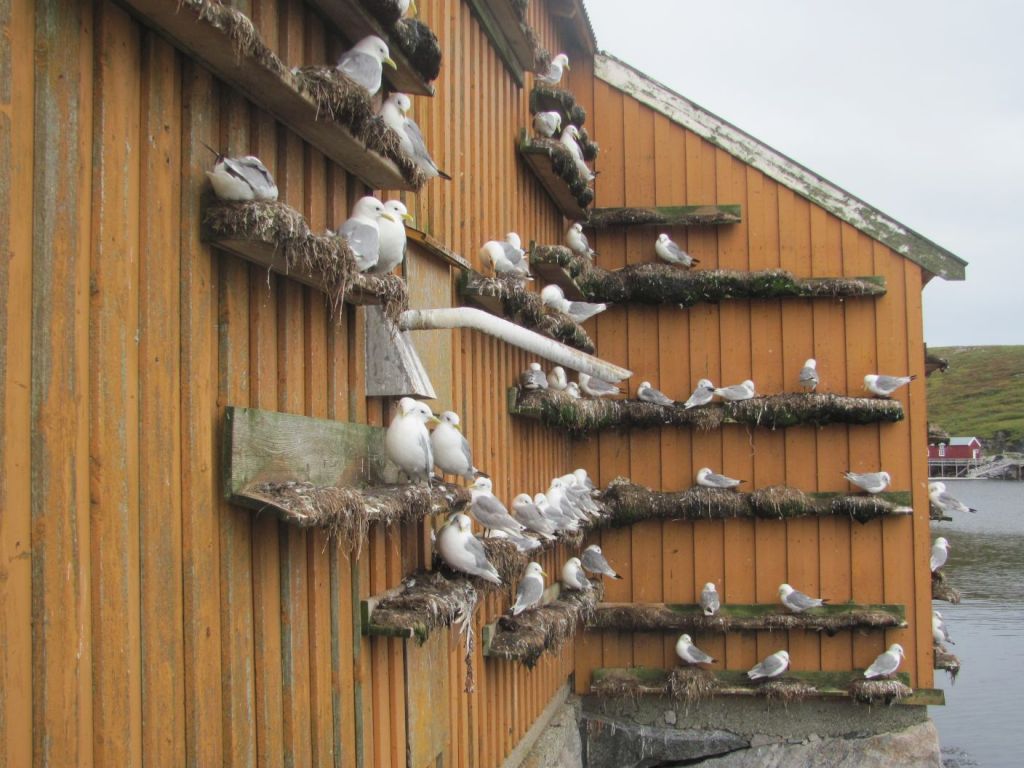
We leave the shop to go and explore the island. Down at the water’s edge kittiwakes have colonised one of the walls of a warehouse. They don’t seem to be bothered by us creeping closer to get a photo.
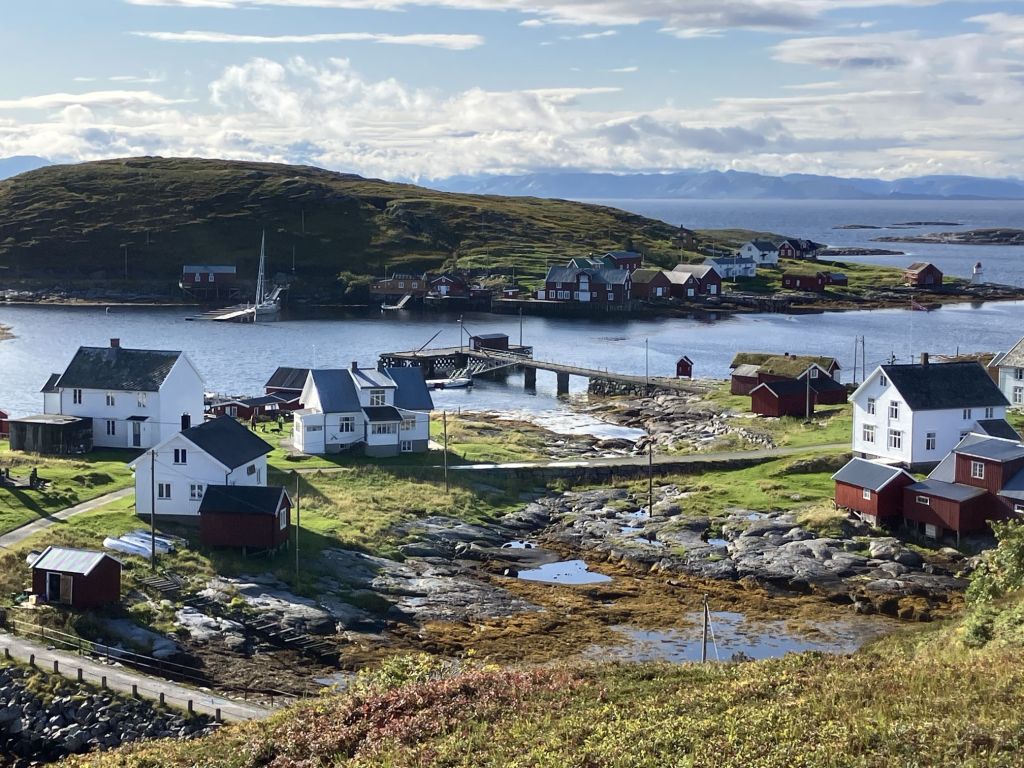
We climb to the top of the small hill overlooking the village. The view out over the archipelago is stunning.
Below, there is a solar panel array under construction.
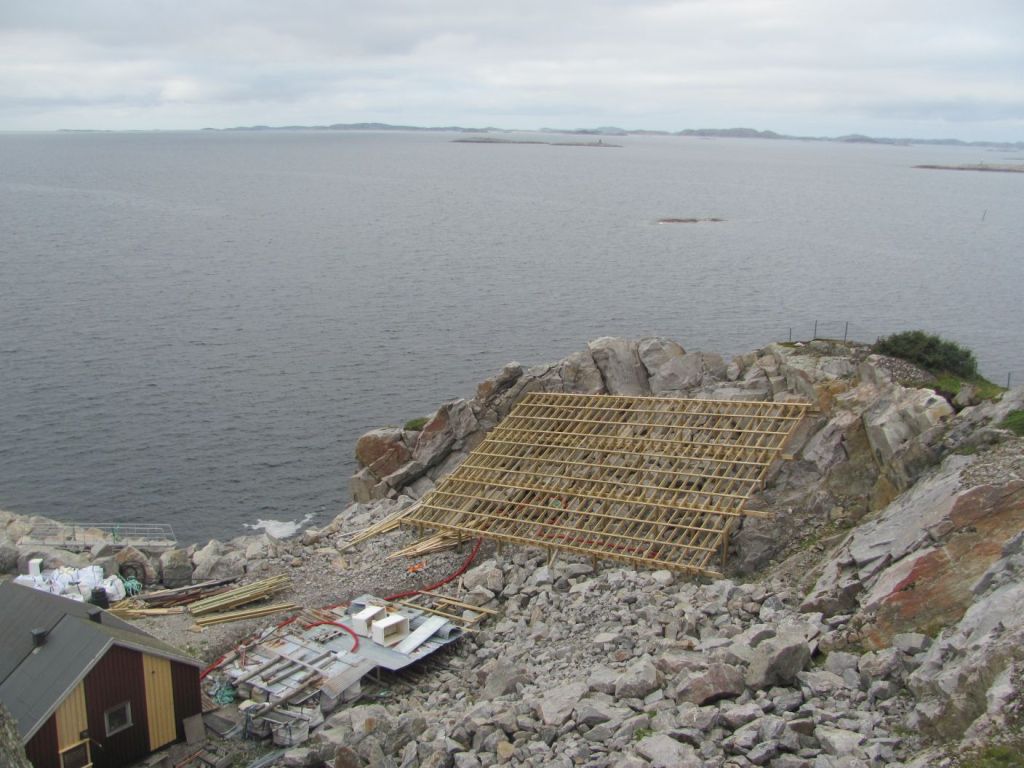
“At the moment, all the power on the island is produced by a diesel generator”, one of the islanders explains. “When it is finished, it will mean that we can reduce our reliance on fossil fuels.”
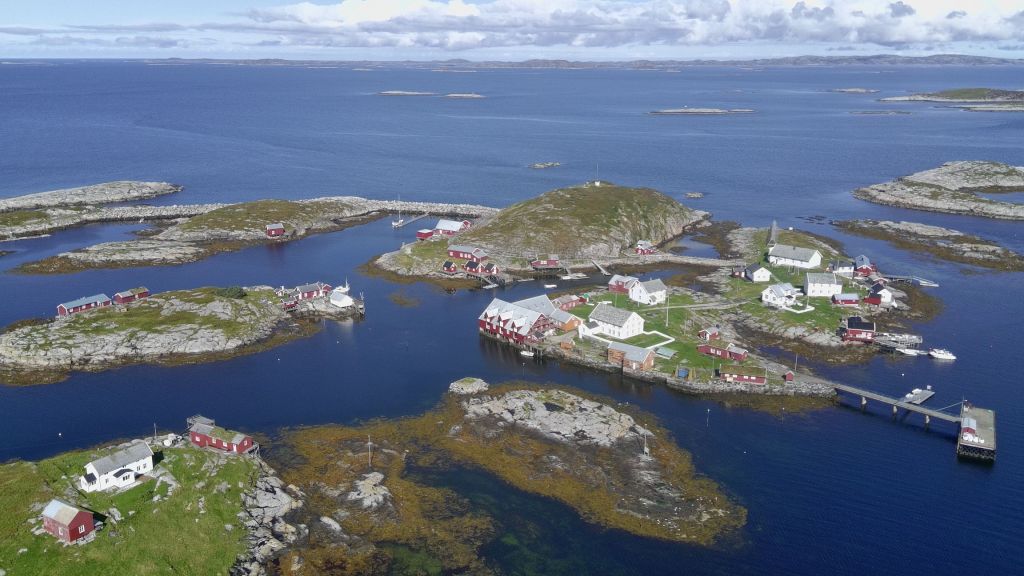
The next day we sail to the island of Villa down the coast. The wind is coming from the north-east and we have a nice broad reach. On the way, we stop to do some fishing, and catch a cod for dinner. We arrive at the small harbour at the south-east of the island, and tie up to the single pontoon there. It isn’t easy, as the wind blows us off the pontoon, but after a couple of attempts, we finally make it. We have it all to ourselves – apart from a couple of empty holiday cottages, the island is uninhabited.
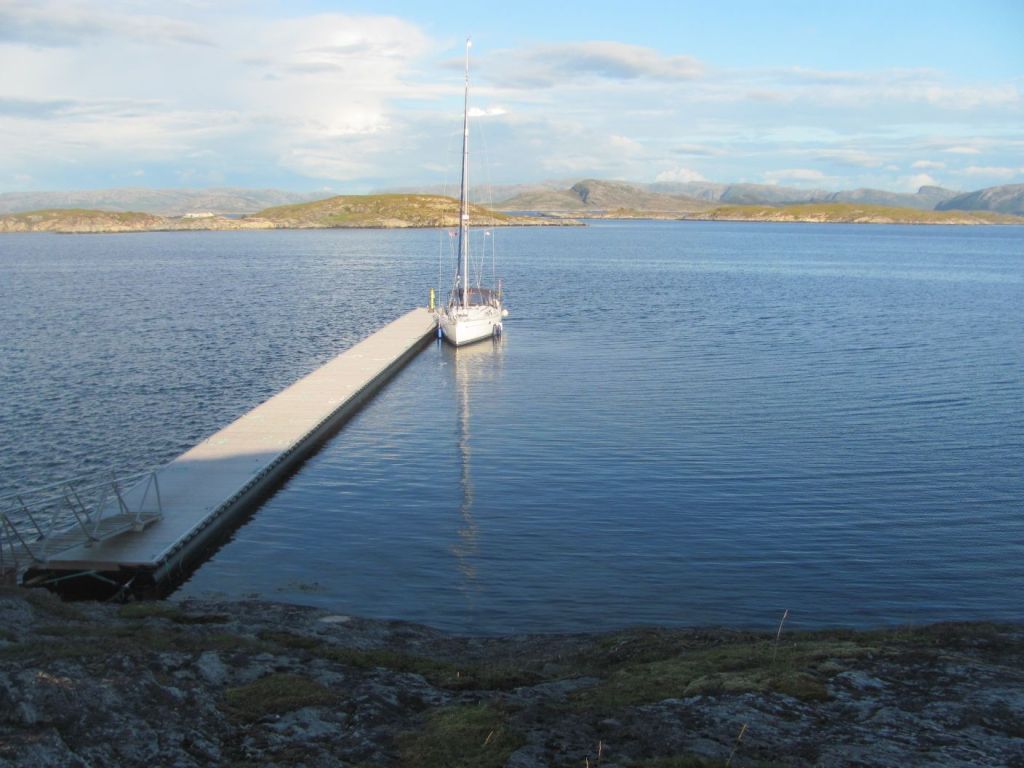
“Let’s go for a quick walk up to the lighthouse before we cook the cod”, says the First Mate. “It’s about an hour each way. We need some exercise.”
We put on our boots and set off along a path marked by white poles and lined with stones colourfully painted by children. We follow a rocky ridge with the shallow gap between Villa and the next island on one side, and stagnant pools covered in water-lilies on the other. Eventually the path gives way to a boardwalk traversing marshy wetlands before climbing some higher land on which the lighthouse has been built. The view out to sea is magnificent.
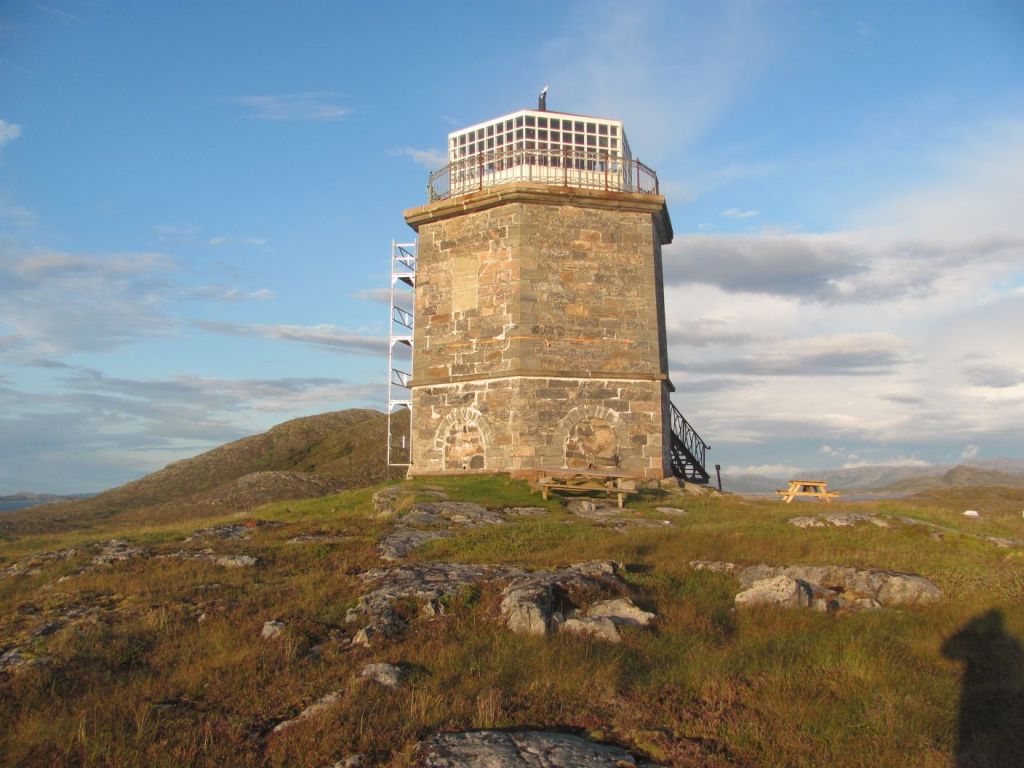
“Look, there’s a QR-code on that sign”, shouts the First Mate. “It might tell you something about the history of the lighthouse.”
“It was part of a string of lighthouses constructed to help shipping along this part of the coast”, I read on the website. “It was built in 1839 out of granite, soapstone and brick by 70 workmen who took less than a year to complete it. It was unusual in that it used burning coal to provide the light, even though it was obsolete technology at the time. Newer lighthouses used oil.”
“I wonder why they did that?”, says the First Mate.
“Apparently, it was because it was simpler and more reliable to use coal in these remote places, as it didn’t need any sophisticated equipment”, I read. “The coal was shipped from Scotland and Somerset as it was of higher quality than here in Norway. The tower was 15 meters high and used ventilation channels to provide a draught to the fire. In any case, it was converted to oil in 1859. Then in 1890 it was closed down for good.”
“Fifty years of service”, says the First Mate. “Not all that long.”
“True”, I say. “But in 1976, apparently local people decided to restore it from the ruin that it had become. Now, it’s even protected as a cultural monument, and the lightkeeper’s house is let out during the summer for get-away-from-it-all holidays.”
“We should think of getting back”, she says. “I’m getting hungry. The cod is not getting any fresher.”
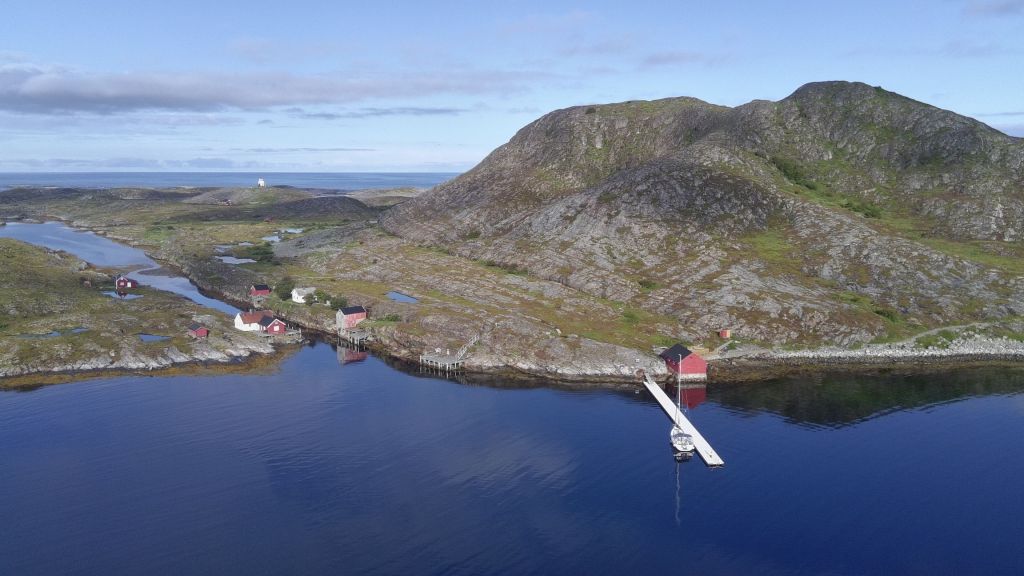
In the morning, I decide to go for a little walk before breakfast to take some drone shots. On the way back, I slip on a wet rock and twist my ankle. It’s excruciatingly painful, but I still seem to be able to walk on it.
“I hope you haven’t broken it”, says the First Mate. “Perhaps you should see a doctor.”
“Where are we going to find a doctor around here?”, I wail, trying to be brave.

