A cement town, a wartime evacuation, and unexpected winds

“You can leave your car with a friend of mine”, says Ingemar, over a beer. “He has a big barn, so it will be under cover.”

We had met Ingemar on the Danish island of Christiansø last year, and had sailed along with him to Limhamn marina on the outskirts of Malmö, where he was also storing his boat over the winter. Limhamn was where he had been born and grown up, so despite now living in the south of France, he knew the place and its people well.

“It’s better than leaving it at the marina, where it is likely to get covered in salt spray from the wind”, he continues. “I always leave my motorhome with him.”

He has a large motorhome that he uses to travel around in when he is not sailing. We had been most impressed with it – it is fitted with state-of-the-art gear, and even has a small garage in the back of it in which he keeps his SmartCar for travelling around locally in when he reaches his destination.

A home away from home? (Similar to, but NOT Ingemar’s mobile home.)

The next day, I follow him to his friend’s place and park our car in the barn. His motorhome is already there. Several other cars are also in the barn, some classic, some covered in dustsheets. Our car will have others to talk to.

“Your car will be fine here”, says Ingemar’s friend. “I won’t move it from its place. Remember to disconnect your battery so that it doesn’t go flat.”

On the way back to the marina in his SmartCar, Ingemar talks about the local history of the area.

“Limhamn actually means Lime Harbour. There was a huge quarry, the Limhamns Kalkbrott, from which they used to extract limestone and take it by train to the harbour where it was converted into cement. I can remember as a young boy being woken every morning by the huge explosions as they blasted out the limestone. Our whole house shook. The cement was shipped all over the world – the ‘Christ the Redeemer’ statue in Rio de Janeiro was actually made using Limhamn cement.”

“Do they still make it here?”, I ask.

“Not any more”, he says. “Nowadays, most of Sweden’s cement is made on Gotland. They have turned the quarry here into a nature reserve with a lake in the middle which attracts wildfowl and other animals. Apparently the nature reserve has one of the very few populations of the European green toad left in Sweden. Look, the observation point is just off here. I’ll take you to see it.”

We stand on the edge of a giant crater and look down at the small lake and regenerating vegetation. On three of the sides of the rim are new-build housing areas, and on the fourth is the motorway to the Øresund Bridge.

Limhamns Kalkbrott.

All that material removed from the earth and used to make the cement to construct the hallmarks of modern civilisation, I think.

“Ironically, they have to keep pumping water out of it so that the whole area doesn’t become a lake”, says Ingemar. “It makes you wonder how sustainable it will be in the long run.”

—-

We set sail the next morning. We are a little nervous, not only because this is our first sail of the season, but also because it is the first proper test of everything on the boat after the winter repairs – particularly the engine which had had the heat exchanger removed. Will it all function, or did I forget to reassemble some vital bolt or screw, I wonder.

But everything works as it should, and we are soon sailing merrily northwards along the Øresund. It is just as well, as we had arranged to meet three other boats by a specific date in the small village of Smögen some 200 miles away well up the west coast of Sweden, and we already don’t have much time to get there. But at least we are finally on our way.

“Look, there’s Kronborg Castle over there”, says the First Mate, pointing to an impressive looking structure on the Danish side. “The town nearby is Helsingør, where we used to catch the ferry across to Sweden the times we drove to Stockholm.”
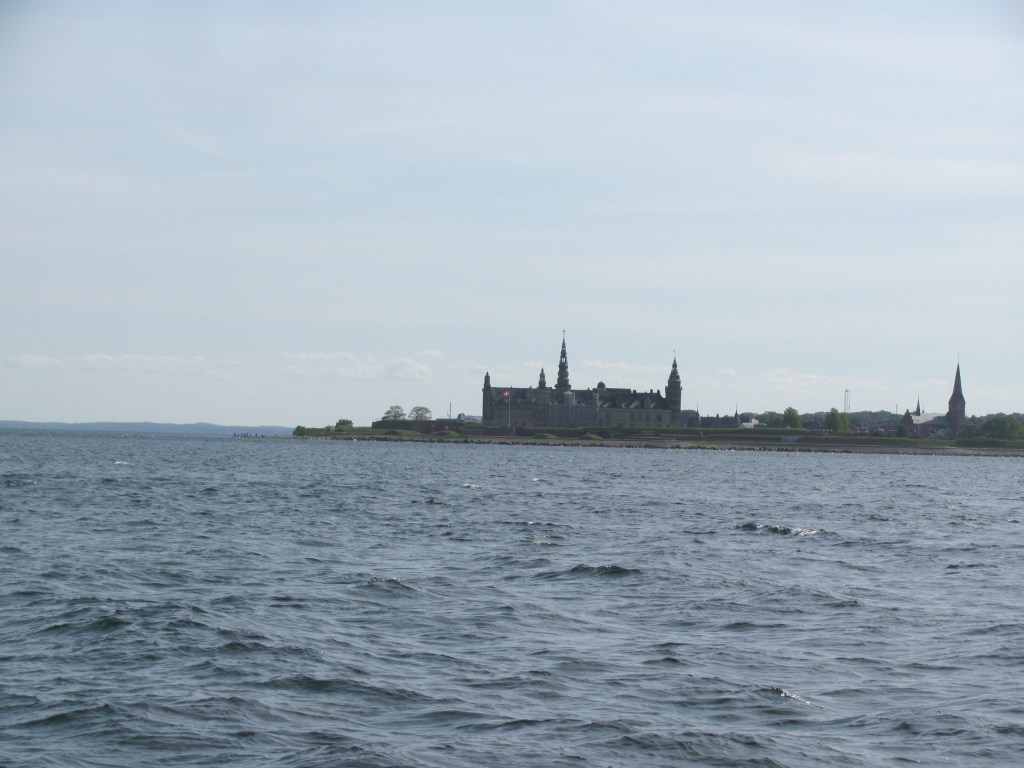
Kronborg Castle, Helsingør.

We cross the shipping lane at right angles to reach the Danish coast. Now the wind is on the nose, and we have to furl the sails and start the engine. Eventually we reach our destination for the night, the small town of Gilleleje on the north coast of the island of Sjælland.

“It looks like we’ll be here for a few days”, I say, perusing the weather charts and forecasts in the evening. “Strong north winds and lumpy seas are forecast for the next three days at least. We can’t sail into those.”

“Well, I am sure we can find enough things to do here for a few days”, says the First Mate. “It seems a nice little place. I read that there’s a good fish shop here with fresh fish from the fishing boats.”
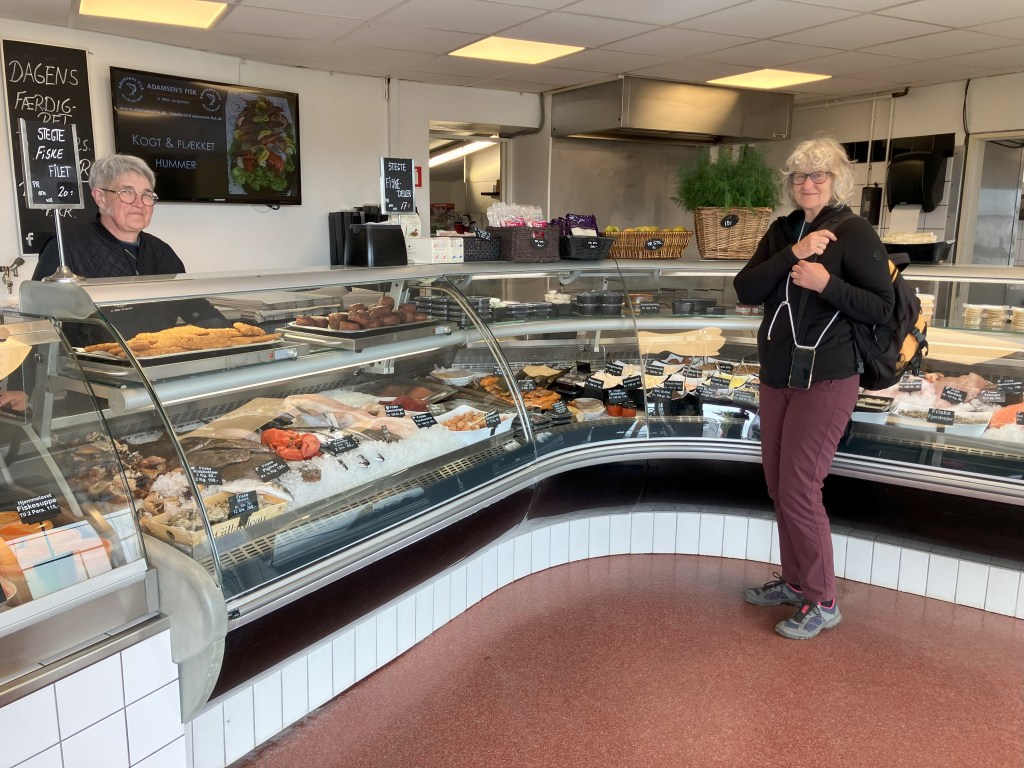
Looking for fresh fish in the Gilleleje fish shop.

In the morning, I walk over to the shower block for my customary shower, taking with me the card we were given to access and pay for the toilets and showers.

“I am not sure how much money is left on the card”, the First Mate says. “I had rather a long shower last night, and I may have used quite a bit of it. But there is definitely some left.”

Outside a group of people are busy doing aerobics, led by an athletic hunk in his twenties.

“Legs up and twist”, he chants. “Arms straight in front, and bend. One, two, three four.”

Inside, I undress and wave the card in front of the reader. The shower starts. I stand underneath it and soap myself up. After one minute there is a click, and the water stops. I wave the card again in front of the reader. Nothing. There is a beep and a message appears on the reader display.

“Insufficient funds on this card to continue.”

Consternation! Dripping soapsuds and shampoo, I have no way of rinsing them off. The machine for topping up the card is at the yacht club, 100 metres away. And I can’t put my clothes on top of wet suds anyway.

The brilliant idea occurs to me that the only way is to rinse myself off at one of the basins in the common washroom. But what if someone comes in? I have to take the risk.

Starkers, I stand on my towel and slosh myself with water from the sink. The aerobics chanting outside ends, and there is the sound of the outer door opening. I just manage to wrap my towel around myself before the washroom door opens.

I avert my eyes from the curious gazes of the Athletic Hunk and several other sweating faces.

“Shower not working”, I mumble, pretending to be a foreigner not used to Danish bathroom technology. No one looks convinced.

The Athletic Hunk waves his card in front of the reader. The shower spurts out water perfectly. I pretend not to notice, dress, and beat a hasty retreat.

“I have a bone to pick with you”, I say to the First Mate when I get back to the boat.

“I told you there might not be much on it”, she says unsympathetically. “You should have topped it up before you went in.”

In the afternoon, we visit the Gilleleje museum, the central focus of which is the evacuation of Danish Jews to Sweden in October 1943. Two of the museum staff are sitting outside the café in the sunshine drinking coffee.

“The Jews in Denmark were left relatively alone for the first part of the war”, one of them tells us. “Mainly because Denmark had an official policy of cooperation with the Germans. But in October 1943, this arrangement broke down, and the Germans began arresting Danish Jews.”

“Suddenly, Jews from all over Denmark started coming to Gillerleje”, the second one tells us. “It’s the closest point to neutral Sweden, and they were trying to flee to there. Many came by train to the station here. You can find out more about it in the exhibition over there.”

“Local people hid the fleeing Jews in their lofts”, one of the panels tells us. “Then when a boat became available, they would be taken down to the harbour in the dark of night and put aboard the boat. Children were even sedated and carried down in cardboard boxes so they wouldn’t cry out and arouse the suspicions of any chance German patrols. The boat would then take them across to Sweden.”

Some of the refugees weren’t so lucky. Someone informed the Germans that there were Jews hidden in the loft of the church – a patrol was dispatched there, the Jews were arrested and taken to the nearby Horserød prison camp, and from there to Theresienstadt concentration camp in present-day Czechia, where many of them died.

The Gilleleje church where several fleeing Jews hid in October 1943.

“Look, here’s one of the boats that transported people across”, says the First Mate, pointing to a dinghy in the middle of the exhibition. “It’s so small. I wouldn’t have liked to be on the sea in one of those in the middle of the night.”

“You probably wouldn’t mind if the alternative was being taken to a concentration camp”, I say.

One of the boats used to evacuate Jews from Gilleleje to Sweden.

Later, we walk out to the outskirts of the town to see the memorial of the Jewish evacuation and of those who died.

Teka Basofar Gadol, it says in Hebrew. “Let the Great Ram’s Horn proclaim our liberation.”

The Teka Basofar Gadol memorial to Jews evacuated from Denmark to Sweden.

—-

“Well, I have to say, this is the type of sailing I like best”, says the First Mate, stretching out languidly in the warm sunlight bathing the cockpit. “A nice light breeze to keep us moving, no heeling, and no waves to make us roll from side to side. Bliss.”

We are on our way from Læsø to Marstrand in Sweden. The winds had changed, and we had been able to sail from Gilleleje to the island of Anholt and from there to the island of Læsø. We had originally planned to explore both islands in detail, but a quick scan of the weather forecast had convinced us that if we were ever to get to Smögen to meet the others, we had to press on. The next three days were to be strong winds from the north again, which would confine us to port. We weren’t too keen to do that. Today was to be light winds and smooth seas all the way to Marstand, so much so, I was expecting that we would probably have to motor some or most of the way. We promised ourselves that we would visit Anholt and Læsø on the way back and do them justice.

The First Mate is right though – it is pleasant. Except is doesn’t last long. After about half an hour, as I had expected, the wind drops to three knots and the sails flap listlessly. Shortly we are drifting along as less than two knots. At this rate, we might be lucky to get to Marstand by the morning. But at least the sun is shining.

I go downstairs to make a cup of tea. While I am down there, the boat suddenly lurches and begins to heel. Out of nowhere, the wind has picked up. I glance at the instruments – 18 knots! Where has that come from? I try to carry my cup of tea up the companion way without spilling it; by the time I get there, the wind is touching 25 knots and we are speeding along at 7½ knots.

“I thought it was supposed to be calm all the way”, shouts the First Mate. “We need to reef. We’re heeling far too much.”

We put in two reefs just to be on the safe side. The boat stabilises, but she is still hurtling along at almost undiminished speed.

A sudden wind takes us by surprise.

Driven by the wind, the waves slowly begin to grow. Unfortunately, they are an our beam, coming from the side, and Ruby Tuesday rolls as each one travels underneath us.

“I’m feeling a bit squeezy”, says the First Mate, starting to look green. “I think I’ll go below.”

“Queasy”, I say. “You mean queasy.”

“Whatever”, she says, disappearing.

Ruby Tuesday settles into an uneasy rhythm – rolling precipitously with each successive wave, but somehow managing a consistent seven knots. Clouds roll in and the sun disappears, adding to the melancholy. From time to time, the bow plunges into a wave, sending green water cascading over the foredeck and windows of the spray hood.

Crossing the Kattegat in high winds and strong seas.

A ship appears out of the haze. We are crossing a shipping lane and I have been keeping a watchful eye out for ships to avoid. The AIS tells me that our closest point of approach to this one is 75 m. That’s a bit too close. I adjust the autopilot two degrees to the south.

Ruby Tuesday, Ruby Tuesday”, suddenly crackles an Indian voice on the VHF. “Your course is very close to ours. We’re closing fast.”

“Ship calling Ruby Tuesday”, I respond. “I am aiming to go behind you.”

I adjust the autopilot a further two degrees to the south just to be on the safe side. A few minutes later we pass behind the giant cargo ship, and I am watching its stern disappear slowly into the haze again. The AIS tells me she is bound for Baltimore.

The hours pass. There is no let up in the windspeed and the waves are as high as ever. But we are making progress, uncomfortable as it is, and gradually Sweden comes into view. Eventually we reach the entrance to the fjord where Marstrand, our destination, is located. Like the flick of a switch, the wind suddenly drops and the waves calm down, and we sail sedately up the fjord with only the genoa up as we pass the imposing Carlsten Fortress on the hill guarding the entrance to the town.
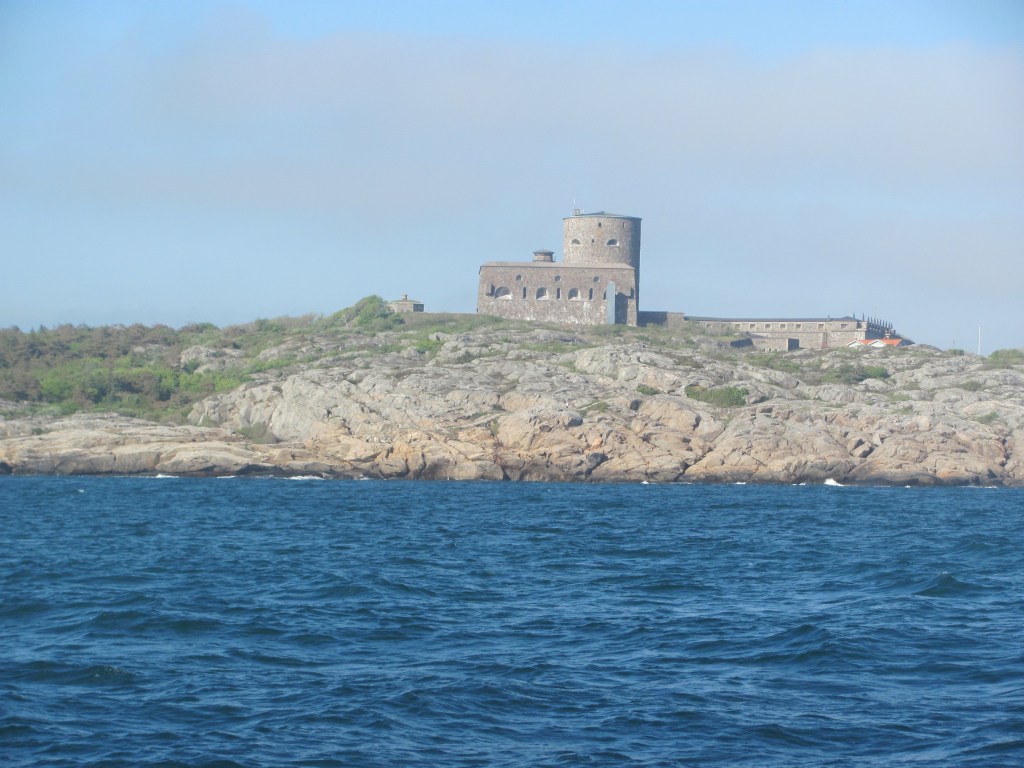
Carlsten Fortress, Marstrand.

“Well, I am glad that is over”, says the First Mate. “I didn’t enjoy that at all. It was odd wasn’t it? When we set out it was calm, and here it is calm. Did we just imagine all those strong winds and waves in between?”

A good question.

Celestial mechanics, a Viking with bad teeth, and meaningful motorcycling

“Well, we have decided to head for Tunisia in the boat”, says Harry as he grinds the coffee beans with his traditional manual grinder. “We want to get there in time to see the solar eclipse in August 2027.”

We are at Harry and Beate’s place in Germany. Beate previously shared a flat with the First Mate when they were both single, and we have kept in touch with them since then. We share a mutual interest in sailing, and, indeed, had previously visited them on their boat in Makkum in Holland.

Harry & Beate with their boat in Makkum, Netherlands.

“The plan is to start off this year from Holland and enter the French canal system”, says Beate. “We’ll see how far we will get in the canals, leave her somewhere over the winter, then carry on in 2026 down to the Mediterranean.”

“Then in 2027 we’ll sail across the Mediterranean to Tunisia”, continues Harry. “I have just finished rewiring the whole boat, so she is in pretty good shape now. Everything works the way I want it to.”

Harry is used to doing such things. When we first met, he was in the process of converting a double-decker bus into a mobile home, with the kitchen and living room downstairs, and the bedroom upstairs.

“I’ve even been taking celestial navigation classes”, he continues. “Look here’s the sextant I have just bought.”

We go out on the balcony and I measure the angle between a block of flats and the power station cooling towers. It’s 87°. It could be useful.

“It all sounds very exciting”, says the First Mate. “Although don’t forget that it gets terribly hot in the Mediterranean in August. We were there a few years ago, and it was almost unbearable. I couldn’t sleep at night. But good luck anyway.”

We spend the next few days in the First Mate’s home town, visiting her family and friends. Her mother is now 91 and in a care home. The plan is that I then drive up to Ruby Tuesday in Malmö and start preparing her for the new season. The First Mate will then come up by train a week later and we will set off.

On the way up, I stop for the night with our friends Hans and Gisela in Denmark. Their son Arne and his girlfriend Evie are also there for a few days, back from Holland where they live.

“Perfect timing”, says Gisela, as I arrive. “Dinner’s almost ready. We’re having garfish that Arne caught today in the sea.”

I have never eaten garfish before, but I remember that they have a long nose.

“And the bones are green”, says Arne. “They contain some stuff related to haemoglobin called biliverdin that is bright green in colour. I hope it doesn’t put you off. Green bones look rather weird.”

Garfish (from the Daily Scandanavian)

Continuing the colour theme over dinner, the subject of Greenland comes up.

“What do the Danes think about America’s plan to annex it?”, I ask.

“Most people think that it is ludicrous”, says Hans, almost choking on a green fish bone. “America is supposed to be one of our allies, and here they are talking about taking Greenland by force just to extract minerals. The most ridiculous thing is that as an ally, they could have want they wanted through joint ventures anyway. No need to annex the place.”

“And it is also not true to say that Denmark has not done anything for Greenland”, says Gisela. “Of course, mistakes have been made in the past, but in recent years the Danes have spent a lot of money improving services in Greenland. And it is completely untrue to say that Greenland is not defended against the Russians. Greenland is part of Denmark, and Denmark is a member of NATO, so Greenland is well defended by NATO.”

“People are also trying to work out what it means for NATO”, says Hans. “Article 5 states that if one NATO country is attacked then the others would all help to defend it. The US is a member of NATO, so does that mean the US would help to defend Denmark against itself?”

Welcome to the new world order, I think.

The next morning, after breakfast, we decide to visit the Trelleborg Ring Fortress not far from Slagelse.

Trelleborg Ring Fortress (from Leibrandt via Wikimedia Commons)

“The fortress was built by Harald Bluetooth in the mid-980s”, one of the museum guides dressed as a Viking tells us. “Harald is credited with introducing Christianity to the Viking world, and with consolidating Denmark into one kingdom. For a short time he also ruled parts of Norway. He built his capital at Jelling, and constructed a series of ring fortresses to demonstrate his power to the German Emperor to the south. But he didn’t live long to enjoy it all – in 987 he was killed in a civil uprising led by his own son Svein, who was the one that invaded Britain.”

We wander out of the museum and head towards the Ring Fortress. On the way is a reconstructed longhouse.

Reconstructed Viking longhouse at Trelleborg Ring Fortress.

“Apparently there were quite a few of these inside the fortress itself”, says Hans. “Families must have been living here, but there never was a town associated with it. Presumably they were the soldiers’ families.”

Back at the small café, we sit in the sun and eat our ice creams.

“We haven’t been here for a while”, says Gisela. “It’s interesting to see the progress they are making in developing the museum.”

In the evening, I arrive at Ruby Tuesday. Spencer is there to greet me. Both he and the boat appear to have weathered the winter well. There is no mould inside and the air smells fresh. I check the data loggers that I had left running and find that the temperatures inside her had not dropped below zero over the winter. Our worries about snow and ice seem to have been unfounded.

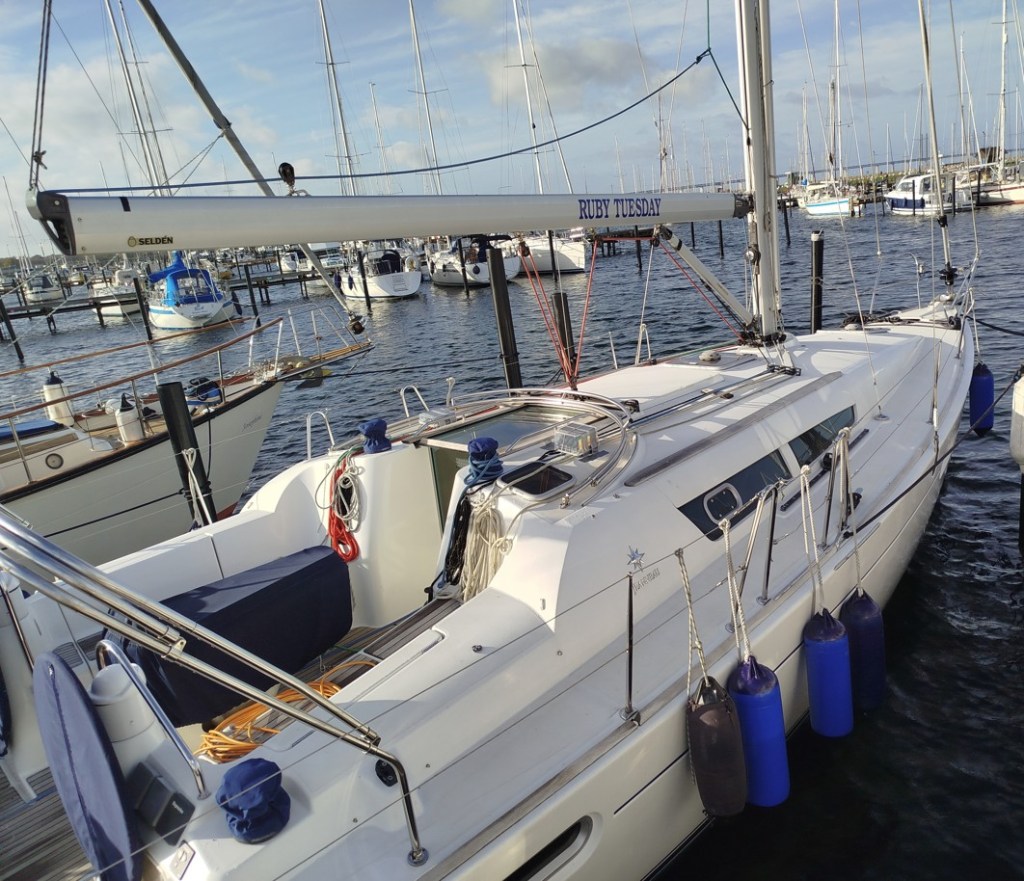
Ruby Tuesday in her winter berth, Malmö.

I spend the next few days preparing for the voyage. I had taken the heat exchanger home to clean and service it – just as well, as I had found that nearly half of the small cooling tubes had been blocked by scale. Soaking the unit in vinegar had helped to dissolve that and left it coppery clean. The job of the heat exchanger is for saltwater from the sea to absorb the heat from the coolant running through the engine, so it is essential that it functions properly to prevent overheating.

Servicing the heat exchanger – nearly half of the small tubes have been blocked by scale.

I also decide to check the anode inside the hot-water heater. We have never done that since we had bought the boat, so it is high time. Extracting the heater from under one of the seats isn’t too difficult, but undoing the nut on top of the cylinder is. It is corroded in position, and none of the tools I have are up to the job of freeing it. In the end, I have to borrow some larger ones from the harbourmaster. With a combination of these and brute force, it slowly comes undone. There is no anode left! No wonder it has corroded. I am sure that no-one has looked inside the cylinder since it was made. I decide to replace not only the anode, but also the heating element, thermostat and pressure relief valve while I am at it.

Servicing the hot water cylinder.

The First Mate arrives in due course. I collect her from the train station.
“I hope that you have got everything clean and tidy for me?”, she says, as I load her bags into the car. “I don’t want to start cleaning as soon as I arrive.”

Luckily it is dark when we arrive back at the boat.

The next evening, we drive over for dinner to some friends, Martin and Mia, who live just north of Malmö. We had first met them on the Swedish island of Borgholm when Martin had kindly given us a hand tying up, as well as a list of must-see places on the east coast of Sweden, which we had now seen most of. He had offered to kept an eye on Ruby Tuesday over the winter, visiting her from time to time to check that everything was OK and that the batteries were kept charged.

“That’s his second wife”, says Mia with a wink as we walk past the Porsche in the garage as we arrive.

“Well, a man has to have a few pleasures in life”, says Martin, grinning.

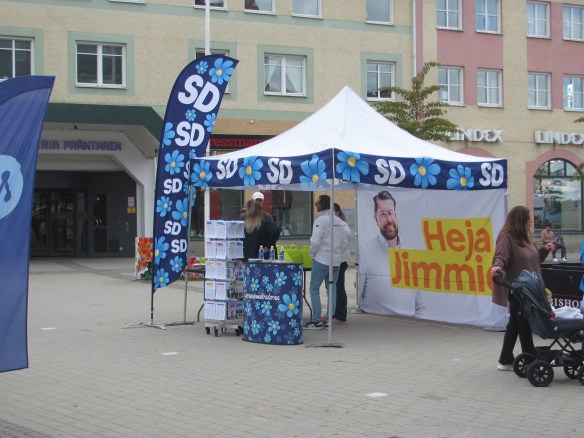
Over dinner, the conversation turns to Swedish politics. When we were sailing near Stockholm two years previously, it had been the time of the national elections, and the far-right Sweden Democrats had won a sizeable share of the votes, giving them a strong influence in government. I am curious as to how they have performed since then.

The Sweden Democrats campaigning in 2022.

“Well they have lost some popularity since then”, Martin says, as he serves the salmon. “Last year, for example, they were found to be using social media to spread disinformation and attack political opponents online. People were put off by that. Then, this year, the government proposed stricter gun control after the country’s worst mass shooting in Örebro, but the Sweden Democrats opposed that, saying that they had concerns for hunters and farmers. That further eroded a lot of people’s confidence in them.”

“People also think they focus too much on immigration and crime”, says Mia. “Sure, it was a concern two years ago when they were elected, but overall it is less so now. But the Sweden Democrats don’t seem to be able to move on from then.”

“The next national elections are next year”, says Martin. “It will be interesting to see whether they still have the same amount of support then.”

We have booked a slot to have Ruby Tuesday lifted out of the water to have her bottom seen to.

Lifting out Ruby Tuesday for a bottom inspection.
The next few days are spent washing, scraping, sanding and painting, and replacing the anodes. I am astounded at the state of the propeller anode – I fitted a new one only a year ago, and it has almost completed eroded away.

Aluminium anode almost completely eroded after one year.

“Sometimes if you are tied up next to a steel boat, that can happen”, explains Peder, the harbourmaster. “But at least it is doing its job.”

Soon Ruby Tuesday is back in the water to complete the preparations. In the afternoon, we receive a WhatsApp message from Simon and Louise, whom we had met on the Cruising Association Rally in 2023, and with whom we had explored Gotland together in 2024.

“Are you still in Malmö?”, they ask. “We have a rip in our sail, and need to have it fixed. Is there a sailmaker there? We’ll be there in the afternoon tomorrow.”

They arrive in time for coffee and cakes.

“I am not quite sure how it happened”, explains Louise. “I was sailing, and I wanted to tack, and I think the sail must have got stuck on something sharp on the self-tacking mechanism.”

We give them a hand in taking down the sail, packing it in a bag, and putting it in our car to take it to the sailmaker in the morning. The tear is quite small, but unless repaired such rips have a habit of getting much bigger quickly. It’s always better to get them fixed as soon as you can.

In the evening, we have dinner on their boat.

“As soon as we get back from this trip in October, I’m setting off for a motorcycle trip in Nepal”, Simon tells us. “It’s a sort of spiritual motorcycle ride with a group of other like-minded bikers. I came across this chap who organises trips combining motorbiking and discussions on spirituality. It sounded interesting, so I thought I would give it a go. I even had to be interviewed by him to see if I would fit into the group.”

“It sounds like something you could write a book on”, I say. “Did you ever read Zen and the Art of Motorbike Maintenance? In it, the author, Robert Pirsig, writes about a motorcycle trip he made from Minnesota to California in the 1960s with his son. The trip is interspersed with philosophical discussions on the pursuit of truth. He developed his theory of the Metaphysics of Quality in which quality is the driving force of the universe.”

“I like these philosophical discussions”, Louise says. “I am not religious now, but I was brought up as a Quaker. Both of my parents were members. We were taught that God doesn’t exist as a supreme being, but that something of what you might call God exists in everyone and emerges when people interact. Just meeting and having an interesting conversation like we are now is being part of God. Quakers believe that you find spiritual truth through your own inner experience of every-day life and human relationships, and for that reason we don’t have any need for ritual, ceremony or even clergy. They just get in the way of the relationship between yourself and God.”

“It all sounds very logical”, I say. “But I always thought that Quakers were a sect of Christianity. This sounds more like Humanism, I think.”

“Yes, they do follow many Christian traditions”, says Louise. “But a lot of Quakers wouldn’t describe themselves as Christians, more as members of a universal religion. And they don’t believe that the Bible, or any other book for that matter, is the ‘Word of God’, although they do think that it provides inspiration along with many others. So yes, a lot of their concepts are similar to humanist ideas, and in fact, a branch of the Quakers are actually affiliated to the Humanist Association.

“Wasn’t there a lot of resistance to them at one stage?”, asks the First Mate.

“Yes”, answers Simon. “George Fox, who was one of the founders, taught that all people have equal value. This didn’t go down too well with the rich landed gentry at the time, who saw it as a challenge to the established social order, and he was brought before the magistrates several times for blasphemy. His followers were officially persecuted for a time.”

“Well, that was interesting”, says the First Mate as we walk back to Ruby Tuesday. “I didn’t know much about the Quakers. You don’t hear much about them these days.”

“That’s true”, I say. “But their ideas certainly contributed a lot to the Enlightenment and to the way we think nowadays. Their condemnation of slavery, their campaigns for social justice, and focus on individual conscience and spiritual experience all align with the Enlightenment values of human rights, social reform, and reason. Quite an impact.”

Simon & Louise and us.

A near miss, a twisted torso, and different minds

“Look!”, shouts the First Mate, pointing to a steep cliff to our port side. “You can see Hammershus castle up there. It’s hard to believe that we were up there yesterday. It looks quite impressive even from down here.”

We had left Allinge in the morning, edging our way carefully out of the small harbour with its dog-leg entrance, and are just rounding the northern point of Bornholm Island. The wind is from the north-east, giving us a comfortable beam reach as we head for Ystad, back on the Swedish mainland. Between here and there, however, we must cross a Traffic Separation Scheme (TSS) for the big ships, which the rules say that we need to do at right angles to minimise the amount of time crossing it.

“It reminds me of the time we crossed the English Channel”, I say. “It was like being in a pinball machine – no sooner had we dodged all the ships coming from one direction, we had to face a whole lot more coming from the opposite direction. Let’s see if we can get across here without altering our course.”

“Be careful”, says the First Mate. “We don’t want to have an accident at this stage.”

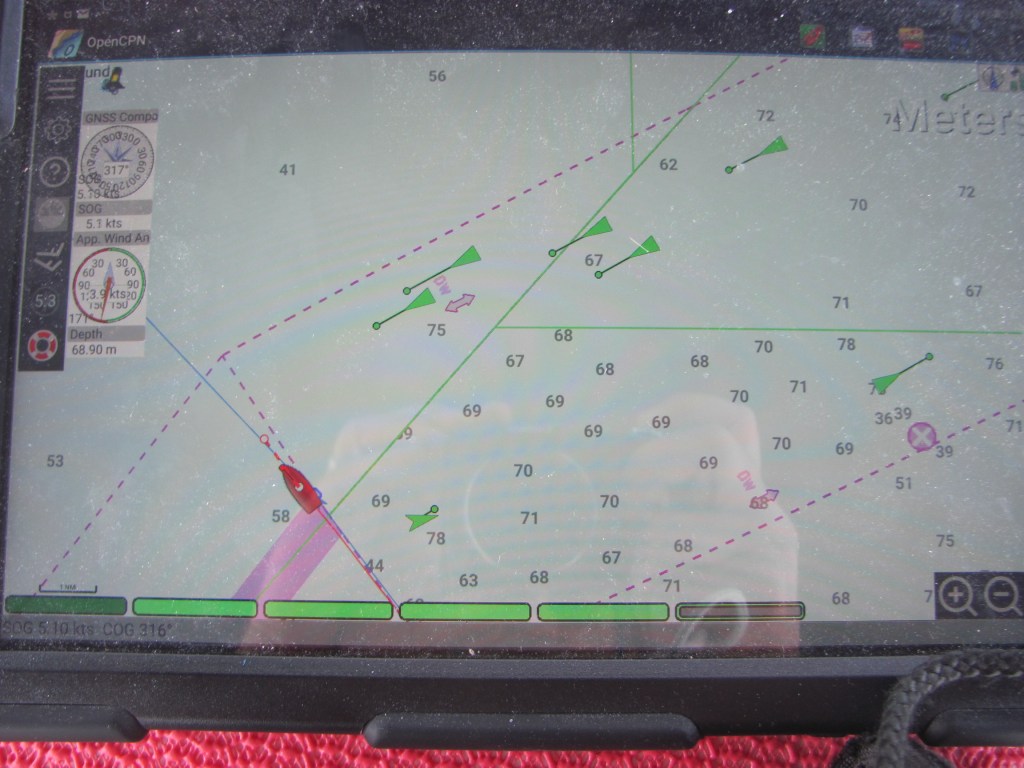
Running the gauntlet (we are the red one!).

We manage to make it through the north-bound lane without too much trouble. But traffic in the southbound lane is heavy, and there are five ships in a cluster that we need to avoid. The AIS tells me that we will pass behind the first three comfortably, but that we will pass in front of the fourth one with just 15 m as the Closest Point of Approach (CPA). That is a little bit too close for comfort! Hoping that the wind might strengthen and give us a bit more speed, or even drop so that we slow down, I keep an eagle eye on the AIS as we cross, but the CPA remains obstinately the same. As our paths converge closer and closer, I chicken out and decide to heave-to. As the ship passes about 100 m in front of us, we can see some of the crew leaning over the guard rails and smoking.

“Phew”, breathes the First Mate in relief. “That was pretty close.”

“Yes, I even noticed that it was Gauloises they were smoking”, I say.

Dodging the ships in the Traffic Separation Scheme.

Once clear of the TSS we alter our course to the east. As luck would have it, the wind shifts and drops, as does our speed.

“We aren’t in any hurry”, I say. “Let’s just take it easy and enjoy the sunshine.”

At a stately three knots, it takes most of the afternoon before we reach Ystad, our destination for the night.

“Better look out for that ferry over there”, calls the First Mate, pointing to something on the horizon. “It looks like it’s heading for Ystad too.”

“There’s plenty of time”, I say. “It’s miles away.”

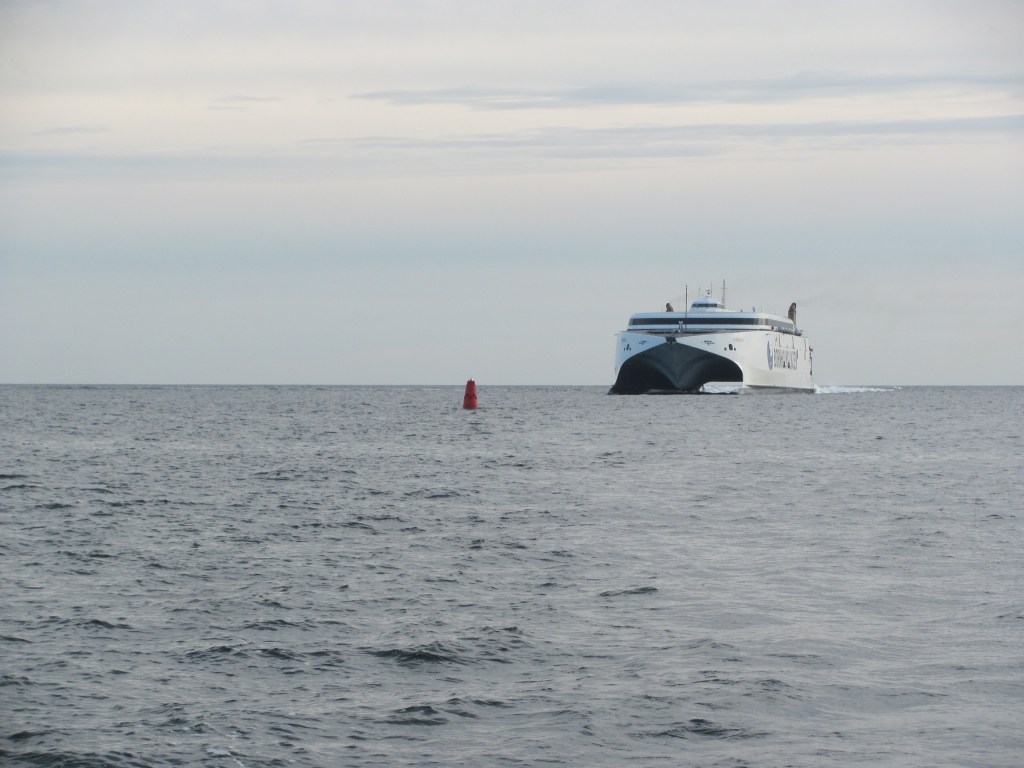
But it’s a catamaran and travelling fast. In a few minutes it is just behind us. It blows its horn to tell us to get out of the way. We motor as fast as we can to a red buoy, and take a line just outside it so that the buoyed channel is clear. The ferry slows down and cruises past us.

Getting out of the way of the ferry coming into Ystad.

Obsession is already there. We aim for the berth just behind her. Ingemar gives us a hand tying up.

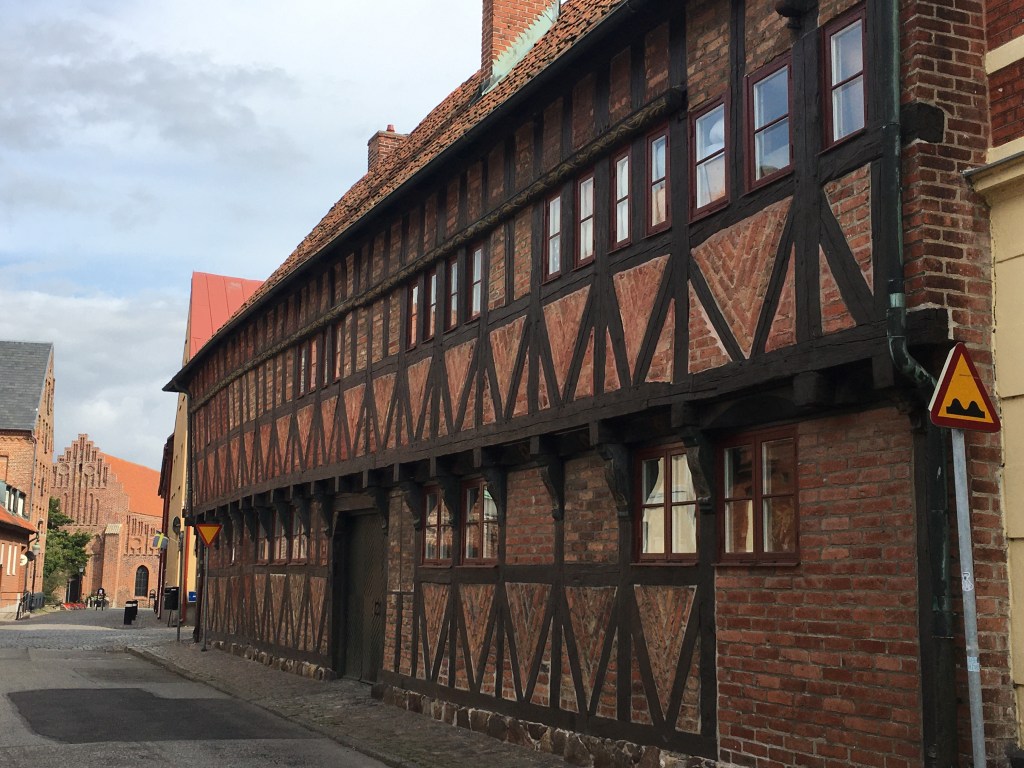
“Ystad is a pretty enough place”, he says over a cup of tea. “It’s a former Hanseatic town, and the church and some of the old half-timbered houses are worth a look. It’s just a short walk into the centre of town from here. Ystad’s other claim to fame is that it is the place where the Wallander crime series is set.”

The First Mate has watched the Wallander series, but I haven’t. I make a mental note to try and see it on iPlayer over the winter.

In the morning, we walk into the town centre. We come across the Sankta Maria Kyrka, built in the 1200s in Brick Gothic.

Inside the Sankta Maria Kyrka.

“The guidebook says that the church still has a Tower Watchman”, says the First Mate. “His job is to climb the tower every night and keep an eye on the city. He blows a horn every 15 minutes from 2100h to 0100h to signal that everything is OK. If the horn doesn’t sound, it means that there is a problem, like a fire or something. It’s an old tradition from the 1700s that has been kept alive. Apparently, it has been the same family who have been doing it all that time.”

“I wonder what they do if he is sick or on holiday?”, I say.

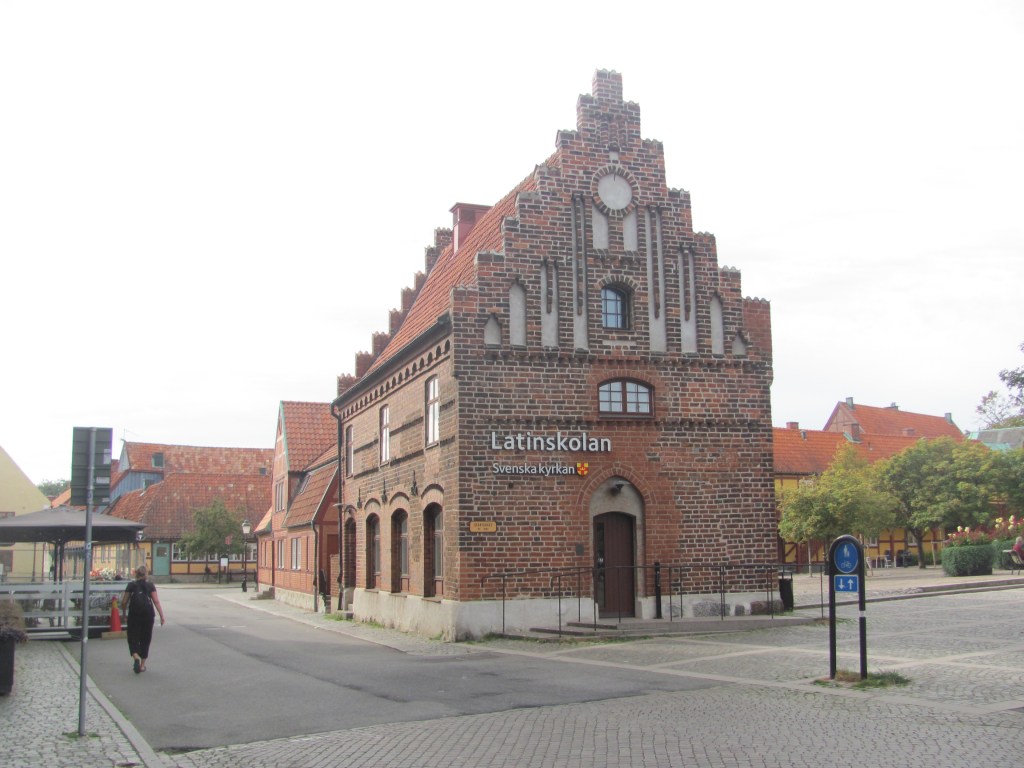
Next to the church is the Latinskolan, or Latin School, that was used in medieval times to teach Latin to the sons of clergymen and the local elite to prepare them to go to university.

The Latinskolan in Ystad.

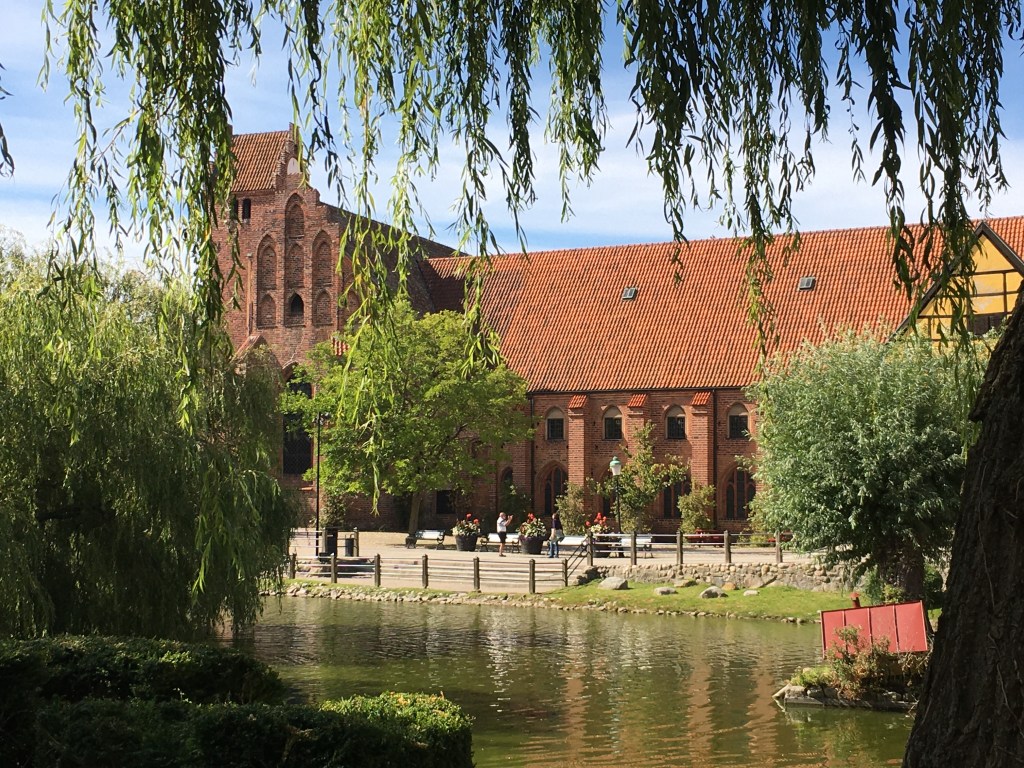
A little bit further on, we come to the Klostret I Ystad, or Greyfriars Abbey, originally a Franciscan monastery. There is a small museum attached to the side, but unfortunately it is Monday and it is closed.

The Klostret I Ystad.

“The book says that the Franciscan order wore grey habits”, says the First Mate. “Hence the Greyfriars name. They emphasised the simple life and travelled around the countryside preaching, caring for the poor and sick, and living off alms given to them by those who could afford it. The friary was a place they could come back to for meditation and contemplation.”

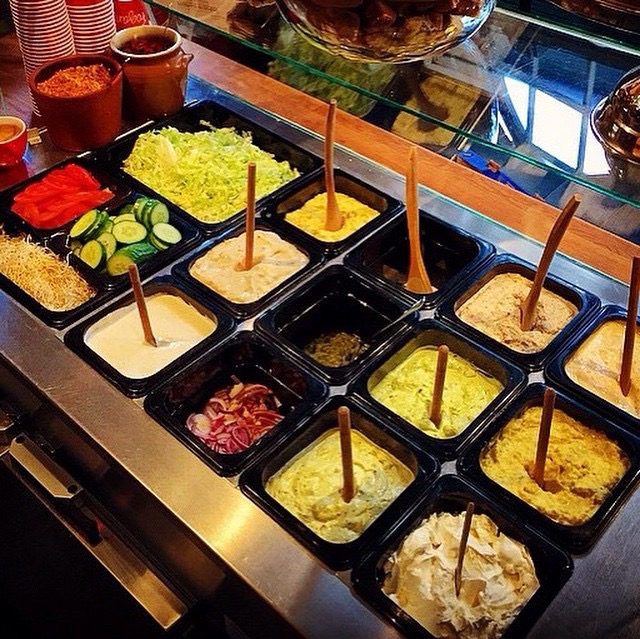
It’s lunchtime. We join the queue at a place called ‘Maltes Mackor’ that is famous for its tailor-made sandwiches, and eventually watch in mouth-watering anticipation as each of our sandwiches is ‘constructed’ with loving care.

Spoilt for choice (from Maltes Mackor).

“Well, it took a while”, says the First Mate, “but I have to say that it was worth it. They taste marvellous.”

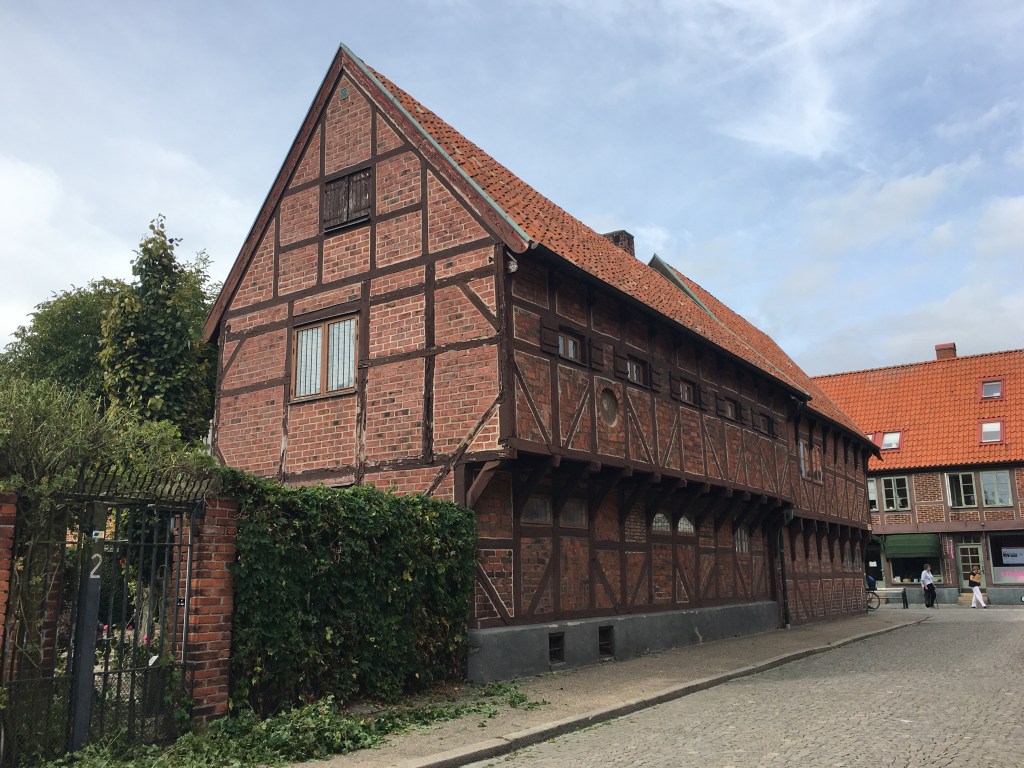
After lunch, we explore the narrow streets flanked with half-timbered houses. Per Helsas Gård was a farmhouse built just inside the city walls following their curvature. Nowadays, it houses a number of craftsmen, with an open air café in the old courtyard.

Per Helsas Gård.

Pilgrändshuset is a residential house joined to a warehouse dating from around 1500 AD.

The Änglahuset is another farmhouse, so called because of the decorative angel figures under the eaves.

Änglahuset.

In the evening, we ask Ingemar over for a drink.

“Did you hear that the Falsterbo Canal is closed for us?”, he asks, as he sips his Weizen beer. “They are repairing it. It’s open for south-bound traffic this week, but not northbound, then next week they are switching around. Unfortunately, we both need to go through this week.”

Falsterbo Canal was built during WW2 to allow Swedish vessels to continue sailing to and from the North Sea while avoiding the mines laid in the Öresund by the Germans. It is still maintained, but is now mainly used for recreational boats wishing to take a short cut to avoid the long way round through the Öresund.

“Yes, I read that somewhere”, I say. “We are planning to go round the outside and perhaps stop in Skanör for a night.”

Our route around Falsterbo peninsula avoiding the canal.

Obsession leaves at 0700 in the morning. We are a bit more leisurely, and don’t get going until around 1000. The wind is from the port quarter, but shifts to directly behind after a couple of hours. Sailing with the genoa only, we still make around six knots. As we reach the Öresund and turn northwards, the wind strengthens. I take out the mainsail, put in two reefs, and we still manage to make more than eight knots on a close reach. I glimpse Obsession on the AIS far ahead, already past Skanör, heading for Malmö.

Making good speed.

“8.2 knots!”, says the First Mate. “We don’t often do that speed. And with a double reef too. But it was heeling a bit too much for my liking.”

We stop for a night at Skanör, then set off in the morning for Malmö.

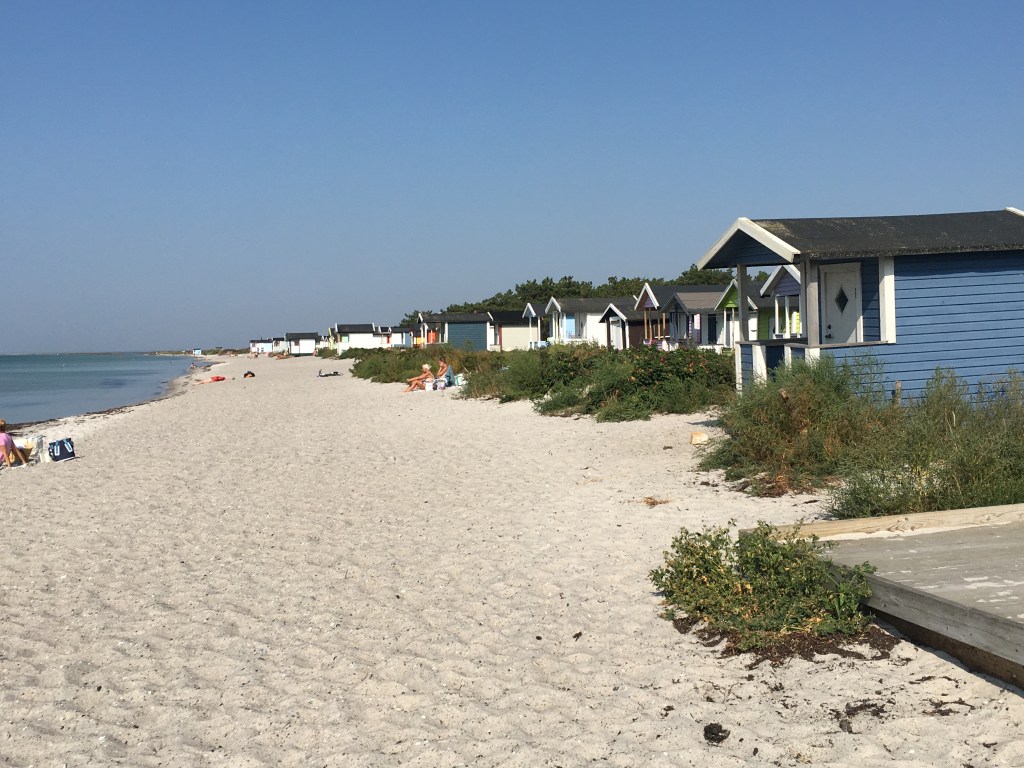
The beach at Skanör.

“This will probably be the last sail of the season”, I say. “I feel a bit sad that it’s all over for another season.”

“Me too”, says the First Mate. “Better make it a good one then.”

And it is. The wind is still an easterly, and blowing 24 knots, so we sail double reefed again. Before long we have passed the Lillgrund windfarm to our port, and are approaching the Öresund Bridge.

Approaching the Öresund Bridge.

“Keep an eye out for Saga Norén”, I call out to the First Mate at the bow. “They might be making another episode of The Bridge. And try to ignore the dead bodies, especially the ones sawn in half.”

With the wind blowing, she doesn’t hear me. Probably just as well.

We pass under the Bridge and arrive at the Limhamn marina in Malmö. The harbourmaster has asked us to tie up to the second pontoon. Ingemar sees us arriving and comes to catch our lines.

“I’ve just been servicing my heat exchanger this morning”, he says over lunch. “You need to do it every couple of years or so, or else the small pipes inside it will get blocked up with scale. I have rigged up a pump and some tubes that circulate phosphoric acid through the sea water side of the exchanger for an hour or so. That dissolves all the scale, leaving it nice and clean again.”

Rather than having a radiator like cars do, the heat exchanger takes in sea-water and uses it to cool the hot coolant circulating through the engine. That way sea water doesn’t come in contact with the engine to cause corrosion.

Ruby Tuesday’s heat exchanger.

“When was the last time we did that?”, asks the First Mate.

I have learnt that by ‘we’, she always means me.

“We haven’t done it since we have had the boat”, I say.

“It would probably be a good idea to do it”, says Ingemar. “Just to avoid problems.”

There is also a small leak in the cooling system that I have been meaning to do something about, and the mixing elbow that combines the warm sea-water with the exhaust gases also needs to be checked, so I decide to remove the whole assembly from the engine and take it home to do everything together. I spend the next couple of days getting it off. Like everything in boats, some nuts and bolts are almost inaccessible, and there is very little space for me to manoeuvre in the engine compartment.

“You need to lose a bit of weight”, sniffs the First Mate unsympathetically. “It’s all those peanuts you have been snacking on. I wouldn’t be surprised if you get stuck in there. Make sure you’ve got your mobile handy so you can call me.”

I finally manage to get the heat exchanger and the mixing elbow off. I change the oil and replace the oil and fuel filters. We pack away the sails, and take down the spray hood, cockpit tent, and the bimini. The new dinghy is deflated, rinsed in fresh water, and stowed. Clothes and other fabrics are stored in the vacuum packs and the air sucked out with the vacuum cleaner. Everything is ready for the winter.

Ruby Tuesday ready for the winter.

“You know, we should take the opportunity to explore Malmö”, I say one evening. “Now that most of the winter preparations are done.”

“I was thinking the same”, says the First Mate.

The next morning, we cycle into town to explore. Malmö was founded some time in the 1200s when southern Sweden was actually part of Denmark. One story is that the name comes about from a young woman being ground up in a mill, but this is almost certainly untrue. In the 1600s, the city became part of Sweden under the Treaty of Roskilde. Then, in the 1800s, it was the first city in Sweden to industrialise, with the main focus on shipbuilding and textiles, but it was slow to adapt to the post-industrial period after the 1970s. However, with the opening of the Öresund Bridge, it has taken off again and is rebranding itself as a hi-tech, educational and cultural centre. In 2020, it was the fastest-growing city in Sweden, with 40% of the population coming from a non-Swedish background.

We come to a bronze statue of a number of people sitting on the back of a giant fish, by the Swedish sculptor Carl Milles. Called “Emigranterna“, it represents the large numbers of Swedish people who left their homeland to emigrate to the New World in search of a better life. Emotions of determination, hope and apprehension line their faces as they head for an unknown future.

Emigranterna.

“It’s ironic that large numbers of Swedish people left from here to go abroad to make a better life”, says the First Mate, “and now Malmö is the place that many immigrants arrive from third world countries to make a better life here.”

“Even more ironic is that there were tensions between the Swedes and the earlier settlers in America”, I say. “Especially the English-speaking ones, who saw them as culturally different in terms of language and religion. The Germans and Dutch didn’t like them much either, as they competed for jobs. But now they are well integrated into American society. What goes around, comes around.”

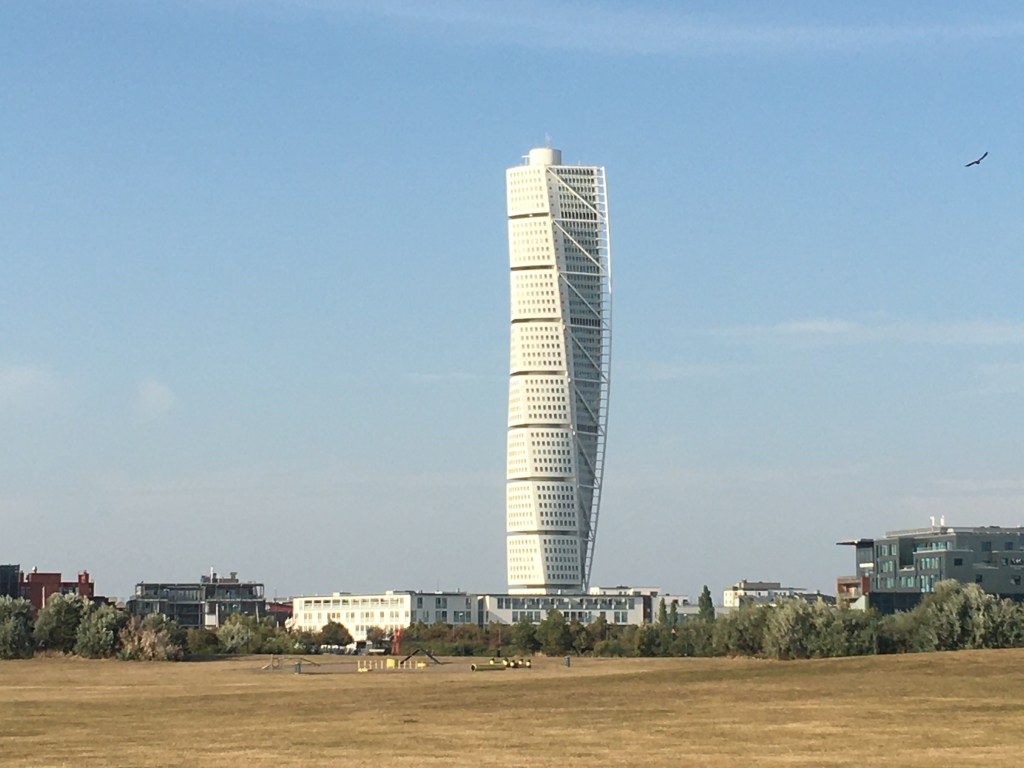
On the way back, we spot the ‘Turning Torso’, a 190 m high residential skyscraper built in 2005, and one of the tallest buildings in Scandinavia. It is the modern day icon of the city, replacing the shipyard crane that had previously been the Malmö icon, but since sold to South Korea.

“It’s certainly very eye-catching”, says the First Mate.

The ‘Turning Torso’.

—–

It’s the last day – the day that we are leaving to drive to Germany to see the First Mate’s family, and then back to the UK.

On the way back from the shower block, I see a quick movement of something black near the rocks of the breakwater. It’s a mink. It stops and regards me intensely. I stare back at it. For perhaps five minutes we regard each other with curiosity, neither of us moving. It doesn’t seem to be afraid, despite there being only two metres between us.

Our aquatic neighbour (from NatureScot).

What thoughts are going through its mind, I wonder? Do mink even have thoughts or a mind? Or emotions? Is it wondering what I am thinking? What would it be like to be a mink?

I think back to the essay written by Thomas Nagel “What is it like to be a bat?” that I had read during my student days. In it, he argues that consciousness has a subjective aspect that cannot be fully understood from an external, objective perspective. While we can study a bat’s brain physiology, we can’t fully grasp its subjective experience—what it is really like to perceive the world as a bat. We can imagine what it is like to be a bat, but that is still a human imagining what it might be like. Any attempt to reduce subjective experience to physical processes will always be incomplete.

And yet, there seems to be something shared in this brief encounter with the mink, even if it is just curiosity about the other. Is curiosity a shared experience? If so, there may be others. Or am I anthropomorphising?

“Come on”, calls the First Mate from the boat. “We need to pack the last things into the car and lock up. We’ve got a long journey in front of us.”

The mink scampers off to a gap in the rocks to re-join its world. I return to my world of other humans and their technology. The fleeting connection between very different minds is gone.

“See you next year”, I call after it.

A Royal Navy attack, Bob Dylan’s boat, and a detested fortress

“We’ll have to change the courtesy flag from Swedish to Danish at some point”, says the First Mate emerging from the cabin with a bowl of muesli. “Here’s your breakfast. I’ll make a cup of tea when you have finished it.”

We are on our way to Ertholmene, the ‘Pea Islands’. We had left Utklippan in the half light of dawn, even before the sun was up, carefully navigating our way out of the narrow exit to the guest harbour only a little bit wider than the width of the boat itself. All was quiet, as far as we could see we had been the first to leave. Even the intelligent rubbish bins had seemed to be asleep. A fresh wind was blowing from the south-east, so we had unfurled the sails almost straightaway. Silhouetted against the red light of dawn, the lighthouse seemed to be wishing us a safe journey, as it had no doubt done to many sailors before us.

Leaving Utklippan.

“That’s a beautiful sunrise”, says the First Mate, bringing out two mugs of tea and sitting down beside me. “You don’t see that often.”

“That’s because you are not often up at this time”, I joke. “It’s the best part of the day. Peaceful and quiet.”

She’s a night owl, I am an early riser. A perfect combination.

The sun rises over the Baltic.

We sail south-westwards on a comfortable close reach, the sea miles sliding smoothly under the keel. The hours pass.

“There’s a Swedish boat called Obsession following us”, I say, pointing to the chart-plotter. “I remember it being in Utklippan. It’s going faster than us, but I think that we have enough of a lead to get there first. We don’t want to lose our place at the ferry dock.”

We had called the harbourmaster at Christiansø earlier, to check that there would be enough space there for us. As it is only a tiny harbour, it can become very full at the height of the season.

“No problem”, he had reassured us. “The ferry goes at 1400h, so if you arrive just after then, you can tie up at the ferry dock. It’ll be free until 1000h the next morning.”

The wind strengthens, and moves round more to the east. We are now on a beam reach and doing 7½ knots. The sea also becomes choppier.

“Phew, this is a bit bouncy”, says the First Mate. “Can’t we go a bit slower? Look, there’s land ahead. It must be Christiansø.”

Christiansø is the largest of the islands of the Ertholmene archipelago, which belongs to Denmark. In fact, the whole archipelago is often referred to as Christiansø despite there being three other islands, two of which are designated as bird reserves and therefore out of bounds without a permit.

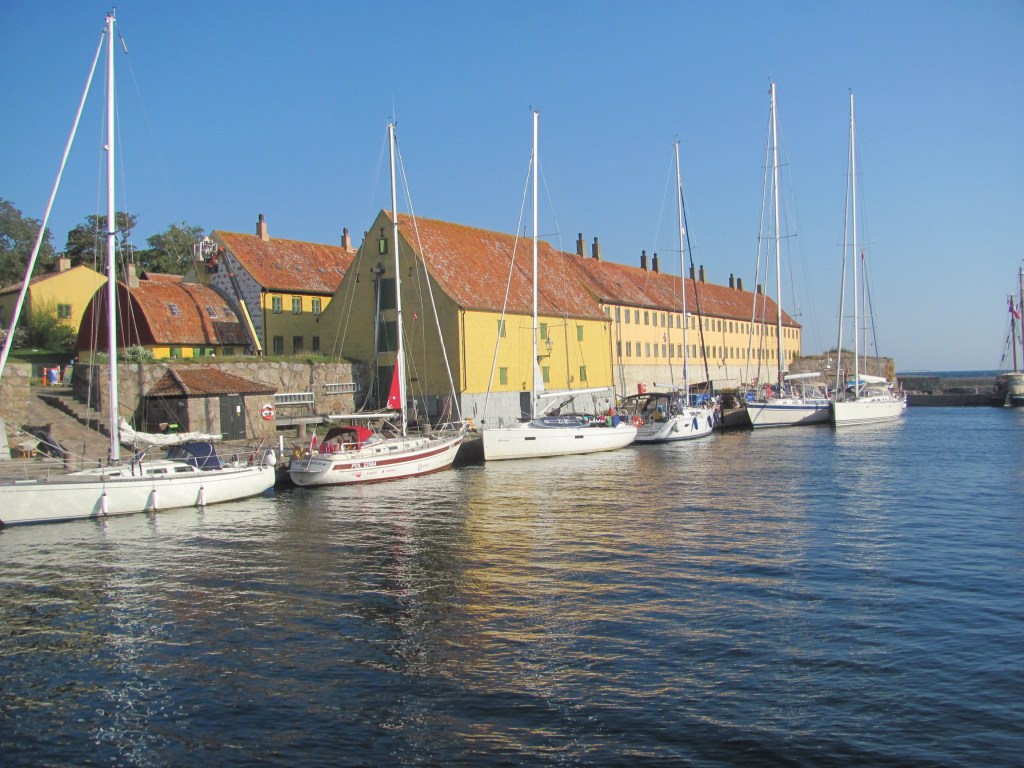
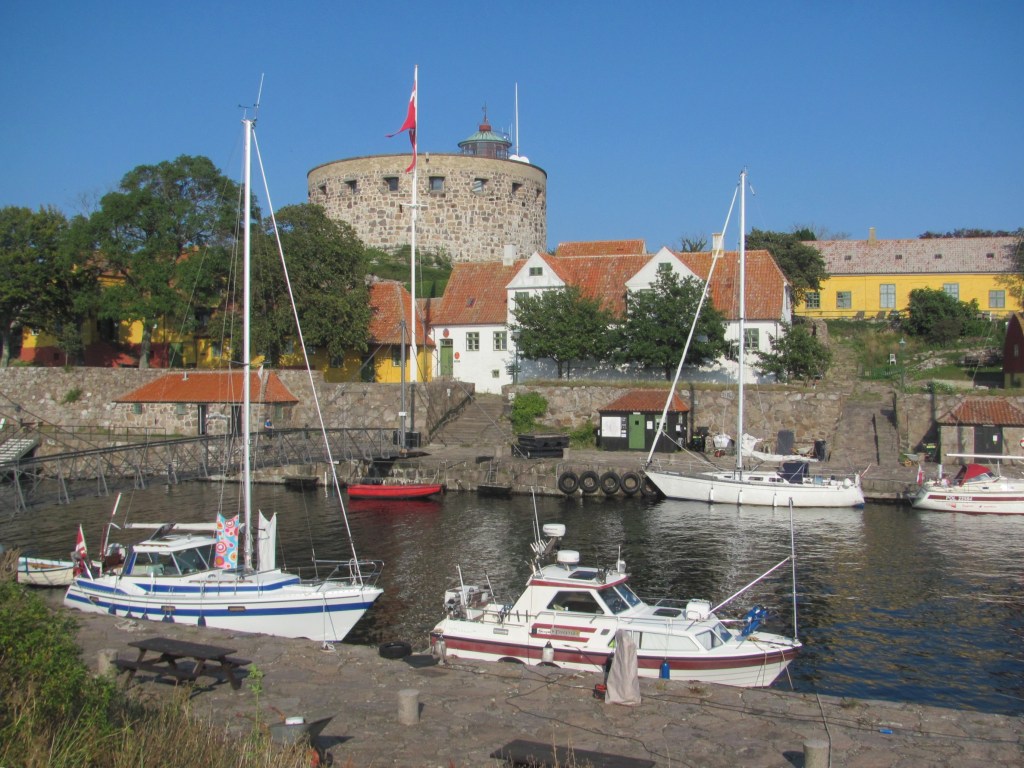
We round the south-eastern point of Christiansø, and the harbour suddenly appears, nestled in the narrow gap between two of the islands.

Approaching Christiansø harbour.

The ferry to the mainland is just leaving, and true to his word, the harbourmaster waves us to the place it has just left. About an hour later, Obsession arrives, and ties up behind us.

“I could see you on the AIS”, says the skipper. “I was trying to catch you up, but you had too much of a start on me. I’m Ingemar, by the way. I am on my way back to Malmö where I overwinter.”

I tell him that that is also where we have finally decided to keep Ruby Tuesday for the winter.

“It’s a good marina”, Ingemar says. “I grew up in Malmö. The harbourmaster is an old schoolfriend. He’ll look after your boat well.”

There doesn’t seem to be anyone else on his boat.

“I am sailing single handed”, he says, reading my thoughts. “I live in the south of France nowadays, and spend each summer sailing around the Baltic. I did the Stockholm archipelago this year.”

I am impressed. His boat is a 53-footer weighing 24 tonnes, dwarfing Ruby Tuesday. It can’t be easy to sail it by oneself.

Tied up in Christiansø harbour.

“Coffee’s ready”, calls the First Mate from the cockpit. “Drink it up quickly. I want to go and explore the place.”

Christiansø was built by the Danish as a military fortification during the Swedish-Danish wars in the late 1600s. Part of the fortifications were two towers, both of which have been renovated and now contain museums.

Store Tårn (Great Tower), Christiansø.

“The English attacked the island in 1808 in what is known as the English Wars of 1801-1814”, one of the museum displays tells us. “They destroyed several of the fortifications and captured some of the Danish ships in the harbour, but were not able to capture the whole island, so they withdrew.”

The British bombardment of Christiansø in 1808 (by Arne Skotteborg-Frederiksen)

I am somewhat surprised, as I was not aware of war between Denmark and Britain. But Google tells me later that it was all part of the Napoleonic Wars, and that France and her allies were trying to prevent British trading vessels from entering the Baltic Sea. As Denmark was an ally of France at that time, Danish forts were considered legitimate targets. The Royal Navy had bombarded the city of Copenhagen the year before in an attempt to seize the Danish fleet to stop it from being used by the French. They had then moved on to Christiansø to prevent it being used as a base for state-supported privateers to attack British merchant shipping.

“Don’t worry”, says the harbourmaster with a grin. “It’s all history. We quite like seeing British boats here nowadays. As long as they don’t try and finish the job they started in 1808. But we don’t get many coming anyway since Brexit.”

We take a quick walk around the rest of the island. A foot bridge joins Christiansø with the neighbouring island of Frederiksø.

The foot bridge joining the two islands.

On Frederiksø is the Lille Tårn, or Small Tower, now a cultural museum.

Lille Tårn, Frederiksø.

In the morning, we need to leave before 1000h to make way for the ferry’s arrival. Obsession leaves first, easing away from the quay, and we follow her out of the narrow harbour entrance. Immediately, the wind picks up from the south-west, and we zip along on a comfortable beam reach, heading for the small harbour of Allinge-Sandvig on the island of Bornholm, 13 NM away. After a couple of hours or so, however, we enter the wind shadow in the lee of Bornholm, and the wind gradually dies to nothing. We drift for a while, but with the sails flapping listlessly, we are reduced to furling them away and motoring the last few miles into the harbour.

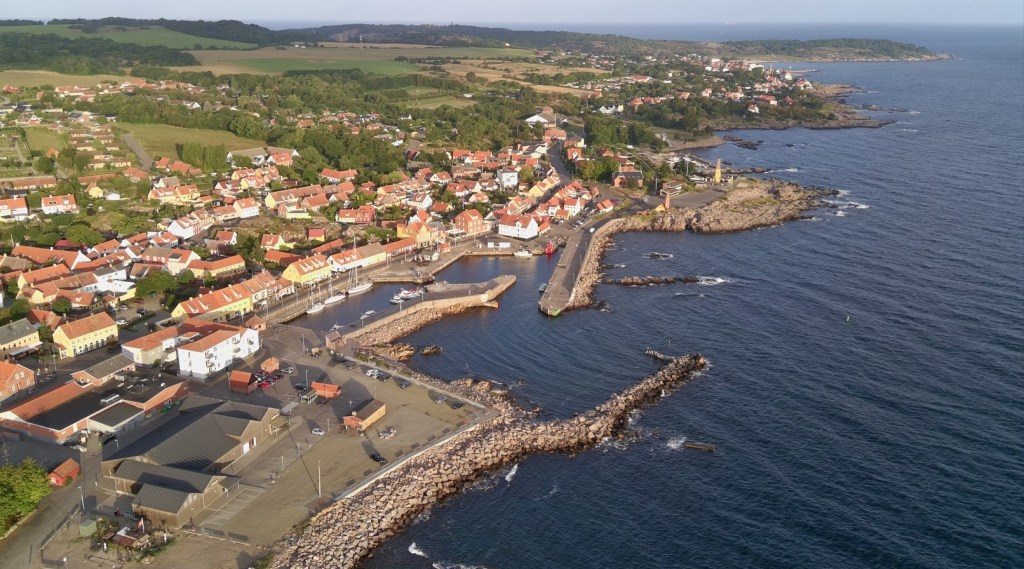
Allinge harbour, Bornholm.

“What about coming over for a drink later on?”, says Ingemar, as he helps us to tie up in front of Obsession.

“Sounds good”, I say.

Tied up in Allinge harbour, Bornholm.

There’s just enough time before then to have a quick look around the town. Originally a small fishing settlement, Allinge prospered in the Middle Ages from the Hanseatic herring trade, with masses of Baltic herring being shipped to southern Europe for Catholics to eat on their ‘meatless’ days. In 1946, it officially joined with the neighbouring fishing village to become Allinge-Sandvig.

Nowadays, the colourful houses and streets exude charm in the typical Danish fashion that we had grown used to in southern Denmark three years ago.

The Allinge Technical School was built in 1895 with the aim of training craftsmen. Currently it is used as offices.

Former Allinge Technical School.

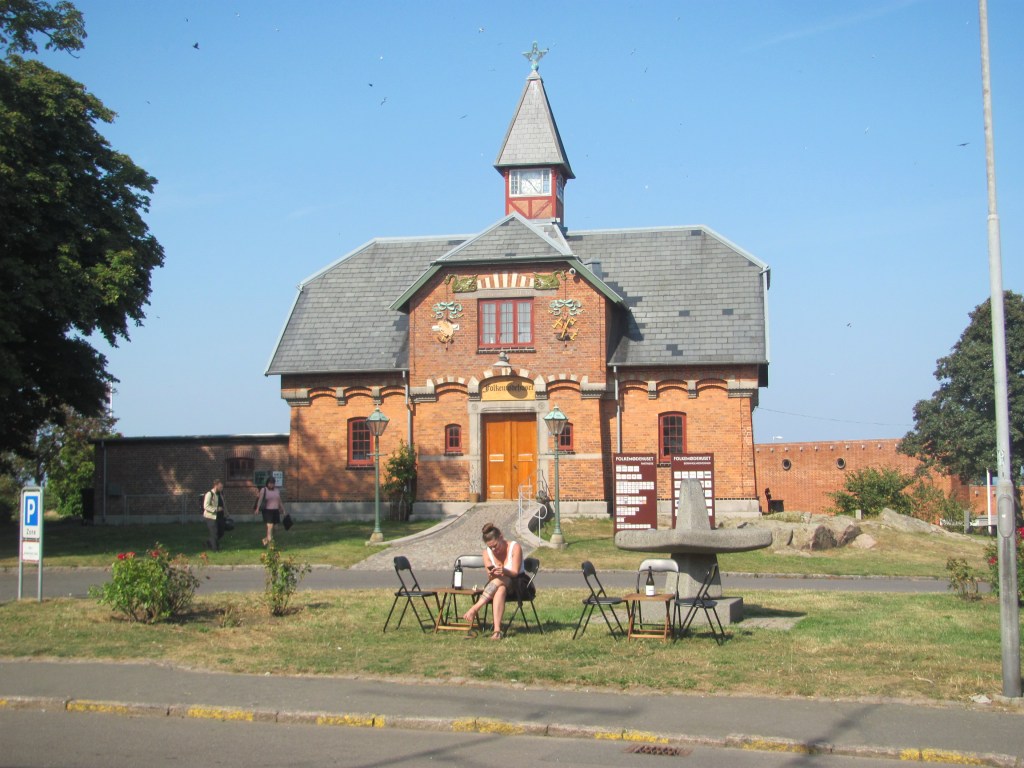
The Public Meeting Dome can be rented for various events.

The Allinge Public Meeting Dome.

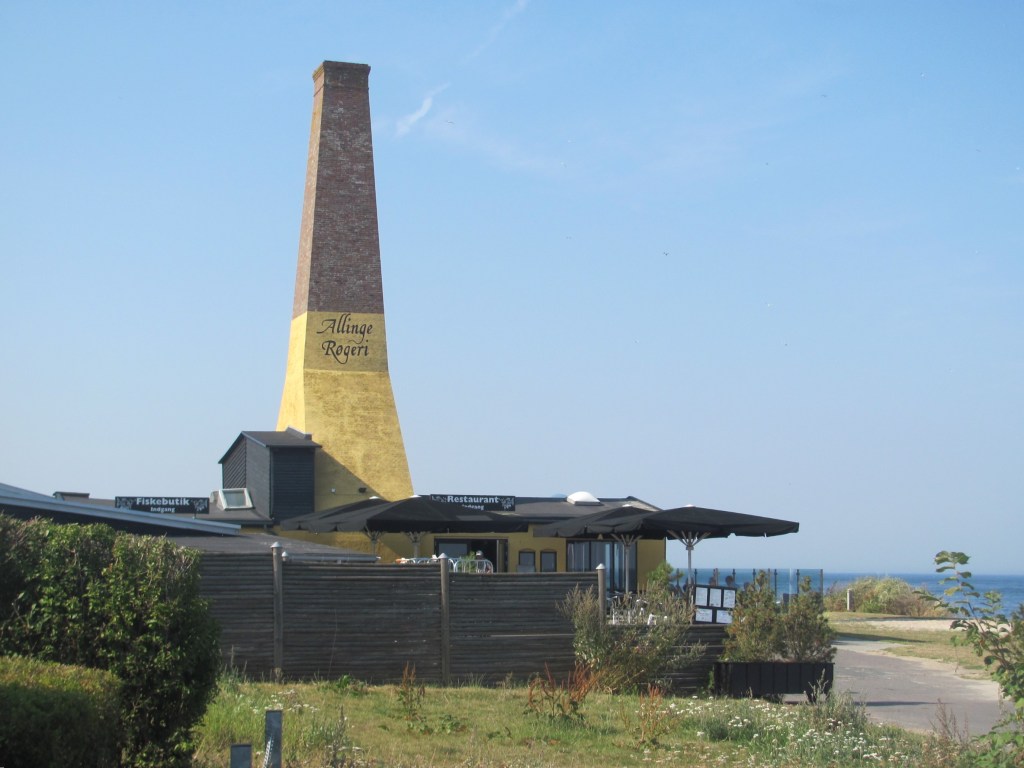
An the way back, we pass one of the two smokeries in the town.

Allinge Smokery.

“Welcome to Obsession”, Ingemar says, as we clamber aboard. “Yes, I am retired. But I have been sailing most of my life. I started off running charters in various places, including the Caribbean. Later I started a company making desalinisation equipment for the marine industry, removing the salt from seawater to make fresh water. The company did very well, and we ended up fitting our gear on a lot of the luxury yachts. One superyacht, for example, owned by a Russian oligarch, had two swimming pools – one for the adults and one for the kids, with the water for each coming from our desalinators. Anyway, I sold the company a few years ago, invested the money, and now spend the summers sailing.”

“I bet you could tell some great stories about the rich and famous?”, prompts the First Mate.

“I could, but I am not allowed to”, answers Ingemar with a smile. “Most of the jobs we did are covered by non-disclosure agreements.”

“Getting back to the Caribbean”, I say, “I read a fascinating book recently on a sailboat that was hand-built there. On the island of Bequia. A friend of mine who lives in Australia recommended it to me.”

“I know Bequia well”, says Ingemar. “It’s my favourite Caribbean island.”

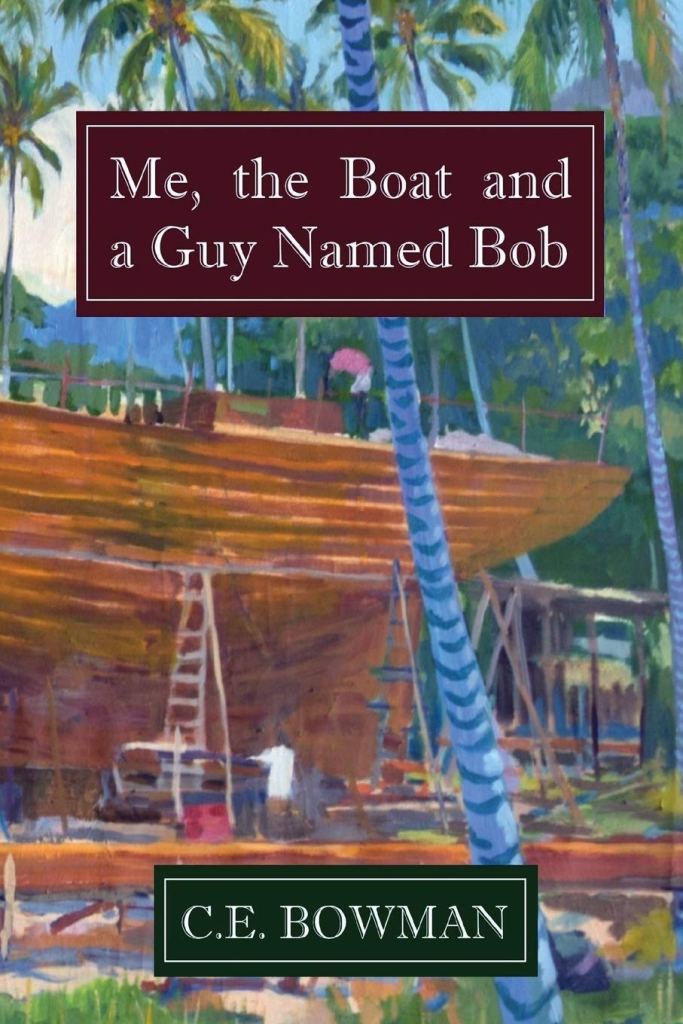
“The boat was built by a young Californian chap called Chris Bowman back in the 1970s”, I continue. “It was commissioned by Bob Dylan, but the agreement was that they would be joint owners of her. They named her Water Pearl. The book is called Me, the Boat and a Guy named Bob. It’s a good read.”

Ingemar’s brow furrows, as though he is trying to recall a memory from long ago.

“I knew Chris”, he says after a pause. “I was there on Bequia at the same time as him. I remember him building that boat. But didn’t she sink or something?”

“According to the book, she hit a reef at night at the entrance to the Panama Canal”, I say. “Despite their best efforts to rescue her, they couldn’t drag her off, and they had to leave her to break up. It was quite poignant really.”

”I wonder what Chris is doing now?”, asks Ingemar. “We didn’t keep in touch.”

“He lives in Western Australia”, I say. “My friend Tony met him at a book club meeting to which Chris was invited to come and talk about his new book. He married the girlfriend Vanessa of whom he talks about in the book, and they settled in Fremantle. She is Australian.”

“I remember her too”, says Ingemar. “It’s indeed a small world. I’ll have to buy the book.”

—-

The cold wind whips across the ramparts as the three figures furtively make their way through the dark shadows. Their years of imprisonment and the cruelty of their captor have sharpened their resolve, and now, with the fortress guard lulled by the monotonous night watch, the time for escape has come.

The woman unrolls the crude rope she had fashioned from bedsheets and drops it over the wall, trying to put the roaring of the sea below out of her mind. Weak from his illness, her husband ties it around his waist, and the woman and the servant slowly lower him over the side, the linen straining under the weight. Reaching the grassy mound at the base of the fortress wall, the man unties the rope and tugs it to signal that he is safe. The woman and servant follow, climbing down by themselves. The three pause for a minute to regain their breath, wrap themselves in the bedsheets for warmth, and with one last look at the ramparts to see if they have been discovered, disappear down the rocky path to the sea.

In his haste, the servant falls and twists his ankle, his cry echoing into the night. Lights and faces appear on the ramparts of the fortress, the alarm is raised. As the escapees pass a local inn, a dog begins to bark. The innkeeper, aroused from his sleep, is about to investigate, but, seeing the three white figures passing eerily by, believes he is seeing ghosts, and pulls the blankets tighter over his head.

The fugitives continue their escape, but they are hindered by the injured servant. Eventually, as dawn breaks, they reach the nearby harbour of Sandvig, but just as they are about to board a small boat that will take them to safety, the fortress guards appear. Their brief taste of liberty is over, and the couple are returned to the grim confines of Hammershus, their fate now darker than ever.

“It’s a good story, isn’t it?”, says the First Mate in my ear.

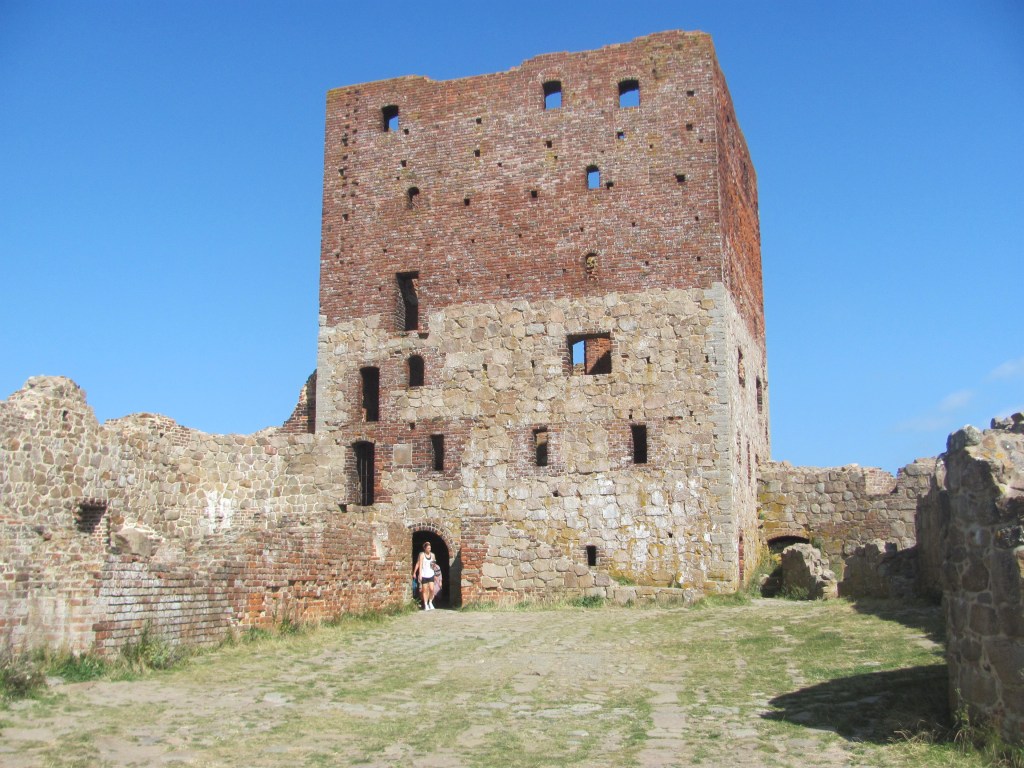
We are in the museum at Hammershus Fortress on the north-western tip of Bornholm, and I am reading a panel on the daring escape of one Leonara Christina Ulfeldt in 1660, a member of the Danish royalty who was imprisoned in the imposing fortress along with her husband, Corfitz, who had been accused of treason.

Hammershus Fortress ruins.

We had cycled over from Allinge harbour that morning, puffing our way to the top of the hill on which the Fortress was built in the 1200s. The largest in Scandinavia at the time, it was built when there were major struggles between the king and the church in Denmark, and served as a stronghold for the church. Over the years, various kings did manage to conquer it several times, but weren’t powerful enough to keep hold of it, and it was always surrendered back to the church. Until Frederik I, that is. In 1525, he decided that enough was enough, and chased the archbishops out of it for good.

“It’s amazing how powerful the church was at that time, isn’t it?”, says the First Mate. “They must have been terribly wealthy.”

Hammershus Fortress, Bornholm.

“Frederik I then gave it to Hanseatic merchants from Lübeck”, the next panel tells us. “However, despite their own wealth, the merchants taxed the local population heavily and coerced them to provide labour to extend the fortress. The people did rebel against them, but their uprising was brutally put down.”

Then in 1576, the King installed his own vassals there to use as an administration centre with courtroom, prison and gallows, with the proviso that they restore it, but they ended up taking the taxes from the local people to line their own pockets and letting the fortress fall even further into disrepair. It was during this time that Leonora and Corfitz Ulfeldt were imprisoned there.

The ‘Mantel’ Tower, where the Ulfeldt couple were imprisoned.

“Wow, you can sort of see why the local people on Bornholm had a deep loathing of the castle”, says the First Mate over a coffee at the end. “Everyone seemed to do all right out of it except them.”

“But I read that Bornholmians nowadays are quite proud of its dark history, and are helping to restore it again”, I say. “They think it is worth preserving.”

On the way back, we cycle past Sandvig harbour where the Ufeldt couple hadn’t escaped from.

“If the servant hadn’t twisted his ankle, they might have been able to get away”, says the First Mate. “As it was, she had to spend the next 22 years in solitary confinement.”

Sandvig harbour today.

We arrive back at the boat. Someone seems to be waiting for us.

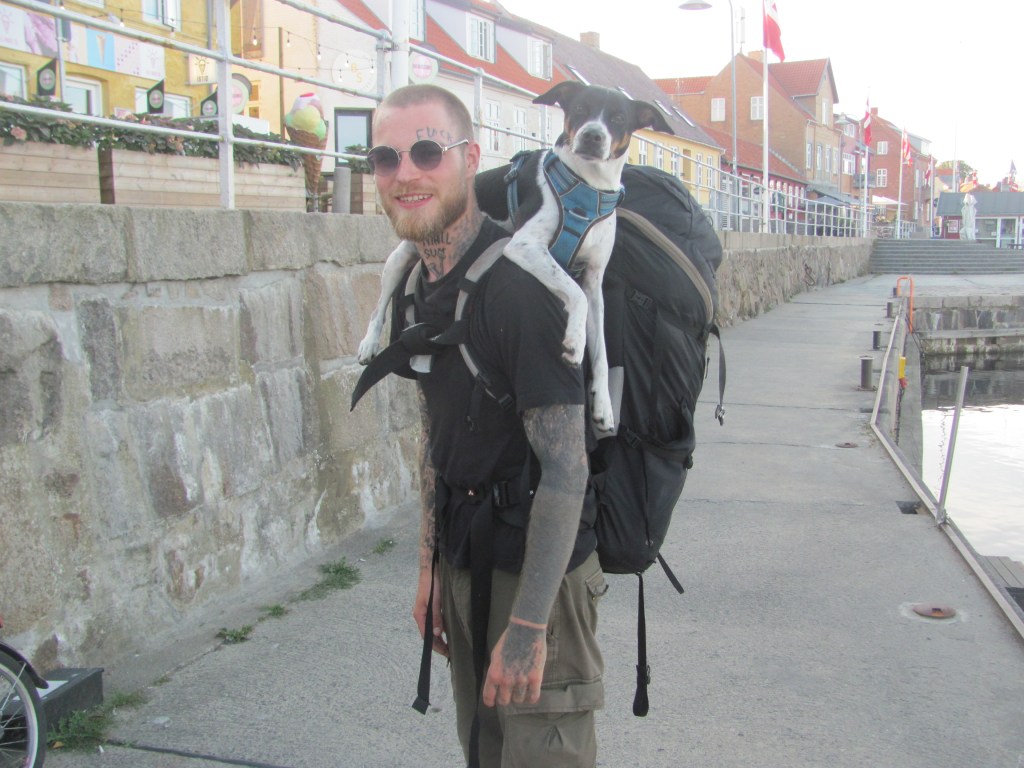
“Wow, is that your boat?”, he says. “I was just admiring it. Have you come all the way from Britain? I saw your flag. I’m Jason, by the way, and this is Harold. He has been walking a lot today and is a bit tired.”

Jason & Harold.

Harold looks a bit dejected, but on hearing his name, manages a bark.

We tell them that we have sailed from Britain, but it has taken four years to do it. Our plan is to explore as much of Europe as possible by sea, but we are in no hurry. At the moment we are doing the Baltic.

Harold pricks up his ears.

“Wow, that is so cool”, says Jason. “I am a poor student from Copenhagen, but I have decided to take a year out and hitch-hike around Denmark first of all, then we’ll see how we get on after that. But I would love to do it by boat. You have inspired me to work hard and save up, and do something similar.”

Harold wags his tail.

“I think he’s spotted a mink over there”, says Jason. “There’s a few of them around.”

Peace between neighbours, Bronze Age spirits, and a lonely outpost

“It’s only weed”, calls out a man on one of the boats tied up to the quay. “You’ll be able to push through it no problem.”

We have just arrived in the small harbour of Kristianopel, and are negotiating the entrance. The depth sounder has just told me that the depth under the keel is zero, meaning we are grounded. But it doesn’t feel like it and we are still moving slowly.

I ease the throttle forward and sure enough we keep going. No graunching sound of cast iron against rock, or even squelching against mud for that matter. On either side, we see the stringy tendrils of aquatic plants rising to the surface. Suddenly we have 0.6 m water clearance. Plenty! We tie up alongside our helpful advisor.

“We thought the same when we came in”, he says as he takes our lines. “We were almost going to anchor outside the harbour, but someone told us it was just weed. It’s only at the entrance.”

The village of Kristianopel.

We boil the kettle and take stock. Kristianopel’s claim to fame is that it once was a fortress town on the border between Denmark and Sweden in the days when Denmark was a major power and included much of southern Sweden. The Swedes weren’t particularly happy about this arrangement and mounted a series of attacks across the border. The Danish king, Christian IV, became fed up with all this aggression, and in 1606 decided to build a fortress to defend against these attacks.

“He named it after his baby son, Kristian”, says the First Mate, reading the guide book. “But added a ‘-opel’ to the end to make it sound a bit more sophisticated, like Constantinople.”

The fortress didn’t help matters for the Danes all that much, as only a few years later in 1611, the Swedish captured it and burnt it to the ground and destroyed the church. The Danish retaliated and the fortress changed hands several times over the next few years, but eventually the Danes were so exhausted that they sued for peace.

We go ashore and explore the village.

Kristianopel harbour.

“What a pretty little place”, says the First Mate. “It reminds me of the cute villages that we saw when we explored southern Denmark a few years ago.”

The fortress walls still exist in most places, and we walk along them trying to imagine life behind them in those days rather than the caravan park that it is nowadays. The occasional cannon pointing northwards towards Sweden and an ancient brazier for showing ships the way into the harbour help a little.

Walking along the Kristianopel fortress walls.
Brazier for guiding ships into Kristianopel.

“I read that the peace treaty was signed just north of here”, I say. “At a place called Brömsebro in 1645. There’s a memorial stone there. We could cycle up there tomorrow and have a look at it. There’s a smokery where we could have lunch.”

“Look, there’s a dual flag combining the Swedish and Danish flags”, exclaims the First Mate, pointing to a flagpole outside one of the houses. “I suppose you could take it to mean that Sweden and Denmark are now friends with each other.”

Dual Swedish and Danish flag.

“Or that the owners still can’t make up their mind whether they are Swedish or Danish”, I say. “So they hedge their bets!”

In the morning, we unload the bikes and cycle up to Brömsebro. It takes a bit to find the Peace Stone, but eventually we do, nestled in a small grove by a brook that used to demarcate the border between Sweden and Denmark.

The Peace Stone to celebrate peace between Sweden and Denmark.

“It’s not a very impressive border”, sniffs the First Mate. “You would have thought that they had chosen a river or something that could have been more easily defended. Look, I can jump from one side to the other.”

The words on the stone say ‘In memory of the peace in Brömsebro. De la Thuliere – Axel Oxenstierna – Corfitz Ulfeldt. The stone was raised in 1915.’

“It says in the guide book that the treaty was mediated by France”, I say. “De la Thuliere was the French ambassador, Axel Oxenstierna was the Swedish representative, and Corfitz Ulfeldt was the Danish representative. It was a big deal for Sweden, as the terms of the treaty now exempted its ships and traders from paying tolls to the Danes if they were passing through Danish territory, and they also added Gotland and the island of Øsel in modern day Estonia to Swedish territory. It marked the decline of Denmark and the start of the rise of Sweden as a Great Power in the Baltic.”

“I am always intrigued how empires come and go”, says the First Mate. “They always seem to overreach themselves and then can’t hold on to their territory.”

In the evening, we sit in the cockpit sipping our wine, and watch the swans and their young ones swimming serenely near the rocks just outside the harbour entrance.

“Something seems to be disturbing them “, says the First Mate suddenly. “Look, I think that it must be that big bird that has just landed on the rocks.”

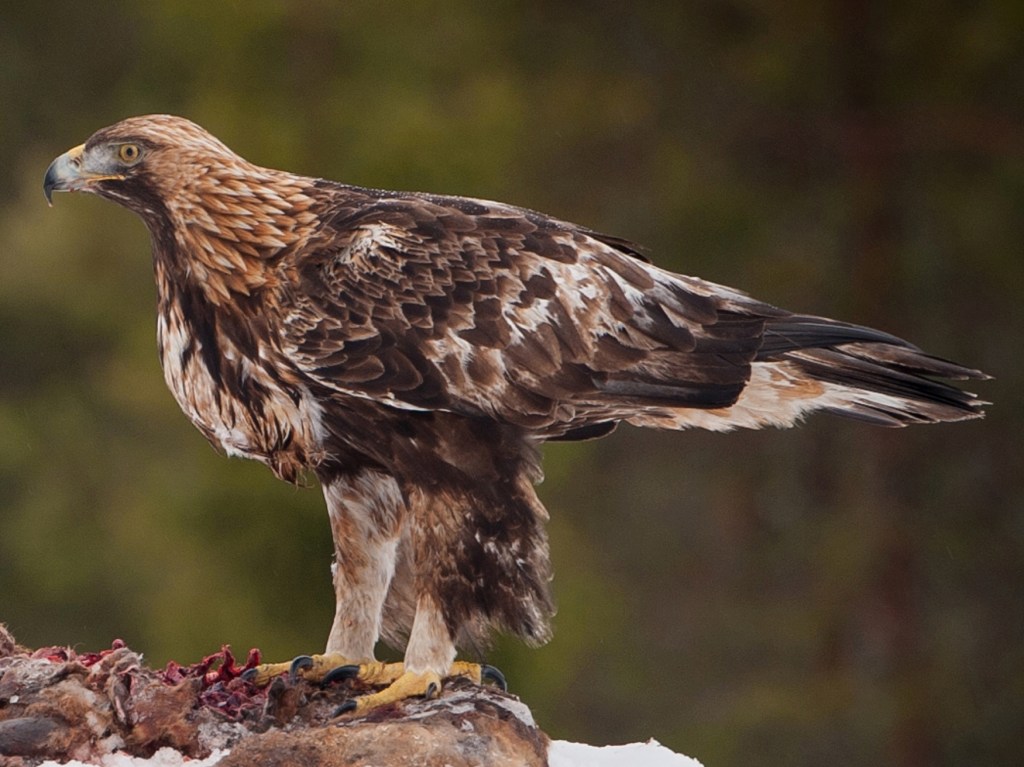
“It looks like a golden eagle”, I say, looking through the binoculars. “No wonder the swans are upset. Golden eagles will eat the cygnets. It’s probably just waiting for its chance to grab one.”

The swans swim agitatedly towards the safety of the harbour, the little ones following their anxious parents. The golden eagle remains nonchalantly on the rock eying a cormorant, then flaps lazily off.

Golden Eagle (by Jarkko Järvinen).

Strong winds are forecast for tomorrow afternoon. We decide to try and reach the next small harbour, Sandhamn, before they start.

“Look!”, says the First Mate as we arrive. “Klaus & Claudia are here. I can see their boat Saare. And there is a space behind them where we can tie up.”

“We’ve been here a couple of days”, Claudia tells us. “After we left you in Stora Rör, we went to Kalmar, hired a car for a day, and explored Öland. After that, we sailed down here.”

“It’s quite sheltered here from the west”, says Klaus. “And we are on the right side of the pontoon. We should be blown off it with no screeching of the fenders rubbing all night long.”

—-

The shaman chants an ancient prayer to the spirit of the forest and guides the boy’s forefinger around the horse shape carved into the rock.

“The spirits are pleased with you”, whispers the shaman. ”Don’t resist them. Breathe deeply and allow their power to take over your being. You will be a great horseman and will protect your people against the enemies that will come. Just like your father before you.”

The boy feels the power of the animal surge through him, filling him with awe and connecting him to the OtherWorld, the land of his ancestors.

Bronze Age rock carving of horses.

“Now, you must make your own picture”, says the shaman, giving him the metal tool he has been carrying. “For those who follow after you to gain strength from. As those that have gone before you have done. Let the spirits guide you to release the shape that is within the rock.”

The boy hesitates only for a moment, but he knows exactly what he will draw. As the wind sighs gently through the pines, he begins to slowly and deliberately scratch at the rock with the tool until a shallow groove appears. His face furrowed in concentration, he continues his work throughout the afternoon until the light begins to fail. His back aching from the unnatural position he had taken to carve his picture on the rock, he stands up.

“I’ve finished”, he says.

Together they take in his creation.

“It’s Sol”, says the boy. “The giver and sustainer of life to us. I want her to look favourably on our people, and ensure that our crops grow, that our animals flourish, and that the forest remains our provider.”

“You have drawn wisely”, says the shaman. “Thousands of years hence, people will look at these pictures and mourn the loss of the ties to the spirit world that we have.”

Rock carving of the sun.

“Did you see the carvings of the ships?”, says a familiar voice. The mists of time dissolve in a flash.

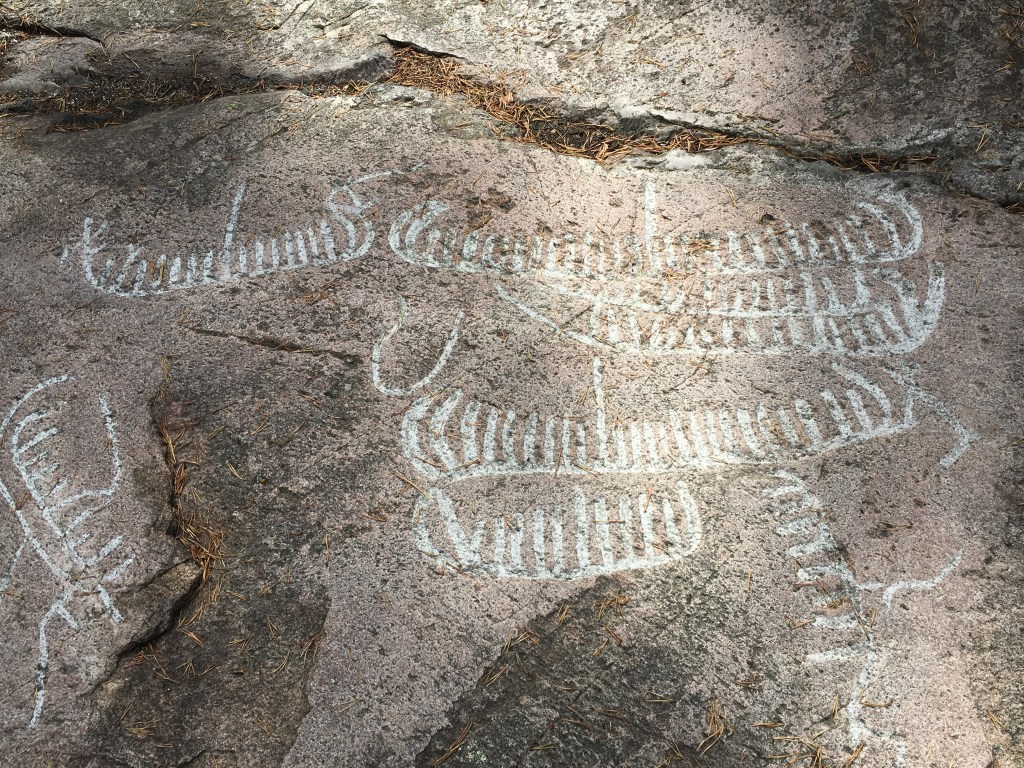
It’s the First Mate. We are visiting the Bronze Age petroglyphs at Hällristningar på Hästhallen, just to the north of Sandhamn. We had cycled out with Klaus & Claudia after lunch, turned off the main road and walked to the rock outcrop in a small clearing. We had spent the last half-an-hour or so marvelling at the 140 carvings of ships, horses and riders, deer, sun wheels, soles of feet, and cup marks. I am imagining how they might have come to be there.

Dated to around 1000 BC, the figures portray religious rituals and aspects of daily life in Bronze Age Scandinavia. When the rock carvings were made, the area was the coastline; but it is now 25 meters above sea level.

Bronze Age rock carvings of ships.

Back at Sandhamn harbour, I see that another boat has arrived and has tied up on the other side of the pier to us. What’s more, it is flying a New Zealand flag.

“You’ve come a long way”, I say to the couple sitting in the cockpit.

“Well, we have just come from Germany where we have bought the boat”, the man says. “So not too far. But we are going to sail it back to New Zealand in a couple of years’ time after we explore Europe. My name is Ian, by the way, and this is Colleen.”

When they hear that I am also from New Zealand, they invite us aboard for a drink. It turns out that Ian is the son of a university lecturer who taught me when I was at university. It’s a small world!

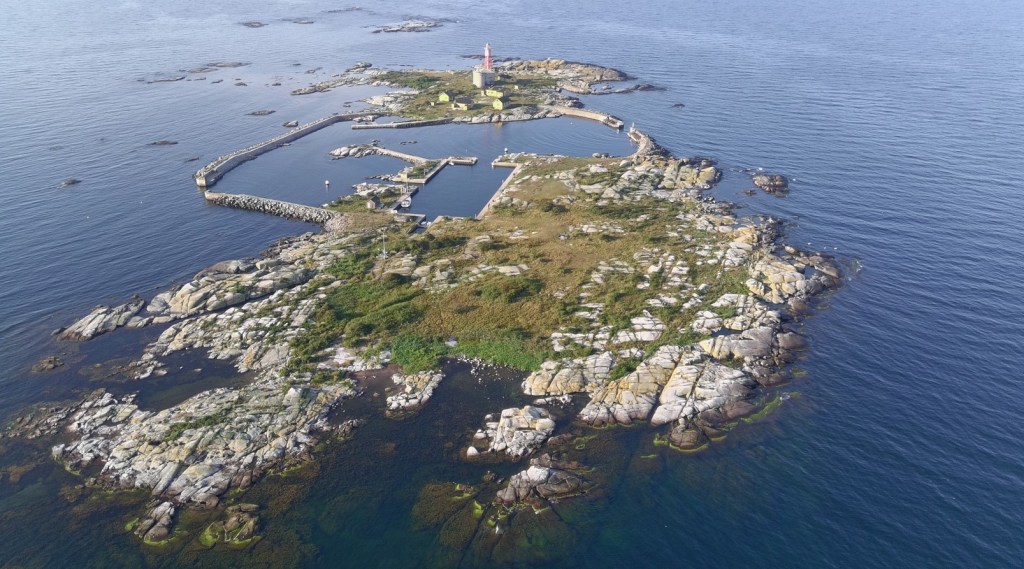
The winds die down over night, and the next morning we sail for Utklippan, a remote group of three tiny islands off the south-east corner of Sweden. Stunningly beautiful, these islands are the site of a lighthouse built in the 1800s. The lighthouse was deactivated in 2008, deemed not to be useful for modern day shipping. The islands are now a Nature 2000 reserve, famed for their wildlife. The rectangular guest harbour has been cut out of the rock of the northern-most island, and is a popular stopping-off place for sailors.

Utklippan from the north.

When we arrive, Klaus and Claudia are already there. They are the only ones.

“I’ve never seen it so quiet”, says Klaus. “It’s usually much busier than this. I have seen boats rafted up three or four deep sometimes.”

In the late afternoon, a black RIB arrives and ties up just in front of us. In it are two people in uniform.

“We are the coastguard”, one tells us. “We see that your boat is from the UK. Can you show us your passports, please?”

I disappear below and manage to locate our passports and other permits. They show little interest in the First Mate’s German passport, but study my NZ passport intently. We had arrived in Sweden in April, but my Swedish Visitor’s Permit allows me to stay for six months from then, longer than the Schengen visa waiver of three months. Satisfied, they glance around cursorily, jump back in the black RIB, and are gone.

“It’s interesting that the Finns seemed to be more interested in whether the boat had had VAT paid on it, whereas here in Sweden, they are more concerned about our passports”, says the First Mate.

In the evening, we decide to have a joint dinner with Klaus & Claudia. They bring a lamb curry and rice, while we do a vegetable curry.

Pre-prandial refreshments..

Over dinner, the conversation turns to the upcoming elections in Thuringia and Saxony in Germany.

“All the indications are that the far-right Alternative for Deutschland (AfD) party will do well”, says Klaus. “There is real concern in Germany that this could lead to a return to the Nazism of the 1930s if they receive too much support.”

“We grew up having Nie weider, never again, drummed into us”, explains the First Mate. “So it is a bit of a shock when so many people support a far-right party.”

“It’s interesting that the AfD wasn’t always far-right”, says Claudia. “It was actually started in 2013 by a group of economists protesting against the bailouts to the southern Europe countries during the Eurozone crisis. They wanted these countries to leave the EU. It was only later that the party evolved towards the far-right when its various leaders jumped on the immigration bandwagon in an effort to gain votes.”

“It has its strongest support in the former Communist East Germany”, says Klaus. “But what is worrying is that a large number of young people, whom we expected to be progressive, support it too.”

After Klaus & Claudia have gone, I sit in the cockpit musing over what we had been talking about. Surely Nazism won’t reappear?

“I overheard your conversation”, says Spencer from his home in the canopy. “It’s interesting, as I was just reading the other day that the AfD won’t gain power as it is just an East German thing. You see, West and East Germans are very different people, and the differences go much further back than the Communist era. Right back to our old friends, the Teutonic Knights, in fact. It was because of them, and those that followed them, that the Baltic Germans developed a colonial mindset where they dominated the indigenous Balts and Slavs. When Hitler recalled them just before WW2, most relocated to eastern Germany, bringing their conservative right-wing worldviews with them. These views largely remain today, despite 50 years of Communist rule. So the AfD has a lot of support in the east, but it won’t gain much ground in the more liberal west.”

“Well, I hope you are right”, I say doubtfully. “But my concern is that too much immigration touches a raw nerve in both east and west Germany, which the AfD plays on. We’ll just have to see how it pans out.”

In the morning, as I drink my first tea of the day and do the crossword, there is a sound of voices outside. I poke my head out to see what is going on.

“We have come from the mainland to empty the rubbish bins”, says one of the voices. “I hope we didn’t wake you up?”

“How do you know when to come?”, I ask. “They might be empty and it would be a wasted journey.”

“Ah, but the bins are intelligent, you see”, he answers. “After someone has deposited something in there, it triggers a press and the rubbish inside is compressed. When the bin gets to around 80% full of compressed rubbish, it sends an email to our headquarters to tell us that it is nearly full. We then jump in a boat and come out to empty it. That way, the bins never overflow, and we don’t have any wasted trips. It’s all powered by this solar panel on top, see.”

Emptying the ‘intelligent’ rubbish bins on Utklippan.

After breakfast, we clamber into one of the small rowing boats provided on each island, and row over to the other island to explore the remains of the lighthouse station.

The Utklippan lighthouse.

Suddenly there is a massive series of thumps that reverberate throughout the island.

“What on earth was that?”, shouts the First Mate in alarm. “Did something fall down?”

“It sounds like heavy guns firing”, I say. “Perhaps the navy are practising.”

Sure enough, in the haze of the horizon we see a warship firing its guns, puffs of smoke being carried away by the wind.

Warships on the horizon.

“Crump … crump … crump”, go the guns. Then a few seconds later, another “Crump … crump … crump” in response, this time not quite so loud.

“There’s another ship that must be below the horizon”, I say. “We can’t see it.”

“I hope that they are only practising”, says the First Mate. “But what if the Russians have invaded Poland and this is the beginning of WW3? What would we do?”

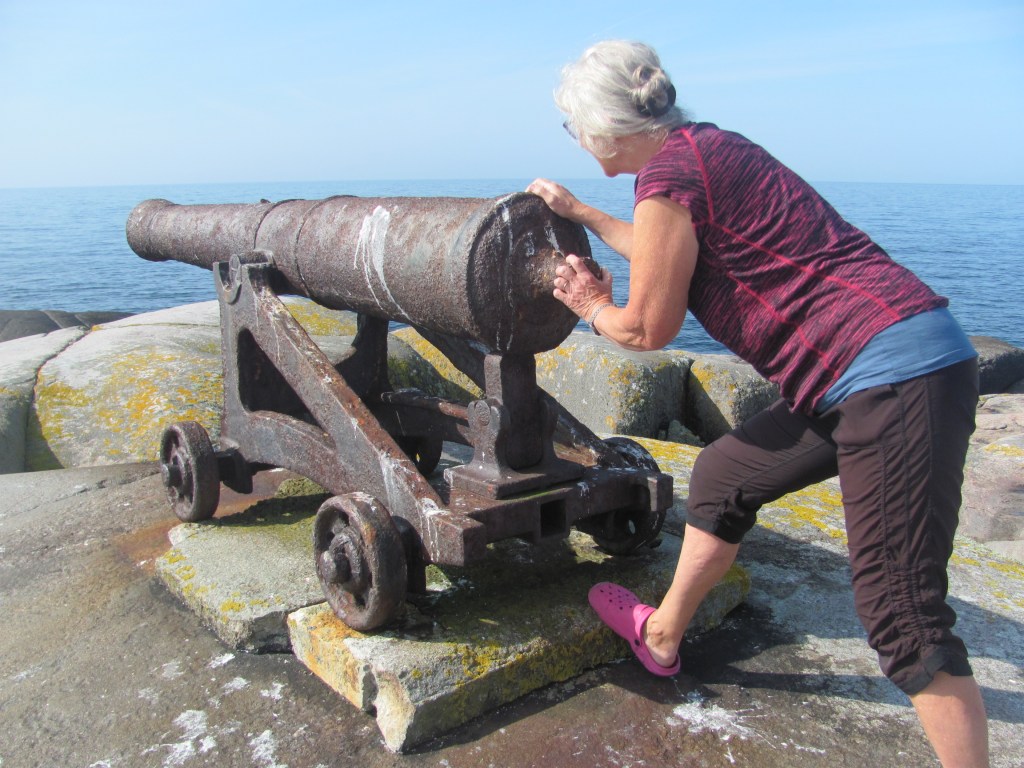
“I suppose we could try defending the island with that cannon ever there”, I say doubtfully. “We might be able to hold them off for a minute or two, if we are lucky.”

Repelling the invaders.