A near miss, a twisted torso, and different minds

“Look!”, shouts the First Mate, pointing to a steep cliff to our port side. “You can see Hammershus castle up there. It’s hard to believe that we were up there yesterday. It looks quite impressive even from down here.”

We had left Allinge in the morning, edging our way carefully out of the small harbour with its dog-leg entrance, and are just rounding the northern point of Bornholm Island. The wind is from the north-east, giving us a comfortable beam reach as we head for Ystad, back on the Swedish mainland. Between here and there, however, we must cross a Traffic Separation Scheme (TSS) for the big ships, which the rules say that we need to do at right angles to minimise the amount of time crossing it.

“It reminds me of the time we crossed the English Channel”, I say. “It was like being in a pinball machine – no sooner had we dodged all the ships coming from one direction, we had to face a whole lot more coming from the opposite direction. Let’s see if we can get across here without altering our course.”

“Be careful”, says the First Mate. “We don’t want to have an accident at this stage.”
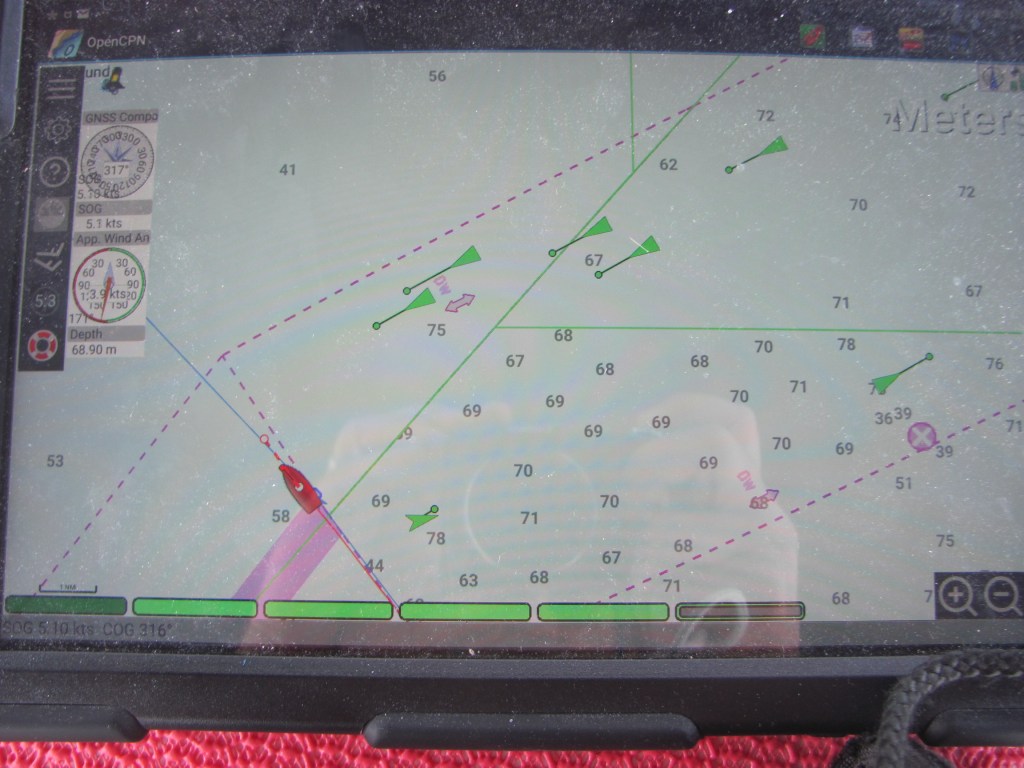
Running the gauntlet (we are the red one!).

We manage to make it through the north-bound lane without too much trouble. But traffic in the southbound lane is heavy, and there are five ships in a cluster that we need to avoid. The AIS tells me that we will pass behind the first three comfortably, but that we will pass in front of the fourth one with just 15 m as the Closest Point of Approach (CPA). That is a little bit too close for comfort! Hoping that the wind might strengthen and give us a bit more speed, or even drop so that we slow down, I keep an eagle eye on the AIS as we cross, but the CPA remains obstinately the same. As our paths converge closer and closer, I chicken out and decide to heave-to. As the ship passes about 100 m in front of us, we can see some of the crew leaning over the guard rails and smoking.

“Phew”, breathes the First Mate in relief. “That was pretty close.”

“Yes, I even noticed that it was Gauloises they were smoking”, I say.

Dodging the ships in the Traffic Separation Scheme.

Once clear of the TSS we alter our course to the east. As luck would have it, the wind shifts and drops, as does our speed.

“We aren’t in any hurry”, I say. “Let’s just take it easy and enjoy the sunshine.”

At a stately three knots, it takes most of the afternoon before we reach Ystad, our destination for the night.

“Better look out for that ferry over there”, calls the First Mate, pointing to something on the horizon. “It looks like it’s heading for Ystad too.”

“There’s plenty of time”, I say. “It’s miles away.”

But it’s a catamaran and travelling fast. In a few minutes it is just behind us. It blows its horn to tell us to get out of the way. We motor as fast as we can to a red buoy, and take a line just outside it so that the buoyed channel is clear. The ferry slows down and cruises past us.
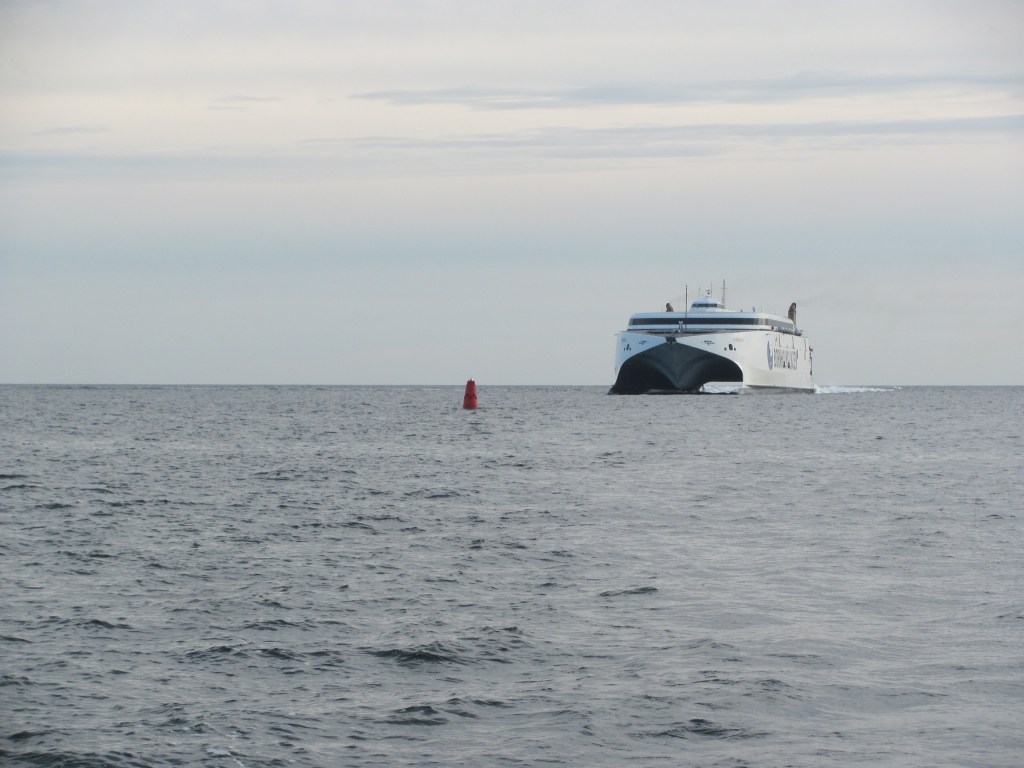
Getting out of the way of the ferry coming into Ystad.

Obsession is already there. We aim for the berth just behind her. Ingemar gives us a hand tying up.

“Ystad is a pretty enough place”, he says over a cup of tea. “It’s a former Hanseatic town, and the church and some of the old half-timbered houses are worth a look. It’s just a short walk into the centre of town from here. Ystad’s other claim to fame is that it is the place where the Wallander crime series is set.”

The First Mate has watched the Wallander series, but I haven’t. I make a mental note to try and see it on iPlayer over the winter.

In the morning, we walk into the town centre. We come across the Sankta Maria Kyrka, built in the 1200s in Brick Gothic.

Inside the Sankta Maria Kyrka.

“The guidebook says that the church still has a Tower Watchman”, says the First Mate. “His job is to climb the tower every night and keep an eye on the city. He blows a horn every 15 minutes from 2100h to 0100h to signal that everything is OK. If the horn doesn’t sound, it means that there is a problem, like a fire or something. It’s an old tradition from the 1700s that has been kept alive. Apparently, it has been the same family who have been doing it all that time.”

“I wonder what they do if he is sick or on holiday?”, I say.

Next to the church is the Latinskolan, or Latin School, that was used in medieval times to teach Latin to the sons of clergymen and the local elite to prepare them to go to university.
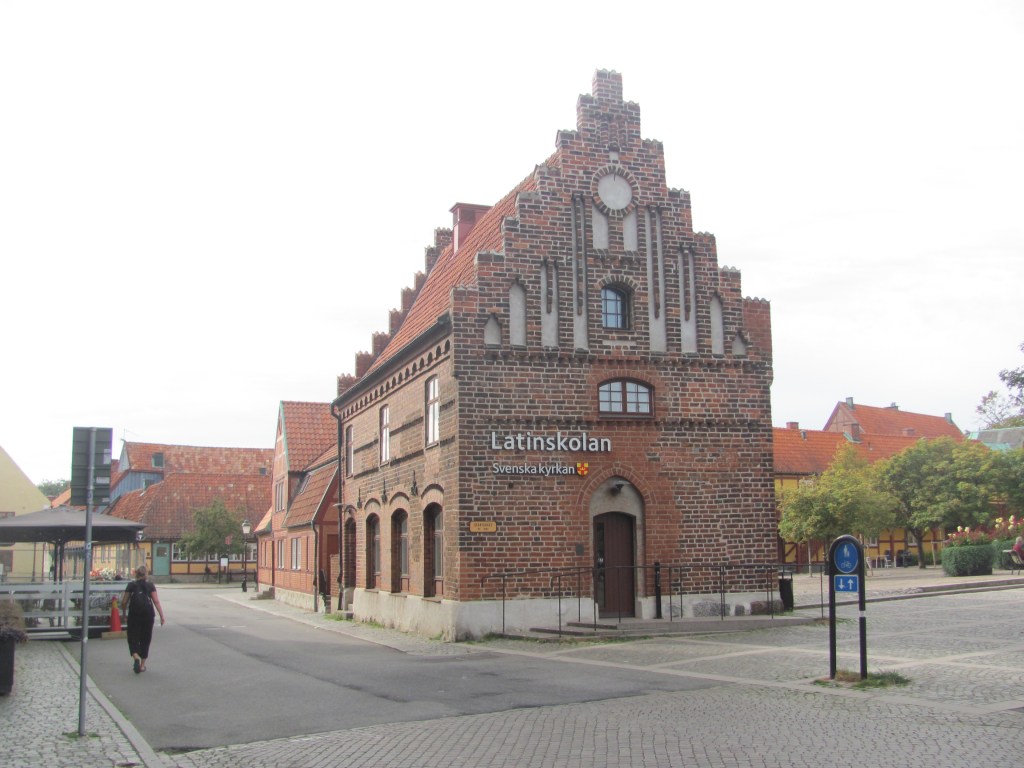
The Latinskolan in Ystad.

A little bit further on, we come to the Klostret I Ystad, or Greyfriars Abbey, originally a Franciscan monastery. There is a small museum attached to the side, but unfortunately it is Monday and it is closed.
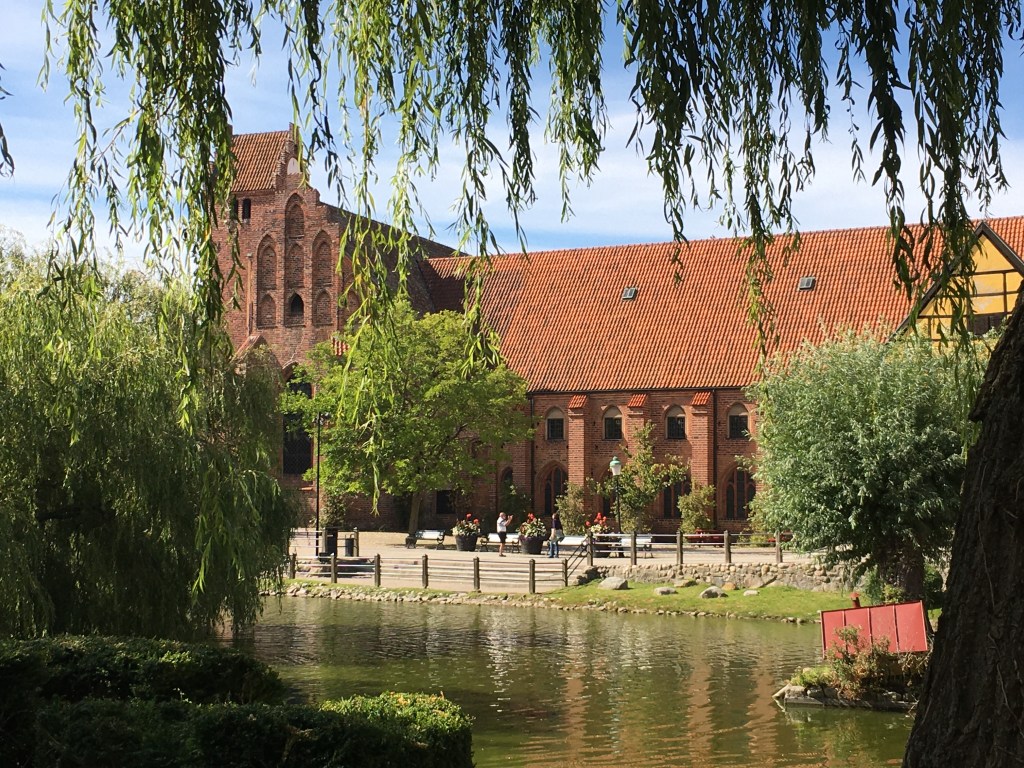
The Klostret I Ystad.

“The book says that the Franciscan order wore grey habits”, says the First Mate. “Hence the Greyfriars name. They emphasised the simple life and travelled around the countryside preaching, caring for the poor and sick, and living off alms given to them by those who could afford it. The friary was a place they could come back to for meditation and contemplation.”

It’s lunchtime. We join the queue at a place called ‘Maltes Mackor’ that is famous for its tailor-made sandwiches, and eventually watch in mouth-watering anticipation as each of our sandwiches is ‘constructed’ with loving care.
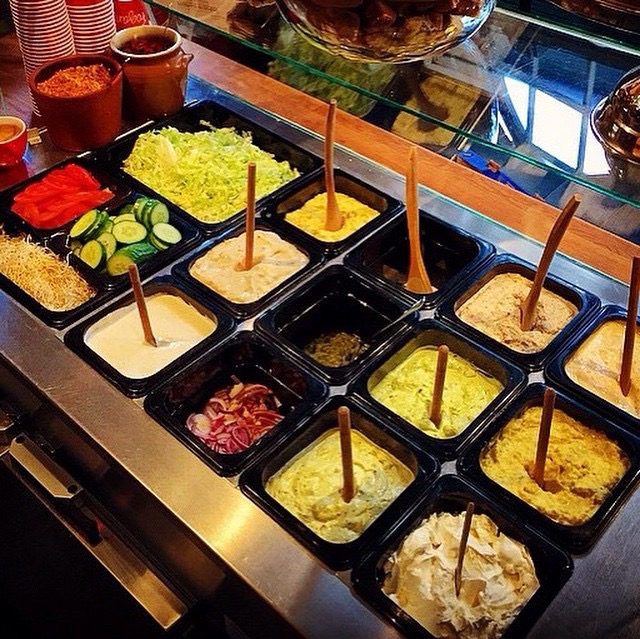
Spoilt for choice (from Maltes Mackor).

“Well, it took a while”, says the First Mate, “but I have to say that it was worth it. They taste marvellous.”

After lunch, we explore the narrow streets flanked with half-timbered houses. Per Helsas Gård was a farmhouse built just inside the city walls following their curvature. Nowadays, it houses a number of craftsmen, with an open air café in the old courtyard.

Per Helsas Gård.

Pilgrändshuset is a residential house joined to a warehouse dating from around 1500 AD.
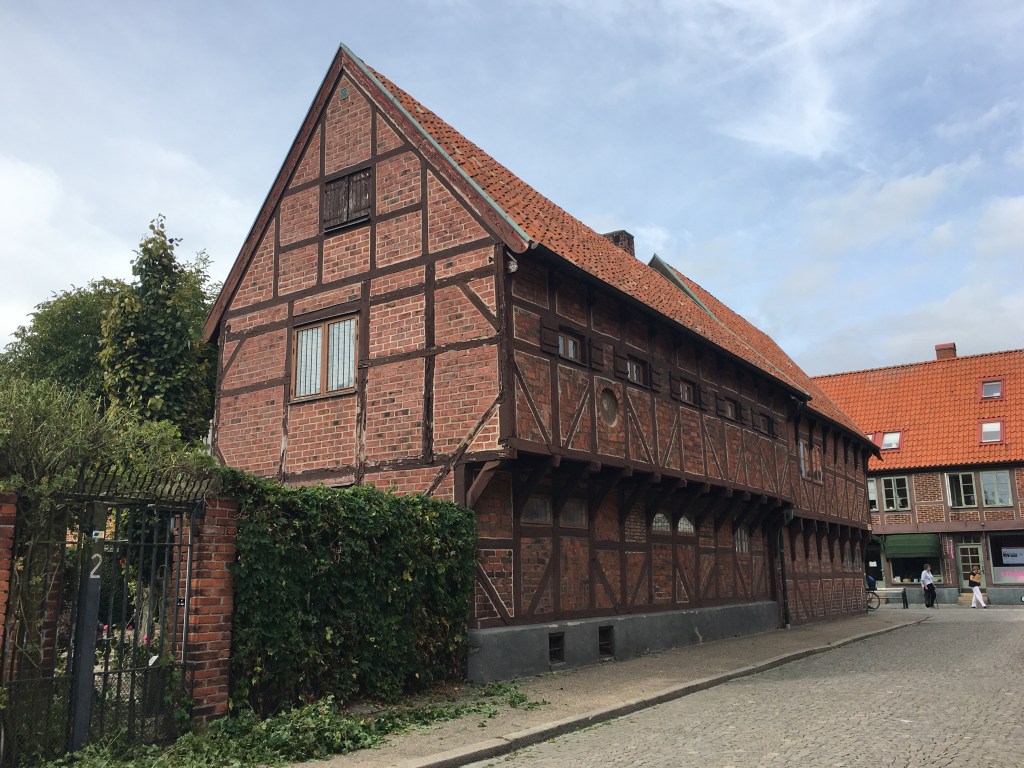
The Änglahuset is another farmhouse, so called because of the decorative angel figures under the eaves.
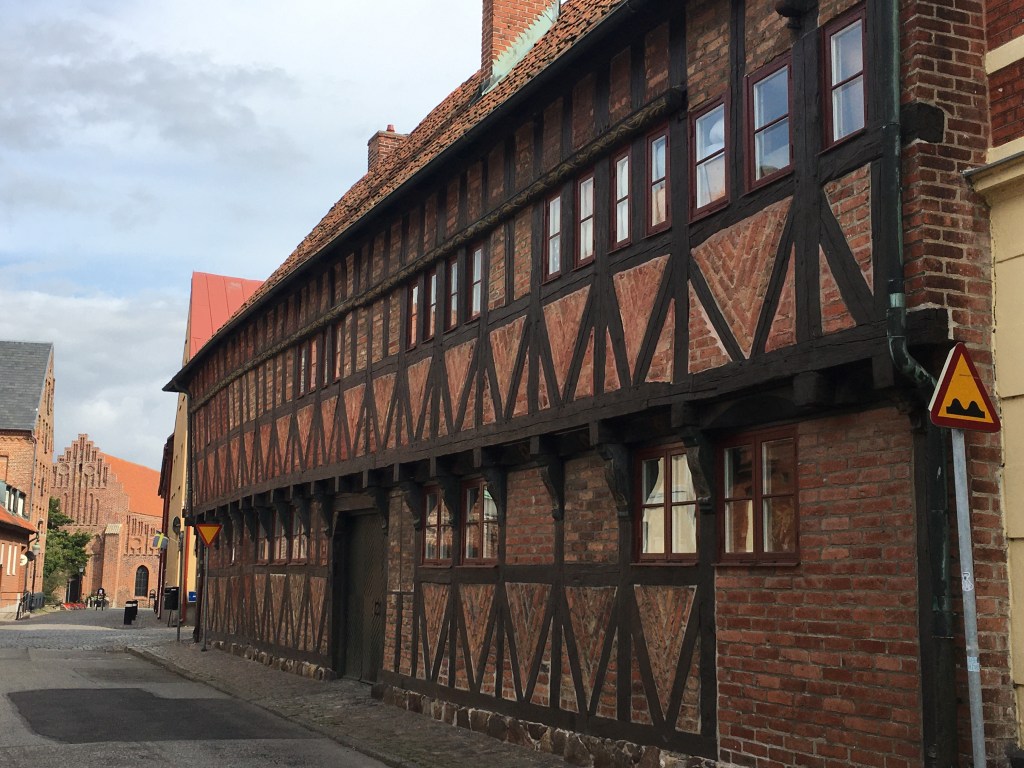
Änglahuset.

In the evening, we ask Ingemar over for a drink.

“Did you hear that the Falsterbo Canal is closed for us?”, he asks, as he sips his Weizen beer. “They are repairing it. It’s open for south-bound traffic this week, but not northbound, then next week they are switching around. Unfortunately, we both need to go through this week.”

Falsterbo Canal was built during WW2 to allow Swedish vessels to continue sailing to and from the North Sea while avoiding the mines laid in the Öresund by the Germans. It is still maintained, but is now mainly used for recreational boats wishing to take a short cut to avoid the long way round through the Öresund.

“Yes, I read that somewhere”, I say. “We are planning to go round the outside and perhaps stop in Skanör for a night.”

Our route around Falsterbo peninsula avoiding the canal.

Obsession leaves at 0700 in the morning. We are a bit more leisurely, and don’t get going until around 1000. The wind is from the port quarter, but shifts to directly behind after a couple of hours. Sailing with the genoa only, we still make around six knots. As we reach the Öresund and turn northwards, the wind strengthens. I take out the mainsail, put in two reefs, and we still manage to make more than eight knots on a close reach. I glimpse Obsession on the AIS far ahead, already past Skanör, heading for Malmö.
Making good speed.

“8.2 knots!”, says the First Mate. “We don’t often do that speed. And with a double reef too. But it was heeling a bit too much for my liking.”

We stop for a night at Skanör, then set off in the morning for Malmö.
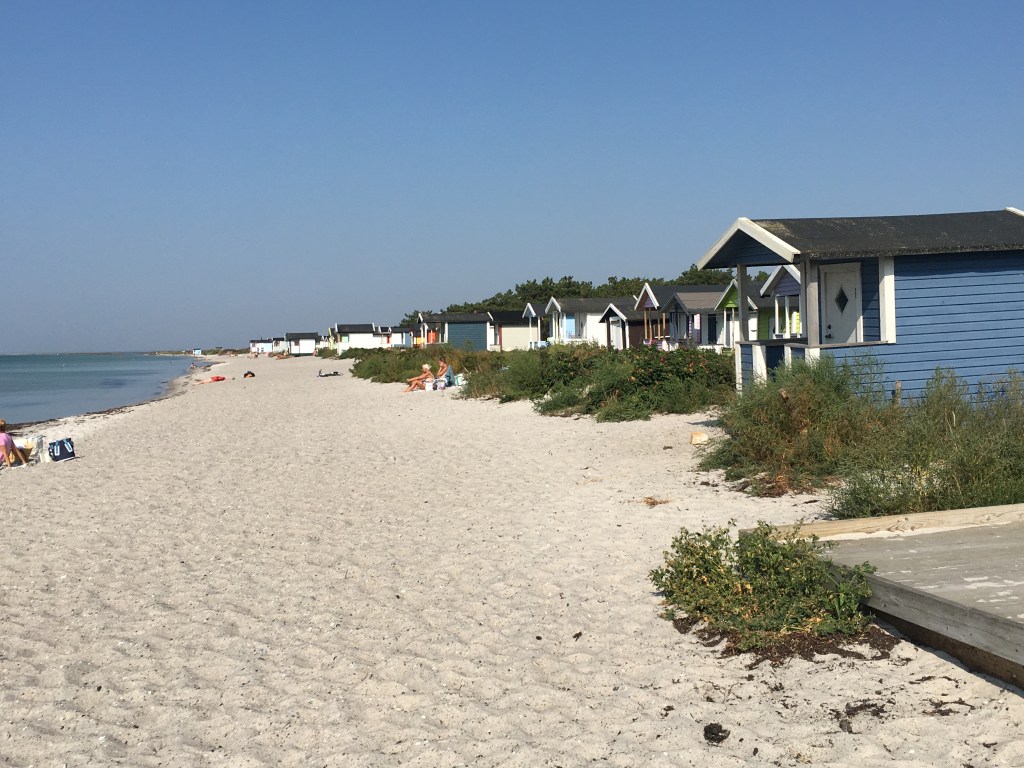
The beach at Skanör.

“This will probably be the last sail of the season”, I say. “I feel a bit sad that it’s all over for another season.”

“Me too”, says the First Mate. “Better make it a good one then.”

And it is. The wind is still an easterly, and blowing 24 knots, so we sail double reefed again. Before long we have passed the Lillgrund windfarm to our port, and are approaching the Öresund Bridge.

Approaching the Öresund Bridge.

“Keep an eye out for Saga Norén”, I call out to the First Mate at the bow. “They might be making another episode of The Bridge. And try to ignore the dead bodies, especially the ones sawn in half.”

With the wind blowing, she doesn’t hear me. Probably just as well.

We pass under the Bridge and arrive at the Limhamn marina in Malmö. The harbourmaster has asked us to tie up to the second pontoon. Ingemar sees us arriving and comes to catch our lines.

“I’ve just been servicing my heat exchanger this morning”, he says over lunch. “You need to do it every couple of years or so, or else the small pipes inside it will get blocked up with scale. I have rigged up a pump and some tubes that circulate phosphoric acid through the sea water side of the exchanger for an hour or so. That dissolves all the scale, leaving it nice and clean again.”

Rather than having a radiator like cars do, the heat exchanger takes in sea-water and uses it to cool the hot coolant circulating through the engine. That way sea water doesn’t come in contact with the engine to cause corrosion.

Ruby Tuesday’s heat exchanger.

“When was the last time we did that?”, asks the First Mate.

I have learnt that by ‘we’, she always means me.

“We haven’t done it since we have had the boat”, I say.

“It would probably be a good idea to do it”, says Ingemar. “Just to avoid problems.”

There is also a small leak in the cooling system that I have been meaning to do something about, and the mixing elbow that combines the warm sea-water with the exhaust gases also needs to be checked, so I decide to remove the whole assembly from the engine and take it home to do everything together. I spend the next couple of days getting it off. Like everything in boats, some nuts and bolts are almost inaccessible, and there is very little space for me to manoeuvre in the engine compartment.

“You need to lose a bit of weight”, sniffs the First Mate unsympathetically. “It’s all those peanuts you have been snacking on. I wouldn’t be surprised if you get stuck in there. Make sure you’ve got your mobile handy so you can call me.”

I finally manage to get the heat exchanger and the mixing elbow off. I change the oil and replace the oil and fuel filters. We pack away the sails, and take down the spray hood, cockpit tent, and the bimini. The new dinghy is deflated, rinsed in fresh water, and stowed. Clothes and other fabrics are stored in the vacuum packs and the air sucked out with the vacuum cleaner. Everything is ready for the winter.

Ruby Tuesday ready for the winter.

“You know, we should take the opportunity to explore Malmö”, I say one evening. “Now that most of the winter preparations are done.”

“I was thinking the same”, says the First Mate.

The next morning, we cycle into town to explore. Malmö was founded some time in the 1200s when southern Sweden was actually part of Denmark. One story is that the name comes about from a young woman being ground up in a mill, but this is almost certainly untrue. In the 1600s, the city became part of Sweden under the Treaty of Roskilde. Then, in the 1800s, it was the first city in Sweden to industrialise, with the main focus on shipbuilding and textiles, but it was slow to adapt to the post-industrial period after the 1970s. However, with the opening of the Öresund Bridge, it has taken off again and is rebranding itself as a hi-tech, educational and cultural centre. In 2020, it was the fastest-growing city in Sweden, with 40% of the population coming from a non-Swedish background.

We come to a bronze statue of a number of people sitting on the back of a giant fish, by the Swedish sculptor Carl Milles. Called “Emigranterna“, it represents the large numbers of Swedish people who left their homeland to emigrate to the New World in search of a better life. Emotions of determination, hope and apprehension line their faces as they head for an unknown future.

Emigranterna.

“It’s ironic that large numbers of Swedish people left from here to go abroad to make a better life”, says the First Mate, “and now Malmö is the place that many immigrants arrive from third world countries to make a better life here.”

“Even more ironic is that there were tensions between the Swedes and the earlier settlers in America”, I say. “Especially the English-speaking ones, who saw them as culturally different in terms of language and religion. The Germans and Dutch didn’t like them much either, as they competed for jobs. But now they are well integrated into American society. What goes around, comes around.”

On the way back, we spot the ‘Turning Torso’, a 190 m high residential skyscraper built in 2005, and one of the tallest buildings in Scandinavia. It is the modern day icon of the city, replacing the shipyard crane that had previously been the Malmö icon, but since sold to South Korea.

“It’s certainly very eye-catching”, says the First Mate.
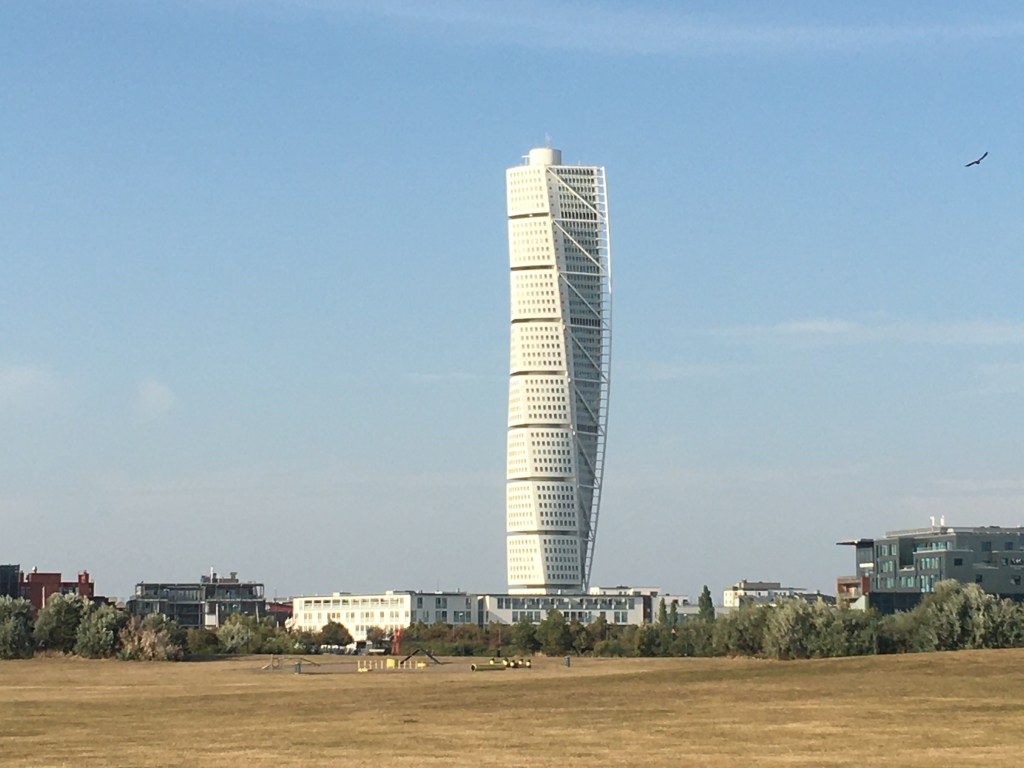
The ‘Turning Torso’.

—–

It’s the last day – the day that we are leaving to drive to Germany to see the First Mate’s family, and then back to the UK.

On the way back from the shower block, I see a quick movement of something black near the rocks of the breakwater. It’s a mink. It stops and regards me intensely. I stare back at it. For perhaps five minutes we regard each other with curiosity, neither of us moving. It doesn’t seem to be afraid, despite there being only two metres between us.

Our aquatic neighbour (from NatureScot).

What thoughts are going through its mind, I wonder? Do mink even have thoughts or a mind? Or emotions? Is it wondering what I am thinking? What would it be like to be a mink?

I think back to the essay written by Thomas Nagel “What is it like to be a bat?” that I had read during my student days. In it, he argues that consciousness has a subjective aspect that cannot be fully understood from an external, objective perspective. While we can study a bat’s brain physiology, we can’t fully grasp its subjective experience—what it is really like to perceive the world as a bat. We can imagine what it is like to be a bat, but that is still a human imagining what it might be like. Any attempt to reduce subjective experience to physical processes will always be incomplete.

And yet, there seems to be something shared in this brief encounter with the mink, even if it is just curiosity about the other. Is curiosity a shared experience? If so, there may be others. Or am I anthropomorphising?

“Come on”, calls the First Mate from the boat. “We need to pack the last things into the car and lock up. We’ve got a long journey in front of us.”

The mink scampers off to a gap in the rocks to re-join its world. I return to my world of other humans and their technology. The fleeting connection between very different minds is gone.

“See you next year”, I call after it.

A Royal Navy attack, Bob Dylan’s boat, and a detested fortress

“We’ll have to change the courtesy flag from Swedish to Danish at some point”, says the First Mate emerging from the cabin with a bowl of muesli. “Here’s your breakfast. I’ll make a cup of tea when you have finished it.”

We are on our way to Ertholmene, the ‘Pea Islands’. We had left Utklippan in the half light of dawn, even before the sun was up, carefully navigating our way out of the narrow exit to the guest harbour only a little bit wider than the width of the boat itself. All was quiet, as far as we could see we had been the first to leave. Even the intelligent rubbish bins had seemed to be asleep. A fresh wind was blowing from the south-east, so we had unfurled the sails almost straightaway. Silhouetted against the red light of dawn, the lighthouse seemed to be wishing us a safe journey, as it had no doubt done to many sailors before us.

Leaving Utklippan.

“That’s a beautiful sunrise”, says the First Mate, bringing out two mugs of tea and sitting down beside me. “You don’t see that often.”

“That’s because you are not often up at this time”, I joke. “It’s the best part of the day. Peaceful and quiet.”

She’s a night owl, I am an early riser. A perfect combination.

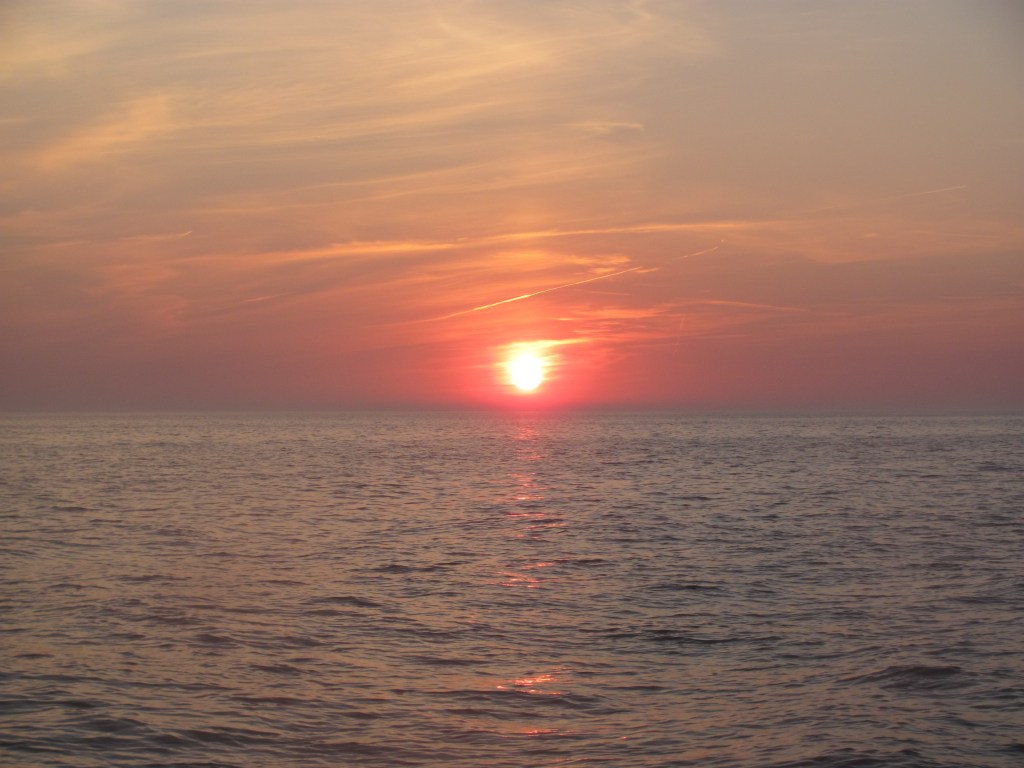
The sun rises over the Baltic.

We sail south-westwards on a comfortable close reach, the sea miles sliding smoothly under the keel. The hours pass.

“There’s a Swedish boat called Obsession following us”, I say, pointing to the chart-plotter. “I remember it being in Utklippan. It’s going faster than us, but I think that we have enough of a lead to get there first. We don’t want to lose our place at the ferry dock.”

We had called the harbourmaster at Christiansø earlier, to check that there would be enough space there for us. As it is only a tiny harbour, it can become very full at the height of the season.

“No problem”, he had reassured us. “The ferry goes at 1400h, so if you arrive just after then, you can tie up at the ferry dock. It’ll be free until 1000h the next morning.”

The wind strengthens, and moves round more to the east. We are now on a beam reach and doing 7½ knots. The sea also becomes choppier.

“Phew, this is a bit bouncy”, says the First Mate. “Can’t we go a bit slower? Look, there’s land ahead. It must be Christiansø.”

Christiansø is the largest of the islands of the Ertholmene archipelago, which belongs to Denmark. In fact, the whole archipelago is often referred to as Christiansø despite there being three other islands, two of which are designated as bird reserves and therefore out of bounds without a permit.

We round the south-eastern point of Christiansø, and the harbour suddenly appears, nestled in the narrow gap between two of the islands.

Approaching Christiansø harbour.

The ferry to the mainland is just leaving, and true to his word, the harbourmaster waves us to the place it has just left. About an hour later, Obsession arrives, and ties up behind us.

“I could see you on the AIS”, says the skipper. “I was trying to catch you up, but you had too much of a start on me. I’m Ingemar, by the way. I am on my way back to Malmö where I overwinter.”

I tell him that that is also where we have finally decided to keep Ruby Tuesday for the winter.

“It’s a good marina”, Ingemar says. “I grew up in Malmö. The harbourmaster is an old schoolfriend. He’ll look after your boat well.”

There doesn’t seem to be anyone else on his boat.

“I am sailing single handed”, he says, reading my thoughts. “I live in the south of France nowadays, and spend each summer sailing around the Baltic. I did the Stockholm archipelago this year.”

I am impressed. His boat is a 53-footer weighing 24 tonnes, dwarfing Ruby Tuesday. It can’t be easy to sail it by oneself.

Tied up in Christiansø harbour.

“Coffee’s ready”, calls the First Mate from the cockpit. “Drink it up quickly. I want to go and explore the place.”

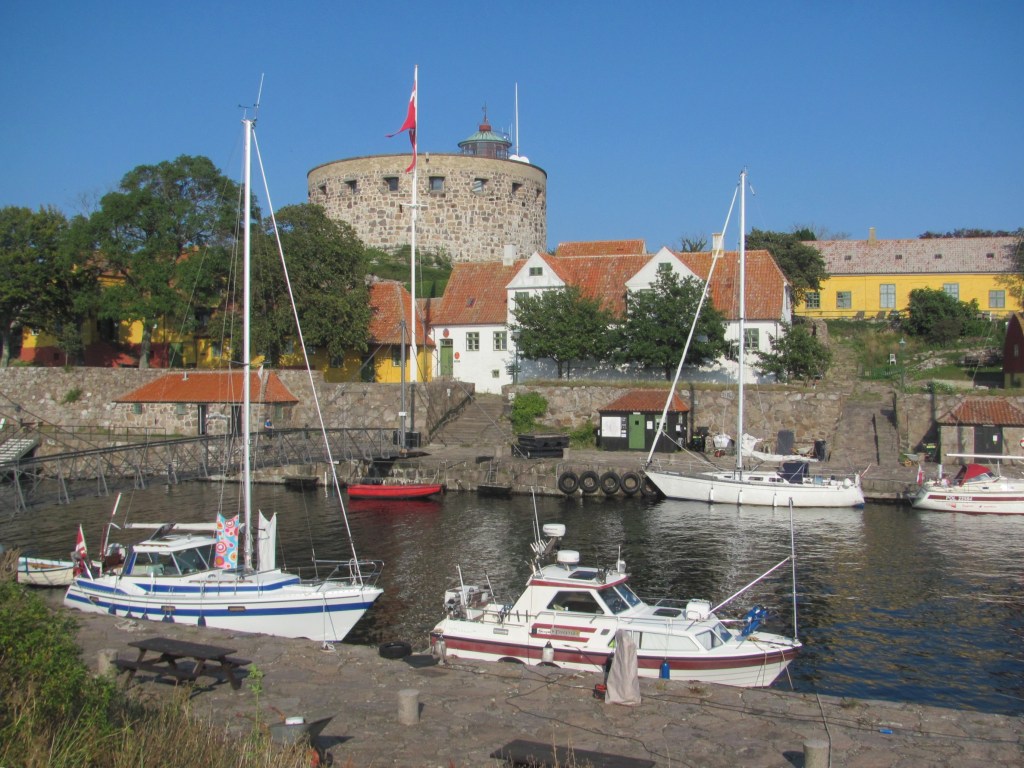
Christiansø was built by the Danish as a military fortification during the Swedish-Danish wars in the late 1600s. Part of the fortifications were two towers, both of which have been renovated and now contain museums.

Store Tårn (Great Tower), Christiansø.

“The English attacked the island in 1808 in what is known as the English Wars of 1801-1814”, one of the museum displays tells us. “They destroyed several of the fortifications and captured some of the Danish ships in the harbour, but were not able to capture the whole island, so they withdrew.”

The British bombardment of Christiansø in 1808 (by Arne Skotteborg-Frederiksen)

I am somewhat surprised, as I was not aware of war between Denmark and Britain. But Google tells me later that it was all part of the Napoleonic Wars, and that France and her allies were trying to prevent British trading vessels from entering the Baltic Sea. As Denmark was an ally of France at that time, Danish forts were considered legitimate targets. The Royal Navy had bombarded the city of Copenhagen the year before in an attempt to seize the Danish fleet to stop it from being used by the French. They had then moved on to Christiansø to prevent it being used as a base for state-supported privateers to attack British merchant shipping.

“Don’t worry”, says the harbourmaster with a grin. “It’s all history. We quite like seeing British boats here nowadays. As long as they don’t try and finish the job they started in 1808. But we don’t get many coming anyway since Brexit.”

We take a quick walk around the rest of the island. A foot bridge joins Christiansø with the neighbouring island of Frederiksø.

The foot bridge joining the two islands.

On Frederiksø is the Lille Tårn, or Small Tower, now a cultural museum.

Lille Tårn, Frederiksø.

In the morning, we need to leave before 1000h to make way for the ferry’s arrival. Obsession leaves first, easing away from the quay, and we follow her out of the narrow harbour entrance. Immediately, the wind picks up from the south-west, and we zip along on a comfortable beam reach, heading for the small harbour of Allinge-Sandvig on the island of Bornholm, 13 NM away. After a couple of hours or so, however, we enter the wind shadow in the lee of Bornholm, and the wind gradually dies to nothing. We drift for a while, but with the sails flapping listlessly, we are reduced to furling them away and motoring the last few miles into the harbour.

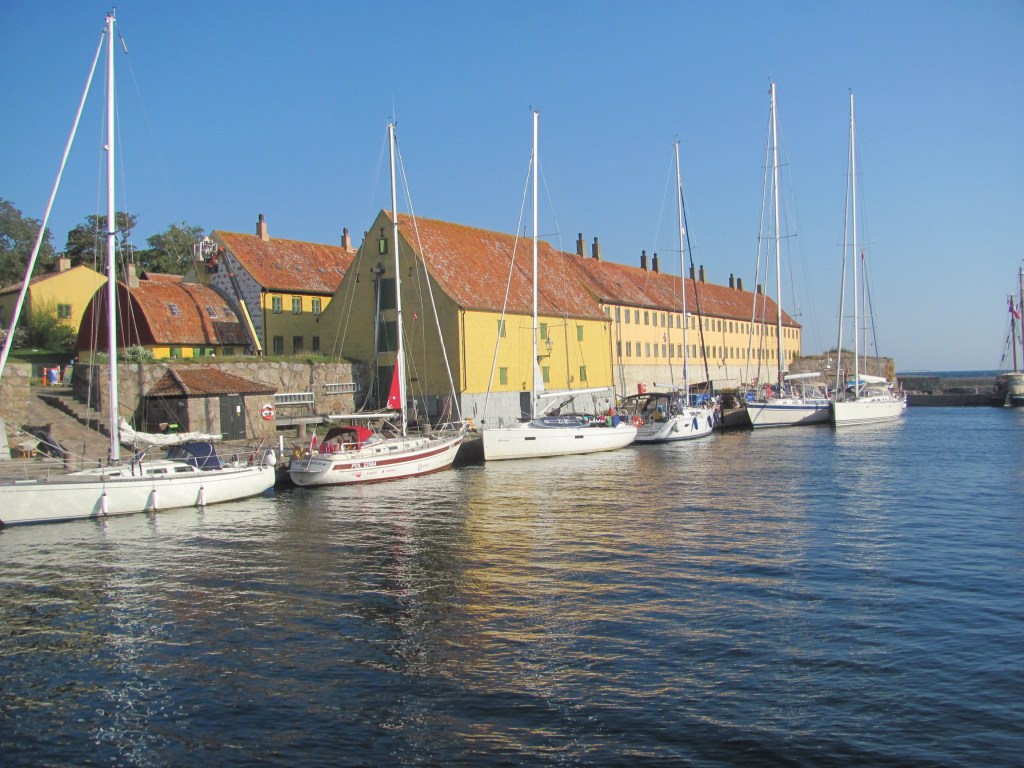
Allinge harbour, Bornholm.

“What about coming over for a drink later on?”, says Ingemar, as he helps us to tie up in front of Obsession.

“Sounds good”, I say.

Tied up in Allinge harbour, Bornholm.

There’s just enough time before then to have a quick look around the town. Originally a small fishing settlement, Allinge prospered in the Middle Ages from the Hanseatic herring trade, with masses of Baltic herring being shipped to southern Europe for Catholics to eat on their ‘meatless’ days. In 1946, it officially joined with the neighbouring fishing village to become Allinge-Sandvig.

Nowadays, the colourful houses and streets exude charm in the typical Danish fashion that we had grown used to in southern Denmark three years ago.

The Allinge Technical School was built in 1895 with the aim of training craftsmen. Currently it is used as offices.

Former Allinge Technical School.

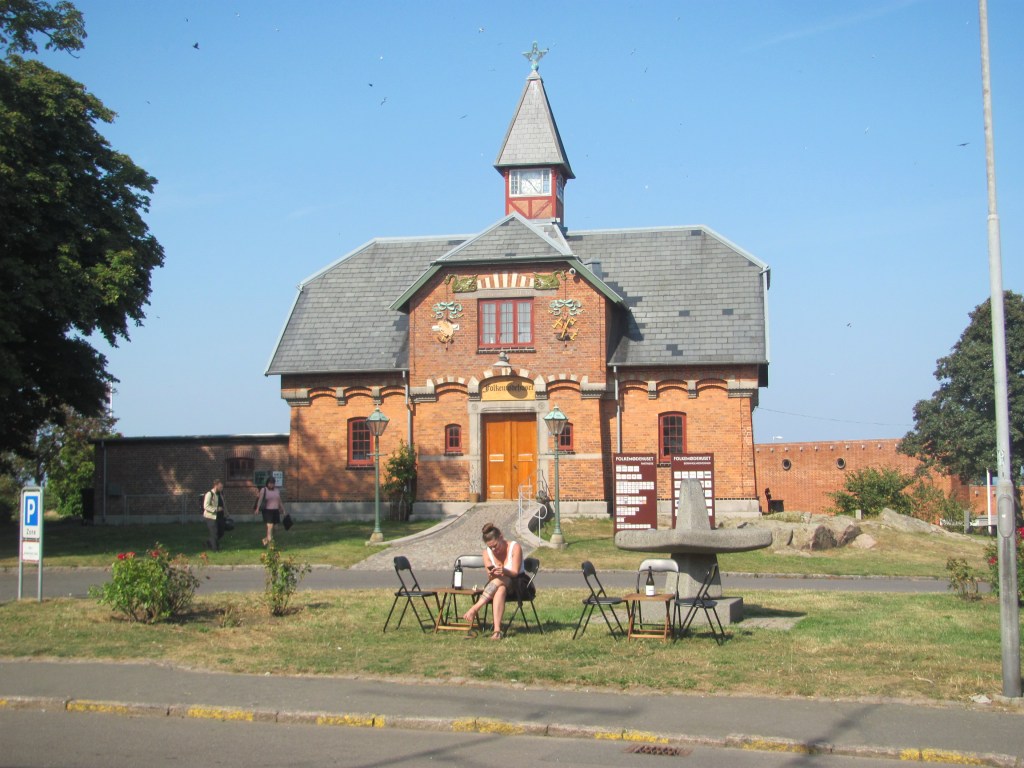
The Public Meeting Dome can be rented for various events.

The Allinge Public Meeting Dome.

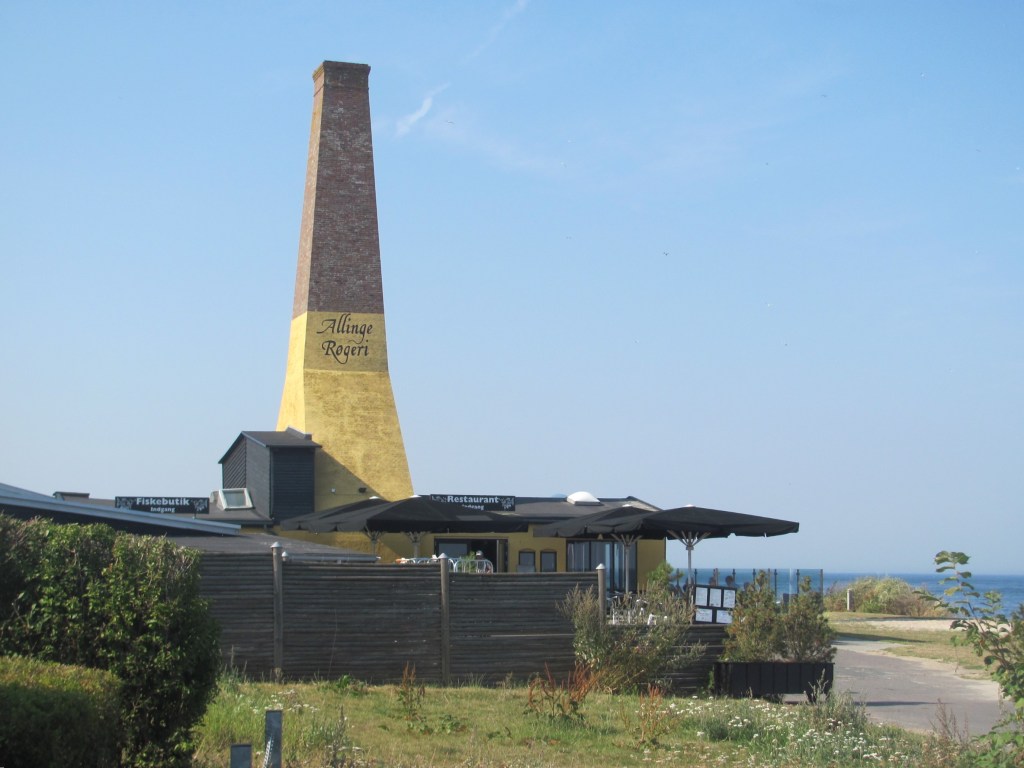
An the way back, we pass one of the two smokeries in the town.

Allinge Smokery.

“Welcome to Obsession”, Ingemar says, as we clamber aboard. “Yes, I am retired. But I have been sailing most of my life. I started off running charters in various places, including the Caribbean. Later I started a company making desalinisation equipment for the marine industry, removing the salt from seawater to make fresh water. The company did very well, and we ended up fitting our gear on a lot of the luxury yachts. One superyacht, for example, owned by a Russian oligarch, had two swimming pools – one for the adults and one for the kids, with the water for each coming from our desalinators. Anyway, I sold the company a few years ago, invested the money, and now spend the summers sailing.”

“I bet you could tell some great stories about the rich and famous?”, prompts the First Mate.

“I could, but I am not allowed to”, answers Ingemar with a smile. “Most of the jobs we did are covered by non-disclosure agreements.”

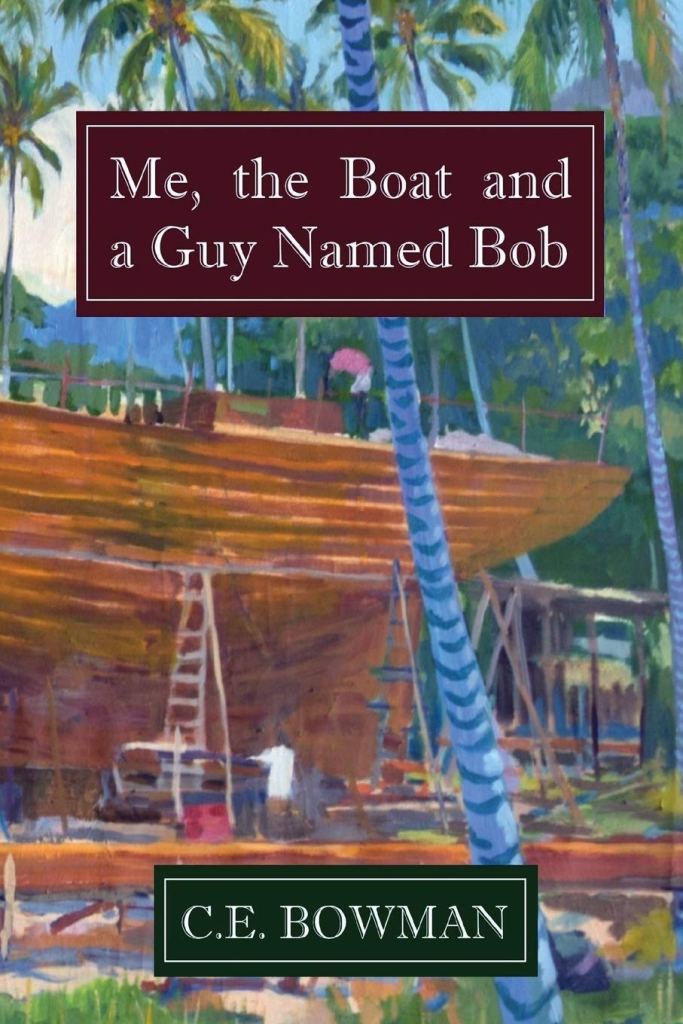
“Getting back to the Caribbean”, I say, “I read a fascinating book recently on a sailboat that was hand-built there. On the island of Bequia. A friend of mine who lives in Australia recommended it to me.”

“I know Bequia well”, says Ingemar. “It’s my favourite Caribbean island.”

“The boat was built by a young Californian chap called Chris Bowman back in the 1970s”, I continue. “It was commissioned by Bob Dylan, but the agreement was that they would be joint owners of her. They named her Water Pearl. The book is called Me, the Boat and a Guy named Bob. It’s a good read.”

Ingemar’s brow furrows, as though he is trying to recall a memory from long ago.

“I knew Chris”, he says after a pause. “I was there on Bequia at the same time as him. I remember him building that boat. But didn’t she sink or something?”

“According to the book, she hit a reef at night at the entrance to the Panama Canal”, I say. “Despite their best efforts to rescue her, they couldn’t drag her off, and they had to leave her to break up. It was quite poignant really.”

”I wonder what Chris is doing now?”, asks Ingemar. “We didn’t keep in touch.”

“He lives in Western Australia”, I say. “My friend Tony met him at a book club meeting to which Chris was invited to come and talk about his new book. He married the girlfriend Vanessa of whom he talks about in the book, and they settled in Fremantle. She is Australian.”

“I remember her too”, says Ingemar. “It’s indeed a small world. I’ll have to buy the book.”

—-

The cold wind whips across the ramparts as the three figures furtively make their way through the dark shadows. Their years of imprisonment and the cruelty of their captor have sharpened their resolve, and now, with the fortress guard lulled by the monotonous night watch, the time for escape has come.

The woman unrolls the crude rope she had fashioned from bedsheets and drops it over the wall, trying to put the roaring of the sea below out of her mind. Weak from his illness, her husband ties it around his waist, and the woman and the servant slowly lower him over the side, the linen straining under the weight. Reaching the grassy mound at the base of the fortress wall, the man unties the rope and tugs it to signal that he is safe. The woman and servant follow, climbing down by themselves. The three pause for a minute to regain their breath, wrap themselves in the bedsheets for warmth, and with one last look at the ramparts to see if they have been discovered, disappear down the rocky path to the sea.

In his haste, the servant falls and twists his ankle, his cry echoing into the night. Lights and faces appear on the ramparts of the fortress, the alarm is raised. As the escapees pass a local inn, a dog begins to bark. The innkeeper, aroused from his sleep, is about to investigate, but, seeing the three white figures passing eerily by, believes he is seeing ghosts, and pulls the blankets tighter over his head.

The fugitives continue their escape, but they are hindered by the injured servant. Eventually, as dawn breaks, they reach the nearby harbour of Sandvig, but just as they are about to board a small boat that will take them to safety, the fortress guards appear. Their brief taste of liberty is over, and the couple are returned to the grim confines of Hammershus, their fate now darker than ever.

“It’s a good story, isn’t it?”, says the First Mate in my ear.

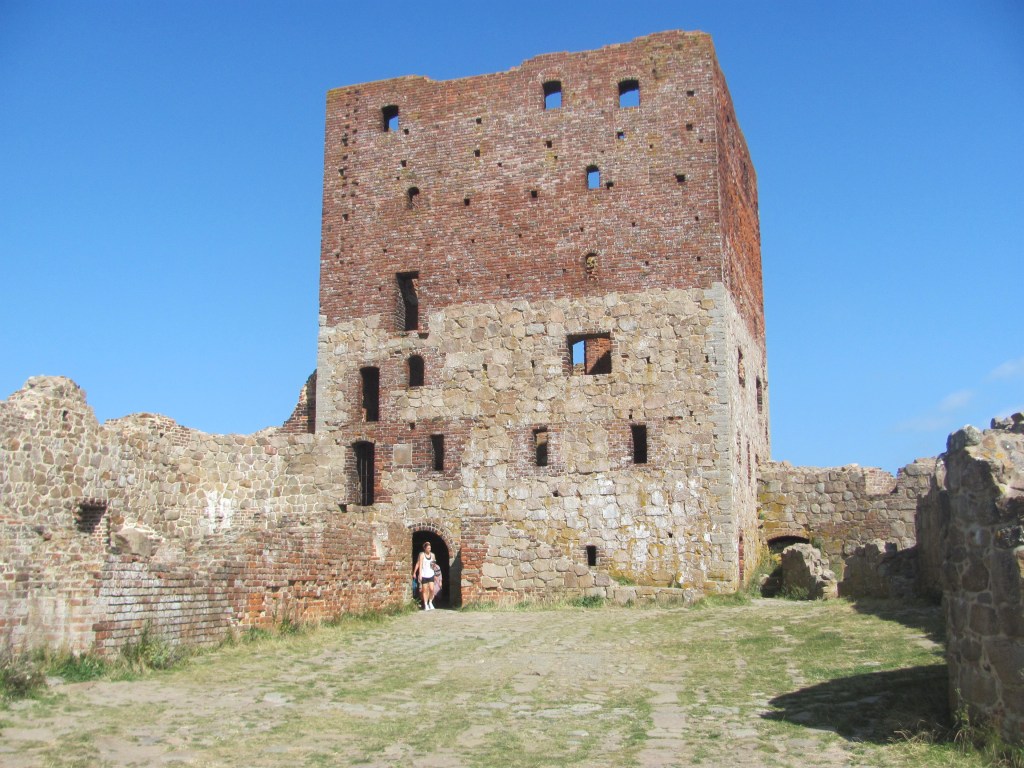
We are in the museum at Hammershus Fortress on the north-western tip of Bornholm, and I am reading a panel on the daring escape of one Leonara Christina Ulfeldt in 1660, a member of the Danish royalty who was imprisoned in the imposing fortress along with her husband, Corfitz, who had been accused of treason.

Hammershus Fortress ruins.

We had cycled over from Allinge harbour that morning, puffing our way to the top of the hill on which the Fortress was built in the 1200s. The largest in Scandinavia at the time, it was built when there were major struggles between the king and the church in Denmark, and served as a stronghold for the church. Over the years, various kings did manage to conquer it several times, but weren’t powerful enough to keep hold of it, and it was always surrendered back to the church. Until Frederik I, that is. In 1525, he decided that enough was enough, and chased the archbishops out of it for good.

“It’s amazing how powerful the church was at that time, isn’t it?”, says the First Mate. “They must have been terribly wealthy.”

Hammershus Fortress, Bornholm.

“Frederik I then gave it to Hanseatic merchants from Lübeck”, the next panel tells us. “However, despite their own wealth, the merchants taxed the local population heavily and coerced them to provide labour to extend the fortress. The people did rebel against them, but their uprising was brutally put down.”

Then in 1576, the King installed his own vassals there to use as an administration centre with courtroom, prison and gallows, with the proviso that they restore it, but they ended up taking the taxes from the local people to line their own pockets and letting the fortress fall even further into disrepair. It was during this time that Leonora and Corfitz Ulfeldt were imprisoned there.

The ‘Mantel’ Tower, where the Ulfeldt couple were imprisoned.

“Wow, you can sort of see why the local people on Bornholm had a deep loathing of the castle”, says the First Mate over a coffee at the end. “Everyone seemed to do all right out of it except them.”

“But I read that Bornholmians nowadays are quite proud of its dark history, and are helping to restore it again”, I say. “They think it is worth preserving.”

On the way back, we cycle past Sandvig harbour where the Ufeldt couple hadn’t escaped from.

“If the servant hadn’t twisted his ankle, they might have been able to get away”, says the First Mate. “As it was, she had to spend the next 22 years in solitary confinement.”

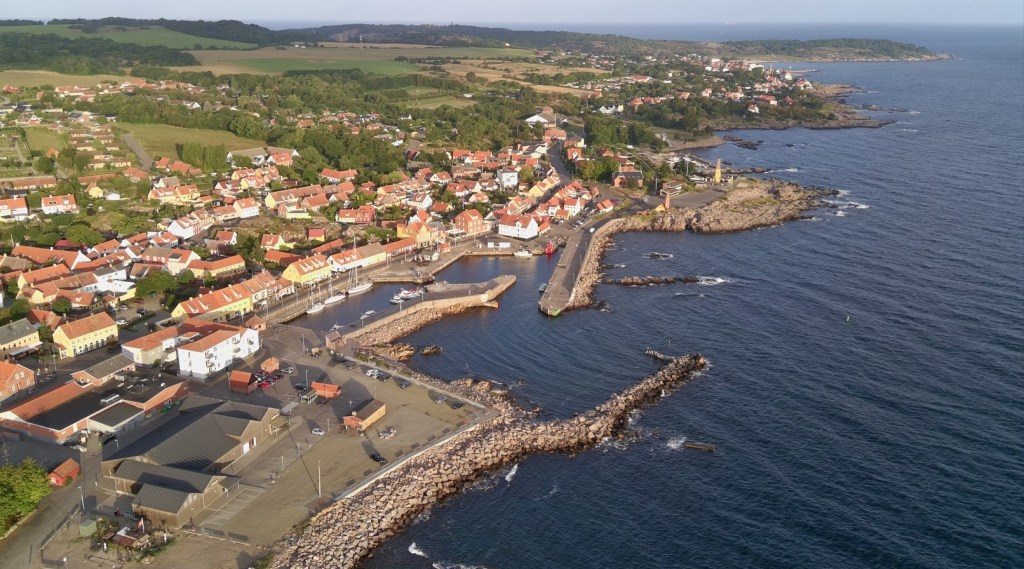
Sandvig harbour today.

We arrive back at the boat. Someone seems to be waiting for us.

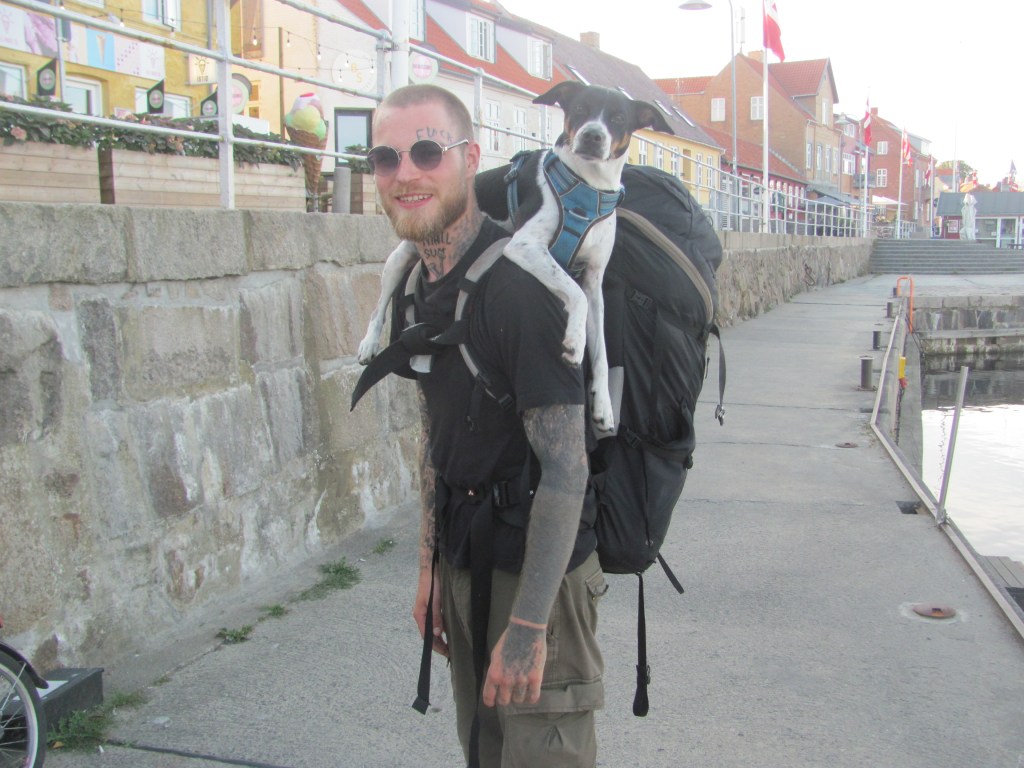
“Wow, is that your boat?”, he says. “I was just admiring it. Have you come all the way from Britain? I saw your flag. I’m Jason, by the way, and this is Harold. He has been walking a lot today and is a bit tired.”

Jason & Harold.

Harold looks a bit dejected, but on hearing his name, manages a bark.

We tell them that we have sailed from Britain, but it has taken four years to do it. Our plan is to explore as much of Europe as possible by sea, but we are in no hurry. At the moment we are doing the Baltic.

Harold pricks up his ears.

“Wow, that is so cool”, says Jason. “I am a poor student from Copenhagen, but I have decided to take a year out and hitch-hike around Denmark first of all, then we’ll see how we get on after that. But I would love to do it by boat. You have inspired me to work hard and save up, and do something similar.”

Harold wags his tail.

“I think he’s spotted a mink over there”, says Jason. “There’s a few of them around.”