Fresh bread, a city fire, and a pagan resurgence

“Strong winds are being forecast for the weekend”, says the First Mate. “I think we should get to Umeå and find somewhere safe where we can wait it out, and at least we will have something to do. Joanne and Peter can also catch the ferry across to Vaasa in Finland.”

“Good idea”, I agree. “I’ll plot a route.”

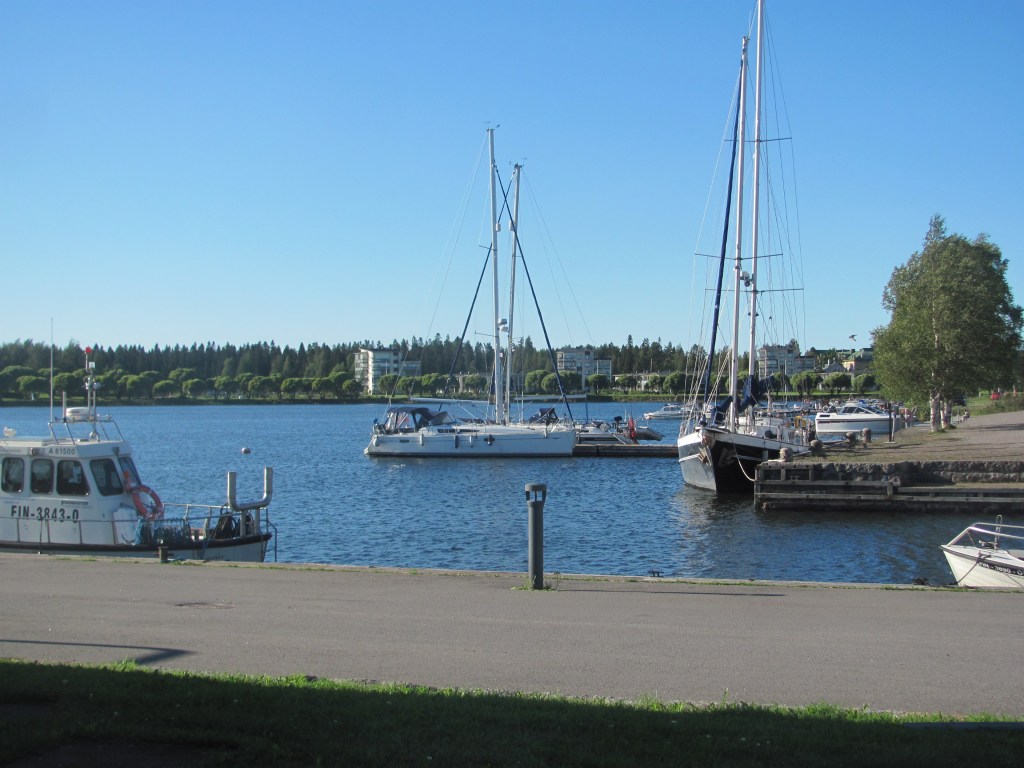
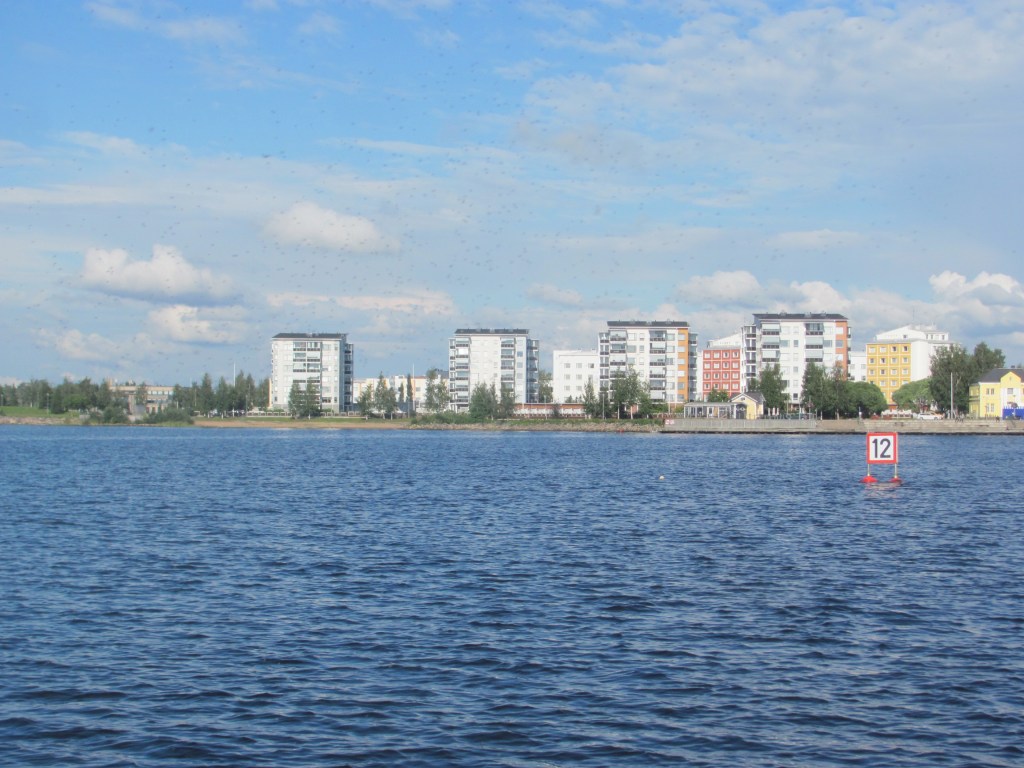
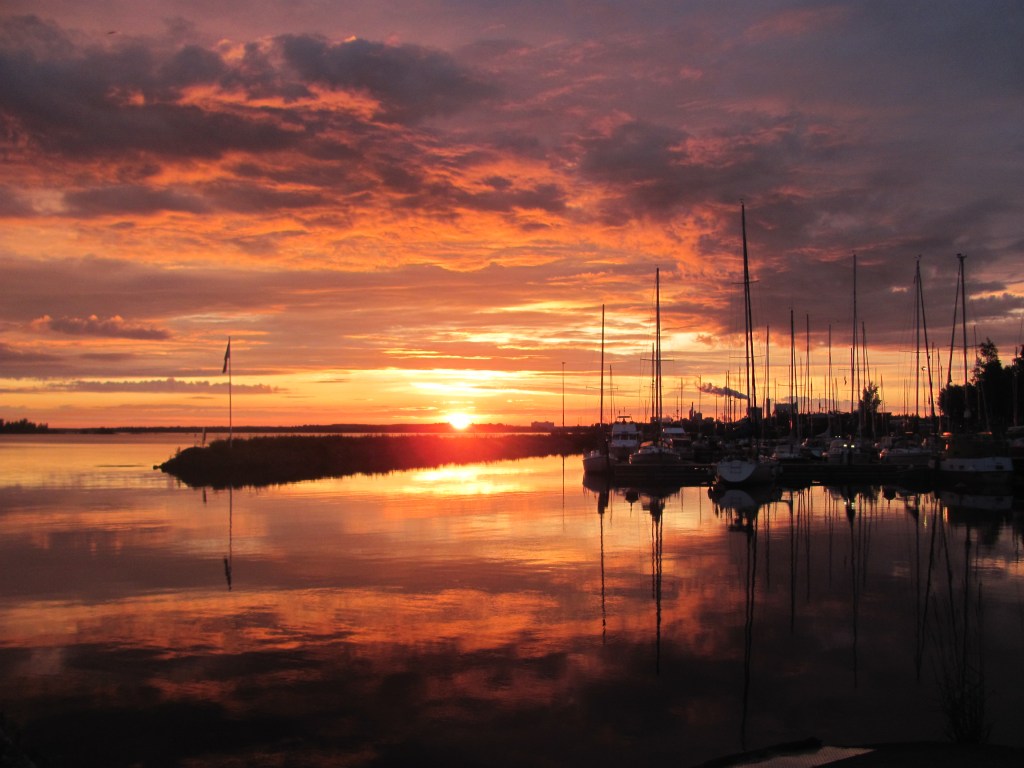
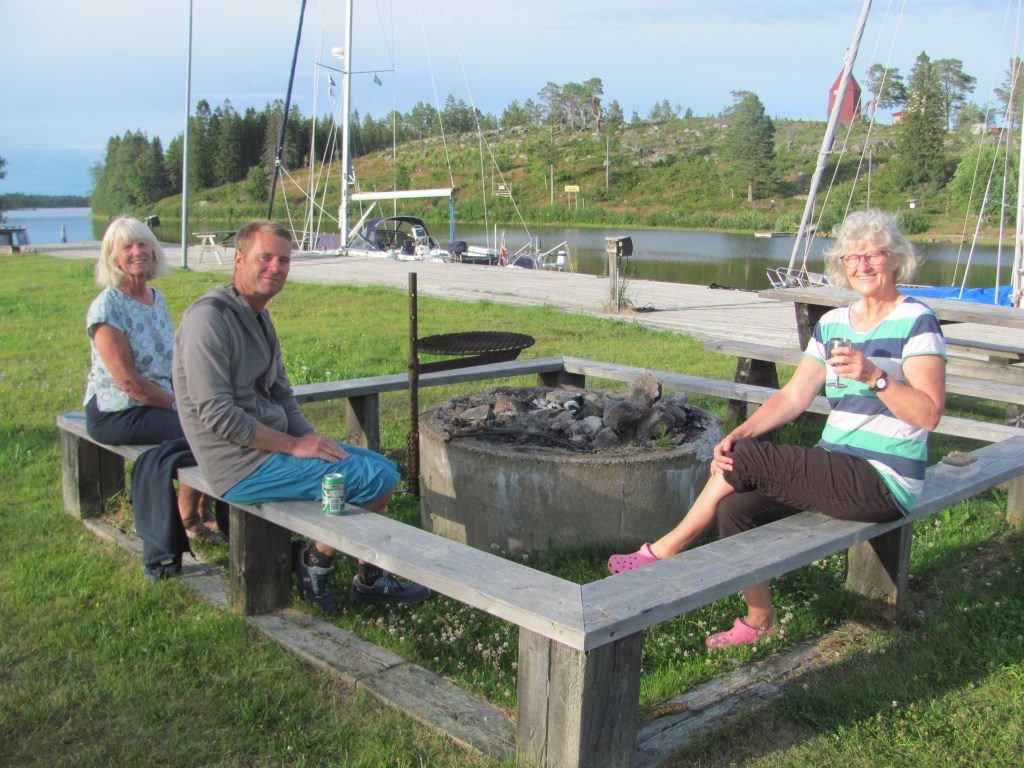
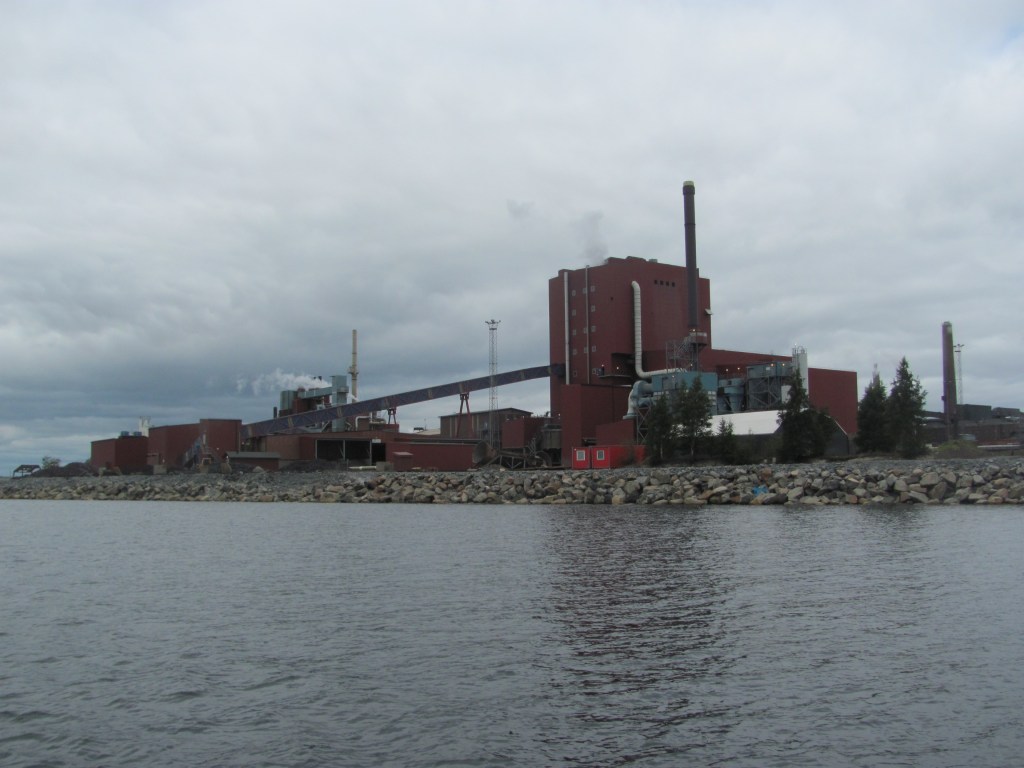
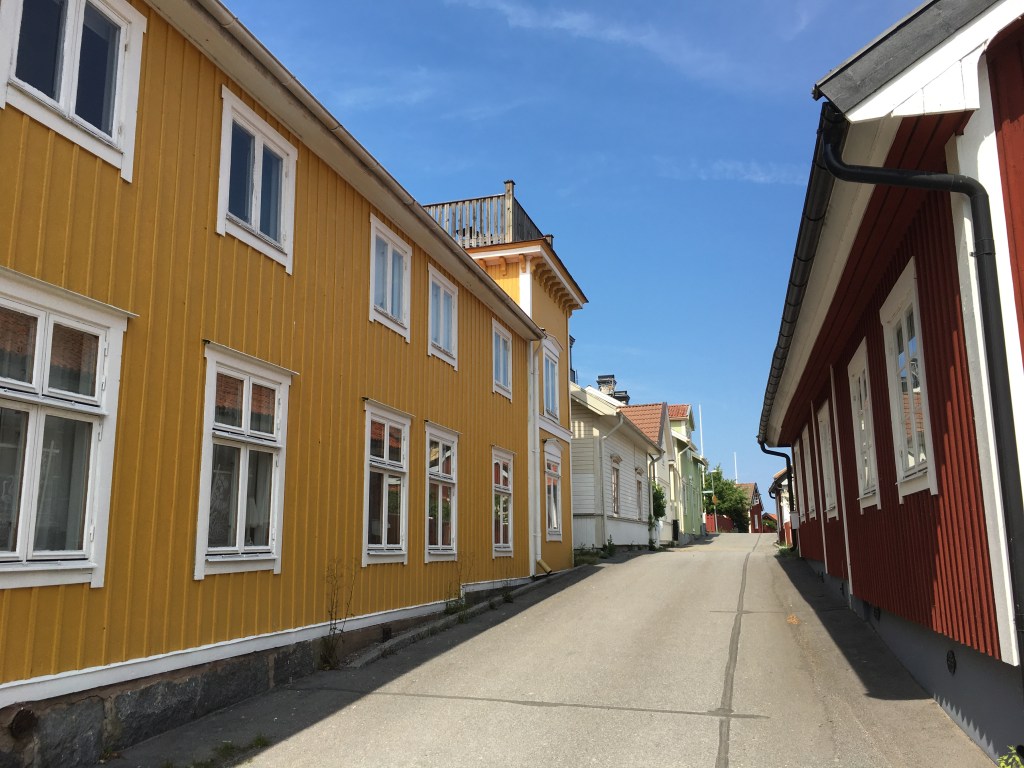
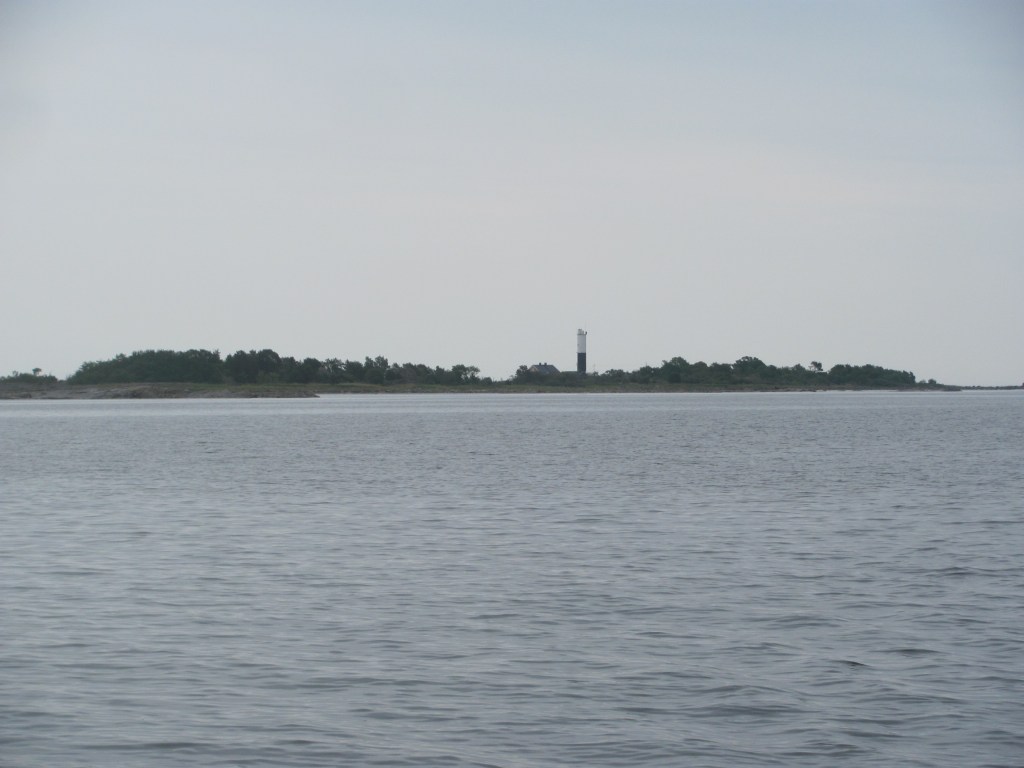
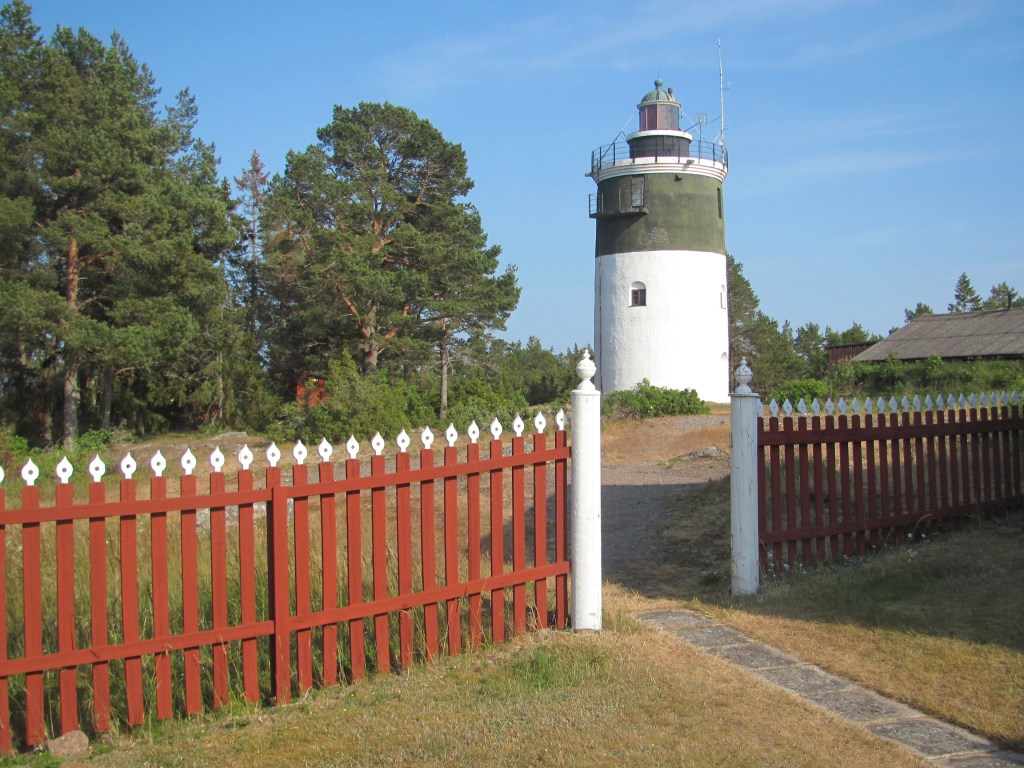
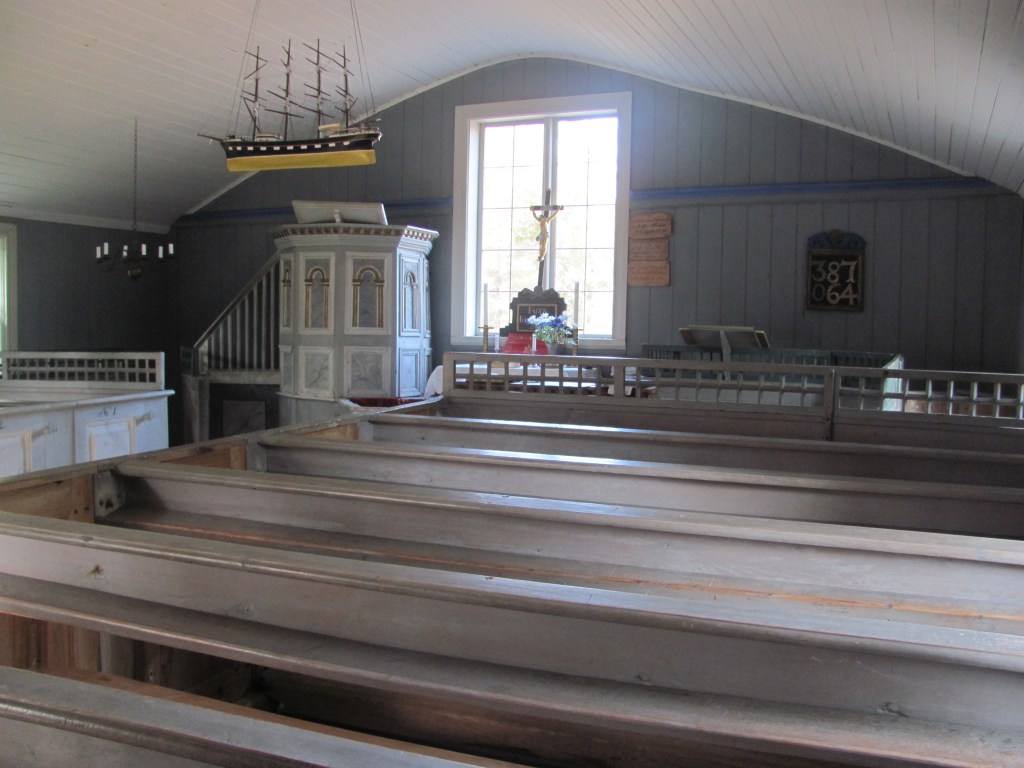
It takes two days to reach Umeå. We break our journey at the tiny harbour of Järnäsklubb, an old pilot station, before continuing on the next day. We eventually tie up at Patholmsviken sailing club marina in Holmsund, 15 km south of the Umeå. We can’t sail closer as there are permanent bridges in the way.

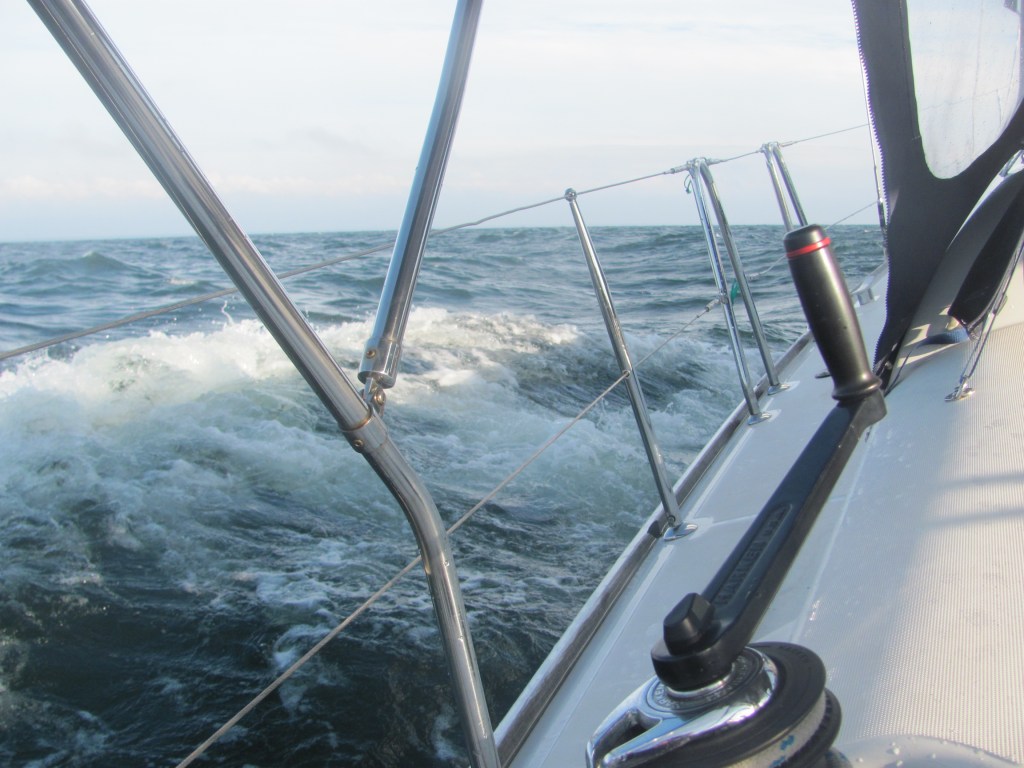
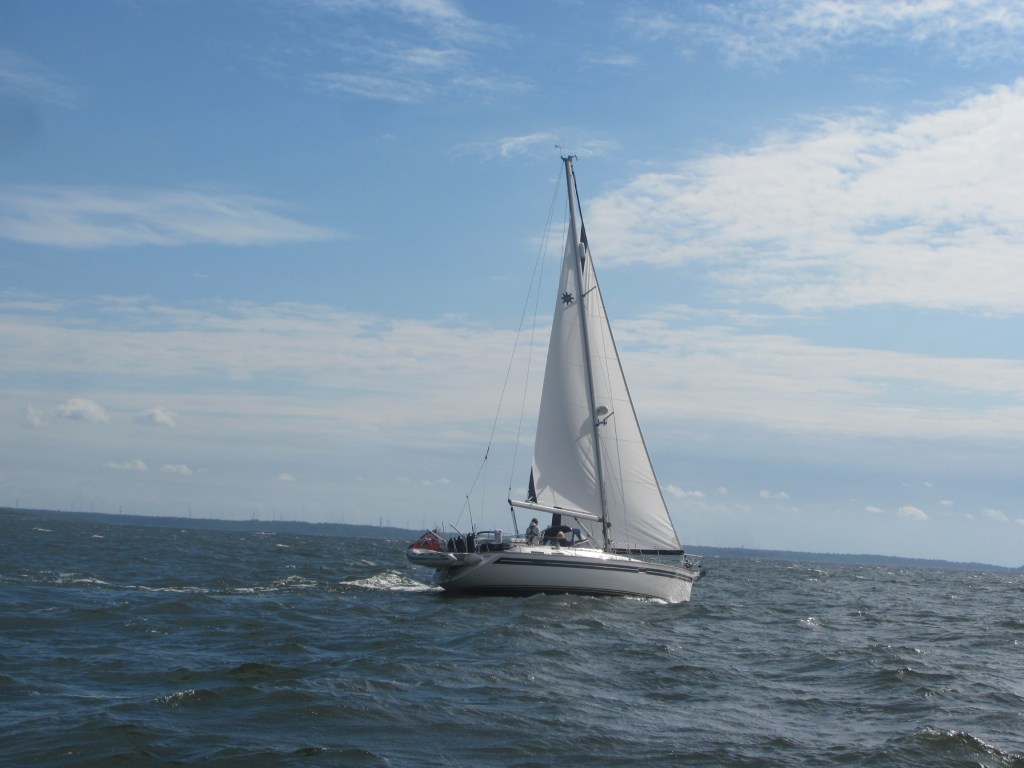
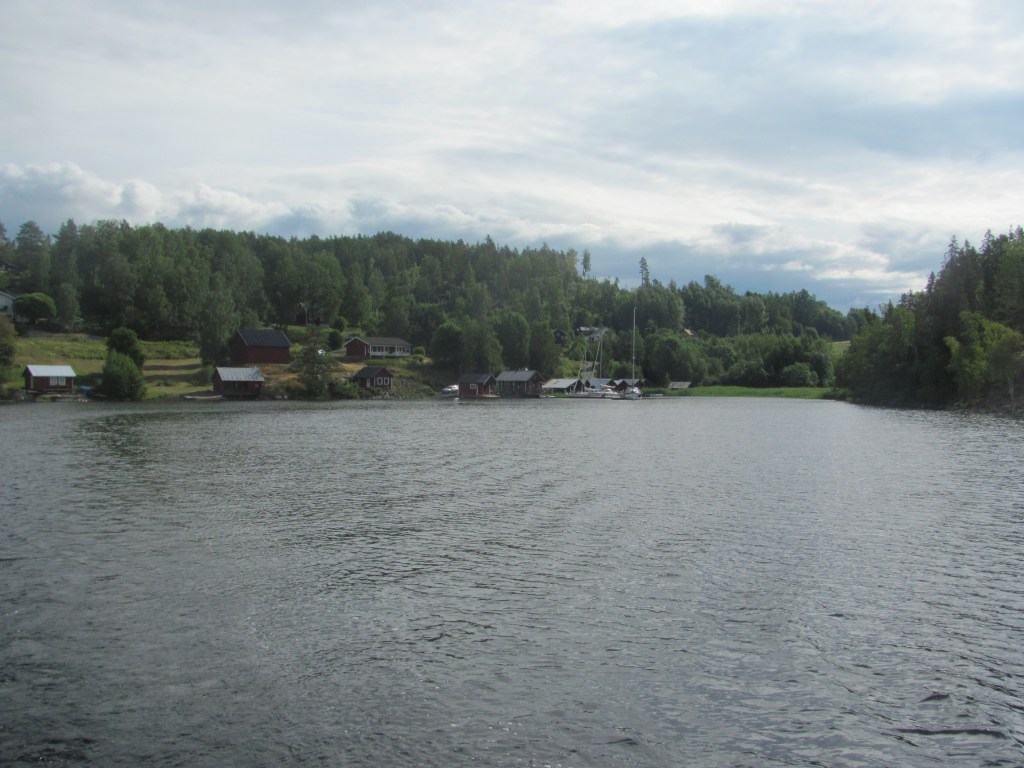
On our way to Umeå.

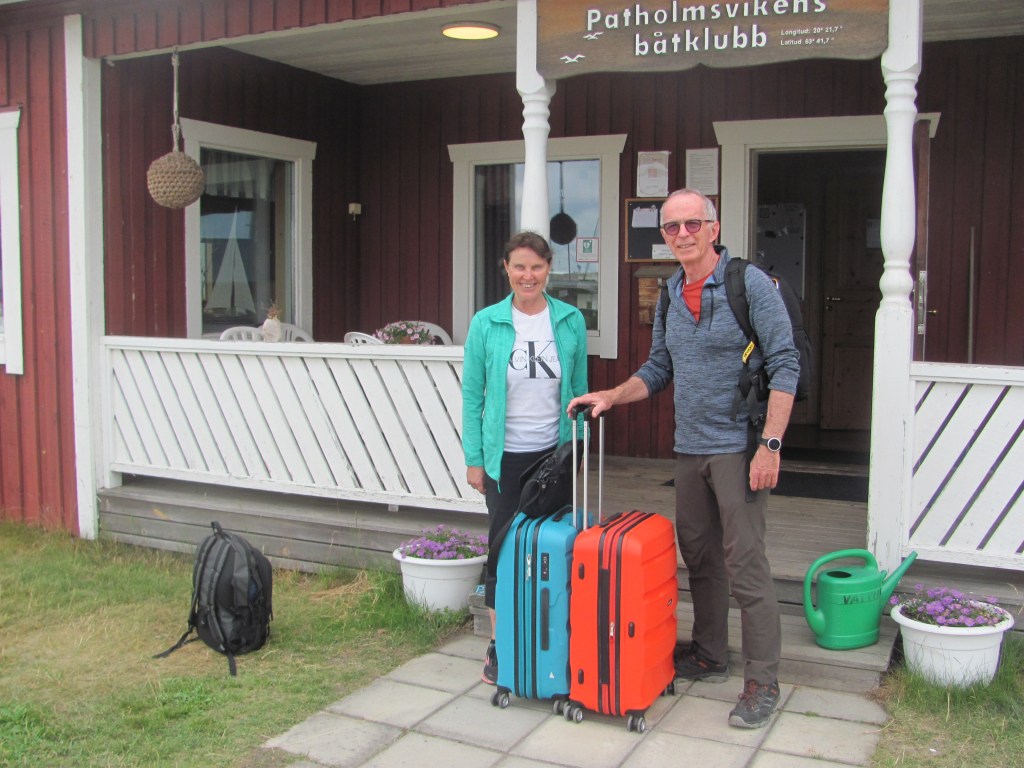
Peter and Joanne leave the next morning. It’s been good to see them. The time has flown since they arrived, but now they have to catch the ferry over to Vaasa in Finland, and from there the train down to Helsinki. A taxi has been booked for 0700 to take them from the club marina across to the ferry terminal on the other side of the harbour. We wait at the club house for it to arrive. At 0710 it still hasn’t turned up.

“There’s a barrier across the entrance to the marina”, one of the club members tells us. “Cars can’t come in unless they know the code. He’s probably waiting there. You’ll have to walk down.”

We rush with the suitcases and their other luggage to the entrance. It’s quite a long way. Precious minutes tick by. Luckily the driver is still waiting.

“Phew”, says Joanne, panting. “I was worried that he would think it a hoax call and leave. I didn’t fancy walking around to the ferry terminal with all this luggage.”

Saying goodbye to Joanne & Peter.

In the afternoon, the First Mate and I catch a bus into the city centre. We decide to have lunch in the MVG-Gallerian shopping centre. We both have the salmon.

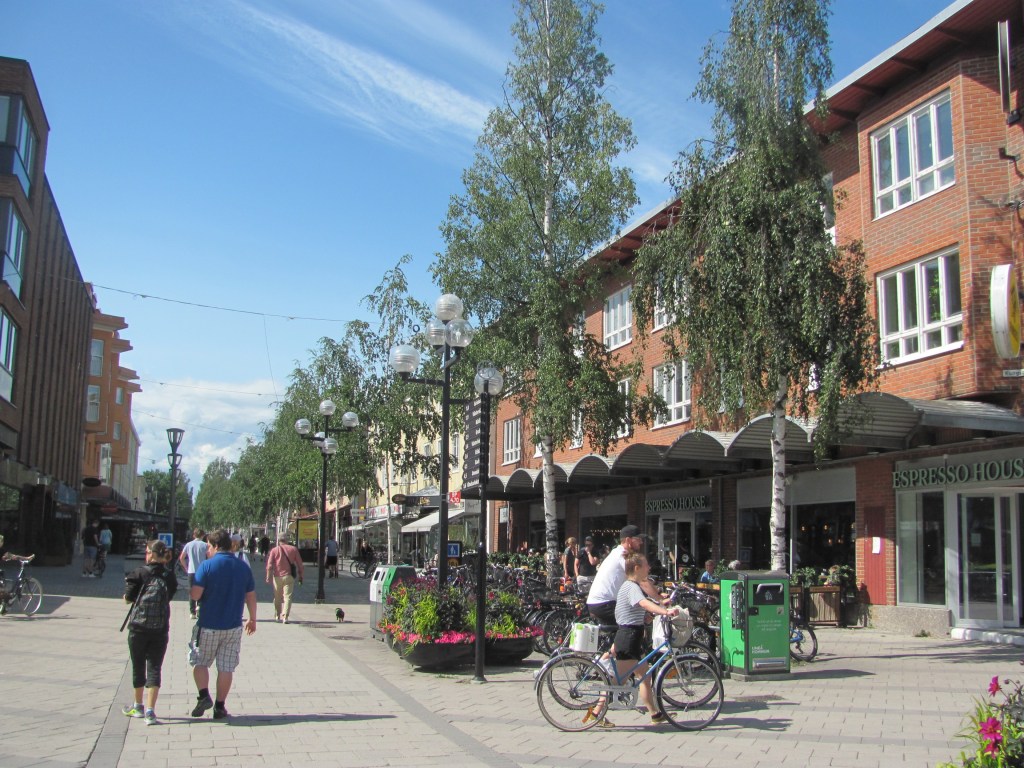
“It says that Umeå has a population of 130,000 people”, says the First Mate, reading from the guide book. “Apparently the name comes from the Old Norse for ‘roaring river’. It was burnt to the ground by the Russians in their Pillage of 1719-21, and again in 1888, the same day that Sundsvall was burnt down. Rather than rebuild the city in stone as Sundsvall did, the Umeåns decided to construct wide avenues with birch trees along their sides to stop future fires from spreading. Nowadays, the city has two universities, and the CRISPR gene-editing technique was developed here. In 2014, it was named as the European Capital of Culture.”

Birch trees as fire protection.

“I wonder if they called the gene technique CRISPR because of all the fires?”, I ask.

“Was that supposed to be one of your jokes?”, says the First Mate.

“Not really”, I say with a sigh. “It was pretty marginal. Not everyone will get it.”

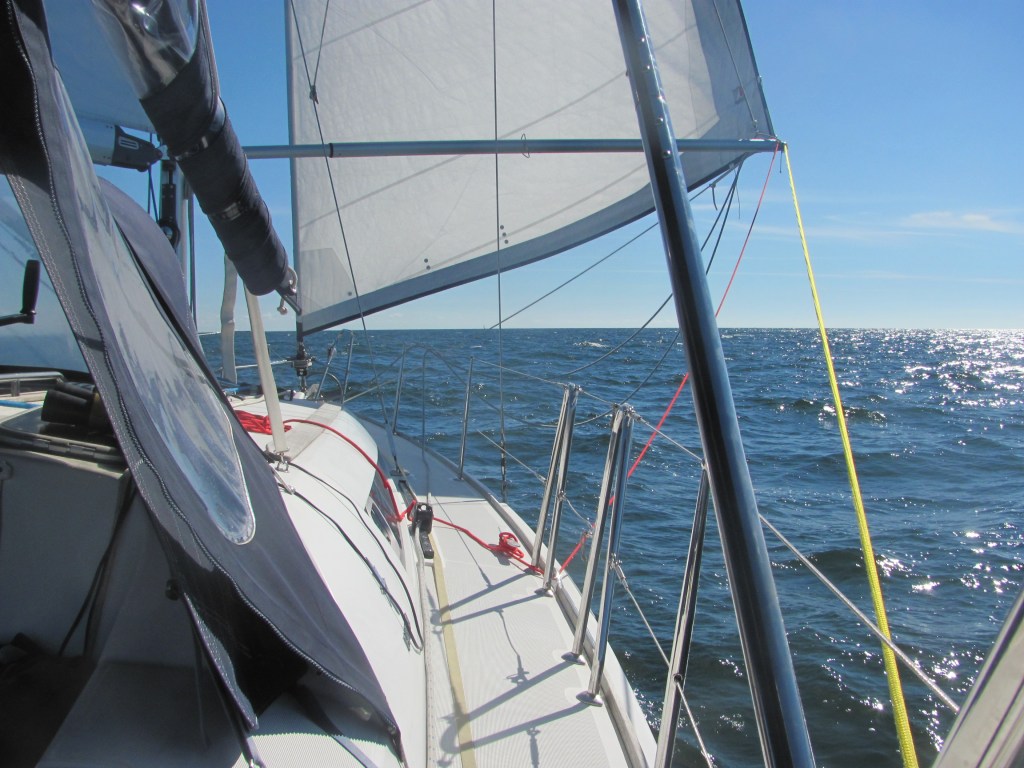
The strong winds and rains arrive that evening from the south. We batten all the hatches and put double lines on the moorings. It feels cosy inside the boat with the wind whistling in the rigging above and the rain pelting on the windows. The instruments show that the winds reach 45 knots.

Waiting out the strong winds and rain in Umeå.

In the morning, the rain has stopped, but the winds continue.

“Let’s take the bus into town again”, says the First Mate over breakfast. “You can go to the museum, and I can browse the shops.”

I get off at the Fridhem bus stop and walk the few hundred metres up to the Västerbottens museum. Its remit is to preserve the cultural history of Västerbotten County.

“It’s all free”, the young man at the reception tells me. “There are various exhibitions inside, and an open-air display of reconstructed aspects of life in Västerbotten County. They are even making traditional bread today. One of the exhibitions is on Sámi culture.”

I start at that one. An intelligent-looking stuffed moose greets me.

Moose or elk?

“I prefer to be called an elk”, she says. “We are in Europe after all. But you can call me a moose as well. I don’t mind. And while you are here, don’t forget to see the skis. They are the oldest in the world.”

The oldest skis in the world?

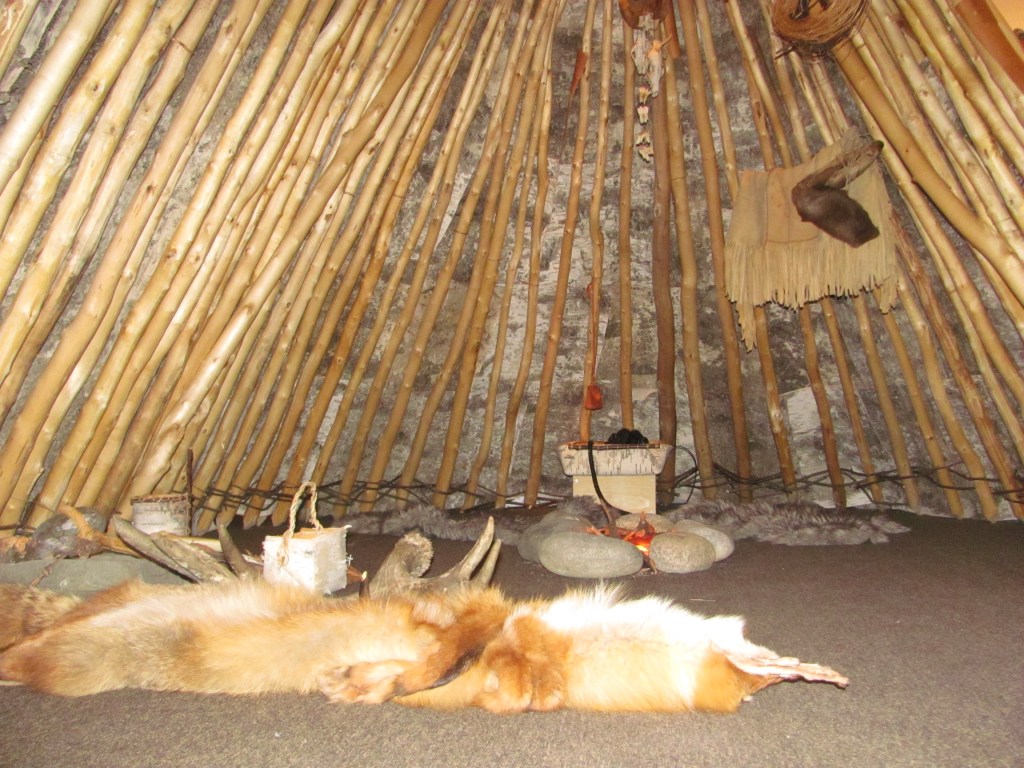
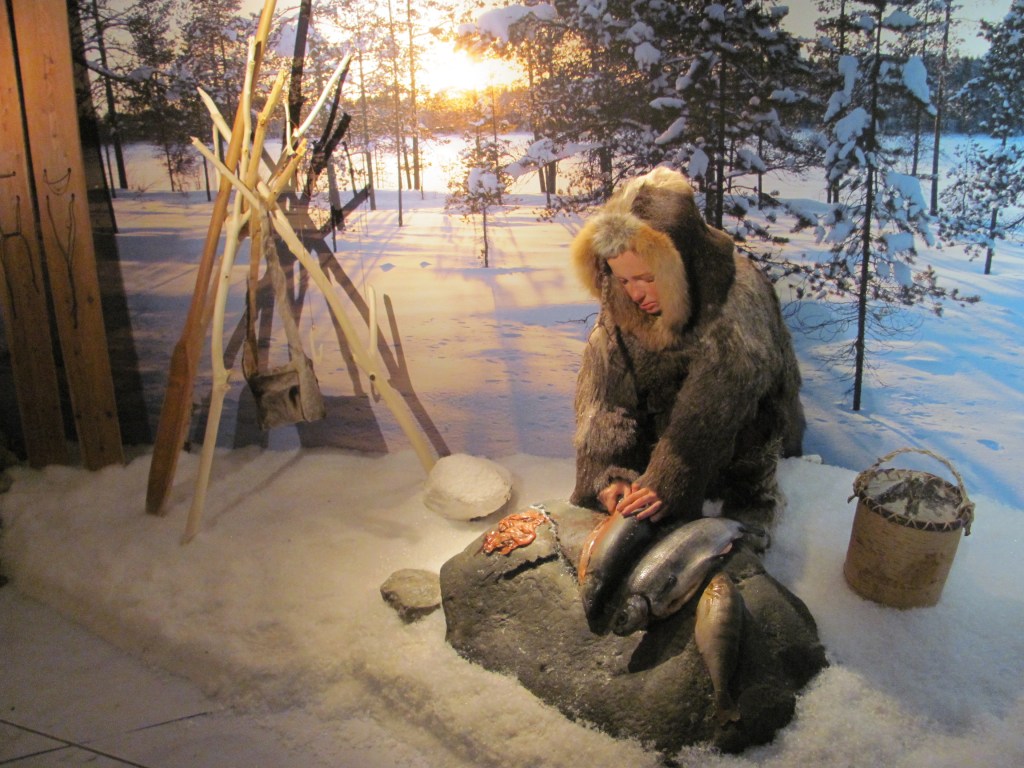
Next up is a replica Sámi tent. The accompanying sign tells me that the Sámi were traditionally semi-nomadic reindeer pastoralists, but also made a living from coastal fishing, fur trapping, and sheep herding. Their homelands stretch across the northern parts of Norway, Sweden, Finland, and the Kola Peninsula of Russia. I crawl into the tent and try to imagine what life inside would have been like with a blizzard howling around me. But the lustrous perfumed reindeer skins on the floor somehow don’t quite convey the full experience.

Inside a Sámi tent.
Sámi woman gutting fish.

In another room, there is an exhibition on the National Forest Inventory, the aim of which was to count and measure every tree in Sweden to get an idea of how much timber there was. Apparently the results showed there was more than they thought at the time, so the country breathed a great sigh of relief. And went out to cut some more.

Foresters counting every tree in Sweden.

In the open-air part, I come to the old bakehouse. A man and a woman in traditional dress are making bread.

“We are making tunnbröd”, says the woman. “Traditional northern Swedish bread. We are husband and wife, so it’s a team effort – he does all the mixing and kneading of the dough, and I do the baking.”

“It’s made from barley flour”, explains her husband, as he rolls out some dough into thin flat pancakes. “You can also add some rye flour or wheat flour if you like. Some people even add mashed potatoes. Then I add water, bicarbonate, yeast and salt.”

Much the same as what I do when I make bread at home.

The woman picks up the pancakes and places them on a long-handled board. She pushes the board into the oven with logs burning at the back and sides, and with a deft flick of her wrist, deposits the bread onto the hot tiles in front of the logs.

In goes the bread.

“We need to keep the tiles hot”, she tells me. “So when we have a break, we pull the burning logs forward over them to heat them up again.”

The aroma of baking bread fills the small room. My stomach starts to rumble.

“Here, this one is for you”, she says, folding one in half. “Try it.”

I break off a bit of the bread and taste it. It is warm and soft, and delicious in the way that only freshly-baked bread can be.

“This one has a few fennel seeds in it”, she says, noticing the look on my face as I try and recognise the flavour. “Here’s a pamphlet with the recipe. You can give it to your wife.”

“Ha, I am the bread maker in the family!”, I say with a smile.

Freshly baked tunnbröd.

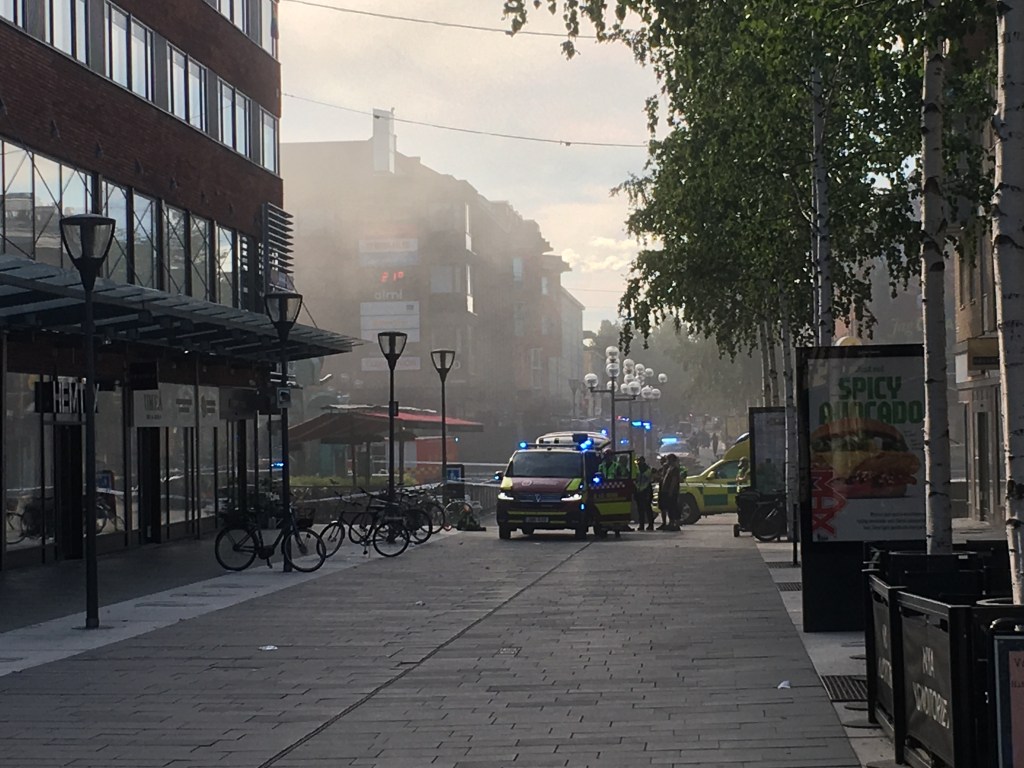
As I walk back to the museum building, I see a group of people pointing and talking excitedly. Curiosity piqued, I join them to see what they are looking at. From our vantage point on the hill where the museum is located, we can see plumes of thick black smoke coming from somewhere in the city.

Smoke rising from the city.

“There’s a fire in the city centre”, one my fellow observers tells me. “The police and fire brigade are there and they are trying to put it out.”

I try and call the First Mate, but she doesn’t pick up.

The next bus into town leaves in twenty minutes. Before long, I am at the central bus station.

“There’s been a fire here”, says the First Mate when we meet. “It’s the same building that we had lunch in yesterday. There’s been smoke everywhere. They have cordoned it all off. It’s a bit of a nuisance as I had hope to do some shopping for food for tonight, but you can’t get to it.”

We watch one of the fire engines lift firemen up to spray the building with water.

Firemen spraying the fire.

Later we hear that one of the fans in the ventilation system of the building had caught fire. Luckily everyone in the building had been evacuated and no one had been injured.

“I bet the salmon they are serving in the place where we had lunch yesterday will be CRISPR today”, I say on the bus back to the marina.

“Don’t push it too far”, says the First Mate. “It wasn’t very funny the first time.”

“Well, at least the birch trees seemed to have worked”, I say. “The fire didn’t spread to any of the other buildings.”

“It’s rather amazing that we should be in a city that is famous for having burnt to the ground in 1888 on the very day that there is another fire in the city centre”, says the First Mate.

Fire in the ‘City of Birches’.

In the evening, we cook dinner in the marina clubhouse. I get talking to a woman from Lithuania. The conversation predictably turns to the war in Ukraine.

“Most Lithuanians strongly support Ukraine”, she says. “We know what it is like to be under the control of the Russians, and it is not something we would willingly go back to. We are part of Europe now, and we want to stay that way. The Ukrainians are the same. I really hope that they win.”

“Are people in Lithuania worried about Russia invading?”, I ask. “To try and recreate the old Soviet Union, I mean?”

“Not really”, she says. “As individuals, there’s not a lot you can do. Most people just get on with their lives. There’s no point in worrying. And we are part of NATO. As are Finland and Sweden now. That should help protect us against any aggression.”

She is sailing with three other friends around the Baltic.

“I like travelling”, she says. “When I was younger, I was interested in learning about different religions to see what each had to offer. I lived in India and the Far East for a while. While I was in India, I stayed in an ashram.”

“I thought that most people in Lithuania were Christian?”, I say.

“They are”, she says. “But Christianity was never really accepted in Lithuania as a national religion. It is seen as a foreign one forced on us by the Catholic Church in Europe against our will. Lithuania was really only Christianised in the 1600s, one of the last countries to be so in Europe. Often the conversion process was pretty violent, in that if you didn’t accept Christianity, you were killed. A lot of people see it as a foreign religion from a hot, dry, far-off land that doesn’t have any connection to our culture.”

“I read somewhere that there has been a resurgence in Lithuania in the old pagan religion before Christianity came”, I say.

Romuva flag (From Wikipedia)

“Yes”, she says animatedly. “I am impressed you know about that, not being a Lithuanian. It’s called Romuva. It is closely linked to nature and the culture of Lithuania, and tries to bring together our old songs, dances and rituals that existed before Christianisation. The Communists tried to stamp it out, but there’s been a resurgence since the breakup of the Soviet Union. I often attend the rituals – sometimes in a grove or place that has been sacred since ancient times. We see the cosmos as a great mystery, and celebrate it and nature as we see ourselves as part of them. It’s somehow awe-inspiring and beautiful to think that we have risen from nature and will one day go back to it.”

“It seems very relevant to the modern day efforts to preserve the planet”, I say.

“Absolutely”, she says. “We have respect for the Earth and every living being on it, whether they be microbes, plants or animals – they are all symbols of life. Rivers are also important – they are seen as a boundary between life on one side and death on the other, and therefore must be kept clean.”

“I recently saw an old Michael Palin documentary about fire-walking in Estonia, I think it was”, I say. “It was one of the rituals of the Old Baltic religion.”

“Yes, we see fire as the representation of the Divine and the ultimate purifier”, she says. “Some people believe the flames carry their prayers and offerings to the gods.”

Romuvan ritual fire (from Wikipedia).

Later I discuss the conversation with Spencer.

“Yes, it’s interesting isn’t it?”, he says. “Apparently the old Baltic beliefs derive from the ancient religion of the Proto-Indo-European peoples from between the Black Sea and the Caspian Sea. It is polytheistic, meaning that there are many gods, often for specific things such as the sky, the Earth, the sun, forests, the sea, and so on. There are even links with Hinduism in India, which also evolved from the PIE religion, and much of the cosmology, and many of the beliefs and rituals between the Balts and Hindus are similar. Some of the gods’ names also sound the same. So much so, the Lithuanians have even invited Hindu sadhus to participate in their rituals. They take pride in their religion being so ancient in comparison to newcomers like Christianity.”

“Almost as though it was the true religion of Europe and Asia”, I muse. “I wonder if that was why she spent some time in an ashram in India?”

“Quite possibly”, he says. “But I am not sure why you humans think there has to be a ‘true’ religion. I am just a lowly spider, but to my mind all religions are just a way of helping you make sense of the world around you and to provide comfort in a hostile world. You create gods or a god who is supposed to have created the cosmos and you, who cares for you while you are alive, and whom you will eventually join again when you die. Is there any evidence whatsoever of these gods? None whatsoever! How then can you talk of a ‘true’ religion? Surely they are all just something you make up to provide an explanation for something you don’t understand, or myths that are not true but allow you to share the experiences of your ancestors in the past?”

“Come on”, calls the First Mate from the cabin. “You should get to bed. We have an early start tomorrow. And tell Spencer to go and catch some flies.”

I say goodnight to Spencer and go downstairs, making a mental note to explore these ideas in more detail when we sail to Lithuania next year.

A rebounding mountain, a putrid fish delicacy, and a goodbye

“I’ll try and get some fuel here”, I say to the First Mate, as we arrive at the small marina at Docksta and tie up alongside to the outside pontoon. “Apparently there is a filling station in the village. If the marina has a trolley I’ll take the jerrycans up there and fill them up.”

We had tried to buy diesel in Härnösand, but even though the machine had accepted our cards, no fuel came out of the nozzle despite repeated attempts.

“It must have run out”, the First Mate had said. “Never mind. We can try and get some at the next place that has a filling station.”

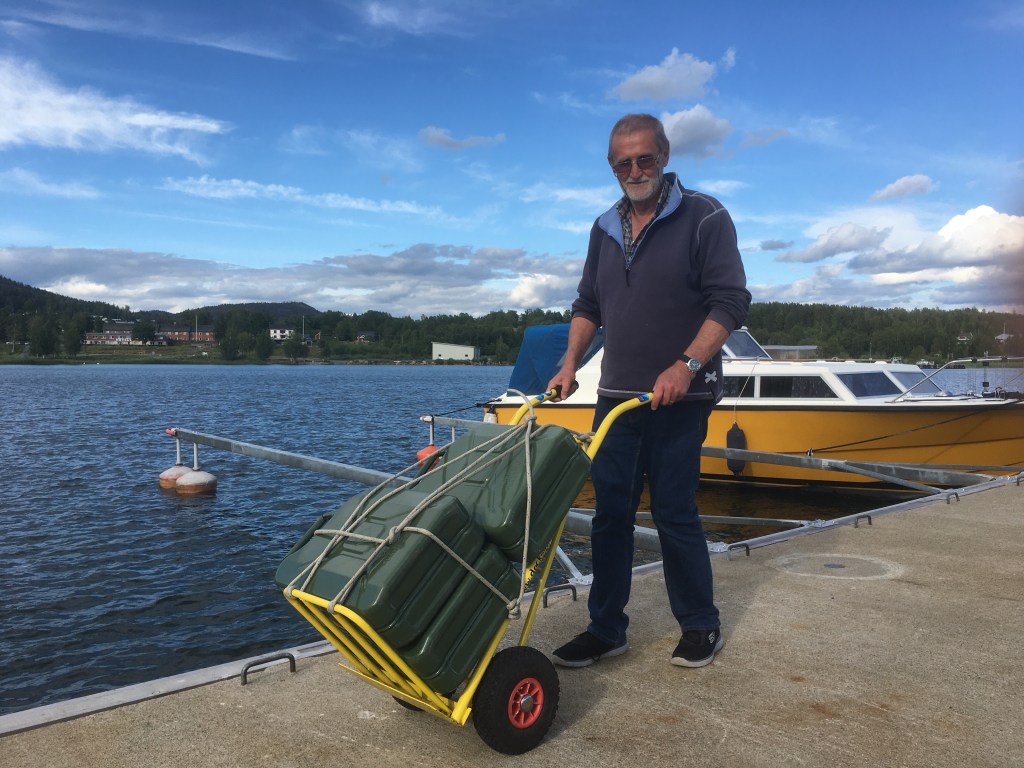
Luckily, the Docksta marina has a small trolley. I tie the three empty jerrycans on using an ingenious criss-cross system of rope fastened by knots hitherto unknown to mankind.

Fuel tanker.

“I don’t think that they are going to come off”, says Robert, tied up next to us. “But I’ll be interested to see how you manage to bring three full jerrycans back on that small trolley. It’s almost a kilometre to the filling station, and some of that is uphill.”

He’s right. Pushing 50 kg of sloshing liquid on a small trolley is not easy. Especially uphill along a shingle track. With one of the tyres flat. But I eventually make it.

“Your face is looking very red”, says the First Mate. “I hope you don’t have a heart attack.”

In the evening, my sister Joanne and her husband Peter arrive by bus from Härnosand. They have flown from New Zealand to Stockholm, and then have taken the train from Stockholm to Härnosand.

Joanne & Peter arrive.

“It’s been a long journey”, says Joanne. “But it’s great to be here.”

We had sailed together several times before – in New Zealand, Wales, the Mediterranean, as well as last year in the Stockholm Archipelago. It’s nice to see them again.

“I think we need to have an early night”, says Peter after dinner. “I am not sure we will be able to sleep well anyway with the hours of darkness so short.”

It’s true. At this time of year, it is still light enough to read well after midnight, then again in the morning at about 0300. Even the one to two hours in between are light enough to see from one side of the marina to another. But they are exhausted and sleep well.

The next afternoon, we decide to walk to the top of Skuleberget, the 295 m high mountain overshadowing Docksta.

Skuleberget.

“It’s funny that they call it a mountain”, says Joanne at breakfast. “It’s not even 300 m high. In New Zealand we would think of that as a hill.”

“It reminds me of a person we used to know from Holland”, I say. “His name was Marco van den Berg, which means ‘Marco from the Mountain’. He used to say that you could see over the ‘mountain’ near where he lived if you stood on top of your car!”

“Well, this is a bit higher than that”, says the First Mate. “Come on. Let’s get going. We can buy some sandwiches from the shop and find somewhere on the trail to eat them for lunch.”

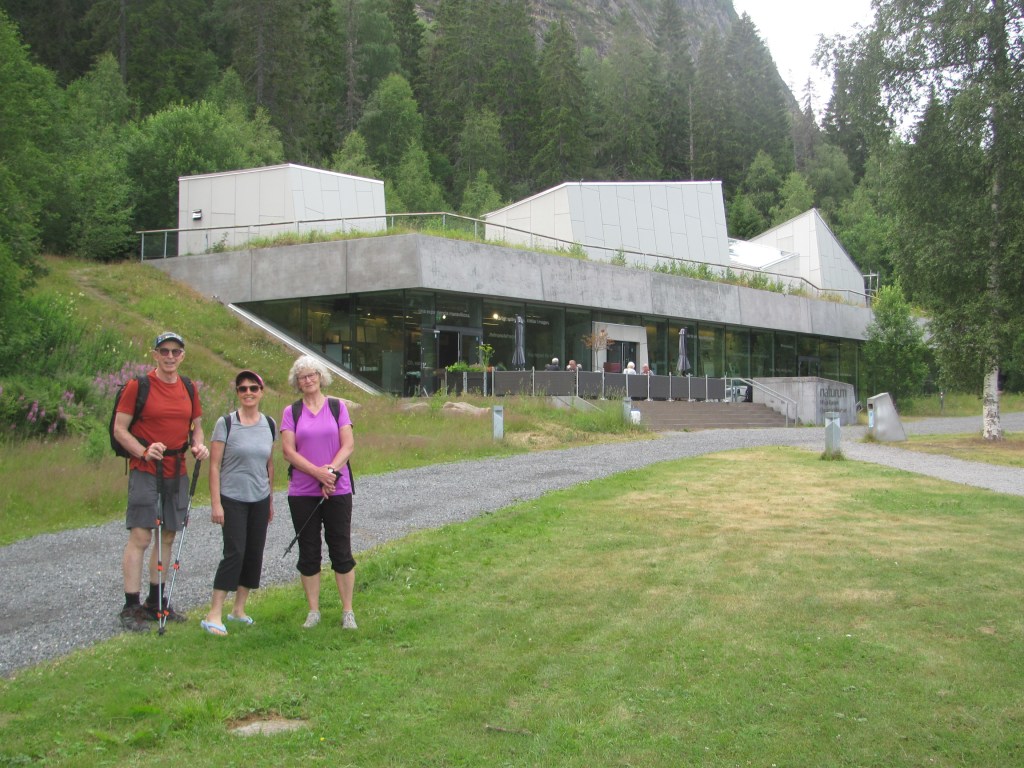
On the way, we swing past the Naturum Höga Küsten Information Centre.

Höga Küsten Information Centre.

“Well, that was very interesting”, says the First Mate after we come out. “It’s amazing to think that just after the Ice Ages, Skuleberget was a small island only 9 m above sea level. Then as the ice receded, the release of its weight allowed the land to rebound back to its previous position at the rate of around 10 mm per year. It’s still rising, apparently.”

“It’s also one of the few places that has glacial till on its summit”, I add. “All the other hills in the area were under water at that time.”

“Look at that garage there”, says Peter. “You can see how the land is rising. It’ll disappear in a few years or so.”

Evidence of glacial rebound?

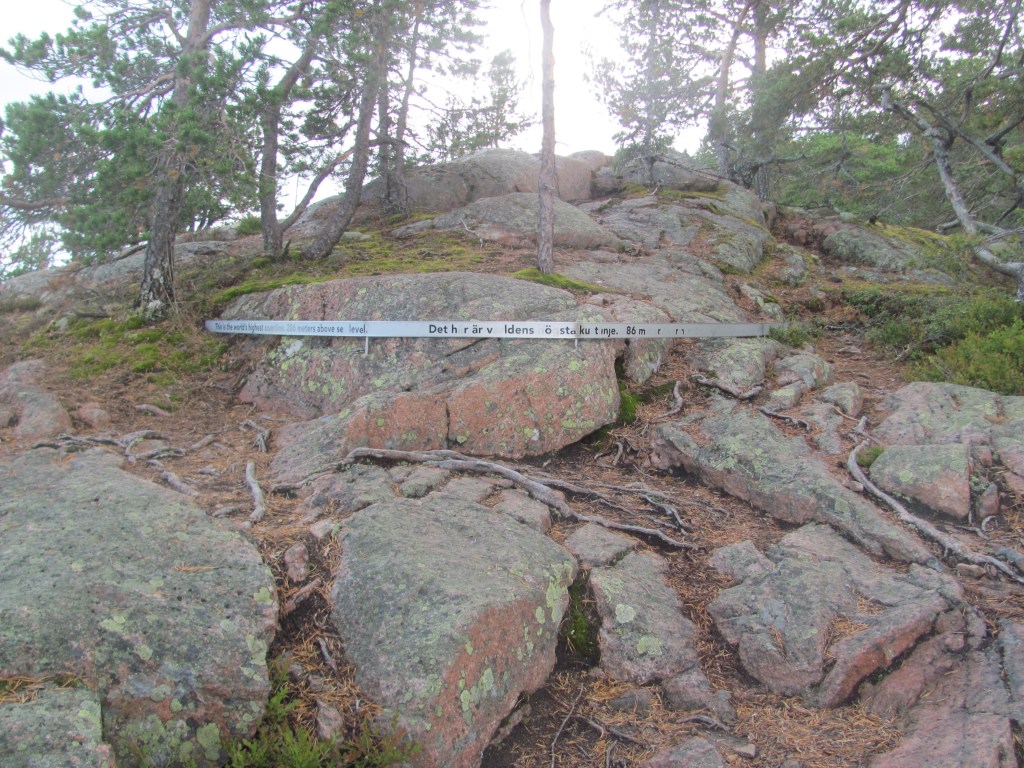
We climb the rocky path through the trees, and eventually reach the top. The view is superb. We try and make out where Ruby Tuesday is lying far below. I get the wrong bay.

“I hope your navigation is better tomorrow”, says Joanne. “We are trusting you to keep us safe.”

On top of Skuleberget.

“Come over here”, calls out the First Mate. “There’s a band here showing where the shoreline was 10,500 years ago.”

As we peer over the sheer cliff, it brings home just how much the land has risen in the relatively short time since the Ice Ages.

Band marking the Skuleberget coastline 10,500 years ago.

The next morning we decide to sail to Mjältön, a small island to the east of Docksta. The wind is little more than a breeze, but we manage to make a sedate two knots.

“Don’t forget that it is supposed to rain heavily this afternoon”, says the First Mate. “We need to make sure that we get there before it starts.”

We head for the small teardrop-shaped bay of Baggviken on the south-east corner of Mjältön. The entrance is narrow, but it opens out wider with staging for mooring on the northern and eastern shores. Already it is reasonably full with other boats. We find an empty berth, drop the stern anchor, and edge forward gently until the First Mate and Peter can throw the bowlines to a waiting neighbour.

Moored up at Baggviken.

“Only half the island is a protected nature reserve”, our neighbour tells us as we tie up. “The other half is privately owned and used for agriculture. But they have made a complete mess of it. The trees have all been chopped down and it looks like the surface of the moon. The soils are no good for growing crops. If you ask me, the government should have made the whole island into a nature reserve. But at least there is a nice beach you can walk to through the nature reserve. Now, if you will excuse me, I need to get the canopy up. It’s starting to look like rain.”

Sure enough. a few drops begin to fall, then the rain cascades down. It’s monsoonal. All we can do is to sit inside the cockpit tent and have lunch until it goes off.

“We’ve got a new holiday in New Zealand”, Peter tells us, cutting a slice of cheese. “It started officially last year. It’s called Matariki, and it celebrates the Māori New Year, when the Pleiades constellation rises above the horizon. It is supposed to be a time of endings and beginnings, coming together, remembrance of the dead, and the planning of crops and planting. But a lot of employers aren’t happy about it, as they think that it is just another excuse not to work and cut into their profits.”

“I suppose it depends on how many public holidays in total you have”, says the First Mate, getting out her phone. “It says here that New Zealand has twelve compared to around ten in the UK. But most countries have a lot more than either of these. Nepal has 35. Can you imagine?”

Māori believe that you can understand just about everything in the natural world from the positions of the stars and the moon”, says Joanne. “But a lot of that knowledge was lost or suppressed when the Europeans arrived. Nowadays, there’s quite a resurgence of interest in indigenous knowledge. But in my view, Matariki is really more about giving more prominence to Māori culture in everyday life.”

“There’s a real drive to redress past Māori grievances”, explains Peter. “Especially to do with land, but also culture. That’s not a bad thing in itself, but many people fear that it has gone too far. Māori seem to have more rights than Europeans these days. And you only have to have one-eighth Māori ancestry in you to claim to be Māori. A lot of people are trying to find a Māori great-grandparent in their lineage so that they can claim the benefits.”

The rain stops, the clouds clear, and the sun returns. The smell of wet soil pervades the small bay. Mist rises off the forest canopy as the sun evaporates the water.

“Come on”, says the First Mate. “Now that the rain has stopped, let’s go and find that beach our neighbour was talking about.”

We find the track leading up from the back of the beach, and trudge through the drying woods. Eventually we come to a branch in the path to the left.

Path through the forest.

“This is probably it”, I say. “The other way looks like it is going over to the other side of the island.”

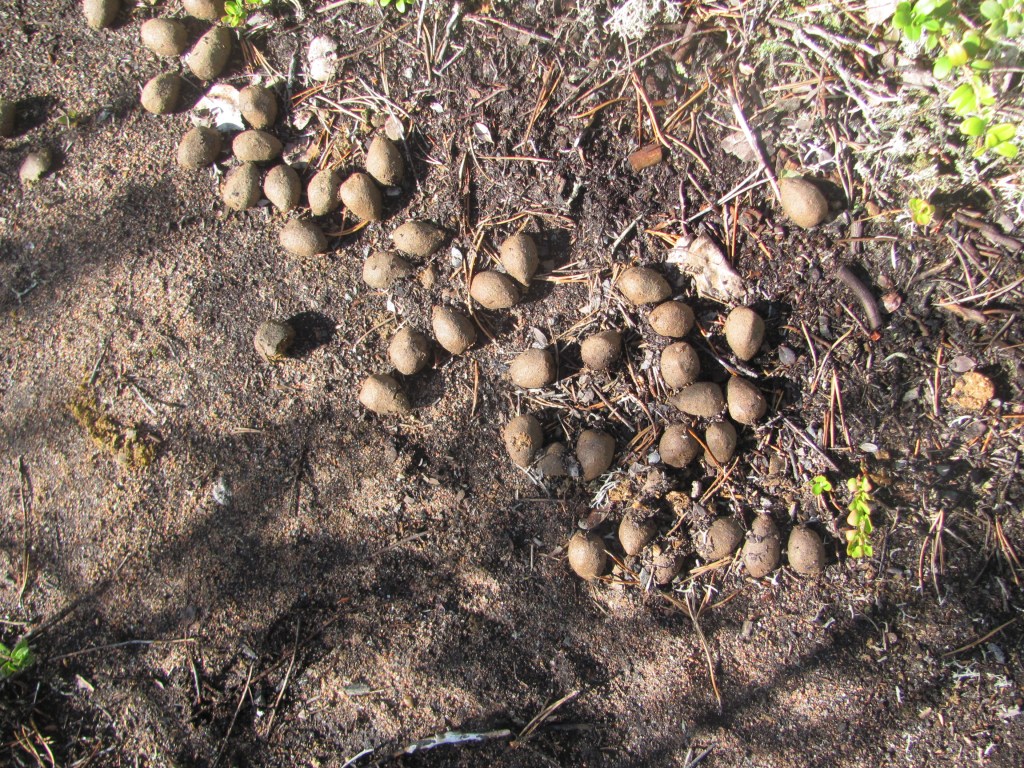
We take the path to the left. A little bit further on, we come to a pile of pear-shaped droppings. And another. And another.

“They look like deer’s”, says Peter. “We might see one.”

Deer droppings?

We eventually reach the beach without seeing any deer. It’s a beautiful long stretch of sand and we have it to ourselves apart from two kayaks and a tent about halfway along. But no people.

A beach to ourselves.

The next morning we sail from Mjältön to Ulvön, another island further to the east. The wind is from the south-east and we need to sail close-hauled, tacking once to reach the narrow entrance between the two halves of Ulvön. We pass Anna heading in the opposite direction, hands waving wildly.

Ulvön is crowded. There doesn’t seem to be any room at the gästhamn for us to tie up. The First Mate’s phone rings. It’s Catherine from Salute.

“We saw you coming on the AIS and saved a place for you to squeeze in next to us”, she says. “It’s where Anna was, but they left this morning.”

We had somehow not seen Salute in the throng of boats.

“There’s no way we can get in there”, says Peter, looking at the tiny gap of less than a metre between Salute and the next boat. “Far too narrow.”

We drop the stern anchor and inch forward. Hands on the boats either side guide us in. Fenders squeal as both boats move sideways to accommodate us. It’s a snug fit, but we are there.

“Our neighbour on Mjältön said there used to be wolves on the island”, says the First Mate, as we tie up. “The name Ulvön means Wolf Island in Old Norse. I’m glad they aren’t around anymore.”

“It’s a bit like the island of Ulva in the Inner Hebrides in Scotland”, I say. “That also comes from the Old Norse for Wolf Island. They say that wolves used to be there too.”

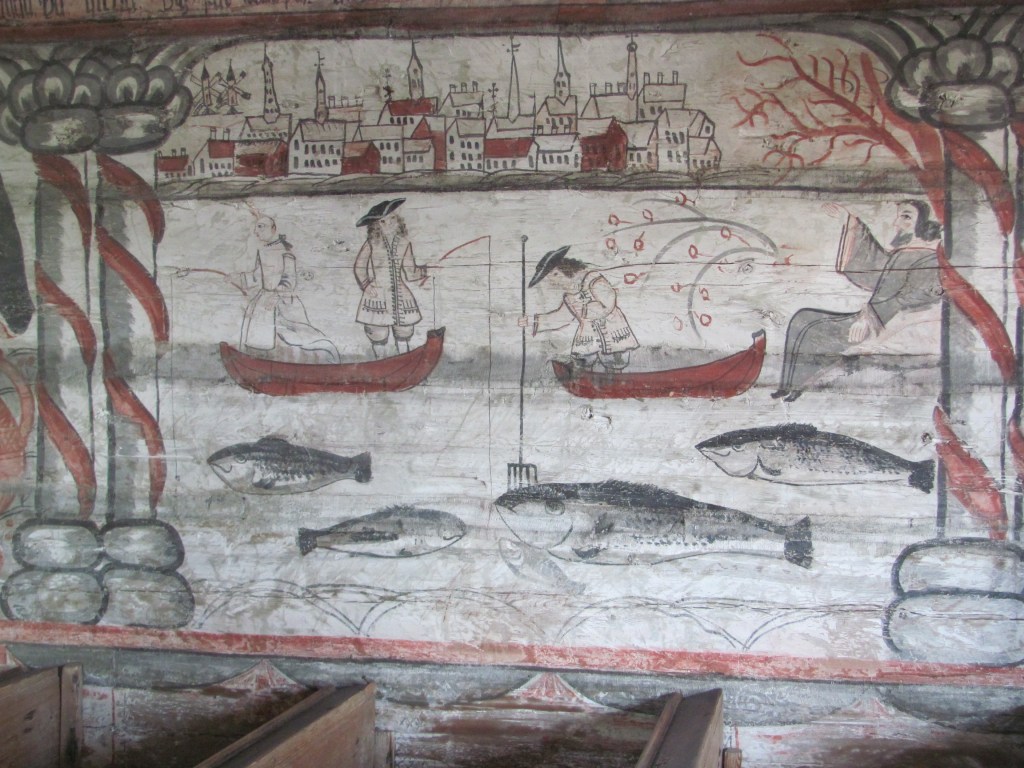
“Haven’t seen any wolves here”, says Gavin from Salute. “But it’s a pretty little place. There is an interesting church with painted scenes, and there is a nice walk to the old pilot station on top of that hill. Both worth a visit.”

Wolf island?
Detail of painting in Ulvöhamn fishermen’s church.
View of Ulvöhamn from the old pilot station.

On the way back from the pilot station, we stop off in the little fishing museum with its eclectic collection of fishing gear.

“It’s a pity that we can’t taste the surströmming” says the First Mate, pointing to a tin. “It says that it isn’t ready until the middle of August.”

“Phew!”, I say, relieved. “That gives me an excuse not to try it, at least.”

Tin of surströmming.

Surströmming is Ulvön’s special delicacy. Known as the world’s most putrid-smelling food, it is made from herring allowed to ferment for between three and six months.

“Only herring caught before spawning in April and May are used”, the woman in the museum tells us. “They are covered lightly in salt to prevent them from rotting, then they must ferment for three months. They shouldn’t be sold until the third Thursday in August, Surströmming day. You can eat them with tunnbröd with potatoes, onions, tomatoes and cheese. But I have to warn you that they are an acquired taste.”

Not to everyone’s taste.

There is a blast of a ship’s horn, and a crowd of youngsters rush past us clutching suitcases and rucksacks, heading for the ferry dock. One or two look a bit queasy. They’ve probably had some surströmming, I think. Before long, the ferry edges away from the dock to take them back to the mainland, their brief stay on Ulvön over.

Boarding the inter-island ferry.

At dinner, the conversation continues from yesterday.

“There’s a lot of discussion at the moment about the first people to come to New Zealand”, says Peter. “Europeans have growing angst about being newcomers and displacing the First People. Hence the trying to put things right. But it’s not so simple. No-one really knows where the Māori come from, for example. Their mythical homeland was Hawaiki, but it’s not clear where that was.”

“I thought that it was generally thought to be Tahiti”, I say. “But even if it wasn’t, perhaps Hawaiki referred to an area rather than a specific island.”

“And then there’s the question of the Moriori”, says Joanne. “They were in New Zealand before Māori. Perhaps they were the First People, and not Māori?“

“I know that was what we were taught at school”, I say. “But I thought that the modern view is that they were Māori who had arrived earlier than the main waves, were almost wiped out by the latter due to their pacifist nature, and then escaped to the Chatham Islands where their language and culture evolved differently.”

“Does it really matter anyway?”, says the First Mate. “There seems to be little doubt that Polynesians of various types were the First People of New Zealand, and that Europeans were the newcomers.”

“It matters”, says Peter, “as whoever is designated as First People get rights that the others don’t.”

The problems between indigenous peoples and the colonisers are similar the world over, I think as I climb into bed that evening. I make a mental note to check what the relationship is like here in Sweden between the Sámi people and the rest of the country.

Sorting out the problems of the world.

Another day, another Högaküsten island, another Gävle fishermen’s church, and more picturesque red-painted fishermen’s cottages. This time it is Trysanda, reputedly the most beautiful of the Högaküsten islands.

Inside Trysanda fishermen’s church.

We join Gavin & Catherine of Salute and Holger & Annette of Anna for a walk around the island. We come to a long sandy beach and strip off for a swim. It isn’t as cold as I thought it would be.

Holger and Annette have decided to make this their northernmost point and head back south. They need to be back in Stockholm to meet family. It’s sad to see them go. We had first met them in Öregrund nearly a month ago, and had travelled more-or-less continuously with them since then. Back at the harbour, someone suggests a barbecue for the evening.

This time Holger doesn’t burn the halloumi. “My secret is to get someone else to look after it!”, he says, meaning me. I manage to char it. But not too much.

Barbecue at Trysanda.

“I’ll miss them”, says the First Mate. “They have been good company.”

“We can keep in touch with them”, I say. “Hopefully we’ll meet them again.”

Thick fog, forgotten love, and a Russian sailor

“It’s a bit scary”, says the First Mate. “We can hardly see anything. I just hope that there’s nothing else coming our way.”

We had left Mellanfjardin earlier in the morning, and for about an hour or so we had had a good sail in ten knots of wind. Then it had died to three or four knots and fog had rolled in. At first, it was light, and we could still see several hundred metres. But then it had thickened, and our visibility was down to a few tens of metres.

“We should have got the radar working”, says the First Mate. “I keep telling you to look at it.”

“We’ll be fine”, I say, trying to sound more confident than I felt. “We can see any big ships in the area on the Automatic Identification System. There’s none around at the moment. It’s the little boats that don’t have AIS that we have to worry about. But I think we should be able to see them if they get too close. I’m staying off the main fairway just to be sure.”

I renew my efforts to peer into the gloom in front of us.

Fog-world.

“But what about rocks and islands?”, says the First Mate. “We will have to be careful not to hit any of those.”

“I can see where those are on the chart-plotter”, I say. “So we should be able to miss them too.”

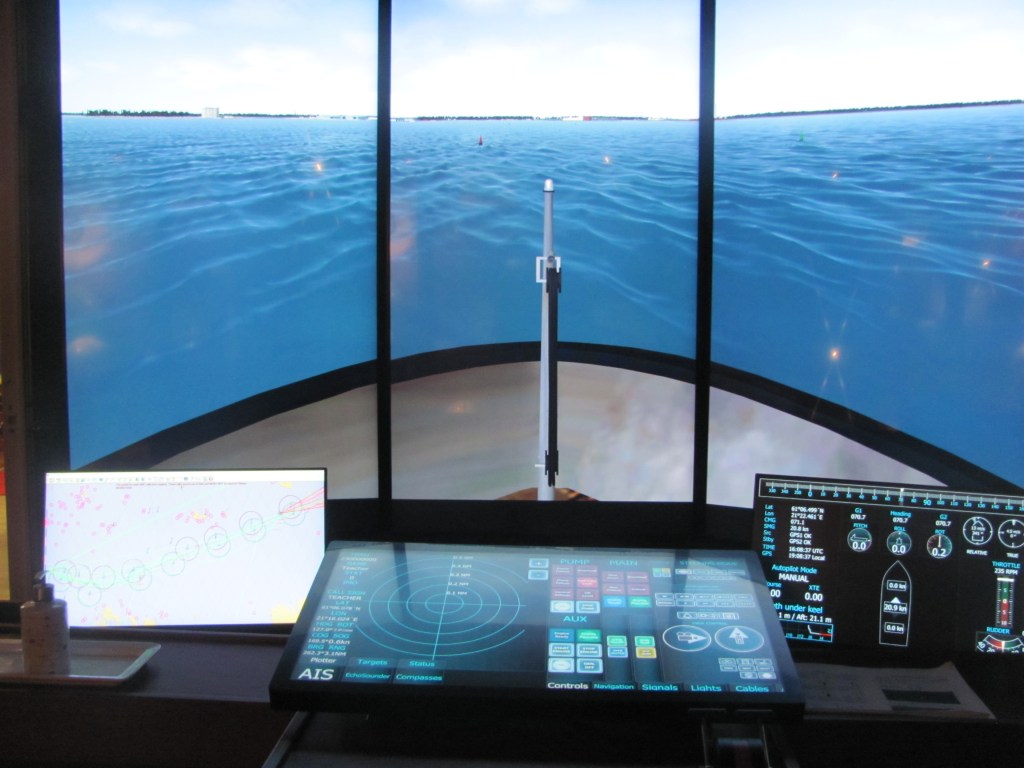
The wonders of modern technology, I think to myself. In the former days of sail, when knowledge of a ship’s position had only been approximate, fog had been a real killer. Now we have instruments that can tell us where we are with pinpoint accuracy, with the ability to see where our own eyes can’t, warning us of any dangers that lie ahead. If you trust them. There is still no place for complacency.

Hour after hour we sail along in our own little fog-world. Sea and sky merge into one, disorienting our senses, reminiscent of the whiteout I had once experienced on the top of Ben Nevis. Up and down and left and right cease to have any meaning.

Eventually we approach Sundsvall. The huge road bridge connecting one side of the inlet to the other looms out of the fog. High above I can hear the noise of the traffic, but can’t see it. I start the engine to motor the last little bit into the marina. Already the fog is clearing, and the sun is trying to peer through. Waiting hands grab our lines and we are secure.

Sundsvall road bridge.

We unload the bikes and cycle into town.

“There’s something about this town I really like”, says the First Mate, licking her ice-cream. “It’s quite different from the other places that we have seen along this coast. More substantial looking.”

We are sitting in the town centre of Sundsvall, one of the main towns of the Virgin Coast of Sweden, enjoying the sun after a visit to the museum.

Like many Swedish towns we had seen already, Sundsvall had originally been built of wood, making use of the plentiful supply of timber in the northern part of Sweden. But over the centuries, it had burnt down four times. Each time it had been rebuilt in wood. Then, in 1888, after it had burnt down yet once again because of a spark from a steamship, the town authorities had decided that enough was enough. This time the town would be rebuilt in stone, not wood. It had been expensive, but worth every kronor to make sure that their town would never go up in flames again.

The great Sundsvall fire of 1888.
Sundsvall, the stone city, nowadays.

“It’s just a pity that it was so expensive that only the rich people could afford to live in the town centre”, says the First Mate. “The poorer people who also used to live there were forced to live on the outskirts.”

Later I cycle to a boat accessory shop on the other side of town to buy a heavier stern anchor. The one that we already have from our previous smaller boat is too light to hold the weight of Ruby Tuesday in all but the calmest conditions.

“You’ll need some heavier chain as well”, the man tells me. “This five metre length of 8 mm chain should do the job. You can attach your reel tape to it. Both tape and chain have a breaking strain of 2500 kg. And you will probably need this container to hold the chain in. You can attach it to your stern pulpit. Oh, and these shackles to attach the chain to the anchor and the tape.”

It all costs a small fortune. I start wondering if it is all worth it, but the man assures me that many of the small harbours northwards from here require boats to tie up bows-to to a jetty and use a stern anchor rather than a buoy to keep the boat in line.

“And, of course, if you want to moor your bow to the rocks in the natural harbours, you also need a stern anchor”, he says. “You can’t tie up stern-to like they do in Greece, or else you run the risk of damaging your rudder against the rocks.”

The next problem is getting it all back to the boat. I load the anchor on to the small carrier on the bike, and tie it on with bits of string. The chain, its container and other bits and pieces I had bought all go into my rucksack. It’s all quite heavy and the front of the bike feels quite light. It reminds me of the ‘big shop’ episode in Flensburg two years ago.

Getting the new anchor home.

I take it slowly, but eventually I make it.

“We didn’t think that you were going to manage all that weight”, say Robert and Helen next to us. “But we saw you peddling furiously with your head down, so we knew you were determined.”

The next morning, we leave for Härnösand, further up the coast. Strong winds are forecast in a couple of days’ time, and we need to make sure we are somewhere safe for them.

“At least there will be something to do in Härnösand”, says the First Mate. “We might get a bit bored stuck for two days in a small harbour somewhere.”

The winds come from the northeast in the early morning. The marina is not particularly well protected from the north, but at least it is better than being out at sea. I need to get up and re-tension the stern line to stop being blown into the boat next to us.

Tied up in Härnösand gästhamn.

“I think I might go and visit the Bilmuseum”, I say over breakfast. “It’s only 15 minutes’ walk from here, and it is supposed to be the largest car museum in Sweden. Do you want to come?”

“I‘ll give it a miss”, says the First Mate. “It’s not really my scene. I’ll have a browse around Härnösand.”

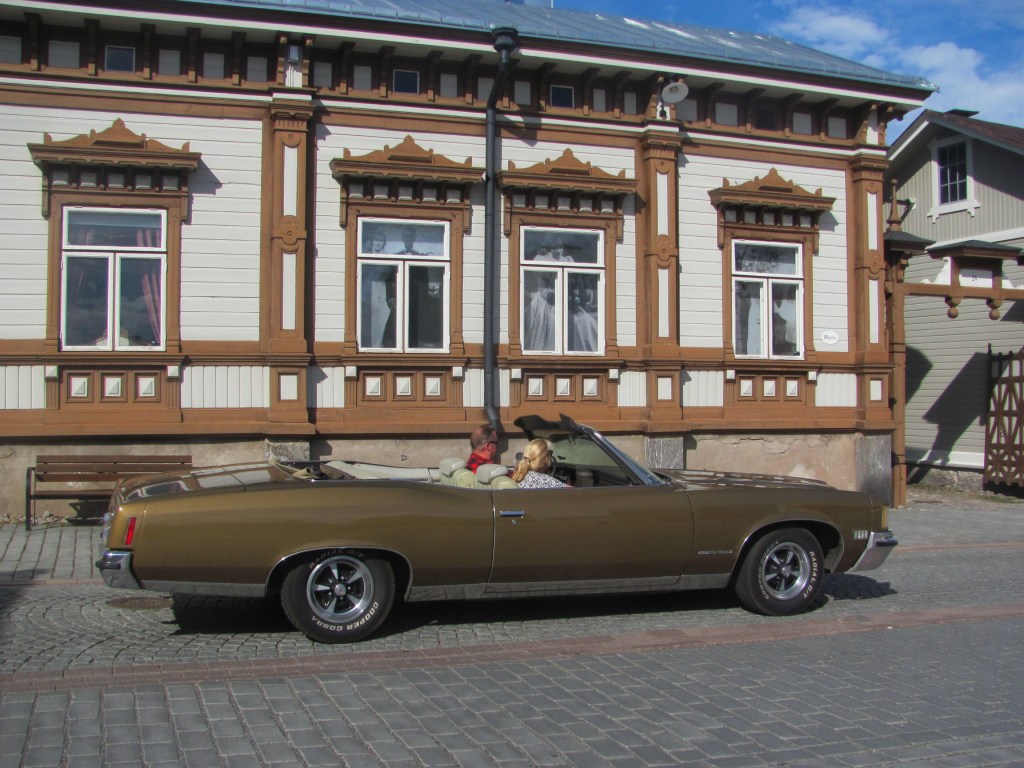
I cross the bridge and search for the Bilmuseum nestled behind the Lidl store. Outside an American car stands impaled like a cherry on the end of a cocktail stick. It looks like it might be the right place.

I spend the next couple of hours in a petrolhead’s heaven. A fest of cars of every shape and size from all over the world. De Dions, Packards, Buicks, Plymouths and Rolls Royces stand next to each other, painstakingly restored to their original condition. Ferraris, Trabants, Model-T Fords, Renaults, Humbers and Jaguars all jostle for space in the vast halls. Mercedes, Volvos and Saabs vie for attention, as brightly polished as the day they rolled out of the factory.

1899 De Dion Bouton.
1927 Rolls Royce Phantom 1.
1910 Model-T Ford.

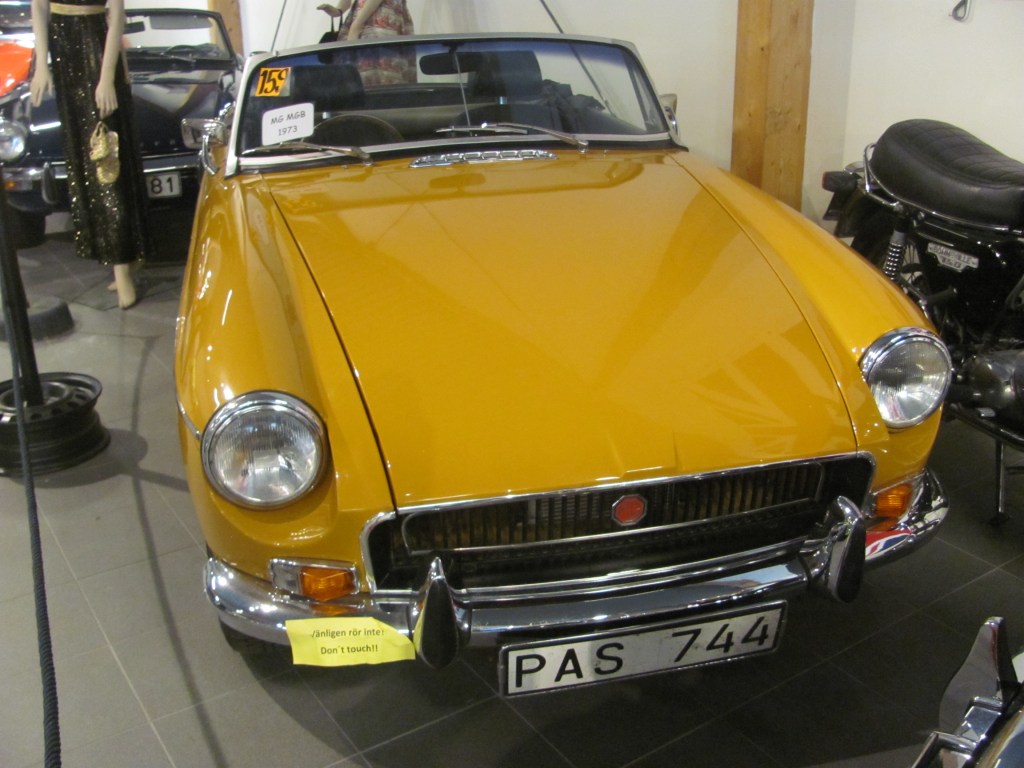
And then I see her in all her glory. A 1973 MGB Roadster, one of my first cars, in immaculate condition. Except someone had painted her yellow; she was blue when I had her.

1973 MGB GT Roadster.

I press the accelerator to the floor. The car surges forward with a throaty roar, the wind blowing back the golden tresses of the girl beside me. Trees flash past us; houses come and go. Sheep grazing in the paddocks look at us bemusedly as we speed past. I flick the electric switch into overdrive, and the engine settles into a comfortable burble. The girl grins.

“Let’s go to the Port Hills”, she says. “I’ve never seen the city from up there before.”

“Your wish is my command”, I say.

We reach the base of the road leading to the hills, and I shift down a gear and gun the engine. Tyres slide around the hairpin corners as we climb the narrow road to the summit of the ancient volcano rim, only just avoiding the occasional car coming downhill.

“Please, please! Not so fast!” shouts the girl above the noise of the wind, gripping my knee. But the twinkle in her eyes tells me she is enjoying it.

The rev-counter climbs into the red and I change up again.

We park in the small carpark on the summit, the city sprawling out below us. To our left, the Pacific Ocean stretches to the horizon, its white breakers rolling slowly in to come to a stop on the sandy beaches of the coast. In the distance, the snow-capped mountains of the Southern Alps provide a majestic backdrop, their forest-covered foothills giving way to the shelter belts and ripening crops on the plains.

“If you look carefully, you can see where we live”, I say. “Just north of the Waimakariri River.”

“It’s stunning”, she says. “It’s all so flat where I live.”

I lean over to kiss her …

View of the Canterbury Plains towards the Southern Alps.

“Excuse me!”, says a voice with a Scandinavian accent. “Do you mind?”

I snap out of my reverie.

“Sorry”, I say to the Swedish woman standing next to me. “I was just dreaming. It was my first car.”

“We all dream of lost loves”, she laughs knowingly. “It doesn’t do any harm.”

The excitements and disappointments of first love. It hadn’t lasted. I wonder fleetingly where she is and what she looks like now.

The winds abate overnight. We slip the bow lines, and I pull back the boat on the stern line until I can disengage the metal hook from the buoy. We edge our way gently between the row of stern buoys until we are clear, pull out the sails and head northwards toward the High Coast area proper.

“The ‘uplifting landscape’, they call it”, says the First Mate. “It’s beautiful. All those shades of blue and purple of the hills upon hills. It’s quite different from what we have seen before in the archipelago. I can see why the Swedes are proud of this area. It’s a little bit like the west coast of Scotland.”

The ‘uplifting’ landscape.

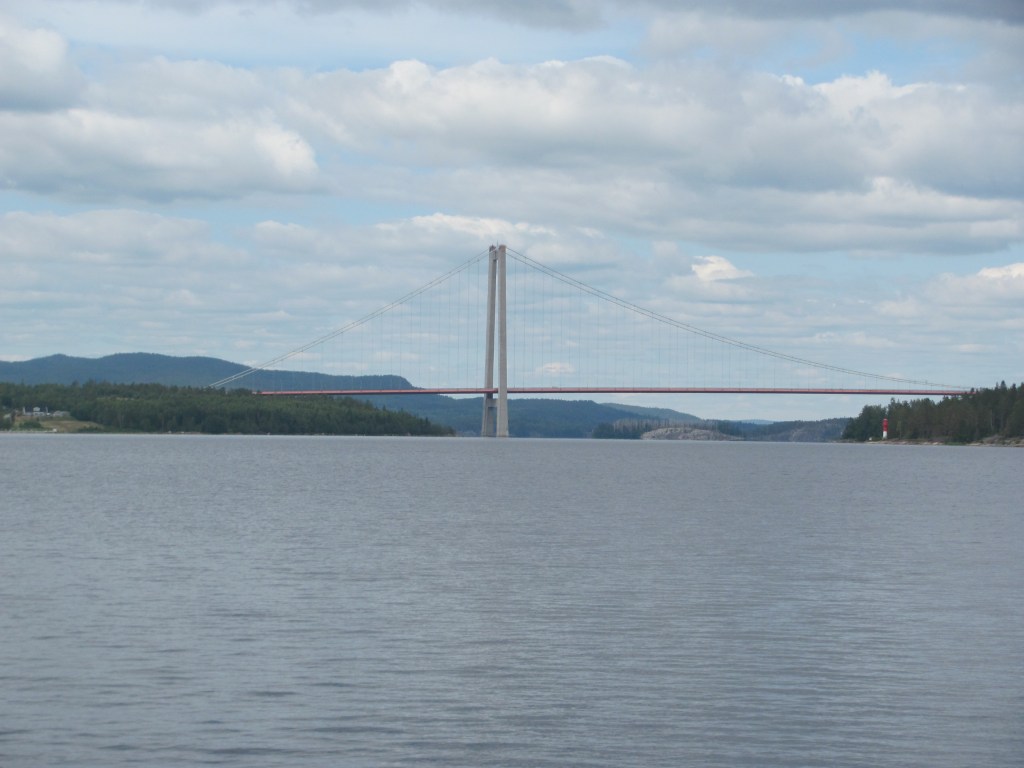
“We can take the long way around so that we can see the Högaküstenbron”, I say. “The High Coast Bridge. By all accounts it is quite spectacular.”

We round a promontory and the bridge comes into view. Tiny trucks seemingly suspended in space cross slowly from one side to the other. Yachts sailing underneath are dwarfed by it.

“It was completed in 1997”, the First Mate reads out from the guide book. “It is 180 m tall, nearly 1.9 km long, and is the third longest suspension bridge in Scandinavia. It carries European Route E4.”

Approaching the Högaküstenbron.

A cold wind starts to blow.

“Come on”, says the First Mate. “It looks like rain. Let’s get going to Lövvik before it starts.”

Before long, we are in the inlet leading to the tiny harbour of Lövvik. A few boats are already there, one of which is Anna. There doesn’t look like there is a lot of room for us. We approach the small jetty and suddenly see one space left, mooring bows-to with stern anchor. Two young men appear in swimming costumes to give us a hand. One has a beard.

Coming into Lövvik.

“Do you think it is deep enough?”, I call out to the First Mate on the bow. Our keel is two metres deep, so we need at least that so as not to touch the bottom.

“I’ll dive down and check”, says the Man with the Beard, hearing me.

He dives in, and a few seconds later reappears.

“It’s four metres”, he calls out. “Plenty of water.”

I drop the stern anchor, and let the reel pay out. We manage to tie up with no drama, and thank the diver warmly for his help.

“People are so helpful”, says the First Mate over a cup of coffee. “Imagine diving down to check the depth for us. It has reaffirmed my faith in human nature.”

Later we chat to the two men relaxing after coming out of the small sauna on the dockside. They are from the huge motor boat tied up on the other side of the pontoon to us. Two Samoyed dogs lounge on the foredeck. A young woman tans herself on a sun lounger on the rear deck. We ask them where they are from.

“I am from England. But my father was from Glasgow”, says one of them, noticing our flag.

“And I was educated in England”, says the Man with the Beard, with a slight trace of an ‘east-of-Berlin’ accent. “But I am Russian. After this trip, I am going back to Russia to live.”

The conversation falters.

“With the present situation?”, the First Mate manages to stutter eventually, obviously stuck for words.

“Oh yes”, he responds. “Russia is a great place to live. It’s on the rise. It’s the rest of the world that is going south.”

Neither of us quite knows what to say to this.

“Anyway, we need to get back into the sauna”, the Man with the Beard says. “It was nice talking to you.”

“It’s amazing how quickly one’s view of a person can change just with a few words”, the First Mate whispers to me when they are gone. “He seemed such a nice person. I wonder if he is an oligarch? With a boat like that, and an attitude like that?”

“Yes, it was certainly an interesting viewpoint”, I say, also a bit nonplussed. “We must try and catch him later and find out why he thinks that way.”

Unfortunately, they leave that evening and we don’t get a chance.

“Ah well”, says the First Mate. “It’s probably for the best. It might have ended in an international incident. By the way, I haven’t seen much of Spencer recently. Do you think he is all right?”

“He’s around”, I say. “He’s just been catching up on his reading. He’ll be back soon.”

Goats aflame, a dinner surprise, and an iron-smelter

It is a glorious morning as we motor out of Mariehamn at 0700, heading south to round the peninsula before turning westwards towards Öregrund in Sweden. A faint breeze springs up, enough to justify taking the sails out and cutting the engine, and we sail along at a sedate three knots, enjoying the warmth of the early morning sun on our skins.

As we round the end of the peninsula, the wind picks up. The only problem is that it is coming from the north-west, the same direction as we want to go. It’s not exactly what the forecasts said.

“Unless we want to motor all the way, there is nothing we can do except tack”, I say.

We trim the sails and sail close-hauled in a series of two to three mile-long tacks. We make progress towards our destination, but it is slow. By the late afternoon, we are only as far as a small group of islands to the northwest of Åland, and we are getting tired.

Hard work leaving Åland..

“I think that it is a bit ambitious to try and get to Öregrund in Sweden now”, I say. “The wind has veered round to the north, so we would probably be able to do it, but we wouldn’t get there until around eleven o’clock tonight. Why don’t we stay here in these islands for the night and carry on in the morning? The harbour guide says there’s a good anchorage on Enskär island.”

“Sounds like a good idea”, says the First Mate.

We find a place to anchor in a small bay on the south side of Enskär. It is peaceful and quiet, with good holding in mud, and relatively well protected from the northerly wind. Two swans swim off in consternation as we reverse to set the anchor.

At the end of the promontory of the bay stands a lonely house.

“I wonder who on earth lives there?”, asks the First Mate, as we sip our wine in the cockpit. “It’s pretty remote. I can imagine that it would be the ideal place for a murder.”

“Or a hideout for drug smugglers”, I joke.

“Or Russian spies”, she says.

“It’s the house at the end of the Universe”, I say.

The house at the end of the Universe.

In the morning, the wind is still from the north. After a leisurely breakfast, we unfurl the sails and set off on a nice beam reach. Ruby Tuesday settles into a groove and speeds along comfortably at seven knots, covering mile after mile effortlessly.

“I like this sort of sailing”, says the First Mate. “Not too much heeling.”

“Yes, quite a difference from yesterday”, I say.

In the groove, heading for Sweden.

We reach Öregrund in the mid-afternoon, and tie up in the small guest harbour.

The harbour at Öregrund,

Öregrund has only 1500 inhabitants, but it is still designated a city. In 1500, after Denmark conquered Stockholm, the Swedish under Gustav Ericsson tried to mount resistance from Öregrund. The Danes weren’t well pleased with this, so they stormed it and burnt it to the ground. When Ericsson eventually beat the Danes and became King Gustav Vasa I, he granted permission for a new city to be built there. For a while it was the main harbour from which pig iron was exported to all over the world, but it then fell back to relying on fishing. In the nineteenth century, it attracted the attention of the rich and famous, who built beautiful houses for their summer residences. Nowadays it is a busy summer resort.

“It’s the only place in Sweden that you can sit and watch the sun set over the sea”, the woman in the tourist information office tells us.

“I am sure she is right, but I would have thought that there would be plenty of places on the west coast of Sweden that you could do that too”, says the First Mate later.

The two most notable features of the city are the medieval church and the clock tower.

Clock tower in Öregrund.

“Let’s go and see that lightship over where the ferry comes in”, says the First Mate. “Look, you can see its masts over there.”

It turns out that the lightship is just the topsides set in a concrete base overlooking the ferry harbour. It is used as a venue for visiting music bands.

The lightship in Öregrund.

We find ourselves in the old quarter of town. The aroma of fresh roses fills the air, and quaint little cottages proudly boast a riot of colour. From an upstairs window the strains of ‘The House of the Rising Sun’ filter out. Life is good for the Öregrunders.

The old quarter of Öregrund.

In the evening, we decide to motor across to a little inlet opposite Öregrund.

“It’ll save one night’s harbour fees”, says the First Mate. “And it will make it easier to get started in the morning. All we will have to do is pull the anchor up without all the faff of worrying about slip ropes and stern lines.”

When we get there, there is one other boat anchored, a German-flagged boat called Anna.

“They probably have the same idea”, says the First Mate. “You know how we Germans like to save a few pfennigs when we can.”

“Cents”, I say. “Nowadays you like to save a few cents when you can, not pfennigs.”

“Whatever”, she says.

We weigh anchor the next morning and set off northwards for Gävle. We are now entering the Jungfrukusten, or the Virgin Coast, stretching 200 km from Öregrund to the Höga Kusten, and so named because of its unspoilt nature. According to the travel guide, there are more than 4,500 islands, lots of of beautiful sandy beaches; and picturesque fishing hamlets.

“It all sounds very idyllic”, says the First Mate. “I’m looking forward to exploring it. By the way, did you know you are supposed to pronounce it ‘Yevleh’ in Swedish, not ‘Gavle’ like we do in English.”

“Yes, I read that too”, I say.

We reach a small island called Björn with its prominent lighthouse, where there are supposed to be two Swedish Cruising Club (SXK) buoys which we are entitled to use.

Approaching the island of Björn.

“Let’s break the journey here”, I say. “We can chill out and keep going in the morning. The wind is supposed to be more from the south tomorrow, so it’ll be better for us.”

We follow a narrow buoyed channel between submerged rocks and find the two SXK buoys. It’s idyllic – the water is calm, birdlife abounds, and the haze over the land to the west hints at mystery and intrigue.

“There’s another boat coming behind us”, says the First Mate, as we tie up to one of the buoys. “It looks like it has the same idea. I was kind of hoping we would be the only ones.”

I check the AIS. It is Anna, the same boat that was anchored next to us opposite Öregrund. They tie up to the other buoy. It’s too far away to talk to them.

“It’s the Germans we were next to last night”, I say. “They must have been following us all of the way.”

We spend the evening watching the birdlife through the binoculars. Gradually the haze makes the sea and sky appear to merge into one, giving the impression that we are floating in space.

“Surreal”, says the First Mate. “We are so lucky to see it.”

The next morning, we continue towards Gävle. We tie up at the Huseliiharen marina just outside the city. The next day we take the No. 95 bus into the centre.

“It’s a pity we’ll miss the Gävle Goat”, I say, on the way in. “Apparently, every year at Christmas time, they construct a goat out of straw in front of the castle near the city centre. It’s supposed to be a Yule goat from German pagan times. In recent years it has become a bit of a thing for it to be burnt down, even though it is illegal to do so. People have been fined for vandalism and even sent to prison for it. But it still carries on getting burnt down.”

The Gävle Goat (from Wikipedia).

“You would think that in this day and age that they could protect with cameras and guards and the like”, says the First Mate.

“They do all that”, I say. “They even tried coating the straw in flame-retardant material one year. But people still find ways of setting it alight. And there’s more. There are actually two goats – one is built by local businessmen and the other by the local school. They compete to see who can build the largest goat for the Guinness Book of Records. There has even been quite a bit of bad feeling with accusations from both sides of cheating.”

“Clearly more goes on in Gävle than you might expect from its docile appearance”, says the First Mate, as we step off the bus in the city centre. “Look, there’s a goat sculpture. Get a picture of it for the blog.”

A pale imitation.

We continue our voyage north. Half-an-hour out of Gävle, we see a familiar name on the AIS. It’s Anna. We had last seen them as we were entering Gävle, but they hadn’t come to our marina and we had almost forgotten about them.

“They must have gone to the marina in the city centre”, I say. “S’funny, I thought that it was silted up and too shallow for our boats.”

“They’re like our shadow”, says the First Mate. “I wonder if we will ever get to meet them?”

We reach the small island of Storjungfrun, after which the Virgin Coast is named, and use the two leading marks to enter the tiny harbour dominated by the lighthouse towering above it. One other boat is already there. The sole occupant gives us a hand to tie up.

“I’ve come from Sundsvall up north”, he says. “and heading south to Stockholm. I thought I would break my journey here. Welcome to Storjungfrun.”

Three other boats arrive shortly after us. One of them is Anna.

“It’s nice to meet at last”, says the blond-haired skipper. “We have been following you for the last few days. It looks as if we are heading in the same direction. We are aiming to get to Umeå, but we have to be back in Stockholm at the end of August. My name is Holger, and this is my wife Annette.”

Holger and Annette.

After exchanging pleasantries, we climb up to the lighthouse and explore the few red-painted houses clustered around it. At one end of the village is a small church built by the Gävle fishermen who used to use the island as a summer base.

The lighthouse on Storjungfrun.

“Ah, I read about the Gävle fishermen in the travel guide”, I say. “Apparently in 1577, King Gustav Vasa gave the fishermen from Gävle exclusive rights to fish for Baltic herring up and down this coast in return for giving every tenth barrel to him. It was the Gävle fishermen who established these pretty little fishing villages wth small churches to worship in, like this one. The local people were prohibited by law from fishing where they had done so for generations.”

“It seems a bit unfair”, says the First Mate.

“They did relax the rules a bit later”, I say. “But, yes, it caused a lot of resentment.”

Inside the fishermen’s church on Storjungfrun.

We walk back to the boat.

“What do you think the weather will do tomorrow?”, asks the First Mate over dinner in the evening. “My app says that the winds will be quite strong from the west.”

I look abstractly past her at the scene unfolding on the other side of the harbour. A naked man has emerged from the small hut billowing smoke from its chimney. He is followed by two naked women. All three walk starkers to the end of the jetty, and dive into the water.

“Well?”, says the First Mate. “Do you think the winds will be too strong for us?”

“Hmmmm, yes”, I say. “I mean no. Possibly.”

All three people are now climbing up a ladder to the jetty. They dry themselves in the last rays of the evening sun.

“Where’s your mind tonight?”, the First Mate asks. “You seem to be on a completely different planet.”

She follows my gaze.

“Oh, those ones”, she says dismissively. “They are just having a sauna. I saw it earlier when we went for our walk. You have to light the fire yourself, and wait for a bit before the stones heat up. It’s included in the price for the mooring.”

“But they are completely naked, and it’s mixed”, I say. “And in public too! I didn’t know that was allowed.”

“Well, obviously it is”, she responds. “I read that in the big towns it is usually separate saunas for males and females, but here in these remote islands there is usually only one sauna and you can more-or-less do what you want. As long as it doesn’t offend anyone.”

“Well, I am not sure I can finish my dinner after that”, I say. “Especially the sausage.”

“We don’t have any sausage tonight”, says the First Mate, looking perplexed.

“So we don’t”, I say, distractedly. “I wonder why I said that?”

The harbour at Storjungfrun. The sauna is the tiny building under the tree.

We spend the next few days working our way northwards along the Virgin Coast, stopping off to anchor in secluded bays, and tying up in small, picturesque fishing villages and remote disused harbours.

Fishermen’s cottages in the small village of Mellanfjärden.

We seem to have synchronised our passages with Holger and Annette of Anna.

“Why don’t we have a barbecue tonight?”, says Holger one night. “I have a grill and charcoal we can use, so just bring along some meat to cook on it and some drinks.”

We are in the small harbour of Galtström, having edged our way timidly through the narrow entrance and tied up alongside to the wharf earlier in the afternoon.

“We’ve got some bratwurst”, says the First Mate to me. “And I can make a salad. You get some beers out of the fridge.”

“You should visit the iron-smelting village”, says Holgar, as he lifts the smoking cheese from the grill. “It’s just a short walk along that road over there. They used to bring the pig-iron down here to the harbour to the waiting ships.”

“Oh, no!”, shouts the First Mate to me. “You’ve burnt the bratwurst! Can’t you concentrate instead of nattering?”

“They’re not burnt”, I protest lamely. “They are just a bit black.”

Burning the bratwurst (and the cheese!)

In the morning, we walk along the small road from the harbour to the village. It looks deserted, but the café is open.

“This used to be a major source of iron in Sweden”, the girl tells us. “It helped to provide the wealth to make it a European Great Power in the 17th century. You can just walk around and explore. There are signs in English to explain each bit. Here’s a map.”

We find ourselves in front of the massive iron smelter. Charcoal made from the local forests was used to smelt the iron ore brought from mines in central Sweden.

The iron smelter at Galtström.

“The ore was first ‘dressed’ by heating it up to drive off the water and other impurities”, we read. “Then it was crushed into smaller pieces ready to be smelted. For that the furnace stack was packed with alternating layers of coal and iron ore. Quartz or limestone were also added to bind the impurities together. The temperature at the bottom of the furnace would reach 1300 °C, and the molten iron would begin to flow out of a tap at the bottom of the stack, while the slag would flow out further up. The iron would cool and harden into ingots, or ‘pigs’.”

“Look, here’s the little railway that would have taken the ‘pigs’ down to the ships in the harbour”, says the First Mate.

Railway taking the ‘pigs’ to the harbour.

“It must have been quite a hive of activity in its heyday”, I say. “Come on, let’s treat ourselves to lunch at the restaurant. I am sure they won’t burn it!”

Witches’ trials, dressing the boat, and a Russian fortress

The six women are led out to the wooden platform. I clutch my mother’s dresses tighter. I don’t know what is going to happen, but I know it is bad. The women are guided to the structure on the platform with six ropes hanging from it. Under each there is a box which the women are made to stand on.

“Mother, what’s happening?”, I ask my mother in a shrill voice. “Why are those women being made to stand on those boxes. And what are those ropes for?”

“My little one”, she says. “They are evil women. They confessed to the governor that had attended a Witches’ Sabbath and made a pact with the Devil. Now they have been sentenced to death for their crimes. Good riddance, I say.”

I watch with morbid fascination as one by one, a noose at the end of each rope is placed around the women’s necks.

“Mother, mother”, I cry in alarm. “One of those women is my friend John’s mother. Surely she isn’t a witch? She is always so kind to me. The governor must have made a mistake.”

“No mistake”, replies my mother. “The governor was guided by God, and God can see into every person’s heart and what is going on in it. He must have been able to see that John’s mother had evil there, despite appearing to be kind on the outside.”

Witch trials in Sweden.

There is a fanfare of trumpets and the Governor of the Castle arrives with his retinue. I had already seen him before several times as I tended my father’s sheep, cantering out of the Castle gates on his horse as he went about his business. He speaks something to the women, but his voice is low and I can’t make out he words. They begin to wail in terror.

“I am not a witch”, cries John’s mother. “I have been a good woman all my life. I have had nothing to do with the Devil.”

There is a sudden shout, and a man standing at the side of the platform steps forward. One by one, he kicks away the box each woman is standing on. The cries of terror cease, the women’s bodies convulse, then all is still. The watching crowd lets out a loud cheer. I feel I want to be sick, and try to run, but my mother holds me tight.

“It’s good that you have seen these evil women die”, she says, with little sympathy in her voice. “Let it be a reminder throughout your life to serve God and not the Devil, otherwise a similar fate may befall you.”

“What do you think of this?”, says a voice behind me. I turn. It is one of the Governor’s men wearing his helmet.

The voice seems somehow familiar. It takes me a few seconds to realise that it is not the Governor’s man, but the Cabin Boy, wearing a steel helmet put there for visitors to try on.

One of the Governor’s men?

We are in Kastelholm Castle, and I have been imagining what is might have been like at the end of the Kastelholm witch trials in 1668. Local women accused of witchcraft were brought to the castle where they were forced to confess to the Governor of attending a witches’ Sabbath and making a pact with the Devil. They were then tortured to reveal their accomplices before being hung.

“Hardly a fair trial”, sniffs the First Mate. “At least we have made a bit of progress in justice since then. Come on, let’s go and have an ice-cream.”

Kastelholm Castle where the Witches’ Trials took place.

We had visited the Åland Gin Distillery that morning, where different herbs and spices are added to the base spirit distilled from grain elsewhere to give a distinctive Åland flavour. We had then been treated to a gin tasting and a lunch of traditional Swedish meatballs and accompaniments.

Learning how Åland gin is made.

“Those were the best meatballs I have tasted in a long time”, says the First Mate, sitting back in her chair contentedly. “Far better than those from a leading furniture retailer I could name.”

After lunch, we had sauntered over to the Castle opposite. A timeline just inside the entrance explained that it had been built in the 1380s as a symbol of Swedish power and prestige, and that King Gustav Vasa had hunted in its grounds. It was then captured by the Danes in 1505, but recaptured by Charles IX of Sweden in 1599. Recently it has been restored and attracts many visitors each year.

Erik XIV.

“It has certainly seen a bit of history”, says the Cabin Boy as we leave. “Did you read that one of the Swedish kings John imprisoned his own brother Erik in there for a while?”

This was the same John III that had been imprisoned by his brother Erik XIV in Gripsholm Castle in Mariefred that we had seen last year, but had returned the favour when he was freed by imprisoning Erik. That hadn’t been all though – Erik died insane, probably from arsenic poisoning by his brother.

“The Windsors aren’t the only Royal Family that are a bit dysfunctional”, I say.

In the evening, we meet for drinks at the dockside bar. I find myself sitting next to Simon. We strike up a conversation on the Vikings.

“The one thing that I don’t understand about the Vikings is what motivated them to expand throughout Europe”, he says. “Look at where they went – much of Britain, France, Spain, Italy. They even got as far as Iceland, Greenland and North America.”

“Yes, and in the other direction they migrated down the Volga and founded Kyiv in present day Ukraine”, I say. “They ruled a large state called Kyivan Rus’, which was the origin of the Russian people.”

Viking expansion in Europe in the 8th to 11th centuries.

“True, but what made them want do it?”, persists Simon. “Why didn’t they just stay at home in Scandinavia? I have read that overpopulation of the available land was the reason, but I don’t buy that. Sweden has lots of land, and Denmark is very fertile.”

“I don’t think there was a single reason”, I say, trying to remember what I had seen in the History Museum in Stockholm. “Shortage of land was certainly a factor for the Vikings from Norway. They expanded westwards to Britain, Iceland, Greenland and the America to colonise new land. But for the Vikings from Sweden, trade was the main reason. They were particularly keen on silver and traded to get hold of it. And it was mostly the Danish Vikings who did all the raping and pillaging that terrorised Europe at the time.”

“And they had the technology to do all that”, says Simon. “The longboat, I mean. They were fairly robust sea-going vessels. But was there also something in their psyche that made them want to be so ruthless?”

“I suppose the Norse religion contributed to that”, I say. “It glorified violence – only those who died in battle would go to Valhalla. Those who didn’t would go to Hel. That’s a pretty powerful incentive. And their lack of respect for Christian monasteries and the like – the rich pickings they could easily have by purloining the treasures so conveniently collected and stored for them in one place by defenceless monks, would surely be another.”

Valhalla by Max Bruckner (1836-1918).

It’s almost the end of the rally. We slip the lines early the next morning, and head across the Lumparn crater for the Lemström Canal with its swinging bridge. It opens on the hour ever hour between 0900 and 2200. We make it for the 0900 opening and are quickly through to the bay east of Mariehamn. We tie up in a box berth at the Mariehamn East marina.

Entering the Lemström Canal.

“I feel a bit sad that it’s all over”, says the First Mate. “I have to say that I have really enjoyed it. Great weather, great scenery, and great people. What more could we ask for?”

In the afternoon, we ‘dress’ the boat. This involves stringing a line of signal flags from the bow to the masthead and down to the stern.

“You can’t put them in any old order”, says Bob in the boat next to us. “There is a specific order that they have to be in so that you don’t inadvertently send a message you don’t want to. I’ll email it to you.”

We spend the next hour or so linking our code flags together, and hoist the ends of them to the top of the mast with the spare halyards.

‘Dressing’ the boat.

“Oh no”, says the Cabin Boy as we stand and admire our work. “There’s one flag left in the bag. I’ve left out the letter ‘L’. What should we do? It’s a bit of a faff to get them all down again and put it in.”

“Don’t worry”, I say. “No one will notice.”

No-one does.

“It all looks very colourful”, says the First Mate. ”It’s a pity we can’t keep them there all the time as we sail along.”

“The rules say they are only supposed to be used in harbour for special occasions”, I say. “Not when sailing. I assume because they might get tangled up in the sails.”

Rally boats in their finery.

In the evening, before the final Rally dinner together, we gather to say thanks to Andy, the Rally leader, for his wonderful organisational skills in making everything run so smoothly.

Saying thanks to Andy.

It’s been a great ten days, and we are all a bit sad to see the end of it. But it’s not goodbye to everyone, as several of us plan to continue on to the High Coast area afterwards. Not necessarily together in a rally or exactly at the same time, but we do agree to keep in touch. Bob sets up a WhatsApp group.

“We can swap tips and photos with each other”, he says. “And arrange to meet up if we are not too far away.”

Early next morning, we say goodbye to the Cabin Boy. It’s been great to see him again, but the time with him has flown too quickly. A taxi arrives and takes him to the airport for him to begin his long journey back to Australia.

“I’m going to miss him”, says the First Mate, wiping a tear from her eye.

“Me too”, I say.

Saying goodbye to the Cabin Boy.

In the afternoon, I take the bus out to the Bomarsund Fortress. We were to have stopped there on the rally, but because of unfavourable winds, we had had to divert from that plan.

The newly constructed Visitors’ Centre gives a good overview of the history of the fortress.

“As a result  of the Finnish War between Sweden and Russia, Finland and Åland were ceded by Sweden to the Russian Empire in 1809”, a video tells me. “But Russia needed to contain Sweden and maintain control over the Eastern Baltic, so in 1830 they began building a large military fortress at Bomarsund. The main fort contained barracks, offices, bakeries, a prison, and an Orthodox church. Nearby, a sizeable town called Skarpans developed to support the fortress.”

Bomarsund Fortress as it might have looked before being destroyed.

The Åland islanders got used to the Russians being in control, and life continued much the same as it had done under the Swedes. Suspicions lurked, however, and stories circulated that the Devil himself attended parties and even danced with the minister’s wife.

Violin the Devil is supposed to have danced to.

“Then in 1853, the Crimean War between Russia and the Ottoman Empire began”, a nearby panel says. “Britain and France decided to take the side of the Ottomans to contain Russian expansion to the Middle East. The conflict spilled over into the Baltic when the French and British attacked the half-completed Bomarsund fortress in 1854.”

“The Russians believed that an attack by sea from the west was not possible due to the narrow approach routes being too restrictive for sailing ships”, another video tells me. “So they had not fortified that part of the castle very well. But the British had steam ships which were much more manoeuvrable than sail. Consequently, they were able to come close and maintain a continual bombardment on the fortress without sustaining much damage to themselves. Eventually the Main Fort was largely destroyed, and the Russians surrendered. The victorious British and French offered the captured fortress to the Swedes, but they didn’t want it for fear of provoking the Russians, so it was blown up. “

The Battle of Bomarsund, 1854.

I take the 4.5 km walk around the planned periphery of the whole fortress. Only two towers were ever completed, their cannon still forlornly pointing in the direction that the enemy never came from.

Cannons at the North Tower.

I end up back at the ruins of the destroyed Main Fort, and try to imagine what it must have been like for the soldiers defending it from the continual bombardment from the navy ships in the bay to the west. With limited large guns of their own on that side and with no time to move any from other parts of the fortress, all they would be able to do was suffer stoically, and hope that they wouldn’t be in the way of an incoming cannon ball. All in the interests of remote men in Moscow, London and Paris playing the Great Game to balance each other’s power so that no one country in Europe would become too dominant.

Ruins of the Main Fort at Bomarsund.

“The battle of Bomarsund had far-reaching consequences for  Åland, as in the resulting peace treaty it was agreed that Åland should be demilitarised, which it remains so until this day”, I read in the tourist brochure on the bus ride back again. “Also, after Bomarsund was destroyed, it led to the establishment of Mariehamn as the capital of Åland  in 1861.”

“A bit like a huge game of chess, wasn’t it?”, says the First Mate later. “I feel sorry for the poor soldiers and common people that got killed through no fault of their own.”

Fishy business, a champagne schooner, and an ancient meteorite crater

“Why don’t you two go fishing?”, says the First Mate. “I have noticed others catching herring off the end of the pontoon over there. We could eat them for dinner tonight.”

We dig out the fishing rod from the storage room, and the Cabin Boy and I make our way to the end of one of the pontoons.

“I have a herring rig somewhere in the box”, I say. “Here it is. Let me tie it on.”

The Cabin Boy casts the line, and gives it a gentle jiggle up and down.

“I think I’ve got a bite”, he shouts in excitement.

It’s more than one. Five, in fact. We manage to land them all onto the pontoon, de-hook them, and put them into the bucket we brought with us. I have a go, and manage to catch another five, but one wriggles free before we can get it ashore.

“It’s enormous!”

We take turns and land several more.

“I didn’t realise it would be so easy”, says the Cabin Boy. “We’ve probably got enough now. The First Mate will be pleased.”

“Well done”, says the First Mate, taking the bucket. “We have to gut and clean them now. Come and give me a hand.”

We head for the marina kitchen, and return half an hour later with nicely cleaned herrings.

“It was a bit gruesome”, says the Cabin Boy. “Innards everywhere. I haven’t gutted a fish before. But I am glad I learnt.”

“You can put it on your CV”, I say. “Broadening your skills is always useful.”

That evening, we fry the herrings in butter and salt, and have them with new potatoes. They are delicious.

Cleaning the fish.

“Another British boat has just arrived”, says the First Mate in the morning. “That makes six in total now. I wonder how many more there will be?”

We are awaiting the start of the Cruising Association’s 2023 Baltic Rally. Seven boats have turned up so far, each with between two and four people.

“A few boats have dropped out for various reasons”, Andy, the coordinator of the rally, tells us. “But another one will be joining us during the rally. They are waiting for parts for their boat to arrive, and there’s been a bit of a delay. And don’t forget that we have a visit to the Pommern arranged for this afternoon, and a dinner together tonight.”

In the afternoon, we gather outside the Pommern, the four-master sailing ship that has dominated our view for the last few days. Built in 1903 in Glasgow as a cargo ship, she shipped timber from Scandinavia, fertiliser from Chile, and grain from Australia. Nowadays, she is part of the Åland Maritime Museum.

The Pommern,

A guide takes us on board, and we are asked to imagine that we are on a voyage from Mariehamn to Port Victoria in Australia in the 1930s to load a cargo of wheat for the return trip. Apparently they sailed out empty, with a full load only on the return journey.

“It seems strange that I have just flown from Australia to join you sailing”, says the Cabin Boy, “and the first thing they do is to ask me to imagine that I am sailing back to Australia again!”

“She probably thinks that you are a convict”, I say. “What with that short haircut.”

“She’s a bit bigger than Ruby Tuesday”, says the First Mate as we stand at the wheel at the stern and try and look forward to the bow nearly 95 m away.

“Yes, and twenty-eight sails would take a bit of managing”, I say. “We have our hands full with just two!”

Masts on the Pommern.

We set sail on the rally proper the next morning. We are free to start when we want and choose which route to take, the only proviso being that we end up in the designated destination in the evening.

The first leg is a short one, only twelve miles, to get everyone into the way of archipelago sailing. With the wind from the north, directly behind us, we sail with the genoa only, weaving our way around the rocks and skerries on either side. We arrive at the small harbour of Rödhamn, meaning ‘Red Harbour’, named after the red rock that makes up the island.

The harbour at Rödhamn.

We tie up, and have a cup of tea and freshly baked cinnamon rolls all together at the small café next to the harbour. The island was previously a pilot station to guide ships into Mariehamn, but nowadays has only a single inhabitant, the young woman, Annette, who runs the harbour and café.

“My family live on the mainland”, she tells us. “I come here for the summer to look after the island. I love the solitude and living amongst nature. My family come here during the school holidays though, and we work together on little projects on the island.”

Her speciality is freshly baked bread rolls that can be delivered to the boats in the morning. We place an order, as do the other rally participants.

Our tea finished, we explore the tiny island. Above the harbour is the old pilot station, now converted into a club house for a local sailing club. Further on, the former power generation building has been turned into a small museum with faded photos of the island in previous times. We are to see many such museums in these small island villages, all trying to preserve the memory of everyday life in a bygone era for future generations

The museum on Rödhamn.

In the morning, we find a bag of fresh bread rolls on the foredeck and see Annette delivering the other orders in an old wheelbarrow.

Fresh breakfast rolls delivered on a wheelbarrow.

“I love fresh rolls and marmalade for breakfast”, says the Cabin Boy.

“Go easy on the marmalade”, I say. “It has to last the whole season. As we saw in the last episode, I get very grumpy if I don’t get my marmalade. And it has to be Wilkin & Sons’ marmalade from Tiptree in Essex. I haven’t found anything as good over here yet.”

After breakfast, we continue to sail further into the archipelago. The Cabin Boy tries his hand at sailing.

“Whoa! How do I stop her from heeling?.”

Eventually we reach the small harbour of Degerby. The facilities are under refurbishment, and only the female toilets are available.

“I think I will shower on the boat”, says the Cabin Boy. “I am not quite ready for mixed showers yet.”

In the morning, I go for an early morning walk to take some photographs of the village. There isn’t much to it. Most of the activity is clustered around the small harbour, a general store, tourist information, a small museum, and a few small shops selling crafts made by local artists.

House in Degerby.

Before long I have reached the end of the village. On the way back, I meet another early morning riser. He is a sailor from Finland heading for Denmark.

“Have you heard the story of the Champagne Schooner?”, he asks, as we walk back to the harbour.

I tell him I haven’t.

“Well, a ship sank near here back in the 1800s”, he tells me. “It was first discovered in 2003, but no-one really bothered to investigate it. Then in 2010, some champagne bottles were washed up on the beach. This prompted divers to explore the wreck, and, lo-and-behold, they discovered a large number of bottles of champagne and beer on it. It is thought that the cargo was destined for St Petersburg, and maybe even the Russian Imperial court.”

“Was it drinkable?”, I ask.

“Well, that’s the thing”, he responds. “Experts pronounced it undrinkable, but that didn’t stop it fetching record prices at auction. One bottle sold for as much as €30,000.”

“I wouldn’t have minded being the one that found the bottles on the beach”, I say. “At that price.”

“Unfortunately, the bottles were declared the property of the Åland Government”, he says, as we reach the harbour. “So all the proceeds went to them. But some of the bottles are in the Åland Museum in Mariehamn.”

Bottles recovered from the Champagne Schooner, now in Åland museum.

The wind is against us for the next leg to the island of Kumlinge, so we sail close-hauled and make wide sweeping tacks to eventually arrive at the small harbour nestled to one side of a road bridge spanning the inlet. Most of the other rally boats are already there, having left earlier than us.

“It’s beautiful”, says the First Mate, after an evening walk to the summit of one of the small hills to the back of the marina. “Imagine waking up to a view like that every morning.”

Kumlinge island.

In the morning, the Cabin Boy and I unload the bikes and cycle up to St Anna’s Church nestled in the woods to the north of Kumlinge village. Unfortunately, when we arrive it is closed.

St Anna’s church, Kumlinge.

“There’s someone in the graveyard at the back”, says the Cabin Boy as we walk around the outside. “Perhaps they know how to get in.”

It turns out to be the caretaker of the church. She is from Finland, but loves the island and works there over the summer.

“Normally, we don’t open the church for sightseeing until Midsummer’s Day”, she says with a friendly smile. “But seeing you have come all this way to see it, I am very happy to open it for you.”

“The church dates from the 14th century”, she tells us as she unlocks and pushes open the large wooden door on its creaking hinges. “But there is evidence of an even earlier church dating as far back as the 12th century. No one really knows why it was built here rather than in the centre of the village though. It must have been quite a walk for the villagers every Sunday. And it is not as though the village has moved in the last 600 years or so.”

The church is famous for its exquisite paintings in limestone of biblical scenes in the Franciscan style done around 1500 AD.

The painted roof of St Anne’s church, Kumlinge.

”Unfortunately, during the Great Northern War between Russia and Sweden from 1700–1721, Russian troops used it as quarters and a stable”, our guide continues. “They damaged some of the paintings, and most were covered in soot from their fires. They even stole the church bells as they left. After the war, the local people tried to clean the soot away, and inadvertently damaged the paintings. They were painstakingly restored with modern methods in 1961.”

As we walk around, I muse on why so much effort was put by unknown artists into producing these paintings in a remote rural church far from the beaten track. Was it to teach biblical stories to the local people? Or to use their skills to show their devotion to their God?

“I guess we’ll never really know”, says the Cabin Boy as we cycle back.

Detail of the roof paintings.

After lunch, we push on to the next destination, an island by the name of Lappo. This is to be the easternmost island of the Ålands that we will visit.

“I’ve arranged a surprise activity here”, says Andy. “And there will even be prizes!”

The surprise turns out to be a game of DiscoGolf using a frisbee and trying to get it in a metal basket a hundred metres or so away. It isn’t made any easier by a strong cross wind that catches the frisbees and takes them to anywhere except where they are intended to go. As luck would have it, the Cabin Boy manages to get the team Ruby Tuesday frisbee in the shortest number of throws on the first ‘hole’.

“That definitely deserves a prize!”, says Andy.

The Cabin Boy wins a prize!

The rest of the afternoon proceeds with otherwise sensible people throwing frisbees in the general direction of the next hole’s basket, then retrieving then from bushes, from under rocks, tree branches, and other arcane places that the wind has carried them. But everyone enjoys it.

“Right, that’ll do now”, says Andy. “Time for prizes.”

Prizes are awarded for the least number of throws, the longest throw, the most useless throw, the most elegant throw, the least elegant throw, and a few others I can’t remember.

“Now back to the pontoons for a drink”, says Andy. “We’ll meet at six. I’ll bring my drone, and we’ll see if we can get a group photo.”

Group photo at Lappo (from Andy Beharrell).

We cast off the next morning heading back in the direction to Mariehamn. The wind is strong, and the sailing boisterous to say the least. We travel together with Bob and Fiona in Hekla of Banff.

“She was named after a volcano in Iceland”, Bob tells us. “And no, we are not from Banff. But the first owner was. We’re from Plymouth.”

Hekla of Banff.

We arrive at the small harbour on the island of Seglinge.

The Harbourmaster’s office at Seglinge.

“No, I wasn’t born here”, the harbour-mistress tells us, in response to our question as she collects the fees. “I am from mainland Finland, but we love Åland, so we decided to come here to live and raise our family.”

It’s not the first time we have heard that.

“I suppose that everyone on the island has more than one job?”, asks the First Mate.

“Yes, that’s right”, she responds. “I, for example, do the school bus run, but I also look after the harbour. We’re trying to make it nice at the moment – there is a family room over there, with children’s toys, and books to read, which you are most welcome to use. My husband is a fisherman, and he also is a mechanic. Our children grew up with boats – first just small ones, but now quite large ones. I have no worries about my fourteen-year-old son being out in his. I am more worried about the snakes on the island.”

“Ah, yes, we saw a dead one on the road when we went for a walk”, says the First Mate.

Dead snake on Seglinge.

“It looks like a windless day”, I say over breakfast in the morning. “Unfortunately we will have to motor for most of the trip.”

We set off. As forecast, there is almost no wind at first, but a breeze does spring up mid-morning. We manage about an hour of sailing, before it dies again.

Trying to catch that puff of wind (from Andy Beharrell).

We thread our way through the narrow buoyed channels between the islands, and eventually reach a wide open stretch of water.

“It’s an old meteorite crater”, I say. “Andy told me. It’s called the Lumparn. Apparently it is nine kilometres wide and a billion years old.”

Crossing the Lumparn meteorite crater.

“That’s the second crater we have sailed in”, says the First Mate. “Don’t you remember that one in the Swedish Archipelago that we crossed last year. Tvären crater, I think it was called.”

“A mere baby in comparison”, I say, consulting Mr Google. “That one is only two kilometres wide and 455 million years old.”

“It’s hard to imagine how old these craters are”, says the Cabin Boy. “I used to think that you two were old, but this puts it all into perspective.”

Autonomy, brave postmen, and meat for the future

The early morning mist rises from the still water of the bay, as the First Mate casts off the mooring ropes from the small staging and I haul in the stern anchor. There is no sign of another living creature; the island sleeps before the start of another day. We motor quietly out, ripples spreading out on both sides as we pass. Two swans appear from amongst a reedbed and bid us farewell.

Leaving Arholma.

The forecast is for almost no wind for the first hour or so, then for a light breeze to pick up from the south. We round the small headland at the northern entrance to Arholma and set a course for the Åland Islands some 20 miles away across the Sea of Åland, but invisible now in the haze.

On schedule, the wind arrives, ruffling the smooth surface of the sea with tiny wavelets. We pull out the sails, cut the engine, and enjoy a gentle beam reach.

“This is the sort of sailing that I like”, says the First Mate. “I’ll make some breakfast.”

Soon the smell of toast and coffee wafts its way out of the companionway. We sit in the cockpit and bask in the warmth of the sun. On the horizon, we see a ferry heading in the same direction as ourselves.

“We’ll have to watch out for ferries creeping up behind us” says the First Mate. “They go pretty fast.”

“We are further north than the main ferry route between Stockholm and Mariehamn”, I say. “So we should be alright.”

The haze clears slowly and the grey low-lying shapes of the Ålands appear in the distance. Soon we are approaching the western entrance to Mariehamn.

“That’s a strange-looking structure over there”, says the First Mate, pointing to some buildings on a island to our starboard.

“It’s called Kobba Klintar”, I say. “There’s a video on YouTube about it. It’s all that remains of an old pilot station. Apparently if the weather is absolutely calm you can go and moor in its tiny harbour, but there is only just enough room to turn a boat around on its own length, as well as some nasty rocks to avoid, so you have to know what you are doing.”

“Let’s give it a miss”, she says. “For the moment at least. Careful – there are two ferries coming out of Mariehamn. Don’t get too close to them.”

Kobba Klintar on the left, Mahällen light on the right.

The ferries bear down on us intimidatingly, but we are already as far as possible to the edge of the fairway as we can go. They turn away at the last minute and pass by us with only a few metres to spare. Their wash causes Ruby Tuesday to rock violently from side to side for a few moments.

A ferry narrowly avoids us.

We pass the Pommern, an old four-master sailing ship that is now part of the Mariehamn Maritime Museum. We have a visit to it scheduled for the first day of the Cruising Association Rally we are joining at the weekend.

The Pommern.

We reach the marina and tie up alongside. A Brit helps us with the lines.

“I recognised your flag”, he says. “We are also members of the Cruising Association, but unfortunately we are not joining the rally next week. We have to leave our boat here for couple of weeks to go home to attend to some family business. But I hope you all have a good time.”

Tied up in Mariehamn West marina.

We unload the bikes and cycle into town. Mariehamn is on a narrow stretch of land with marinas on each side. We are in the Mariehamn West marina. There is a laidback charm to the town, with its tree-lined avenues and few cars, reminiscent of a bygone era. The houses are mostly wooden and graceful, reminding me of the older colonial-style houses in New Zealand. Each has a fire-escape ladder from a top window to provide an escape route in case of fire.

Wooden house in Mariehamn.

We eventually reach the Town Hall on top of a small hillock to the south of the main street. A display at the entrance tells us  it was built in just over a year and completed in 1939, on the eve of the Second World War. The town administration work there.

Town Hall or Stadshuset.

At the bottom of the hill are the modern Parliament Buildings containing the offices of the Lagting, the autonomous regional government of Åland.

Åland Parliament buildings.

A sculpture of a gun with its barrel knotted to prevent it from firing stands outside the Parliament buildings. A Ukrainian flag flies from a pole nearby.

Say ‘No to War’.

We end up at the museum near the seafront. As luck would have it, it’s a Thursday and entry is free.

“The Åland islands emerged from the sea just 7000-8000 years ago”, I read in the first display. “It was settled by two Neolithic cultures who practised seal hunting and fishing to survive. This was followed by Bronze Age and Iron Age peoples. These people must have already had good links with the outside world as Arabic coins have been found that date from 400 B.C.”

Arabic coins found in Åland.

“Look, this bit tells all about how Åland became part of the Swedish Empire in 1324”, says the First Mate. “Apparently as a result of a peace treaty between Sweden and the Novgorod Republic in Russia most of Finland and the Ålands were incorporated into Sweden. I suppose that is why they still speak Swedish today, even though they are now part of Finland. Anyway, Sweden went on to become a major European power.”

“Then in 1809, Finland and the islands were ceded to Russia”, the next panel tells us. “Russia built a fortress at Bomarsund, but the British and French destroyed it in 1854 during the Crimean War. In the resulting treaty between the three countries it was agreed to keep the islands demilitarised. After WW1, most of the islanders wanted to be reunified with Sweden rather than Finland, but Finland didn’t want that, so they have remained with Finland to this day despite most of the population speaking Swedish. Nevertheless, they were granted autonomy within Finland by the League of Nations.”

“What a fascinating story”, says the First Mate. “I also read somewhere that they issue their own postage stamps, and that they voted to join the EU in 1995, but negotiated tax exemptions. Apparently goods purchased on ferries to Åland are tax-free, otherwise the ferries wouldn’t be profitable.”

Not sustainable without duty-free.

On the way back, we pass the Russian consulate, with the Russian flag flying above. Outside a police car is parked under the trees with the occupants keeping a watchful eye. Opposite a Ukrainian flag flies defiantly. A peace symbol and flower arrangement in Ukrainian colours lie at its foot.

The Russian consulate in Mariehamn.

“There are demonstrations outside the consulate every night at five o’clock”, one of the other sailors at the marina tells us later. “Since Ukraine, the Ålanders are not happy with the Russians being here. Many of them want it to close. There have even been one or two cases where someone tried to set fire to the building.”

The consulate has been in Mariehamn since the 1940s, when it was established to monitor the non-aligned and demilitarised status of the islands.

Expressing support for Ukraine outside the Russian consulate..

In the evening, I decide to have a sauna. There are two other people in there, both Finnish.

“Have you ever tried a sauna before?”, one asks me.

I tell him that I have been in the odd Swedish sauna.

“Ah, Swedish saunas”, he says contemptuously. “They’re not saunas. It like just being in a warm room. You have to try Finnish saunas if you want a real sauna. Do you mind putting some more water on the stones?”

If I was a conspiracy theorist, I might have thought they exchanged winks, but I am not.

I splash a few ladles of water on the hot stones. Steam fills the room.

We chat about sailing for a few minutes. Gradually the conversation slows to a halt like a clockwork toy running down.

“It’s hotter than normal in here”, says the first Finn, beads of sweat all over his body.

“Shall I put on some more water?”, I say innocently. Before he can answer, I splash on another ladle. More steam fills the room.

“I think I’ve had enough now”, says the second, gasping. “I’m going to have a shower.”

“Phew, me too”, says the first.

I look as nonchalant as I can as I go for the ladle again. There is a run for the door. When I hear the showers stop I give them a couple of minutes, and make a rush for them myself. On the way, I pass a mirror. I look like a lobster.

“I don’t feel too good”, I say to the First Mate back at the boat. “I think that the sauna was a bit too hot.”

Braving a Finnish sauna.

“Let’s take the bus up to Eckerö”, says the First Mate over breakfast the next morning. “They only charge €2.50 for bus trips anywhere on the island. We can have a look around the town, then have lunch.”

Eckerö is northeast of Mariehamn, and is where the ferry from Sweden comes in.

We board the bus, and tell the driver to let us off in the town centre. He looks at us quizzically.

“I can drop you off at the Post-Office, if you like”, he says. “I’ll let you know when we get there.”

“That’ll be fine”, I say. Post Offices are usually close to town centres.

On our way to Eckerö.

We sit in the front seat so we can get a good view. The bus takes us through rolling farmlands, forests of Scots Pine, and the occasional small hamlet. Before long, the bus driver turns to us.

“The next stop is yours”, he says. “The Post Office is just a quick walk around the corner to the left.”

The bus stops in the middle of the countryside. To our right is a swampy area of reeds waving gently in the breeze. A coot swims away in a hurry. On the other side of the road is a small field backed by forest. A cow looks at us nonchalantly over a fence, chewing its cud.

“Why are you stopping here?”, says the cow. “No-one else does.”

I am starting to wonder the same thing.

“This wasn’t quite what I was expecting”, says the First Mate. “Where are the shops and other things in the town centre?”

“There has to be a town centre around here somewhere.”

“This looks like all there is”, I say. “We might as well see if we can find the Post Office at least. Look, there’s the corner the driver mentioned.”

We walk down the little side road. A few hundred meters on is an imposing building in imperial style.

“That’s got to be it”, she says.

It is, but it isn’t any old Post Office. It turns out that it was the westernmost outpost of the Russian Empire, built in 1828 to assert Russian dominance over the Åland Islands, and was purposely ostentatious to send a strong message to Sweden and other nations that they were now entering Russian territory.

Eckerö Post Office.

In the small museum there, we learn about its history. There was actually already a postal route there between Sweden and Finland established by Queen Christina in 1638. Finland and the Baltic States were provinces of the Swedish Empire at that time. On Åland, local farmers were required to provide their services to carry mail between different stages of the route across the islands, rowing across dangerous seas. Many lost their lives.

Nowadays it is an art gallery and small museum. There is an exhibition of glassware produced by local artists.

Glassware exhibition.

“I’m starting to get hungry”, says the First Mate after we have finished and are back outside again. “I wonder if there is anywhere to eat around here?”

“There is a restaurant not that far from here”, says a man mowing his lawn in one of the houses next to the Post Office. “Keep on going down this road, then take the first left and carry on there until you come to a junction. It’s just there. But I’m not sure if it will be open.”

We set off and eventually find Betty’s Restaurant. They are open, and they are doing a buffet lunch. We don’t normally like to eat a lot during the day, but the Swedish way seems to be to eat as much as you can from a buffet at lunchtime and have only a light supper in the evening. We are adapting.

Going for the buffet at Betty’s.

“The meat in the tacos tastes interesting”, says the First Mate. “What do you think it is? It tastes like beef, but there is something about it that is different. Let me ask the waitress.”

“It’s actually artificial meat”, she tells us. “Made from plant protein, I think soya in this case. It’s quite popular as it is supposed to be better for the environment. It’s sometimes difficult to tell the difference, particularly if it has been cooked in a sauce as this has.”

It does taste authentic, and I even get a bit stuck in my teeth.

“But if you really want to try artificial meat, there is a restaurant in Stockholm that serves 3D-printed meat”, she continues. “It’s aimed at people who like their meat, but don’t want animals to suffer for them to have it. It’s still expensive, but they are saying that as it becomes more popular, the price will come down.”

I had read of this technology previously. A company called Juicy Marbles have developed a method to artificially culture animal cells from plants, then use 3D printing technology to reconstruct a steak, building it up layer by layer of muscle fibre, fats and myoproteins. They end up with a piece of meat that has all the genuine animal ingredients, but without going through the process of slaughtering animals to get it.

“It all sounds very sustainable”, says Spencer when I mention it to him later. “But I would be interested in knowing what the energy balance of it is. I wouldn’t be surprised if much more energy goes into producing it that the amount of energy you get out. Not very sustainable if that is the case, especially if energy is going to become more and more expensive in the future.”

He has a point. I make a mental note to check it out.

In the evening, we take a taxi to the airport to meet our son who has flown in from Australia to join us for a couple of weeks. It’s great to see him again.

The Cabin Boy joins the crew.

Swedish holidays, a Cold War relic, and a leaky schooner

“Have you seen the marmalade?”, I ask as I set the table for breakfast. “I can’t find it anywhere.”

“It should be in the Condiments section”, says the First Mate. “Where it always is.”

It’s not. I resign myself to a breakfast without marmalade. The universe feels a bit out of balance.

After breakfast, we weigh anchor, take the north channel from Paradiset, and thread our way gingerly through the rocks and skerries that litter the way. On several occasions it looks as if the obvious route should be straight ahead, but we put our trust in the GPS and the charts and make several dog-legs to skirt around the hazards lurking just below the surface.

Leaving Paradiset.

Our patience is rewarded when we eventually reach clearer water, where we take out the sails to catch the slight breeze that has sprung up and head northwards. Now out of the shelter of the islands, the breeze strengthens, and we skim along at a respectable five knots.

Heading north towards Arholma.

Soon we enter the narrow gap between the islands of Yxlan and Blidö. Elegant houses dot the shores, well-manicured gardens sloping gently to the water. The wind direction becomes more variable as it funnels along the waterway, but we manage to keep the sails full.

Elegant houses.

Soon we reach the end, and enter the main Söderarm fairway used by the ferries from Stockholm to Mariehamn and further.

“The guide books all say that we need to watch out for the numerous ferries that use the route”, warns the First Mate. “They travel fast and can come up behind you before you know it.”

One ferry passes us the whole time we are on the fairway.

“Well, that was a bit of an anti-climax”, says the First Mate, as we cross the fairway and head up a stretch of water call Tjockofjärdin. “Perhaps it’s just the time of day.”
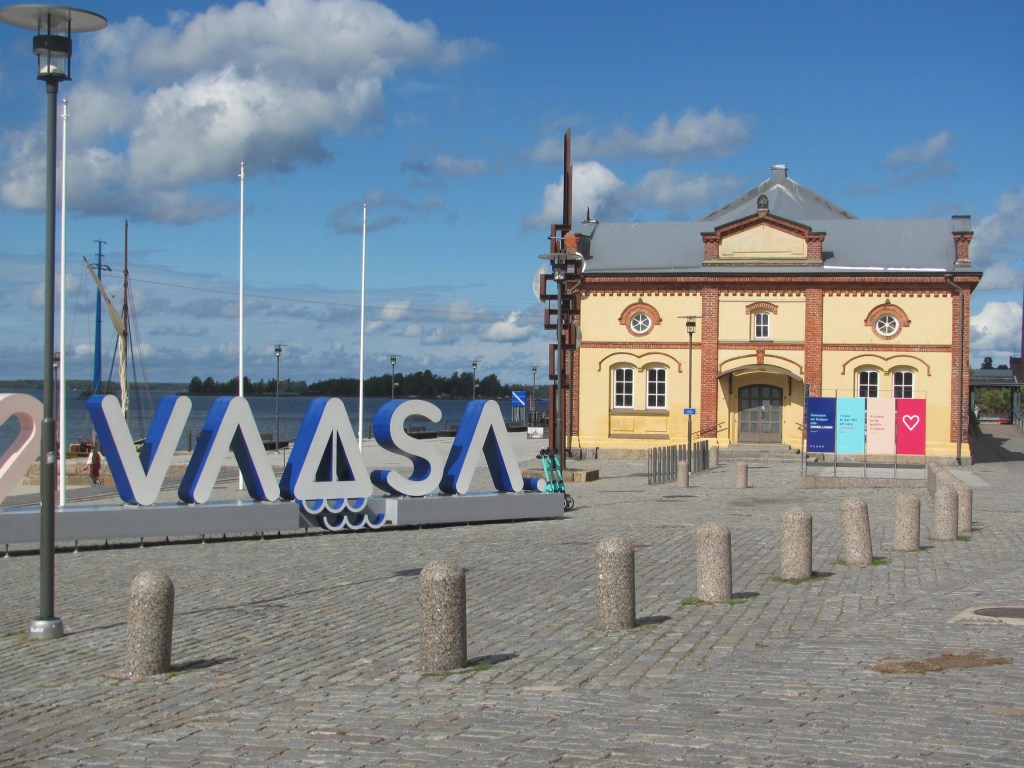
A ferry passes us.

We eventually arrive at the Österhamn harbour on the island of Arholma. There is a small wooden staging against a rock promontory in the south-western part of the bay which requires a stern anchor to hold the boat at right angles to it. It’s time to test our new stern anchor setup that we had fitted in Paradiset. I drop the anchor as we approach and allow the line to pay out. Luckily there is one other boat already there to help us moor the bow. Everything appears to work as it should, and before long we are secured to the staging with the anchor tape holding the stern fast. So far so good. But strong northerly winds are forecast for tomorrow, so that will be the test.

Stern anchor, Scandinavian style.

“I still haven’t found the marmalade”, I say the next morning. “I am not sure I can go without my toast and marmalade.”
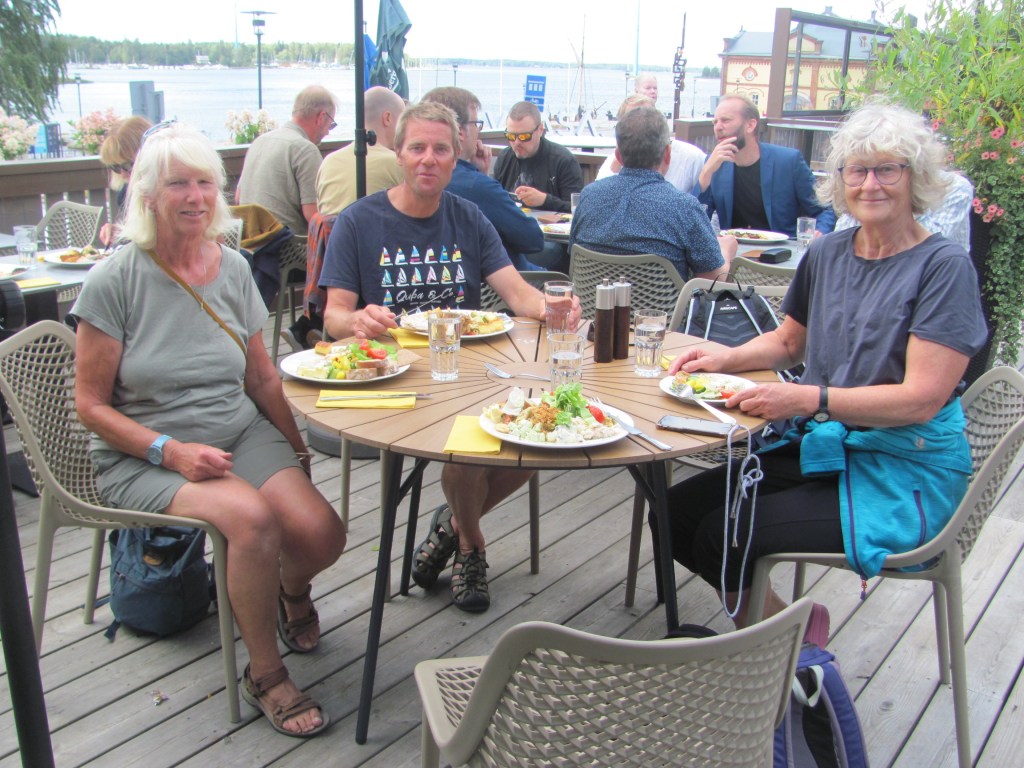
“It’ll be there somewhere”, says the First Mate. “Just keep looking.”

We set off to explore the island. There are no cars, and the main forms of transport appear to be unimogs, bicycles or feet. We choose the latter.

Lush fields.

A footpath leads through lush fields decorated with oversize dandelion flowers. Before long, we arrive at the small cluster of buildings on the western side of the island that constitutes the ‘capital’. Only the community-run general store is open. We buy some bread and spreads to make lunch. As we pay, I ask the till lady if there is anywhere else on the island that is open.

Arholma general store.

“They open on midsummer’s day”, she says brightly. “It’s only three weeks now. We are looking forward to it.”
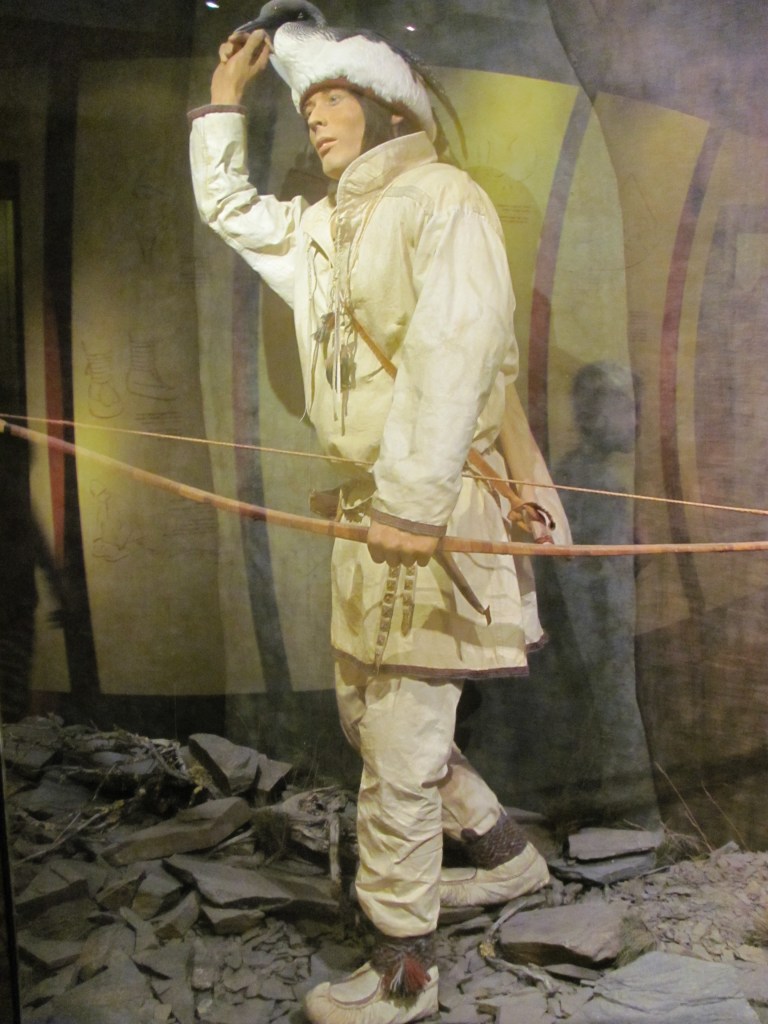
“Why don’t they open earlier?”, I ask.

“There are so few people around, that it isn’t worth it”, she tells me.

We sit in the sun at one of the picnic tables near the small ferry quay, and make our lunch. The small ferry from the mainland arrives and two backpackers and a small family get off. I can see her point.

It has been a puzzle to me for some time now that even though the weather can be beautiful and sunny in May and September, the holiday season in Sweden is really only for the month of July, and shops, restaurants, cafés and museums are mostly closed outside that time, especially in the archipelago. Surely, I think, if they spread the season more, it would be to everyone’s advantage – local people on islands would have more of the year making an income from holiday-makers, and holiday-makers would have a more relaxed time without the intensity of crowds.

“Traditionally, it used to be that everyone had four weeks’ holiday in July with factories and offices closing for the whole period”, says Birgitta, our non-resident ‘go-to’ for information on matters Swedish. “And if you could, you would include the Midsommar weekend in your leave. Then schools start early to mid-August.”
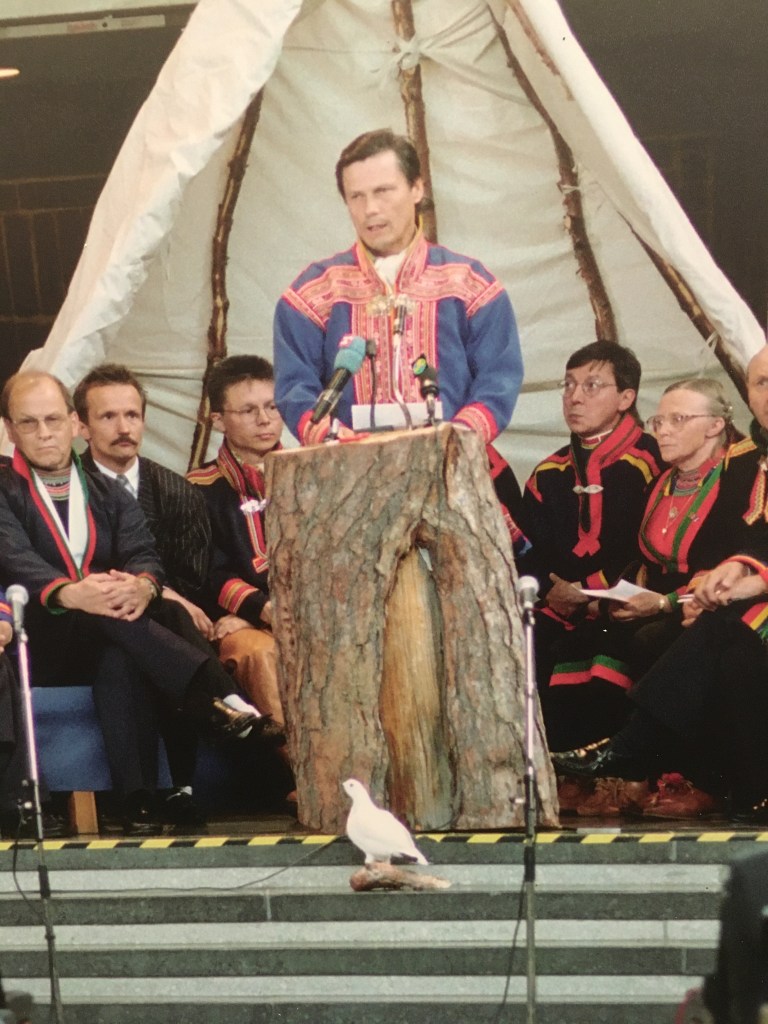
“It does makes sense”, says the First Mate.

After lunch, we walk through the forests to the northern end of the island where the Arholma Battery is located. Preparations are underway for a wedding there the next day. We climb to the top of a rock outcrop to find the remnants of an early warning system to detect incoming missiles and a large 10.5 cm Bofors gun pointing eastwards out to sea.

Gun disguised as a rock.

We learn later that it was built in the 1930s as part of a chain of coastal fortifications to protect the approaches to Stockholm, and was in service throughout the Cold War. In the 1960s, a cavern was carved out of the rock underneath the battery to house a garrison of 110 soldiers. In the 1990s it was decommissioned, and in 2008 made into a museum and national monument.

“It’s such a beautiful view”, says the First Mate as we sit on a bench and take in the scene. “All this military stuff seems a bit out of place amongst it all.”

“And it always seems that the Russians are involved in some way”, I say. “I wonder if the Swedes are wishing they had kept the battery what with the current situation in Ukraine?”

We walk down the path again, and find the steel gates of the entrance to the underground cavern. At the end of a dimly lit tunnel two people dressed in Gothic style are setting up music equipment.

Entrance to the Arholma Battery bunker.

“We are getting married here tomorrow”, the girl explains.

Surely there must be nicer places to get married than in a dark musty cavern left over from the Cold War, I think to myself.

“It’s cool”, says the male, in response to the look on my face. “And the acoustics are amazing in the big room. Lots of people get married here.”

We wish them all the best for their big day. On the way out I say hello to one of the guests dressed in army uniform and wearing a gas mask. He doesn’t respond.

Wedding guest?

“Come on”, says the First Mate. “Can’t you see that it is only a model?”

“Is it?”, I say. “It’s very realistic.”

On the way back, we stop off at the church. Apparently, the islanders clamoured for one, so in 1920 a former mission house was moved from central Sweden to Arholma.

Inside Arholma church.

An interesting feature is the use of old mill-wheels as front door steps.

Old millwheels for doorsteps.

A little bit further on is the Arholma beacon. A man walking his two dogs stops to talk to us.

“It was built in the 1760s from stones from the castle on a nearby island called Lidö which the Russians had destroyed during their pillage in 1719”, he tells us. “Apparently Peter the Great wanted to end the Great Northern War between Sweden and Russia, so he sent a fleet of ships to pillage the islands of the archipelago to force Sweden to capitulate. Many of the buildings on the islands up and down the archipelago were razed to the ground. But the Swedish resisted and actually managed to destroy 70% of the Russian fleet and stopped them from attacking Stockholm.”

One of the dogs jumps up on the First Mate, growling.

“He’s afraid of strangers”, he says, hauling the dog back with its leash. “But he won’t hurt you. Anyway, nowadays the beacon is an art gallery open during the summer months. You can get to it up that little path there.”

Arholma beacon.

“You get a real sense of the brooding menace of Russia here”, says the First Mate on the way up. “The Battery that we just saw was aimed towards them during the Cold War, that Dalarö Skans fortress that we saw last year, Vaxholm Castle, the effects of the Russian Pillage. And do you remember the Naval Museum in Karlskrona last year? It was very clear from that who the enemy of the Swedish Navy was. I am not surprised they want to join NATO now after the events in Ukraine. Russia always seems to be the enemy, never an ally.”

“Of course, all the European nations have fought and scrapped amongst themselves for centuries too”, I say. “But Russia seems to be the only European country that hasn’t really moved on from that. They still have delusions of empire in an age when empires are a bit passé. The rest of Europe has realised that it is better to have peace and the prosperity it brings, and to trade between sovereign countries rather than trying to conquer and rule them. It makes you wonder if Russia had had a functioning democracy rather than all the power concentrated in the hands of one man, whether the war in Ukraine would have ever happened. But there seems to be something in the Russian psyche that wants autocratic rulers.”

“Well, they didn’t have a very good experience with democracy in the 1990s”, says the First Mate. “So perhaps that explains it.”

That night the wind blows strongly, and the stern anchor drags a little. Luckily I had tied an extra line from the stern to the staging, so the boat doesn’t move much. But it seems that the anchor might be a little bit light. It was only a small one that had come off our previous boat. We’ll need to buy a larger one somewhere.

Extra lines to survive the strong winds.

The next day we decide to walk along the little lane to the top of the bay, where the remains of a wreck are marked on the charts.

The smell of grilled meat wafts over from one of the houses nearby. People are sitting around a table in the garden, while smoke drifts lazily from a barbecue in the corner. The owner of the house sees us and comes to talk to us.

Chatting with an islander.

“Where are you from?”, he asks.

We tell him we are from Scotland, and that we have sailed from there, but not all in one year.

“Ah, are you from that boat over there?”, he asks, pointing across to the other side of the inlet where Ruby Tuesday lies tied up to the jetty. “I saw you come in and tie up, and wondered where you might be from.”

Some of the people in the garden look more Middle-Eastern than Swedish.

“We are just having a barbecue for some friends of friends of ours who live on the island”, he explains, following our gaze. “They are from Afghanistan, and we thought it might be nice to show them a bit of what Swedish island life is like.”

“It must be different from life in Afghanistan”, I say.

“It certainly is”, he responds. “And they are finding it quite cold here.”

“We’ve come to see the wreck over there”, says the First Mate.

“Ah, that’s the wreck of the Apollonia”, he answers. “She was a square-sailed schooner that was built for one of the island residents back in the 1850s. In those days, Arholma was quite a centre for shipping, and they say that at one stage, there were so many schooners packed into the inlet that you could walk from one side to the other over the boats without getting your feet wet.”

“It’s hard to believe that now”, I say.

“Yes, it is, isn’t it?”, he says . “The Apollonia was 30 m long, made of pine, and carvel built, which means that the planking was butted edge to edge rather than clinker built with the planks overlapping. Caulk was used to seal the joints.”

All that’s left of the Apollonia.

“What sort of boat was she?”, I ask.

“During  her life she mostly carried timber products from Sweden to Germany. But eventually she started leaking through the gaps between the planks where the caulk had deteriorated. One solution to this in those days was to tip buckets of straw and sawdust underneath the boat where the leak was, and the flow of water through the leak would carry this mixture to block it. They could get a few more years of life out of boats in this way. But in 1883, the leaks became too large to plug and it was becoming dangerous to sail her, so they towed her into here to decide what to do with her, and she never sailed again.”

We stand for a few moments looking at all that remains of the Apollonia. I try to imagine the hustle and bustle of the harbour that would have gone on in her heyday – horses and carts bringing sawn timber down from the forests, men loading the planks onto the boats, sailmakers mending the rips in the sails, others bringing the provisions from the farms to be stored below decks. It was poignant to think that all that was left of this busy way of life were a few spars slowly rotting away in this quiet part of the bay.

“I’ve found the marmalade”, I say in the morning. “It was hidden behind the coffee jar in the Beverages section. It’s not very logical to keep it there.”

“I must have put it there without thinking”, says the First Mate. “But I told you that you would find it if you just kept looking.”

The balance of the universe is restored.

Old Norse cosmology, Paradise, and a new mooring technique

Hagar, my elder brother, throws another log onto the fire in the middle of the room. The sparks fly upward and I shut my eyes against the swirling smoke. Outside, the snow falls gently in the long night, as it has been doing for the last two days now. But we are inside our hall, and have the fire to keep us warm and comfortable.

“Tell us again of the creation of the world, grandfather”, I say after we have eaten. “I never tire of hearing it.”

We gather round the fireplace in rapt anticipation.

“Well, the world was born out of the ice and snow of Nilfheim and the fire of Muspell, the two realms connected by Yggdrasil, the world tree”, intones the old man. “Where these two realms met, giants were formed. Two of these giants married and had three sons, whom they called Odin, Vili and Ve. First these three brothers created a home for themselves to live, which they call Asgard, the Home of the Gods, for they themselves were the first Gods, the Æsir and Vanir. When they had finished that, they created another land with flowing streams, fertile meadows, and many cattle, which they called Midgard. But they soon realised that there was something missing that could take care of this new land.”

“People”, interjects Hagar. “People were needed to look after it.”

“Yes, Hagar”, responds the old man. “People were needed. Then one day, Odin spotted two logs on the beach. He took them and stood them upright and breathed life into them. His brother Vili gave each log will and intelligence, while Ve gave them a shape. They had created the first humans, a man called Ask and a woman called Embla. At last Midgard had someone to care for it. All people are descended from them.”

“But aren’t there also other lands besides Asgard and Midgard?”, pipes in Helga, my sister.

“You are quite right, Helga”, says our grandfather. “There is Jotunheim, the land of the frost giants, Alfheim, the home of the elves, Nidavellir, where the dwarves lived, Vanaheim, the home of the Vanir, another tribe of Gods, and Hel, where people go if they don’t die bravely in battle. Those who do die bravely in battle are borne by the Valkyries to Valhalla, Odin’s hall in Asgard.”

“Don’t forget to tell them about Ragnarök”, calls our father Harald from the other side of the smoky room, where he is skinning a deer he had hunted earlier in the day.

“Ah, Ragnarök”, whispers the old man. “Ragnarök, the Twilight of the Gods. In times to come, when the World Serpent Jörmungandr releases its own tail from its mouth, there will be a mighty war between the Gods and the Frost Giants, the world will be destroyed by fire, then it will be covered by water, and all will die. Then, after some time, the Earth will be reborn.”

The fire dies down. Everyone is quiet, alone in their own thoughts of the doom to come. Perhaps we are already living through the last days. I shiver, then pull the furs around me tighter to keep warm and drift off into a deep sleep.

I am jolted back to the present by the sounds of children jostling to push buttons and parents trying to control their unruly offspring, while other adults look at the exhibits pensively and attendants maintain a watchful eye. I am in the Viking Room of the Swedish History Museum, and had let my mind drift trying to make sense of the complicated cosmology of the Old Norse religion. When we were growing up, our mother had brought a book on Norse myths and legends home from the library, and I had immersed myself in the world of Odin, Freya, Tyr, Thor and his hammer Mjollnir, Loki and the other gods – a terrifying world, yet rich in imagery from a people living in an environment very different to my own.

A graphic illustrating Norse cosmology in the Swedish History Museum.

I cycle back to the boat. We had sailed from Slagsta marina and Lake Mälaren the day before, and had travelled through the Hammarby canal and locks, and had tied up in Wasahamnen marina in the centre of Stockholm where we had stayed last year. It was nice to be back in the city again, this time with far fewer tourists.

Passing under the Danviksbron on the way to central Stockholm.

“How was the museum?”, asks Spencer that evening. “You were there most of the afternoon.”

“Great”, I say. “It was a trip back into the world view of the Vikings. It is fascinating how their concept of a god was quite different to that of Christianity here in the West. The old Norse gods were very human in many of their characteristics – they were born, they married, they had children, they farmed, they drank, they fought with each other, they tricked and lied, and eventually they died or were killed. They even kept cattle, fished and mined precious metals. In a sense, they were just more extreme Norsemen, with a few magical powers thrown in.”

“Yes, it is interesting how you humans manage to anthropomorphise your gods by attributing your own qualities and values to them”, he replies. “The Norsemen were basically farmers who engaged in a bit of raping and pillaging on the side, so their gods did all these things too, only more so. In fact it wasn’t really a religion in the sense that you think of it today – it was just part of their culture, totally integrated with all aspects of their lives.”

Spencer expresses his views on Norse cosmology.

“Yes, you can imagine how it would have developed”, he continues, warming to the theme. “Long boring winter nights, people huddled around fires in their long-houses, they must have loved to hear stories about beings like themselves who had experiences they could relate to, but were also stronger, faster, cleverer or nastier than themselves. It would have helped them to make sense of their universe. And then having the aspiration of reaching Valhalla by dying bravely in battle would have given them the mental attitude and sense of purpose to go out and pillage other lands during the long summer days. ”

“It must have required quite a change in mindset when Christianity came along”, I say. “A single eternal, omniscient, omnipresent and all-powerful God that transcends human limitations, instead of the line-up of imperfect, roistering, and sometimes unlikable, Norse gods that they had. Love one another, don’t kill, give all you have to the poor, that kind of thing. Quite different concepts.”

“I am not so sure about that”, says Spencer. “In many places the conversion to Christianity in Scandinavia was quite bloodthirsty in its own right. In the 1080s, for example, Inge the Elder, a king of Sweden, set fire to a hall where pagan rituals were being practised and killed anyone who managed to escape from it, including his own brother. That doesn’t sound to me to be a very ‘Christian’ thing to do. Or perhaps it was.”

He does have a point, I think afterwards.

We cast off the next morning, heading out of Stockholm to the archipelago. We need to be in the Åland Islands in a couple of weeks’ time, so our plan is to find some nice anchorages to chill out in after the pressures in the last couple of weeks of getting Ruby Tuesday back into the water.

“Our neighbours at the marina said that there is a beautiful place to visit called Paradiset”, the First Mate had said over breakfast. “It’s a large lagoon between the islands of Ingmarsö and Finnhamn, and means Paradise in English. During the summer season, it is supposed to be one of the most popular sailing stopovers, sometimes so full that boats arriving late have no chance of finding anywhere to anchor. But at this time of year it should be almost empty.”

On the way to Paradiset.

It’s a beautiful sunny day, but there isn’t a lot of wind, so we have to motor for the first hour. Then a light breeze starts, just enough to fill the sails on a close reach, and we make a sedate two knots, relishing the quietness without the engine. But not for long. Eventually we have to change course to pass between two islands, and head directly into the wind, little that it is. On with the engine again.

We arrive in Paradiset to find only two boats moored to the small jetty and no-one anchoring. We drop anchor in the southern bay, open a bottle of wine, and survey our surroundings.

We arrive in Paradiset.

It is indeed a beautiful place. In the centre of the lagoon is a small island with a red-painted holiday cottage partially hidden by trees. The story goes that the old woman who lives there over the summer will shout out angrily to chase off any boat who has the temerity to anchor too close to her island and intrude on her privacy. At the moment the house looks unoccupied. Not that we are close to the island anyway.

“Did you notice that that dead tree over there looks like a lizard creature trying to climb out of the water?”, says the First Mate.

Lizard?

One of the other boats leaves, and a peace descends. We cook dinner, finish our wine, and sleep the sleep of the innocent.

In the morning, I wake early, make a cup of tea, and sit in the cockpit. No-one else is up; I might be the only human in existence. The sun begins its rise above the trees behind me, casting a warm glow over the old woman’s island in front of me and the forest behind. The water is completely still, not a ripple disturbs its surface. The lizard hasn’t made much progress.

Paradiset lagoon.

It takes my mind back to my schooldays – Mr Empson, our English teacher, bringing Wordsworth to life with his deep, rich baritone – lines about the city of London, but somehow they seem apt for this beautiful corner of the natural world.

All bright and glittering in the smokeless air.
Never did sun more beautifully steep
In his first splendour, valley, rock, or hill;
Ne’er saw I, never felt, a calm so deep!
The river glideth at his own sweet will:
Dear God! the very houses seem asleep;
And all that mighty heart is lying still!

There is a sudden splash off to my left, and a few seconds later a grebe emerges triumphantly from the water, a small fish in its mouth, and shakes its head dry. Two swans fly overhead, their wings wheezing at every beat like a machine in need of oil. They make a turn over the little bay on the far side of the lagoon and come into land, their feet angled upwards to brake their speed on the water’s surface like a barefoot water-skier. They settle gracefully into the water, their tails bobbing and elegant necks turning from side to side as if seeking applause for a perfect landing. Two swimming scoter ducks oblige them by looking at them in awe.

Grebe.

I muse on what Mr Empson might be doing nowadays. He must be an old man by now – he was just fresh out from teacher training when he taught us. To how many other people over the years did he impart an appreciation of language, literature and ideas? Is he even still alive?

An angry buzzing sound wakes me from my reverie. Two bees have flown into the cockpit enclosure and are trying to find their way out again. I try to encourage them to leave with a towel, but it only serves to anger them more. Eventually they find their own way out and fly back to shore. But they are not the last – over the day many more arrive and duly leave, leaving us to wonder what it is about the boat or us that attracts them.

Later I Google Mr Empson and find that he died in 2013. Even though I have not seen or heard from him since my school days, somehow I feel sad. Another little piece of my own past has gone.

I spend the rest of the day doing boaty jobs that have accumulated. Out come the solar panels from the storeroom to be plugged into the cables to the voltage controller and batteries. It is another bright sunny day, and soon we are generating enough power to keep the fridge going and to charge the batteries.

Generating power.

Then the stern anchor. The practice in Scandinavia in remote anchorages is to nose the bow of the boat as close as possible to the rocks at the side, while paying out a webbing line from the stern which is attached to an anchor that has been dropped further back. The line is then tensioned to keep the bow just far enough away from the rocks to avoid damage. It is kept on a reel bolted to the rails of the boat, which allows it to be stored much more compactly than the same length of rope. Previously, we had always anchored off in deeper water which meant using the dinghy to go ashore, so hopefully this technique will allow us to step off the bow directly onto the land. At least that is the theory. We will see.

Fitting the stern anchor reel.

It is fiddly work as there are several small screws and fittings that would make life difficult if they were to fall overboard, but through the judicious use of buckets and towels I manage to prevent that from happening, and eventually the reel is attached. All we need to do now is to find somewhere to test it.

Tummy upsets, noisy brakes, and running out of fuel

“How do you feel?”, says the First Mate, holding a glass of water and looking down at me worriedly. “You don’t look too good.”

“Ggggrrrrrkkkcch”, I say to the bowl on the floor next to the bed. “Not bad. But I’ve been better.”

I give her my best spaniel eyes look, a careful mixture of pretending to be brave but needing compassion at the same time. On one of the branches of the copper beech tree outside the window, two wood-pigeons stop cooing over each other for a moment to look at me pityingly, then resume their love-making.

It is two days before we are due to leave to head over to Stockholm and re-join Ruby Tuesday for the next stage of our Baltic odyssey, but instead I am lying in bed feeling sorry for myself, dry retching every ten minutes. It must have been something I had eaten the night before, but as the First Mate had eaten much the same, we still haven’t pinpointed what it was.

“I hope you recover”, says the First Mate. “It would be terrible if we have to cancel everything.”

“Gggggrrrrrrkkkcch”, I say to the bowl again.

“Well, at least it’s one way to lose weight”, she says.

As it turns out, I feel much better later that day, and the next day I am more-or-less back to normal. Whatever it was seems to have worked its way through.

We have decided to drive over to Stockholm this year, as we want to stay a few days with the First Mate’s family in Germany on the way, and there are things that we need to take to and bring back from Ruby Tuesday. Even more importantly, our carbon emissions are about half of what they would have been if we had flown instead.

“It’ll be nice to have the car when we do our provisioning as well”, says the First Mate. “I was dreading getting all our food back from the supermarket to the boat on our bikes.”

“Ah yes”, I say. “The Big Shop we had in Flensburg. I’ll never forget it.”

On our way to Europe.

Not long after we leave, the car develops an intermittent rubbing noise in the port-side rear wheel.

“I didn’t realise that port and starboard could be used for cars as well”, says the First Mate. “I thought they are just for boats.”

“Well, they are really”, I say. “But I am just refreshing my boaty language again.”

When we get to Germany the man in the local garage looks at the wheel. We take him for a drive to show him what it sounds like, but true to form there is no noise.

“Well, without hearing it, I can’t really say what it is”, he says. “It’s probably just a bit of rust on the disk. Look, you can see it there. It’ll rub off shortly.”

I explain in my best German that we have already driven all the way from Scotland so it should have rubbed off my now, but he doesn’t seem to understand. I probably said something rude without meaning to.

That afternoon we visit some old friends of the First Mate, Peter and Katerina, for café und kuchen. The conversation turns to the war in Ukraine.

“Last year, there was a feeling in Germany that German support of Ukraine by supplying them with heavy weapons was wrong”, I say. “It was much better to all get round a table and sort out the issues diplomatically. Is that still the feeling?”

“I think that it has changed a bit since then”, says Peter. “Of course, we would all prefer the war to end and not escalate, but the feeling now is that Putin is so brutal that the only way forward is that he has to be beaten soundly.”

“But for that, Ukraine needs help from Germany and other western countries”, says Katerina. “So most people would agree now that supplying these weapons is necessary.”

“It’s hard to believe that people are thinking that way in Germany now”, says the First Mate. “When I was growing up, we were all taught that all problems could be solved diplomatically, and that there would never be a need for war in Europe again. How things have changed!”

Sorting out the world’s problems.

We push on the next day towards Stockholm. If anything, the rubbing noise seems to be getting worse. I am starting to worry if we will ever get there, let alone get back. She’s not a new car any more.

On the way, we stop off at Hans and Gisela in Denmark, friends we have known since our days in the Philippines. We had visited them two years ago when we had sailed Ruby Tuesday up the fjord where they live. Hans works in Hamburg in Germany while Gisela works from their home in Denmark. Their sons and our son were born around the same time, so it is always interesting to hear what they have got up to since. We sit outside in the warmth of the late afternoon sun and drink coffee.

Coffee in Denmark.

“We can’t make up our mind where to live when we retire”, says Gisela. ”I quite like it here in Denmark as I have a lot of friends here, but Hans is not so keen as his friends are mostly in Hamburg.”

“Perhaps you should find somewhere totally different to live”, say the First Mate. “Then you can both start afresh and make new friends together.”

“Maybe we should think about buying a boat and sailing around like you are doing”, say Hans. “Or a campervan, or something like that.”

“Why don’t you come and join us on the boat in Sweden this year?”, we say as we leave the next day. “We have plenty of room, and you would be most welcome. You can see whether you like the lifestyle or not.”

“It sounds like a good idea”, says Gisela. “We would love to. We’ll give it some serious thought.”

We catch the ferry at Helsingor in Denmark across to Helsingborg in Sweden and drive through miles and miles of endless forest. We find an AirBnB near Linköping and stop for the night.

Leaving Helsingor in Denmark.

“It’s funny”, says the First Mate. “I had this idea that southern Sweden was just farmland stretching off into the distance, but we’ve hardly seen any. It’s just trees, trees and more trees.”

“I think the north of the country is pretty much the same”, I say. “You’d better get to like them.”

We eventually arrive at the marina near Stockholm where we had left Ruby Tuesday. She looks in good shape, and the tarpaulins covering her against the snow are just as intact as when we put them on.

Arriving at the marina in Stockholm.

“Look, there’s Spencer”, I exclaim, as we take the covers off. “He looks happy to see us. I am looking forward to more deep meaningful conversations with him over the summer.”

Spencer says hello.

Rolf, who kept an eye on the boat over the winter for us, arrives along with his wife.

“She’s fine”, he says. “Your boat, that is. But you won’t believe that we had late snow just three weeks ago, and everything was covered to a depth of 80 cm. But your covers did the trick, except at the back where the snow tended to lie rather than sliding off. You need to make that bit steeper next time.”

The next day, I load the folding bike into the car and drive to the local garage. They take the car wheel off to see what they can find.

“Look, you can see that the brake shoes of the parking brake are not attached to the backing plate”, he explains to me. “The shoes are not positioned properly, so occasionally they rub against the brake drum when you are driving. Hence the intermittent rubbing noise. It probably happened if the car has been standing for a while with the handbrake on and was released suddenly. We’ll need to fix the attachment mechanism and replace the brake shoes as they are almost worn through. We’ll need it for a day.”

It’s exactly what had happened. About two years ago, the handbrake had seized over the winter, and had suddenly freed itself when I had reversed the car. I cycle back to the boat, and then back the next day to the garage to pick the car up.

“I think we have fixed it now”, says the man. “I took it for a run this morning, and there wasn’t a peep. It’ll be fine now. Just don’t leave the handbrake on if you are going to let the car stand for a while.”

We spend the next week preparing Ruby Tuesday for the voyage. We have arranged for the engineer at the marina to replace the rubber cutless bearing that the propeller shaft rotates in. There is a lot of play in the old one and we are worried that the propeller shaft vibration might damage the seal that prevents water from entering the boat. He’s had since October to work on it, but has allocated the last two days before we launch to do it.

“It’s cutting it pretty fine”, I say to the First Mate. “What if something goes wrong?”

As it turns out, something does go wrong. The zinc anode that attaches to the propeller has gone missing. I put a new one on last year, and was hardly worn, but the engineer says that they will fit a new one. The new one needs to be adapted, so we have to postpone the launch for four days.

Propeller with its new cutless bearing.

“At least it will give us a chance to wax and polish the boat”, says the First Mate.

We spend the next few days applying wax to the sides and polishing it with a machine. It does make a difference, but it is patchy.

Polishing and waxing.

One of our neighbours stops for a chat.

“I think that it needs a good clean first with a gel-coat restorer”, he says. “That will remove all the grime and grease and bring up the true colour again. Then you need to apply polish to seal the pores, and finally wax to give it a shine.”

There’s more science in cleaning a boat than either of us realised.

“Yours is looking good”, says the First Mate, admiring his hull that he has been working on for the last week. “But you have somehow managed to get some paint on your head. Here, let me try and get it off.”

Before he realises what is happening, she has a cleaning cloth soaked in white spirits and is rubbing his bald head furiously.

“There”, she says triumphantly. “That’s got it off.”

Cleaning up our neighbour.

He’s not sure whether to be happy that he can go home to his wife paint-free, or to be unhappy at the invasion of his personal space by an unknown woman. Luckily he goes for the former. The next day, he is still talking to us, but I notice that he is wearing a hat, and keeps a discrete distance from the First Mate.

The day for the launch arrives. We awake early and work our way through the list of small last-minute jobs that have to be done. The crane arrives, and Ruby Tuesday begins her ponderous journey to the slipway. I am reminded of the giant Saturn rockets moving to the launch pads at Cape Canaveral. Well, sort of.

Slowly but surely.

She is lowered into the water, and I jump aboard to make sure that there is no water coming in anywhere it shouldn’t be. All shipshape so far. I start the engine, the First Mate jumps aboard, the lines are thrown to us, and we reverse slowly out into open water. We head for the temporary berth on the other side of there marina where we have arranged to stay for a couple of days to finish the preparation work in the water.

As we approach the entrance, the engine stops.

“That’s funny”, I say. “It’s never done that before.”

I start it again. We motor slowly into the marina and head for the berth. The engine stops again. There is a strong cross wind, and Ruby Tuesday begins to drift, powerless.

“What are you doing?” calls the First Mate from the bow. “You almost hit that boat. Keep the engine running.”

“I am not doing it on purpose”, I call back. “There’s something wrong with the engine. I hope that it wasn’t damaged with the cold temperatures over the winter.”

I manage to get it started one more time and enter the berth before it gives up completely. No amount of turning it over will start it again. But at least we are tied up safely.

Then it dawns on me. At the end of the previous season, I had turned the tap on the fuel tank off, and had forgotten to turn it on again this season. The engine had used all the fuel in the fuel line and filters, then had run out.

I need to use the manual fuel pump to bleed the system to get rid of any air that might have entered, and also to fill the filters and fuel lines back up again. Twenty minutes later the engine is running sweetly once more.

All engines need fuel.

“It’s lucky it didn’t run out a minute or two sooner than it did”, says the First Mate. “I wouldn’t fancy being blown all over the marina without any power. We didn’t even have the sails up.”

She has a point. It doesn’t bear thinking about. I make a mental note to add turning on the fuel tap to my ‘De-winterisation’ list. For some reason it wasn’t on there.