Crossing the Skagerrak, a blind alley, and a dodgy radio aerial

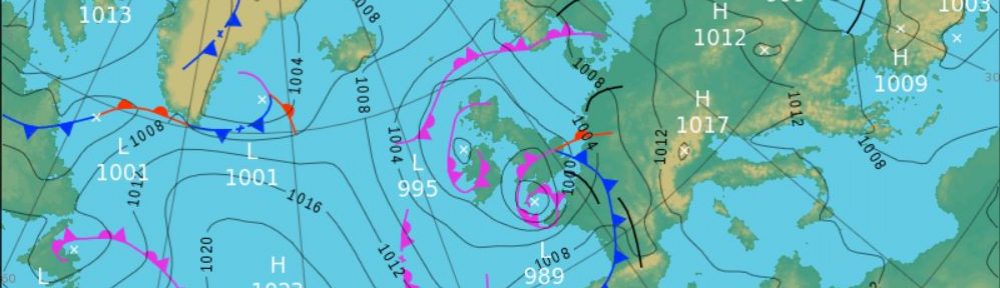
“We need to get an early start tomorrow”, I say. “The wind is from the north-west from about midnight, which is good for us as it will be on a reach and it should carry us more southards. The problem is that it is forecast to go then around to the south-west at around noon, which will then blow us north. So we need to get as much of the north-west wind as we can. I suggest that we leave at 0300 just as it gets light.”

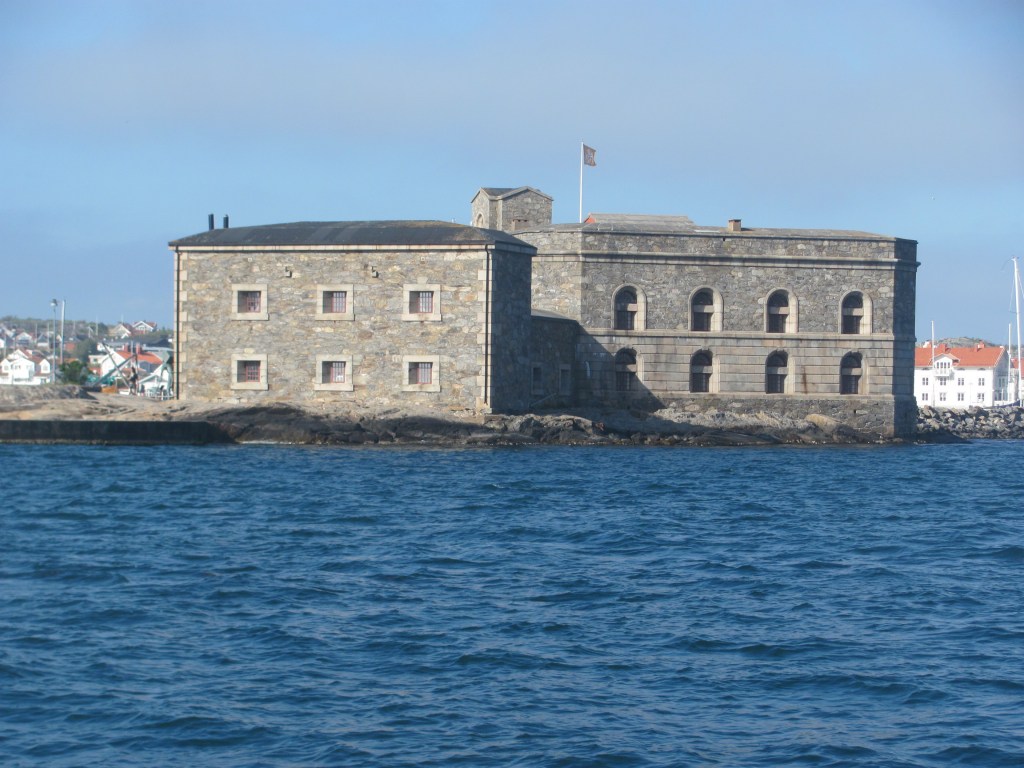
We are planning the crossing across the Skagerrak from Sweden to Norway, a notorious piece of water that is essentially open sea. Depending on where we make landfall on the Norwegian coast it could be a distance of 60 to 90 nautical miles. As we are then heading south along the Norwegian coast and around the bottom, we want to get as far south in our crossing as we can.

“Ugh, I don’t like these early starts”, says the First Mate. “But I guess we have to do it.”

“Once we get going, you can go back to sleep”, I say.

We edge our way out of the harbour in the half dark, and with little wind in the protected area of Strömstad, we motor clear of the rocks and skerries north of the Koster Islands before raising the sails. As forecast, the wind picks up and we sail on a fast beam reach. Looking back, we see the sun begin to peep above the horizon.
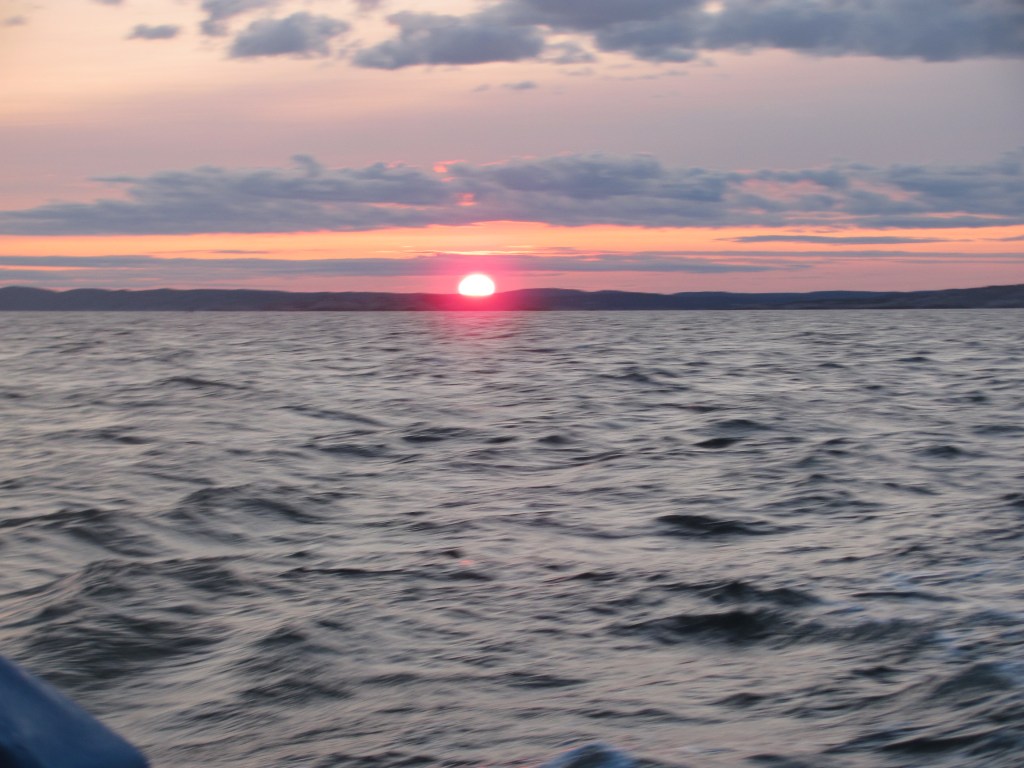
Sunrise over Strömstad.

“It’s times like this that I really love about sailing”, says the First Mate. “It’s so beautiful. Now, if you don’t mind, I am going to try and get a bit more sleep. Let me know if you need anything.”

“Just a cup of tea before you go”, I say.

The land disappears out of sight behind us, and Norway is yet too far to be seen. We are alone on the sea. The miles slip effortlessly under the keel, interrupted only by the passing of the ferry from Kiel to Oslo.

At mid-day, the wind drops to almost nothing. We consider starting the engine, but moments later, the wind starts again, this time from the south-west. Just as predicted.

“I’m always amazed how quickly these wind changes can occur”, says the First Mate, awake now. “You’d think that the change would be much more gradual than that, going around slowly. But it often happens all of a sudden.”

“I guess we must be at the boundary of two airstreams moving in different directions”, I say. “We would need to look at the wind map.”

As anticipated, the change in wind direction means that we will be pushed further north now. I do some quick calculations and work out that we should be able to make landfall at Risør, further north than I had hoped, but not too bad. By all accounts it is a pretty town.

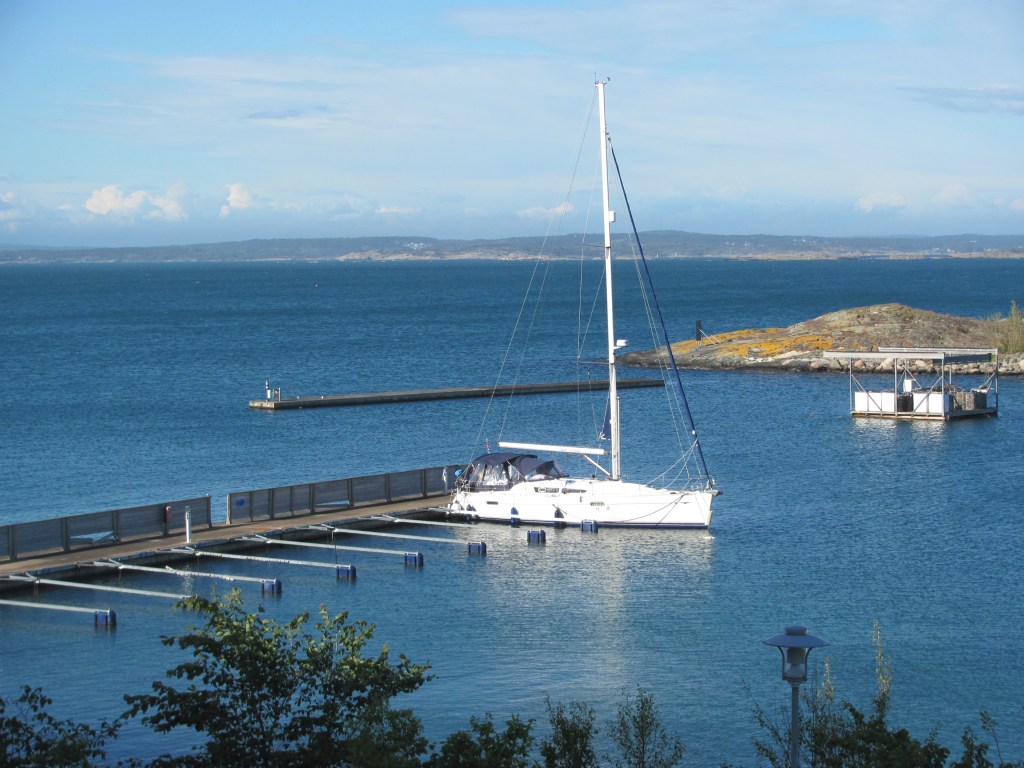
Soon we are edging our way through the islands and skerries guarding the entrance to Risør harbour and tie up on the outside of the L-shaped pontoon.

Tied up in Risør harbour.

“You need to report your arrival to the police if you have just come from Sweden”, the couple on the American-flagged boat in front of us tell us. “As well as the Customs. They came down to inspect us earlier in the afternoon. Luckily we had declared everything and paid the duty on it.”

We had heard that the Norwegian Customs were tightening up on the entry of foreign boats into Norway, and that it was highly advisable to be proactive and up-front in registering your arrival and declaring what you are bringing into the country. We had just heard a story of a British boat which had been heavily fined in the previous week for not completing their formalities correctly.

We had already declared online the small amount of alcohol we had in addition to the meagre limit we were allowed. I spend the rest of the day trying to phone the police in Oslo, but no-one seems interested. Eventually I reach the local police for the area.

“That’s fine”, the young-sounding officer on the other end says. “I’ll make a note of your arrival, and send you an email to confirm that you have entered correctly. Let me just find out if Customs want to come and see you. They are just in the next room.”

“No, they don’t need to see you”, he says on his return. “You are free to sail in Norway now. But don’t forget that if you want to leave your boat here over the winter that you need to ask them formally for permission after six weeks from the date of entry.”

“Well, that was all very easy”, says the First Mate, with a sigh of relief. “I thought they would at least come and search us, after what the Americans told us. We could have been real smugglers for all they know.”

Risør is a picturesque little town with all of its houses painted white. It has a strong maritime history, with many wooden boats being kept and maintained here, and an international wooden boats festival every August.

Risør.

We climb up to the Risørflekken, a patch of bare rock painted white, overlooking the town. The story is that it was created by Dutch sailors in the 17th century as a navigational aid, and is still visible several miles out to sea. Its white colour has been maintained ever since then.

“Not quite”, says the First Mate. “I read somewhere that they painted it black during the Napoleonic Wars to stop the English boats from seeing it.”

In any case, it gives a good view over the town and the harbour. We sit for a while and watch the comings and goings of the small boats.

Risør harbour from the Risørflekken.

“Did you see that there is a pub here called ‘The Peterhead’?”, says the First Mate on the way back.

I had seen it. Peterhead is a major fishing port in north-east Scotland, where we live, and where we had kept Ruby Tuesday for a winter during the covid pandemic.

“I asked the landlord how it came to be called that”, she continues. “Apparently it was because of the strong timber trading links between Risør and Peterhead in the 18th and 19th centuries. A lot of Norwegian pine was taken from here to be used for shipbuilding and house construction in Scotland.”

The Peterhead Bar in Risør.

The next morning, we head southwards from Risør. The wind is now from the north-east, and the Norwegian current is also flowing southwards parallel to the coast, so we have an effortless run down on the genoa only, passing Arendal, Grimstad and Lillestad. Past that, we have decided to take the Blindleia route, the inner route through the islands off the coast.

“The name translates as the Blind Alley”, I say. “There are a lot of nice anchorages on the way. The only thing is that it is very narrow in places, with the occasional sharp turn, so we will need to take it carefully. There is also a bridge at the beginning that has only 19 m clearance, which is a bit risky for our 18 m, but luckily we can join it a few miles further down. Better safe than sorry.”

“There seems to be a nice looking anchorage just close to where we join it”, says the First Mate. “It’s called Mortensholm. We could anchor there, chill out, and stay there the night.”

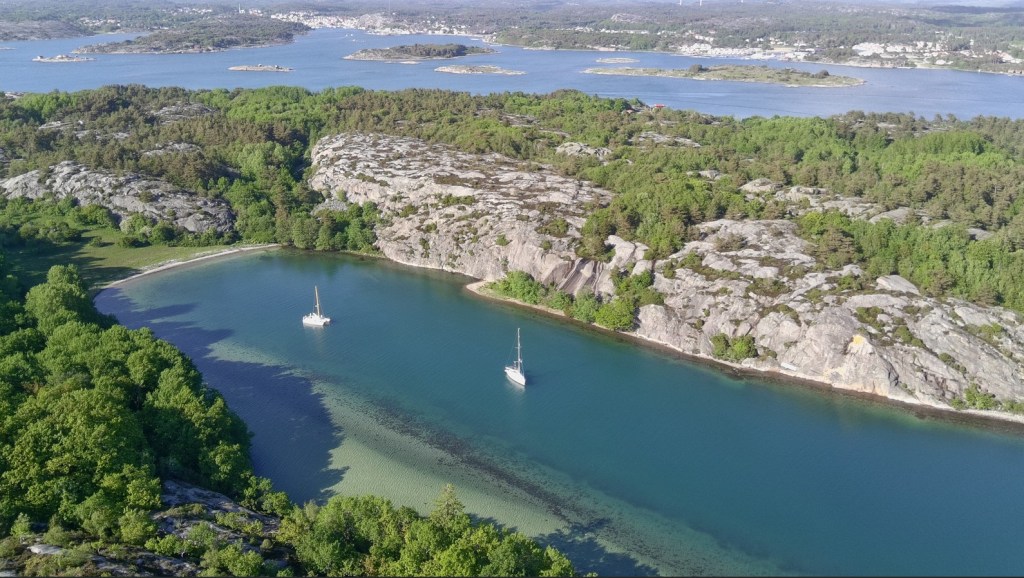
Mortensholm turns out to be a beautiful sheltered little inlet surrounded by steep rock faces and forest. Three or four other boats are already in there, and there isn’t much room for us, particularly as there is a large shallow area in the middle we must avoid. We find a place between two other boats and drop anchor. But our swinging around the anchor brings us very close to one of them, and the occupant glares at us, his privacy disturbed and his boat in danger. A small Jack Russell bounds onto the deck and barks aggressively.

As a clever forestalling manoeuvre, the First Mate engages the man in conversation. She’s good at that. It turns out that he has worked in Africa, and knows Zambia well. We have an instant rapport, and the imminent collision is forgotten.

“I was working for a mining company there as an engineer”, he tells us. “Diamonds. We were looking for diamonds. I was in South Africa, Namibia and Zimbabwe too. Eight years in total, but in the end I decided to come back. There’s something about Norway that I like. I bought myself a boat and I spend the summers just exploring here and there. If I like a place I stay a bit longer; if I don’t, I just move on. Charlotte here keeps me company.”

Hearing her name, the Jack Russell wags her tail in agreement.

“It’s funny, isn’t it?”, says the First Mate to me later. “I haven’t thought about Zambia for years, but here we have been talking about it in the last two blogs.”

In the morning, we set off southwards along the Blindleia, passing through narrow gaps only a bit wider than the boat and only a few centimetres deeper than our draft.
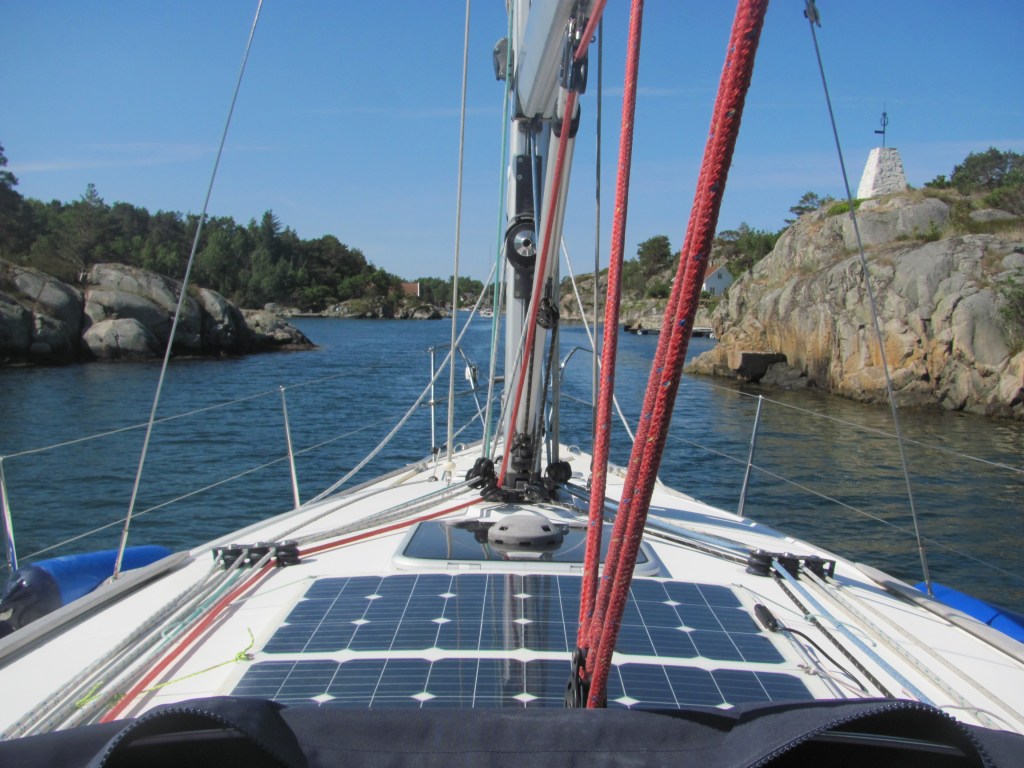
Gently does it!

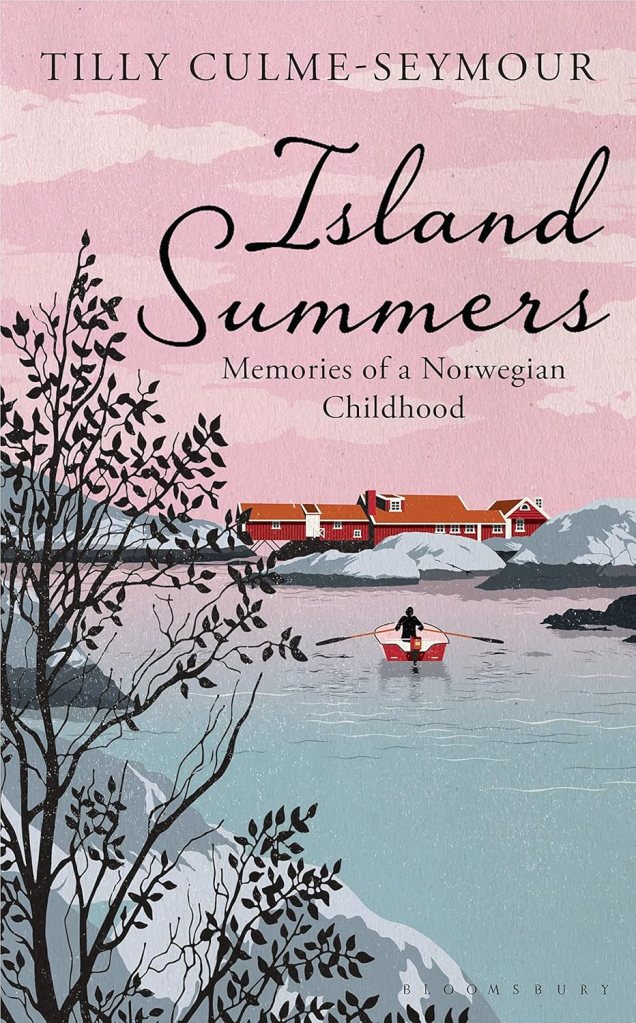
We pass the small island of Småhølmene, the focus of a book we had both read over the winter called Island Summers, by Tilly Culme-Seymour. In it the author describes how her grandmother, a descendent the Norwegian shipping family, Olsen, buys the island just after WW2 in exchange for a mink coat, and, in true Norwegian fashion, builds a wooden cabin on it for summer holidays. She and her family then come every summer to escape their hectic, albeit somewhat privileged, lifestyle in England and enjoy the peace and freedom that their Norwegian island offers, a tradition that continues for at least three generations. It’s a charming enough story, at least the first part, giving a glimpse of relaxed Norwegian summers enjoying nature, fishing, swimming, sunbathing, cooking and eating. However, it seems to lose its way towards the end when the author and her boyfriend decide to stay the winter in the cottage, but in reality are there only from March to May, hardly the winter, even in Norway.

Making our way through the Blindleia.

We continue to weave our way through the rocks and islands of the Blindleia, through tiny hamlets clinging to the banks on both sides, and eventually reach Mandal, the southern-most town in Norway, at the mouth of the Mandalselva River. Mandal built its wealth on the back of salmon fishing and timber trading in the 1700s, and still has a well-established, self-contented charm about it, with its white-painted wooden houses and beautiful golden-sanded beach.
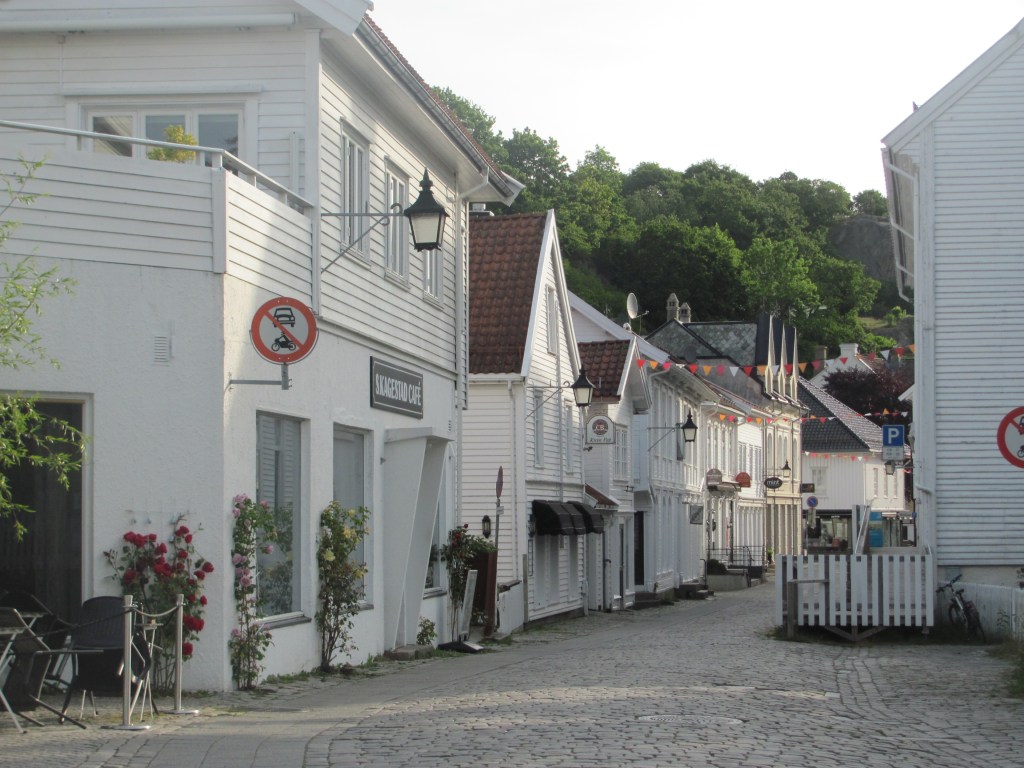
Main Street in Mandal.
Mandal beach.

We still have the infamous Lindesnes and Lista capes to negotiate. These two rocky headlands where the waters of the Baltic and the North Sea meet have been designated ‘Dangerous Sea Areas’ by the Norwegian authorities, as ferocious winds and high waves can build up suddenly, particularly from the predominant south-west. They are not to be taken lightly.

Luckily for us, the winds have gone round to the east, and are forecast to stay that way for several days. We need to make the most of them to go around the capes and as far as we can up the west coast before they turn.

In the morning, we set off from Mandal and head westwards, using only the genoa again and not the mainsail, due to the risk of the latter gybing. We had just heard a story of a boat the previous week which had gybed accidentally going around the Lindesnes due to a sudden change in wind direction, which had damaged its mast. Even with only the genoa out, we still make 7 knots, so we don’t complain.

In the event, we pass the Lindesnes and then the Lista without incident. The seas are choppy, but not dangerous.

Rounding the Lindesnes.

“Well, that wasn’t too bad”, says the First Mate. “After all I read about them, I was a bit worried that it was going to be pretty rough. But that was tolerable.”

We stop for the night at the small island of Hitra, and its beautiful harbour of Kirkehamn, so named after its iconic white-painted church standing on a small promontory jutting out into the harbour. As luck would have it, there is a wedding in progress, and the small marina is full of the motorboats of the guests. We have no option but to tie up on the far side of the harbour against some old tyres with no facilities or power.
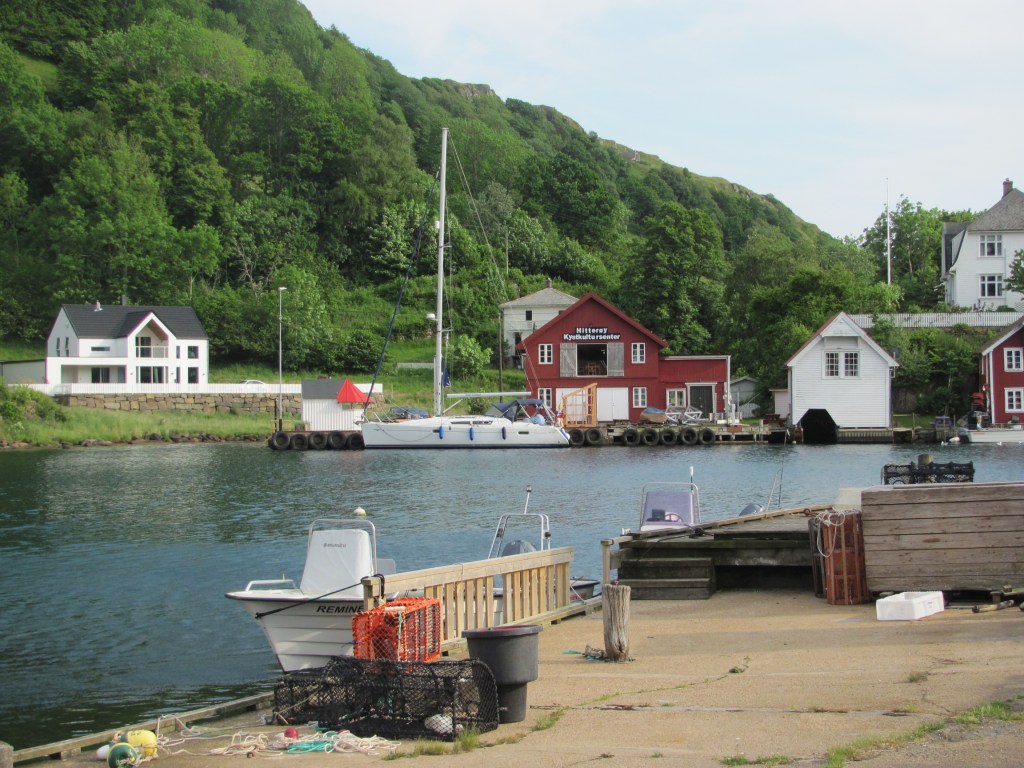
Tied up in Kirkehamn.

“It’s only for a night”, I say. “But we can walk around to the church and restaurant and have dinner there to make up for it.”

The iconic church in Kirkehamn.

In the morning, the easterly winds are still favourable but are forecast to change in a couple of days, so we decide to leave at 0300 to make the most of them and to sail all the way to Tananger, a distance of more than 60 NM.

“The last few days have been quite long sails”, says the First Mate. “I’ll be quite glad when we get to Tananger, so that we can chill out a bit. But it is great that we have finally managed to get to the west coast of Norway in good time.”
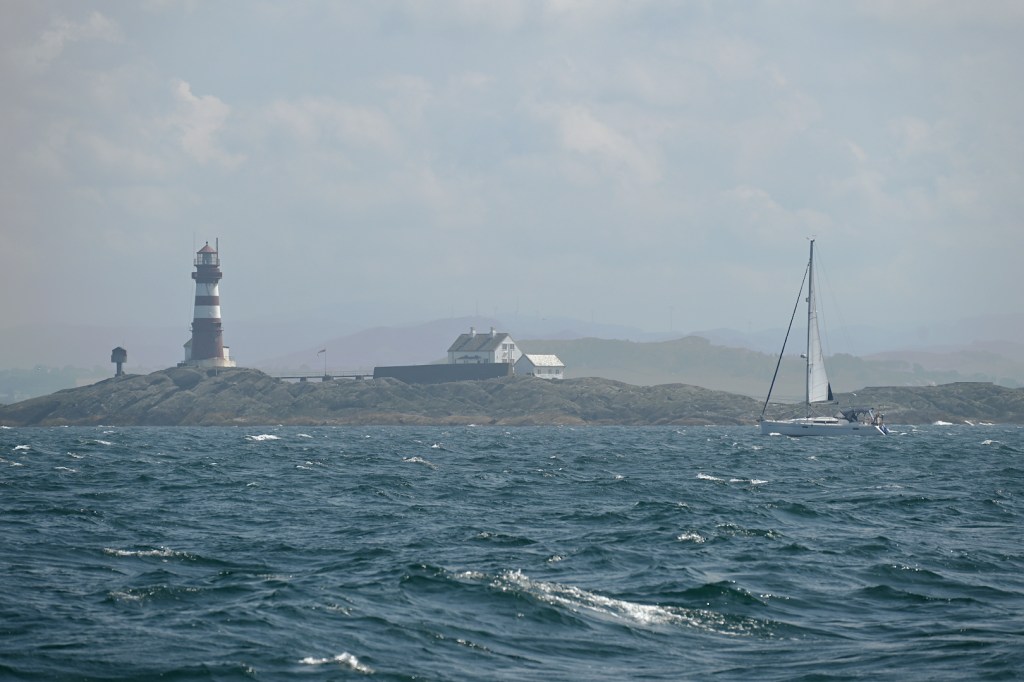
Ruby Tuesday approaching Tananger.

We make it to Tananger in late afternoon. The wind is strong and it makes tying up to the jetty difficult, but there are several helping hands and soon we are secure.

On the way in, I had noticed that the VHF aerial on top of the mast was swinging from side to side, even though it still seemed to be working. The next morning, I send the drone up to have a look and take some photos, but it is still not clear what exactly has happened.
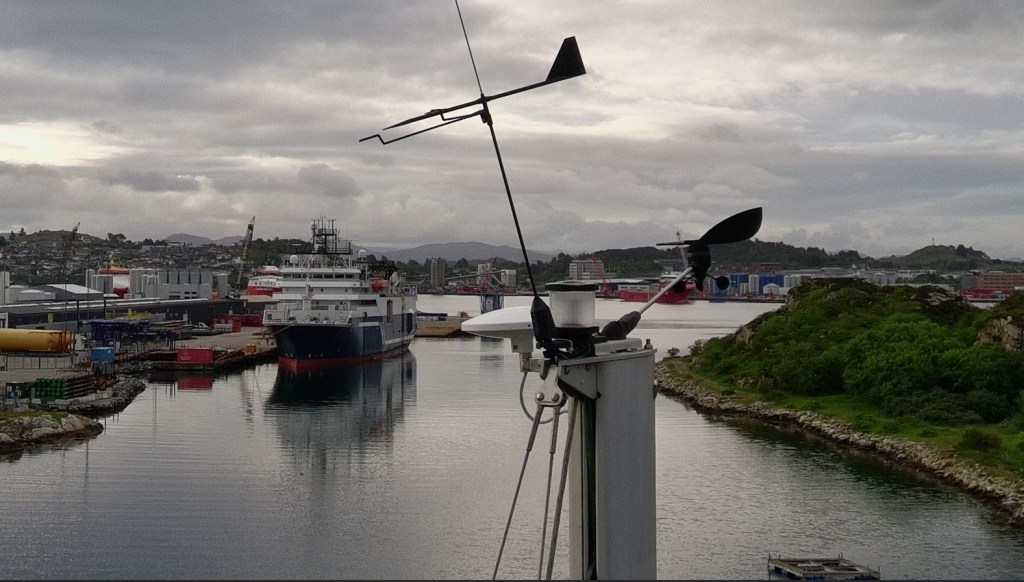
A wobbly VHF aerial.

“My guess is that the retaining nut on the bottom has worked itself loose”, I tell the First Mate. “But it seems to be still attached at least. We’ll have to find someone who can go to the top and have a look at it. I’m too old for that sort of thing.”

I phone every boat repair company in Tananger, but none have free time to be able to do it as it is the start of the boating season in Norway. Eventually, I find someone north of Bergen who says that he can look at it.

“Bergen?”, says the First Mate. “But we won’t be there for at least two weeks. I hope that it stays on until then!”

So do I.

Existential despair, cottage country, and a Norwegian culinary treat

“I enjoyed the Munch museum yesterday”, says the First Mate, taking a bite from her sandwich. ”It was good to see The Scream at last. It gave me some inspiration for my own painting classes in the winter. I hope that I can remember it all.”
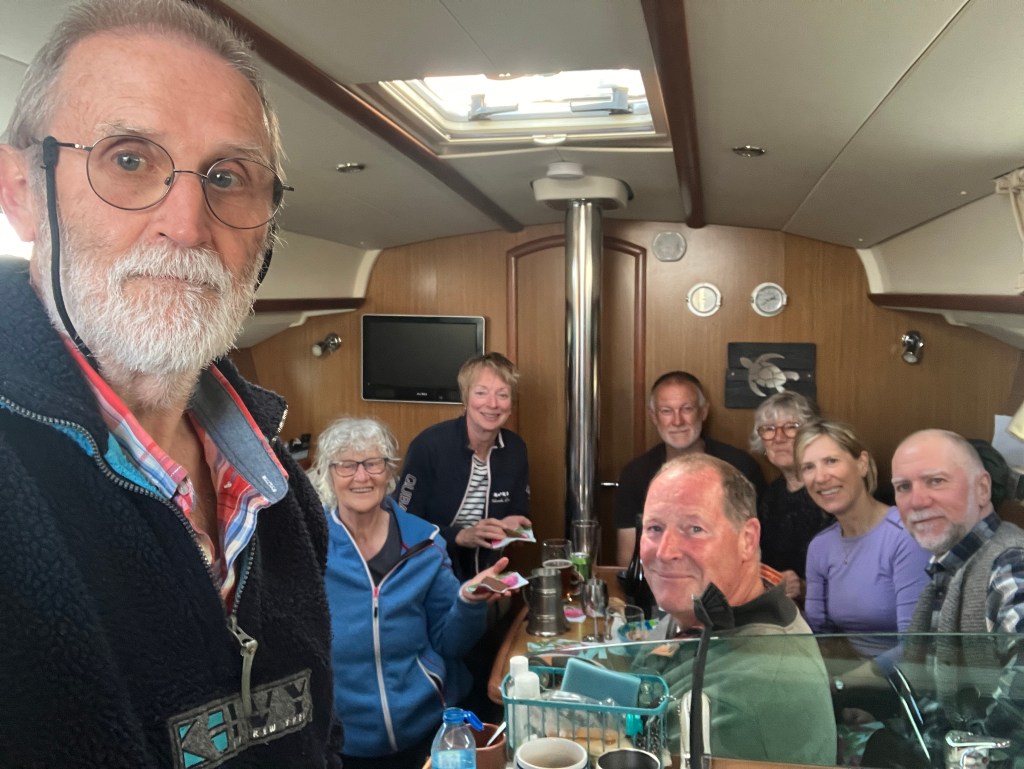
We are on the train to Gjørvik, two hours north of Oslo, to see our friends Ståle and Gunvor. Once clear of Oslo, we wend our way through deep valleys, lush forest, and fertile farms . It starts to rain heavily, the raindrops streaking the train windows. I reach for my coffee.

On our way to Gjørvik.

“Yes, he certainly taps into our deepest emotions of fear, anxiety and despair”, I say, recalling what I had read in the brochure we had been given. “All particularly relevant to today’s world. What I didn’t realise though was that he painted several versions of The Scream – I had imagined there was only one. And none of them are quite the same.”

“You certainly get the feeling that a lot of his work was based on his own personal experiences”, she says. “The early deaths of his mother and sister, and his own struggles with mental health, strongly influenced his depiction of illness, death and emotional turmoil. And the look of jealousy on the faces of the two women in Dance of Life. You could almost imagine that he, as the man, was enjoying it.”

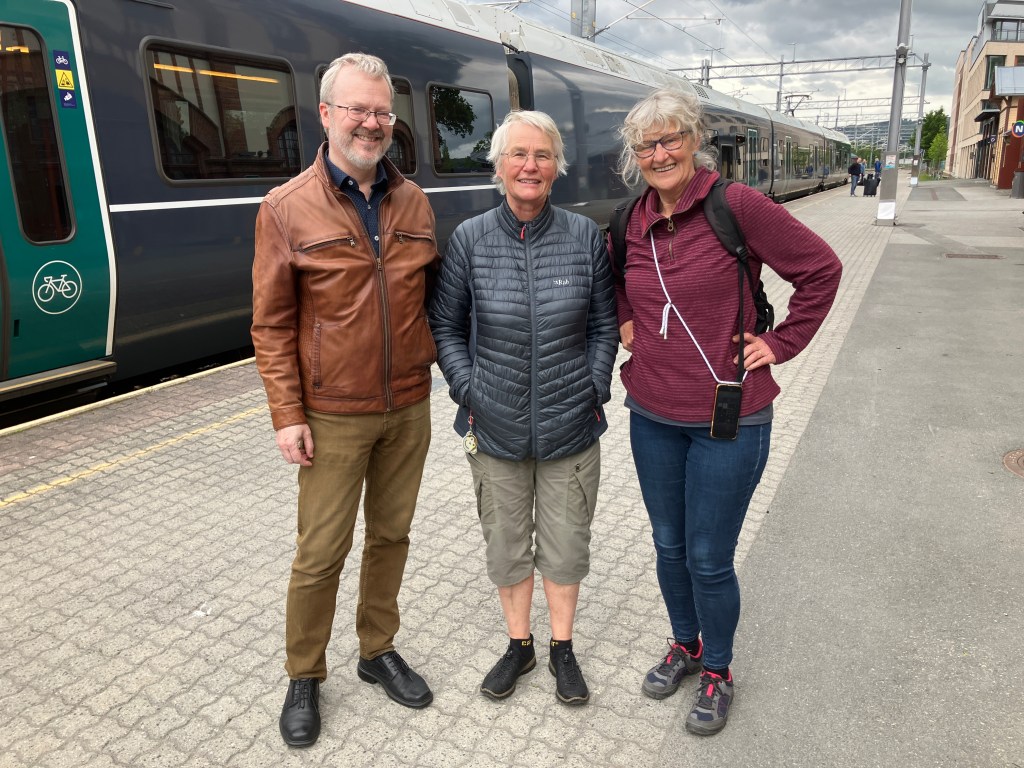
We reach the station at Gjørvik. Ståle and Gunvor are there to meet us. We had first met them in Zambia in the late 1980s, when we had all arrived at the same time to work on various development projects – building roads, teaching, administration, agricultural research – coincidentally all funded by the Norwegian Government. We had somehow lost touch with each other over the years, but now that we are retired and have the time, it is nice to catch up with old friends again.

Ståle and Gunvor meet us.

They look much the same as we remember them from 30 years ago.

“Well, apart from turning rather grey”, says Ståle. “And suffering the ignominy of new hair sprouting in senseless places!”

I know the feeling. Not to mention the teeth that have to be extracted, and the various aches and pains that seem to appear for no reason and take longer to disappear than they used to.

“Anyway, welcome to Norway”, he continues. “We have been preparing these last 1000 years for the retaliatory sea-raids out of Scotland after we did a little bit of looting and pillaging there. So we’ve been expecting you.”

Getting our own back?

Ståle is engaged in development and relief work as head of the Programme Department in an NGO in Gjørvik, while Gunvor processes building applications at the district municipality.

“We’ll pass my office on the way home”,Ståle says. “If you are interested, I can quickly show you around.”

We stop at a modern building not far from the centre of town. Inside, the walls are covered with posters of scenes in tropical countries and smiling happy people.

“It’s pretty much all funded by the Norwegian Government”, he says, as we tour the building. “Our work is on safeguarding children in developing countries, with particular focus on alcohol and substance abuse, mental health, children’s rights, and gender equality. We work through local partner organisations to support home-grown initiatives. A big part of what we do is to help with fund-raising for those initiatives.”

I ask him if he has any plans for retirement.

“There has been the odd hint that maybe I should start thinking about it”, he says. “But I haven’t risen to the bait yet. I love my job.”

We arrive at their house with a stunning view looking out over Lake Mjøsa, the largest lake in Norway.

Gjørvik and Lake Mjøsa.

“At 453 m depth, it is the fourth deepest lake in Europe”, Gunvor tells us. “In the winter, most of it can freeze over.”

“When I was young”, says Ståle, “I got my name in the local newspaper for ice-skating from one side to another. Unfortunately, I was seen as a reckless idiot rather than a hero. The thickness of the ice can vary considerably, and there is a real risk of falling through it. But I somehow survived to tell the tale.”

I shudder. The thought of being trapped under thick ice and not being able to find the entry hole before my breath runs out fills me with dread.

Over dinner, the conversation turns to economics.

Sorting out the problems of the world over the last 30 years …

“I’ve never really understood why everything is Norway is so expensive”, I say. “I suppose for Norwegians, though, you have the salaries to match, so things don’t seem so expensive to you? It’s only if you are coming from the outside that it does.”

“They were expensive because of the oil”, says Ståle. “We paid ourselves high salaries, even unskilled workers, because we could afford to. But actually now, salaries are levelling off so people are now starting to find things more expensive. It’s really only alcohol that is terribly expensive.”

“Yes, we are still trying to get to grips with the very strict rules that Norway has on the amount of alcohol you can bring in”, says the First Mate. “Do you think that it has any effect?”

“I know it is strange that we are so draconian now after the reputation the Vikings had for drinking”, says Ståle. “But I think that it’s helped to reduce a lot of family and social problems we used to have through alcohol abuse. Whenever they are asked, the public generally support the policy for that reason.”

We sleep that evening in a small cottage belonging to Gunvor’s niece, right by the shore of the lake. It’s idyllic. Particularly an early morning walk and watching the sun rise over the hills on the far side of the lake.

Lakeside retreat.

“I thought that we could drive to Lillehammer today”, says Ståle. “That’s where they hosted the Winter Olympics in 1994. There is an open-air museum there with a collection of houses from all over Norway and from different eras, which you might find interesting. Maihaugen, it is called. We can also have lunch there.”

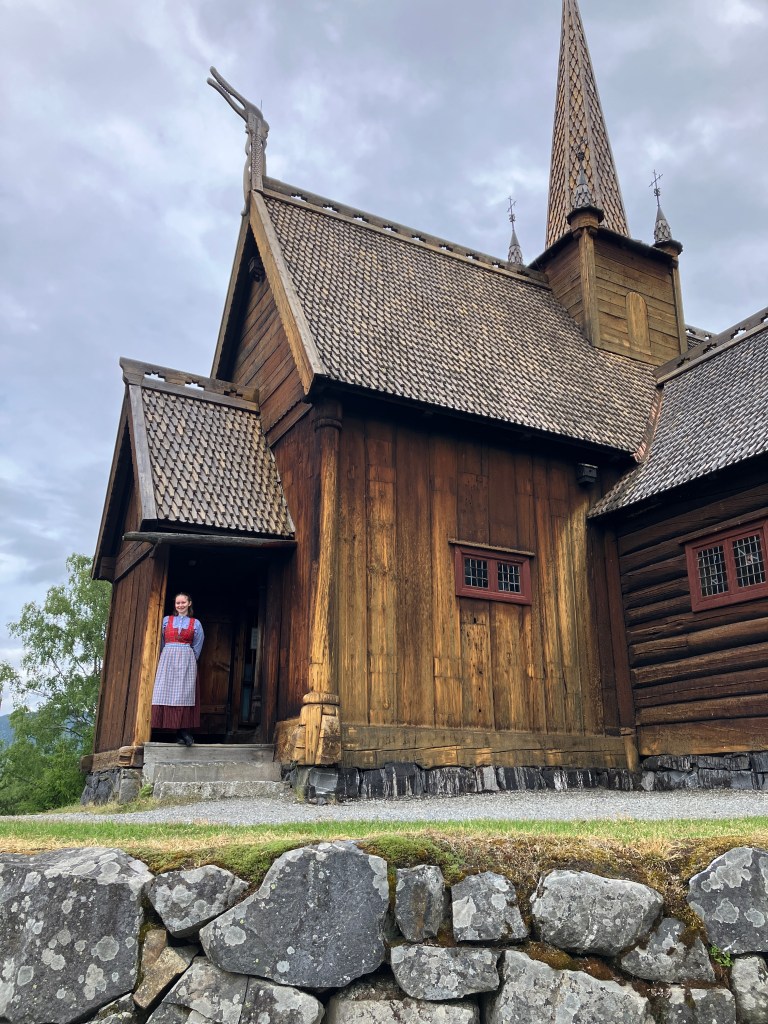
After lunch in the museum restaurant, we find ourselves in front of an impressive-looking wooden church.

The Garmo stave church.

“It’s called a stave church”, a museum guide dressed as some sort of friar explains. “Due to its method of construction. Strong wooden posts rise vertically to give the structure strength, with lighter boards filling in the gaps between. The original church was built in the early 1200s in Garmo. It was dismantled in 1880 and transported here in 1921. The altarpiece and pulpit are both from the original church.”

Further on, we watch a woman making soap the traditional way.

“It’s amazing how you can mix fat and wood ash to come up with something that cleans”, says the First Mate.

Making soap the traditional way.

“Did you see this house over here?”, calls Gunvor, pointing to a well-appointed, but distinctly suburban, house. “It’s Queen Sonya’s actual house. Don’t you remember that you met her in Zambia?”

There had been a royal visit by the then Crown Prince Harald and his wife Sonya to all the Norwegian-funded projects in Zambia. I had been asked to give a talk about the work that we were doing, and I distinctly remember standing in the middle of a field trying to explain to the royal entourage what agroforestry was all about. Later we had had lunch along with them, along with all the other Norwegians there. Sonya herself had been born a commoner, albeit a relatively well-to-do one, and the young couple were obviously very popular. More than a few tears were shed as they were taken to the small airport and their plane disappeared into the African skies towards Lusaka.

“The couple kept their courtship secret for nine years”, a panel in the house tells us. “In those days, royalty weren’t permitted to marry commoners. But Harald told his father that he wouldn’t marry anyone if he couldn’t marry her. Faced with the threat of his royal line dying out, his father agreed. Harald eventually ascended the throne in 1991 to become King Harald V of Norway, with Sonya becoming his queen.”

“She’s just repaying you for that interesting talk on agroforestry in Zambia you gave her in 1990 by inviting you into her childhood home”, jokes Ståle, taking a photo of me standing outside the house.

Outside Queen Sonya’s childhood home.

I am not so sure. I had always thought that I had bored them with my enthusiastic but technical talk of ecological farming. But who knows?

“I thought that we could drive over to our cottage west of here today”, says Gunvor the next morning. “Actually, my sister and myself inherited it when our father died, so we share it with them. They are there at the moment doing some tidying up work, so you’ll meet them.”

“We Norwegians love our cottages”, says Ståle. “They tend to stay in the family, passing from one generation to the next. Mostly they are quite basic with limited facilities, but offer a respite from the pressures of city life. I suppose it is all this getting back to nature thing. I actually have a cottage myself on the west coast on an island near Trondheim that I inherited from my father, although we hardly ever use it. We don’t even rent it out as it is more hassle than it is worth to find housekeepers and so on to look after it.”

It’s not all that different from the Cottage Country area in Ontario, Canada, where we had lived for a year, or, for that matter, the ‘bach’ culture in New Zealand, where I grew up. When we were children, my parents had had a small cottage at a local beach, which we visited from time to time in the summer. Happy memories of sunny days, playing in the sand on the beach, swimming in the small stream that flowed towards the sea, and, of course, eating ice-creams. Eventually we sold it, as us children grew up and moved away from home.

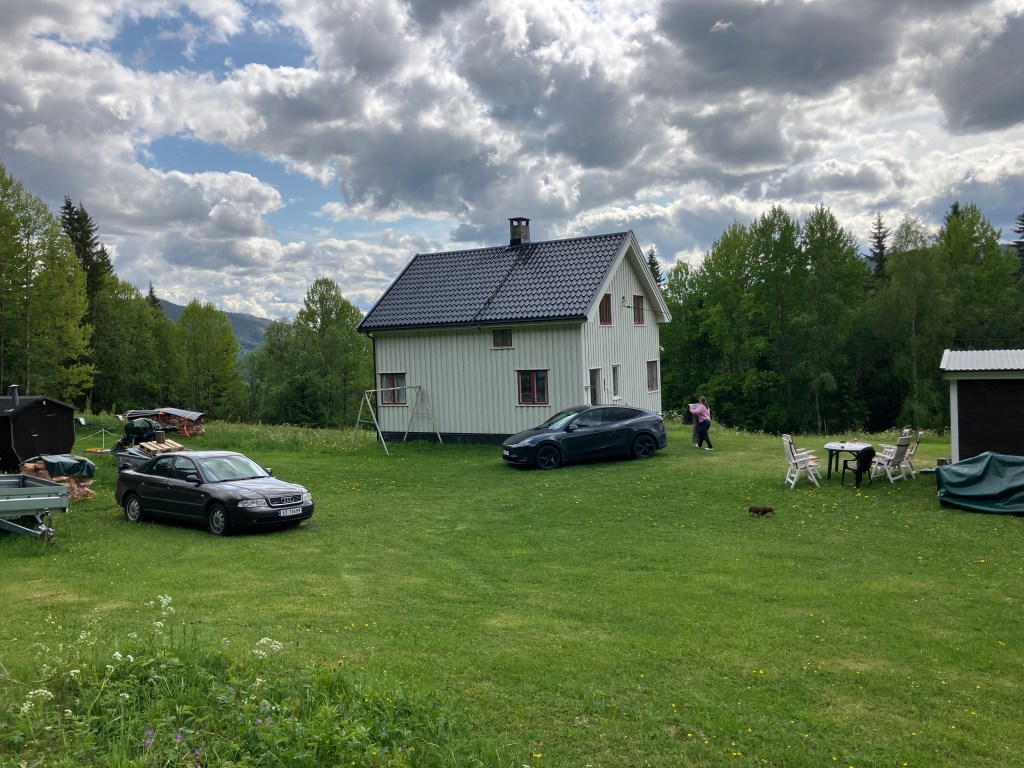
We drive up a winding, unsurfaced road, and arrive at a white-painted cottage in a large clearing in the forest. A ravine tumbles almost vertically from the mountain at the back, and an eclectic mix of agricultural implements lie next to a small shed.

The cottage in the mountains.

“They’re Gunvor’s toys”, says Ståle, following my gaze. “Being an engineer by training, she loves mechanical things that can do serious work.”

Gunvor’s sister Sigrid and her husband Ragnor, along with their small dachshund, are already there. They are also both engineers, working on military projects.

“We are sailors too”, Ragnor tells us over a lunch of waffles. “We used to have a boat and sailed it in the Skagerrak a lot, both in Sweden and Norway. In fact , I have always been fascinated by the idea of travelling by wind power. In my younger days, a group of us kite-skied from the south to the north of Greenland. It was an amazing experience.”

I am suitably impressed. It had never occurred to me that such a thing was even possible, let alone achieved.

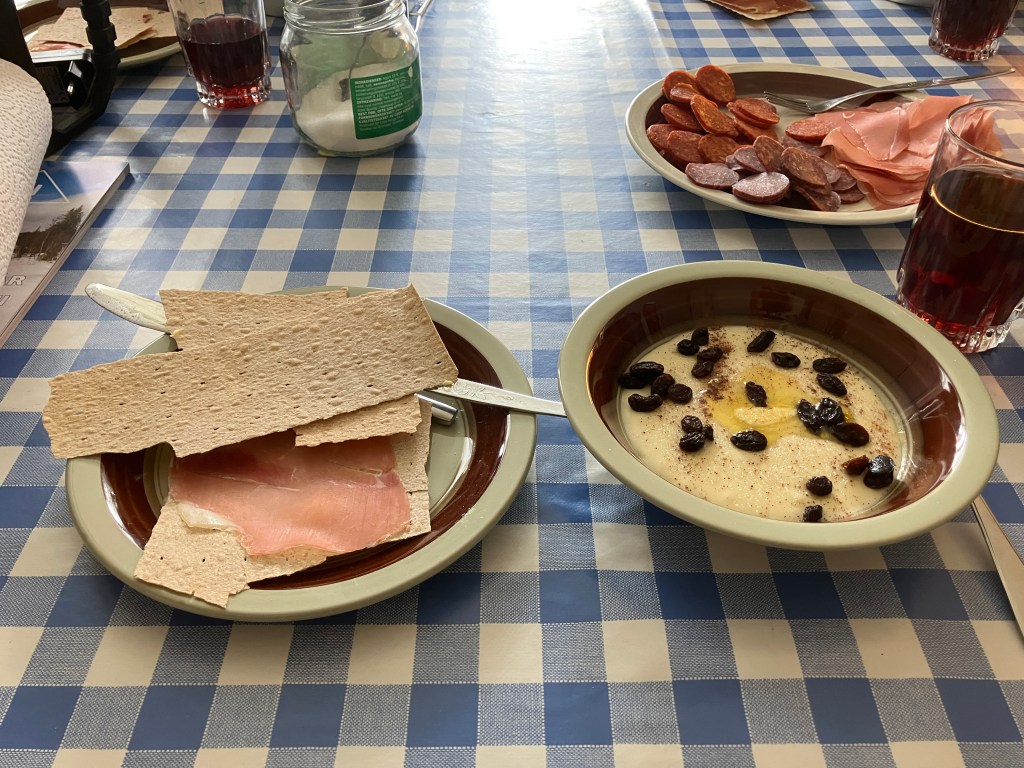
“Try some of this Rømmegrøt”, says Gunvor. “It’s a traditional Norwegian dish made with sour cream, milk, wheat flour, butter, and salt mixed into a kind of porridge. You can drizzle it with butter, and sprinkle sugar, cinnamon and sultanas on top. You normally eat it to accompany salami or ham and a flatbread. It’s quite rich.”

Tucking into the Rømmegrøt.

‘Quite’ is an understatement.

“Phew, that was absolutely delicious”, I say, after a second helping. “But I don’t think I can squeeze any more in without bursting.”

“Me neither”, says the First Mate. “I am going to have to diet for the next month.”

“When I was growing up, it was my absolute favourite dish”, says Ståle. “I couldn’t get enough.”

On the way back to Gjørvik, the conversation turns to our Zambian days.

“Do you remember that trip to Zimbabwe?”, asks Gunvor. “The time there was no flour in the whole of Zambia because the parts for the mill at Kabwe hadn’t arrived. We drove down to Harare to buy flour, a journey that took two days just to get there.”

“I do remember getting to the border at Victoria Falls on the way back”, I say. “What we didn’t realise was that there was a 10 kg limit on flour that you could take out of Zimbabwe. Most of it was confiscated by the border guards. I was heartbroken looking in the rear-view mirror at our precious flour bags piled up in a heap by the border post. Our whole trip was wasted.”

“You can be sure where that ended up”, says the First Mate. “I bet the border guards enjoyed their bread that night.”

The next day, it’s time to go. We need to catch the 0735 train from Gjøvik to Oslo to get back to Ruby Tuesday. The winds to make the 70 nautical mile Skagerrak crossing from Strömstad in Sweden to Risør in Norway are in our favour tomorrow, and we have to make the most of them of them or wait another week.

“We’ve really enjoyed our stay with you”, says the First Mate. “It was wonderful to catch up with you both again after all these years.”

“It’s somehow quite special, isn’t it”, says Ståle. “I mean, that four young people could meet in a remote corner in the deep interior of Africa, that this led to two marriages that still are intact and thriving after 35 years, that we could meet and exchange memories half a life later in the deep interior of Norway, and that we are as comfortable in each other’s company now as we were back then.”

I couldn’t have put it better myself.

A deep ocean trench, an egg-shaped boat, and an anthropological adventurer

“Oh, no”, says the First Mate, peering through the binoculars. “”There’s someone else already there. I was hoping that we would have it all to ourselves.”

We had set sail from Smögen that morning. The other ‘foragers’ had already dispersed – Hekla had already left for Norway across the Skagerrak as they had to be in Bergen within a week to meet their daughter, Aloucia had decided to have a couple of days on Väderöarna (the Weather Islands) before doing the same, and Amalia was heading for Strömstad for a change of crew. We are meandering our way northwards so that we can visit our friends Ståle & Gunvor north of Oslo. On the way, we had seen a small bay that looked ideal for anchoring overnight.

“Never mind”, I say. “We can anchor a bit away from him and pretend he isn’t there. At least it isn’t packed with hordes of boats.”

We drop anchor in the middle of the small bay. It is idyllic. A steep cliff drops precipitously to the water on one side and lush green woodlands cover the gentler slopes on the other. Not a house, car, or even a telephone pole are to be seen. We could be the only people alive. Apart from the sole occupant of the other boat, of course.

Anchored in Otterön bay.

We cook dinner and bask in the warmth of the last sun of the day before turning in.

In the morning, I awake and lie watching the patterns of light dancing on the ceiling for a few moments. I make myself a cup of tea, and go out on deck. The other boat has already gone, and we are alone. A small gulp of cormorants fly overhead in formation, disappearing over the cliffs. Further down the bay, two swans come in to land, their feet swooshing across the surface before they settle down into the water, shaking their wings dry before folding them.

I pick up the book I am reading at the moment. It is the latest of John Gray’s, entitled The New Leviathans. Bleak but stimulating, he discusses the end of the liberal democracy era and its Enlightenment concepts of individualism, equality, universalism, and meliorism – the idea that things will always improve. Only 30 years ago, with the fall of the Soviet Union, the feeling in the West was that these ideas had triumphed over everything else, that liberal democracy was the pinnacle of human government, and that all that still needed to be done was to make every country believe that. Not so, says Gray – so many terrible things have happened since then, and the West and its freedoms are visibly crumbling with the rise of right-wing extremism, authoritarianism, and religious nationalism. The role of these new forms of government are more to protect citizens, or subgroups of citizens, rather than to protect basic freedoms. What’s more, he argues, all these -isms are just words with no substance; the reality is that it is just people going about making decisions for their daily lives. Such words, however, are dangerous as they make people do things in the name of ideologies.

“Breakfast time”, come the dulcet tones of the First Mate from down below. “I’ve put on the coffee. You can make the toast.”

I put down the book and go inside. Why am I reading this rather than enjoying the beautiful scenery around me, I ask myself. But I know I’ll continue reading it when the next chance comes.

After breakfast, we push on to the Koster Islands, about 12 miles west of Strömstad. We arrive at Ekenas, the main harbour. There is a strong current through the narrow channel in which the marina is located, and it is not easy to tie up. The neighbours help us, but somehow we still manage to nudge the pontoon and take a small chip out of Ruby Tuesday. I am not very happy.

“Come on”, says the First Mate, obviously seeing the look on my face. “Let’s go and get an ice-cream. That’ll cheer you up.”

Tied up at Ekenas on the Koster islands.

Near the ice-cream shop is a wooden building labelled the Naturum. It’s a kind of museum, and free. An enthusiastic woman greets us at the door.

“Welcome to the Naturum”, she says. “I’m your guide. I am studying ecology at university. You can learn all about the natural history of the Koster Islands here. Did you know they’re perched on the edge of the Norwegian Trench?”

We have to admit that we hadn’t heard of the Norwegian Trench.

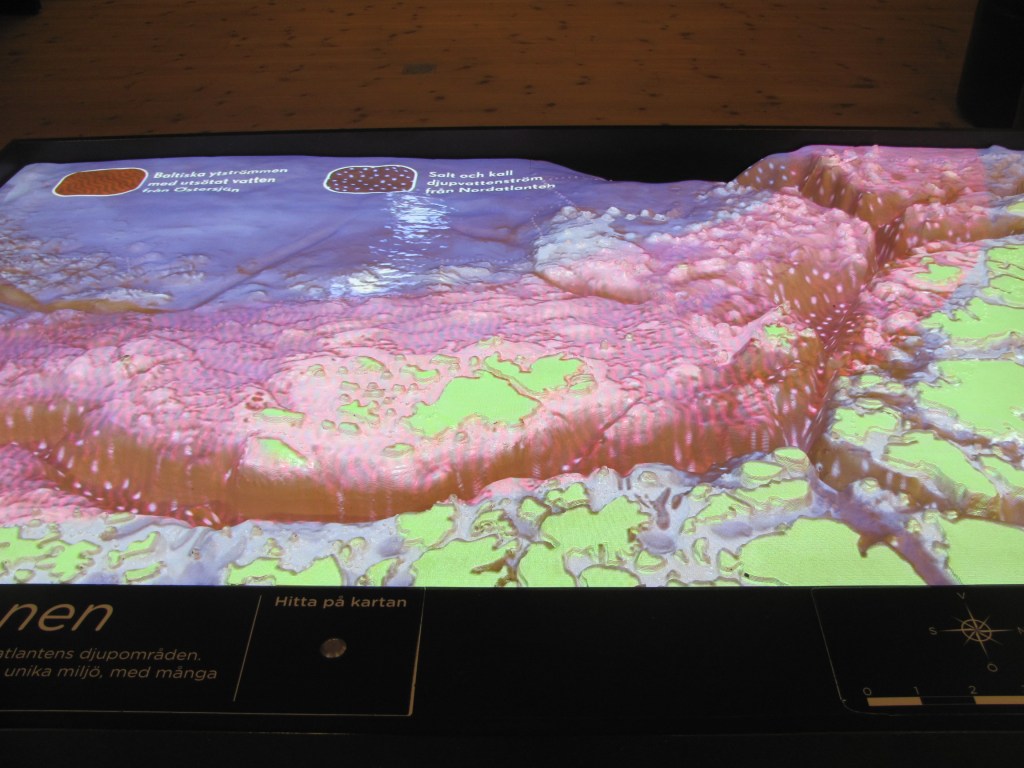
“It’s a deep trench that curves all the way around the south of Norway, up to the Oslofjord, then a bit down the west coast of Sweden just past the Koster Islands”, the Enthusiastic Ecologist explains, leading us to a scale model lit with pulsating lights. “It’s up to 700 m deep in places, and up to 95 kilometres wide. A current flows along it bringing water from the Baltic to join the Norwegian Coastal Current along the west coast of Norway. These pulsating lights show you the currents.”

Model of the Norwegian Trench and its currents.

We tell her that we are planning to sail across to Strömstad, and from there across to Risør in Norway.

“Well, you’ll be sailing over it both times”, she says. “In fact, the deepest part of it is actually just off Risør. Keep an eye on your sonar – the edge of it comes up very suddenly like a cliff, so you can’t really miss it.”

It’s fascinating stuff. I read that evening that the Norwegian Trench is unusual for oceanic trenches in that it has been created entirely by erosion and glacial processes about 1 million years ago rather than by tectonic plates moving over each other as most other ocean trenches are.

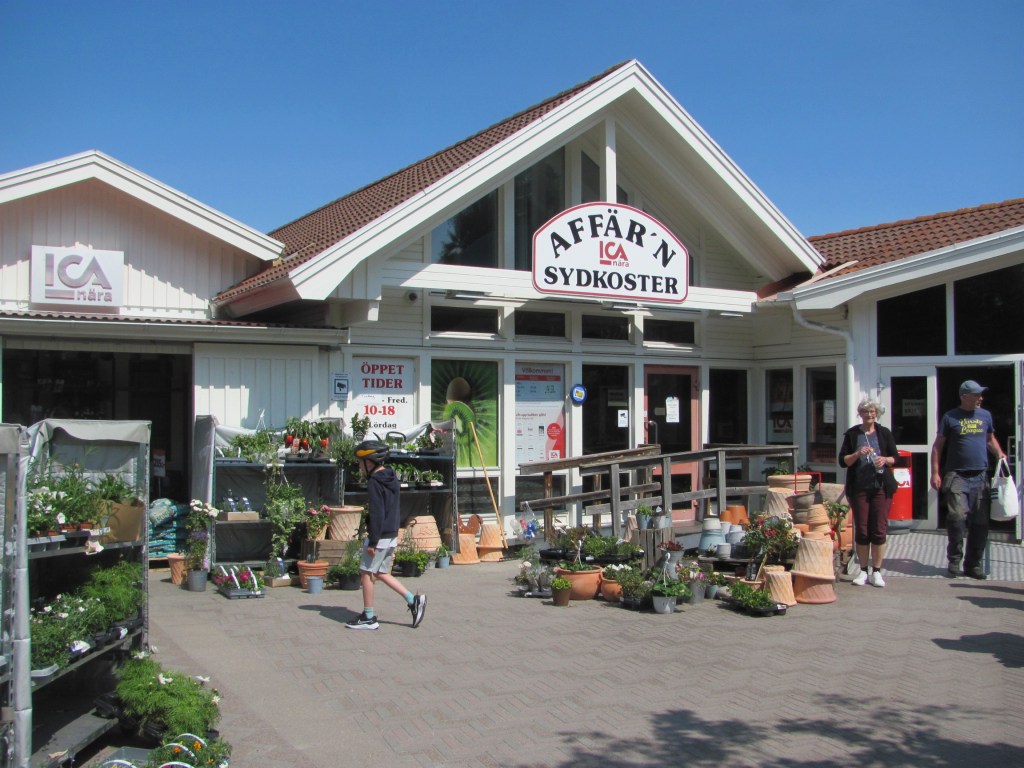
In the morning, we unload the bikes, and set off to explore the islands. We come to the grocery store in the centre of South Koster, which judging by the amount of people, seems to be some sort of communal meeting place.

The supermarket on South Koster island.

“Let’s get lunch here”, says the First Mate. “I’m famished. I’ll go in and get something to eat and drink. You stay here and find a table and look after the bikes.”

She comes back out with some sandwiches and orange juice.

The bread in the sandwiches is dry and they taste old.

“The packet says they are best before June 30”, says the First Mate. “That’s a month away. They should be OK.”

I notice on the packet that they were made on May 2. Not only that, they were made in Italy!

“I can’t believe it”, she says. “Made in another country a month ago. No wonder they taste funny.”

“Don’t beat yourself up”, I say. “At least the orange juice tastes good.”

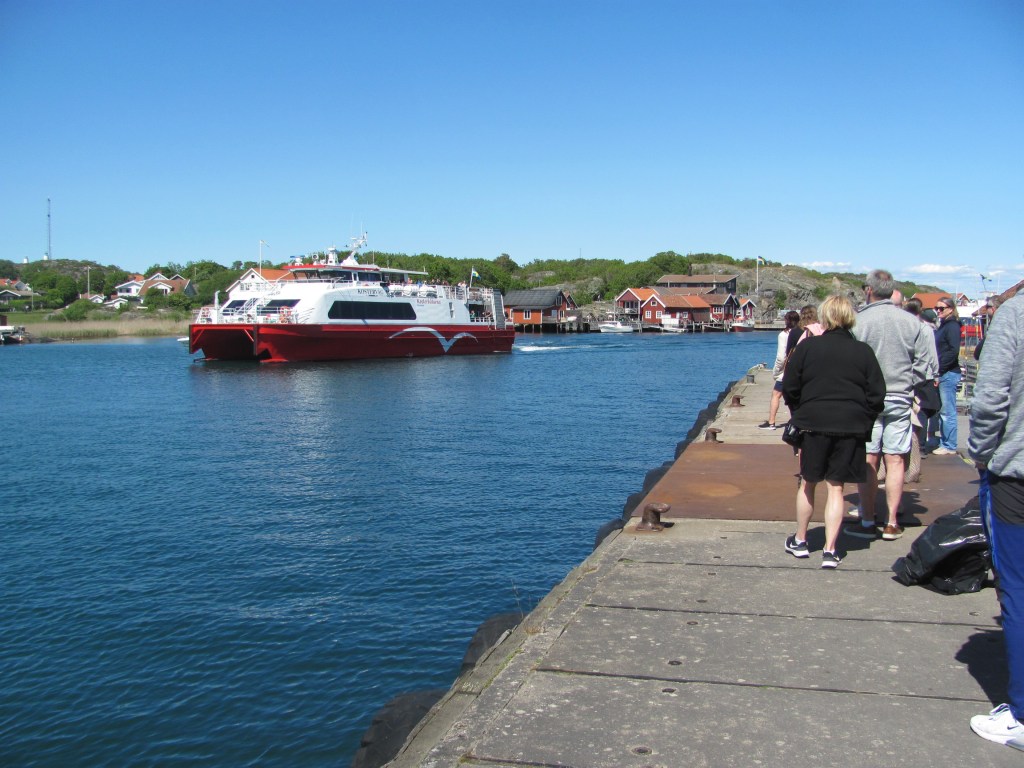
We eventually reach the village of Långegärde on the edge of the narrow channel that divides South Koster from North Koster. The electric ferry from the mainland has just arrived and is disgorging its passengers. We had seen it several times before when it stopped at Ekenas where we are tied up – with almost silent engines apart from a faint hum, it had seemed to creep up on us without warning and rock our boat violently with its wash. But all credit for being sustainable.

The electric ferry arrives at Långegärde.

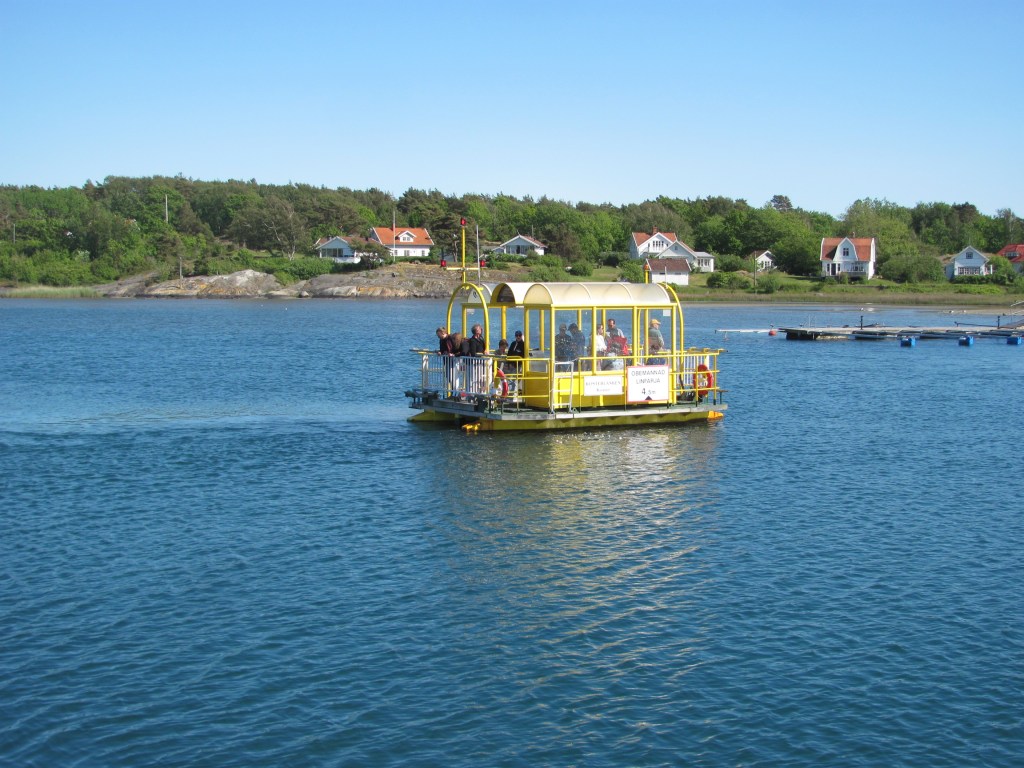
There is a small chain ferry that goes from one side of the channel to the other. We join the queue.

“The last ferry goes at 1630”, a woman in the queue tells us. “If you miss it, you can get the main passenger ferry back again, but it doesn’t go until 1900. You’ll have a bit of a wait.”

The chain ferry from South Koster across to North Koster.

On the other side, we continue our cycle ride through beautiful green forests until we come to the small harbour of Vettnett. There isn’t a lot there apart from children fishing, but it is beautiful.

“We’d better get back”, says the First Mate. “I think we should try and catch the 1630 chain ferry. I don’t really want to wait around until 1900.”

We make it just in time, and are soon back on the South Koster side.

“You can actually work the chain ferry yourself”, the university student operating it tells us. “But you need to have been trained and to have a license. Lots of people who live on North Koster do just that and are not tied to timetables.”

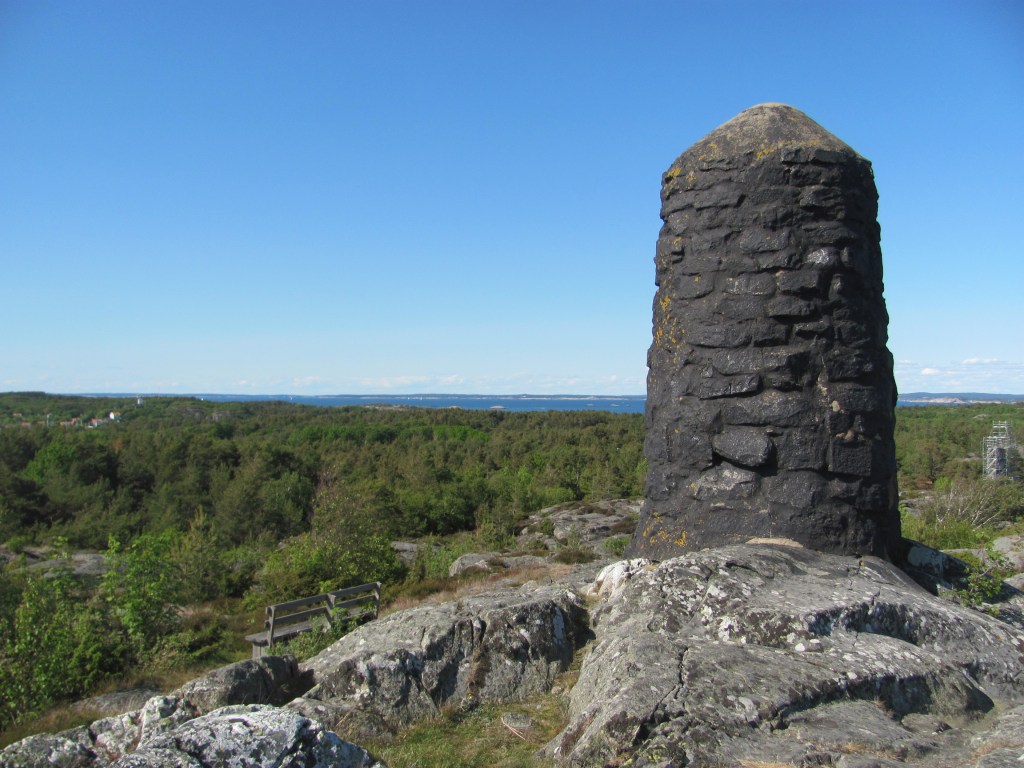
On the way back to the boat, we stop and climb the path to the highest point on the Koster Islands, Valfjäll, rising to the awe-inspiring height of 50 m. But there is a good view of the archipelago from the top.

Valfjäll, the highest point on South Koster.

“I read that you can even see the Weather Islands from here”, says the First Mate, pointing southwards.

I strain my eyes, and just manage to see a slight smudge on the horizon. I clean my glasses to get a better view.

The Weather Islands seem to have disappeared.

In the morning, we sail over to Strömstad on the mainland. I keep an eye on the depth underneath us. Sure enough, as the Enthusiastic Ecologist said, it plummets suddenly from about 20 m near the harbour to more than 200 m as we cross the Norwegian Trench.

“I don’t like that very much”, says the First Mate. “All that water underneath me.”

“We learnt when we were kids that you can drown in a foot of water”, I say. “It hardly matters if it is 20 m or 200 m underneath us. Better instead to make sure that we don’t fall overboard.”

Arriving in Strömstad.

We have decided to leave Ruby Tuesday in Strömstad and take public transport to Oslo, have a couple of days there exploring the city, then carry on up to Gjørvik in the centre of the country where our friends, Ståle and Gunvor, live. We had considered sailing up the Oslofjord to Oslo, but had been advised by a number of people that while sailing up the fjord is not very difficult, sailing back again is, mainly because the predominant winds are from the south and we would be battling them all the way. As we still needed to make it to the west coast of Norway, a not inconsiderable distance, we decided this was good advice.

The First Mate finds an AirBnB in Oslo for a couple of nights, and books tickets on FlixBus.

“We need to get the local 111 bus out to the E6 motorway to catch the FlixBus”, she says. “There’s only 10 minutes between one and the other. Let’s hope the local bus is on time.”

It is, and soon we are whizzing along the E6 on our way to Oslo.

“The AirBnb is in Rosenhoff”, says the First Mate, when we arrive. “We need to catch a tram there. If we buy a 24 hour Oslo Pass, we can use it on all public transport to go exploring tomorrow as well. It also includes free entrance to museums and art galleries.”

In the morning, we take a ferry across to the Bygdøy peninsula where the Fram and Kon-Tiki museums are located.

The Fram was a purpose-built ship for polar exploration. Its hull was ingeniously designed in an eggshell shape so that the ice would force it upwards rather than crushing it, effectively ending up floating on the surface. The rudder and propeller could be retracted so that they wouldn’t be damaged by the ice. It was specially insulated and stocked so that the crew could live on it for up to five years.

The egg-shaped hull of the Fram.
The propeller and rudder could be retracted to avoid ice damage.

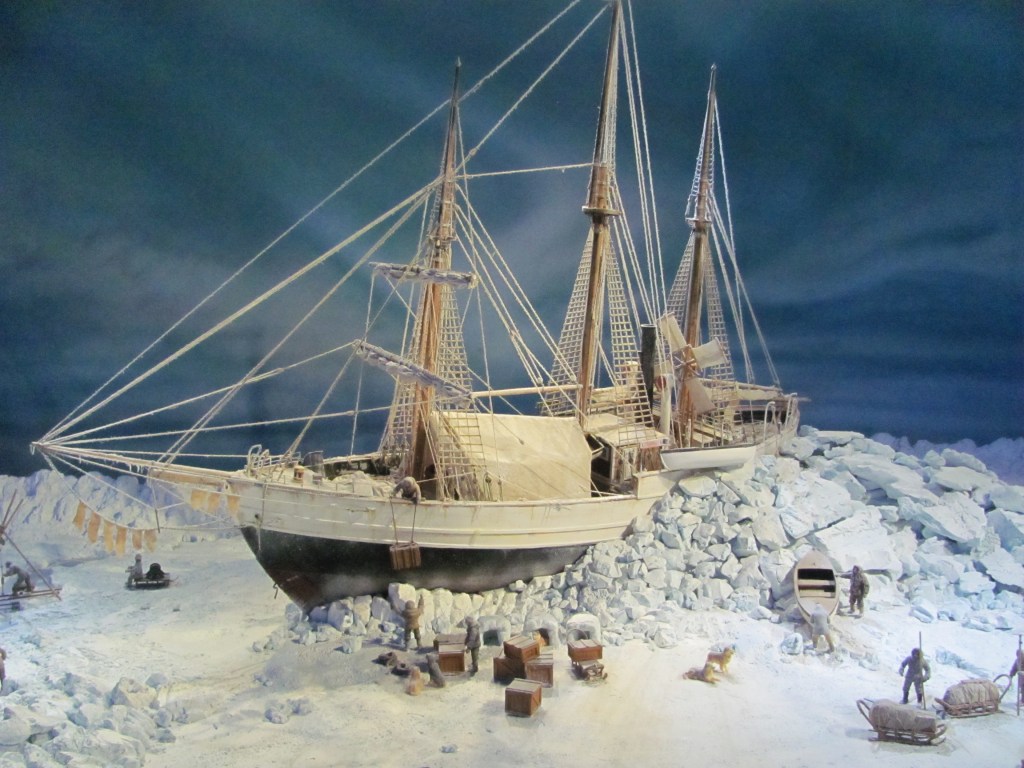
“The Fram was commissioned and used first by the Norwegian polar explorer Fridtjof Nansen in 1893”, a panel tells us. “It was used to test his theory that there was an east-west current across the north pole. By trapping the Fram in the ice around the Siberian islands, they found that it emerged into the North Atlantic Ocean after three years, partly proving the theory, although it didn’t cross the actual North Pole.”

The Fram locked into the ice.

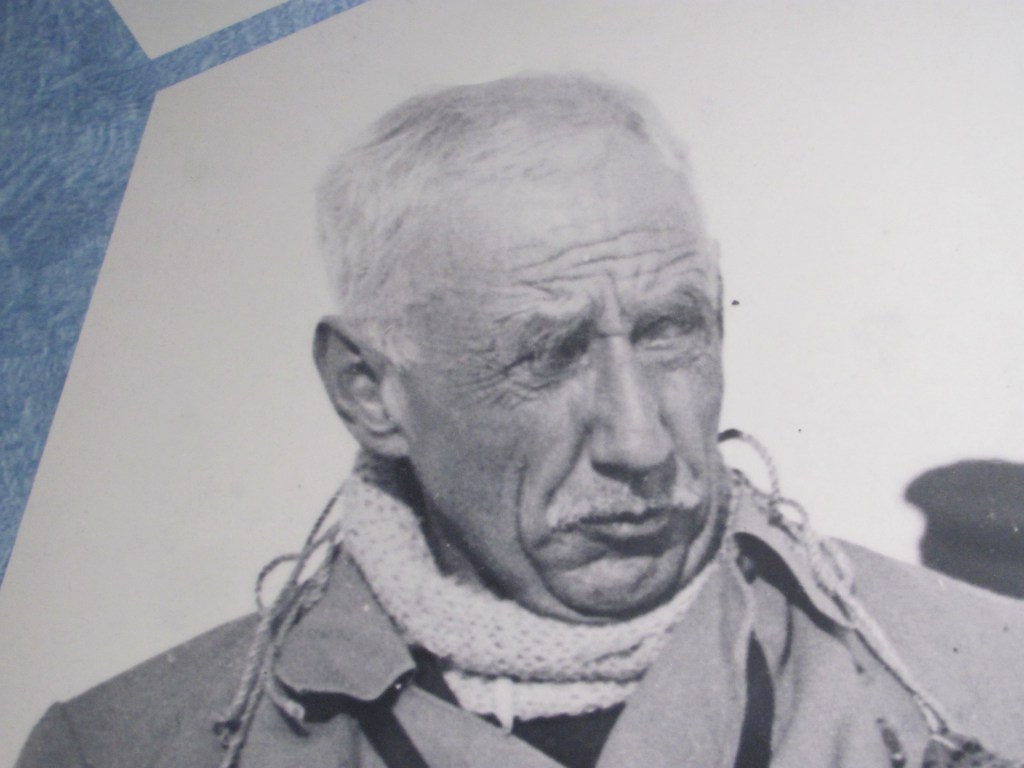
“It was also amazing that the same boat was used by Roald Amundsen when he reached the South Pole in 1911”, says the First Mate over a coffee later. “He was originally planning to be the first to reach the North Pole, but was beaten there by the American explorer Robert Peary, so he secretly changed his mind to aim for the South Pole. He didn’t even tell his crew until the last minute of the change in plans.”

Roald Amundsen, 1872-1928.

“And in doing so, he beat Scott’s British expedition there by five weeks”, I say. “I remember learning about it at school, as Scott had stopped in New Zealand on his way to stock up. Unfortunately, they all died on the way back. It’s the stuff of a heroic British legend, even though they failed. Now, drink up, and let’s go and see the Kon-Tiki museum. It’s just across the way.”

The Kon-Tiki is a raft built of balsa wood that was used by the Norwegian explorer Thor Heyerdahl to test the theory that the inhabitants of the the Polynesian islands could have originated from people who travelled by boat from South America using the Humboldt Current to carry them. He built the Kon-Tiki in Peru in 1947, and by reaching the Polynesian islands of Tuomotu, showed that it was at least feasible.

The preserved Kon-Tiki made from balsa wood.

“It’s a great story”, says the First Mate, “but did you read that genetic and language information collected since have all but proved his theory to be false, and that Polynesians have their origins in South East Asia. Most reputable anthropologists nowadays dismiss his theories completely.”

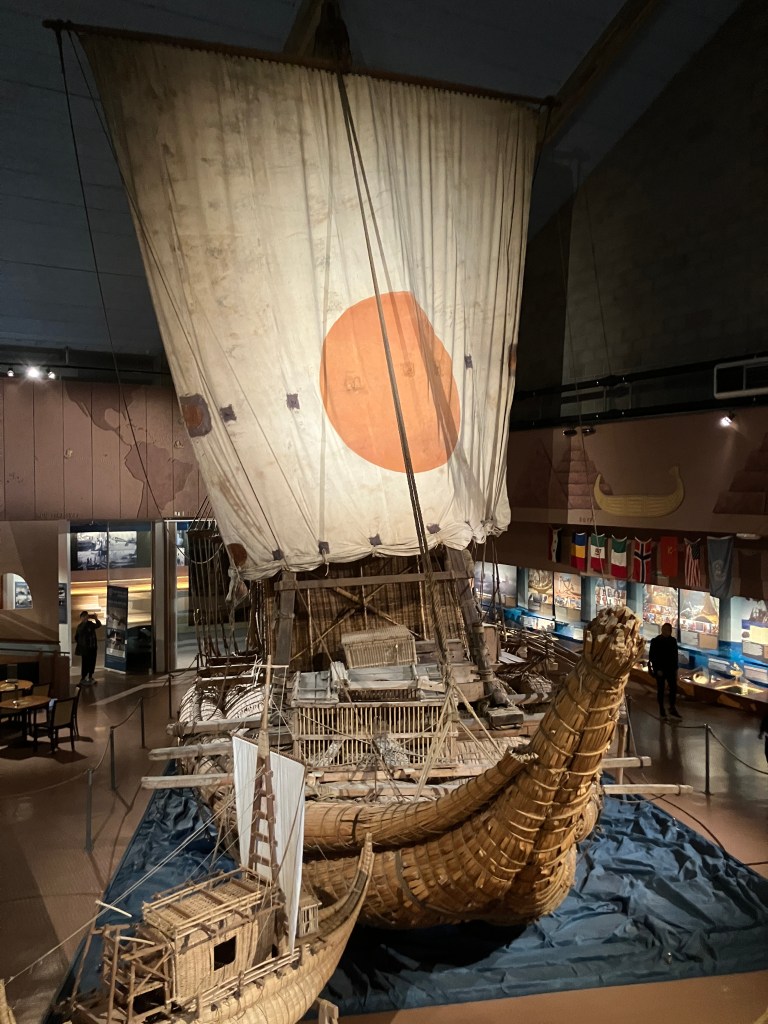
“It didn’t seem to deter him, though”, I say. “Another of his theories was that the Ancient Egyptians could have sailed across the Atlantic to trade with the inhabitants of the Americas. So he built another raft called the Ra out of papyrus. After one failure, he rebuilt it and managed to sail from Morocco to the Caribbean in 1970, again proving that it was at least possible. I remember keeping a scrapbook on it when I was at high-school.”

Thor Heyerdahl’s Ra II made from papyrus.

“He certainly had an adventurous life”, says the First Mate. “It’s a pity after all that that none of his ideas turned out to be right.”

“That’s how science works”, I say. “People come up with different ideas, put them to the test, consider all the evidence, and either discard, modify or adopt them. Unfortunately, Heyerdahl’s mostly ended up in the dustbin. But you never know what will happen in the future.”

The best job in the world, a transvestite thief, and a sustainable sea harvest

“It’s the best job in the world”, says the woman, as she climbs out of the small single-seater, electrically-powered vehicle with glass doors. “I used to have a higher paying job, but I have been doing this for about five years now, and couldn’t wish for anything better. I know everyone on the island, and they all know me, and I feel as if I am doing something useful. And this little thing here protects me from the elements and means that I don’t have to walk everywhere.”

We are in the town of Marstrand on the west coast of Sweden, and are talking to the postwoman of the island.

The best job in the world!

“These are the letters I have to deliver”, she continues, pointing to rows of envelopes arranged in a rack on one side of the cabin. “And the big parcels are in the back here.”

“Do you know where we can get some lunch?”, the First Mate asks her. “Everything seems to be closed today.”

“Yes, places close here when the weather isn’t so good, as not many tourists come over”, the postwoman says. “But I think that the bakery along the waterfront is open. You could try there.”

She climbs in her post-van, presses a button, and whizzes away over the cobblestones.

We find the bakery and order sandwiches and coffee. A brochure on the town is lying on the table.

“Marstrand was founded in the 13th century by the Norwegian king Håkon Håkonsson because of its strategic location, being ice-free, and its good shelter from all wind directions”, it tells me. “It developed as a fishing town, and made its wealth from herring, becoming known as the herring capital of Europe. At one time, the street lamps in Paris were all lit with herring oil from Marstrand. It became part of Sweden in 1648, which is when the fortress was built. The herring declined in the late 19th century, however, so Marstrand rebranded itself as a holiday resort attracting the rich and famous. Nowadays it is well-known for its water sports, particularly sailing, hosting many events.”

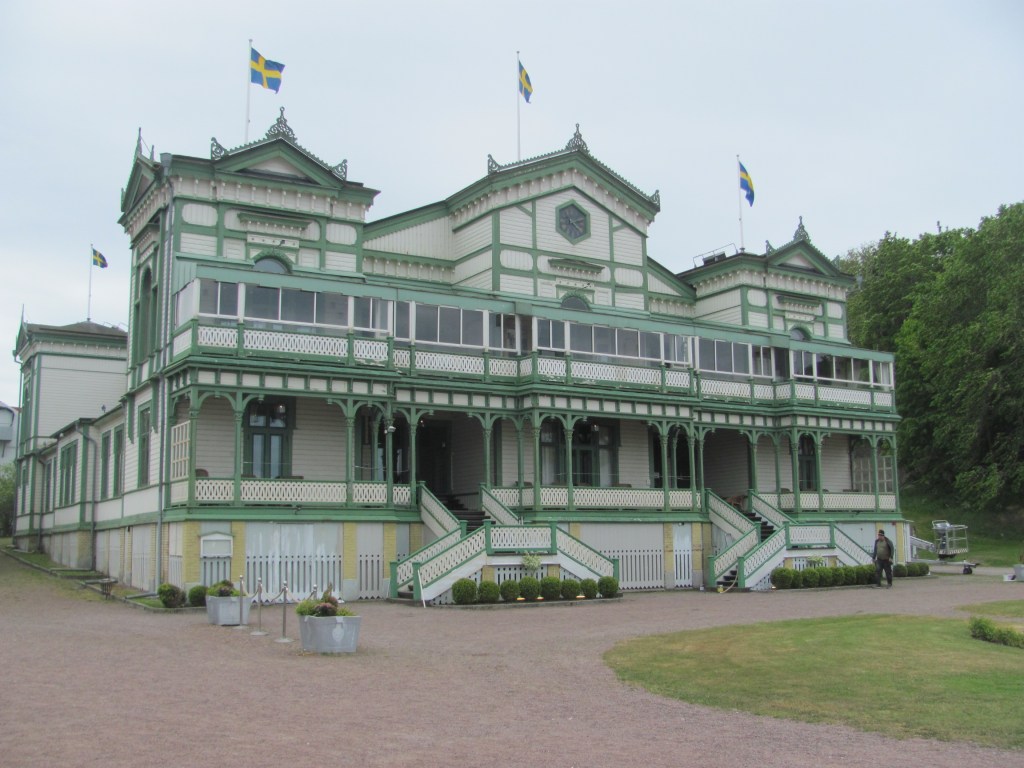
Grandeur of yesteryear.

The First Mate strikes up a conversation with some German tourists at the table next to us.

“There’s a nice walk around the island”, they say. “It starts just at the north end of the harbour. Here, you can use our map. We are finished with it. And don’t forget to see the Eye of the Needle.”

It’s not much of a day – grey and overcast, and a chilly wind is blowing, but we do want to see some of the island, so we set off.

“Look, here’s the Eye of the Needle they were talking about”, says the First Mate. “The Nålsögat. Apparently smugglers used to use it as a hiding place. I’m glad I didn’t have that extra bit of toast for breakfast this morning. I wouldn’t have fitted through. I don’t know how you are going to manage though.”

We have come to a place on the route where the path narrows to a tight gap between several large boulders. With a public path running right through it, I am not sure that it makes a good hiding place, I think to myself. Perhaps there wasn’t a trail there then.

Eye of the Needle.

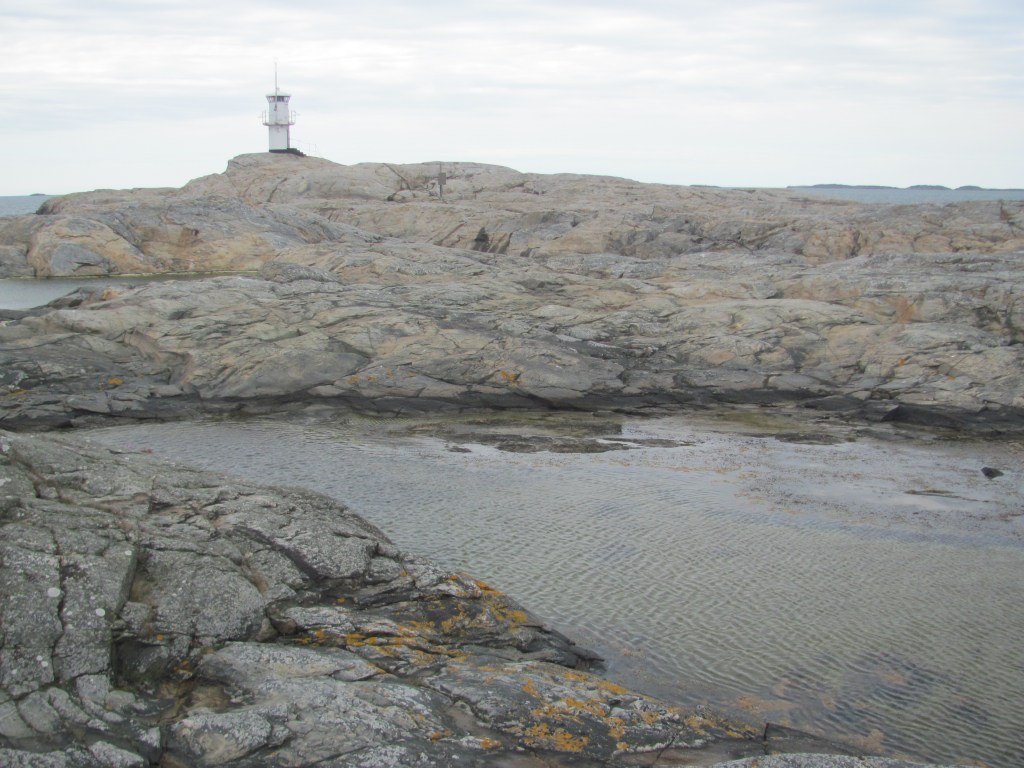
Further on, we reach Skallens Lighthouse at the western most tip of the island, and sit on the rocks watching the crashing waves where the Kattegat and the Skagerak seas meet. The grey skies and the cold wind only add to the wild and elemental atmosphere of the place.

Patterns on the rocks in front of us make me think of the vast depth of time since they were created, certainly well before humans appeared on the scene. Was it a day like this that a marine creature hauled itself out of the sea to give rise to the diversity of land animals we see today?

Ancient patterns.

On the way back from Skallens Lighthouse, we pass Carlsten Fortress on top of the hill. Unfortunately, it is closed until the following weekend, when summer officially starts. However, we are able to get a glimpse of it from the path running around the walls.

The tower of Carlsten Fortress.

“After the Treaty of Roskilde in 1658 between Sweden and Denmark, Marstrand became Swedish”, a panel informs us. “Because Marstrand was becoming an important trade hub, King Karl X Gustav of Sweden had the fortress built to protect the town. However, this wasn’t entirely successful, as it was captured again by the Danish a couple of times after that. When it once again returned to Swedish hands, it was expanded several times and used for the last time in WW2. In 1993, it was declared to be no longer part of Sweden’s defence installations, but it has been maintained and is a tourist attraction nowadays.

Arriving back at the boat, we pass the Strandverket Art Museum, formerly an old fort. Unfortunately it is also closed until next weekend.

Strandverket Art Museum.

“The girls around here are certainly pretty tall”, says the First Mate, standing next to a figure just outside the entrance. “It must be all the fish and sea air they get.”

The long and short of it.

“The guide book says that the fort once housed a notorious Swedish master-thief called Lass-Maja”, I read. “He specialised in dressing up as a woman to fool his victims and to make it easier to escape. Sometimes he dressed as a lady’s maid, or a housekeeper, or a prostitute, even flirting with some of the men he was planning to rob. Eventually he grew to be so comfortable wearing women’s clothes, he carried on doing so in his spare time. However, one day his luck ran out when he stole some church silver, and he was tried and imprisoned here in Marstrand. His memoirs became very popular with the reading public in the 19th century, so much so that he was eventually pardoned by the king and released.”

“Who says that crime doesn’t pay?”, sniffs the First Mate.

“The geology of Sweden is quite fascinating”, says Spencer that evening, as we sip our wine. “It is part of the vast continent of Baltica, which formed around two billion years ago through the collision of three older tectonic plates which are now part of Russia, Ukraine and Scandinavia. Around 700 million years ago, the combined landmass was in the southern hemisphere, but it moved north about 450 million years ago to collide with the Scotland and Greenland plates, and later with the Siberian plate in the east to form the Ural Mountains. So Baltica has been around a bit. The rocks you were looking at this afternoon were probably formed around a billion years ago.”

“You know so much for a spider”, I sigh. “Especially as it all happened so long before your or my species even existed.”

“That’s the advantage of having my web connected to the World-Wide-Web”, he smiles.

With favourable winds the next morning, we set off northwards for Smögen. On the way we pass the picturesque fishing village of Mollösund with its white houses stacked neatly above the narrow channel between it and the neighbouring island.

Mollösund.

We stay a night on the car-free island of Käringön with its eponymous landmark statue of an ‘Old Woman’, supposedly giving its name to the island.

The ‘Old Woman’ of Käringön.

Eventually we reach Smögen. Andy & Anne and his family and friends are already there with their new boat Amalia, and give us a hand tying up. Bob & Fiona in Hekla of Banff, and Simon & Louise in Aloucia arrive not long after us, completing the quartet of boats. We had all met on the Cruising Association Rally in the Åland Islands in 2023, and had found that we have similar cruising routes planned in the following years. We had already seen Aloucia this year when she called in at Malmö to have her sails repaired.

The mariners arrive in Smögen.

Louise has arranged for us all to attend a course in Smögen on sea-foraging.

“We did a sea-foraging session while we were in South Africa over the winter”, she explains. “We learnt a lot about what you can and can’t cook, including kelp pasta. It was great fun, and they put us in touch with a Swedish woman in Smögen who runs sessions snorkelling for seaweed with outdoor cooking of whatever we find afterwards.”

We have arranged to meet the organiser, Linnea, at a carpark near the top of the harbour, just past the iconic fishermen’s huts.

Quintessential Smögen.

Louise leads the way, the rest of us following with our wetsuits, mask, fins and snorkels crammed into our rucksacks. Linnea is already waiting, busy unloading an eclectic mix of pots, pans, primus stoves, plastic boxes with tasty-looking food inside, and an assortment of neoprene boots, wetsuits, hoods, and gloves for those that don’t have their own.

“It isn’t much of a day”, she says, “But the place we are going is fairly sheltered from the winds, so it should be OK. It’s only about ten minutes’ walk from here.”

“I’ve been doing this now for several years”, she tells us on the way down. “I’ve also written a book and seaweed foraging. The sea is a tremendous resource, and we don’t really make enough use if it in a sustainable way. I’ll show you which species are good to eat, what they contain, how they are harvested sustainably and cooked. Most of them contain lots of nutrients – sea lettuce, for example, has fatty acids, magnesium, sodium, potassium, calcium, phosphorus, iron, iodine, and vitamins A, B, C, D and E. We’ll only pick what we will eat. Afterwards, you can help prepare lunch with me. And, of course, help me eat it!”

“There are also plants along the shore that you can eat”, she continues. “Look, these are violets – the flowers and leaves are quite sweet and make a good addition or a garnish to a salad. But you can’t eat the roots as they are toxic. And these are beach asters – the leaves are edible and can be added to salads, stir-fries, or used as a side dish. And here’s some sea beet – you can boil this like ordinary spinach. But now let’s get changed and we can see what we can find in the sea.”

Tasty wild violets.

We find places behind the rocks to struggle into our wetsuits that don’t seem to have changed in the same way that our bodies have since they were last worn, several years ago in my case.

“You can borrow these boots, gloves and hoods”, says Linnea. “It’ll be quite cold, so I think you will need them.”

I am starting to wonder if it was a good idea to sign up to the session. I don’t really do cold these days. But the others are all looking very enthusiastic, so I pretend to limber up as though I am raring to go.

Somehow we manage to squeeze ourselves into our wetsuits, carefully squashing all the bulgy bits in through judicious inhalations. My only worry is that getting out of it might be harder than getting in. We’ll cross that bridge when we come to it, though.

“Are you going to be able to walk down to the beach in that?”, says Andy cheekily.

In I get …

I clamber down the small ladder, and gasp as I jump into the water. It’s freezing. I almost jump back out again, as I feel it finding its way into the thin layer between the wetsuit and my skin. But I have done enough diving to know that it will only be a few seconds before my body heat warms it and it will become another insulating layer.

“This is sea lettuce”, says Linnea, clutching a mass of green foliage looking remarkably like the lettuce that outlasted Liz Truss. At least that’s what I think she is saying, as she is wearing her mask and snorkel, and speaks with a Swedish accent.

Linnea shows us sea lettuce and sugar kelp.

We spend the next hour or so swimming along a rock wall picking sugar kelp, oarweed, gutweed, bladder wrack, knotted wrack, saw wrack, bootlaces, Irish moss, and lavar, and putting them into little net collecting bags. Soon Linnea signals to us that it’s time to get out. None too soon, as I am starting to feel a little bit cold, especially from the small stream of water finding its way through the gap between my hood and wetsuit, down my spine, and out through one of my legs.

Foraging for seaweed.

Soon we are back in our warm clothes. Fortuitously the sun has appeared, and we bask on the rocks to get our circulations working again. Linnea, meanwhile, has the primus roaring, and is unpacking the food she prepared beforehand. We are each given jobs of cutting, slicing, frying, boiling, and spreading. My job is to cut the bladder wrack into strips and boil it.

Preparing the harvest.

Soon we are loading our plates with chunks of cod and cheese fried with sea lettuce, gutweed and tomato salad, kelp pasta, boiled bladder wrack seasoned with lemon and pepper, lashings of lavar, and numerous other tasty bits and pieces.

Satisfied sea foragers.

“This is absolutely delicious”, says the First Mate. “I am going for my third helping.”

“Be careful you don’t turn into a nervous wrack”, I say.