A grumpy husband, a beacon of light, and a mysterious fortress

“Quick”, says the First Mate. “That German boat is leaving. Let’s see if we can get out before it.”

But we still haven’t completed everything on our departure checklist, and the German boat, Compromise, manages to slip out in front of us.

“I was talking to the wife there yesterday”, the First Mate continues. “Apparently her husband gets angry with her when there is no wind. He hates using the engine, and because she does the route planning, he thinks it is all her fault if she plans a trip with no wind.”

“Well, he must be livid now”, I say. “There’s hardly any wind at the moment.”

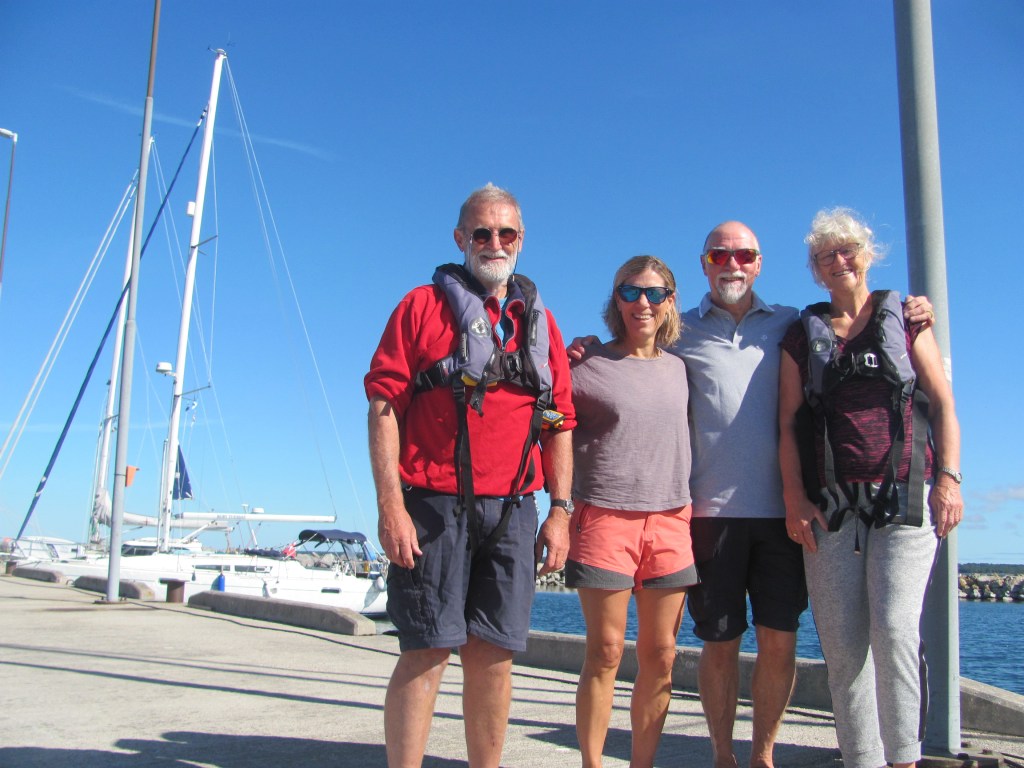
We are just leaving Visby to sail to Bxyelkrok on Öland. Yesterday, we had bid farewell to Simon and Louise at Fårösund, as they were sailing directly across to the Swedish mainland where they plan to spend a few days chilling out anchoring in the archipelago before sailing to Kalmar where they are going to leave their boat over the winter. We are heading more southwards as we want to overwinter in southern Sweden. We had sailed from Fårösund to Visby to spend a night there to shorten the trip across to Öland.

Arriving in Visby from Fårösund.

We motor out of Visby harbour behind Compromise. The wind is forecast to come from the southeast, but the headland to the south of Visby is making sure there is not much of it.

“I bet they are having a right old ding-dong over her taking them that way where there’s still not much wind”, says the First Mate. “If I was her, I’d tell him to do his own route planning, so he would only have himself to blame.”

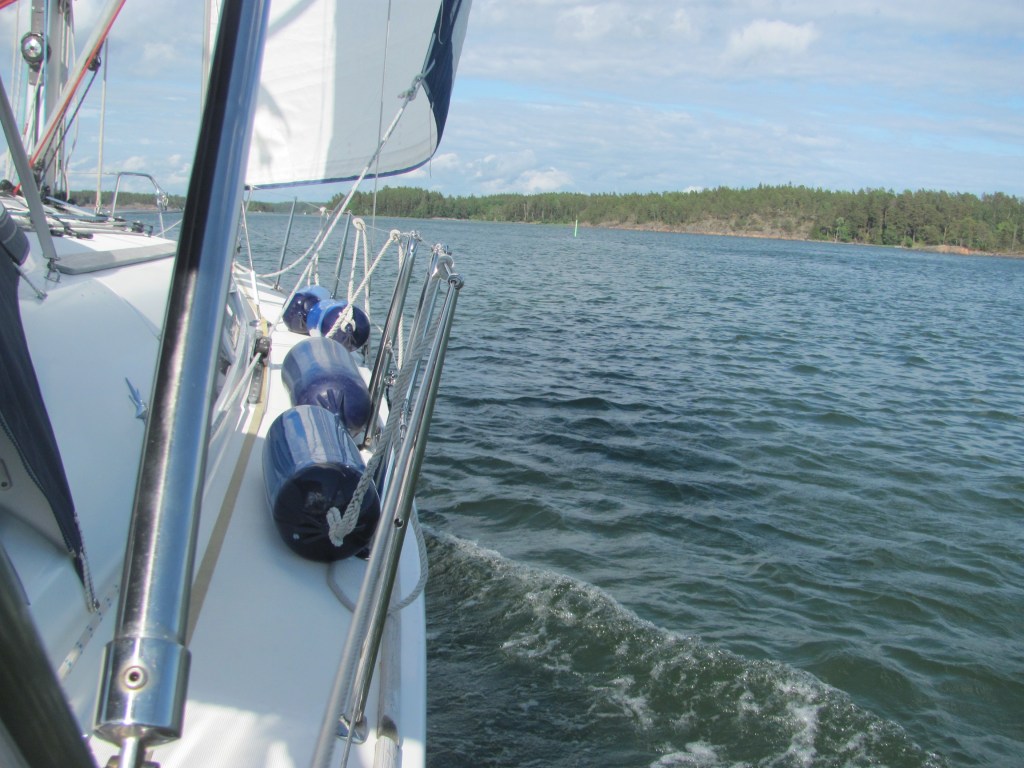
But the wind picks up as we clear the headland, and before long we are unfurling the sails and are sailing along on a comfortable broad reach. We see Compromise to the south still motoring.

“Here’s a cup of tea”, says the First Mate. “Now, I am going downstairs to catch up on my emails.”

It is sunny and warm, and the sea is smooth. I sit back and relax, keeping a watchful eye on the instruments and the route ahead.
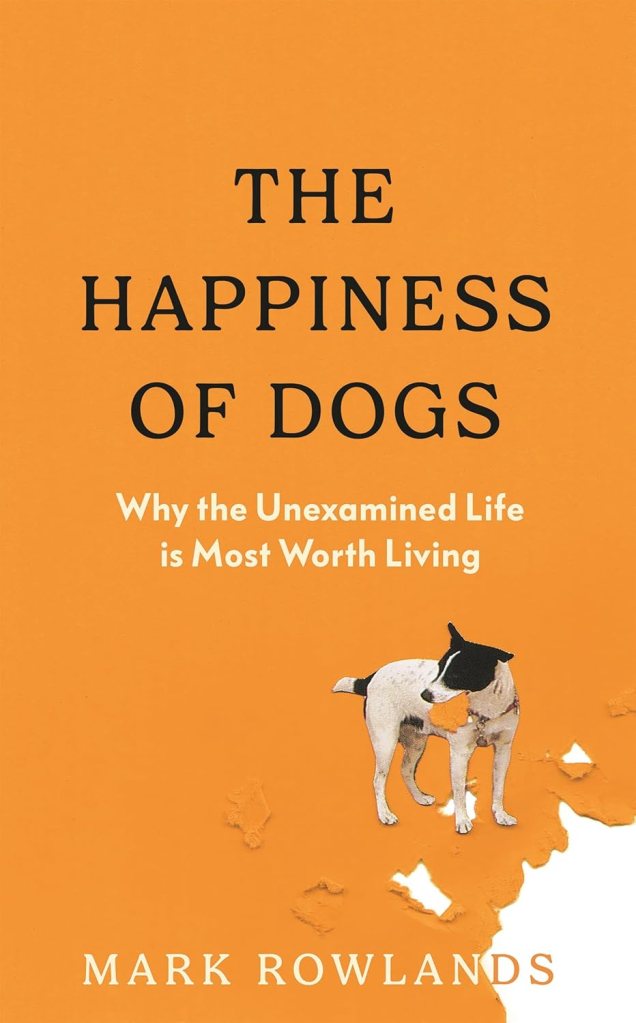
I think back to the newspaper article I had read this morning. Written by philosopher Mark Rowlands on his new book The Happiness of Dogs, he discusses what dogs can teach us about the meaning of life. Dogs experience unbridled joy from the simple things in life, he says, regardless of whether they are repetitive or not. They will always be ecstatic when they are about to be taken for a walk, even though it might be along a path they have been hundreds of times before. For dogs, happiness comes effortlessly.

Us humans on the other hand torture ourselves with trying to find meaning in our lives. What makes our existence worth the bother? We construct elaborate myths and narratives to convince ourselves that we are here for a purpose, that we are part of a grand plan. We must make progress – doing the same thing day after day appears to us to be meaningless, like Sisyphus’s task of pushing a rock uphill only to have it roll to the bottom again at night.

Rowlands puts all this down to our ability to reflect – we are always thinking about ourselves, scrutinising and evaluating what we do, and why we do it. Dogs, on the other hand, rather than think about the answers to the meaning of life, just live it to the full.

Not far behind us, I spot Compromise following us, her sails up now. I trim our sails and manage another half a knot. Wherever there are two boats there will be a race, whether we admit it or not.
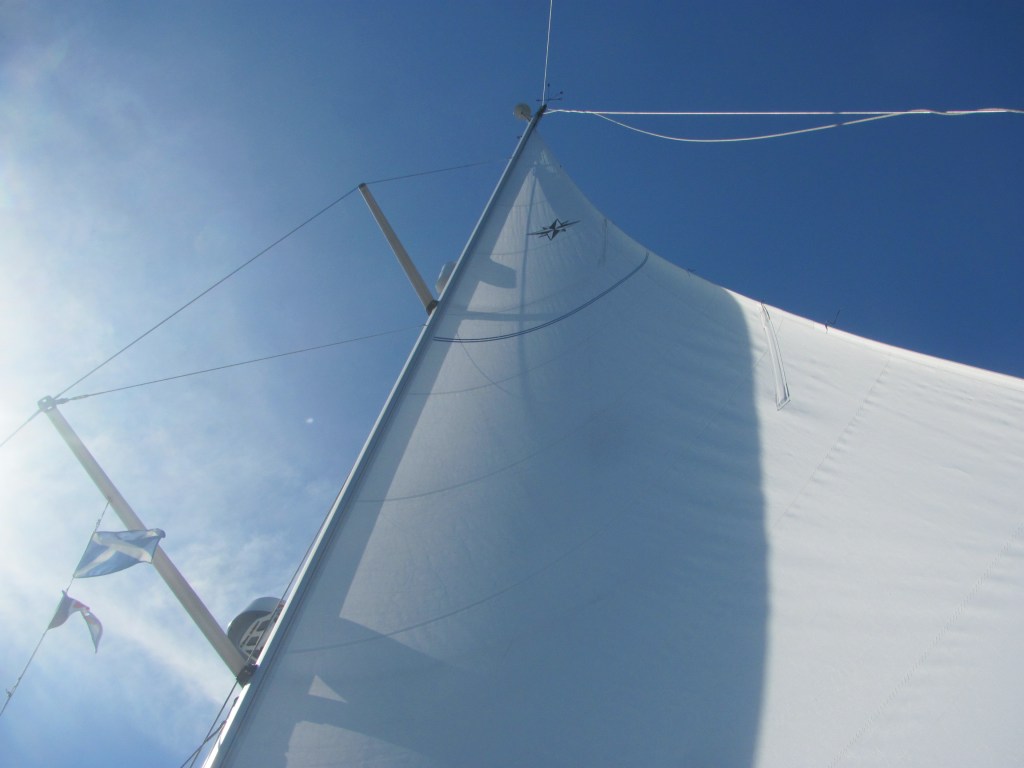
Keeping ahead of Compromise.

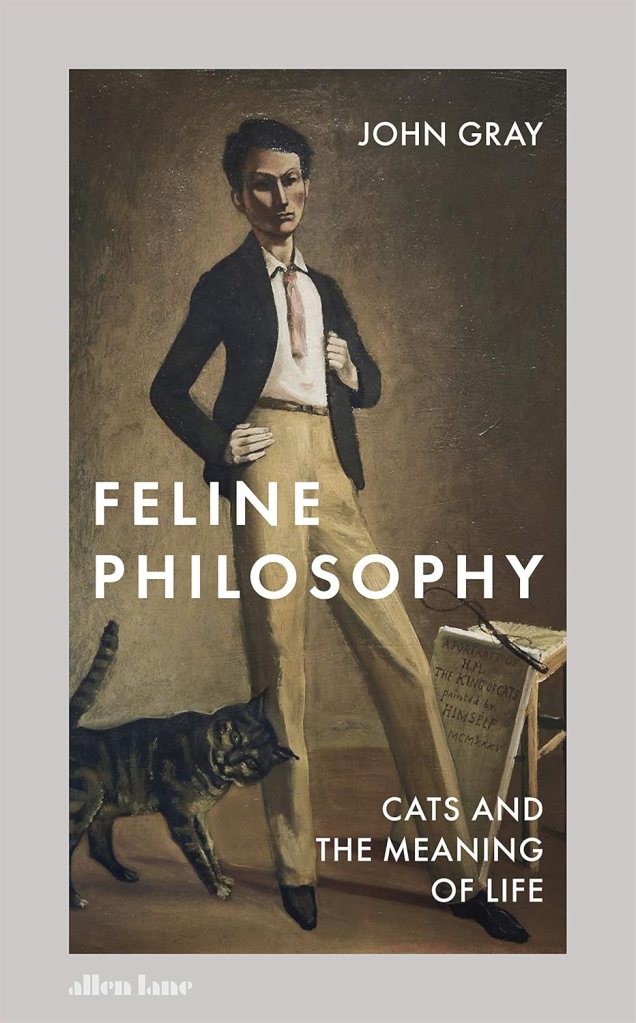
Rowlands’ ideas remind me of John Gray’s book Feline Philosophy: Cats and the Meaning of Life, which I had read a couple of years ago. In it, he draws similar conclusions from cats. Cats live for the sensation of life, he says, not for something they might achieve or not achieve. Humans, however, tell themselves stories that might provide the illusion of calm in a chaotic and frightening world, that everything is under control. Even though most of the things that happen to us are pure chance, we still struggle with the idea that there is no hidden meaning to find. He advises us to leave our ideologies and religions to one side and just enjoy the sensation of life.

I notice that we are slowly pulling ahead of Compromise. She is at least half a mile behind us now. I tweak the sails a little bit more.

But would we just want to live for the moment like dogs and cats?, I wonder. Even if consciousness, self-awareness, and the ability to reflect make us anxious, troubled creatures, would we want it any other way? Would we want to give up the appreciation of the beauty of art, science, music, and all that we have achieved as a species? Isn’t it part of what being human means?

“Can you see Öland yet?”, calls the First Mate, bringing out a mug of hot tea and a digestive biscuit.
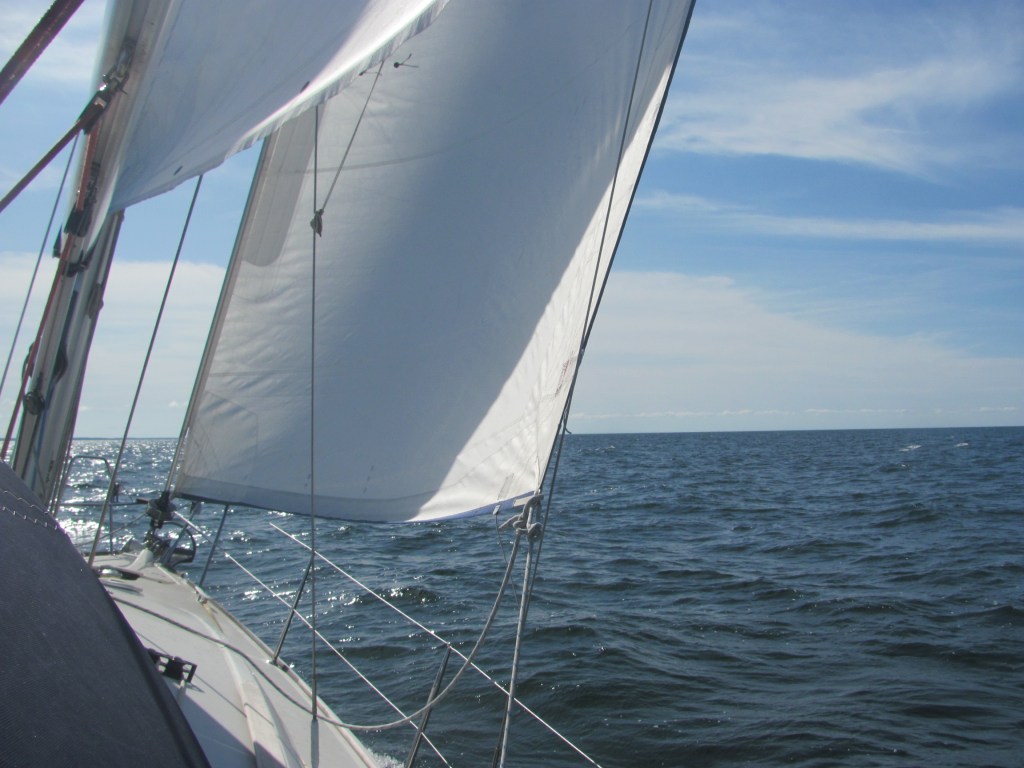
Approaching Öland.

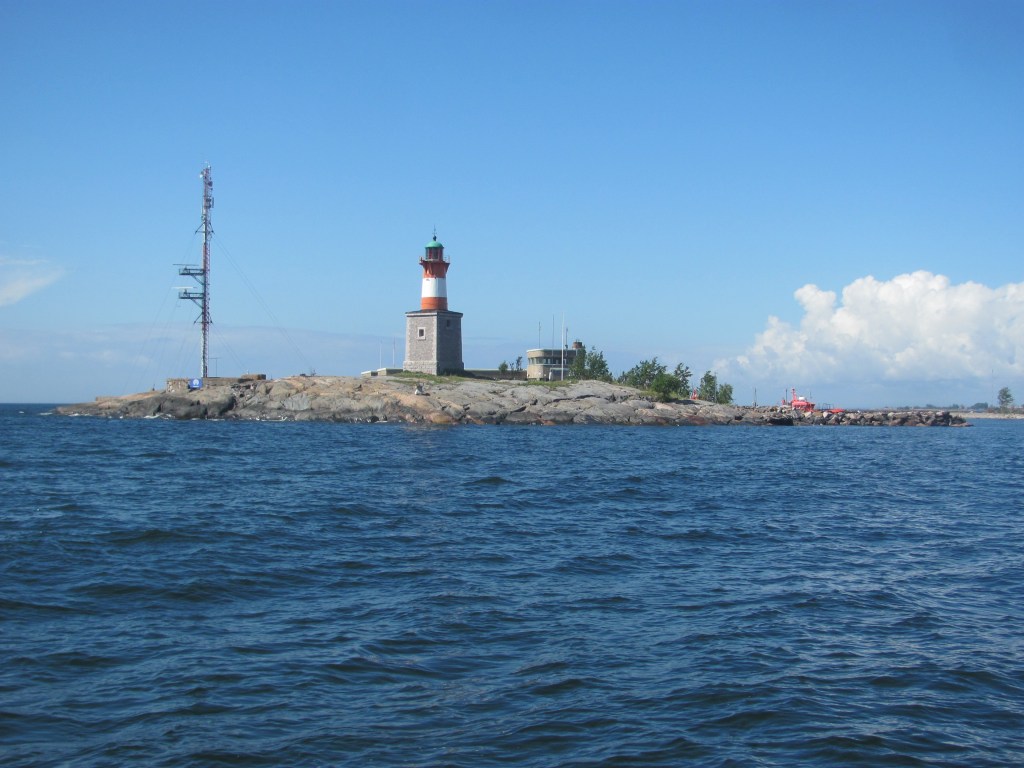
“We’re getting close”, I say. “I can see the lighthouse at the northernmost point. By the way, I looked up what Byxelkrok means. It translates as ‘The Village Forests Bend’. Apparently the Vikings called it that as they had to turn south at the point to get to their port at Tokenäs, a few miles from Byxelkrok.”

The marker buoy showing the entrance to Byxelkrok harbour appears, so we furl the sails and motor in. Soon we are tied up safely next to a Danish family who are travelling north to Stockholm. Out of the corner of my eye, I spy Compromise following us into the harbour. Ha, we beat you, I think to myself.

The next morning dawns bright and sunny, but windy.

“Let’s get the bikes out and cycle up to the lighthouse at the top of Öland that we passed on the way here”, says the First Mate. “I’ve heard that it is a nice ride.”

We cycle along a tarmac cycle track parallel to the shore line.

Cycling to the top of Öland.

In the distance, we can see Blå Jungfrun, the fabled island in Swedish folklore where witches are supposed to meet every year on Maundy Tuesday and swap spells.
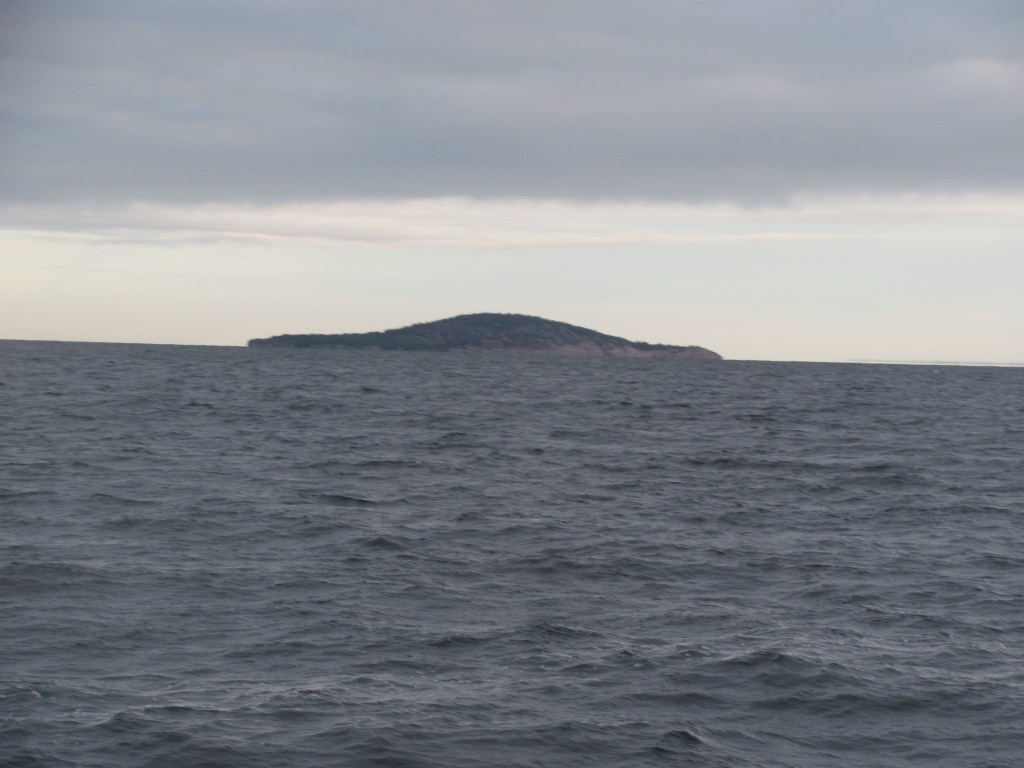
Blå Jungfrun, the island of witches.

Along the way, I feel the need for a pinkelpause. We stop at an overgrown track leading into the woods.

“Didn’t you see the sign?”, asks the First Mate. “Look there’s a house over there through the trees. You’re probably on someone’s webcam now. We might have the police knocking on the boat tonight.”

Not here please!

“I am amazed someone has gone to the trouble of putting up a sign”, I say. “They must get a lot of people with the same intention.”

We eventually reach the lighthouse.

Långe Erik lighthouse on Öland.

“Långe Erik lighthouse was built in 1845 out of local limestone”, the nearby panel tells us. “At first the lamp used mirrors and burned rapeseed oil. But this required constant attention, they were later replaced by mirrored lenses and a paraffin lamp. The lamp was changed to electricity in 1946, and in 1976 was fully automated.”

How many lives has it saved, I wonder. This is a treacherous piece of coastline.

“Come and have a look at these piles of stones on the beach”, calls the First Mate from behind the lighthouse. “They look like an army of invaders from the sea. I wonder how long they will stay up in this wind?”
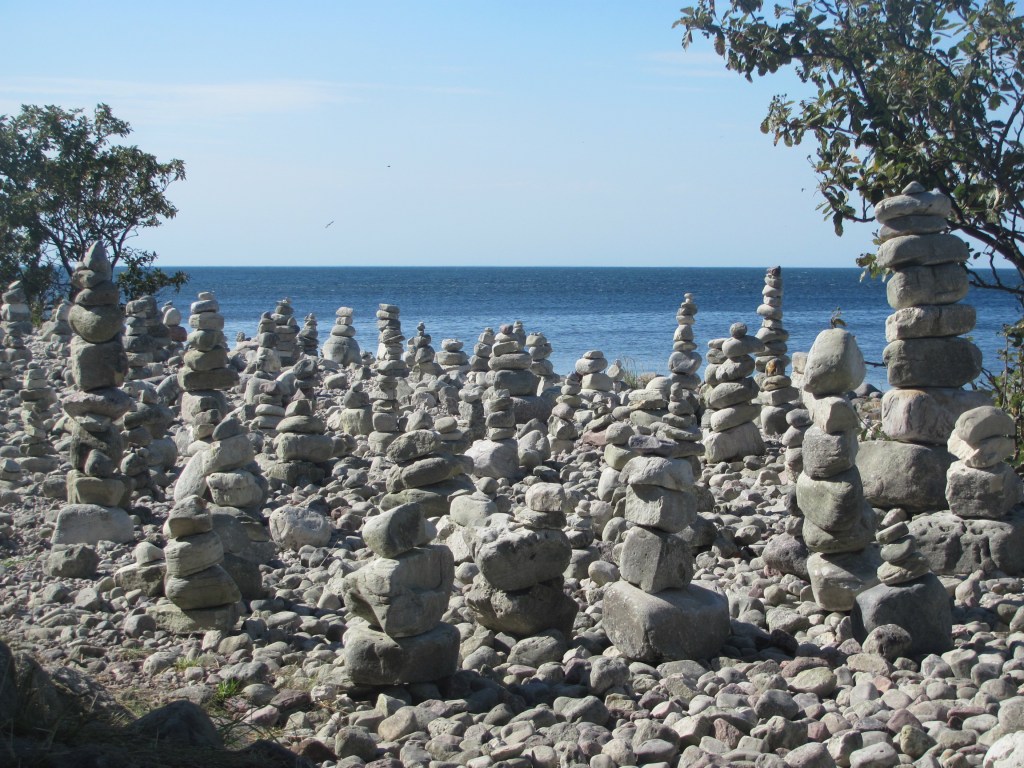
Invaders from the sea?

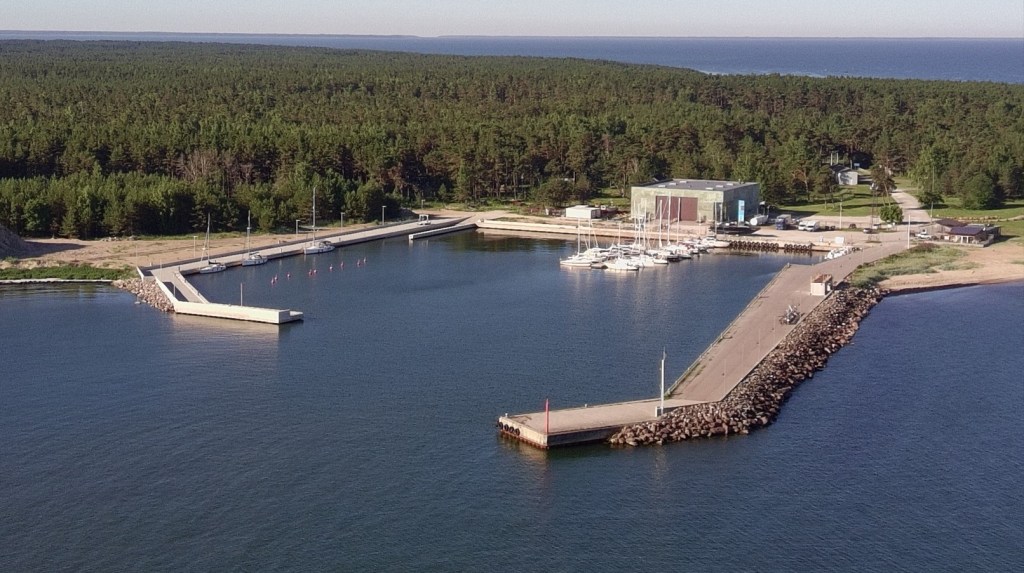
In the morning, we leave Byzelkrok and sail down to a small harbour by the name of Stora Rör, still on Öland. The harbour is almost full, but luckily there is one berth remaining for us. We squeeze in, helped by the German couple next to us.

“I’ll go and pay the harbourmaster and bring an ice-cream back”, says the First Mate. “You finish tying the boat up.”

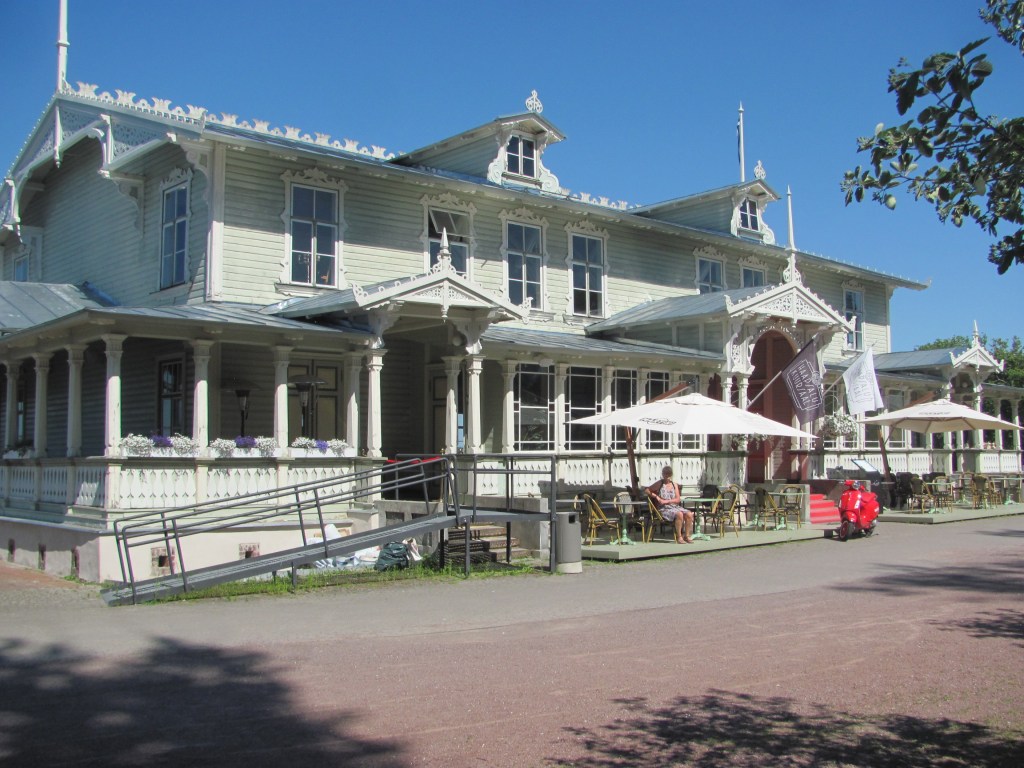
It’s a picturesque little place, with a bakery and a restaurant right next to the marina. And a popular weekend haunt judging from the number of people milling about, talking, eating, drinking and generally enjoying the warm sunshine. It is sometimes surprising to remember that places that we imagine to be remote when arriving from the sea are well connected by road and readily accessible to the rest of civilisation.

Stora Rör harbour.

——-

I watch as the bucket disappears into the depths of the well and splashes into the water far below. A cock crows – it is early in the morning, and the village is still asleep. I wait for a few moments for the bucket to fill, then pull as hard as I can to lift it out. Some water sloshes out and back into the well as I lift it over the stone wall, but there is enough to keep my mother happy, and I carry it back through the deserted streets to our hut near the east gate of the wall surrounding the village. She is already up and has started the fire, its smoke filling the hut and making my eyes water.

She hands me a clay bowl of oat porridge boiled in milk. As I gulp down the last drops, there is a shrill call from outside our hut.

“Erik, Erik, come and play with us!”

It’s Frida, the young girl from next door, her flaxen pigtails bobbing with excitement.

“Off you go”, says my mother. “But don’t forget that your father wants to take you up to the walls today.”

We run through the narrow passageways between the houses, sometimes playing hide-and-seek, other times playing soldiers, guarding the gates against invaders with our little wooden swords and bloodcurdling battle cries. Later I climb the walls of the fortress with my father, and look out at the fields and forests on the outside. Even though it has been peaceful for some time, I know that the wall was built to protect us from our enemies, and that our warriors need to be on the constant lookout for danger. I will be one of them one day.

As the sun sets in the evening, torches are lit around the fortress, their warm glow giving a golden hue to the stone walls. The whole village gathers in the central courtyard to share food for the evening meal. After eating, I sit by the fire feeling safe and warm, listening to the adults tell stories of the gods and heroes.

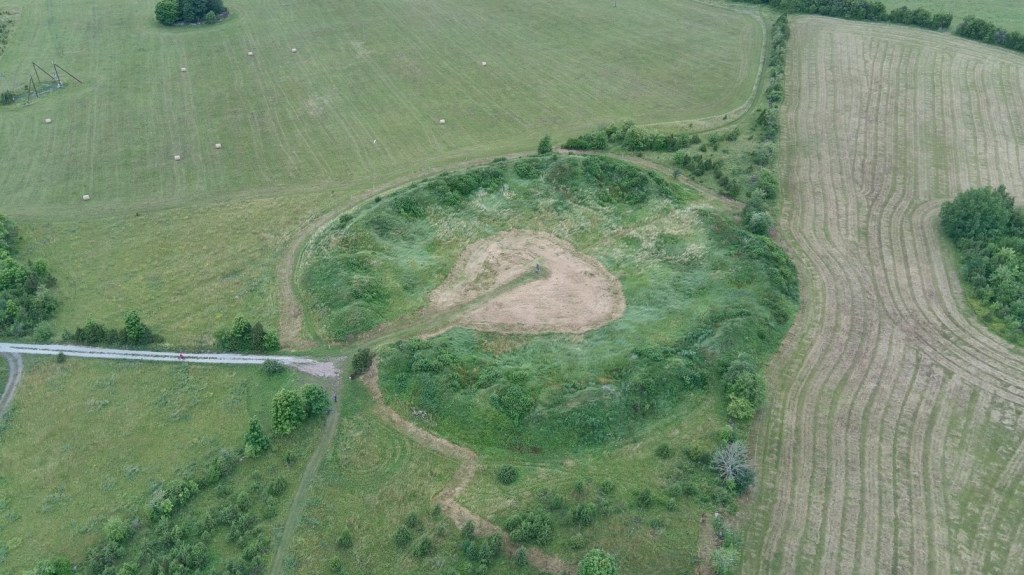
I am brought back to the present by a buzzing in my ear as a bee lands on an orchid in front of me. I am in the ruins of Ismantorp Fortress, an Iron Age fortified village near the centre of Öland, and am imagining what it might be like from the perspective of a young boy living there in the fourth century.

I had cycled up to the fortress after we had arrived at Stora Rör, and had marvelled at the massive circular stone wall, the stone foundations of 95 houses arranged inside each separated by a narrow alleyway, and the central public square with a pit.
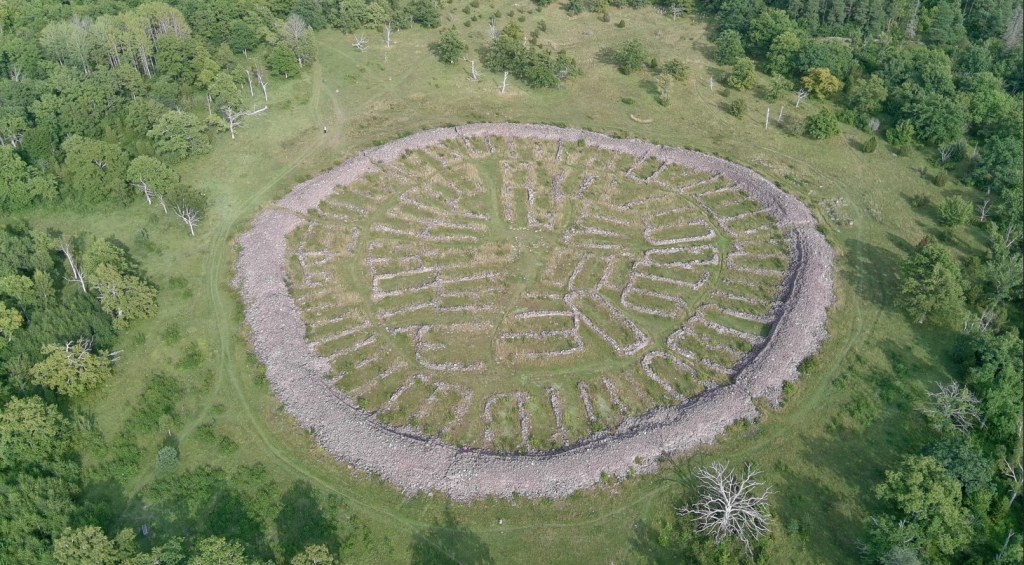
Ismantorp Fortress, Öland.

“The Ismantorp Fortress is an enigma”, says the panel. “The walls suggest that it had a defensive function, but it is a puzzle why there are nine gates. Gates are hard to defend, so it makes more sense to have just one or two. Some experts think that it might have been a fortified religious centre similar to some Slavic castles. Other theories say that it might have been a training centre for warriors.”

The stone walls surrounding Ismantorp Fortress.

Whatever its purpose, archaeological digs so far have unearthed only an arrowhead and a belt buckle, suggesting it wasn’t lived in intensively, or was abandoned deliberately over a period of time. More digs are planned, but for the moment Ismantorp remains an enigma.
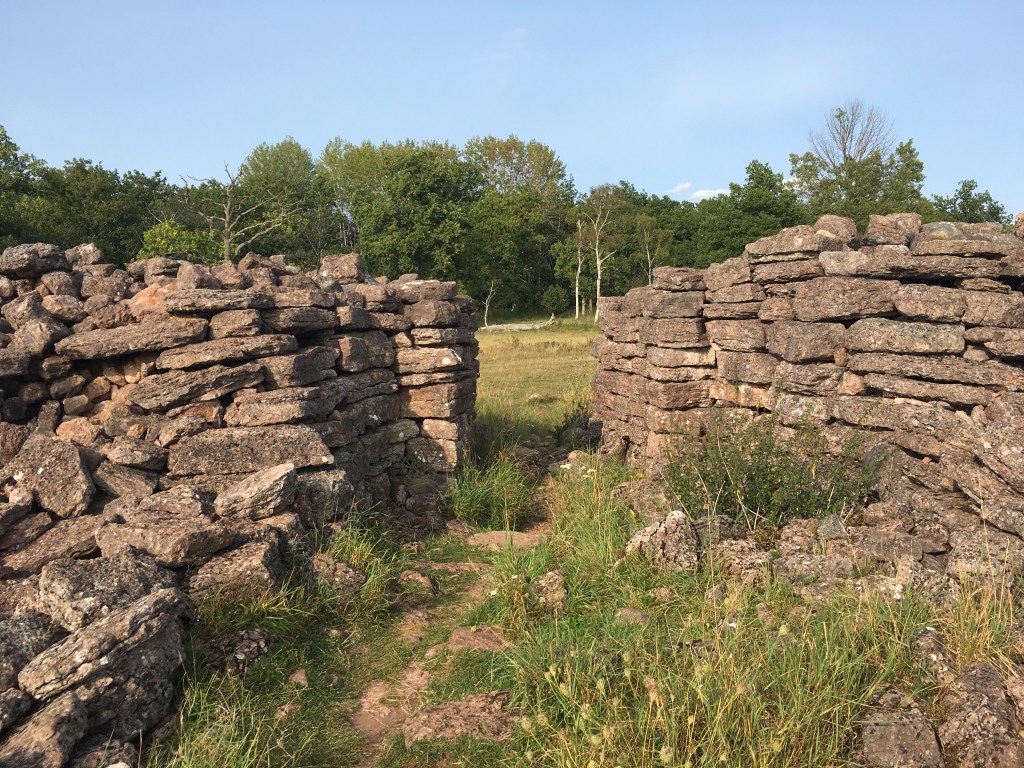
One of the gates of Ismantorp Fortress.

On the way back, I get a puncture. I must look a bit forlorn, as a couple of cyclists stop to see if I need any help. Luckily I have the puncture repair kit with me, and I assure them, not entirely convincingly, I will probably manage.

That deflated feeling.

“Well, if you do need any help, our car is just parked over there”, they say, pointing to a small car park. “We’ll be there for a while loading our bikes and having a coffee. Feel free to come over if you can’t fix it.”

It’s good of them. But I manage to get the wheel off and the tube out, find the hole by listening for the whistle of air, apply the rubber solution around it, wait for it to dry, then put on the patch. It works! Waving a cheery thank you to the other cyclists, I continue on my way.

In the evening, we have dinner at the restaurant with Klaus and Claudia, our German neighbours. They are from Mannheim, and have been cruising the Swedish archipelago in their boat, Saari.

Saari is the Finnish word for ‘island’”, says Claudia. “We’ve been exploring the islands of the Swedish archipelago in her, but we are on our way back home now. We have to be back in Greifswald by the end of the month to meet Klaus’s son.”

“I’ve been sailing most of my life”, Klaus tells me, as the beers arrive. “My father was a great sailor. I learnt to sail on Lake Constance. He taught me everything I know. I’ve passed it on to my son, who is also an excellent sailor.”

I suddenly feel very inexperienced. At least I know the pointy end is the front, and the blunt end is the back.

“They’re called the bow and the stern, aren’t they?”, says the First Mate helpfully. She’s the expert.

When we get back to the boat, I decide to have a post-prandial dram before turning in.

Spencer pontificates.

“These ring fortresses are quite interesting”, says Spencer, swinging by a thread from the canopy. “It was during what is called the Migration Period in European history, between AD 300-500. At the time the Western Roman Empire was declining, and its weakness allowed lots of different peoples to migrate across the continent. It was a chaotic time and people built fortified villages to protect themselves from marauders.”

“What sort of peoples do you mean?”, I ask.

“A lot of it was driven by the Huns”, he responds. “They invaded from the steppes of Asia, and their military prowess and brutality allowed them to sweep across Europe. Then there were the Goths who were originally from Scandinavia, but had already migrated from there to present day Poland, and were pushed by the Huns from there to the Black Sea area, from where they attacked and destroyed Rome. One branch, the Visigoths, ended up in Spain, while another, the Ostrogoths, established themselves in Italy. Other tribes were the Slavs and Avars who pushed into Europe from the east. Once all this movement had settled down, the resulting pattern of people formed the basis of the different nations that we see in Europe today. So in a sense, you are all descended from migrant stock.”

From Wikipedia (Mapmaster CC BY-SA 2.5)

“But that was all on continental Europe”, I say. “Why would they need to build fortified villages here in Öland? Weren’t they out of all this chaos?”

“Well, Öland was quite well connected during this period,”, he answers. “Not only because of its shared cultural and religious practices with the Germanic world, but also because it was part of a trading network with the rest of Europe. Goods such as amber, furs, and even slaves were traded, and Roman coins have been found on Öland. Even though it wasn’t affected by the mass migrations in other parts, it would nevertheless have been exposed to the influx of new ideas, technologies, and people, and the unrest that they bring.”

“Time to go to bed”, calls the First Mate from the cabin. “That’s enough talking to that spider. You’re stopping me from sleeping. We need to get going in the morning.”

A musical interlude, a broken spell, and a Viking hoard of silver

Ruby Tuesday, Ruby Tuesday”, crackles the VHF radio. “You are cleared to leave the harbour. Please proceed carefully. Good watch.”

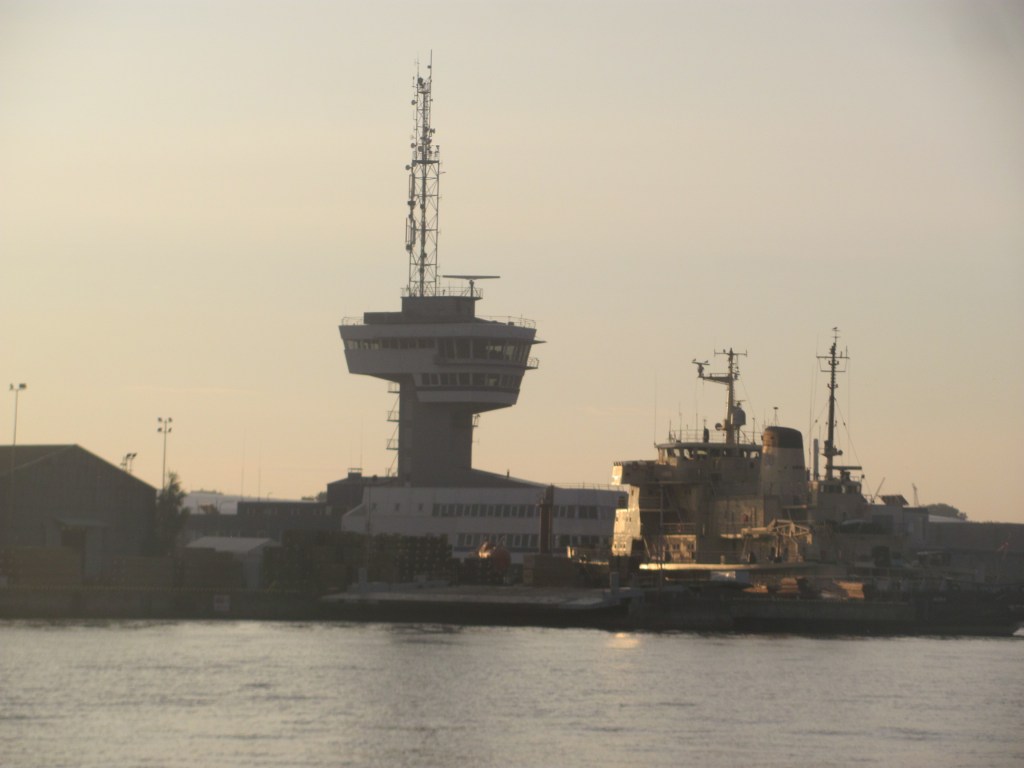
It’s five o’clock in the morning, and still dark. I have just called the Ventspils Harbour Control to request permission to leave the harbour. It all sounds a bit formal, but Ventspils Harbour is a busy commercial harbour, and it wouldn’t do to get run over by a giant container ship leaving at the same time. For a start, the First Mate would never forgive me.

“Harbour Control”, I call back. “Thank you. We’re leaving now. Out.”

Navigation lights on, we edge out from the marina into the main harbour. I can hardly see the dimly-lit instruments in front of me, but I steer for the red and green blinking lights at the harbour entrance. There are a lot of different lights in a harbour, and it’s not always easy to pick out the ones that we need. But somehow we make it, and a few minutes later we are in the open sea and following the line of winking buoys marking the narrow deep-water channel out of the harbour.

“I think that our Danish neighbours are following us”, says the First Mate. “I can see their lights just coming out of the harbour. They are also heading for Fårösund.”

Ruby Tuesday, this is Agnete”, says the VHF. “We are behind you. We are going to head for the middle of Gotland, then turn north once we get there.”

“OK”, I respond. “We are heading northwards now. We will see you in Fårösund.”

The wind is from the north, but is predicted to back to the northwest, which will force us to turn in a more southerly direction, so I want to have some north up my sleeve so that we can make it into Fårösund without beating against the wind. I am puzzled as to why Agnete wants to go south and beat against the wind near Gotland. They must know something we don’t.

“I hope your readers will understand all that”, says the First Mate.

Sunrise over Ventspils.

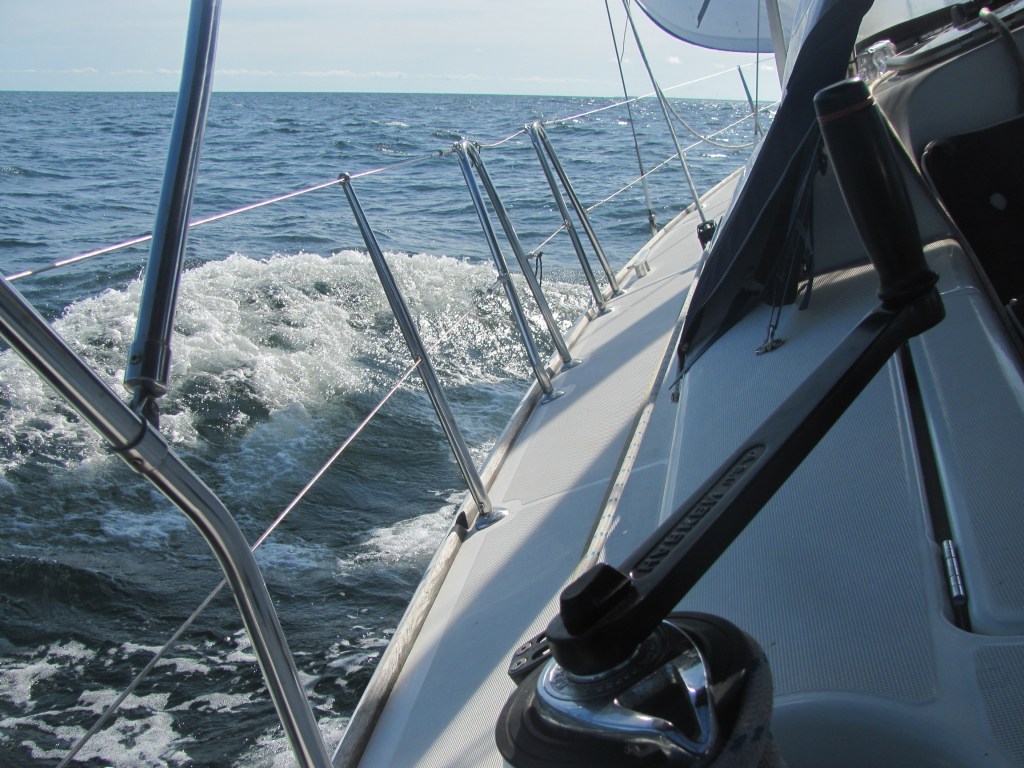
The sun sets the clouds on fire over the receding land, and before long, it is a new day. The sea is calm, and with her sails trimmed, Ruby Tuesday settles into a comfortable close reach. We are on our way to Gotland, 90 nautical miles away. Agnete disappears over the horizon to the south.

“I was talking to one of our neighbours in the marina yesterday”, says the First Mate. “She was saying that it took her father and her 22 hours to come over in the opposite direction earlier in the week. The wind was more-or-less against them all the way, and it was very rough. Her father is getting on in years, and thinks that he is still up to it, but he isn’t really. She said never again.”

That’ll be me in a few years’ time, I think. I wonder if I will be honest enough to know when I am ‘past it’?

“Here’s your breakfast”, she continues, handing me a bowl of muesli topped with a sliced banana. “I’ll get your cup of tea in a minute.”

What would I do without her?

The miles slide under our keel effortlessly. As forecast, the wind backs to the north-west in the mid-afternoon, and we need to adjust our course southwards. But we are far enough northwards that we should be able to reach Fårösund without tacking.

On our way to Gotland.

But as we approach Gotland, the wind gradually dies. We try to keep sailing for as long as we can, but eventually the wind drops to almost nothing and the sails flap uselessly. There is no option but to motor for the last little bit into Fårösund. Miraculously, Agnete appears from over the horizon sailing at an impossible angle and beats us to the harbour.

“What was the rationale for going south?”, I ask them after we have tied up.

“Normally the wind will curve around the bottom of Gotland and blow northwards parallel to the east coast”, they say. “We were hoping to catch that to take us into Fårösund. But because of that big area of calm, it didn’t work. We just motored for the last couple of hours.”

Our friends, Simon & Louise, whom we had last seen in Kökar in the Åland Islands, arrive in the mid-morning. They have sailed through the night from Saaremaa island in Estonia.

“It was absolutely beautiful”, says Louise. “It was pitch black, and you could see the Milky Way and every star clearly. No other lights anywhere to be seen for most of the time, apart from the occasional ship in the distance. An experience I wouldn’t have missed. But the wind dropped to almost nothing at about four o’clock. We had to motor the rest of the way.”

It was the same lull that we had experienced in the afternoon, just moved north a bit.

Simon & Louise arrive.

“I read that there is a musical performance on tonight in the next village”, says Simon. “Folk music. Would you be interested in going to it?”

In the evening, we cycle up to the next village about five kilometres away. We are a little late, but it hasn’t started yet.

“We waited especially for you”, jokes the man on the door, taking our money and giving us the tickets. “But it’s pretty packed. There are only four seats left.”

We cram into the small wooden barn, and, with all eyes on us, take our places somewhat self-consciously in the front row. The musicians, a group of four girls, introduce themselves straightaway. Two of them are from Canada, the other two are from Sweden.

“We met at a festival in Glasgow”, one of the Canadian girls tells us. “We found out that our repertoires were very similar, so we decided to work together for a season and tour around Sweden first, then Canada. When we are together, we call ourselves ‘Atlantic Crossing’ to indicate that we are collaborating across both sides of the ocean.”

For the next two-and-a-half hours, we are treated to an exquisite performance of familiar and unfamiliar folk songs, sung and played on two fiddles, a cello and a harp. One of the Canadians also entrances us with her step-dancing skills.

“Atlantic Crossing”.

Unfortunately, it starts to rain just as we retake our seats after the interval. After the performance finishes, it is pouring down. We consider waiting for a bit to see if it eases, but, if anything, it seems to be intensifying.

“I think we will just have to brave it”, says the First Mate. “Come on. Let’s get going.”

We arrive back at the boats completely drenched.

“They were fantastic, weren’t they?”, says Simon as we lock the bikes. “Well worth getting wet for. The Canadian girl had such a beautiful smile.”

The rain stops overnight, and the next day dawns bright and sunny.

“We were thinking of getting the bikes out and doing a cycle around Fåro island”, I say. “We were going to make some sandwiches and have a picnic. Interested?”

“Definitely”, says Louise.

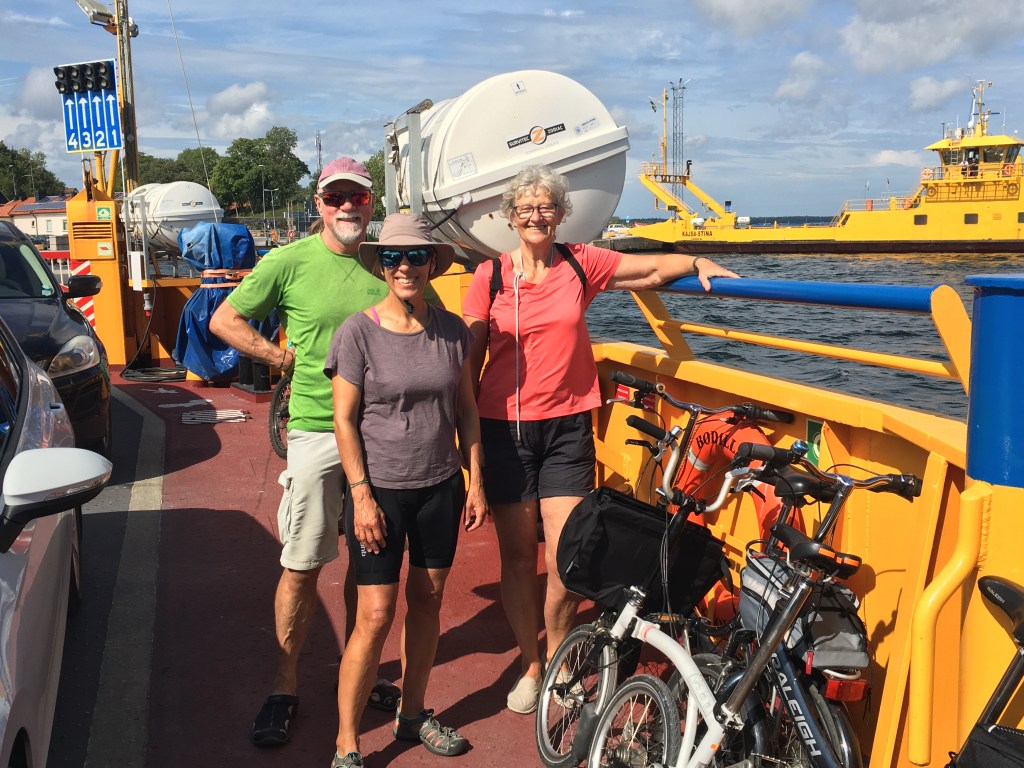
Fåro is the small island to the north of Gotland, separated by the Fårosund. We take the free ferry across to the small landing on the other side, and start pedalling.

On the ferry across to Fåro.

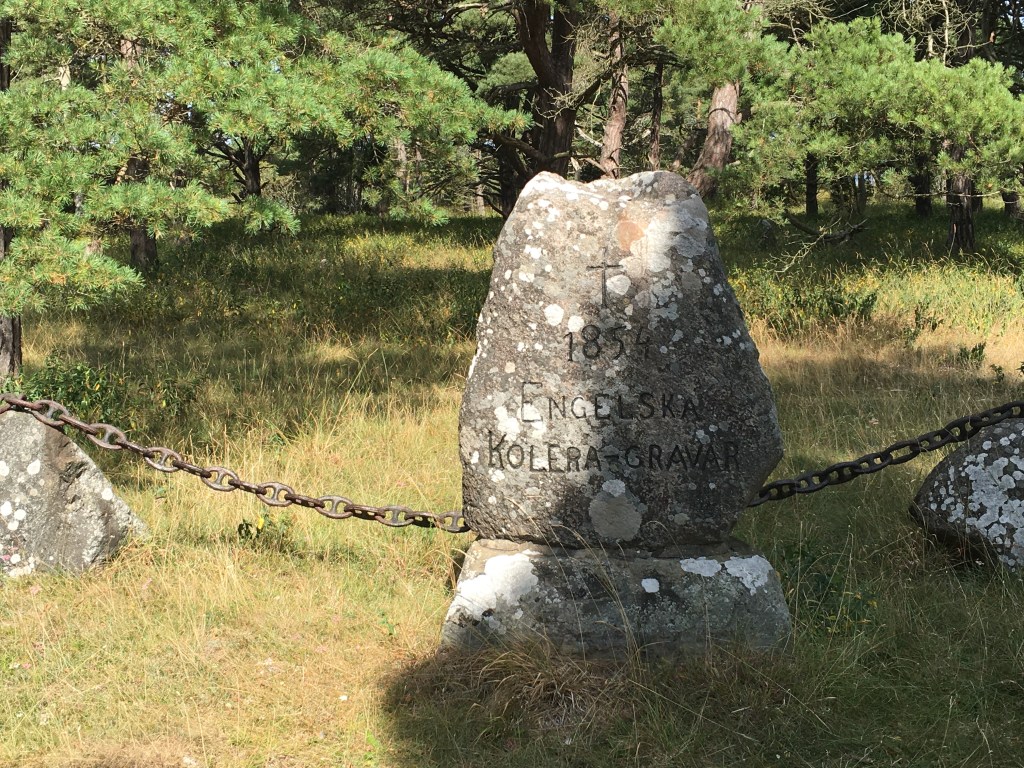
First stop is the so-called English Cemetery where English seamen who had died of cholera during the Crimean War were buried in 1854.

The Englsih Cemetery.

Further on, we pass the church in the village of Fåro in the centre of the island. Ingmar Bergman is buried in the churchyard.

Fåro church, where Ingmar Bergman is buried.

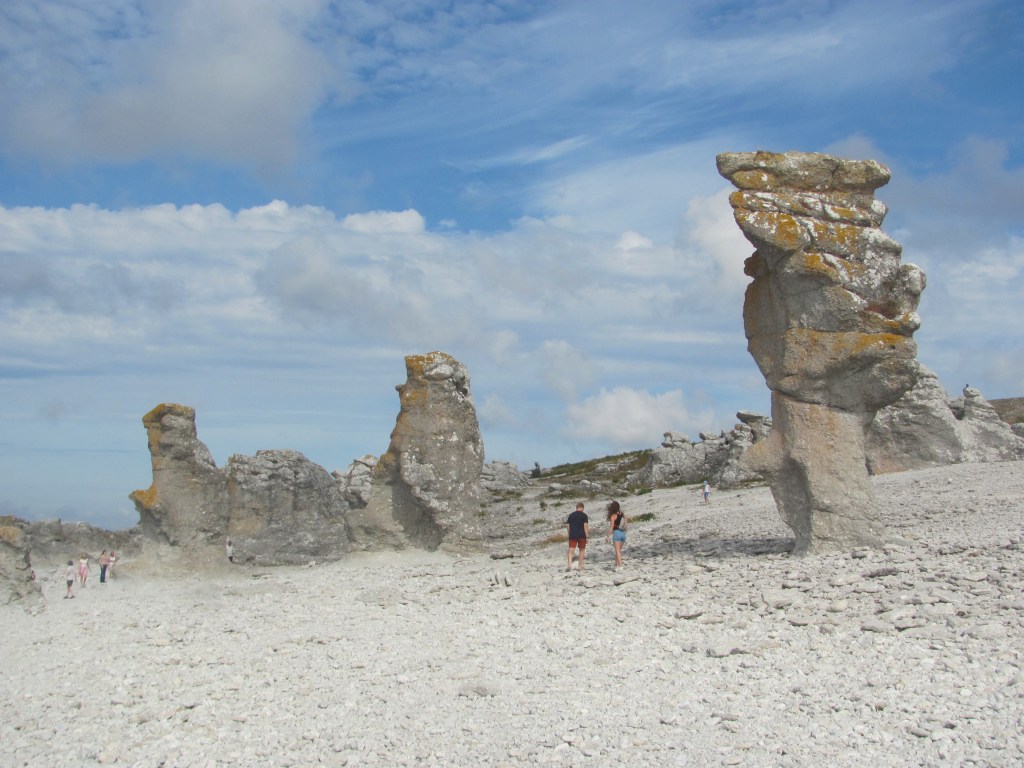
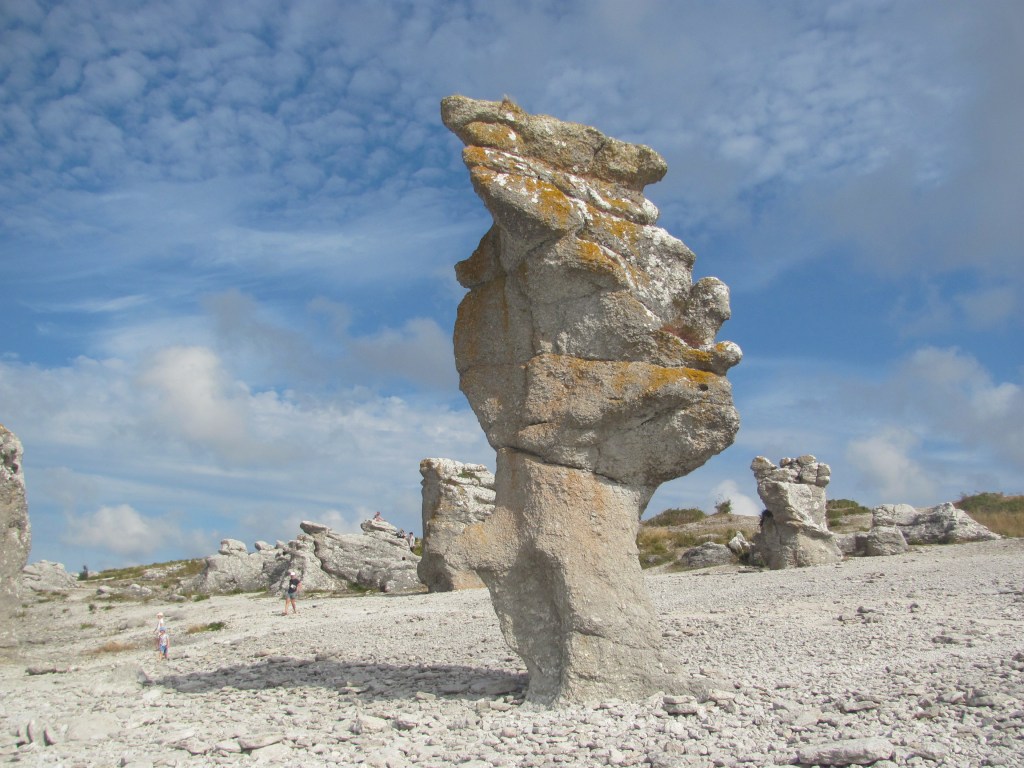
We eventually reach the spectacular sea-stacks at Langhammersgubben at the top of the island.

The rauks at Langhammersgubben.

“Gotland was the bed of a shallow tropical sea during the Silurian period, about 430 million years ago”, the guide book says. “When the creatures in the sea died, their bodies sank to the bottom and were slowly transformed into limestone. Over time, plate tectonics moved the seabed from the tropics to where it is now, and also pushed it up above sea-level, exposing it to the forces of wind and wave erosion. Limestone varies in its hardness depending on what it was formed from, and these amazing shapes, called rauks, were sculpted after the softer limestone was eroded away, leaving the more resistant standing.”

A Langhammersgubben rauk.

“Let’s have a swim and then have our picnic on the beach”, says Louise.

After lunch, we cycle back along the coastal route. On the way, we pass Helgumannens fishing camp. Apparently it is named after a monk who used to hold services there every morning and evening. Nowadays it is used as a base for sturgeon fishing.

Helgumannens fishing camp.

After a quick stop for some coffee and cakes, we are soon back to the ferry.

“Well, I enjoyed that”, says the First Mate. “I wonder how far it was?”

I work out later that it was 44 km. Not too bad for the small folding bikes.

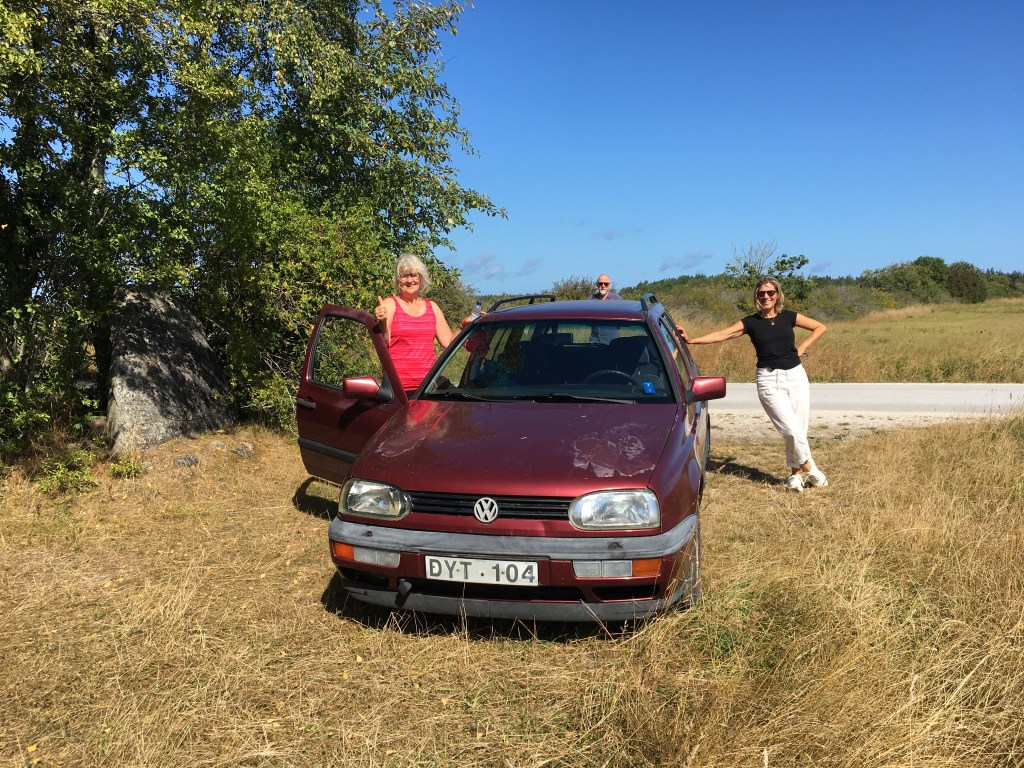
Strong winds are forecast for the next few days, so we decide to stay put in Fårösund and use the opportunity to explore other parts of the island by car and bus. The car hire firm takes pride that all of its cars are pre-loved, and even refers to itself on the website as “Rent-a-Wreck”. But it does us proud.

The self-styled “Rent-a-Wreck”.

The sun starts to rise, casting a cold light over the forest. Through the early morning mist, I see the dim shapes of people moving amongst the trees, making their way to the clearing to attend the ceremony. Yesterday, we had prepared the old king’s body, laying it on the oaken bier, dressing it in the finest furs, and placing his sword, bronze shield, and treasured possessions that had served him well during his life alongside it.

The stone ship we had built for him stands in the centre of the clearing, its great stones forming the outline of a vessel that will carry him to the gods. They have been gathered from all over the island, with only the best stones selected as befits a beloved king.

The sun rises higher, and the chants begin, recounting the stories of Tjelvar’s deeds, how he had brought fire to our island and given it life, breaking the ancient curse that once bound Gotland to the sea. We had told and listened to these stories many times, but today there is a finality to them, as we begin to realise that it is the end of an era.

The young men lift the bier and carry it to the stone ship, laying it in the centre. The women approach, their torches lit from the sacred flame, and circle the ship, lighting the pyres as they go. The flames crackle as they take hold, their light illuminating the sombre faces with a ghostly glow. The smoke rises, carrying our prayers to the gods, the scent of burning wood and herbs filling the air. The heat of the fire reaches us, reminding us of the gift that Tjelvar had brought to our cold, dark island.

When the last of the flames has died down, we cover the ashes with stones. The people slowly leave, and the clearing is silent once more, the great stone ship standing as a monument to the man we had revered and followed. The world is different now that he has gone, the future more uncertain, but I know that his spirit will always be with us, guarding Gotland as he had in life, from now until the end of days.

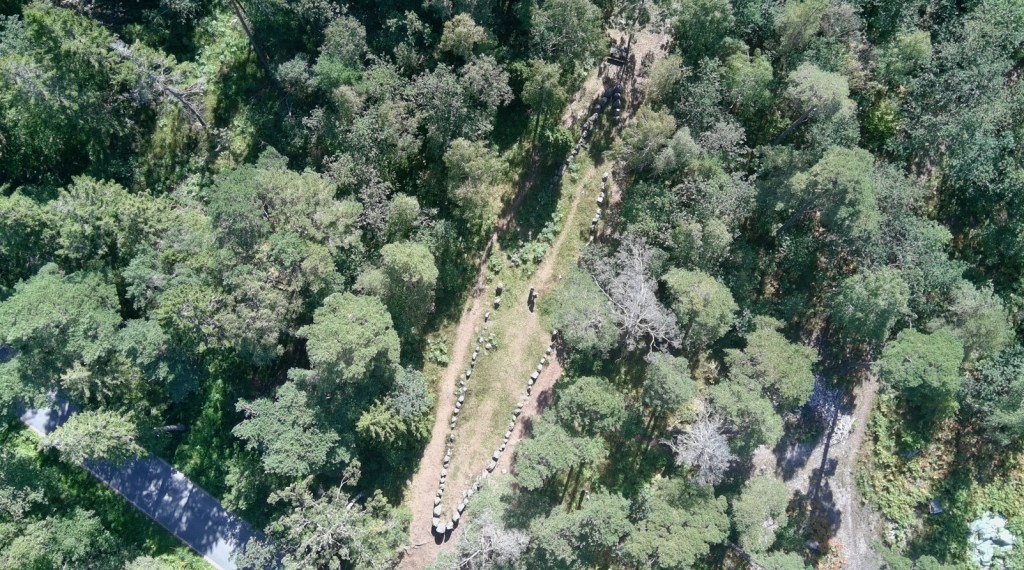
Tjelvar’s Grave ship burial.

“Are you day dreaming again?”, a familiar voice says. “Hurry up. It’s time for lunch.”

I awake from my reverie. It’s the First Mate. We are at Tjelvar’s Grave, a remarkable stone ship burial in central Gotland. I am imagining what the burial might have been like. The story behind the grave is told in the Gutasaga, a saga of Gotland’s pre-Christian history. Apparently the island of Gotland was once under a powerful curse that made it rise above the water every evening and sink beneath it again every morning. This obviously was a problem for anyone who was wanting to settle on it. One day, a seafarer called Tjelvar, had the brilliant idea of landing on the island during the night and lighting a fire to break the spell so that the island wouldn’t sink back into the depths in the morning. It worked, and Tjelvar is credited not only with ensuring Gotland became permanently dry land for people to live on, but also that they would have fire to cook, keep warm, and smelt metal. He became the first king of Gotland, ruled his people wisely, and lived a long and contented life.

There are other stone ship burials on the island too. Particularly impressive is the line of three in a row all pointing to a Neolithic dolmen.

One of a line of three Viking ship burials at Gnisvärd.

The next day, we decide to take the bus down to the capital, Visby.

“Visby is another of the cities that were part of the Hanseatic League in the 1200s, and became prosperous on the back of it”, I read on the way down. “In 1361, Gotland was conquered by the Danes, but Visby was taken over not long after by pirates by the name of the Victual Brothers. They also didn’t last long as in 1398 the Teutonic Knights came and chased them off, but in the interests of peace with the Kalmar Union, the Knights sold it to Queen Margaret of Sweden, Denmark and Norway. With the breakup of the Kalmar Union in 1523, it remained in Danish hands, but was returned to Sweden in 1645 and has stayed with them since, apart from a brief three-week occupation by the Russians in 1808.”

As we arrive, we see the city walls, which have been remarkably well preserved.

Visby city wall.

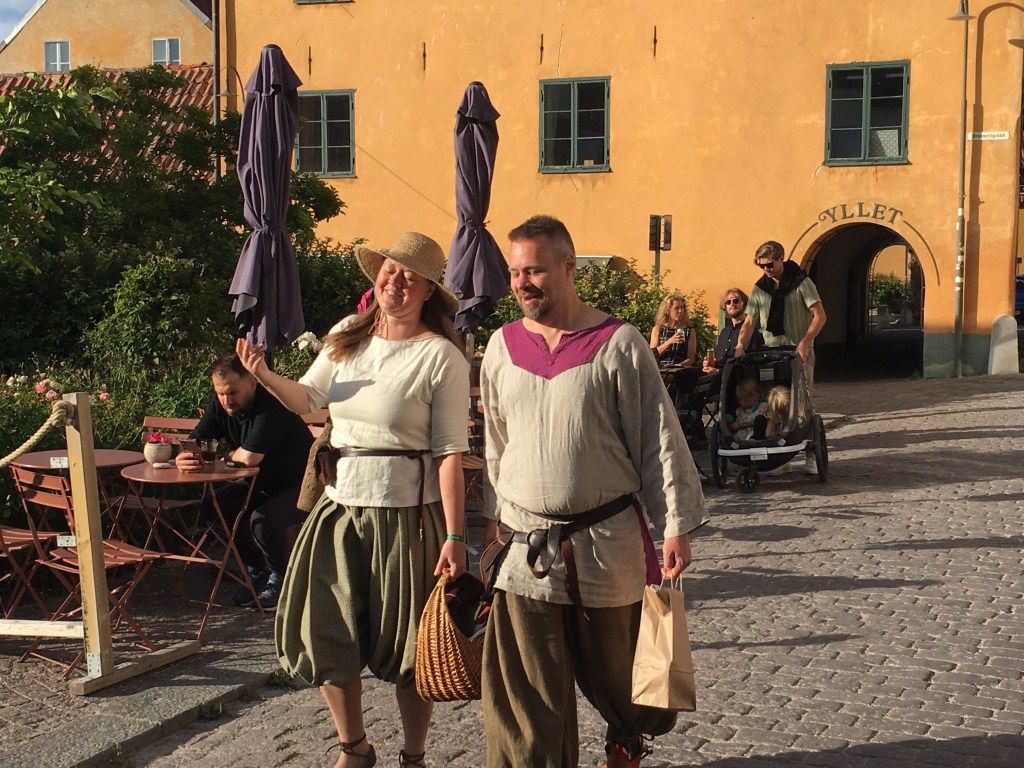
As it turns out, it is Medieval Week, an annual event in which the locals all dress up in medieval clothes, speak Gutnish, and do medievally kinds of things.

Medieval Week in Visby.

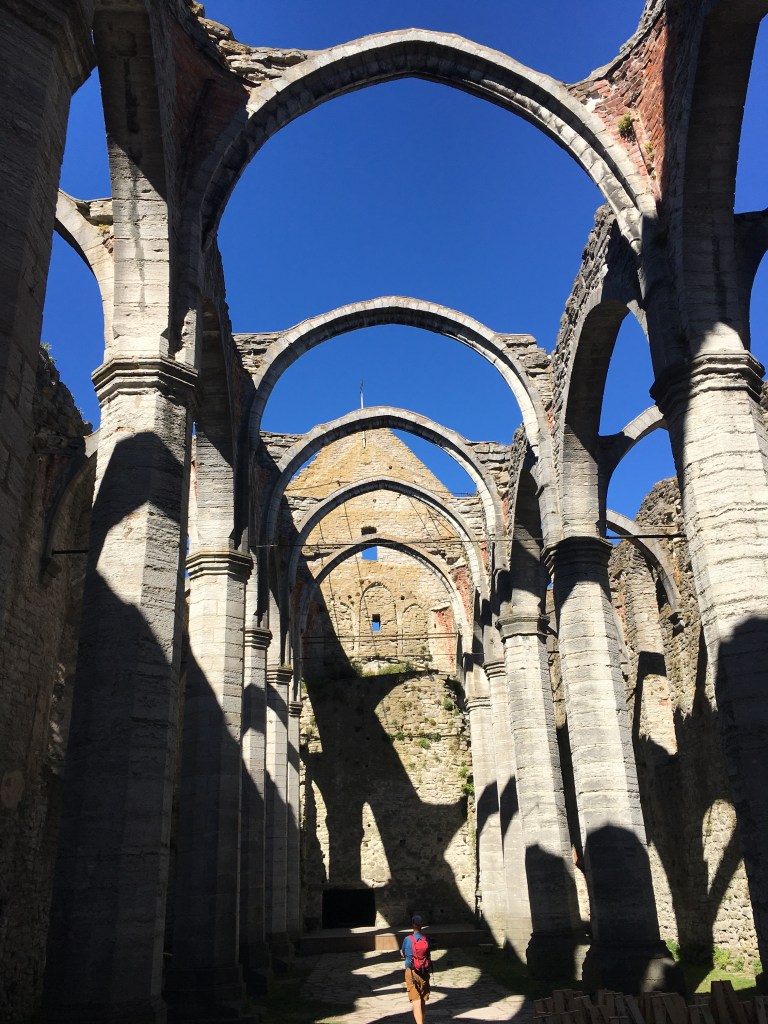
We start off in the Market Square dominated by the impressive ruins of St Karins Kyrka. Concerts are held in the ruins in the summer – indeed, we even see a poster showing ‘Atlantic Crossing’ performing here last week.

The Market Square and St Karins Kyrka.
Ruins of St Karins Kyrka.

Through a narrow street off the Market Square is the Sankta Maria Kyrka, with its ornate interior and three towers capped by baroque cupolas.

Sankta Maria Kyrka.

We wander through the narrow cobbled streets lined with Hanseatic warehouses. It isn’t difficult to picture what it must have been like in medieval times with all the costumes around.

Former Hanseatic warehouse.

After lunch, we visit the Gotland Museum, itself an old Hanseatic warehouse, and spend an absorbing couple of hours learning about the history of Gotland.

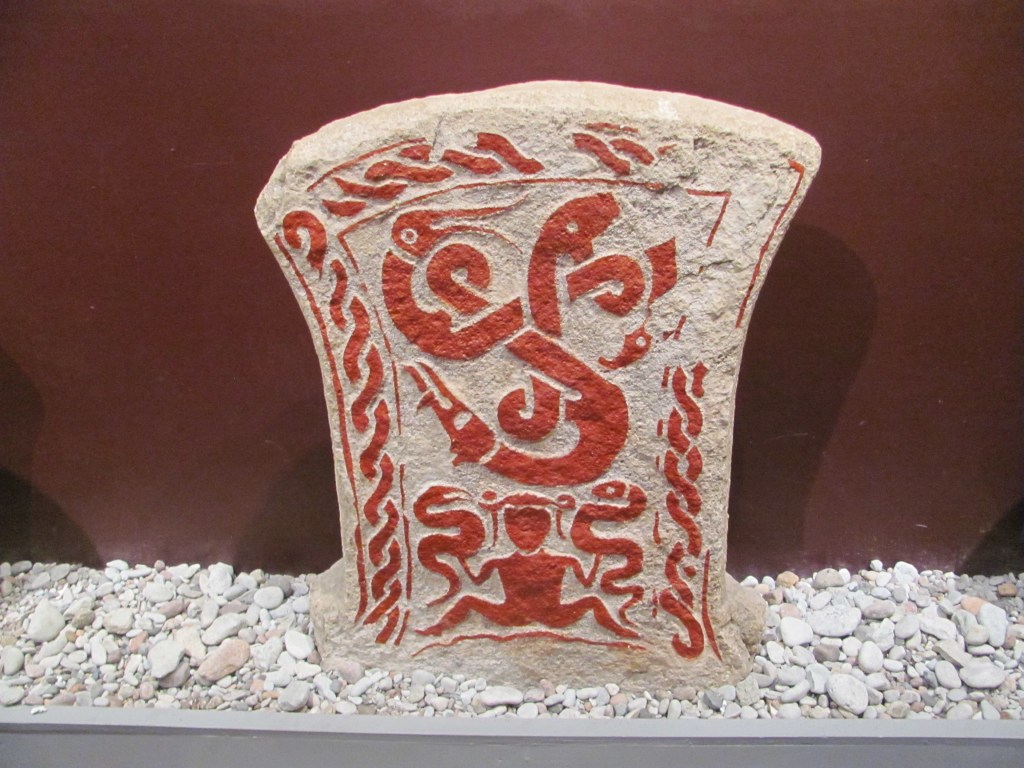
First up is a particularly fine collection of picture stones depicting legends and everyday life in Viking times. Thought to be memorial stones of some kind, they differ from rune stones in that they have no text on them.

Gotland picture stone.

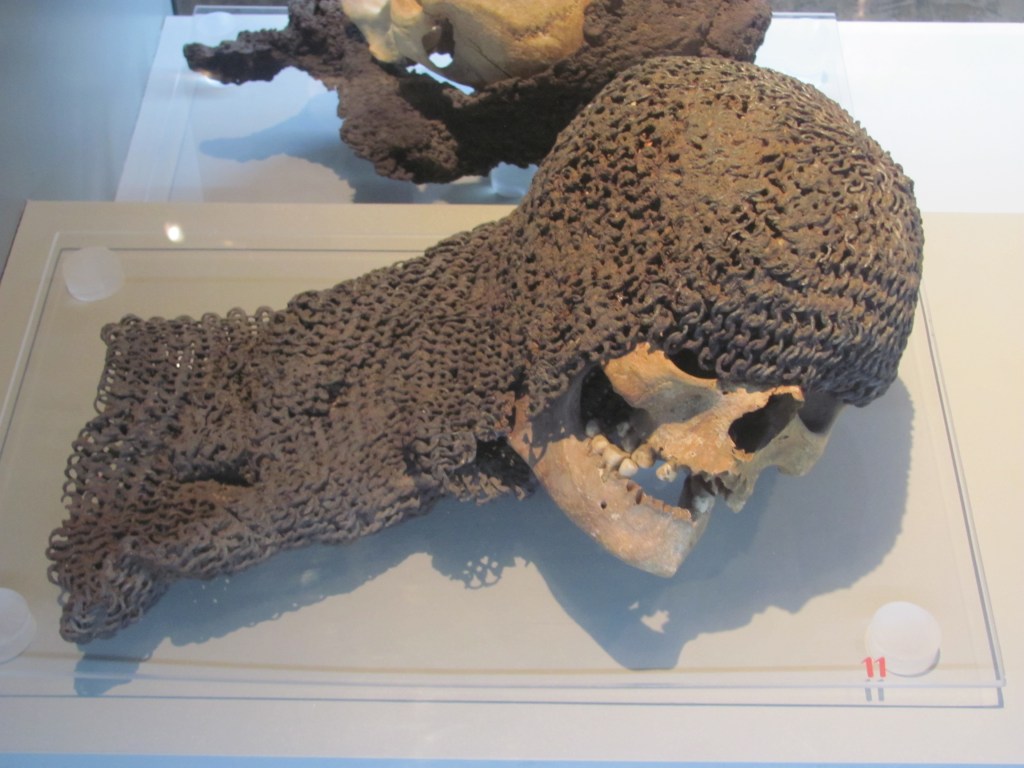
We learn of the Battle of Mästerby in 1361 – when the Danes under Valdemar IV invaded Gotland. The Gotland farmers got together to resist them, hoping that the swamps nearby would stop the Danish soldiers, but unfortunately it had been a dry summer and the swamps had dried out. The Gotlanders were massacred by the more professional well-armed soldiers, with 1500 farmers killed.

Casualty of the Battle of Mästerby in AD 1361.

We see the Spillings Viking silver hoard, so called because it was discovered on Spilling farm in the north of Gotland. The hoard had been buried under the floorboards of a Viking storage building on the farm sometime in the AD 800s. A lot of the hoard consists of coins from the Islamic world.

The Spillings Viking silver hoard, Gotlands Museum.

“That was all really interesting”, says the First Mate in the bus on the way home. “I never really knew much about Gotland before. It’s a fascinating island. But I guess we need to press on.”

“The weather looks good for sailing for the next few days”, I say. “I suggest we sail down from Fårösund to Visby tomorrow, stay overnight, then head across to Byxelkrok on the island of Öland.”

“Byxelkrok”, she says. “What a funny name. I wonder what it means?”

A seal-hunters island, a rough crossing, and a town of cows

The sun peeps over the horizon, silhouetting the silent dockside cranes that look like giant sleeping triffids dreaming about destroying the human race.

Leaving Riga in the early dawn.

“Aaaargh, I don’t like these early starts”, says the First Mate. “Couldn’t we have left at a more reasonable hour?”

We had cast off from the marina in Riga at 0500, and are motoring down the Daugava River to its mouth on our way to the small island of Ruhnu in the middle of the Gulf of Riga, 60 NM away. The forecast is for the wind to drop off around midday, so by leaving early, we hope to catch some breeze at least before we have to use the engine.

The chart plotter bleeps, warning that we are on a collision course with a large cargo ship coming towards us in the early morning darkness. I adjust the autopilot a couple of degrees so that we safely pass alongside it.

Avoiding a collision.

We are now back to following Racundra’s route after having deviated from it when we had left Kuivastu to sail eastwards to Kuhnu and Pärnu.

Ransome had had Racundra built on the shores of Ķīšezers Lake (called the Stint See in the book), the large body of water to the northeast of Riga, and had sailed her down the Mīlgrāvis channel (then the Mühlgraben) connecting the lake to the Daugava River.

As we pass the junction of the Mīlgrāvis and the Daugava, I look out for the small yellow wooden building that was the Customs House in those days, but of course it is long gone. In its place is a concrete building that looks like the Harbour Control. Google tells me that the Customs Office is now further up the river.

Where Ransome’s Custom House once stood (I think!).

I try to imagine Ransome rowing across to the Customs House in his small dinghy, clutching his boat’s papers to gain clearance to leave Riga. And the story told by his companion, the Ancient Mariner, about the German sailor tied up in the Mīlgrāvis being unwittingly sold his own rope by a crafty thief who had climbed on board his boat at night, stolen a newly purchased coil of rope, and had sold it back to him in the morning.

“It’s not often the Germans get taken for a ride!”, says the First Mate.

She should know.

We motor past the Winter Harbour where Ransome threw his clearance papers wrapped around a stone across to the official waiting on the wharf, and reach the lighthouse to port as we leave the river and enter the Gulf of Riga proper. Immediately the wind picks up from the west, the sails fill, and we are on our way. At least we are not becalmed at this stage as Racundra was. Gradually the lighthouse disappears from sight behind us, and we are back on the open sea.

Passing the Riga lighthouse at the mouth of the Daugava River.

My mind turns to what we had learnt of Ruhnu in the small museum in Haapsalu devoted to the Swedish settlers on the Estonian coast. They had arrived in Ruhnu to hunt seals sometime in the 1200s, had settled there, and over the generations had eked out a living by sealing, fishing and farming. They had developed a unique form of archaic Swedish based on that spoken on the mainland in the 1200s, and. a type of communal self-governent. As on the neighbouring islands, they had been granted a charter by the Swedish king which allowed them to preserve their lifestyle and customs under Swedish law. Even the German Bishop of Courland who had administered the area had written a letter in 1341 confirming that this charter would be respected under his rule.

Since then, different rulers had come and gone – the Swedes, the Russians, the Germans again – but the Ruhnu islanders had remained staunchly individualistic, “… preserving their own life and their own customs in an odd kind of private Middle Ages, centuries removed from the modern competitive struggle of the continent”, as Ransome had written.

But he couldn’t have foreseen that in a mere 22 years later, in 1944, the islanders would desert their island en masse and return to Sweden to avoid rule by the advancing Soviet Union.

“I think I can see Ruhnu in the distance!”, shouts the First Mate, waking me from my reverie.

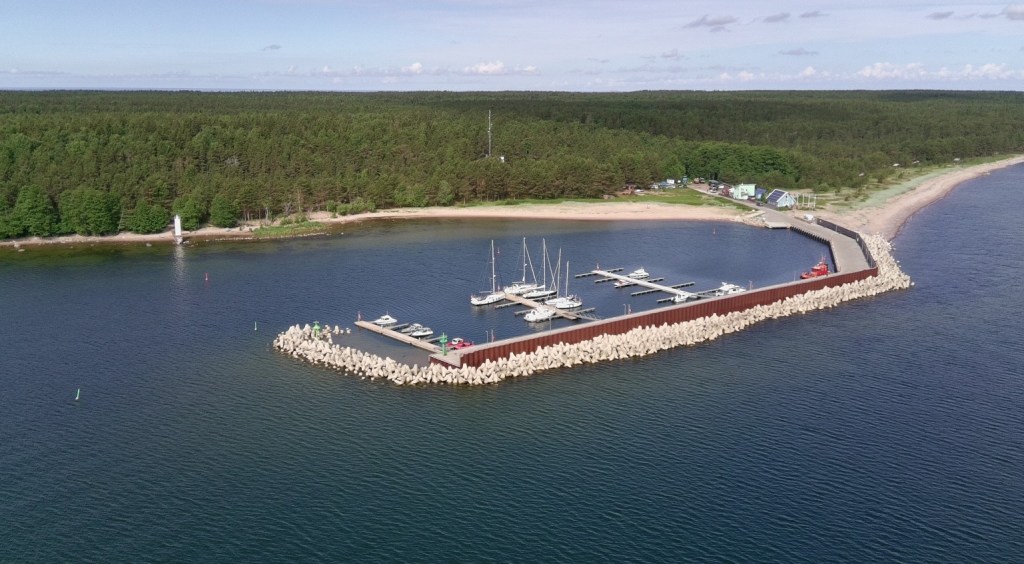
We enter the small harbour and are motioned by the harbourmaster where to tie up. I imagine him to be the modern equivalent of the Russian ‘Keeper of the Light’ appointed by the Tsar that had come to greet Racundra. The harbour is a bit more now than the single dilapidated pier of Ransome’s day, but the sand dunes and pine forests are still there. And there are people! Lots of them.

Ruhnu harbour (Ringsu) today.

Next to us is a small boat with six youngsters on it.

“We’re from Latvia”, they tell us. “We’ve been here a week, but we have to leave at two o’clock tomorrow morning to get back to Riga before the strong winds coming tomorrow afternoon. They are continuing for two days, and we need to be back in Riga by then.”

I do a quick calculation and work out that it will be a close run thing for them. They’ll just make it before the winds are forecast to start.

We go up to the harbour office to pay.

“No, I am Estonian, not Swedish”, says the harbourmaster in answer to my question. “My parents came over here after the Swedes left. At the time of independence in 1991, the government did offer the Swedes and their descendants the opportunity to come back to their homes if they wanted, but hardly any did. A lot of the ones that had left in 1944 had died and their children weren’t interested in moving to a remote island after they had been brought up in Sweden. A few did renovate their old homes and keep them as holiday cottages. I think only a couple of people moved back to live here. So most of the island’s inhabitants are Estonian.”

I wake in the night, and hear the youngsters next door just leaving. It’s three o’clock. They are already one hour late, I think to myself. I hope they make it.

The next morning, we unload the bikes and cycle into the small village in the centre of the island, about 4 km away. On the way, we pass a motorcycle and a pair of gumboots sticking out of the sand.

Perils of speed.

“It’s supposed to warn motorcyclists not to speed”, says the First Mate. “It’s mentioned in the guide book.”

Reaching the village, we come across a stall in one of the front gardens selling home-made beverages.

Local hooch for sale.

“I think that you will like this one”, says the owner. “It’s made from the berries of sea buckthorn. 40% alcohol. I call it Ruhnu Honey so that the ladies won’t feel embarrassed buying it. I only have two bottles left.”

He won’t let us try it first, so we buy it taste unknown. As it turns out later, it has a certain je ne sais quoi.

“It’s too strong for me”, says the First Mate. “It’s like paint stripper. You’ll have to finish it.”

Further on is the road to the lighthouse, described in Racundra as “an ugly structure of red iron tubes“.

“I wouldn’t call it ugly”, says the First Mate. “It isn’t perhaps the traditional lighthouse made of stone, but it has a certain character of its own.”

Ruhnu lighthouse.

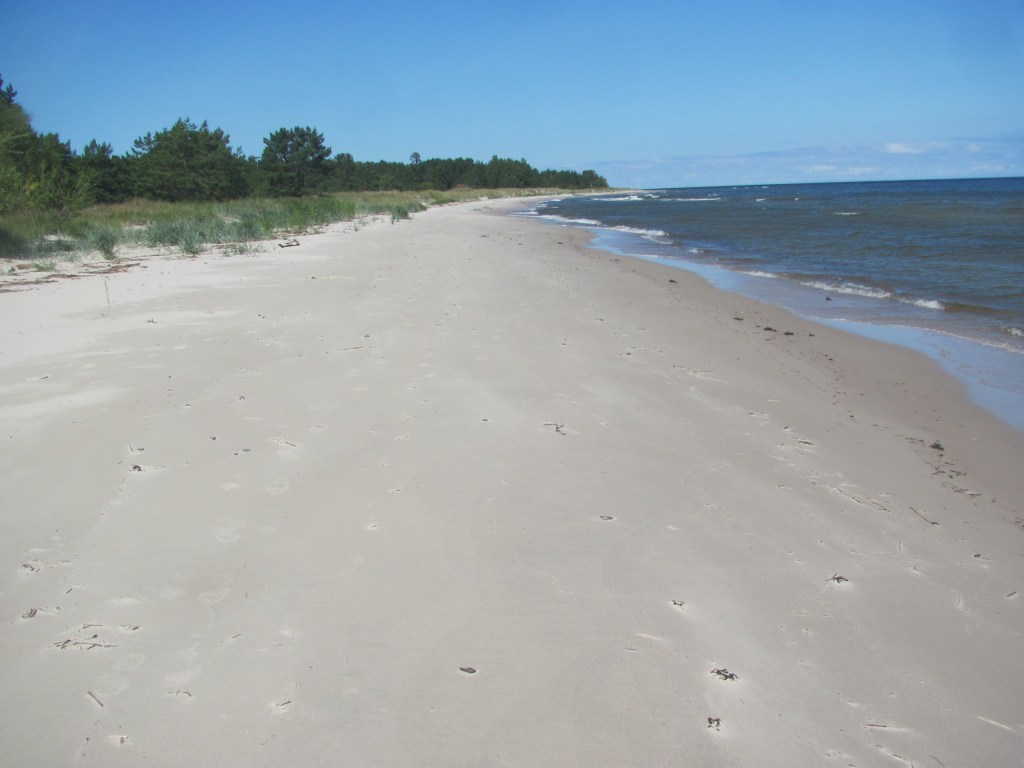
We take the track leading out to the beach. It’s superb. Apparently the sand is supposed to ‘sing’ when you walk along it and make the sand-grains rub against each other. But try as we might, we can’t get them to sing. Just a dull crunching sound.

Limo beach, Ruhnu.

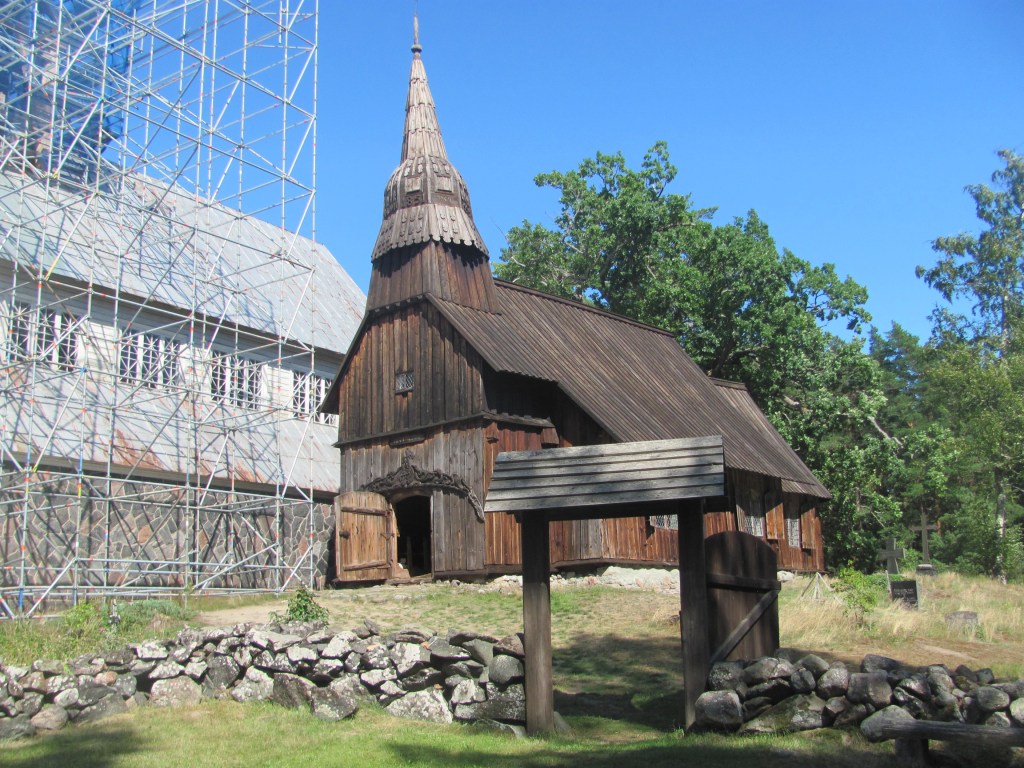
We reach the church, not far from the centre of the village. In fact there are two churches, one wooden, built in 1644, and one of stone, built in 1912. The stone church is having its roof and steeple repaired, and is covered in scaffolding.

“I know it is good that they are repairing it, but it isn’t very photogenic”, complains the First Mate.

Ruhnu churches.
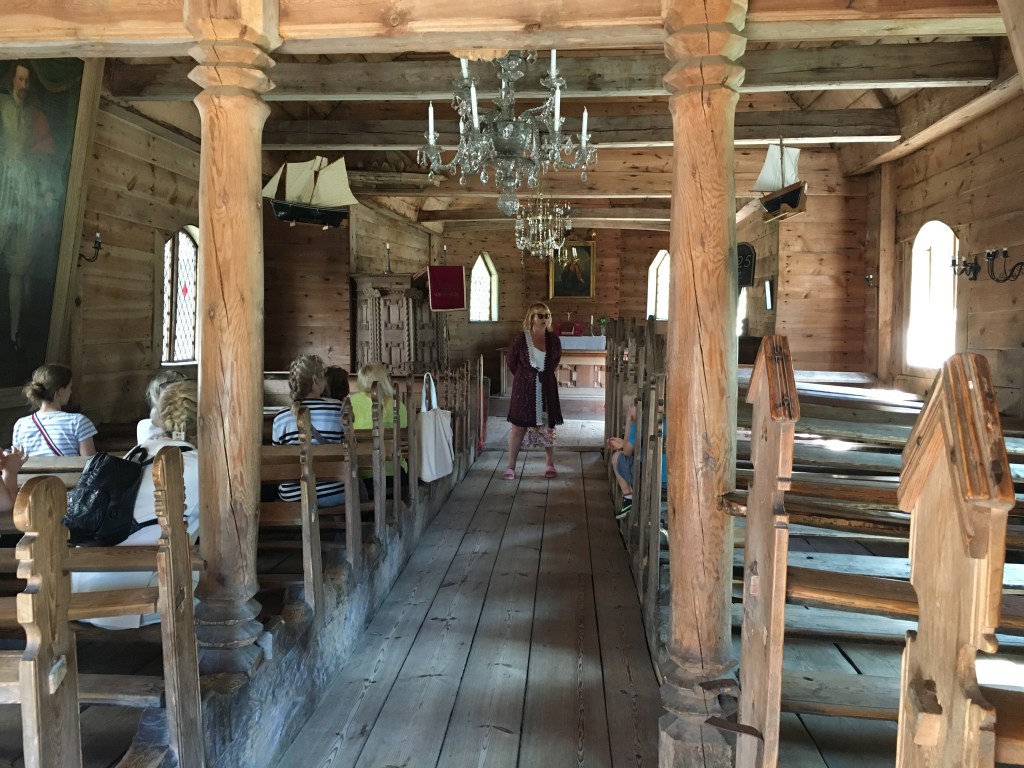
Inside the wooden church.

We come to Liile’s Farm, where coffee and cake is being served. As we sit on the rustic wooden benches and tables outside enjoying the warm sunshine, the dark rainclouds gather from the west. Before long, the first drops are falling.

“Quickly”, I say. “We need to get going. We have quite a long cycle ride back to the boat. We’ll get soaked.”

Halfway back, the heavens open and the rain pours down. We arrive back at the boat drenched.

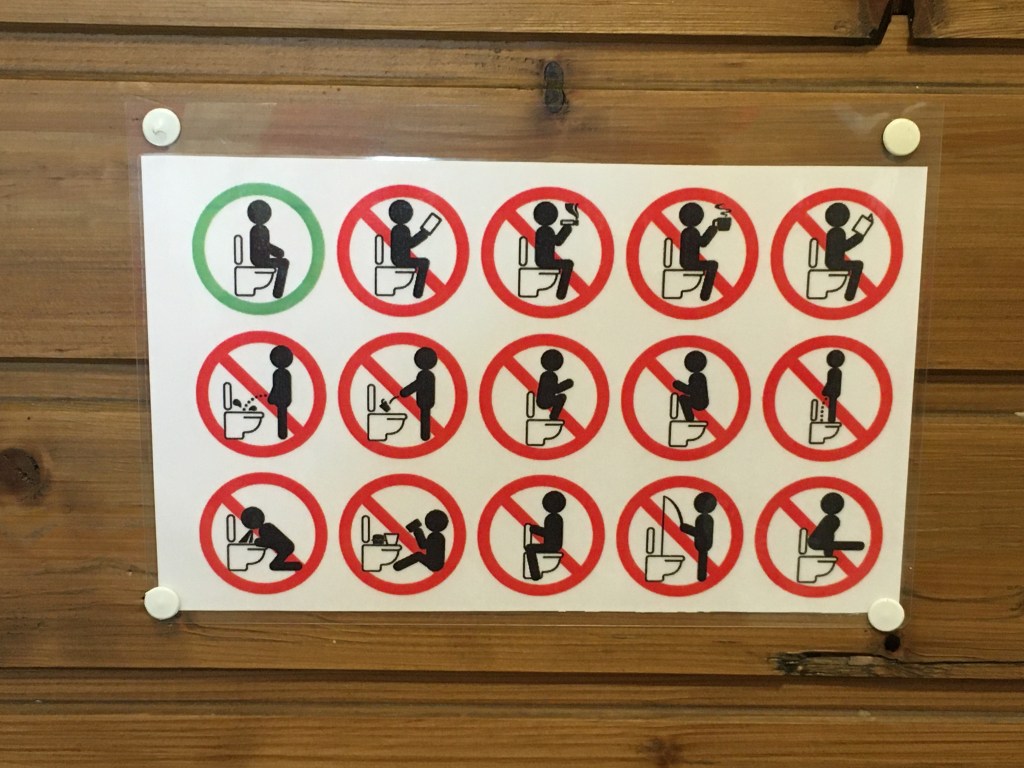
“Did you see the sign in the toilets?”, I ask the First Mate, after my shower to warm up. “It seems that some of the sailors they get here aren’t toilet-trained. I hope that that doesn’t apply to us?”

“Speak for yourself”, she retorts.

Making sure it’s done properly!.

It starts to blow in the early evening. We have put double lines on each mooring point just to be sure. And snubbers on the windward lines to minimise the snatch. Hopefully we should be OK.

The winds continue for the next two days. Eventually they die down. But the forecast is showing that more are on their way.

“I think that we should try and make it to Ventspils on the Latvian coast”, I say. “We have a three day window to do it in. We can overnight in Möntu, and ride out the winds once we get to Ventspils. It’s not ideal, but the alternative is to stay here in Ruhnu for another week.”

Möntu is a small harbour near the bottom of Saaremaa island, and most used as a stepping-off point to cross the Baltic to Gotland. There’s not much there apart from the harbour.

The crossing to Möntu is rough, as the last three days of strong westerly winds have generated a significant swell. The wind also changes to more head on during the day, making it difficult to calculate the best tacking strategy.

“Phew, I don’t really want to do a passage like that again”, says the First Mate, as we tie up in in the sheltered waters of Möntu harbour. “We were heeling far too much for my liking.”

Tied up in Möntu harbour.

The wind dies down during the night. In the morning, the sea is like a millpond. We continue in much calmer conditions, and reach Ventspils in the mid-afternoon. We tie up in the old Fishing Harbour.

“It’s quite sheltered in here”, the harbourmaster says. “You shouldn’t have any problems with the winds.”

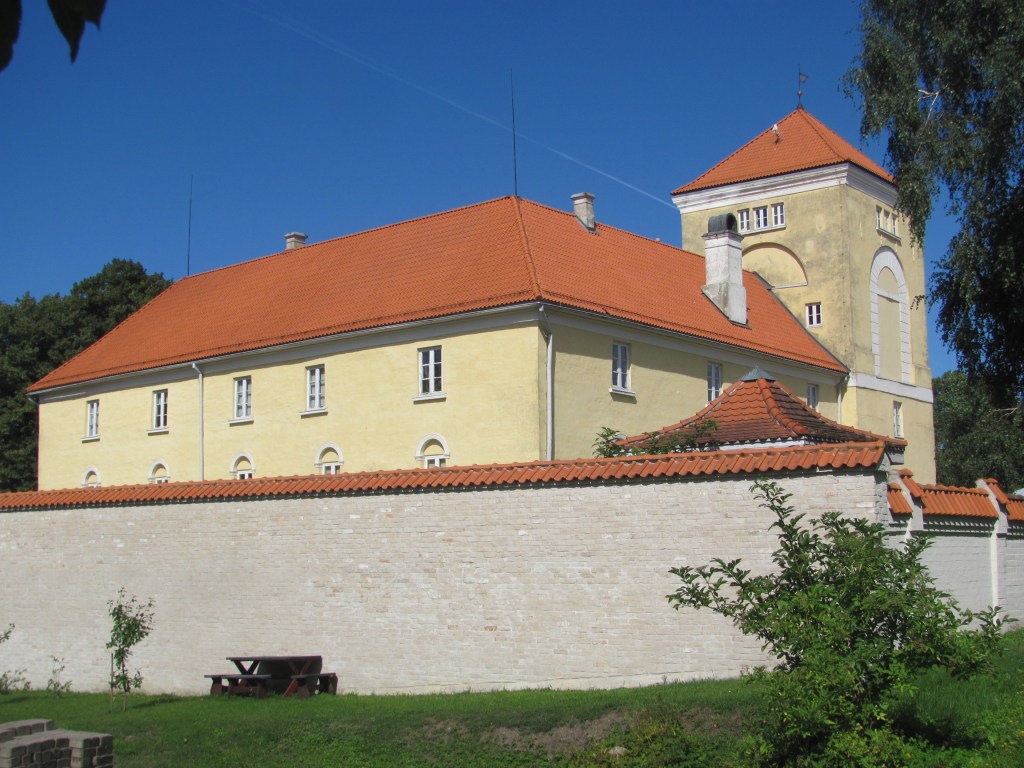
As with many other cities along the coasts of the Baltic States, Ventspils was founded in the 1200s when the German Livonian Order built a castle on the banks of the Venta River during their crusades to convert the local population to Christianity.

Ventspils Castle.

In the 1300s, it became part of the Hanseatic League, and prospered as a shipbuilding city. It was destroyed during the Polish-Swedish War and the Great Northern War in the 1600s and 1700s, with the plague finishing off any remaining inhabitants in 1711. In 1795, it became part of the Russian Empire under which it built up its shipbuilding capacity again. In the 20th century, it flipped between German and Russian rule a couple of times, but after WW2, fell under Soviet rule for 50 years.

We meet Nigel, the Cruising Association’s Honorary Local Representative for Latvia, who keeps his own boat at Ventspils. Seeing our flag, he leaves a note on our boat when we are out to come and have a chat to him if we like. He’s English, but lives in Ventspils and has a Russian wife.

“Ventspils became very prosperous on the back of oil”, he tells us. “During the Soviet era, they built a pipeline from Russia to carry crude oil to here for export. After Latvian independence, it continued to be a major exporting terminal of Russian crude. That’s why I came here in the first place – as a consultant advising on safety aspects. Now with the sanctions from the Ukraine War, all that has gone. Not a drop passes through here now. The only thing keeping the city going is EU money.”

Ventspils oil terminal.

“It’s partly true”, when we talk to the harbourmaster later. “A lot of businesses have found it difficult with the sanctions. That fish factory over there, for example, has had to work hard to find new markets now that they can’t sell to Russia. They have been quite successful in Germany. But having said that, there is still a lot of trade with Russia. Someone estimated that 27% of stuff passing though the port here is coming from or going there.”

“He didn’t say whether it was legal or not”, says the First Mate later. “And I didn’t like to ask him.”

As it turns out, we have arrived when the annual city festival is in full swing. We walk into the city centre, about a kilometre from the harbour, to see what is happening.

On the way, we pass a sculpture of a cow. It is the first of many.

Cow City.

“In 2002, they had a CowParade here”, a chatty Latvian explains. ”They made these fibreglass sculptures of cows and had local artists paint various themes on them. The idea caught on, and nowadays cows are sort of the city’s symbol. You’ll see them everywhere.”

“It’s a bit like the elephant in my hometown of Hamm in Germany”, the First Mate says. “An architect designed a huge elephant around one of the old mine-head cranes, and now the elephant has become the city symbol. Companies will quite often have a model of an elephant outside their offices. It’s not like elephants had much to do with the city before then.”

Stalls of all shapes and sizes are arranged along the water front. Street performers keep the kids entertained. On the wharves on other side of the river, even the brightly painted derricks join in the festivities.

Browsing the stalls.
Keeping the children entertained.
Dance of the Derricks?

We reach the Market Square.

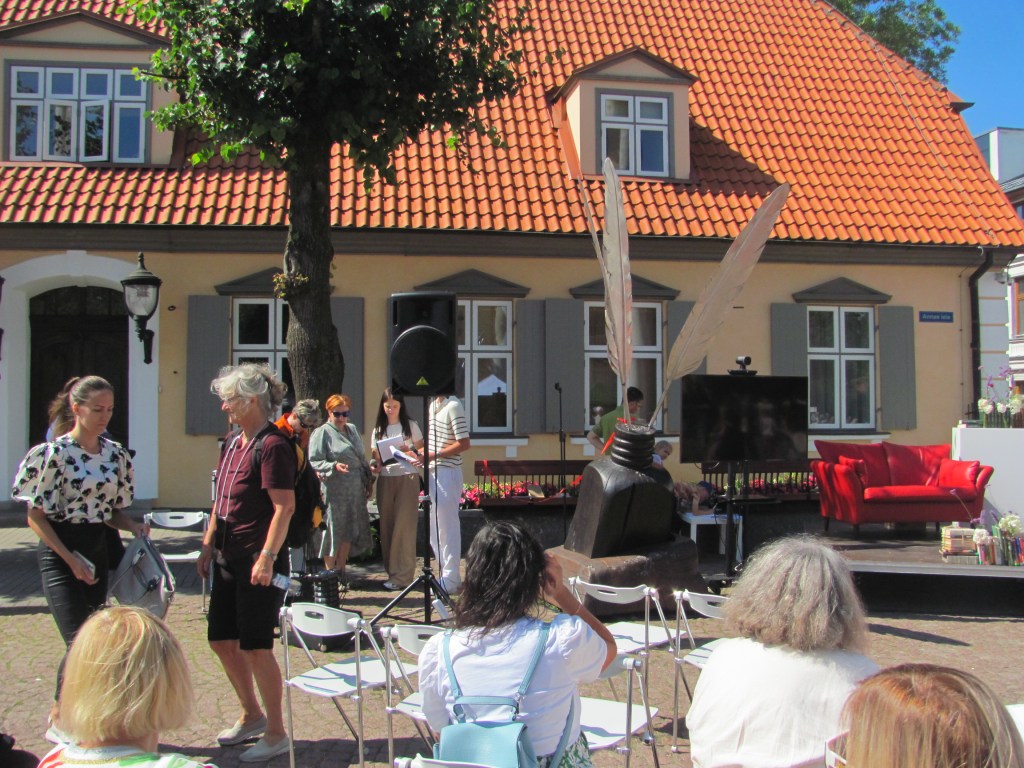
“Look here’s the International Writers and Translators’ House”, says the First Mate. “I met a woman in the shop last night who is there. She is half German and half Latvian, and won a summer scholarship from it to write a book on how war and occupation affects individual families. Her father, who was the Latvian, was a KGB informant. When her mother found out, she divorced him and went back to Germany to live. Now she, the daughter, has come back to research her book.”

It’s a theme common to many families in the Baltic States, we are starting to realise.

The International Writers and Translators’ House.

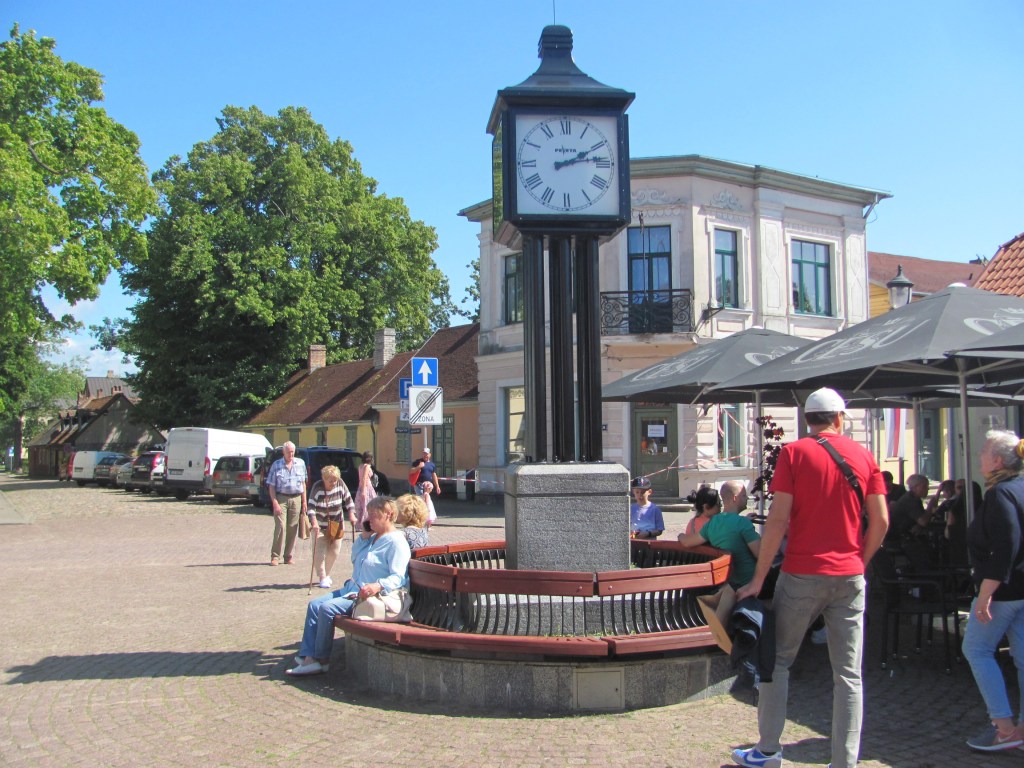
The First Mate spies some local honey and decides to buy some while I admire the ancient clock in the middle of the square.

Market Square clock.

“Phew, it’s hot”, says the First Mate. “Look, there’s some kvass. I’d like to try that.”

Kvass is a kind of low-alcohol beer brewed from various cereals, especially rye, originating from the Slav areas of north-eastern Europe and Russia.

“It goes back at least to 988 AD”, says the man behind the counter. “At the time when Vladimir the Great was baptised. It was probably even drunk before then. Here, try it. You won’t get drunk. It’s only 1% alcohol. More of a soft-drink, really.”

He hands us a couple of bottles. It is thirst-quenching and tastes a bit like root beer.

Trying the kvass.

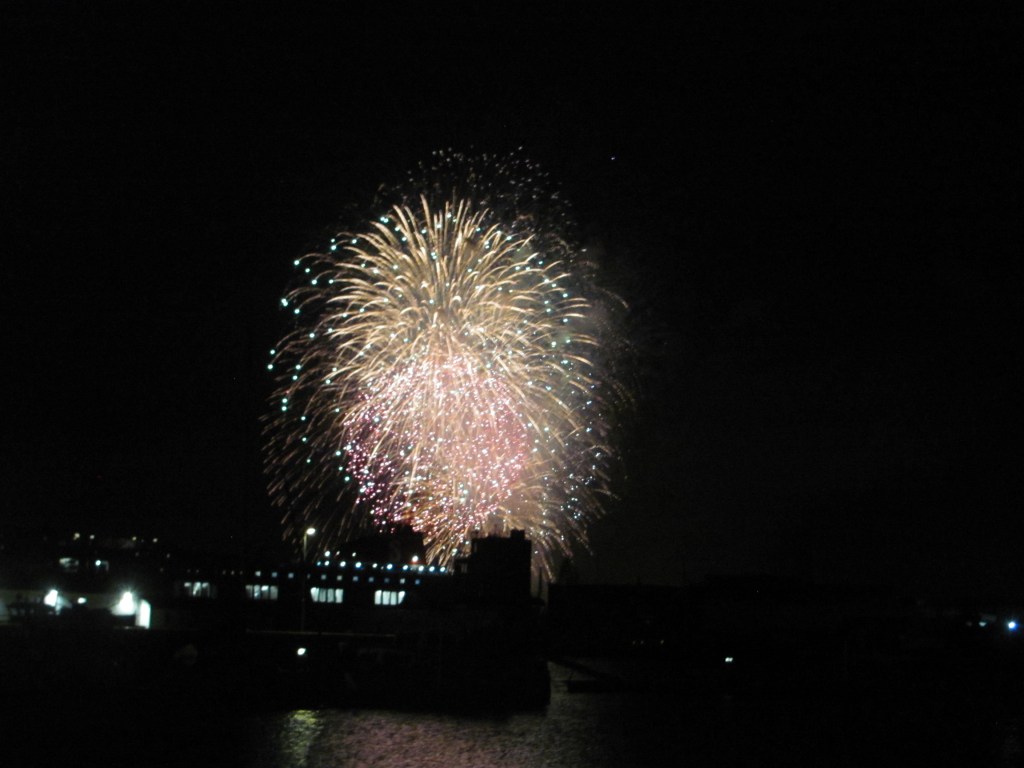
In the evening, we sit in the cockpit sipping our wine and watching the fireworks marking the end of the city festival for another year.

Watching the fireworks over Ventspils.

“I am kind of dreading the crossing from here to Gotland”, says the First Mate. “It’s nearly 90 miles in the open sea. I hope it isn’t going to be as rough as the one we had the other day. I hated that.”

“We’ll be fine”, I say, not altogether convincingly. “The winds are favourable, and the sea shouldn’t be too rough.”

AirBnB woes, a republic within a republic, and Soviet prudes

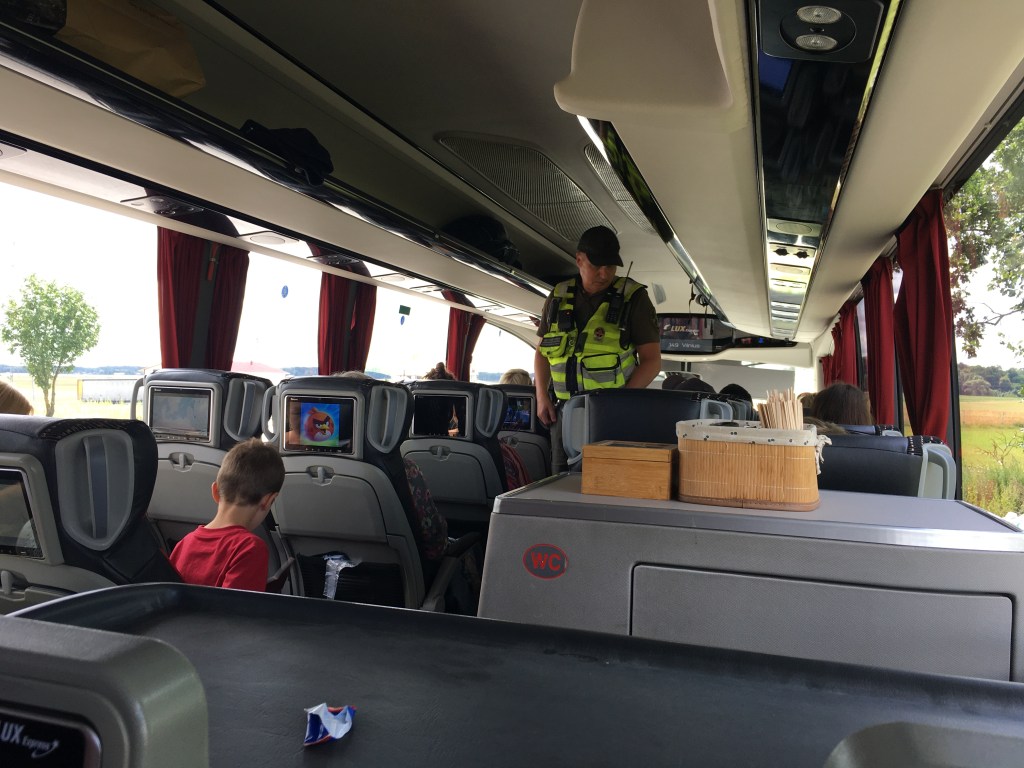
“You’d better get your passport out”, says the First Mate. “The Border Control officer is getting on the bus.”

We are on a bus to Vilnius, the capital of Lithuania. We had decided to leave Ruby Tuesday tied up in Riga, and spend a few days seeing what Vilnius was like. We had booked an AirBnB, cycled down to the Riga bus station, loaded the bikes in the luggage compartment in the bus, and found our seats. Next to the coffee dispenser, as it turned out. Now we are at the border between Latvia and Lithuania.

Loading the bikes onto the bus.

“I still don’t know why they need to have a border post here”, says the First Mate. “I thought all that was unnecessary now that both countries are in the EU.”

“Perhaps they are looking for Russians trying to get into Lithuania illegally”, I joke.

Border Control checking passports.

The Border Control official makes his way along the bus aisle looking at passports. We hand him ours, he has a perfunctory scan, and gives them back again. No issues, it seems. We breathe sighs of relief. The bus restarts and continues on its way to Vilnius.

I take the opportunity to read our trusty guide book about Lithuania.

“Humans have lived in the area since at least 9000 BC”, it tells me, “The Balts, whose ancestors had migrated from the region between the Black and Caspian Seas before 2000 BC, became relatively prosperous by trading amber. There were lots of different tribes, but in the 1200s, a local leader called Mindaugas unified them into one and created the Grand Duchy of Lithuania. One of his successors, Gediminas, then extended the borders down to present day Belarus and Ukraine. He also founded Vilnius in the 1320s, supposedly because he heard ‘an iron wolf howling with the voice of a thousand wolves’ which he took as a sign to found a city.”

“As you do”, I think to myself.

“Then in the late 1300s, one of the grandsons of Gediminas, Jogaila, decided to marry a Polish princess called Jadwega as a way of unifying the two countries against the Teutonic Knights”, it continues. “This eventually became known as the Polish-Lithuanian Commonwealth and was one of the largest countries in Europe at the time. By the 1500s, Vilnius was one of Eastern Europe’s most sophisticated and grandest cities.”

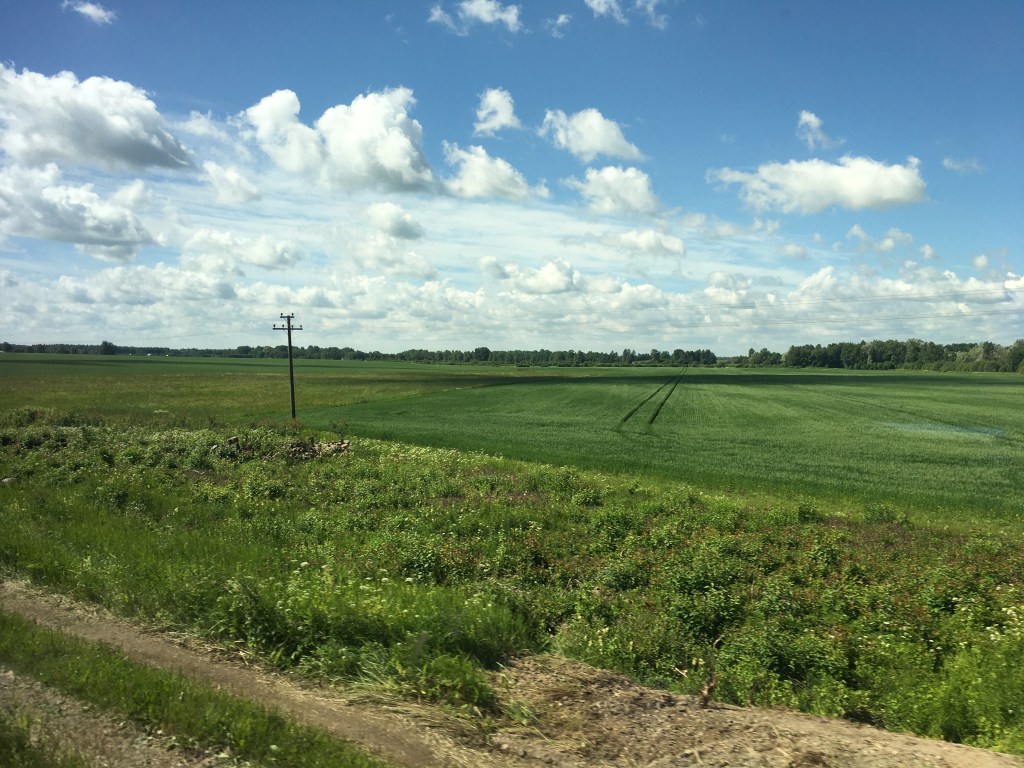
Outside, we are leaving the forest behind and enter extensive cropland with hectares of grain crops stretching into the distance.

Fields of grain waiting to be harvested.

“In the 1600s, Russia and its allies defeated the Polish-Lithuanian Commonwealth and broke it up. Russia ended up with most of Lithuania, and clamped down hard on the rebellious Lithuanians. However, they weren’t able to quell the tide of national feeling, and in 1918, Lithuania declared independence. To complicate matters, Poland wanted to restore the commonwealth, and annexed Vilnius in 1920. The Lithuanian government fled to Kaunus, another city, where it stayed until WW2. Its history subsequently has been similar to that of Estonia and Latvia, with Russia invading in 1939, followed by the Nazis in 1941, and by the Russians again in 1944. Finally in 1991, it became independent from the USSR.”

“We’re nearly there”, says the First Mate, tapping me on the knee. “You’d better get ready.”

We arrive in Vilnius, unpack the bikes, and cycle to the AirBnB that we have booked.

Arriving in Vilnius.

“Here we are”, says the First Mate. “Number 11. Apartment 42 will be somewhere inside. Let me just open the gate to the courtyard with the code that the owner gave me.”

It had taken a little bit to find the street address, but we had managed in the end. Just as the First Mate is searching on her phone, a car appears on the other side of the gate. The gate opens noiselessly.

“Come on”, I say. “Quickly. No need for the code. We can go through the gate before it closes again.”

We push the bikes and ourselves through. The gate glides noiselessly shut again.

We climb the stairs in the stairwell to the fourth floor. There is no number 42.

“Perhaps it’s on the next floor?”, says the First Mate, climbing the stairs again.

Suddenly there is a piercing shriek. It’s the First Mate.

“There was a strange looking man behind the door to the landing”, she says, shaking. “I think he was deaf. He didn’t respond when I asked him if he knew where 42 was. He just kept staring into space like a zombie.”

“Perhaps we could ring one of the doors and ask if they know where number 42 is.”, I say.

We ring one of the doorbells. A woman in bra and panties opens the door.

“Sorry, no English”, she says, shutting the door again.

“Are you sure we are in the right block?”, I ask. “Something weird is going on.”

We go downstairs again and try to open the gate with the code. Nothing happens. We try several more times, but still nothing happens. After some time a young girl arriving home opens the gate from the outside.

“We are looking for apartment 42 in Block 11”, we tell her. “Do you know where it is?”

“This is Block 13”, she says. “Block 11 is the one over there.”

I try to give her the impression that I am a fire safety officer and that we are checking all the blocks in the street, but it fails miserably.

“Don’t worry”, says the young girl. “Lots of people make that mistake. Especially the older ones.”

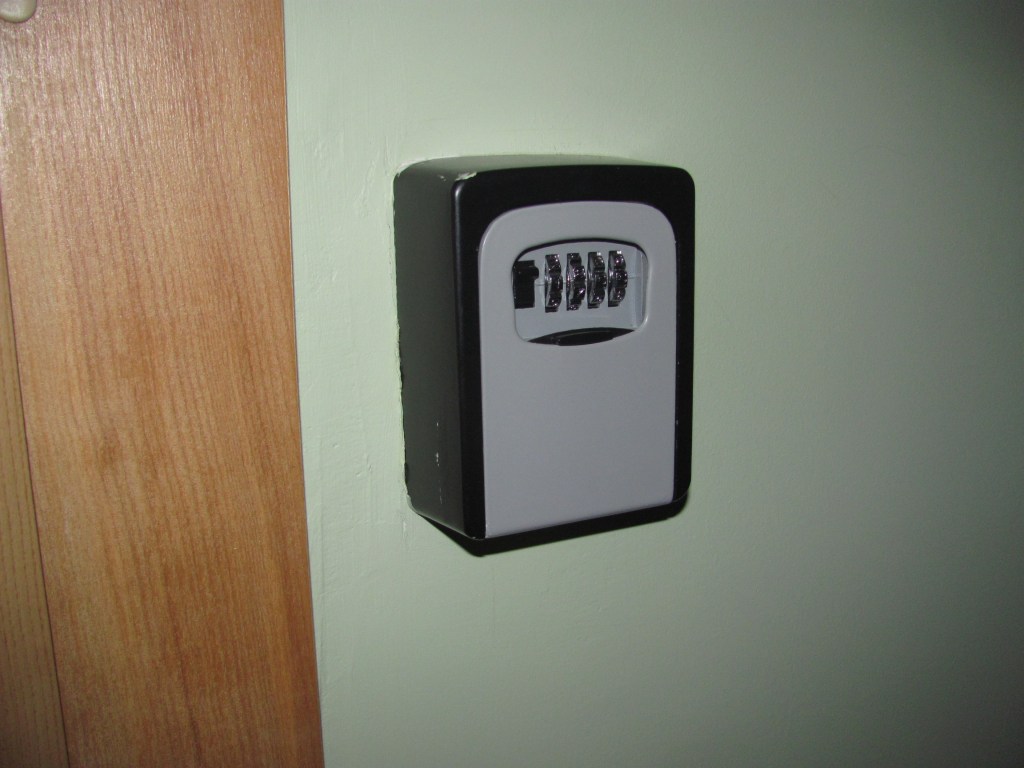
We eventually find apartment 42 in Block 11. The code to the key box doesn’t work. We try several times but it refuses to open.

“I have just remembered that the owner sent another email to say that he just changed the code this morning”, says the First Mate after the seventh attempt. “Let me see if I can find it. Oh no, my phone is almost flat.”

She finds the email just before her phone batteries give one last gasp and give up completely.

The code works.

We finally manage to open it.

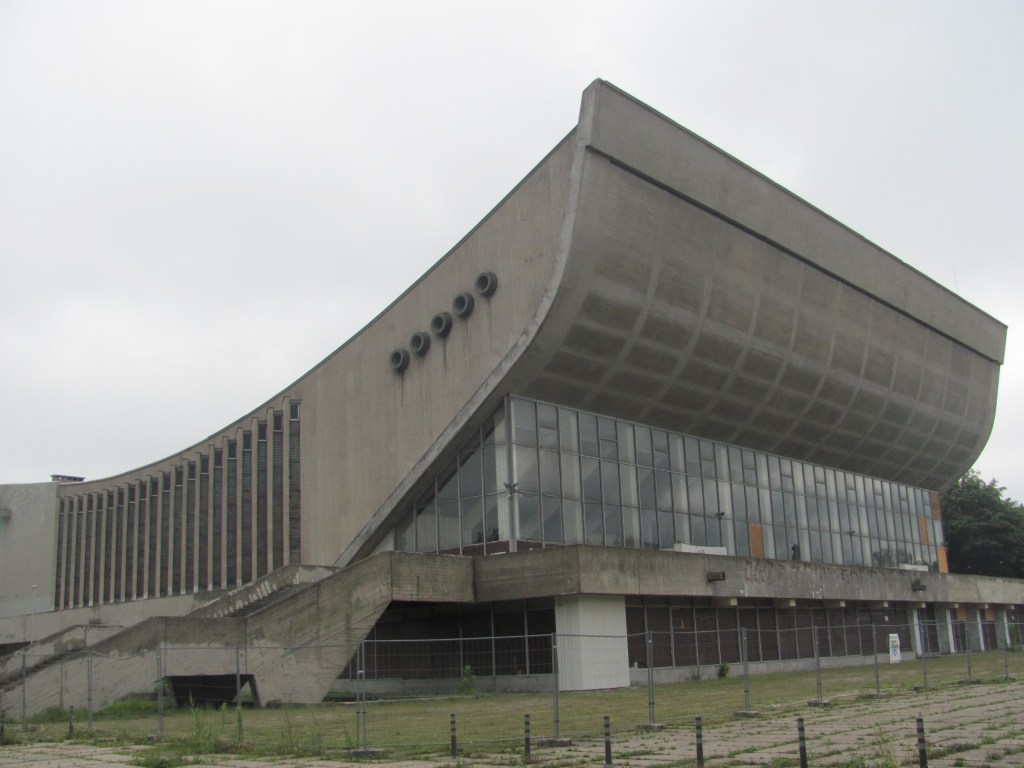
The next morning, we cycle into the city centre. On the way, we pass the derelict Soviet Palace for Culture and Sport. It’s hideous, so much so it has a strange kind of attraction about it.

The derelict Palace for Culture and Sport.

We reach the Tourist Information.

“We don’t have free walking tours as such”, says the girl. “But we can give you a guidebook with a suggested route and lots of details of things on the way. That way you can see all the sights of the city.”

We start at the vast Cathedral Square and the Cathedral itself. Ironically (or perhaps not), it is built on an old pagan site that was used for worshipping Perkūnas, the Lithuanian God of Thunder, riding across the sky in his fiery chariot.

Vilnius Cathedral. (And no, the tower wasn’t imported from Pisa.)

Perhaps alluding to Perkūnas is the imposing statue of Gediminas, the founder of Vilnius, and his horse.

Gediminas (AD 1316-1341), the founder of Vilnius.

In front of Gediminas’s statue a group of people are standing and waving the blue and yellow flags of Ukraine.

“We are Ukrainian refugees here in Lithuania”, explains one woman to us. “We come here once a week to give speeches and protest against the illegal Russian war against our country. Lithuanian people are very supportive of us as they remember what it was like for themselves to be occupied by the Russians. No one wants to go back to that.”

Ukrainians protest to Gediminas.

To one side of the Cathedral is the 17th century baroque Palace of the Grand Dukes of Lithuania.

Palace of the Grand Dukes of Lithuania.

Exploring some of the narrow winding back streets, we come across Literatu Street with its plaques and writings of various famous writers with connections to Vilnius hanging on its walls.

Gunter Grass’s plaque in Literatu Street.

The street gets its name because the Romantic writer and poet Adam Mickiewicz once lived there.

“The book says that he was the national poet of Poland because he wrote in Polish, but is also claimed by Lithuania because he lived here, and Belarus, where he was born”, says the First Mate.

“A bit inconsiderate of him not to think of the confusion he caused”, I say.

Vilnius is supposed to have more churches per hectare than any other city in Europe, and we can well believe it.

“You can’t show them all”, says the First Mate. “Just show one or two on the blog to give people an idea. Otherwise they will get bored.”

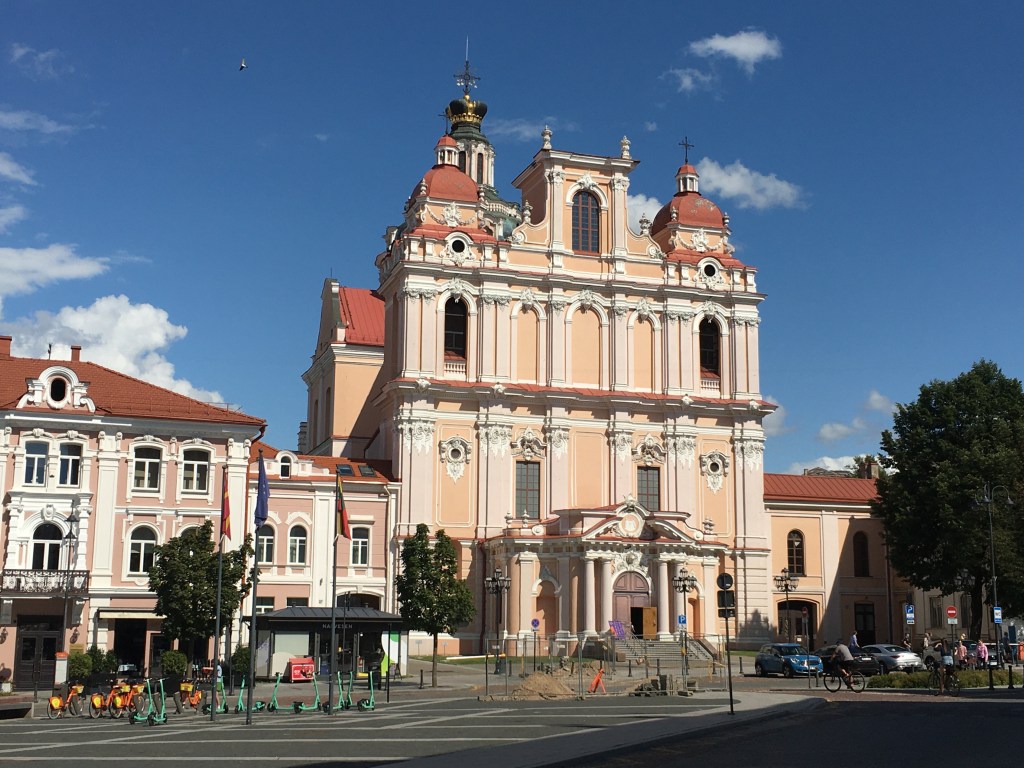
Church of St Casimir.
Church of the Holy Spirit and the Dominican Monastery.

Further on are the University and Presidential Palace. The University was founded by the Jesuits in 1579.

The University of Vilnius.
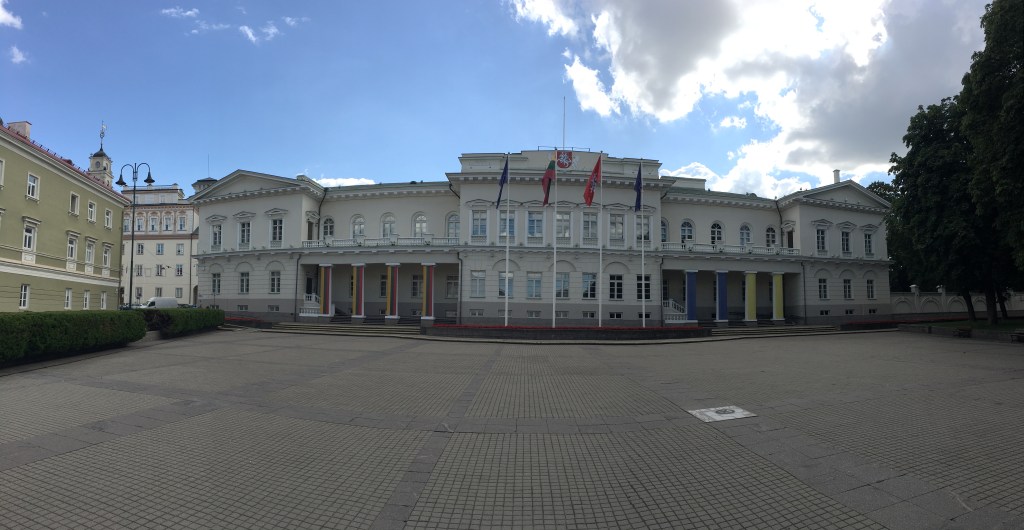
The Presidential Palace.

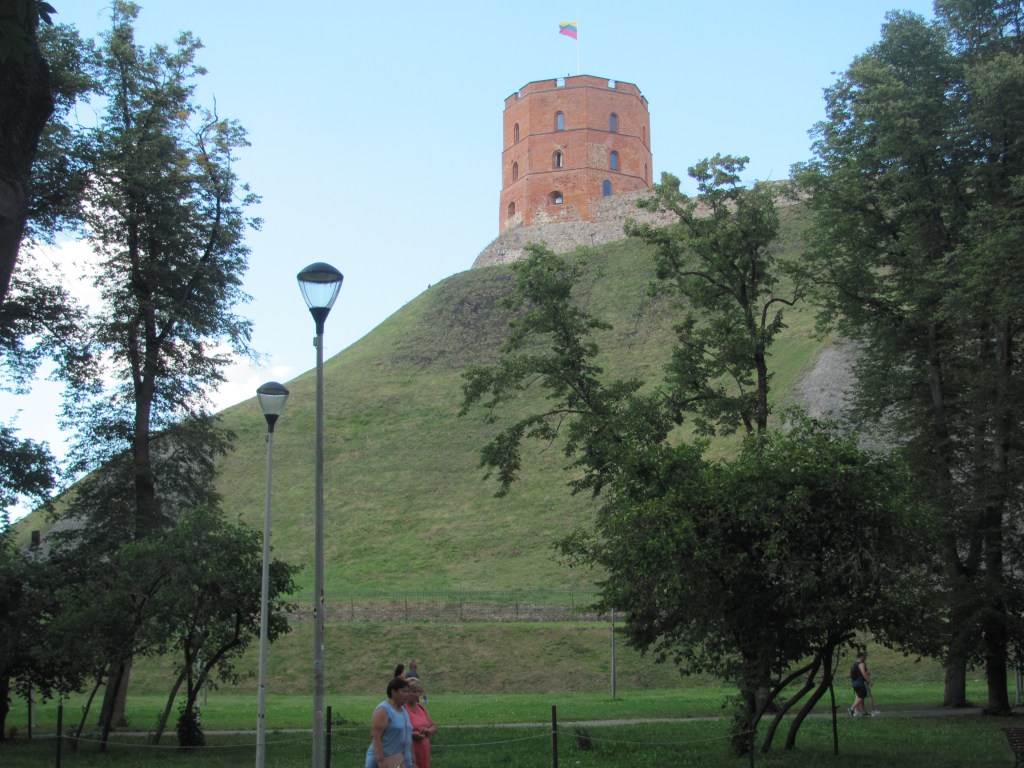
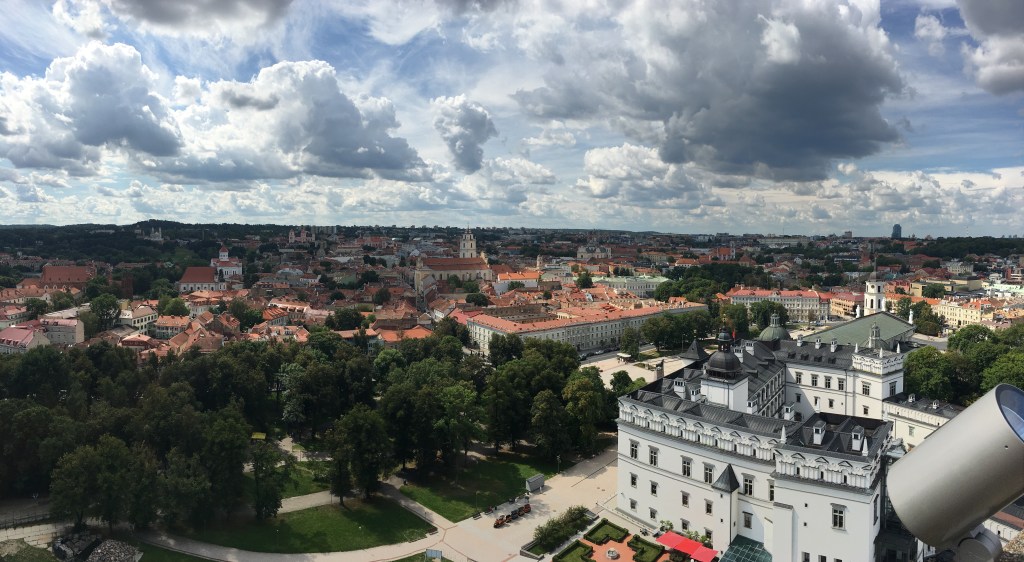
We end up climbing to the castle on the hill dominating the city. The view from the ramparts is superb.

Vilnius Castle.
View of Vilnius from the castle.

“Phew, all this sightseeing has made me hungry”, says the First Mate. “Let’s see if we can get a bite to eat. I want to try that cold beetroot soup that is so popular here.”

We find an open-air restaurant in the park near the Cathedral Square, and order Šaltibarščiai, the cold beetroot soup she is referring to. It is made from beetroot, gherkins, kefir, spring onions, and hardboiled eggs, all garnished with fresh dill and served with a side plate of warm boiled potatoes, and a slice of dark rye bread.

Šaltibarščiai, a Latvian favourite.

“Wow, that is so tasty”, I say, scaping the last vestiges of pink from my bowl. “Perfect for a light summer lunch. We must find the recipe and make it when we get home.”

“You’ve got a rye bread crumb on your beard”, says the First Mate. “Here, let me get it off.”

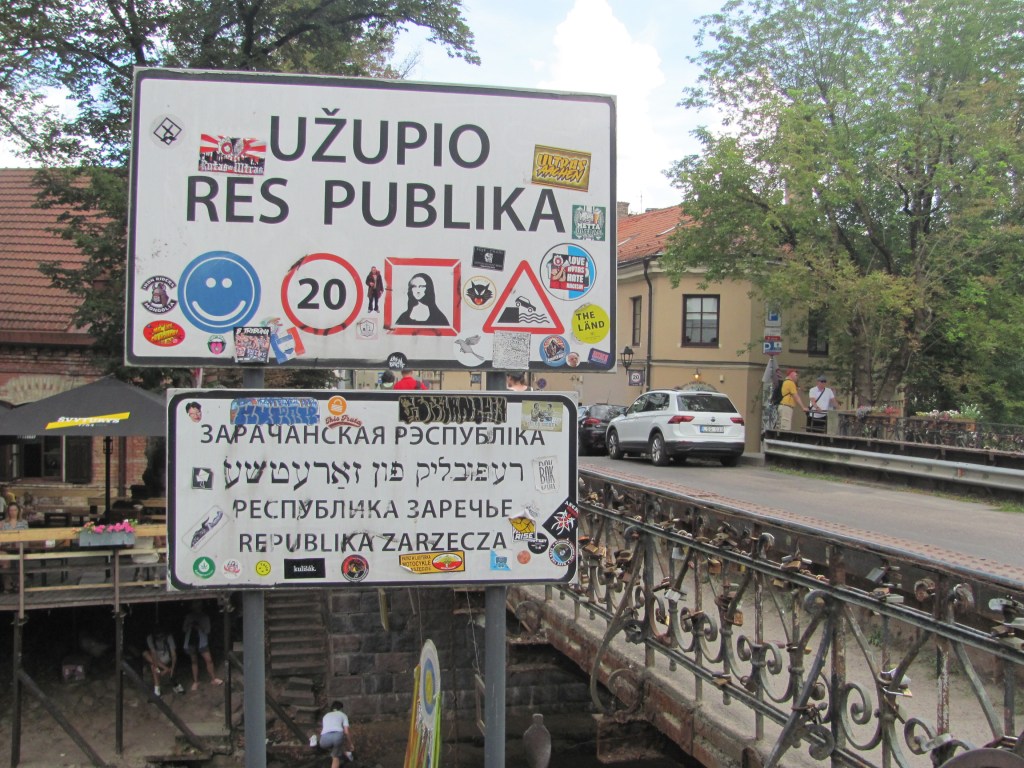
After lunch, we cycle over to Užupis on the other side of the Vilna River. Užupis was declared a separate republic from Lithuania in 1997.

Entering the Republic of Užupis.

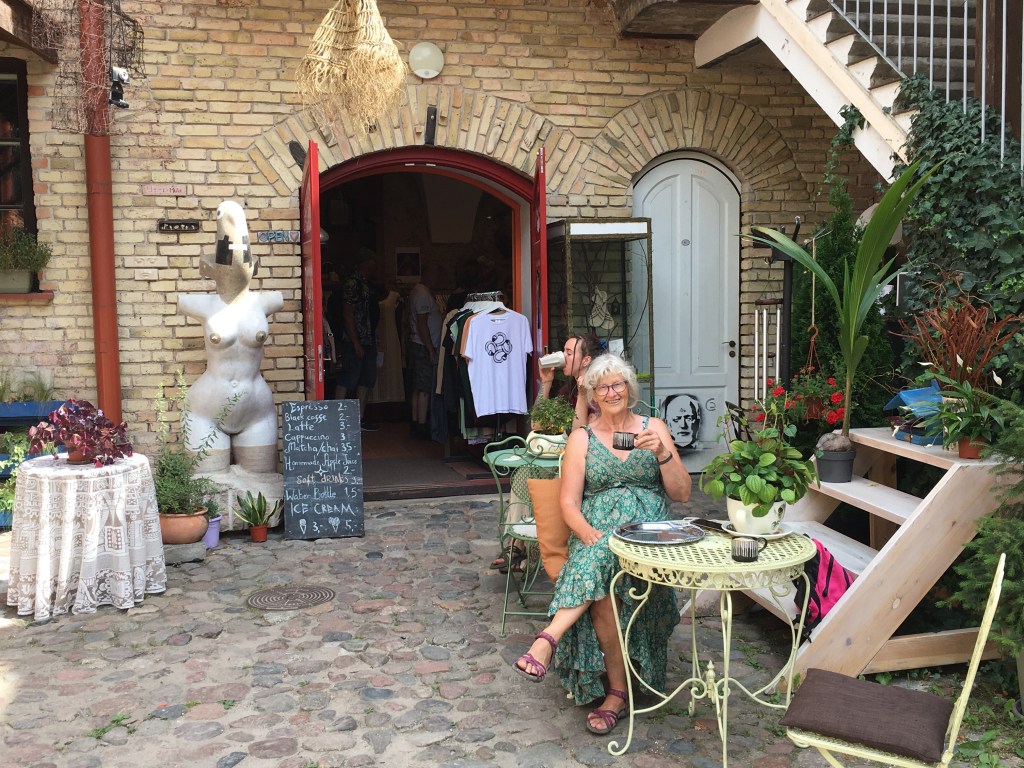
“It all started as a bit of an April Fool’s joke”, explains the long-haired girl in the small boutique and coffee-shop. “Užupis had become somewhere that artists, poets and musicians liked to live, and one day some of them got together and came up with the idea of ceding from Lithuania and becoming an independent republic. So they elected one of them as president, others as the government, and wrote a constitution. Since then, it has captured the imaginations of people throughout the world who like the concept of escaping from the rat-race, and so it has become quite a tourist attraction. Now it is a source of pride to Vilnius city.”

The Constitution of Užupis.

We order two coffees and cinnamon rolls.

“We only have oat milk”, the Long Haired Girl says. ”Is that alright?”

Of course they do. But we are fine with that.

Drinking coffee at the Art Incubator.

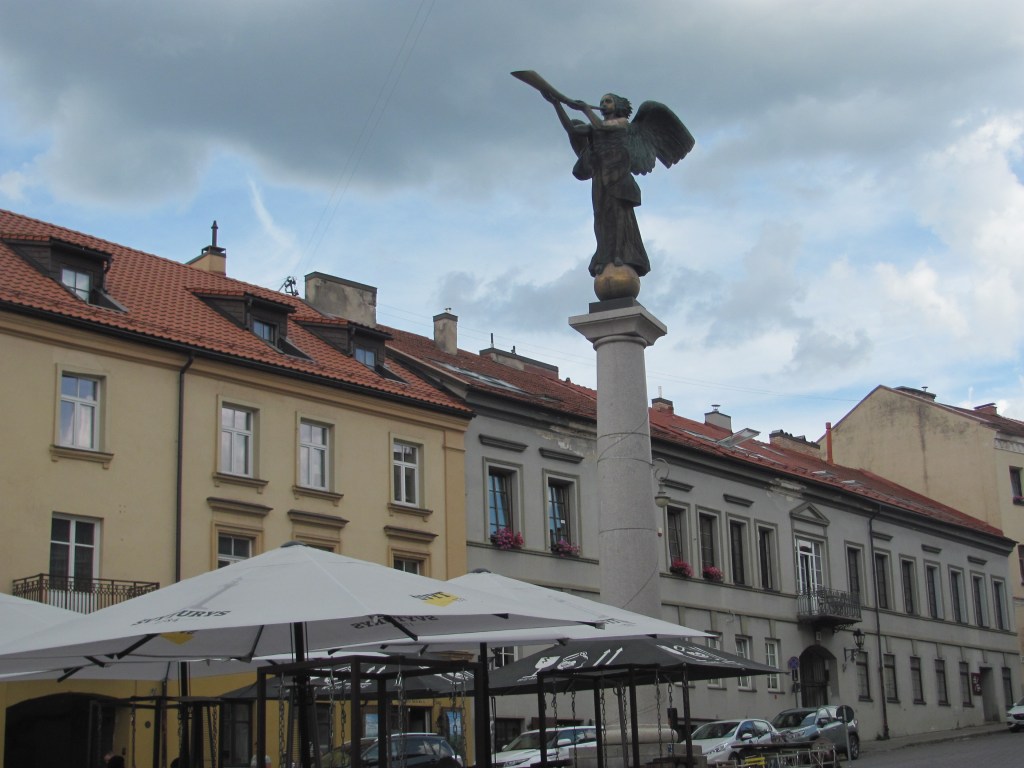
“The river is the border with the rest of Lithuania”, the Long Haired Girl continues, bringing the coffees to where we are sitting outside. “On Užupis Day, our national day on April 1, you can get your passports stamped, and use our national currency. We even have our own flag, the Holy Hand, which has an open hand on it to denote that corruption is not practised in Užupis. We did have an army of ten men, but we retired them a few years ago in the interests of peace. Besides, we have our own guardian angel. She protects us.”

The Užupis flag.
The Guardian Angel of Užupis.

We read that Užupis used to be the Jewish quarter of Vilnius, but the Holocaust obviously brought an end to that. During Soviet times, it became derelict, and only drunks, prostitutes and squatters lived there. But after Lithuania’s independence in 1991, artists and other creative people began moving in. The rest, as they say, is history.

The artists taking time out from the Art Incubator.

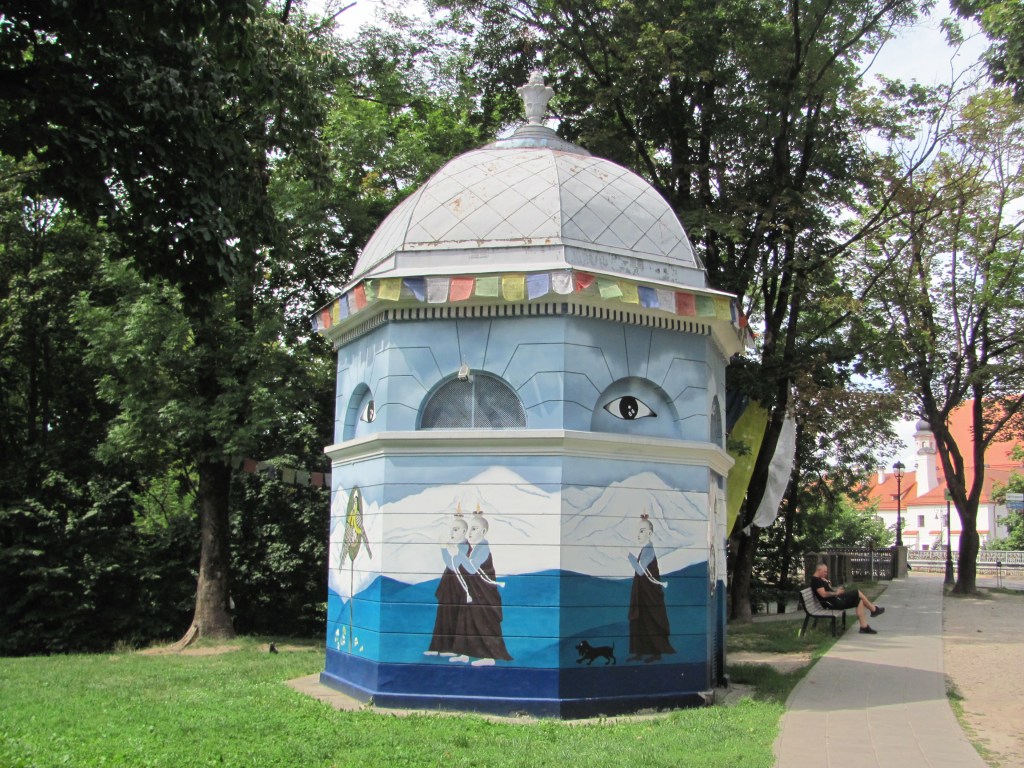
“Did you see Tibet Square?”, the Long Haired Girl asks, as she collects the cups and plates. “The Dalai Lama came here and planted a tree there. The Chinese government weren’t too happy as they saw it as a political statement rather than a cultural one.”

Tibet Square.

There is a seat fixed in the middle of the river. We take turns sitting on it and taking photos of each other.

“Why are we doing this?”, I ask.

“I don’t know either”, says the First Mate. “But everyone else was doing it, so I thought that we had better too.”

“Well, others are all doing it!”

It is our last day in Vilnius. The First Mate and I decide to split up and meet again for lunch. I set off for the National Museum of Latvia, while she heads for the MO Museum of Modern Art.

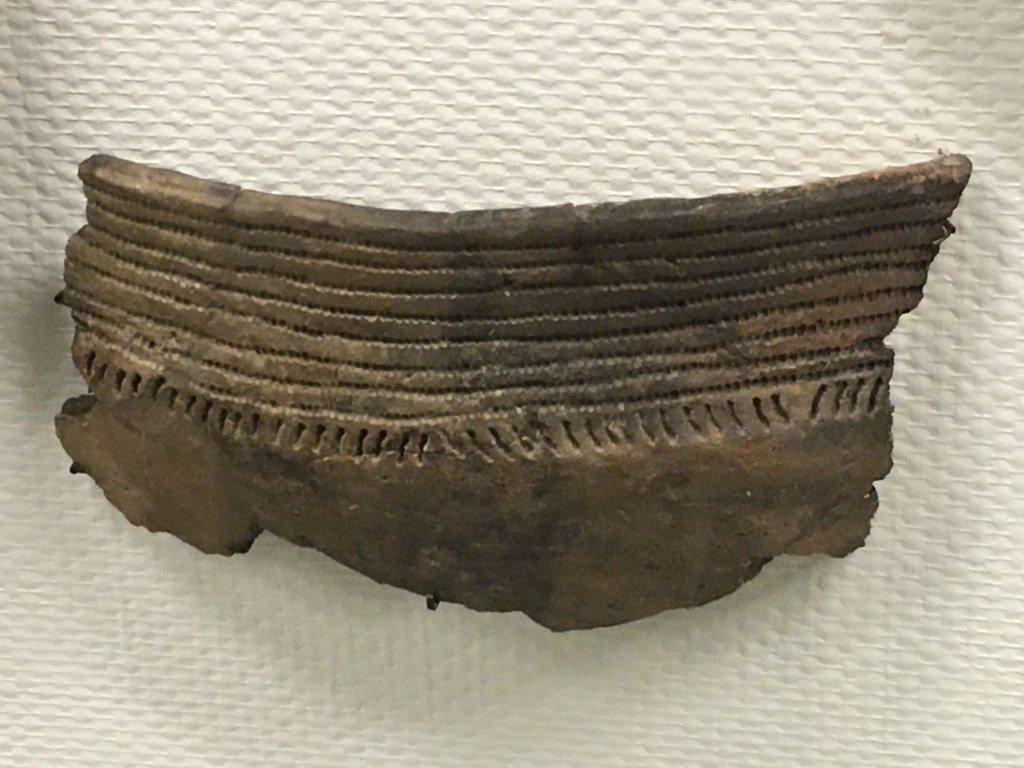
I spend a fascinating couple of hours learning about how people migrated from the Black Sea-Pontic steppe region at the end of the Neolithic period, bringing with them new languages, culture, farming methods, and tools. They decorated their pottery with cord impressions, used boat-shaped battle-axes, and domesticated livestock. The fusion of their culture with that of the existing inhabitants resulted in the Proto-Indo-Europeans and the emergence of the Balts.

Corded-ware pottery.

Over time, these Balts evolved into different tribes with the exotically-sounding names of the Aukštaičiai, Selonians, Semigallians, Samogitians, Curonians, Sudovians, Skalvians and several others, each with different customs and rituals. It was only in the 1200s that they were reunified by Mindaugas.

An Aukštaičiai (Upland Lithuanian) family in the 5-6th centuries.

“How was the MO Museum?”, I ask the First Mate over lunch.

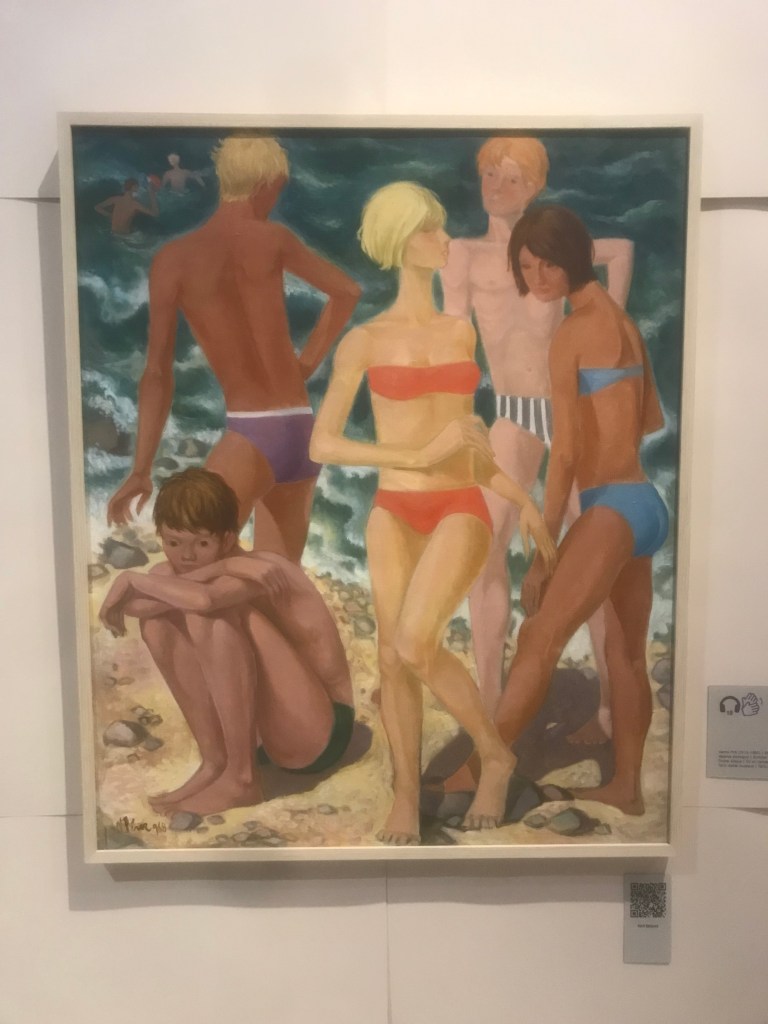
“There was an interesting exhibition there called ‘We Don’t do This’”, she tells me. “It was all about how sex and nudity in art was suppressed during the Soviet Union era, and the changes that have happened since independence. Sex was never mentioned in the public sphere under the Soviets, and there were severe penalties for doing so. For example, the artist of a painting of young people on a beach was jailed for six months. Can you imagine? Things are much more relaxed now. Art is more explicit and artists are much readier to explore love and intimacy than before. I found it quite fascinating.”

Prison sentence.

“We had better make our way to the bus station now”, I say. “It’s not long before the bus goes.”

We pay and jump on our bikes. Mine doesn’t feel quite right. The tyre is flat.

“It was fine when I arrived for lunch”, I say tetchily. “I wonder what caused that?”

“You’ll just have to push it to the bus station”, says the First Mate unsympathetically. “I’ll meet you there. I just have a bit more browsing to do. You can fix the bike when we get back to Riga.”

Fun-loving Blackheads, rude cats, and Holocaust reminders

“Russia is on the up”, says Mike. “Its GDP is growing, it has new markets for its oil and gas in China and India. It will win the war in Ukraine. No doubt. Time is on its side. The West doesn’t have the stamina.”

We have arrived in Riga, the capital of Latvia, and are talking to Mike, an ethnic Russian living here. His parents were sent to Russia during the Soviet period as a part of Stalin’s Russification policy to increase the proportion of ethnic Russians in the Baltic States and the other Soviet republics compared to their indigenous populations. He is an IT teacher at a local school.

“But the only reason the GDP is growing is because the economy is moving towards a war footing”, I say. “Export revenues have decreased by 30%, so most of that growth is due to vast sums of public money being used to fund growth in armaments factories. And much of that money is coming from Russia’s strategic reserve fund. Already half of that has been used. Benefits to ordinary Russians are being sacrificed to support an illegal war. It’s not sustainable.”

I had read all this in the newspaper the day before.

“Latvia made a big mistake when it chose to be independent and turned its back on Russia”, he continues. “It’s only a small country and it would do much better if it was part of a larger country like Russia. There’s a lot of corruption in government here now, and inflation is very high.”

“But it chose to join the EU and NATO”, I say. “In that sense it is both independent and part of a larger grouping. The best of both worlds. It’s interesting that almost all of the former Soviet Socialist Republics opted for independence when the USSR fell apart. That must say something about Russia. People want to make their own decision and determine their own futures. They just didn’t want to be ruled and occupied by Russia.”

I had had similar discussions at the time that various African countries were becoming independent.

“Well, yes”, says Mike. “But what’s the point in being independent if your country is going down the tubes?”

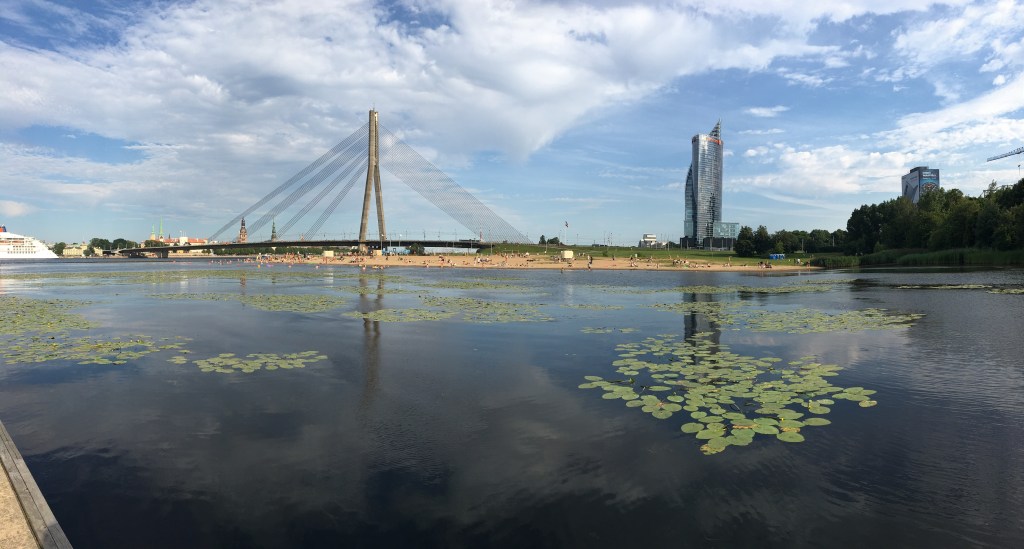
In the morning, we unload the bikes and cycle into town over the Vanšu Bridge that crosses the Daugava River.

The Vanšu Bridge over the Daugava River, Riga.

On the way, we pass Riga Castle, now the official residence of the President of Latvia.

Riga Castle.

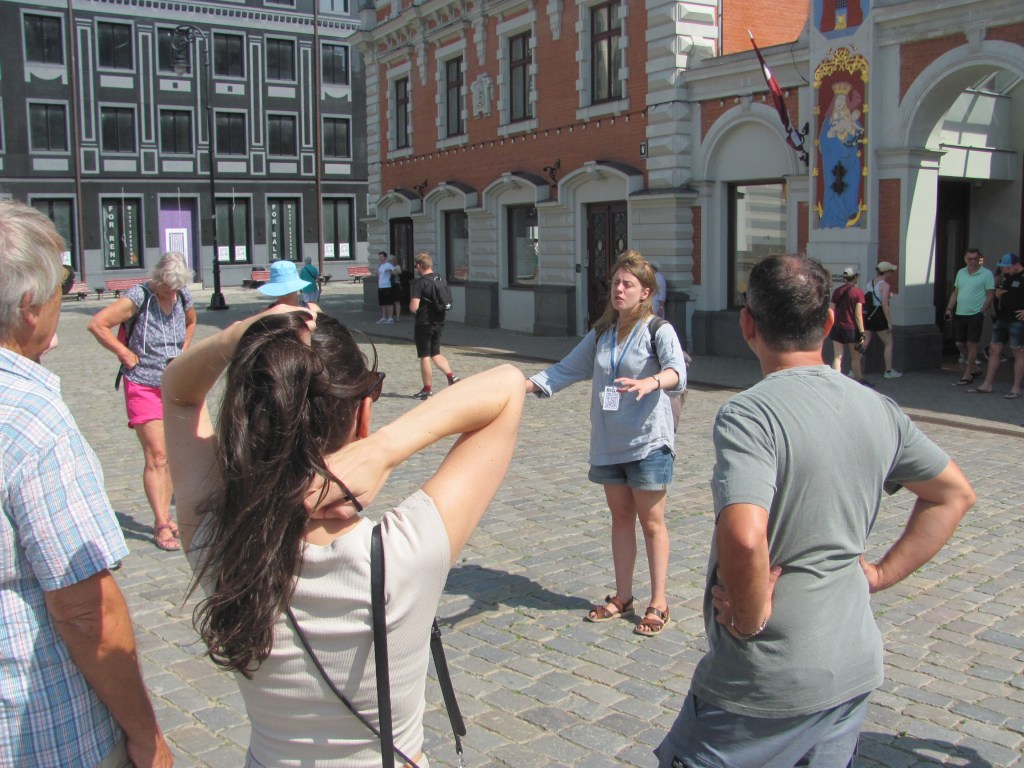
We decide to take one of the free city walking tours coordinated by the Tourist Information Centre. Our guide is Liga.

“You can remember it by thinking of Riga, the city we are in”, she says by way of introduction. “Then just replace the ‘R’ with an ‘L’.”

Liga tells us how to remember her name.

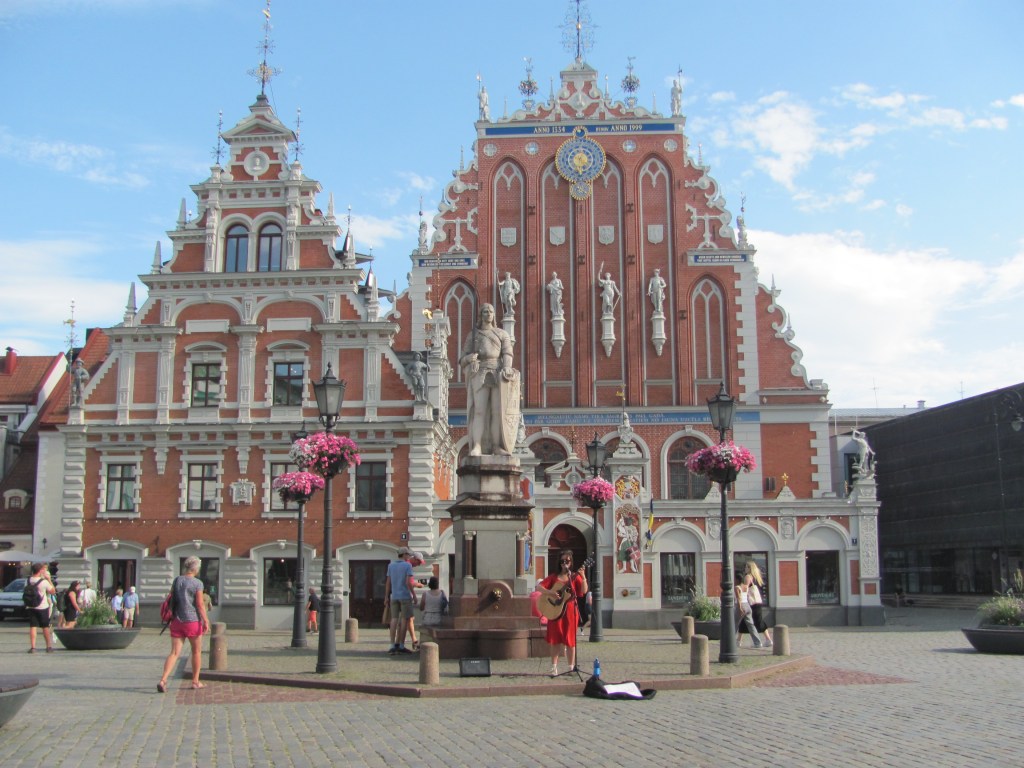
We start in front of the House of the Blackheads. Just as in Tallinn, the Blackheads was the name given to unmarried merchants and various other professional men.

House of the Blackheads, Riga.

“They weren’t allowed to join the Great Guild until they were married”, Liga tells us. “So they had their own Brotherhood. Originally they were a military organisation protecting Christianity, but evolved into a more social organisation doing good works in the city. They were called the Blackheads because their Patron Saint was St Maurice, an Egyptian Christian, and not because they were spotty adolescents.”

There are gentle titters from the group.

St Maurice, Patron Saint of the Blackheads.

“They are credited with starting the custom of decorated trees at Christmas time”, she continues. “The story goes that during one of their drunken parties they decided that it would be a good idea to go to the forest and cut a tree down and stand it up in front of their clubhouse. They then decorated it with all sorts of things. After Xmas, they set fire to it. The custom of decorating trees has continued at Xmas time, but for some reason setting fire to it afterwards hasn’t.”

“I thought decorating Christmas trees was first done in Germany”, whispers the First Mate to me.

Memorial to the first Christmas tree.

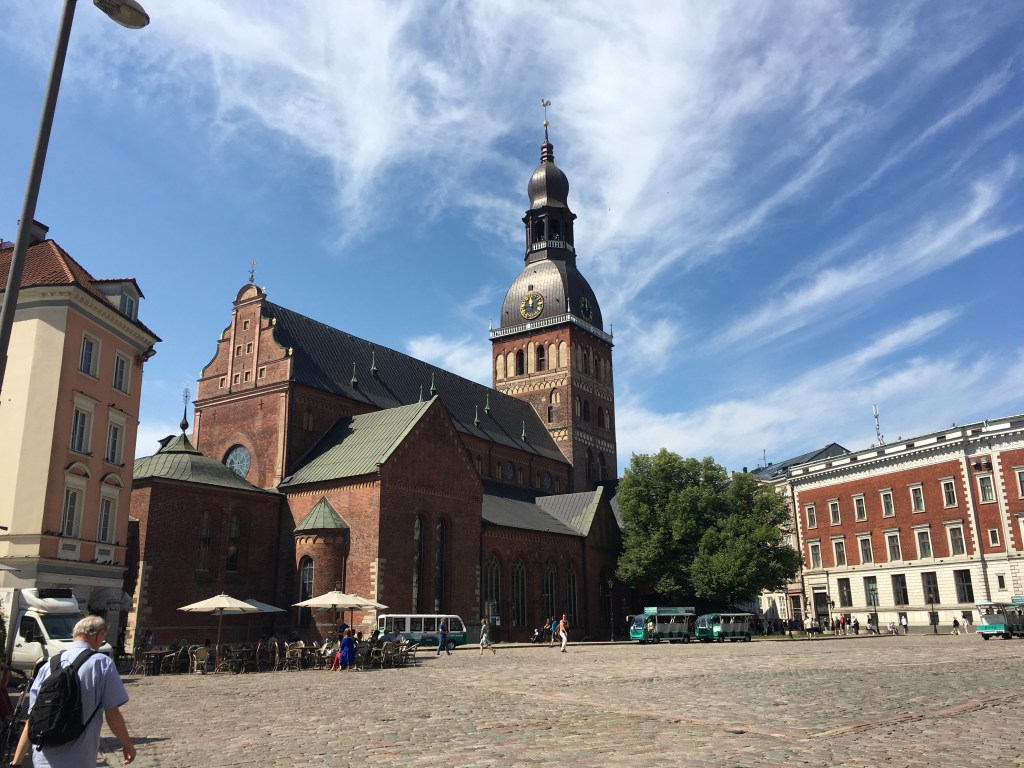
We arrive at the Riga Cathedral.

“The Cathedral was built in the 1200s by one of the Bishops of Livonia, which the country was called in those days”, Liga tells us. “It is supposed to be the largest cathedral in the Baltic States. When it was built, it was Catholic, but became a Lutheran cathedral during the Reformation. During the Soviet era, it was prohibited to hold services there, and it was used as a concert hall. However, since independence in 1991, it has been re-consecrated.”

Riga Cathedral.

As we walk to the next stop, I ask Liga about current beliefs in Latvia.

“A lot of people are turning back to the old ways”, she says. “A lot of my friends have houses in the countryside, and are more into revering nature rather than going to a church. Many see Christianity as an imposition by foreigners on the native Latvians. In many ways, revering nature makes a lot of sense, as we depend so much on it for our own well-being. And you can see it all around you, rather than imagining some invisible being somewhere up in the sky. Something like 20% of the population identify with their pagan past.”

We arrive at the Three Brothers. The story here is that, not to be outdone by the Three Sisters in Tallinn, Riga decided to have the Three Brothers, a group of residential buildings built next to each other in different centuries, starting in 15th century. They currently house the Museum of Architecture.

The ‘Three Brothers’, Riga.

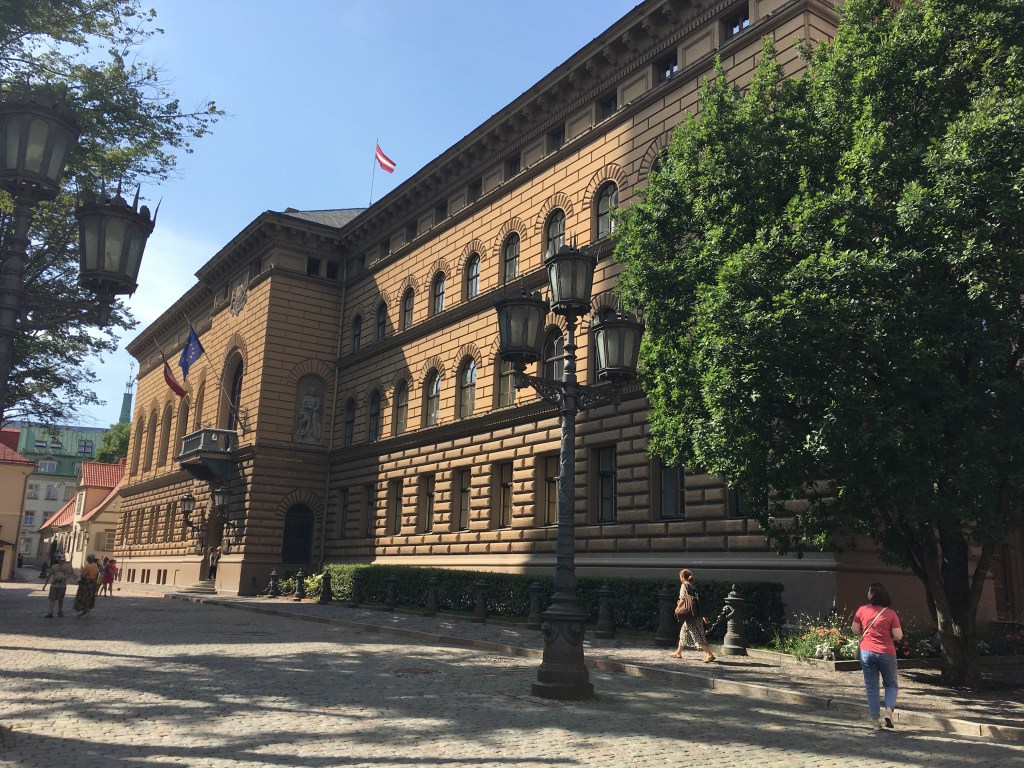
“And here we have the Latvian Parliament Building”, says Liga at the next stop. “We pride ourselves on being the only parliament in Europe without armed guards outside. You can see a couple of policemen in that car over there, that’s all.”

Latvia Parliament Buildings, Riga.

“What about corruption in government?”, someone asks. “Is that a problem in Latvia?”

“Unfortunately, there is a lot of corruption in Latvian politics”, she responds. “We are not the worst in Europe, but we are definitely not the best. The main problem is the relationship between the government and business – many people think that it is too close, and that business people are being offered lucrative government contracts if they have good friends in government.”

Sounds a bit like in Britain during Covid, I think.

A little bit further on, we stop in front of an eerie looking sculpture.

THe ‘Ghost of Riga’.

“This the ‘Ghost of Riga’”, says Liga. “It’s a modern sculpture, but it is based on an old story about a young girl who fell in love with a young Swedish soldier. Although such a relationship was forbidden by the authorities, they would meet each other at night near the Swedish Gate back there. Unfortunately, one night they were discovered, and the girl was brought before the town’s leaders. They decided that her punishment was to be bricked up in the city wall. Ever since, her ghost has roamed the streets looking for her lost lover.”

“Another tale of someone being bricked up in a wall”, I say to the First Mate. “It definitely seems to have been a custom in this part of the world.”

“And all because of sex again”, says the First Mate. “LIke you said in the last post.”

Round the corner we come to the Great Guild building and sit on the steps looking at the house on the other side of the street.

“That is the Cat House”, Liga tells us. “Apparently a rich merchant was refused entry to the Grand Guild, so he took his revenge by building a house on the other side of the street of the Guild building. Because he liked cats, he had statues of two cats made and mounted them on top of his house with their bums facing towards the Guild. The members considered this a great insult, so after a great deal of wrangling, they agreed to give him membership if he turned them around. So he got what he wanted in the end.”

The ‘Cat House’, Riga.

We end up at a sculpture of a rooster standing on a cat standing on a dog standing on a donkey.

Town musicians.

“It’s the Bremer Musikanten, the Town Musicians of Bremen”, says the First Mate to me.

“Yes, that’s right”, says Liga, overhearing her. “It was a gift from the city of Bremen, which Riga is paired with. The story is that as in the Grimm fairy tale of them looking into the robbers’ house that they are planning to frighten away so they can eat their feast, in the sculpture they are looking through the Iron Curtain at all the wealth of the West that they would like to share.”

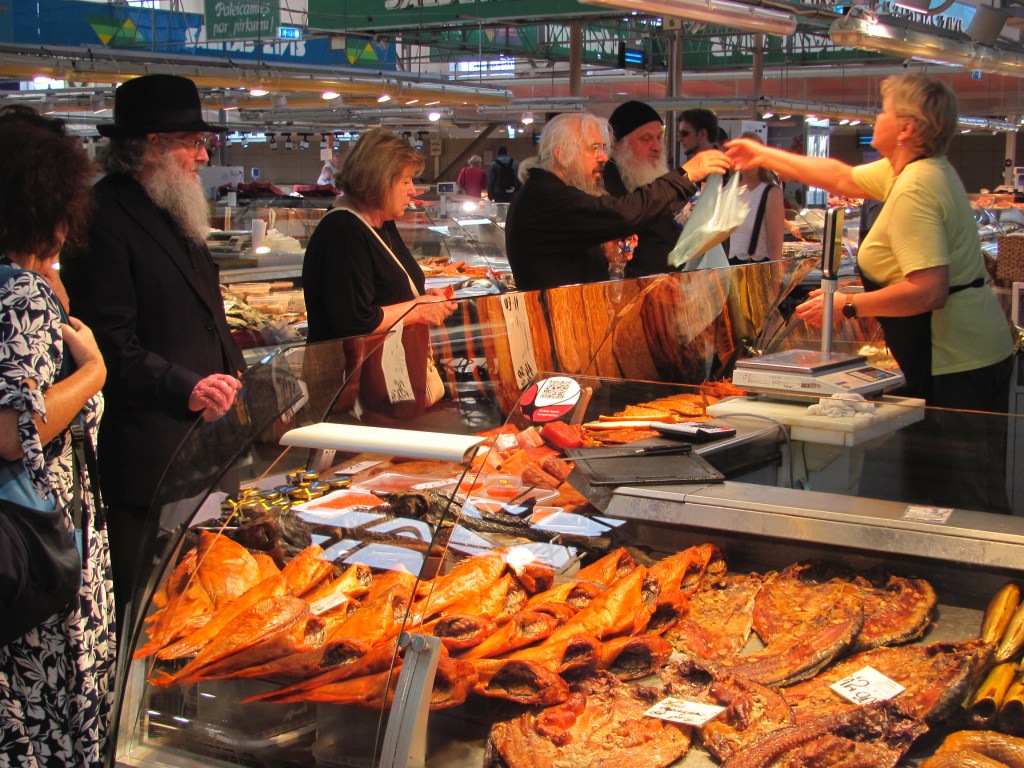
It’s the end of the tour. We thank Liga and decide to cycle to the City Market for lunch.

Spoilt for choice.

We watch fascinated as a group of Orthodox Jews taste the samples and buy their weekly supply of fish.

Fish for supper tonight.

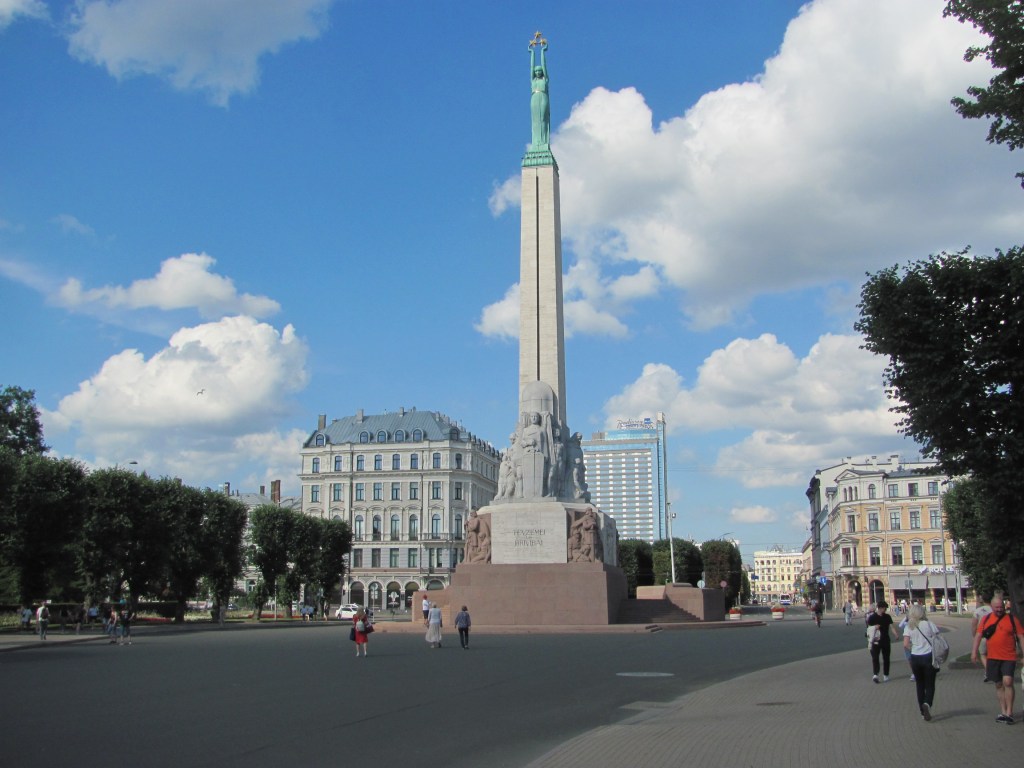
On the way back, we swing past the Freedom Monument. This was built in 1935 to celebrate those who died in the battles to gain Latvia’s independence in 1918, and became a focus for the country’s struggle for freedom and national unity. During the Soviet era, there was talk of removing it, but it never happened for fear of provoking too much civic unrest.

Freedom Munument, Riga.

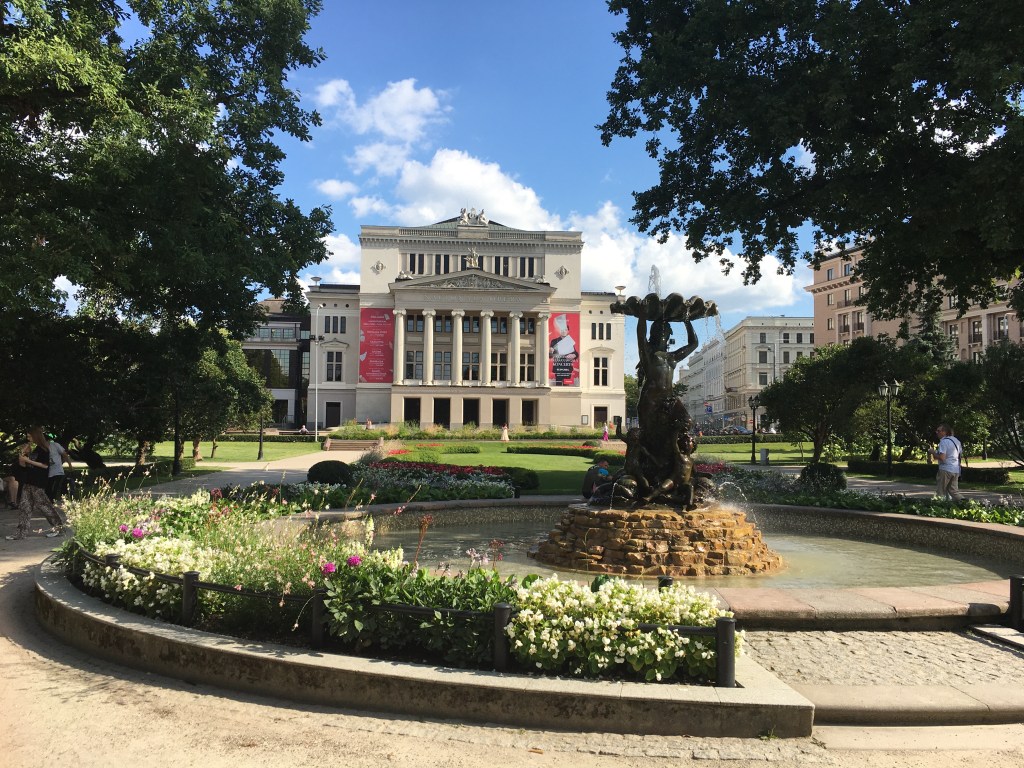
Nearby is the Latvian National Opera.

Latvian National Opera House.

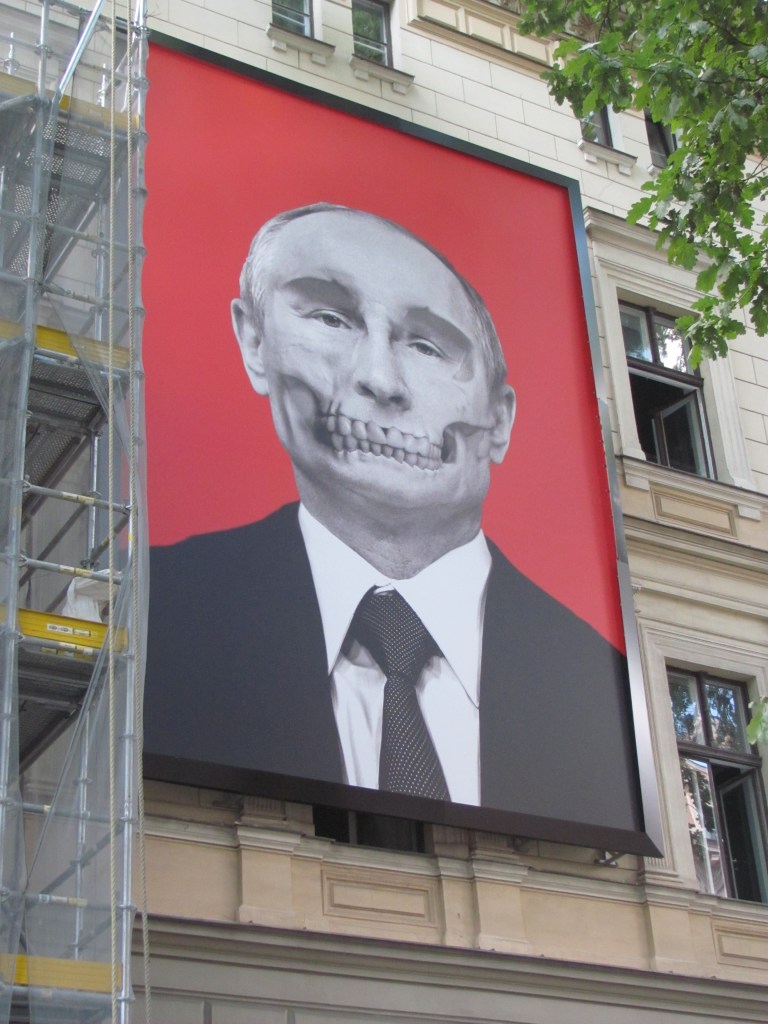
Not far away is the Russian Embassy. As in Tallinn, there are posters condemning the war in Ukraine.

No to War.

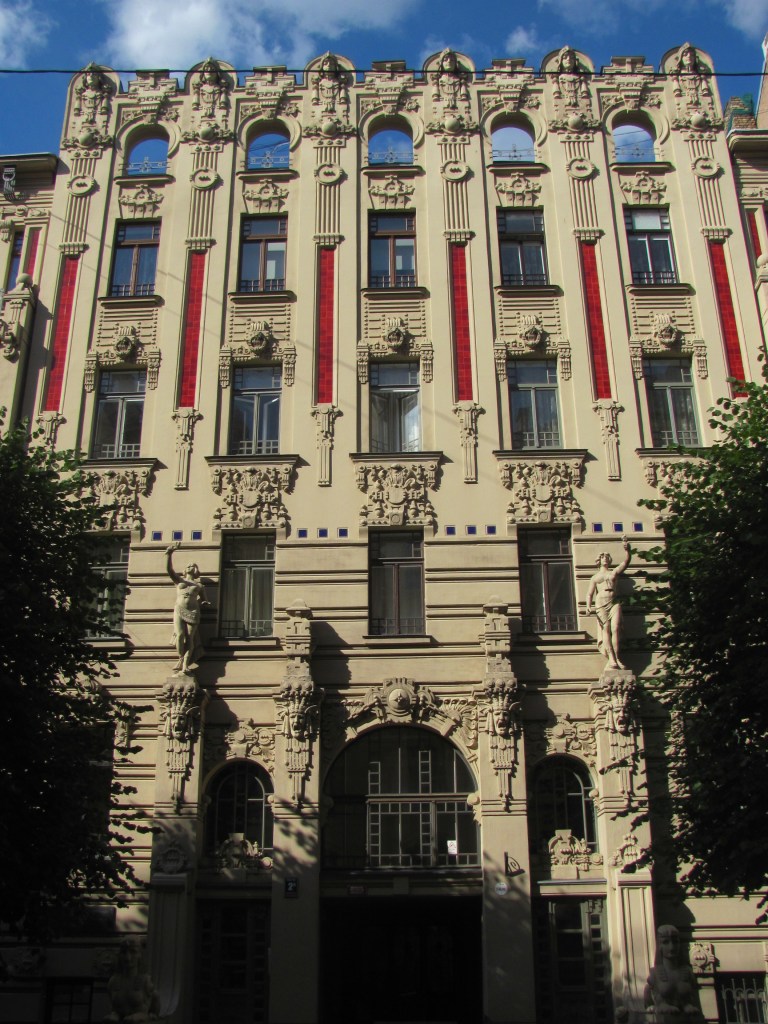
A little bit further on is Alberta Street and its Art Nouveau houses.

Art Nouveau building, Alberta Street, Riga.

“It was interesting what the walking tour guide was saying about the resurgence in the old religious beliefs in Latvia”, says Spencer that evening. “I was reading on the web that there is even a Latvian religion based on the old ways. It’s called Dievturiba.”

“Yes, I have heard of it”, I say. “Tell me more about it.”

“Well, it was founded in the 1920s at the time of the first Independence. It makes no pretence of being the same as the ancient religion, but is a synthesis of Latvian legends, folklore and folk songs, and so provided a focus for Latvian nationalism. It was suppressed during the Soviet era, but there has been a revival since the second independence in 1991.”

“Interesting”, I say. “What do they believe?”

“Well, it depends who you talk to”, he answers. “Some believe there is only one god, Dievs, but he has two aspects, Mara, representing the maternal aspect, and Laima, representing fate and fortune. Others believe that the latter two are separate gods in their own right, and there are also a number of lesser gods. Humans have a physical body, an astral body, and an eternal soul. The purpose of life is to find an individual ‘Path to God’. If you are successful, the eternal soul reunifies with Dievs when you die. The physical body decays, of course, and the astral body also eventually fades away.”

“Not a lot different from many religions”, I say. “But the astral body bit sounds a bit unnecessary. What’s its purpose? Why don’t they just keep it simple?”

“Well, that’s the thing”, he says.” A lot of people don’t really buy all the theology stuff but quite like the idea of reconnecting to the old ways and revering nature. Personally, I quite like the revering nature bit, as us spiders would get a bit more recognition for all the good that we do!”

In the morning, we cycle over to the Riga Ghetto and Latvian Holocaust museum located in an old warehouse building not far from the market.

Riga Ghetto and Latvian Holocaust museum.

“You can have one of these museum guides in English and German”, the young man at the desk says. “And since you live in Scotland, we even have one in Gaelic. One of my colleagues is a linguist, and he translated it.”

I had to admit that I don’t speak or read Gaelic apart from a few place names on Ordnance Survey maps.

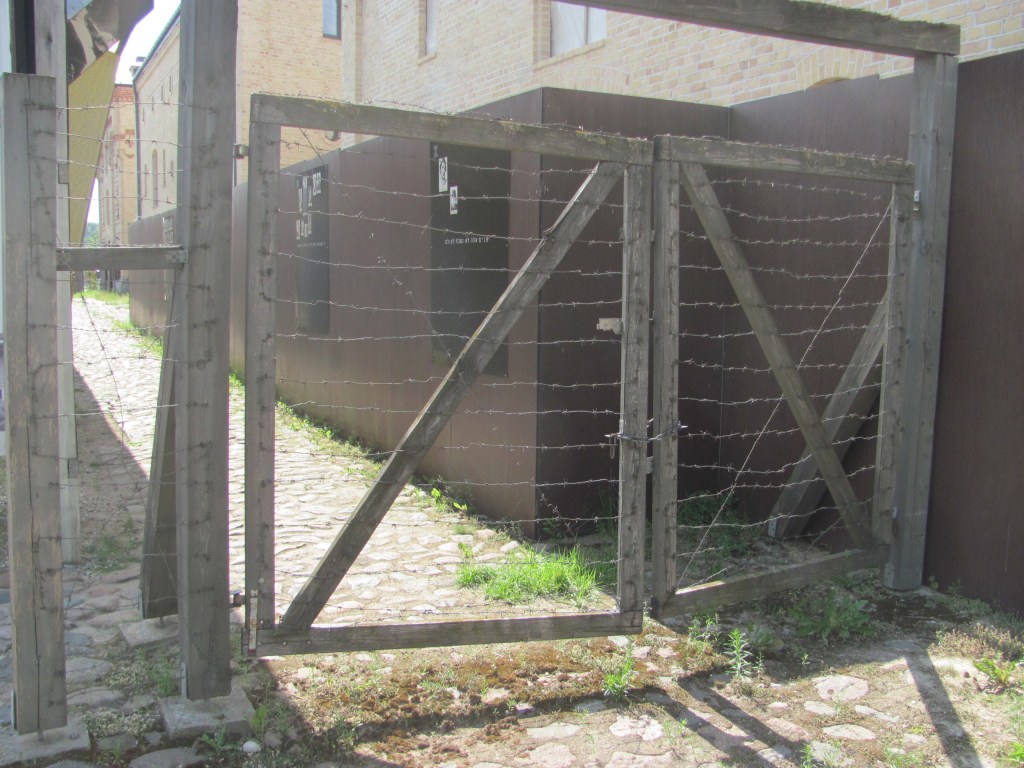
We spend the next couple of hours learning of the history of Jews in Riga, the creation of the ghetto, and the mass murder of Jews. The ghetto was created within a Riga suburb fenced off by barbed wire by the Nazis when they occupied Latvia in 1941. Initially it was for the Latvian Jews, but after more than 25,000 of these were killed in the nearby Rumbula forest within three days, Jews from other parts of Nazi-occupied Europe were also sent there. Many of these were also killed by shooting in Rumbula forest.

The Riga ghetto.
Reconstruction of a ghetto room.

We learn of the ‘Butcher of Latvia’, a Latvian by the name of Herberts Cukurs, who was the deputy commander of the Arajs Kommando, a Nazi collaboration unit that was responsible for the largest number of murders of Latvian Jews. Despite supposedly being an ‘all round good chap’ before the war and a noted aviator who flew solo to Gambia and Japan, Cukurs turned out to be particularly brutal, shooting Jewish children and babies in captivity, burning Jews alive, and sexually assaulting Jewish women. After the war, he fled to Brazil, but was tracked down by Israeli agents and assassinated. Amazingly, there have since been efforts in Latvia to rehabilitate his memory.

Herbert Cukars, the ‘Butcher of Latvia’ (from the Times of Israel)

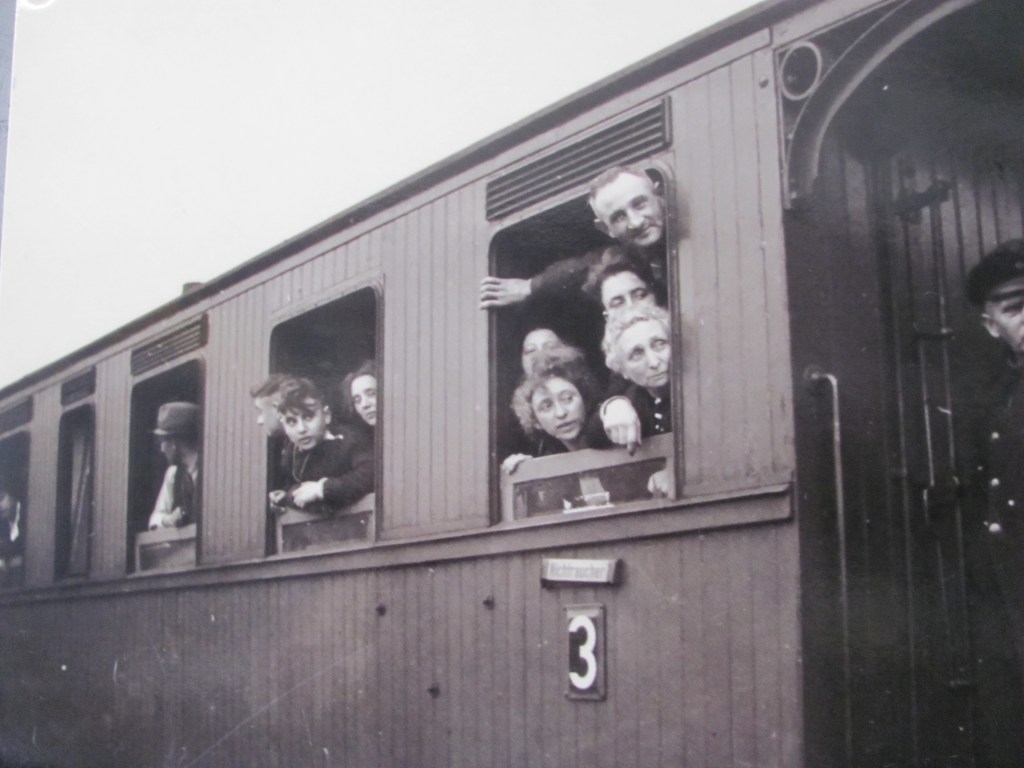
We enter a railway wagon similar to those used to transport Jewish people to the Riga ghetto. Inside, mirrors line the walls to give infinite reflections of a few tree saplings in the centre, giving an impression of a large forest. Perhaps it was memories of the lands they were leaving knowing that they were heading for certain death, or perhaps it represented the last view they had before they were shot in Rumbula forest. Everyone can interpret it how they want.

Wagon used to transport people to Riga ghetto.
Leaving for Riga and almost certain death.

On the wall outside is a list of the names of Jewish people killed in Latvia, indicating where they originated from.

List of names of Jews killed in Latvia.

Particularly poignant is a room with suspended cubes lit from within with the names and details of many of those killed written on the cubes’ faces. All ordinary people whose only crime was to be born Jewish.

Life stories of some of the ghetto inmates killed by the Nazis.

The actual ghetto itself is a few streets away from the museum.

The location of the Riga ghetto nowadays.

“It’s amazing that the street names are still the same”, says the First Mate. “I would have thought they might have renamed them, to try and forget the terrible things that happened here. Imagine buying a house in Ludzas Street nowadays knowing what happened there.”

“That may be just why they kept them”, I say. “To stop people forgetting what happened.”

Nearby is the Russian Orthodox church. We have a quick look.

St John the Forerunner Orthodox Church.

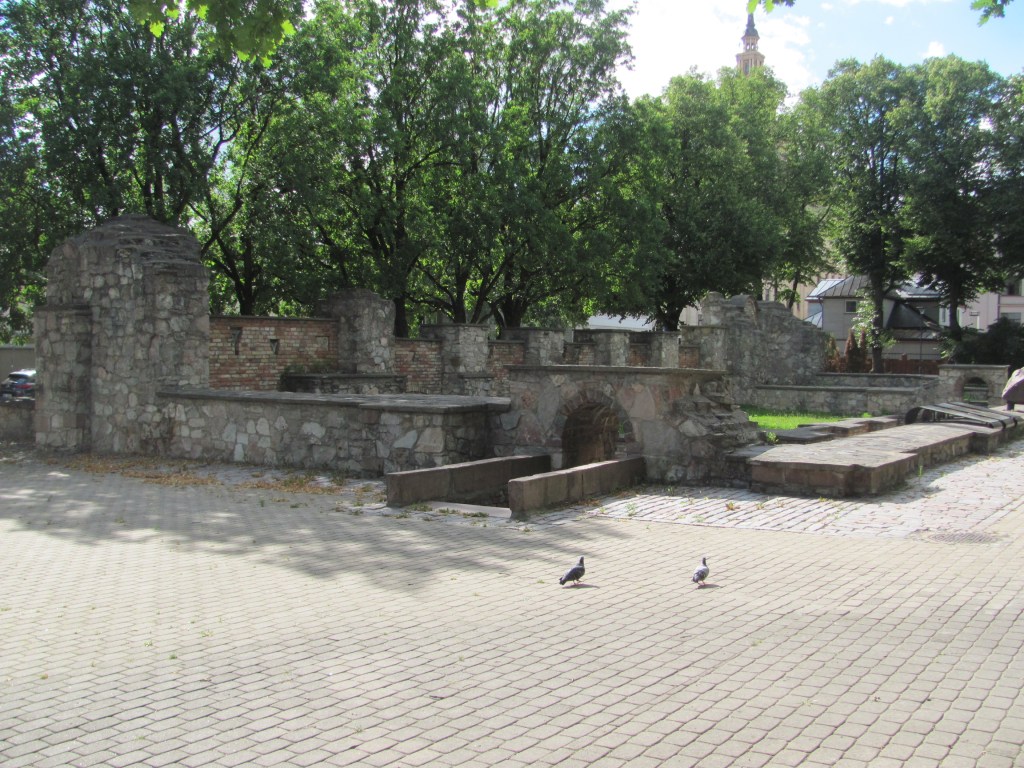
On the way back, we pass the remains of the Great Choral Synagogue that was one of the first synagogues to be burnt down by the Nazis and the Arajs Kommando in 1941, reportedly with Jewish people locked in its basement.

Remains of the Great Choral Synagogue burnt down in 1941.

Back in the city centre, we peek into the modern-day Jewish synagogue.

“I have never seen inside a synagogue before”, says the First Mate. “It’s certainly a lot more minimalist than the Orthodox church.”

Inside the Jewish synagogue, Riga.

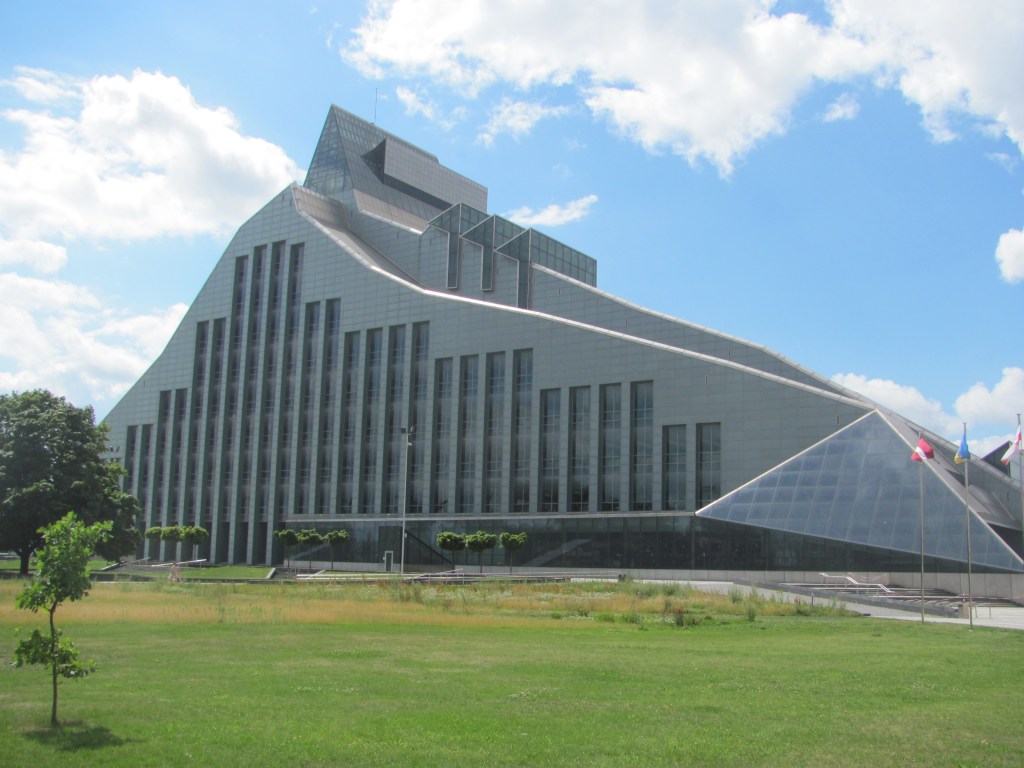
On the way back to the boat, we decide to visit the intriguing-looking National Library of Latvia on the left bank of the Daugava River.

 “You can become temporary members of the library if you want to look around”, says the woman at the front desk. “I’ll give you a card each, which will give you access to most, but not all, of the rooms. I suggest you take the lift to the top, have a look at the view, then make your way down each level by the stairs. Here’s a brochure of what is on each level.”

The view out over the river to the Old City is stunning.

View from the top floor of the National Library.

We make our way down each level. It’s quite a different concept to the Oodi library we had seen in Helsinki. Rather than a community library, this one is more of a traditional repository of Latvian art, music, folklore, literature, and history. Earnest scholars pore over old tomes, librarians reverently return books to the shelves, visitors speak to each other in hushed tones.

A repository of national knowledge.

“I bought some of this Riga Black liqueur today”, says the First Mate that evening, as we unwind in the cockpit. “It’s pretty popular here. We can try some.”

“You know, I can’t quite reconcile in my mind what Mike was saying yesterday”, she continues, taking a sip. “On one hand, he is intelligent, helpful, and thoughtful, but I was quite disturbed by his views on Russia and Latvia. How can a nice person like that hold such views?”

“When you have been brought up with a particular mindset, it’s difficult to see the world in any other way”, I say.

A stroke of luck, Baltic ups and downs, and a bloody accident

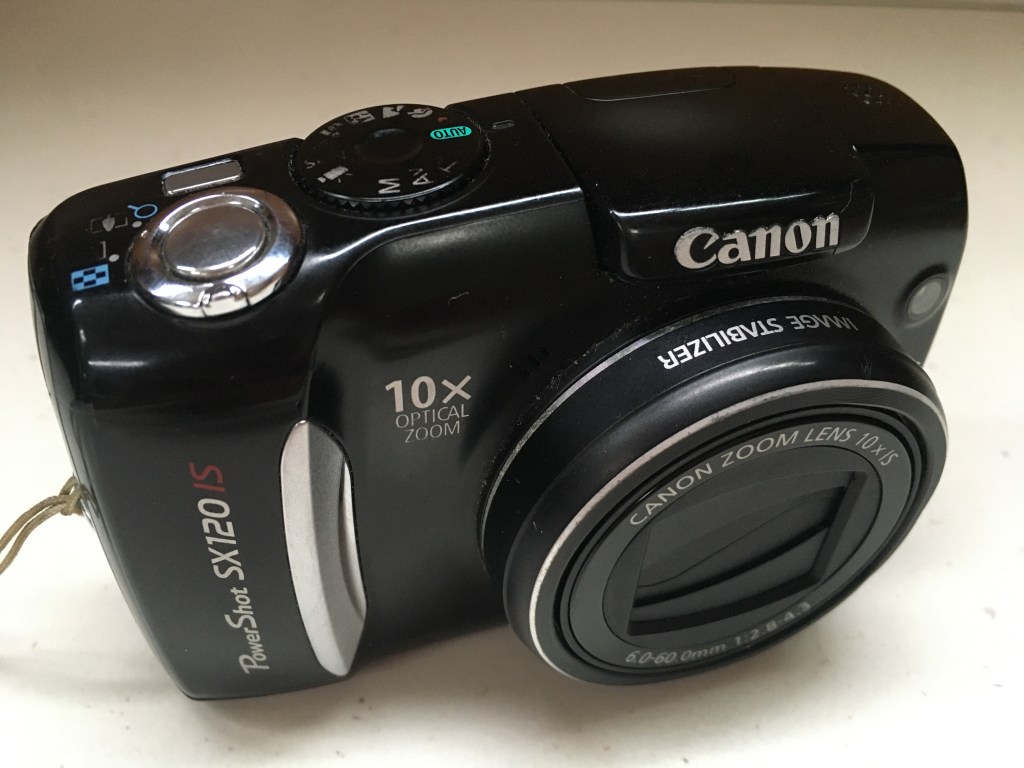
I awake, and lie listening to the low rumble of the first ferry arriving and opening its door to the waiting traffic. Perhaps losing the camera was a bad dream, and it is still there on the shelf?

But it isn’t.

On the way back from the shower block, I notice that the Nice Harbourmaster is back in her office. I decide to mention the lost camera to her on the off-chance that she might know if there is a place on the island that lost property might be handed in to.

“We have an island intranet where such things are posted”, she says immediately. “Here, I’ll put it on straight away. Tell me all the details of your camera.”

I describe the camera as best I can while she types it in.

“There”, she says, pressing the Send button. “It’s a long shot, as it depends on an islander having found it, and not a tourist. Unfortunately, it’s usually tourists who visit the Muhu Linnus and not locals. But you never know. If it turns up, I can post it on to you.”

It’s the best we can do. If I am lucky, I might get it when we get home.

We prepare to leave. I run through the check list. We also need to top the tank up with fuel. This time we have transferred enough money into the account, so the card should be accepted.

As I am turning on the navigation instruments, the First Mate calls down from the cockpit.

“There’s someone here to see you”, she says. “Come up quickly.”

It’s the Nice Harbourmaster.

“I have some good news for you”, she says, smiling. “Your camera has been found. They are bringing it here now. By a strange coincidence, it was found by one of my friends who was at my birthday party.”

A few minutes later, a car pulls up to the harbour office. It’s been only half-an-hour since I first mentioned it to the Nice Harbourmaster.

“It was my wife who found it”, the driver tells us. “We live near there, and she had taken the dog for a walk and came across it. It was raining, so she took it so it wouldn’t get damaged.”

He hands back the camera. I am overjoyed. My faith in human nature is reconfirmed.

“I hope you don’t mind, but I went through your photos”, he says. “I was trying to get an idea of who might have lost it. I could see you were sailing and that you were interested in historical sites.”

“Not at all”, I say. “I am so glad that she found it. I had resigned myself to never seeing it again.”

The Very Nice Harbourmaster (R) and her friend find my camera.

We refuel and set off, heading for Pärnu. As we leave, I see a cloud formation of a dove flying. A sign!

A sign, a sign!

“It’s just pareidolia”, says Spencer. “You are pleased that you got your camera back again, and it’s making you see positive patterns in abstract things around you. It’s just water vapour.”

Does he ever enjoy himself?, I wonder.

We stop off for the night at Kihnu, a small island just off the eastern coast of the Gulf of Riga. Settled originally by criminals and exiles from the mainland, the men took to seal hunting while the women specialised in handicrafts and music. Motorbikes with sidecars are also a thing.

Motorbike with sidecar.

The next day we reach Pärnu. The previous week, the Gulf of Riga Race for sailboats had finished in Pärnu, and there are still a few of the boats and their crews in the marina. But we manage to find a berth.

Pärnu (pronounced (Per-noo) is the fourth-largest city in Estonia. Like the other towns we had visited, the original town of Pärnu was founded by the Bishop of Ösel-Wiek on the north side of the river after the local pagan stronghold, Soontagana, had been conquered by the German Crusaders. Around the same time, the Livonian Order built a military town called New-Pärnu on the south side of the river, with the river the boundary between the two territories. The latter gradually eclipsed the older town, mainly through its prosperity gained through its membership of the Hanseatic League. Old-Pärnu was later destroyed. The Polish-Lithuanian Commonwealth had control of New-Pärnu in the 1500s, but then its history followed the broad outlines of the rest of Estonia – flipping between control by the Swedes, the Russians, the Germans, then by the Soviets again, with a brief period of independence in between.

Model of medieval Pärnu.

We unload the bikes and explore the city. It has some charm, with churches, an impressive town hall, and old wooden houses nestling quietly amongst leafy avenues.

St Catherine’s Church, Pärnu.
Pärnu Town Hall.
Originally the gunpowder magazine, now a gym.
Wooden house in Pärnu.

We reach the Swedish Gate, the only remaining entry through the old city walls, so-called because the Swedish built it during their stint of ruling it.

The Swedish Gate.

At one end of Independence Square is the monument to the Proclamation of Independence in 1918, which was read out from the balcony of one of the surrounding hotels. In this sense, Pärnu is the birthplace of the modern republic of Estonia.

Monument to the Proclamation of Independence in 1918.

We end up at the museum, where we learn about the rise and fall of the Baltic Sea level since the Ice Ages.

“The Baltic was a vast ice lake left behind after the retreat of the glaciers at the end of the last Ice Age”, a panel tells us. “As the Earth continued to warm, the ice in the lake slowly melted, and the freshwater from it flooded out into the North Sea across the lowlands of Sweden through a channel roughly where the Göta Canal is nowadays. This created the Yoldia Sea, which was brackish due to the salt water flowing in the opposite direction when the levels were similar. However, as the land rose after the weight of the ice was gone, it cut off this route to the North Sea, creating the freshwater Ancylus Lake. Then as the sea-level of the North Sea rose, it broke through the narrow gap between Sweden and Denmark, and salt water flooded in, creating the brackish Littorina Sea. That’s more-or-less what we have today.”

“It’s fascinating to think of all that going on, isn’t it?”, says the First Mate. “You tend to think that everything you see has been the same forever, but these comings and goings all occurred fairly recently. And I wonder how these various seas and lakes got their names? Hardly likely to be the people living there at the time, is it?”

“It seems they are named after species of molluscs that live in different levels of salinity”, I say, consulting Google. “That’s how they worked out what was going on.”

The Red Tower, once part of the old city walls, then a prison, is now part of Pärnu Museum.

The Red Tower, Pärnu.

“The guide book says it’s worth seeing”, says the First Mate. “It has an interesting panoramic cinema showing the history of Pärnu.”

We climb the narrow staircase to the top floor, and sit fascinated watching how the city developed from a seal hunters’ camp, a Viking trading post, through medieval times, the various occupations, independence, to the modern day.

“For years our country has been the battleground of foreigners”, the voice-over says. “But hopefully that is the end of that now that we are an independent and free state.”

It’s time for a coffee and a cake.

“The beach is supposed to be very nice”, says the First Mate, as she cuts the cake. “Why don’t we buy some food and have a little picnic there later on?”

“Sounds like a good idea”, I say.

We cycle down to the beach and find a bench to sit on. It’s late afternoon, the sun is warm, and quite a few people are still there. We strike up a conversation with a dad with his young daughter and his mother sitting at the other end of the bench.

The beach at Pärnu.

“Yes, we are Estonians”, he says. “Not Russians. We’ve lived here all of our lives. I used to come down to this beach when I was a child. Now I am bringing my daughter here.”

“We used to come here and sit and look across the water, wondering what countries lay beyond”, says his mother. “Of course, in those days of the Soviet Union, there was no chance to travel to see them. We used to dream of a white ship coming to take us away to see the rest of the world.”

“The ‘white ship’ is a symbol of hope in Estonian culture”, the Dad explains, seeing the puzzled looks on our faces. “It started back in the 1800s when a leader of a religious sect in Tallinn called Prophet Maltsvet promised his followers that a white ship would come and take them away to a better land. But it never arrived. Since then it has become associated with deliverance from repression in general. Estonia has had a difficult history, and it helped to give people hope that things would get better.”

The First Mate invites them to come and see our ‘white ship’, but they don’t have time.

The next morning, we set off for Salacgriva, a small harbour just inside the Latvian border. It’s about halfway between Pärnu and Riga, and an ideal place to break the journey.

Tied up at Salacgriva, our first Latvian harbour.

After tying up, we sit in the cockpit and sip our glasses of wine, unwinding. Suddenly, there is a roar of a speedboat driven by a young chap that zooms past us. The wake rocks Ruby Tuesday violently.

“Crazy idiot”, shouts the First Mate, brandishing her fist at him. “Can’t you think of someone else besides yourself for a change?”

Eight water-skiers follow, attached to the speedboat. They are practising for the regatta that is to be held at the harbour at the weekend. Thinking she is waving, one manages a quick wave back.

Don’t rock the boat. Please.

“Oh, sorry”, she says, embarrassed. “I didn’t mean to be so cross. But I just wish they wouldn’t come so close.”

“They wouldn’t hear you anyway over the noise of the engine”, I say.

After dinner, we go for a walk to the nearest village. The supermarket is about to close. We have a quick browse through. One thing that we are struck with is the number of Russian items for sale, something that wasn’t so evident in Estonia.

“Hey, put that packet of Russian Earl Grey teabags down”, says the First Mate. “We don’t want to support the Russian war effort in Ukraine.”

Off limits.

We carry on the next morning, aiming for Riga. As we sail, I continue with the book I am reading, Twilight of Democracy – The Failure of Politics and the Parting of Friends, by Anne Applebaum, the historian. In it, she discusses the rise of authoritarianism around the world, and the apparent decline in democracy.

Authoritarianism is not a philosophy or ideology, she says, but just a means of holding power. Loyalty, not ability, is the criteria for success. She asks the question of whether a liberal world promoting free speech, rational debate, respect for knowledge and expertise, and freedom of movement, is just a cul-de-sac in the broad sweep of history? Is democracy in its twilight, with a reversion to anarchy or tyranny on the cards?

“Ah, but the book was published in 2000”, says Spencer, emerging from the canopy. “Since then Poland has swung away from the Law & Justice Party, the UK has voted out the Conservative Party and its far right wing, and in France the National Rally was beaten into third place. Now it remains to be seen what happens in America with the coming elections. A battle between a young, mixed-race, democratic woman and an old, white, autocratic man. Perhaps the pendulum is starting to swing in the opposite direction again?”

I am just about to answer when the VHF crackles into life.

“Gale warning for all shipping. This is to announce a gale warning in the Gulf of Riga. All ships should take immediate action and seek shelter.”

I am puzzled. The weather forecast in the morning had predicted strong winds in the evening, but not gale strength and not so early in the day. Our plans had been to be safely tied up in Riga well before they started.

“I think that we should find somewhere”, says the First Mate. “I don’t really want to be caught out in a gale. We still have about four or five hours to get to Riga. Isn’t there a small harbour about halfway?”

There is. A place called Skulte. After some discussion, we decide to alter course and put in there.

“Better to be safe than sorry”, the First Mate says, looking happier.

We follow the marker buoys into the harbour. Large ships are moored alongside the wharfs, with cranes loading timber into them. Huge piles of wood chips lie on the quay like small mountains. We learn later that the timber is shipped off to Sweden by Swedish companies, made into furniture, and sold back to Latvia.

Loading timber for Sweden.

The marina is a little way up a small river opposite a fishing wharf. We are met by the harbourmaster.

“Not many yachts come here”, he says. “Only those looking for shelter on the way to Riga.”

We tell him about the gale warning.

“Ah, the meteorological people are always exaggerating”, he says. “Anything more than a gentle breeze, they call a gale. They probably have to do it to cover themselves.”

Recollections of the ‘Boy who cried Wolf’ story from my childhood days flood back. Would anyone believe them if it really was a gale?

“But it’s true there are strong winds coming tonight”, he continues, as though reading my mind. “Although I don’t think they will be gale force. Either way, you’ll be safe enough in here.”

Tied up in Skulte.

Somehow I manage to stub my toe on a cleat on the pontoon as we are tying up. It rips the toenail almost off. Blood is everywhere.

“I think that needs seeing to”, the harbourmaster says, shaking his head and looking at it like a mechanic looks at a car needing an expensive repair. “There’s a hospital not far from here. I am quite happy to take you there and wait while they fix it up.”

It seems a bit like overkill to go to a hospital, but I don’t want problems down the line if it gets infected. I climb into his car, trying to make sure I don’t get any blood on the seats. The First Mate wedges herself into the back seat.

“Sorry about the dog hair and the smell”, he says. “We have a dog at home who comes everywhere with us.”

We arrive at the Trauma Unit of the hospital. Luckily a doctor can see me almost straightaway. He doesn’t say anything, but motions me to lie down on the bed. I assume he doesn’t speak English. He picks up an evil-looking curved pair of scissors and deftly cuts the remaining nail off at the quick and dresses the wound.

Arriving at the Trauma Unit at the local hospital.

“I wonder if that’s it?”, I say to the First Mate, who has almost fainted in the corner at the sight of so much blood.

“No”, says the doctor in perfect English. “One more thing. You must pay!”

A poorly toe.

“He probably worked for the KGB in the old days”, the harbourmaster jokes on the way home. “They were pretty good at pulling out fingernails and toenails.”

I am going to have to get used to Latvian humour.

A ball of fire, a pit of lions, and a lost camera

“Hurry up”, says the First Mate. “Can’t we go a bit faster? It’s catching us up.”

She is referring to the ferry coming out from Heltermaa. We had waited for the same ferry to make its way along the narrow buoyed channel into the harbour before we ourselves set off. But we had forgotten how quickly it can unload and load its passengers and we are only about halfway along the channel when we see that it is on the move again, following us. There is very little room for both the ferry and us to pass together.

The ferry arrives.

I give the engine a few more revs and slowly we reach the red and green buoys marking the start of the channel. We move to one side and the ferry passes mere tens of metres behind us. We turn south, hoist the sails, and, with the wind from the southwest, set off on a pleasant beam reach. Passing the small island of Heinlaid, I peer through the binoculars and manage to pick up the two leading line beacons far away on the isle of Muhu, just as Ransome had done in his Racundra. If we can keep them in line, we should be able to avoid the treacherous rocks and reefs just below the surface.

On our way.

Two hours later we are approaching Muhu, and pick up a new set of leading lines to the southeast on the island of Kesselaid. Sheltered now by Muhu, the wind drops to a faint breeze, and for the last couple of miles we drift along at a majestic three knots. But the sun is shining and we are not in a desperate hurry, so we delay the inevitable starting of the motor until we are just approaching the small harbour at Kuivastu.

Compared with the solitary pier that Ransome describes, Kuivastu harbour now is cosily surrounded by a sea wall on all sides except for a narrow entrance, giving good shelter from most directions. Finger pontoons also stretch out from the main jetty, giving plenty of places to tie up. No need to anchor as he did.

Kuivastu marina.

We are met by a nice friendly harbourmaster who helps us tie up. We had hoped to top up our tank with fuel on the way in, but for some reason the machine doesn’t like our card.

“You have to have a certain amount in your account”, the Nice Harbourmaster explains. “If it is less than that amount, it will decline the card. Even if you only intend buying a little. It’s a security thing.”

“I am an art teacher at the local school”, she tells us, as we pay the fee. “But during the school holidays I work as the harbourmaster here. I enjoy meeting the lots of different people that pass through, such as yourselves.”

We have a quick explore of the harbour area. The so-called “Gates of Moon” that the wealthy landowner in Ransome’s day insisted all people and goods pass through coming to or leaving the island and pay a tax are long gone now and have been replaced by shiny drive-through ticket booths for the ferry.

The “Gates of Moon” these days.

A few hundred metres up the road, however, the Russian inn he talks about is still there, albeit boarded and locked up.

The old Russian inn described in Racundra.

The next morning, we unload the bikes and cycle to the nearest village, Liiva, 12 km away. Just as we arrive it starts to rain heavily.

“Quick, let’s have lunch in here”, says the First Mate, pointing to a small café. “We can wait there until the rain goes off. All that cycling has made me hungry anyway.”

“We are from Tallinn, here on holiday”, say the couple sitting at the table next to us. “We love coming here. So much to do if you like peace and quiet. It was restricted in Soviet days, as they had military installations here. Mainland Estonians had to have permits. But all that has gone now. We are not sorry to see them go.”

On the way back to the boat, we pass a pre-Christian graveyard. The information panel says that it dates from 500 BC, the earlier burials in cist graves, the later ones cremated on pyres. As we sit in the small clearing in the forest, I find myself trying to imagine what these people were like. What did they do in their lives? What gods did they believe in? Did they believe they had souls and an afterlife? Were they good people?

Mäla pre-Christian burial site.

“I won’t be in tomorrow”, the Nice Harbourmaster says when we get back. “It’s my birthday, and some friends of mine are coming over from the mainland to help me celebrate. A colleague will take over from me here. He’s a good man. You’ll like him. I’ll be back in after the weekend.”

We congratulate her and wish her all the best for her celebrations.

——-

The boy and his grandfather climb to the top of the small rock outcrop and look down on the forest stretching as far as they could see. The boar they are hunting seems to have escaped, and they decide to rest for a while to regain their strength. Behind them, they can just make out the wooden ramparts and the smoke rising from the fires of Asva, their village. They had left it two days previously to go hunting in the forest, but so far they have not had much luck.

As they rest, the young boy spies a bright light in the northeast sky and points excitedly.

“Look at that star, Granddad”, he shouts. “I haven’t seen that one before. Why can we see it in the day-time?”

“I’ve not seen it before either”, says the old man. “Perhaps the gods are at war again. But it seems to be coming closer.”

Together the two of them watch in awe as the light grows in size. As it streaks overhead, they hear a loud explosion as the fiery ball separates into nine smaller ones. Seconds later, the ground underneath them shakes violently as the lights plummet to earth somewhere in the forest to the west. The boy clutches the older man in terror as a huge plume of smoke rises into the sky like a mushroom, and trees are flattened by the force of the blast and begin to burn. The boom from the impact reaches them, making them clutch their ears in pain.

“What is it, Granddad?”, says the boy, shaking with fear. “Are the gods angry with us for hunting boar without their permission?”

There is a long pause.

“The sun has come to lie down”, the old man says eventually. “We must let him sleep.”

The sun has come to lie down.”

“Come on”, says a familiar voice. “We haven’t got all day. We need to catch the next bus in 20 minutes.”

It’s the First Mate. We are at the Kaali meteorite crater on the island of Saaremaa. We had taken the bus from Kuivastu harbour, had gotten off at the small village of Kaali, and had walked the short distance to the crater nestling amongst the copse of trees surrounding it. The meteorite had fallen sometime between 1530–1450 BC during the Bronze Age in Estonia, at a time when the island was already inhabited by humans. I am trying to imagine what it might have been like for people living in the area at the time.

Weighing between 20 and 80 tonnes, it had broken into nine smaller pieces at an altitude of 5-10 km, each of which had all caused craters in a 1 km radius. The impact had caused a huge plume of heated gas and dust to rise 8 km into the air and had incinerated trees and other vegetation within a radius of 6 km.

The Kaali meteorite crater.

As time went on, the lake at the bottom of the largest crater acquired religious significance. During the Iron Age, a stone wall was built around it, and the lake was used for ritual sacrifices of domestic animals. One idea is that it was the inspiration for some of the Finnish myths and legends – the god Ukko, for example, had ordered that fire be given to humans, and this had fallen to earth at Kaali for the Finnish heroes to come and collect.

We catch the next bus to Kuressaare. As we sit in the market square and have a coffee, the bikers arrive.

The bikers arrive.

“Brothers of the Sword”, I say.

“I don’t think they are a gang”, says the First Mate. “They just look like ordinary bikers to me.”

“No, I mean it was the Brothers of the Sword who built the castle here”, I say, putting down the Lonely Planet guide. “In the 1200s during their Crusades. I was just reading about them.”

Kuressaare Castle.

We wander up to the castle. Inside is a museum on its history.

The German bishops ruled the area, called Ösel-Wiek, for 300 years, we learn. Then the Danes took it over in the 1500s, followed by the Swedish in the 1600s. They held it until the end of the Great Northern War in 1721, when it then became part of the Russian Empire. During WW2, it was used as a stronghold, by the Soviets, then by the Nazis.

“The bishop of Ösel-Wiek was the one that lived in Haapsalu Castle as well“, says the First Mate later. “I wonder why he needed two residences?”

“Probably as a show of power”, I say. “The islanders here in Saaremaa put up a spirited resistance to being Christianised, so having the castle here would show them who’s boss, I suppose. It seems that he would come here twice a year, in spring and autumn. ”

The chapel in Kuressaare Castle.

“The Church must have been pretty wealthy to be able to build and maintain all these castles”, she says. “I wonder if all the people who gave their hard-earned cash to the Church would have agreed with how it was spent?”

“I don’t think they had much choice in the matter”, I say. “In any case, they probably just thought that it was doing a good job by converting all these pagans into obedient Christians. The way God said it should be done.”

“Did you see the Lion Shaft?”, she asks. “The legend is that one of the bishops would hold court in one of the adjoining rooms, and anyone sentenced to execution would be taken to the door that opened on to the shaft running up and down the castle. There were hungry lions kept at the bottom who did the executing. A bit gruesome.”

In reality, the shaft was used for disposing of waste from the kitchen and the latrines. But the lion legend makes a good story. But whether it was lions or sewage at the bottom, one of the bishops did lose his life in it when he was imprisoned and thrown into it for selling off church property illegally.

“And the Legend of the Immured Knight”, I say. “A Spanish knight came to help out one of the bishops but secretly fell in love with a local girl. One of his love letters to her was found inside a loaf of bread that accidently ended up on the bishop’s table rather than going to her. Because the knight had broken his vow of celibacy, he was put to death by being immured in a cellar in the castle wall.”

“The Immured Knight”.

“It sounds a bit like the story of the White Lady in Haapsalu castle, but in reverse”, says the First Mate. “The bishops seem to have had a thing for bricking people up behind castle walls in this part of the world.”

“And it’s always because of sex, isn’t it?”, I say.

We take the bus back to Kuivastu and the boat.

“Excuse me”, says the woman sitting behind us to the First Mate. ”You have a price tag on your head. Do you want me to remove it?”

“A wanted woman”, I joke. “With a price on her head. Perhaps I should collect it! Now where’s the police station?”

“It’s probably from one of the jumpers that I was trying on in the market”, she laughs.

“Well, it looks very nice on you”, says the woman. “The jumper, I mean. Here’s the price tag.”

On the last day, we load the folding bikes onto the bus, and get off at the Nautse stop. I am quite keen to see the Muhu Linnus, the last stronghold of the Estonians where they held out against the onslaught of the German Livonian Brothers of the Sword in 1227 AD. It is still remarkably well preserved.

Muhu Linnus, the last Estonian stronghold against the Brothers of the Sword.

“The Brothers of the Sword had trekked 100 km across the frozen sea from Pärnu”, the nearby panel tells us. “They surrounded the fort and both sides called on their respective gods to give them victory – the Christians on God, and the Estonians on their god Tharapita. Eventually the Christians breached the walls. Giving praise to God for their victory, they then killed all the pagans, laid waste to their town, plundered all their possessions, drove away all their livestock, and set fire to their fort.”

“Are you sure we are talking about Christians here?”, says the First Mate. “It doesn’t seem to be the best way of converting people to your way of thinking by killing them all off.”

“Well, I don’t know”, I say. “At least there would be no-one left who disagreed with you.”

We cycle over to Koguva, and decide to have lunch at the small restaurant overlooking the sound between Muhu and Saaremaa islands. The food arrives. It is beautifully presented.

“Why don’t you take a photo of it?”, says the First Mate.

I reach for my camera in the rucksack. It’s not there.

“Where did you last have it?”, asks the First Mate.

“Back at the Muhu stronghold”, I say, feeling the dread welling up. “I took a photo of the standing stone in the middle. I must have left it there. I’ll have to cycle back and get it.”

I gobble down my lunch, and minutes later am pedalling furiously back to the fort. It’s about ten kilometres. I reach the turnoff, panting and sweating. Another cyclist is coming down the small track between it and the road.

“No, I didn’t see any camera”, he says. “I hope you find it.”

It’s not there. I spend half-an-hour searching high and low for it, but it is nowhere to be seen.

“I think I can say goodbye to that”, I say to the First Mate when we meet up again. “Even if someone has found it, how would they know who it belongs to? It’s a shame, as I had about a week’s worth of photos since I last backed them up. All gone now.”

“Cheer up”, she says. “It could have been worse. At least you still have your phone you can take pictures with. And you never know, it might still turn up.”

“Before we leave tomorrow morning?”, I say morosely. “I doubt it. I liked that little camera. It’s like losing an old friend.”

On Racundra’s trail, a haunted castle, and bygone island communities

“Look at that old car over there!”, says the First Mate excitedly. “He’s parked it there just where everyone can see it.”

“It’s an Auburn Speedster”, I say, quickly doing an image search on Google. “Supercharged in-line eight cylinder from the 1930s. Beautiful.”

1936 supercharged eight-cylinder Auburn Speedster.

We are having coffee and cakes in the main street of the picturesque city of Haapsalu in western Estonia. We had left Tallinn a few days earlier, and followed Arthur Ransome’s route in Racundra down the west coast of Estonia as much as possible, passing Baltic Port (now Paldiski) and the Pakri Islands. We had overnighted at Dirhami marina, just over the other side of the small peninsula from Spithami where Racundra had anchored. Ransome had gone for a walk to the top of the dividing ridge and looked down on Dirhami, an anchorage in those days, commenting that it was a better anchorage than where he was, but it was extremely risky coming in with only a narrow channel between dangerous rocks. Even today with all the electronic navigation equipment we have, we still had had to take care lining up the transit marks on the shore until we were safely in the marina. Rocks don’t move much.

Dirhami harbour nowadays.

From Dirhami, we had then followed the buoyed route down the Nukke channel between the mainland and the island of Vormsi, passing the place where Racundra had anchored overnight as it was too difficult to tack through the narrow channel in the gathering dusk. Then into the channel itself, with its twists and turns and gleaming black rocks breaking the surface on each side, ready to impale themselves on any boat that strays too close. To do all this by tacking against a head wind with only someone hanging over the bow and shouting if they saw any rocks coming, as Ransome had done, was nothing short of foolhardy, fearless, or both. But they had made it, and so had we.

“Come on”, says the First Mate, finishing her cake and jumping to her feet. “Enough daydreaming. Let’s go and see the Bishop’s Castle. It is one of the sights of Haapsalu, after all.”

Haapsalu is another old medieval town dating from before the early 1200s. When none other than our old friends, the Livonian Brothers of the Sword, had conquered the region, they installed a bishop in Haapsalu in a magnificent castle with a cathedral. Although originally just a church official, over time his successors came to own all the lands, forests, rivers and lakes of the region, which included the island of Saaremaa in the west and quite a large chunk of mainland Estonia. They also gained the power to administer it and make and enact laws.

Haapsalu Episcopal Castle.

“Then in the 1500s, the then Bishop sold everything to the Danish Crown, but after a short time, it was lost to the Swedish in the Livonian War”, the audio guide tells me. “The Swedes had it until 1721, when they lost it to the Russians in the Great Northern War. The castle was destroyed by fire in 1688, but since 1889, the cathedral and castle has slowly been restored.”

Part of the Episcopal Castle in Haapsalu.

“Wow, it’s certainly had its ups and downs”, says the First Mate. “But I have to say, being a bishop in those days seemed to be a good career choice. I wouldn’t mind living in a pad like this. I have always had a soft spot for turrets, ever since I was a little girl.”

The cathedral is attached to the western side of the castle. Its claim to fame is a window halfway up a small tower, where at full moon the shape of a woman dressed in white appears.

The tower of the White Lady.

“The story is that there was once a monk who lived in the castle as part of the bishop’s entourage”, a nearby panel says. “Unfortunately, he fell in love with a beautiful young maiden who lived in the village outside. To be together, he dressed her as a choirboy and brought her into the castle. The plan worked for some time, but one day the bishop became suspicious, and after an investigation, discovered the hapless girl in the monk’s room in her female clothes. It was decided that her punishment was to be walled into the tower just being built, with only a loaf of bread and a jug of water to sustain her. Needless to say, she didn’t last long, and ever since then her white ghost appears in the window of the tower at full moon.”

“I am always amazed at how they managed to devise some pretty gruesome punishments in those days”, says the First Mate, shuddering. “And being Christians too. Imagine the last few hours of the poor girl’s life in there knowing she would never get out.”

The White Lady window from inside. In reality, the moon shines in one window and out the other.

In the same tower are a collection of books with the names of all the Estonians who were deported to Siberia during and after WW2. Although I know none of the people, it is nevertheless moving to see whole families taken from their homes and sent to the barren wastes of the east, many never to return. Even more poignant are those families that were split up, with some members being told to stay in Estonia, and others being deported. All ordinary people caught up in the forces of global geopolitics – decisions concerning their lives being made by faceless bureaucrats blindly following leaders driven by ideology.

Books listing those Estonians deported to Siberia.

We explore the rest of the town. The railway station is now defunct, but has been converted into a museum of life on the railways during Russian Empire and Soviet times. I try and imagine Arthur Ransome catching the train here after being transported from Vormsi island in Captain Konga’s skiff.

Now defunct Haapsalu railway station.

Along the waterfront is the attractive promenade where the well-to-do ladies and gentlemen would parade to see and be seen.

The promenade in Haapsalu.

At the end of the promenade we find the Kuursaal where those feeling in need of a pick-me-up could treat themselves to a mud-bath. Apparently the sea-mud in Haapsalu is of superior quality to anywhere else in Estonia, and would draw the rich and famous of the Russian Empire and Soviet Union from far and wide.

The Kuursaal, Haapsalu.

As luck would have it, there is a lunchtime concert next to the Kuursaal, so we stop and listen to the music and try a spiral potato chip.

Lunchtime concert near the Kuursaal.
This will make your hair curl.

A little bit further on is Tchaikovsky’s bench, where the great composer would relax after his mud-bath and dream up his next symphony.

Tchaikovsky’s bench.

“Yes, yes, I thought of that one too”, I say before the First Mate can get a word in, a minor achievement in itself. “Now he is decomposing, surrounded by all the mud he could wish for, wherever he is buried.”

She groans. So do I. But someone had to say it.

We end up at the Rannarootsi Museum, with its Bayeux-like tapestry dedicated to preserving the memory of the small Swedish fishing and sealing communities that had settled on the west coast of Estonia in the 1200s, possibly earlier. They had carried on living there for generations under the various rulers that came and went, somehow managing to preserve their distinct culture. This was helped by the granting of a charter by the kings of Sweden which allowed them to live free from serfdom under Swedish law rather than the local laws.

Tapestry telling the history of the Coastal Swedes in Estonia

“In some cases, these charters were lost”, it says on one of the panels. “When that happened, the local landed-gentry would take advantage and pay the Swedes the lower wages and charge them the higher taxes they did with the local Estonians.”

“In 1781 under Catherine the Great,  some of the Swedish islanders were forced to relocate to a specially prepared village and lands in Ukraine”, I read. “Half of them died en route, but when the survivors got there, they found everything that had been promised was lies. Nevertheless, some stayed on and built it up. Now that village has been almost completely destroyed by Russian artillery fire in the current war in Ukraine.”

Being chased off their islands..

“Look at this one”, says the First Mate. “It says that missionaries came out from Sweden to make sure that these islanders were staying on the straight and narrow. They made the women wear blouses with long sleeves and high collars, and taught that dancing was the work of the devil. One missionary even collected all the musical instruments and burnt them on a bonfire. What killjoys!”

In 1944, almost all of the remaining Swedish-speaking islanders fled to Sweden to escape the Russians, and their houses and farms were taken over by Estonians fleeing from the eastern part of the country. Nowadays only a few descendants remain, and few speak the original colonial Swedish.

A poignant and interesting little footnote of history, I think.

The next morning we sail for the island of Hiiumaa, 20 miles west of Haapsalu, still following Racundra’s route.

We pass the lonely lighthouse on Rukkirahu island on our port side (referred to as Rukeraga by Ransome), and to starboard, the low-lying islands of Eerikulaid, where the British ship Toledo had run aground in the 1920s. Its Captain Konga and his crew had remained on it for two years, living on fish and seals and the occasional vegetables bought on Hiiumaa after a brief row ashore. Eventually it floated off and was towed off to Helsinki for scrap.

The lighthouse on Rukkirahu island.

We reach the red and green buoys marking the beginning of the long and narrow buoyed channel to the small harbour of Heltermaa. The ferry is coming at speed behind us, so we wait for it to pass us, as there is hardly enough room in the channel for the two of us together.

In the evening we go for a walk along the road leading from the harbour. We reach a multi-windowed wooden building which may have been the Russian posthouse/inn that Ransome tried to obtain milk from. A man is working in the garden, but he doesn’t speak English and so is not able to tell me anything about the background of the house.

“History repeating itself”, I tell the First Mate. “The inhabitants in Ransome’s day also could only speak Estonian. He ended up buying some very expensive eggs instead of milk.”

“We have plenty of eggs”, says the First Mate. “So don’t go buying any more.”

Ransome’s Russian posthouse?

The next day, we take the bus up to Kärdla, the main town of the island. The town’s prosperity was based on a broadcloth factory started in the 1830s by a Baltic German baron.

“He probably made his money by exploiting the cheap local labour”, sniffs the First Mate. “Germans always love a good bargain.”

A little bit further on is the unusual war memorial with an Estonian soldier sitting on blocks of stone inscribed with the names of those who died fighting in world wars.

War Memorial, Kärdla.

We stop at the marina and have lunch at a small café there.

“I read that Kärdla is one of the jumping off places for sailing between Estonia and Finland across the Gulf of Finland”, says the First Mate. “It’s only about 50 miles or so.”

We amble back to the town square where the buses leave from.

“Quickly”, says the First Mate. “The bus is just about to leave. Get on!”

We climb on and sit in the front seats to get a good view. The bus wends its way through rolling countryside of forests, ripening crops, and occasional small hamlets.

“It’s beautiful scenery”, says the First Mate dreamily. “So green and peaceful.”

A green and pleasant land.

Something doesn’t seem quite right. We seem to be heading away from where I think the harbour is. More to the west of the island.

“Are you sure this is the right bus?”, I ask.

“I think so”, says the First Mate. But she doesn’t sound very sure.

“Are you going to Heltermaa?”, I ask the bus driver at the next stop, a village called Käina.

He looks at me blankly.

“Heltermaa?”, he says, in broken English. “No Heltermaa going. This bus Emmasta go.”

Emmasta is a village in the south-west of the island. Panic! We decide to get off and try and catch another bus either to Heltermaa harbour or back to Kärdla. In any case, there is no point going even further away.

No more buses today!

“You just missed the last bus back to Kärdla”, says a man seeing us trying to decipher the bus timetable. “And the next bus to Heltermaa goes in the morning.”

More panic! We are stuck in a village in the middle of the island with no public transport until tomorrow, and with nearly 20 km to walk.

“The best thing to do it to walk out to the roundabout on the main road and see if you can thumb a lift”, the man suggests helpfully.

Twenty minutes later, we are standing at the side of the road with our thumbs out.

“Tidy up your hair”, says the First Mate. “I wouldn’t stop if I saw someone looking like you wanting a lift.”

Despite having seen a car pass just before we reached the roundabout, there are no further cars going in our direction. I glance around, looking for a place in the fields where we might have to sleep the night. I earmark a soft looking spot under one of the hedgerows.

After half-an-hour or so, a car stops. Two young Estonian girls are in it.

“Sure, we can take you”, they say. “We’re heading down that way to meet some friends at a restaurant. It’s no problem.”

Instant sighs of relief!

“I work in Boston in the USA”, the driver says, after we have clambered into the back seat. “I am in public health. There are a lot more jobs to choose from over there than here, and the pay is better. But I am back here for a few weeks to visit my family and friends. That’s what tonight’s dinner is for.”

They drop us off at the harbour. All’s well that ends well. I decide that I prefer my own bed to under a hedgerow somewhere.

“You know that Arthur Ransome was a spy, don’t you?”, says Spencer from the canopy that evening. “He went to live in Russia at the time of the 1917 Revolution and became close to Trotsky and Lenin. He even married Trotsky’s secretary, Evgenia Shelepina, after his marriage to his first wife ended in divorce. Evgenia was one of his companions on the Racundra cruise. He passed information on the progress of the Revolution to the British Government.”

“Yes, I had read that somewhere”, I say. “And that he might even have been a double-agent passing information back to the Russians. It’s hard to imagine that the author of such wholesome children’s books as Swallows and Amazons could have been such a complex character.”

A student town, a nation’s identity, and midsummer celebrations

“I’m going back to Tartu for my little sister’s graduation”, says the young man with a topknot sitting in the opposite seat to us. “Being the good brother, that sort of thing. I know Tartu well – I also studied there. By the way, my name is Sander.”

We are in the train from Tallinn heading to Tartu, Estonia’s second largest city, in the middle of the country. The weather forecast was for strong winds to persist in Tallinn, so we had decided that it would be a good opportunity to explore other parts of Estonia while we wait for them to subside. We had booked the tickets online – all tickets are booked online in Estonia as there are no ticket offices at stations any more –  ridden the bikes to the station, packed them up, and stored them in the bike section the last carriage. It normally costs €5 to take a bike on the train, but folding bikes are free if they are folded and packed.

“Wow, that’s cool”, says Sander in response to his question of what we are doing in Estonia. “Sailing around Europe. That’s something that I have always wanted to do. My goal is to make lots of money, retire early, and do something exactly like that. You have really inspired me.”

The train enters the central forested area.

Entering the forested region in central Estonia.

“What do you do?”, I ask.

“I actually work in London”, he tells us. “I am involved in writing software for specialised financial services for a large international company. The pay is great, and I invest most of what I earn. If it all goes according to plan, I am on target to retire in 15 years’ time when I am 40. The only thing is that I don’t have partner at the moment, so that is one of my priorities.”

“There must be lots of women who wouldn’t mind an exciting lifestyle without having to work”, says the First Mate.

“I actually had a date last night”, says Sander. ”It was a bit strange – although we are both Estonian and speak Estonian, we conversed in English. She also works abroad. We’ll see how it works out.”

There is a kerfuffle in the seats across the aisle from us. A loud bark and a plaintive meow. A woman with a cat in a cage has tried to sit down next to a girl with a nondescript-looking dog lying on the floor. The cat hisses in fright.

“I’ll find somewhere else to sit”, the catwoman says, moving further down the carriage.

Brothers of the Sword.

“I think that you will like Tartu”, continues Sander, his topknot bobbing. “It’s a very beautiful city. It has the University, of course, and a lot of it was rebuilt in the old style after the city centre was destroyed by the Nazis and the Soviets in WW2. In fact, the Germans have had quite a bit to do with the city. The Livonian Brothers of the Sword came here in the mid-1200s and conquered it. They were on a crusade to convert the pagans up here to Christianity. Anyone who didn’t convert was put to the sword. The Brothers of the Sword were the ones who built the castle and cathedral on top of the hill. They also named it Dorpat which was used up to the time of independence when it was renamed to the old Estonian name of Tartu.”

Across the aisle, a little girl starts playing rock-paper-scissors with her father. Her face lights up each time she wins a round. The father tries to read something on his phone, but it is a lost cause.

“Shortly after the Brothers of the Sword took the city, it joined the Hanseatic League and became very prosperous through trade”, Sander continues. “Then over the next few hundred years it was fought over by Russia, Sweden and the Polish-Lithuanian Commonwealth. The University was founded in the 1600s when the Swedish were in charge. Perhaps because of that it has always been central to the Estonian national revival – it is where the peace treaty between Estonia and Russia was signed after we became independent in 1918, and it was also where resistance to the Soviet Union and the Singing Festivals started in the 1980s and 1990s. This year it is the European Capital of Culture.”

The forest gives way to rolling farmland as we approach Tartu.

Approaching Tartu.

We wish Sander all the best with his future plans and romances, find our AirBnB to leave our overnight things at, and cycle into the city centre.

On the way we pass the Sacrificial Stone on Toompa Hill. Its surface is pockmarked with depressions in which pre-Christian people apparently left their offerings to their god Tharaphita. The guide book tells us that it is still used by university students who ceremoniously burn their lecture notes on it after they graduate.

Sacrificial stone on Toompa Hill.

“I think that is a story for the tourists”, says one person we ask about it. “I graduated from Tartu University, but no-one I knew ever did that. Anyway, its graduation day today, and there are not many ashes on the stone.”

We reach the city centre. The streets around the university are flooded with newly graduated students in their finery. Proud parents look on, meet their offspring’s boyfriend or girlfriend, and take endless photos.

Newly graduated.
Photos for the family album.

We leave the celebrations and explore the town.

Town Hall and Market Square.

Appropriately, there is a sculpture of two kissing students in the Market Square.

The Kissing Students, Tartu.

“The story goes that they were student lovers who wanted to stay together forever”, says the First Mate. “Then one rainy day, they were struck by lightening when they were kissing, and were fused together in their embrace. They got their wish. But why they weren’t incinerated instead of being turned to metal, I don’t understand.”

“Don’t overthink it”, I say.

A little bit further on is the ‘Father and Son’ sculpture by Ülo Õun, with the two figures of the sculptor and his 18-month-old son the same height. It’s a little bit weird, but is supposed to represent the connection between generations.

‘Father and Son’, by Ülo Õun.

Next up is the sculpture of Oscar Wilde and Edvard Vilde, the Estonian writer, sitting on the same bench. They share a surname, but were not related and never met.

A walk on the Wilde side?

“It’s just a joke”, says a woman who stops to take the photo of the two of us sitting between them. “Everyone likes Oscar Wilde in Estonia because he reminds them of our own Edvard Vilde.”

Eventually we reach the Emajðgi river running through the city.

“Apparently it just means ‘Mother River’ in Estonian”, says the First Mate.

Emajðgi River, Tartu.

The next morning, we cycle up to the Estonian National Museum on the outskirts of the city.

“It’s enormous”, says the First Mate. “I wonder why they made it so big?”

“It seems that it used to be a Soviet airbase where they kept their strategic nuclear bombers”, I say. “I suppose they needed a bit of space for that.”

Estonian National Museum, Tartu.

We start with the Echo of the Urals exhibition, which explores the Uralic family of languages that both Estonian and Finnish belong to. It is thought to have originated in the foothills of the Ural Mountains and from there spread westwards as far as Norway and as far eastwards to eastern Siberia. The Finno-Ugric languages are a sub-group within this broad family.

Fitting the Finno-Ugric languages into the family tree.

We learn how researchers have pieced together evidence that these languages are related, not only through words, but also through the many overlaps in the pre-Christian religious concepts and folk poetry relating to farming, hunting, fishing. For example, many maintain contact with ancestors through prayers and laments, sing long dreamlike songs, and offer sacrifices to gods and spirits to help them survive in the harsh environment. They believe that a person has several souls, although only one is reborn.

Interestingly, language and culture are not always linked to the genetics. For example, Latvians and Lithuanians have a similar genetic heritage to other Finno-Ugric peoples, but their languages are Indo-European in origin, while Hungarians have a European heritage, but their language is Finno-Ugric.

“Fascinating”, says the First Mate. “I never realised before that there are so many different languages in this part of the world. And so many different national costumes too.”

Traditional costume.

“It was interesting to see the very first Estonian flag”, I say over a coffee in the restaurant later. “Apparently is was designed by a theology student here in Tartu back in 1881 when Estonia was still part of the Russian Empire but nationalist feelings were emerging. Blue represents the country’s bright future, black represents its dark history, and white the gaining of enlightenment and learning. It had to be kept hidden in Russian times, but was brought out at the times of independence in 1917 and 1989. Now you see it everywhere.”

The first Estonian flag.

“Did you see the joke about life in Soviet times?”, asks the First Mate. “Everybody goes to work, but no-one does any work. Nobody does any work, but the plans are fulfilled. The plans are fulfilled, but the shops are empty. The shops are empty, but the homes have everything. Homes have everything, but nobody is happy. Nobody is happy, but everybody votes in favour of the government.”

Different times.

“It is amazing how rapidly they have embraced modern technology since those days”, I say “It’s only been about 30 years, but within that short time they have created a modern digital economy. Most interactions with government are done online now. And did you see the little cube satellite that was built at Tartu University and sent into space with a European Space Agency rocket to test a solar sail? The camera they developed for it was so good that it was later used in earth orbiting observation systems.”

The ESTCube-1 mini cube satellite.

We cycle back into the city centre. Preparations are underway for the Midsummer Festival procession. It starts at four o’clock, but unfortunately we can’t stay to watch it, as we have our train back to Tallinn to catch.

“At least we can get a few photos of the various costumes”, I say. “We can pretend we saw the procession.”

Preparing for the Midsummer parade in Tartu.

We arrive back in Tallinn in the early evening. Later, we cycle over to Stroomi beach on the opposite side of the peninsula from where we are moored. There is supposed to be a midsummer celebration there with a fire. Sure enough, we find a band playing, a fire burning, and people dancing¸ drinking, eating, and wading in the shallow waters of the bay.

The midsummer bonfire.
Midsummer fun.
Midsummer beauty.

We find a place on the beach and eat our snacks and drink our wine. The First Mate strikes up a conversation with a woman nearby. It turns out that she is Russian.

“Yes, I am Russian”, she says. “My parents came here to work when Estonia was a Soviet Republic. I was born here and have lived here all my life. Tallinn is my home. Most of the Russians live in the area at the back of the beach. It’s definitely the poorer end of town. ”

We had passed through it on our way.

“We are certainly discriminated against”, she continues. “We don’t have Estonian citizenship and we don’t get such good jobs. Our unemployment rate is higher than Estonians, especially amongst women.”

“But why don’t you automatically get Estonian citizenship if you were born here?”, asks the First Mate. “That would be fair.”

“Well, when Estonia became independent in 1991, they decided to make it a restoration of their independence before 1939 rather than create a new state”, the Russian woman says. “That meant that anyone that came into the country after 1939 and their descendants were not granted automatic citizenship but had to apply for it and meet the requirements, one of which was to speak Estonian. It was basically targeted at us, the ethnic Russians. The Estonians are paranoid about being outnumbered in their own country.”

“Do the ethnic Russians protest much about it?”, the First Mate asks.

“Not really”, the Russian woman says. “Most of them don’t want to stir things up as they have a much better standard of living than if they were in Russia, and also living in Estonia gives them the right to travel and work in the rest of the EU, which they wouldn’t be able to do if they lived in Russia. I am married to a Danish man, for example.”

It’s a tricky one. The ethnic Russians do seem to be discriminated against in some aspects, but equally I can understand the Estonian viewpoint – having a significant proportion of their population originally from a hostile neighbour is not conducive to sleeping easily at night. Especially looking at the pretext justifying the Ukrainian war.

Waiting for the sun to set on Midsummer’s Eve.

There is a loud shout from the crowd. A fire engine has arrived. It is past sunset and is time to put the fire out. The firemen unroll their hoses and turn on the pump. As the jet of water hits the fire, there is a loud hiss and clouds of dense steam billow skyward. They spray water on the remaining logs from every angle to make sure there are no glowing embers left. Soon all that is left are one or two charred logs on the sand. The evil spirits have been chased away by the noise of the band and the dancing, and the harvest will be good. The love spells have been cast and will ensure that a new cohort of Estonians are born in the springtime.

The sun has gone to bed and so must I.

An island of mines, Soviet life and times, and the meaning of freedom

We leave Helsinki the next morning, bound for Estonia on the other side of the Gulf of Finland, a distance of some 50 nautical miles. As we leave, we pass the clubhouse of Nyland Yacht Club, made famous in Arthur Ransome’s Racundra’s First Cruise. In fact, we have decided to retrace his journey on Racundra to and from Riga as much as possible, albeit in the opposite direction sometimes.

Nyland Yacht Club clubhouse.

Although light at first, the wind picks up, and before long we are sailing on a fast close reach. We cross the Traffic Separation Scheme at right angles, taking care to stay away from the several Russian freighters that we see on the AIS heading for St Petersburg. One never knows what they might be carrying.

Passing Gråhara lighthouse, mentioned in Ransome’s Racundra.

We eventually reach the small island of Naissaare just north of Tallinn, and decide to stay there the night. We had been recommended to stop there by some Estonians we had met in the Southern Finnish Archipelago.

Moored at the small harbour on Naissaare island.

“There are some great walks here”, says the harbour-mistress as we check in. “During Soviet times the island was used to make and store naval mines, and it was forbidden to visit the place. Now you can roam everywhere. Here, take this map. It shows you where to go.”

Despite some ominous looking rain clouds, we set off.

“What a weird place”, exclaims the First Mate. “All these mines and old military equipment just lying around. I just hope none of them still have explosive still inside them.”

Derelict Soviet naval mine machinery.
Innovative use for a derelict torpedo.

On the walk, we meet another couple, and we walk together for a little while along the small railway line that was used by the Soviets to transport mines from the storage sheds to the harbour.

Railway line used to transport mines from the factory to the harbour.

“Naissaare translates as ‘Island of Women’”, they tell us. “The story is that a community of fishing families once lived here, and with the men all away at sea, only women were left on the island. We don’t know if it is true or not, but if it is, it must have been a while ago as it was mentioned by a medieval chronicler in the 11th century.”

The next day, we arrive in Tallinn after a short sail from the island. We tie up at the Lennusadam marina, which also happens to be right next to the Maritime Museum. On the other side of the jetty a destroyer of some sort is lying.

Tied up in Lennusadam marina, Tallinn.

“We should be safe here with that thing next to us”, says the First Mate.

I notice that its guns are pointing towards the city, not out to sea.

“Tallinn is a beautiful old medieval walled city dating from before the 11th century”, the guide book tells us. “The Danes conquered it in the 1200s, the German Knights of the Sword took it a few years later. It later joined the Hanseatic League as a trading post between the Russian Novgorod and Europe, but faded in the 16th century when the Hanseatic League declined. Sweden conquered it in the 1500s, then the Russians in the 1700s. It managed to become independent of the Russian empire in 1918 until it was invaded by Stalin in 1940, then by the Nazis in 1941, and again by the Soviets in 1944. It only became independent again in 1991.”

“They’ve certainly had a roller coaster ride with their neighbours”, says the First Mate.

The medieval city of Tallinn.
Tallinn market square.
Tallinn Eastern Orthodox cathedral.

“Now, I suggest that we take one of the free walking tours organised by the Tourist Information”, she continues. “There’s one that focuses on the Soviet period in Tallinn. That sounds interesting.”

We join a tour starting just after lunch. The leader is a studious young man called Marco.

“I am a history teacher”, he introduces himself in excellent English. “I am actually Bulgarian, in that I was born in there, but my mother is Estonian, and I have lived in Estonia for most of my life. My mother’s mother was an Estonian Jew. There weren’t many Jews in Estonia compared to some of the other Baltic States, but when it looked like the Nazis would invade, many escaped to the Soviet Union. My grandmother’s family was amongst them. Those Jews that remained – around 1000 – were almost all killed by the Nazis. After the war, she wanted to return but wasn’t allowed to live in Estonia, so she settled in Bulgaria, met my grandfather there and raised a family, one of which was my mother.”

It’s quite a moving story, and it adds a personal touch to the tour.

We pass the Russian Embassy. The iron railings outside are covered in placards, flowers, and pictures expressing protest against the war in Ukraine. An effigy looking like a bride is daubed with red paint.

Protests outside the Russian Embassy in Tallinn.

“It’s to signify the blood of the innocent that is being spilled there”, explains Marco. “Most Estonians are supportive of Ukraine’s efforts, as we know what it is like to be under Russian rule. We don’t want to go back to those times ourselves, and we can understand why the Ukrainians want their freedom too.”

“What about the ethnic Russians who live here in Estonia?”, someone asks. “What do they think?”

“Ah, good question”, says Marco. “Something like 24% of the population of Estonia is ethnic Russian. Here in Tallinn, it is nearer 40%. Most are construction workers and the like that came during the Soviet times to work on infrastructure projects, and stayed on. When we regained our independence, they weren’t granted Estonian citizenship automatically, but were given the option of applying for it through naturalisation.”

“The problem is that they have never really integrated”, he continues. “Most don’t speak Estonian, and they have their own Russian schools where they learn only Russian. Because you need to be able to speak Estonian to gain Estonian citizenship, most of them are classed as ‘non-citizens’. In any case, as dual nationality is not allowed, many ethnic Russians prefer not to take Estonian citizenship as they can still travel freely to Russia to visit friends and relatives rather than having to obtain a visa. The problem is though, that because they don’t speak Estonian, they don’t get very good jobs, so that the predominantly Russian areas in Tallinn and the east of Estonia have a lower standard of living than the rest of the country.”
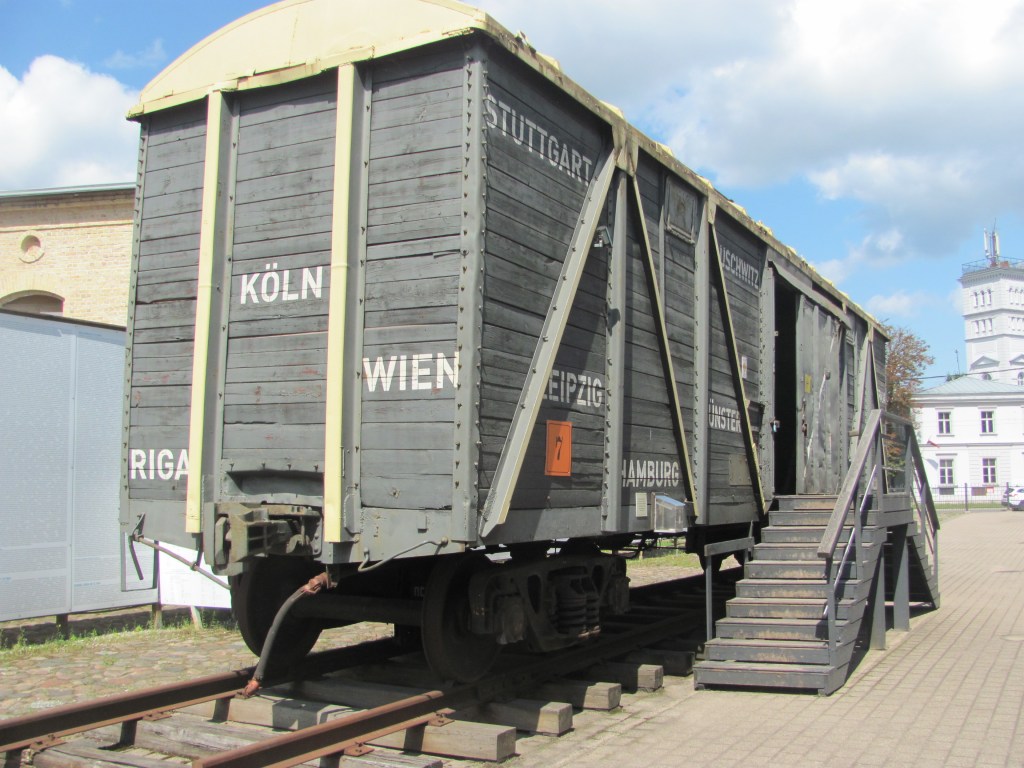
“But to go back to your question, about 60% of Russian speakers in Estonia are against the war in Ukraine, especially the young people.”

We move on to the next stop on the tour, the notorious KGB cells at 1 Pagari Street.

Pagari Street, No. 1, location of the notorious KGB interrogation cells.

“We won’t be going into the cells on this walking tour”, says Marco. “But I strongly recommend that you come back later and see them, as well as the Paterei prison. This is where anyone suspected of being anti-communist was brought to be interrogated. Most who came were either killed here, imprisoned in Paterei, or else deported. There is an Estonian joke that it must have been the tallest building in Tallinn, as if you entered it, you could see all the way to Siberia.”

He pauses. No one is quite sure whether to laugh or not.

Paterei prison.

“But let me tell you another relevant family story”, he continues. “Just after my parents got married, my mother’s mother came to live with them in their small apartment in a Soviet style block. She was a strong supporter of Estonian independence and became involved in some of the activities. One day my father announced that they would be moving into a bigger and better apartment. They were all a bit puzzled, but were happy to have more space. Then when my grandmother died, my father confessed to my mother that he had been informing on her mother to the KGB for years as she was a ‘person of interest’ to them. He had been given the bigger apartment as a reward.”

“What did your mother think?”, someone asks.

“Well, she felt so betrayed by him that she left him”, Marco says. “We were brought up by her to think that he was a terrible person. But more recently, I have come to realise that although he was flawed and made a bad choice, he wasn’t evil. It’s easy to be critical if you haven’t lived through the same circumstances yourself. Now let’s go and see the ugliest building in the whole of Estonia. That will be the end of the tour.”

We reach the so-called Tallinn City Hall on the waterfront. Ugly doesn’t even really start to describe it.

The vast, ugly, but disintegrating, Tallinn City Hall.

“It was built for the 1980 Olympic Games in Moscow”, Marco explains. “As there was no suitable venue in Moscow for the sailing, they decided to hold it in Tallinn. It was called the Lenin Palace of Culture and Sport, and in addition to being a place to watch the sailing, it also contained a skating rink and concert hall. The problem is that because Soviet construction methods are not noted for their quality at the best of times, and because it was also built in a hurry, it is extremely poorly built and most of it is very dilapidated now. But no one knows what to do with it. In some ways, it should be pulled down, but it has heritage protection. There has been talk about restoring it, but nothing has happened yet as it will be too costly. So it sits here, decaying even more.”

He’s been a great guide. We thank him for his introduction to the city and say goodbye.

Later, we return to 1 Pagari Street, the KGB cells. The outside world fades as we climb tentatively down the worn stone stairs to basement level. I shiver involuntarily as I think of the many people that must have passed down these same stairs, perhaps knowing that they would be tortured until they confessed to something they never did.

The cells are both sides of an underground passageway, the atmosphere dank and clammy. I try and imagine what it must have been like to be imprisoned down, but having been brought up in a time of relative peace, and knowing that I can leave whenever I want, I just don’t have the mental machinery to appreciate the true horror of the place.

The Pagari Street solitary confinement cell.

Many of those incarcerated belonged to the ‘Forest Brothers’, a group of partisans who fought against the Red Army in both periods of occupation. They fled to the forests when the Soviets arrived in 1940, helped the Nazis to drive them out again in 1941, and waged a guerrilla war against them after Soviet reoccupation until they were wiped out by superior Soviet forces in the 1950s.

Forest Brothers.

In the last cell, we are asked which freedom is the most important to us. A poignant response from a previous visitor catches my eye. He or she is from Belarus.

Desires for freedom.

“I just want the KGB in my home country to be turned into a museum like this”, it says. “And not be able to conduct illegal interrogations and torture. I was an environmental activist, and when the KGB came to my home in February to detain me, I fled. They arrested my mother instead and kept her in an unheated cell for 12 days with no warm clothes. My uncle was arrested and beaten because he attended a peaceful protest against unfair elections. His kidneys were damaged and he was raped with a police baton.”

Such horror is not a thing of the past.

The next day we cycle over to the Vabamu Museum of Occupations not far from Freedom Square.

“The museum is dedicated to the Nazi and Soviet occupations of Estonia”, the girl at the desk tells us. “Much of it is told from the perspective of ordinary people. You can hear it all in your own language with one of these audio devices. Just select your language and press Start’.

We spend the next couple of hours listening to the stories of those who were deported to Siberia in the early stages of the Soviet occupation, those who fled Estonia to western countries, those who resisted Soviet occupation by hiding in the forests, those involved in the restoration of independence, and those now involved in building Estonia into a modern westwards-looking nation.

Listening to personal stories of deportation, exile, repression, independence and rebuilding.

It’s intense, and at times harrowing, but also holds the promise of a better future. Afterwards, over a coffee, we discuss what we had learnt.

“Phew, you can really feel for the Estonians”, says the First Mate. “Two cruel occupiers, and having to make choices as to which one to support – if the Soviets, the Nazis will kill you; if the Nazis, the Soviets’ will deport or shoot you; if neither, then both will get you.”

“That’s the theme of a book I read over the winter”, I say. “When the Doves Disappeared, by Sofi Oksanen, an Estonian writer. It’s about the choices made by two cousins in Estonia under the Soviets and Nazis. One is fiercely patriotic and supports independence for Estonia, the other blows with the wind and works for whatever regime will allow him to survive and advance his career. There is a surprising twist at the end. It’s not an easy book to read, but worth it if you persevere.”

“It was interesting about the Phosphorite War”, says the First Mate. “I hadn’t heard of that before. It seems that the Estonian communist government in the 1980s, under pressure from Moscow, wanted to develop a mine to extract phosphorite in the north-eastern part of the country. Normal Estonians became concerned, not only for the detrimental environmental impact it would have, but also for the influence on the demographic balance of the influx of workers from other parts of the Soviet Union. When protests were organised, the government backed down. It showed the people for the first time that they had the collective power to change things, and paved the way for the downfall of the communist regime.”

“It was also interesting about the Singing Revolution”, she continues. “How they formed a chain of people stretching from Tallinn all the way to Vilnius in Lithuania singing patriotic songs. It certainly got the message across to the Estonian communist government and Moscow that most people in the Baltic States wanted independence from the Soviet Union.”

“I thought that the bit at the end on what freedom means was thought-provoking”, I say. “One person was so ecstatic when Estonia became independent that he thought he could do whatever he wanted to. But after a few days, he realised that just freedom by itself wasn’t the whole story, and that along with it came the responsibility of doing something useful and contributing to society. You need to have a balance between freedom and responsibility. We don’t always appreciate that balance in the West.”

A balance?