An island of mines, Soviet life and times, and the meaning of freedom

We leave Helsinki the next morning, bound for Estonia on the other side of the Gulf of Finland, a distance of some 50 nautical miles. As we leave, we pass the clubhouse of Nyland Yacht Club, made famous in Arthur Ransome’s Racundra’s First Cruise. In fact, we have decided to retrace his journey on Racundra to and from Riga as much as possible, albeit in the opposite direction sometimes.

Nyland Yacht Club clubhouse.

Although light at first, the wind picks up, and before long we are sailing on a fast close reach. We cross the Traffic Separation Scheme at right angles, taking care to stay away from the several Russian freighters that we see on the AIS heading for St Petersburg. One never knows what they might be carrying.
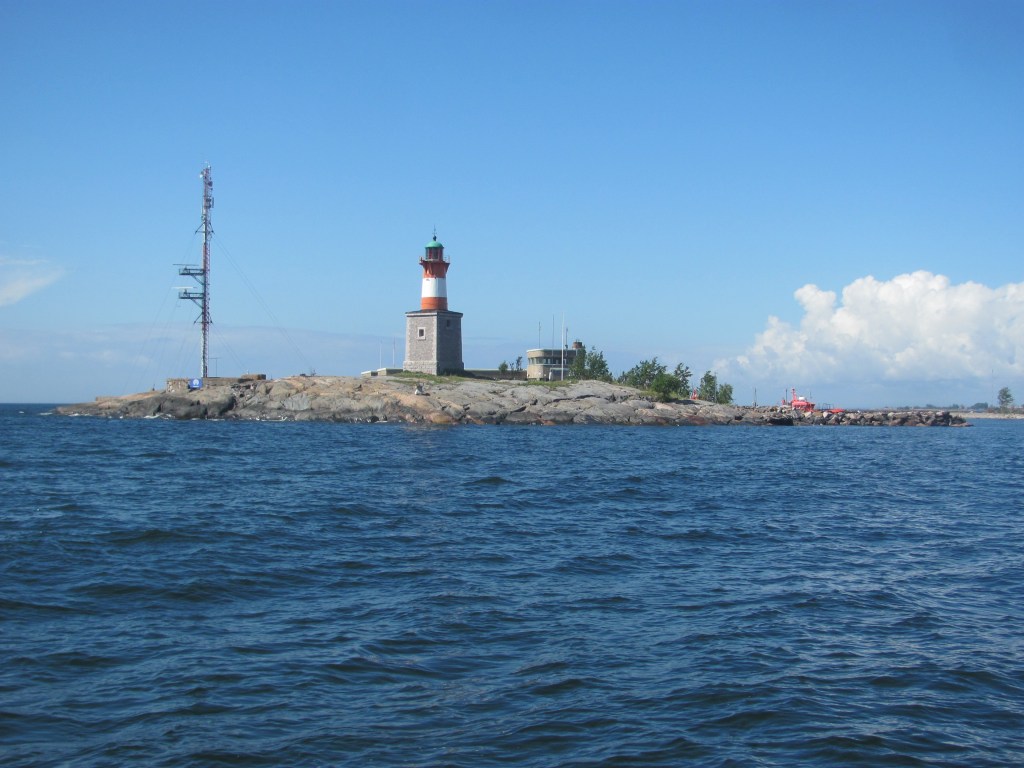
Passing Gråhara lighthouse, mentioned in Ransome’s Racundra.

We eventually reach the small island of Naissaare just north of Tallinn, and decide to stay there the night. We had been recommended to stop there by some Estonians we had met in the Southern Finnish Archipelago.
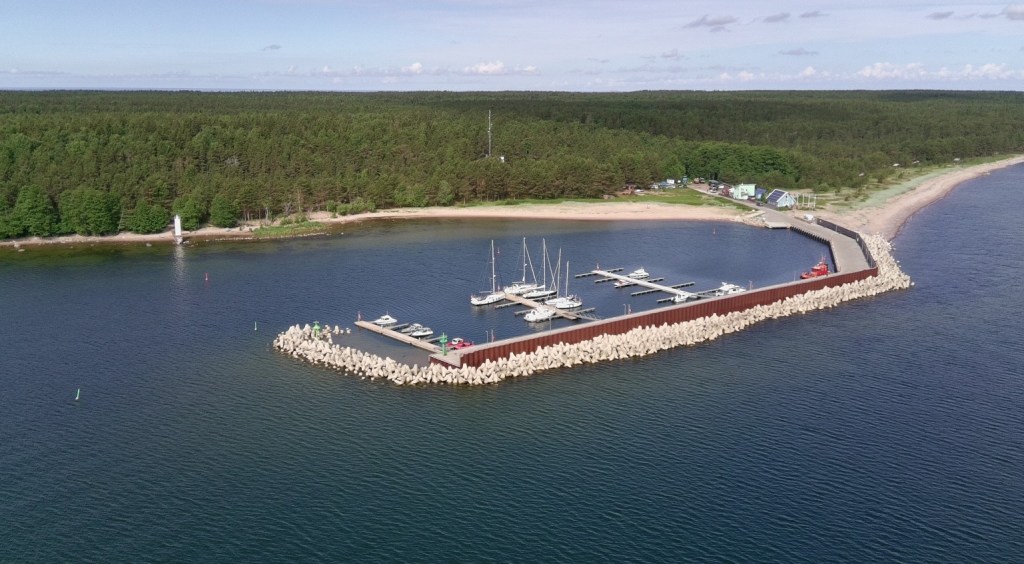
Moored at the small harbour on Naissaare island.

“There are some great walks here”, says the harbour-mistress as we check in. “During Soviet times the island was used to make and store naval mines, and it was forbidden to visit the place. Now you can roam everywhere. Here, take this map. It shows you where to go.”

Despite some ominous looking rain clouds, we set off.

“What a weird place”, exclaims the First Mate. “All these mines and old military equipment just lying around. I just hope none of them still have explosive still inside them.”

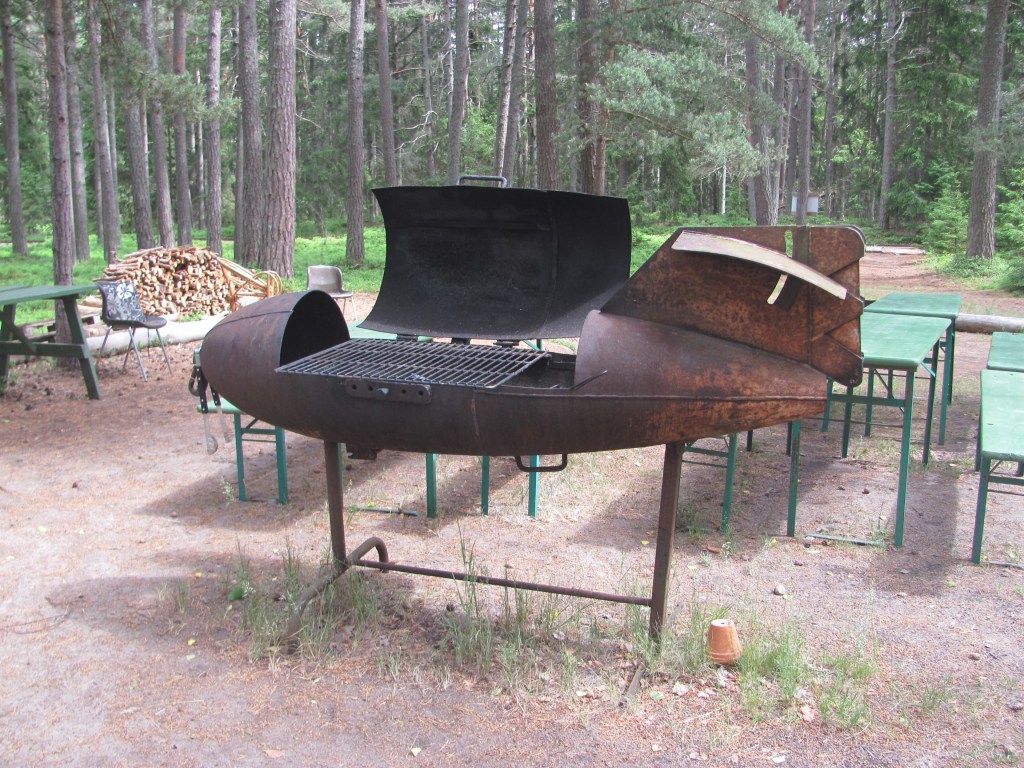
Derelict Soviet naval mine machinery.
Innovative use for a derelict torpedo.

On the walk, we meet another couple, and we walk together for a little while along the small railway line that was used by the Soviets to transport mines from the storage sheds to the harbour.
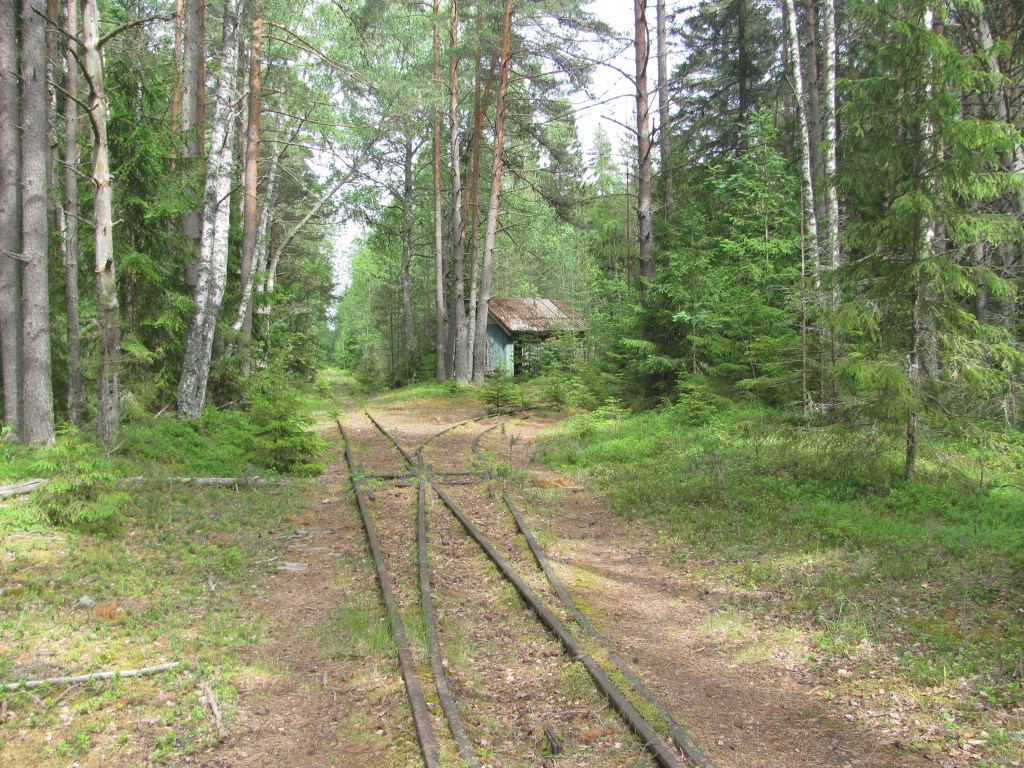
Railway line used to transport mines from the factory to the harbour.

“Naissaare translates as ‘Island of Women’”, they tell us. “The story is that a community of fishing families once lived here, and with the men all away at sea, only women were left on the island. We don’t know if it is true or not, but if it is, it must have been a while ago as it was mentioned by a medieval chronicler in the 11th century.”

The next day, we arrive in Tallinn after a short sail from the island. We tie up at the Lennusadam marina, which also happens to be right next to the Maritime Museum. On the other side of the jetty a destroyer of some sort is lying.

Tied up in Lennusadam marina, Tallinn.

“We should be safe here with that thing next to us”, says the First Mate.

I notice that its guns are pointing towards the city, not out to sea.

“Tallinn is a beautiful old medieval walled city dating from before the 11th century”, the guide book tells us. “The Danes conquered it in the 1200s, the German Knights of the Sword took it a few years later. It later joined the Hanseatic League as a trading post between the Russian Novgorod and Europe, but faded in the 16th century when the Hanseatic League declined. Sweden conquered it in the 1500s, then the Russians in the 1700s. It managed to become independent of the Russian empire in 1918 until it was invaded by Stalin in 1940, then by the Nazis in 1941, and again by the Soviets in 1944. It only became independent again in 1991.”

“They’ve certainly had a roller coaster ride with their neighbours”, says the First Mate.
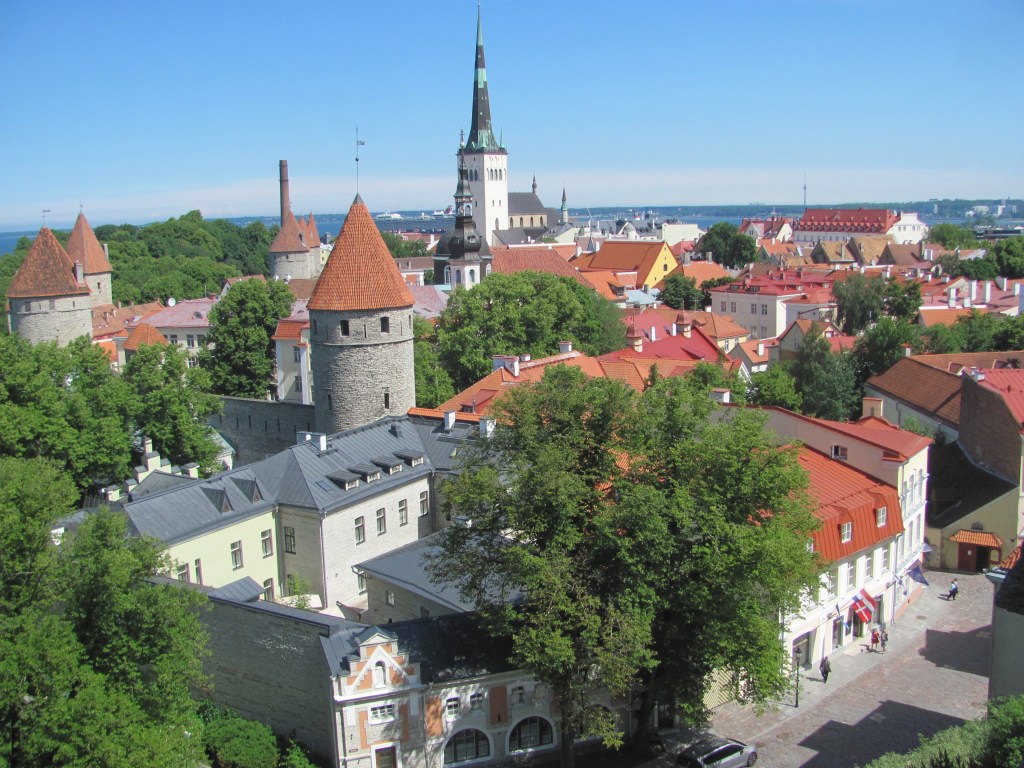
The medieval city of Tallinn.
Tallinn market square.
Tallinn Eastern Orthodox cathedral.

“Now, I suggest that we take one of the free walking tours organised by the Tourist Information”, she continues. “There’s one that focuses on the Soviet period in Tallinn. That sounds interesting.”

We join a tour starting just after lunch. The leader is a studious young man called Marco.

“I am a history teacher”, he introduces himself in excellent English. “I am actually Bulgarian, in that I was born in there, but my mother is Estonian, and I have lived in Estonia for most of my life. My mother’s mother was an Estonian Jew. There weren’t many Jews in Estonia compared to some of the other Baltic States, but when it looked like the Nazis would invade, many escaped to the Soviet Union. My grandmother’s family was amongst them. Those Jews that remained – around 1000 – were almost all killed by the Nazis. After the war, she wanted to return but wasn’t allowed to live in Estonia, so she settled in Bulgaria, met my grandfather there and raised a family, one of which was my mother.”

It’s quite a moving story, and it adds a personal touch to the tour.

We pass the Russian Embassy. The iron railings outside are covered in placards, flowers, and pictures expressing protest against the war in Ukraine. An effigy looking like a bride is daubed with red paint.
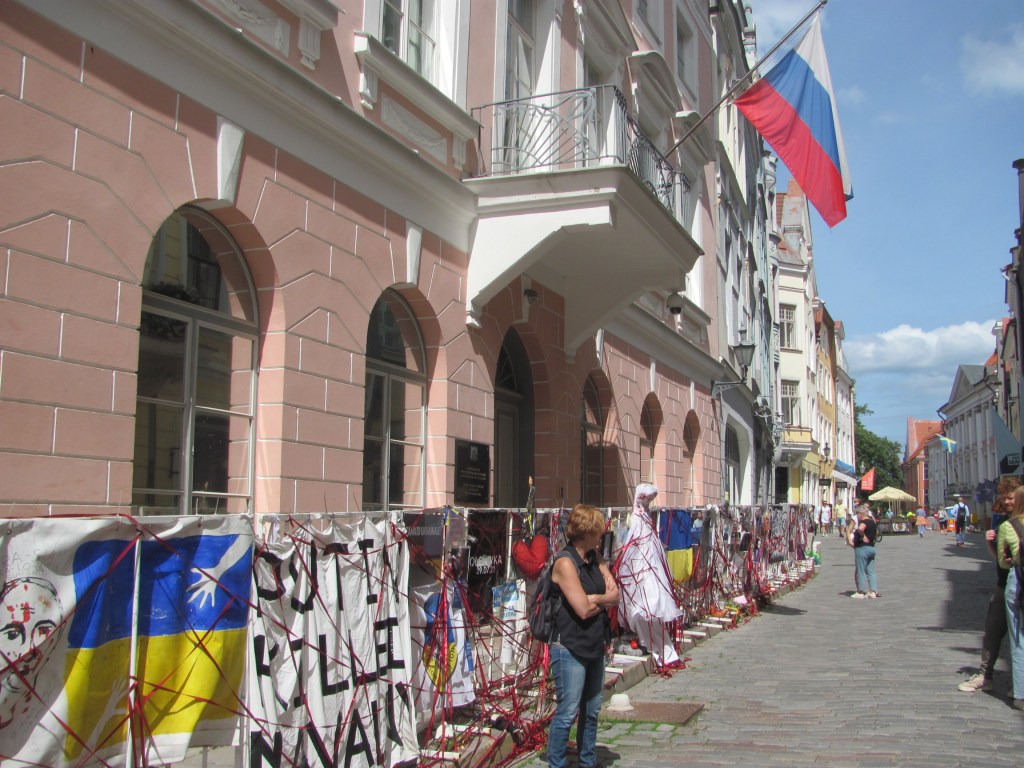
Protests outside the Russian Embassy in Tallinn.

“It’s to signify the blood of the innocent that is being spilled there”, explains Marco. “Most Estonians are supportive of Ukraine’s efforts, as we know what it is like to be under Russian rule. We don’t want to go back to those times ourselves, and we can understand why the Ukrainians want their freedom too.”

“What about the ethnic Russians who live here in Estonia?”, someone asks. “What do they think?”

“Ah, good question”, says Marco. “Something like 24% of the population of Estonia is ethnic Russian. Here in Tallinn, it is nearer 40%. Most are construction workers and the like that came during the Soviet times to work on infrastructure projects, and stayed on. When we regained our independence, they weren’t granted Estonian citizenship automatically, but were given the option of applying for it through naturalisation.”

“The problem is that they have never really integrated”, he continues. “Most don’t speak Estonian, and they have their own Russian schools where they learn only Russian. Because you need to be able to speak Estonian to gain Estonian citizenship, most of them are classed as ‘non-citizens’. In any case, as dual nationality is not allowed, many ethnic Russians prefer not to take Estonian citizenship as they can still travel freely to Russia to visit friends and relatives rather than having to obtain a visa. The problem is though, that because they don’t speak Estonian, they don’t get very good jobs, so that the predominantly Russian areas in Tallinn and the east of Estonia have a lower standard of living than the rest of the country.”

“But to go back to your question, about 60% of Russian speakers in Estonia are against the war in Ukraine, especially the young people.”

We move on to the next stop on the tour, the notorious KGB cells at 1 Pagari Street.
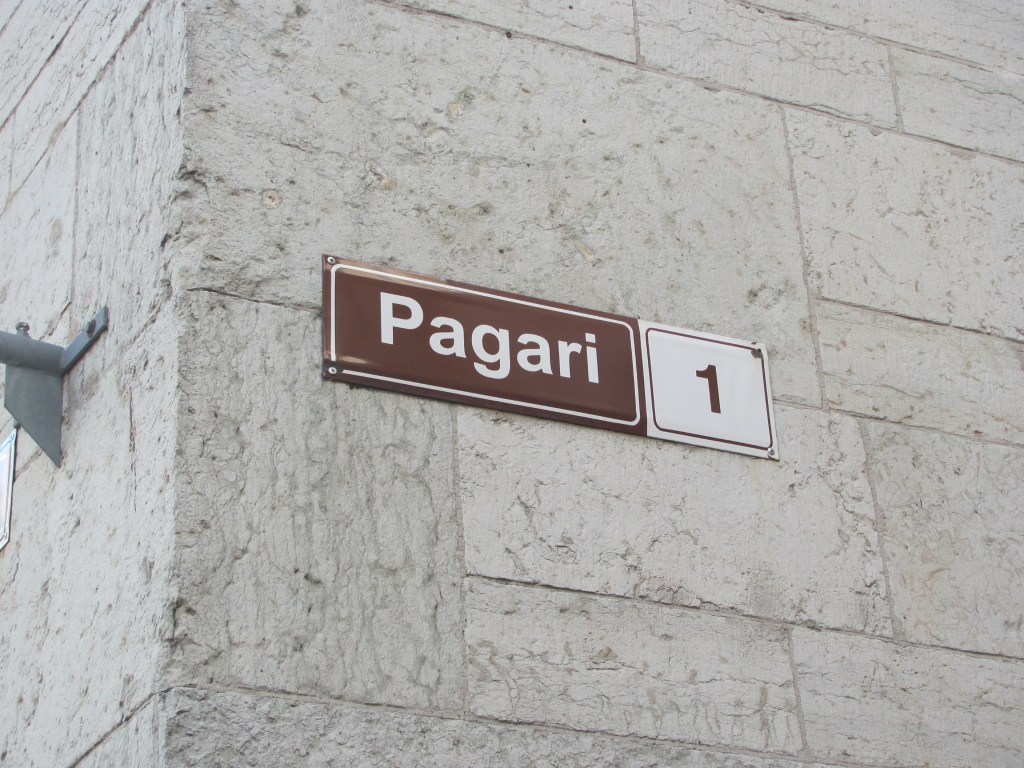
Pagari Street, No. 1, location of the notorious KGB interrogation cells.

“We won’t be going into the cells on this walking tour”, says Marco. “But I strongly recommend that you come back later and see them, as well as the Paterei prison. This is where anyone suspected of being anti-communist was brought to be interrogated. Most who came were either killed here, imprisoned in Paterei, or else deported. There is an Estonian joke that it must have been the tallest building in Tallinn, as if you entered it, you could see all the way to Siberia.”

He pauses. No one is quite sure whether to laugh or not.
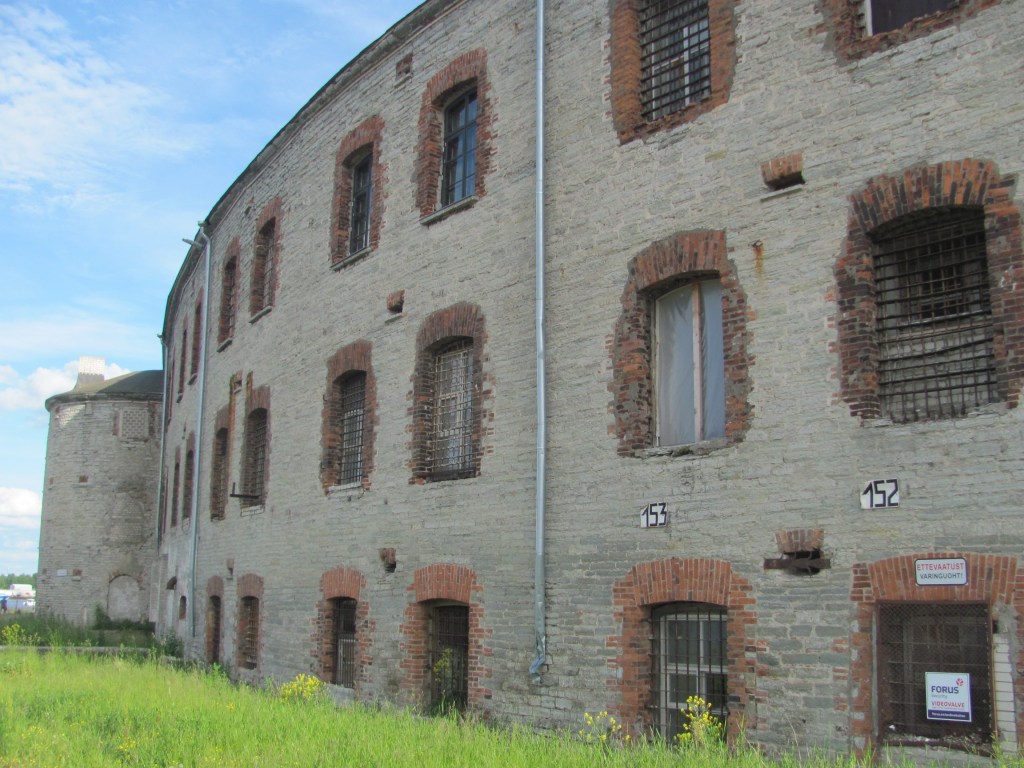
Paterei prison.

“But let me tell you another relevant family story”, he continues. “Just after my parents got married, my mother’s mother came to live with them in their small apartment in a Soviet style block. She was a strong supporter of Estonian independence and became involved in some of the activities. One day my father announced that they would be moving into a bigger and better apartment. They were all a bit puzzled, but were happy to have more space. Then when my grandmother died, my father confessed to my mother that he had been informing on her mother to the KGB for years as she was a ‘person of interest’ to them. He had been given the bigger apartment as a reward.”

“What did your mother think?”, someone asks.

“Well, she felt so betrayed by him that she left him”, Marco says. “We were brought up by her to think that he was a terrible person. But more recently, I have come to realise that although he was flawed and made a bad choice, he wasn’t evil. It’s easy to be critical if you haven’t lived through the same circumstances yourself. Now let’s go and see the ugliest building in the whole of Estonia. That will be the end of the tour.”

We reach the so-called Tallinn City Hall on the waterfront. Ugly doesn’t even really start to describe it.

The vast, ugly, but disintegrating, Tallinn City Hall.

“It was built for the 1980 Olympic Games in Moscow”, Marco explains. “As there was no suitable venue in Moscow for the sailing, they decided to hold it in Tallinn. It was called the Lenin Palace of Culture and Sport, and in addition to being a place to watch the sailing, it also contained a skating rink and concert hall. The problem is that because Soviet construction methods are not noted for their quality at the best of times, and because it was also built in a hurry, it is extremely poorly built and most of it is very dilapidated now. But no one knows what to do with it. In some ways, it should be pulled down, but it has heritage protection. There has been talk about restoring it, but nothing has happened yet as it will be too costly. So it sits here, decaying even more.”

He’s been a great guide. We thank him for his introduction to the city and say goodbye.

Later, we return to 1 Pagari Street, the KGB cells. The outside world fades as we climb tentatively down the worn stone stairs to basement level. I shiver involuntarily as I think of the many people that must have passed down these same stairs, perhaps knowing that they would be tortured until they confessed to something they never did.

The cells are both sides of an underground passageway, the atmosphere dank and clammy. I try and imagine what it must have been like to be imprisoned down, but having been brought up in a time of relative peace, and knowing that I can leave whenever I want, I just don’t have the mental machinery to appreciate the true horror of the place.
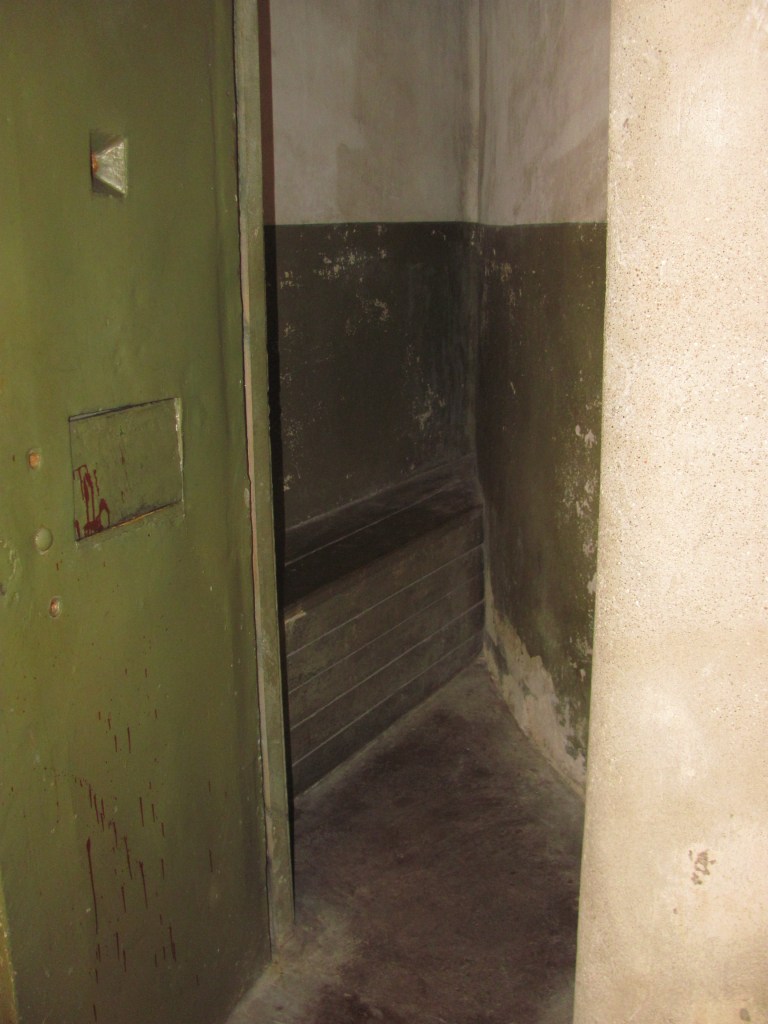
The Pagari Street solitary confinement cell.

Many of those incarcerated belonged to the ‘Forest Brothers’, a group of partisans who fought against the Red Army in both periods of occupation. They fled to the forests when the Soviets arrived in 1940, helped the Nazis to drive them out again in 1941, and waged a guerrilla war against them after Soviet reoccupation until they were wiped out by superior Soviet forces in the 1950s.
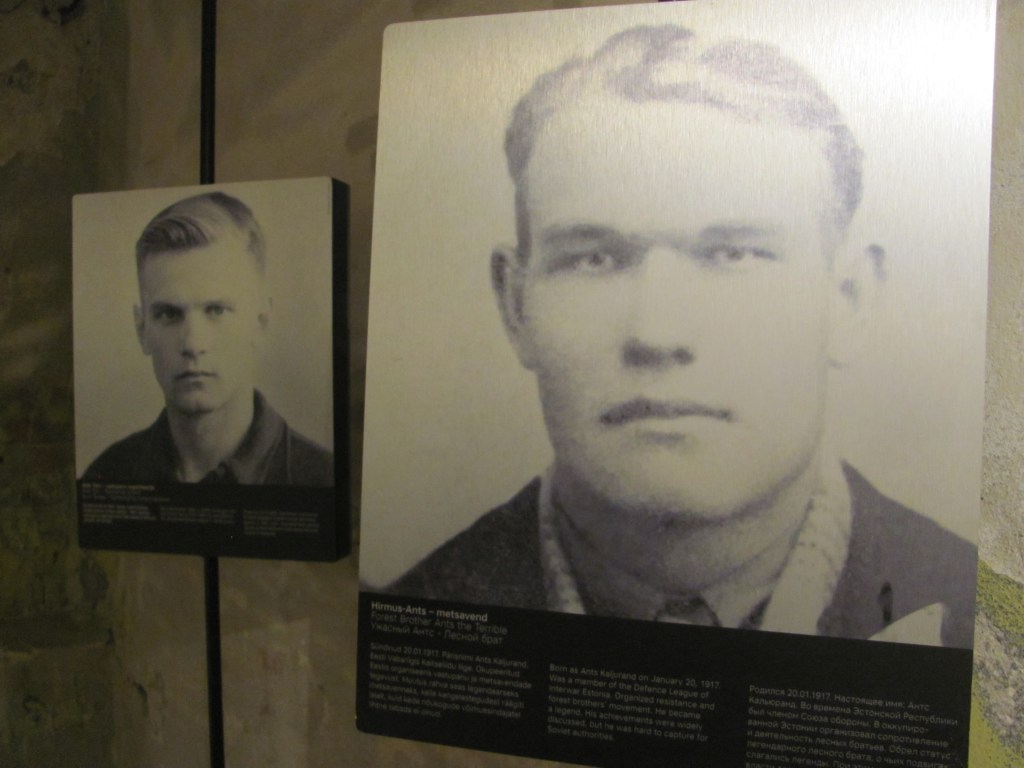
Forest Brothers.

In the last cell, we are asked which freedom is the most important to us. A poignant response from a previous visitor catches my eye. He or she is from Belarus.

Desires for freedom.

“I just want the KGB in my home country to be turned into a museum like this”, it says. “And not be able to conduct illegal interrogations and torture. I was an environmental activist, and when the KGB came to my home in February to detain me, I fled. They arrested my mother instead and kept her in an unheated cell for 12 days with no warm clothes. My uncle was arrested and beaten because he attended a peaceful protest against unfair elections. His kidneys were damaged and he was raped with a police baton.”

Such horror is not a thing of the past.

The next day we cycle over to the Vabamu Museum of Occupations not far from Freedom Square.

“The museum is dedicated to the Nazi and Soviet occupations of Estonia”, the girl at the desk tells us. “Much of it is told from the perspective of ordinary people. You can hear it all in your own language with one of these audio devices. Just select your language and press Start’.

We spend the next couple of hours listening to the stories of those who were deported to Siberia in the early stages of the Soviet occupation, those who fled Estonia to western countries, those who resisted Soviet occupation by hiding in the forests, those involved in the restoration of independence, and those now involved in building Estonia into a modern westwards-looking nation.

Listening to personal stories of deportation, exile, repression, independence and rebuilding.

It’s intense, and at times harrowing, but also holds the promise of a better future. Afterwards, over a coffee, we discuss what we had learnt.

“Phew, you can really feel for the Estonians”, says the First Mate. “Two cruel occupiers, and having to make choices as to which one to support – if the Soviets, the Nazis will kill you; if the Nazis, the Soviets’ will deport or shoot you; if neither, then both will get you.”
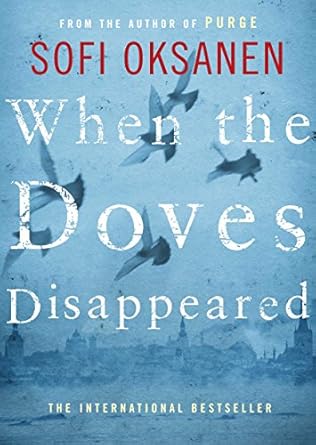
“That’s the theme of a book I read over the winter”, I say. “When the Doves Disappeared, by Sofi Oksanen, an Estonian writer. It’s about the choices made by two cousins in Estonia under the Soviets and Nazis. One is fiercely patriotic and supports independence for Estonia, the other blows with the wind and works for whatever regime will allow him to survive and advance his career. There is a surprising twist at the end. It’s not an easy book to read, but worth it if you persevere.”

“It was interesting about the Phosphorite War”, says the First Mate. “I hadn’t heard of that before. It seems that the Estonian communist government in the 1980s, under pressure from Moscow, wanted to develop a mine to extract phosphorite in the north-eastern part of the country. Normal Estonians became concerned, not only for the detrimental environmental impact it would have, but also for the influence on the demographic balance of the influx of workers from other parts of the Soviet Union. When protests were organised, the government backed down. It showed the people for the first time that they had the collective power to change things, and paved the way for the downfall of the communist regime.”

“It was also interesting about the Singing Revolution”, she continues. “How they formed a chain of people stretching from Tallinn all the way to Vilnius in Lithuania singing patriotic songs. It certainly got the message across to the Estonian communist government and Moscow that most people in the Baltic States wanted independence from the Soviet Union.”

“I thought that the bit at the end on what freedom means was thought-provoking”, I say. “One person was so ecstatic when Estonia became independent that he thought he could do whatever he wanted to. But after a few days, he realised that just freedom by itself wasn’t the whole story, and that along with it came the responsibility of doing something useful and contributing to society. You need to have a balance between freedom and responsibility. We don’t always appreciate that balance in the West.”

A balance?

A breakdown at sea, a library of the future, and contested territory

“Look, there’s a naked man who has just dived into the water over there”, says the First Mate, pointing to the shore at the end of the bay. “And a woman.”

“They have probably just been in a sauna and are cooling off”, I say.

We are in a small inlet on the island of Skedöfladen, surrounded by forest with the occasional cabin here and there hidden behind the trees. We had left Hanko in the morning, sailing eastwards, and had decided to stop there overnight. Dropping the anchor at the top of the inlet, we had relaxed in the warm sunshine sipping wine, listening to the chorus of birdsong coming from the forest and watching the grebes diving amongst the reeds on the shore, the black-headed gulls wheeling overhead, and the solitary heron on the rock at the end of the bay.

Ruby Tuesday anchored in Skedöfladen.

“It’s so peaceful here”, says the First Mate dreamily, pouring her second glass of wine. “So close to nature. I can understand why all the Finns want to escape to their cabins in the summer time. It’s a spiritual thing.”

She loves her broad generalisations. But she has a point.

“I think that I can relate to that”, I say. “I wouldn’t mind spending a summer in a place like this. Just reading, thinking and writing, and a small boat to go fishing. Very inspirational.”

The naked couple climb out of the water onto the small jetty and walk unashamedly back into the trees.

“I read somewhere that there was a some opposition to boats being able to freely anchor in Finland when they were drafting their Jokaisenoikeudet, or Everyman’s Rights”, says the First Mate. “Because of people wanting to swim after having a sauna in their summer cabins. But this couple don’t seem to be bothered. They must be aware we are here.”

“The rules says that you mustn’t anchor close to private plots”, I say. “Although they leave the definition of how close ‘close’ is to common sense. I think we are far enough away.”

The next morning it is raining. We wait until lunchtime until it stops and the wind changes, then we carry on. In the late afternoon, we reach Barösund, a small harbour in the narrow sound between the islands of Barölandet and Orslandet. We tie up and go to explore.

The small harbour at Barösund.

“Look over there”, shouts the First Mate, pointing to two boats coming up the sound. “One boat is being towed. I think it’s the same one that we saw heading out when we were coming in. I recognise the sign on it – ‘Skärgärdsteatern’. Maybe they have broken down.”

Sure enough, the first boat turns out to be the coastguard, and there is a line back to the second, some sort of trawler. We had seen it earlier in the day. They reach the harbour and make a slow circle around so that the trawler is facing the quay. A second coastguard boat moves behind and gently nudges the trawler alongside the quay. They seem to know what they are doing.

The trawler is towed to the quay.

A small crowd of people has gathered on the quay to watch the spectacle.

“Look out”, someone shouts. “They’re going to hit the pole. Someone do something.”

Sure enough, as the trawler comes alongside, a dinghy suspended on davits that protrude beyond its beam catches a pole with a life-ring and defibrillator on it. Being closest, I try to push the dinghy up out of the way, but I am too late. The pole snaps off at the base. The trawler gradually comes to a stop and is made fast to the quay.

“We are a theatre group from Helsinki”, explains one of the girls sitting at the bow. “We are on our way to Hanko to give a performance. We thought it would be cool to go by sea. But about an hour after we left Barösund, thick white smoke started coming from the engine. We were just thinking of going down to have a look when it stopped completely. Luckily we were in mobile range, so we called the coastguard and they came and towed us back.”

“What about your performance in Hanko?”, asks the First Mate. “Won’t you miss it?”

“Luckily it isn’t until the day after tomorrow”, she says. “We’ll just have to try and get a bus or something there. There should be enough time.”

“Quite a drama”, I say to the First Mate as we walk back to the boat.

We push on eastwards the next morning. Soon the skyline of Helsinki appears on the horizon and we make our way through the dozens of small islands and rocks that guard the entrance to the city, keeping a vigilant lookout for the many ferries and cruise ships coming and going.

Approaching Helsinki.

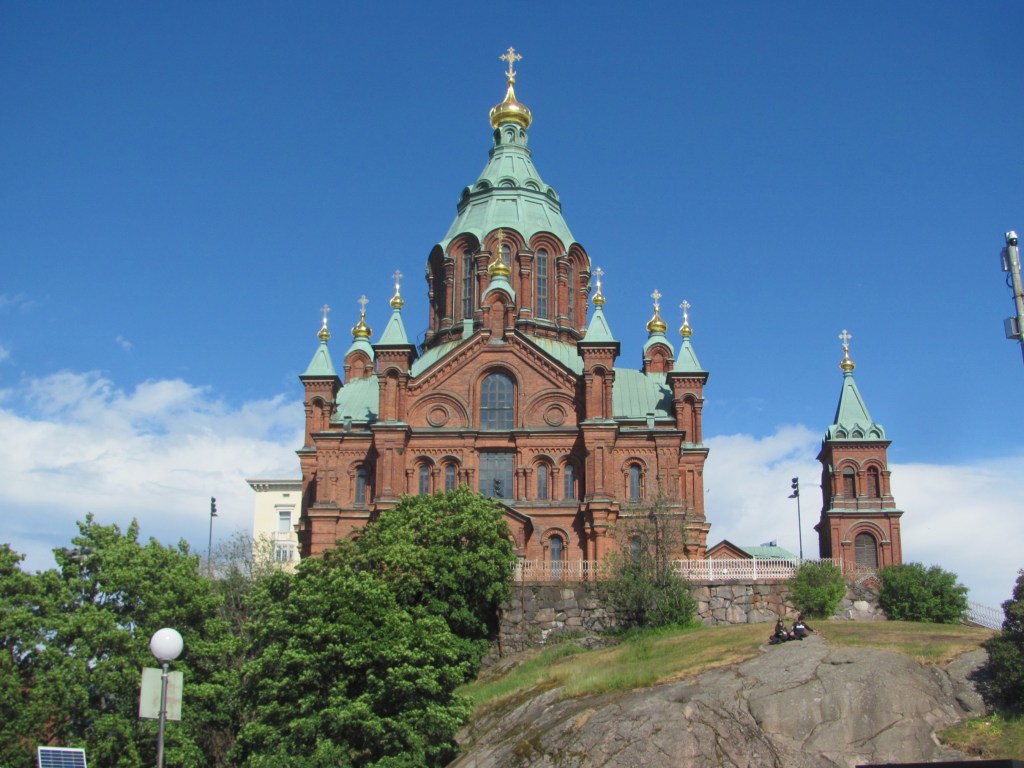
We eventually tie up at the Helsingin Moottorivenekerho marina with the spires of the Eastern Orthodox Uspenski Cathedral towering over us.

“Look at the way the sunlight is reflecting off those onion domes”, says the First Mate. “Let’s go over in the morning and have a look inside it.”

The Eastern Orthodox Uspinski Cathedral.

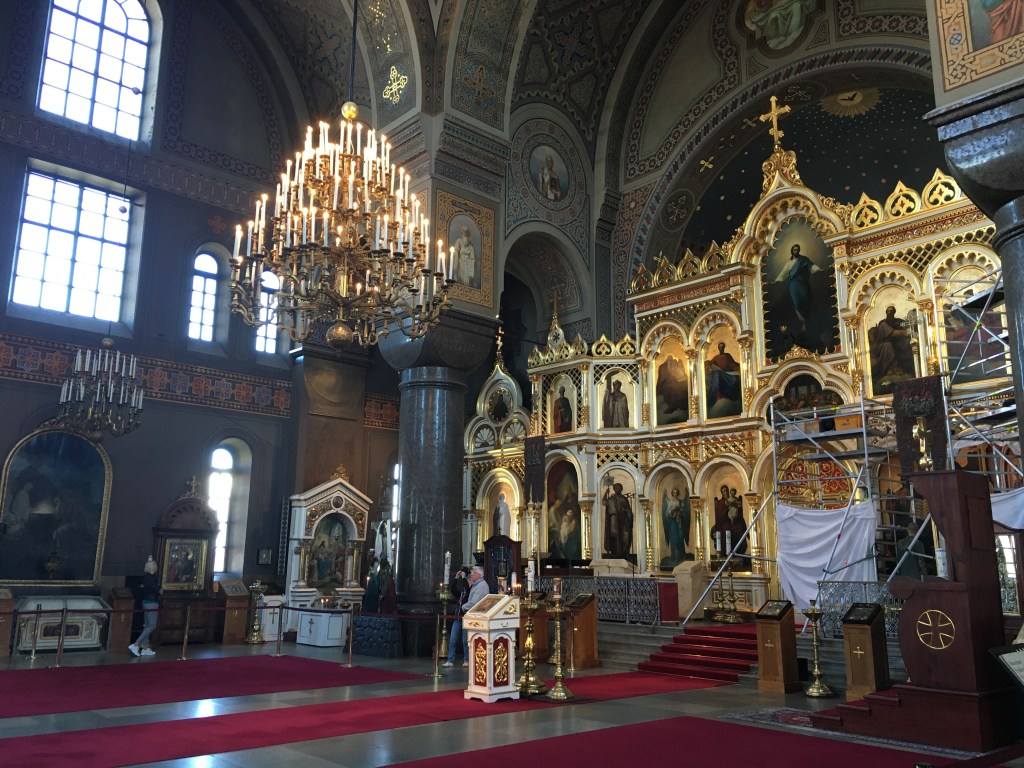
In the morning we unload the bikes and cycle over. Inside, it is as sumptuous as it is outside. Commissioned by Tsar Alexander II of Russia, it was completed in 1868. I am surprised to learn that many of the bricks used in its building were ferried from the fort at Bomarsund in the Åland islands that we had visited last year.

Inside the Uspinski Cathedral.

“Apparently two of the icons were stolen”, says the First Mate. “One was stolen in 2007 in broad daylight at lunchtime with dozens of tourists present. They still haven’t got it back yet. The other was stolen in 2010 in a break-in, which they did recover eventually.”

The Lutheran Cathedral is a little bit further on, in Senate Square. Completed in 1852, it was originally built as a tribute to the Russian Tsar, Nicholas I. True to Lutheran philosophy, it is a lot less ornate than the Eastern Orthodox cathedral.

Helsinki Lutheran Cathedral.

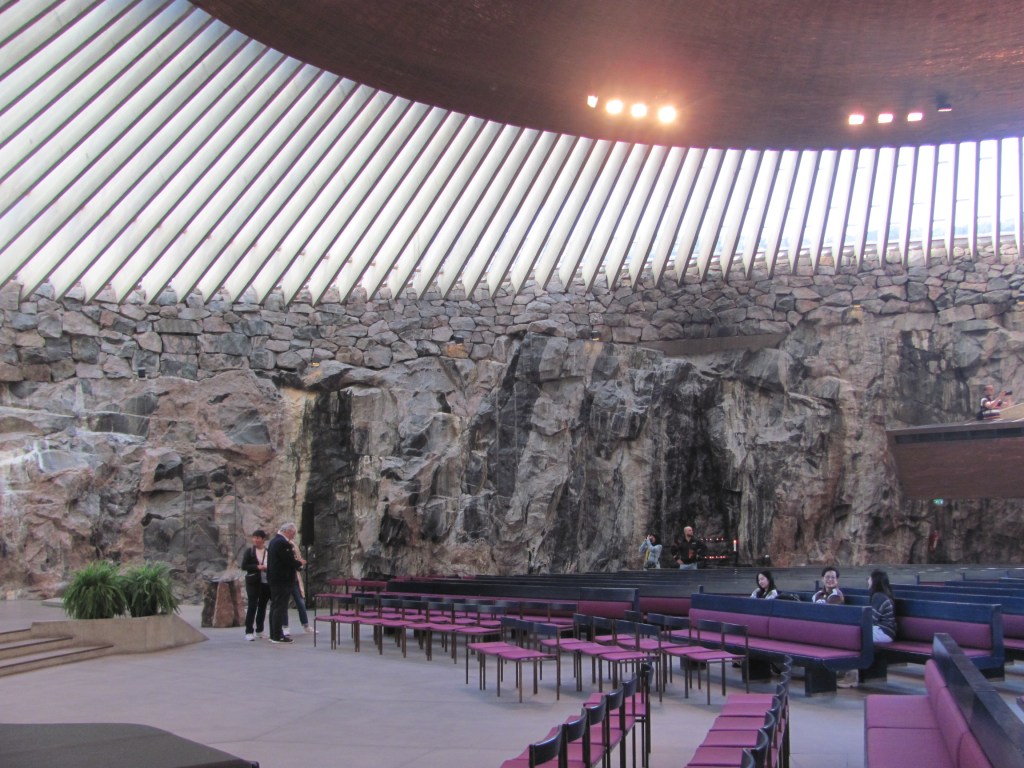
Continuing, we find the Temppeliaukio church, carved out of solid rock, with its translucent skylight and copper dome.

The Temppeliaukio church, carved out of rock.

“Apparently, the acoustics of the rock are so good, they hire it out for music concerts”, says the First Mate, guide book In hand.

On the way back, we pass the Kamppe Chapel of Silence. Located in one of the busiest squares in central Helsinki, it is built of three different types of wood – a spruce exterior, internal walls of alder, and furniture of ash – and offers a quiet refuge almost completely shut off from the noise and bustle outside. I close my eyes and imagine I am back in the bay at Skedöfladen surrounded by live trees of spruce, alder and ash, with only the calls of the grebes, heron and black-headed gulls. It kind of works.

The unusually shaped Kamppe ‘Chapel of Silence’.

“We certainly did pretty well for churches today”, says the First Mate over dinner that evening. “But one thing I know nothing about is what the difference is between Eastern Orthodox and Western Christianity. Why did they split up?”

“There was what they called the East-West Schism, as far as I remember”, I say, racking my brains. “In 1054 AD, or thereabouts.”

I consult our well-worn copy of the History of Europe by J M Roberts.

After Christianity spread through the Roman empire, the western and eastern parts slowly drifted apart, with different languages, rituals and practices, it tells me. The Eastern church promoted the use of icons, or pictures of Christ, Mary, the dead, the saints and the angels, to give people the feeling of being surrounded by the whole church. The Western church saw this as worshipping idols and were dead against it. They also disagreed over whether leavened or unleavened bread should be used in communion. And there were differences in some points of theology – the Eastern church saw the Holy Spirit coming from God directly, the Western saw it as coming from God and Christ.

“All pretty arcane, isn’t it?”, says the First Mate. “If God exists, I wonder why he didn’t make it all clearer so that there would be no room for misunderstandings?”

“Well, it was probably as much politics as theology”, I continue reading. “The Eastern church also didn’t accept the authority of the Pope in Rome over a universal church – they were much more into smaller national church groupings with their own leaders – the Armenian, Assyrian, Ukrainian, Russian, and so on. Anyway, to cut a long story short, they decided that their differences were irreconcilable, and split up into Catholicism in the west and Orthodox in the east. Of course, since then there have been any number of subsequent splits into sects and cults, each with its own interpretation of specific bits of scripture and claiming to be right.”

“Well, they can’t all be right, can they?”, says the First Mate.

The next morning we continue exploring Helsinki on the bikes.

“I’m impressed”, says the First Mate. “Absolutely stunning. A real library of the future.”

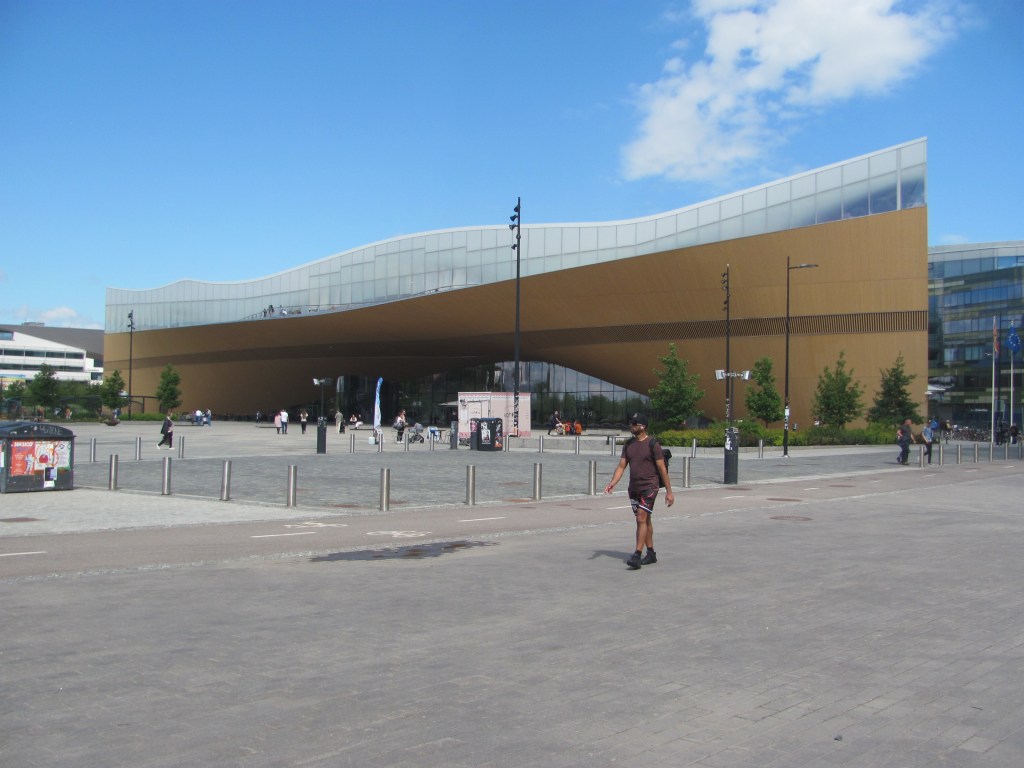
We are enjoying a coffee in the sunshine on the outdoors balcony of Oodi, Helsinki’s central library. She has a point. Commissioned as part of the centenary celebrations of Finland’s independence from Russia in 1917, it really is much more than a traditional library.

The stunning-looking Oodi Central Library.

“Oodi is in effect a living room for the 21st-century city”, says the blurb. “As with other libraries in Finland, it is open and free to all. Their purpose is to promote reading, literacy, equality, and freedom of speech, as well as a sense of community and imagination.”

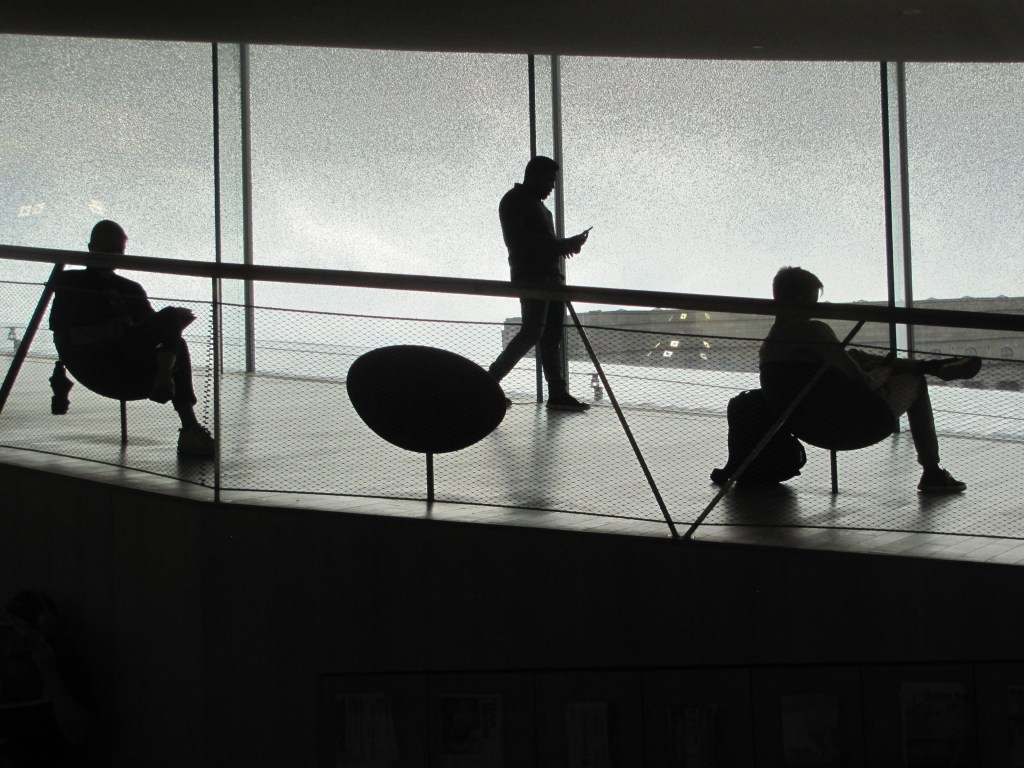
Plenty of light and airy reading space.

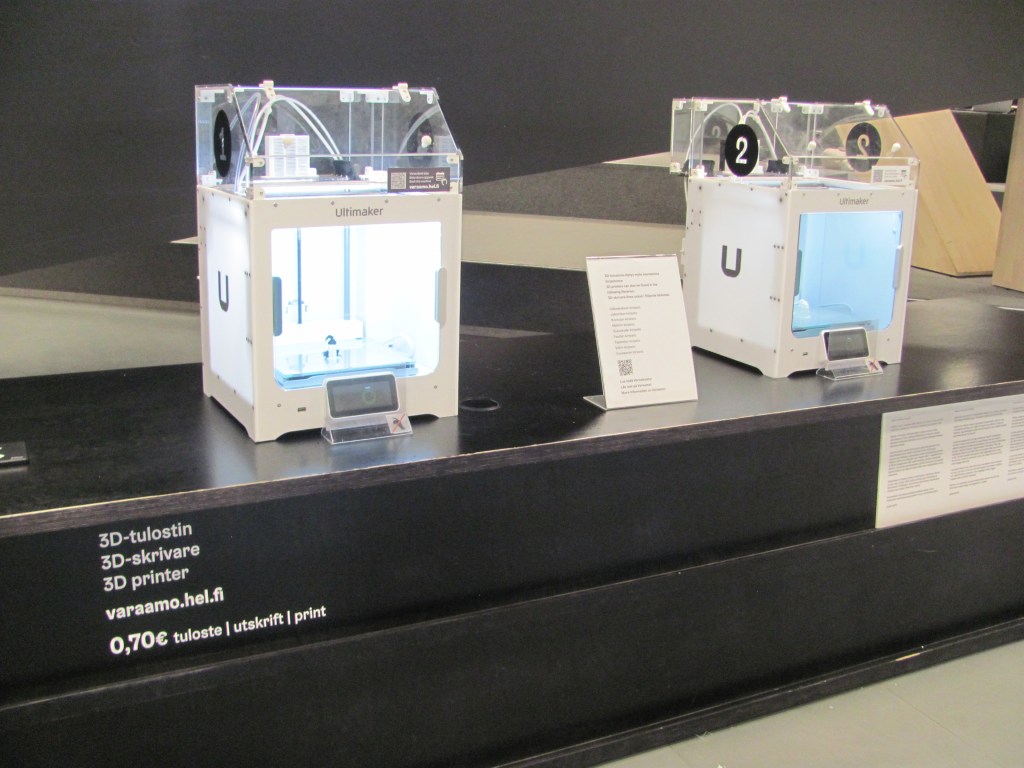
In addition to light, airy spaces for reading, there are also music and video production studios, a cinema, the café, and a restaurant. Meeting rooms on every floor can be used for lectures, talks and conferences. Weekly language classes are offered. On the second floor is an ‘Urban Workshop’ with laser cutters, 3D printers, sewing machines, and soldering equipment.

3-D printers available.

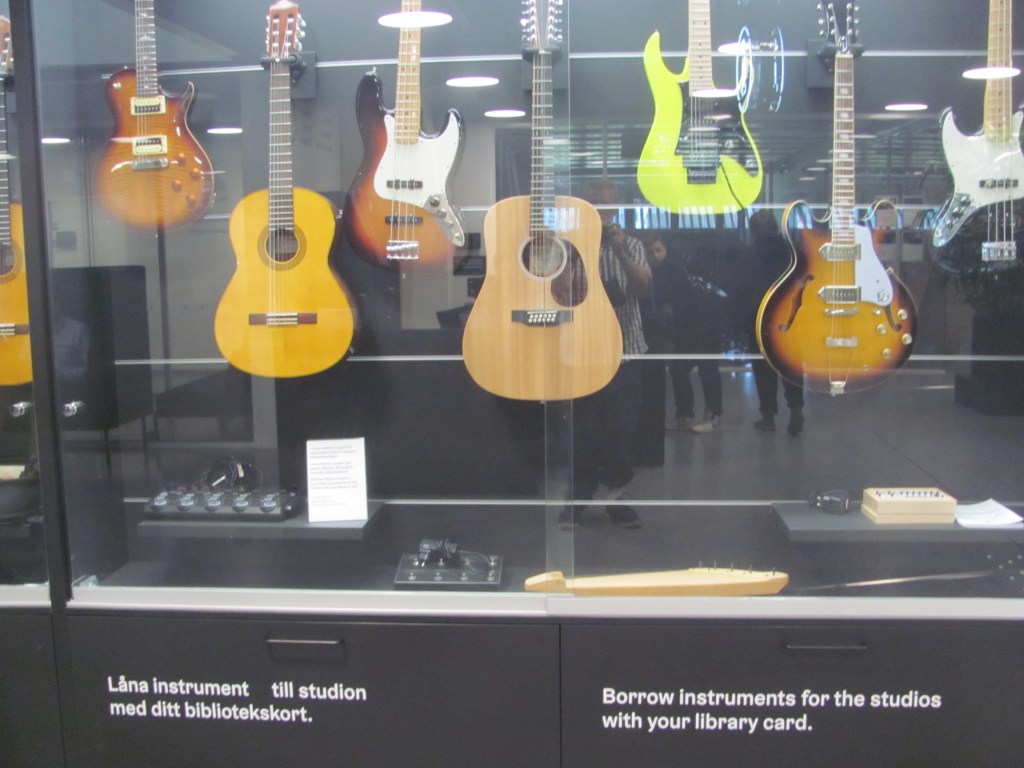
In addition to normal books, it is also possible to borrow e-publications, sports equipment, musical instruments, power tools, and other ‘items of occasional use’.

Musical instruments for loan.

“It must be a great place to come during those long Finnish winters”, I say. “You could spend all day here, just reading, writing, keeping warm, meeting people over coffee or lunch. I am starting to see why Finland tops the ‘Happiness Index’ every year.”

Whiling away those Finnish winters.

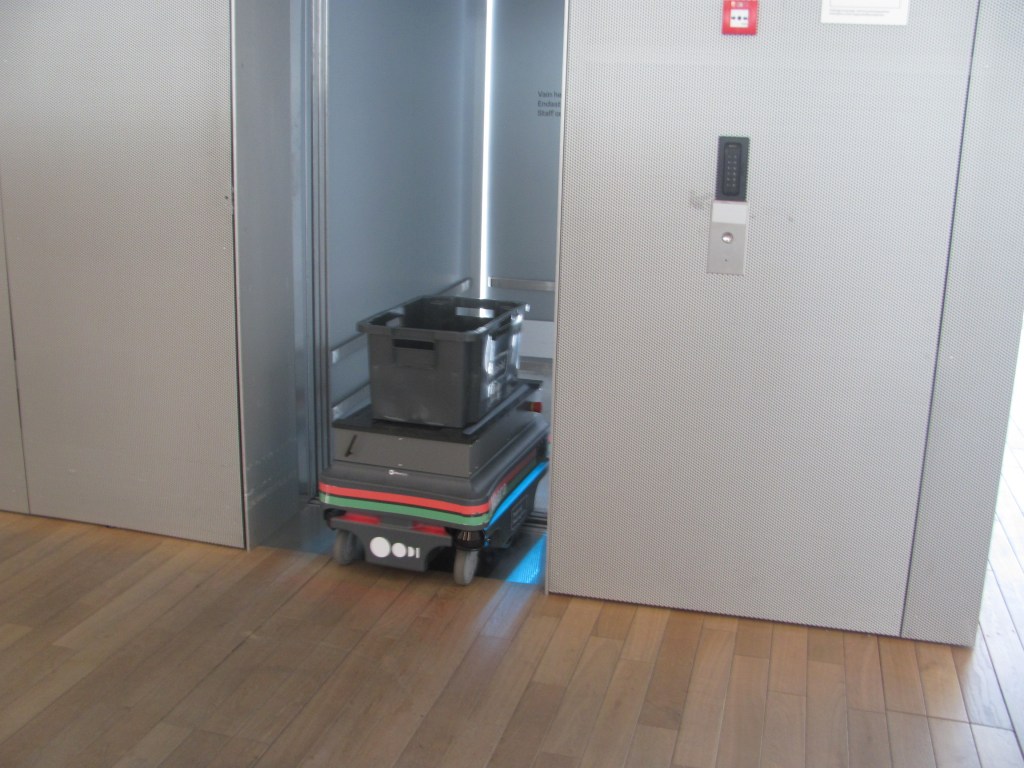
“Did you see the robot which transports books from one part of the library to another?” asks the First Mate. “I had to wait while it got into the lift.”

The resident library robot.

“I read that a book that was borrowed from the library in 1939 was just returned the other day“, I say. “Apparently it was at the time the Russians invaded Finland in the Winter War. It seems that the borrower might have had other things on his or her mind and forgot to return it. It languished in an attic all those years, but someone came across it just recently and returned it.”

“I wonder if they had to pay an overdue fine?”, says the First Mate, standing up to go. “It would come to quite a bit for being 85 years late.”

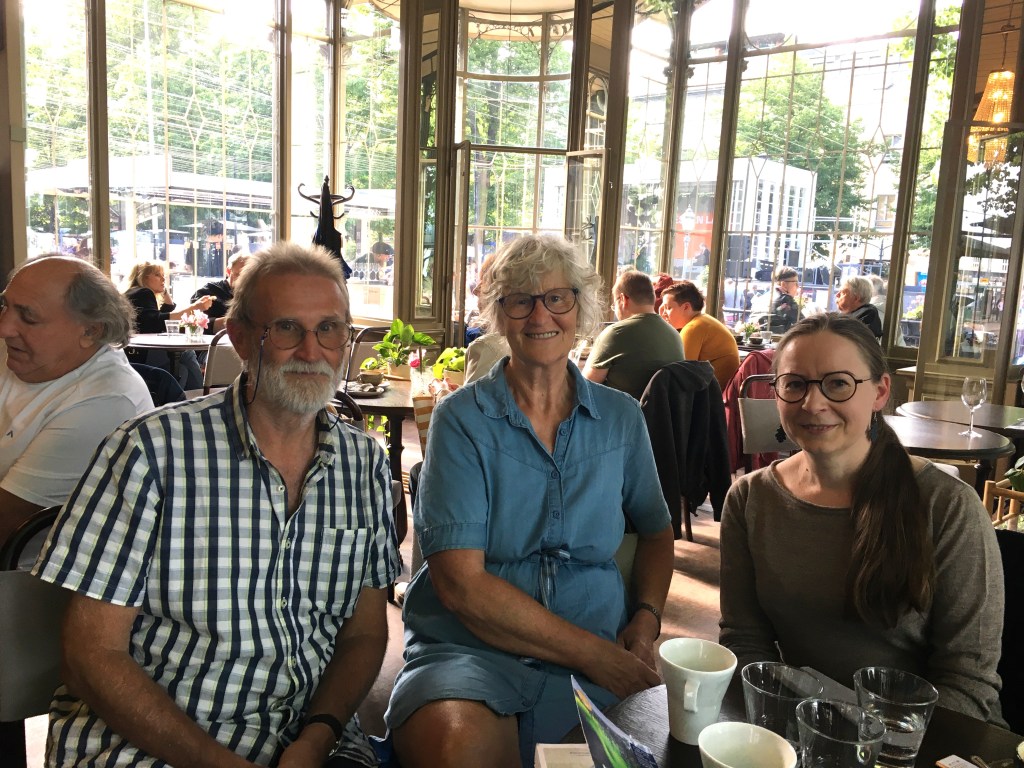
In the afternoon, we meet up with Outi. We had first met her when we were on Kökar in the Åland islands, and we agreed to get in contact when we arrived in Helsinki, where she now lives. Over a coffee in the Kapelli restaurant near the Old Market Hall, she tells us that she comes originally from eastern Finland, in a part called Karelia.

Coffee and cakes in the Kapelli restaurant.

“It’s actually now in Russia”, she says. “Finland lost it at the end of the Continuation War.”

“I don’t know much about Karelia”, says the First Mate. “Where is it exactly?”

“Well, it’s an area between the White Sea and the Gulf of Finland”, she says. “We have our own culture and language, Karelian, which is very similar to Finnish. Unfortunately, because Karelia is only a small region with some large neighbours, we have never been an independent country. Back in the 1200s, we were fought over by the Swedes and the Novgorod Republic. In the 1300s we became part of the Swedish Empire. Then in the 1700s we became part of the Russian Empire along with Finland, and then part of the autonomous Grand Duchy of Finland. So we have been close to Finland for quite a while.”

“What happened then?”, I ask.

“Well, Finland became independent in 1917, and Karelia along with it”, she answers. “That was fine, but the problems started in 1939 when Russia attacked Finland in the Winter War. The Finns fought bravely and held the Russians off, but the resulting peace treaty in 1940 meant that the Russians got to keep the land they had occupied, much of which was Karelia. A lot of Karelians fled at that time rather than be under Russian rule. My own mother fled with her family to north Karelia which was still in Finnish hands. She was only five years old.”

“So is that where she grew up?”, asks the First Mate.

Karelia today, showing Finnish (dark blue) and Russian (light blue) parts (from Wikipedia).

“No”, says Outi. “When the Nazis invaded Russia in 1941, Finland decided to fight on their side to try and get Karelia and the other territories back. This became known as the Continuation War. They were successful for a time, and so a lot of Karelians, including my mother’s family, moved back to their own homes. Unfortunately, though, when the Germans started losing, the Russians pursued them, and fought the Finns too, regaining the land in Karelia. So the Karelians had to flee all over again. Now she lives in South Karelia, which is in Finland. We are going over this coming weekend to celebrate her 90th birthday.”

“It’s fascinating”, says the First Mate. “My mother has a similar story of having to flee from the Russians in Ostpruessen. What a terrible time it was for innocent civilians then. A whole continent in turmoil.”

“Yes, we are so lucky not to have experienced that in our lives”, says Outi. “At least not so far.”

A leper island, a scary thunderstorm, and a day for the military

“I think we have seen all the things we need to see in Turku”, says the First Mate over breakfast. “I wouldn’t mind a few days in the peace and quiet of the islands now. There’s an island not too far from here that I have been looking at. It’s called Seili, and is only about three hours away. We could sail there this afternoon.”

“Sounds like a good idea”, I say. “Let’s go.”

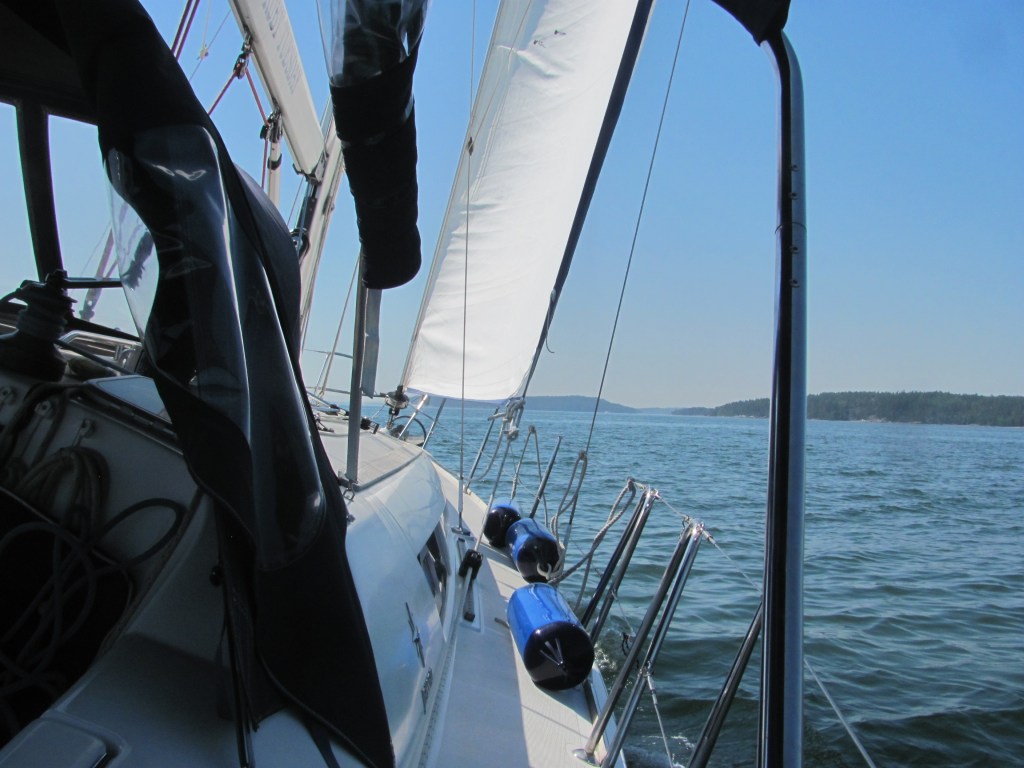
The wind is from the south-west, but we manage to sail close hauled, tacking a couple of times. Before long we reach the small bay to the north of the island. There is a pontoon there for boats to tie up to, but it is quite shallow and we decide to anchor.

On our way to Seili island.

We inflate the small dinghy and row ashore. It is new this year, having been bought to replace the old one which had decayed beyond repair. This is the first time we have used it. It floats at least.

A path leads up to an imposing looking building in the centre of the island.

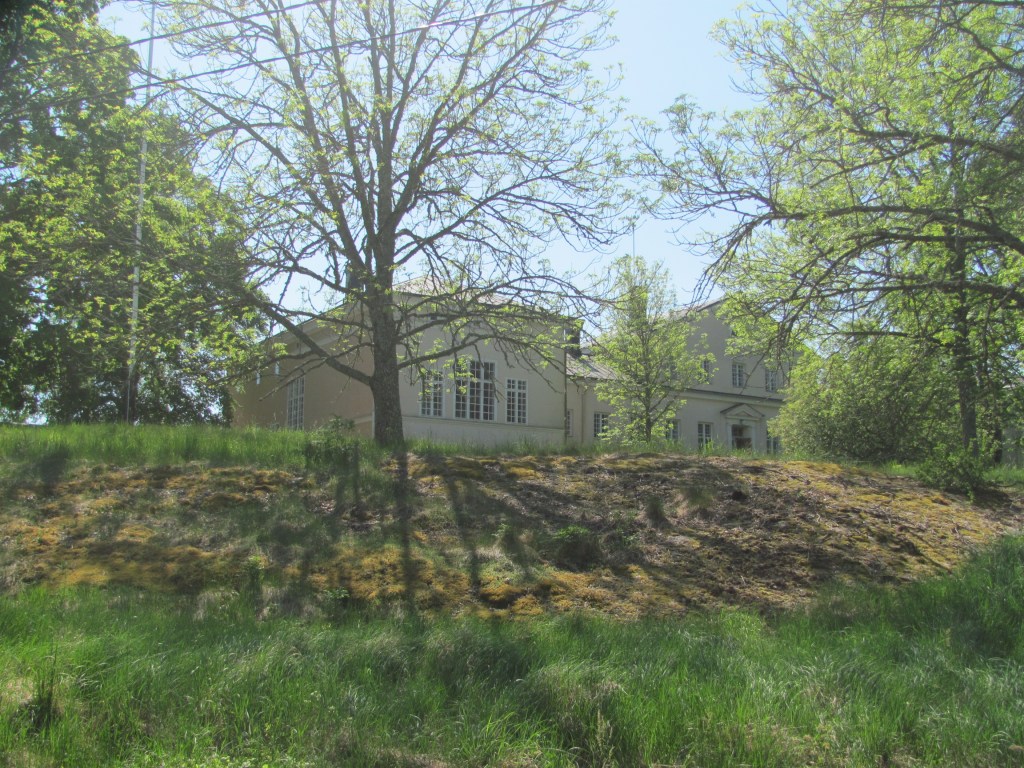
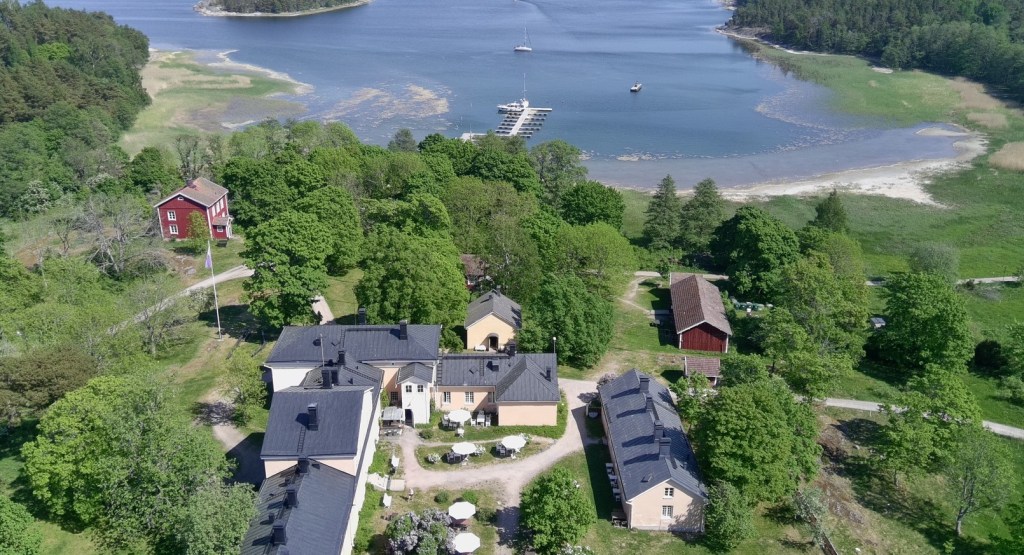
We reach the former leprosy hospital and mental asylum.

“Apparently it used to be a leper hospital back in the 1600s”, reads the First Mate. “People with leprosy arriving there even had to bring their own planks to construct their coffins. Very few ever left the island alive. The church was even constructed in two separate parts – one side for the patients and the other for the staff. That way, they didn’t come into contact. Later the buildings were used as an institution for those with mental illnesses.”

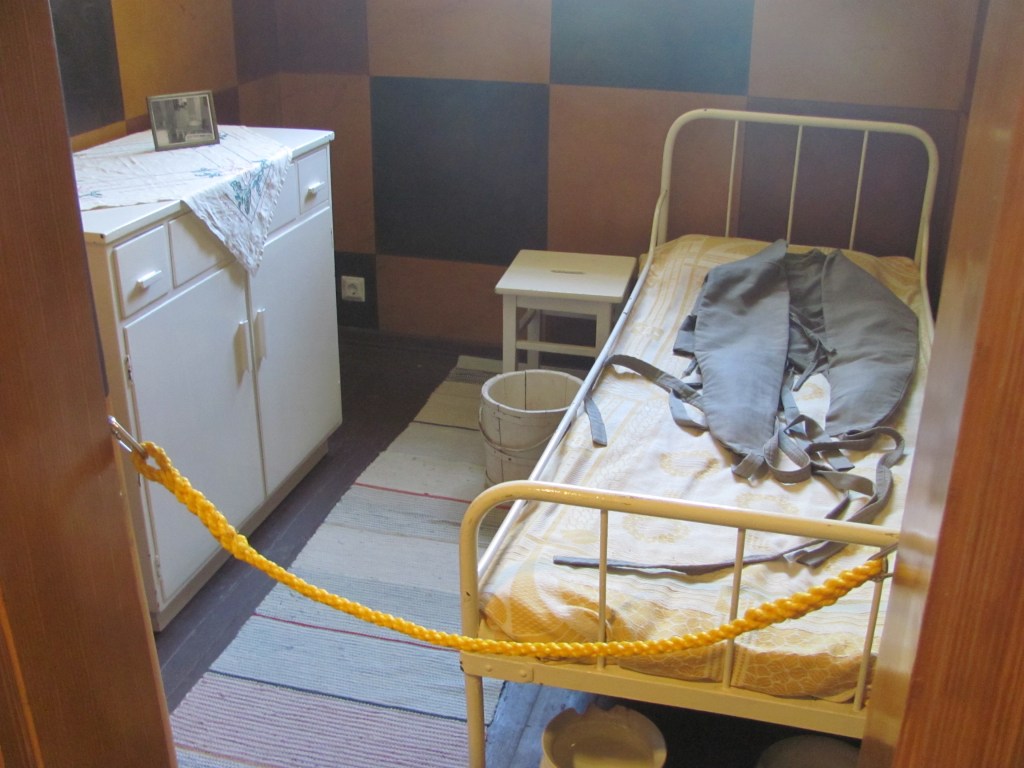
A mental patient’s room, with restraining jacket.

“All a bit gloomy”, I say.

“But from the 1960s, the buildings have been used as a marine research station by the University of Turku”, she continues. “They are doing research in the Baltic Sea, particularly in relation to climate change and pollution by microplastics.”

Turku University Archipelago Research Institute, Seili island.

After a cup of coffee in the small café in the building we walk over to the small harbour on the other side of the island. As luck would have it, the inter-island ferry arrives at the same time.

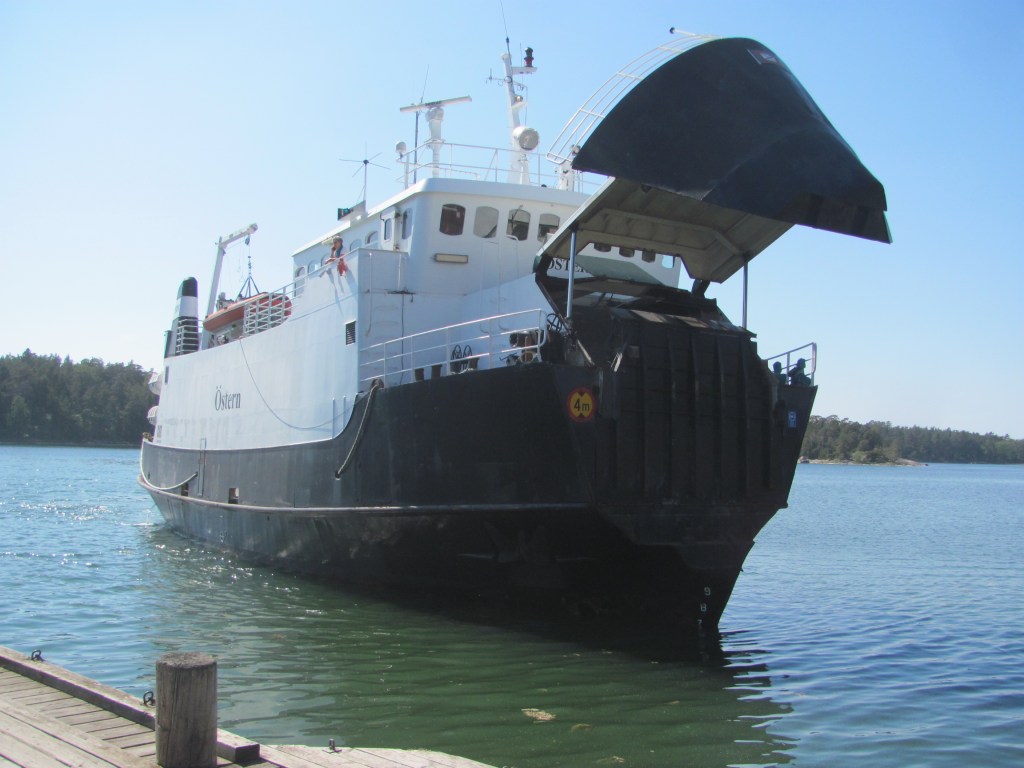
The inter-island ferry arrives.

“We just came over for the day for some walking”, explains one of the small group of people waiting for it to arrive. “We’re heading back to Turku now. Others live in Turku, but come over here to work in the research station and café. The ferry can get quite busy.”

Well, in relative terms, I suppose, as we watch the seven people walk into its ‘mouth’.

For the next few days, we hop from one island to the next, staying two or three nights at anchor, before moving on to the next one. Each has its own character and set of memories. Birsskär, on the edge of its beautiful sheltered lagoon, the spectacular nature walk to the top of the highest point of the neighbouring island Stenskär, the friendly sheep we meet on the way, and the smoked fish we buy from the small shop. Norrfladen with its large bay surrounded by forest.

Exploring the Turku Archipelago (view from Birsskär).
View from the highest point on Stenskär.
Friendly sheep on Stenskär.

At Ejskäret we find the small bay on the western side of the island, and anchor in about 4 m of water. We set the anchor by motoring backwards until it bites into the mud.

“I think we will be very protected in here anyway”, I say. “It’s only open to the east, and the winds are coming from the south-east and south according to the forecast.”
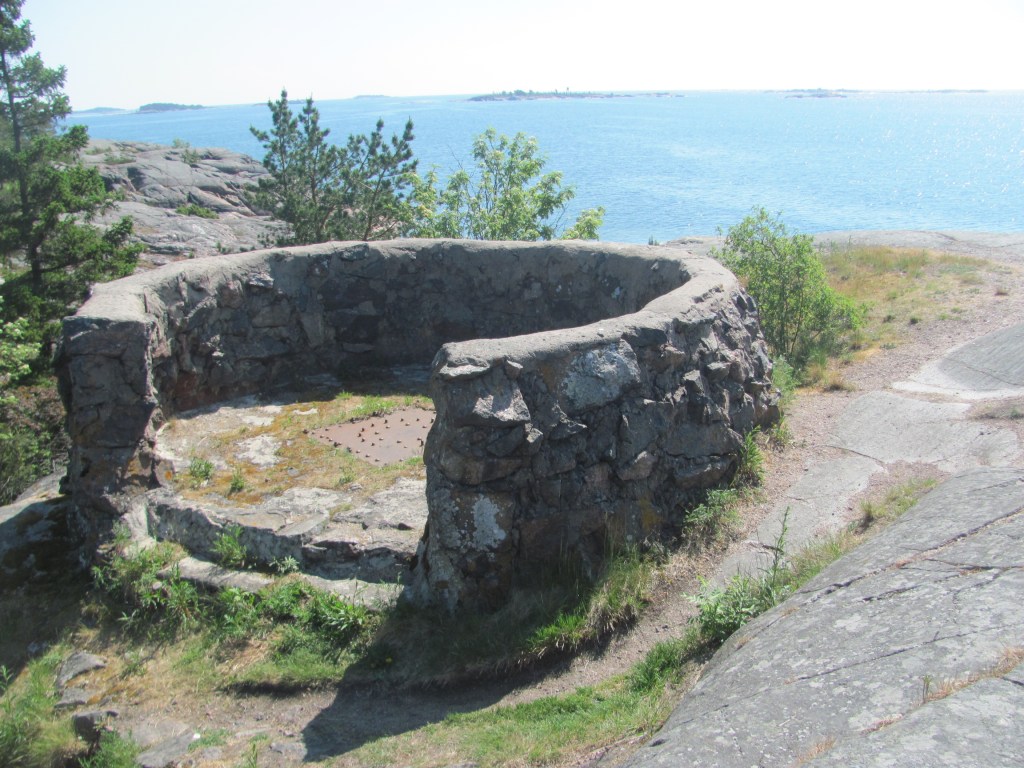
“Still, it’s better to be safe than sorry”, says the First Mate. “I can see some thunderclouds over there.”

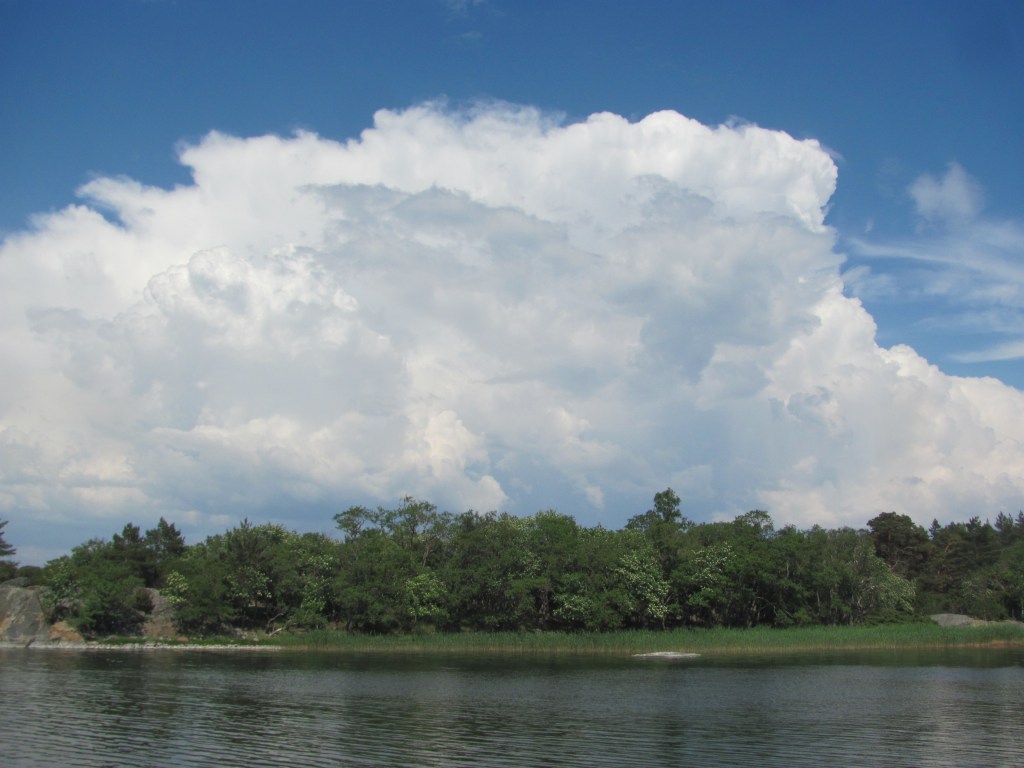
Gathering thunderclouds.

Luckily, the southerly wind takes the threatening clouds around us and leave a beautiful warm summer evening. I take some drone shots of us anchored in the bay.

Anchored in Ejskäret bay.

We settle down for the night and are soon fast asleep. In the early morning I am awoken by a loud crack. Like something has hit the boat. I leap out of bed and look out.

“It’s thunder!”, shrieks the First Mate, as there is another crack.

A sudden squall buffets us, the wind increasing from-near calm to 40 knots in a few seconds. It starts to rain heavily. A flash of lightening! I count the number of seconds between the flash and the peal of thunder. Two! It’s almost overhead. Then another flash, then another. They’re all around us. We huddle in the cockpit, not touching anything metallic, and hope that the next flash doesn’t choose the mast as a conductor.

Sitting out the thunderstorm.

“Look out, we are getting very close to that pontoon!”, shouts the First Mate. “I think the anchor is dragging!”

We are certainly closer than we were the night before, but we don’t seem to be moving, only swinging backwards and forwards. At least, I hope it is.

The pontoon gets closer.

I grab a boathook to fend off the pontoon if we do happen to be blown closer. Not that I could hold the weight of the boat and the force of 40 knots of wind, but it feels better than doing nothing. We cower lower and wait agonisingly, wondering when it will all end.

Gradually the lightning flashes seem to be moving away from us, and there is more time between the flash and the peal of thunder. The wind begins to lessen.

“I think it’s easing “, says the First Mate, white-faced. “Phew, that was scary.”

Half an hour later, the clouds have disappeared, the water is calm, and the sun comes out. It all feels like a bad dream.

“We did move a little bit”, I say, after looking at the GPS track. “But overall the anchor held remarkably well. I am not sure what we would have done if it had dragged and we had collided with that pontoon.”

We weigh anchor and push on, reaching the busy harbour of Hanko in the late afternoon.

“I think I might just get some washing done before we have a look around”, says the First Mate. “You have to take what opportunities you can when you are sailing.”

Washing day on Ruby Tuesday in Hanko.

Hanko was a Russian naval base when Finland was a Grand Duchy of the Russian Empire. During that time, it was also a favourite spa resort that the Russian elite would come to holiday on account of its warm sunny weather and fine beaches, sometimes being called the “Riviera of Finland”.

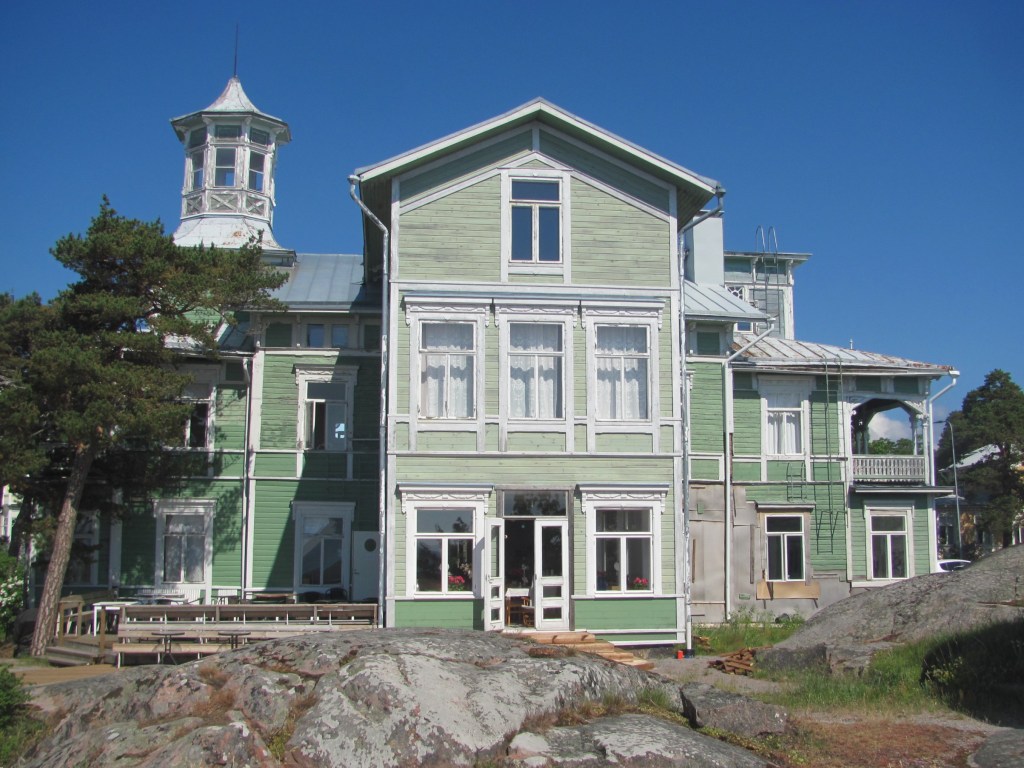
We set off to explore the town. The Russians built graceful villas, most of which still survive.

“I just love these villas”, says the First Mate. “I just can’t stop photographing them. Though what I am going to do with all the pictures, I just don’t know.”

Villa Tellina, Hanko.
Villa d’Angleterre, Hanko.

“This looks like a nice place for lunch”, says the First Mate, as we reach the Hanko Casino. “We can pretend that we are the Russian elite come to take the waters.”

Despite its name, it was a banquet hall in Russian times, and is now a restaurant. Three Barnacle geese roam the garden welcoming visitors.

Hanko Casino.

We help ourselves to the buffet of salmon, brown rice, and salads of different sorts, and take a table looking out over the lawn to the sandy beach and bay beyond.

“Phew, we’ll need to go for a walk after this”, I say. “I am full. And there’s still dessert to come.”

“I saw a sign saying that there is a nature walk in a loop around that rocky headland over there”, says the First Mate. “We can do that. Apparently, it’s where the high-society Russian ladies used to walk for fresh air.”

There are also fortifications where the Finns fought against the Russians in the Continuation War in 1941.

Gun emplacements from the Continuation War, 1941.

We continue on exploring the town and come to the city water tower. There is a lift to the top.

“The original wooden tower was built in 1886”, the woman at the small desk tells us. “The Soviets blew it all up when they left after the Continuation War in 1941. It was rebuilt out of local red granite in 1943 to supply water to the townspeople. It gives a great view out over the city. Look, you can see the naval ships arriving for tomorrow’s Flag Day.”

Mother duck and her ducklings, I think.

View from the water tower. The Finnish navy arrives for the Flag Day in the background.

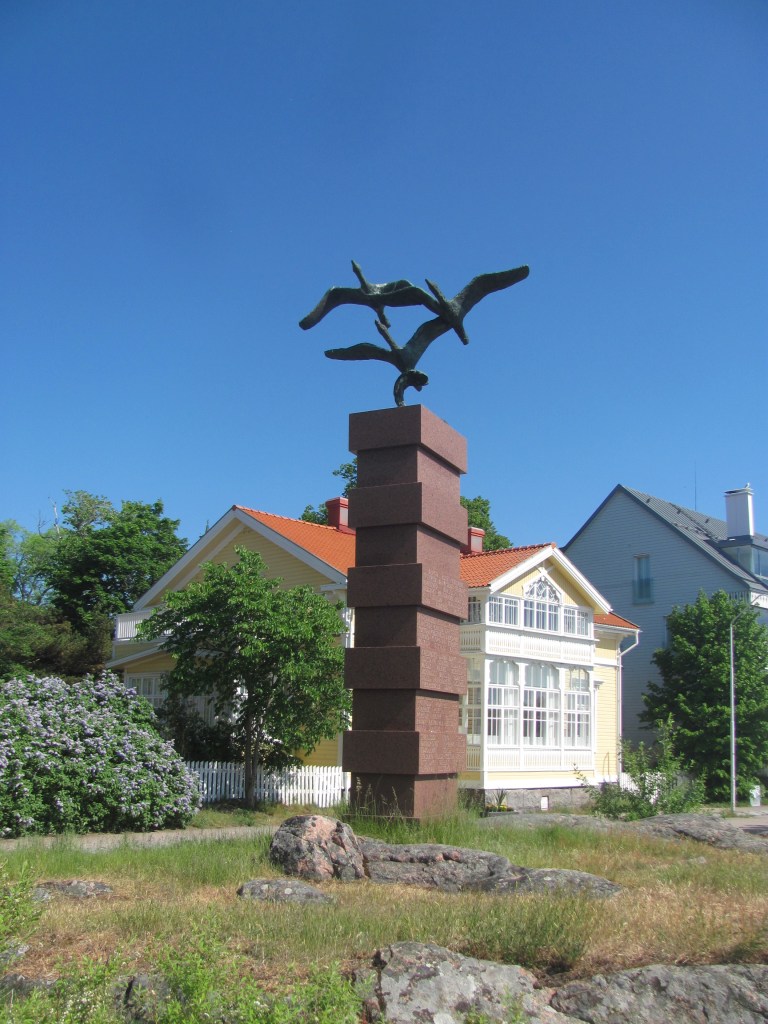
On the way back to the boat, we pass a sculpture of birds in flight. The guide book tells us that it is to commemorate the many Finnish emigrants who left for a new life in North America. Apparently, Hanko was the port of choice for their departure.

Flying the nest: in search of a new life.

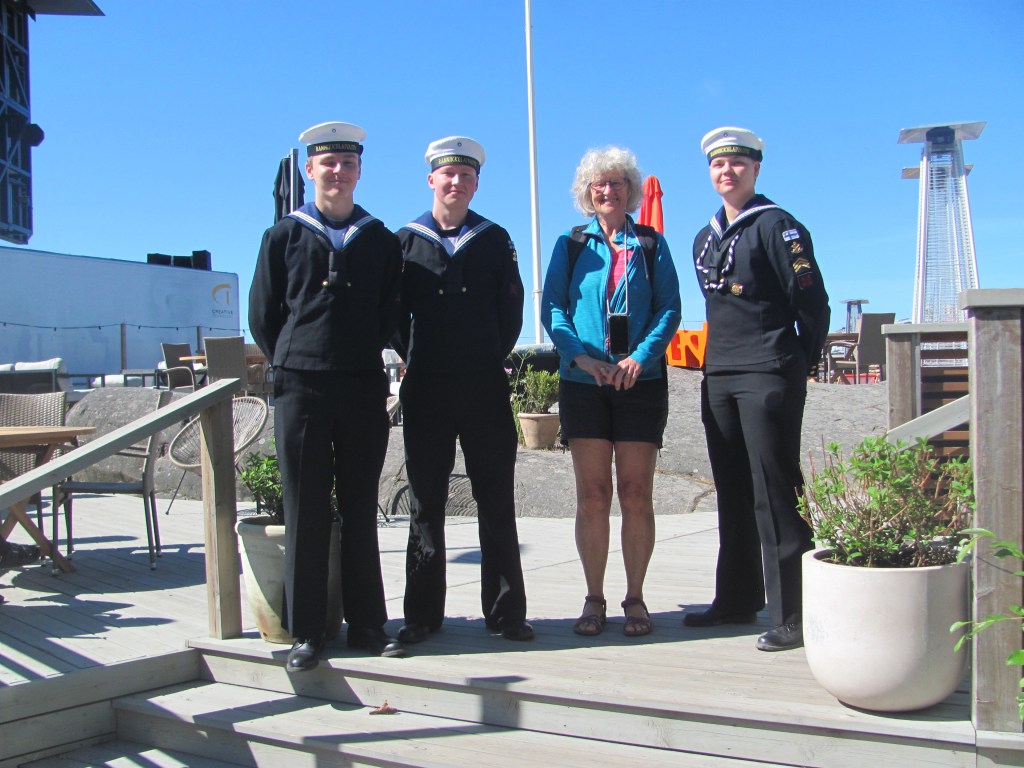
The next day, it is the National Flag Day for the Finnish Defence Forces.

“There is a particularly close bond between the FDP and the general population”, one man tells me. ”Not only because they guaranteed our freedom by stopping the Russians from invading the whole country during the Continuation War, but also because every citizen must do six months’ national service, and so they know what it is like to be in the armed forces. ”

We wander around the equipment display. Tanks, missile launchers, field radar, navy patrol boats, mines – they are all there. Weapons of death, but unfortunately necessary in today’s world – not only for deterrence, but also for actively defending against unprovoked aggression.

Naval landing craft.

We are struck by how young most of the personnel are – barely out of their teens.

Mere youngsters, all of them.

 “The military parade is at 1230”, I say. “Let’s get a quick bite to eat, and we can go and find a good spot to watch the parade go past.”

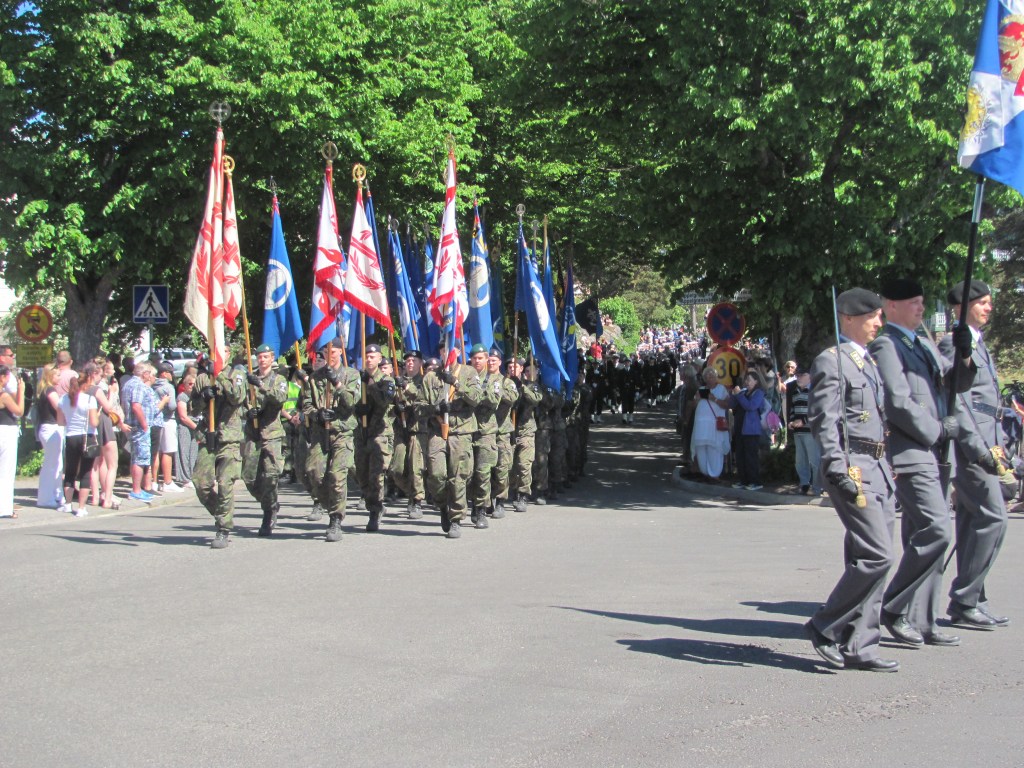
We find a place just opposite the War Memorial. On it, the words “For our Freedom” are engraved. It seems appropriate. The parade begins. Unit after unit of fighting men and women march solemnly past, led by their commander followed by the standard bearers carrying their particular flag.

The parade begins.

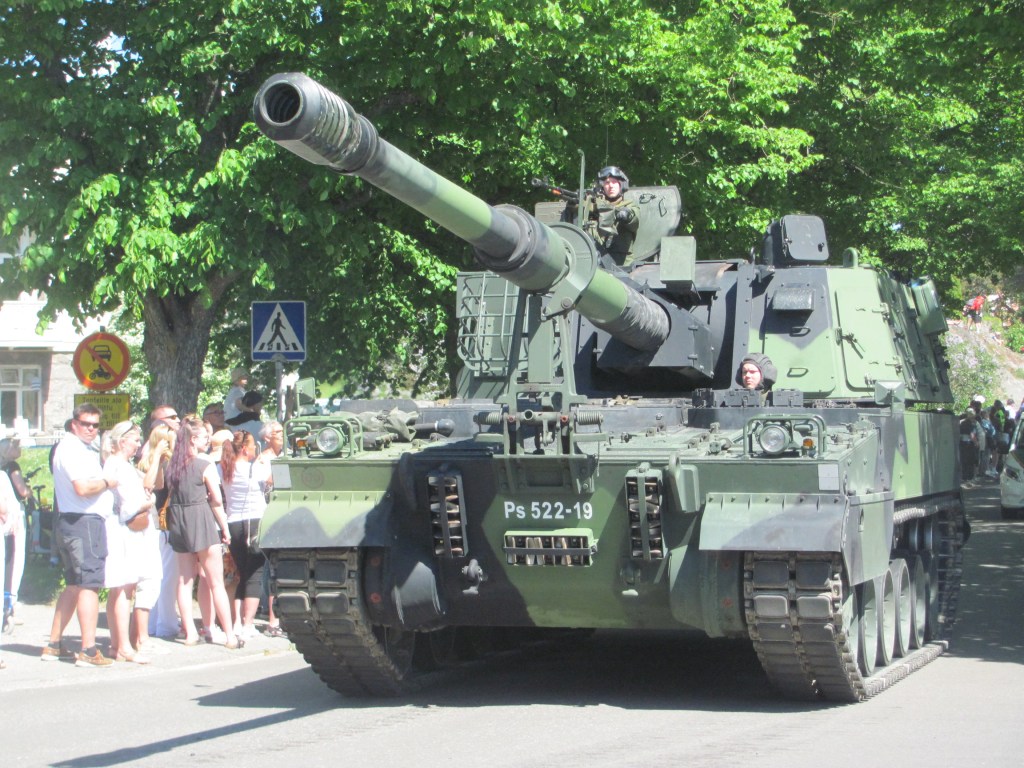
The tanks arrive, clanking and belching smoke from their engine exhausts, their tracks scraping the tarmac with a sound like cut glass as they turn the corner.

The tanks arrive.

“They are pretty big when you see them up close”, says the First Mate.

“And a lot noisier in real life compared to just looking at them in pictures”, I say. “It must be horribly claustrophobic being cooped up inside them. I am not sure that I could cope with it.”
The air force fly-past is at 1530.

“Why don’t you come up to the roof area of the Harbour Office?”, says the harbourmaster. “It’s mostly for staff, but you’ll get a better view from up there. By the way, your mail arrived this morning. Here it is.”

We climb the stairs to the roof. There’s not long to wait.

“Here they come”, someone shouts.

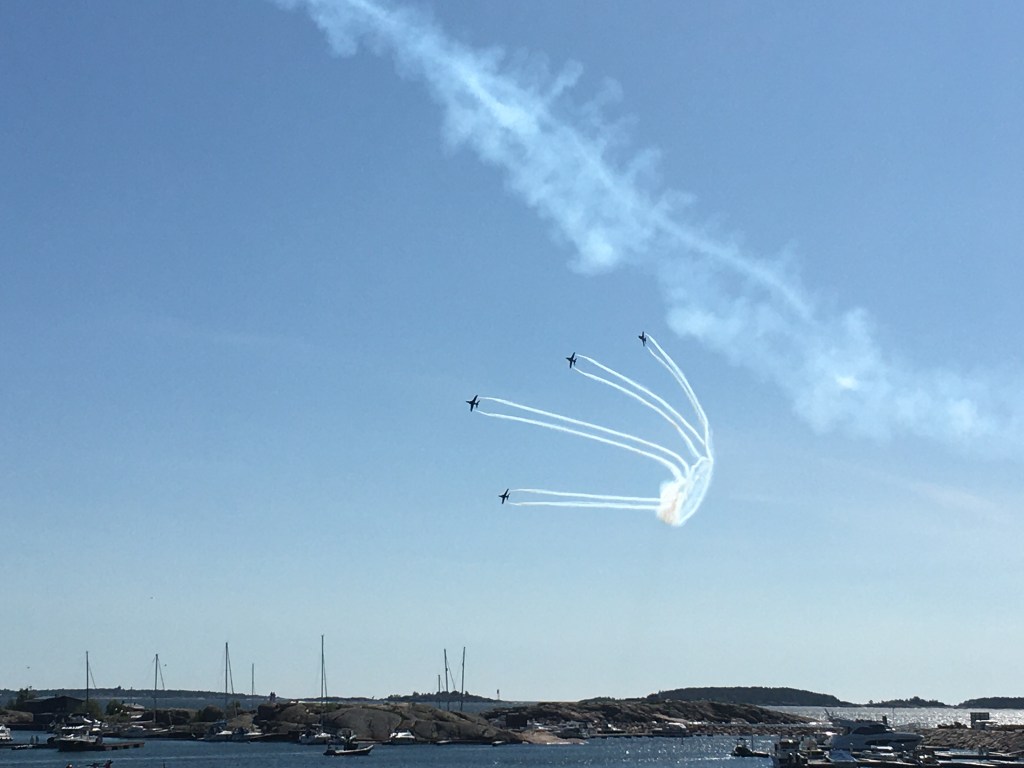
Sure enough, on the dot of 1530, four aircraft appear flying low. As they zoom past just above us, they release their smoke, and for the next half an hour, we are treated to a dazzling display of aerobatics and smoke trails.

Air display, Hanko.

“Apparently, when they fly in formation, there are only two metres between the wing-tips”, the harbourmaster tells us. “No room for any error.”

Air display, Hanko.

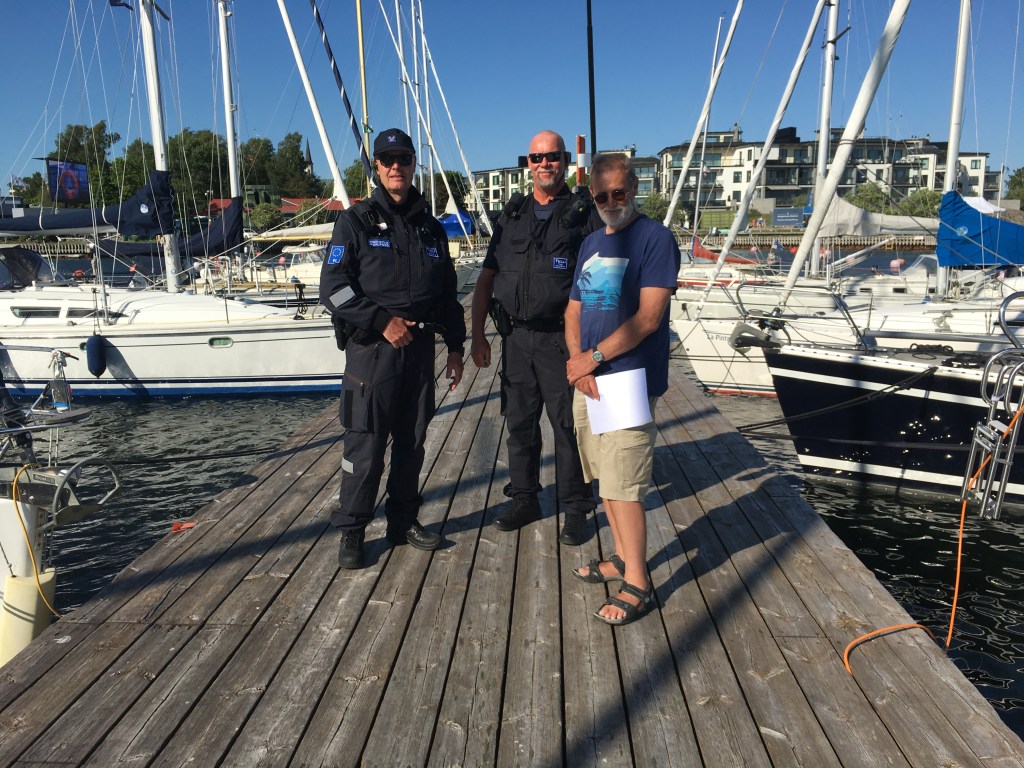
When we get back to the boat, two burly men in black uniforms are waiting for us on the quay. On their shoulder labels, we see the word ‘Tulli’. They are Customs officers.

“Is this UK-registered boat yours?”, they ask. We reply in the affirmative.

“Can we see your papers, please?” they ask. “In particular, we want to see that your boat is here legally and that VAT has been paid in the EU.”

I disappear into the boat and start rummaging. I find the documents and take them out. One of the men takes photos of the documents stating that VAT was paid on the original sale when the UK was still in the EU, and that the boat was lying in the EU on 31 December 2020, meaning that she is classified as ‘Union Goods’ for tax purposes. Luckily everything seems to be in order, and the mood relaxes.

“Everything is fine”, says one. “We hope you have a good time in Finland.”

The Customs men come and see us.

“Interesting”, I say to the First Mate later. “That’s the first time we have been asked for our documents since we have been in Europe with her. It just shows that it pays to have everything in order.”

In the evening, there is a jazz concert. A giant stage has been constructed just in front of the Casino where we had had lunch the day before. After a quick bite to eat, We take a rug, something to drink, and join the crowds of people heading to the same place.

“Let’s sit on the beach”, says the First Mate. “The sun will last longer over there, there are not so many people there, and we can still see as well.”

We find a place to sit. All around us are little groups, families, couples, enjoying the balmy evening with an air of expectancy. Soon the music begins, and the dissonant chords of well-known traditional jazz and soul music are booming across the bay.

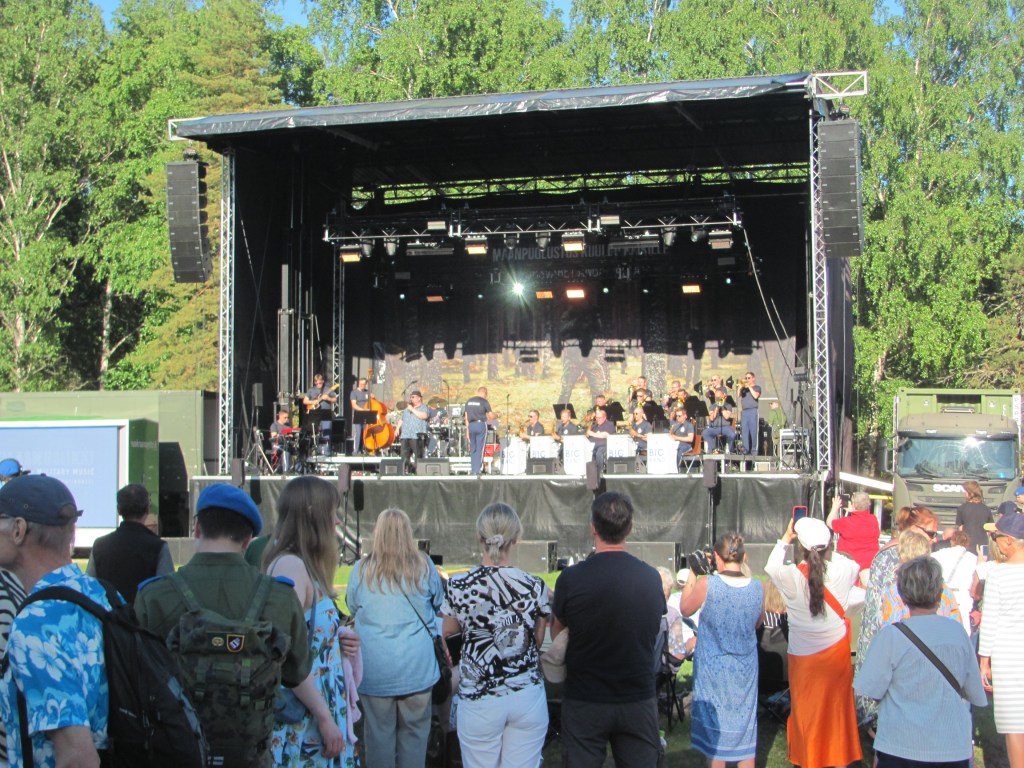
Military jazz.

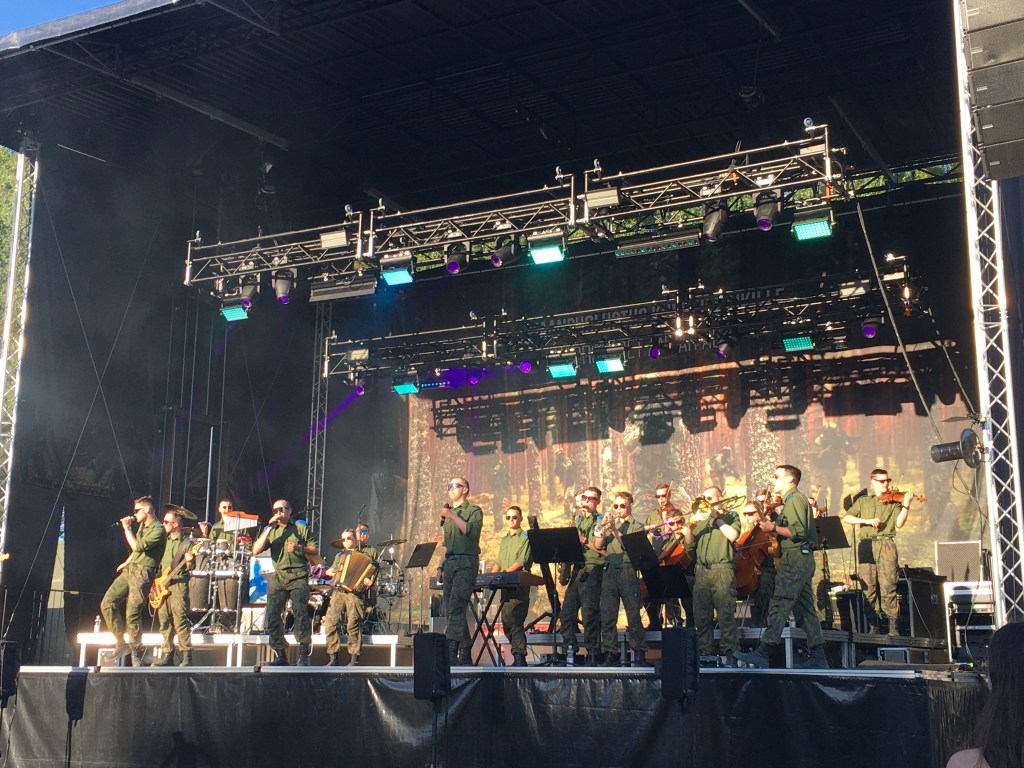
“I always enjoy a bit of jazz”, says the First Mate, as the band makes its last encore and leaves the stage. “The next band on is called the ‘Showband of the Defence Forces Conscript Band’. A bit of a mouthful. Apparently they are chosen from this year’s conscripts.”

They are exuberant, to say the least. A Freddie Mercury imitator prances across the stage, microphone in hand, giving it his all. Not to be outdone, a young woman follows. Both excellent performers. Perhaps not as musical as they could be, it is nevertheless hugely entertaining.

The ‘Showband of the Defence Forces Conscript Band’.

Soon the last rays of the sun reflect off the cupolas of the Casino one last time and are gone. Immediately it begins to cool down.

“Come on”, says the First Mate, pulling on her fleece. “It’s been great, but I am starting to get cold now. Time to get back to the boat and get warm again.”

“We enjoyed the jazz band at the beginning”, our neighbours in the marina say when we get back. “But not so much the last band. Too much noise and not enough music. Nevertheless, it was great to see the young people getting together and produce something, even if it is not to our taste.”

Like us. I suddenly feel old.

Food from Lapland, a foreign princess, and a Finnish composer

We set sail in the morning for Turku. It’s nearly 60 nautical miles, but the winds are from the southeast giving us a comfortable beam reach, so we want to make the most of it.

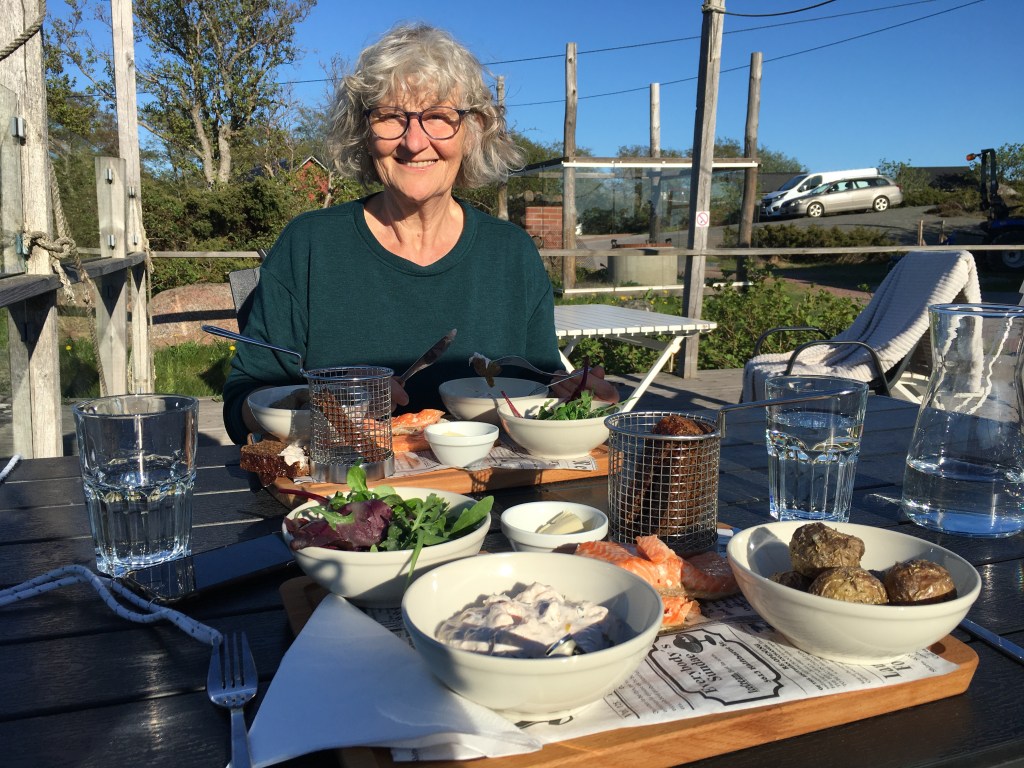
As we sail, my mind drifts back to the conversation we had had the night before with Robert, the harbourmaster at Sandvik harbour on Kökar. He had cooked us dinner at the harbour café, two massive chunks of salmon, potatoes in herb butter, and a salad. Oh, and a dessert of his special rhubarb ‘experiment’, as he called it.

Dinner at Sandvik cafe.

With us the only customers, he had stopped to talk to us. The conversation had turned to the Russians and their attempts to interfere with the GPS. He had heard the stories, but didn’t believe that it would have much effect on marine navigation, but could be quite serious for aircraft.

“That’s why Finnish Air have suspended their flights to Estonia”, he says. “The airport at Tallinn relies purely on GPS data for guidance and has no traditional equipment that other airports have for backup. But it is so typical of the Russians. They are intent on sowing as much confusion and doubt in the West as possible.”

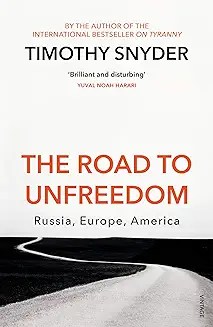
It resonates with a book I am reading at the moment, Road to Unfreedom, by Timothy Snyder. In it, he describes how Russia’s aim is to destabilise the West. One of the ways to achieve this was the creation of a company called the Internet Research Agency in St Petersburg in 2015, whose purpose was to use social networking sites and other online platforms to disseminate Russian propaganda from fake accounts. This even extended to influencing elections and referendums in the West. But why do they want to do it, I think?

“You have to remember that Russia sees itself as engaged in an existential war between itself and the evil West”, says Spencer from the canopy over my shoulder. “Central to this is the concept of ‘hybrid war’, which is a mixture of traditional warfare and cyber warfare.”

“What do you mean?”, I ask.

“Well, cyber warfare aims to create chaos in the enemy by sowing doubt amongst its citizens so that no-one trusts anybody or anything, even when it is true”, he responds. “Often several different narratives are developed so no-one knows what to believe. Western media even unwittingly help this process along by reporting on obvious lies and untruths. It doesn’t even matter anymore whether something is true or untrue – what is more important is that it is in people’s minds and they are talking about it.

“But aren’t people clever enough to know what is true or false? Won’t it backfire in the long run?”

“Well, it seems to work”, he says. “Both the Brexit referendum and Donald Trump’s election were influenced by the Russians. And they got the result they wanted.”

“Are you talking to that spider again?”, calls the First Mate from the cabin. “You’d better stop now. There’s a huge cruise ship coming up behind and we need to be careful it doesn’t run us over.”

Stalked by a cruise ship.

We approach Turku in the early evening. We furl the sails and motor through the buoyed channel to the Aura river that runs through the city and to the City Marina, passing on the way some stately tall ships.

The Suomen Joutsen.

The moorings are box berths, which are not so common in Finland. We approach them with trepidation, as our experiences with box berths have been usually confrontational, with the box-berth normally coming out best. Especially when there is a strong cross wind. Luckily there is no wind this time and we manage to tie up in masterclass fashion. I receive admiring glances from the audience of seagulls perched on the tops of the neighbouring posts.

“A perfect mooring”, says one. “Congratulations! Top marks!”

“It was nothing, really”, I say nonchalantly.

“Well done! Now try standing on top of these posts without falling in.”

While the First Mate goes to pay at the harbour office, I have a quick scan through the guide book.

Turku is the major city of southwest Finland, it says, and also Finland’s oldest, having been founded in the 1200s AD. The cathedral was built in the 1300s, and the city was part of the Hanseatic League of trade in the 1400s. Finland was part of Sweden until 1809, when Sweden had to cede it to Russia after the Finnish War. For a short time, Turku was the capital of the Grand Duchy of Finland under the Russian Empire, but Tsar Alexander I felt it was too aligned with Sweden, and decided to make Helsinki the capital. Then in 1918, Finland became independent and Turku along with it.

“Quite a story, isn’t it?”, says the First Mate on her return. “I am quite looking forward to exploring it.”

The city centre is a little way from the marina. In the morning, we unload the bikes and cycle along the river bank until a street market and thronging browsers block our way.

“There’s no way we can cycle through these crowds”, I say. “We’ll just have to push the bikes.”

We slowly make our way through the market, stopping to browse at the occasional stall. Lunchtime approaches and we are both feeling peckish.

“Look, there’s a stall selling Lapland food”, says the First Mate. “Let’s try some of that.”

We go for the fried muikku – a small freshwater fish caught in the lakes and rivers of Lapland and other parts of Finland. In English it is called vendace.

“It’s one of the favourite foods of Lapland”, the vendor tells us. “We make the batter from rye flour seasoned with salt and pepper, and fry them in a mixture of butter and oil, and serve them with a delicious garlic sauce.”

“Mmmmm, it is good”, says the First Mate. “I could have another plate, but I had better not.”

A taste of Lapland.

As we leave, a group of girls singing and shouting passes.

“We’re celebrating my wedding”, one of the girls explains to the First Mate. “I’m getting married tomorrow. This is my, how do you say it in English, …?”

“Hen party?”, prompts the First Mate.

“Yes, this is my hen party”, says the girl. “Tell me, what is the best love song in English?”

The First Mate thinks for a few moments.

“Well, the one that comes to mind is that of Ruby Tuesday by the Rolling Stones, where it says ‘Catch your dreams before they fly away’. That’s what you need to do.”

“Oh, yes, I like that”, says the girl. “I’ll remember that.”

“That was quick thinking of you”, I say afterwards.

Hen party, Finnish style.

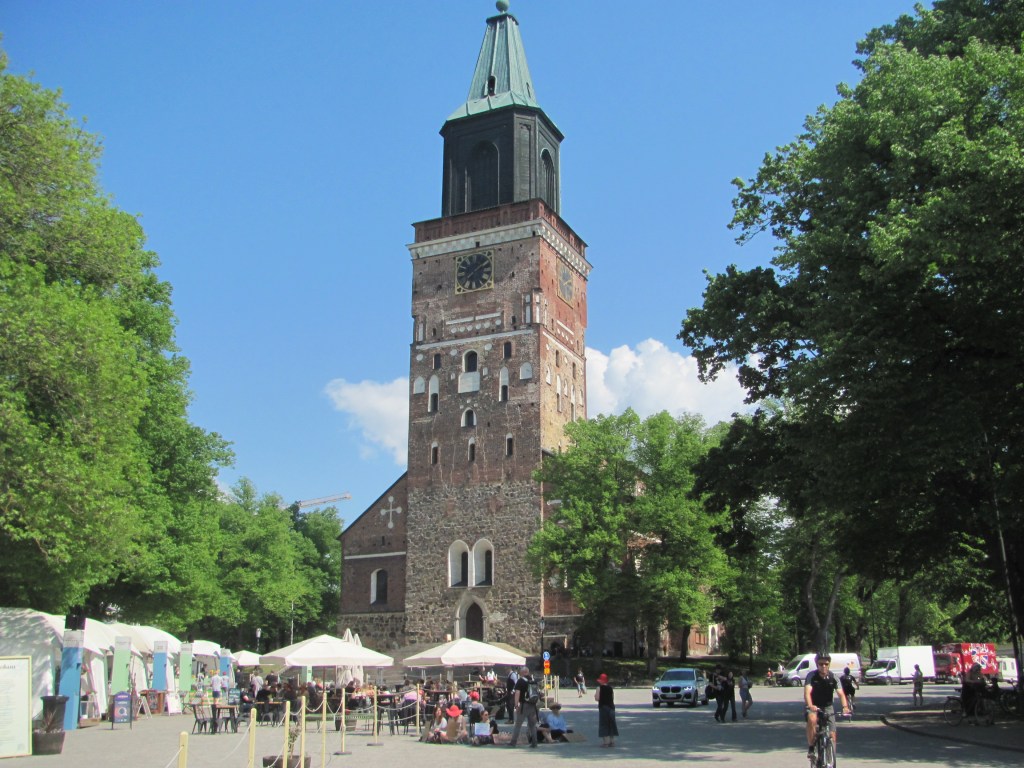
We eventually reach the cathedral. It is closed to the public for a wedding. It is obviously the season for weddings in Turku.

Turku Cathedral.

“This notice says you can come back at 1700”, I say. “Never mind, let’s go to the museum. The archaeology and art gallery are in the same building. You could go to one and I the other.”

The museum and art gallery are closed for refurbishment.

“We aren’t doing too well”, complains the First Mate. “It’s nearly summer. You’d think they would have things ready for the tourists.”

We decide to split up and do our own thing. I opt to go and see the castle while the First Mate chooses to see the Wäino Aaltonen Museum of contemporary art and sculpture.

I take the small foot ferry across the river and cycle along the right bank of the river until I come to the castle.

Foot ferry across the Aura River.

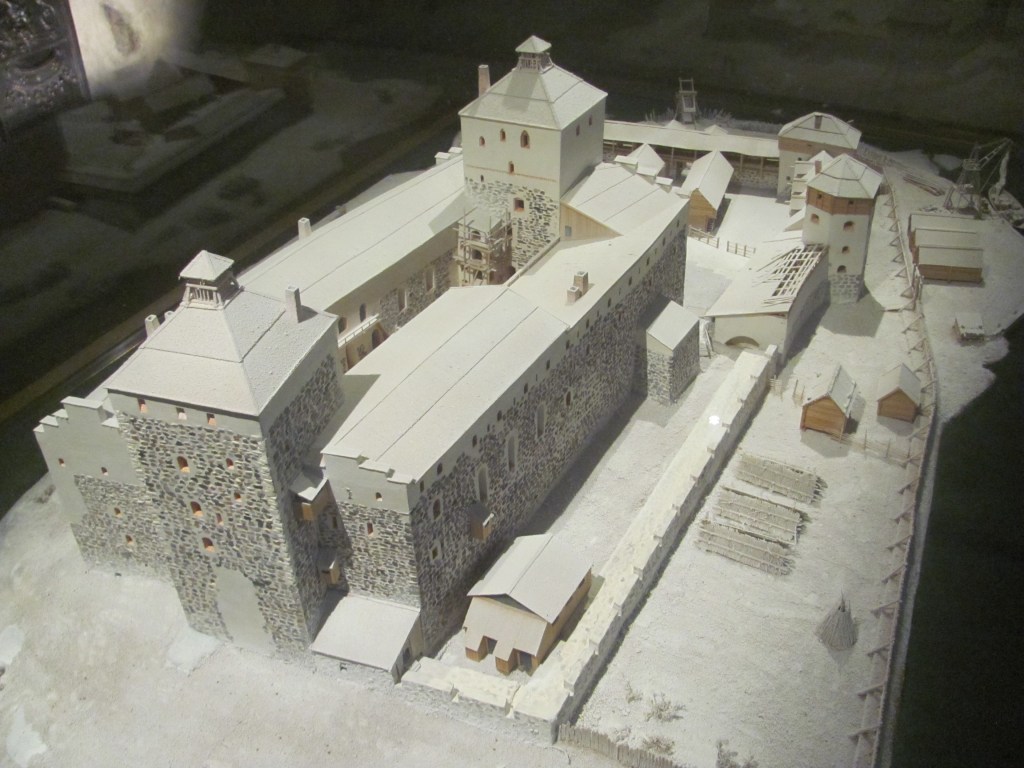
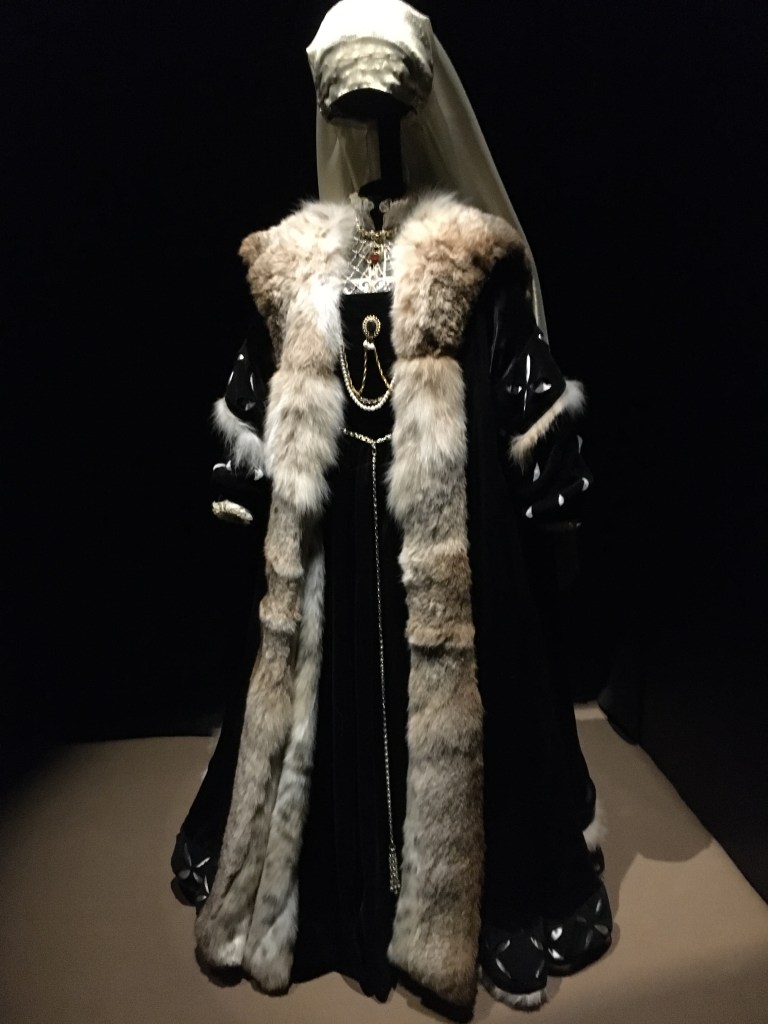
“The castle was originally built in the late 1200s when Finland was part of the Kingdom of Sweden”, the girl at reception tells me. “It was then on a small island at the mouth of the river, but land rise eventually joined it to the mainland. It was gradually added to over the mediaeval period and the Renaissance until the 1500s. Over that time, it has been both a defensive fortress and a royal residence. In fact, we have a special exhibition on Catherine Jagiellon at the moment. She was one of the queens who lived here. I am sure you’ll find it interesting.”

I have no idea who Catherine Jagiellon was, so I have something to learn.

Model of Turku Castle.

As I wander through dimly lit rooms of the older medieval part lower in the castle and the bright and spacious rooms of the Renaissance period on the top floor, it strikes me how closely the history of Finland at that time was connected to Swedish history. And for good reason – Sweden ruled much of what is Finland nowadays from the 1100s to the 1600s. All the old familiar names we had learnt of during the last two years of exploring Sweden reappear here – Gustav Vasa I who threw off Danish rule and converted the countries from Catholicism to Lutheranism, his two sons John and Eric who fought each other for the throne of the Swedish Empire.

Dining hall in Turku Castle.

“Ah yes, I remember them”, says the First Mate, when we are talking later. “Wasn’t one of them imprisoned in Gripsholm Castle in Mariehamn which we visited a couple of years ago?”

“Yes, that was John”, I answer. “When Gustav I died, Eric was crowned king, while John became the Duke of Finland. However, Eric took exception to John marrying Catherine Jagiellon. a Polish princess.

“Why was that?”, she asks.

“Well, unfortunately Sweden was at war with Poland over Livonia, which is roughly present-day Estonia. Eric interpreted his brother John’s marriage to Catherine as supporting the enemy. Which may have been partly true, as John seemed to have his own designs on Livonia. Moreover, she was Catholic, and Sweden and Finland were now Lutheran.”

“So what did Eric do?”, she asks.

“Well, he sent his army against Turku castle where the happy couple had taken up residence”, I say, “They were captured, taken back to Sweden, and imprisoned in Gripsholm Castle.”

“A bit tough for Catherine, wasn’t it?”, she says. “Just married, coming to a country where you don’t speak the language and has a different religion, imprisoned in yet another country where you don’t speak the language and has a different religion, all with a man you hardly know.”

“Yes, it can’t have been easy”, I say. “And the exhibition on her at the castle shows her personal side – letters she wrote to her sister back in Poland, her thoughts about Catholicism, Protestantism and the Counter-Reformation, and the like. I think that she must have found it a bit lonely.”

Dress worn by Catherine Jagiellon.

“But I seem to remember that John eventually became king of Sweden?”, asks the First Mate. “So she would have become Queen.”

“Yes, eventually Eric upset too many people, including his own nobles, so they all rose up against him, imprisoned him in Kalmar Castle, had him certified mad, and declared John the king. John wasn’t too keen on having Eric stay around, even if he was imprisoned, just in case his supporters stirred up trouble, so he slowly poisoned him by adding arsenic to his food over the next few years.”

“So much for brotherly love”, says the First Mate.

“Well, they were half brothers actually”, I say. “So perhaps that explains it.”

On the way back from the castle to meet the First Mate, it begins to rain quite heavily. As luck would have it, I am close to the Sibelius Museum, and I decide to take cover there and more learn about the famous Finnish composer at the same time.

“Jean Sibelius was born in 1865 in Finland, which was at the time an autonomous Grand Duchy of the Russian Empire”, one of the wall panels tells me. “He made a major contribution to the development of a Finnish national identity at a time when there were attempts to ‘Russify’ the country.”

Jean Sibelius (1865-1957).

I put on some headphones and listen to the stirring chords of Finlandia, one of his most well-known works. Written in 1899, it is a representation of the Finnish national struggle against foreign rule, and to avoid Russia censorship, had to be played under different names to avoid crackdowns by the authorities.

The particular version I am listening to was played in 2015 on the 150th anniversary of his birth, with different sections of the orchestra located on one of the seven hills of Turku, with the music from each mixed electronically.

Downstairs is an eclectic collection of various musical instruments. One organ in particular looks as if it needs the player to have a commercial pilot’s licence.

Ready for takeoff?

Luckily the rain has stopped when I leave.

“How did you get on at the other art gallery?”, I ask the First Mate.

“It was closed”, she says morosely. “No surprises there. But I did have a good poke around the shops in the city centre.”

In the morning, I prepare my fruit and muesli. The First Mate has spilt some sugar on the worktop the night before. Casually, I lick my finger, wipe it up, and put it into my mouth. Instantly, I realise from the harsh metallic taste that it is a mistake. It’s not sugar. I read the label on the side of the package that I hadn’t noticed standing there: ‘Dri-Pack Soda Crystals, suitable for use in septic tanks’.

“Suitable for use in septic tanks.”

“I was using it last night to clean a few things, including the tea stains from your cup”, says the First Mate, as I imbibe my third cup of water, slosh it around inside my mouth, and spit it out vehemently. “It’s only sodium carbonate decahydrate. It’s not poisonous. At least not in small doses. Look on the bright side, you won’t have any tea stains on your stomach lining now.”

Ah, what it is to have someone who cares for you.

A quarantine island, North African pirates, and a Nordic saint

“We could stop at Fejan”, says the First Mate, looking up from the harbour guide. “It’s not far from here, and it would be a good jumping off place for the Åland islands. It’s just up around the next headland.”

We have started our summer voyage at last. We had left Svinninge marina in the morning, and had wended our way through the islands of the Stockholm archipelago, managing to dodge all the ferries coming and going. The wind had been fitful – sometimes strong gusts, then dying to nothing. Nevertheless, it had been an opportunity to check that everything was working on Ruby Tuesday, and accustom ourselves to the art of sailing again.

“Fejan sounds fine to me”, I say.

The small harbour comes into view. We tie up alongside the outer pontoon. We are the only boat there. There appears to be no-one on the land either.

Splendid solitude.

“It looks like there has been quite a storm here”, calls the First Mate. “This steel signpost is all buckled. And look at this bridge to our pontoon. It’s been ripped from its metal fixings on the main pier. I am a bit scared to even put my foot on it.”

Damaged pontoon bridge.

We had heard while we were preparing the boat that there had been a violent storm in the Baltic back in November and that many of the small harbours and marinas had been substantially damaged. There was doubt in many cases as to whether they would be repaired in time for the 2024 season.

“The harbour guide says that Fejan used to be a quarantine station”, says the First Mate. “It was built way back in the early 1800s when cholera was spreading through Europe, so any new arrivals to Sweden had to stay here until they were cleared to enter the country. Needless to say, many of them died before they were cleared.”

At the end of WW2, a lot of Estonians fled their country as they feared retribution for being on the wrong side of the invading Russians, while others didn’t want to live under communist occupation. The ones that came to Sweden were kept on Fejan in quarantine.

We explore the small cluster of houses surrounding the harbour, dominated by an imposing-looking restaurant. Apparently it used to be the autopsy building and morgue for the quarantine station. There is a feeling of sadness, not helped by the solitude.

The ex-morgue, now the restaurant.

“Come mid-summer, it’ll be a hive of activity, though”, says the First Mate. “I wonder if they will realise that there were once dead bodies on the tables they are happily eating their fine food from?”

“The meat-eaters amongst them are eating dead bodies anyway”, I say wryly.

Quarantine buildings.

We set off the next morning sailing for Kökar, an island cluster in the south of the Åland islands. It is nearly 60 miles away, but the south-east winds are favourable. The sails fill on a pleasant beam reach, and soon we are comfortably speeding eastwards at 7-8 knots.

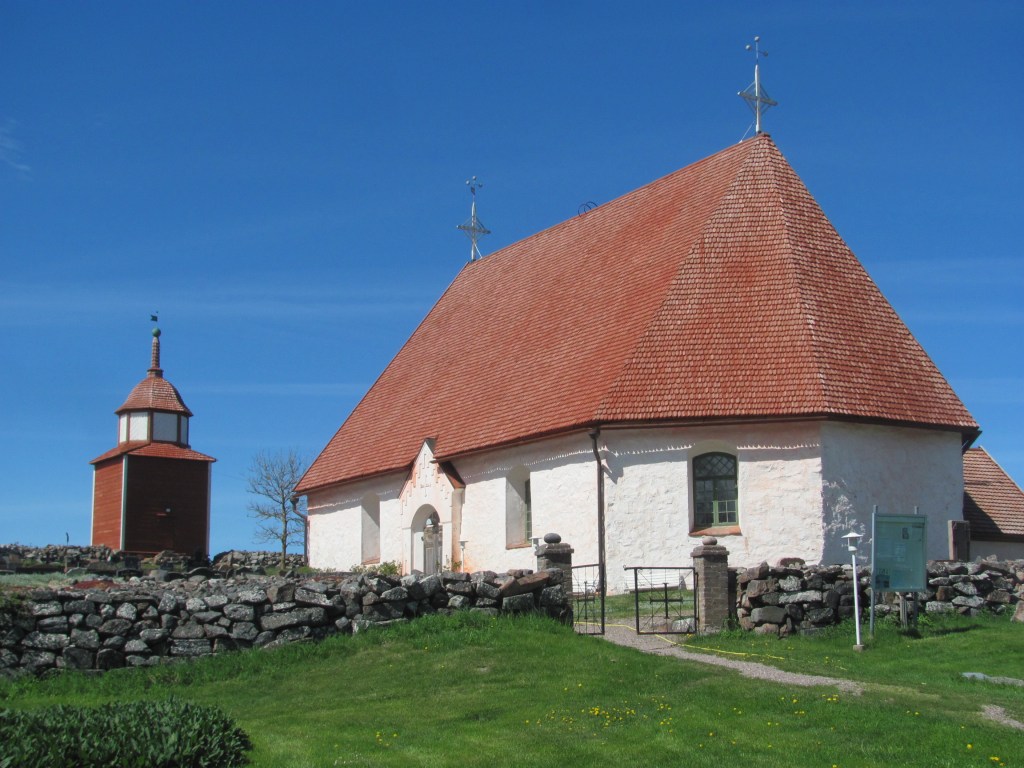
We near Kökar in the evening. Furling the mainsail, we turn to the north to round the headland into Sandvik harbour. On the hill above us, we see the white walls, red roof, and spire of Kökar church.

“Have you seen that ferry behind us?”, says the First Mate, just as we enter the narrow buoyed channel to the harbour. “I am not sure there is enough room in this channel for both of us.”

I had seen it. Luckily the channel widens a little just before the ferry dock, so I furl the genoa and tuck into there. The ferry passes with mere metres to spare.

We soon reach the small harbour for sailboats at the top of the bay and tie up. Once again, we are the only boat there. A beached ancient hulk greets us.

Arriving in Sandvik harbour, Köker.

“Did you know that you are supposed to pronounce Köker ‘Shirker’?”, I ask. “The K often has a ‘sh’ sound in Swedish, and the ‘ö’ has a short ‘ir’ sound a bit like in German. And it has nothing to do with the inhabitants being work-shy.”

“Ho, ho”, groans the First Mate with a look of weary resignation. “I think your jokes are getting worse, if anything.”

The next morning we borrow some bikes from the café and cycle up to the church we saw on the way in. It is locked, but the key is kept by one of the islanders living nearby who is usually happy to open it to visitors. It turns out that he is the church organist.

Köker church.

“Originally, there was a Franciscan monastery here dating from the 13th century”, he tells us. “You can see the ruins of it within the small museum behind the church if you are interested. Then a wooden church was built in the 14th century. Of course, both were Catholic, dedicated to Anna, the grandmother of Jesus, but in 1544 AD it became Lutheran when King Gustav of Sweden split from the Catholic church and converted the whole country to Lutheranism. Åland and Finland were part of the Swedish Empire at that time. But this actual church we are standing in dates from 1784 when it was rebuilt, although the baptismal font over there is from the original church.”

Ruins of the Franciscan monastry inside the small museum.

”And this beautiful ship here”, asks the First Mate, pointing to a model of a ship suspended from the ceiling. “What does that signify?”

Model ship.

“Well, the story is that a local farmer was travelling somewhere by ship in the 1700s, but was captured by North African pirates”, the organist explains. “He was held by them for several years, but eventually managed to escape, and when he made it back to Kökar, as a mark of his gratitude to God for saving him, he decided to build a model of the pirate ship that captured him.”

“A poignant little story”, I think, although the thought crosses my mind as to why God would be interested in a model of a pirate ship.

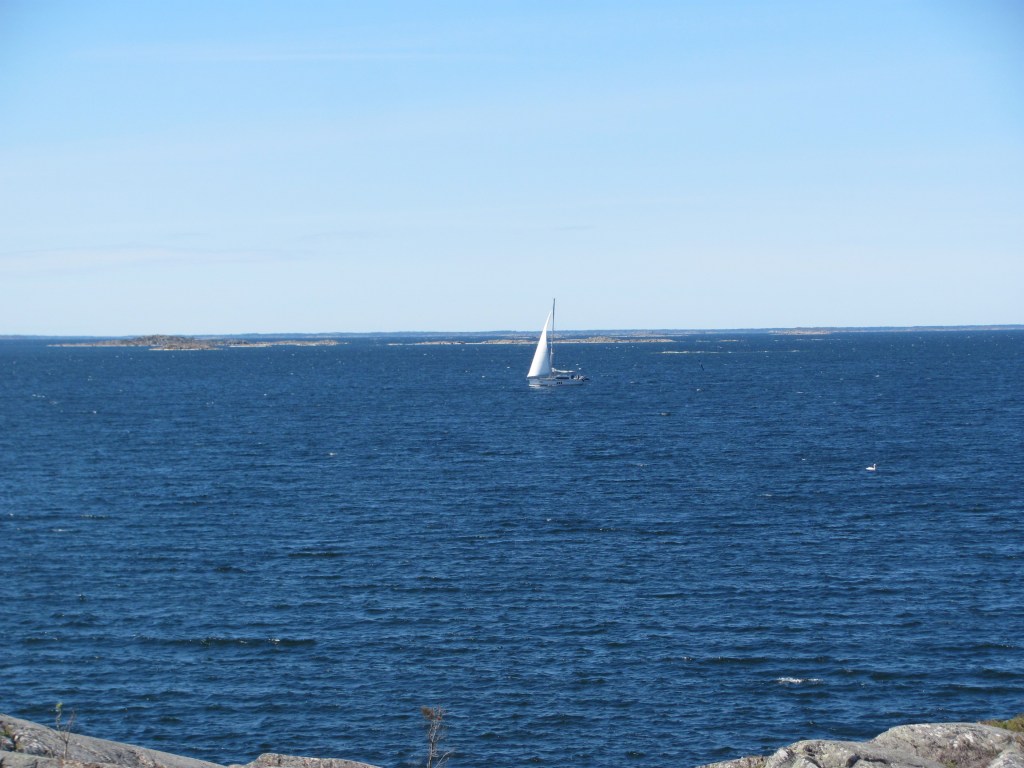
We walk to the top of the hill overlooking the vastness of the Baltic Sea interspersed with islands of the archipelago. Behind us the wind whistles through the pines surrounding the church, conveying a sense of loneliness. And yet, to weary seafarers arriving from a long storm-tossed voyage it must have looked like a sanctuary offering protection from the elements. I read later that Kökar was one of the resting places on the ‘Danish Itinerary’, a 13th century sea route from Utlängan in south-east Sweden to Tallinn in present-day Estonia.

View from the church hill, Köker.

A sailboat appears from behind one of the islands from the north.

“I wonder if that is Simon and Louise?”, I say. “They are certainly coming from the right direction.”

Simon and Louise are a couple we met on the Cruising Association Rally in Åland last year. We had arranged to meet up again this year if we are near each other. We are, so they had suggested meeting up today.

We watch the boat until it passes below us.

Simon & Louise arrive.

“It’s definitely them”, says the First Mate. “I recognise the boat. Look, there is the Red Ensign on the stern.”

We wave, but they don’t see us.

We meet them as they arrive in the harbour and give them a hand tying up. Over coffee and cakes we catch up on everything each other has been up to since last year.

Lots to catch up on.

As the sun goes down and it suddenly grows cold, we decide to adjourn to the local hotel restaurant for something to eat.

“We had a bit of an ‘adventure’ here in Kökar last year”, says Simon over dinner. “One that we are not too keen to repeat.”

“We were just about to leave”, Louise continues. “We were reversing out, and suddenly there was a horrible graunching noise and the engine stopped. Something had caught itself on the propeller. Simon put on his wetsuit and went down to investigate – it turned out to be a submerged stern buoy that was being held down by its chain. You couldn’t see it. We had reversed right over it, and the chain had caught around the propeller.”

“Every sailor’s nightmare”, I say.

“Luckily, the harbour did eventually accept responsibility and agreed to pay for the damage”, says Simon. “But trying to get the money from them was the next part of the saga. We kept on emailing and phoning them, and they kept saying, it’s alright, we’ll pay for the damage. But the money never appeared.”

“In the end, we found their insurance company”, continues Simon. “They confirmed that the damage would be covered, and told the harbour to pay us. So in the end they did, but it was a lot of hassle. With all the delays, it ruined our sailing season.”

On the way out of the restaurant, we briefly chat with a German girl at the next table.

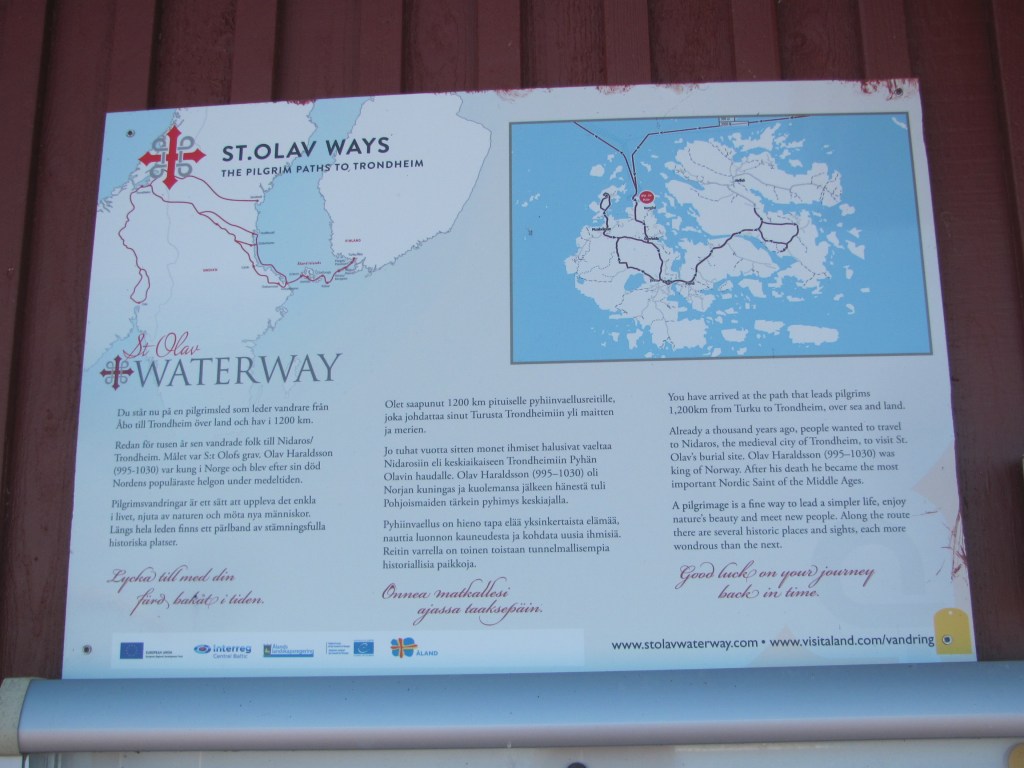
“I am on a project at the University of Trondheim in Norway”, she tells us. “Trondheim used to be a major Christian pilgrimage centre in medieval times. People would come from all over Europe to visit the shrine of St Olav who was buried in Nidaros Cathedral there in 1030 AD. We are trying to resurrect some of the major pilgrim trails leading to the city, both for those wanting the spiritual experience, but also for recreation. The one that I am working on at the moment is called St Olav’s Waterway, starting in Turku in Finland. It’s about 340 km long, and the only water-based route. You walk through the islands on the route and catch a ferry from one island to the next. Kökar is one of the islands on the route. When you get to Eckerö near Mariehamn you take a ferry across to Hudiksvall in Sweden. From there you can walk all the way through to Trondheim in Norway.”

St Olav’s Waterway route.

“That’s quite a walk”, says Louise, no stranger to trekking herself. “Why are you doing it?”

“I am not religious myself”, the girl says. “But people go on pilgrim walks for all sorts of reasons – the sense of achievement, creating the time to resolve crises in your life, enjoying the camaraderie of others doing the same thing, pondering the big questions of life. Most people say it is a life-changing experience one way or another. For me it’s being in the great outdoors and the sense of achievement.”

“I wonder what was so special about St Olav?”, the First Mate asks me later.

St Olav II of Norway (By Rabax63 – Own work, CC BY-SA 4.0, Link)

I read that he lived from 995-1030 AD, was a king of Norway, and instrumental in bringing it together as a country. He was made a saint as he was credited with introducing Christianity to Norway. This was despite not actually having all that much to do with it, and what little he did do, did fairly violently in that people who refused to become Christians had their heads cut off.

“Interesting criteria for becoming a saint”, says the First Mate.

“Perhaps it’s the results that count in religion, not the means”, I say. “Anyway, it says that miracles starting happening near his remains after he died, so they thought this deserved a sainthood. People then started making pilgrimages to his grave hoping some of the miracles might rub off on them.”

“I am sure the church didn’t do too badly either from the influx of pilgrims all coming to spend their money on indulgences and the like”, says the First Mate. “The forerunner of modern tourism. Create an attraction, and just wait until the punters roll in.”

“Now, now”, I say.

“Let’s take the bikes and go out to the museum today”, suggests the First Mate over breakfast the next morning. “It’ll be a chance to see another island.”

It is about 8 km. We pass over a bridge to the next island and through some gentle rolling pastureland. Only two cars pass us on the way.

“It’s so peaceful here”, says the First Mate. “It’s so nice not to have the noise of cars everywhere you cycle.”

Bucolic bliss.

We arrive at the museum. It’s closed. But in one of the small adjoining buildings near the entrance, we see a girl in her 20s with a furry dog. A Finnish Lapphund, perhaps.

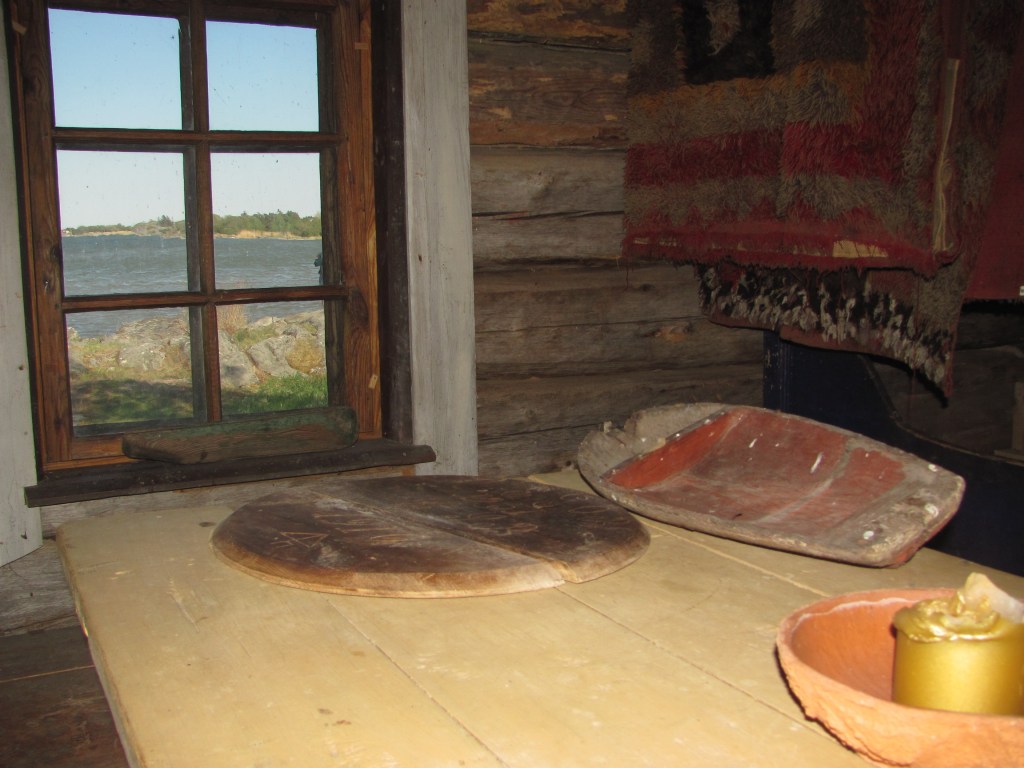
“Yes, I am afraid it is closed”, she tells us. “But two buildings – the traditional farmhouse and traditional fisherman’s cottage – are open all the time. You can go and have a look through those if you like.”

“Are you one of the staff?”, asks the First Mate.

“No”, says the girl. “Not museum staff, at least. I have just started a small business here making ceramics. But I have lived on the island for nearly seven years. I came originally from Helsinki.”

Escaping the rat-race.

“You must find it very quiet here compared to the city”, says the First Mate. “Most of the people we have met here so far seem to be of retiring age. Don’t you miss your friends in Helsinki?”

“It’s true that most people on the island are older”, the girl says. “And yes, I do miss my friends a little bit. It’s not like I can just pop around and see them after work, and it’s quite an effort for them to come over here and visit me. But I had had enough of the city stressing me out, so I decided that what I needed was peace and quiet – ‘me-time’ – so I came to Kökar. I love it here. I find the landscape and the coastline very inspiring, and, yes, the people too. I try to incorporate my inspirations into my ceramics.”

“And you have your dog for company”, I say, stroking the fur behind the dog’s ears. “He or she is beautiful.”

“It’s a she”, she says. “But unfortunately she’s not mine. I am just looking after her for someone.”

“I think I would find it too lonely to be here all by myself”, says the First Mate as we look around the traditional fisherman’s cottage. “I need people around. And the number of potential partners on the island must be limited.”

“It takes all sorts”, I say trying to be profound. “But I can see where she is coming from. Maybe you need isolation to be creative. Away from the distractions of civilisation. Including potential partners.”

View from the traditional fisherman’s cottage.