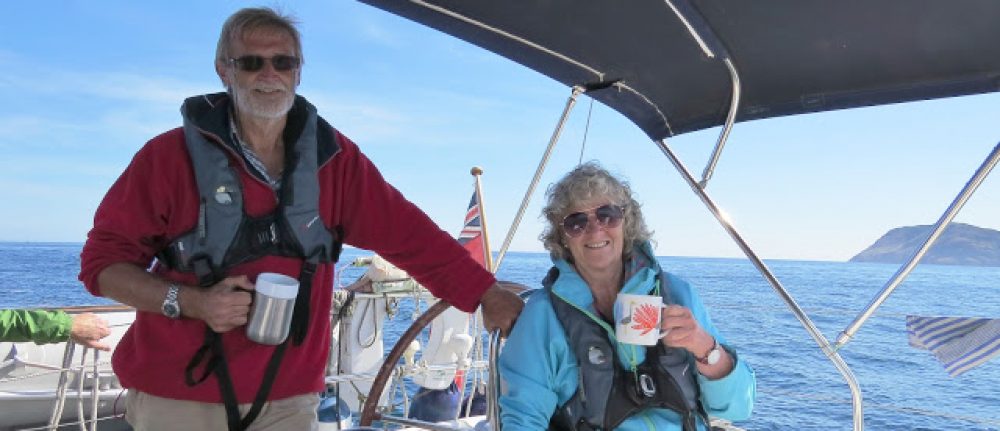
“Hurry up”, says the First Mate. “Can’t we go a bit faster? It’s catching us up.”
She is referring to the ferry coming out from Heltermaa. We had waited for the same ferry to make its way along the narrow buoyed channel into the harbour before we ourselves set off. But we had forgotten how quickly it can unload and load its passengers and we are only about halfway along the channel when we see that it is on the move again, following us. There is very little room for both the ferry and us to pass together.

I give the engine a few more revs and slowly we reach the red and green buoys marking the start of the channel. We move to one side and the ferry passes mere tens of metres behind us. We turn south, hoist the sails, and, with the wind from the southwest, set off on a pleasant beam reach. Passing the small island of Heinlaid, I peer through the binoculars and manage to pick up the two leading line beacons far away on the isle of Muhu, just as Ransome had done in his Racundra. If we can keep them in line, we should be able to avoid the treacherous rocks and reefs just below the surface.
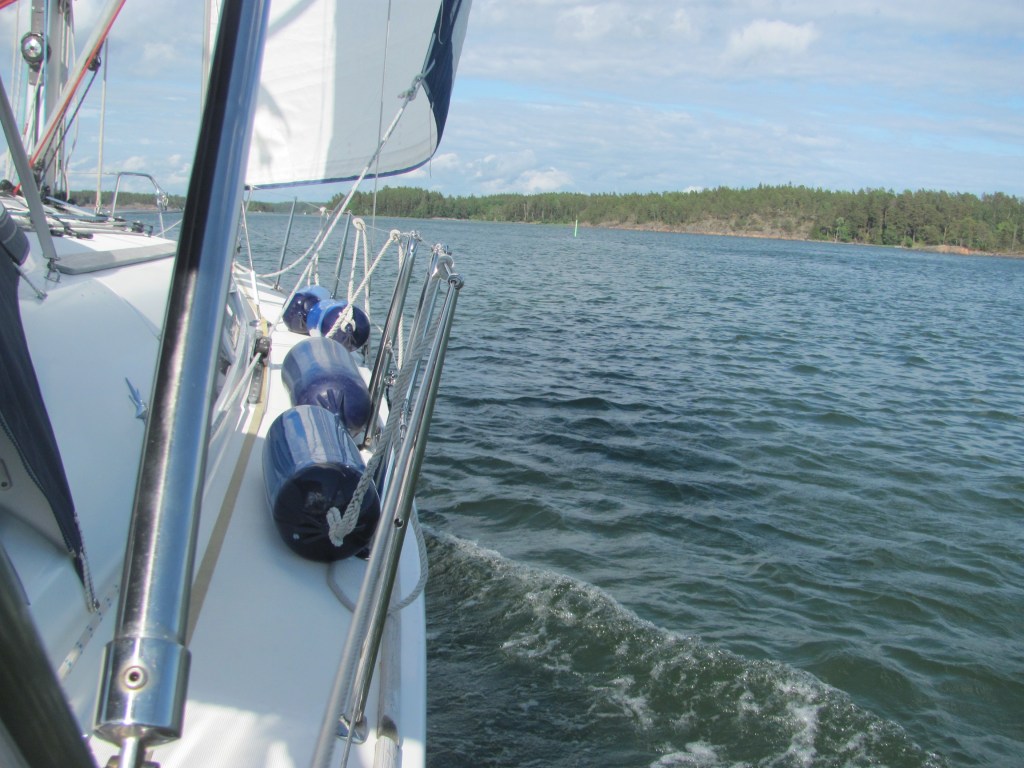
Two hours later we are approaching Muhu, and pick up a new set of leading lines to the southeast on the island of Kesselaid. Sheltered now by Muhu, the wind drops to a faint breeze, and for the last couple of miles we drift along at a majestic three knots. But the sun is shining and we are not in a desperate hurry, so we delay the inevitable starting of the motor until we are just approaching the small harbour at Kuivastu.
Compared with the solitary pier that Ransome describes, Kuivastu harbour now is cosily surrounded by a sea wall on all sides except for a narrow entrance, giving good shelter from most directions. Finger pontoons also stretch out from the main jetty, giving plenty of places to tie up. No need to anchor as he did.

We are met by a nice friendly harbourmaster who helps us tie up. We had hoped to top up our tank with fuel on the way in, but for some reason the machine doesn’t like our card.
“You have to have a certain amount in your account”, the Nice Harbourmaster explains. “If it is less than that amount, it will decline the card. Even if you only intend buying a little. It’s a security thing.”
“I am an art teacher at the local school”, she tells us, as we pay the fee. “But during the school holidays I work as the harbourmaster here. I enjoy meeting the lots of different people that pass through, such as yourselves.”
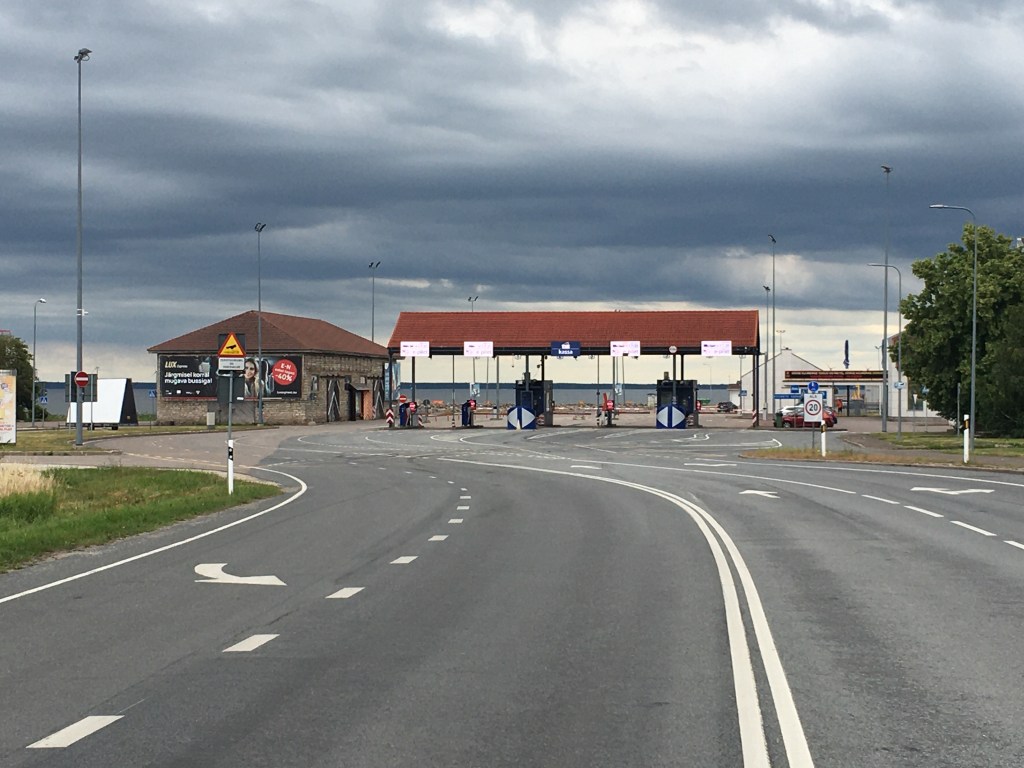
We have a quick explore of the harbour area. The so-called “Gates of Moon” that the wealthy landowner in Ransome’s day insisted all people and goods pass through coming to or leaving the island and pay a tax are long gone now and have been replaced by shiny drive-through ticket booths for the ferry.
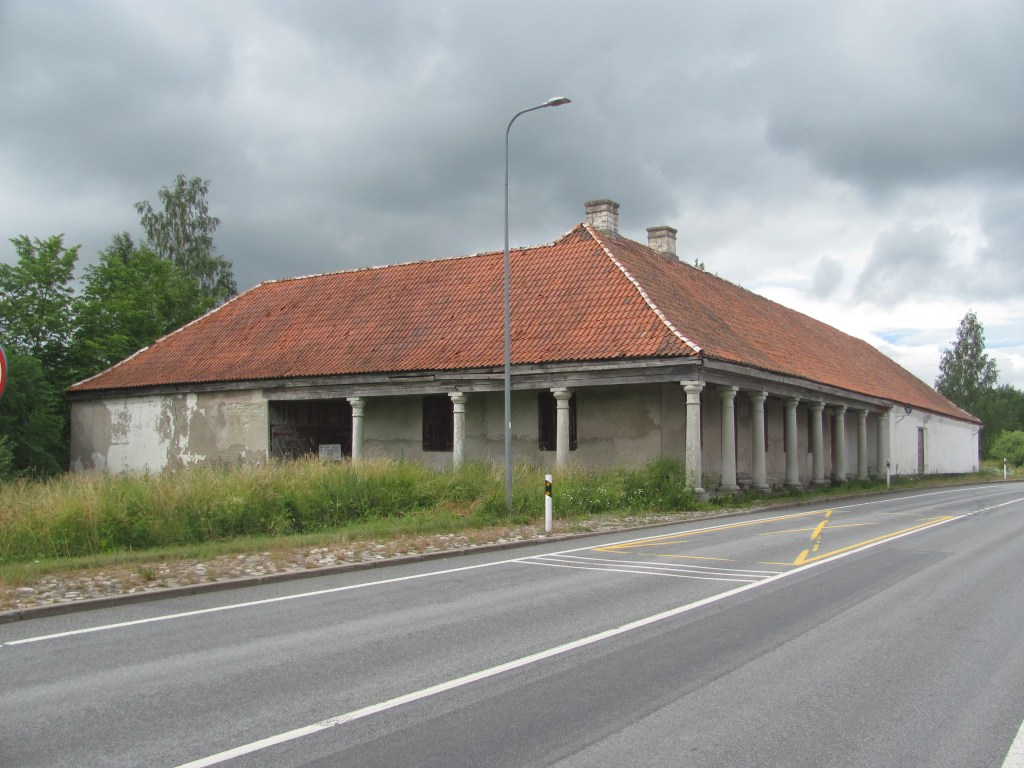
A few hundred metres up the road, however, the Russian inn he talks about is still there, albeit boarded and locked up.
The next morning, we unload the bikes and cycle to the nearest village, Liiva, 12 km away. Just as we arrive it starts to rain heavily.
“Quick, let’s have lunch in here”, says the First Mate, pointing to a small café. “We can wait there until the rain goes off. All that cycling has made me hungry anyway.”
“We are from Tallinn, here on holiday”, say the couple sitting at the table next to us. “We love coming here. So much to do if you like peace and quiet. It was restricted in Soviet days, as they had military installations here. Mainland Estonians had to have permits. But all that has gone now. We are not sorry to see them go.”
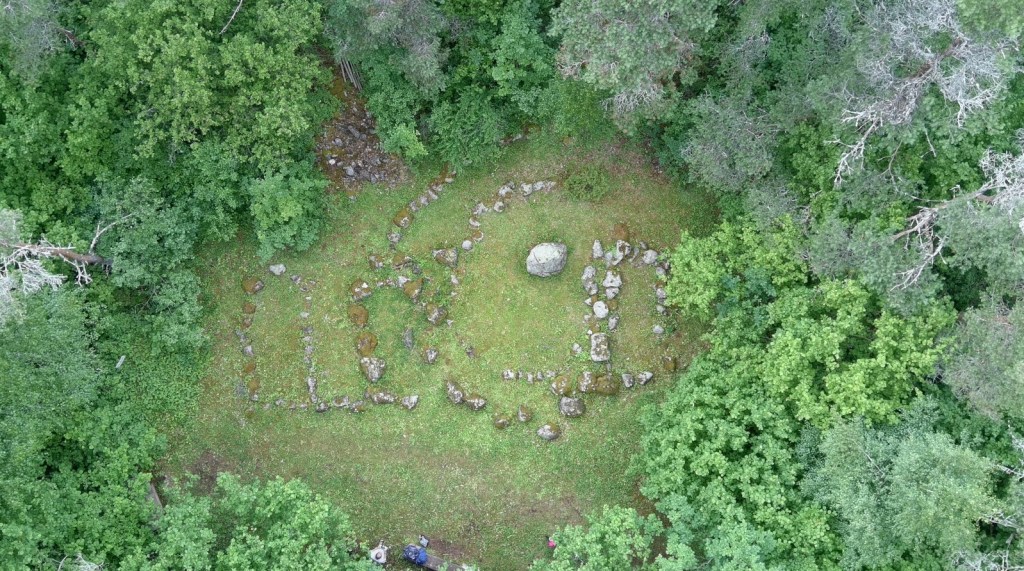
On the way back to the boat, we pass a pre-Christian graveyard. The information panel says that it dates from 500 BC, the earlier burials in cist graves, the later ones cremated on pyres. As we sit in the small clearing in the forest, I find myself trying to imagine what these people were like. What did they do in their lives? What gods did they believe in? Did they believe they had souls and an afterlife? Were they good people?
“I won’t be in tomorrow”, the Nice Harbourmaster says when we get back. “It’s my birthday, and some friends of mine are coming over from the mainland to help me celebrate. A colleague will take over from me here. He’s a good man. You’ll like him. I’ll be back in after the weekend.”
We congratulate her and wish her all the best for her celebrations.
——-
The boy and his grandfather climb to the top of the small rock outcrop and look down on the forest stretching as far as they could see. The boar they are hunting seems to have escaped, and they decide to rest for a while to regain their strength. Behind them, they can just make out the wooden ramparts and the smoke rising from the fires of Asva, their village. They had left it two days previously to go hunting in the forest, but so far they have not had much luck.
As they rest, the young boy spies a bright light in the northeast sky and points excitedly.
“Look at that star, Granddad”, he shouts. “I haven’t seen that one before. Why can we see it in the day-time?”
“I’ve not seen it before either”, says the old man. “Perhaps the gods are at war again. But it seems to be coming closer.”
Together the two of them watch in awe as the light grows in size. As it streaks overhead, they hear a loud explosion as the fiery ball separates into nine smaller ones. Seconds later, the ground underneath them shakes violently as the lights plummet to earth somewhere in the forest to the west. The boy clutches the older man in terror as a huge plume of smoke rises into the sky like a mushroom, and trees are flattened by the force of the blast and begin to burn. The boom from the impact reaches them, making them clutch their ears in pain.
“What is it, Granddad?”, says the boy, shaking with fear. “Are the gods angry with us for hunting boar without their permission?”
There is a long pause.
“The sun has come to lie down”, the old man says eventually. “We must let him sleep.”

“Come on”, says a familiar voice. “We haven’t got all day. We need to catch the next bus in 20 minutes.”
It’s the First Mate. We are at the Kaali meteorite crater on the island of Saaremaa. We had taken the bus from Kuivastu harbour, had gotten off at the small village of Kaali, and had walked the short distance to the crater nestling amongst the copse of trees surrounding it. The meteorite had fallen sometime between 1530–1450 BC during the Bronze Age in Estonia, at a time when the island was already inhabited by humans. I am trying to imagine what it might have been like for people living in the area at the time.
Weighing between 20 and 80 tonnes, it had broken into nine smaller pieces at an altitude of 5-10 km, each of which had all caused craters in a 1 km radius. The impact had caused a huge plume of heated gas and dust to rise 8 km into the air and had incinerated trees and other vegetation within a radius of 6 km.

As time went on, the lake at the bottom of the largest crater acquired religious significance. During the Iron Age, a stone wall was built around it, and the lake was used for ritual sacrifices of domestic animals. One idea is that it was the inspiration for some of the Finnish myths and legends – the god Ukko, for example, had ordered that fire be given to humans, and this had fallen to earth at Kaali for the Finnish heroes to come and collect.
We catch the next bus to Kuressaare. As we sit in the market square and have a coffee, the bikers arrive.
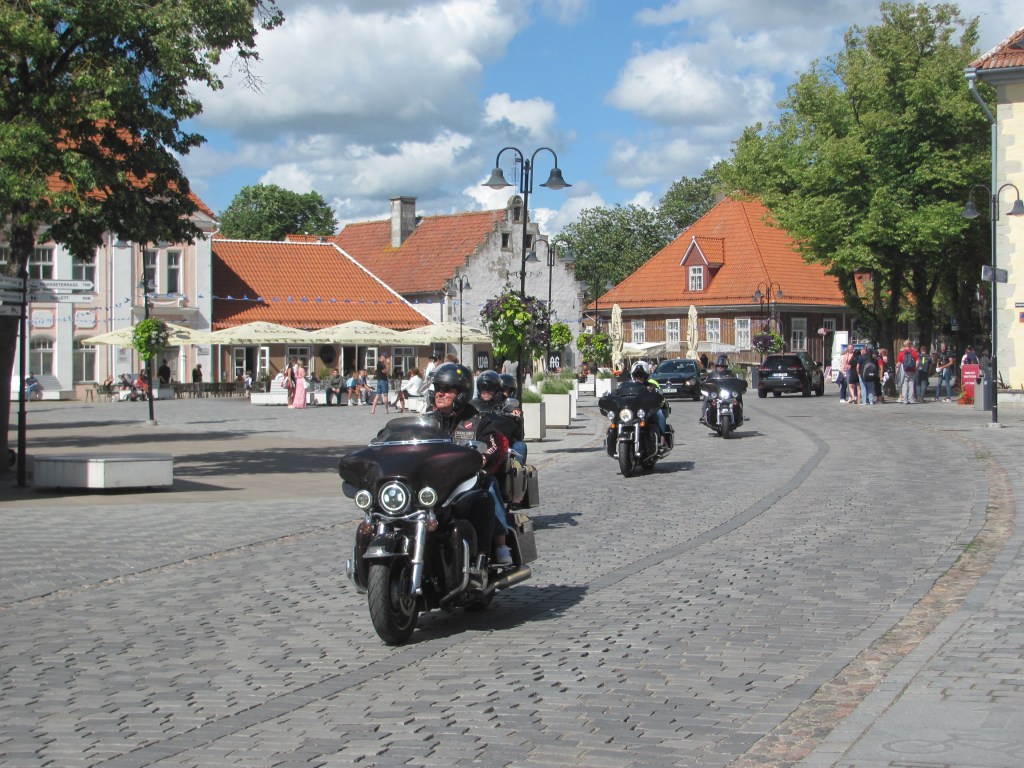
“Brothers of the Sword”, I say.
“I don’t think they are a gang”, says the First Mate. “They just look like ordinary bikers to me.”
“No, I mean it was the Brothers of the Sword who built the castle here”, I say, putting down the Lonely Planet guide. “In the 1200s during their Crusades. I was just reading about them.”

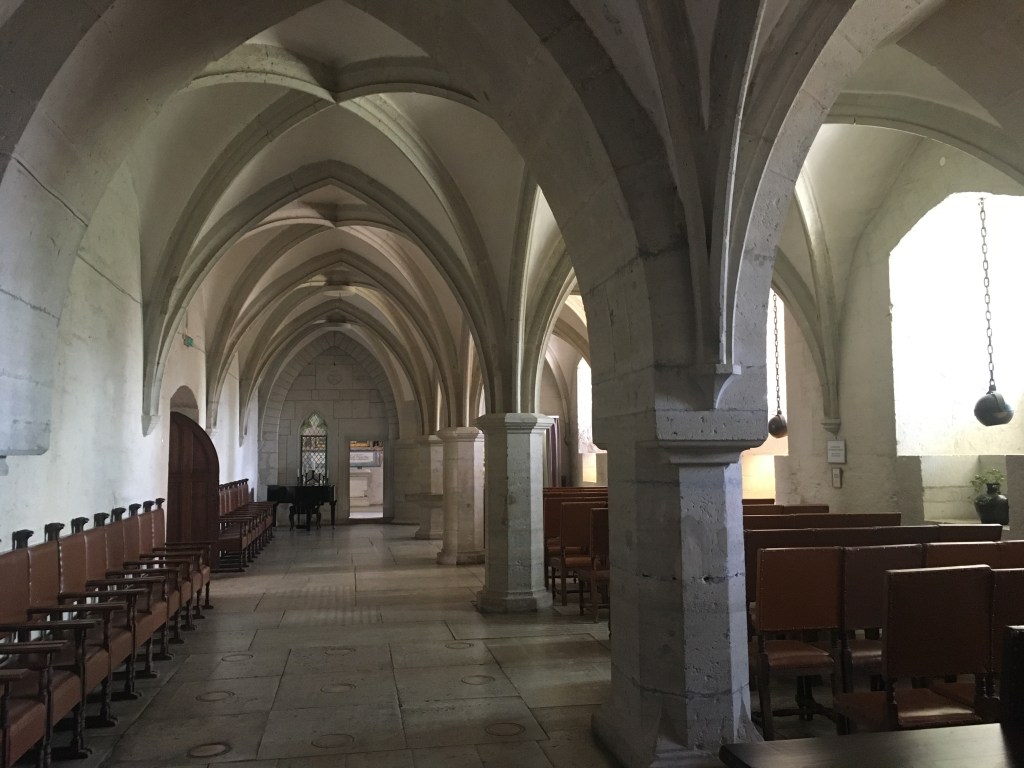
We wander up to the castle. Inside is a museum on its history.
The German bishops ruled the area, called Ösel-Wiek, for 300 years, we learn. Then the Danes took it over in the 1500s, followed by the Swedish in the 1600s. They held it until the end of the Great Northern War in 1721, when it then became part of the Russian Empire. During WW2, it was used as a stronghold, by the Soviets, then by the Nazis.
“The bishop of Ösel-Wiek was the one that lived in Haapsalu Castle as well“, says the First Mate later. “I wonder why he needed two residences?”
“Probably as a show of power”, I say. “The islanders here in Saaremaa put up a spirited resistance to being Christianised, so having the castle here would show them who’s boss, I suppose. It seems that he would come here twice a year, in spring and autumn. ”
“The Church must have been pretty wealthy to be able to build and maintain all these castles”, she says. “I wonder if all the people who gave their hard-earned cash to the Church would have agreed with how it was spent?”
“I don’t think they had much choice in the matter”, I say. “In any case, they probably just thought that it was doing a good job by converting all these pagans into obedient Christians. The way God said it should be done.”
“Did you see the Lion Shaft?”, she asks. “The legend is that one of the bishops would hold court in one of the adjoining rooms, and anyone sentenced to execution would be taken to the door that opened on to the shaft running up and down the castle. There were hungry lions kept at the bottom who did the executing. A bit gruesome.”
In reality, the shaft was used for disposing of waste from the kitchen and the latrines. But the lion legend makes a good story. But whether it was lions or sewage at the bottom, one of the bishops did lose his life in it when he was imprisoned and thrown into it for selling off church property illegally.
“And the Legend of the Immured Knight”, I say. “A Spanish knight came to help out one of the bishops but secretly fell in love with a local girl. One of his love letters to her was found inside a loaf of bread that accidently ended up on the bishop’s table rather than going to her. Because the knight had broken his vow of celibacy, he was put to death by being immured in a cellar in the castle wall.”

“It sounds a bit like the story of the White Lady in Haapsalu castle, but in reverse”, says the First Mate. “The bishops seem to have had a thing for bricking people up behind castle walls in this part of the world.”
“And it’s always because of sex, isn’t it?”, I say.
We take the bus back to Kuivastu and the boat.
“Excuse me”, says the woman sitting behind us to the First Mate. ”You have a price tag on your head. Do you want me to remove it?”
“A wanted woman”, I joke. “With a price on her head. Perhaps I should collect it! Now where’s the police station?”
“It’s probably from one of the jumpers that I was trying on in the market”, she laughs.
“Well, it looks very nice on you”, says the woman. “The jumper, I mean. Here’s the price tag.”
On the last day, we load the folding bikes onto the bus, and get off at the Nautse stop. I am quite keen to see the Muhu Linnus, the last stronghold of the Estonians where they held out against the onslaught of the German Livonian Brothers of the Sword in 1227 AD. It is still remarkably well preserved.
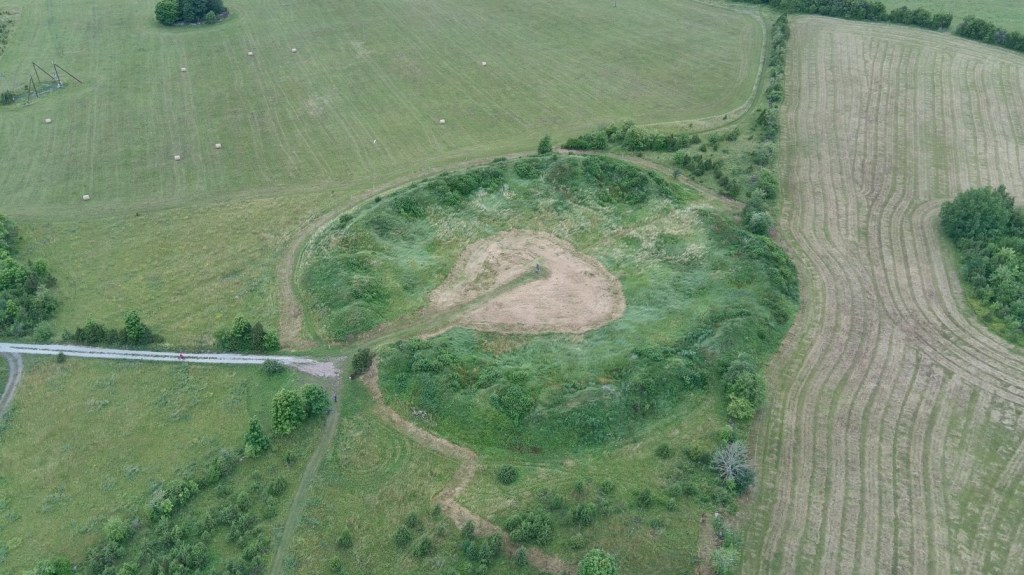
“The Brothers of the Sword had trekked 100 km across the frozen sea from Pärnu”, the nearby panel tells us. “They surrounded the fort and both sides called on their respective gods to give them victory – the Christians on God, and the Estonians on their god Tharapita. Eventually the Christians breached the walls. Giving praise to God for their victory, they then killed all the pagans, laid waste to their town, plundered all their possessions, drove away all their livestock, and set fire to their fort.”
“Are you sure we are talking about Christians here?”, says the First Mate. “It doesn’t seem to be the best way of converting people to your way of thinking by killing them all off.”
“Well, I don’t know”, I say. “At least there would be no-one left who disagreed with you.”
We cycle over to Koguva, and decide to have lunch at the small restaurant overlooking the sound between Muhu and Saaremaa islands. The food arrives. It is beautifully presented.
“Why don’t you take a photo of it?”, says the First Mate.
I reach for my camera in the rucksack. It’s not there.
“Where did you last have it?”, asks the First Mate.
“Back at the Muhu stronghold”, I say, feeling the dread welling up. “I took a photo of the standing stone in the middle. I must have left it there. I’ll have to cycle back and get it.”
I gobble down my lunch, and minutes later am pedalling furiously back to the fort. It’s about ten kilometres. I reach the turnoff, panting and sweating. Another cyclist is coming down the small track between it and the road.
“No, I didn’t see any camera”, he says. “I hope you find it.”
It’s not there. I spend half-an-hour searching high and low for it, but it is nowhere to be seen.
“I think I can say goodbye to that”, I say to the First Mate when we meet up again. “Even if someone has found it, how would they know who it belongs to? It’s a shame, as I had about a week’s worth of photos since I last backed them up. All gone now.”
“Cheer up”, she says. “It could have been worse. At least you still have your phone you can take pictures with. And you never know, it might still turn up.”
“Before we leave tomorrow morning?”, I say morosely. “I doubt it. I liked that little camera. It’s like losing an old friend.”
 Ruby Tuesday
hi Robin, really enjoyed your blog again 😊 so much interesting history and great to see photos of places we would never normally come across. Sounds like you’re having a great time.
LikeLike
Thanks, Uli. Yes, it’s a fascinating part of the world, and a lot of history that I was totally unaware of before we came.
LikeLike
Sorry about your camera. I hate loosing things and always look behind me as I leave! The price tag story reminds me (and I was reminding my son Mac the other day) about Tintin and Flight 714 and the sticky tape being flicked around the characters, ending back up on Captain Haddock!
LikeLike
Hamish, I normally do the same, but on this occasion, totally forgot. My only excuse – feeble, I know – was that I was in a hurry to get going for lunch before the rain started! Luckily, the price tag didn’t end up on me, at least I don’t think so! 😊
LikeLike