“I think we have seen all the things we need to see in Turku”, says the First Mate over breakfast. “I wouldn’t mind a few days in the peace and quiet of the islands now. There’s an island not too far from here that I have been looking at. It’s called Seili, and is only about three hours away. We could sail there this afternoon.”
“Sounds like a good idea”, I say. “Let’s go.”
The wind is from the south-west, but we manage to sail close hauled, tacking a couple of times. Before long we reach the small bay to the north of the island. There is a pontoon there for boats to tie up to, but it is quite shallow and we decide to anchor.
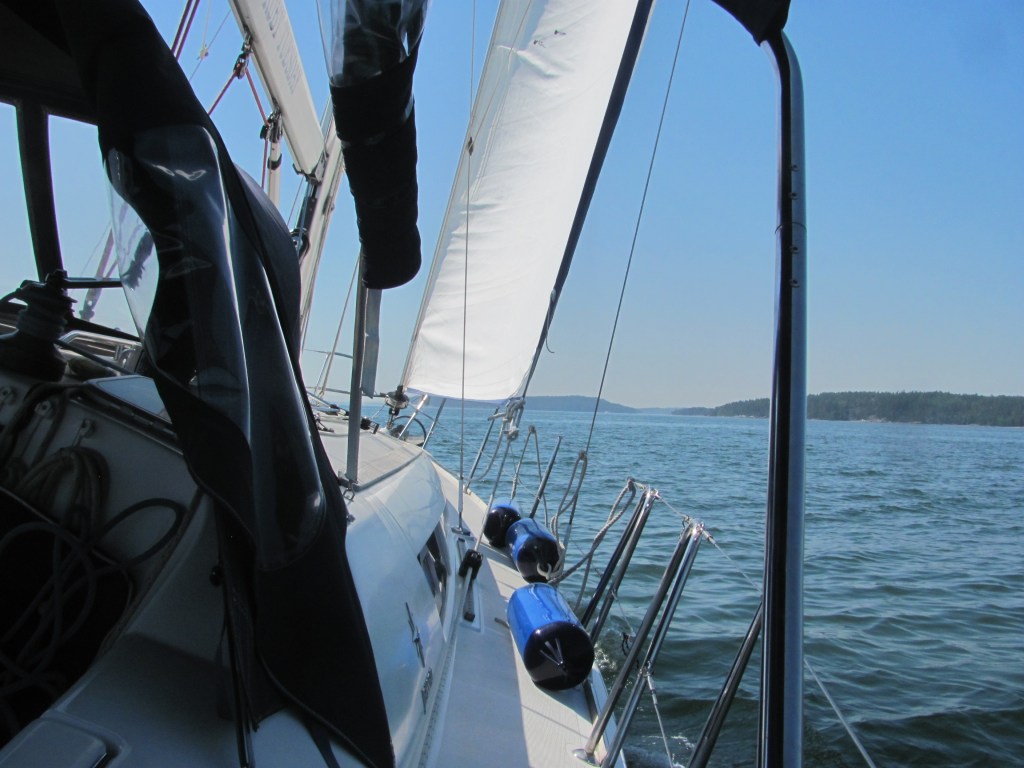
We inflate the small dinghy and row ashore. It is new this year, having been bought to replace the old one which had decayed beyond repair. This is the first time we have used it. It floats at least.
A path leads up to an imposing looking building in the centre of the island.
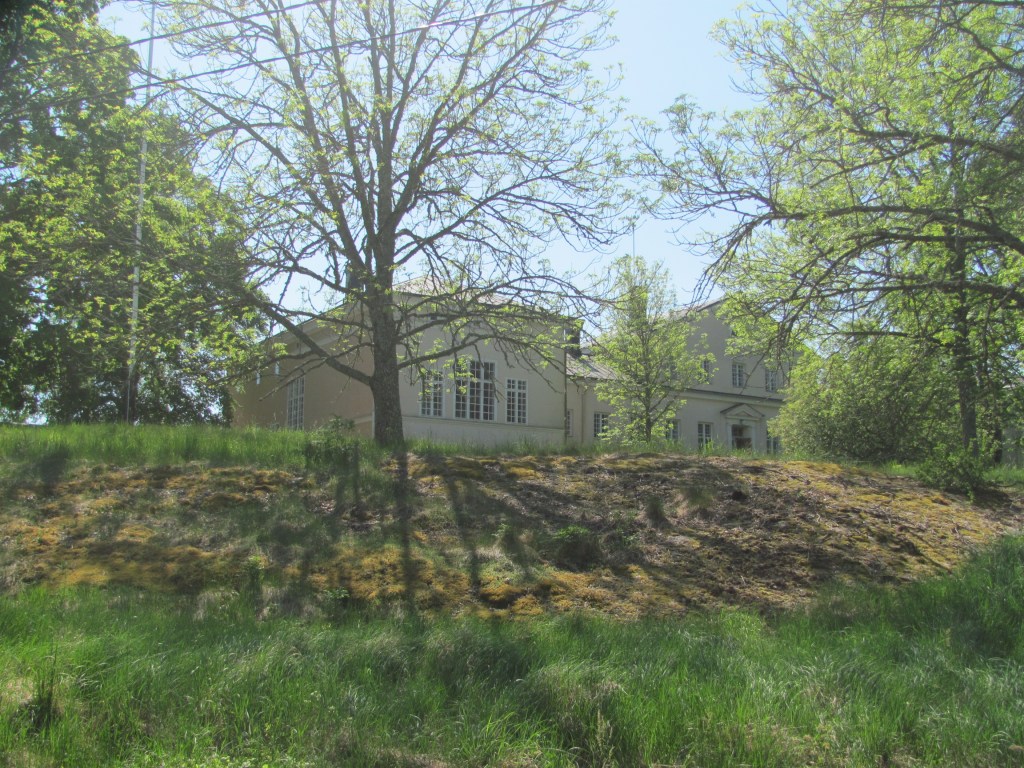
“Apparently it used to be a leper hospital back in the 1600s”, reads the First Mate. “People with leprosy arriving there even had to bring their own planks to construct their coffins. Very few ever left the island alive. The church was even constructed in two separate parts – one side for the patients and the other for the staff. That way, they didn’t come into contact. Later the buildings were used as an institution for those with mental illnesses.”
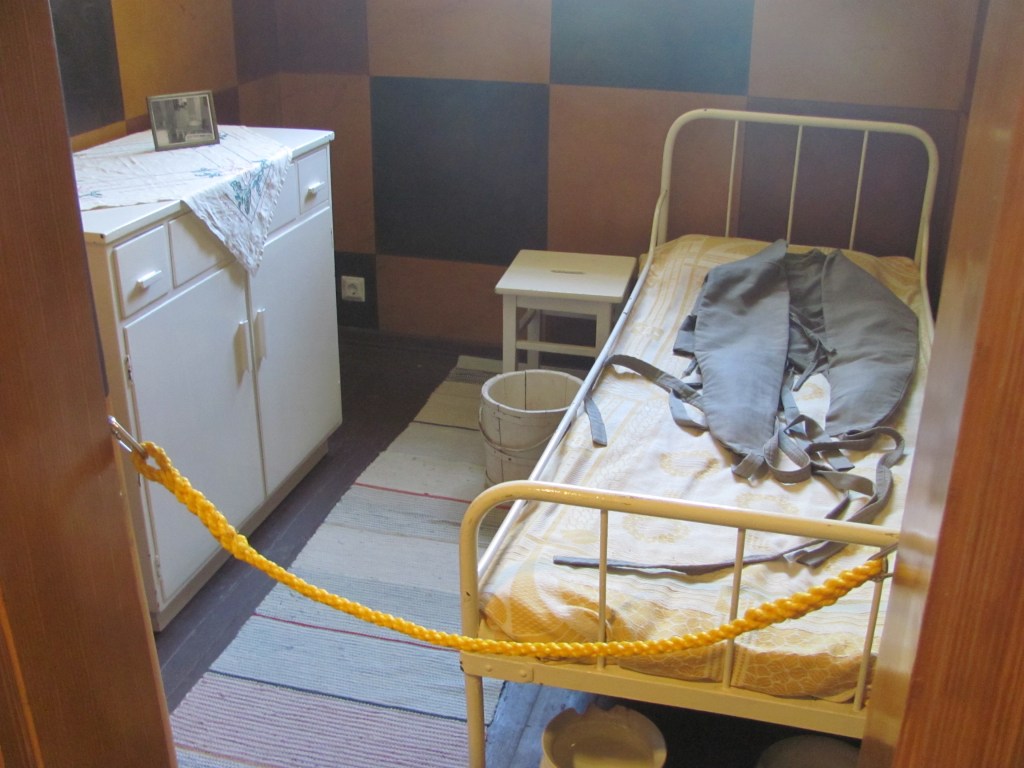
“All a bit gloomy”, I say.
“But from the 1960s, the buildings have been used as a marine research station by the University of Turku”, she continues. “They are doing research in the Baltic Sea, particularly in relation to climate change and pollution by microplastics.”
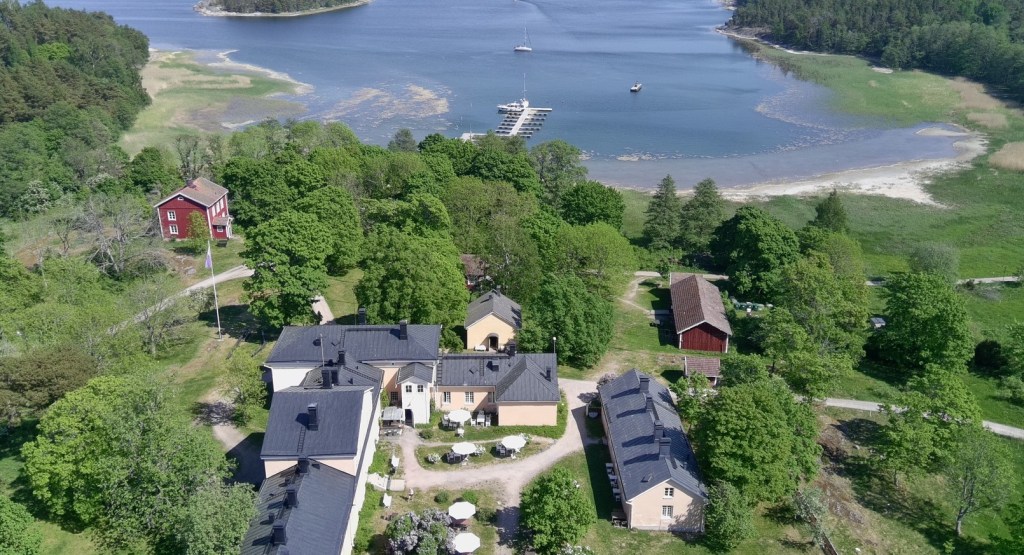
After a cup of coffee in the small café in the building we walk over to the small harbour on the other side of the island. As luck would have it, the inter-island ferry arrives at the same time.
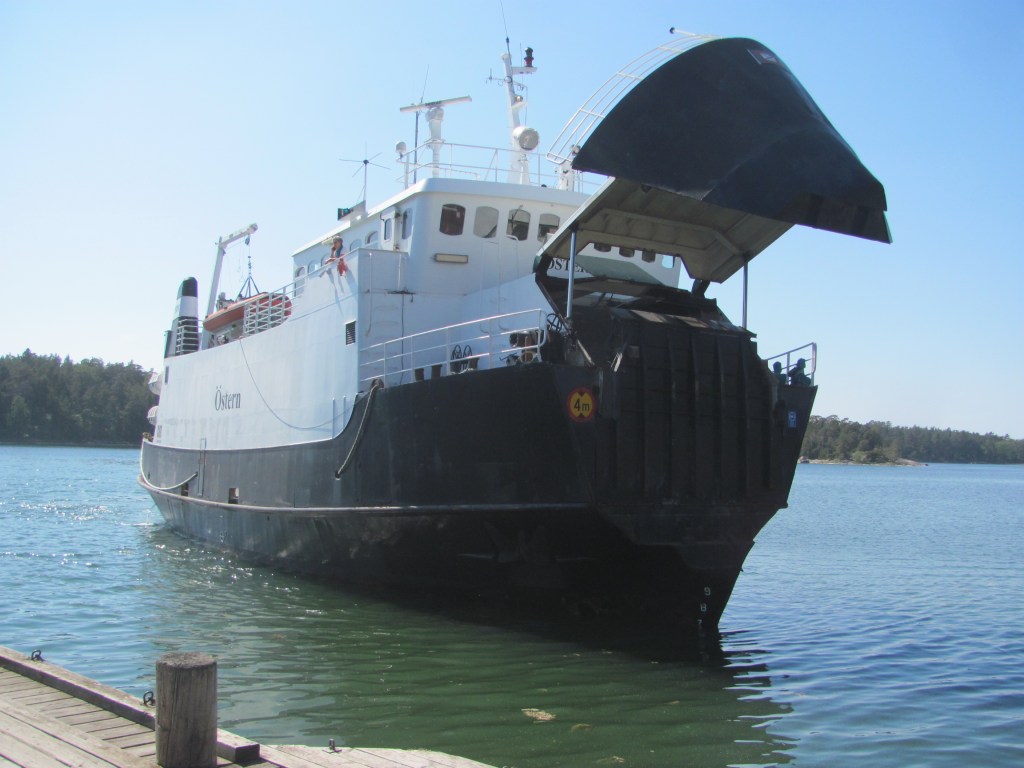
“We just came over for the day for some walking”, explains one of the small group of people waiting for it to arrive. “We’re heading back to Turku now. Others live in Turku, but come over here to work in the research station and café. The ferry can get quite busy.”
Well, in relative terms, I suppose, as we watch the seven people walk into its ‘mouth’.
For the next few days, we hop from one island to the next, staying two or three nights at anchor, before moving on to the next one. Each has its own character and set of memories. Birsskär, on the edge of its beautiful sheltered lagoon, the spectacular nature walk to the top of the highest point of the neighbouring island Stenskär, the friendly sheep we meet on the way, and the smoked fish we buy from the small shop. Norrfladen with its large bay surrounded by forest.


At Ejskäret we find the small bay on the western side of the island, and anchor in about 4 m of water. We set the anchor by motoring backwards until it bites into the mud.
“I think we will be very protected in here anyway”, I say. “It’s only open to the east, and the winds are coming from the south-east and south according to the forecast.”
“Still, it’s better to be safe than sorry”, says the First Mate. “I can see some thunderclouds over there.”
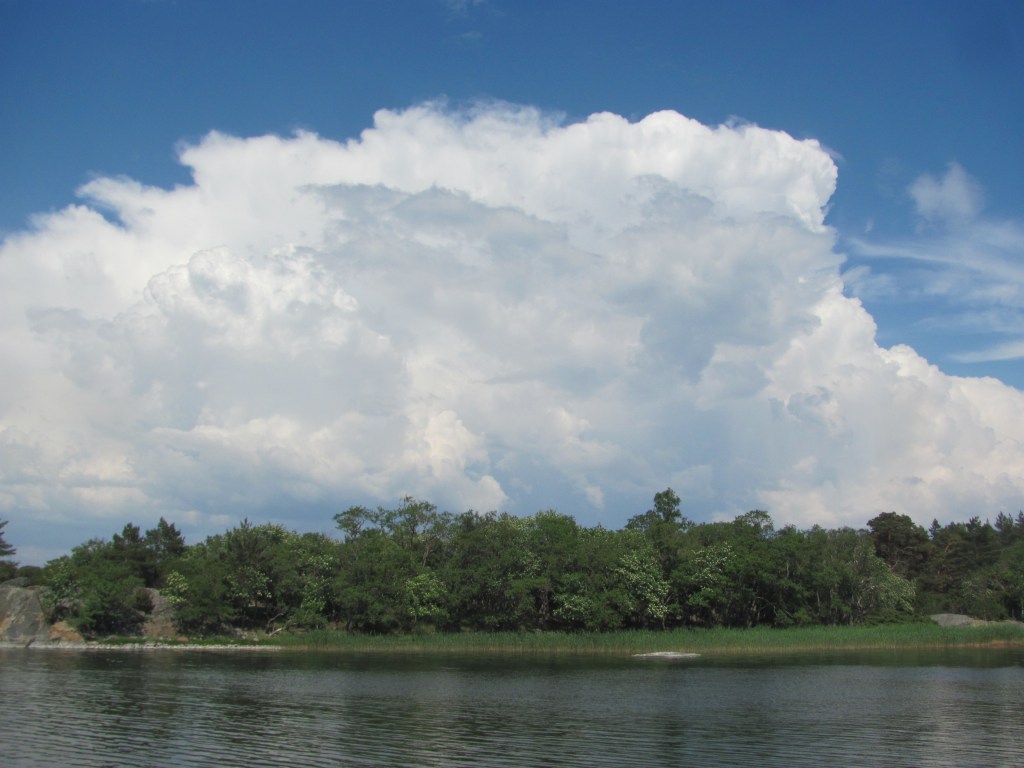
Luckily, the southerly wind takes the threatening clouds around us and leave a beautiful warm summer evening. I take some drone shots of us anchored in the bay.

We settle down for the night and are soon fast asleep. In the early morning I am awoken by a loud crack. Like something has hit the boat. I leap out of bed and look out.
“It’s thunder!”, shrieks the First Mate, as there is another crack.
A sudden squall buffets us, the wind increasing from-near calm to 40 knots in a few seconds. It starts to rain heavily. A flash of lightening! I count the number of seconds between the flash and the peal of thunder. Two! It’s almost overhead. Then another flash, then another. They’re all around us. We huddle in the cockpit, not touching anything metallic, and hope that the next flash doesn’t choose the mast as a conductor.

“Look out, we are getting very close to that pontoon!”, shouts the First Mate. “I think the anchor is dragging!”
We are certainly closer than we were the night before, but we don’t seem to be moving, only swinging backwards and forwards. At least, I hope it is.

I grab a boathook to fend off the pontoon if we do happen to be blown closer. Not that I could hold the weight of the boat and the force of 40 knots of wind, but it feels better than doing nothing. We cower lower and wait agonisingly, wondering when it will all end.
Gradually the lightning flashes seem to be moving away from us, and there is more time between the flash and the peal of thunder. The wind begins to lessen.
“I think it’s easing “, says the First Mate, white-faced. “Phew, that was scary.”
Half an hour later, the clouds have disappeared, the water is calm, and the sun comes out. It all feels like a bad dream.
“We did move a little bit”, I say, after looking at the GPS track. “But overall the anchor held remarkably well. I am not sure what we would have done if it had dragged and we had collided with that pontoon.”
We weigh anchor and push on, reaching the busy harbour of Hanko in the late afternoon.
“I think I might just get some washing done before we have a look around”, says the First Mate. “You have to take what opportunities you can when you are sailing.”

Hanko was a Russian naval base when Finland was a Grand Duchy of the Russian Empire. During that time, it was also a favourite spa resort that the Russian elite would come to holiday on account of its warm sunny weather and fine beaches, sometimes being called the “Riviera of Finland”.
We set off to explore the town. The Russians built graceful villas, most of which still survive.
“I just love these villas”, says the First Mate. “I just can’t stop photographing them. Though what I am going to do with all the pictures, I just don’t know.”
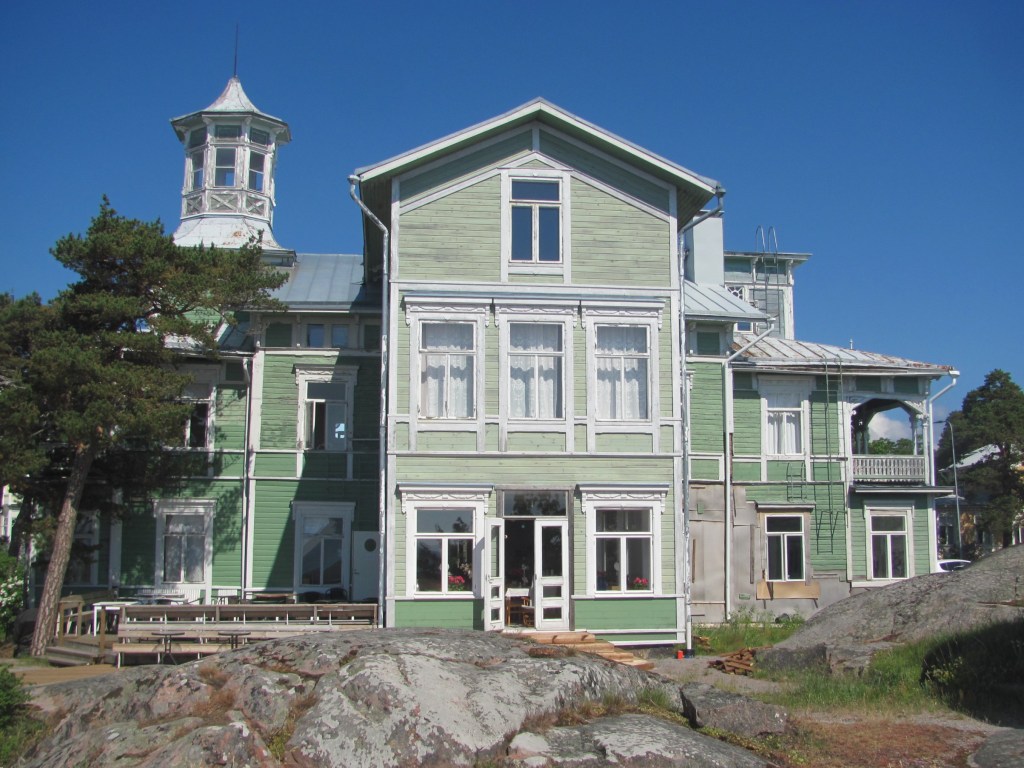

“This looks like a nice place for lunch”, says the First Mate, as we reach the Hanko Casino. “We can pretend that we are the Russian elite come to take the waters.”
Despite its name, it was a banquet hall in Russian times, and is now a restaurant. Three Barnacle geese roam the garden welcoming visitors.

We help ourselves to the buffet of salmon, brown rice, and salads of different sorts, and take a table looking out over the lawn to the sandy beach and bay beyond.
“Phew, we’ll need to go for a walk after this”, I say. “I am full. And there’s still dessert to come.”
“I saw a sign saying that there is a nature walk in a loop around that rocky headland over there”, says the First Mate. “We can do that. Apparently, it’s where the high-society Russian ladies used to walk for fresh air.”
There are also fortifications where the Finns fought against the Russians in the Continuation War in 1941.
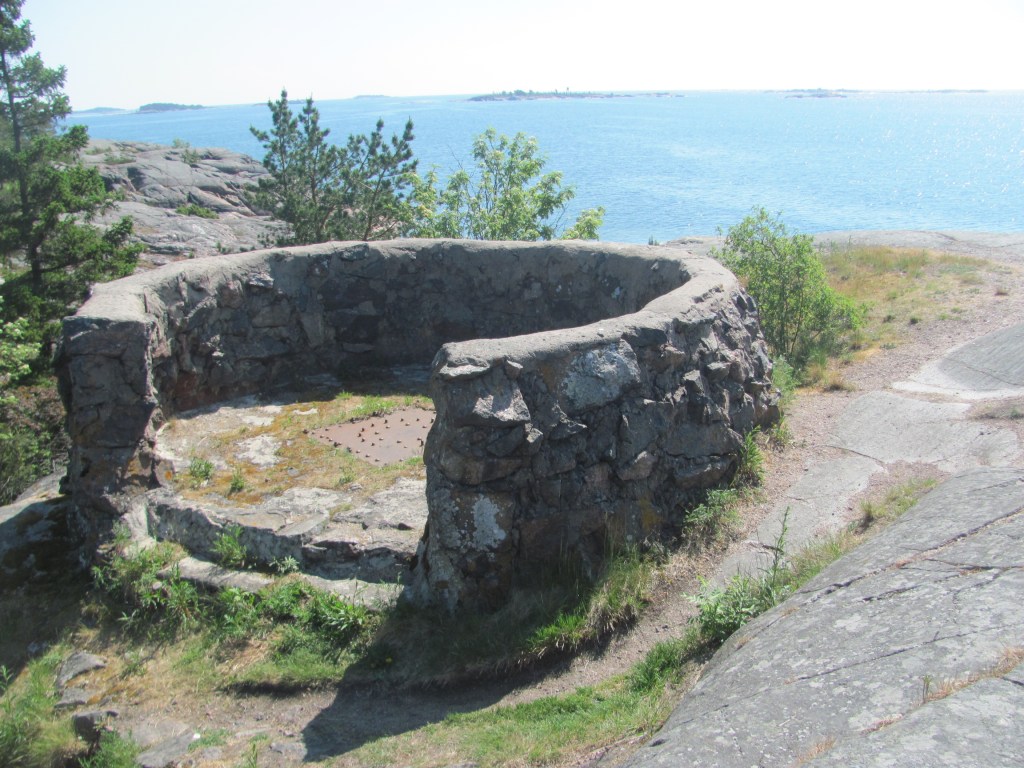
We continue on exploring the town and come to the city water tower. There is a lift to the top.
“The original wooden tower was built in 1886”, the woman at the small desk tells us. “The Soviets blew it all up when they left after the Continuation War in 1941. It was rebuilt out of local red granite in 1943 to supply water to the townspeople. It gives a great view out over the city. Look, you can see the naval ships arriving for tomorrow’s Flag Day.”
Mother duck and her ducklings, I think.

On the way back to the boat, we pass a sculpture of birds in flight. The guide book tells us that it is to commemorate the many Finnish emigrants who left for a new life in North America. Apparently, Hanko was the port of choice for their departure.
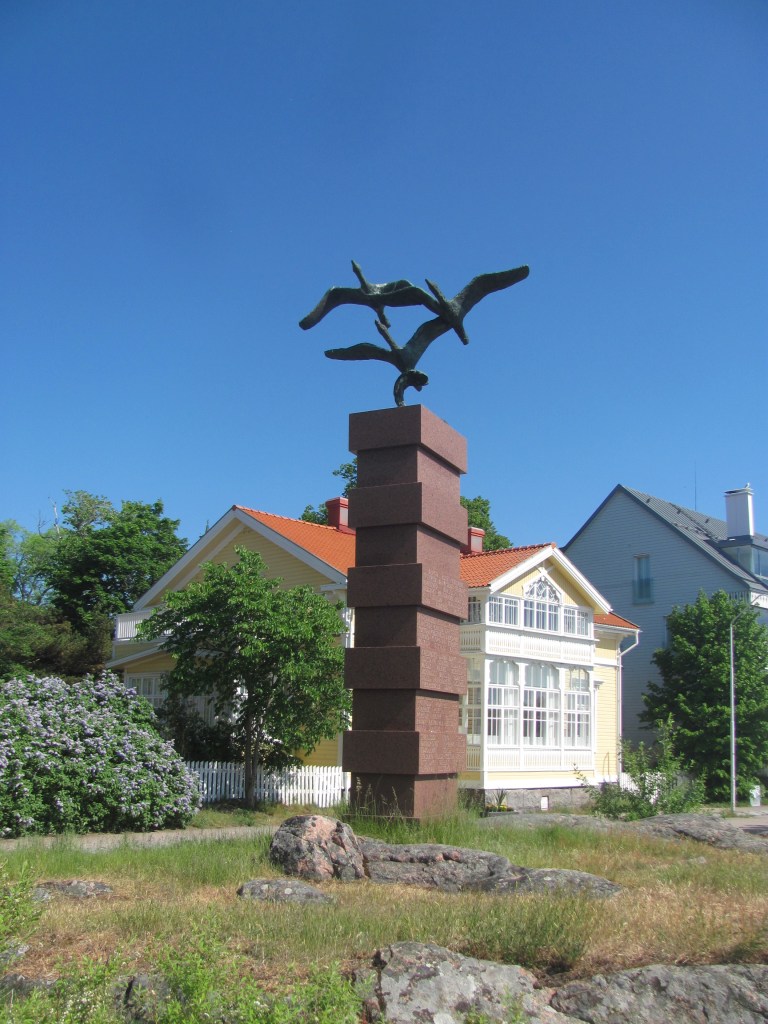
The next day, it is the National Flag Day for the Finnish Defence Forces.
“There is a particularly close bond between the FDP and the general population”, one man tells me. ”Not only because they guaranteed our freedom by stopping the Russians from invading the whole country during the Continuation War, but also because every citizen must do six months’ national service, and so they know what it is like to be in the armed forces. ”
We wander around the equipment display. Tanks, missile launchers, field radar, navy patrol boats, mines – they are all there. Weapons of death, but unfortunately necessary in today’s world – not only for deterrence, but also for actively defending against unprovoked aggression.

We are struck by how young most of the personnel are – barely out of their teens.
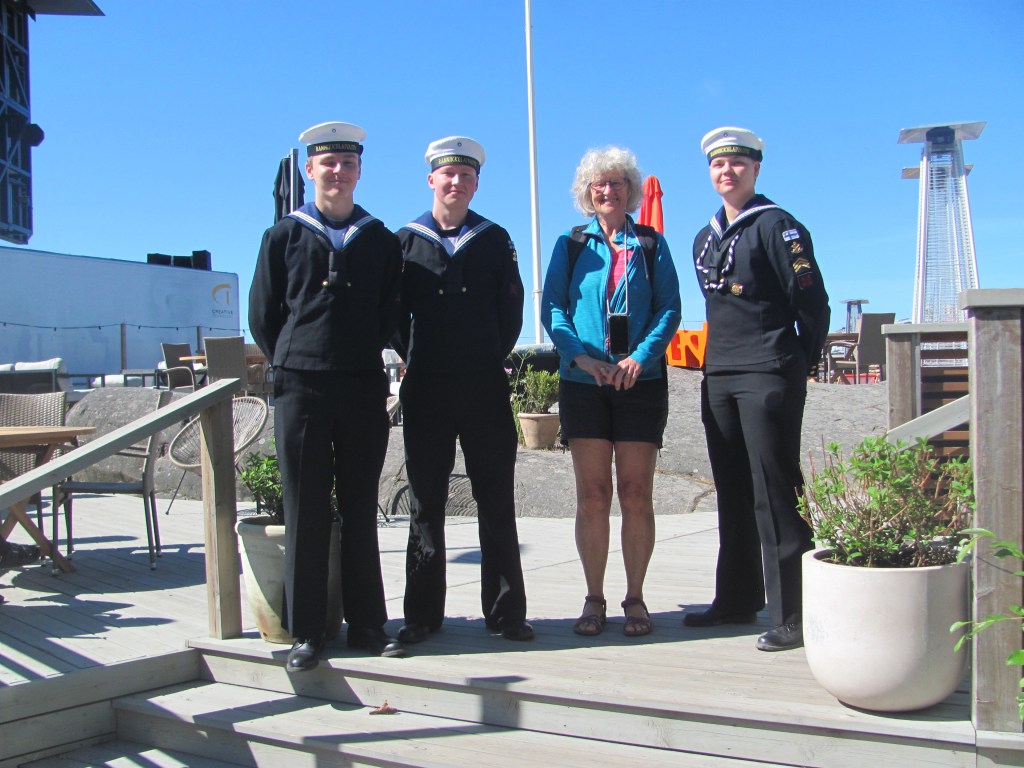
“The military parade is at 1230”, I say. “Let’s get a quick bite to eat, and we can go and find a good spot to watch the parade go past.”
We find a place just opposite the War Memorial. On it, the words “For our Freedom” are engraved. It seems appropriate. The parade begins. Unit after unit of fighting men and women march solemnly past, led by their commander followed by the standard bearers carrying their particular flag.
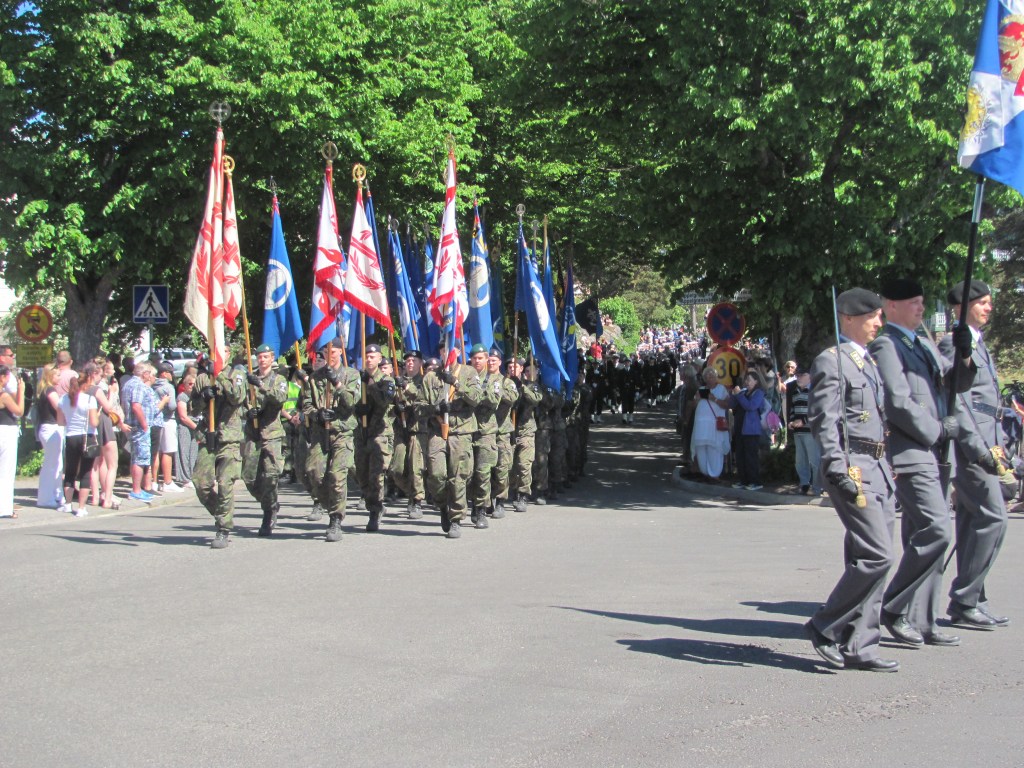
The tanks arrive, clanking and belching smoke from their engine exhausts, their tracks scraping the tarmac with a sound like cut glass as they turn the corner.
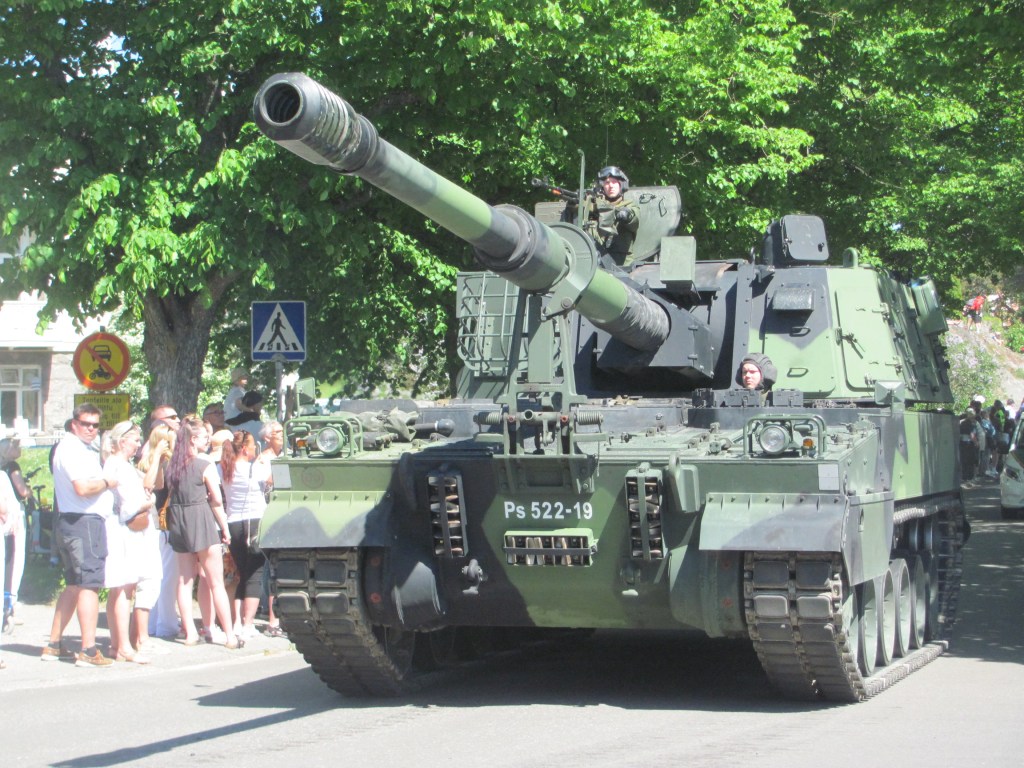
“They are pretty big when you see them up close”, says the First Mate.
“And a lot noisier in real life compared to just looking at them in pictures”, I say. “It must be horribly claustrophobic being cooped up inside them. I am not sure that I could cope with it.”
The air force fly-past is at 1530.
“Why don’t you come up to the roof area of the Harbour Office?”, says the harbourmaster. “It’s mostly for staff, but you’ll get a better view from up there. By the way, your mail arrived this morning. Here it is.”
We climb the stairs to the roof. There’s not long to wait.
“Here they come”, someone shouts.
Sure enough, on the dot of 1530, four aircraft appear flying low. As they zoom past just above us, they release their smoke, and for the next half an hour, we are treated to a dazzling display of aerobatics and smoke trails.
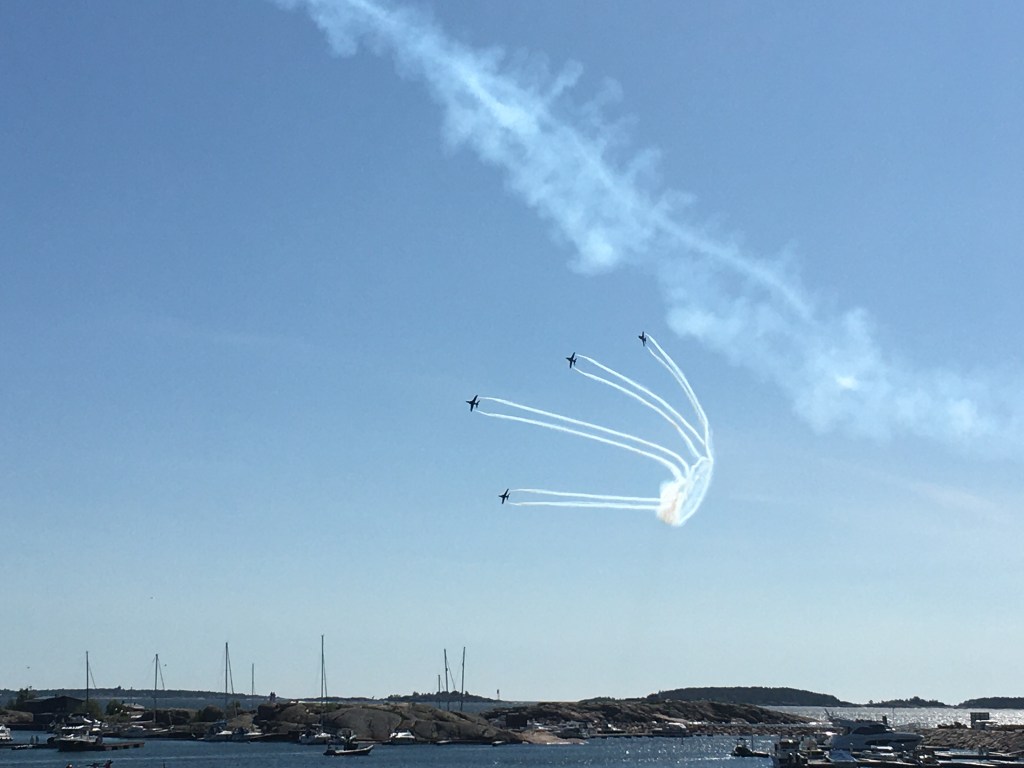
“Apparently, when they fly in formation, there are only two metres between the wing-tips”, the harbourmaster tells us. “No room for any error.”

When we get back to the boat, two burly men in black uniforms are waiting for us on the quay. On their shoulder labels, we see the word ‘Tulli’. They are Customs officers.
“Is this UK-registered boat yours?”, they ask. We reply in the affirmative.
“Can we see your papers, please?” they ask. “In particular, we want to see that your boat is here legally and that VAT has been paid in the EU.”
I disappear into the boat and start rummaging. I find the documents and take them out. One of the men takes photos of the documents stating that VAT was paid on the original sale when the UK was still in the EU, and that the boat was lying in the EU on 31 December 2020, meaning that she is classified as ‘Union Goods’ for tax purposes. Luckily everything seems to be in order, and the mood relaxes.
“Everything is fine”, says one. “We hope you have a good time in Finland.”
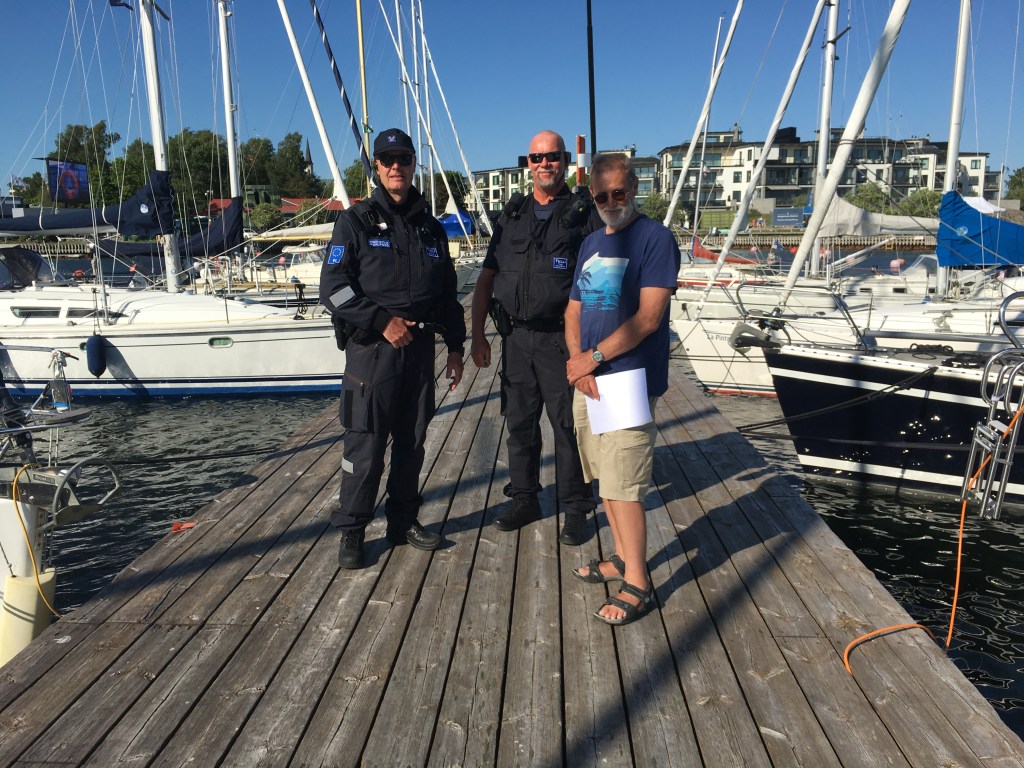
“Interesting”, I say to the First Mate later. “That’s the first time we have been asked for our documents since we have been in Europe with her. It just shows that it pays to have everything in order.”
In the evening, there is a jazz concert. A giant stage has been constructed just in front of the Casino where we had had lunch the day before. After a quick bite to eat, We take a rug, something to drink, and join the crowds of people heading to the same place.
“Let’s sit on the beach”, says the First Mate. “The sun will last longer over there, there are not so many people there, and we can still see as well.”
We find a place to sit. All around us are little groups, families, couples, enjoying the balmy evening with an air of expectancy. Soon the music begins, and the dissonant chords of well-known traditional jazz and soul music are booming across the bay.
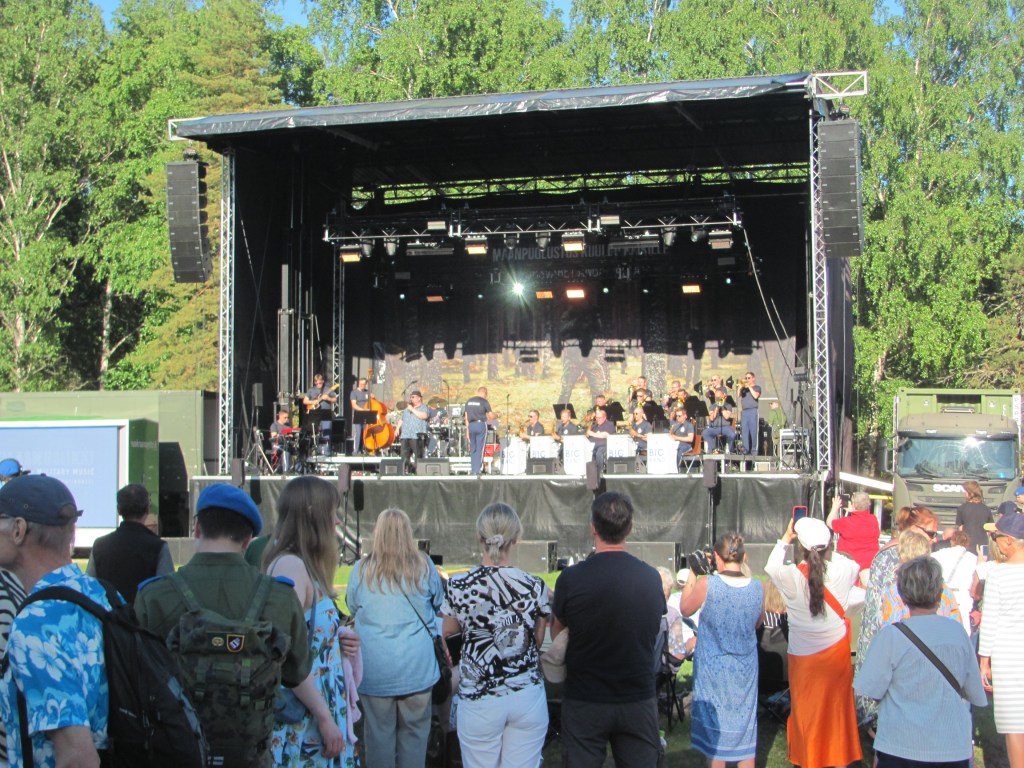
“I always enjoy a bit of jazz”, says the First Mate, as the band makes its last encore and leaves the stage. “The next band on is called the ‘Showband of the Defence Forces Conscript Band’. A bit of a mouthful. Apparently they are chosen from this year’s conscripts.”
They are exuberant, to say the least. A Freddie Mercury imitator prances across the stage, microphone in hand, giving it his all. Not to be outdone, a young woman follows. Both excellent performers. Perhaps not as musical as they could be, it is nevertheless hugely entertaining.
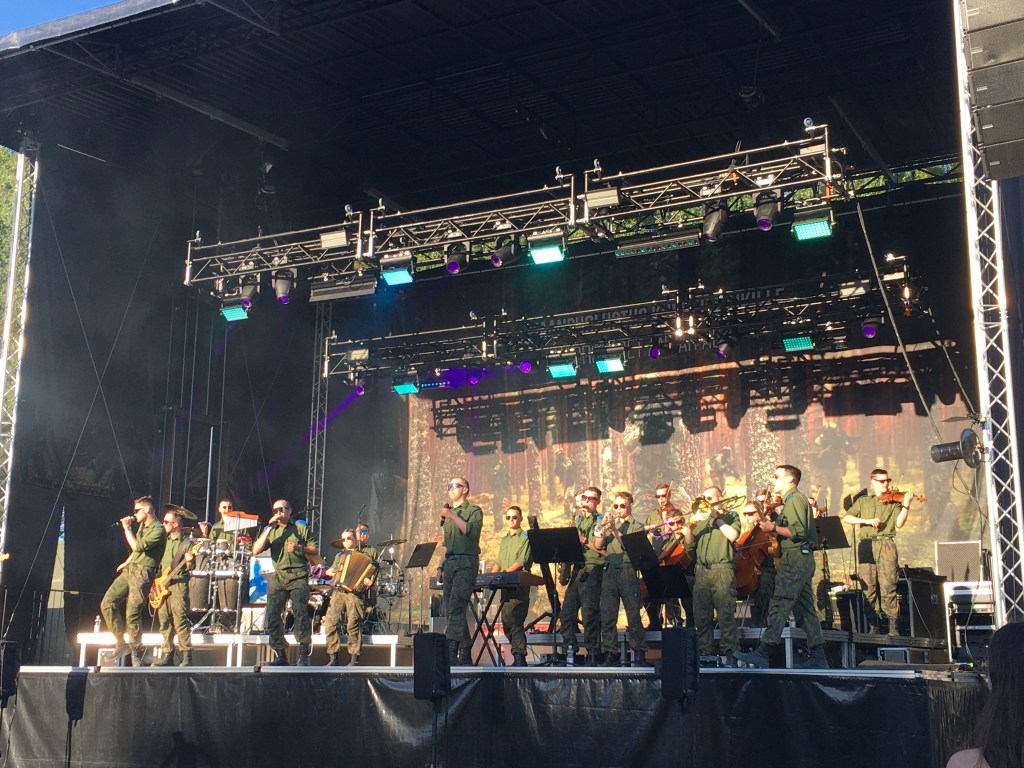
Soon the last rays of the sun reflect off the cupolas of the Casino one last time and are gone. Immediately it begins to cool down.
“Come on”, says the First Mate, pulling on her fleece. “It’s been great, but I am starting to get cold now. Time to get back to the boat and get warm again.”
“We enjoyed the jazz band at the beginning”, our neighbours in the marina say when we get back. “But not so much the last band. Too much noise and not enough music. Nevertheless, it was great to see the young people getting together and produce something, even if it is not to our taste.”
Like us. I suddenly feel old.
 Ruby Tuesday
all sounds like great fun and very interesting indeed.
and at last a photo with the drone! Looks great and puts a different perspective on things 👍
LikeLike
Yes, enjoying it immensely so far. Not always easy to take drone pics because of regulations – e.g. forbidden near airports (Turku), military equipment (Hanko) and crowds of people (both). Archipelago islands generally OK, unless it is a nature reserve. But yes, the shots are stunning when you can take them. Hopefully more to follow.
LikeLike
living the life! we need more from Stanley (or has he disembarked)
LikeLike
Hi Mark, yes, great fun so far. And yes, Spencer is still with us. I am sure that he will have plenty more to say!
LikeLike
Sorry Spencer!
LikeLike
Very interesting and encouraged me to read a bit more on Pargas! We found it intriguing that you were asked about the VAT papers now, and never before.
LikeLike
Thanks, Birgitta. Yes, we enjoyed the south-west of Finland.
Yes, not sure why we were asked for our VAT documents, but we weren’t the only ones – a Swiss-registered boat tied up on the other side of the pontoon was also collared. To be fair, they were quite friendly. Just doing their job, I suppose.
LikeLike