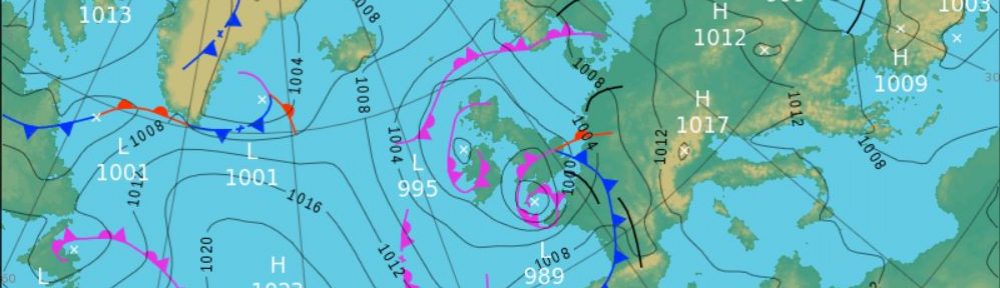
We set sail in the morning for Turku. It’s nearly 60 nautical miles, but the winds are from the southeast giving us a comfortable beam reach, so we want to make the most of it.
As we sail, my mind drifts back to the conversation we had had the night before with Robert, the harbourmaster at Sandvik harbour on Kökar. He had cooked us dinner at the harbour café, two massive chunks of salmon, potatoes in herb butter, and a salad. Oh, and a dessert of his special rhubarb ‘experiment’, as he called it.
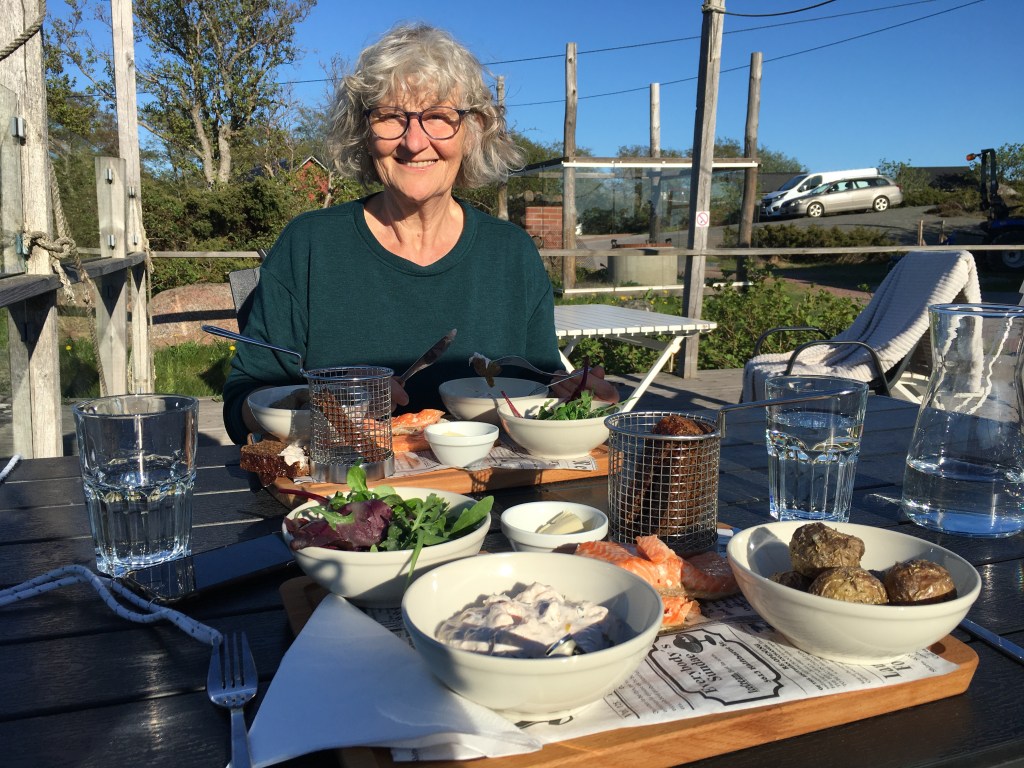
With us the only customers, he had stopped to talk to us. The conversation had turned to the Russians and their attempts to interfere with the GPS. He had heard the stories, but didn’t believe that it would have much effect on marine navigation, but could be quite serious for aircraft.
“That’s why Finnish Air have suspended their flights to Estonia”, he says. “The airport at Tallinn relies purely on GPS data for guidance and has no traditional equipment that other airports have for backup. But it is so typical of the Russians. They are intent on sowing as much confusion and doubt in the West as possible.”
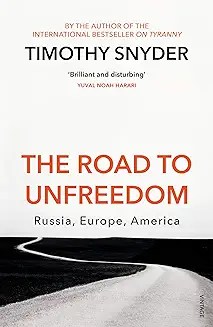
It resonates with a book I am reading at the moment, Road to Unfreedom, by Timothy Snyder. In it, he describes how Russia’s aim is to destabilise the West. One of the ways to achieve this was the creation of a company called the Internet Research Agency in St Petersburg in 2015, whose purpose was to use social networking sites and other online platforms to disseminate Russian propaganda from fake accounts. This even extended to influencing elections and referendums in the West. But why do they want to do it, I think?

“You have to remember that Russia sees itself as engaged in an existential war between itself and the evil West”, says Spencer from the canopy over my shoulder. “Central to this is the concept of ‘hybrid war’, which is a mixture of traditional warfare and cyber warfare.”
“What do you mean?”, I ask.
“Well, cyber warfare aims to create chaos in the enemy by sowing doubt amongst its citizens so that no-one trusts anybody or anything, even when it is true”, he responds. “Often several different narratives are developed so no-one knows what to believe. Western media even unwittingly help this process along by reporting on obvious lies and untruths. It doesn’t even matter anymore whether something is true or untrue – what is more important is that it is in people’s minds and they are talking about it.
“But aren’t people clever enough to know what is true or false? Won’t it backfire in the long run?”
“Well, it seems to work”, he says. “Both the Brexit referendum and Donald Trump’s election were influenced by the Russians. And they got the result they wanted.”
“Are you talking to that spider again?”, calls the First Mate from the cabin. “You’d better stop now. There’s a huge cruise ship coming up behind and we need to be careful it doesn’t run us over.”

We approach Turku in the early evening. We furl the sails and motor through the buoyed channel to the Aura river that runs through the city and to the City Marina, passing on the way some stately tall ships.

The moorings are box berths, which are not so common in Finland. We approach them with trepidation, as our experiences with box berths have been usually confrontational, with the box-berth normally coming out best. Especially when there is a strong cross wind. Luckily there is no wind this time and we manage to tie up in masterclass fashion. I receive admiring glances from the audience of seagulls perched on the tops of the neighbouring posts.
“A perfect mooring”, says one. “Congratulations! Top marks!”
“It was nothing, really”, I say nonchalantly.

While the First Mate goes to pay at the harbour office, I have a quick scan through the guide book.
Turku is the major city of southwest Finland, it says, and also Finland’s oldest, having been founded in the 1200s AD. The cathedral was built in the 1300s, and the city was part of the Hanseatic League of trade in the 1400s. Finland was part of Sweden until 1809, when Sweden had to cede it to Russia after the Finnish War. For a short time, Turku was the capital of the Grand Duchy of Finland under the Russian Empire, but Tsar Alexander I felt it was too aligned with Sweden, and decided to make Helsinki the capital. Then in 1918, Finland became independent and Turku along with it.
“Quite a story, isn’t it?”, says the First Mate on her return. “I am quite looking forward to exploring it.”
The city centre is a little way from the marina. In the morning, we unload the bikes and cycle along the river bank until a street market and thronging browsers block our way.
“There’s no way we can cycle through these crowds”, I say. “We’ll just have to push the bikes.”
We slowly make our way through the market, stopping to browse at the occasional stall. Lunchtime approaches and we are both feeling peckish.
“Look, there’s a stall selling Lapland food”, says the First Mate. “Let’s try some of that.”
We go for the fried muikku – a small freshwater fish caught in the lakes and rivers of Lapland and other parts of Finland. In English it is called vendace.
“It’s one of the favourite foods of Lapland”, the vendor tells us. “We make the batter from rye flour seasoned with salt and pepper, and fry them in a mixture of butter and oil, and serve them with a delicious garlic sauce.”
“Mmmmm, it is good”, says the First Mate. “I could have another plate, but I had better not.”

As we leave, a group of girls singing and shouting passes.
“We’re celebrating my wedding”, one of the girls explains to the First Mate. “I’m getting married tomorrow. This is my, how do you say it in English, …?”
“Hen party?”, prompts the First Mate.
“Yes, this is my hen party”, says the girl. “Tell me, what is the best love song in English?”
The First Mate thinks for a few moments.
“Well, the one that comes to mind is that of Ruby Tuesday by the Rolling Stones, where it says ‘Catch your dreams before they fly away’. That’s what you need to do.”
“Oh, yes, I like that”, says the girl. “I’ll remember that.”
“That was quick thinking of you”, I say afterwards.

We eventually reach the cathedral. It is closed to the public for a wedding. It is obviously the season for weddings in Turku.
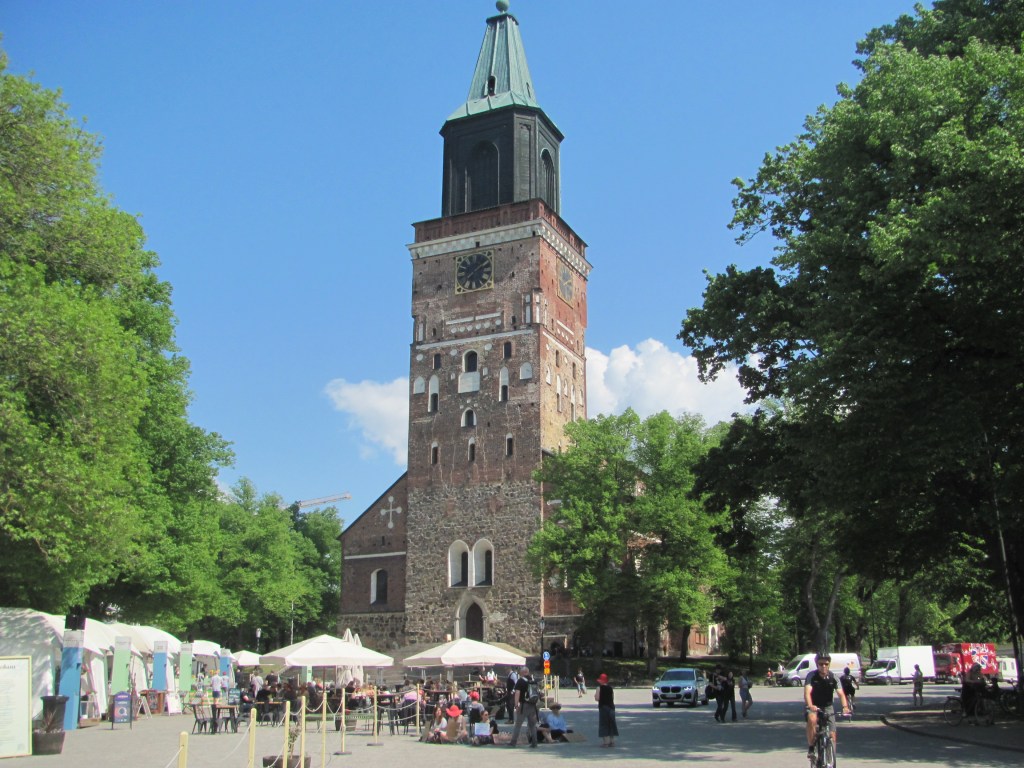
“This notice says you can come back at 1700”, I say. “Never mind, let’s go to the museum. The archaeology and art gallery are in the same building. You could go to one and I the other.”
The museum and art gallery are closed for refurbishment.
“We aren’t doing too well”, complains the First Mate. “It’s nearly summer. You’d think they would have things ready for the tourists.”
We decide to split up and do our own thing. I opt to go and see the castle while the First Mate chooses to see the Wäino Aaltonen Museum of contemporary art and sculpture.
I take the small foot ferry across the river and cycle along the right bank of the river until I come to the castle.

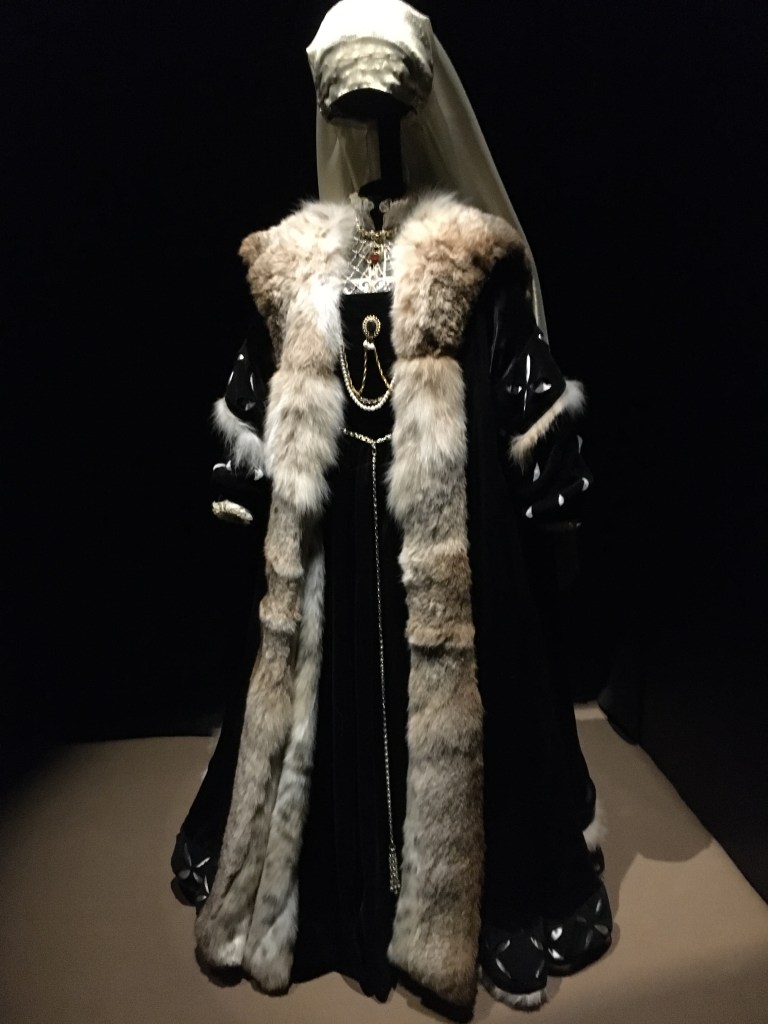
“The castle was originally built in the late 1200s when Finland was part of the Kingdom of Sweden”, the girl at reception tells me. “It was then on a small island at the mouth of the river, but land rise eventually joined it to the mainland. It was gradually added to over the mediaeval period and the Renaissance until the 1500s. Over that time, it has been both a defensive fortress and a royal residence. In fact, we have a special exhibition on Catherine Jagiellon at the moment. She was one of the queens who lived here. I am sure you’ll find it interesting.”
I have no idea who Catherine Jagiellon was, so I have something to learn.
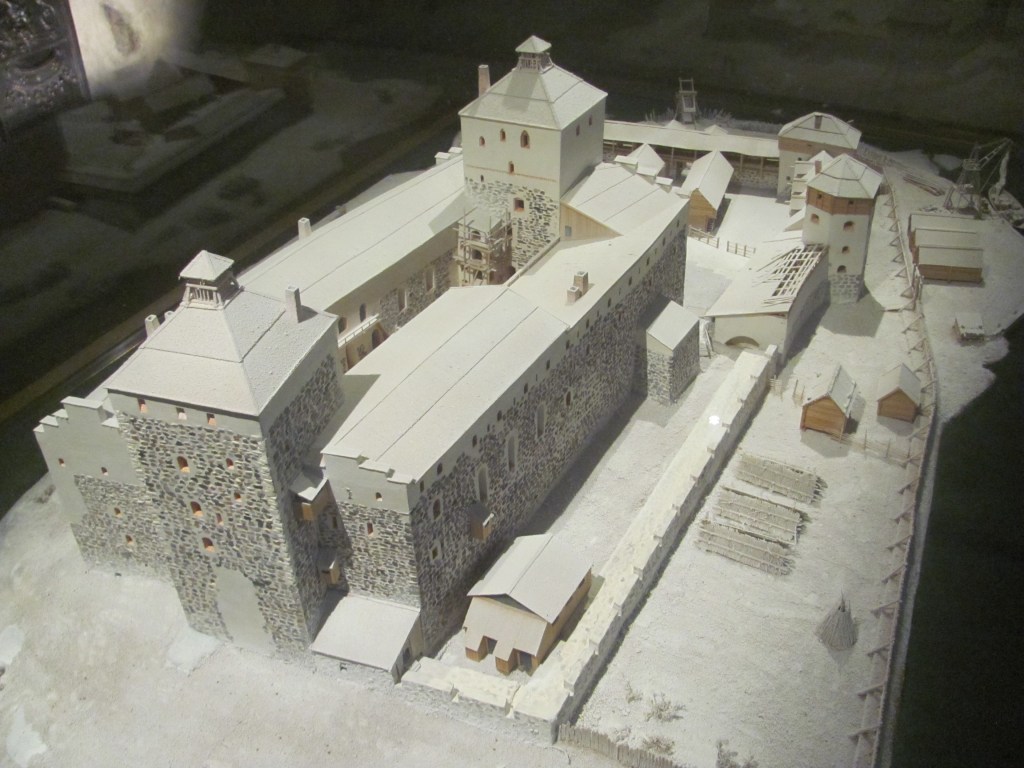
As I wander through dimly lit rooms of the older medieval part lower in the castle and the bright and spacious rooms of the Renaissance period on the top floor, it strikes me how closely the history of Finland at that time was connected to Swedish history. And for good reason – Sweden ruled much of what is Finland nowadays from the 1100s to the 1600s. All the old familiar names we had learnt of during the last two years of exploring Sweden reappear here – Gustav Vasa I who threw off Danish rule and converted the countries from Catholicism to Lutheranism, his two sons John and Eric who fought each other for the throne of the Swedish Empire.

“Ah yes, I remember them”, says the First Mate, when we are talking later. “Wasn’t one of them imprisoned in Gripsholm Castle in Mariehamn which we visited a couple of years ago?”
“Yes, that was John”, I answer. “When Gustav I died, Eric was crowned king, while John became the Duke of Finland. However, Eric took exception to John marrying Catherine Jagiellon. a Polish princess.
“Why was that?”, she asks.
“Well, unfortunately Sweden was at war with Poland over Livonia, which is roughly present-day Estonia. Eric interpreted his brother John’s marriage to Catherine as supporting the enemy. Which may have been partly true, as John seemed to have his own designs on Livonia. Moreover, she was Catholic, and Sweden and Finland were now Lutheran.”
“So what did Eric do?”, she asks.
“Well, he sent his army against Turku castle where the happy couple had taken up residence”, I say, “They were captured, taken back to Sweden, and imprisoned in Gripsholm Castle.”
“A bit tough for Catherine, wasn’t it?”, she says. “Just married, coming to a country where you don’t speak the language and has a different religion, imprisoned in yet another country where you don’t speak the language and has a different religion, all with a man you hardly know.”
“Yes, it can’t have been easy”, I say. “And the exhibition on her at the castle shows her personal side – letters she wrote to her sister back in Poland, her thoughts about Catholicism, Protestantism and the Counter-Reformation, and the like. I think that she must have found it a bit lonely.”
“But I seem to remember that John eventually became king of Sweden?”, asks the First Mate. “So she would have become Queen.”
“Yes, eventually Eric upset too many people, including his own nobles, so they all rose up against him, imprisoned him in Kalmar Castle, had him certified mad, and declared John the king. John wasn’t too keen on having Eric stay around, even if he was imprisoned, just in case his supporters stirred up trouble, so he slowly poisoned him by adding arsenic to his food over the next few years.”
“So much for brotherly love”, says the First Mate.
“Well, they were half brothers actually”, I say. “So perhaps that explains it.”
On the way back from the castle to meet the First Mate, it begins to rain quite heavily. As luck would have it, I am close to the Sibelius Museum, and I decide to take cover there and more learn about the famous Finnish composer at the same time.
“Jean Sibelius was born in 1865 in Finland, which was at the time an autonomous Grand Duchy of the Russian Empire”, one of the wall panels tells me. “He made a major contribution to the development of a Finnish national identity at a time when there were attempts to ‘Russify’ the country.”

I put on some headphones and listen to the stirring chords of Finlandia, one of his most well-known works. Written in 1899, it is a representation of the Finnish national struggle against foreign rule, and to avoid Russia censorship, had to be played under different names to avoid crackdowns by the authorities.
The particular version I am listening to was played in 2015 on the 150th anniversary of his birth, with different sections of the orchestra located on one of the seven hills of Turku, with the music from each mixed electronically.
Downstairs is an eclectic collection of various musical instruments. One organ in particular looks as if it needs the player to have a commercial pilot’s licence.

Luckily the rain has stopped when I leave.
“How did you get on at the other art gallery?”, I ask the First Mate.
“It was closed”, she says morosely. “No surprises there. But I did have a good poke around the shops in the city centre.”
In the morning, I prepare my fruit and muesli. The First Mate has spilt some sugar on the worktop the night before. Casually, I lick my finger, wipe it up, and put it into my mouth. Instantly, I realise from the harsh metallic taste that it is a mistake. It’s not sugar. I read the label on the side of the package that I hadn’t noticed standing there: ‘Dri-Pack Soda Crystals, suitable for use in septic tanks’.

“I was using it last night to clean a few things, including the tea stains from your cup”, says the First Mate, as I imbibe my third cup of water, slosh it around inside my mouth, and spit it out vehemently. “It’s only sodium carbonate decahydrate. It’s not poisonous. At least not in small doses. Look on the bright side, you won’t have any tea stains on your stomach lining now.”
Ah, what it is to have someone who cares for you.
 Ruby Tuesday
Electric organs were very popular for a while. We had one for ages, and I remember your folk had one as well. The one in the picture is much more sophisticated than the good ole Hammond!
LikeLike
Yes, remember it well.
LikeLike
Good to see Spencer again – I did not know that he is a cyperwar specialist 😉 Best wishes from the Fishes!
LikeLike
Ah, he knows almost everything. Being a spider, he spends a lot of time on the World Wide Web 😉!
LikeLike