The sun peeps over the horizon, silhouetting the silent dockside cranes that look like giant sleeping triffids dreaming about destroying the human race.

“Aaaargh, I don’t like these early starts”, says the First Mate. “Couldn’t we have left at a more reasonable hour?”
We had cast off from the marina in Riga at 0500, and are motoring down the Daugava River to its mouth on our way to the small island of Ruhnu in the middle of the Gulf of Riga, 60 NM away. The forecast is for the wind to drop off around midday, so by leaving early, we hope to catch some breeze at least before we have to use the engine.
The chart plotter bleeps, warning that we are on a collision course with a large cargo ship coming towards us in the early morning darkness. I adjust the autopilot a couple of degrees so that we safely pass alongside it.

We are now back to following Racundra’s route after having deviated from it when we had left Kuivastu to sail eastwards to Kuhnu and Pärnu.
Ransome had had Racundra built on the shores of Ķīšezers Lake (called the Stint See in the book), the large body of water to the northeast of Riga, and had sailed her down the Mīlgrāvis channel (then the Mühlgraben) connecting the lake to the Daugava River.
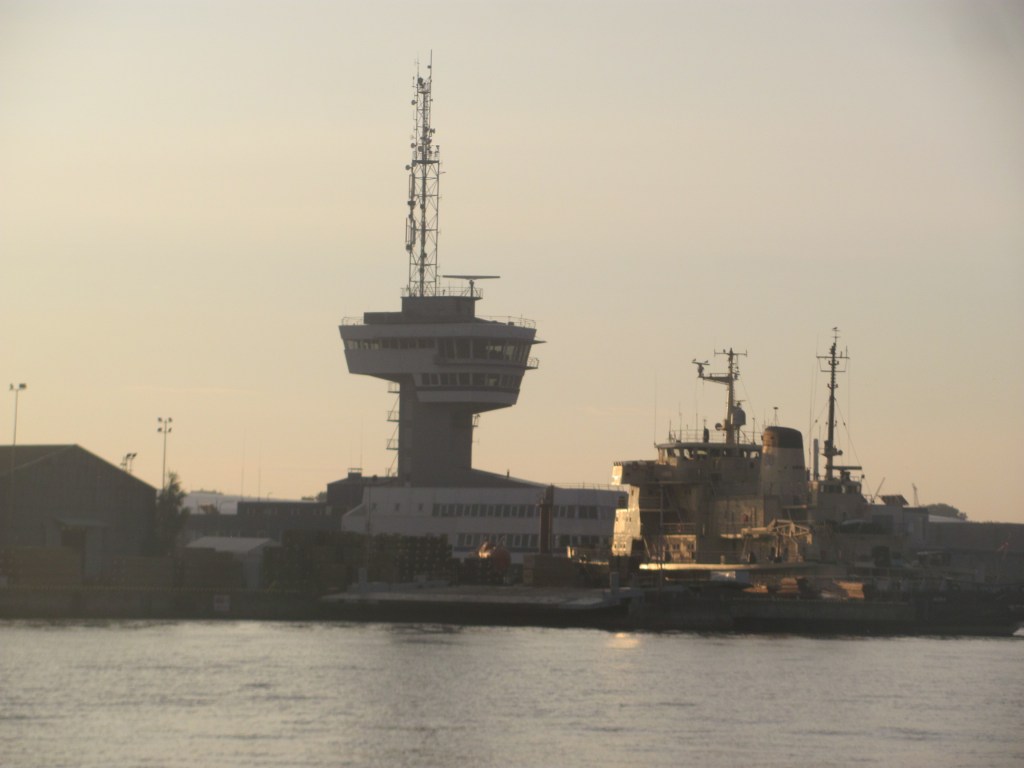
As we pass the junction of the Mīlgrāvis and the Daugava, I look out for the small yellow wooden building that was the Customs House in those days, but of course it is long gone. In its place is a concrete building that looks like the Harbour Control. Google tells me that the Customs Office is now further up the river.
I try to imagine Ransome rowing across to the Customs House in his small dinghy, clutching his boat’s papers to gain clearance to leave Riga. And the story told by his companion, the Ancient Mariner, about the German sailor tied up in the Mīlgrāvis being unwittingly sold his own rope by a crafty thief who had climbed on board his boat at night, stolen a newly purchased coil of rope, and had sold it back to him in the morning.
“It’s not often the Germans get taken for a ride!”, says the First Mate.
She should know.
We motor past the Winter Harbour where Ransome threw his clearance papers wrapped around a stone across to the official waiting on the wharf, and reach the lighthouse to port as we leave the river and enter the Gulf of Riga proper. Immediately the wind picks up from the west, the sails fill, and we are on our way. At least we are not becalmed at this stage as Racundra was. Gradually the lighthouse disappears from sight behind us, and we are back on the open sea.

My mind turns to what we had learnt of Ruhnu in the small museum in Haapsalu devoted to the Swedish settlers on the Estonian coast. They had arrived in Ruhnu to hunt seals sometime in the 1200s, had settled there, and over the generations had eked out a living by sealing, fishing and farming. They had developed a unique form of archaic Swedish based on that spoken on the mainland in the 1200s, and. a type of communal self-governent. As on the neighbouring islands, they had been granted a charter by the Swedish king which allowed them to preserve their lifestyle and customs under Swedish law. Even the German Bishop of Courland who had administered the area had written a letter in 1341 confirming that this charter would be respected under his rule.
Since then, different rulers had come and gone – the Swedes, the Russians, the Germans again – but the Ruhnu islanders had remained staunchly individualistic, “… preserving their own life and their own customs in an odd kind of private Middle Ages, centuries removed from the modern competitive struggle of the continent”, as Ransome had written.
But he couldn’t have foreseen that in a mere 22 years later, in 1944, the islanders would desert their island en masse and return to Sweden to avoid rule by the advancing Soviet Union.
“I think I can see Ruhnu in the distance!”, shouts the First Mate, waking me from my reverie.
We enter the small harbour and are motioned by the harbourmaster where to tie up. I imagine him to be the modern equivalent of the Russian ‘Keeper of the Light’ appointed by the Tsar that had come to greet Racundra. The harbour is a bit more now than the single dilapidated pier of Ransome’s day, but the sand dunes and pine forests are still there. And there are people! Lots of them.

Next to us is a small boat with six youngsters on it.
“We’re from Latvia”, they tell us. “We’ve been here a week, but we have to leave at two o’clock tomorrow morning to get back to Riga before the strong winds coming tomorrow afternoon. They are continuing for two days, and we need to be back in Riga by then.”
I do a quick calculation and work out that it will be a close run thing for them. They’ll just make it before the winds are forecast to start.
We go up to the harbour office to pay.
“No, I am Estonian, not Swedish”, says the harbourmaster in answer to my question. “My parents came over here after the Swedes left. At the time of independence in 1991, the government did offer the Swedes and their descendants the opportunity to come back to their homes if they wanted, but hardly any did. A lot of the ones that had left in 1944 had died and their children weren’t interested in moving to a remote island after they had been brought up in Sweden. A few did renovate their old homes and keep them as holiday cottages. I think only a couple of people moved back to live here. So most of the island’s inhabitants are Estonian.”
I wake in the night, and hear the youngsters next door just leaving. It’s three o’clock. They are already one hour late, I think to myself. I hope they make it.
The next morning, we unload the bikes and cycle into the small village in the centre of the island, about 4 km away. On the way, we pass a motorcycle and a pair of gumboots sticking out of the sand.

“It’s supposed to warn motorcyclists not to speed”, says the First Mate. “It’s mentioned in the guide book.”
Reaching the village, we come across a stall in one of the front gardens selling home-made beverages.
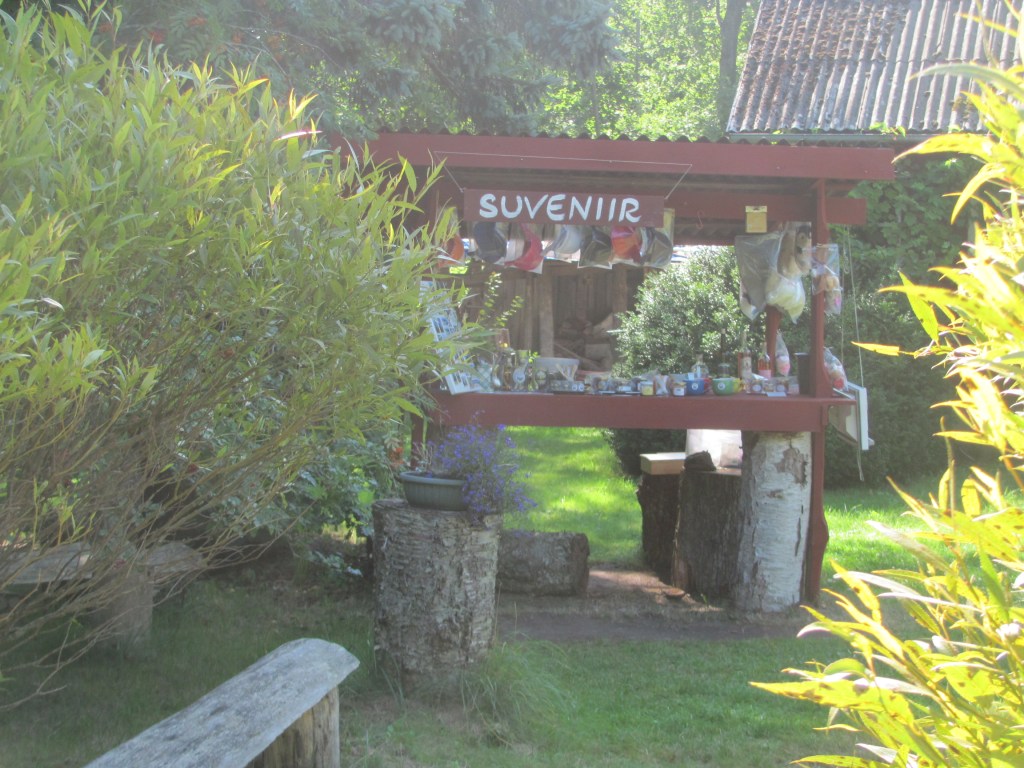
“I think that you will like this one”, says the owner. “It’s made from the berries of sea buckthorn. 40% alcohol. I call it Ruhnu Honey so that the ladies won’t feel embarrassed buying it. I only have two bottles left.”
He won’t let us try it first, so we buy it taste unknown. As it turns out later, it has a certain je ne sais quoi.
“It’s too strong for me”, says the First Mate. “It’s like paint stripper. You’ll have to finish it.”
Further on is the road to the lighthouse, described in Racundra as “an ugly structure of red iron tubes“.
“I wouldn’t call it ugly”, says the First Mate. “It isn’t perhaps the traditional lighthouse made of stone, but it has a certain character of its own.”

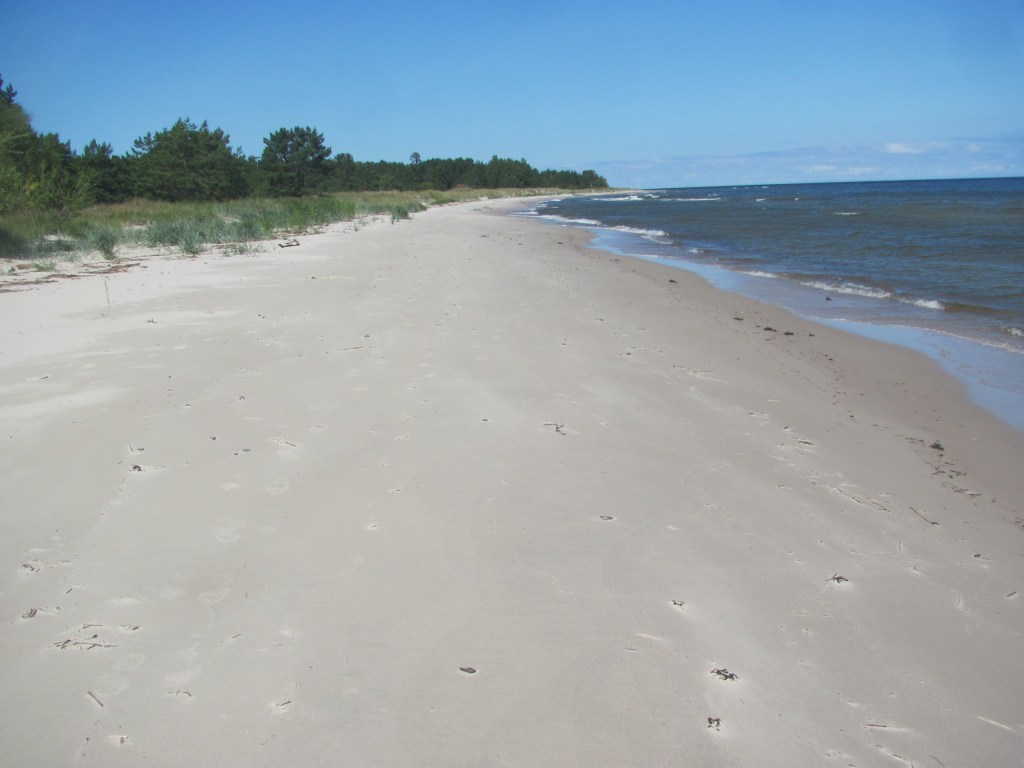
We take the track leading out to the beach. It’s superb. Apparently the sand is supposed to ‘sing’ when you walk along it and make the sand-grains rub against each other. But try as we might, we can’t get them to sing. Just a dull crunching sound.
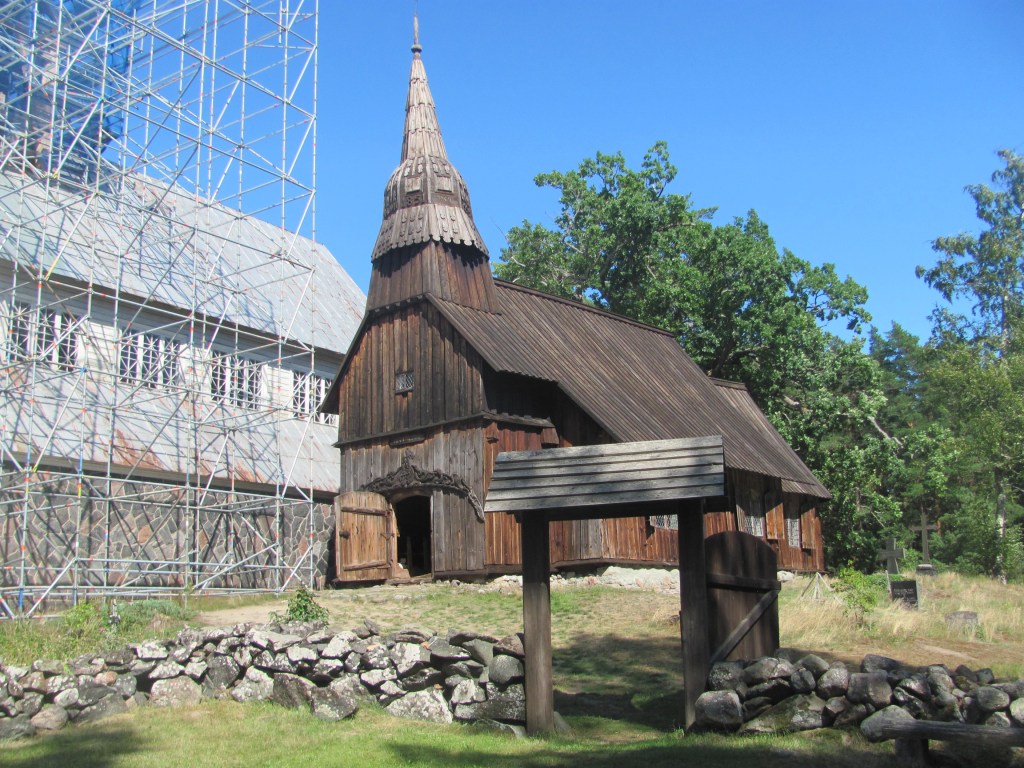
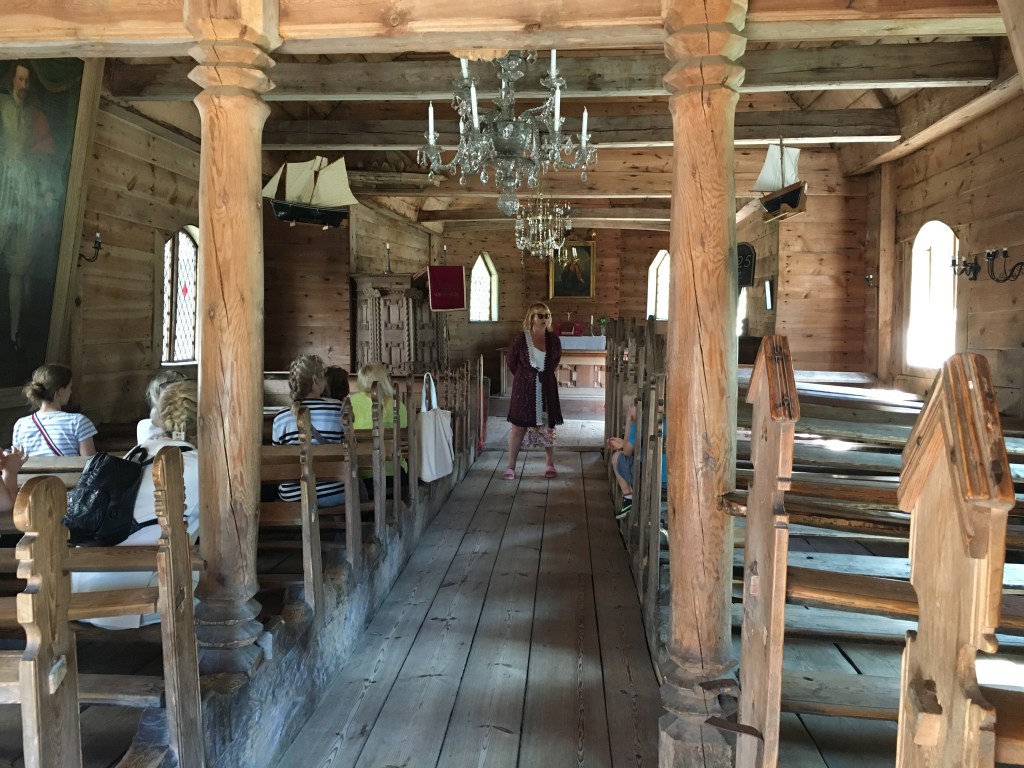
We reach the church, not far from the centre of the village. In fact there are two churches, one wooden, built in 1644, and one of stone, built in 1912. The stone church is having its roof and steeple repaired, and is covered in scaffolding.
“I know it is good that they are repairing it, but it isn’t very photogenic”, complains the First Mate.
We come to Liile’s Farm, where coffee and cake is being served. As we sit on the rustic wooden benches and tables outside enjoying the warm sunshine, the dark rainclouds gather from the west. Before long, the first drops are falling.
“Quickly”, I say. “We need to get going. We have quite a long cycle ride back to the boat. We’ll get soaked.”
Halfway back, the heavens open and the rain pours down. We arrive back at the boat drenched.
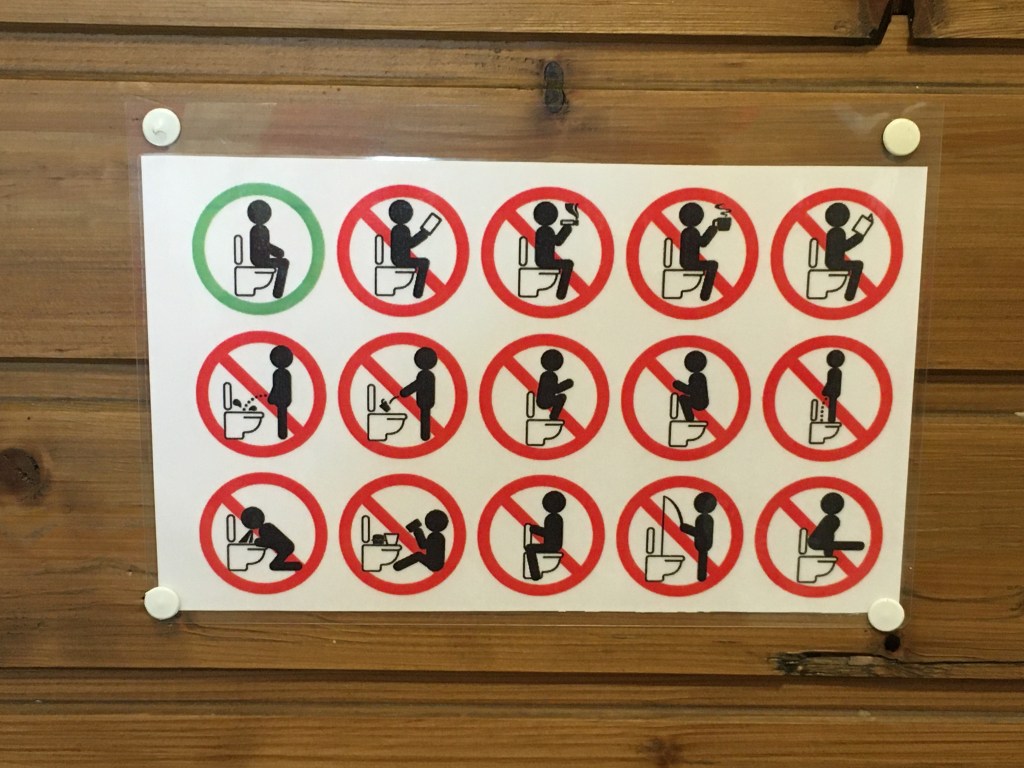
“Did you see the sign in the toilets?”, I ask the First Mate, after my shower to warm up. “It seems that some of the sailors they get here aren’t toilet-trained. I hope that that doesn’t apply to us?”
“Speak for yourself”, she retorts.
It starts to blow in the early evening. We have put double lines on each mooring point just to be sure. And snubbers on the windward lines to minimise the snatch. Hopefully we should be OK.
The winds continue for the next two days. Eventually they die down. But the forecast is showing that more are on their way.
“I think that we should try and make it to Ventspils on the Latvian coast”, I say. “We have a three day window to do it in. We can overnight in Möntu, and ride out the winds once we get to Ventspils. It’s not ideal, but the alternative is to stay here in Ruhnu for another week.”
Möntu is a small harbour near the bottom of Saaremaa island, and most used as a stepping-off point to cross the Baltic to Gotland. There’s not much there apart from the harbour.
The crossing to Möntu is rough, as the last three days of strong westerly winds have generated a significant swell. The wind also changes to more head on during the day, making it difficult to calculate the best tacking strategy.
“Phew, I don’t really want to do a passage like that again”, says the First Mate, as we tie up in in the sheltered waters of Möntu harbour. “We were heeling far too much for my liking.”

The wind dies down during the night. In the morning, the sea is like a millpond. We continue in much calmer conditions, and reach Ventspils in the mid-afternoon. We tie up in the old Fishing Harbour.
“It’s quite sheltered in here”, the harbourmaster says. “You shouldn’t have any problems with the winds.”
As with many other cities along the coasts of the Baltic States, Ventspils was founded in the 1200s when the German Livonian Order built a castle on the banks of the Venta River during their crusades to convert the local population to Christianity.
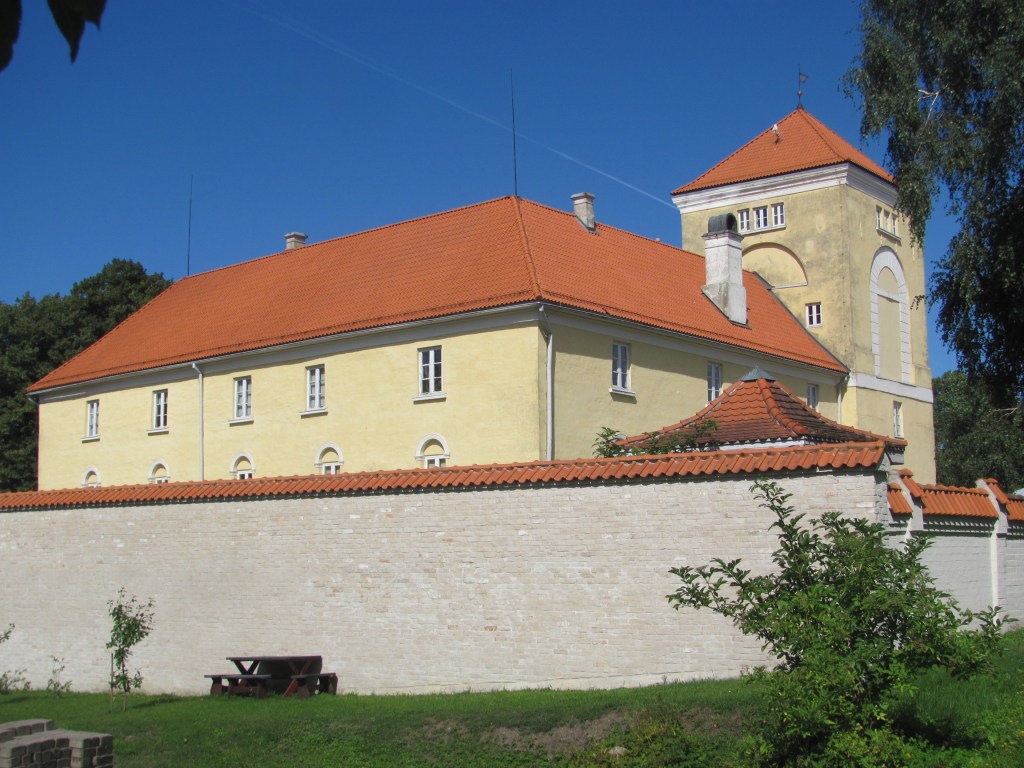
In the 1300s, it became part of the Hanseatic League, and prospered as a shipbuilding city. It was destroyed during the Polish-Swedish War and the Great Northern War in the 1600s and 1700s, with the plague finishing off any remaining inhabitants in 1711. In 1795, it became part of the Russian Empire under which it built up its shipbuilding capacity again. In the 20th century, it flipped between German and Russian rule a couple of times, but after WW2, fell under Soviet rule for 50 years.
We meet Nigel, the Cruising Association’s Honorary Local Representative for Latvia, who keeps his own boat at Ventspils. Seeing our flag, he leaves a note on our boat when we are out to come and have a chat to him if we like. He’s English, but lives in Ventspils and has a Russian wife.
“Ventspils became very prosperous on the back of oil”, he tells us. “During the Soviet era, they built a pipeline from Russia to carry crude oil to here for export. After Latvian independence, it continued to be a major exporting terminal of Russian crude. That’s why I came here in the first place – as a consultant advising on safety aspects. Now with the sanctions from the Ukraine War, all that has gone. Not a drop passes through here now. The only thing keeping the city going is EU money.”

“It’s partly true”, when we talk to the harbourmaster later. “A lot of businesses have found it difficult with the sanctions. That fish factory over there, for example, has had to work hard to find new markets now that they can’t sell to Russia. They have been quite successful in Germany. But having said that, there is still a lot of trade with Russia. Someone estimated that 27% of stuff passing though the port here is coming from or going there.”
“He didn’t say whether it was legal or not”, says the First Mate later. “And I didn’t like to ask him.”
As it turns out, we have arrived when the annual city festival is in full swing. We walk into the city centre, about a kilometre from the harbour, to see what is happening.
On the way, we pass a sculpture of a cow. It is the first of many.

“In 2002, they had a CowParade here”, a chatty Latvian explains. ”They made these fibreglass sculptures of cows and had local artists paint various themes on them. The idea caught on, and nowadays cows are sort of the city’s symbol. You’ll see them everywhere.”
“It’s a bit like the elephant in my hometown of Hamm in Germany”, the First Mate says. “An architect designed a huge elephant around one of the old mine-head cranes, and now the elephant has become the city symbol. Companies will quite often have a model of an elephant outside their offices. It’s not like elephants had much to do with the city before then.”
Stalls of all shapes and sizes are arranged along the water front. Street performers keep the kids entertained. On the wharves on other side of the river, even the brightly painted derricks join in the festivities.


We reach the Market Square.
“Look here’s the International Writers and Translators’ House”, says the First Mate. “I met a woman in the shop last night who is there. She is half German and half Latvian, and won a summer scholarship from it to write a book on how war and occupation affects individual families. Her father, who was the Latvian, was a KGB informant. When her mother found out, she divorced him and went back to Germany to live. Now she, the daughter, has come back to research her book.”
It’s a theme common to many families in the Baltic States, we are starting to realise.
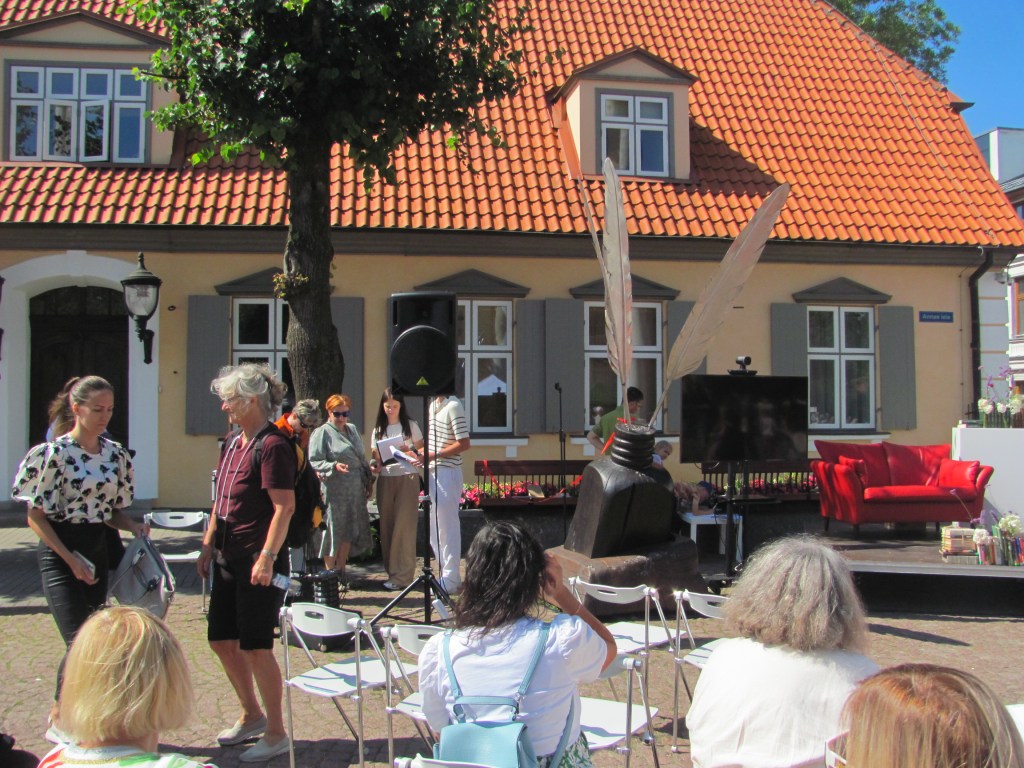
The First Mate spies some local honey and decides to buy some while I admire the ancient clock in the middle of the square.
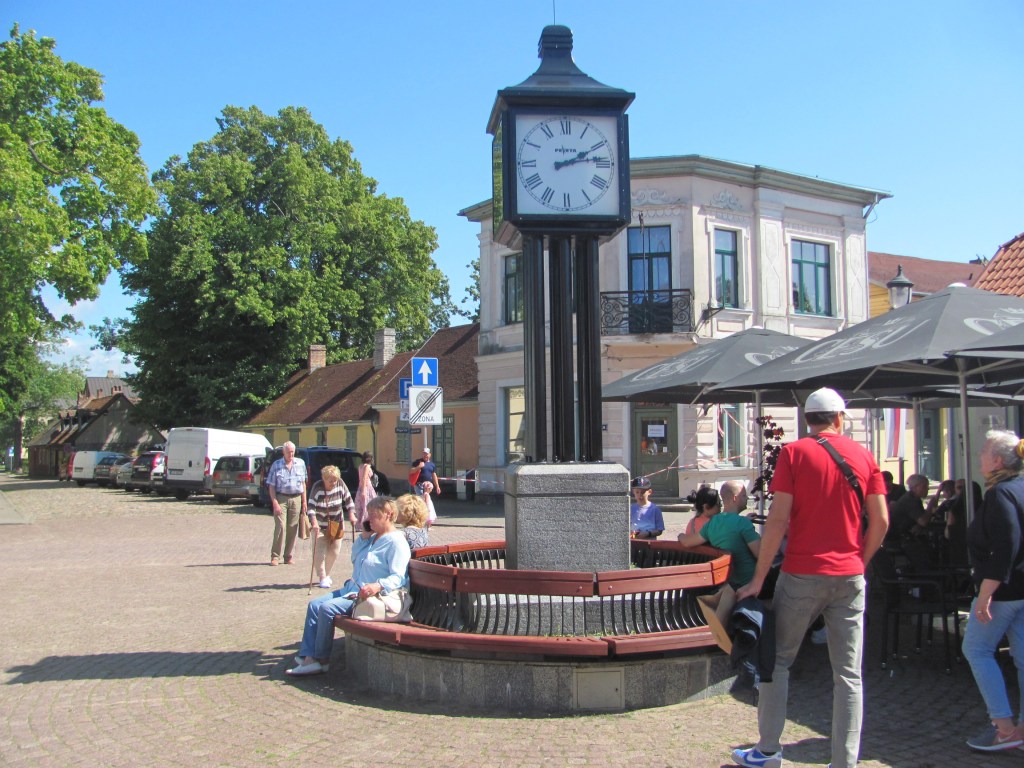
“Phew, it’s hot”, says the First Mate. “Look, there’s some kvass. I’d like to try that.”
Kvass is a kind of low-alcohol beer brewed from various cereals, especially rye, originating from the Slav areas of north-eastern Europe and Russia.
“It goes back at least to 988 AD”, says the man behind the counter. “At the time when Vladimir the Great was baptised. It was probably even drunk before then. Here, try it. You won’t get drunk. It’s only 1% alcohol. More of a soft-drink, really.”
He hands us a couple of bottles. It is thirst-quenching and tastes a bit like root beer.

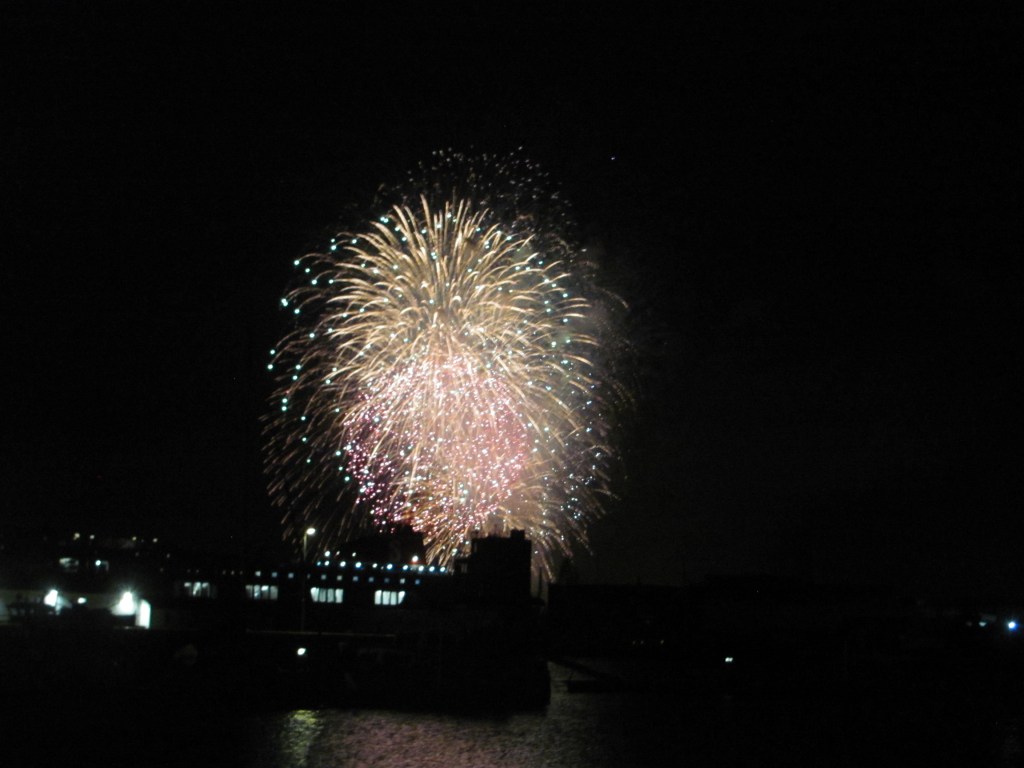
In the evening, we sit in the cockpit sipping our wine and watching the fireworks marking the end of the city festival for another year.
“I am kind of dreading the crossing from here to Gotland”, says the First Mate. “It’s nearly 90 miles in the open sea. I hope it isn’t going to be as rough as the one we had the other day. I hated that.”
“We’ll be fine”, I say, not altogether convincingly. “The winds are favourable, and the sea shouldn’t be too rough.”
 Ruby Tuesday